2075: Where's the Luv for Muv-Luv?

0075_001

Yesterday, a new Kickstarter launched. This is nothing unusual in itself, particularly in the video games space, but the subject matter of the Kickstarter was. Specifically, it was a Kickstarter to localise Muv-Luv, a popular Japanese series of visual novels that originally appeared in 2003 and subsequently spawned a number of sequels, manga and anime spinoffs as well as a ton of merchandise.

Since its original release, Muv-Luv in its various incarnations has been extremely well-regarded, and it's probably not unfair to say the series as a whole is an influential, culturally significant work; some even credit it with the creation of the popular "Moe Military" trend most recently seen in shows like Girls und Panzer and Kantai Collection.

The localisation of Muv-Luv  is Kind of a Big Deal, then, particularly as it's gone un-localised for so long — officially, anyway; fan translations have been around for a while, but the legality of these is always questionable, particularly as enthusiasts sometimes turn to piracy in order to acquire the game in order to patch it, and in some cases the fan-translated version is even illegally distributed with the original game files included. The launch of this Kickstarter is significant in that it aims to bring a well-established, important series to the West officially and with the full cooperation of the original development team.

What's even more significant about the Kickstarter is that approximately six hours after it launched yesterday, it had already smashed through its initial $250,000 funding goal. At the time of writing, still less than 24 hours since the campaign launched, it's sitting at $313,571: well on the way to its first stretch goal of new CGs, music and unlockable content at $400,000, and putting Android and Vita ports within reach at $500,000. There are 39 days still to go on the campaign, and the excitement of enthusiasts is palpable.

And yet…

Nothing about this on Kotaku, a gaming site that has "otaku" as part of its name.

Nothing on Gamespot, one of the biggest gaming sites in the world, either; the site's last use of the word "luv" was for a Nintendo 64 game. That's three console generations ago.

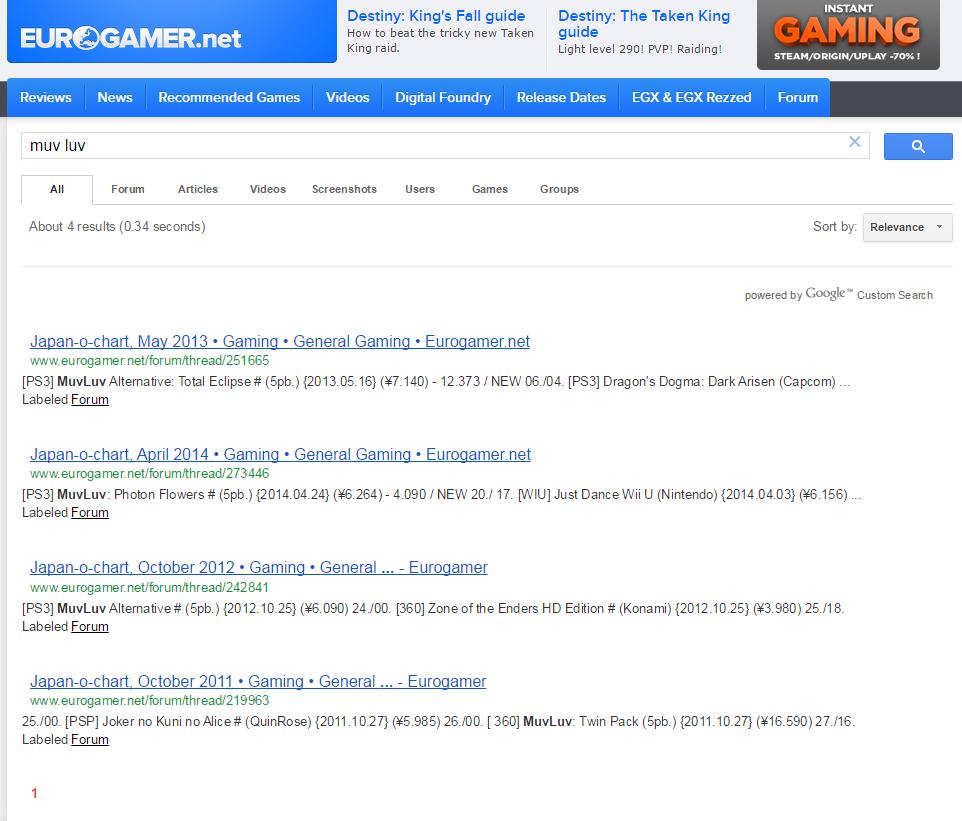
The only mentions of it on Eurogamer are forum threads about the Japanese charts.

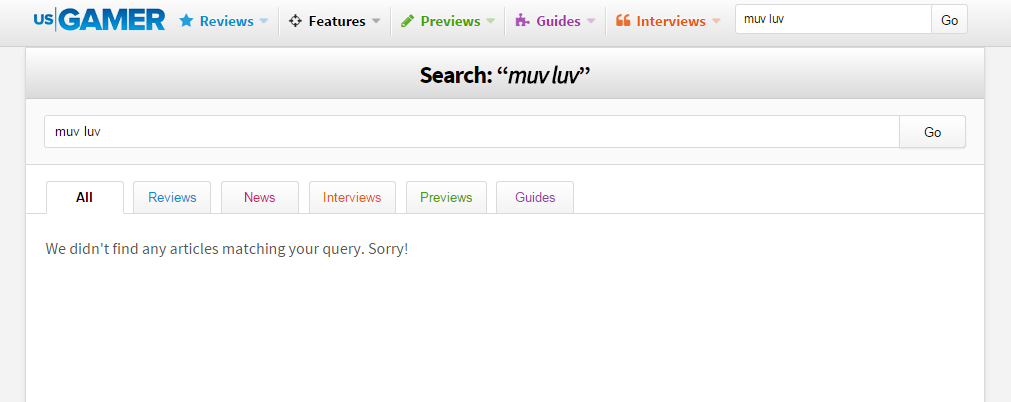
No mention of it at all on USgamer, even with their supposed experts on Japanese games and visual novels in residence.

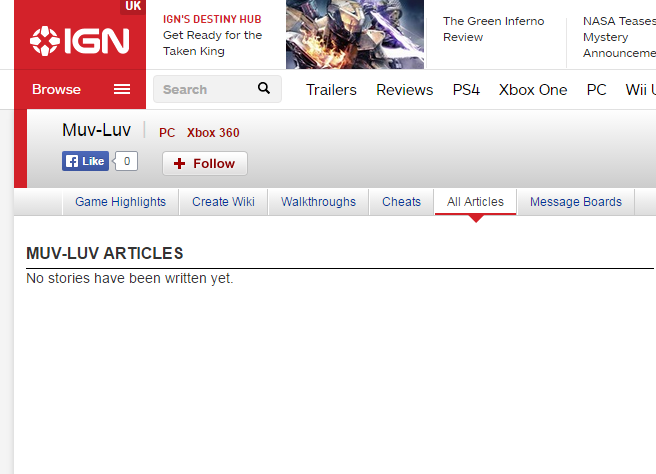
And nothing on the behemoth that is IGN.

This isn't to say that Muv-Luv's Kickstarter success hasn't been reported anywhere, of course; specialist Japanese sites such as Siliconera, Gematsu and Crunchyroll have all posted stories about the campaign, and social media has been abuzz with talk of the series, too.

But, as we've seen above, nothing at all on the biggest, most recognisable sites in the world — even those known to have writers on staff who are interested in Japanese games.

There's an argument, of course, that Muv-Luv is niche interest and consequently not worth covering on these sites because there wouldn't be significant interest. To that I would point out that on the front page of Eurogamer there is currently a story about a showering simulator getting banned from Twitch, on Kotaku there is a story about a Steam game called The Flame in the Flood that you probably haven't heard of… IGN, meanwhile, has a story about a spoon that can take selfies... a story that turns out to be a video, as is so frequently and frustratingly the case these days.

In other words, "niche interest" shouldn't be a barrier to coverage if that sort of stuff gets written about. And it could be argued without too much difficulty that Muv-Luv is of greater "importance" to the interactive entertainment medium as a whole than some showering simulator. (Seriously?)

Unfortunately, this is pretty much par for the course, it seems. Here's what, by way of example, Kotaku had to say about previous culturally significant visual novel localisation projects The Fruit of Grisaia ($475,255 raised via Kickstarter, plus subsequent sales on Steam and Denpasoft) and Clannad ($541,161 raised via Kickstarter):

Yep, sweet FA aside from a couple of offhand mentions of their anime adaptations.

I know exactly why this is, of course: Muv-Luv, Clannad and The Fruit of Grisaia are all seen as "too small" to be of interest to the broad, general audience of a site like Kotaku or Gamespot, and perhaps there's a point there: Muv-Luv has reportedly sold approximately half a million copies to date in Japan (plus over three million pieces of merchandise), which is small fry compared to today's heavy-hitters. And yet there's a bit of a paradox here: these sites have the reach and influence to make more people aware of these works — which are well-established as being of particularly high quality as well as culturally significant on their home turf — but instead they choose to focus on other things, be it predictable clickbait articles about whichever big-budget game has come out this week, or pieces about whatever the current indie gaming flavour of the month is.

Even so, and even taking into account the limited amount of time a games journalist has to report on the news each day — something which I know about first-hand, remember — it's kind of a shame that the impressive success of this campaign and others like it haven't even been acknowledged by the bigger, more mainstream sites. And yet they'll take the time to complain about the Sorceress' tits in Dragon's Crown, or how Omega Labyrinth only appeals to kiddy-fiddlers, or how Senran Kagura is a game about nothing but breasts.

It's little wonder that fans of Japanese games — and many gamers in general, for that matter — are turning their back on the games press of today.

2067: Yumiko

0067_001

Spoilers for not-quite-all of Yumiko's route of The Fruit of Grisaia ahead!

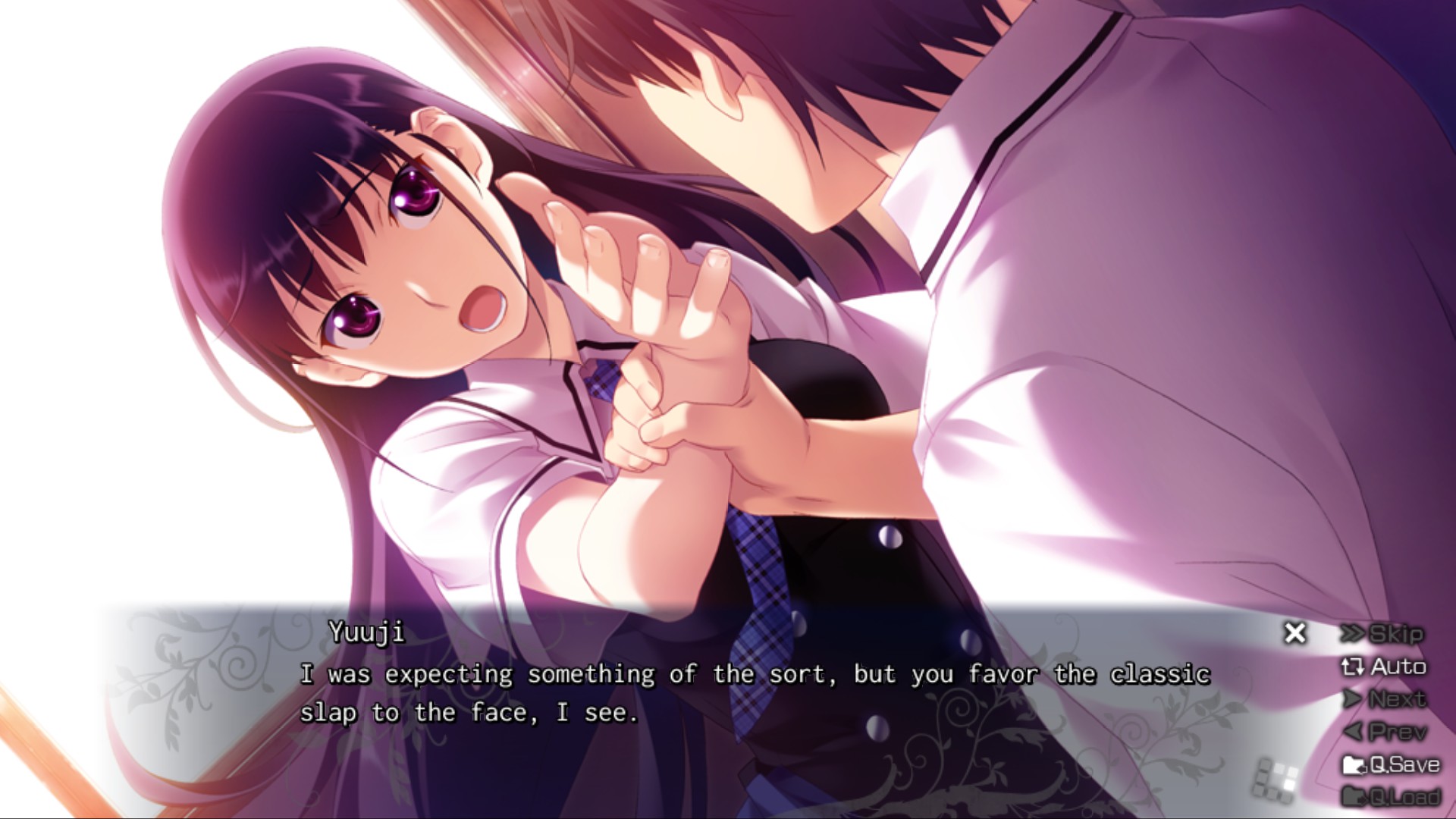
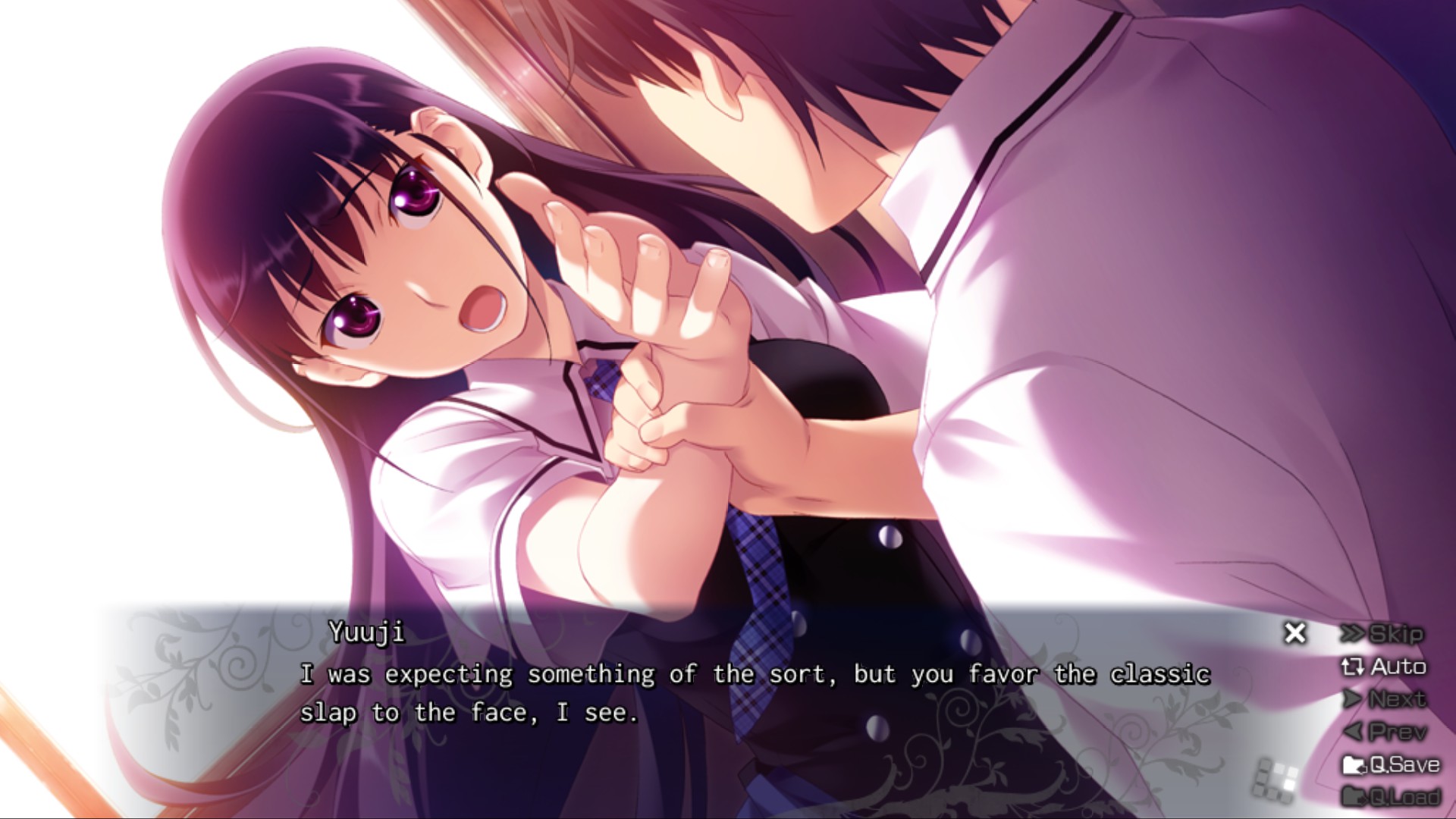
When we're first introduced to Sakaki Yumiko in the common route of The Fruit of Grisaia, it's clear that she is both troubled and likely to be trouble for Yuuji. When Yuuji first tries to introduce himself to her, she initially tries to ignore him, and subsequently tries to slap him when he persists. This eventually escalates into her lashing out at him with a box cutter whenever she sees him, a fact which Yuuji's fellow students just shrug off as being "something she does", because they've all been through it too. Yuuji, being a certified badass, shrugs off Yumiko's attacks without injury easily, and eventually they stop altogether, though she still proves herself to be a prickly individual who is generally unwilling to interact with others.

2015-09-13_00009.jpg

Except it's not that simple. Throughout the common route, Yumiko can often be found lurking on the periphery of the rest of the group's social activities; they're all aware of her and take care not to exclude her, but they also don't try to force her to participate in anything. It's clear that even if she doesn't show it on her face or through her behaviour, she finds comfort in being around people who care for her and are considerate of her feelings. Even the foul-mouthed Makina proves herself to be enormously perceptive of Yumiko's personality traits, accurately "reading her thoughts" in one particularly memorable scene.

In the common route, we're given a teaser of what has made Yumiko as withdrawn, sullen and prone to lashing out as she is — it's clearly to do with her father. Upon returning from a shopping trip to the town, a number of the group report a suspicious-looking black car outside the station, though those who have been at the school longer know that this is a sign that Yumiko's father is coming to inspect the school, which it seems he financed and had built. Yumiko, meanwhile, refuses to see her father, instead preferring to watch his cursory inspection of the school grounds from the dormitory rooftop; it's clear that he's not really inspecting anything, but is instead hoping that he might be able to get through to his daughter.

2015-09-10_00018.jpg

When Yumiko's route proper starts, we're given a bit more information about Yumiko's father, who has already been suggested to be a not very nice person. Indeed, early in Yumiko's route, we're given a third-person scene (i.e. protagonist Yuuji isn't present for it) in which we see Yuuji's handler JB and Yumiko's father discussing how they might get Yumiko to come back to her family and be prepared to take over the family railway business. Yumiko, until now, has been having none of this, of course, and so her father resorts to desperate measures, requesting that JB assign Yuuji to bodyguard duty for Yumiko and then arranging for her to be attacked and abducted. What he didn't count on is that Yuuji is more than capable of taking care of a few hired thugs, particularly as they had been specifically instructed not to actually harm Yumiko — at least initially.

Yumiko is initially resistant to Yuuji guarding her, insisting that "it's not as though [her] life's anything worth protecting", and that she "doesn't particularly mind if someone does come for [her]". The initial attack from her father's men puts her somewhat on her guard, though, and from that point on she is less resistant to Yuuji's efforts to protect her, and gradually softens towards him over time, eventually developing feelings for him because she's come to rely on his protection — a feeling of safety and security that she's never enjoyed before.

2015-09-16_00038.jpg

Yuuji, being a stubborn idiot prone to inadvertently annoying women with non-deliberate insensitive comments, of course, doesn't notice that Yumiko has started to feel something for him — or refuses to admit that this might be a possibility, at least — but sticks beside her "because it's [his] job". When JB pulls him off the case at the request of Yumiko's father, he is somewhat surprised to receive a direct request from Yumiko to continue working as her bodyguard in a private capacity.

On one excursion, the heavens open and Yuuji and Yumiko find themselves trapped under a bridge in a torrential downpour. Something doesn't seem right about Yumiko's behaviour to Yuuji, and it's not long before things come to a head; a thunderclap and flash of lightning absolutely terrify Yumiko, who crumples into Yuuji's arms in an uncharacteristic display of weakness, fragility and reliance on others. Having already come this far in showing her fragile side to Yuuji, she then relates the story of how she came to be the person she is today, and what she is doing at the mysterious school.

2015-09-16_00045.jpg

Yumiko's mother was the daughter of a pair of struggling business owners. She married into the Sakaki family primarily for financial and political reasons, and bore Yumiko as the family's only child. Being a girl, Yumiko was an immediate disappointment to the family, who had been hoping for a son and heir apparent, but Yumiko's mother was much too weak to survive another pregnancy, and eventually succumbed to a debilitating psychological disorder that saw her and Yumiko retreat back to the countryside and her family home. She was hospitalised, and Yumiko was left to live with her grandparents, who resented her existence because she was a symbol of their failing business, and how they wouldn't be able to rely on the support of the Sakaki family forever.

Yumiko tried to stay positive amid this bleak situation, but the youthful joy she once had at the simple sight of a passing dog eventually gave way to bitterness and resentment. Her only outlet was her neighbour, who had formerly been employed by her grandparents as a servant, but now continued to help them out for free. Yumiko was the only one to show her gratitude, and she resented her grandparents for taking advantage of her right up until her death — a feeling shared by her daughter and son-in-law.

2015-09-16_00073.jpg

Her hospitalised mother gradually comes to show an improvement, eventually reaching a point where it looks like she's going to be discharged from hospital, but suffers a catastrophic relapse upon hearing the news that her husband — Yumiko's father — had taken a mistress in her absence, and said mistress had borne him a son.

A year passes, and Yumiko's bitterness grows, since her mother had relapsed so severely that she couldn't even remember anything about her family. She had no-one to rely on, no-one to talk to, no friends, which is why when her father's aides come to collect her from her grandparents' house — bearing the offer "if you let me have Yumiko back, I'll continue supporting your family and your business" — she jumps at the opportunity.

2015-09-17_00011.jpg

Initially resenting her father for the anguish he caused her and her mother, Yumiko eventually softens towards him as he appears to be making a genuine effort to reconnect with his daughter. It eventually transpires that he is only doing this because his illegitimate son died and his mistress abandoned him shortly afterwards, leaving Yumiko once again as the only potential heir to his business. Feeling a familiar, growing sense of rage at this, Yumiko is in a fragile mental state and is pushed over the edge when she overhears one of her classmates speaking untruths about her.

Prior to this, she had taken to expressing her anger through destruction. "The clicking of the blade emerging from its sheath," she relates. "The sound of something once whole being severed apart. Those had become calming sounds to me. How wonderful would it be if I could slice away my femininity with a single box cutter? How wonderful would it be if I could sever my fate with the touch of a blade? How wonderful would it be if one movement of my hand could cut me free of all the troubles that coiled around me and choked the air from my lungs?"

2015-09-16_00072.jpg

The first thing she destroys is her long, black hair; an attempt to "slice away her femininity" and look more like a boy — a largely successful effort, though one that causes people to shy away from her even more than normal. Later, she destroys her artwork and the diary in which she had written down all the growing positive thoughts she had been feeling as she had mistakenly thought her father truly loved her.

And ultimately, the event which sees her totally severing her ties to her old life: she stabs her classmate, whom she had previously thought was a friend, but who had turned out to be just as much of a turncoat as everyone else in her life.

2015-09-17_00025.jpg

Yumiko escaped a criminal conviction for her violent outburst, because money can make anything go away, and her father knew that very well indeed. Knowing that the situation couldn't continue in the way it had been, however, he offloads her onto Mihama Academy, where she meets Yuuji, and her life undergoes some considerable changes once again.

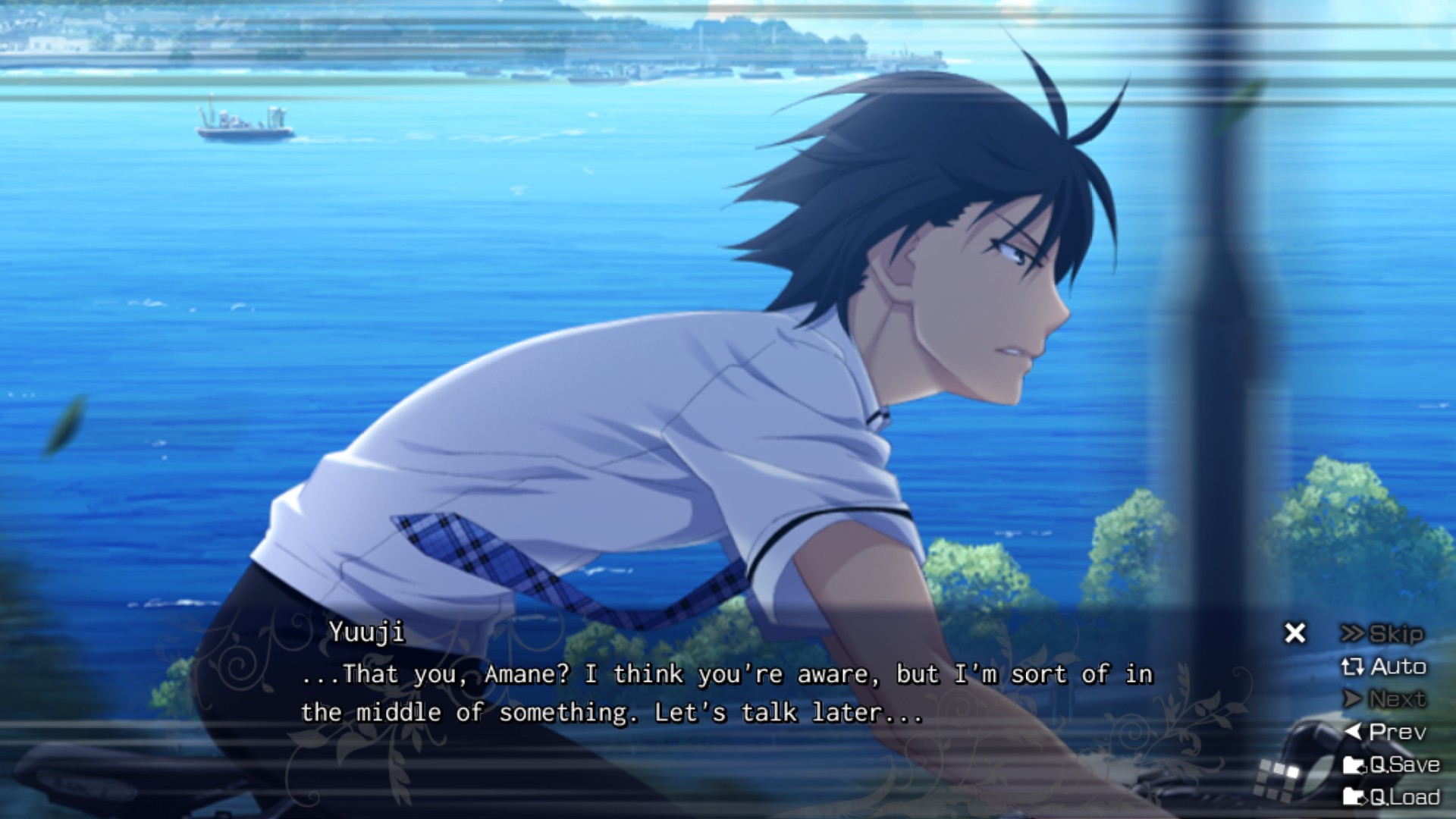
When Yuuji ends up injured in the line of duty protecting her, Yumiko is wracked with guilt, not just at the trouble she's embroiled Yuuji in, but at how much she's hurt her other classmates too. This guilt eventually manifests itself in her deliberately allowing herself to be taken away by her fathers men and capitulating to whatever demands he might have — which turn out to be her attendance at a school in America, far away from anywhere she could possibly become a problem.
2015-09-17_00047

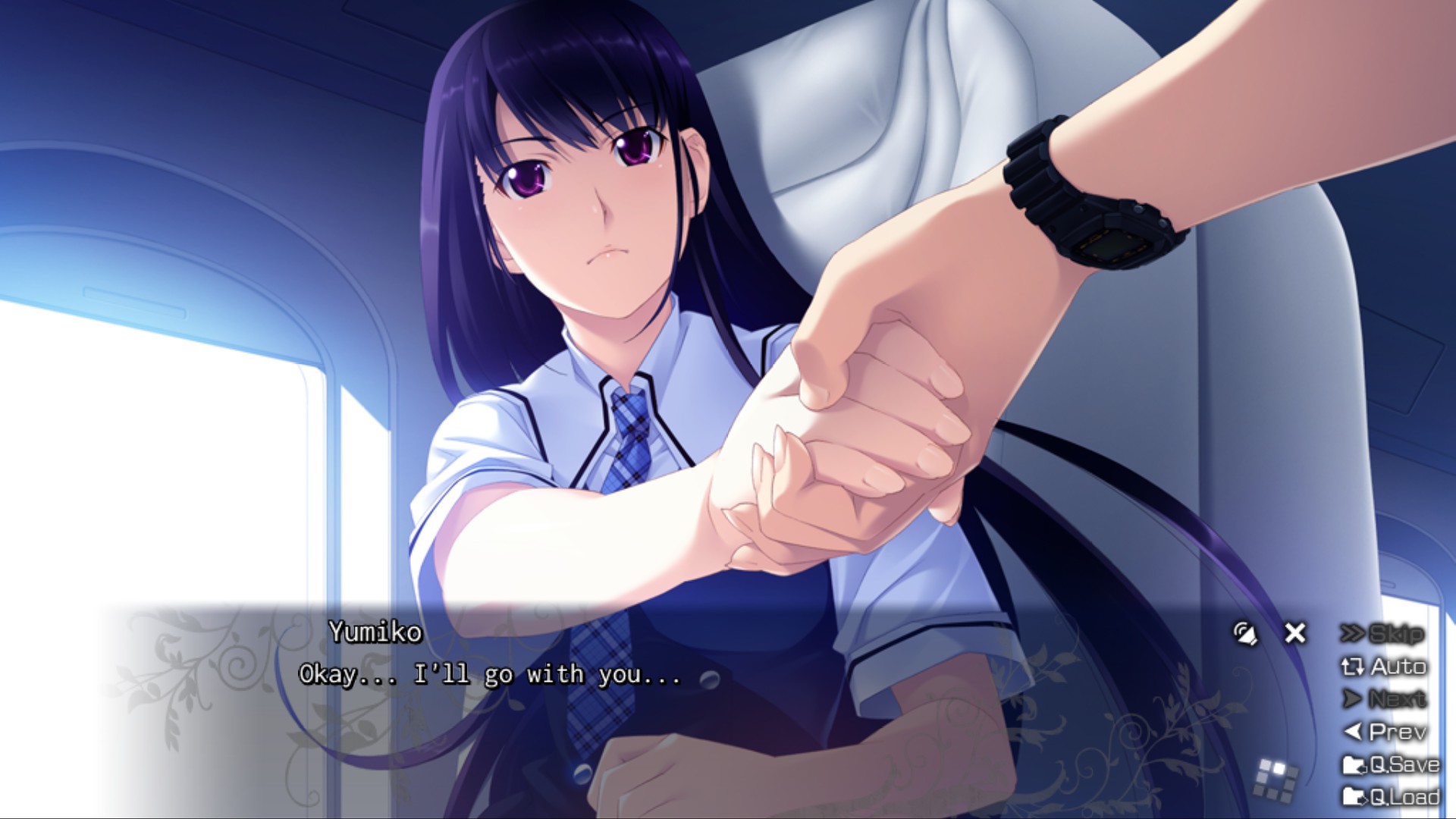
Yumiko's father doesn't count on Yuuji's stubbornness, though; spurred into action by a text message from Yumiko apologising for a situation that is in no way her fault, he eventually rescues her following a dramatic chase, and the two of them begin a life on the run, during which period they both eventually manage to admit their feelings for one another — though it takes Yumiko essentially sexually assaulting Yuuji in the middle of the night to spur the latter into action and contemplate that she might actually possibly maybe be interested in him.

Yumiko and Yuuji making love for the first time — and, for that matter, the subsequent time, during which she admits that she "doesn't dislike" playing a submissive, masochistic role — is a turning point for Yumiko in particular, and to a lesser extent for Yuuji. Yuuji reveals that he has some sexual experience thanks to sex workers that were laid on for him in a previous assignment, but comes to realise that sexual intimacy with someone you truly care about is on a whole other level of pleasure. Yumiko, meanwhile, allows this ultimate expression of intimacy as a means of demonstrating that she trusts Yuuji absolutely; the pair of them continually push the boundaries with each other to see how far they will each go, and it turns out that they both feel absolutely comfortable with one another after all the time they have spent together.
2015-09-17_00056

Yumiko's growth is pretty touching to see, but tragic at the same time. On more than one occasion, she ponders whether it's acceptable for her to be happy, or whether she "deserves" it. Yuuji has to admonish her several times for apologising when it's not necessary, though she does the same for him too; eventually the two settle into a pattern of gratitude for one another, neither of them quite sure how to deal with having been alone for so long and now having another person to take into consideration.

I haven't quite finished Yumiko's route as yet, but I'm excited to see how it concludes. There's been plenty of drama and touching, emotional moments so far, and the whole thing is clearly building towards what I hope will be a satisfying final confrontation with her father. I'll just have to wait and see how that pans out!

2066: Reflections on Grisaia's Common Route

0066_001

I've finally reached the end of the rather lengthy common route in The Fruit of Grisaia, and so it's on to the unique routes for each of the main cast members. I've decided to explore them in the order Yumiko > Michiru > Sachi > Makina > Amane so as to save my favourite heroine for last, but this also apparently works out quite well narrative-wise, since Makina and Amane's routes sound as if they are more important with regard to the series' overall continuity.

I've already started on Yumiko's route, but haven't read enough to be able to comment on it with any particular authority as yet, so I will save that for another time. Instead, I wanted to reflect a little on the common route, since it was very enjoyable in its own right.

2015-09-14_00007

The Fruit of Grisaia's common route is actually more of a collection of short stories loosely organised into chronological order to allow for references to past events and a certain degree of character growth as the chapters proceed. By the time you reach the decision points that determine which unique route you'll be proceeding down, you'll have a pretty firm understanding of all the characters on at least a superficial level, plus astute observers will have picked up a few hints as to what their own personal stories will be all about.

Aside from the overall development, though, each chapter of Grisaia is pretty much a self-contained story in its own right. They open with protagonist Yuuji delivering some philosophical narration about the situation, then the scene itself unfolding, then Yuuji wrapping things up with some conclusions from his own perspective. It's a structure that works well, and it keeps things moving along; none of the chapters feel like they particularly drag, even though there's not a lot of "action" in the whole common route, and the tone bounces around between comedic, romantic, dramatic and tragic between different chapters, giving you a chance to see all of the characters respond to various situations and understand them as people rather than archetypes.

2015-09-13_00005

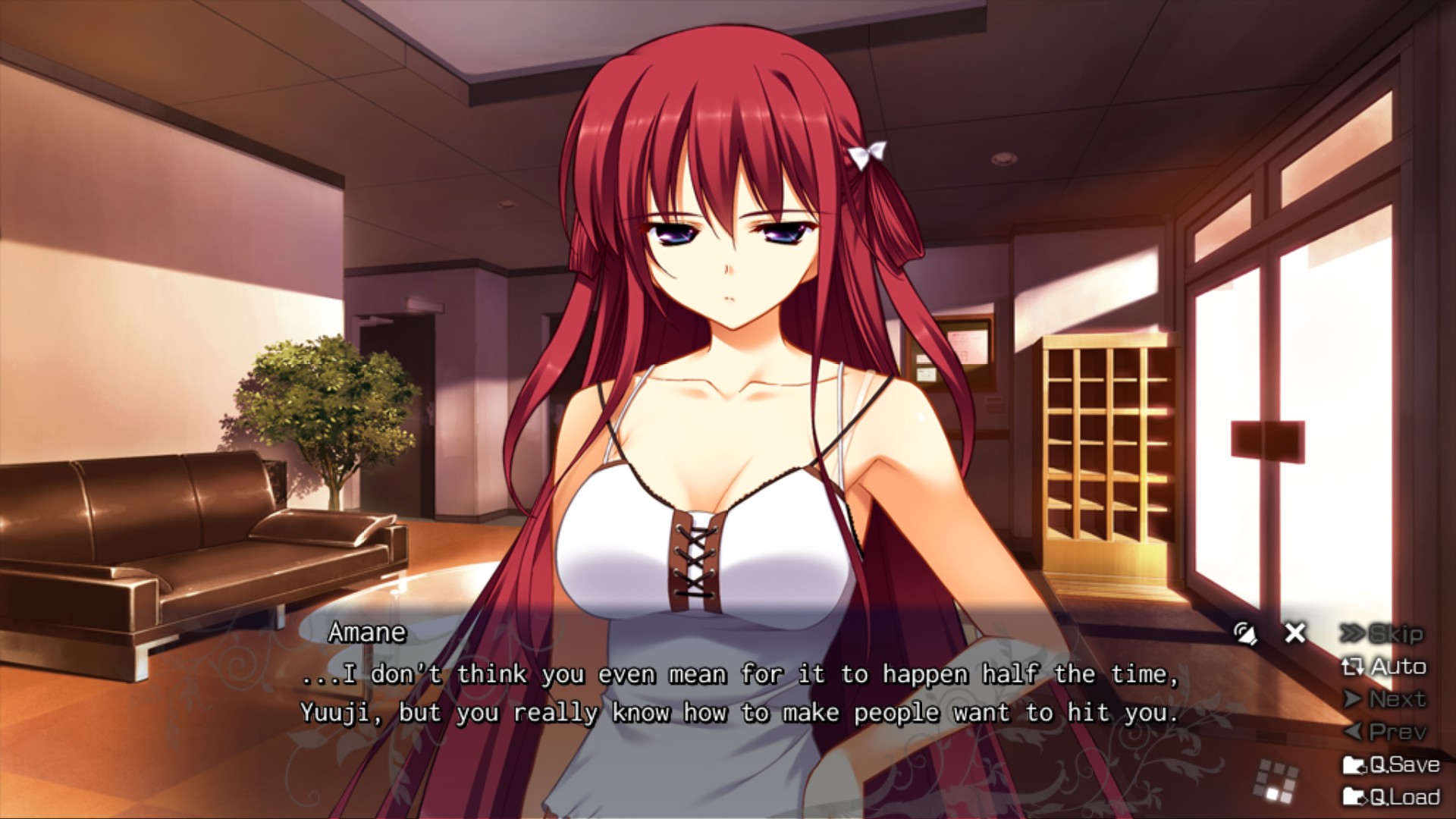
And that's quite a key point, as I've mentioned in previous posts on the subject: none of the characters in Grisaia quite conform to the stereotypes you're clearly supposed to think of when you first see them. Amane's onee-san act is stymied by her Kansai coarseness; Makina's loli appearance belies a foul mouth that would make the dirtiest of dirty old men blush; Sachi's compliant nature and habitually calm tone of voice makes it all the more surprising when she comes out with a surprisingly cutting remark; Michiru is fully aware of the fact that her tsundere personality is a deliberate act, as is everyone else; and Yumiko… well, of the lot of them, she, so far, appears to have so far been the one who conforms most to her stereotype, but she's also the character whom Yuuji has had the most difficulty connecting, so I don't doubt we'll learn more about her in her unique route.

Peppered throughout the common route's short stories are little hints and clues about the cast's histories, though nothing is quite made explicit until towards the end of the common route, and even then there are still a lot of mysteries. Who is Yuuji, for example? What is his mysterious "job" that he keeps referring to? What is his connection with the school and its principal? Yuuji represents probably the most intriguing mystery of the lot, but the other cast members all clearly have their own skeletons in the closet, too.

2015-09-15_00002

But because those skeletons are all rather personal to the individual characters, they're left to be explored in their personal routes, leaving the common route free to let its hair down a bit and indulge in some light-heartedness such as the obligatory "beach episode" (which features a hilariously filthy scene between Sachi and Michiru) as well as everyday happenings around the school that give us an ideal of who these characters are and how they relate to one another. It's a close-knit bunch that starts to feel rather like family after a while — an observation that several characters comment on a few times.

So far, then, the common route has thoroughly enraptured me in the world of The Fruit of Grisaia and smitten me with its characters — all of them, too, which is nice; usually in this sort of setup there's at least one cast member that, even if I don't actively dislike them, I feel as if I like less than the others — and I'm very much looking forward to seeing how their stories unfold. And, from there, the fact that there are two sequels to look forward to at some point down the road makes me very happy indeed.

2060: A Fruitful Relationship: More Grisaia Impressions

0060_001

In an effort to steer away from three solid days of ranting about games journalism, I asked my followers on Twitter for some suggestions of things to write about, and got a few nice ideas, so I'll be making use of those over the next few days.

I thought I'd start with a request from my friend Mr Michael Cunningham, who wanted to hear a bit more about The Fruit of Grisaia, the visual novel I'm currently reading, and which I gave some first impressions of here.

So far, I believe I'm still in the "common" route of Grisaia, since I've only made a single choice so far, and that didn't come until after a considerable number of hours of reading. The lack of interaction hasn't been a problem, though; the early hours of Grisaia are clearly intended as a means of helping you get to know the characters and the context in which they find themselves, and the distinctly leisurely pace at which the early hours of your typical visual novel such as Grisaia unfolds allows it to dangle some truly tantalising mysteries in front of you, mostly with regard to the backgrounds of the characters and what has actually brought them all together.

Even the basic concept of Grisaia is still a slight mystery to me at this juncture. Although the early hours have been relatively typical high school slice-of-life so far, there's clearly something more going on. From the protagonist's frequent references to his mysterious "job" and use of military terminology and tactics to the unpredictable, trope-subverting nature of all the heroines, nothing seems quite "right" in Grisaia's world, and that's what makes it so intriguing. The fact that the school which they all attend has no-one but them in it — making for a student body of just six people — is perhaps the biggest mystery: why are they all there? What has pulled them out of "normal" life? What is the school for?

2015-09-09_00008

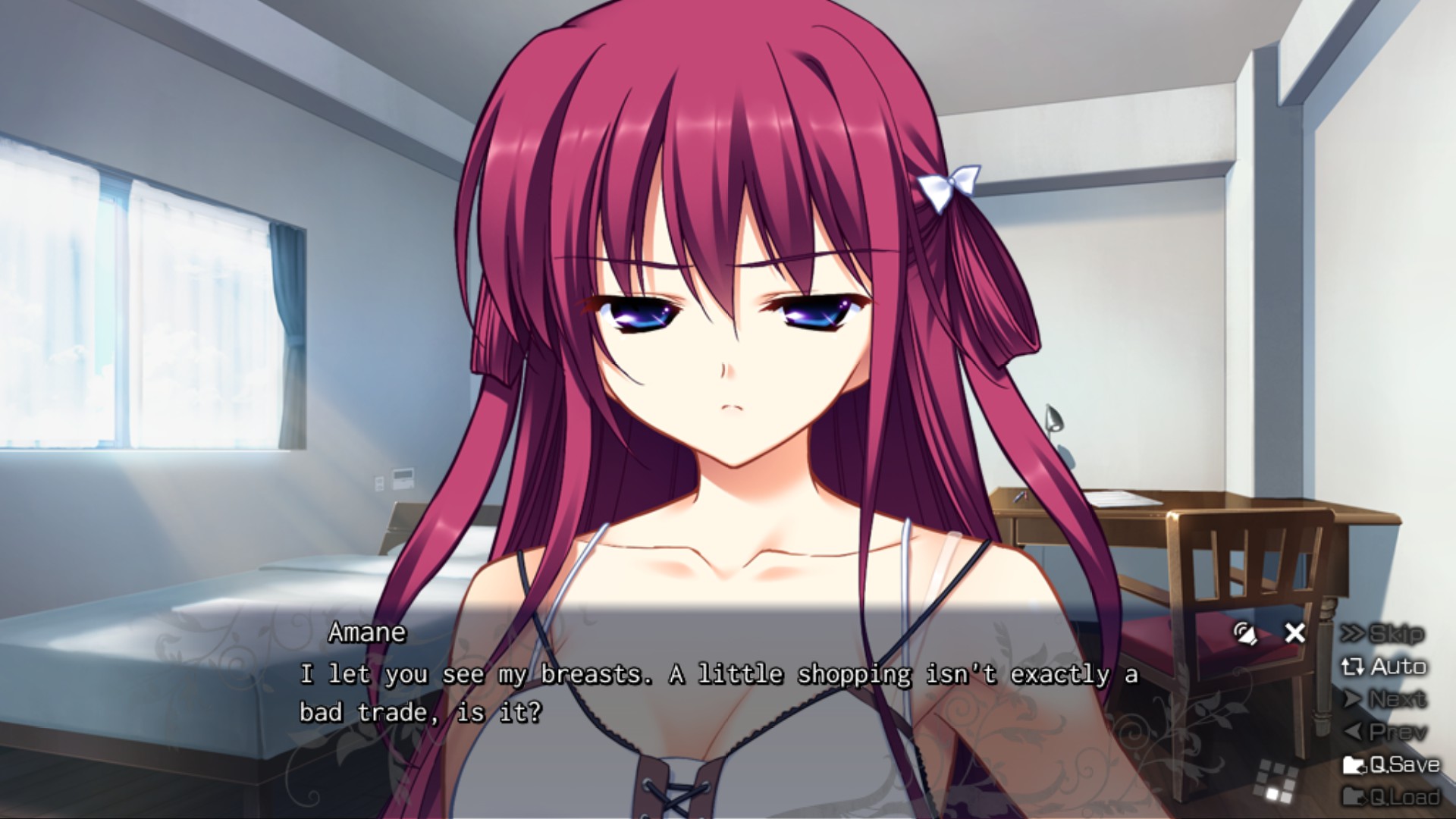
Amane initially appears to be the most "normal" of the cast. She likes to play the role of the older sister, and does so with great enthusiasm, particularly when it comes to protagonist Yuuji. Yuuji is initially resistant to her advances but eventually allows her to indulge a little for the sake of having a marginally quieter life, because even when she's getting what she wants, Amane is forthright, frank, open and honest about everything — arguably to a fault.

She's also seemingly very much at ease with herself as a woman, happily stripping off and getting changed in front of other people (including Yuuji) and wearing clothes that emphasise her curves. She's also rather sexually aggressive towards Yuuji even as they're first getting to know one another, often grabbing him and pressing herself against him, and on one memorable occasion, sneaking into his room while she thinks he's out and inhaling his scent from his clothes and his bed; Yuuji catches her just before she starts masturbating.

I'm not quite sure what to make of Amane yet. I certainly like her a great deal, but I have a feeling that her forthrightness may, in fact, be compensating for something. Exactly what, I couldn't say just yet, but I'm pretty convinced that there is more to Amane than meets the eye.

2015-09-06_00003

Makina is brilliant. Initially presented as the dimwitted loli of the group, it takes a little time for Makina to take to Yuuji, but they eventually bond, much to the surprise of Amane, from whom Makina is otherwise almost inseparable. It transpires that Makina is far less stupid than she likes to make out, and that she may well be putting on an act for her own mysterious reasons.

This doesn't mean that she's entirely "normal", though. Her impressive ability to take mental photographs of books she's reading and instantly recall information from them — albeit only in black and white — reminds Yuuji of his deceased sister, who had a similar ability. Perhaps not coincidentally, Makina quickly starts calling Yuuji "Onii-chan", despite his resistance; much like he softens towards Amane somewhat, so too does he eventually just let Makina continue along in her own bizarre little world.

Perhaps the most amusing and intriguing thing about Makina is the way she talks. Far from being stereotypically cute and shy, Makina is foul-mouthed and frequently comes out with things you'd expect a dirty old man to say. Amane occasionally admonishes her for this, but since she occasionally slips into her own Kansai region colloquialisms, she doesn't really have a leg to stand on in this instance.

Again, I wouldn't like to conjecture what brought Makina to Mihama Academy in the first place, but it's clear that something traumatic happened in her past; so far, however, the conversation has always been steered away from it any time it looks like getting into dangerous territory.

2015-09-04_00004

In contrast to Makina's front of stupidity, Michiru actually does appear to be pretty dimwitted. Obsessed with the tsundere character trope to a fault, Michiru deliberately tries to act as stereotypical as possible, but in the process frequently breaks character in order to seek the approval of others — and, to a certain degree, herself — on how well she's doing at playing the spoiled princess.

In keeping with the other characters, though, there's seemingly a lot more to Michiru than meets the eye. As time progresses, whenever she is alone with Yuuji, she seems to want to open up to him somewhat. In some instances, she drops the tsundere act completely and attempts to have a serious conversation, though her inability to articulate herself in anything more than the most simple terms sometimes means she finds it challenging to get across quite what she wants to say.

Michiru is clearly struggling with depression — perhaps as a result of a condition or illness she has. Her adoption of the tsundere personality is a coping mechanism designed to hide any outward signs of her pain and suffering; by being deliberately aggressive and contrary about everything, she puts up a formidable barrier around the truth that lies in her heart, though, of course, I'm sure by the end of her own narrative route we'll get to the bottom of exactly what is bothering her so much. She is the butt of a considerable number of jokes throughout the common route, but I have the distinct feeling she's going to end up being one of the most sympathetic characters.

2015-09-05_00001

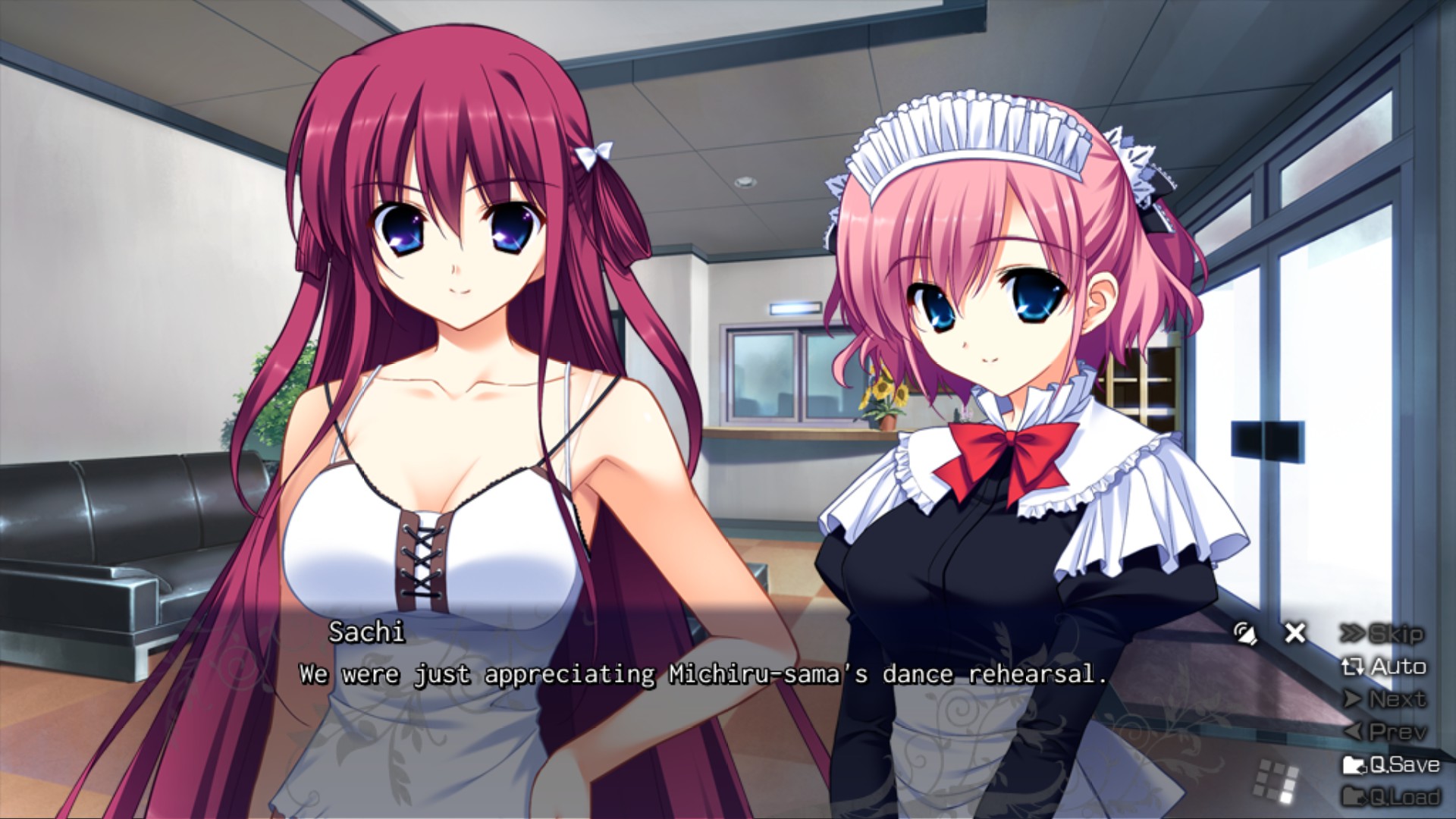
Sachi (right) is something of an enigma. Sweet, innocent and largely emotionless to a fault, something in Sachi's past has caused her to become someone who takes everything she hears absolutely literally. This means that a joke about how she should wear a maid costume all the time because of all the hard work she does for others means that she now wears a maid costume whenever she's not in her school uniform; it means that someone requesting "the freshest milk possible" sees her catching a train out to the countryside to go and milk a cow.

Sachi's initial impression is that she's a thoroughly nice and considerate person, but there's something else at work. Occasionally — particularly when she's dealing with Michiru — some uncharacteristically hurtful, acidic comments will come out of her mouth. There's evidently some bitterness festering beneath the surface, though for the most part, she simply refuses to talk about it and quickly puts her façade of being the perfect maid back up.

The other thing about Sachi is that her tendency to take things literally means that she has absolutely no sense of shame or propriety whatsoever. When Yuuji jokes with her about the power a glimpse of lingerie has over men, she turns up to school the next day in nothing but lacy undies, stockings and suspenders. When she and Yuuji are cleaning the dormitory bathroom together, she falls over and gets her maid costume wet, then subsequently decides that the appropriate thing to do — after another joke from Yuuji — is to take it off, attach it to her mop ("to cover more ground") and continue the rest of the cleaning job in her underwear. I anticipate that this aspect of her character in particular will cause more than a few awkward situations by the conclusion.

2015-09-03_00002

Finally, Yumiko is the most obviously fucked up of the main cast. Initially refusing to even speak to Yuuji, instead preferring to first of all slap him when he approaches her, and subsequently attack him with a box cutter at every opportunity, the barriers around Yumiko's heart are nigh-impenetrable, it seems, but Yuuji's ability to shrug most awkward situations off — perhaps due to his own background, which he hints at regularly throughout the common route without explicitly explaining it — means that he takes her violence and anger in his stride. He eventually manages to get through to her enough to be able to speak to her and subsequently have an honest conversation with her, even spending some time with her alone without her trying to attack him.

Yumiko's basic character trope is that of the perpetually grumpy "student council president" type, but rather than being a blushing, awkward individual beneath the façade, it's clear that her outward grumpiness is a sign of outright rage and bitterness bubbling beneath the surface. She is, so far as I've read at least, the biggest mystery among the main cast — both to me and to the rest of the cast, too. She keeps herself to herself, and no-one seems to know anything about her history. No-one even seems to know where she's going or what she's doing at the weekends when she sneaks out of the dormitory in the early hours of the morning carrying a tote bag full of "wooden objects". I'm looking forward to finding out more about her.


That's what I know so far, then. They're an interesting bunch of characters, to be sure, and I'm really looking forward to each of their routes to discover exactly what makes them tick and what has brought them to the strange circumstances in which they find themselves. I sense it's going to be a long road to find out, but up until this point, it's been a compelling and intriguing ride with a ton of tantalisingly unanswered questions.

Number one visual novel of all time? I couldn't say with confidence as yet. But it's certainly one of the most immediately compelling, well-written — and well-localised — ones I've read for quite some time, and if you have the slightest interest in the medium, I'd encourage you to support it.

2056: Pete's Probably Non-Comprehensive Visual Novel Primer

0056_001

I posted the following over on the Squadron of Shame forums the other day, since we were getting into a discussion on visual novels. I thought it might be of some interest to people who don't frequent the Squawkbox, so I present it here in slightly extended format for your enjoyment and information.

Pete's Probably Non-Comprehensive Visual Novel Primer

What is a visual novel?

First things first, get out of the habit of thinking of a visual novel as a "game", despite the fact that they're typically sold as games, referred to as "games" and share a number of stylistic and mechanical elements with games. In Japanese popular culture, visual novels are treated as their own distinct medium, and in the pantheon of media which creators tell stories across, they comfortably sit alongside light novels, manga, anime, movies, live-action TV shows and, yes, video games. Transmedia productions often span several or even all of the above formats, and any one of them can prove the starting point for a successful franchise.

The reason I mention visual novels' distinction from traditional games is because visual novels very often don't have any "gameplay" as such, and coming to them with the expectation that you will be "doing" anything is often a recipe for disappointment. There are exceptions of course, since some visual novels do incorporate "game" elements — notable examples include Aselia the Eternal's extremely deep and satisfying strategy game and its spiritual successor Yumina the Ethereal's dungeon-crawling and peculiar argument-based battle system — but for the most part, visual novels are about reading reams of text accompanied by some combination of art, music and voice acting. In other words, they're a dedicated storytelling medium that occupies a peculiar space at the intersection between manga, anime and traditionally written prose.

Danganronpa, Corpse Party and Ace Attorney are often described as visual novels due to their text-heavy nature and emphasis on linear storytelling, but there's a strong argument that they are more adventure game than visual novel due to their balance between story and game being firmly in favour of "game". Ultimately it doesn't matter all that much; if you're less than familiar with the visual novel medium as a whole, though, just don't go in expecting to actually have any interaction whatsoever, and then you can only be pleasantly surprised if you do get to do something. The appeal of a visual novel is in the storytelling, not the interaction.

Types of visual novel

The presentation of pure visual novels can be roughly broken down into two main types:

  • NVL ("novel") types fill the screen with text, usually in a semi-transparent box so you can see the artwork behind it, and read like a traditional novel. Examples of this type include Kana Little Sister and KiraKira.
  • ADV ("adventure") types look more "gamey", with a dialogue box at the bottom of the screen and a clear view of the art and characters. These tend to have a sharper demarcation between narration and dialogue, compared to NVL types, which will often mix both on a single screen of text. Examples of this type include Katawa Shoujo and The Fruit of Grisaia. This is probably the more common type we see in the West.

Visual novels can also be split into a couple of different categories according to structure:

  • Kinetic novels have no choices whatsoever. You start them up, you read them, you reach the end. You have absolutely no interaction whatsoever — it's a pure storytelling medium.
  • Multi-scenario visual novels are the more common type. Most of these start with a common route, then branch off in a number of different directions according to choices you make in the common route. Some further split the branches into other routes, not all of them necessarily ending well; others guarantee you a specific good ending once you lock in a particular route.

You can then further subcategorise visual novels by basic subject matter and audience:

  • Bishoujo games — aka bishoujoge, literally "pretty girl games", have a (usually heterosexual) male protagonist and a cast of heroines who usually correspond to the various narrative routes. The story isn't necessarily focused on dating the heroines, but the girls tend to be the ones pushing the story forwards. This is by far the most common type of visual novel brought West.
  • Otome games — aka otoge, literally "maiden games", are the inverse of a bishoujoge in that they have a female protagonist and a cast of heroes who usually correspond to the various narrative routes. Again, the story isn't necessarily focused on dating the heroes, but the non-player characters are the ones who push the story onwards. We're starting to see more of these in the West — both Aksys and Idea Factory International are starting to bring more over — and Western visual novel developers seem to favour these over bishoujoge, perhaps because of the disparity in the number of bishoujoge and otoge from Japan that get localised.
  • Yaoi games — stories that focus on homosexual relationships between men. These are often designed to appeal to women as much as gay men, so if you like some hot man ass, go nuts. So to speak. These are relatively rare in the West, perhaps because of our seeming hesitance to depict homosexual relationships in interactive media, but we are starting to get a few. The most recent example is MangaGamer's No Thank You!!, but JAST USA have also released a few.
  • Yuri games — stories that focus on homosexual relationships between women. Like yaoi is designed to appeal to women as much as gay men, yuri is often designed to appeal to men as much as gay women. Notably, the first ever uncensored visual novel to make it to Steam unscathed is a yuri game.
  • Utsuge — literally "depression game", these are visual novels specifically designed to be upsetting, depressing or emotional. A visual novel of this type is generally an utsuge alongside being something else; Kana Little Sister, for example, is both bishoujoge and utsuge.

Alongside all that you can also refer to visual novels by basic genre, much like a book or movie — there are visual novels of all types, whether they're horror, comedy, romance, erotica, thriller or slice-of-life.

You can further subdivide visual novels by their approach to erotic content:

  • All-ages visual novels have no explicit erotic content, though the "all-ages" part is a bit of a misnomer in many cases; since visual novels tend to deal with mature themes even when there's no explicit depictions of sex in them, you should still be aware that "all-ages" visual novels might include challenging subject matter ranging from violence to explorations of sexuality and everything in between; the lack of traditional "gameplay" in a visual novel means that they're free to explore subject matter that wouldn't be "fun" to play.
  • Ecchi games are often found under the "all-ages" umbrella. They stop short of explicit sex, but may include "teasing" content such as non-explicit views of naked people, people in provocative poses and/or people in their undies. They may also strongly imply sexual activity without outright depicting it. This is as close to the knuckle as console and handheld visual novels and visual novel-style games get due to the platform holders' restrictions on what content they allow to be sold.
  • Eroge are visual novels that incorporate erotic content, but where the erotic content isn't the main point. In other words, these are stories where the characters might have sex with one another as part of their developing relationships — or there may also be explicit depictions of sexual abuse, so be aware of that — but the point of the game is not simply to jump into bed with one of the heroines. Eroge are a strictly home computer affair, since Microsoft, Sony and Nintendo are all unwilling to have fully explicit sexual material on their platforms for the most part, and you tend to have to acquire them through specialist retailers or direct from the publishers, since most regular retailers won't stock unrated games or those with an ESRB "Adults Only" rating.
  • Nukige are visual novels where the erotic content is the main point. These are your porn movies of the visual novel sector; while they often do have plot and characterisation — sometimes surprisingly good ones, too — make no mistake, the main reason to play one of these games is to see some fucking as quickly as possible. Like eroge, these are usually only available through specialist retailers or direct from the publishers.

Other useful terminology

  • Bad/Wrong/Dead End — an ending in which the protagonist and/or hero/heroine dies, usually. Not necessarily a "fail" state; if the story is a tragedy, there might be nothing but bad endings!
  • Good End — an ending in which everything resolves nicely and cleanly, and (usually) no-one dies.
  • True End — an ending which is treated as canonical for the purposes of sequels, whether or not sequels actually exist. True Ends are often inaccessible until you complete all the other routes.
  • Decision point — being presented with a choice. Not every choice in a visual novel has an impact on how the story ends out, but most don't tell you one way or the other, and some don't even allow you to save while a decision point is on screen, so choose wisely!
  • Clear — reading a visual novel to one of its conclusions.
  • Full/100% Clear — reading all of the possible routes to a visual novel, including bad endings, and unlocking all the bonus content.
  • Flag — hidden binary variables that are set and unset according to the choices that you make. The most commonly referenced is the "death flag", where a choice you made will result in someone's death, not necessarily immediately. Some visual novels use flags to determine which route you end up on.
  • Points/stats — other visual novels have hidden "stats" according to your choices, and use these to determine which route you end up on. Kana Little Sister is an example of this; the choices you make in the first half of the game determine the personality of the protagonist and his sister, and this determines how the latter half of the game plays out.
  • Skip — the ability to fast-forward through text you've already read. All but essential for subsequent playthroughs to get different routes, unless you really want to read all the same text again. Most visual novels stop skipping when they reach a decision point.
  • CG/event image — a piece of artwork that isn't a character sprite overlaid on a background, usually depicting something significant happening. You are considered to have 100% cleared a visual novel when you have unlocked every CG in the game's gallery page.
  • H-scene — pronounced "ecchi scene", these are the erotic scenes in an eroge or nukige. Many eroge and nukige allow you to watch these scenes by themselves once you've cleared the game once. You know, for… you know exactly why.

2054: The Fruit of Grisaia: First Impressions

0054_001

A while back, increasingly prolific visual novel localisation company Sekai Project — whose first commercially released title was the JAST USA-published School Days HQ, one of my favourite visual novels of all time — ran a Kickstarter campaign for the localisation of a series of Japanese visual novels collectively called Grisaia.

I didn't know anything about these save for the fact that they were particularly well-regarded for one reason or another so, wanting to support Sekai Project's efforts — their localisations are generally really solid efforts — as well as wanting to continue supporting the localisation of visual novels in general, I put my money where my mouth was and backed the Grisaia campaign to the tune of $120 — my largest pledge to a Kickstarter to date. Said contribution would net me a boxed set of all three Grisaia visual novels as they were released, and I later supplemented my original pledge with an additional $40 to support the digital release of the 18+ versions via Denpasoft, since Sekai Project's original plan was only to port the Vita versions of the trilogy, which had all erotic content excised in order to comply with Sony's platform requirements.

The Fruit of Grisaia, the first installment in the trilogy, came out a little while back, but I held off checking it out because I was waiting for the 18+ version for a more "authentic" and true to the original experience. (Also, boobs.) A short while ago, I received an email notification that the 18+ version was now available, so I decided that now would be a good time to finally check it out, particularly as I'd just finished up Hyperdevotion Noire and had a bit of a hankering for a pure visual novel, the last one of which I'd played was the PC version of Steins;Gate, and that was some time ago now.

2015-09-03_00007

I'm a few hours into The Fruit of Grisaia so far, still in the "common" route (at least, I assume so; I haven't made any choices as yet) but I am already enjoying it a great deal. It's a delightfully well-written (and well-localised) tale so far, with just enough intrigue about it to keep you reading in order to try and find out what happens next. I'm particularly excited to get into the branching routes in the latter half of the game, since I understand each of these are really interesting and go in some surprising and exciting directions.

In the opening of The Fruit of Grisaia, we're introduced to the protagonist Yuuji. Yuuji is a young adult of indeterminate age — we can assume he's around 18 or so, since he's still of school age — who, when we first meet him, has walked about 150km to start his new life at his new school. Unfortunately, things don't quite go according to plan, since his bedraggled figure seemingly wandering around aimlessly attracts the attention of the police, who take him in for interrogation even despite him skilfully taking down a purse-snatcher during his disagreement with the officer in question.

This minor inconvenience eventually dealt with — seemingly through someone pulling strings behind the scenes — Yuuji starts his new school life at what turns out to be a very strange educational establishment indeed. Yuuji is one of just six students at the academy, none of whom appear to be quite "normal", for want of a better description. Yuuji, meanwhile, is the first to admit that he isn't exactly normal, either, having suffered the loss of his entire family at an early age, lived on the streets and worked under the tutelage of an apparently Amazonian woman he refers to only as his "former Master" until she, too, died, leaving him as an employee of a mysterious organisation whose details have not yet been revealed to me so far as I've read.

2015-09-04_00003

Yuuji's five classmates — all of whom are female, as these things tend to go — are a peculiar bunch. Amane is the most seemingly "normal" of the bunch, with a warm, friendly — if somewhat sexually aggressive — "older sister"-type personality that means you can't help but like her; Yuuji feels a connection — or perhaps a morbid fascination — with her immediately as her rather tall stature can't help but remind him of his mysterious "Master".

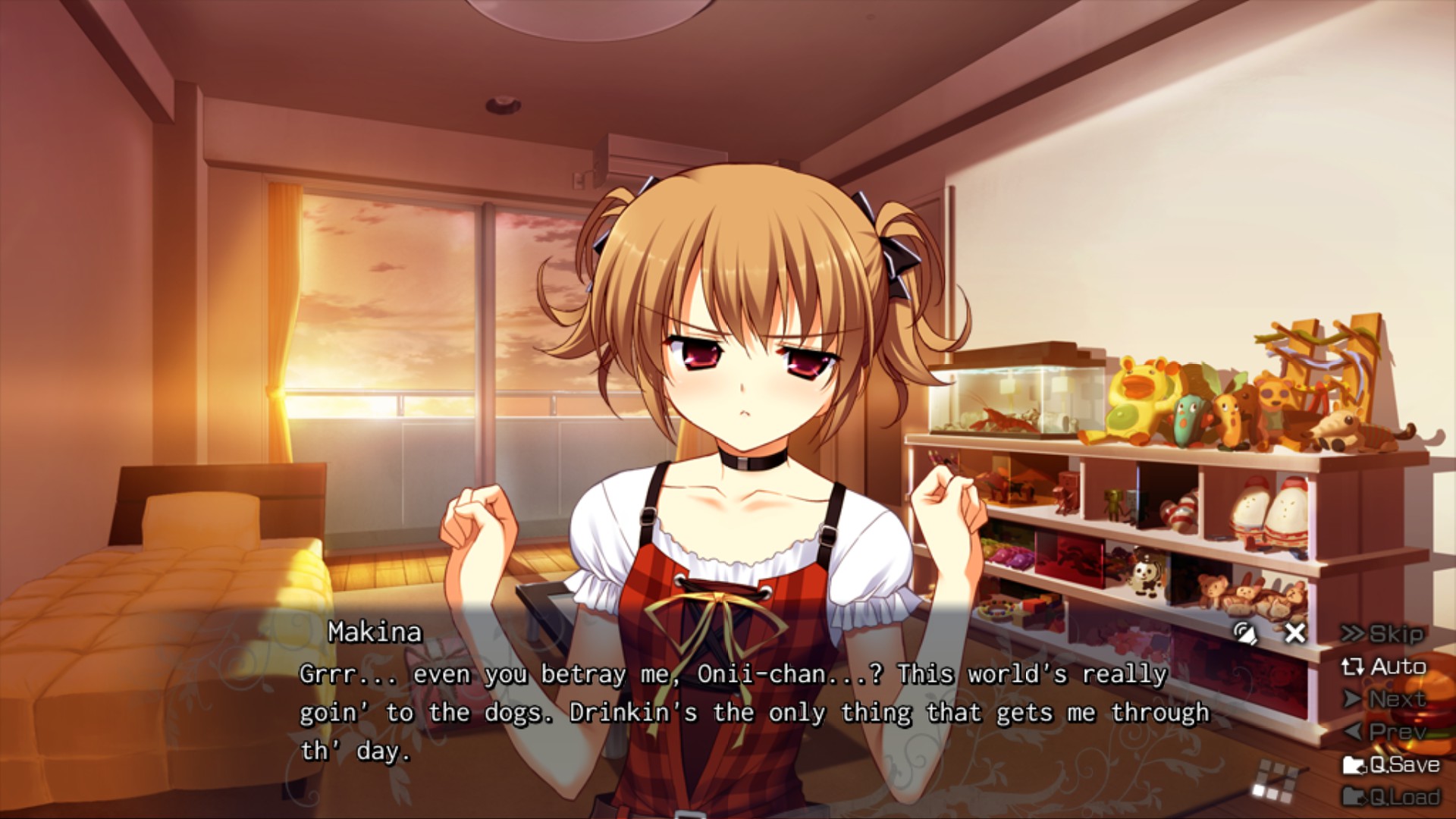
Makina is the resident loli of the group, with what initially appears to be a distinctly childish attitude, as well as a habit of blurting things out in English instead of Japanese, a personality quirk that is attributed to her having spent lots of time in non-Japanese countries during her formative years. Makina claims not to be particularly bright, but it's not long before she starts revealing that she's oddly quick-witted and has a pretty acidic tongue at times.

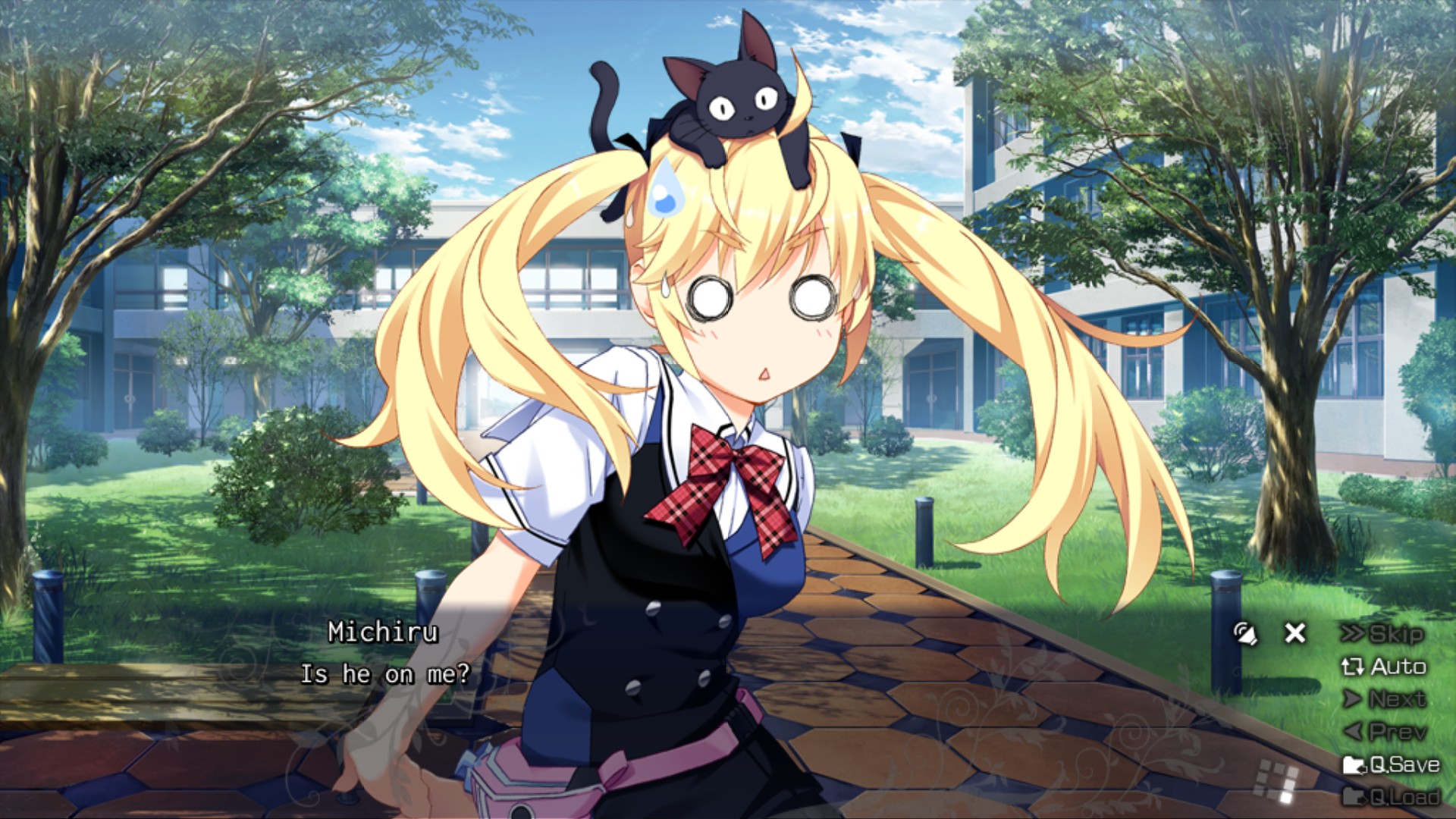
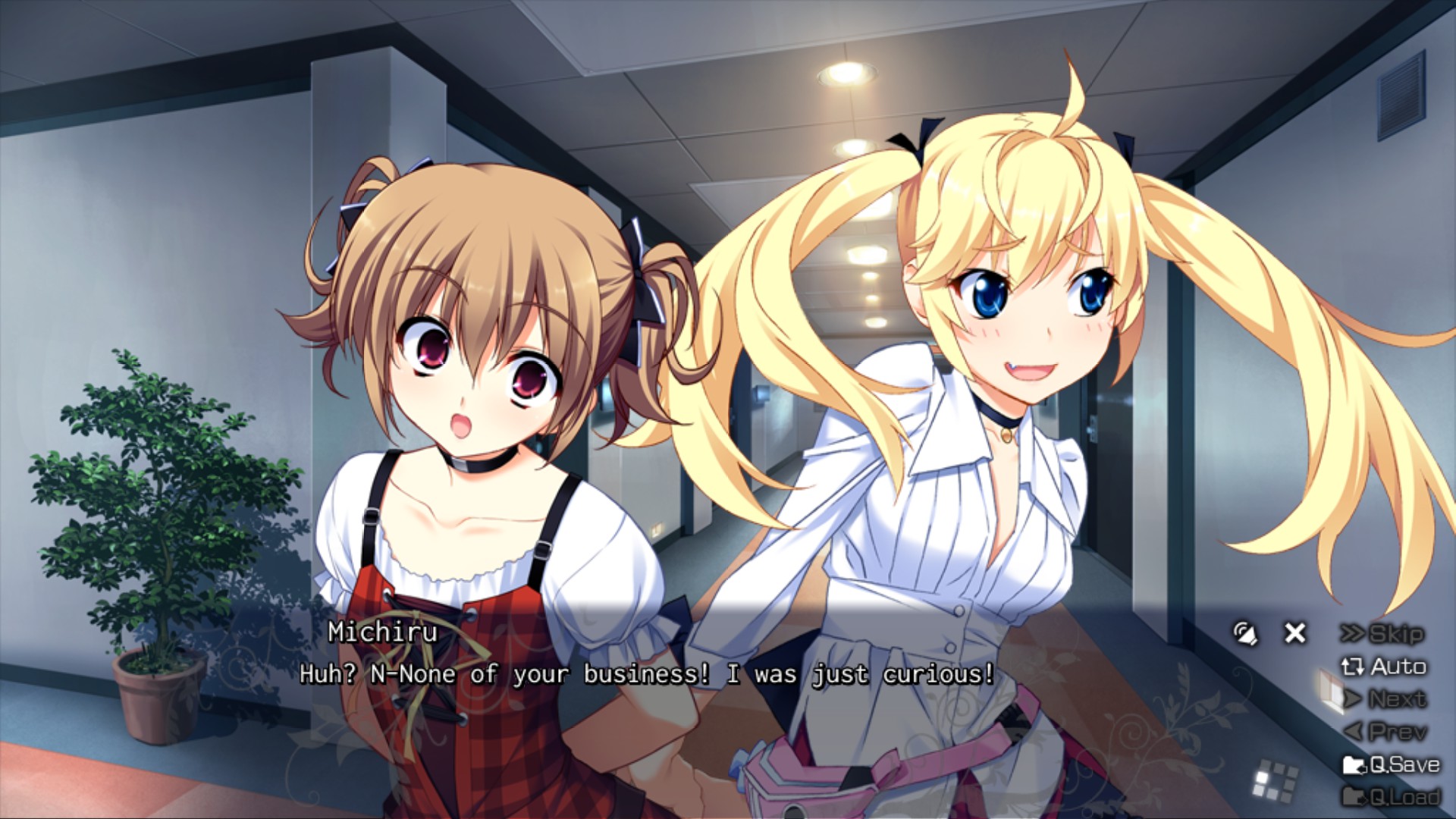
Michiru, meanwhile, is a self-conscious tsundere, or at least she wants to be. Yuuji's first encounter with her comes as she is rehearsing stereotypical tsundere lines, and she even congratulates herself on the successful delivery of a cliched zinger like "i-it's not like I'm doing this for you or anything!" or its ilk. Yuuji takes great pains to point out to the reader that he's not someone who likes to judge people on first impressions, but he finds the conclusion that Michiru is, in fact, a complete idiot inescapable after just a few days — though she does gradually start to reveal other sides to herself as time passes, particularly a caring, considerate side.

Sachi is a character Yuuji refers to as being "robotic" or "cyborg"-like, and this is because of her naturally demure nature and seeming inability to be particularly flustered by anything. She's extremely loyal, but also has a tendency to take things very literally and follow the "orders" of others without question. I don't quite know what her deal is yet, but I'm very interested to find out.

2015-09-03_00002

Finally, Yumiko initially appears to be the stereotypical "class president" type — aloof and haughty — but quickly reveals herself to have somewhat more disturbing tendencies, most notably her habit of swinging around a box cutter willy-nilly when she feels threatened. Despite the risk of injury — she attacks Yuuji very aggressively and persistently at the outset of the story — everyone seems to just sort of accept this as "just part of who she is", despite no-one seemingly knowing the circumstances behind what made her this way. I can see that there's going to be some interesting revelations about her later.

What I've enjoyed the most about The Fruit of Grisaia so far is how much it sets things up and teases them, revealing little pieces of information over time. We know nothing about Yuuji at the outset of the story, but he drops in details to his narration and internal monologue piece by piece until we can start to figure out a few things for ourselves. This keeps things interesting and compelling, particularly when combined with the more intriguing aspects of the main heroines' personalities. It's clear that each of them have something if not outright traumatic in their pasts, then certainly something that affected them deeply; the reason for the school's existence isn't yet clear so far as I've read, but it seems that their shared bond of "something not being quite right" with each of them is going to be a key aspect of the overall story.

I've been very much enjoying The Fruit of Grisaia so far, then; I have no idea how far through the whole thing I am, but I'm looking forward to reading it from "cover to cover" as it were; each of the five heroines are intriguing in their own unique ways, and far from being a typical harem setup, each of the characters seems to go out of their way to subvert some of the more typical tropes found in this sort of story. In short, it's already clear why this visual novel was voted the number one visual novel of all time by the folks over on Reddit's /r/visualnovels subreddit a while back; I'm sure this deeply interesting creative work will continue to enthral me for quite some time yet.

2040: Perhaps We Should Stop Insulting Fans of Japanese Games

0040_001Earlier today (or possibly yesterday, I think), a former colleague posted a piece on a site I used to work for bemoaning, not for the first time, the amount of "ecchi" content in modern Japanese games, particularly dungeon-crawling RPGs. (I'm not going to link to it.)

The piece did have an interesting point to make, which was to conjecture that many creators are interested in making sexually explicit — outright pornographic — games rather than just flashing the odd pair of panties like they do nowadays, and that it's the current strict censorship laws in Japan coupled with the platform holders' stranglehold on what sort of content does and doesn't get approved for sale that is holding this back from happening. I'm not sure I entirely agree with this — the nature of ecchi as opposed to hentai is to tease and titillate rather than be outright explicit, erotic, masturbation material — but it was an interesting point to consider.

Unfortunately, he then went off the deep end with accusations of games like Dungeon Travelers 2 — a game that, by all accounts from people who have played it and not pontificated for thousands of words about How Bad And Wrong Anime Panties Are, is very good indeed — being "borderline child pornography". When called out about it on social media and in comments, he then took to his personal blog to wag his fingers and make some snide remark about the current situation with former "Face of Subway" Jared pleading guilty to numerous child sex-related charges and how, given that situation, people really shouldn't be defending games that "advocate child molestation".

For fuck's sake.

I feel like I have written this post a thousand times over by now, but it seems that I need to write it again, if only to blow off the steam I've had building up inside my head all day. So this may get a little bit angry, and for that I make no apologies whatsoever.

For fuck's sake.

The "child pornography" line is one that is usually trotted out by people who want to criticise Japanese media without knowing anything about it. Yes, Japan has plenty of morally questionable material — to Western sensibilities — readily available. Yes, Japan was somewhat "late to the party" when it came to legislating against this sort of thing. Yes, Japanese creators still produce media that would simply be illegal in Western countries. But Japan is also a different culture. And this isn't excusing any of the things that I personally find morally repugnant — because there are plenty of things I want nothing to do with, just as there are plenty of aspects of Western culture I want nothing to do with — but it is worth considering when contemplating whether or not you should tarnish an entire country's cultural output with as scathing a brush as "paedophilia".

The assumption that "if you're into ecchi games, you're a paedophile" makes — mistakenly — is that people who enjoy this sort of thing cannot distinguish between fantasy and reality. I can guarantee you — speaking from experience — that a considerable proportion of people who like to take a walk on the ecchi side of life are doing so because it entertains them, not because it arouses them. Ecchi games are refreshingly frank, honest and open; ecchi games often have strong characterisation and realistic depictions of how relationships progress — including sexual encounters (or implied sexual encounters at the very least); ecchi games are completely up-front about what they are, and unashamed of that fact. More often than not, ecchi games are having fun with sex. They're using it in a cheeky way, or in some cases as a means of exploring characters. (Criminal Girls is a great example of the latter, with the characters' reactions to the light S&M scenes throughout changing as they grow and mature as people, and their relationship with the protagonist changes.)

What these games are emphatically not is a means for people who want to abuse children to get their rocks off. And this also means that people who enjoy these games are emphatically not paedophiles, or "advocates for child molestation". Do you seriously fucking believe that because someone made use of a silly game mechanic in Omega Labyrinth that they're going to go out and start squeezing the tits of random girls on the streets? Do you seriously fucking believe that someone finding a hand-drawn character in a game — with nothing whatsoever real about them except their voice actor, who is inevitably an adult — attractive in some way means that they're going to be pulling up a dirty old van outside schools and kidnapping children?

In other words, if you must acknowledge them at all, how about you criticise things you don't like without fucking insulting the people who do like them? That would be simply lovely.

I am absofuckinglutely sick of having to defend my hobby against people who take the lazy, "moral majority" approach and decry something they don't like as being "sleazy" or "skeevy" or, as we've seen above, far worse. In my experience, the Japanese games and anime enthusiast community are some of the nicest, most articulate, most friendly, most passionate people I have ever met. Through my coverage of Japanese games back when I was on USgamer — I'm sure fucking glad all the time and effort I spent on that wasn't a complete fucking waste of time — I've made some great and doubtless lifelong friends. And, moreover, I've been exposed to some really, genuinely great games — and not one of them has made me want to go out and fuck kids. Not even a little bit. How about that?

Compare and contrast with these puritanical fuckwits who just want to brand everything not on their Pre-Approved List of Things That Are Super-Rad!! as somehow Bad, Wrong and Problematic, and, well, I know which side I'd rather be on. I'll be over here with my fellow deviants, thank you very much.

1575: Crowdarchival

Since I finished both Steins;Gate and Saya no Uta recently (the latter was a whole lot shorter) I was pondering what visual novel I should read next this evening, and my thoughts were drawn to a disc I picked up from JAST a while back called the JAST Memorial Collection. This disc included several old JAST titles updated to run on modern machines, plus two additional games called May Club and Nocturnal Illusion. I recalled that a friend of mine had said that Nocturnal Illusion was particularly interesting and worth playing, so I decided I'd check it out.

Except it fell at the first hurdle. Being a super-old game, it does not like modern operating systems. It particularly doesn't like 64-bit Windows 7 and outright refused to start up at all.

It's been a while since I've encountered something that simply doesn't run at all, but my reaction to it is the same as it was back in the days of MS-DOS and EMM386.EXE: the insatiable feeling of "I MUST GET THIS GAME WORKING NOW IF IT IS THE LAST THING I DO." It doesn't matter if it ends up being crap; the fact that my computer is actively preventing me from exploring something flips a switch in my brain and causes me to go into full-on research mode.

In attempting to determine whether there was any way of getting Nocturnal Illusion to run under 64-bit Windows 7, I came across a project designed to do just that, known as ViLE. This seemingly abandoned project was designed to be a "virtual machine" for older visual novel titles, and specifically supports Nocturnal Illusion and May Club as well as a third title called Dividead. A bit of tinkering around and ensuring various pieces of game content were in the right place, and I eventually had Nocturnal Illusion up and running on my TV; not only that, but with the enhanced graphics of the untranslated Japanese remake, too. Neat!

I can't speak much to the content of Nocturnal Illusion as yet as I only gave it a cursory look to see if it was actually working. What I did think was interesting, though, was how the community on the Internet is a lot more willing to archive the past of video games — even obscure, incredibly niche titles like Nocturnal Illusion — than the big companies who, you'd think, would have the resources to be able to do so.

And this is great, because as an art form, video games are, to a certain degree, more difficult to archive than other forms of media. They're a lot more tied to technology than other art forms; a piece of music is timeless regardless of the media it's stored on, whereas a video game is inherently tied to a piece of hardware. You can't cram a Mario Kart cartridge into a Wii, for example.

And this is where the archivists of the medium come in. In many cases continuing to (illegally) redistribute games long after they've gone out of print, the archivists of the Internet are dedicated to ensuring that even modern audiences can enjoy titles that are theoretically completely incompatible with modern systems, be it through emulators or clever pieces of software trickery like ViLE.

I hope this never changes. While the legality of a lot of it is somewhat questionable, in some cases delving into the seedy underbelly of the Internet is the only way to be able to rediscover (or perhaps even discover) certain titles, even with the best efforts of high-profile retro specialists like GOG.com and Night Dive Studios. I don't see companies like GOG rushing to bring titles like Nocturnal Illusion up to date to run on modern machines — largely because of their adult content — and thus it is up to these amateur archivists, these heroes of digital preservation, to ensure that we can always celebrate the history of this rich and diverse medium of artistic expression — and of play.

1573: Open Book

Finished Steins;Gate completely this evening (apart from one "Tip" which remains at large, but as far as the game is concerned, I have all the achievements and all the CG images, so I'm happy with that) so expect some more in-depth commentary on that next week over on MoeGamer.

For now, I wanted to wax lyrical about the visual novel medium once again, since sitting down and "playing" Steins;Gate for most of today has been an enjoyable, enriching experience — and the majority of the time I've spent with it has been spent reading, unable to influence what's happening on-screen.

Those of us who grew up with video games in the '80s and '90s had the mantra "gameplay is everything" drilled into us from an early age. As technology improved and the CD-ROM era dawned, we started to see more and more reviews pointing this out; more and more reviews highlighting the fact that beautiful presentation counts for jack shit if your game isn't up to snuff.

And for a while, this was actually kind of true. The games that sacrificed "gameplay" in favour of impressive presentation — usually of the prerendered cutscenes or full-motion video variety — tended to suffer in two regards. Firstly, they weren't very fun to play. Secondly, the only other potential redeeming feature they might have had — telling an interesting, enjoyable story — tended to crash and burn due to the low budgets of games at the time. It's all very well having real, live actors in your game, but if they can't act for shit then it doesn't make for much of an interactive movie.

Here's where visual novels contrast with the early '90s interactive movie craze somewhat, even though they started to grow in popularity around the same time. Visual novels embrace the fact that they don't have any "gameplay" — and by that I mean moving a character around a screen, having perceived "freedom" to do what you want and so on — and present themselves as nothing more than interactive stories; effectively little more than multimedia takes on Choose Your Own Adventure books. In fact, in many cases, visual novels are even simpler than Choose Your Own Adventure books in that the vast majority of the narrative is prescribed for you, and you'll make only a few choices over the course of the complete story, rather than one at the end of every page.

And yet this doesn't matter. Not having to deal with the consequences for every possible tiny little thing the player might decide to do in a more "sandboxy" environment frees up visual novel authors to concentrate on the story and the characters who help to tell it. It's perhaps for this reason that so many visual novels tend to go down the romance route; because the virtual relationships you build with visual novel characters are much more intense and intimate than in most other types of game — character-driven RPGs excepted, perhaps — many authors allow the reader a degree of wish-fulfilment through virtual dating. (Of course, at present the vast majority of visual novels are designed to cater to male heterosexual players, but there is an established marked for other players in Japan that is gradually starting to make its way over here; Sweet Fuse on PSP and the Hakuoki series for 3DS and PS3 are good examples of "otome games" designed for heterosexual female players, for example — let's see a few more of these in the future.)

Not every visual novel necessarily revolves around love, though. At one end of the spectrum, we have the phenomenon of the nukige, which are games that deliberately focus on being sexually provocative or exciting, but which tend to still include considerably more characterisation and story (and better acting!) than you'd see in your average Western porn film; at the other, we have visual novels like Steins;Gate, where love might perhaps enter into the narrative at some points, but in which the main point is a different theme or piece of subject matter. (In the case of Steins;Gate it's several different interpretations of time travel and parallel worlds, for example.)

What I find most enjoyable about these games is that there's no "gatekeeping" based on skill or dexterity. You sit down to play a visual novel, you know you'll be able to "finish" it, assuming you set aside the time to do so. Reading a walkthrough doesn't feel like cheating, either, since all you're effectively doing is looking up how to explore the alternative narrative paths. Good visual novels make effective use of multiple endings and narrative paths to further flesh out the story, too; the best ones can even leverage their "bad" endings into a meaningful narrative context, as I touched on yesterday.

What I think I'm saying is that I'd actually be perfectly happy if, for whatever reason, the only games I was able to play were visual novels. There's diverse enough subject matter in them to keep them consistently interesting, and in most cases they're just "gamey" enough in terms of presentation to sate that hunger for multimedia content that most of us have in the modern age.

Am I only going to play visual novels from now on? Of course not; but as a means of enjoying an interactive story, they're hard to beat.

1560: Paradoxes and Worldlines

Time-travel fiction is notoriously difficult to get "right" (for want of a better term) because it brings all sorts of baggage with it, both from established (or at least popular) science as well as conventions of fiction. It can be interesting to see how different works of fiction tackle these aspects — if at all.

The visual novel Steins;Gate jumps in head-first and attempts to spin a plausible example of how time travel might actually work were we to invent it in our lifetime. But despite the heavy science component — Steins;Gate really doesn't hold back on the science side of things, which will delight those who are particularly interested in the "sci" part of "sci-fi" — it is, at heart, a story about people and how they're affected by the strange, unnatural phenomenon of moving through time in a non-linear fashion.

SPOILERS AHEAD for the Suzuha and Faris endings of Steins;Gate — if you're on the front page, hit Continue Reading (or whatever it actually says) to, err, continue reading.

Continue reading "1560: Paradoxes and Worldlines"