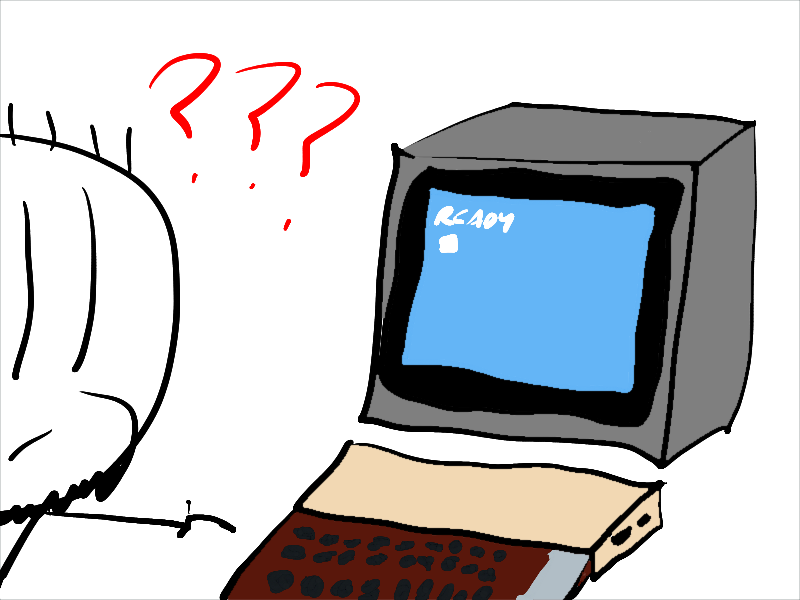
You see, it's funny, 'cause the original book was How Stella Got Her Groove Back, and Stella was the internal name for the Atari 2600, but I am more of an Atari 8-bit computer man, and the internal name for the Atari 800 was Colleen. Do you get it? No? Never mind. It made me happy, and that's what's important.
Anyway, yeah, I thought I'd update and reflect on my decision to refocus my YouTube channel back on the Atari computers that have always been so important to me, and it's been going well! Viewing figures for the last few videos have been very good (even bearing in mind YouTube changing the way it counts views a little while back), and I've been getting some good comments on each and every video, with a lot of regular viewers coming back for each new video.
In other words, I think this was the right decision. The temptation was always there to want to cover as much stuff as possible on YouTube, but in doing that you risk a few things: never being able to cover anything in as much depth as you want; never being satisfied that you've covered every thing you want; and never being able to nail down a consistent, recurring audience. Because while "retro gamers with broad interests" is definitely an audience, on a platform as saturated as YouTube is, specialising really does seem to be the way forward. As with, I would argue, pretty much all kinds of media; sadly, the mainstream video games media never learned this lesson and now we barely have any. But I digress.
I thought I'd take this opportunity to share my recent videos on the off-chance you've been reading this for God knows how many days and you've still never paid my YouTube channel a visit. I've somehow made 1.2 thousand videos on there over the years — although I will grant you that there are a chunk of those which are nothing but raw gameplay. The vast majority involve either my "live" commentary, or a reading of something I've written, though. The former, with a brief(ish) introduction to give some historical context, are where I've settled on what I enjoy doing the most; the latter occasionally break out and do very well, but the former is, for me, the more sustainable format that I can keep on doing without it feeling like work. Because I want YouTube to be a fun hobby, not something that becomes a second job.
Anyway, with that in mind, I don't make a lot of effort pushing these videos outside of their immediate audience and a cursory share on Bluesky when they're first published. I frankly cannot be arsed with all the promo work you're "supposed" to do if you're trying to build an audience, and to be honest, I've never really been trying to build an audience. All I'm doing with YouTube is doing something that amuses and entertains me, and if people happen to stumble across it and find it entertaining or informative, so much the better. Same as what I do with my writing, really; I have no great designs on being "famous" or anything, but it is nice when someone happens across your work and is able to take something worthwhile away from it.
Enough of that, though. Here are some videos about old games on older computers.
The rebooted Atari A to Z series, focusing on Atari 8-bit computers, began with a look at a game I've been meaning to cover for ages: Astro Chase by First Star Software. This is a cool multidirectional shoot 'em up with some flashy graphics and cutscenes. It even made it into arcades… kind of, anyway. It's a great game, but one I've just never gotten around to until now.
Next up is Batty Builders, a game by English Software, a company that was renowned for its high-quality output on Atari 8-bit in the early to mid 1980s. Batty Builders is an intriguing take on the action-puzzle game, and pre-empts pretty much every other "falling block" puzzle game I can think of with its own distinctive twist on the formula. Its balance is questionable, but it's a game I've always been very fond of.
Then we come to Clowns and Balloons, a game by the prolific Frank Cohen, and one of the first games I remember playing on Atari 8-bit. It's a simple game about bouncing a clown on a trampoline to pop a bunch of balloons, but it's well-presented, looks and sounds great for the time, and plays well. This is one I regularly go back to if I'm just playing Atari 8-bit for fun of an evening.
Next we have Desmond's Dungeon, a game I remember hearing the name of a lot, but which I had never looked into. Loosely (very loosely) based on the arcade game Bagman, or at least modern commentators tend to conjecture, it's an arcade-style game with some good presentation, solid mechanics and decent overall gameplay. Perhaps a bit repetitive over the long term, but it at least introduces some intriguing elements to the mix as you progress through its difficulty levels.
Archipelagos is the game that kicked off my new "season" of Atari ST A to Z. This is a game I always thought looked amazing back in the day, but could never picture how it actually played. Turns out it's pretty simple, but thoroughly compelling and very atmospheric. This is one I intend to spend some more time with by myself now I've made the video.
Eastern Front (1941) is a wargame designed to be deep and complex, but also accessible and easy to control. Sure enough, it is very straightforward to get started in, but the intricacies of play could keep one busy for a very long time indeed. Suffice to say as a wargame newbie and strategic idiot, I barely scratch the surface of its possibilities in this video, but it should be enough for those interested to "get" what it is going for. Noteworthy for being the creation of the immensely talented and very clever Chris Crawford, who produced some of the most interesting, deep, inventive games on the Atari 8-bit.
We return to a classic Atari series with Blasteroids, the third entry in the Asteroids series, released during the "Atari Games" era. The Atari ST port of this game is pretty solid, though Atari Games pulling a lot of its usual bullshit — tutorial messages, constantly draining health, harsh difficulty spikes — does mean it puts up a bit of a fight. I have always been rather fond of this game, though, and it was nice to revisit it.
Finally, for now, we have Firefleet, a vertically scrolling shoot 'em up by the same guy who gave us Batty Builders. It's riffing on the Caverns of Mars formula, but has plenty of its own things that make it appealing and interesting. Caverns of Mars is, overall, the better game, for myriad reasons, but this is certainly an interesting title that those who have the patience to deal with its difficulty wall seem to really like.
And that's that for now. I have another Atari ST video in the pipe ready to go out later this week, then at the weekend I'll likely be making some more videos. I'm settling into a good rhythm of doing these, now, so hopefully these will be reasonably regular. I hope you enjoy them, whether you're a newcomer to my channel or you've been stopping by for ages. And if you've never experienced the games of the Atari 8-bit and ST computers, well, I have a huge library of both for you to take a look at on the channel!
Want to read my thoughts on various video games, visual novels and other popular culture things? Stop by MoeGamer.net, my site for all things fun where I am generally a lot more cheerful. And if you fancy watching some vids on classic games, drop by my YouTube channel.
If you want this nonsense in your inbox every day, please feel free to subscribe via email. Your email address won't be used for anything else.
When I was a kid, I used to collect badges. I stored them in an old Cadbury's Fingers tin which, as it happens, my parents had been holding onto. This weekend, I reclaimed this box, so I thought it might be fun to go through and see if I can remember what on Earth these mementos relate to.
There are 69 of these buggers (nice, etc.) so I will be brief with each one — and, of course, there are some I simply don't remember the context for. But anyway! Let's 'ave a look, shall we?
In no particular order…
It's Garfield, spouting one of his occasional catchphrases. I don't believe this was a promotional tie-in for the video game Garfield: Big, Fat Hairy Deal, as the artwork and colour scheme doesn't match. It's more likely this was either a purchase bonus for one of the Garfield books, which my parents used to collect, or just something that was bought for me because I liked Garfield.
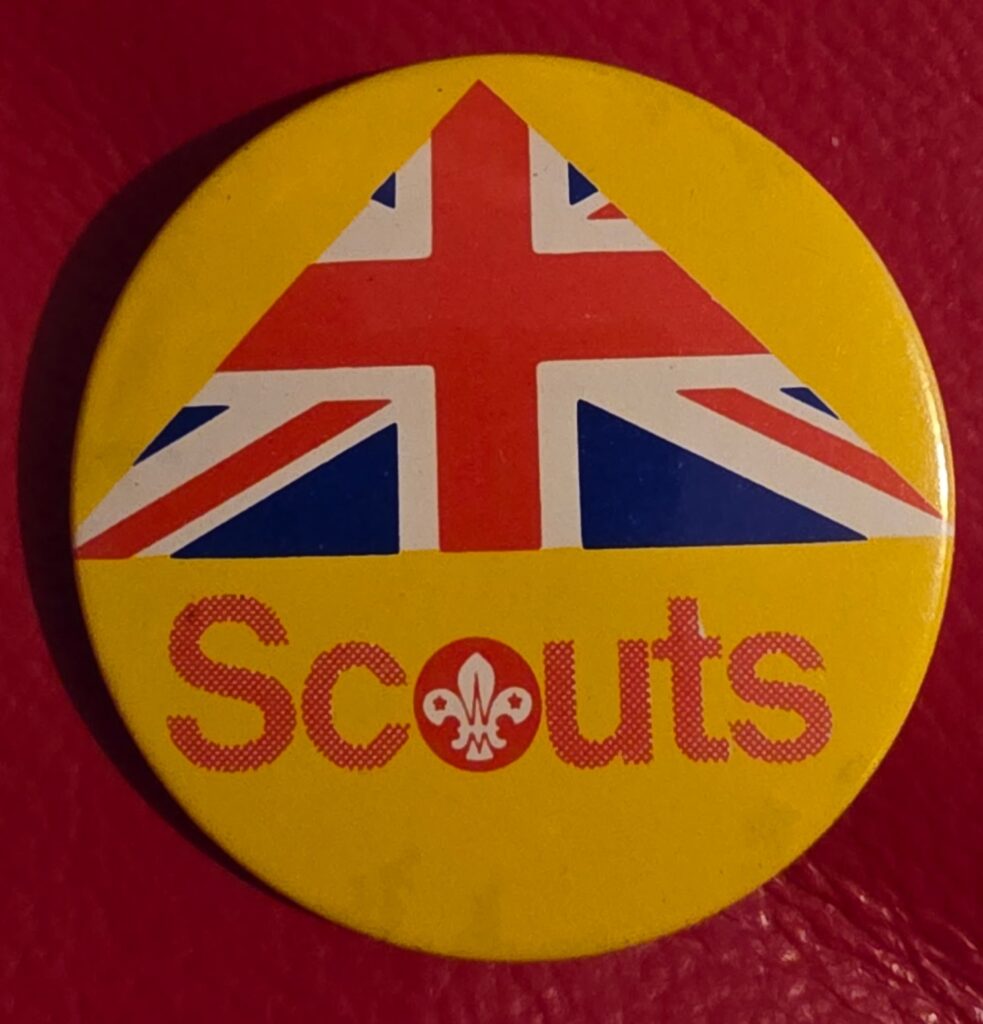
I was in the Cub Scouts when I was a kid, so it's not surprising that I have a badge themed after the broader Scouts organisation, sporting the distinctive fleur-de-lys icon and a rather militaristic, patriotic emblem that reminds me of the intro to Dad's Army. We were never involved in a World War while I was a child. Not that I remember, anyway.
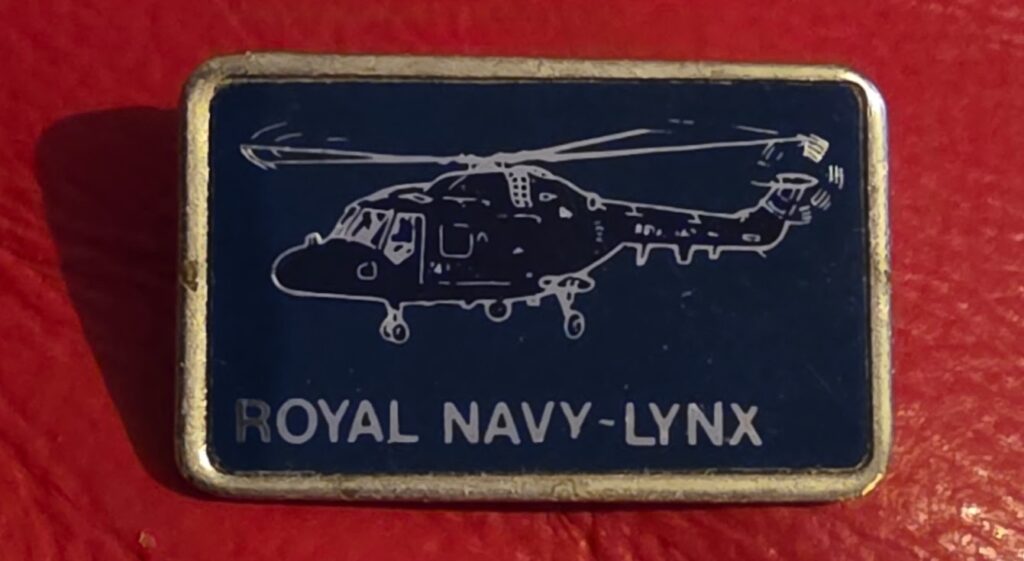
This is likely a badge from some air museum or other. My Dad is a massive propellerhead and I had a casual enthusiasm for planes too — though primarily from the perspective of flying them on the computer. I suspect this came from a museum that had one of these helicopters on display somewhere, but there's no indication of the specifics.
Ernest Read was a conductor and music educator who ran a series of musical concerts specifically aimed at children between 1945 and the late 1990s. I evidently went to one and got this badge as a commemorative souvenir.
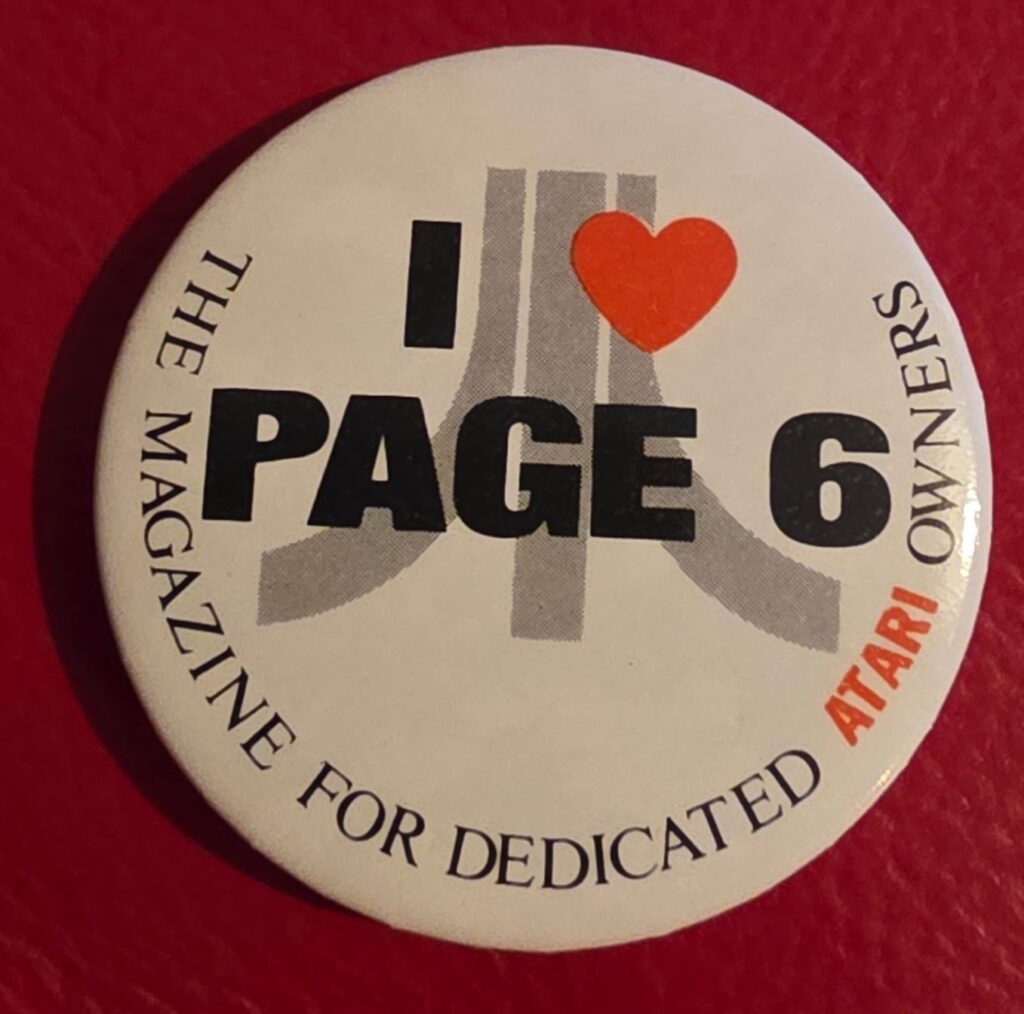
This one probably needs no introduction to viewers of my YouTube channel; it's a badge for Page 6 magazine, the Atari-centric publication that my Dad, my brother and I all contributed to at various points.
Drawing a bit of a blank on this one. As you can probably imagine, "Just Desserts" is a popular pun name for places that serve food. I suspect it's somewhere I went for a birthday or a party or something — or perhaps we just found it noteworthy that there was a place which served nothing but desserts.
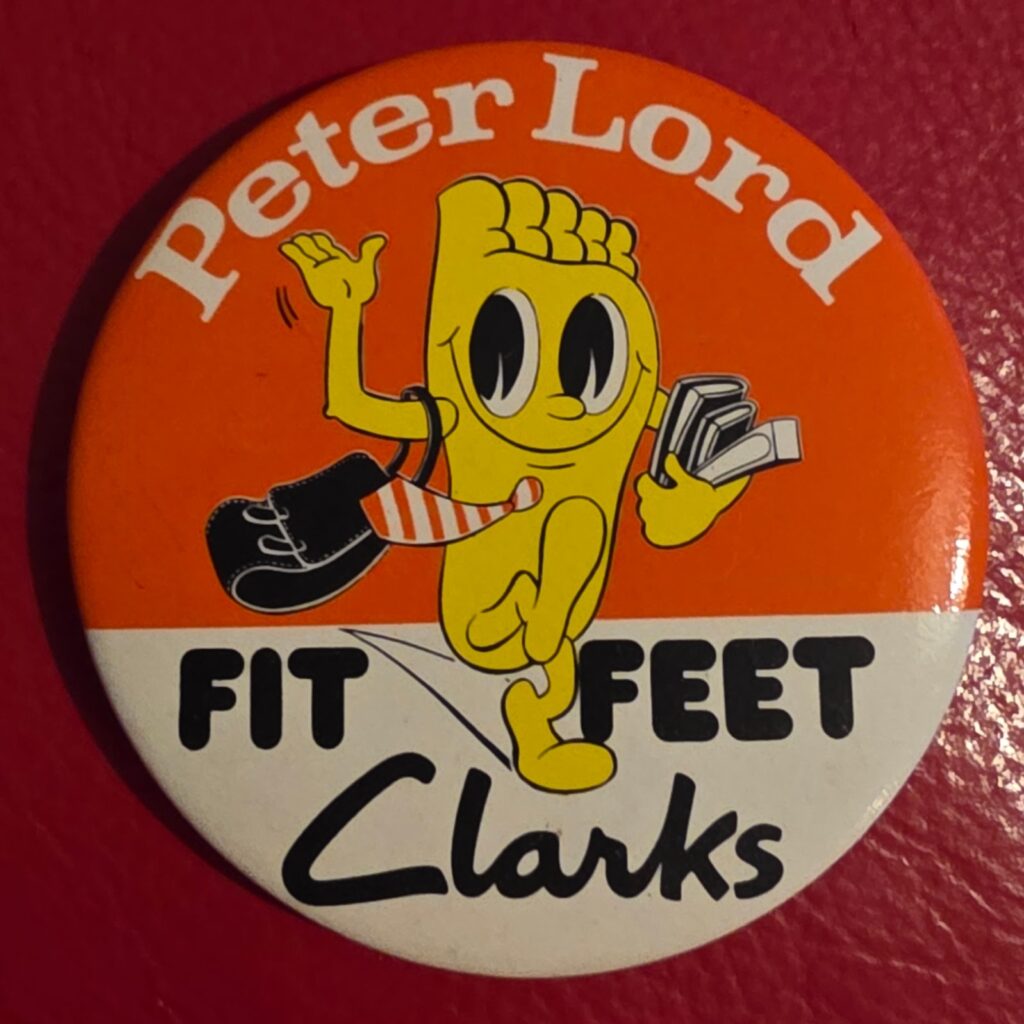
This was, I suspect, a badge I got after getting some school shoes from Peter Lord, the name at the time for the chain of shoe stores attached to the Clarks footwear brand. I imagine the whole "Fit Feet" thing was some sort of "well done, you, a child, got your feet measured without being weird or annoying about it". Please do not be weird about feet in my comments section.
Harry Ramsden's is a chain of fish and chip shops here in the UK. Back when I got this badge, they weren't nearly as widespread as they are today — nowadays you can find them in most food courts and motorway service stations. I want to say the one we went to was in Devon or Cornwall, and it was An Event to go there.
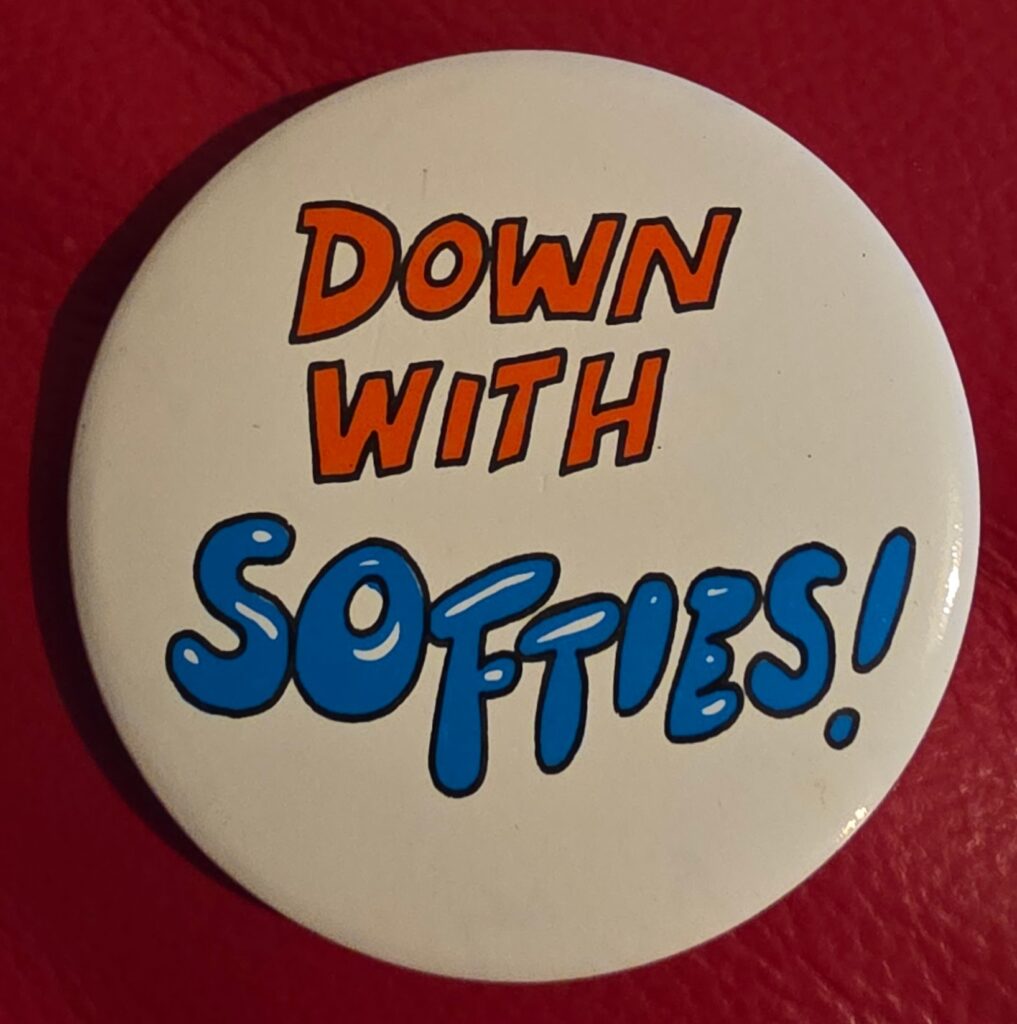
This badge likely hails from the Dennis the Menace Fan Club, which I was a member of. "Softies" referred to the group of kids who were the perpetual butt of Dennis' jokes, led by Walter the Softy. Softies were implied to be effeminate, rich, posh kids and the natural antithesis to Dennis' mischief. Back when I read The Beano, the Softies were regularly bullied by Dennis and it's not unfair to say that, at times, this was not a great message to be sending to kids — particularly as the Softies' only sins at the time were being into things that were outside the typical definition of "masculinity". Consequently, in more recent years, Walter has apparently been made into a more antagonistic figure keen to stop kids having fun, rather than just being someone who was into "girly" things.
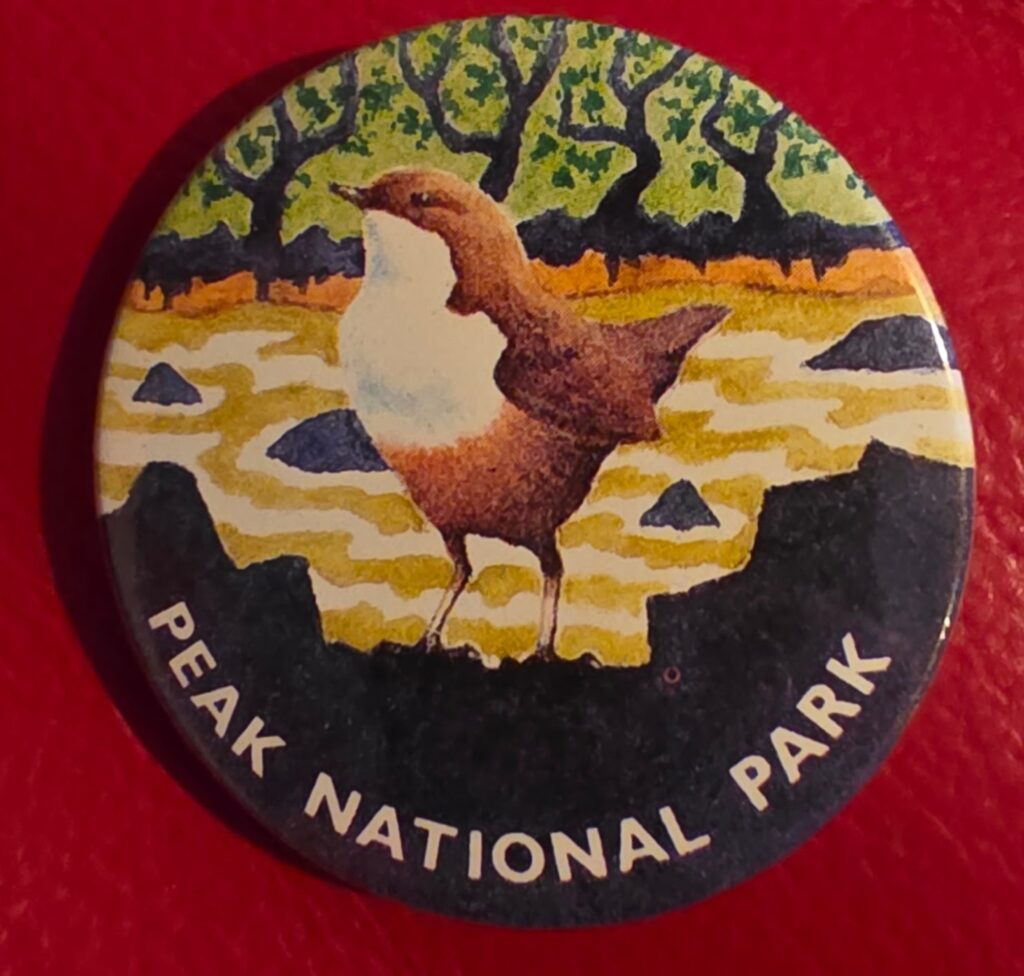
This one's pretty self-explanatory: it's from a visit to the Peak National Park in the UK. I forget the exact instance, but I probably went on a trip with my parents (and perhaps their friends who lived around the East Midlands) and acquired this then.
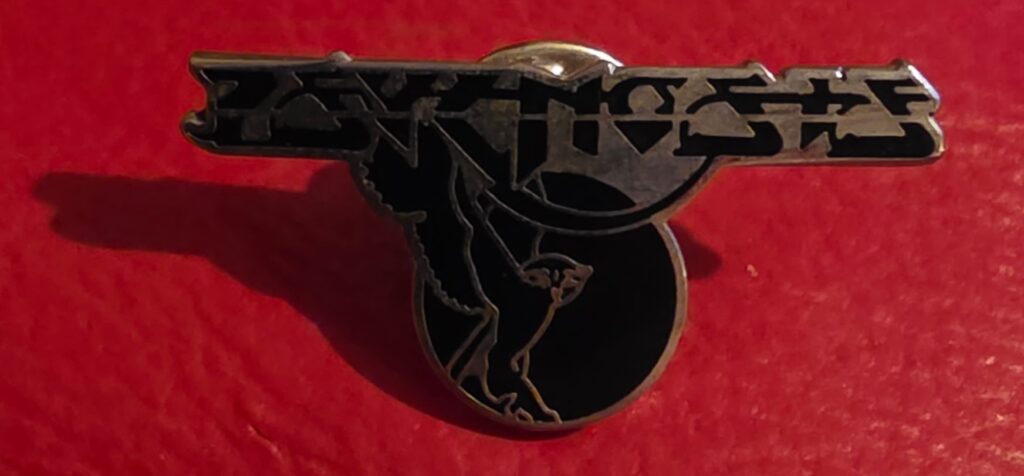
Here's a cool (and impossible to photograph) pin badge featuring the Psygnosis logo from the Atari ST days. This was most likely acquired from some computer show or other.
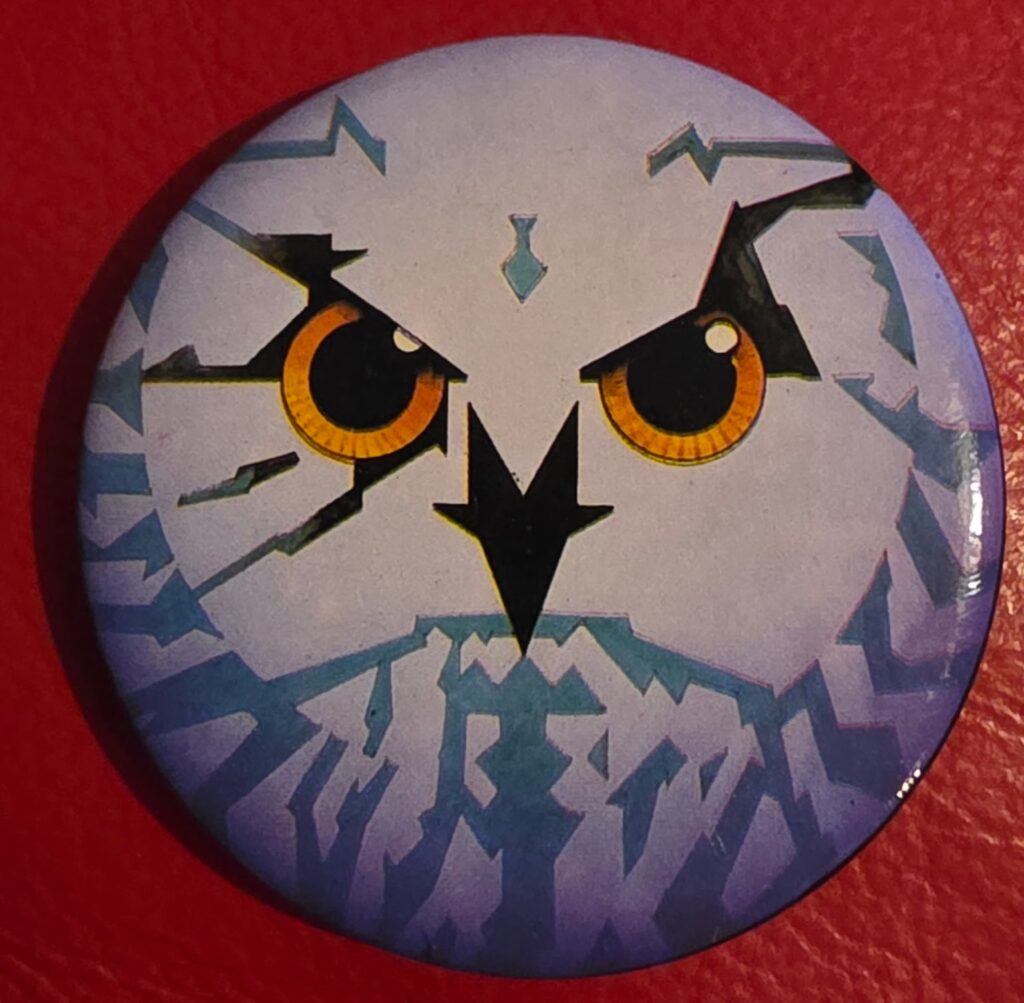
To go along with it, here's a more regular badge featuring the face of the company's owl mascot.
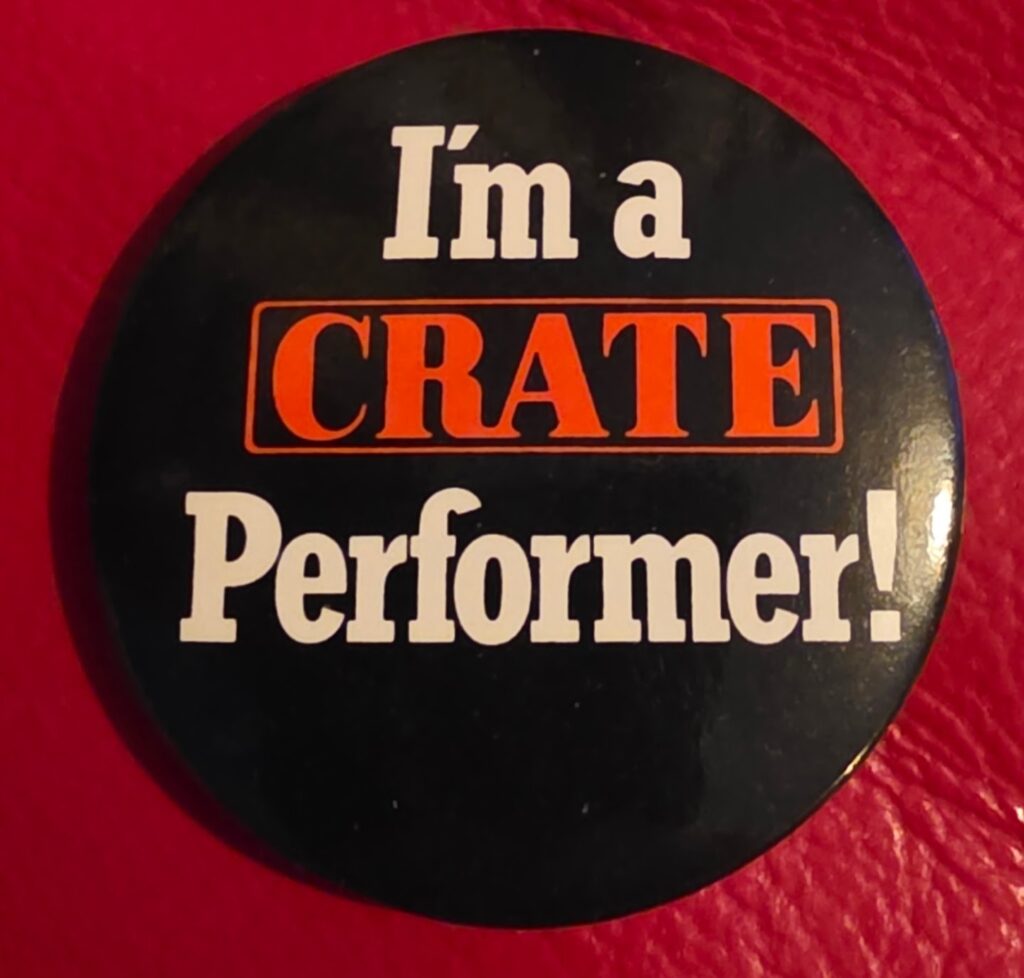
This appears to be a promotional badge for Crate-brand amplifiers. The company has been through numerous logos over the years; this would have likely been from the mid to late '80s. I've no idea where I got it — perhaps a music shop? My brother mainly used Marshall-brand amplifiers for his electric guitars, if I remember correctly.
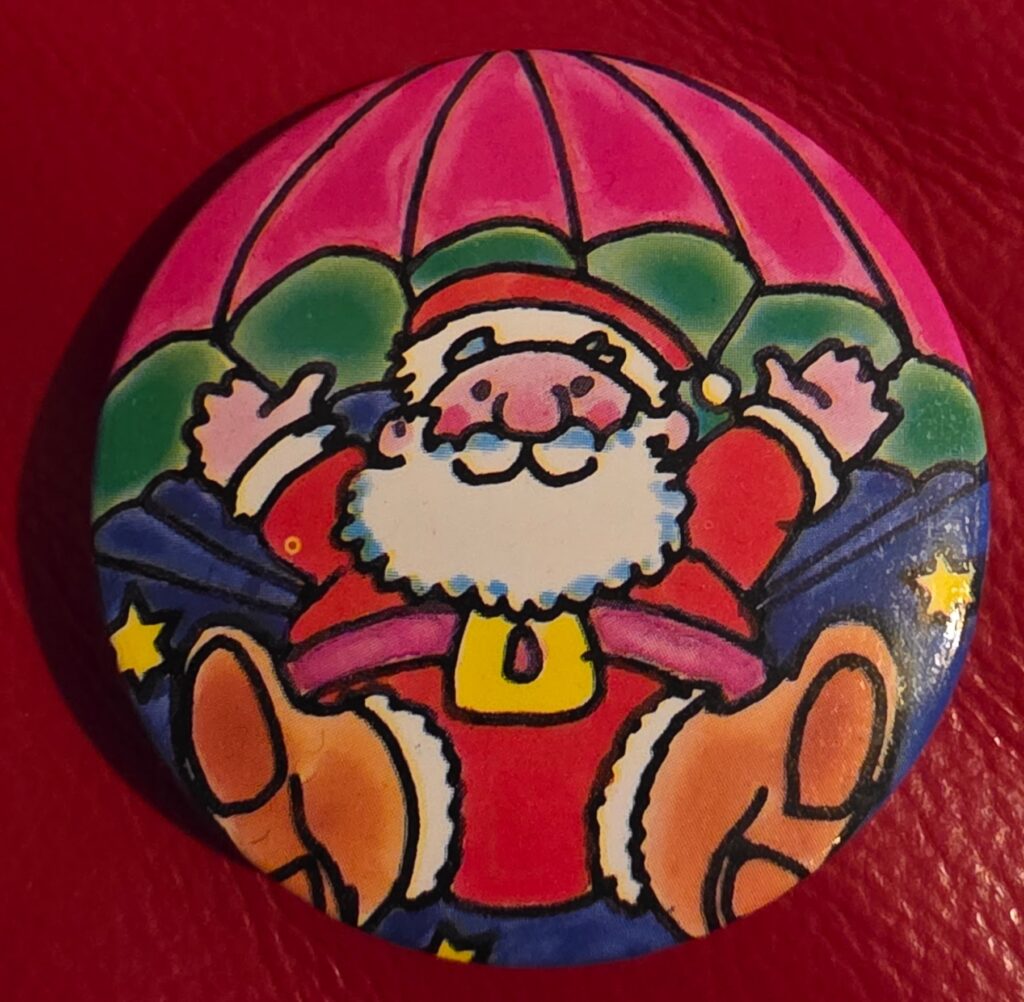
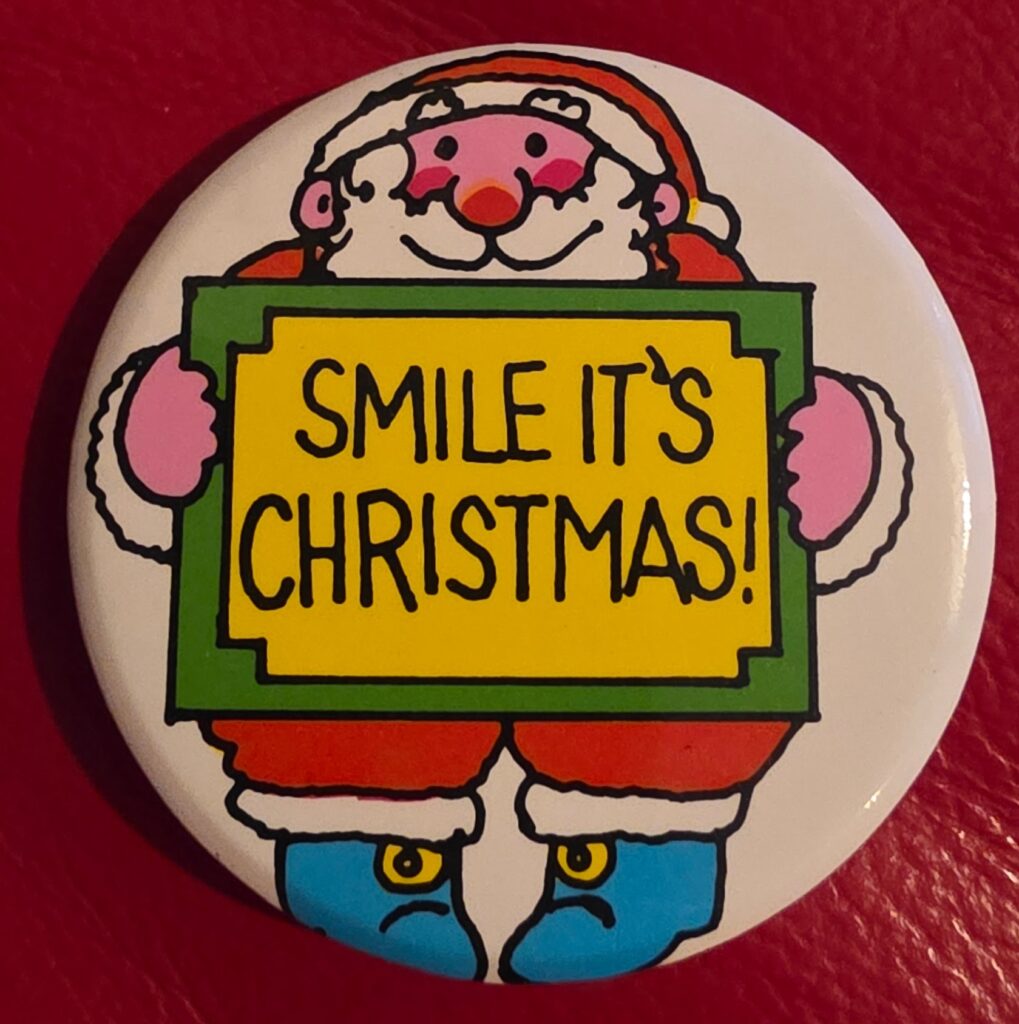
Christmas! Hold on, there's another one like this somewhere…
Try not to get too angry about the missing comma. And try not to look at Santa's boots and see two grumpy faces. There, I ruined it.
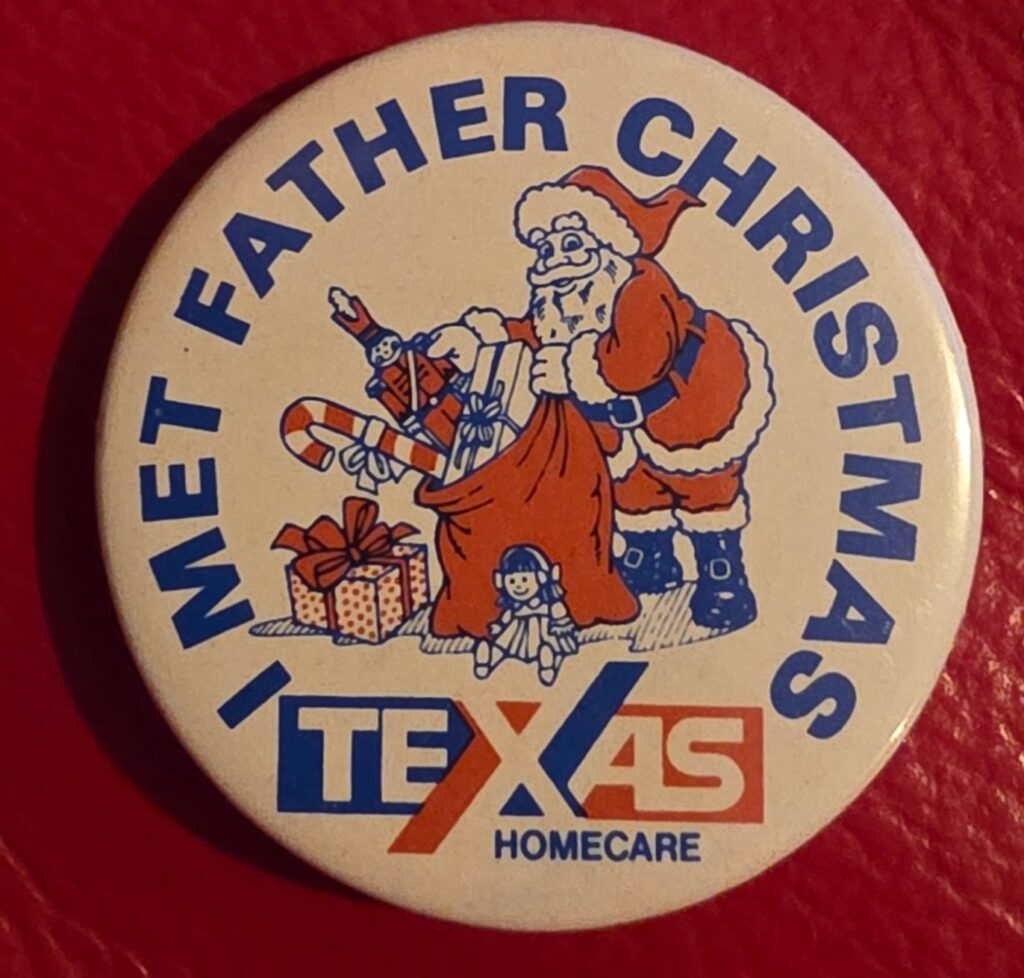
Another Christmas badge. For context, the modern equivalent of this would be a badge that sad "I Met Father Christmas at Screwfix". Although from what I recall, our local Texas Homecare did make an effort with their Santa's Grotto display in the middle of the store. An attempt to placate the children who got dragged around there, no doubt; I absolutely hated going to Texas Homecare.
This is from Newark Air Museum. In an interesting coincidence, my Dad actually volunteers there now, but this badge is from many years ago — likely from an occasion when my Dad, his friend Mick and I went along to go and look at the aeroplanes.
I like how this badge says Bumblebee but doesn't actually depict Bumblebee. I did not have a Bumblebee toy, so I'm unsure where this would have come from.
Likewise this one; the only Decepticon toy I had was Astro-Train, who was a "Triple-Changer": he could be a robot, a space shuttle or a train. One of those always seemed somewhat less practical than the others.
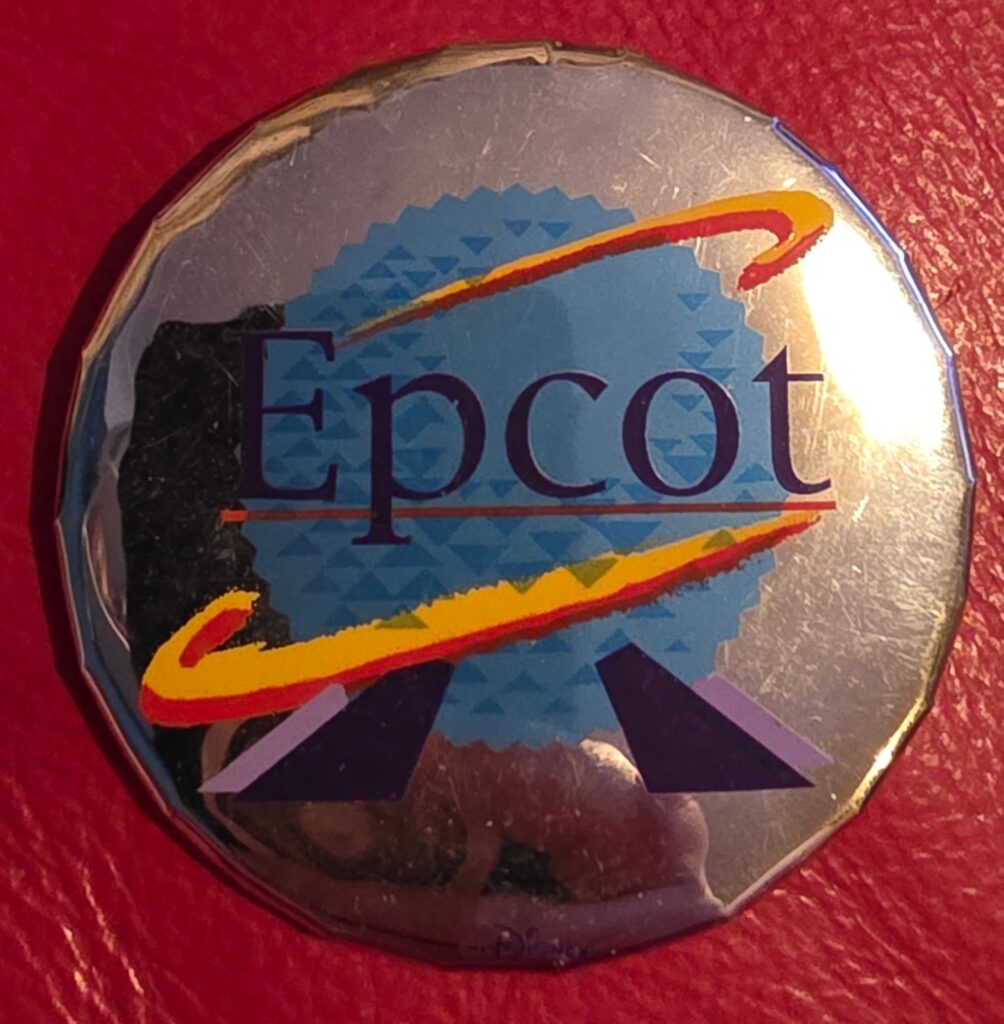
Another tricky to photograph badge due to the reflective shiny bit. This is from Epcot at Disney World in Florida, I suspect from the second time we went, which would have been around… 1995, 1996 or so I reckon? (The first time we went was in 1985, and the second time was approximately ten years later.) It depicts the big "golfball" that houses (housed?) the Spaceship Earth ride. Epcot, if you're unfamiliar, is a campus that attempts to look at various aspects of "the future", as well as the history of how life and science have developed over time. It was thoroughly interesting as a kid, and I bet it's even better as an adult.
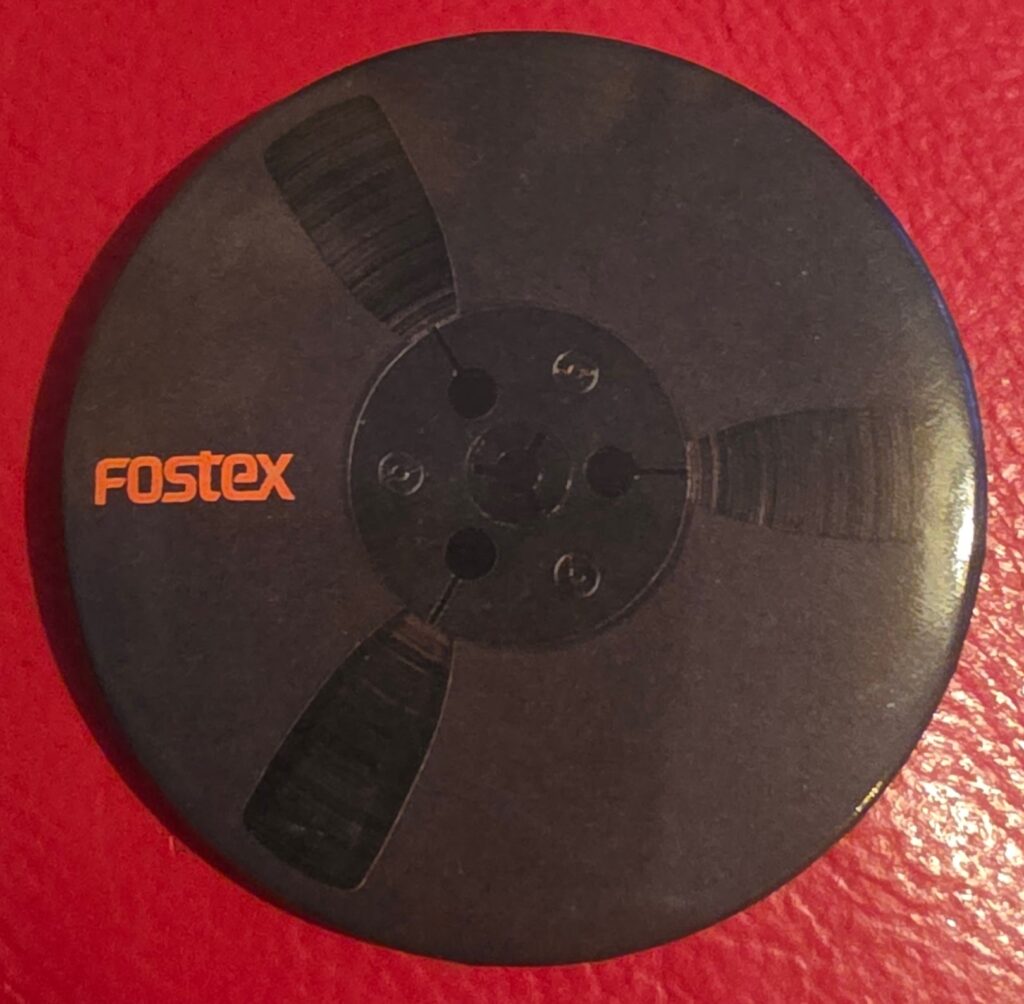
This one's a cool, understated badge. Promotional material for Fostex-brand audio equipment. No idea where it came from; I would guess a music shop or show.
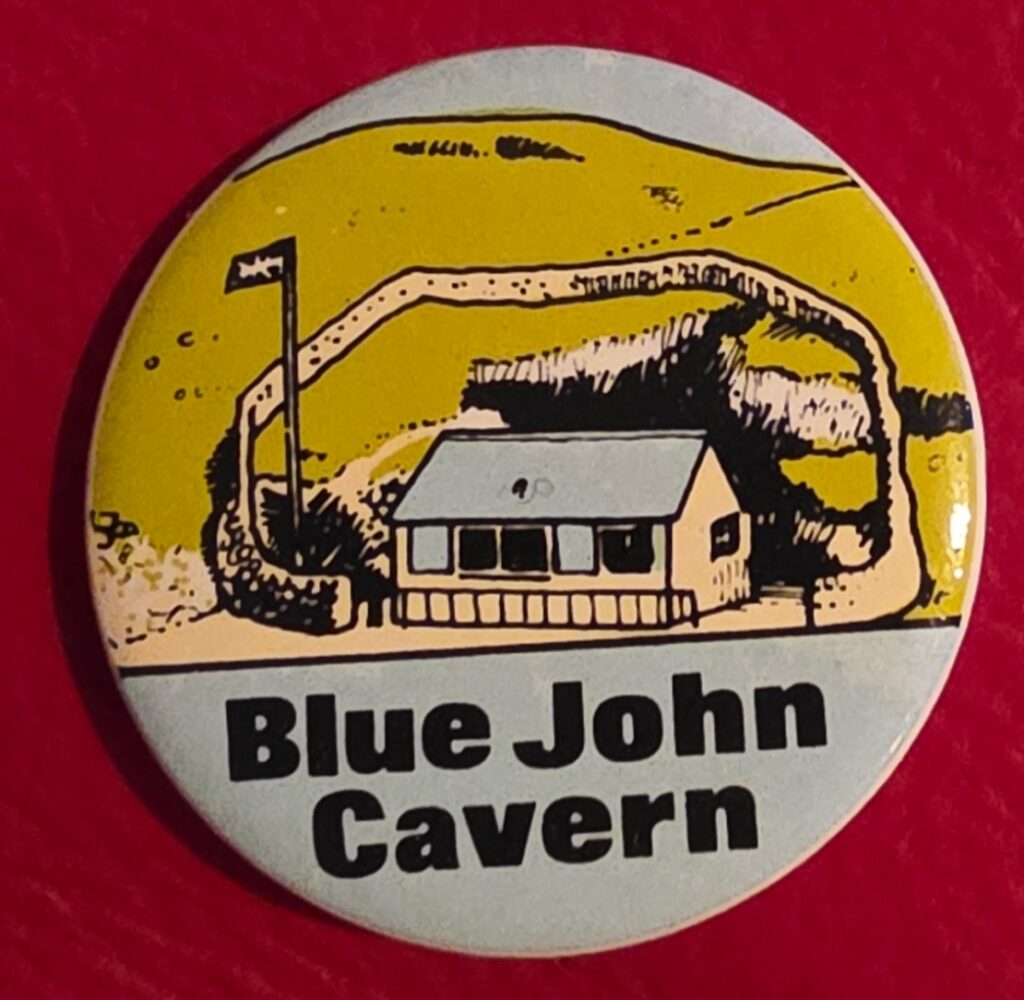
This is from one of those trips I mentioned with my parents' friends from the East Midlands. Blue John is an attractive, semi-precious mineral that is showcased in a cavern in Derbyshire. It's one of those places where you get to go in a cool cave, but in an entirely safe, guided manner. I think I learned the difference between stalactites and stalagmites here; if you're curious what I learned, it's that stalactites cling "tite" to the ceiling, while stalagmites "mite" reach the ceiling if they grew enough.
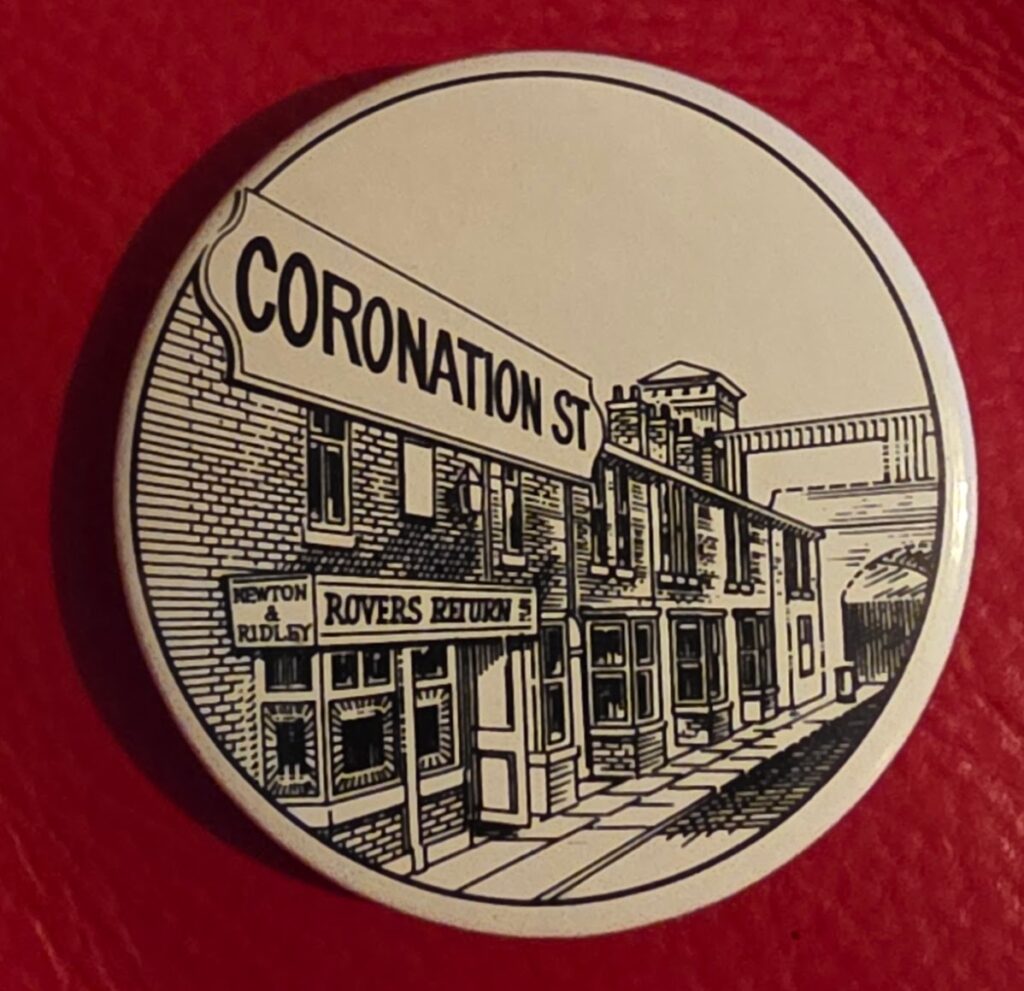
This one would have been from a trip to Granada Studios in Manchester, where part of the attraction was the ability to walk on the Coronation Street set. For international readers, Coronation Street is one of several long-running soap operas we have in this country. I know very little about it other than the fact my Nan used to watch it.
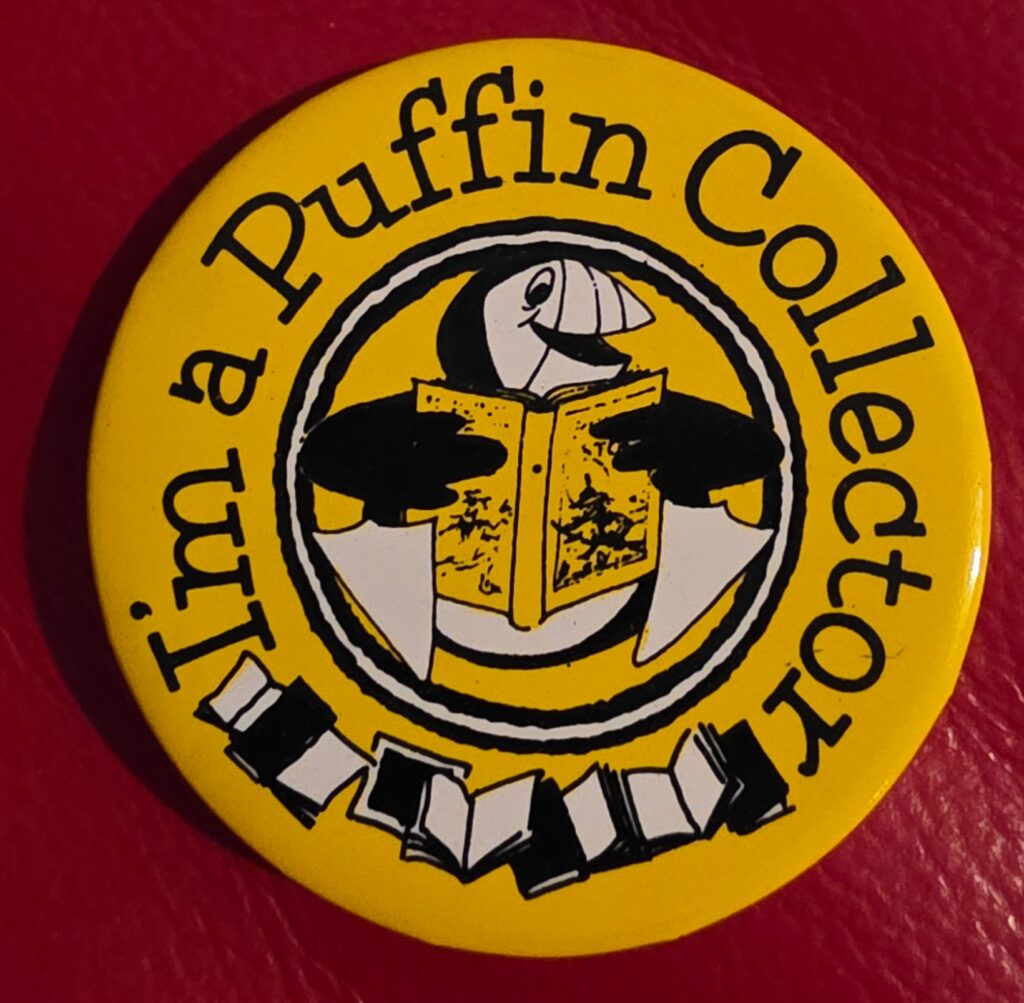
This one would have come from a school book fair, where Puffin books made up the bulk of the inventory. Most of our "Reading Books" at school were Puffin-branded, and I had a fair few at home, too.
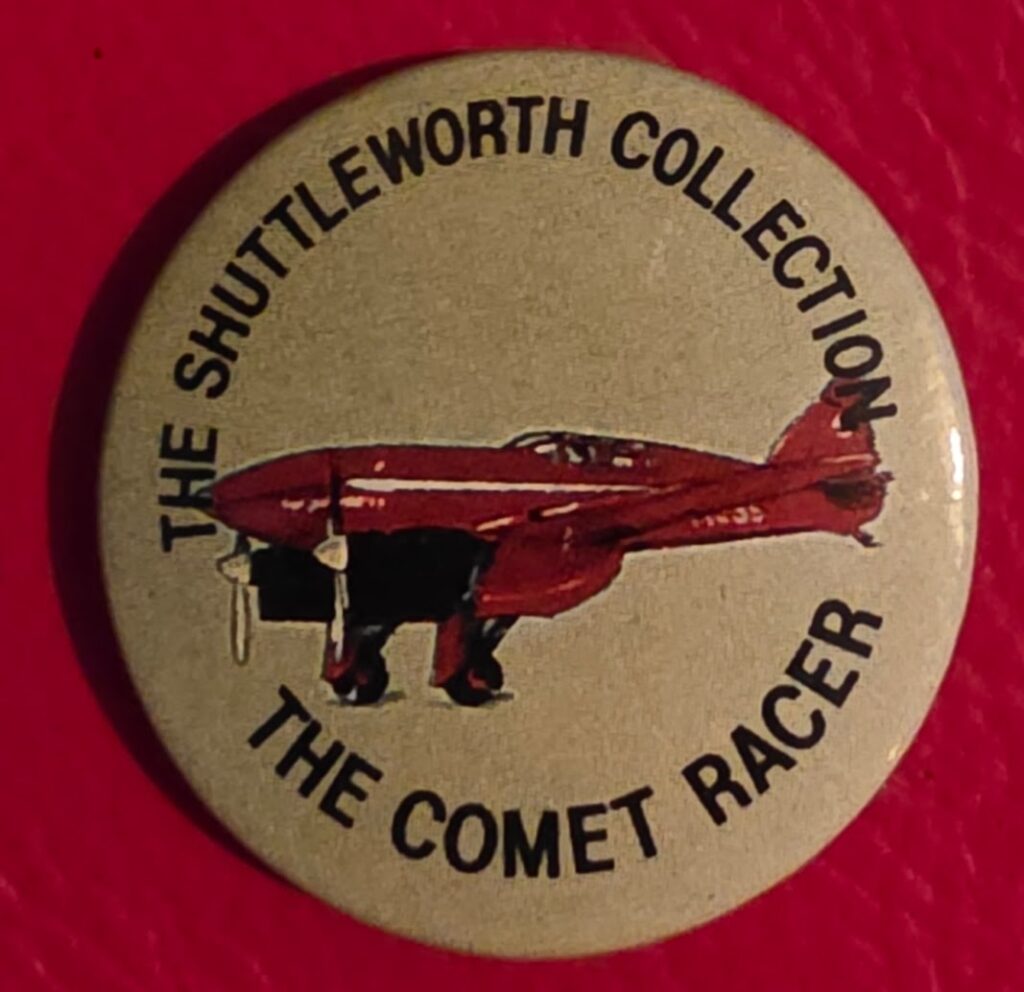
The Shuttleworth Collection was an air museum near Bedford, so quite close to where I lived as a kid. This would have been acquired during a visit there with my Dad — presumably when the aircraft depicted was on display.
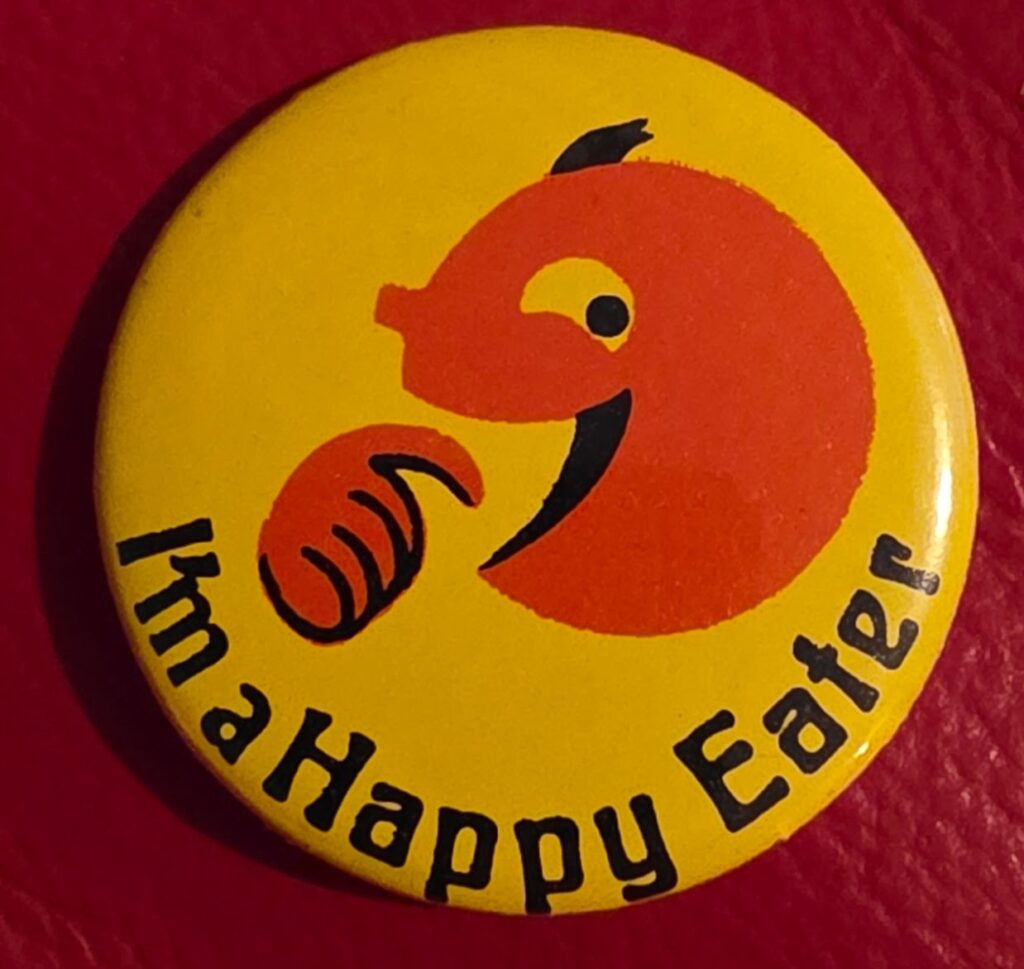
Happy Eater was a chain of family restaurants here in the UK, usually found at service stations on major roads. They were not amazing quality, but they were popular destinations for kids' birthday meals and suchlike. This badge would have been acquired on one such occasion.
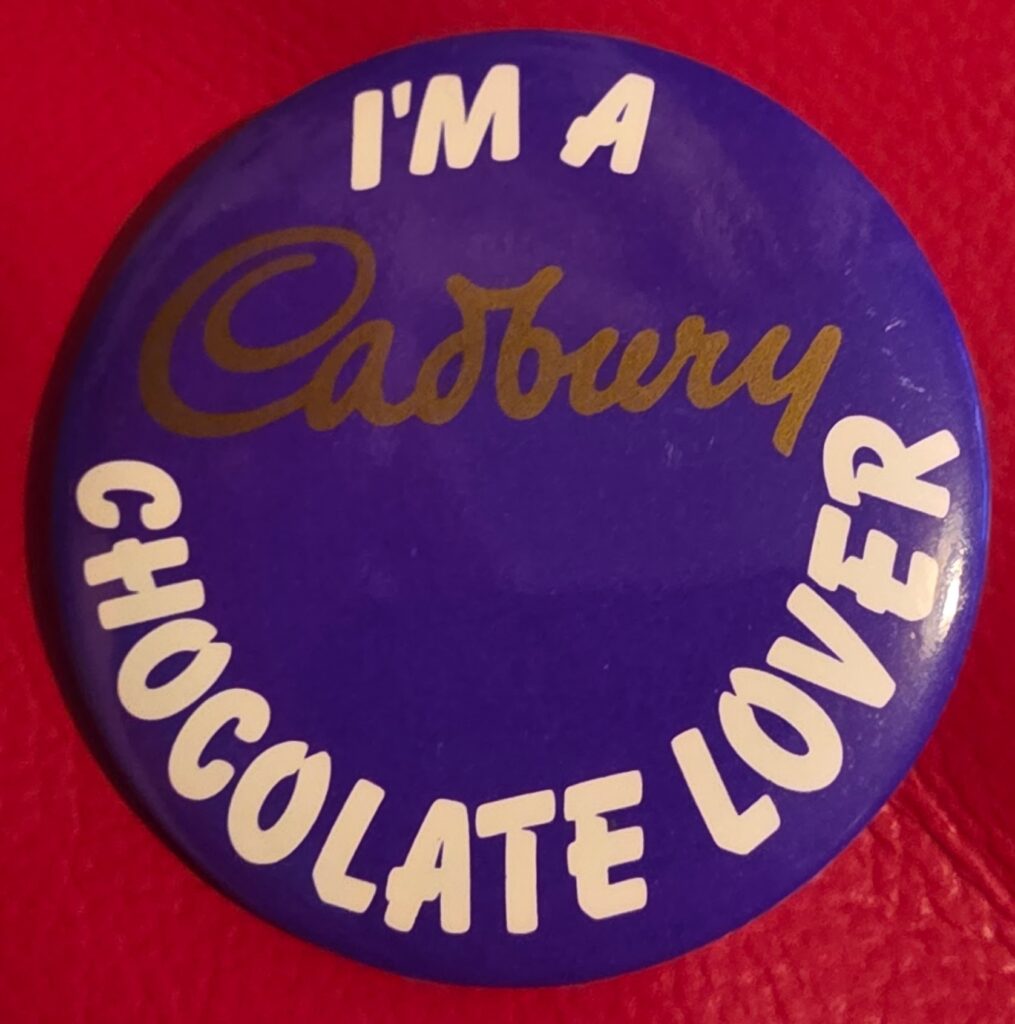
This one almost certainly came from a visit to Cadbury World, where you could tour the chocolate factory and find out about the history of chocolate — including trying the traditional Aztec chilli-and-chocolate drink. I remember it being a good day out.
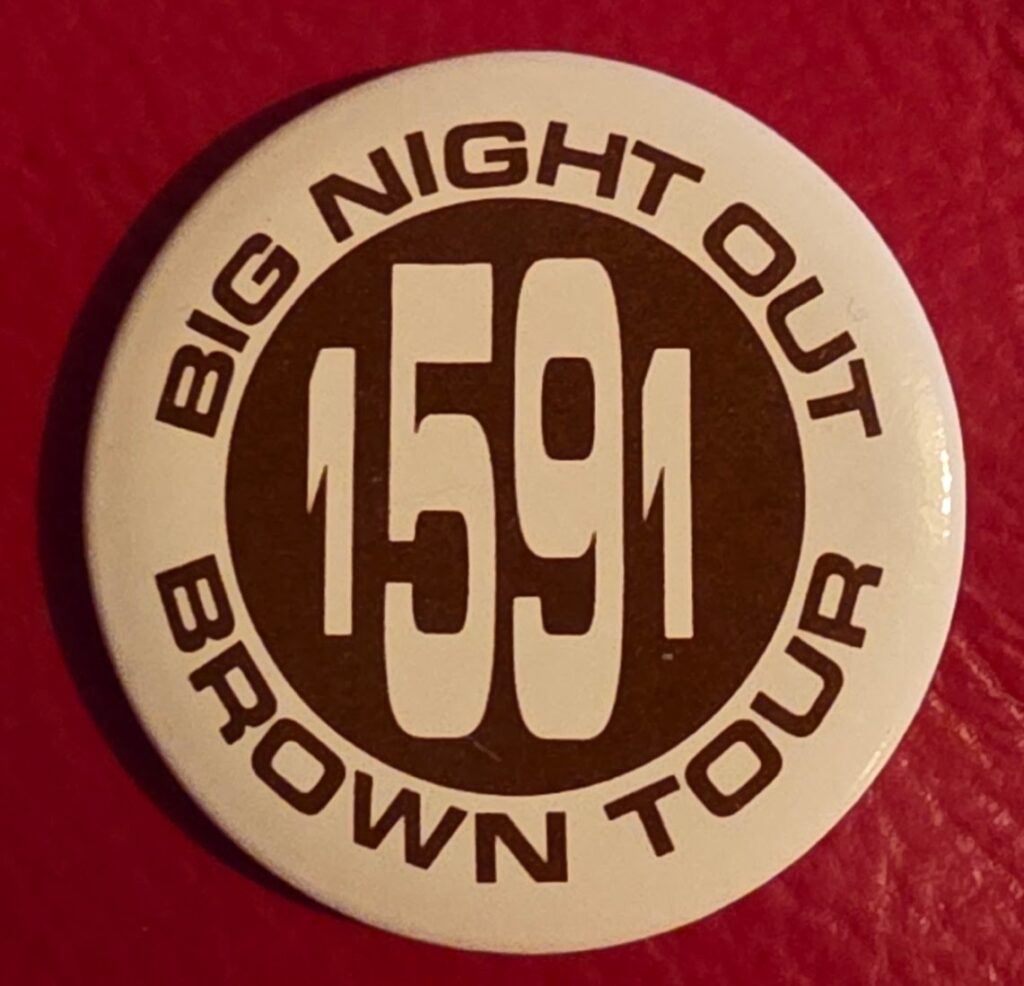
This one, I think, is from the comedy show, Vic Reeves' Big Night Out, which my brother went to see. I'm not sure where, but I do remember him going to see it. This tour is where the Reeves and Mortimer double act was really born; Bob Mortimer has some fascinating stories about it in his autobiography.
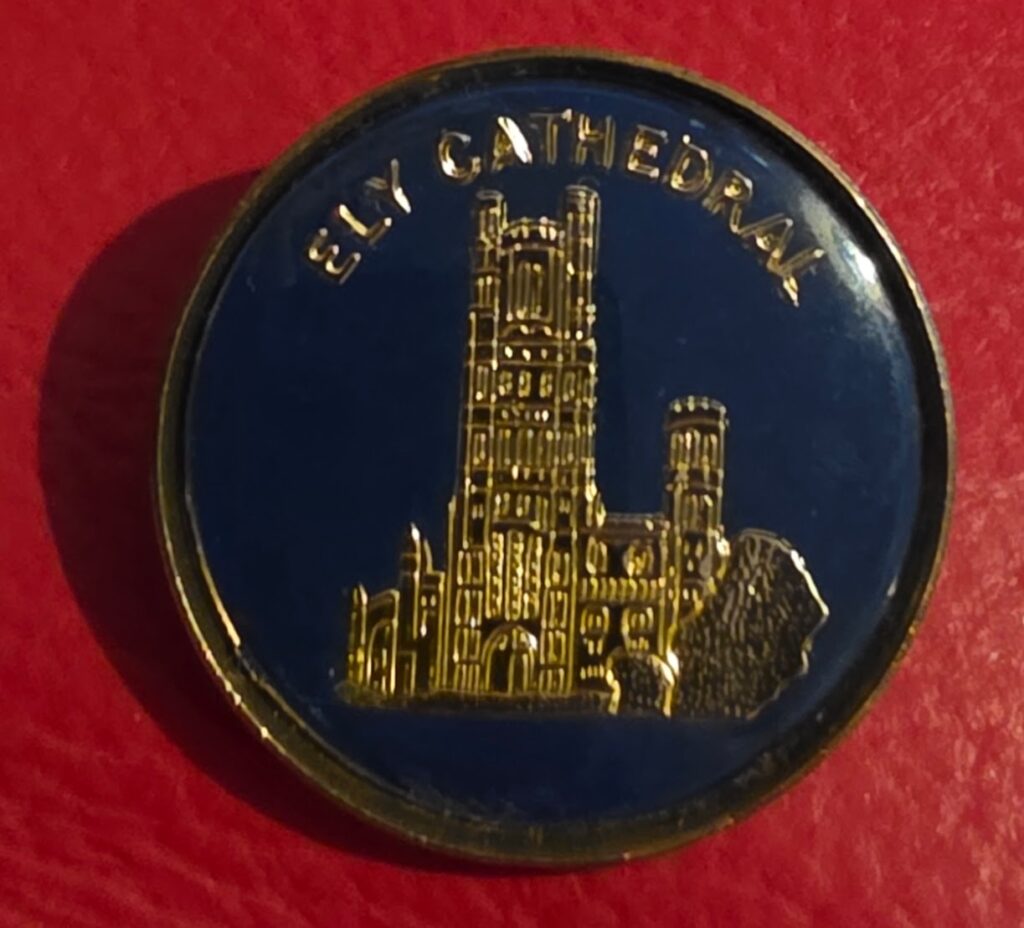
This is a pin from Ely Cathedral, which is a cathedral in Ely, Cambridgeshire. I suspect we went there from school one day.
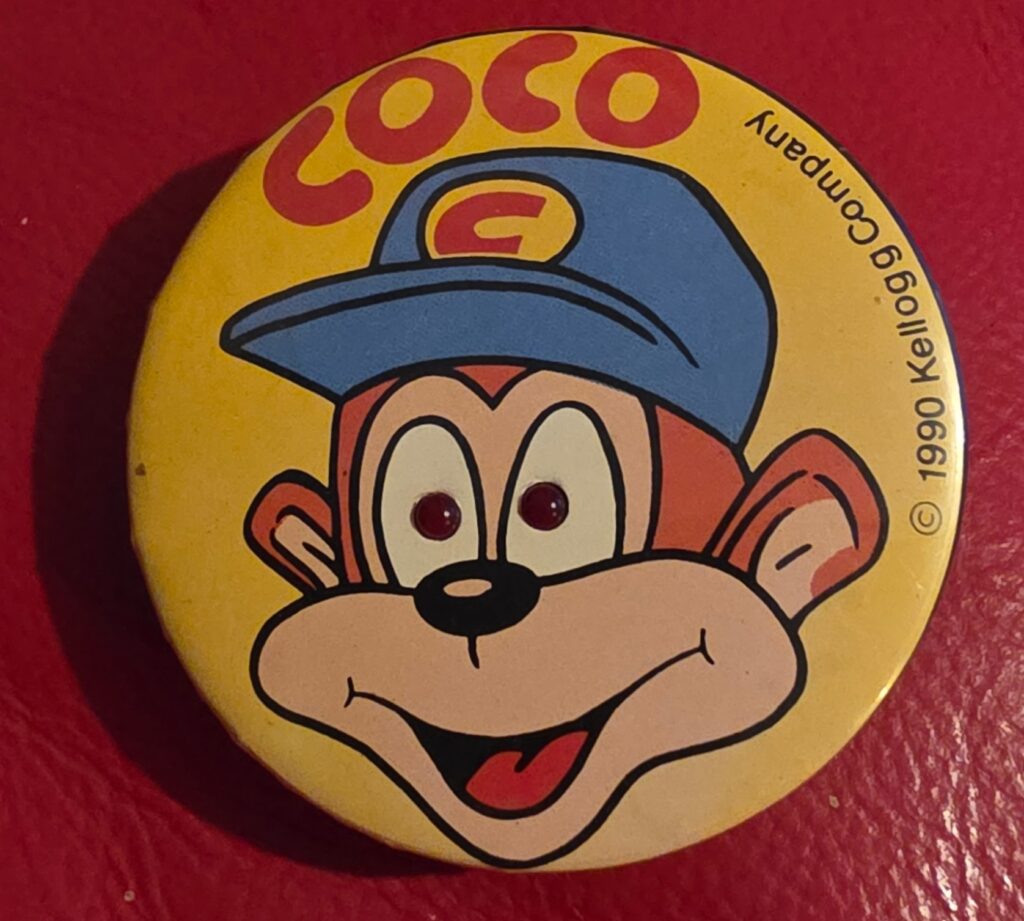
This is a musical badge from Coco Pops cereal. When it has a battery, flicking a switch on the back makes Coco's eyes flash and a bleepy rendition of the Coco Pops jingle from the TV ads play. An excellent tool with which to annoy every grown-up in a wide radius.
This is a promotional badge for the computer game SWIV by The Sales Curve, an unofficial follow-up to Taito's Silkworm. Back in those days, it wasn't at all unusual for arcade games to get homegrown "unofficial" sequels, and this was one of them that ended up arguably being better than its source material. I never owned a copy of SWIV myself, though, so I suspect this would have come via my brother, who was working on Games-X magazine at the time SWIV released.
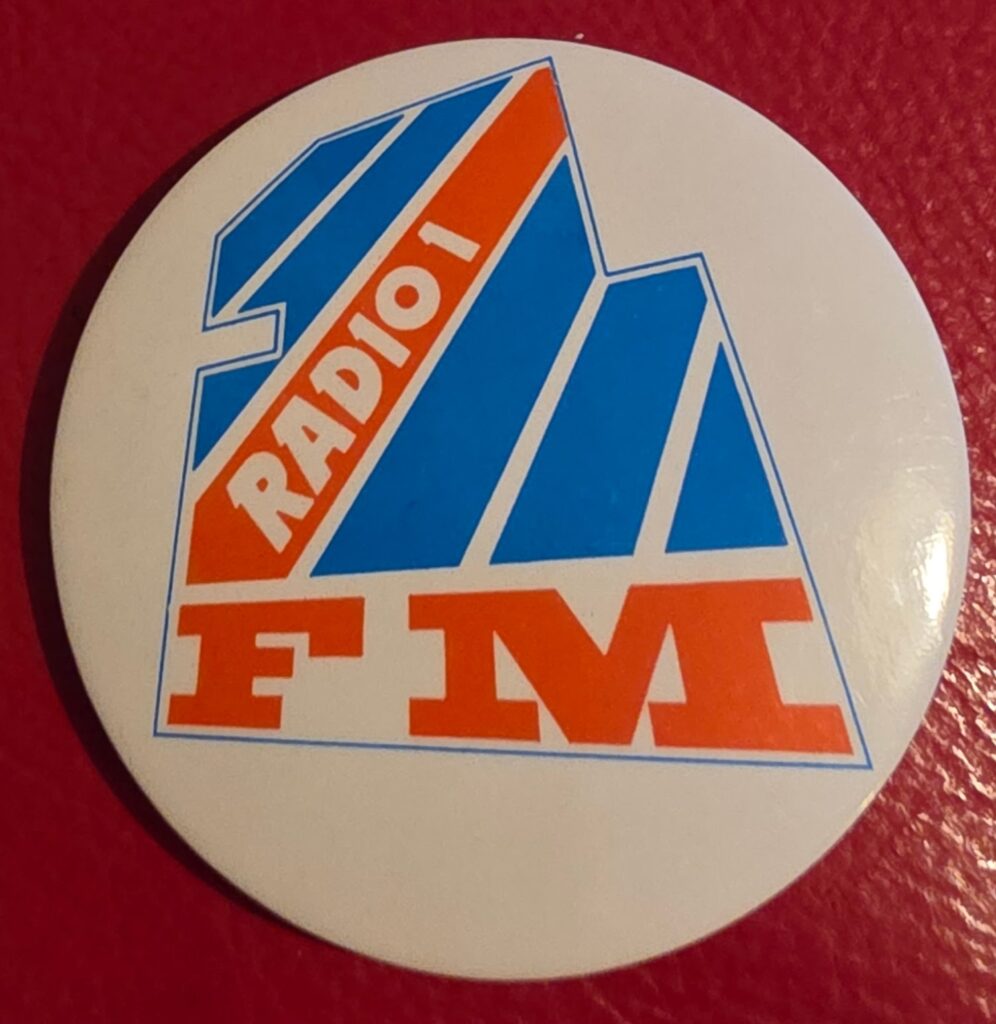
This is a badge depicting the logo of BBC Radio 1, the popular music station for young people, from 1975-1990.
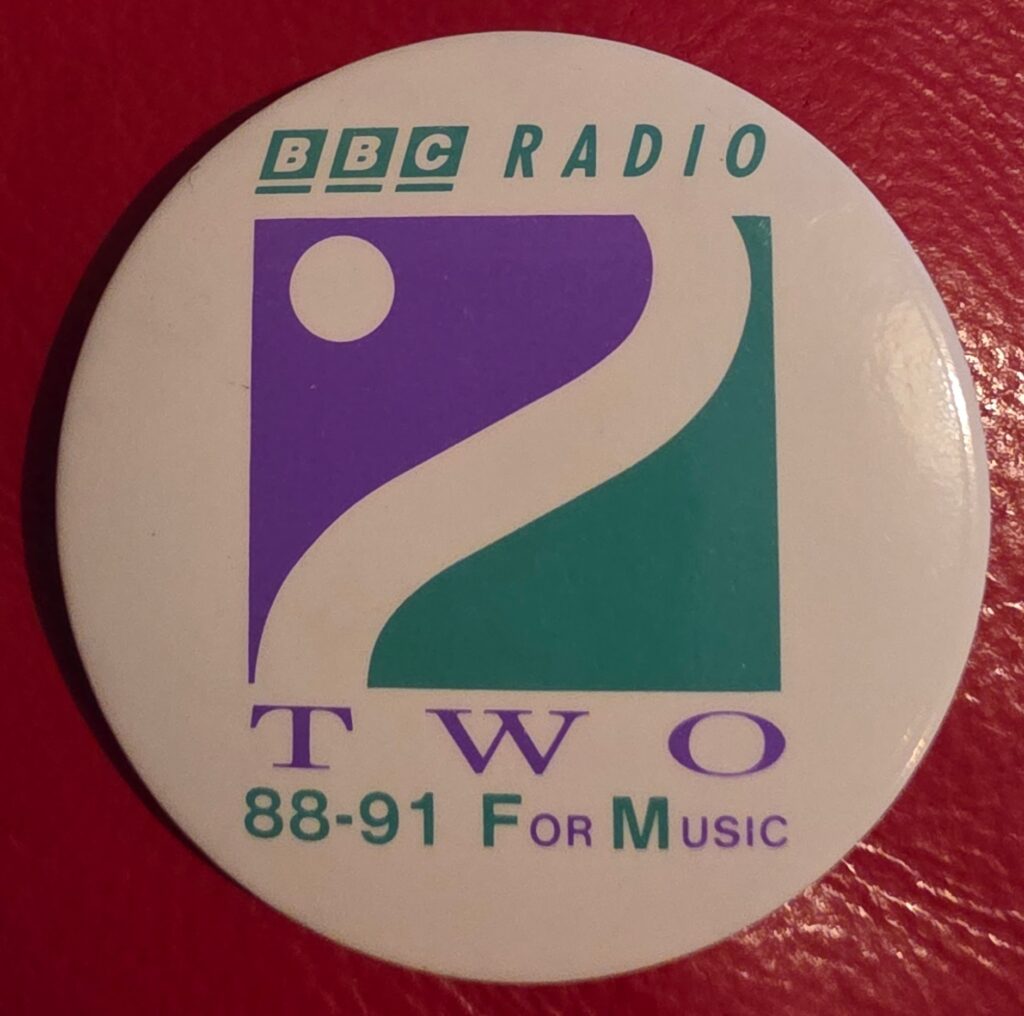
This is a badge depicting the logo of BBC Radio 2, the popular music station for old people, from the same period.
I bet you don't have a badge commemorating 50 years of pylons in the UK, do you? Be jealous!
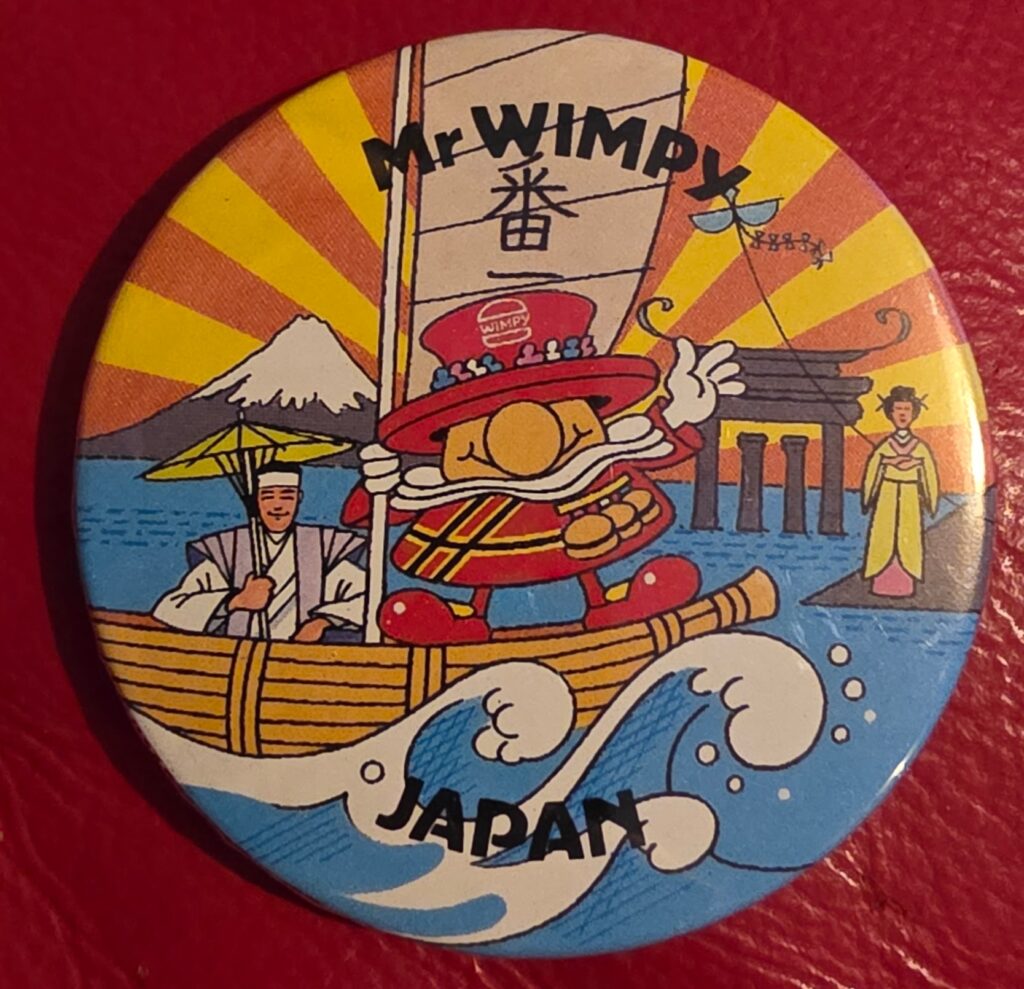
Wimpy was a fast-food chain that was popular in the 1980s, and which has been making a slight comeback in certain areas in more recent years. They were noteworthy for having a long sausage called a Bender (which you could have in hot dog form as a Bender in a Bun, or included in a burger); in light of… alternative uses of that word, it is, today, known as a Bendy. Mr. Wimpy was the chain's mascot, with his uniform modelled after the traditional "Beefeater" uniform, emphasising the chain's Britishness. Here he is running around the rings of Saturn for some reason.
Here's another Mr. Wimpy badge that is only slightly racist.
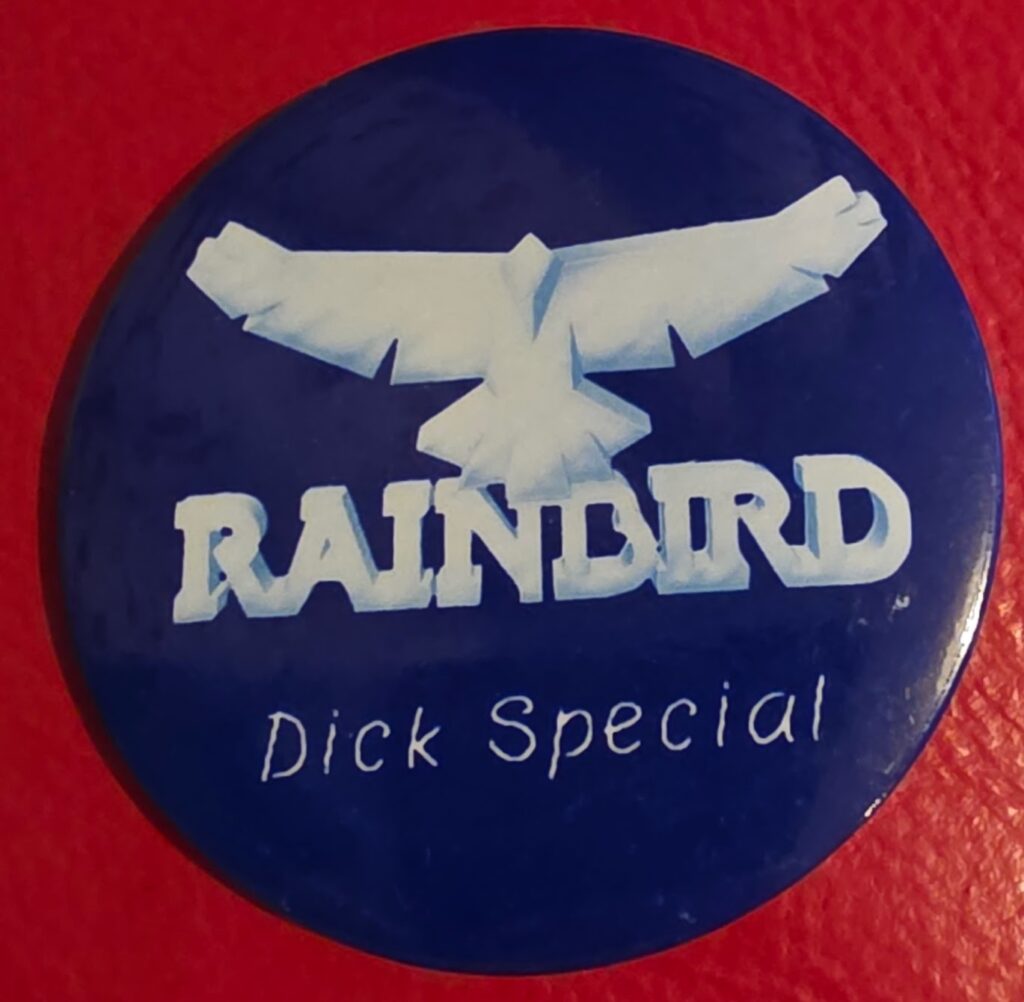
Rainbird was a brand of software originally run by British Telecom. I have no idea what the "Dick Special" bit is about. Apparently it was a cancelled game. Thus, this likely either came from my brother on Games-X, or a computer show where the game was being previewed.
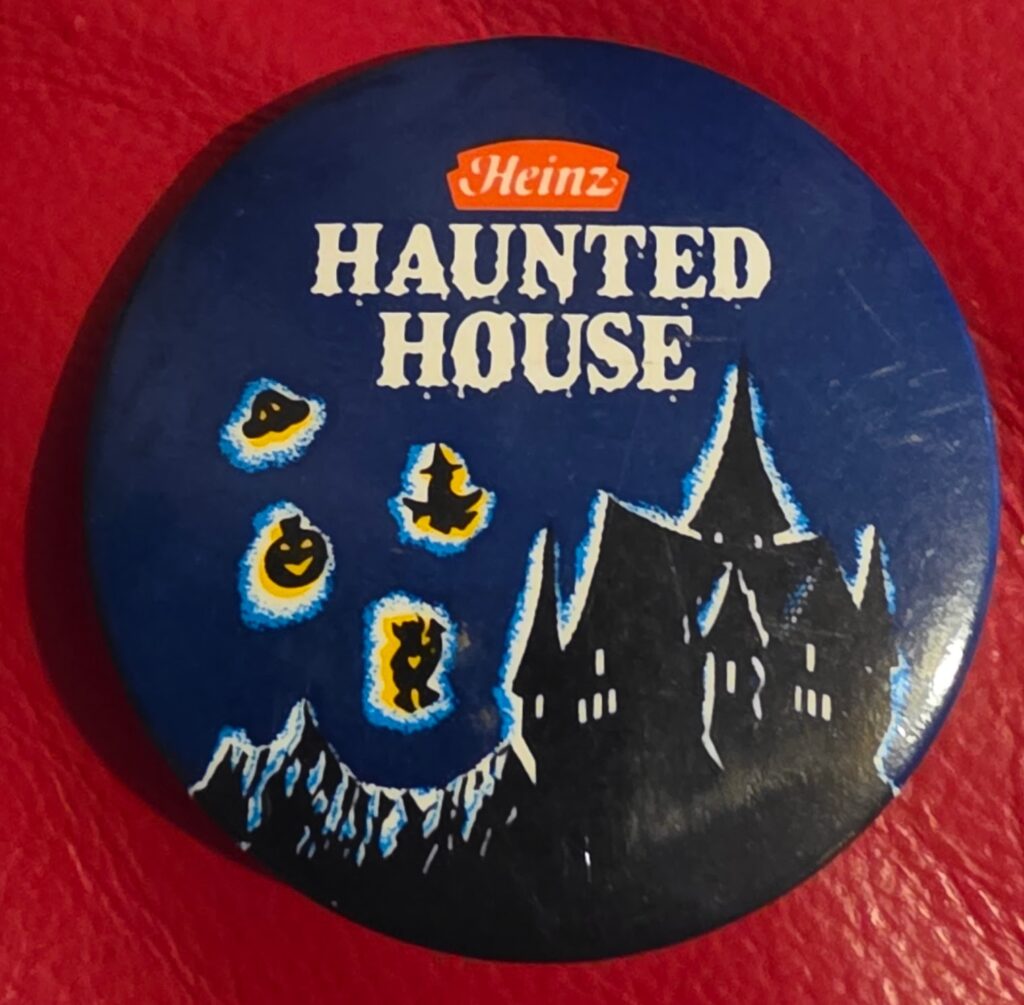
I imagine this was some variant of "pasta shapes in tomato sauce" with a spooky theme, though how I came by a badge promoting it I have no idea.
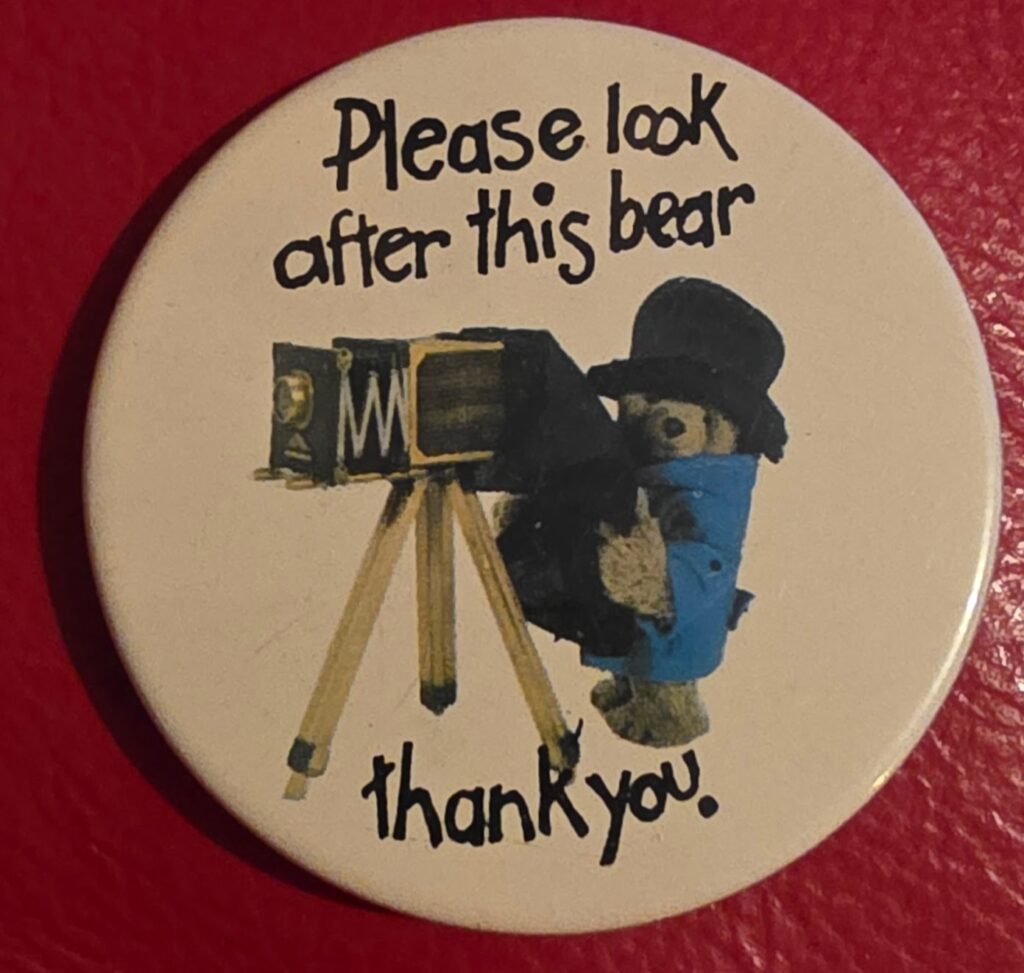
This is Paddington Bear. I'm pretty sure this badge originally belonged to my brother; I forget if he actually had a Paddington, but I have a vague memory of this once being attached to a teddy that may or may not have been a Paddington. Either way, I have it now, and the faded colours lead me to believe this is one of the older badges in the collection.
This was probably from a local newsagents or something. I do like the touch of the photograph at the top being rendered in the style of newsprint.
The Barbican Centre in London is a performing arts space; one day when I was a kid, they rebranded it the "Bearbican Centre" in an attempt to host the biggest ever teddy bears' picnic or something. There was a concert, as I recall, and the whole thing was a nice day out. Those who participated in the full spirit of things by bringing along a teddy bear (I think I brought a battered old Winnie the Pooh, or possibly Big Ted) got one of these badges.
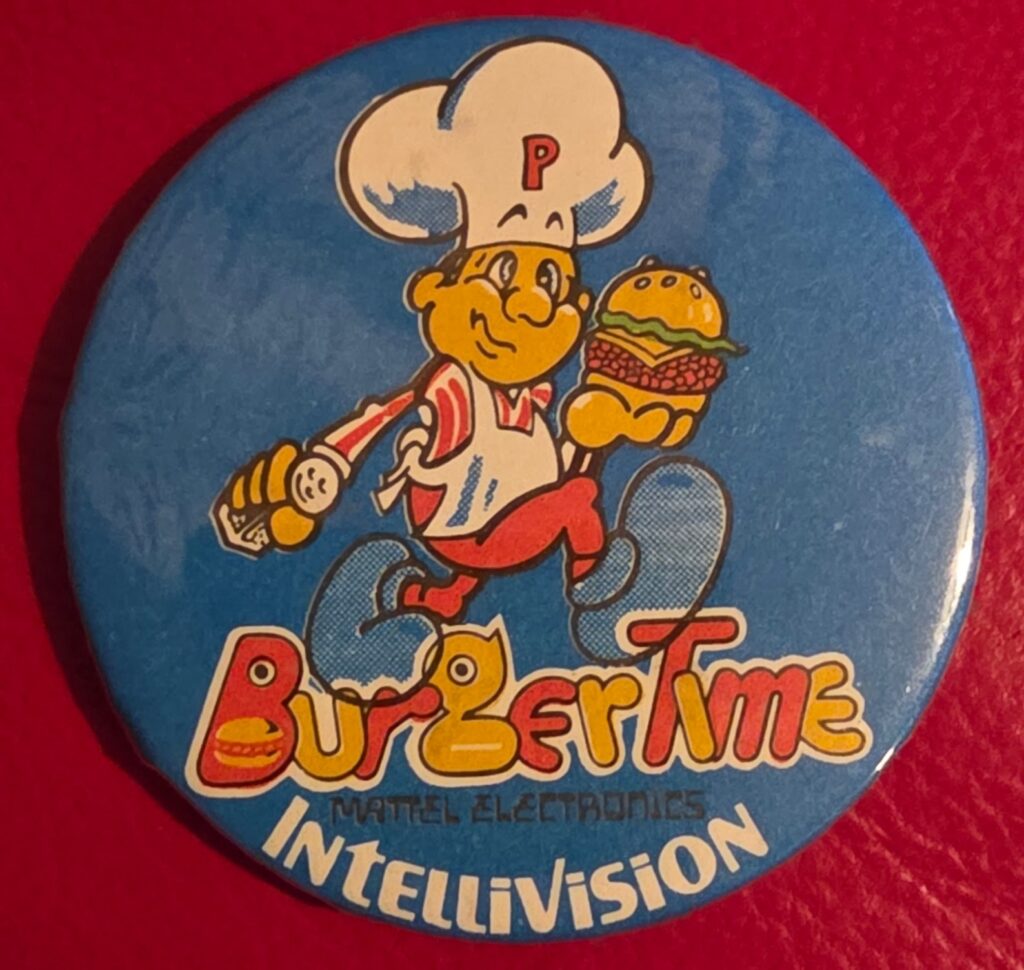
No idea how I came by this as I didn't have an Intellivision and didn't know anyone with an Intellivision. Perhaps this came with a computer magazine or something? Either way, it's pretty neat. And I guess that answers my question as to whether or not Intellivision was A Thing over here. Unless this came from the States, which is… possible? But unlikely, I think.
From one of those times when the fire service comes to visit your school and put the fear of God into the assembled children about chip pan fires. Not sure how I feel about the mascot being an elephant who is nude aside from his belt, hat and boots.
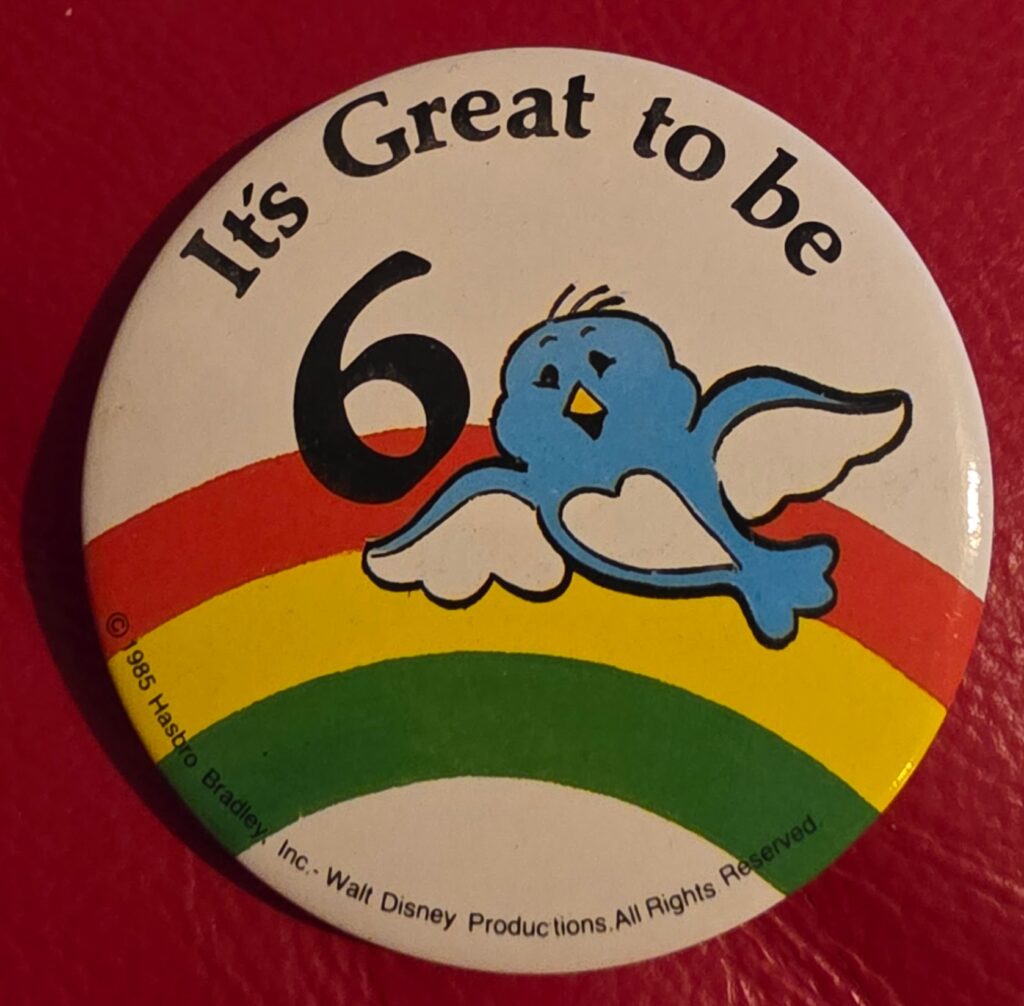
It's great to be 6! The copyright on this is interesting, as it mentions both Hasbro Bradley and Walt Disney, so I assume there must have been something more explicitly Disney on the card this was attached to.
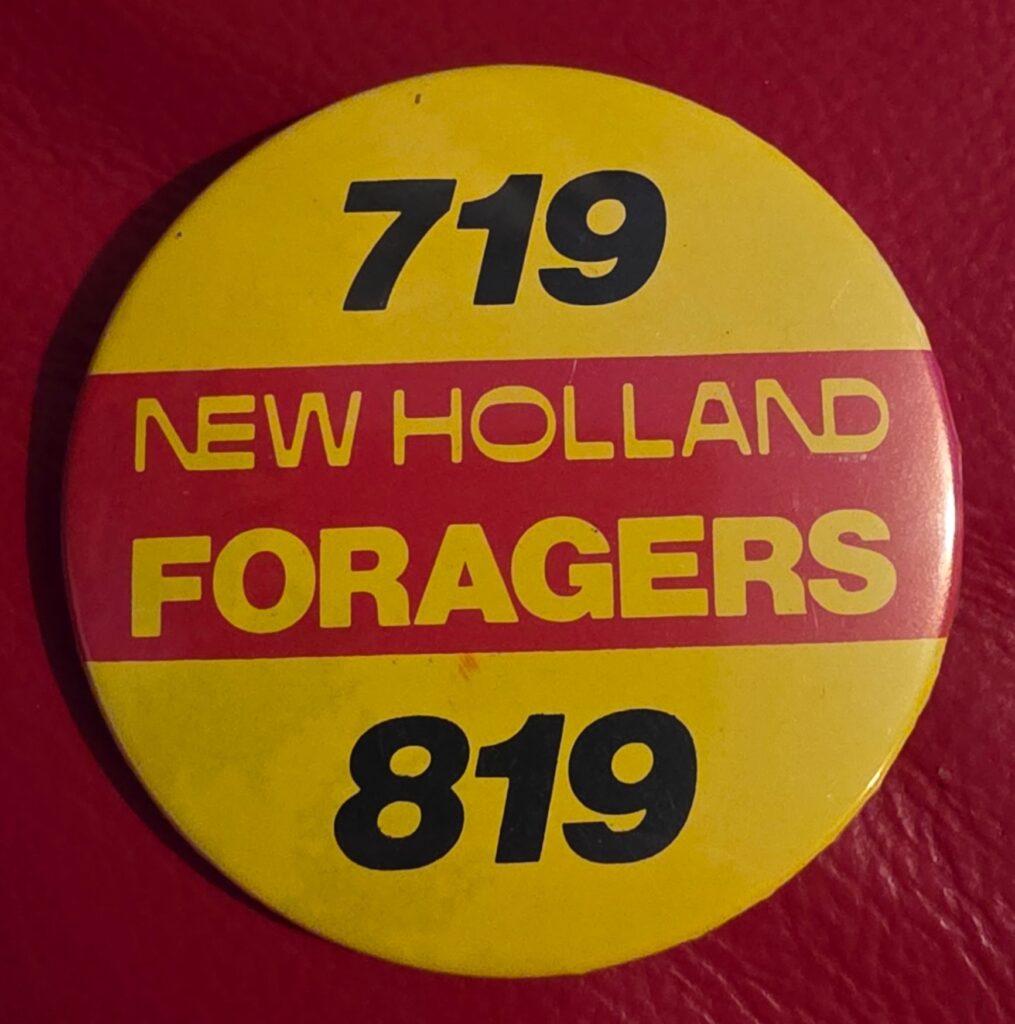
This appears to be from a brand of combine harvester, so I suspect this came from The Gransden Show, an annual agricultural fair held in my home village.
Likewise for this one. I can't think of any other scenario in which I would have acquired these, probably as freebies.
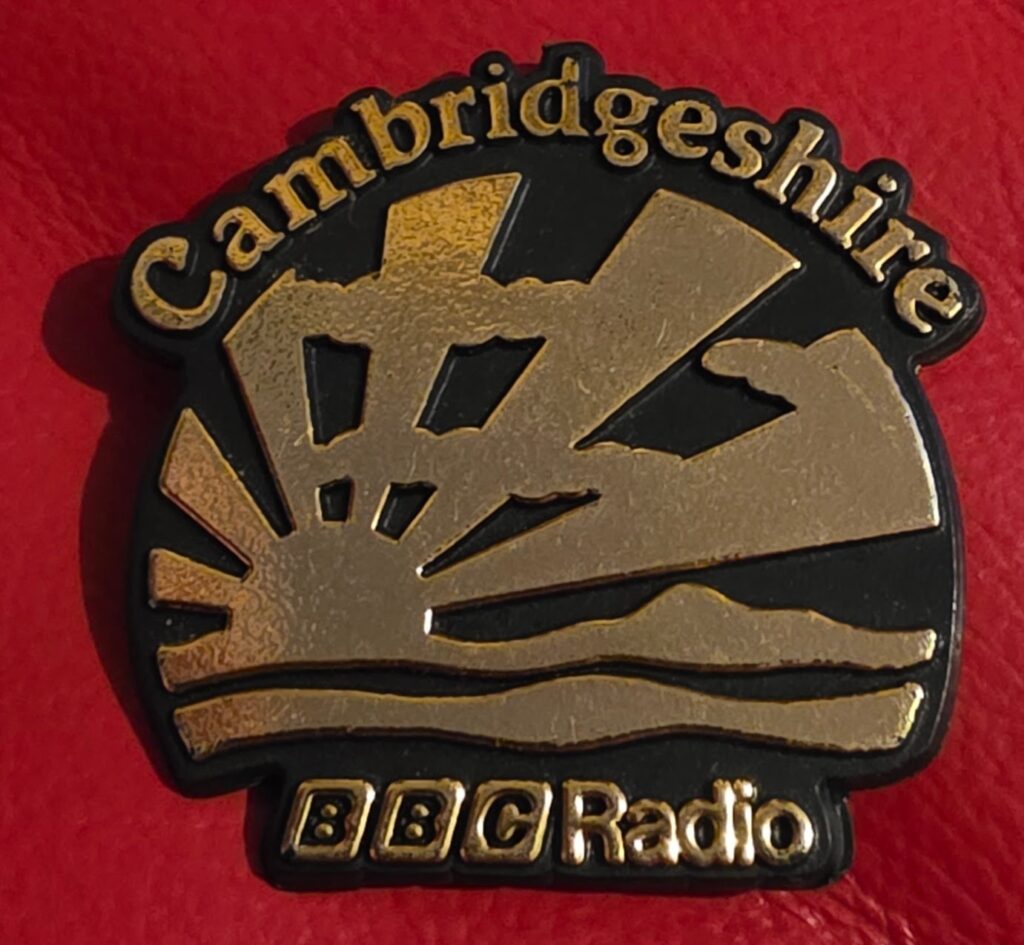
A rather fancy badge for BBC Radio Cambridgeshire. Not sure where this came from. Perhaps a visit to our school one day?
Get into books! GET INTO THEM.
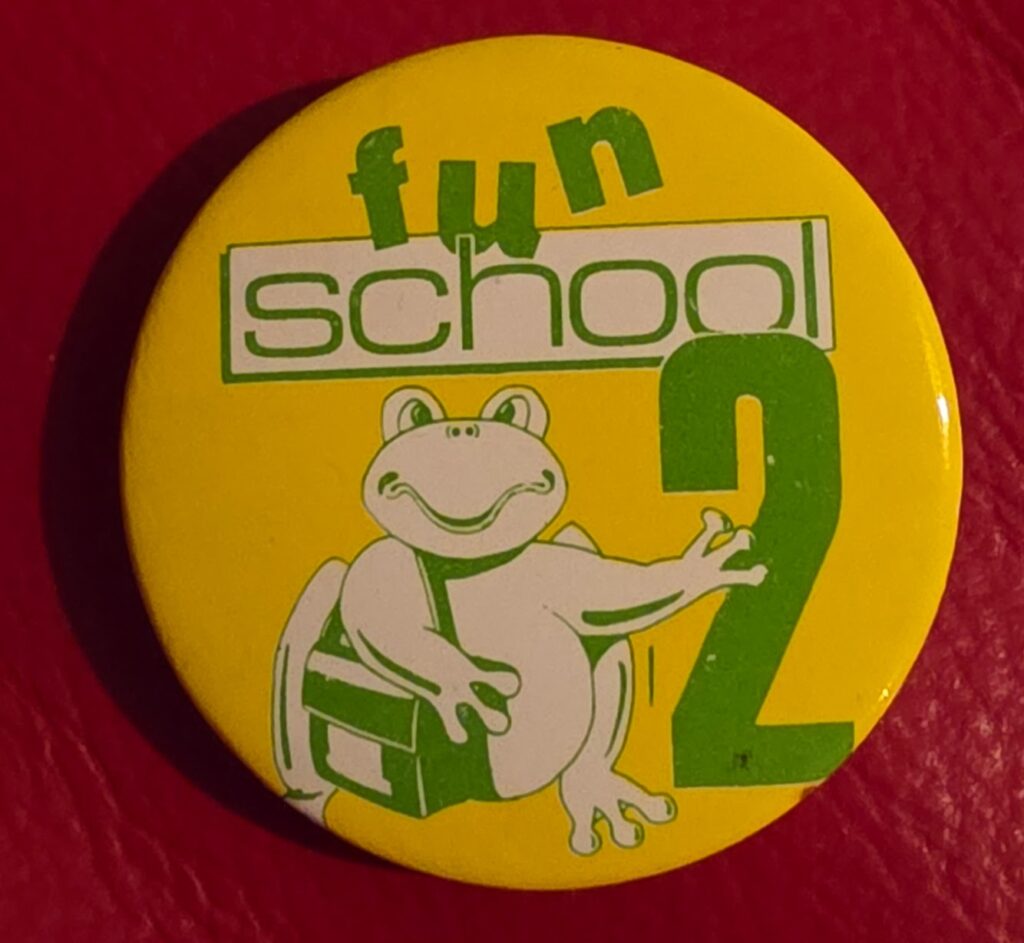
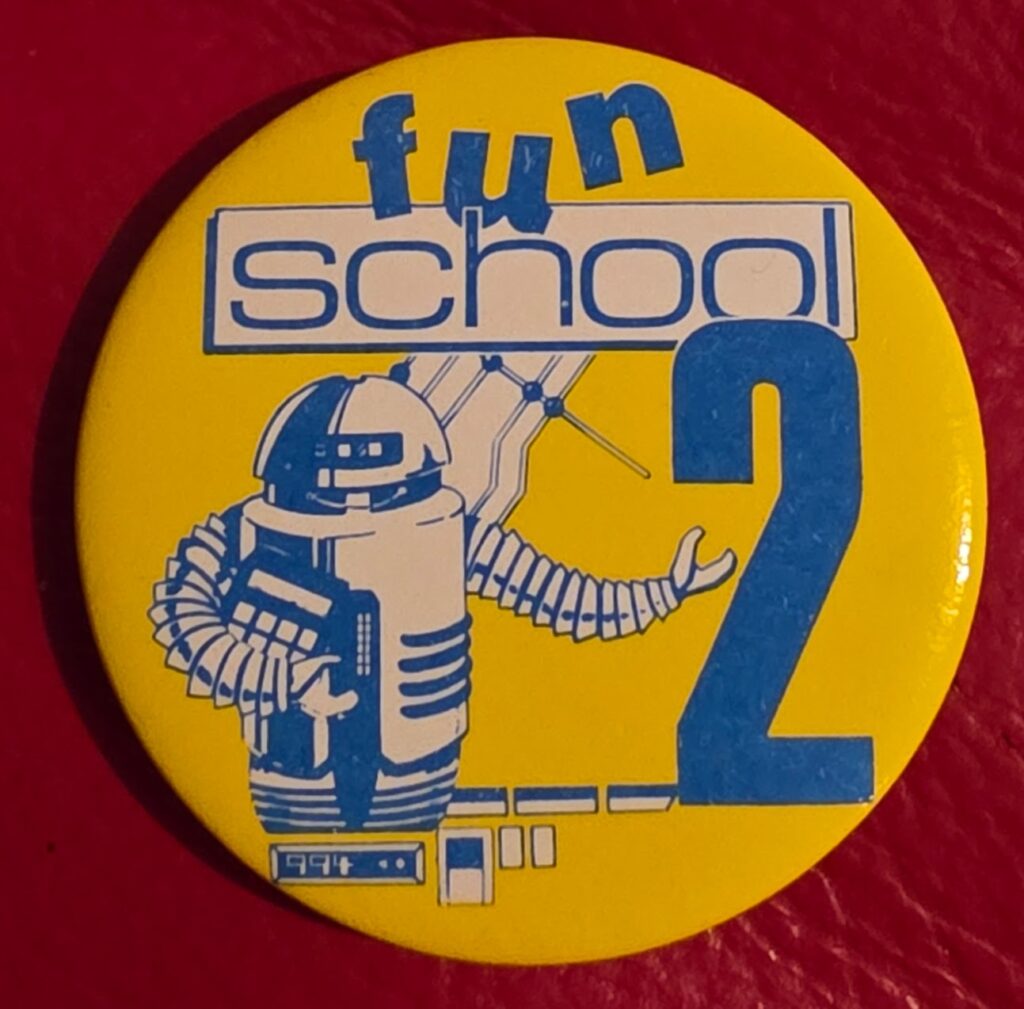
Fun School 2 was a range of edutainment products for a variety of platforms, published by Europress. The Atari ST versions were composed in the STOS programming language. They were noteworthy for actually incorporating genuinely fun games where you happened to learn things. This one is from the package for the youngest players.
This one is from the "middle" package for slightly older kids.
And this was for the older kids. Only the older kids get the cool robot to play with!
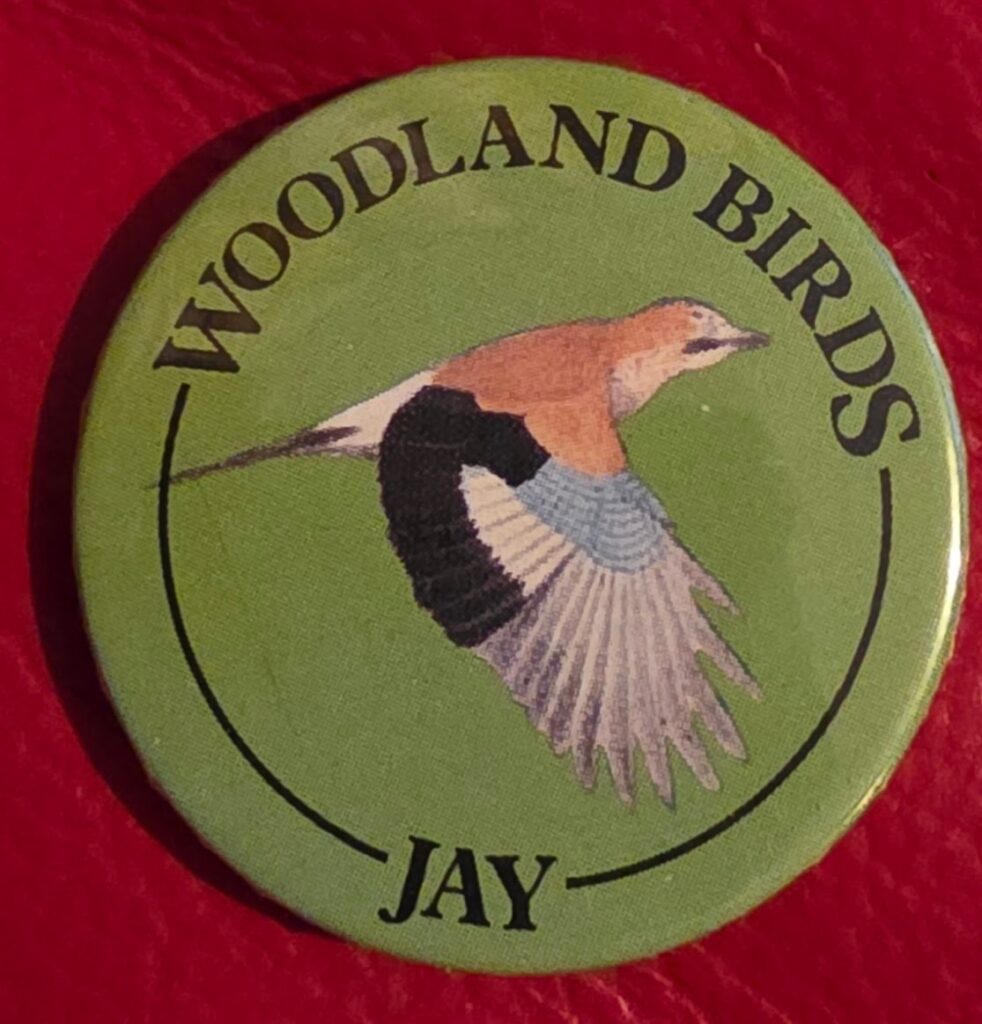
This almost certainly came from a school trip to a local RSPB sanctuary. In unrelated news, we have seen a lot of jays at Center Parcs the last few times we've been to visit. They are greedy.
No idea on this one! Only thing I can find is a novelty song from 1982, but I have no recollection of ever hearing it.
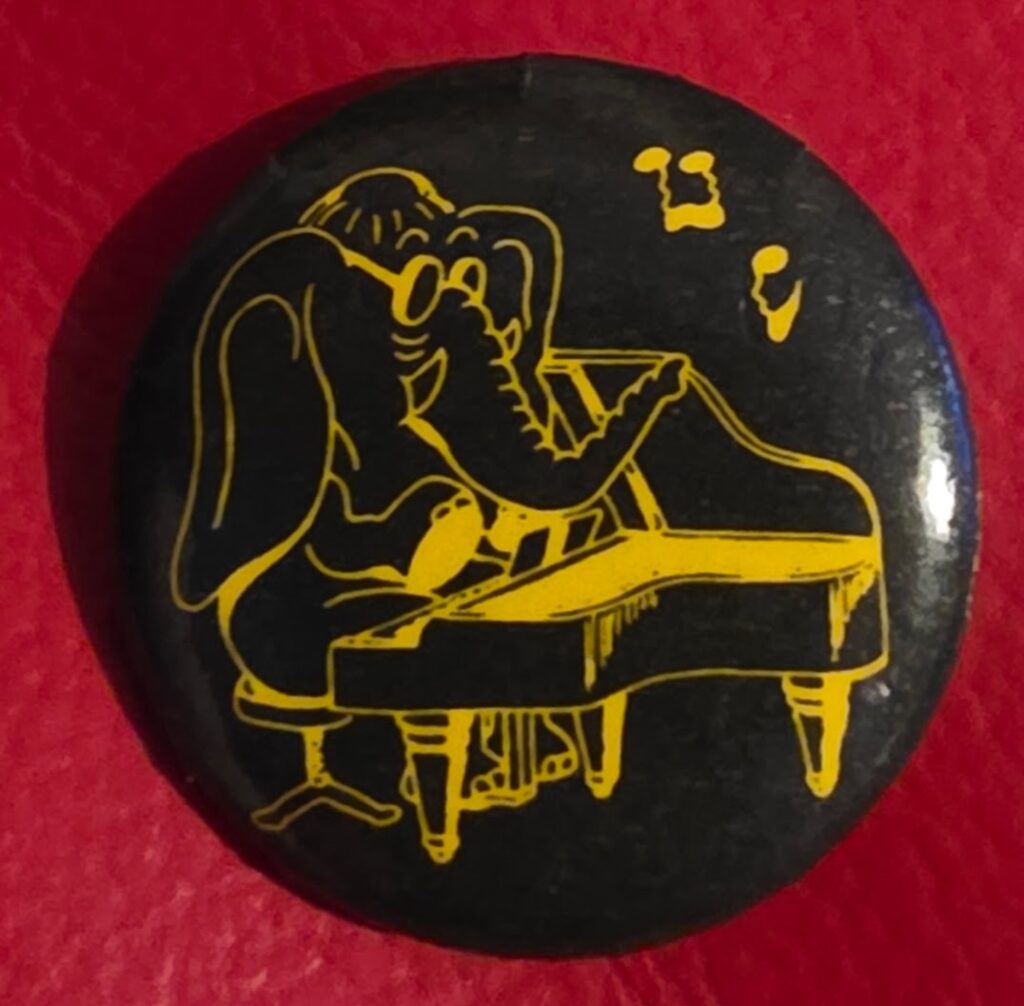
Not sure on this one either. It's an elephant playing a grand piano. Perhaps from a kid-friendly concert or something?
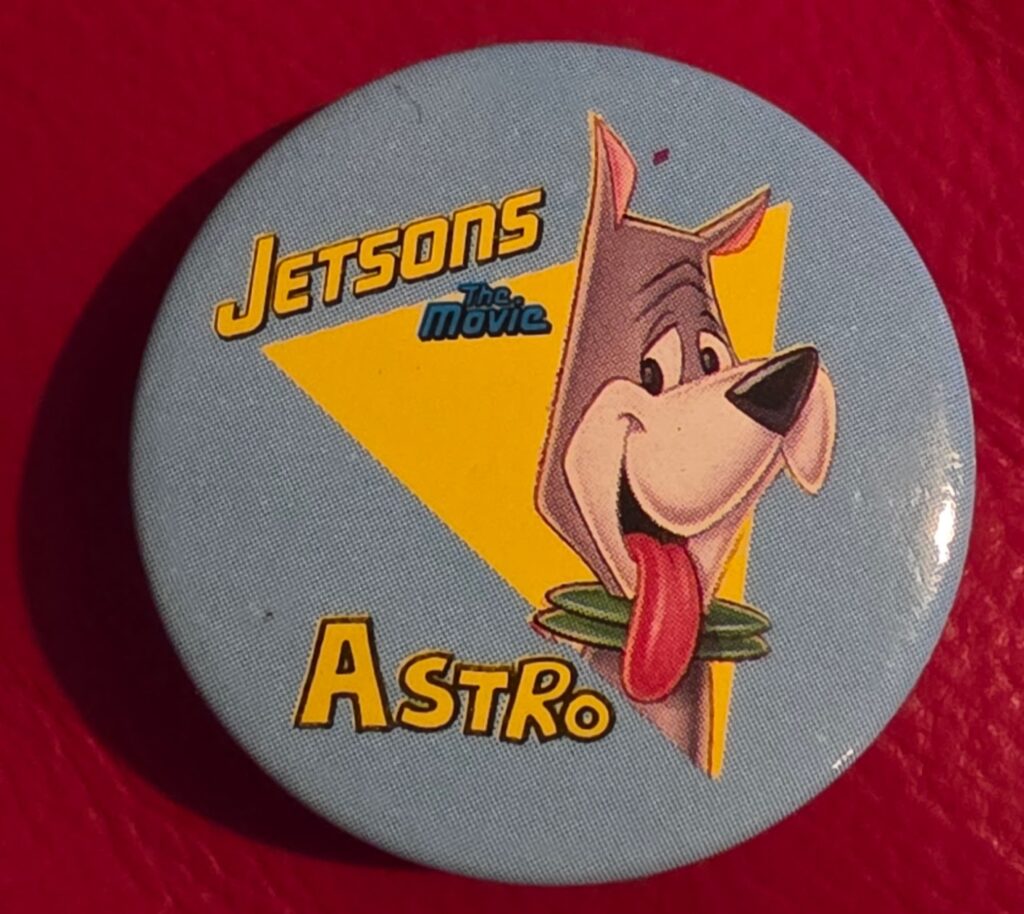
The Jetsons had a movie? Apparently so, from 1990. I have no recollection of ever seeing it, but apparently I got this badge from it.
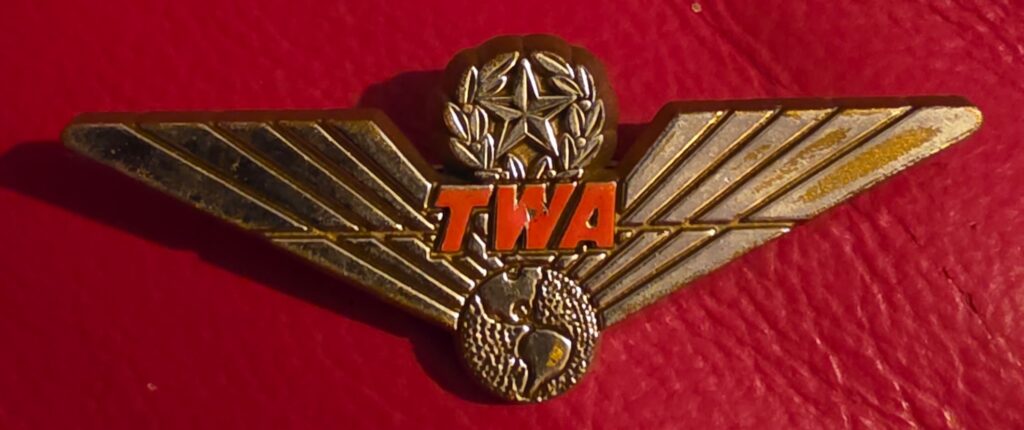
This, I believe, is from an airline company. TWA stood for Trans World Airlines. My only vague memory of them was flying on a plane called a "Tri-Star", which was a lot noisier than a Jumbo jet. I think we took a Tri-Star to get from one place to another on our trip to the States in 1985, which was a long trip where we moved around a fair bit. Beyond that, I forget the details, but apparently I got this as a souvenir at some point.
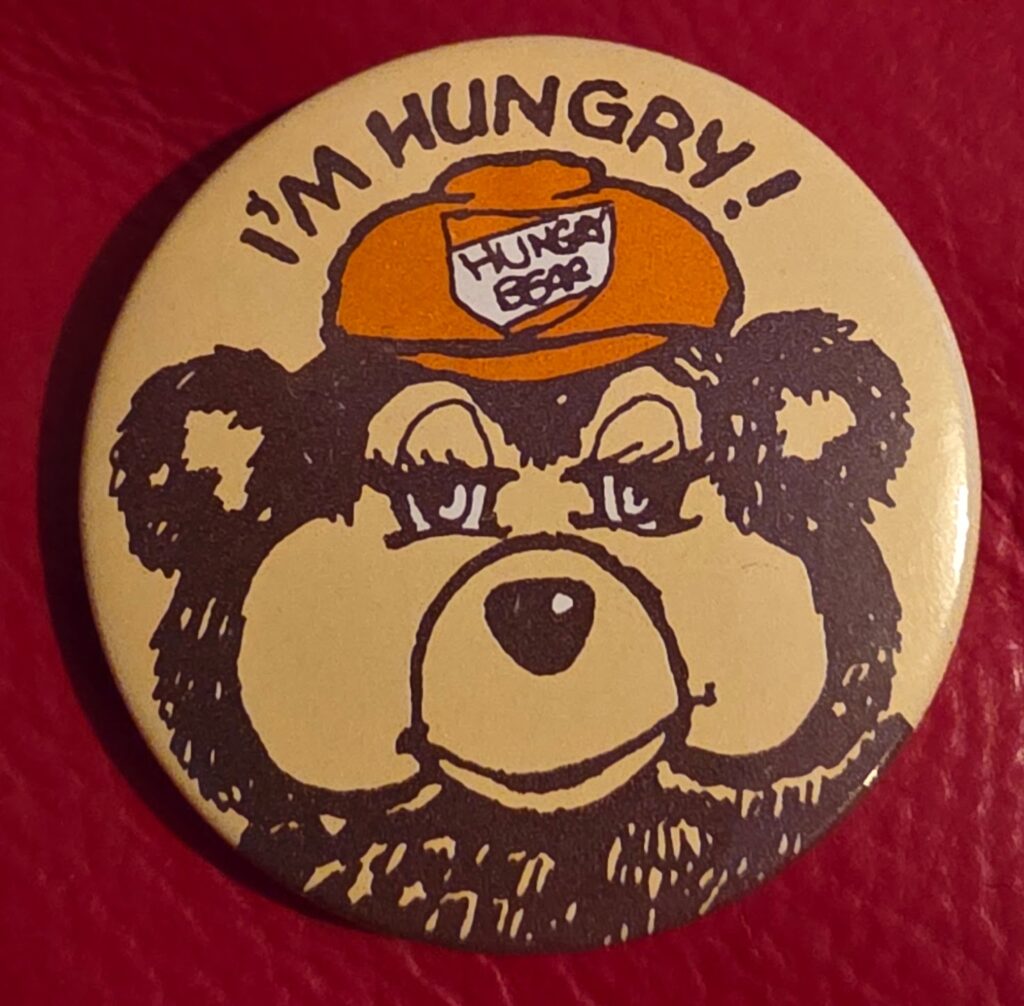
Not sure where this is from. The only hit for it on Google at the time of writing is someone selling the same badge on eBay for £1.97. It appears to be a promotional badge for something that dates back to the 1970s, but beyond that I have no idea.
If you thought Disney putting their characters on any old crap was a recent thing, I have terrible news for you. Here's Mickey and Minnie advertising the Abbey National Building Society, today known as Santander.
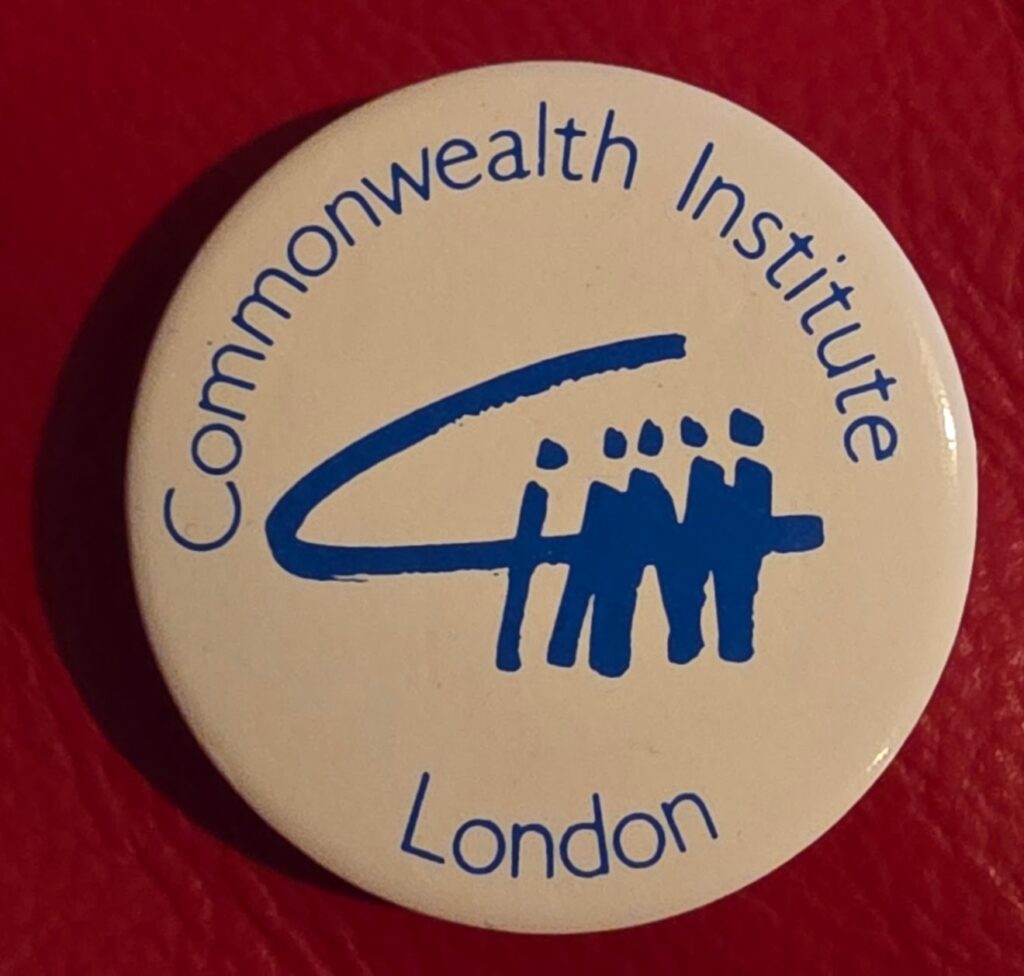
As the name suggests, the Commonwealth Institute is a place you go to learn about the Commonwealth. I have no recollection of ever going there, but I guess I must have done at some point. School trip, perhaps?
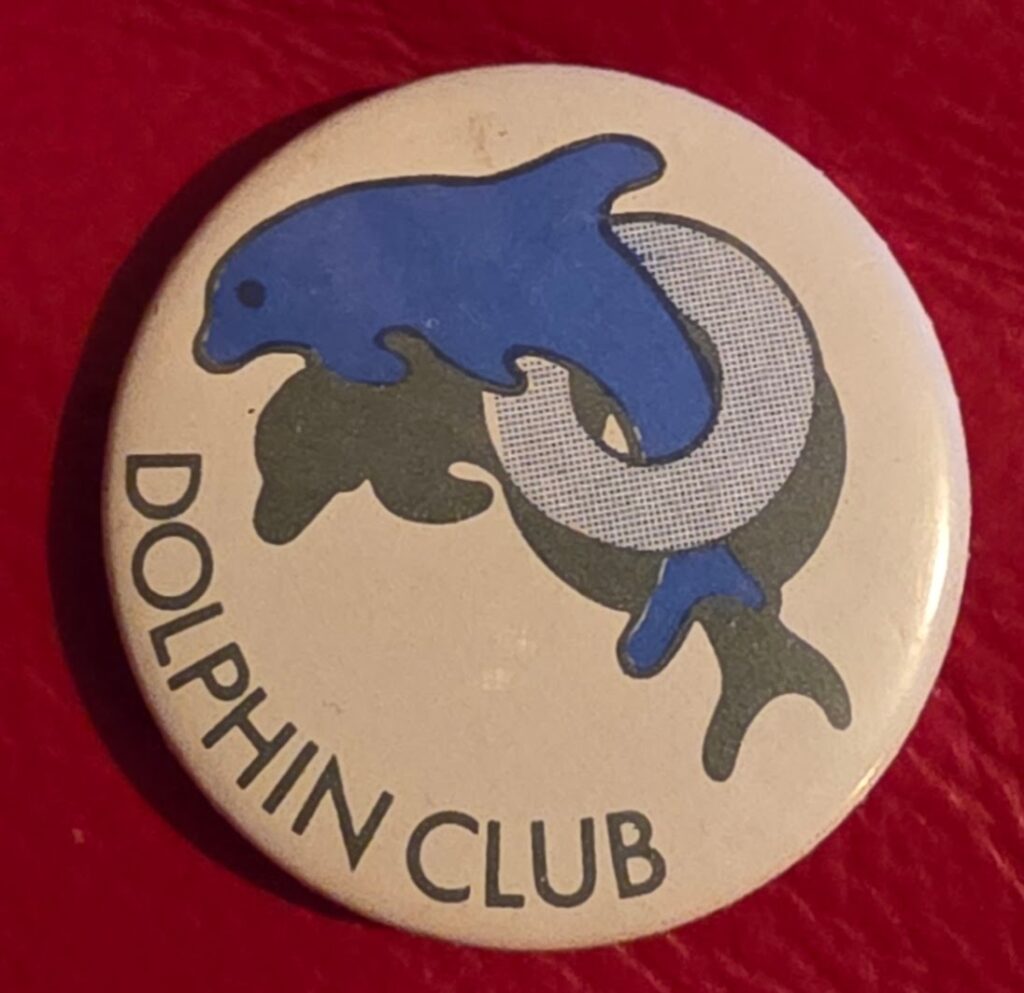
No idea, and as you can probably imagine, the term "Dolphin Club" is nigh-unGoogleable due to how generic a name it is!
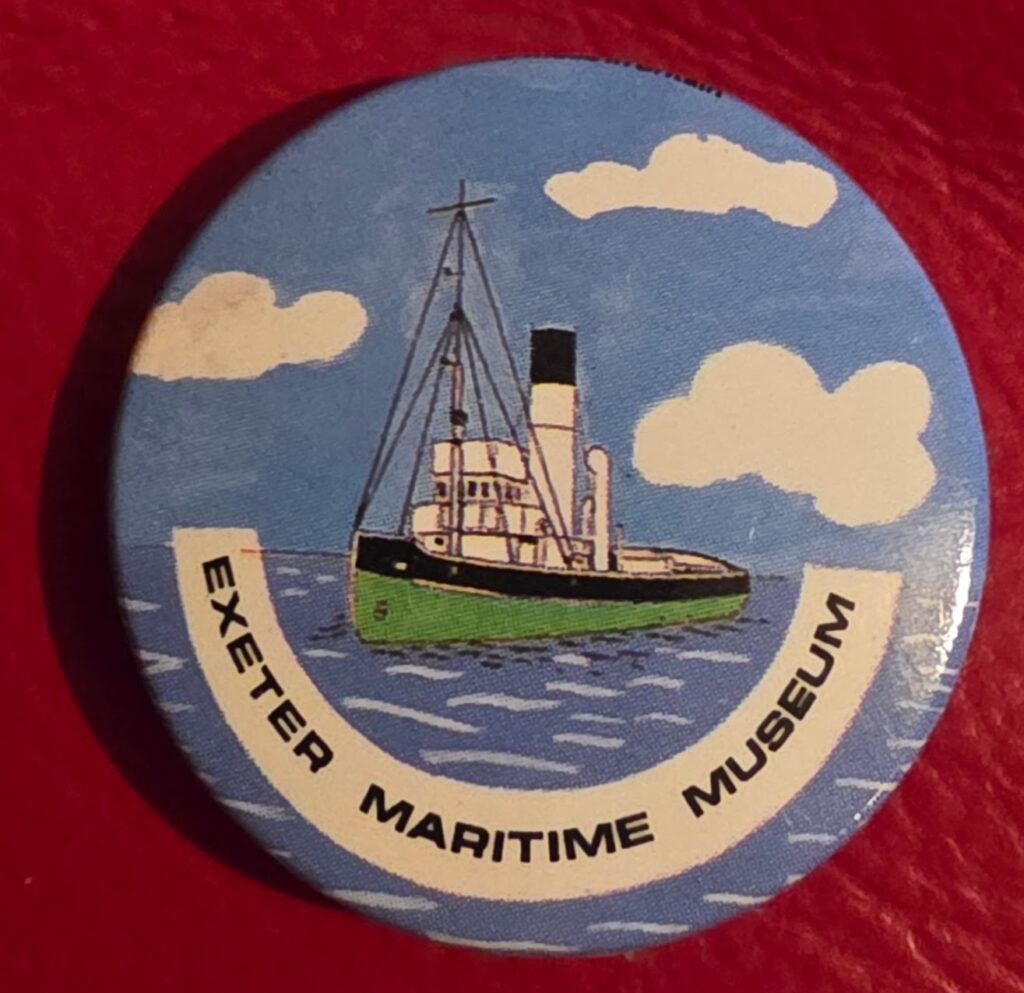
Another self-explanatory one. This would have been on one of several family holidays down to Devon and Cornwall, likely one of the numerous occasions we stayed in Padstow. I remember very little about the museum. My main enduring memory of those holidays was going to Newquay and playing G-LOC in the sit-down moving cabinet.
Delabole Wind Farm was the first commercial wind farm in the UK, built in 1991, and is in Cornwall. I guess we must have paid it a visit during one of those aforementioned holidays?
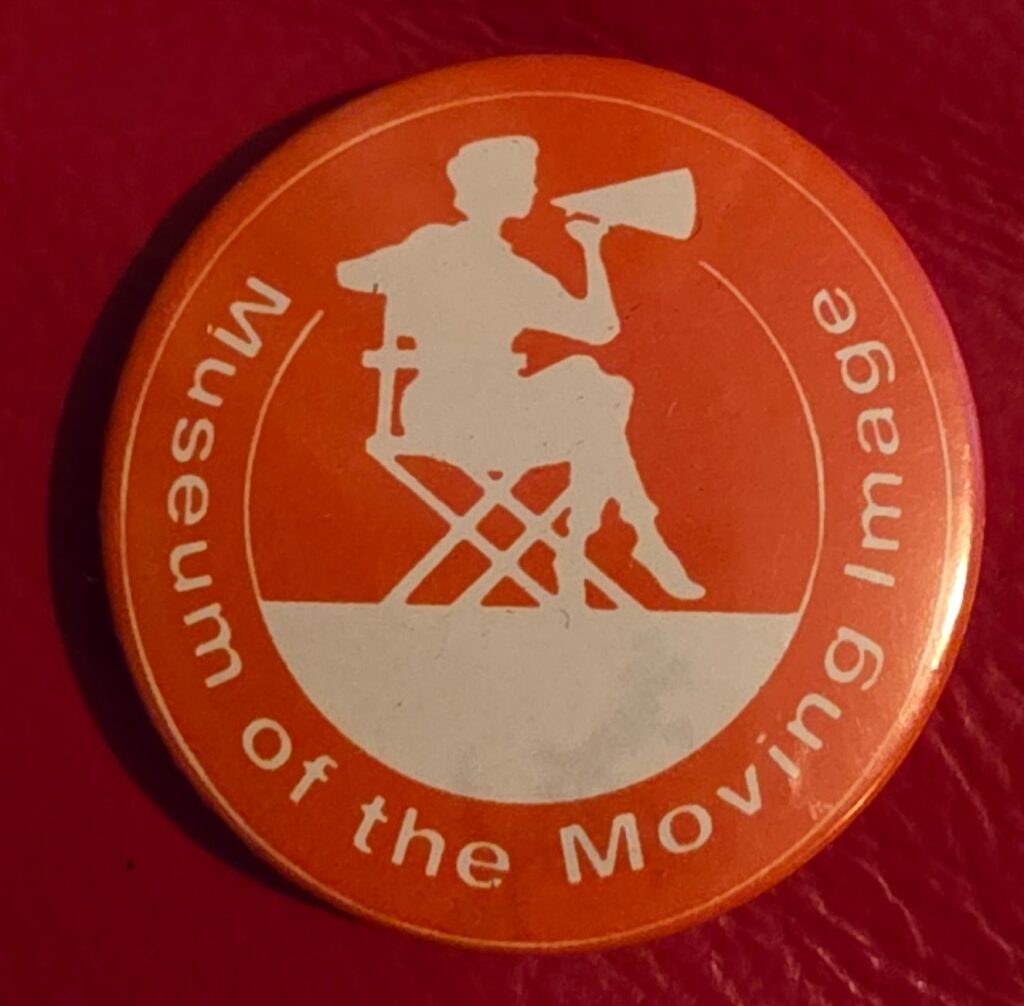
The Museum of the Moving Image, or MoMI, is in New York. This badge must have been from 1985, as that's the only time I've been to New York other than on honeymoon with my first wife, and we didn't go there on that occasion. I remember this being a pretty cool museum, even in the '80s, though I often get it confused with Granada Studios in my head, as I believe both had interactive exhibits that allowed you to experiment with the tech used on real TV and film sets.
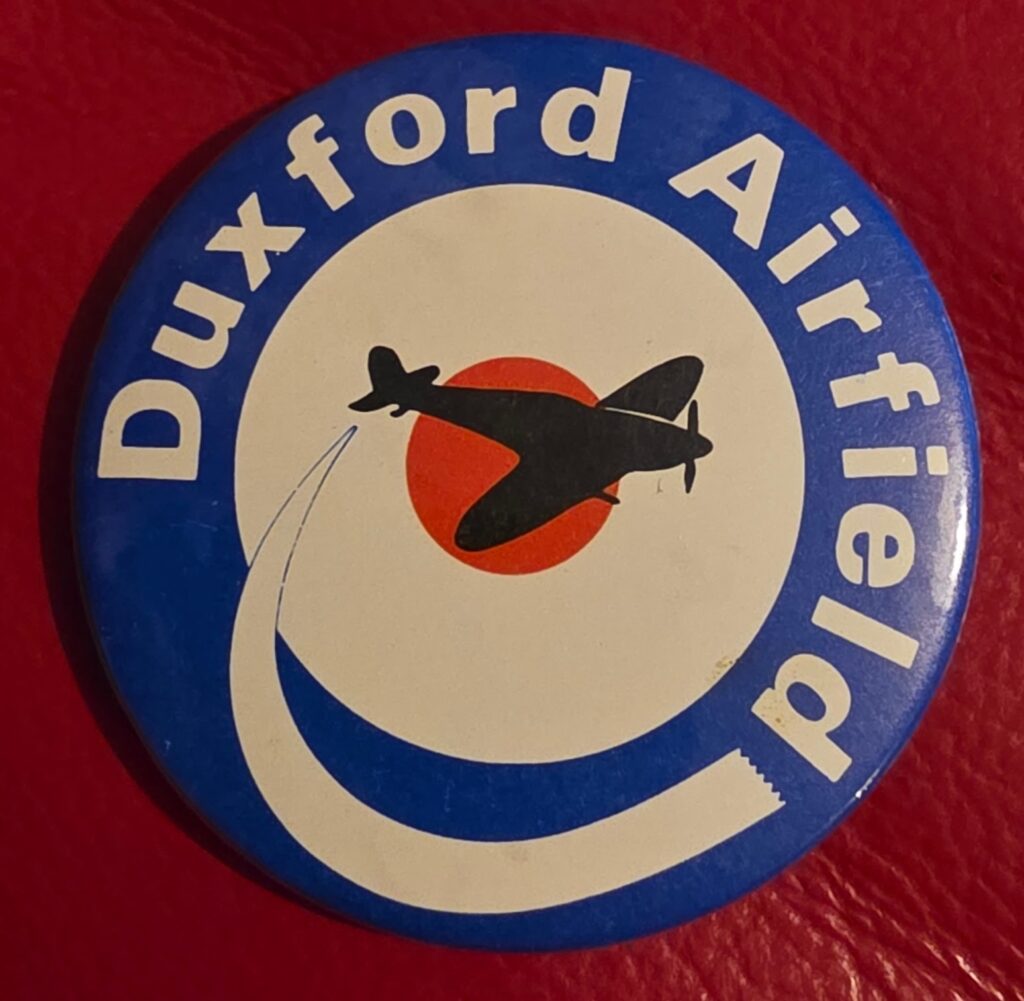
Duxford is another airfield-cum-museum that was reasonably close to where I grew up, so we had a fair few family trips there to go look at the planes, see air shows and suchlike. I remember both looking around the hangars at the planes, and having picnic lunches in the car park. They were good days out, as I recall.
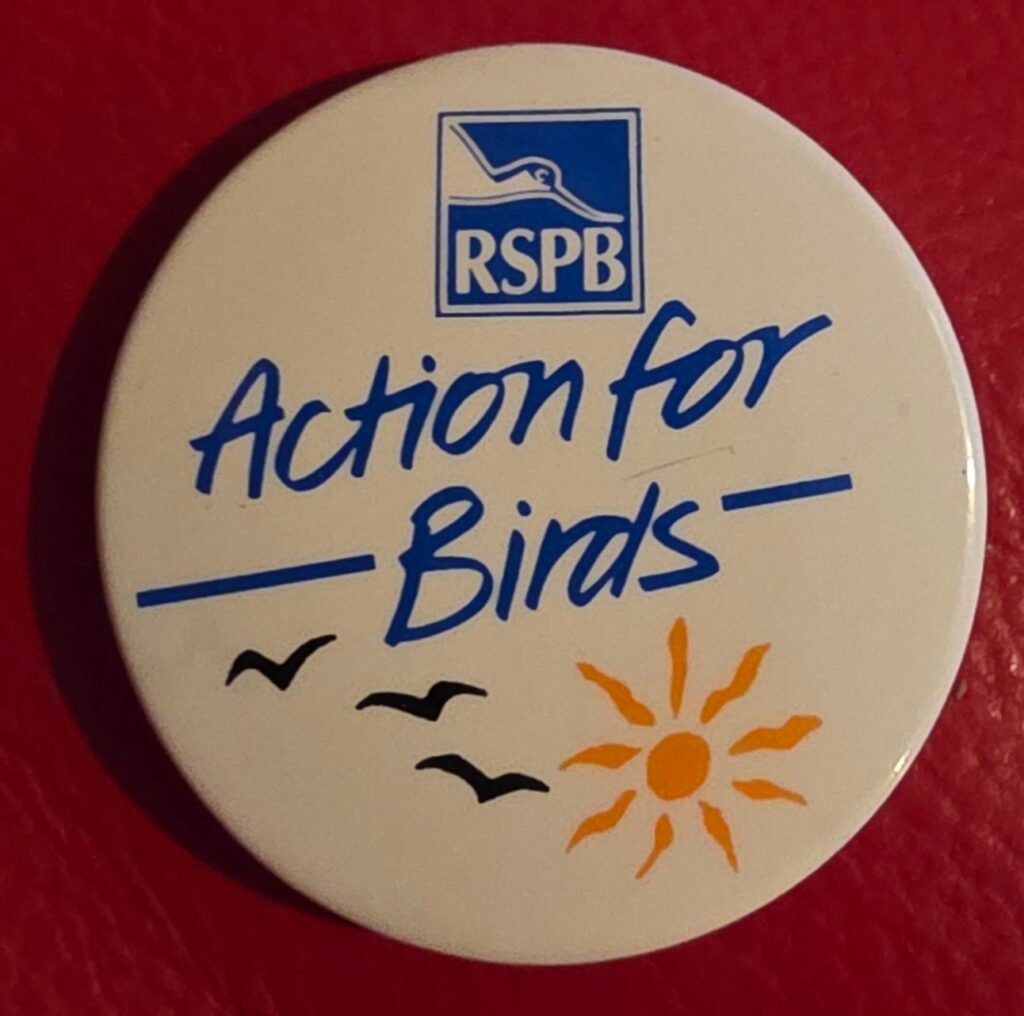
Another bird-related badge. I suspect this also came from a trip to an RSPB sanctuary, or perhaps they visited our school to talk about endangered birds at some point. Either way, I remember being quite aware of the RSPB as a kid.
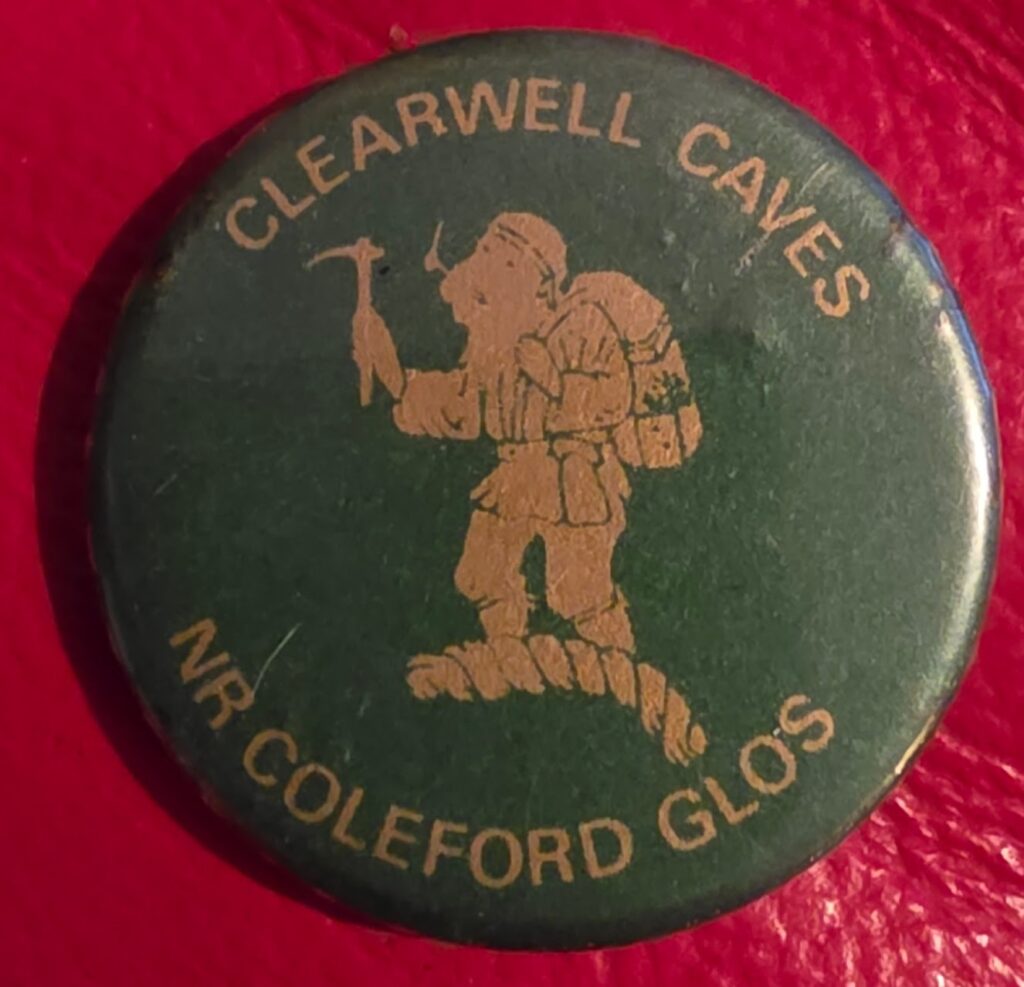
Clearwell Caves is in the Forest of Dean, which leads me to believe that we went there as part of our School Camp trip in Year 6. I didn't poo for a week on that trip because I was too afraid of the facilities.
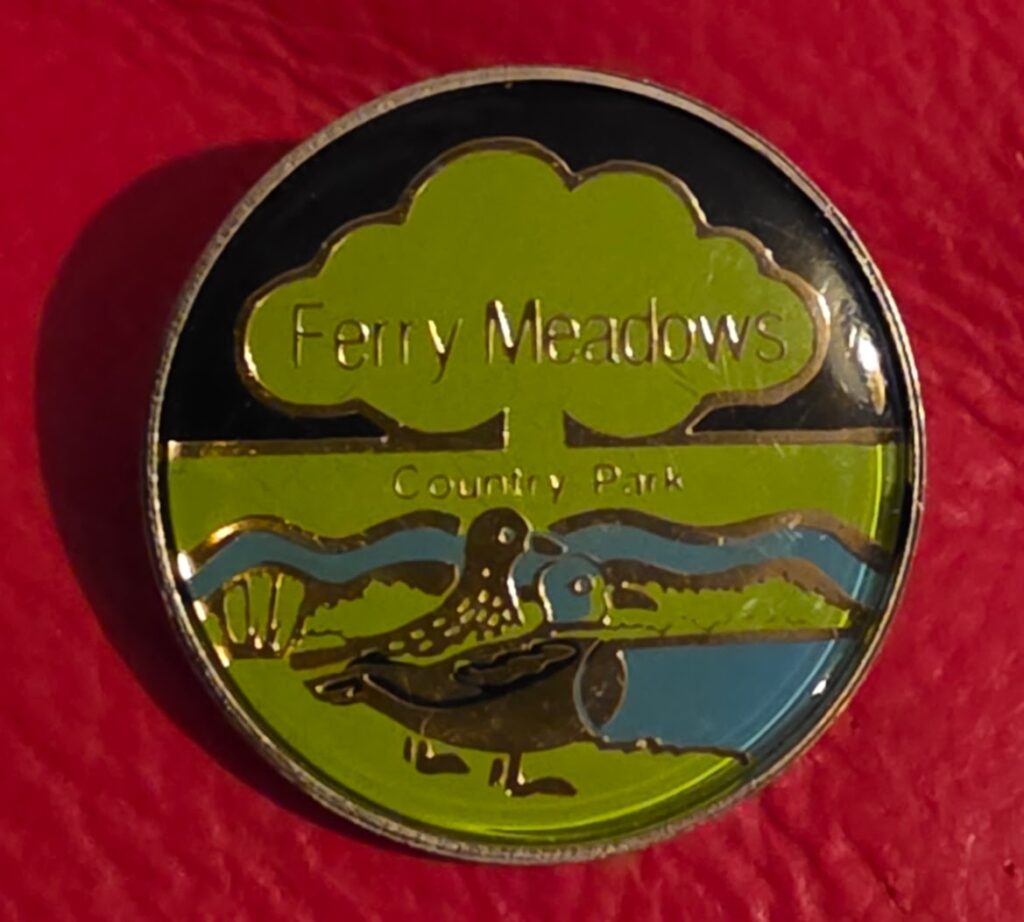
Ferry Meadows was another school trip destination, with a particular emphasis on looking around at nature and doing sciencey things. I don't think it was a residential trip, but I do remember finding the name of the place quite striking. It just sounds nice, doesn't it? Ferry Meadows. It's near Peterborough, which is unfortunate, but you can't win 'em all.
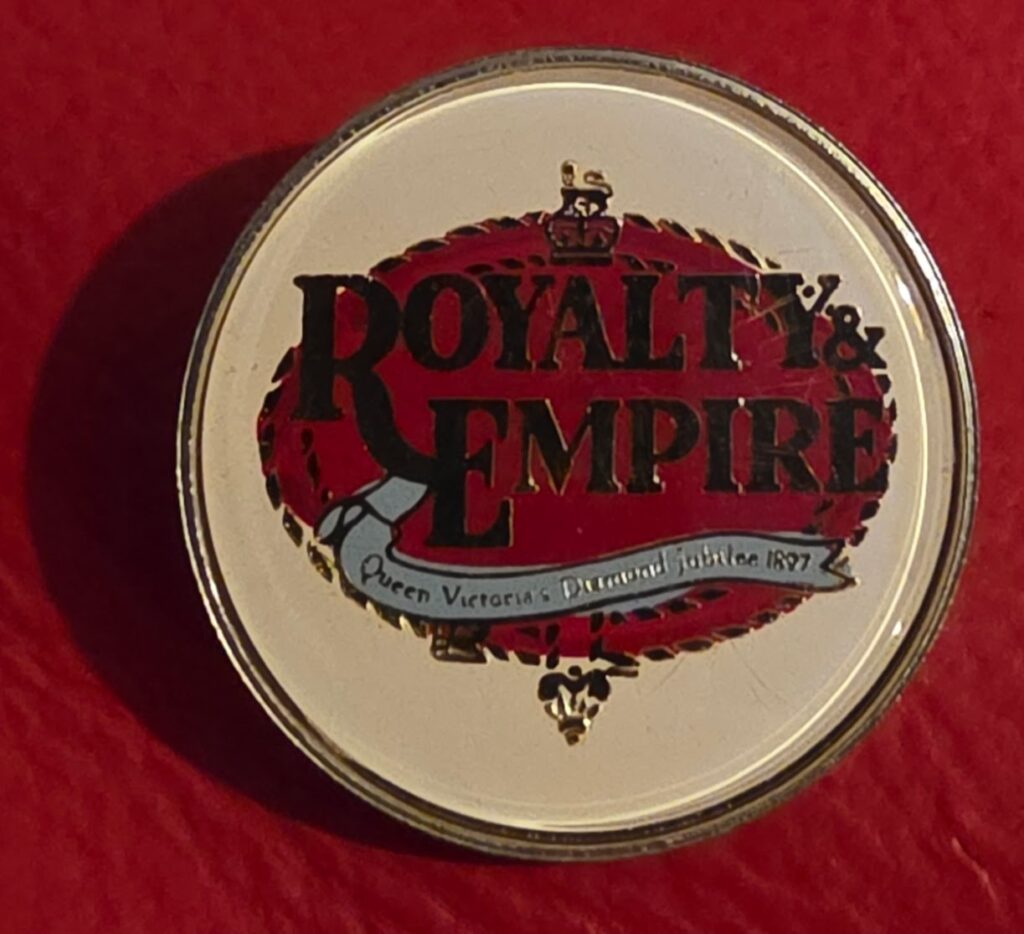
This is a commemorative pin badge for Queen Victoria's diamond jubilee in 1897, which was celebrated between 1983 and 1997 with the Royalty & Empire exhibition in Windsor, developed as a collaboration between British Rail and Madame Tussauds. As you might expect from such a collaboration, it featured waxwork dioramas of events surrounding Victoria's diamond jubilee.
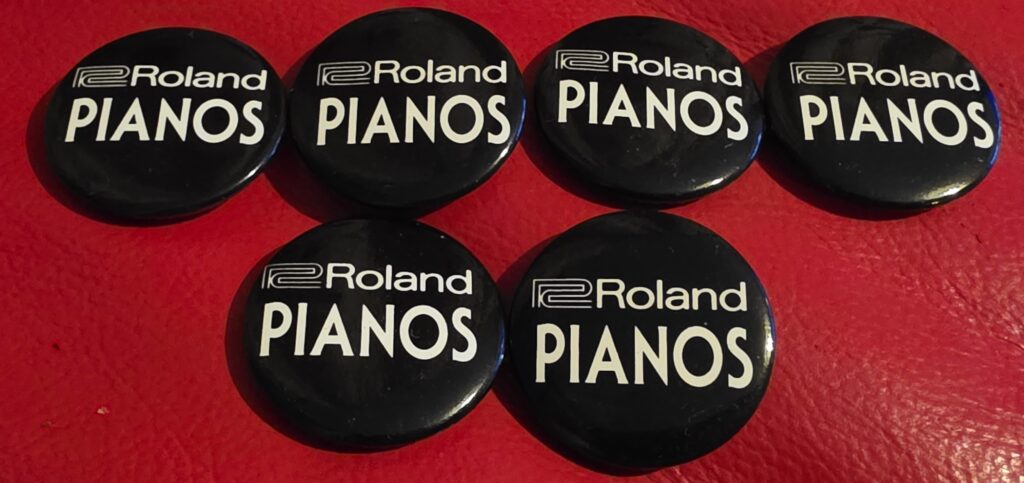
Finally, I have five Roland Pianos badges. At least some of these probably came with my Roland electric piano, but quite why I have five of them I have no idea. But there they are.
And that's the lot! Whew, that took a bit longer than I thought, but it's been interesting to go through them. If you happen to know anything about the ones I'm not sure on, please do feel free to chime in via the comments.
Otherwise, I'm off to bed!
Want to read my thoughts on various video games, visual novels and other popular culture things? Stop by MoeGamer.net, my site for all things fun where I am generally a lot more cheerful. And if you fancy watching some vids on classic games, drop by my YouTube channel.
If you want this nonsense in your inbox every day, please feel free to subscribe via email. Your email address won't be used for anything else.
It's after midnight, and we're staying over at my parents' place. It's a slightly delayed visit from when we originally intended; we wanted to stop by for my Dad's birthday in September but various things conspired against us to prevent that. But we're here now.
Of course, that means getting out of the usual routine, and as such I am writing this post (as I did the last one) on my phone, which I don't like doing because the Jetpack app for posting on WordPress is a bit crap, and also with every passing year, I come to loathe typing on a mobile keyboard with autocorrect just a little bit more. But I can probably suck it up for a night.
It's been a nice, quiet, relaxing weekend as it always tends to be when we come here. My parents keep themselves busy, but they're also — there's no polite way to say this — growing older, and as such seem quite happy to have a couple of days where just not very much happens. Honestly, I'm fine with that too; not that a lot goes on with our daily life when we're back home, but things are especially laid back when we come here.
I spent today playing Thank Goodness You're Here, a game which I've watched Andie play and have also seen Game Grumps play, but which is still a delight to experience. I also made a start on replaying The Excavation of Hob's Barrow, as I thought my Mum, a lapsed adventure game fan, might find it intriguing.
I also spent a little time playing some Doom on Evercade Nexus, because we worked hard on both the console and the game, and it's nice to finally be able to see the finished project, enjoy it and think "we did good". Because we did! We still have lots of work ahead of us for coming releases (and some additions to both Doom and Banjo-Kazooie, our big releases for this year) but the hardest slog we've had to date has, it seems, paid off, thankfully!
Anyway, it is late and I want to sleep, so regardless of the unknown word count, I'm going to leave that there. Business as usual will resume tomorrow!
Interesting discussion in therapy today. I happened to share that I had been experiencing some unusually intense emotional reactions to various pieces of music, including the Ace Combat 8 finale and the Little Tall Prince song I shared the other day. And I guess I hadn't completely considered why.
As is so often the case, though, talking about it in a supportive environment helped make things a little clearer or more obvious to me: it's about hope.
You surely have noticed that I do not think much of the state the world is in today. For so many reasons. There are days when it feels legitimately overwhelming how awful everything is. And thus I have found myself latching on to things that represent hope, and which are unafraid and unashamed to express hope. And, as a result, finding myself experiencing a world where genuine hope, at times, feels like it is in short supply, has given me a strong emotional reaction: a sincere desire that we can one day live up to that.
As I mentioned the other day, there's a sequence in Ace Combat 8's finale where your desperate struggle for survival and attempts to ensure the truth about the shitty corporation gets out ends up getting livestreamed to the world. Initially, the sound is chaos, but before long, the world is singing in harmony, expressing their collective support for your noble and just fight.
I found myself wondering: will we ever get there in the real world? Is that kind of hope just a dream of a fictional world, developed at least in part as a response to the mess we have made of things?
I don't really know the answer to that. Honestly, I suspect we'll never get there in our world. There are too many cultures and ideologies that just want to spend all their time at one another's throats.
But I so desperately want to believe that one day we'll get there. One day we really will be able to raise our voices in song, as one, and come together in support of a common cause. Heaven knows there are plenty of good candidates for said cause.
One day, perhaps. In the meantime, I suspect I will continue to shed tears for these earnest expressions of hope, or the possibilities life might hold for us.
I hope that one day, like the Little Tall Prince, we can see that it has all fallen down, so we pick it up.
Want to read my thoughts on various video games, visual novels and other popular culture things? Stop by MoeGamer.net, my site for all things fun where I am generally a lot more cheerful. And if you fancy watching some vids on classic games, drop by my YouTube channel.
If you want this nonsense in your inbox every day, please feel free to subscribe via email. Your email address won't be used for anything else.
The most interesting thing that happened to me today is that I lost my phone… for about twenty minutes, then I found it again. There is a little more to it than that.
Andie and I went out to Ikea earlier, because she had a £20 voucher that is expiring on Saturday, and we're away at the weekend, so we thought we might as well go and spend it. I wanted an additional storage box for Bits And Pieces, and we figured we'd almost certainly be able to make it up to the minimum required to use the voucher. We also took the opportunity to go and have a plate of meatballs and a cake, as is tradition when one goes to Ikea.
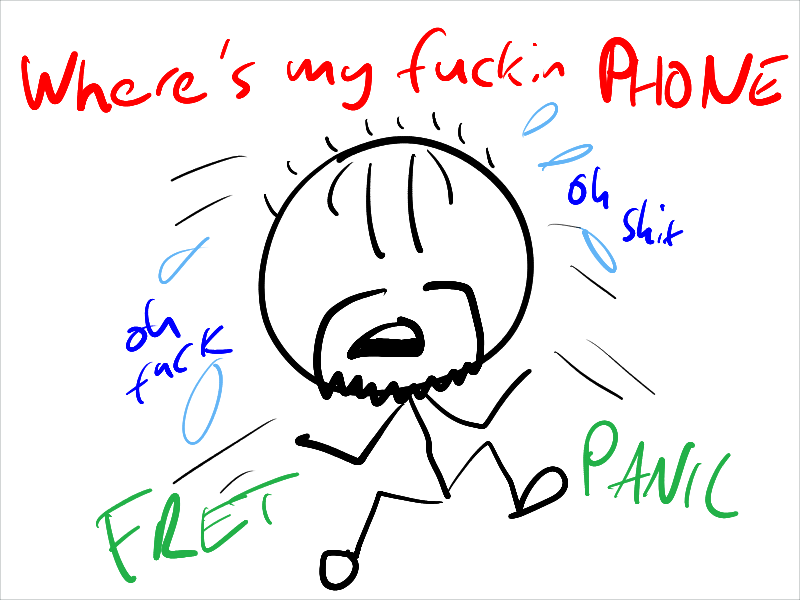
Anyway, on the way back we stopped at the petrol station to fill up the car ahead of our trip away at the weekend, and I realised that my phone wasn't in my pocket. Moreover, my watch wasn't connected to it via Bluetooth, so I couldn't hit the handy "Find My Phone" button to make it make a noise. Mild panic set in, but given that I was using the phone on the trip to Ikea and immediately after dinner, we figured there was only a finite number of places it could be. We went home to use the Web-based Find My Phone feature from Google to confirm it was where we thought it was — after a couple of failed attempts to connect, it did indeed appear where we thought it would be — and, from there, I was able to lock it and leave a message on its lock screen asking anyone who found it to call Andie's mobile.
Then, we got back in the car and drove back to Ikea. On the way, we got a phone call from my phone from a chap called "Logan" who had found my phone and was handing it in to the customer services desk. It had, as I suspected, fallen out of my pocket without me noticing when I got out of the car to pay for the parking ticket. After a quick bit of convincing a near-indecipherable woman on Ikea's customer service desk that I was, in fact, the owner of this phone, I was able to retrieve it and we were home again by 9pm. Hurrah.
Not exactly the way I wanted to spend my evening, no, but it does go to show that some things in tech do, in fact, still work the way they are supposed to in this desperately stupid age we live in. I was able to confirm my phone's location, lock it to prevent unauthorised access (including remotely signing it out of my Google account and removing my cards from the Wallet app), leave a message for anyone who found it and provide a number for people to call if they found it — and when I did recover it, I was able to quickly and easily sign back in without losing anything.
So much in tech is complete shit these days that I feel like we should celebrate these small little instances of Shit Doing What It's Supposed To Do when they do happen. So consider this my mark of appreciation for those few little bits of tech I had cause to use this evening — and which you hope you do not have cause to use frequently — that have not (yet) been completely enshittified.
Want to read my thoughts on various video games, visual novels and other popular culture things? Stop by MoeGamer.net, my site for all things fun where I am generally a lot more cheerful. And if you fancy watching some vids on classic games, drop by my YouTube channel.
If you want this nonsense in your inbox every day, please feel free to subscribe via email. Your email address won't be used for anything else.
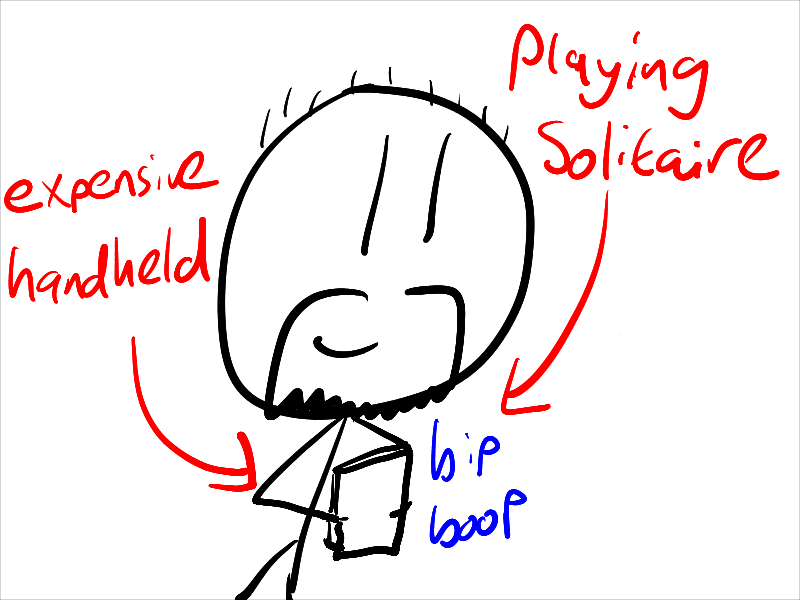
I've had my Analogue Pocket a couple of days now, and I really like it. So what is the game I have played the most on it so far? It is, and this is genuinely not a joke, Solitaire FunPak by Beam Software for original black-and-white Game Boy. (Apparently a Game Gear version also exists, but I haven't tried that yet.)
Given that "handhelds" these days are just as capable as TV-connected consoles, it's easy to forget that they were once quite a distinct breed. That's not to put them down or anything; there are plenty of games for even early-ish handhelds like the Game Boy that you can sink hours into. But there was, at one point, a marked distinction in both the technical capabilities of handhelds compared to their TV-connected big brothers, and the way in which games were designed for handhelds versus TV-connected consoles and desktop computers.
You've probably heard someone — perhaps even me! — say that something makes "a good handheld game", but what does that mean? The specifics have changed over the years, but one thing has remained fairly constant: the best handheld games are things that you can boot up quickly, play for a few minutes to either pass the time or as something to do with your hands while you do something else, then set aside without feeling any sort of "obligation" to keep investing large amounts of time into it.
This could mean any number of things. This could mean simple arcade-style score-attack games. This could mean platformers with short, snappy levels like the Super Mario Land series. This could mean shoot 'em ups. Or, indeed, it could mean board and card game adaptations.
Back when Game Boy was current, I suspect a lot of people would have looked upon something like Solitaire FunPak for Game Boy as not worth bothering with; spending a relatively large amount of money for something you could just do with a pack of cards. But now, with how easy it is to load up a device like the Analogue Pocket or a Chinese emulator handheld with games, these titles show their value: they are good handheld games!
I've actually secretly known this for some time. Not specifically that Solitaire FunPak is a good time, but that simple board and card games make for good handheld entertainment. The game that converted me in this regard was Nintendo's 42 All-Time Classics for Nintendo DS, also known as Clubhouse Games in America, because Americans can't count or something. I don't remember exactly what made me pick this up back in the day, but I do remember being very pleasantly surprised at how enjoyable it was when I booted it up and spent some time with it. Plus the built-in Pictochat and single-cartridge multiplayer made it super-easy to play with others.
So in retrospect, I'm not surprised that I'm having a good time with Solitaire FunPak, which is a solid implementation of exactly what it offers in its title: a selection of solitaire card games, which you can play either individually or as a "tournament" in an attempt to attain the highest score possible. Even if you just play Klondike, there's plenty of value to be had here, but you have a bunch of other fun games to play, too, and they all work well with both the simplistic visual presentation afforded by the Game Boy's limited capabilities, and the likewise straightforward controls.
This is exactly what "a good handheld game" is — and, being on a device that isn't connected to the Internet, and whose games are completely self-contained affairs that don't need updates, you can just relax with it without the possibility of distractions. And it's so nice to play something that is designed as a simple pastime, and which hasn't been monetised out the wazoo or engineered to manipulate your "engagement" into playing for longer, thereby getting you to look at more ads.
Would I have bought Solitaire FunPak back in the day when I had a Game Boy? Probably not, although if I had I suspect I would have actually had a decent amount of fun with it. Am I having fun with it now, though? Most definitely. And I think I might just go play a game or two while I run myself a bath this evening…
Want to read my thoughts on various video games, visual novels and other popular culture things? Stop by MoeGamer.net, my site for all things fun where I am generally a lot more cheerful. And if you fancy watching some vids on classic games, drop by my YouTube channel.
If you want this nonsense in your inbox every day, please feel free to subscribe via email. Your email address won't be used for anything else.
I've run into a few creative works recently that were evidently put together with a great deal of earnestness, genuine thought and emotion. And people like them! But, more often than not, not without including some sort of "disclaimer".
Said disclaimer is usually some form of admission that "I know this is cheesy, but…" or "yes, this might be cringe, but…" before going on to give a genuine emotional response. For some people, it is seemingly difficult to just give that emotional response without feeling the need to justify it or explain it away.
Well, I'd like to say: own it! If you got hit in the feelings by something, that's okay! If you had an emotional reaction to something that was so strong it reduced you to a sobbing wreck, that's fine! That's good! You have a healthy relationship with your own emotions, and you are not afraid to express them!
I say this as someone who listened to this track from Ace Combat 8 earlier (which I knew the full narrative context of, having beaten the game a couple of days ago) and burst into full-on sobbing at it by the midpoint. Like, I was legitimately crying so hard I had to stop everything else I was doing.
If your immediate response to that is "wow, that's cheesy" or "I can't believe you admitted that", stop. Take a minute. Ponder why you are thinking that. Are you concerned about what other people might think of you if you exhibit some sort of vulnerability? Because that's not something you need to concern yourself with — particularly if you are sitting by yourself.
It's okay to have an emotional response to something. It's okay to have a physiological reaction to that emotional response. You aren't faulty. You aren't broken. You are being human — something it can sometimes feel like we are, in may ways, being discouraged from by the daily algorithmic bombardment from social media.
Sometimes those emotional responses can come from the strangest places — like the funny plane game.
Or perhaps a song developed by a father, based on the near-gibberish his young daughter writes as "stories":
My immediate response to this was just "aw, that's cute and adorable… and surprisingly well-produced for what is essentially a silly joke video". I won't lie, I listened to it multiple times in succession for its pure catchiness.
Then I read the comments to the "Living Room version" of the song (actually just the song with an animation rather than the vertical video of the chap singing). And the emotions hit me, hard.
Y'see, if you haven't listened to the song, the end part features the repeated motif that "everything all fell down, but he picked it up". In the context of the original story and lyrics, it's a silly moment; the main character, the "Little Tall Prince", dropped a cup in the grocery store which caused everything to fall over, so, being a good little prince, he picked it up. Simple, silly, right?
Except human beings have the tendency to ascribe meaning to things where it might not have been the original intent, but it most certainly fits. That video has comment after comment of people expressing the sincere hope that "we can pick it up" — that we can fix the world after "everything all fell down" over the course of the last few years or so.
The world is broken. Peoples' souls are broken. And they want nothing more than to begin the healing process. Little moments like this song give just a glimpse of a world we once knew; one where we could have hope for the future and not find ourselves continually enraged and saddened by the latest stupid, wasteful, obnoxious, tragic, violent, unjust things happening on a daily basis. Hope for the future, through the eyes of a child.
I saw the number of people expressing this sincere hope, completely earnestly, and it hit me right in the heart. I'm not too proud to admit that I shed a few more tears there. And listened to the song a good few more times.
I want to believe that we can pick it up. I want to believe that we can come together in a Song of Wings as one. It is not cringe, embarrassing or cheesy to think such things. Take a moment and have a good cry over something today. I can't guarantee you will necessarily feel better, but you will almost certainly feel some relief at having let out emotions that have probably been pent up within you for a long time.
That's what I felt after putting my own emotions through the wringer over the last couple of days. Sometimes self-care is just about allowing yourself to feel.
Want to read my thoughts on various video games, visual novels and other popular culture things? Stop by MoeGamer.net, my site for all things fun where I am generally a lot more cheerful. And if you fancy watching some vids on classic games, drop by my YouTube channel.
If you want this nonsense in your inbox every day, please feel free to subscribe via email. Your email address won't be used for anything else.
It has been a fairly boring day, so I will attempt to make it more interesting by talking about several things. Look at me go!
First up, my Analogue Pocket arrived today. Did I need another retro gaming handheld, particularly one that is quite pricy (and extremely pricy when you add the extortionate shipping and customs charges that come with getting one shipped to the UK)? No, of course I didn't. Did I get one anyway? Yes, of course I did. I have been interested in the Analogue Pocket ever since it was first announced and immediately sold out, so I have always been keeping an eye out for them becoming available again. As it happens, they became available again and I was in a position to be able to buy one without guilt, so that's exactly what I did.
I don't have a lot to report on it so far as I've only really set it up and given it a quick try with a few games so far. I am impressed from the little I've seen, though; the extremely, extremely high resolution screen means that it's capable of doing some wonderful display effects to recreate things like the original Game Boy's dot matrix display and the distinct "line" patterns on things like the Lynx and Game Gear displays. It can also do a nice Trinitron CRT simulation, as well as a number of other "generic" effects — or you can mix things up a bit, like applying a simulation of the DMG Game Boy screen onto something that would not have used that!
I'll doubtless have a lot more to say about it in the near future, but suffice to say for now that this thing seems to be built like a tank in handheld terms, and setting it up to use the MiSTer-style openFPGA cores using an application called PocketSync was quick and easy. PocketSync also takes care of things like downloading BIOS files, so it really is just a few clicks to get the thing set up to load any ROM you'd care to name on one of the supported platforms. It's nice to have the option for original cartridges, though, which was the Analogue Pocket's original unique selling point.
Anyway, that's the Pocket. Like I say, I'll do a more detailed writeup about it in the near future, as it's worth exploring in depth, I think. I'm particularly intrigued to try the nanoloop music creation software that comes built-in. It seems fiddly at first glance, but I'm sure once you get your head around the various button controls and know what everything does, it will become much more usable.
What else has happened today? I tried some American flavours of sugar-free Monster that one of our local convenience stores (the one we call "Funny Shop" to distinguish it from the nearby Tesco Express, and in homage to the fact that it sells unusual imported food products from around the world as well as domestic products) and they were both actually very nice. I tried the "Ultra Red White and Blue Razz" one, which is obnoxiously "patriotic", but, as the name suggests, just tastes of blue raspberry, while the Ultra Sunrise flavour might, in fact, be my all-time favourite Monster; it tastes like actual oranges. Not like orange soda flavour, like an actual orange. Highly recommended. I hope we see it more "officially" over here at some point; in the meantime, I will be counting on Funny Shop to keep me stocked.
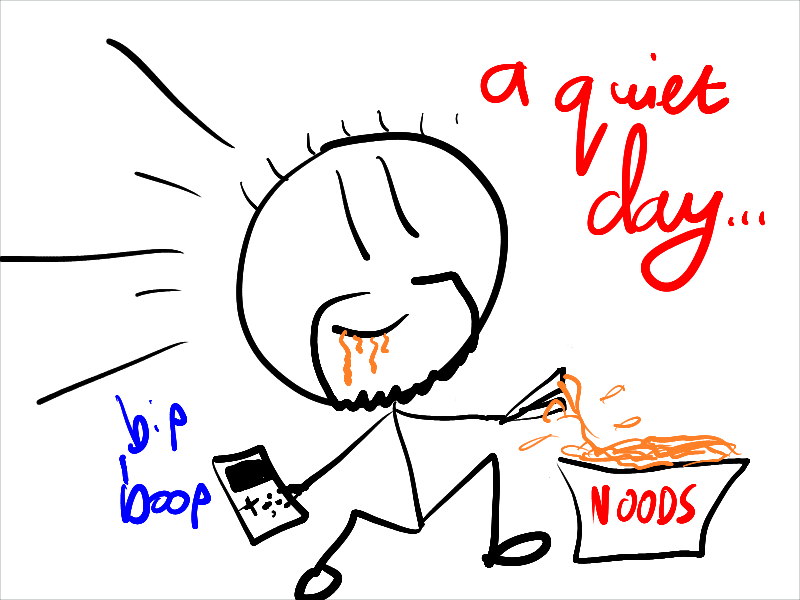
I also tried the Taco variant of Buldak noodles. I have mixed feelings on this. It had a pleasant Mexican-esque smell once the powder and sauce went in, but in terms of flavour it was mostly overwhelmed by the Buldak hot sauce. The "flakes" pouch also contained some of the most unidentified foodstuffs I think I've ever seen. There was something that I assume was supposed to be a bit like taco meat, but I have no idea what it actually was, and it didn't really taste of anything. I am yet to find a Buldak variant that beats the regrettably discontinued Curry flavour, though the sweet fried chicken one is pretty good (yes, that means it is a sweet fried chicken flavour hot chicken flavour noodle) but seemingly getting a bit harder to find. I also tried the Rosé one the other day and had trouble distinguishing it from the Carbonara variant. It was nice, to be sure, and I'll probably seek it out again, but I'm not sure how it distinguishes itself from Carbonara.
Well, that's my day. I think a bit more handheld play is in my immediate future…
Want to read my thoughts on various video games, visual novels and other popular culture things? Stop by MoeGamer.net, my site for all things fun where I am generally a lot more cheerful. And if you fancy watching some vids on classic games, drop by my YouTube channel.
If you want this nonsense in your inbox every day, please feel free to subscribe via email. Your email address won't be used for anything else.
One of the things that I've wanted to do for many years is get to grips with really being able to program the Atari 8-bit. This will be a completely useless and unmarketable skill for me to learn, but with the Atari 8-bit in particular having always been so important to me, it feels like a natural step in my enjoyment of the hobby. Only trouble is: I don't really know where to begin!
I still have a vague knowledge of Atari BASIC from my days typing in listings as a kid and inventing my own programs way back when, but I suspect a lot of the intricacies may have fallen out of my head at some point, as I haven't really done anything substantial in Atari BASIC since… well, since it was current and relevant. Beyond that, though, there are a wide variety of things that are a complete mystery to me. And I think the sheer wealth of things it's possible to learn, even on an old computer like an Atari 8-bit, is what makes it so daunting.
Do you get in-depth about how to handle variables and strings? Do you figure out the mathematical functions? Do you learn what all the different default graphics modes do, and what they are best used for? Do you tinker with the sound capabilities of the POKEY sound chip? Do you learn how to display, move and otherwise use player/missile graphics, aka hardware sprites? Do you learn about the display list, and how a display list interrupt is a different thing from manipulating the display list? Do you learn what a vertical blank interrupt is, and how to use it? And at what point in all of this do you "graduate" from BASIC to machine code?
This constant string of questions, which I could have extended to at least five times that length, is probably the big thing that holds me back from actually dipping into "learning how to program the Atari 8-bit" as a serious hobby. I'm sure there isn't really a "bad" place to start — and having an idea of what I would like to be able to program is probably a good way of determining what things I should focus on looking at first — but it's that old Analysis Paralysis thing again; when confronted with seemingly infinite options, you end up choosing none of them.
So I think the answer is probably just to pick a book — of which there are many available on the subject of Atari 8-bit programming, coming at it from myriad angles — and work my way through it. All of it. Then, from there, I can learn where I might want to head next, or figure out where the gaps in my knowledge are. Ultimately, then, I can develop a solid understanding of all the things I might "need" to know in order to be able to program the system effectively.
The reason why this is all on my mind right now is, of course, because of the increasing number of AI slop projects I've been seeing in retro gaming. Over on the website Atarimania today, two out of the four new additions to the database have "developed using AI" disclaimers on them. And one might ask: why don't I just "get the AI to do it for me"? Surely it is easier than ever to shit out a program-shaped object using Claude (they had to pick the cuntiest name possible for it, didn't they?) and then convince everyone that "I made this"?
Well, no. If you've spent any time reading this blog over the last few years, you'll know that this would provide me with absolutely no satisfaction whatsoever. Just because "an easy option" exists now doesn't mean I want or need to take it. In fact, I feel like with how likely it is that the AI bubble is going to burst and all of this crap is just going to go away one day — and God, I long for that day — it is all the more valuable to learn how to do something like this properly.
What I'd love to be able to do is create a game for the Atari 8-bit. That feels like a very far-off goal right now — but one way of looking at it is that back in the '80s, people had a fraction of the reference resources we have today (and no, I don't count AI in that) and were still able to learn how to do these things in their own time relatively quickly. So with a bit of determination, dedication and actually setting a bit of time aside to do this, I feel like I might be able to learn something.
As I say, it'll be something that is mostly useless and not really marketable, but who cares? Remember a time when hobbies were just things you did because they were fun, and you didn't feel the need to monetise them or even share them with others? I'm thinking that's what this has to be. Something that is just for me; something that I want to learn for myself. Not because I want to make and sell a game, but just because it's something I've always wanted to learn, and to be able to make something for my own satisfaction.
So I think maybe for the rest of this evening I might go spend some time tinkering in Atari BASIC on the ol' MiSTer…
Want to read my thoughts on various video games, visual novels and other popular culture things? Stop by MoeGamer.net, my site for all things fun where I am generally a lot more cheerful. And if you fancy watching some vids on classic games, drop by my YouTube channel.
If you want this nonsense in your inbox every day, please feel free to subscribe via email. Your email address won't be used for anything else.
Musical comedy is a thing that is very difficult to get right. But when someone does get it right, it can be incredibly amusing.
I thought today I might share a variety of examples of musical comedy that I've always enjoyed, presented with the caveat that, as usual, these may not be on YouTube any more by the time you get around to reading this post. If that is the case, you'll just have to take my word for it that they were very funny indeed.
My most recent discovery in this regard is No Worries If Not! by Tom Cardy, an Australian musical comedian who makes well-produced music with endearingly low-budget videos, usually involving him in his home. This particular song is a foul-mouthed ode to being a freelance creative, and the disparity between the things you really want to say to your client, and the things that, if you are a socially anxious person — as many freelance creatives are — you actually end up saying.
I love the genuine-seeming anger in this one. Many people online will be able to relate to this one, I'm sure, particularly if they work in a creative field, but also if they're just someone who isn't naturally assertive. Kudos for the half-rhyme between "Please eat my butthole and call me king" and "Please don't email me after 4pm".
This is probably one of Tim Minchin's most well-known ones, but on the off-chance you've not seen/heard it before, I will let it speak for itself.
Sbassbear is a more niche pull, because it helps if you have at least a passing familiarity with Game Grumps beforehand — though they have done some of their own original stuff, too. The great thing about Sbassbear is that they take utterly ridiculous, silly moments from the Grumps' playthroughs of various games and turn them into legitimate bangers. This song, while based entirely on a throwaway comment about having low testosterone, is kind of beautiful in its own thoroughly stupid way.
This is one of my absolute favourite Aunty Donna sketches, not just because of the subject matter, but because it's so brilliantly produced, encompassing a range of different styles across the duration of one song. My favourite part is the Les Misérables bit, which is both hilarious and performed with admirable earnestness.
This is a particular breed of online musical comedy, involving cutting and pasting myriad clips of someone from television and online appearances, then mixing them into a solid track. Swedemason is the absolute master of this, as far as I'm concerned, and in the interests of not putting the disgraced face of Gregg Wallace in front of you for my former favourite track, Buttery Biscuit Bass, here's Mary Berry instead.
And an older classic to finish off with. This was one of the first tracks I ever heard from the Bonzo Dog Band, and I knew immediately that I was going to get on with their particular breed of nonsense. This is another great example of a clearly talented group of musicians doing a deliberately "bad" piece of music, and it only working because they're obviously skilled musicians. The clarinet solo in this is a work of genius.
There. Hope that's brightened up your Saturday evening. Enjoy!
Want to read my thoughts on various video games, visual novels and other popular culture things? Stop by MoeGamer.net, my site for all things fun where I am generally a lot more cheerful. And if you fancy watching some vids on classic games, drop by my YouTube channel.
If you want this nonsense in your inbox every day, please feel free to subscribe via email. Your email address won't be used for anything else.