#oneaday Day 820: We need the Adventure-obsessives back again

In the early days of home computer and video gaming, there was an enormous amount of excitement over what many publications referred to as capital-A Adventures. It wasn't uncommon to see computer mags in particular devote entire issues to Adventures, and a lot of them had a monthly column in which the writer (who often went by a pseudonym for some reason) would talk about recently released adventures, offer tips and advice to readers who had written in, and sometimes provide full solutions for particularly tricky games.

One recurring feature of this Adventure coverage back in the early '80s was a marked disdain for graphics. To the devoted Adventurer, the most vivid, spectacular images of all are those which are conjured up by one's own mind when reading some well-crafted prose, and thus no form of computer graphics would ever be able to match up to the possibilities afforded by one's own imagination.

There was a certain amount of pretentiousness here, yes, but they also had something of a point at the time; the graphical capabilities of home computers at the time were relatively limited, at least until the 16-bit micros became more well-established, and thus in many cases the graphics in illustrated adventures were somewhat… primitive, to say the least. In cases where they weren't, you ran into another problem: memory and storage space. Since 8-bit micros had anywhere between 8 and 128 kilobytes of RAM on offer, there was a hard limit on how much game data you could include in a game — and "data" in this case covered both descriptive text and graphics.

On systems with widespread disk drive adoption, such as the Atari 8-bit and C64, this issue was at least partly sidestepped by publishing Adventures on floppy disk, with the relevant data being loaded into memory from the disk only when needed — something it was only possible to do with the random access of a disk, since cassettes could only load data in a linear fashion (and took a long time to do it anyway). You still ran into hard caps, though: a disk could only hold so much.

It became pretty widely agreed among Adventure enthusiasts that straight-up text-only Adventures were always going to be the superior option, because you could fit a lot more text than graphics into either memory or the available space on a floppy disk, and the sort of person playing an Adventure was likely to be someone who enjoys reading anyway. So leave the fancy graphics for the arcade game fans and keep giving those Adventure fans that delicious plain text!

It didn't last, of course. As graphics technology got better, computers had more memory and storage solutions had greater capacity, we got to a point where it was possible to have well-written Adventures that also had excellent illustrations. Some of the earliest to see success in this regard were the titles from Magnetic Scrolls, such as The Pawn, The Guild of Thieves and Jinxter. These still placed most of the emphasis on the text, but the illustrations (which could be turned off) supported the story.

Then we started to get more in the way of "graphic adventures", beginning with Sierra's "3-D Animated Adventure Games" such as the King's Quest series, which initially gave you direct control of an on-screen character while keeping interaction via a text parser. From there, we ended up with the entirely mouse-driven point-and-click adventure, as popularised by titles such as Maniac Mansion and The Secret of Monkey Island. At that point, the purely text-based Adventure appeared to have been completely left by the wayside in favour of a more visual form of interactive entertainment. In many respects, this made these games a lot more accessible to those who perhaps weren't comfortable attempting to communicate with a computer by typing verb-noun phrases, but for those who still enjoyed to read, things were never quite the same again.

Today, of course, there's the never-ending push for photorealism that has been taken to its natural, absurd extreme with technologies like Nvidia's AI slop bimbofication filter, sorry, DLSS5, and some people are, quite understandably, starting to feel fatigued with how a lot of games feel like they look very similar to one another. What happened to using our imaginations as the ultimate graphics chipset?

Well, good news: the good old text-based Adventure never died! In fact, it quietly flourished as the years went on, with an enthusiast community continuing to make use of this venerable but undeniably effective means of enjoying an interactive story — and even creating their own original Adventures that would have gone down extremely well with the Adventure enthusiasts of the early 1980s. Meanwhile, the similar-but-different visual novel genre has enjoyed gradual but steady growth over a similar period, making its way from niche-interest curiosity to something quite commonly seen today. People, it turns out, still like to read.

Every so often, I get a hankering to explore some text-based games. What I have referred to in the preceding paragraphs as Adventures tend to be described as "Interactive Fiction" these days. If you're being particularly pedantic, there is a difference between "Interactive Fiction" and "Text Adventure" — the former emphasises an unfolding text-based story, while the latter has greater focus on exploration and puzzle-solving — but "IF" tends to be used as a shorthand for all text-based, parser-driven games these days, and it also encompasses games that use multiple-choice or hypertext interfaces, such as those made with the popular Twine tool.

Thankfully, there are plenty of places to explore Interactive Fiction. A good place to have a look is the annual IFComp, or Interactive Fiction Competition. Right now, you can download and play a whole host of games that cover probably every piece of subject matter you might be able to think of. And you (yes, you!) can judge them, too. I bet you'd like that. You love judging things, don't you. Well, go on then! Go judge something! I think I know what I'm doing tomorrow!


Want to read my thoughts on various video games, visual novels and other popular culture things? Stop by MoeGamer.net, my site for all things fun where I am generally a lot more cheerful. And if you fancy watching some vids on classic games, drop by my YouTube channel.

If you want this nonsense in your inbox every day, please feel free to subscribe via email. Your email address won't be used for anything else.
#oneaday Day 818: Gaming is doing everything it can to drive its oldest fans away

I've been playing video games for as long as I can remember existing. I grew up playing games on the Atari 8-bit and ST home computers, and since then, I have followed along with the explosive growth and technological advancement of the medium every step of the way. And yet today, in 2026, I feel like I'm being specifically pushed away in so many ways.

There are lots of contributing factors to this, but the things that come immediately mind today both relate to Final Fantasy VII Revelation, the upcoming third and final part of the Final Fantasy Remake project. We have a release date for it at last — April 8, 2027 — but two things came to light today which pissed me right off: firstly, the fact that not one, but two pieces of DLC and an "expansion pass" have been announced for it more than half a year before the game has been released, and secondly, the physical editions on all platforms will require you to download the bulk of the game rather than installing it from disc, thereby making said physical editions almost completely worthless.

On the first point: you have spent three games telling this story which once took one 40-hour game to tell. Just include everything in this fucking final part.

Those who have embraced an "all-digital" future will doubtless not be bothered by the second point, but I am someone who has cultivated a collection of over a thousand physical releases across a variety of platforms, and a big part of the reason I have done that is as a sort of investment in my future entertainment: for the next significant number of years, I will be able to enjoy a whole variety of different video game experiences on a bunch of different consoles. And with this looking like it may well be the last generation of consoles I have any interest in whatsoever, thanks to Sony's plans to give up physical media and the adoption of the odious "Game-Key Cards" on Switch 2, it feels increasingly important to have all that stuff ready to play.

Now, for a lot of the stuff I've bought, I can just put it in a console and play it. It's one of the big reasons why I've bought a lot of limited-print stuff — I know a lot of people don't like those companies for various reasons, but one thoroughly admirable thing that pretty much all of them have committed to is only putting out a physical version when a game is finished. That means you buy it, you put it in, you play it. No downloading updates; no DLC (there have been a few exceptions to this, but for the most part anything that was once DLC is included in these physical versions) and no requirement to be connected to the Internet. You know, like physical media always was prior to everything we own being perpetually connected to the Internet, and gradually, slowly but surely, getting increasingly fucked-up over time?

This news for Final Fantasy VII Revelation fucks with this, though. I have copies of Final Fantasy VII Remake and Rebirth that I can install from disc and play right now, even if my Internet connection isn't working — or, in the years to come, if Sony were to decide to just switch off the servers that were delivering downloadable game files to people. Were I to buy a physical copy of Revelation, though, I would not be able to do that, because the whole game isn't on the damned disc. So what happens if, in 20 or 30 years, assuming I'm still around and capable of playing video games at that point, I decide I want to replay the entire Final Fantasy VII Remake trilogy? I just… can't play the last bit if the servers are no longer online?

And you might think that's an extreme scenario, but there are games I have on my shelf that are 30+ years old that I am still pulling down and playing. And I will continue to play an original copy by choice if it is available. So it's entirely possible that multiple decades from now, I will want to play something that was released in the 2020s.

Of course, it's also possible that in the future, storage costs will continue to plummet, and it will be practical to have some form of storage device loaded up with a huge library of PS5 and Switch 2 games, just like I have a chunky SSD full of everything from Atari 2600 up to PlayStation and Saturn games hooked up to my MiSTer. At that point, physical copies may well have ceased to matter.

Couple all this with Sony's eagerness to fight the apparently mistaken assumption that we are "buying" games when we click the "buy" button in their "store", and it doesn't give one a lot of hope for the long-term preservation of what is still, at its core, an incredibly exciting creative, artistic medium.

At this rate, we're going to have everything up to about PlayStation 2 preserved perfectly, but after that things are going to start getting a lot more patchy. No pun intended, given the additional considerations that post-launch updates bring to the table.

I dunno. Maybe I shouldn't bother thinking about this stuff. It's entirely possible that by the time any of my concerns actually start to matter, I'll be long dead. I just don't like seeing something that I have cared deeply about for my whole life continually make itself worse and worse and worse, all in the name of the "perpetual growth" rot economy and the pursuit of never-ending, continually unsatisfied greed. I don't want to feel that future generations simply won't be able to enjoy gaming the way I've enjoyed it for the last 40+ years. And it's hard to flip the switch to the "I don't care, just enjoy it now" setting, after so long of actually caring!


Want to read my thoughts on various video games, visual novels and other popular culture things? Stop by MoeGamer.net, my site for all things fun where I am generally a lot more cheerful. And if you fancy watching some vids on classic games, drop by my YouTube channel.

If you want this nonsense in your inbox every day, please feel free to subscribe via email. Your email address won't be used for anything else.
#oneaday Day 814: Death of a publication

I've finally finished my efforts to catalogue all the games-related articles (including roundups, re-reviews, type-in listings and issue disk bonuses) from Page 6/New Atari User. My data sheet has over 2,000 rows in it, though some of those are repeats. Even so, that's a lot of material to work with.

As I found myself reviewing the latter-day issues in the magazine's run, though, I found myself feeling an intense sense of melancholy and almost mourning, I guess. Over the course of the publication's complete run, you can see at a glance when it was doing the best (full-colour covers with specially commissioned artwork or photography to appear prominently and attractively on newsstands) and when things started to go downhill (single-colour covers, the return to a subscription-only model) and when things were nearing the end (a switch to an A5 format, with less and less in the way of commercial releases covered each issue).

Here's a shot from Atarimania, which hosts a full archive of Page 6/New Atari User issues, that shows three stages of this evolution:

I found myself feeling sad all over again while working my way through these issues — because I remember this happening first time around. I remember getting Page 6/New Atari User every month, and in those latter years, feeling like something which had been a fixture in my life for as long as I could remember was ailing and would eventually die. Page 6 started before I was old enough to know what a computer or a magazine was, so it was always present throughout my childhood and adolescence.

Its final issue — in which the editor, Les Ellingham, made an unfortunately unkept promise to readers that there would be six more issues of the magazine before it finally closed for good — is a sad read. Even my Dad, who had been a contributor from midway through the magazine's run up until its very last issue, had given up writing about specifically Atari-related stuff, and was instead posting a regular column about the wonders of the then-nascent (at least in consumer-accessible form) Internet and World Wide Web. My article spreadsheet has just a single game-related entry for that final issue: a public domain version of Tetris for Atari 8-bit.

One of the most remarkable things about Page 6/New Atari User is that it wasn't the Atari ST coverage which lasted until the b(l)itter end. No; the last few issues contained pretty much nothing but Atari 8-bit coverage, which provided the first hints of the fact that the "Atari Classic" scene, as the magazine referred to it at the time, would continue to thrive in the years to come, even in the absence of a major specialist publication.

The ST scene is still alive too, but I can't help but feel like there's a lot more Atari 8-bit enthusiasts out there than Atari ST people. After all, the ST marked the beginning of the shift towards all home computing being PC-based; the ST certainly had its own distinctive, unique features, but it also marked a point where the distinction between purportedly different platforms was less pronounced in various ways. Thus, I suspect what happened, is people who were once ST enthusiasts just sort of… "upgraded" to MS-DOS and then Windows-based PCs and then never looked back. That's certainly what my family did — although I certainly never quite left the Atari machines behind, as they had been so important to me growing up, and continue to be important to me to this day.

Anyway, the thing I think I find most sad about the slow death of Page 6/New Atari User is that it was clearly taking a mental toll on Les. In some of the last few issues, he described how the editor of an American Atari newsletter had found himself succumbing to ill health, at least partly due to the stress of working on his publication, and he indicated that he had no desire to do himself a mischief in the same way — particularly because, in these latter years, he was also trying to support himself with handmade crafts. In one of the last issues, he mentions that he thinks he might have to get a part-time job to continue supporting himself, because between the magazine and his crafts, there was no longer enough money coming in to completely make ends meet.

But all good things have to eventually come to an end, and in the tech space in particular, the rate at which things progress can be absolutely mind-boggling at times. I don't think there's any shame in Page 6/New Atari User's eventual bowing out, even with the regrettably unkept promise from Les' final editorial. To consider that this was a publication which continuously supported both the Atari 8-bit and, once it hit the market, the ST, from 1983 up until 1998 is absolutely mindblowing. Les' refusal to let go until it was absolutely, definitely no longer viable to continue in any way whatsoever is incredibly admirable — as is the commitment of the freelance contributors who kept sending in articles issue after issue, without fail, like my Dad.

So yeah. While reliving the end of something that brought me so much joy as a child has made me a little bit maudlin, I also continue to celebrate everything this publication achieved — and continue to derive joy from it as I grow older, since I am now in possession of the complete run of issues that I grew up with.

It saddens me a bit that when something similar happens these days, in the form of a website going down and no longer being accessible, that there is often no easy way to simply look back fondly over past "issues" in the same way as you can with a magazine. There are many, many online publications that are just gone these days, and while The Internet Archive has done an incredible job of preserving some of them, there are others that we'll just never see again in any form. I know — I've worked on a bunch of them, and now most of my articles are now buried, nigh-unsearchable, in the archives of other sites that ingested the data of the closing publications, often introducing a bunch of errors in the process.

Page 6/New Atari User, though, that will always exist in the form that I knew and loved it. So although I'm sad all over again at the end of such an important publication, I know that I will continue to derive joy — and attain knowledge — from browsing that archive of issues over and over again. One day I might even get around to learning how to program the Atari 8-bits properly beyond simple BASIC. You never know.


Want to read my thoughts on various video games, visual novels and other popular culture things? Stop by MoeGamer.net, my site for all things fun where I am generally a lot more cheerful. And if you fancy watching some vids on classic games, drop by my YouTube channel.

If you want this nonsense in your inbox every day, please feel free to subscribe via email. Your email address won't be used for anything else.
#oneaday Day 813: That sure was a big walk

We finished Big Walk this evening. It was excellent! I am going to share some spoilers after the image, so consider yourself warned. If you would like to read something not spoileriffic about Big Walk, may I direct you to the article I wrote about it here? Thank you.

One of the things Big Walk continually impresses on you is the importance of communication, whether that's communicating over short to moderate distances in order to collaborate on puzzles, taking the time to just have a chat, or finding a means to get one another's attention from a long distance apart if you happen to find yourself separated.

I suspect every group will find their own ways of dealing with this particular challenge — and every group will have its own members that, for one reason or another, present additional challenges to everyone, including themselves — but it's something you will likely settle into fairly quickly in collaboration with your walking partners. I'd be interested to try it with other people and see how different the dynamic is between group members and group sizes — though I'm also conscious that once you've solved a lot of these puzzles once, it's a lot easier to play through the game, so I don't know how inherently replayable the whole thing is.

Anyway, the reason I mention this is because towards the end of the game, Big Walk takes away two very important things that you have likely been using for your communication up until this point: your visual identity — in other words, the colours you have chosen to represent your character, which you can "paint" onto each other in the introductory stage of the game — and your voice.

Yes, the finale sequence of Big Walk completely takes away the ability to voice chat with one another, meaning you will have to find ways of communicating not only each participant's part in a puzzle solution, but also determine between you what on Earth you are supposed to do in each puzzle.

Thankfully, Big Walk does have a fairly robust gesturing system that allows you a surprising amount of flexibility in terms of waggling your noodle arms around, but you still have to find a way to agree what each gesture means, having likely not had an opportunity to do so verbally beforehand — unless, of course, you had the foresight to do so "just in case" you were not able to communicate through voice. But why would you need to do that? Taking players' voices away in a game built around cooperative play and communication would just be mean, wouldn't it?

Well, yes, it would, but it also makes Big Walk's finale sequence incredibly memorable. There are, I think, seven puzzles you have to complete in the run up to the actual ending, and each challenges your group to think on their feet and find a way to get various messages across to one another without using words and without being able to visually identify who is whom. It really works extraordinarily well — I won't spoil the actual solutions for the puzzles here, for the sake of anyone who didn't heed my spoiler warning but is still intending to actually play Big Walk, but I'll just say that the "kettle puzzle" was my favourite for how gleefully silly it was.

Anyway, once you finish Big Walk, there is a "postgame" to play, too, which we're probably going to tackle in a subsequent session. There are a lot of puzzles on the map that we didn't solve in our various explorations, and we found a place where you have to put a whopping fifteen of the collectible thingies (we call them "Kongs" after their resemblance to a classic dog toy) in order to do… something? We don't know what yet ,though I have a suspicion. That's a job for another day though.

I'm impressed how substantial the game actually is. It took us three very long sessions to get through the entirety of the "main" game, and there's still a fair bit more for us to do. This is one of numerous reasons why I don't think it fits into the ill-defined "friendslop" category; to me, "friendslop" says games that you play with your friends that are over and done with in one session, and which "don't matter". Not in the sense that they're worthless, but in the sense that they don't have a long-term overarching goal; each session is self-contained, like an individual play of a board game, rather than part of a broader "campaign" in which you're working together to achieve something.

Anyway. I had fun! And aside from one of those finale puzzles, which I found very difficult to get my head around for some reason (as did everyone else, I think) I am relieved that Big Walk, despite whipping much of games media into a similar frenzy as we saw for Blue Prince last year, is a very different sort of experience. And for me, it's nice to actually be able to enjoy an indie darling for once, because on a significant number of past occasions, they have left me cold. This led me to doubt that Big Walk would actually be any good, but I'm glad I decided to give it a try. It was very much worth it.

Now it's nearly 1am and I need to sleep. But that was, indeed, a Big Walk.


Want to read my thoughts on various video games, visual novels and other popular culture things? Stop by MoeGamer.net, my site for all things fun where I am generally a lot more cheerful. And if you fancy watching some vids on classic games, drop by my YouTube channel.

If you want this nonsense in your inbox every day, please feel free to subscribe via email. Your email address won't be used for anything else.
#oneaday Day 812: Research update

My efforts to catalogue all the noteworthy mentions of Atari home computer games and software (including type-in listings) that I might, one day, want to make a video about are proceeding apace. I have finished reviewing issue 50 of Page 6/New Atari User, and my spreadsheet is up to 1,179 lines. This may have been a mistake.

I joke, of course. This is actually proving to be a very valuable, helpful exercise for a variety of reasons: first of all is my originally stated, intended purpose for all this: to be able to easily track down press coverage for games I might want to do videos on for my Atari A to Z and Atari ST A to Z series. But some other benefits are coming to light, too. For example, a number of these games have multiple entries on the list thanks to being featured in various types of articles — besides straight-up individual title reviews, there are also compilation reviews and broader topic roundups — which means I can see how (or if) various titles were responded to differently by different reviewers or in different contexts.

Sometimes a game might be a hard sell at full price, but a decent use of some pocket money if and when it comes to a budget label. Sometimes a game might not have resonated with one reviewer, but really hit home with another — or vice versa. Sometimes a game might be a good inclusion as part of a compilation, but not quite strong enough to stand on its own merits. It's interesting to see all these things, and to have the various issues that relate to the various mentions of all these titles at my fingertips.

The other main benefit is more personal. I originally stopped doing the regular Atari A to Z and Atari ST A to Z series because I was worried I was running out of interesting things to talk about. This nearly 1,200 line spreadsheet — which is set to increase considerably in size as I continue to review Page 6/New Atari User issues up until the final Issue 85 from Autumn 1998 — has shown me that there is a veritable wealth of stuff I haven't even thought about tackling as yet. Whether or not I'll be able to stick to the original "A to Z" formula I haven't yet determined — as you might expect, there are some letters that just aren't all that commonly used to begin titles — but in terms of the sheer number of things, to have this amount just from one magazine's run is kind of incredible.

Once this process is finished, I would like to expand my efforts to other magazines. Initially I will likely cover the other early Atari magazines — Atari User, Antic and ANALOG being the main ones — but may well expand to some slightly later ones such as Atari ST User and ST Action, both of which I used to read back in the day. I'm already seeing with the choice of titles covered just in Page 6/New Atari User that they didn't even attempt to cover absolutely everything that was coming out in time for each issue, so it's very likely indeed that each magazine I look at will cover different things at different times. This, in turn, will make it interesting to compare reactions to titles between a European (Page 6 and New Atari User) and North American (Antic and ANALOG) audience, among other things.

Anyway, this is a substantial project, but it's going well and I'm getting a little bit done each day. I've already got more than enough to make use of when I start up the video production machine again, but it would be great to have enough material to last me a very long time indeed. (Honestly, I probably already have that, but the more the merrier, I say.)

I'm actually getting quite excited about rediscovering this focused approach. Checking the dismal viewing figures on my recent Terranigma video only convinced me further that this is probably the right thing to do for the sake of my own enjoyment. It may not necessarily lead to particularly impressive viewing figures, income, subscribers or anything like that — but honestly, I'm happy with how my channel has gradually grown over the course of the last few years. I have nearly 4,200 subscribers on YouTube now, and I would guess that a significant proportion of them are there for the Atari stuff that was my channel's main focus for quite some time. Switching over to something that I specialise in allows me to say "fuck The Algorithm, this is for me and anyone who happens to want to come along for the ride". And that's much more fun when the whole thing is supposed to be a hobby!


Want to read my thoughts on various video games, visual novels and other popular culture things? Stop by MoeGamer.net, my site for all things fun where I am generally a lot more cheerful. And if you fancy watching some vids on classic games, drop by my YouTube channel.

If you want this nonsense in your inbox every day, please feel free to subscribe via email. Your email address won't be used for anything else.

#oneaday Day 811: Playing a game with no "point"

While out on a walk this evening, I was listening to the soundtrack of a game that I really love, played a lot some years ago… and haven't really touched since. That game is A Valley Without Wind.

As my thoughts wandered during my little 2km circuit of the Common, I started to think about why I haven't really played it much since (checks dates on Achievements) 2020? No, I definitely played it well before that. Mid-2010s. They probably added Achievements later after some entitled little prick on Steam got pissy that they couldn't have their meaningless shinies. (checks blog) Ah. 2012. Fuck me.

Anyway, before I got distracted, what was my point? Oh, right, the reason why I haven't played this all that much since 2012… and a brief return in 2020, apparently. I think it's because A Valley Without Wind is one of those games that there is no real "end" to. You have a long-term objective to complete, yes — defeating an Overlord — but once you do that, the game continues. There is a never-ending stream of Overlords to defeat, of gradually increasing difficulty, but, as far as I am aware, no way to "win"; no way to "beat" the game completely.

As time has gone on, for one reason or another, I have drifted away from games like this, and I'm not entirely sure why, because it's certainly not because I don't enjoy them. Over the years, I've had a lot of fun with various types of "freeform" experience, ranging from Starflight on Atari ST through SimCity on SNES, SimCity 2000, SimCopter, The Sims, The Sims 2, The Sims 3 on PC, and, yes, A Valley Without Wind. In fact, I'd go so far as to say I absolutely adored A Valley Without Wind when I first started playing it.

There was just something about it that… resonated with me. It was probably a combination of things: the janky but creative gameplay; the sense of emergent narrative; the chiptune-esque music; the baffling aesthetic which looked like half the team wanted to make an Amiga game and the other half knew what "Super VGA" meant. I played that game a lot when I first got it, although Steam claims I've only played it for 10 hours. I'm pretty sure the bulk of my playtime was before Steam started recording how long you'd played something.

But yeah. I haven't gone back. And I think the reason is that knowledge that it doesn't end. There's no way to "finish" the game, and thus it feels like there's never a good time to start it. This is a silly way to think about it, of course; there are lots of really good games that never end, and if I thought this about all of them, I'd never play any of them!

Weeeelll… I kind of don't. Y'see, I find finishing games enormously satisfying, and I love seeing the variety of different ways that games handle a narrative and/or mechanical finale sequence. Given that my tastes tend to skew towards the narrative-centric RPG end of things, you can see how I might find it tricky to figure out how to fit in a game like A Valley Without Wind. It's easy to fall into a trap of feeling that these games have no "point"; that it's not worth starting them if you can't finish them.

And yet I'm conscious that I'm deliberately depriving myself of things that I know I enjoy. Focusing on one or two "Big Games" at a time is certainly a good way to get through your library and, over the long-term, have a range of experiences that are both broad and deep. But it certainly doesn't hurt to punctuate those Big Games that have a definitive beginning, middle and end with something that just… doesn't end.

I mean, I have no problem spending an evening playing arcade games. Some of those never end. Even the ones that do are built to be replayed. And so why am I holding myself back from playing games that I know I like?

Perhaps I just need to make more time for experiences like this, and stop worrying about whether or not it's ever the "right" time to play something in particular. If I'm in the mood to play something, just play the damn thing!

Aren't brains fun? We're talking about something that is supposed to be relaxing entertainment here, and here I am, agonising and stressing over it. I need to stop doing that and just do what feels right, fun and just plain nice in the moment.

I need to go and have a bath as I'm stinky and sweaty after walking 2km in what turned out to be an incredibly humid evening. But after that, y'know what? I might just fire up A Valley Without Wind for the first time in six years. And realise that I have almost certainly completely forgotten how to play it.

(Aside: you can finish A Valley Without Wind 2, and in many ways it's a better game, with a belter of a theme song. But there's something I've always just really, really liked about the first one.)


Want to read my thoughts on various video games, visual novels and other popular culture things? Stop by MoeGamer.net, my site for all things fun where I am generally a lot more cheerful. And if you fancy watching some vids on classic games, drop by my YouTube channel.

If you want this nonsense in your inbox every day, please feel free to subscribe via email. Your email address won't be used for anything else.
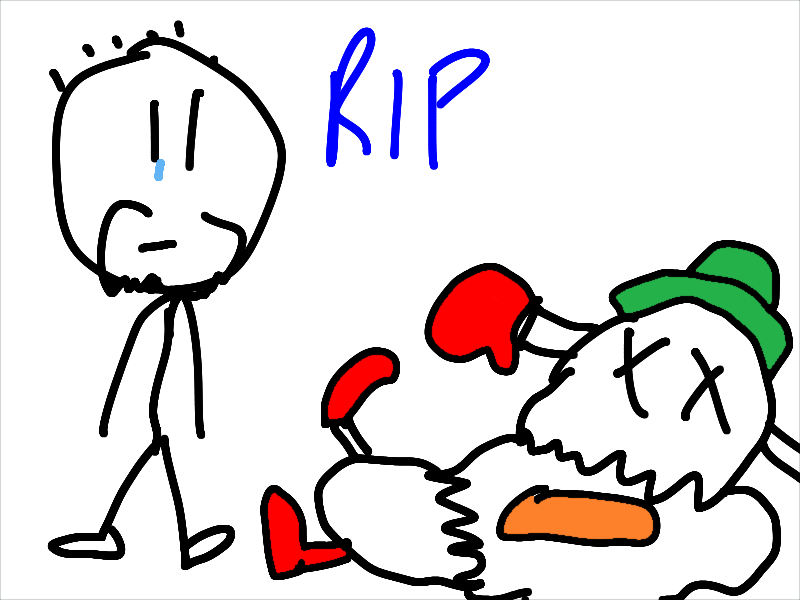
#oneaday Day 810: Compiling information

It will probably not surprise you to hear that, as an autistic person, I quite like organising sets of information into a visually pleasing and/or easy-to-refer-to manner. To that end, ahead of my intention to reboot my Atari A to Z and Atari ST A to Z series, I have been doing something I have been meaning to do for a while that will aid with research.

I've been going through old magazines — just Page 6/New Atari User to begin with, but I will expand my efforts at a later time — to determine which issues had reviews (or otherwise substantial articles) of what in them, and recording that information in a big ol' searchable, filterable, sortable table. Or, y'know, a spreadsheet. (I guess this makes me a "spreadsheet person" after years of resisting such things.)

This will (hopefully) make it much easier to track down these articles when researching something — and might also give me some ideas on what to cover, too.

One of the things I find most interesting when either revisiting old favourites or discovering new ones is taking a look at what the "professionals" had to say about them, and seeing if they treated them fairly, or if they were talking nonsense. I don't really mind either way; there is value to both confirming a critical opinion from back in the day, and having the opportunity to look at it from a more detached, modern perspective and perhaps disagreeing with what was said back then.

It's also kind of interesting to, in some cases, give these games a bit more time and attention than they might have perhaps had back in the day, particularly if the reviewer in question clearly didn't have a lot of time to spend with them, or didn't understand them completely. I mean, we're only talking a play session of maybe 20-60 minutes when it comes to most of my videos, but sometimes you do notice properly intriguing things about games after spending a bit of protracted time with them, rather than spending a few minutes on them and then moving on to something else.

Alongside the traditional "reviews", I'm also recording mentions of games in things like topic-based roundups, type-in games (which can be just as interesting and worthwhile as commercial software!) and… basically any mention of something I might want to cover, and which I might want to refer to what was being said about it Back In The Day.

It's going to take a while to compile all this information — particularly if I want to throw other magazines into the mix — but I think it's going to be a worthwhile endeavour that will be helpful for the direction I think I want to take the YouTube channel (back) in. It also gives me a good reason to look back at old computer and video games magazines, and I will always welcome any opportunity to do that. Not that I need a reason. But it is nice to have a reason to do so.

Anyway, my intent is still to hold fire on YouTube until after our holiday, then get back into the swing of things with the rebooted Atari A to Z and Atari ST A to Z series in mid-September, likely with my first recording session being the weekend of the 19th (meaning the first of the new videos will come out the following week). I'm sure I'll have a good chunk of this organising done by then, and I think it will be enormously helpful in adding some additional insight to my videos that will hopefully be as interesting for anyone watching them as it is for me making them.

Right this second, though, after taking care of 28 issues of Page 6 today, I think I've earned a bit of video game time. So it's back to Ys VIII for me!


Want to read my thoughts on various video games, visual novels and other popular culture things? Stop by MoeGamer.net, my site for all things fun where I am generally a lot more cheerful. And if you fancy watching some vids on classic games, drop by my YouTube channel.

If you want this nonsense in your inbox every day, please feel free to subscribe via email. Your email address won't be used for anything else.

#oneaday Day 809: Dolly, Willy and... uh... silly?

There are a number of things I want to talk about today, and I was agonising over which one of them to talk about. But then I thought there is absolutely no reason I can't talk about all of them in one post, so that's exactly what I'm going to do. Hold on to your hats, folks, we're entering dangerous territory!

RIP Dolly Parton

Dolly Parton passed away at the age of 80. This is very sad news indeed, because Dolly Parton was the living embodiment of goodness. Among many, many other things, she made great music, she always came across as a thoroughly pleasant person in interviews and suchlike, she was an incredible ally to LGBTQ+ folks, she was responsible for millions of books being distributed for free to youngsters across the world, and above all, she was proof that you can be rich, beautiful, famous and not a shitty person in the slightest, all at the same time.

There seems to be some sort of unspoken assumption that you can only be a maximum of three of those at the same time (and it's usually rich, beautiful and famous) but Dolly proved that there was, in fact, no obligation to become a total piece of shit just because you were loaded.

Apparently Dolly's family has requested that in lieu of flowers and other memorials/condolences, people make a donation to the Dolly Parton's Imagination Library organisation. I've done just that, and I encourage you to consider doing so also. It is fitting that her generosity and selflessness continues even after her passing.

That's about all I am able to say on the subject for the minute, but I wanted to mark the occasion, at least.

Manic Miner's getting a dogshit-looking "remake"

I'll let you into a not-so-secret, dear reader: I don't think ZX Spectrum classic Manic Miner is very good. It has music that makes you want to tear your ears off, visuals that are… functional at best, gameplay that is unnecessarily infuriating and a difficulty curve that is more like a vertical wall, meaning I'm sure there are a significant number of people who have never seen beyond the first screen. There are many, many better single-screen platformers on 8-bit home computers — some of my favourites are Mr Robot and His Robot Factory and Miner 2049'er — and yet a lot of them just don't get their dues, while Manic Miner is consistently held up as an all-time classic. And don't even get me started on Jet Set Willy.

Anyway, BBG Entertainment GmbH — the people who have done some Boulder Dash reboots that are… not bad gameplay wise but kind of dogshit aesthetically — have decided what the world needs is a Manic Miner remake. And, moreover, they decided what a Manic Miner remake really needed was some absolute dog-arse generative AI for its visuals, trailer, pretty much everything. Including one of the most laughable "CRT filters" I think I have ever seen. Not only that, they have been very quiet on whether or not any AI has actually been used, by which I mean there is no AI usage disclosure on the game's Steam page.

(Yes, comments are disabled on YouTube, before you go and check.)

And, I mean, come on. Look at it. Look at it. Even the "retro" screens are wrong in terms of layout! Fuck's sake. If this isn't generative AI, they need to fire their art person. But let's face it, they probably already did that, which is why this has happened.

This isn't the first company doing some sort of "retro revival" who has shat out AI-generated garbage artwork all over a property that actually means something to some people and then denied that they have done so. Hey, I don't like Manic Miner at all, but I know plenty of people who do, and I feel bad for them to see garbage like this.

I've said it many, many times before, but I cannot fucking wait for this goddamn bubble to pop so we can be free of this never-ending torrent of shit.

Commodore is putting out a Cyberpunk 2077-themed C64 Ultimate

Why? In what world does this make any sense as a crossover? Plus with the relabelled keys it looks like a nightmare from a usability perspective, too. But I'm sure someone somewhere will buy it, then leave it in a box on a shelf and, roughly every 6 months or so, mention on all the Discord servers they're in, with an odd amount of pride, that they bought it and have never actually unpacked it.

Burnout Revenge

I have been feeling a bit burnt out on YouTube of late. I put out a video on Terranigma that I thought was a good adaptation of my article on MoeGamer, and it has performed like crap, even with yesterday's announcement of the Terranigma remake. I just don't even know any more. YouTube is so incredibly unpredictable over what does well and what does poorly, and sometimes these things change massively over time, too. I have stuff that I put out several years ago which performed poorly to modestly on their original release, but which now has thousands of views — and I have stuff that I worked hard on and was very proud of which has done less than a hundred views. And there doesn't seem to be a lot of rhyme or reason to it — and, to be frank, I can't really be arsed to chase the why.

I feel like at some point I have drifted away from the things that used to have me fired up about doing things on YouTube. I have wanted to incorporate a much broader spectrum of things to reflect my own interests, but aside from a couple of standout exceptions to the rule, I don't feel that experiment has really been much of a success. And it's getting me down a bit; I don't particularly want or need YouTube to be a "big thing" for me, but it is nice when you do something and more than a handful of people appreciate what you do.

So I'm going to take a break from YouTube completely until I come back from holiday in mid-September, and at that time I'm going to do a sort of soft reboot back to some things I used to do, only with a bit more in the way of knowledge that I've picked up in the intervening years since I did them first time around. Specifically, I think I'm going to bring back Atari A to Z and Atari ST A to Z, because those series had a nice sense of structure to them, they were easy to produce but could result in a combination of celebrating big hits and discovering new favourites — and, perhaps most importantly, I really enjoyed making them.

Beyond that, I'll likely still do some occasional "scripted" videos when I feel like it, and perhaps some Evercade games, too, but so far as stuff outside of my "core" subject matter of Atari home computer stuff, it will be the exception rather than the norm. I basically built my audience for that channel on Atari-related videos, and I wonder if attempting to branch out to other platforms has just basically caused YouTube to go "we don't know what this channel is any more", meaning things like my Terranigma video just… go nowhere.

That's the plan, anyway. I will be using the things I've learned about thumbnail design and all that good stuff — plus continue with my current channel branding — and get things back to basics. At least then if only a handful of people watch my stuff, I know it's because they're genuinely interested in what I'm doing, rather than picking up on trends.

So yeah. Watch out for that in mid-September. In the meantime, go watch my Terranigma video. It'd be nice to at least get the sodding thing over 100 views.


Want to read my thoughts on various video games, visual novels and other popular culture things? Stop by MoeGamer.net, my site for all things fun where I am generally a lot more cheerful. And if you fancy watching some vids on classic games, drop by my YouTube channel.

If you want this nonsense in your inbox every day, please feel free to subscribe via email. Your email address won't be used for anything else.

#oneaday Day 808: Terranigma is coming back!

Now, I don't want to say that I caused this by finally getting around to playing it recently (and writing about it… and making a video about it) but it certainly is a pleasant coincidence that not long after I finished doing all these things, Clear River Games confirmed that an official modern rerelease of Quintet's hard-to-find and ludicrously expensive classic, Terranigma, is on the way.

This is excellent news, because it means I can buy a copy and not feel bad about playing it through on MiSTer. Not that I did anyway, but it will be very nice to own an actual legitimate copy and not have to pay through the nose for a cart-only SNES copy that almost certainly has a flat save battery and might not even work at all. I might even play it through again to see what improvements have been made.

For the most part, it looks as if the game is going to be kept true to its original incarnation. There's some modern-day UI fluff including bezels and an optional floating EXP window (that will be nice to have, actually) plus the promise of some new art and remastered music tracks, but we don't have many details about all that just yet. For most people, just the opportunity to own a copy of this excellent game will be enough — even if it's a modern rerelease and not the original original version.

Before anyone asks: no, I don't know if this means we'll be able to get it on Evercade. I will certainly be mentioning it to the people who make such decisions, but as I have said numerous times before, I have no control over that part of the business and thus it will simply be an emphatic suggestion. Square Enix is a company we haven't worked with as yet — although we have worked with TAITO, who are technically part of that whole conglomerate now, so I guess we sort of have. What I'd really love to see, personally, would be a cart that contains, at the very least, Soul Blazer, Illusion of Gaia and Terranigma, plus ideally Actraiser and The Granstream Saga also. Maybe one day I will be part of making that happen. We'll have to see.

But anyway! If you've never played Terranigma, you're in for a treat. If you want to know more, go check out my in-depth piece on it over on MoeGamer (linked above), but the short version is this: it's an excellent 16-bit action RPG that still looks, sounds and plays really well today. The English localisation is a little bit clunky — though nowhere near as broken as that seen in Illusion of Gaia — but it gets the incredibly ambitious storyline across, and the gameplay is absolutely wonderful.

It's nice to share some good news for once. I hope you all remember to pick up Terranigma this time, because I will not be having any mercy on you if you miss your chance this time around and then come crying to me about having to pay hundreds of quid for a copy. It's there. It's coming. You know what to do.


Want to read my thoughts on various video games, visual novels and other popular culture things? Stop by MoeGamer.net, my site for all things fun where I am generally a lot more cheerful. And if you fancy watching some vids on classic games, drop by my YouTube channel.

If you want this nonsense in your inbox every day, please feel free to subscribe via email. Your email address won't be used for anything else.

#oneaday Day 807: Atarimania got a new look

After many years of rocking the same distinctive and still-functional look, Atarimania, the massive Atari software database, has finally updated its visual style. And from a brief glance over, it looks great!

For the unfamiliar, Atarimania is a place where you can go to look up pretty much any piece of software that has ever been released on an Atari platform. It probably gets the most use for those who are interested in the 8-bit and ST ranges of home computers, but it also has substantial console sections for the 2600, 5200, 7800, Lynx and Jaguar, though some of these are still under construction at the time of writing..

Most entries provide some helpful historical information about the piece of software in question, including the date of release (often just a year, as back in the day we apparently weren't quite as fastidious about recording the exact dates things released), the people who worked on it (with hyperlinks allowing you to quickly see what else they worked on) and various other bits and bobs of information. Many entries also allow you to download cartridge ROM files or disk images for the software in question, too, allowing you to quickly load it up in an emulator or even get it up and running on real hardware or an FPGA solution.

One of my favourite parts of Atarimania is the magazine section, which is full of PDF archives for a variety of publications. Some of these are specialist Atari 8-bit and ST magazines (including Page 6/New Atari User, which my Dad, my brother and I all wrote for at various points), but there are also things like Activision's Activisions newsletter, enthusiast user group zines and even some multi-format mags that happened to cover Atari, like Advanced Computer Entertainment (aka ACE), which was a favourite magazine of mine back in the day. It's a wonderful source of authentic information from back when this stuff was current, and it's been a godsend for me when putting together videos.

Atarimania's redesign doesn't reinvent the site's functionality. So far as I am aware, the exact same information is being presented, just with a new look. Notably, it's mobile-friendly now, which it didn't used to be, which makes quickly accessing information on the fly much more convenient than it once was. I'll have to spend some time digging into it all, but from my brief look this evening, it all looks great.

Every time I look at Atarimania, I find myself wishing that a similar resource existed for other platforms. The C64 and Amiga have something similar in the form of Lemon64 and LemonAmiga respectively, the Spectrum has World of Spectrum and the other one I always forget the name of, and I'm sure others exist for other platforms. But for me, none of them quite match Atarimania for sheer comprehensiveness — and I also think that there's a real gap in the market for something similar, but for consoles. Like, I would absolutely love to see a SNESMania, a MasterSystemMania, a MegaDriveMania and suchlike. To my knowledge, nothing quite like that exists right now for console platforms — and I don't really know anything about creating a database-driven website like that, otherwise I would consider looking into it myself. If these sites do exist, they're not anywhere near as well-known as Atarimania is for Atari enthusiasts.

There's MobyGames, of course, and that is definitely a valuable, helpful resource, but it's not quite the same thing.

Anyway, eternal respect to anyone who builds and maintains this sort of thing. You help make the retro gaming hobby that much more enjoyable to participate in — and turbonerds like me happy when we need to research things. Please keep doing what you do forever!


Want to read my thoughts on various video games, visual novels and other popular culture things? Stop by MoeGamer.net, my site for all things fun where I am generally a lot more cheerful. And if you fancy watching some vids on classic games, drop by my YouTube channel.

If you want this nonsense in your inbox every day, please feel free to subscribe via email. Your email address won't be used for anything else.