#oneaday Day 627: Finding your niche

I was a bit of a latecomer to YouTube. I remember a friend of mine trying to encourage me to follow some of the YouTubers she liked, and feeling curiously resistant to it all. In some respects, I am still quite resistant to certain quarters of YouTube — I have no intention of ever watching a Mr. Beast video, for example — but it's fair to say at this point that YouTube, as a general cultural entity, is an important part of my daily life for various reasons.

One of the things that I've particularly enjoyed about more actively engaging with YouTube over the last decade or so is coming across channels that have very much found their niche, and stick to it. Sometimes this is as simple as "gaming", but oftentimes I find that the most interesting and enjoyable channels are those that get a little more granular: those that choose to focus on a specific aspect of something that they enjoy and dive deep into that.

This can take many forms, so I want to share a few favourite channels in this regard today. Not all of them are gaming related, but all of them are run by people who have found something they enjoy doing and continue to do just that, often regardless of what "the algorithm" supposedly wants or viewing figures. I respect this because it's what I aspire to do with my channel; while my YouTube channel is broadly a "variety gaming" channel with a focus on retro, my preference is to explore overlooked and underappreciated games and platforms from over the years — and sometimes to give games that had a less than stellar reception on their original release another chance.

But I digress. This is not about me. This is about some channels I enjoy, so let's go on a little wander around YouTube, shall we?

Yesterzine

As you probably know if you've been reading this for any length of time, I enjoy old video game magazines, and as such I'm gratified to see how many people out there enjoy making videos and writing about them. One of my favourites is Yesterzine, a channel that describes itself as "The Literal Magazine Show", because it takes a "magazine show" format and is also about magazines, you see?

Presenter Dudley (who, full disclosure, I Actually Know) has a characteristically deadpan style that works well with the show's humour. He strikes a good balance between acknowledging and celebrating the original cultural context of these publications and providing appropriate modern commentary and criticism of aspects that, in retrospect, have not aged well for one reason or another.

Yesterzine videos are worth sitting down and paying attention to rather than putting on in the background, and with such a rich vein of classic magazines to draw on for future episodes, it's a show that will continue for as long as Dudley can be bothered, and he's showing no signs of slowing down just yet.

Zilog and Moto

I've always enjoyed Sega games, particularly from the 8-bit and 16-bit eras. In fact, if you follow my YouTube channel, you'll notice I'm going through a bit of a Master System phase right now.

Zilog and Moto is a channel with a bold aim: to collect all the English language releases for Master System, Mega Drive/Genesis, Mega CD and 32X, then play and review all of them. Presenter Dave is making good progress in both regards so far. His videos are simply presented but effective in what they do, consisting of a short introduction to camera, a look at the game's physical component and then some commentary on how it actually plays.

Dave clearly spends time with each and every game and gives it a proper chance — even in the case of notoriously bad titles. Sometimes this leads to pleasant surprises… and, of course, sometimes those poor receptions are well-deserved. Either way, an episode of Zilog and Moto is always a worthwhile watch if you're an old-school Sega fan.

League of Extraordinary Board Games

This channel, a collaborative affair between well-known tat acquirer Stuart Ashen, CheapShow's Paul Gannon and movie enthusiast Oliver Harper, has a simple premise: dig out an old, obscure board game of the ilk you would have once got at a jumble sale, then give it an honest shot to see if it's any good.

The trio doesn't always get through a full game of something — particularly if it looks like running particularly long, or if it is clear that the game itself is not actually very fun — but they always give it a chance.

It's especially interesting to see the variety of licensed board games based on TV shows — I have fond memories of these from back in the day and wish I'd held on to more of the ones that I used to have copies of. As it stands, all I still have is a copy of MB Games' adaptation of Williams' arcade game Defender.

Anyway, this has a similar feel to Gannon's CheapShow: the sense that you're being let in on a group of friends just having fun together. A good show for when you're feeling a bit lonely.

Lord Heath

I won't lie: I found Lord Heath's channel because of his frankly astonishing fart videos, one of which can optionally be enjoyed above. But I've been enjoying his other… err… output too, the majority of which are the rather more socially acceptable and/or safe for work reviews of drinks.

These are short, simple, self-explanatory videos: he tries a drink, he gives his thoughts on it. Most of them are under three minutes long, but they're all rather entertaining; Lord Heath himself is a joyfully exuberant character who is not afraid to make a twat of himself in public, and he always makes a point of shooting his videos in some pleasantly picturesque locations.

In many respects, this is perhaps the purest example of what I'm talking about today: he's clearly got a vision in his head for what his YouTube channel should be, farts and all, and he's stuck with it. He's not trying to be Internet famous; he's not trying to clickbait; he's just a cheeky chappy who likes burping, farting and trying an increasingly esoteric selection of beverages. Eternal respect to him.


Want to read my thoughts on various video games, visual novels and other popular culture things? Stop by MoeGamer.net, my site for all things fun where I am generally a lot more cheerful. And if you fancy watching some vids on classic games, drop by my YouTube channel.

If you want this nonsense in your inbox every day, please feel free to subscribe via email. Your email address won't be used for anything else.
#oneaday Day 625: It sucks to see someone defeated

I am, as I've mentioned a number of times in the past, a big fan of Mark Bussler's Classic Game Room video series. It's one of several things on YouTube that I found enormously inspirational in starting up my own channel, and his many, many videos on classic retro games are among my most-replayed YouTube videos.

I've known for a long time that Bussler was intensely dissatisfied with the way the online landscape had been going — and how it had meant that something he once clearly loved doing had become something that it felt like it was pointless to carry on with. After he stopped doing Classic Game Room as his main thing, he tried various other projects online, but has seemingly met with nothing but frustration with pretty much every one of them.

I still follow his Patreon for updates on what he's up to, and today he mentioned that people should have a look at his website, classicgameroom.com, to see what he's up to, since he doesn't really do social media any more. And his FAQs made me feel very sad indeed.

The question he gets more than anything else, I reckon, is "is Classic Game Room coming back?" and his answer is simple:

No. The Classic Game Room video game review series is permanently discontinued. There are no plans to bring the video series back in any way on any platform.

He expands on the reasons thus:

After the YouTube channel was largely demonetized, people stopped watching in favour of influencers and short-form videos. No other formats seemed to work. After a few different format changes, the show is now discontinued.

The cynics would say that this was just Bussler failing to adapt to the changing media landscape online, and that's not an incorrect statement to make, but the thing that makes me so sad about all this is that there is demand for stuff that isn't influencer-led short-form content. Just not enough to be commercially viable, unfortunately; not enough for one of the OG online video creators to want to continue with the thing that made him famous — and which, I suspect, is at this point completely unknown to a couple of generations of people.

Bussler worked hard on Classic Game Room and his other projects, and it must have been so frustrating for him to continually feel his efforts knocked back — particularly when he tried all manner of different things after it seemed that Classic Game Room had, for one reason or another, fallen out of favour.

So I'm sad for him. I'm sad that he has felt the need to, in his words, "permanently retire from filmmaking, game journalism and animation". At the same time, I completely understand why he has taken that decision. Again, in his own words:

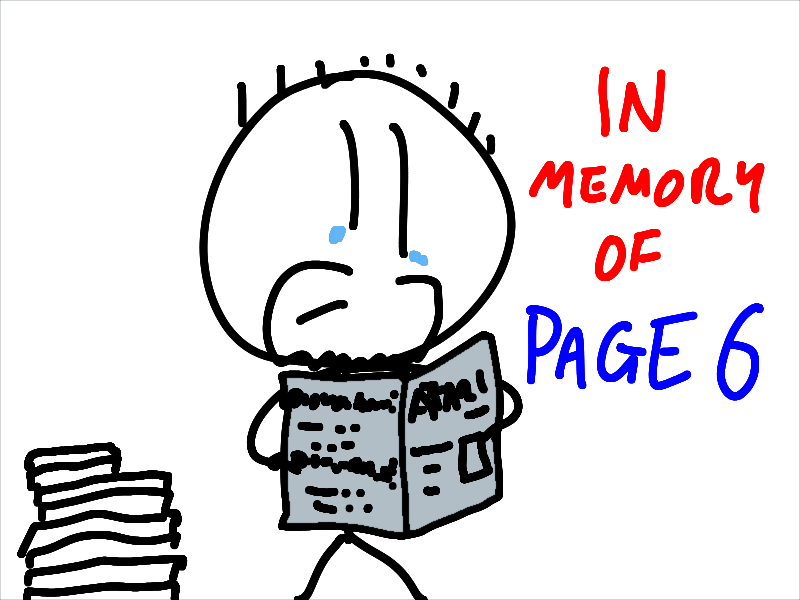
Mark spends his free time reading and biking instead of using garbage social media apps. He has no patience for algorithms and prefers looking at old-fashioned paper.

I completely understand why one would want to retire from the Internet in this age of relentless, pointless, disposable short-form content. I often feel like I want to do so, too. I've spent many years carving out a little corner of the Internet that I can feel proud of with places like this blog, MoeGamer and my YouTube channel, but sometimes it all feels incredibly pointless.

I'm sad to see someone whose work I enjoyed, and that I respected immensely, be so completely and utterly defeated by what passes for "culture" online today. I'm sad because I know how he feels. I understand why he's so frustrated. And I don't know how we fix this — or if it's even possible at this point.

Perhaps it's all part of getting old. You pass beyond a point of relevance, and the world feels like it isn't "yours" any more. Perhaps we all reach this point. But that seems like a bit of an inefficient way for everyone to live their lives. Surely there's a way for different types of "stuff" to coexist, without everything having to be dominated by whatever the latest "viral" bullshit is?

Apparently not. But oh well. I'm not going anywhere just yet. Even if no-one's reading, watching or listening, I still enjoy the act of creating something. It gives me some satisfaction — and it's perhaps for the best that I've never got to a point where I'd be tempted to try and use online content creation (ugh) as my main source of income.


Want to read my thoughts on various video games, visual novels and other popular culture things? Stop by MoeGamer.net, my site for all things fun where I am generally a lot more cheerful. And if you fancy watching some vids on classic games, drop by my YouTube channel.

If you want this nonsense in your inbox every day, please feel free to subscribe via email. Your email address won't be used for anything else.
#oneaday Day 624: Revisionist gaming history

A few weeks back, someone started an argument with me about Final Fantasy VIII. They asserted that everyone had always hated Final Fantasy VIII, and that I was somehow wrong for remembering that my friends and I were super-hyped for it, enjoyed it immensely when it came out, and that reviews of the time were also very kind to it. Review scores aren't the be-all and end-all, of course, but they do act as a pretty good barometer of roughly how positive the critical reception for a given title was.

I bowed out of the conversation early on because it was pretty clear from the outset that the person attempting to start this argument was not going to listen to any viewpoint other than their own, even when it was coming from someone who lived through the experience of that game coming out, and they just wanted to hate on something that had, in recent years, become fashionable to bash.

Now, I'm not going to attempt to convince you one way or the other about Final Fantasy VIII at this point. It's one of those games that you either "get" or you don't, and I don't blame anyone who doesn't "get" it. But to extend "I don't get this" out to "everyone everywhere always hated this" is ridiculous. It's absolute revisionist history, and it's something that drives me absolutely bonkers about online discourse over video games these days.

It happens with more recent games, too. Take Mario Kart World, a game which does some really interesting things with the Mario Kart formula, and one which is designed with so much polish that I really can't take anyone who says it is a "bad" game seriously. And yet to some folks it is "the worst Mario Kart there has ever been" and, again, "everyone hated it". No, no they did not.

Or another example: I saw a post just this evening that implied that The Legend of Zelda: Echoes of Wisdom was a bad game, primarily due to the fact that none of the original team who worked on the first ever The Legend of Zelda game (which is celebrating an anniversary milestone right now) worked on it. I take two issues with this: one, that everyone who worked on the original The Legend of Zelda is probably either an old man or dead at this point, and thus should be left to get on with their life in peace, and two, Echoes of Wisdom wasn't a bad game! Not even a little bit!


EDIT: The account in question has since clarified that they meant it was "sad" that Echoes of Wisdom was the first game without any of the original team that was involved, not that they thought it was a "sad" game due to it not being any good. I have left the preceding paragraph as-is to take ownership of my own misunderstanding — and to acknowledge that I wasn't alone in it, hence the account's clarification of what they said.


And don't even get me started on Final Fantasy XIII.

There is one thing that all these examples have in common, though, and that is the fact that all of them do something different to what is expected as "the norm" in their respective series. For Final Fantasy VIII and XIII, this should be no surprise to anyone who has ever paid attention to the series and its core philosophy of "if it's not new, it's not Final Fantasy" (as I wrote about nearly ten years ago right here), but, to this day, people are confused by the fact that Final Fantasy VIII and XIII are very unconventional in a lot of ways. (Interestingly, very few people seem to have a problem with Final Fantasy XII these days, despite, in many ways, it being a way more significant disruption from the series "usual format" than many other entries.)

For Mario Kart World and Echoes of Wisdom, those two games were always in a bit of a no-win situation. Do something the same as previous games and they would be regarded as pointless and unambitious. Do something a bit different, as they both did, and people complain that they're not like all the other games in the series! Seriously daft.

The most annoying thing about this constant revisionist history is that it makes it impossible to have sensible discussions about these games. Pretty much as soon as it became clear someone was spoiling for a fight over having the "correct" opinion about Final Fantasy VIII (and what "everybody" thought of it, apparently), the entire thread derailed and became impossible to have a reasonable discussion in. Anyone who attempted to highlight the things that they, in fact, liked about it was shouted down, and it just became pointless to even try. I've seen enough threads like that in my time to know that it really wasn't worth trying in the first place, which is why I bowed out of it early.

When it comes to Final Fantasy VIII, I'll just leave you with one little story from my past. In the period between Final Fantasy VII and Final Fantasy VIII coming out, our friendship group had a perpetually running joke with the local computer shop owner, in which literally every time we went in there (and we went in there a lot), we would ask him if he knew when Final Fantasy VIII was coming out, to which he would reply by mumbling something mostly incoherent about "stocks". This became such a notorious exchange among our friendship group that during our obsession with the Klik and Play games-making software, one of our number immortalised the discussion in his project Resident Evil EX, by incorporating a fully-voiced scene in which the protagonist, Agent Wesley Wilson, would walk into a computer store in the in-game mall, ask if the shopkeeper knew when Final Fantasy VIII was coming out, to which he would reply "asfhgblaskbkljblkl stocks".

That's how excited we were for Final Fantasy VIII to come out. And when it eventually did come out, I had people in my university room almost every night to come watch and see what would happen next.

So don't fuckin' tell me that "everyone always hated" something. Because, inevitably, it isn't true. In pretty much every instance like this, what the person saying that "everyone always hated" something means is "I didn't really like this" and "I'm unwilling to entertain the possibility that anyone else did".


Want to read my thoughts on various video games, visual novels and other popular culture things? Stop by MoeGamer.net, my site for all things fun where I am generally a lot more cheerful. And if you fancy watching some vids on classic games, drop by my YouTube channel.

If you want this nonsense in your inbox every day, please feel free to subscribe via email. Your email address won't be used for anything else.
#oneaday Day 621: Tired

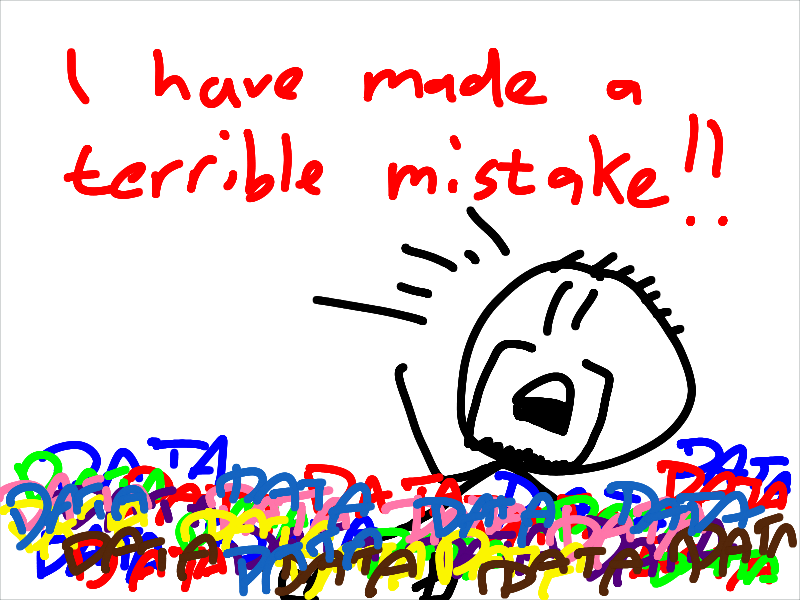
I am, as these things tend to go, back from my day at the office, following a horrible long drive home in the cold and wet, featuring a stop for a Burger King at Fleet Services that I honestly kind of regret now. I got back too late to pick up my prescription from Tesco, too, so that was annoying. If I hadn't stopped for the Burger King I might have made it. But oh well.

As a result of all this, I am extremely tired and my brain feels like it is firing on roughly 30% capacity. As such, I have started writing this without any particular topic in mind, so I'm just going to babble my way through it until I've done enough words to satisfy myself, and then, honestly, probably just go to bed.

Ooh, here's something I can talk about. Last night I got around to finally watching Pixels to Pages: The Story of Electronic Gaming Monthly, a well-regarded documentary put together as a collaborative affair between the My Life in Gaming and Game Sack channels. I have slightly mixed views on it, because while I cannot deny that it was a well-crafted, well-produced and beautifully edited documentary, it purports to be "the story of Electronic Gaming Monthly" while it is, in fact, "the story of Electronic Gaming Monthly's early years".

Since, as a Brit, I came to EGM rather late, primarily due to my brother taking up the Editor-in-Chief's reins in 1998, I only really knew it from when it was well into the Ziff-Davis era, and the documentary was disappointingly scant on anything from that age of the magazine. My brother got a passing mention as "they got some new guy in, I think he was from England?" and that was it; the vast majority of the documentary focused on the people who helped start it at Sendai Publications, with a few contributions from Frank Cifaldi of the Video Game History Foundation and Dan "Shoe" Hsu, who joined EGM in 1996 and remained with it until 2008.

For context, EGM ran between 1988 and 2009, and the Ziff era started in 1996. To be fair, the story of EGM's early days is fascinating, and its history is populated by real characters, but it just seemed a bit odd for the documentary to position itself as telling the story of a publication and then just… not really acknowledge anything that happened after 1996 beyond a brief, cursory mention. I'm not just saying this because I'm biased and want to see a family member's contributions to the publication's legacy acknowledged — though that is, of course, part of it — it just felt a little odd to rush through a good 12 years of the magazine's existence as if they didn't matter.

Still, like I say, the documentary is a worthwhile watch, and even with its specific focus it's quite a lengthy affair. It's entirely possible that they just decided to focus on the early days because they thought that was the most interesting story to tell — and I reiterate, it is an interesting story! — or perhaps there was some reason people from the Ziff era were unable or unwilling to contribute their voices to the whole thing. The net result was that it left me with somewhat mixed feelings about the project as a whole, but happy to recommend it to anyone interested in the subject matter.

Among other things, this documentary, along with the continuing excellent work of the Fun Factor podcast, has rekindled a desire to do more Magazine Stuff on my YouTube channel. So I'm going to do exactly that this weekend. There's a lot of different things I would like to cover, so you'll have to wait and see what I decide to do!

Anyway, that's enough of that. Time for bed.


Want to read my thoughts on various video games, visual novels and other popular culture things? Stop by MoeGamer.net, my site for all things fun where I am generally a lot more cheerful. And if you fancy watching some vids on classic games, drop by my YouTube channel.

If you want this nonsense in your inbox every day, please feel free to subscribe via email. Your email address won't be used for anything else.

#oneaday Day 618: Triple threat

Had a productive weekend of making some videos. There are three new ones on the way soon, and I've got another Wolfenstein one with its voiceover recorded that just needs assembling into some sort of shape.

For the upcoming videos, there's a couple of Master System games involved. The Sega Master System is a platform that I'm very fond of that doesn't get nearly enough love — and which I haven't spent nearly enough time fiddling with, either. So these two games will likely be the first of many in total. I'm looking forward to exploring the library further, because as a Japanese console that was particularly popular in Europe and failed to make any sort of impact whatsoever in America, it's a thoroughly interesting platform.

It's one of those situations where I'm not entirely sure why it never broke America, either. In technical terms, it's quite a bit better than the NES, but as numerous generations of console hardware dominated by Nintendo have shown, it's not always the most powerful system that wins the race. You've gotta have the games, you've gotta have the cultural penetration, and you've gotta have a lot of luck.

I guess one could argue that the NES has more "iconic" games — there are three Super Mario Bros. games alone on it — but the Master System has some solid versions of Sega arcade classics, and some truly excellent Sonic the Hedgehog games. While not as fancy-looking and sounding as their 16-bit counterparts, many argue that the Master System Sonic games are, in fact, the better entries in the series. I haven't quite made my mind up in that regard — I do love a 16-bit Sonic — but I do know from covering a huge heap of Sonic games a few years back on MoeGamer that the 8-bit Sonic games are very good indeed. (Just avoid the Game Gear version of Sonic the Hedgehog 2.)

Anyway, the Master System games I covered today come from two extremes of the "spectrum", if you want to call it that. There's one game that I imagine is pretty readily available for not much money (although interestingly CEX doesn't appear to have it listed) and another that is notoriously rare and expensive. After beating it in half an hour today, I'm glad I haven't spent £400 on it. It was fun for that half an hour, at least.

So yeah. Those videos, along with an Atari 8-bit port of a true classic, are on the way for the coming week. Watch out for them and please enjoy them when they're live! Or don't, if you don't want to, particularly after what I said yesterday. But it'd be nice if you did. My channel's over here, if you've never paid it a visit.


Want to read my thoughts on various video games, visual novels and other popular culture things? Stop by MoeGamer.net, my site for all things fun where I am generally a lot more cheerful. And if you fancy watching some vids on classic games, drop by my YouTube channel.

If you want this nonsense in your inbox every day, please feel free to subscribe via email. Your email address won't be used for anything else.
#oneaday Day 611: The sad loss of the Olympic video game

I've always been extremely fond of Olympics-themed video games, ever since I played titles like Epyx's Summer Games and Activision's Decathlon on the Atari 8-bit. I haven't always kept up with all of the Olympic releases over the years, but I have added a few to my collection in more recent years. And I'm a bit sad, as the Winter Olympics are unfolding at the time of writing, that the official Olympic video game is no more. At least, on consoles and PC; I believe for the last Olympics, there was some horrible mobile game that looked like absolute microtransaction-riddled garbage. So that's the end of that, I guess.

I'm not sure exactly what it is I like so much about these multi-disciplinary sports games. They are, in essence, just a collection of minigames, and some don't get more adventurous than asking you to tap a button or waggle a joystick very fast. But I have always enjoyed them a lot — at least in part because they tend to simulate sports that you don't otherwise get much of an opportunity to engage with in the video game space.

One of my favourite Olympics video games was Sega's official Tokyo 2020 game — released just before the COVID-19 pandemic hit and the "real" Tokyo Olympics were postponed. This was a huge amount of arcade-style fun, made all the better by the fact that you could create custom characters. Yes, multiple; while you spent most of the game playing as your one "main" athlete, you could also create a team of other athletes who would show up in events that required multiple participants, such a rugby sevens, soccer, judo and suchlike.

What made this even more fun is that Sega decided to err on the side of "silly" to a certain extent, so these characters were somewhat cartoonish in their proportions, and you could unlock and dress them up in all sorts of thoroughly silly outfits as well as vaguely plausible athletic gear. If you wanted someone to enter the swimming competitions dressed like a spaceman, you absolutely could do that.

These games were always great fun with friends, too. While it's been a very long time since I had the opportunity to play one of these games with other people, I have very fond memories of enjoying them together when I was younger.

One of my favourite memories in this regard was the first time I went up to the Edinburgh Festival with the university theatre group. On my first night there, I felt like I might have made a bit of a mistake coming along, because my social anxiety was making it enormously difficult to involve myself with the other members socialising. I actually ended up sitting up late, in tears, over the whole situation.

Yes, I know I said this was a "favourite" memory; I'm getting to that.

Two of the theatre group members found me in the corridor being thoroughly sorry for myself and took pity on me. They sat with me, helped reassure me that people did like me and appreciated my presence, and then they played some International Track and Field on PlayStation with me. I chose to play as Germany, and attempted to enter my name as "HELMUT" because I thought that was funny, but there were only enough letters to put "HELMU". My nickname within Theatre Group remained "Helmu" for several years, until it was replaced with "Beast Man". That's probably a story for another day.

Anyway, I will always be extremely grateful to those two lovely people from Theatre Group — known colloquially to everyone as Stiffy and Des — for taking the time to bring me under their wings. That night, I actually stayed in their room instead of the one I'd been assigned, and it was enormously comforting. It was definitely a turning point, and means that International Track and Field, as relatively a minor part as it had played in proceedings, will always be rather special to me.

That got well off the point, didn't it? But still. I like Olympics games, be they summer or winter-themed, and I think what we have there is definitive proof that they can bring people together — just like, in theory, the real Olympics.


Want to read my thoughts on various video games, visual novels and other popular culture things? Stop by MoeGamer.net, my site for all things fun where I am generally a lot more cheerful. And if you fancy watching some vids on classic games, drop by my YouTube channel.

If you want this nonsense in your inbox every day, please feel free to subscribe via email. Your email address won't be used for anything else.
#oneaday Day 608: Channel update

I posted an update on my YouTube channel yesterday. You can watch it right here! I also play some Galaxian on Atari 8-bit in an attempt to participate in the current "High Score Club" challenge over on AtariAge.

I thought I'd talk about the things I mention in the video for today's post, because… well, because I want to.

The main takeaway from the update is that I'm giving up on doing longer playthroughs of stuff on video. For the most part, anyway. I'm not ruling out the possibility of doing another full playthrough of something reasonably short like an adventure game, as those are fun videos to make. But long RPGs as a playthrough series are out of the window.

There are a few reasons for this, chief among which is it makes playing one single game take for-fucking-ever. If you're only playing a game when you're recording videos for it, that inevitably means you're not playing it all that regularly (I have a life outside YouTube videos!) and thus it takes ages to get anywhere. If you combine that with a game that involves a fair amount of going back and forth grinding for experience, money or whatever, that doesn't make for particularly fun video-making, and it almost certainly doesn't make for particularly fun watching, either.

The other reason is that although I don't really care about viewing figures in general, the number of people who were showing up for episodes of The Granstream Saga in particular was utterly woeful. And, I mean, I get it; if you get an hour and a half long video in your feed that's part 7 of a series, are you going to click on it if you're not already invested? Probably not, even if the video has a link to the full series playlist in its description — because you still have to actually click on the video in the first place to know that.

So what I'm going to do is that, in future, for long games that I want to cover on the channel somehow, I'm going to make sure that I record some footage of the game while I'm playing it, then write a proper script for a "review-style" video of the game to be posted at some point afterwards. This will probably also be combined with a written version of the piece for MoeGamer, because I know that some people prefer to read and some people prefer to watch, so it just makes sense to do the same thing in both places — and that's what I've been doing with a number of recent pieces.

This means that for the "Let's Play"-style videos, which I want to keep on doing, because I think they're a good means of exploring retro games in particular, I will focus on doing one-offs. I'm not going to fret over doing "series" or sticking to one platform specifically, because there are many, many, many retro titles that I would love to talk about (in many cases while I'm trying them for the first time) and I just think it will be best for my own sanity to keep things breezy. This isn't a job, after all, it's a hobby. Were I relying more seriously on income from YouTube, I'd be 1) fucked and 2) making a lot more effort to bait the algorithm, post consistently and all that other gubbins. But I'm not, so I don't.

Regular readers will know that I've been wrestling internally over what exactly to do with the YouTube channel for a long time. I enjoyed the period back in about 2018-2020 or so when I was doing up to five videos a week and specific series such as Atari A To Z, Atari A to Z Flashback and suchlike, but it's also pleasing when the scripted videos perform well — and they tend to do a lot better than the Let's Play-style stuff in general.

But, as I say, I think the Let's Play-style format is a good means of showcasing and explaining retro games. My "vision", if you want to be pretentious about it, is that of me sitting down with you, the viewer, to "go on the computer" and explore a game together. I have very, very fond memories of having friends over after school to "go on the computer" and play games together; in many cases, these were single-player games, and we'd take turns, or my friend would watch and ask questions, and what I at least attempt to recapture the feeling of with my Let's Play-style videos is that sort of thing.

So that's the plan. Go back to/keep doing one-shot Let's Play-style videos of Stuff I Just Find Interesting, then scripted review-style videos of stuff that benefits from being explored in a bit more depth, or which is too long to practically sit down and commentate over the entire duration of.

It was important for me to make this video, if only to "give myself permission" to admit that some things weren't working, and I didn't need to ride them out to the bitter end just for the sake of pride or whatever. I already feel like I've lifted an entirely self-inflicted weight off my shoulders by doing so, and hopefully this will mean some renewed enthusiasm for Doing YouTube in the coming weeks.


Want to read my thoughts on various video games, visual novels and other popular culture things? Stop by MoeGamer.net, my site for all things fun where I am generally a lot more cheerful. And if you fancy watching some vids on classic games, drop by my YouTube channel.

If you want this nonsense in your inbox every day, please feel free to subscribe via email. Your email address won't be used for anything else.

#oneaday Day 597: The MiSTer as reference library

One of my favourite purchases in recent memory is the MiSTer Multisystem 2 from Heber, which is an all-in-one console designed around the open-source MiSTer framework. If you're unfamiliar, this is a specification for hardware-based emulation of classic computers and games consoles, using a technology called FPGA. The advantage of FPGA is that it produces much more accurate results than typical software emulation, and thus it is a good substitute for original hardware, particularly if you're going to go the whole hog and use analogue CRT displays.

I think the most valuable thing about the way I've set mine up is that it is now effectively an interactive reference library of video games from the Atari 2600 right up until the PS1, N64 and Saturn. I invested in a large amount of external storage early on precisely so I could load it up with absolutely everything I might ever want (and quite a lot of things I will probably never want) and thus never have to worry about tracking down ROMs and disc/disk images ever again. (Until I discover a New Favourite Console, of course. Which has been known to happen.)

This is a useful resource both for my own curiosity and for my day job. We're working on something thoroughly interesting in the latter regard right now — no, you won't get any hints here — and an important part of that is ensuring that the project is accurate to the original version. Having the MiSTer Multisystem 2 up and running right next to me in my study means that, at a moment's notice, I can flip it on, check something and capture video for my colleagues to compare to. This is a good thing.

Having a storage device full to bursting with ROMs and disc/disk images, of course, runs the risk of the dreaded "analysis paralysis". But at the same time, if someone says something like "oh, I used to really like Enduro Racer on the Master System", I can pull that up and check it out immediately, knowing that the experience I'm having is authentic to the original hardware, and all without having to swap around cables, power adapters and controllers.

I have a lot of original hardware, which I like owning. But pretty much all of it is now primarily on display on the shelves rather than being used directly — because with very few exceptions, the MiSTer Multisystem 2 works just as well as the "real thing", with little in the way of compromise. And some improvements in some cases; it's absolutely no contest between a modern 8bitdo controller and the dreadful original Sega Master System joypad.

The one thing that is a compromise is the tactile nature of using original computers. Different computers had their own different case designs and keyboards, and thus a distinctive feel to using them. I have the 8bitdo mechanical C64-style keyboard as a suitably "retro" input device for computers, and it's great — but it does mean I miss out on little things like the distinctive shape of the Atari ST's function keys or the unique keys on certain systems' keyboards. (And documentation on exactly what these unique keys are mapped to on a modern keyboard is remarkably lacking, it has to be said!)

You also, of course, miss the fun tactile aspect of working with physical media. There's still something undeniably lovely about putting a cartridge in a slot or loading up a disk and listening to the whirr-snark of a floppy drive, and it will be a sad day when no-one remembers doing that. But with original hardware — particularly floppy disks — becoming more unreliable and prices for second-hand copies of retro games going through the absolute roof, at this point attempting to collect games for old computers and consoles feels like a complete waste of money.

Meanwhile, I have not regretted a single pound I have spent on my MiSTer setup. And, with any luck, given the lack of moving mechanical parts in it, it will last for a good long while, too.


Want to read my thoughts on various video games, visual novels and other popular culture things? Stop by MoeGamer.net, my site for all things fun where I am generally a lot more cheerful. And if you fancy watching some vids on classic games, drop by my YouTube channel.

If you want this nonsense in your inbox every day, please feel free to subscribe via email. Your email address won't be used for anything else.

#oneaday Day 587: Why are you doing that?

One thing I find quite interesting when looking at games from over the years is contemplating how, as time has gone on, we have become a lot more preoccupied with the "why" of what we are doing in a game than in the past. And, as part of these contemplations, I've come to realise that games which don't really give you much of a "why" beyond "this is what the game is" actually have their own very distinct appeal.

As a case in point, I've been playing some Nintendo 64 "collectathon" platformers recently. This is a type of game that very much fell out of favour at some point between the PlayStation/Saturn/Nintendo 64 era and the PlayStation 2/Xbox/Gamecube age. There are still some folks making games like that — most notably Nintendo — but they are by no means as common as they used to be. And a lot of it, I think, comes down to the apparent expectation that everything must have some sort of narrative context or justification.

Now, I'll hold my hands up here and say that, in the past, I have been guilty of thinking that pretty much every game would be better if it had some sort of narrative context. In the earliest days of this blog, back when the people behind WordPress gave a shit about their community rather than going all-in on AI or whatever shit they're up to at the minute, I even had a post featured for making this very argument specifically about racing games — blissfully unaware, as I was at that point, of Namco's PC Engine conversion of their arcade game Final Lap Twin and the fact they added a Pokémon-ass RPG to it. I do actually still think there's scope for racing games with stories, but I also don't think all racing games need stories — and those which do have stories had better have bloody good ones if they expect me to sit through them rather than skipping right to the racing.

Err, what was I saying? Oh, right. Games didn't always feel the need to justify the things you were doing in the game in terms of narrative. Collectathon platformers are, in many ways, the quintessential example of this: they have characters, a world and indeed a plot, but none of those get in the way of the core "point" of the game: solving puzzles and overcoming challenges to acquire shiny things that let you access more of the game. No-one ever gave a shit about why Mario was collecting Power Stars in Super Mario 64, they just knew that he had to collect Power Stars, and that was enough.

This is one of the things I found quite refreshing about Donkey Kong Bananza recently. That's a game that strikes a very good balance between having an unfolding story and just giving you a basic objective to complete before getting out of your way and letting you accomplish it. For the vast majority of your time in Donkey Kong Bananza, you are looking for Banandium Gems. It doesn't matter why. Donkey Kong wants them, and that means you want them. That's all that matters. That's all that needs to matter.

I'm not saying that games with plots have no place. Hell, you know me, I'll gladly bury my head in a 100+ hour RPG, particularly if it makes me cry at least once along the way. But sometimes it's nice to play a game that is less concerned with wanting to be taken seriously as a great work of art or a masterpiece of characterisation and worldbuilding, and more with being a fun toy that just feels good to fiddle with.

I could have probably phrased that better. But I'm leaving it like that now, deliberately. And I'm off to go and acquire some more shiny things.


Want to read my thoughts on various video games, visual novels and other popular culture things? Stop by MoeGamer.net, my site for all things fun where I am generally a lot more cheerful. And if you fancy watching some vids on classic games, drop by my YouTube channel.

If you want this nonsense in your inbox every day, please feel free to subscribe via email. Your email address won't be used for anything else.
#oneaday Day 582: Getting some mojo back

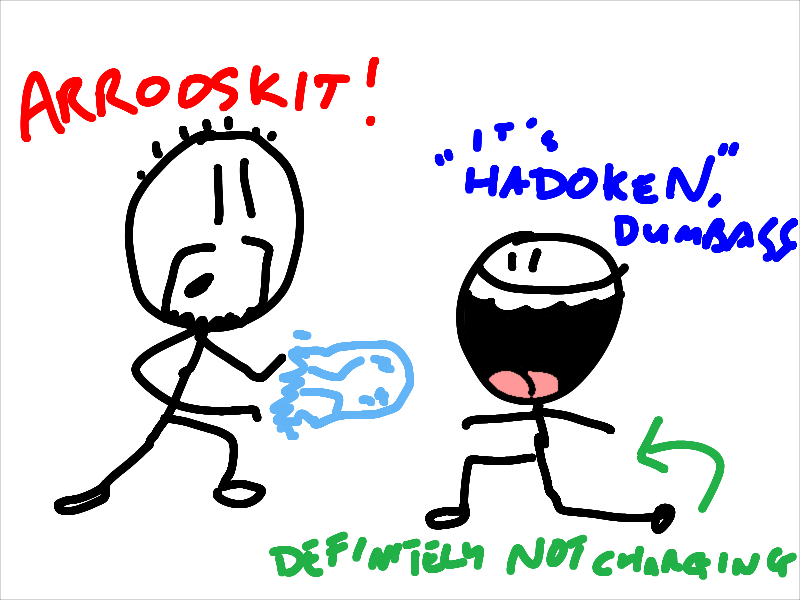
No drawing today as I've been doing other creative things, as I shall talk about in a moment.

I have not felt at all like making any videos for a while, which is a little bit frustrating to me, because the first two episodes of my Space Rogue playthrough actually did surprisingly decent (for my channel) numbers, and I reckon there's just one or two episodes more of The Granstream Saga to do before that's all finished. I just haven't quite been able to summon up the energy to continue those recently, not helped by a week of feeling ill that I'm just getting over.

However, with a soft embargo date approaching for Super Woden Rally Edge, a game I wanted to cover — the video I made on this game's previous installment is the best-performing video on my channel by a long shot — I felt a bit more inspired to actually do something today. So I recorded a bunch of voiceovers: both for this, and for some other things that I've previously written articles for, but wanted to turn them into videos. All in all, I've recorded voiceovers for Super Woden Rally Edge, Old Skies, Return to Castle Wolfenstein, Wolfenstein 2009 and Wolfenstein: The Old Blood, which should result in a nice spread of 15-20 minute videos for each. I've even edited the Super Woden Rally Edge and Old Skies ones already, but I'm going to leave the Wolfenstein ones to another time — maybe tomorrow, maybe later in the week, depending on how I'm feeling.

I continue to go back and forth on what is "best" to do for my YouTube channel. Up until now, I've built it on Let's Play-style playthroughs of games, and I think a lot of my viewers like that sort of thing, particularly as I make an effort to explain how to play the game, why it's interesting, why it's still relevant (if it's an old game, which it usually is) and what I, personally, think of it. These are fairly easy to record and edit, but they are time- and energy-consuming to produce, since they do involve me sitting and playing a game, often for quite a long time, and attempting to find meaningful things to say for the duration.

At the same time, the pre-scripted videos tend to overall do better, particularly over the long term. I think I'm probably more "proud" of those overall, too, since they involve more in the way of editing, and delivering a voiceover is a different skill overall to off-the-cuff, unprepared commentary while playing "live". However, they take a lot more time to both prepare and edit, since there is often a lot of miscellaneous footage required to capture along with the footage of the main thing I'm covering, and the editing process involves a lot more in creatively finding ways to visually represent the things I'm talking about.

Part of me wants to commit to one or the other of these approaches, because I feel it would probably be a good idea to. At the same time, I think there's value in both approaches; you can show things in "live gameplay" that you can't show in a "video essay"-style production, and vice versa.

I do, however, think that kicking off long playthroughs again might have been a mistake. The videos for The Granstream Saga have performed more poorly than anything I've done for a long time, although, as I say, the first couple of episodes of Space Rogue did surprisingly well. So I'm inching towards abandoning those, though I feel like at this point I probably should finish The Granstream Saga at the very least.

Anyway, that's something to think about another day. I have enough on my plate with these new videos for now, so watch for them coming soon to my channel!


Want to read my thoughts on various video games, visual novels and other popular culture things? Stop by MoeGamer.net, my site for all things fun where I am generally a lot more cheerful. And if you fancy watching some vids on classic games, drop by my YouTube channel.

If you want this nonsense in your inbox every day, please feel free to subscribe via email. Your email address won't be used for anything else.