Today was our trip to The Cave and Arcade Archive, part of the Retro Collective organisation. As I've explained a few times previously, and for the benefit of those who might have missed those posts, The Cave is an interactive, hands-on computer and video game museum, while the Arcade Archive is a similarly interactive, hands-on free play arcade museum. The Retro Collective as a whole encompasses these two museums, the company Heber Electronics, who make the MiSTer Multisystem 2 console, and the Retro Collective YouTube channel, fronted by retro tech enthusiast and historian Neil Thomas.
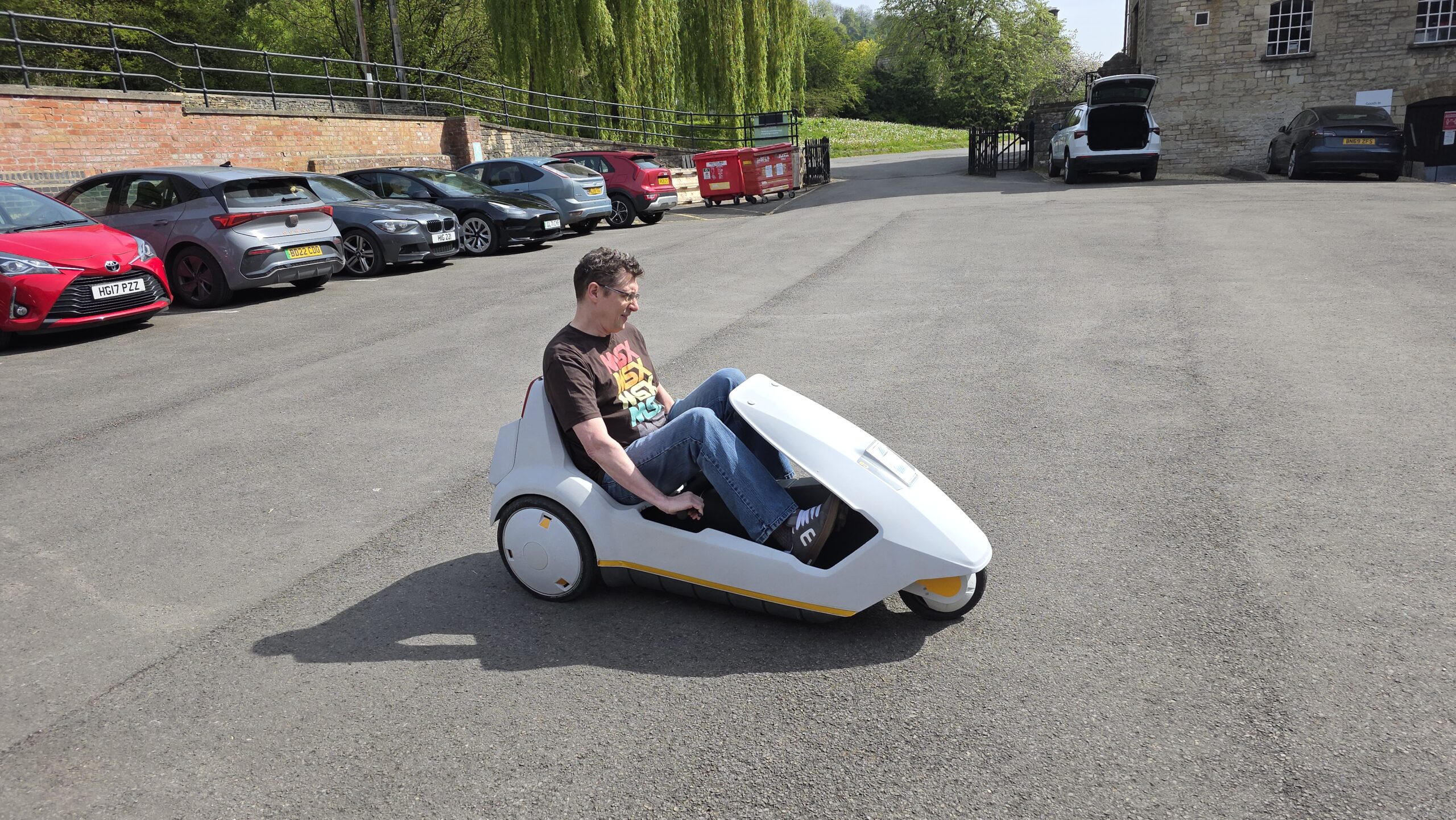
I will be peppering today's post with photos from today's trip.
The event today centred around a talk by Ian "h0ffman" Ford, a veteran of the Amiga demoscene who returned to coding and composing on classic computer hardware back in 2010, and has been spending much of his time since COVID fiddling around with disassembling and porting classic games from one platform to another. To date, he has ported the MSX2 version of Metal Gear to Amiga, the MSX game Knightmare (no relation to the TV show) to Amiga also, plus Shinobi and Golden Axe from Sega's System 16 arcade board to NEOGEO, plus the modern Unity game Cecconoid to Amiga. His talk explored how most of these projects came about because of repeatedly falling down rabbit holes while satisfying his own curiosity.
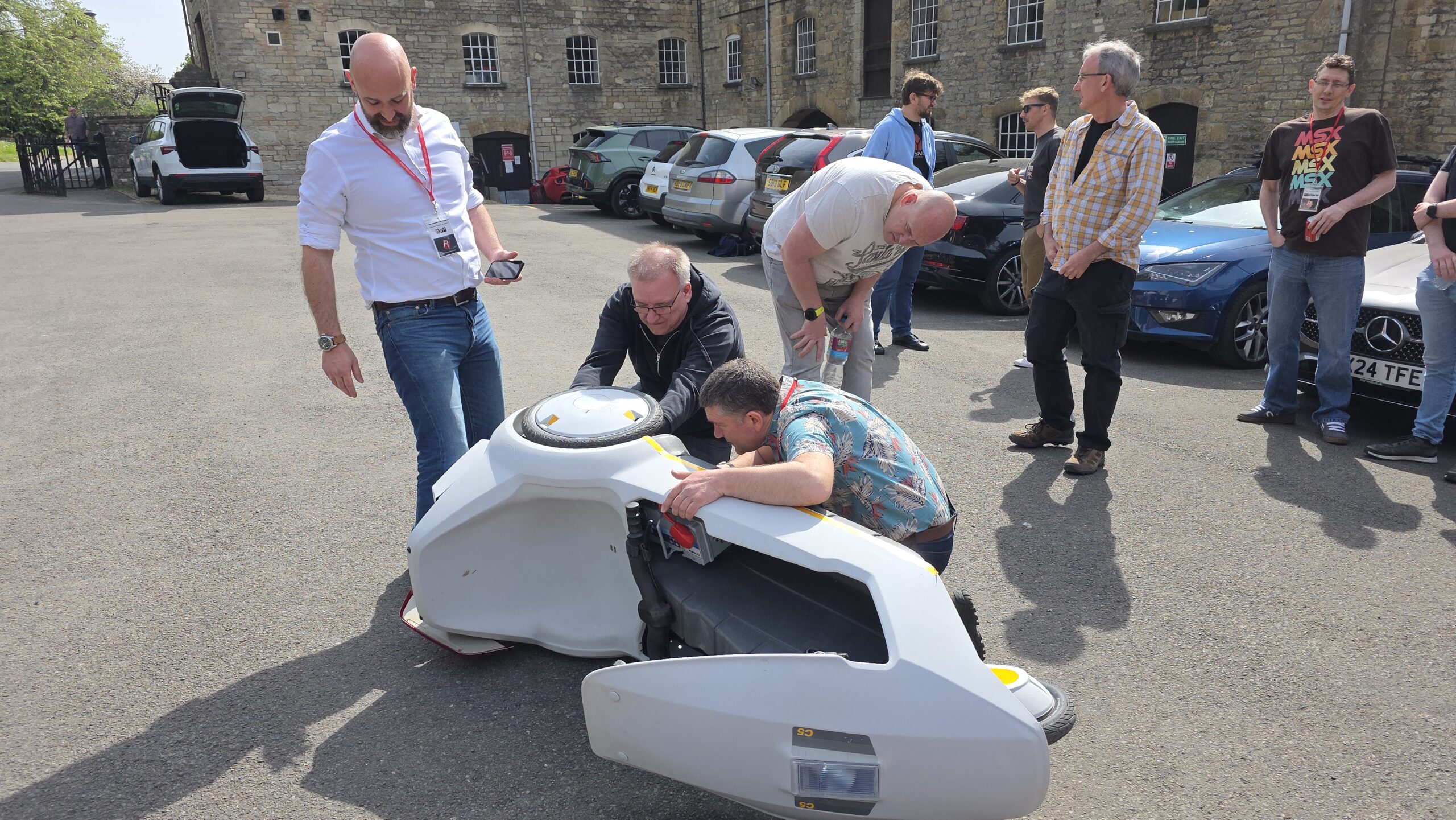
Outside of h0ffman's talk, which happened after lunch, all of us in attendance were free to explore The Cave, the Arcade Archive, and the organisation's newly renovated workshop space, known as the Pump House. (The entire operation is in an old mill, and the Pump House used to be part of the site's earlier purpose; it's not just a funny name they gave it.)
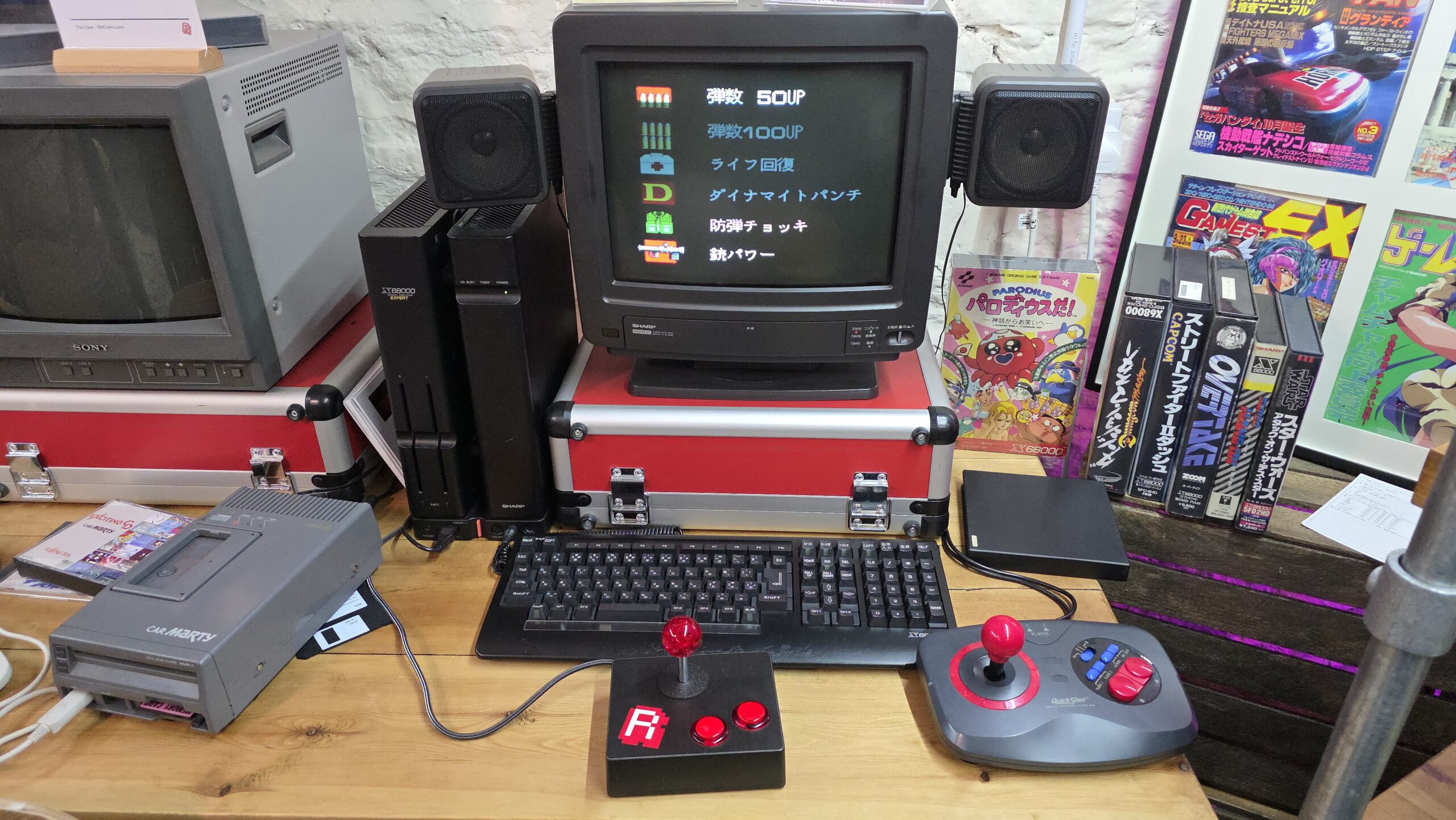
The Cave is up on the top floor of the mill, and is a large, open-plan room filled with old computers and consoles of various descriptions, including some fairly exotic machines from outside of the UK, Europe and North America, such as the beautiful Sharp X68000 from Japan. This is an absolutely gorgeous machine that, if money were no object, I would very much have in my collection. If you've never come across one, it's a 16-bit computer that has the audio-visual capabilities of its console contemporaries, meaning it plays host to a lot of excellent games, including some near-perfect arcade ports.
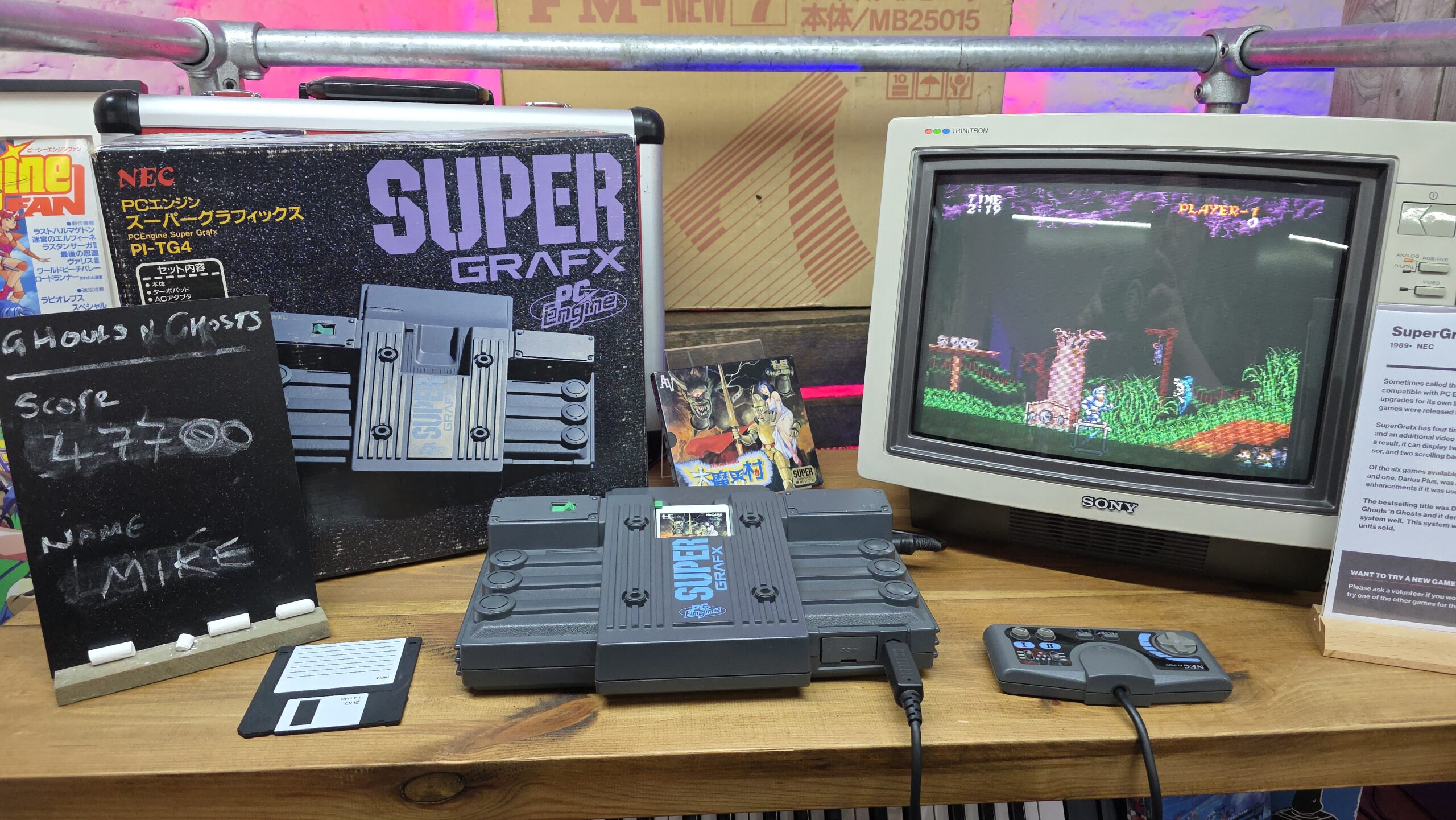
There's also lots of interesting console obscurities, too, such as NEC's ill-fated PC Engine spinoff, the Supergrafx, a console noteworthy for, outside of backwards compatibility with the aforementioned PC Engine, only having five titles in its library. And you thought the Wii U was a flop. Despite this, it's an exceedingly cool little system worth having a play with in an environment like The Cave!
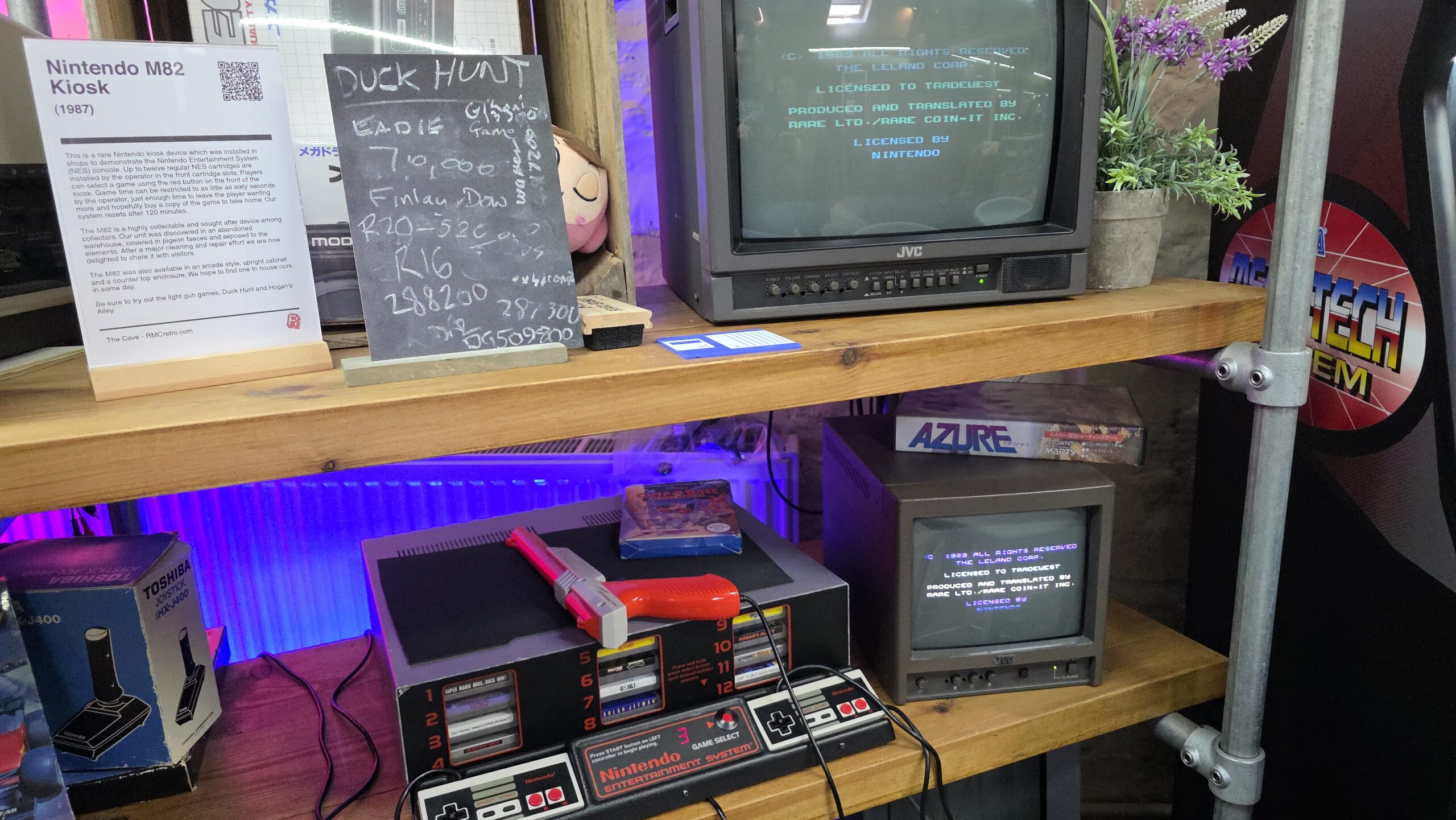
Another nice thing about The Cave is that it acknowledges well-known, popular hardware in unusual configurations, such as this kiosk multi-game version of the NES that you would have found in electronics stores back in the '80s. All the stuff at the Cave is hooked up to great quality screens, too, with many of them being professional video or broadcast monitors, Sony Trinitrons and the like.

Here's another one: Sega's Mega-Tech arcade system, which was basically a Mega Drive you bought time on back in the day. Here, as with all the other arcade machines in The Cave and the Arcade Archive, it's set to free play, so you can enjoy a selection of 16-bit classics in the arcade form factor.
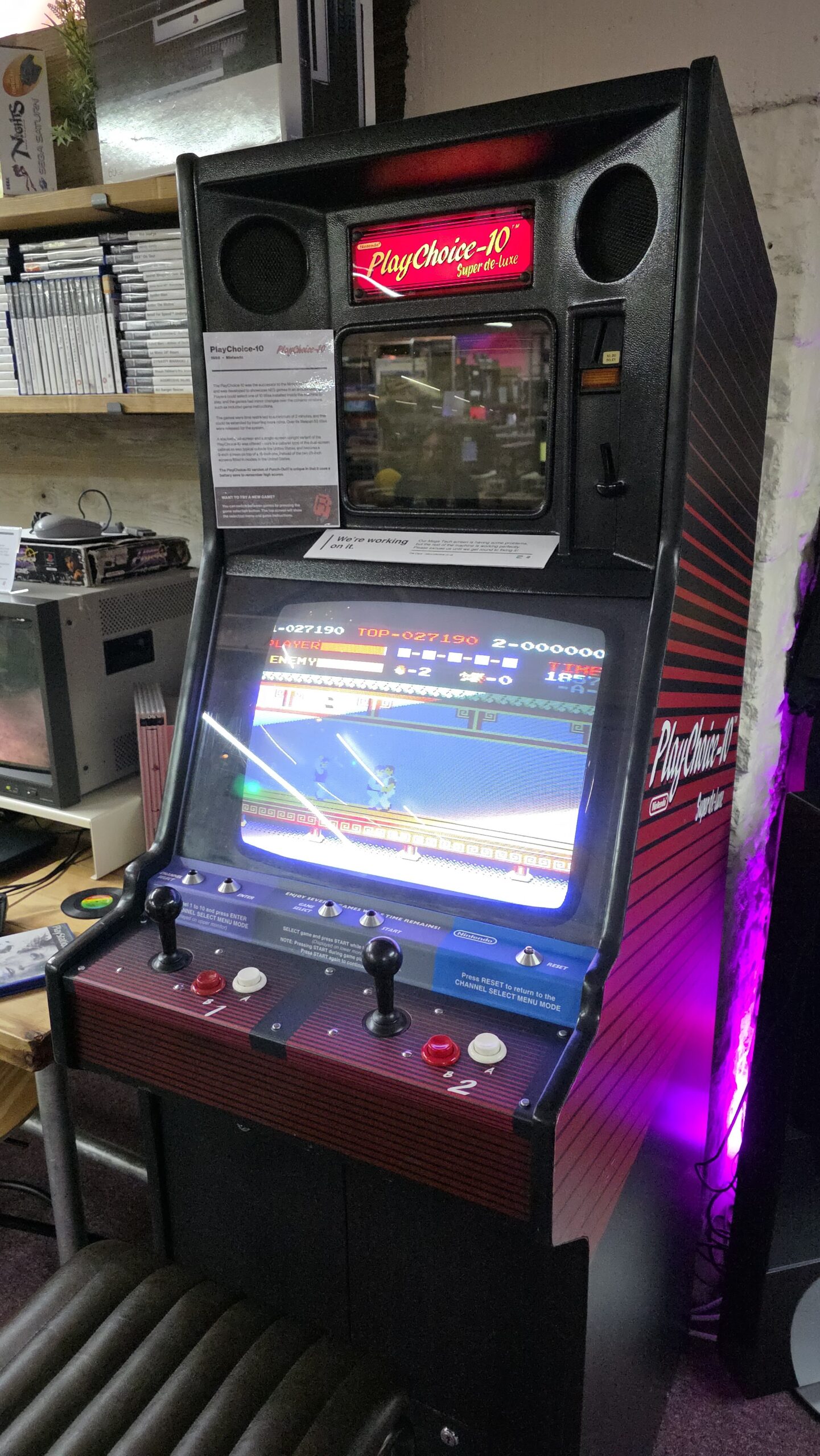
Nintendo had done something similar with the PlayChoice-10 machine, which provides you with a selection of NES games to play using arcade controls. It's a very strange feeling to play the original Super Mario Bros. with a stick and arcade buttons, but it works pretty well! Not surprising, really, since so many games from that era were at least inspired by arcade games if they weren't direct ports.
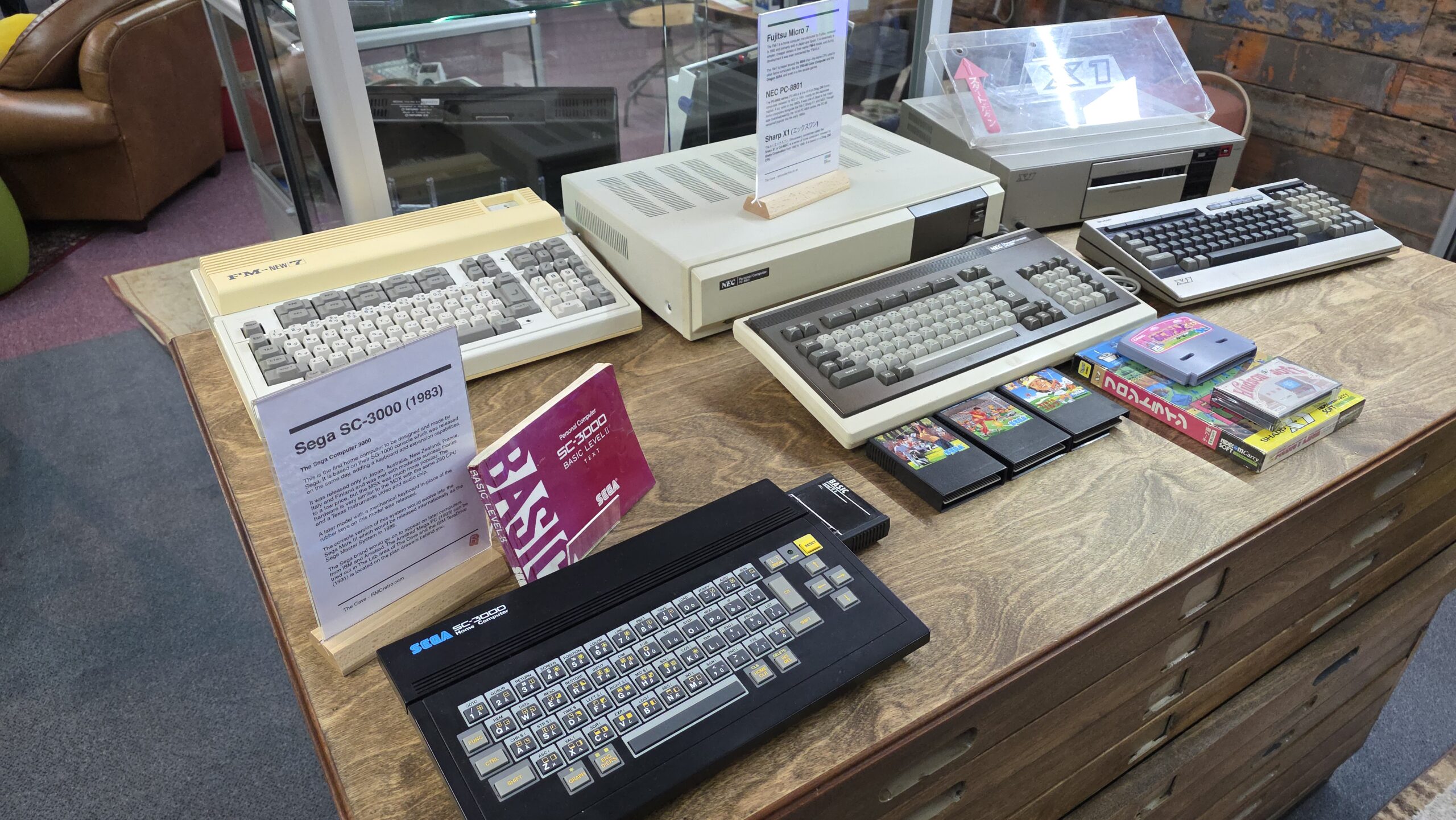
Here's a selection of obscure Japanese computers, including one from Sega. I don't know much about these, but they all look lovely, and it would be fun to have a fiddle around with them one day.
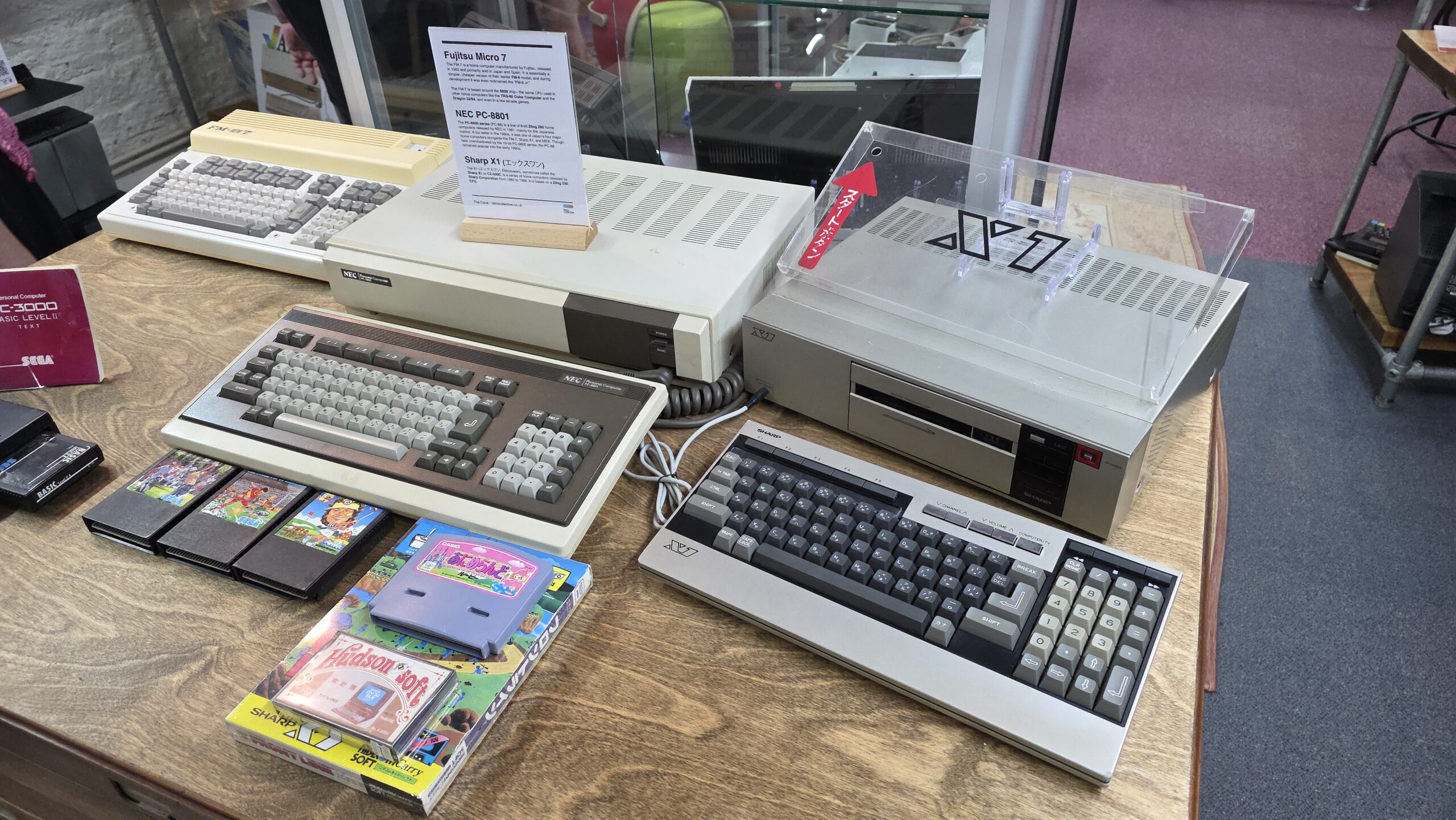
Here's some more obscure Japanese computers, just because. That Sharp X1 is a lovely looking thing. I actually didn't give the keys a clack, but it looks like they would feel nice to type on.

A little closer to home, here's a selection of lesser-known home computers, including the Oric-1, Tatung Einstein, Dragon 64 and Sam Coupé. A lot of these are lovely looking machines; they just failed to make the same impact as the bigger hitters of the era like the Spectrum and Commodore 64.
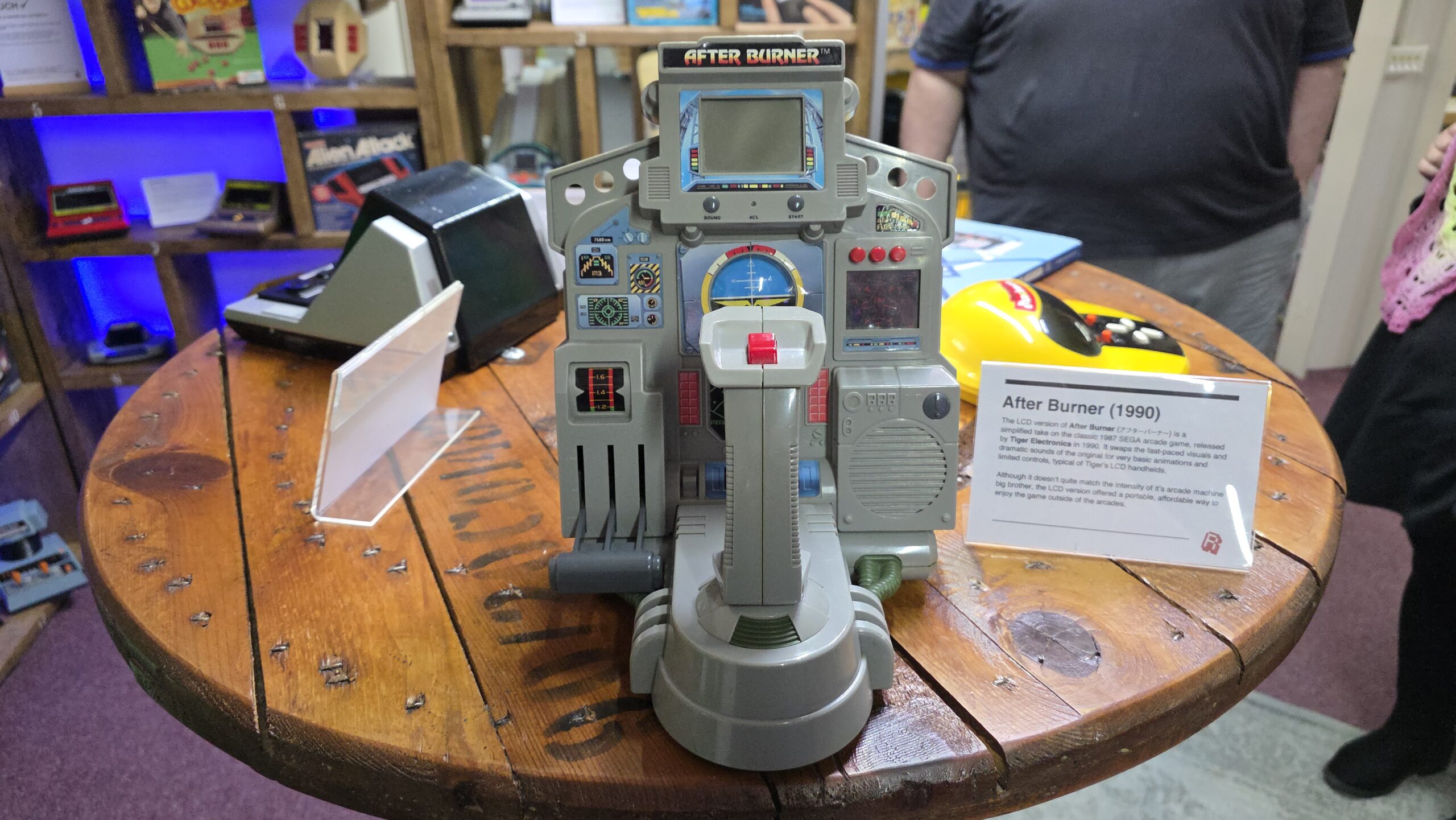
Here's a thing that I really wanted as a kid, but never managed to get hold of (i.e. convince my parents to get for me). It's an LCD game adaptation of Sega's After Burner, but with an elaborate control panel that makes the game feel a lot cooler than it actually is. The joystick is satisfying to grapple with the throttle control makes a pleasing "clunk" when you move it between speed settings, and a cool thing I've not seen before is that the LCD screen has an LED behind it so when you destroy enemy planes, there's a red "flash" where they're exploding. It's a pretty neat toy, but, given that we had computers at home that could play much more interesting and complex games, I'm not surprised that my parents never bought me one of these — and I'm not mad about that, I hasten to add!
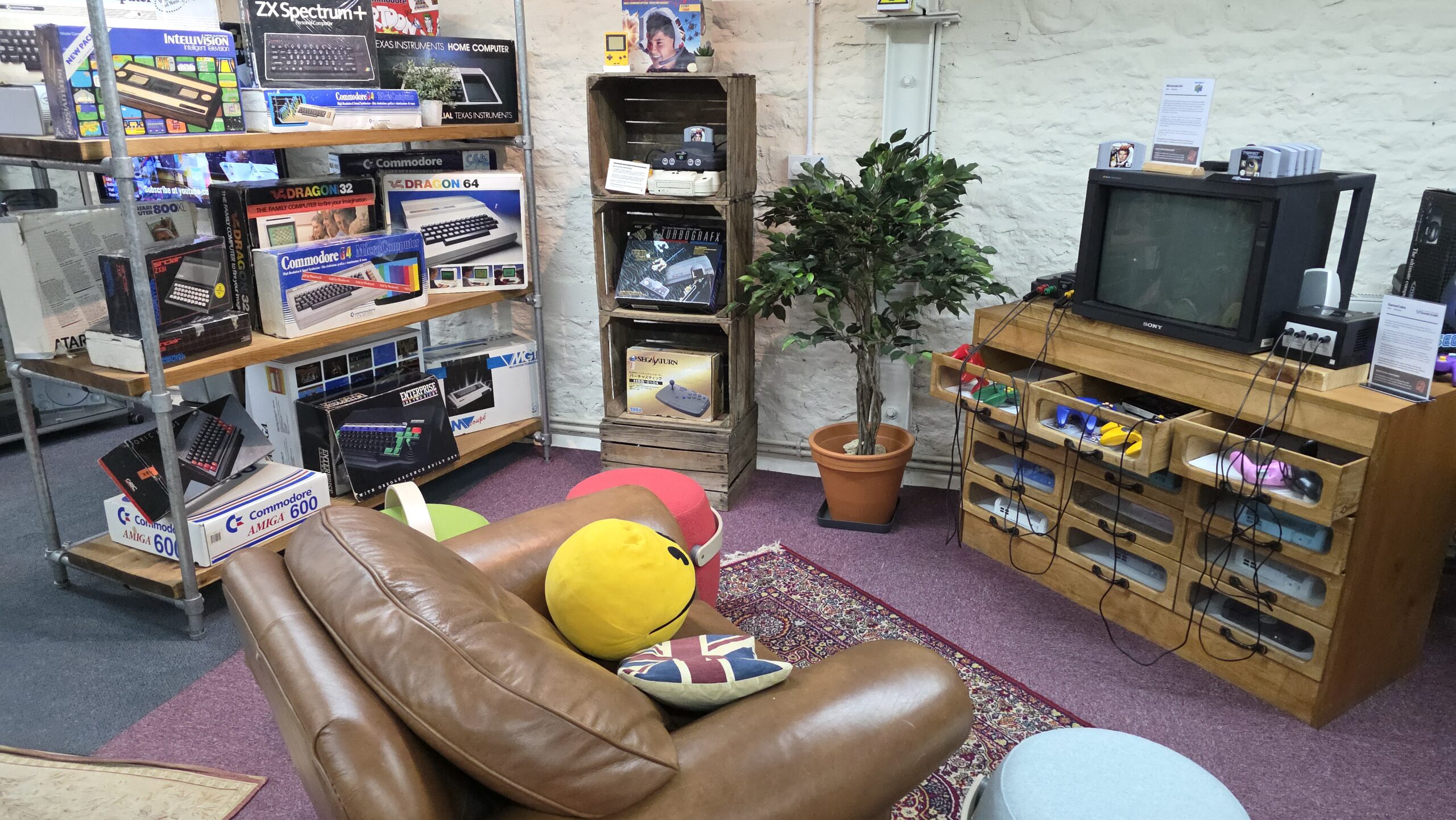
There are lots of things to play at The Cave. This lovely setup has a selection of consoles hooked up and ready to play multiplayer just like we used to back in the day. The Gamecube and N64 were most readily accessible today, and they looked great on the Sony monitor.
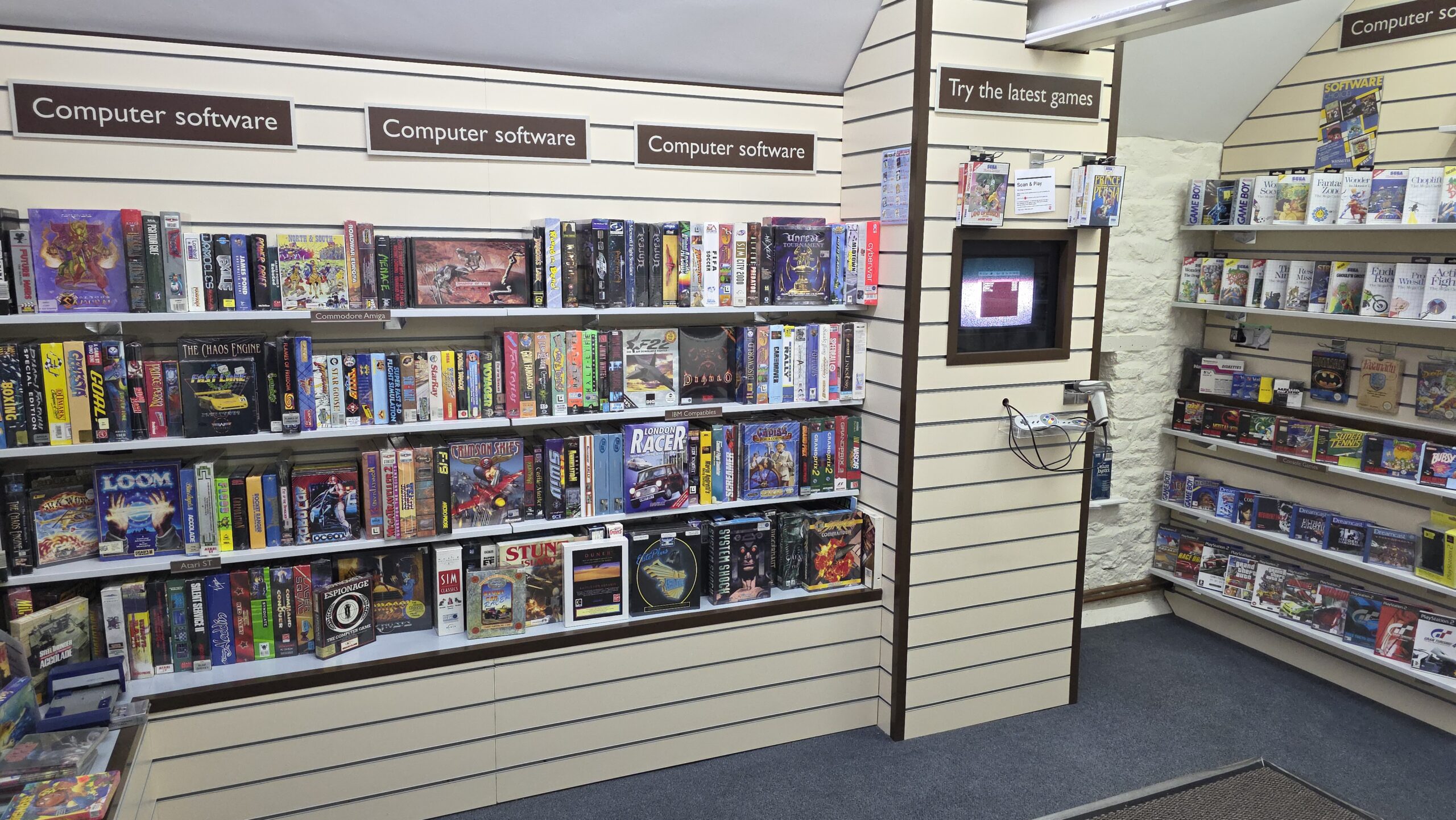
One of my favourite parts of The Cave is the fake "software shop", set up to look like an old WHSmith upstairs. For any non-Brits reading, WHSmith was a shop that was mostly known as a newsagents where you'd buy magazines and newspapers, but also tended to carry stuff like stationery, art and craft supplies and, in the 1980s, computer and video games. There were a lot of shops like this in the '80s that performed what I would argue was their "primary function" downstairs, then they'd do computery stuff upstairs — one of my favourite examples in this regard is Boots, which is a pharmacy. Why would a pharmacy sell ZX Spectrum games on cassette? Same reason they'd process your photographs or sell you picture frames, presumably — to make a bit of extra cash from jumping in on popular hobbies and pastimes.
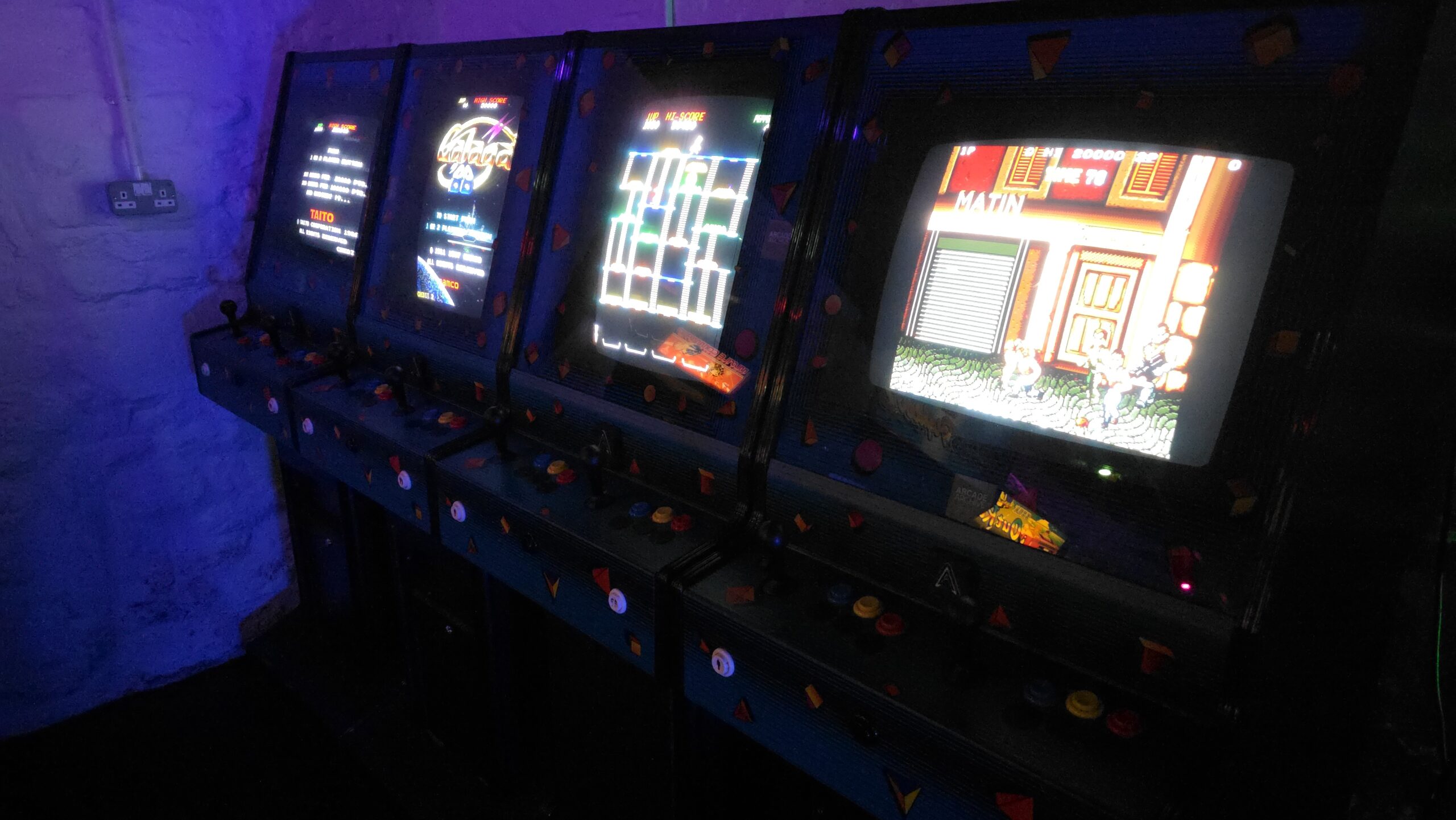
It's tricky to get good shots of them by the very nature of the environment, but on the ground floor of the mill is the Arcade Archive, a noisy room full of classic arcade machines, many of which have been lovingly restored to fully working condition by the Retro Collective folks, and some of which make use of modern solutions such as the MiSTer. These cabs — from left to right, Bubble Bobble, Galaga '88, BurgerTime and Double Dragon, all in the sort of generic cabinets you'd see in a fish and chip shop in a town centre circa 1989 — are, as far as I'm aware, restored originals.
Conversely, there's a NEOGEO MVS cabinet that I forgot to take a photo of that is running off the new MiSTer Multisystem 2's JAMMA arcade cabinet incarnation, which allows you to use plastic NFC cards to switch games as if you're swapping out cartridges. You get the enjoyment of playing with "four bright buttons and two joysticks" on a CRT, along with the modern conveniences of the MiSTer such as the ability to easily swap games, or play the console versions of games on the arcade cabinet.
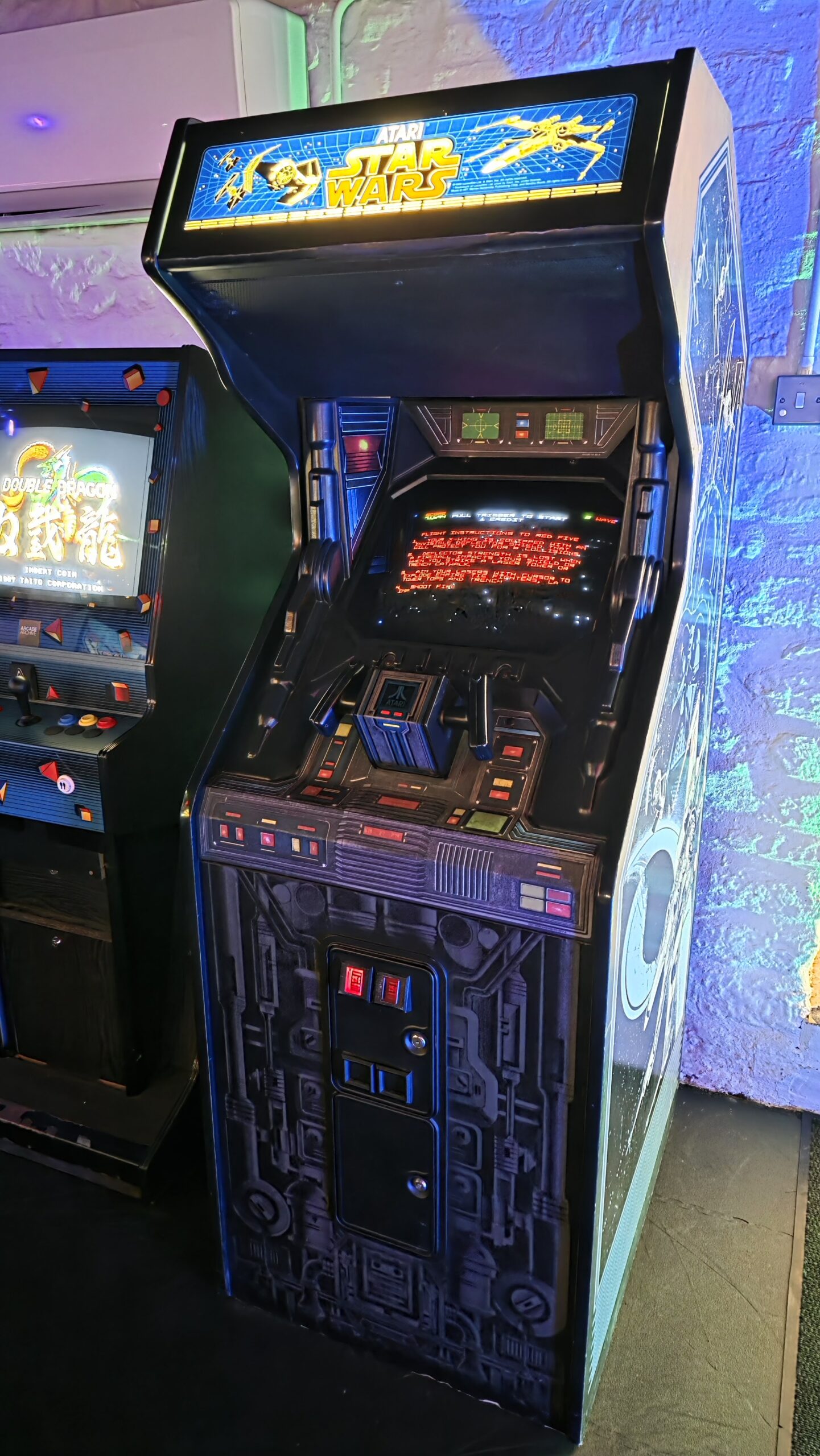
Here's a lovely thing, showing up much better thanks to its position near the door to the outside: Atari's Star Wars arcade game. This is still a supremely playable 3D shoot 'em up with beautiful vector graphics and a wonderfully immersive, involving analogue yoke control system. Great fun to play — just a pity there's no sit-down version in the Archive, though I don't think there'd be room for one at the moment anyway!
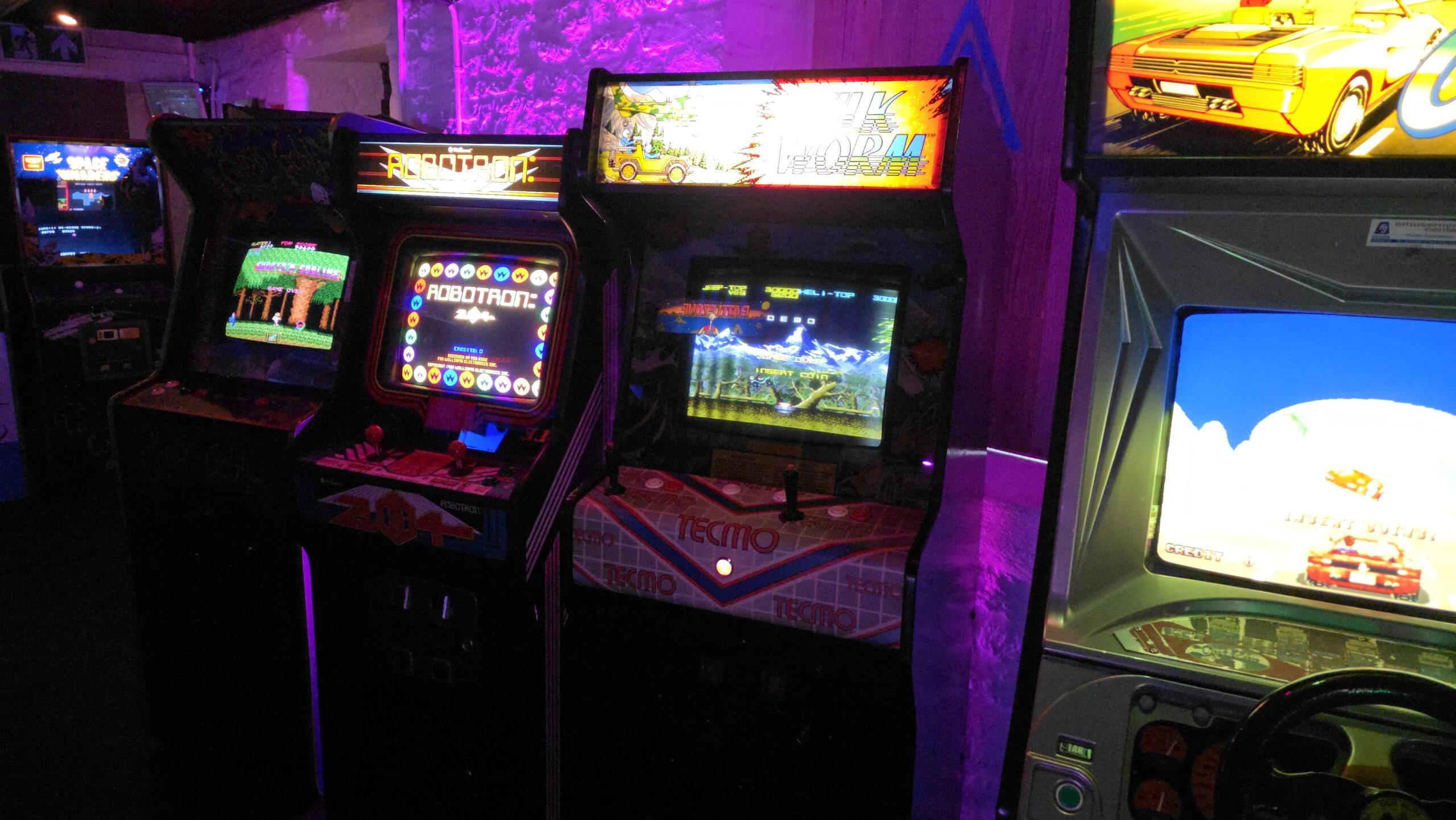
Here's a few more machines in the Archive, including OutRun on the right, then Silkworm, Robotron 2084, Ghosts 'n' Goblins and, back in the corner, the original Space Invaders. I realised I'd never actually played Robotron in its original twin-stick arcade incarnation, so I took the opportunity to rectify this. It's a lot of fun!
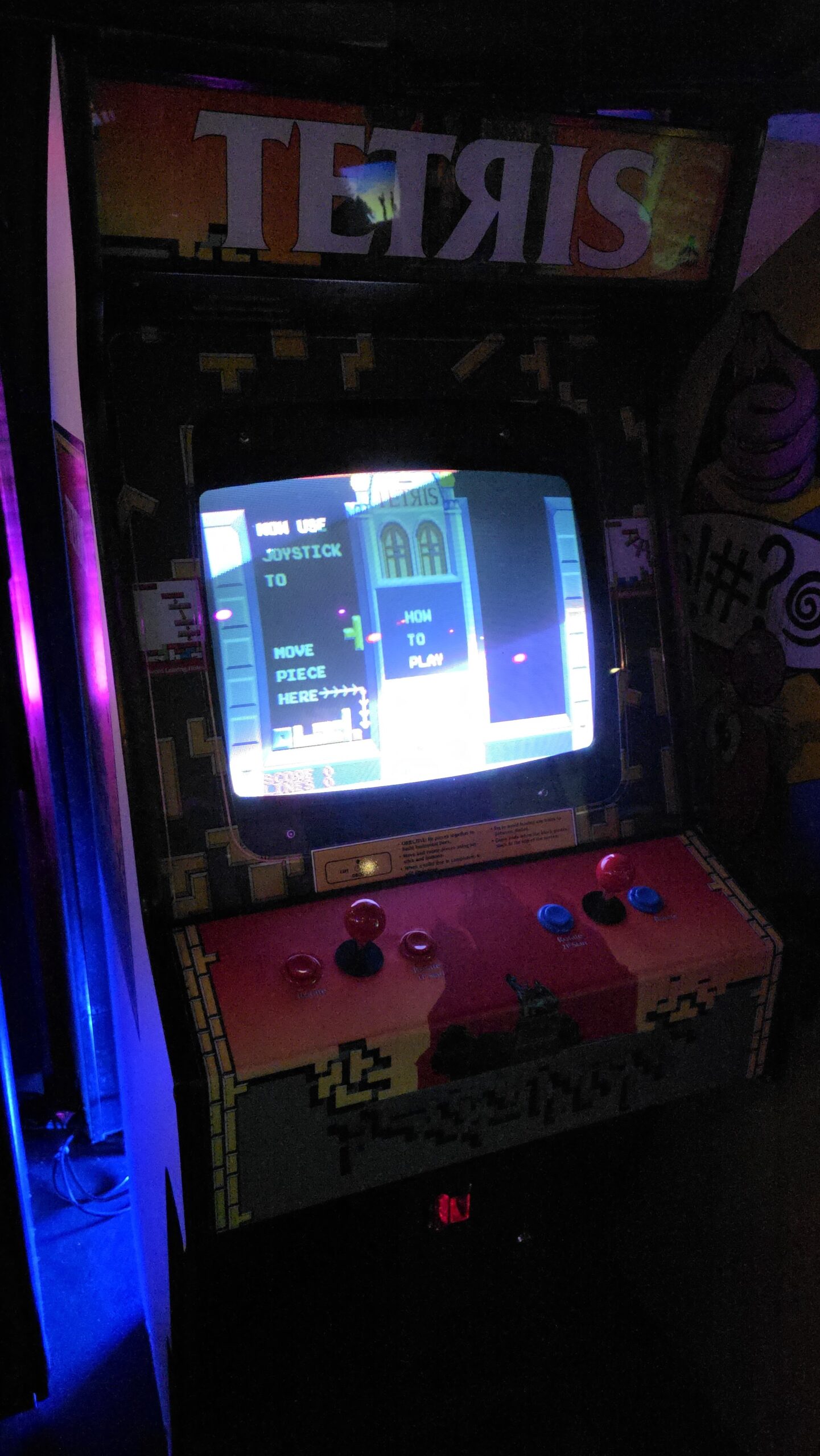
More interesting and unusual things with this Tetris arcade machine. I'm not sure of the origin of this, but it was a nice looking machine, and Tetris' gameplay is, of course, a great fit for the arcade.
And that's pretty much that for now. It was a thoroughly lovely day that I enjoyed a lot. h0ffman's talk was interesting — even if some of the more techie stuff went over my head a bit! — and it was nice to see some people I haven't seen for a while. I even met someone who actually watches my YouTube videos! I guess I better make some more then, huh.
Right, on that note, I'm knackered, so I'm going to go and collapse into a puddle of goo for the remainder of the evening. Visit The Cave if you get the chance — it's a truly lovely day out that I can highly recommend.
Want to read my thoughts on various video games, visual novels and other popular culture things? Stop by MoeGamer.net, my site for all things fun where I am generally a lot more cheerful. And if you fancy watching some vids on classic games, drop by my YouTube channel.
If you want this nonsense in your inbox every day, please feel free to subscribe via email. Your email address won't be used for anything else.
Discover more from I'm Not Doctor Who
Subscribe to get the latest posts sent to your email.
