#oneaday Day 747: Grand Theft Auto VI can eat my ass

To no-one's surprise, it has been revealed that Rockstar's upcoming Grand Theft Auto VI will be $80 on release for its regular version, and $100 for the "Ultimate" version, because of course there's an Ultimate version. Hilariously and/or tragically, the "Ultimate" version even goes so far as to lock you out of specific shops in the game unless you buy it — a decision that some poor Forbes writer in complete denial has tried to astroturf already. No, but honestly, it's fine — they're probably only going to put the Ultimate Edition-exclusive items in those stores, there will definitely be other stores you can use!

Oh, and on top of that, the "physical" release of the game is a code-in-a-box. Fuck off with that.

I can't think of many series that have managed to so very thoroughly turn me off as Grand Theft Auto. I absolutely loved the original one, from the moment my underage self bought the original big-box PC version from "First Compute" one lunchtime at sixth form. ("Ol' Richie", the guy who ran the shop, knew I was lying about my birthdate, but he didn't really care. My friends and I spent too much money in his shop for him to make a fuss.) I likewise adored Grand Theft Auto III (I never played the second one to this day) and quite liked Vice City, particularly its soundtrack, which I had the box set of CDs for.

The series started to lose me around San Andreas. There's no way of saying this that doesn't sound a bit racist, so I'm just going to say it, acknowledge that is what it sounds like, and attempt to explain myself: I found that game's focus on strongly black-coded urban culture to not only be difficult to engage with, but outright indecipherable at times. To put it another way, I had found Grand Theft Auto III and Vice City to be a lot more accessible, simply because I was more familiar with the tropes of "mafia-style" gangsterism that they both leaned heavily on; by contrast, San Andreas' central culture felt jarringly different to me the moment I started playing, largely because I was so unfamiliar with it. I had never watched any movies or TV shows that dealt with inner-city black urban culture — I hadn't even really listened to much in the way of contemporary black urban music at the time I played San Andreas — and thus being thrown into the deep end of it right from the start of San Andreas was… an adjustment.

There is, of course, a very strong argument to be made for using video games to immerse yourself in a culture that is different from your own — hell, I do it all the time with Japanese games — and in many respects we should look at San Andreas as quite admirable for unashamedly putting black culture front and centre at a time there was not nearly as much truly inclusive, representative media as there is now.

But two things. One, I'm not sure Grand Theft Auto as a series is the one to tackle this in the most respectful manner; I don't know enough about real-world urban culture, particularly from the 1990s, to know how "authentic" San Andreas was — or if it was, in fact, just riddled with stereotypes. And two, I, personally, a middle-class white dude, with everything that entails, just found San Andreas, at least in its early hours, to be so far outside of what I was familiar with, both in my life and in the media I had previously engaged with, that I found myself thinking about the game as a whole much less fondly than I had done towards Grand Theft Auto III and Vice City, even though there are a lot of ways in which San Andreas is, in theory at least, a "better game". I'm sorry, that's just how it is; I can't change my own reaction to a creative work!

Anyway, the upshot of all that is that after San Andreas, I was a lot more lukewarm on the series as a whole than I had been previously. When Grand Theft Auto IV came out, I didn't pick it up right away, and when I did pick it up, I found that I wasn't enjoying it nearly as much as I had done III and Vice City. Part of that was down to the different cultural context in which I was playing it, I feel; both III and Vice City were games I played while I was at university, so I also associate them with drunken nights out with friends that ended with collapsing back to my place to play either of those games until ugly o'clock in the morning. This is probably another reason San Andreas didn't resonate as hard, thinking about it; by the time that game came out, we'd all finished university, and thus we were no longer spending several nights a week around one other's houses playing video games together.

I never finished Grand Theft Auto IV, and never even tried its DLC. I thought about trying it again on more than one occasion, but I could just never really muster up the motivation for it. I don't know what it was; it just… didn't click with me at all, for some reason.

By the time Grand Theft Auto V first came out — which, let's not forget, was thirteen fucking years ago — I felt I was ready to try again, though. The new three-protagonist structure sounded interesting, and the online mode sounded intriguing, too. I gave it a go. I finished the single-player story. I had what I would describe as a moderately good time with that PS3 version, but it didn't have that magic for me. It felt too self-consciously edgy, like it was trying desperately to be taken seriously, but also wanted to combine that with the over-the-top satire that the previous entries had incorporated, and it just didn't really work for me. And all the fluff in it was… cool, I guess, but most of it felt like it was just there for the sake of it, rather than in an attempt to make a better game.

Online was even worse. Aside from the fact it just flat-out didn't work for quite a long time on console after release, the few times I tried later it on PC (I bought the PC version on deep discount later to play with friends more easily, as they didn't have consoles) were such overwhelmingly negative experiences that I had absolutely zero desire to spend any more time in it than I "had" to. And I didn't "have" to spend any time in it whatsoever.

What was so bad? Flagrant cheating, with nothing being done about it. Behaviour that went beyond the simple antagonism the game is built around, into malicious attempts to spoil other people's fun. Load times that were approximately sixteen years long. The complete inability to form a "party" with your friends, making it near-impossible to stay together between individual "events". And, woven into the very fabric of the experience, pay-to-win microtransactions.

Don't get me wrong, I had a few good times in Grand Theft Auto V's online mode, but those only really happened when we had a private friends-only session and just pissed about a bit. I won't deny that doing things like impromptu bicycle races across mountainous countryside, with one of us driving an enormous truck instead, were very enjoyable. Stepping into a public game, however, provided some of the most miserable online experiences I think I've ever had.

And then, of course, Grand Theft Auto V just would not fucking go away. It came to PlayStation 4 and Xbox One. Then it came again to PlayStation 5 and Xbox XBOX or whatever they're called now. More and more guff kept being added to the online mode, all in the name of getting people to pony up the cash for those odious "Shark Cards", because playing the game normally in order to earn your way to rewards was, very obviously, a chump's game.

I got to the point where I actively resented the sight of Grand Theft Auto V. It felt like it had become everything the series had once satirised, and worse. I had no desire to play it ever again.

I tried a few other Rockstar games along the way, too, and the only one of them that clicked with me was Bully, a post-San Andreas game that switched gears by placing you in the role of a teenager at a school in a small town, rather than a hardened criminal in a huge conurbation. I didn't enjoy Red Dead Redemption at all — at least partly because I've never found Westerns to be appealing as a genre — and have felt no inclination whatsoever to really explore the company's broader output since. (Max Payne was good, mind, though I've never really thought of those as "Rockstar games")

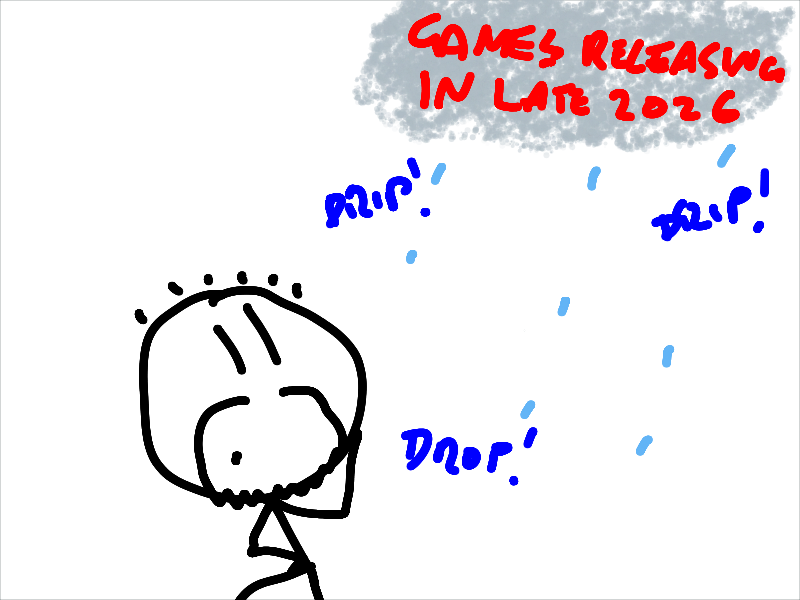
Grand Theft Auto VI is frustrating to me because it's being hyped up as some great Second Coming of Christ, to such a degree that game developers and publishers putting out games that are not Grand Theft Auto competitors in the slightest are terrified of releasing even vaguely near it. This, to me, just seems counter-productive; while I'm sure a lot of people are going to buy and play Grand Theft Auto VI on release day, there are plenty of people out there, I'm sure, who feel just like I do — sick to death of this goddamn series, and not looking forward to the inevitable flood of nothing but GTA VI articles we're going to get on the two and a half remaining video game journalism websites for months after it releases. Those people are going to want to play literally anything else on November 19th!

I'm pissed because not only am I sick of the sight of Grand Theft Auto, I'm also furious at how they're clearly exploiting the public with the pricing, garbage not-actually-a-physical-release and bullshit like locking in-game stores behind a $20 more expensive premium edition. I'm furious because people are still going to buy it and reward this nonsense, and no-one will learn a goddamn thing from it. It is the absolute worst example of the excesses of the top end of today's video game industry, and it's going to get away with it because it's "the most-anticipated video game ever".

And this, of course, is to say nothing of Rockstar's union-busting activities that they're currently fighting a legal battle over. But I'll leave that for people who understand such things better to discuss.

I'm aware that me having a little rant here is going to change nothing, and this odious game is going to sell gangbusters when it comes out. But I feel a bit better having said my piece now. And, outside of the game doing anything even more egregious than the shit that has been announced today, this is probably the last time I will mention it, or even think about it — and I'm certainly not going to try and stop anyone who has actually been looking forward to it from enjoying it.

I might silently judge you a bit, though.


Want to read my thoughts on various video games, visual novels and other popular culture things? Stop by MoeGamer.net, my site for all things fun where I am generally a lot more cheerful. And if you fancy watching some vids on classic games, drop by my YouTube channel.

If you want this nonsense in your inbox every day, please feel free to subscribe via email. Your email address won't be used for anything else.
#oneaday Day 745: Cost-effective gaming in 2026

Valve apparently announced the price of their long-awaited Steam Machines today and, unsurprisingly, given the general price of tech right now, they ain't cheap. They're "starting at £879" not cheap, and that only gets you 512GB of storage; they break the £1,000 mark if you want the 2TB model, though both are expandable with microSD cards.

Steam Machine
Image: Valve

We have long since reached a point where it is not particularly cost-effective to start taking an interest in modern gaming if you are not already involved in the overall ecosystem and thus resigned to vast swathes of your monthly pay packet disappearing on your chosen hobby. Sure, you can get away with a somewhat lower-end mini PC if all you want to play is relatively small-scale indie games — but even those lower-end mini PCs are going up in price nowadays. Therefore, it is worthwhile looking at more cost-effective options for enjoying video games — even if the video games you will be enjoying are a few years old. Good games are still good years after they're released, you know! So here's my personal recommendations on that front.

Evercade

Of course I'm going to recommend Evercade because I work for them, but the reason I work for them is because I was all-in on the idea of the system from day one. A new, affordable system with a focus on retro gaming that provides officially licensed physical releases of classic games from home consoles, computers and arcade machines? Regardless of if I'd ever managed to secure employment with Blaze, makers of the Evercade, I would have been a "full setter" from day one — indeed, when the original handheld released, I immediately took advantage of the "All-In" bundle to get the first 10 cartridges included with the system.

Why recommend something like Evercade when emulation and other options exist — some of which we'll talk about in just a moment? Well, that "officially licensed" part is important. The current state of the games industry may appear to be teetering on the brink of unsustainability, but that doesn't mean people who enjoy video games want the whole thing to collapse. It would be rather nice if we could recover from this situation we're currently experiencing — and one way to help that come about is to support officially licensed rereleases of classic games, updated to play nice with modern audio-visual equipment, particularly televisions. On top of that, Evercade also plays host to physical releases of a lot of "modern retro" titles — games originally designed with vintage hardware in mind, but developed in recent years.

Image: Evercade

Many of the rights holders of these old games are also game companies that exist in the modern sector, and so throwing your support behind retro rereleases that don't require turbo nutter ninja bastard hardware to run is one way of helping ensure we still have a healthy video game economy whenever the AI bubble finally bursts and — hopefully — hardware prices start to settle back to what we have previously thought of as "normal".

Plus the physical nature of Evercade collecting allows you to rediscover the fun of having a shelf full of games to pick from, rather than a boring old list of downloads on your PC, many of which you scroll past without even noticing every single day.

MiSTer

Evercade is great, but there are some classic games that are never, ever going to get a rerelease for one reason or another — be it the rights holders being unwilling to put them out again, more complex licensing situations (such as video games based on movies, or which feature licensed music, vehicles or actors' likenesses) or some other reason entirely. For those situations, that's where what I would describe as more "community-focused" solutions come into play — as a general concept, this covers emulation, but I would specifically call out the MiSTer project as being a particularly worthwhile investment in these peculiar times.

For the unfamiliar, MiSTer is a platform based on "FPGA" (Field Programmable Gate Array), which is a technology I have absolutely no understanding of whatsoever, save for the fact that it effectively allows a device to recreate the way another piece of hardware would have worked in the past, not through simulation in software (which is how emulation works), but through a reconfigurable chip that basically "pretends" to be the old system. Some describe it as "hardware emulation"; all you really need to know is that, under most circumstances, it results in the most authentic recreation of a classic console, home computer or arcade cabinet possible, particularly if you happen to have an old CRT television hanging around that you can hook it up to. (Never fear if you don't, however; one of the core concepts of MiSTer from the outset was to provide a relatively straightforward means of enjoying classic "hardware" on modern displays, and the platform has a variety of built-in and fully customisable visual filters that allow you to recreate the CRT "look" if you so desire.)

Image: Heber Electronics

MiSTer is a project you can build yourself, but it's actually probably more cost-effective these days to go for a pre-built solution such as Heber's Multisystem 2 (pictured above, which I use) and Taki Udon's SuperStation One. You will also need to add some form of storage to whatever setup you go for, which is likely to be the expensive bit these days; however, it's a one-off expense, and you can look at it as a lump sum you are spending on your own entertainment, rather than buying a bunch of individual things piecemeal. Tot up how much you've spent on individual games in the last year or so, and an SSD probably won't seem quite so expensive.

MiSTer requires a bit of setting up, including installing the actual software on the device to make it work, and then loading up your storage medium of choice with games — which, of course, you will have to "procure" yourself. For everything from the earliest games consoles right up to PlayStation, Nintendo 64 and Saturn, however, a MiSTer is all you need for… honestly probably enough games to last you the rest of your life.

Why do I recommend this and not investing in some classic hardware? Several reasons. One, classic hardware is prone to failure. Two, the games for classic hardware are often ludicrously expensive these days thanks to all the arseholes who have bought them as "investments" rather than to enjoy them — and you paying £400 for a copy of Buggy Run on Sega Master System doesn't help anyone other than the person you're foolish enough to hand over those notes to; the original creators certainly don't see a penny of that money! And three, getting classic hardware working on modern displays can be a bit of a pain… or at least demand you invest further expenses in a decent scaler.

Sixth- and seventh-generation consoles

If you have the cash, I would recommend investing in, at the very least, an Xbox 360. This platform has a vast library of excellent games available, many of which can be bought for not very much money at all, and doesn't require any faffing around to get working on a modern TV. You may also wish to consider a PlayStation 3, as there are a number of exclusives on both platforms — plus a few cases where either the 360 or PS3 version is just plain better for one reason or another.

After that, a Nintendo Wii or Wii U is well worth considering. The Wii U, while mocked in its lifetime for its small library of games, has some absolute bangers, plus it is backwards compatible with the Wii, which has a vast library of excellent games, many of which can, again, be picked up for not very much money at all. Wii U is an HD console that can be connected to a modern TV, but the original Wii is a standard-definition console, though it can still be hooked up to a modern TV via component cables for a 480p "Enhanced Definition" picture. If you don't have component inputs on your TV, you will probably want to run an original Wii through a scaler, as composite or SCART inputs on modern HDTVs — if they even have them any more, which I'm sure some models don't — are complete cack.

pexels-photo-28978363.jpeg
Photo by Mahmoud Yahyaoui on Pexels.com

Speaking of standard definition, this brings us onto the other worthwhile investment: a PlayStation 2. Again, you can actually run one of these through component cables — and even get an actual high-definition signal with a few very specific games — but you will probably want to also grab yourself a scaler if you take your PS2 gaming seriously. And you should take your PS2 gaming seriously, as the system plays host to one of the richest, most diverse libraries of any system ever released, with titles ranging from bargain bin puzzlers to sprawling epic, cinematic affairs — and some of the best RPGs ever created. While the latter can command high prices these days, many PS2 games — and good ones! — can be picked up for not very much money, making it easy to build a library of stuff that will keep you busy for a good long while.

If you're feeling flush, an original Xbox and Nintendo Gamecube are worthwhile investments, as both have some nice exclusives and in the case of multiplatform games, Xbox and/or Gamecube versions are often superior to their PS2 counterparts. Do note, however, that original Xboxes sometimes need a bit of maintenance, and Gamecube games tend to be significantly more expensive than equivalent games on other platforms from the same period. Also be aware that the earlier models of Wii also play Gamecube games, so you may not even need to buy a separate Gamecube if you're lucky enough to track down one of those. (You can tell if you have one of those by if it has a removable panel with Gamecube controller ports underneath.)


Let's price a starter setup as outlined above from a hardware perspective:

£ 89.99 - Evercade VS-R
£264.00 - MiSTer Multisystem 2 (analogue-compatible model)
£ 47.99 - 512GB microSD card (price from Amazon 22/6/2026)
£110.00 - Xbox 360 250GB "E" model (unboxed from CEX 22/6/2026)
£ 65.00 - Nintendo Wii (unboxed from CEX 22/6/2026)
=======
£576.98

About half the price of the top-end Steam Machine, and between that lot, you should have access to more than enough games to keep you busy for a very long time indeed — and no need to spend half your life complaining about derivative triple-A trend-chasing, microtransactions, mandatory 50GB updates, lengthy install processes and shoehorned-in multiplayer modes.

Plus if you have friends over, they'll think your setup is super cool. And if they don't, question whether they really were your friends in the first place.


Want to read my thoughts on various video games, visual novels and other popular culture things? Stop by MoeGamer.net, my site for all things fun where I am generally a lot more cheerful. And if you fancy watching some vids on classic games, drop by my YouTube channel.

If you want this nonsense in your inbox every day, please feel free to subscribe via email. Your email address won't be used for anything else.

#oneaday Day 742: Crash and burn

There is increasing talk of the video games industry staring down an honest-to-goodness crash — and this time around, unlike the notorious Great Global Video Game Crash of North America from 1983, it looks very much like it could be one that will happen across the world. All this said, I feel like, at this point, there is enough disparity between the bit that will be affected by it and the bit that will be able to continue on regardless for the latter to be able to survive comfortably.

dramatic fireball explosion with dark smoke
Photo by Edu Raw on Pexels.com

This will, in its own curious way, reflect what happened in 1983, where a significant portion of the game-playing world — the UK and Europe, notably — were blissfully unaware of the problems the broader games business were suffering, because they were enjoying the fruits of a thriving cottage games industry. Here in the UK, we had no idea a "crash" was happening across the pond because we were all cheerfully buying £1.99 Mastertronic tapes from our local corner shop.

Something's gotta give, though, because the relentless torrent of shit that is coming out from shareholder-beholden companies — particularly with regard to the odiousness that is generative AI — is completely unsustainable. And we've reached a point where all but the most ardent bootlickers are feeling more and more emboldened to criticise what's going on — though sadly this also coincides with a period where thousands of people are being laid off and games aren't actually getting any better.

Take this statement attributed to Sony, posted on Bluesky earlier today:

How AI evolves the PlayStation experience 

•	As AI lowers barriers to creation and increases the volume and diversity of content, the PlayStation platform and studios are expected to remain critical in delivering high quality experiences and helping players discover the right content in an increasingly crowded landscape. 
•	Within the studio business, AI powered tools are automating repetitive workflows and improving productivity across areas such as software development, quality assurance, 3D modeling, and animation, allowing production teams to focus on building richer worlds and gameplay experiences.
•	Across the platform business, AI is driving efficiency, personalization, and customer value at scale, while continued investments in AI and machine learning are expected to push visual fidelity forward and deliver higher quality player experiences.
•	Overall, AI is expected to unleash the creativity of Sony Interactive Entertainment’s studios, power a more curated and consumer-centric platform, and enhance the PlayStation experience, supported by its global player base, deep IP library, and integrated ecosystem.

This is a complete nothing of a statement! It says nothing! It gives precisely no examples of how AI "improves productivity", "drives efficiency, personalisation and customer value at scale" and "unleashes the creativity of Sony Interactive Entertainment's studios"! It is five paragraphs that explain nothing and say nothing, but which exist purely to, supposedly, placate shareholders who, apparently, have absolutely no functioning brain cells between them and desire nothing more than every stupid fucking company to follow every stupid fucking trend in existence, even when they are demonstrably, actively harmful and just plain shit!

I am mildly heartened that a number of developers are starting to speak up a bit more about this. There's a good piece on Aftermath on the subject, and another on gamesindustry.biz. There are still the annoying sycophants in every single comments section who all parrot the exact same lines about "the genie being out of the bottle" and "get used to AI or get left behind", but there is, I feel, increasing resistance to that side of things. A lot of smaller-scale developers are also making a good name for themselves by saying, out loud, and prominently, that they do not use generative AI at any point in their development process. Good!

The utterly dumbshit thing about corpos like Sony sucking Sam Altman and Wario Amodei's robophalluses is that there is not a single documented instance of a project involving generative AI being well-received by either press or public. I'm not even convinced that it's actually what shareholders want to see. The otherwise excellent Clair Obscur: Expedition 33 was soured for a lot of folks (including me) when it was found that they had used generative AI for "placeholder" (sure) assets, and likewise for the apparently also very good The Alters. New projects coming out that are revealed to be using generative AI are subject to mass shunnings and censure from press and public alike — and rightly so. It is starting to feel less and less desirable to have any involvement whatsoever in the top end of today's games industry — a once-exciting, vibrant place — and more and more understandable when people choose to focus their time and attention on both small, independent projects and retro titles.

On top of that, the very generative AI that all these shareholder-appeasing corpos are rushing to use for no real specified purpose is becoming increasingly responsible for pricing people out of games and tech! No good having "volume and diversity of content" (ugh) if no-one can fucking afford the devices to play it on, is there?

All this can easily be avoided! We have been making games for a very long time without the use of a glorified Autocorrect trained on stolen data! I find it near-impossible to believe that every game developer has suddenly completely forgotten how to do things the way we've been doing them for many years at this point, just because you can tell "Claude" to churn you out some spaghetti code using conversational English. And yet. And yet.

I don't know exactly what a "crash" is going to look like in this instance, but I feel like it's not going to be pretty — and the potential knock-on effects concern me somewhat. Like, if games consoles go away — and with the current tech pricing situation, that's a real risk — what does that then mean for people who like to collect games, and for the long-term archival of games using physical media? There are so many potentially terrible things that could happen that I don't feel like the world of video games has adequately prepared for, and it's really quite worrying.

Still, if the worst comes to the worst, I have shelves full of games, many of which are complete-on-disc or complete-on-cart, and a fully-loaded MiSTer. I could, at this point, duck out of "modern gaming" at any time — and with each passing month, it feels more and more like I might end up doing that.

To pre-empt the inevitable comments from weirdly aggressive generative AI-boosting corpo bootlickers: fuck off; you are not welcome here, if the above doesn't make that abundantly clear already, and your comments will just be deleted, so you may as well just not bother. Hope that helps!


Want to read my thoughts on various video games, visual novels and other popular culture things? Stop by MoeGamer.net, my site for all things fun where I am generally a lot more cheerful. And if you fancy watching some vids on classic games, drop by my YouTube channel.

If you want this nonsense in your inbox every day, please feel free to subscribe via email. Your email address won't be used for anything else.

#oneaday Day 739: Occupying yourself while your life is on hold

If you're anything like me, when you encounter a period of great uncertainty or emotional turmoil in your life, it can feel like your brain has pressed a big old "pause" button, making it near-impossible to even contemplate going about your life as normal. Your job feels like the least important thing in the world, you feel like interacting with people in the way you usually would is the most tiring and difficult thing imaginable, and it somehow feels "wrong" to simply continue on with the things that you were doing prior to the aforementioned period of great uncertainty or emotional turmoil.

This is, inevitably, not particularly convenient or helpful, either for yourself or for people who are, for one reason or another, depending on you and your input into various aspects of their own lives, be it personal, professional or a bit of both. I unfortunately do not have a good answer for how to just "get over it" at times like this, since, as you have probably noticed from recent posts, I am slap bang in the middle of one such period right now. And I will doubtless continue to be so for quite some time. I apologise in advance to anyone I don't reply to, am rude to, have no patience for or for whom I am unable to complete a requested task. It's not you, it's very much me, but I do at least hope you have some understanding for what I am contending with.

One of the things I find most difficult about times like this is, as I talked about the other day, getting other people to understand the sheer depth of the things you are feeling, and how all-encompassing they can feel. I feel like not everyone's brain presses that big tempting "pause" button when something like this happens; some folks can, I suspect, handle things a lot better than I can. Or, no, that's perhaps not fair to myself. Some folks, I suspect, handle things differently to how I do. Regardless of self-deprecation, I envy them somewhat; the way in which they can allow their life to continue moving forward during times of great uncertainty and emotional turmoil.

Or perhaps they're just better at hiding it than I am. Perhaps they're feeling exactly the same as I do in private, but are better at "masking" the way they feel when they are around others. Putting on a brave face, stiff upper lip, that sort of thing — but breaking down in tears when they're off the clock, staring into space, feeling despair at simply not knowing what to do or how to feel.

At times like this, as I say, it can be difficult to engage with the things that would normally bring you joy, because sometimes it can feel like taking hold of a feeling of transient joy is somehow "wrong" or "disrespectful" to the thing you are uncertain, upset, sad or angry about — even if you know that it's a momentary distraction that you probably need for the sake of your own mental health. The other side of this is that when you're experiencing those feelings of great uncertainty and emotional turmoil, it can simply be difficult to focus on something that, under normal circumstances, would bring you joy, but requires a certain amount of concentration and engagement.

This is an exceedingly long-winded way of saying that I have not gone back to Final Fantasy XI since Oliver's disappearance, despite the fact that it was bringing me great joy, and would probably be an excellent distraction right now. But it just doesn't feel quite right to be going back to that just yet, which is what led me to reach for something from my shelf this evening that does not particularly require continuous concentration, focus and engagement — or, perhaps more accurately, demands a different kind of continuous concentration, focus and engagement; a kind that, when your brain is all a-churnin' with great uncertainty and emotional turmoil, you can still get along with.

For me, this is where video games that are entirely mechanics-focused come in. I am generally someone who prefers playing things with strong stories, but there are times when something that is pure mechanics is exactly what the doctor ordered. These types of experiences demand a different kind of focus to works that want you to concentrate on narrative, themes and characterisation, and they can make excellent distractions from periods of great uncertainty and emotional turmoil.

The absolute ideal form of this type of experience is something that, when you reach a "fail" state, you can jump right back into with minimal fuss, ad infinitum if necessary. In technical video game terms, the best implementation of this is a game where, when you hit a "Game Over" or equivalent, you can just press a button and be immediately playing again, ideally without any waiting around for load times or anything like that.

This evening, I have been playing some of the Atari Recharged games, which fit the bill perfectly for this sort of thing. I've had lovely boxed versions of these on my shelves for ages, but still haven't yet got around to exploring all of them fully. This evening, I have been playing Asteroids Recharged and Breakout Recharged, and they have very much been having the desired effect.

For the unfamiliar, the Atari Recharged games are modern reimaginings of classic Atari arcade games. The ones I have played all have the same structure: they have an infinite "arcade" mode, where you simply play to survive as long as possible and attain a high score, and a "challenge" mode, which consists of a large number of predefined, standalone, self-contained levels, each of which challenges you to accomplish a particular objective, often under difficult circumstances.

Both of these are excellent for calming the storm of a turbulent mind, as both function as I describe above: they demand concentration and focus without having to engage the part of your brain that deals with pesky things like words, subtext, narrative themes and characterisation, and they allow you to quickly and easily try again if you mess up. And you will mess up a lot more than you win — particularly in the arcade mode, where there is literally no way to win other than beating your own high scores, or those of people you have set your sights on from the online leaderboards.

In a way, they are "mindless", but I don't mean that in a denigratory way. There's something primal and instinctual that happens to you when you play games like this, and it leaves no room for abstract emotions. You'll feel enjoyment, satisfaction, frustration and even anger, but allow yourself to become one with the experience and you will, at least for an hour or two, forget about those feelings of great uncertainty and emotional turmoil.

It is important to give yourself an escape hatch; a lifeline. When your brain decides to put your life on pause, it often isn't healthy. It might cause you to not take as good care of yourself as you should. You might not eat properly. You might find yourself pushing away people who want to help — or at the very least want you to open up about what's wrong. It can be easy to immerse yourself in those feelings of great uncertainty and emotional turmoil; an all-encompassing, opaque black bubble of misery from which it can be very difficult to escape if you allow it to form completely.

So take those moments, as little and fleeting as they might be, and step out of that darkness for a moment. It's not a betrayal of the things you are upset about; it is allowing yourself a moment's peace, preventing you from being consumed completely, and perhaps giving you the strength to be able to pull yourself out of the mire, little by little.


Want to read my thoughts on various video games, visual novels and other popular culture things? Stop by MoeGamer.net, my site for all things fun where I am generally a lot more cheerful. And if you fancy watching some vids on classic games, drop by my YouTube channel.

If you want this nonsense in your inbox every day, please feel free to subscribe via email. Your email address won't be used for anything else.
#oneaday Day 717: Putting down the Zilart

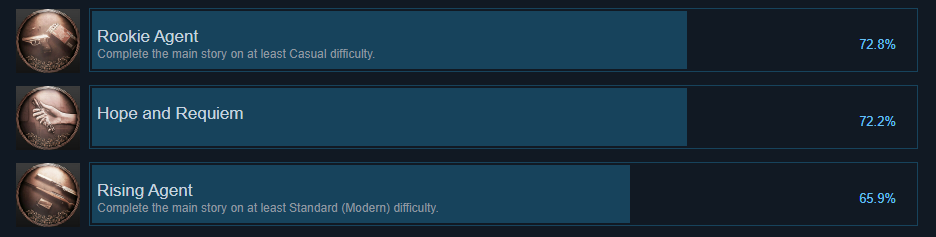
I have finally beaten both Final Fantasy XI's base story and its first expansion, Rise of the Zilart, which was released alongside the game when it first came west. This means that I have, at last, beaten the entirety of what most people seem to regard as "the original Final Fantasy XI story", since most folks seem to consider Rise of the Zilart the actual conclusion to the story that begins when you start playing the game.

It's been a lot of fun thus far. I'm about 80 hours deep into the game, and I haven't really felt particularly "roadblocked" at any point. There have been two separate occasions where I have had help from higher-level players — once to open the "Three Mage Gate" I mentioned a few posts back, and once to help me with the fight against Siren as part of the Rhapsodies of Vana'diel series of missions that run parallel to all the main stories — but for the most part, I have successfully beaten and bashed my way through the game as a solo player using the computer-controlled "Trust" party members.

I thought I had reached a roadblock towards the end of the Rise of the Zilart storyline where you are presented with a chain of five difficult boss battles, and I was having real difficulty with a couple of them. As I'm playing a Warrior, I have been working on the assumption that I should be the main "tank", you see, and thus trying my best to ensure all enemies fixate their attention on my while my Trusts repeatedly punch them in the buttocks. This is, after all, the way things are in Final Fantasy XIV, even though mechanically the two games are otherwise quite different.

However, what I discovered in these difficult fights (the "Ark Angels" fights, to any FFXI veterans) is that being the sole human player and the main tank is not always desirable. Y'see, some high-level enemies have the ability to Charm you, and when that happens all your Trusts get unsummoned and the fight effectively resets. It's an instant "kill", in other words, and I really thought this was going to roadblock me.

Then I thought about things a bit, and wondered what might happen if I let one of the Trusts handle the tanking instead. Wouldn't you know it, those fights suddenly went much more smoothly. I could keep dealing damage — which, besides tanking, is the other thing FFXI Warrior is good at — while Trust-y Valaineral the Paladin took the brunt of everything the boss threw at a single target, including that pesky Charm. And, because I also had Kupipi the White Mage and King Of Hearts the Red Mage in my party, they cleansed that status off him pretty quickly. I only really came close to failing in one of the fights, where everyone got Silenced and Valaineral got knocked down because no-one could heal him. Thankfully, this happened late enough in the fight that the remaining party members, including me, were able to finish the job.

By contrast, the actual final boss of Rise of the Zilart was very easy indeed. Granted, I was probably a few levels higher than "intended" for this encounter — Final Fantasy XI isn't particularly rigorous about locking stuff to particular level restrictions, particularly in the main story sequences — but it was still pretty straightforward. Fun, though; it was satisfying to finally bring down a "big bad" who had been taunting me for some time.

Now I'm on to the Chains of Promathia expansion, which a lot of longtime players seem to think is one of the best bits. It makes the curious decision to base the early hours of its story around the level 30 mark, rather than assuming you would be at the level you're probably at around the conclusion of Rise of the Zilart — 75+ — but I assume that things ramp up pretty quickly, as the official "content guide" on the Final Fantasy XI website recommends the expansion as an activity for level 75+ players.

I'm really glad I've done this! I'm going to write a big, detailed article about my experiences over on MoeGamer when I'm finally done with everything I want to do in the game, but for now, my feelings are that, in terms of gameplay, progression and a general sense of adventure, this is actually one of the very best Final Fantasy games. Yes, it is the very epitome of a "guide dang-it" game, in which you will almost certainly not get very far without looking some stuff up, but the moment-to-moment gameplay, the overall sense of progression and the fact that it feels like a Final Fantasy game, arguably a lot more so than XIV, has really left me with a big grin on my face. I'm looking forward to seeing what the rest of the game has to offer.

I have played pretty much all day, though, so I should probably stop for now, though, right? Probably…


Want to read my thoughts on various video games, visual novels and other popular culture things? Stop by MoeGamer.net, my site for all things fun where I am generally a lot more cheerful. And if you fancy watching some vids on classic games, drop by my YouTube channel.

If you want this nonsense in your inbox every day, please feel free to subscribe via email. Your email address won't be used for anything else.

#oneaday Day 715: Fuck Valnet

My distaste for groups like Valnet and GAMURS is hopefully well-established by this point, but today there's a whole new disgusting chapter to the sorry saga that, so far, has resulted in an almost entirely non-functional games press in 2026. According to Lex Luddy of startmenu, Valnet has just issued new contracts to writers on TheGamer (a site which Valnet had already gutted of its main features staff) saying that they will not get paid unless their articles reach a minimum viewership threshold. As Luddy points out, the remaining staff at TheGamer — and indeed across Valnet — already had pay that was tied to overall article performance, but this new step provides a hard cutoff on whether or not they get paid at all, based on viewership.

man in gloves sitting with hands on face over laptop
Photo by Never Dull Studio on Pexels.com

This is, I won't beat around the bush, disgusting. Tying pay to article performance is already a shitty thing to do, but to withhold pay completely based on view counts is outright exploitative. And it's not as if writers on Valnet sites are getting paid fairly anyway.

As several people replying to Luddy on that Bluesky thread pointed out, this has been a longstanding problem with online media in general. It should be the writers' responsibility to produce the material, and it should be the people running the website from a business perspective's responsibility to promote that material and ensure it gets read.

Unfortunately, for a long time now, writers have been forced into a position where they have to write provocative, baiting articles in the hope that they will get clicks, because the people running the sites seemingly just… don't do anything other than lay people off. And, of course, bring generative AI into the picture, because this type of Business Idiot has no understanding whatsoever of how the actual audience has zero desire to read AI-generated content, instead believing that because generative AI is fashionable and responsible for billions of dollars of imaginary money being thrown around, they might be able to get a piece of that pie by enshittifying their website.

And the really stupid thing is that you never can predict what is going to spread across the Web and "do well" if it's left up to the writers. There is no magic formula that says "IF you write an article like this, THEN it will always succeed". There are manipulative tactics — like clickbait and ragebait — that sometimes work, but more and more people are wise to them today, and refuse to share material that falls into that category. Video game enthusiasts are some of the most online-savvy people out there for the most part, so resorting to these tactics is declining in effectiveness as time goes on.

What does seem to work — to an extent, at least — is having someone who is responsible for making sure those articles get seen: advertising the website. Effective use of a dedicated social media manager is why longstanding sites like IGN and Eurogamer are still just about hanging in there, but they are the last few remaining holdouts of a once vibrant and thriving media sector — and they have their own issues. IGN, for example, is currently butting heads with its Creators' Guild union over fair pay rises in line with inflation, and Eurogamer cut its editorial staff considerably a while back.

Once again, I have to say that I am baffled by this. Video games, as a creative sector, are bigger than they have ever been, with a broader, more diverse range of releases than ever before. So why are we, collectively, apparently completely incapable of sustaining an enthusiast press?

Moreover, retro gaming is more accessible than ever before, too, meaning that there is a worthwhile place for some retro-centric sites to spring up and do a good job of covering classic gaming material — but so far, we've seen very few outlets even attempt to step into this space, with only Time Extension online and Retro Gamer in print coming to mind outside of the unpaid (or at least non-commercial) enthusiast blog sector.

The usual answer to this is "b-but YouTubers and streamers!" and I'm sorry, I don't buy it. YouTubers and streamers have a place in the modern media landscape, sure, but they fulfil a completely different function to a traditional press — and moreover, they demand a completely different sort of attention to written material. And if you've ever accused a traditional press outlet of "paid reviews", then I have some unfortunate news to tell you about a widespread concept known as "influencer marketing".

I am sad about all this! I spent a significant portion of my life looking at my brother with intense admiration for his role in helping to shape the games press in its prime, both in print and online, and hoping that I would one day be able to follow in his footsteps! And yet, by the time I did manage to get a meaningful foothold, things were already starting to collapse. I was, somehow, too late — and I am having great difficulty understanding why, because it's not as if video games have gone anywhere. One would think with the sheer number of the bloody things being released pretty much every day at this point, a functional games press would be a desirable thing to have. And by "functional", I mean "one with full-time employees who get paid a fair salary on which they can live, enjoy the medium that they have chosen to specialise in and be able to have a good work-life balance".

And yet here we are. I despair sometimes, I really do.


Want to read my thoughts on various video games, visual novels and other popular culture things? Stop by MoeGamer.net, my site for all things fun where I am generally a lot more cheerful. And if you fancy watching some vids on classic games, drop by my YouTube channel.

If you want this nonsense in your inbox every day, please feel free to subscribe via email. Your email address won't be used for anything else.

#oneaday Day 704: Vana'diel progress report

I am pleased to report that I have reached level 50 in Final Fantasy XI. This is not the level cap, but it is a significant milestone, as it was, I believe, the original level cap when the game first released. As time went on and various expansions released, players got the opportunity to increase their personal level cap in increments of 5 levels at a time, though each one of these milestones requires you to complete a tricky and/or time-consuming quest. I'm in the middle of one of those now, which will allow me to level up to 55 when I'm done.

I'm enjoying the game a lot, though my desire to attempt it without a guide was a foolhardy endeavour. Final Fantasy XI was always designed with "community" in mind, and built on the assumption that said community would share information with one another and help each other out, and as such there are a lot of things it just doesn't tell you. It's a lot better in this regard than it used to be, primarily thanks to the "Records of Eminence" feature, which gives you a series of objectives to accomplish that can guide your progression, but you'll still often be given a mission that tells you to go to a particular zone and find something in that zone, with absolutely no indication whatsoever of exactly whereabouts in that zone the thing is to be found. There is no minimap and no quest marker feature in Final Fantasy XI, so you're either off to find a needle in a haystack yourself, or consult the community (which now, of course, also includes comprehensive wikis) and be able to focus your efforts a bit more.

There are still one or two roadblocks that require actual interaction with a human being. One of the missions for Windurst requires that you get through a door called the "Sealed Portal", which is colloquially known by the community as "Three Mage Gate". The reason for this is that the originally intended method of opening this door was to gather a party containing a white mage, a black mage and a red mage and get them to stand on the appropriate marks on the floor, which would open the door. This was subsequently updated to only require someone with the "Portal Charm" key item — which, naturally, you get just after the mission in which you would first need it — to make things marginally easier and less dependent on wrangling an entire group.

These aspects aside, though, the game has been eminently soloable so far, thanks to the Trust system. You're given some decent Trusts right from the get-go, and more are unlockable quite easily. There are some borderline overpowered ones available without too much difficulty, too, but with the number you get to add to your arsenal very quickly, you can pretty much build a party however you like to play, and use the characters you find most appealing. My only slight beef with the system is a narrative one; many of the Trusts you get early on are characters that you probably won't have met yet, and this makes it tricky to feel a sense of attachment to them. Because, in the context of Final Fantasy XI's story, Trust magic is dependent on you having a strong bond with a particular person, this feels a bit dissonant, but you soon learn to deal with it — and after a while, you'll be able to get together a party that feels like it consists entirely of "story" characters anyway.

It's definitely a very different sort of game to Final Fantasy XIV. It's not actually turn-based, but with its pacing it might as well be. It's not a game where you attacking requires you to be constantly pressing buttons to unleash combos, unlike its follow-up; instead, it's more about equipping your character well, ensuring they have good training in the skills they need to succeed at the challenges ahead of them, and approaching combat encounters carefully and thoughtfully. Sure, you "do less" on a moment-to-moment basis, but it's a different kind of satisfying to successfully clearing difficult encounters in Final Fantasy XIV; it's less about skill with the buttons and more about traditional RPG-style number crunching. I'm not saying either way is "better" — both games are very good at what they do — but it is interesting to note quite how different they are from one another now I'm deeper into XI than I've ever been.

My next big milestones for Final Fantasy XI will be breaking a couple of level cap barriers, and then completing the base story from the original game, which culminates in a big fight against the dreaded Shadow Lord. There's still a lot to do after that, though, and most folks seem to agree that things start getting really good story-wise after you've got through the base game's material. I'm looking forward to it — and at the rate I'm going, I should be getting through it at a decent pace, too.

I'm glad I finally decided to do this. Final Fantasy XI has kind of been a "white whale" for me in terms of completion, so I knew I just had to make the time to play it and do it properly. Now that I'm doing that, I'm having a really good time. I doubt I'll get too hardcore into its "endgame" stuff — my main priority is to beat the story, and after that I will probably return to XIV — but there is plenty to do just on the journey from 1 to 99. And that's absolutely fine with me!


Want to read my thoughts on various video games, visual novels and other popular culture things? Stop by MoeGamer.net, my site for all things fun where I am generally a lot more cheerful. And if you fancy watching some vids on classic games, drop by my YouTube channel.

If you want this nonsense in your inbox every day, please feel free to subscribe via email. Your email address won't be used for anything else.

#oneaday Day 699: Final Fantasy XI and the art of patience

As… promised? threatened? recently, I've started playing Final Fantasy XI again. And I am reminded, once again, for the umpteenth time, that I really like this game, particularly in its current form. I'm sure there are plenty out there who will bemoan how "dumbed down" its 2026 incarnation is compared to what it was like 20 years ago, but man, c'mon. You can play most stuff solo now; some might say that misses the point of an MMO, but there's still a markedly different vibe existing in a world knowing there are other players around. You see other people going about their business; you participate in the economy; you contribute to asynchronous team activities.

I am also reminded that Final Fantasy XI is not a game for everyone. Specifically, it is not a game for the impatient, because there is a lot to do, and it takes quite a long time to do pretty much anything… except level up, now, which goes at a significantly more brisk pace than it did the first time I played it all those years ago.

But we're talking about a game where the ability to run slightly faster than normal is dependent on someone completing a long and difficult quest, it rolling a random chance of the "Swift Shoes" effect coming up, and then you healing to full and having a nice sit down for a couple of minutes to "charge" the slightly-faster-than-normal movement speed — which, of course, immediately fades away the moment you either attack something or get attacked.

We're also talking about a game whose original implementation of "fast travel" required you to fight your way to a huge "crag" two zones away from your starting city and collect a crystal from it, all for the privilege of being able to teleport an inconveniently long distance away from any of the game's towns.

We're talking about a game where, when you want to cross the sea, you have to physically stand and wait for a ship, and when you're on the ship, you have to wait for the voyage to complete. (Sometimes monsters attack. A lot of the time you just have to enjoy the ride.)

If those descriptions make you smile, even a little bit, you are probably someone who will enjoy Final Fantasy XI.

The fact the game demands so much patience makes it feel very rewarding, though. When you achieve something, you feel like you've bloody well earned it. This is not a game where you are a super-special Warrior of Light pretty much from the get-go; this is a game where you are a relatively normal person — albeit one with, arguably, extraordinary combat abilities compared to your "peers" among the NPCs — just trying to make their way in the world. Make a bit of cash, get a bit of training in, visit some new places.

It's this rather open-ended feel that I really like about Final Fantasy XI. In many ways, it feels like a very pure reflection of what I call the old "world RPG" formula exemplified by titles like the early Ultima games. There is a long-term goal to go and complete, but the vast majority of your playtime will be spent doing rather freeform activities to build up your character in a way that you see fit.

Some of the best things that have been added to Final Fantasy XI since its original release are designed to make it more than just grinding monsters for hours at a time. The "Records of Eminence" quests do a great job of giving you things to do and acting as a sort of guide to what it is possible to do in the game, without having to spend half your playtime looking at a wiki. The "Field Guide" and "Grounds Tome" books at the entrances to field and dungeon areas respectively provide you with focused sets of monster targets to down in exchange for generous experience bonuses. And of course there's plenty of quests, the main storyline missions and, once you get later into the game, lots and lots of side activities. I don't yet know how "important" some of these things are — or indeed what 90% of them are at this point — but I'm intrigued to find out.

Thus far I'm up to level 25 on the job I started with — Warrior this time around — and I'm levelling Monk as a subjob for now. I'm on the "rank 2" missions for my home nation, and making good progress. I've also kicked off the Rhapsodies of Vana'diel storyline that was added much later than the other main stories, and acts as another kind of "guide" through what the game offers, with its own narrative to follow — and plenty of extremely helpful benefits as rewards along the way.

I'm enjoying myself a lot. I don't know how long it's going to take me to get through the various storylines, but levelling has been going at a brisk pace, and I'm feeling good about how things are going so far. I'm looking forward to finally doing things like taking down the Shadow Lord, which I've never done before, and particularly getting into the well-regarded Chains of Promathia expansion storyline, which longstanding FFXI players have been banging on about the quality of for years.

So yeah. It's a good time. You just need patience. And if there's one thing I have developed over the years, it is a very strong sense of patience.


Want to read my thoughts on various video games, visual novels and other popular culture things? Stop by MoeGamer.net, my site for all things fun where I am generally a lot more cheerful. And if you fancy watching some vids on classic games, drop by my YouTube channel.

If you want this nonsense in your inbox every day, please feel free to subscribe via email. Your email address won't be used for anything else.

#oneaday Day 698: Star Fox is back... again!

Nintendo surprised everyone with an out-of-the-blue Star Fox Direct earlier today, announcing a reboot of Star Fox for Switch 2. This is, I think, the third time they've "redone" the original Star Fox at this point, as it went Star Fox/Starwing (SNES), Star Fox 64/Lylat Wars (N64), Star Fox Zero (Wii U) and now this, which, in the tradition of all good reboots, is just called the name of the original thing it's rebooting. Star Fox. At least it won't be confusing in Europe.

I love Star Fox. It's probably one of my favourite Nintendo series. Specifically, I love the Super NES original, because while it's perhaps not the most technically impressive game when looking back on it retrospectively, it's still a great game that I enjoy a lot — and it has an amazing soundtrack. I rate the original Star Fox's soundtrack light years ahead of its 64-bit counterpart, because Star Fox 64 hailed from that age where Nintendo games had music that was beautifully composed, but played back on one of the worst MIDI synths a console has ever had. The new one takes what sounds like the music from Star Fox 64 and fully orchestrates it, which is just lovely.

The new game looks like it's going to be mostly keeping to Star Fox's roots as an arcade-style game with a level-based structure, and branching paths through the complete sequence of levels depending on the things you do and your overall performance. I'm interested to see how this will be received in the modern age, since the vast majority of big-budget games that come out today are designed to be huge, sprawling timesinks that take hundreds of hours for a single playthrough. Making a game that is short but highly replayable feels like it's a ballsy thing to do these days — and it really shouldn't, but it does.

It does look like the new Star Fox will be highly replayable, too. As well as the main story mode with its branching paths, it looks like there's a "Challenge" mode where you play a single level and attempt to complete specific objectives in it. This could either be great fun or extremely annoying, but I think it's the right decision to separate it out into its own mode rather than integrate it into the main story.

There's also what looks like a really fun multiplayer mode, too, with 4v4 battles between Star Fox and Star Wolf. It doesn't look like any of the three modes on offer are a simple deathmatch, either; there are different objectives to complete on each one, which will reward fancy flying as well as keeping the enemy off your back.

All in all, I'm excited and pleased to see Star Fox get yet another chance. Part of me wishes they'd let the story, such as it is, move on a bit instead of continually remaking the same one over and over again, but ultimately this is a gameplay-centric experience — at least previous installments have been — and so the reason you're blasting everything out of the sky doesn't matter too much. It does look like the whole thing is much more "cinematic" now thanks to the advances in technology we've seen over the last few console generations. It's nice to see Fox and company be able to chat with one another as fully modelled characters rather than just avatars chattering away during gameplay.

So I guess that's a Switch 2 game I'll be adding to my library when it arrives, although if it's on a Game Key Card, we are going to have words, Nintendo.


Want to read my thoughts on various video games, visual novels and other popular culture things? Stop by MoeGamer.net, my site for all things fun where I am generally a lot more cheerful. And if you fancy watching some vids on classic games, drop by my YouTube channel.

If you want this nonsense in your inbox every day, please feel free to subscribe via email. Your email address won't be used for anything else.
#oneaday Day 696: The missing day

I apparently missed yesterday! Whoops. Oh well. It was a bank holiday. Let's just say I was having the day off. Better yet, let me point you in the direction of something I did write yesterday, which was a thorough write-up of Capcom's Pragmata.

And then indulge me while I write two things today, because I feel like I "should". I'm just like that. Also I have just reinstalled Final Fantasy XI and it has to go through its whole many-hours patching process, so I may as well do something to fill the time.

I've decided to give Final Fantasy XI another honest go because I've always enjoyed it when I've played it in the past, I have been wanting to play through its story for more than 20 years (and there's a lot more of it now than when I first wanted to play it!) and I'm sort of "between games" right now. This time around, I want to make a proper effort to get through the main scenario. I know there's a lot of other stuff in Final Fantasy XI, but we'll see if I feel the need to jump into any of that as I work my way through; my priority is just seeing what the main storylines are.

The reason I say this is because I've pretty much made a decision: I'm going to head back into Final Fantasy XIV at some point before the new expansion drops — likely when the new "Beastmaster" job is added in the next main "part" of the Dawntrail finale patch, which is looking like July. Before that happens, I'd like to have had a good crack at Final Fantasy XI, so I'm going to treat it as my "main" game for the immediate future. I think it's going to be interesting — particularly as, for several years now, the game has been in a state where much of it is eminently soloable thanks to the fact you can bring recruitable NPC "Trusts" along with you for pretty much everything in the game, not just instanced dungeons like in Final Fantasy XIV.

As I say, I don't know how much into the weeds I'm going to get, because my main priorities are 1) getting to the level cap of 99 and 2) getting through the main storylines of the base game and all the expansions. The two will likely intertwine somewhat, and gearing up, particularly once at level 99, will likely involve dipping into some of the activities outside of the main story, but we'll see. I'm going to try and minimise guide usage as much as possible, too, because I think that will be much more interesting. I'm also curious to see if it's even possible to play that way — and if it isn't, well, there are 20+ years worth of FAQs, wikis and all manner of other resources out there to follow along with.

I'm excited! I'm also aware that I've fallen off Final Fantasy XI multiple times in the past, not because I wasn't enjoying it, but because something else came along that occupied my attention. Hopefully that won't happen this time around — because I'm increasingly conscious that, because of the game's age, there is likely only so much more time I have to be able to actually do this quest.

So Vana'Diel awaits! In about two hours' time, according to the PlayOnline Viewer, anyway. So how should I occupy myself in the meantime… hmmm?


Want to read my thoughts on various video games, visual novels and other popular culture things? Stop by MoeGamer.net, my site for all things fun where I am generally a lot more cheerful. And if you fancy watching some vids on classic games, drop by my YouTube channel.

If you want this nonsense in your inbox every day, please feel free to subscribe via email. Your email address won't be used for anything else.