#oneaday Day 901: Identification

Identity, particularly in the digital space, is something I've always found interesting — specifically, the possibility of completely "reinventing" yourself in a way that doesn't necessarily "match reality", whatever that means to you, and exploring what it might be like to be a very different kind of person.
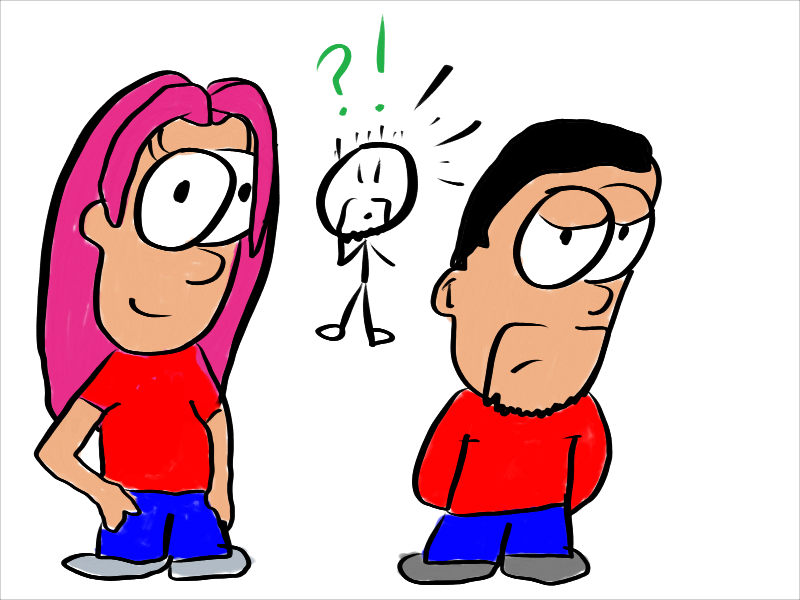
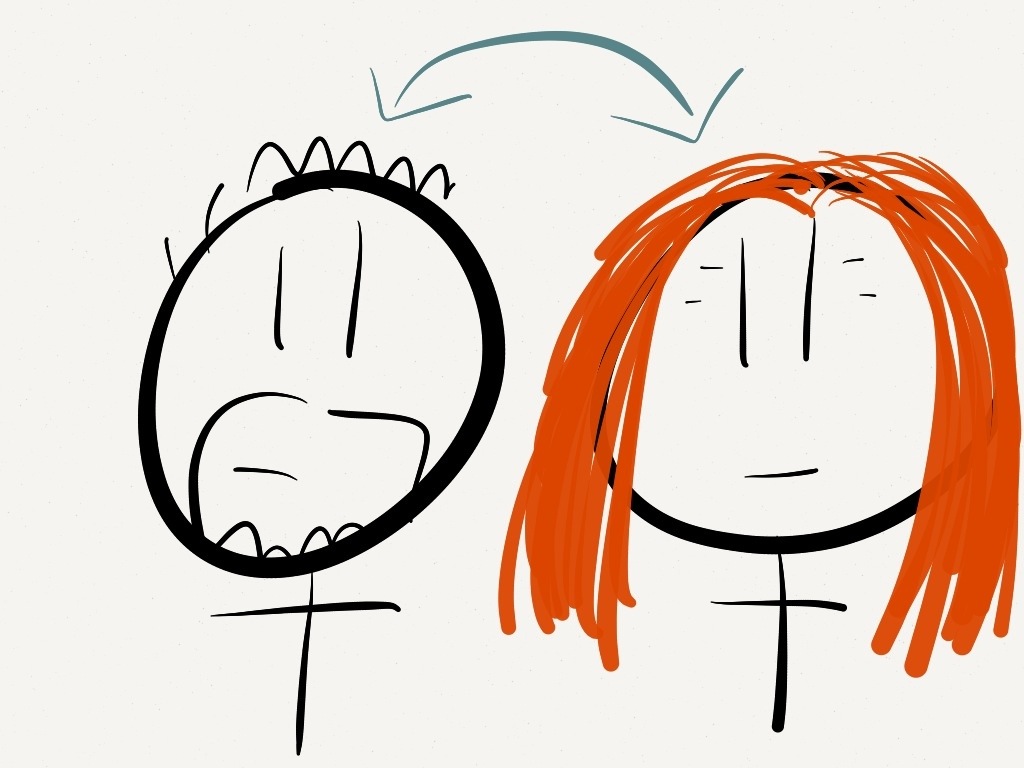
As someone who has spent years with his real name — and in more recent years, thanks to YouTube, face — online, one might argue that such a "reinvention" is somewhat difficult. If I were to suddenly start representing myself not as a grumpy bearded man, but as a cheerful redheaded woman, you may, quite rightly, wonder what is going on. (That said, at the times I have included doodles on this blog, I have always felt like the various characters represent various facets of me rather than being complete fabrications, so perhaps that's not the best example.)

However, there are times when it is possible to explore such a reinvention, not necessarily out of a desire to permanently become someone different, but just out of curiosity, or as an escape from reality. I can think of a few key examples.

The first of these is an ongoing, running thing with me. If I play a video game with a customisable protagonist, I will always, always, play as a red-haired woman named Amarysse. (Surname Jerhynsson if the possibility exists to add such things.) This began back in late 1999 when I picked up a copy of Baldur's Gate for PC, and, when starting the game, something in my brain just spoke up and said "what if, instead of trying to 'play yourself', you tried being something completely different, like a woman?" I thought it might be interesting, so I tried it. And I liked it. It did not, as I initially worried, cause me to feel detached from the experience due to the gulf between "myself" and the "role" I was playing; rather, Amarysse quickly felt like an extension of myself.

I was initially a little embarrassed about this. My friends at the time were also playing Baldur's Gate, and I didn't initially admit to them that I was playing "off-gender". Up until this point, I had always felt like you were "supposed" to play as "yourself" in games like this, and deliberately choosing to be someone that was, in many ways, the complete opposite of me in almost every way imaginable initially felt… strange. I don't know if I'd go so far as to say "wrong", but I did initially worry that I might somehow be judged for it.

(For the unfamiliar, in Baldur's Gate, your character's identity choices really only boil down to your portrait, voice set and colour scheme; the in-game sprites have so little detail that they really have no discernible gender unless they are wearing obviously gendered clothing — which, as an "adventurer", you generally aren't thanks to all the armour and shit.)

Over time, Amarysse became more of a tradition for me, to such a degree that anyone who saw me playing a game with a customisable character became thoroughly familiar with my particular tastes in that regard. The arguable culmination of Amarysse as a concept came with Final Fantasy XIV, where that particular incarnation of Amarysse almost started to feel more "me" than the one sitting on the sofa controlling her.

There's another similar instance that I haven't talked about all that much previously, and that concerns the massively multiplayer online… thing known as Second Life. For a while, I was actively involved in "playing" this; it proved to be a particular lifeline for me after my first marriage collapsed, and I am very grateful to those who offered me kind support in those trying times; I also somewhat regret "disappearing" from that realm what may have felt rather suddenly to many of those people. I sometimes consider going back, but I have never really made that attempt in earnest. At this point, it would almost certainly effectively be "starting over".

But I digress. The point is, for the vast majority of the time I spent in Second Life, I inhabited an avatar known as Narshe Talbot. "Narshe" came from my first Final Fantasy XI character, which was in turn named after the town from Final Fantasy VI. "Talbot" was one of the list of surnames you could pick in the early years of Second Life; I believe now you can choose freely.

For a significant portion of my time in Second Life, Narshe basically just was a recreation of "me" — perhaps idealised somewhat, but basically me. At one point, an in-game friend gave me a complete makeover that took Narshe from being just an attempt to recreate "me" to being someone completely different. My initial reaction was discomfort at detaching my avatar from my "real" self, but before long I found it oddly inspirational — something I wrote about in the early days of this blog.

There's another aspect to my time in Second Life that I haven't talked about at all, though, and that is the second character that I occasionally played as: a woman named Feena Denimore. I didn't spend nearly as much time as Feena as I did Narshe, but I always found the experience oddly… thrilling, I guess? I made a real effort with Feena to make her someone that I personally found to be beautiful, not in an "I want to bone my own avatar" sort of way, but in a "if I could snap my fingers and turn into a completely different person at will, I think it might be interesting to be this person" sort of way.

As Feena, I felt strong, confident, assertive — all things that I very much am not in my "real world" incarnation. Feena was, like Amarysse, so completely different from what I am in reality that she felt like a conduit to exploring unfamiliar experiences without having to hold back or be hesitant in any way. Because I knew that, in some ways, "Feena" was not actually "me", I could use her as a means of trying out how to behave in a way that I would find difficult or even impossible in person. I don't mean anything inappropriate (although with Second Life being… what it is, I won't deny that there were, at times, definitely "inappropriate" things going on, if you catch my drift) but rather than she just provided a means to "try out" being someone that I felt like I'm… well, not.

Except I guess she sort of is still me, isn't she? Because I was still controlling her; I was still the one making the words come out of her mouth. The anonymity afforded by text-based chat and a completely customisable avatar gave me confidence, but ultimately the things I said and did as her were still "me".

Weren't they?

It's easy to get in a bit of a loop thinking about all these things, but I think it's great that the digital space affords us so many opportunities to experiment with different identities, determine what we're most comfortable with and what we might want to experiment with further. At the end of the day, while physically I'm still an old fat man sitting on his sofa with a twinge in his back, in the digital realm — and in my imagination — I can effectively be whoever I want to be. And that's kinda cool.


Want to read my thoughts on various video games, visual novels and other popular culture things? Stop by MoeGamer.net, my site for all things fun where I am generally a lot more cheerful. And if you fancy watching some vids on classic games, drop by my YouTube channel.

If you want this nonsense in your inbox every day, please feel free to subscribe via email. Your email address won't be used for anything else.
1876: Connecting Flight

Good morning from Dublin! Today has been a very long day. Technically it's already "tomorrow" but I haven't yet made it home from Boston (my connecting flight leaves in a couple of hours) so I thought I'd take the opportunity to scribble a quick post.

This PAX weekend has been pretty much everything I hoped it would be. I had a great time with my friends, I saw some cool stuff at the show and I picked up some fun swag.

Most importantly, we successfully carried a number of formerly Internet-only relationships into the offline realm. Doing this is always a nerve-wracking experience — regardless of whether said relationship is platonic, romantic or anything else — and so it's always a pleasure when things come together and we all get along.

I actually wasn't too worried this time around, though. Something brought us all together in the world of Final Fantasy XIV and the fact most of us have been together for nigh on two years now says something positive about us and what we mean to one another. There have been tough times, as with any relationship, and people have come and gone over time, but the people with whom I spent my weekend represent a core group that I have always very much enjoyed spending virtual time with — and it turns out I enjoy spending real time with, too. It's just a pity we're all so scattered.

"I'm glad everyone is exactly how they seem to be," said one of our number last night, possibly slightly fuelled by a beer or two. "It means that everyone's genuine. And that we're all as fucked up as each other."

That latter point is key, and not necessarily a bad thing. Almost without exception, we've all had Shit to Deal With to varying degrees over the years, and our adventures in Eorzea have provided not only some much-needed escape at times, but also an outlet through which we can talk about the things that have been bothering us with like-minded individuals.

And that is immeasurably valuable; in an age where it seems people are drifting further and further apart from one another for various reasons, it's comforting to have a group that is pretty much always there for you. I know I'm grateful for these friends, and I'm sure they are too.

Now coffee is calling, closely followed by a connecting flight, a taxi ride back home and then almost straight back out (hopefully with time for a shower first!) to go and teach clarinet to kids. It's all go, huh. I shall sleep well tonight, for sure.

#oneaday Day 888: Avatars, Masculinity, Femininity, Wish-Fulfilment, Self-Expression and Fantasy

20120625-020219.jpg

My fine friend Jenn Frank (for my money, one of the most interesting people on the Internet, given the many and varied conversations we've had over the years) reminded me of a discussion we had back in 2009. You can find it in the comments here.

Basically, the discussion centred around "avatars" — custom characters that you design to represent yourself online or in a video game. I raised the point that, generally speaking, if given the option, I would go for a female character. There then followed a discussion about the reasons for this.

I'm trying to pin down the reasons for this in my own head and there are lots of them. It's not a simple thing. I can't discuss any of this from a feminist perspective as I'm not well-read enough in feminist theory, nor indeed do I know enough about gender studies and whatnot to draw any firm conclusions. I do, therefore, apologise to those more "in the know" than me if any of this post comes across as ill-informed — but I'm not trying to write an academic paper, here. What I am trying to do is "think out loud" and explain myself a little. Then doubtless someone will come along and make some incisive interpretations of my words. (That or call me something uncomplimentary. Or both.)

Let's start with a little context. I am a man. I identify myself as male and have all the appropriate dangly bits to back up this assertion. (Actually, I feel weird when I hear parents talk to their kids and refer to me as "that man" but that's a whole other issue to do with how mature I do/don't feel.)

Despite my self-identification as male, I don't do many things that I (personally, I mean) would equate with the amorphous and stereotypical concepts of "masculinity" or "maleness". I don't like sports (I particularly loathe the soccerball), I have only a passing interest in cars, I prefer to avoid conflict (and particularly the threat of physical violence) whenever possible, I am not very assertive and I have never been sexually aggressive. On the flip side, I like "geeky" things, I certainly wouldn't turn down the opportunity to drive a fast "small penis compensation" vehicle such as a Ferrari and I find "traditionally beautiful" women sexually appealing. Naturally, there is nothing to stop women from liking any of those things I've just described (and indeed I know plenty of women who do), but let's, for the sake of argument, call them stereotypically "masculine" or "male" things.

Conversely, I do do many things that I (again, using my own personal definitions, stereotypes and prejudices rather than more fair and balanced definitions thereof) would regard as "feminine" or "female". I am emotional and sensitive (though I find expressing some emotions such as excitement to be difficult), I like to talk about feelings and innermost thoughts with people I trust, I enjoy My Little Pony, I respond strongly to works of art (particularly music, film and games) designed to elicit an emotional reaction and, as a child, I always preferred solitary imaginative "narrative-style" play rather than group physical activities.

Somewhere between those two extremes, too, is the fact that I am extremely introspective — to a fault, sometimes — and find myself relentlessly examining myself (not physically, except, you know, every so often to make sure I don't have bollock cancer), attempting to predict the future of social interactions or going over past interactions in my head. I'm not sure if that's a stereotypically male or female thing to do, so I'll call that a neutral influence for now.

On the whole, though, I think the more "feminine" influences in terms of the way I do things and respond to things tend to win out. As a result, despite being comfortable, secure and happy in the fact that I am male (there are things about myself I am not happy about, of course, though those have nothing to do with gender) I find myself somewhat drawn to the female perspective on things. Not exclusively, obviously, but that influence is most certainly there.

Now let's look a little about avatars and what they mean.

An avatar is how you choose to represent yourself. It might be in public if you're playing an online game or using a social network, or you might be the only person seeing it if you're playing a single-player role-playing game such as, say, Dragon Age.

There are several ways you can approach the creation of an avatar, and I find myself doing them all at different times.

Firstly, there's self-expression. Your avatar is used as a means of expressing something about yourself. It could be simply depicting yourself as literally as possible, or it could be using an image to demonstrate how much you like something.

Secondly, there's wish-fulfilment — using your avatar to change your self-representation or idealise yourself.

Thirdly, there's pure fantasy — going completely off-piste and into the depths of your own imagination.

For self-expression, I can think of a number of examples. I use my real picture in a few places, though as someone who is not overly confident in their own appearance I generally try and avoid this whenever possible. Instead, very often I'll use images of things I like to represent myself as — the most frequent ones to appear in the last few years being Phoenix Wright from the Ace Attorney series and Fluttershy from My Little Pony. I use Phoenix Wright simply because I think he's a great character and love the series he's from; I use Fluttershy as a projection of my own real-life social anxiety.

For wish-fulfilment, the best example I can think of is back when I used to spend a fair amount of time in online virtual world Second Life. My avatar there was like me, but not quite. He had a skin that looked like me, but his body shape wasn't as fat. He had hair that I could plausibly pull off, but would never have the guts to ask a hairdresser for. Personality-wise (for it is impossible to play Second Life and not find yourself playing a role to at least a small degree) he was like me — open and honest, a bit shy in new situations — but more confident in who he was than the "real" me. In short, he was my own idealised view of myself — the person I wanted to be. I learned a few things from him, though not enough to overcome my considerable arsenal of neuroses. I was happy inhabiting his skin, because he was me, with a few tweaks here and there.

For fantasy, I turn to everything else. The first time I played a female character in a video game was the original Baldur's Gate. At the time, I didn't have any sort of ulterior motive in mind, I just thought it would be an interesting change from the usual musclebound male hero. Of course, in Baldur's Gate, your choice of avatar is largely confined to the portrait you use, the colours you have on your armour and the voice set you use, but nevertheless, this is where it started.

Thus "Amarysse" was born, and this remains the name I have used for pretty much all my female protagonist characters in every RPG I have played since. (If she has a surname, it's always "Jerhynsson", because "Jerhyn" was the name of the only minor character from Diablo II I could remember. There is literally no logic more complicated than that at work, though I'm not sure why I chose Diablo II as source material.)

Amarysse doesn't have a specific personality as it depends entirely upon how the protagonist character in these RPGs has been written, but, depending on the customisation options I have access to, she usually has long red hair, a curvy (though not fat) figure, a lot of charisma (in BioWare titles, this means taking as many points in Persuasion as possible… always) and a seductive voice. She is several things to me: firstly, and most shallowly, she's my fantasy woman in every respect; secondly, she is all the things that I am not. She is female, attractive (according to self-perception — I have a distorted and negative view of my own aesthetic value meaning I consider myself unattractive even though I know there are people who disagree), confident, assertive, dominant, in control, flirtatious and often sexually aggressive should the game provide the option to act in such a manner. She kicks ass, takes names and isn't afraid to say exactly what she wants, in short. I admire her a great deal, both from a shallow, libido-led red-blooded heterosexual male perspective, and from the angle that I wish I "was her".

I've taken this somewhat further on a couple of occasions in Second Life (though not for a good couple of years now) by creating a female avatar alongside my "regular" male one. (She's not called Amarysse Jerhynsson there, though, so don't go looking for her.) This female avatar began as an experiment. Second Life is about doing whatever you want, after all, so I decided I wanted to see what life was like as a woman. I wasn't going to be a man playing a woman; so far as everyone who met my female avatar was concerned, I was all woman. No-one ever called my supposedly female gender into question once, despite the fact that I said prominently in my profile that I would not talk about my "first life" (a Second Life term to describe "reality") at all — which, in the strange world of Second Life, usually means that people have something to hide. I even made a few friends (all female — or at least represented as such) in the process, though eventually I felt bad about deceiving them and disappeared quietly.

My conclusions from playing this female avatar were interesting. Like Amarysse's many forms, this avatar was pure fantasy. But since there was no prescripted "narrative" to follow, I had to choose how I was going to represent her. This attractive, curvy redhead didn't look like the sort of person to be a shy, retiring wallflower (especially not in the clothes she tended to wear in the locales she frequented) so it made no sense to overlay my real-life (or wish-fulfilment) personality over the top of her. Instead, I decided that here was a woman who was confident in herself and assertive enough to walk into the middle of a room and simply start talking to someone she liked the look (or profile) of. Sometimes she was ignored, sometimes she got into a good conversation, sometimes things took an altogether different turn which we shan't get into here. The important thing is that it felt different to be her. I wasn't me, suffering from crippling social anxiety when faced with the prospect of talking to strangers. I was this strong, confident woman. When ignored or rejected, it didn't hurt, because that wasn't what she would feel — even if it was what I would feel. She was not only my fantasy woman, but she was also my own fantasy personality — perhaps the person I wished I could be, or simply a person I knew that was very different to who I was. I'm not sure.

Anyway. There is a point to all this, at least I think there is: the reason I like to play female characters. I've already said it, actually, but I'll repeat it for good measure. There are two reasons, in fact: firstly, it's a simple, shallow expression of my own fantasy woman; secondly, it allows me to truly be someone that I am not in almost every way possible. I habitually use games as my primary form of recreation and a means of escapism, so I find a good way of escaping everyday life and the things I don't like about myself is to play someone that is so completely different from me. I don't feel any "dissonance", though; it simply becomes an alternate persona.

Perhaps the character traits of my fantasy female characters lie dormant within me after all, and all I need to do to feel better about myself is figure out how to coerce them to the surface. I did, after all, say at the beginning of all this that I identify more strongly with the stereotypically "feminine" aspects of my personality than the "masculine" ones (and, as I've said, I use those terms loosely as gender definitions are somewhat fluid in this more enlightened world we live in today) so perhaps there's something to this.

Working all that out, however, is probably something best left to someone with a qualification in psychology!

#oneaday, Day 218: I Love You, You Twat

Those of you who've been following me for a while will know that I have been known to make occasional forays into the virtual world of Second Life. For all its flaws and glaring technical errors and furry porn and flourishing sex industry, I always find it a genuinely fascinating experience from both social and creative angles.
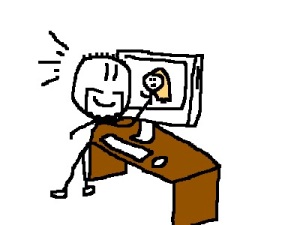
I have one particular friend in that "other" world that I want to talk about today. We both started at around the same time, which means our avatars are both around the four year old mark right now. I've been rather more sporadic in my attendance than she has, but ever since we met we've shared a very close friendship which is pretty much unlike any of the other relationships I've cultivated in that particular world. She's one of those "constants" that you know you can always rely on. She's always been there, and has always offered a sympathetic ear when I've needed one.

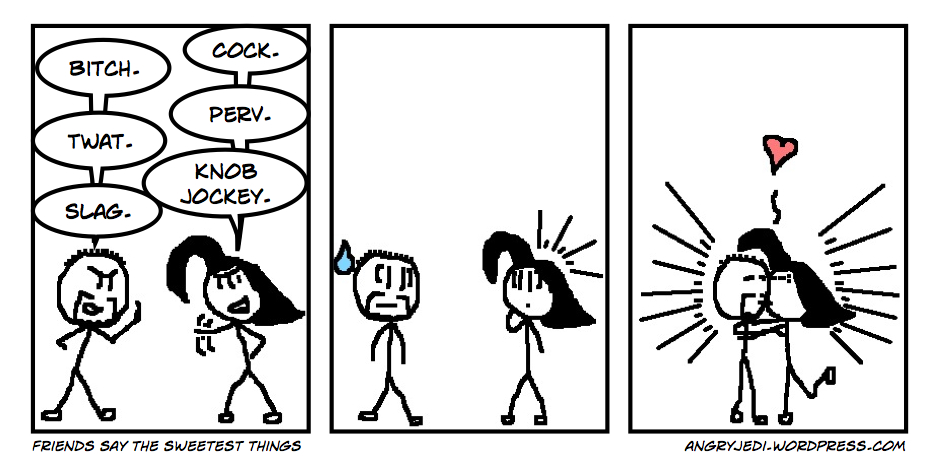
We've also always shared a mutual love of insulting the crap out of each other. She admonishes me for my long absences and the fact I can type without mistakes at 85 words per minute. In response, I take great delight in drawing attention to her own typos, which have resulted in us inventing a number of our own words that anyone coming into our group is utterly bewildered by. I'm not even convinced we know what "furple" and "plinge" mean. But from the context, they are generally inclined to sound dirty.

Then we'll find something to argue about like children. Last night saw a particularly epic "am not, are too" battle that managed to impress everyone around us with our sheer tenacity. One of us will, at some point, accuse the other of being a pervert. The other will, in turn, bring up something from the past which lends incontrovertible evidence that no, they are in fact the pervert here. And so it goes on. For hours at a time, usually.

This is something that has always baffled me about friendship. At what stage do you make that mutual decision that it's okay to be incredibly rude to one another, especially in front of other people? It's one of those peculiar contradictions that seems to make perfect sense while you're engaged in it, yet is utter nonsense when you think about it. The common theory is that it's a sign you're so comfortable with one another you're happy to say absolutely anything to one another, because you know that you do genuinely care about each other. In the case of my friend and I, there's generally a bit of playing up for the crowd, too—they've come to expect it of us. When we're alone together, we'll generally talk normally and candidly.

I have a number of "real life" friends who are like this, too, so it's not just a case of the John Gabriel Internet Fuckwad Theory coming to life. Board game nights generally degenerate into smack talk and aspersions cast on pretty much everything it's possible to cast aspersions on. And yet somehow without disrupting the gameplay. (Much. Usually.)

I guess it's one of those social anomalies that we'll never truly understand. Still, it always keeps things entertaining.

With that in mind, thanks for reading, you complete bellend.

#oneaday, Day 213: Intensity

There's an old saying, isn't there, that claims if you lose the use of one of your senses, the others become much more acute. Having never been blinded, deafened or whatever the equivalent words for losing your senses of taste, smell or touch are, I can't speak for the truth of this. Although I did have a nasty cold one time that stopped me from being able to smell very much, though a good curry sorted that right out, just in time for me to be able to smell the musty flatulence caused by the not-inconsiderable amount of spices therein.
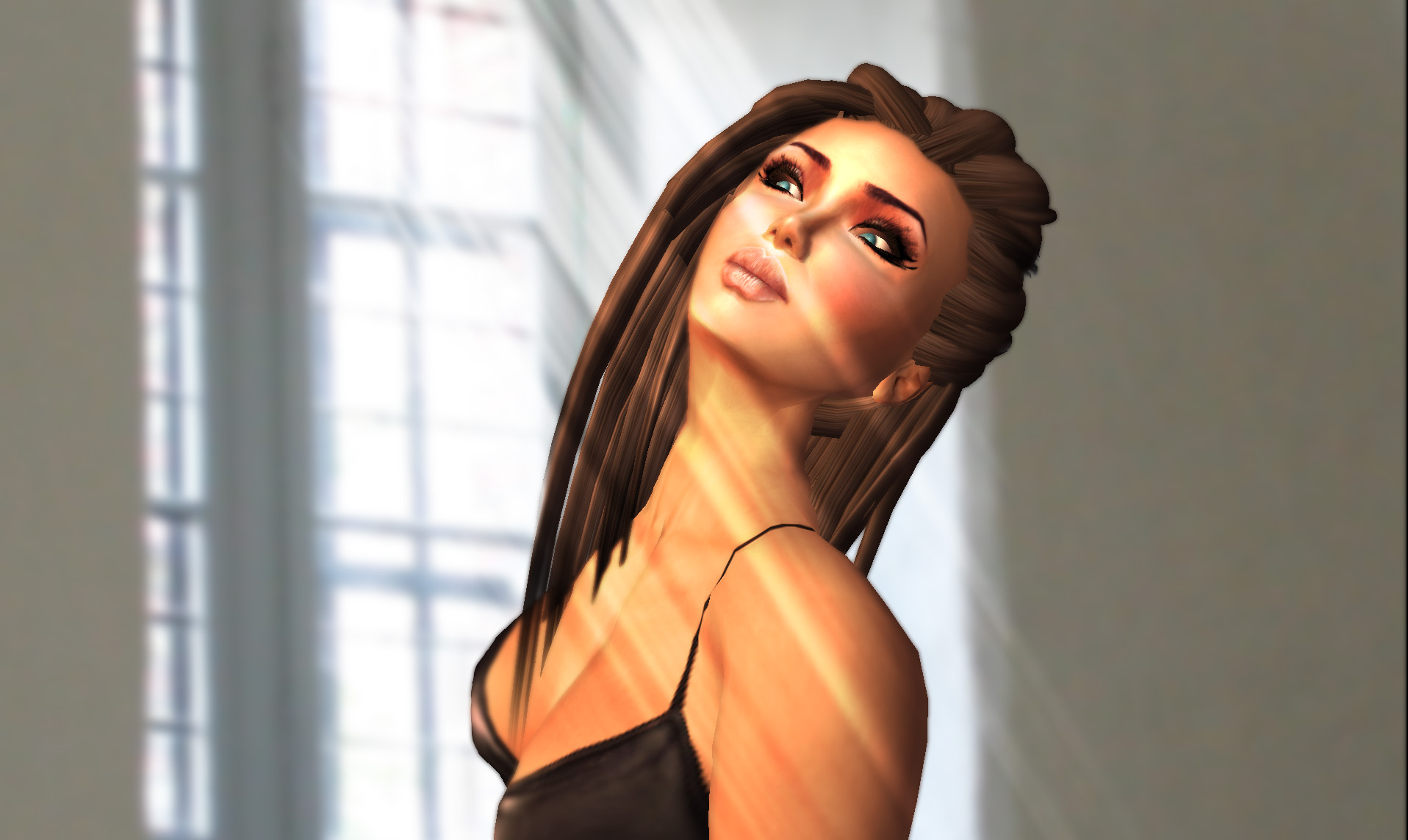
But there is one sphere where pretty much anyone can get a taste of what this is like. The Internet. When you're talking to someone on the Internet, you might not be able to see or hear them. You're certainly not touching them, smelling them or tasting them, unless there's some exciting new Skype-compatible technology you're all using that I haven't heard of yet. But regardless, friendships and relationships form, grow, break, explode, spread, all the things that real relationships and friendships do, in fact.

Except for the fact that the lack of "something"—be it sight, sound, smell, touch or taste—makes everything that much more intense. For many people, cultivating a friendship in "real life" is a drawn-out process that takes some time of getting to know each other, getting a feel for one another, understanding what makes each other tick and so on. This process still happens between people who have met online, but at a vastly accelerated rate. The very nature of communication on the Internet means that responses can be considered more carefully and, assuming you're an honest person, made more honest than you might feel able to be if you're sitting in front of someone, their piercing eyes gazing into your soul.

Of course, the opposite's also true. It's much, much easier to be a bastard and a liar thanks to the wonder of the Internet. And, in many cases, without consequences. Some people find this fun. But the emotion and the hurt it can cause is just as real as the feelings of friendship, affection, even love that can also be felt in these relationships between people who have never seen each other, in some cases.

On the whole, though, the opportunity to meet and talk to people from all over the world is something which should never be taken for granted, whatever form it comes in. Whether it's posting on a message board, writing an email, using Twitter, checking out someone's avatar in Second Life, raiding with guildies in WoW; without the Internet, there's no way that a whole bunch of these people would be in our lives. Old friendships would be lost and forgotten. New friendships might never be made. Soulmates might never find each other. And you wouldn't be able to read the deranged, 1:30am ramblings of someone such as myself.

Some might say the world would be a better place for that. But, y'know, I kinda like it this way.

Avatar Integration and Feeling the Burn

In my last post, I discussed the virtual world of Second Life. This is something that, as you probably noticed, is of particular interest to me – and I'm not the only one. Jenn Frank posted entries about the issue of avatars and personal identity at some length here and here – two articles on which I also commented at some length – and this led onto an interesting discussion of whether avatars were a reflection of your real-life personality or a fantastical creation from the depths of your own mind.

There are no particular conclusions to draw on this issue, as everyone's different. Just because someone enjoys being tied up and sodomized in Second Life (not me, I might add) doesn't necessarily mean that they will in real life. Just because a guy plays a woman (also not me, though I have been known on more than one occasion to play female characters in games), it doesn't mean that they want a sex change. An avatar doesn't have to look anything like the real-life human behind the controls, but sometimes it does.

My avatar, until recently, looked like me, sort of, a bit. A slightly-idealised version of me, if you will, if I were slightly cooler, less fat and able to pull off black leather jackets and red hair. This all changed the other night, however, when a friend that I had previously only had passing contact with on photo exchange site Flickr decided that tonight would be the night we would meet in-world. Said friend is an active Second Life photographer, fond of, as I am, grabbing groups of good-looking avatars, snapping some pictures of them and then Photoshopping the hell out of them in order to produce some pretty pics. I have something of a liking for this process myself, so here's a picture of aforementioned friend following aforementioned Photoshop mangling:

Morgana(Incidentally, if nothing else, working on SL pics is a fantastic way to get to grips with Photoshop – I've learned far more about graphic design and image manipulation through playing with SL pics than by working on actual photos.)
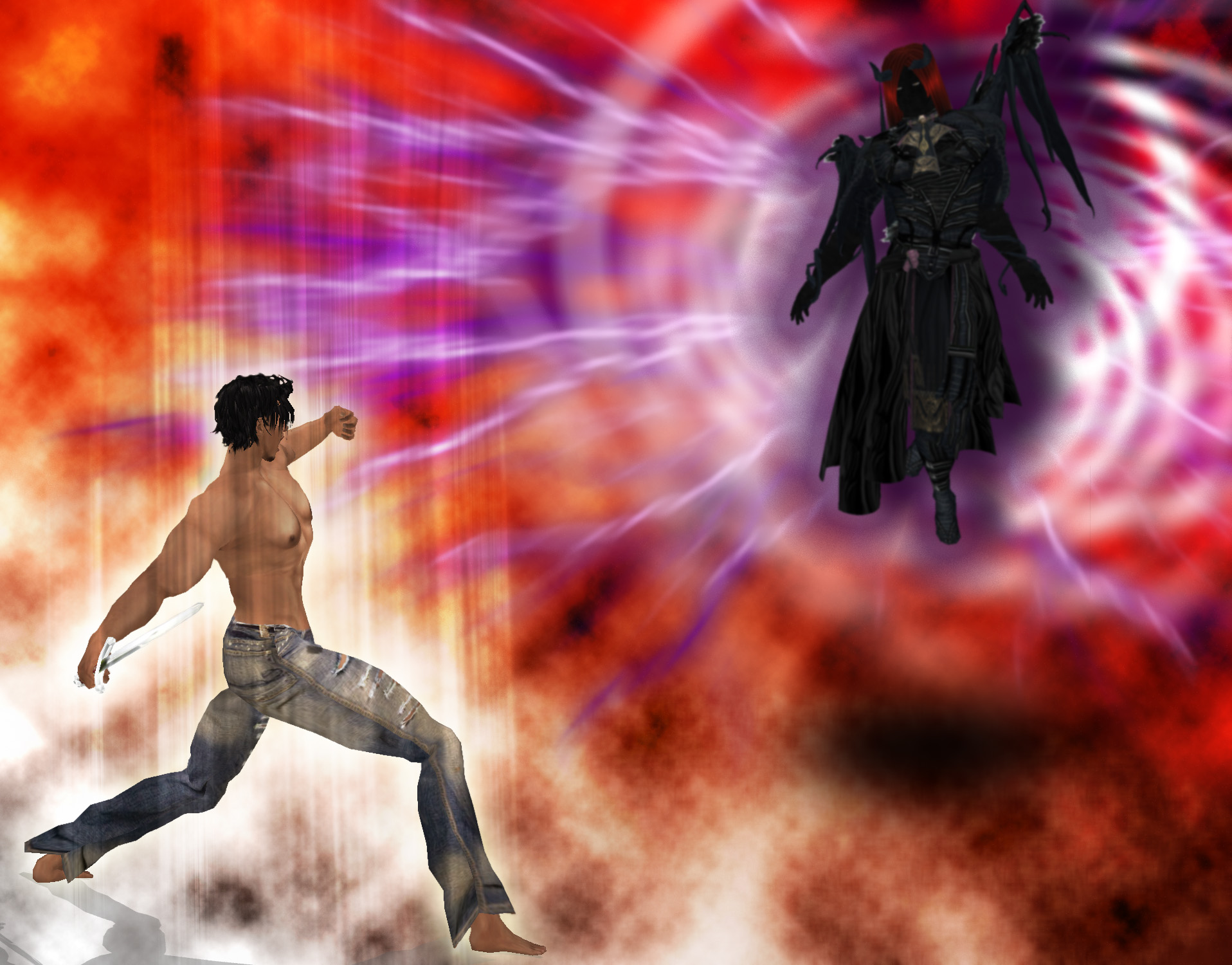
But anyway: the point. Part of SL's appeal is that you can change your appearance, shape and even gender on a whim. I hadn't done this until now, as I felt something of a personal attachment to my avatar, as you tend to do anything that you "own" and "use" for a long time, or characters in a lengthy RPG *cough*Persona*cough*. Besides, I felt that my avatar was an expression of me – me putting myself "out there" as me. So it was with some trepidation that when Morgana and her friend asked me if they could try out a new skin and shape on me I accepted – I was stepping out of my comfort zone.

The new shape and skin were very different from what I had played before. I felt uncomfortable. It wasn't me. But then the compliments started rolling in. Suddenly I was hot. As shallow as it sounds, a simple change in appearance – an easy matter in SL – was enough to bring these compliments and by extension, give me a huge amount of confidence. Over the subsequent few days, I have grown accustomed to my new avatar – so much so that I feel I am now unlikely to return to my old one, at least for now.

But something else happened in me, too. I looked at my new, buff, muscular self with cool hair staring back at me from the screen and I thought… "I wish I could be like that." The next day I signed up to our local gym and swimming pool complex, and I'm now following a regular exercise programme. It's funny the things that affect you personally and give you inspiration – I never thought the whole avatar thing would work in reverse, with it giving me a desire to do something positive about my real life appearance. And while it's unlikely I'm ever going to look quite like my improbably-shouldered alter-ego, it was very much the "trigger" to set me off on this process. It's an interesting inverse of the usual "avatar reflecting aspects of reality" thing that I hadn't thought of previously.

I discussed this with some friends recently, and they each admitted that they had had similarly peculiar experiences where something "uninspirational" had, ironically, provided them with the inspiration to make a change in their lives. Each of these things carried a certain degree of personal shame to them, too, so I won't embarrass those friends by sharing them with you now. Suffice it to say that I was faintly embarrassed to say that it was SL that inspired me to kick off this workout programme, until I realised that it really doesn't matter what it is that inspires you, so long as it inspires you. And this is why I'm sharing this story with you now.

The BattleIf you're the slightest bit curious about following said workout programme and my feelings towards it, you can follow my progress on Tumblr here.
On Virtual Worlds

I haven't really blogged about this much on this particular site, but I figured it's time to sit down and talk about it as it's something that I've found consistently interesting for quite a few years now.

The subject is virtual worlds – online spaces where tens, hundreds, thousands of people can log in and join a virtual community for one reason or another… it may be purely to socialise, it may be to battle monsters, it may be to have fun, it may even be to have sex. And I'm not talking about community or social networking websites here, as those are a different beast entirely. No, I'm talking about actual virtual worlds, where you can wander around as an avatar, explore the world, meet other people and interact with them in any of the ways described above.

There's literally hundreds of virtual worlds available for people to use nowadays, of many types – some are more "gamey", others are more "social", others still are focused on the less salubrious side of online interactions. Today I want to focus particularly on the virtual world of Second Life and its appeal to me, despite its many, many flaws.

I remember first hearing about Second Life while I was big into The Sims. My whole flat at university became obsessed with The Sims shortly after I built our first house, made virtual representations of all six of us in the flat, then realised that we didn't have enough money to buy beds to begin with, so the whole "family" slept in recliners. Over the years – yes, I was that guy – I bought most of the expansions and later moved on to The Sims 2.

I was, like many other fans of the series, extremely excited at the prospect of The Sims Online, offering the opportunity to have the same kind of fun, but with other people involved. It never made it over here to the UK – at least, not in any prominent way – so I never got the opportunity to try it. I forget exactly how I came across Second Life as a result of this, but it was something I stumbled across without hearing anything about it beforehand, and I thought that the concept sounded rather like The Sims Online, with players being able to design their own virtual person and "live" in a virtual world. As it happens, it has very little to do with The Sims Online, but I wasn't to know that at the time.

For the uninitiated, Second Life is an ambitious virtual world project by Linden Lab, offering "players" (and I use the term loosely, as it's really not a "game" as such… unless you choose to make it as such, which we'll discuss later) the opportunity to enter a world that is almost entirely user-generated. Buildings, textures, landmasses, interface features, animations, body parts, clothing – everything is created by the residents of the virtual world, and this is the thing that initially fascinated me. I couldn't comprehend the idea of being able to log into something where the content was so fluid, where there wasn't a static virtual world that was always the same every time you logged in, with monsters in the same place, prime "camping spots" and so on. So I signed up and signed in, not really knowing what to expect.

at-the-gateSecond Life is a peculiar experience the first time you log in, especially if you're more used to aforementioned online games with static content, such as World of Warcraft. You quickly become used to the concept of "rezzing", which is the process whereby you enter a new location and you can see things downloading and appearing around you. This is disconcerting the first time it happens (and more than a little irritating if you find yourself stuck against a wall which hasn't appeared yet) but, like many things in the world, you become used to it the more it happens. Similarly, you become used to the fact that other residents' avatars also go through this rezzing process in front of you, so it's entirely possible that someone could appear in front of you with no hair and no face until the textures and shapes have downloaded. Rezzing accidents are the subject of many a good laugh amongst SL residents, but they are accepted as part and parcel of life in the virtual world. People more used to traditional MMOs will likely find it a complete turn-off though – at least until they accustom themselves to it.
Upon arrival in SL, the question on many residents' lips is "what on earth am I supposed to be doing?" And the answer is not simple. Explore, interact, build things, take photographs, join groups, play games, look at art, shop, fuck, roleplay, pretend to be a vampire… the list goes on for a mile, and all of these interactions are built using the basic engine of the Linden Lab-developed software, with extensions built, designed and scripted by residents of the world, just like everything else. People make in-world money either by paying out of their own pocket to buy "currency" – or by working a job, just like real life (albeit with MUCH better hours). It's always interesting to hear how seriously people take their SL jobs, whether they're a DJ in a club streaming their music through something like ShoutCast, a live musician, a virtual performer, a dancer, a greeter, a builder, an estate agent, a facility manger, a prostitute, a Game Master for roleplaying areas – again, the list of things goes on, and people have the opportunity to completely subsidise their virtual existence through virtual hard graft if they so desire.

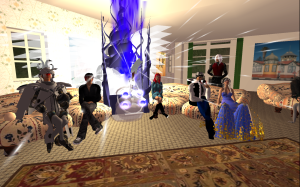
Another thing that is almost immediately noticeable about SL is the sheer diversity of the avatars present. And we're not talking a set choice of races here, with arbitrary "body size" sliders. We're talking complete customisation. We're talking this situation here:

snapshot_111This wasn't anything particularly special happening – it was a discussion group where we sat down and had a civilised chat about a set topic. Like a real-world discussion group in fact.
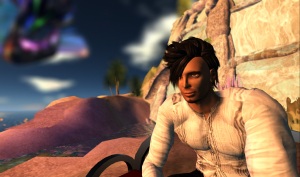
And that's the thing with Second Life. It has this immensely odd (yet perfectly natural-feeling once you've been there a while) ability to combine the mundane and the absurd. Everyone is distinctive in Second Life – because you're not limited to hard-coded appearance options, you can be whoever you want to be. You don't even have to be human. I picked up an awesome Pac-Man avatar the other day that allows you to spawn dots and ghosts and turn any place you go into a game of 3D Pac-Man.

In fact, the question of not being human is one of the more interesting sides to Second Life that I haven't explored yet. It also happens to be the side that there's a lot of sordid assumptions about, particularly around the "furry" avatars. Yes, there are people who choose to represent themselves as furry animals and then have simulated sex whilst masturbating furiously at the sight of their interlocked pixels. But equally there are people who choose to represent themselves as furry animals just because they like them. On one memorable occasion I was spending some time at a hangout with my earliest friends in SL (who are still good personal friends to this day, I might add) and I was introduced to an immensely clever man from a university who was working on lots of exciting things to do with AI. My friend Lyndy, who introduced me, assumed that because I "knew about computers" I'd be able to chat to this guy no problem. However, he was explaining concepts that were way over my head… but they were interesting to hear. The really peculiar thing, though, was that he was dressed as a fox. Not a foxy lady, no, an actual fox. In a waistcoat. If anyone remembers a really old DOS point-and-click adventure called Inherit the Earth… the main character from that? Fox-in-a-waistcoat called Rif? That's about it.

Why do I remember that? I never even played it.

Second Life is flawed in many ways. I've talked about this many a time with Jennatar, and she suggested the notion that virtual worlds are a much younger technology than the Internet. Currently with virtual worlds, she says, we're at a similar sort of stage to the Internet was in in the early 90s in that there's a lot of stuff out there to explore, but navigation, user interfaces, efficiency and practicality haven't quite reached the level of stability you'd need to be completely "mainstream". This means that titles like Second Life are, at least for now, going to be "niche" interests. However, interestingly, the "niche" for Second Life perhaps isn't what you'd expect – an oft-quoted "statistic" is that of the many residents of the world, a significant majority of them are female and over 30. This is certainly true amongst my circle of online friends – I think there's one guy and about thirty gals on my friends list. This is also backed up by the fact that the "retail" sector in the world is very much female-dominated, with vast business empires and shopping malls devoted to female clothing, hair, animations and the like, with male products often relegated to the virtual equivalent of a dusty old cellar. One may argue that this may lead to a lot of males representing them as females, and of course this goes on – given the opportunity to live out a fantasy life, I'm sure there's plenty of men out there who wonder what it would be like to be a woman – and a hot one at that (no-one is ugly in SL unless you make a specific effort to do so!) – and give it a try.

There's a kind of implicit understanding amongst residents though – don't ask, don't tell. If someone doesn't want their "first life" brought into it, then you don't ask. If it's a female on the screen, then as far as you're concerned, it's a female you're dealing with. I actually don't have a problem with this. Perhaps it's because I'm not spending my time going around having sex with these people, but it certainly doesn't bother me – if they choose to represent themselves in that way, for whatever reason that might be, then that's their business.

Despite its many flaws and its perceived "niche" interest, I have a lot of time for Second Life. It's an experience that is very much made by the people you interact with. Without people to meet, talk to and interact with you're relying on stumbling across interesting content solo – and while there is plenty of interesting stuff to do by yourself, it's always better to share with other people. Much like real life, in fact.

quiet-thunder

I'll certainly be very interested to see how virtual worlds develop over the years. Will Second Life remain in its pioneering position of almost entirely user-generated content? Will it be overtaken by something else? Who knows. I do know that I have made some genuinely close friends in its strange world, many of whom I am unlikely to ever meet face-to-face. And I'm fine with that. By having their "virtual" face in front of me on the screen – even if it's nothing like their real-life face – I still feel like I "know" them better than people I interact with on the Internet in less direct ways. Perhaps "know" is the wrong word – it's difficult to describe, but knowing someone's avatar feels a lot more "physical" (for want of a better word) somehow than a username on a page of text.

It's not an experience for everyone by any means. It would bore the pants off someone expecting to play an exciting game, because it's not a game. But as a means for virtual social interaction, it's an interesting experiment… one that still has a long way to go, but also has an incredible amount of potential.

I blog about my experiences in the world in more detail here. I post my photos from the world here. Feel free to check them out if you're the slightest bit interested.