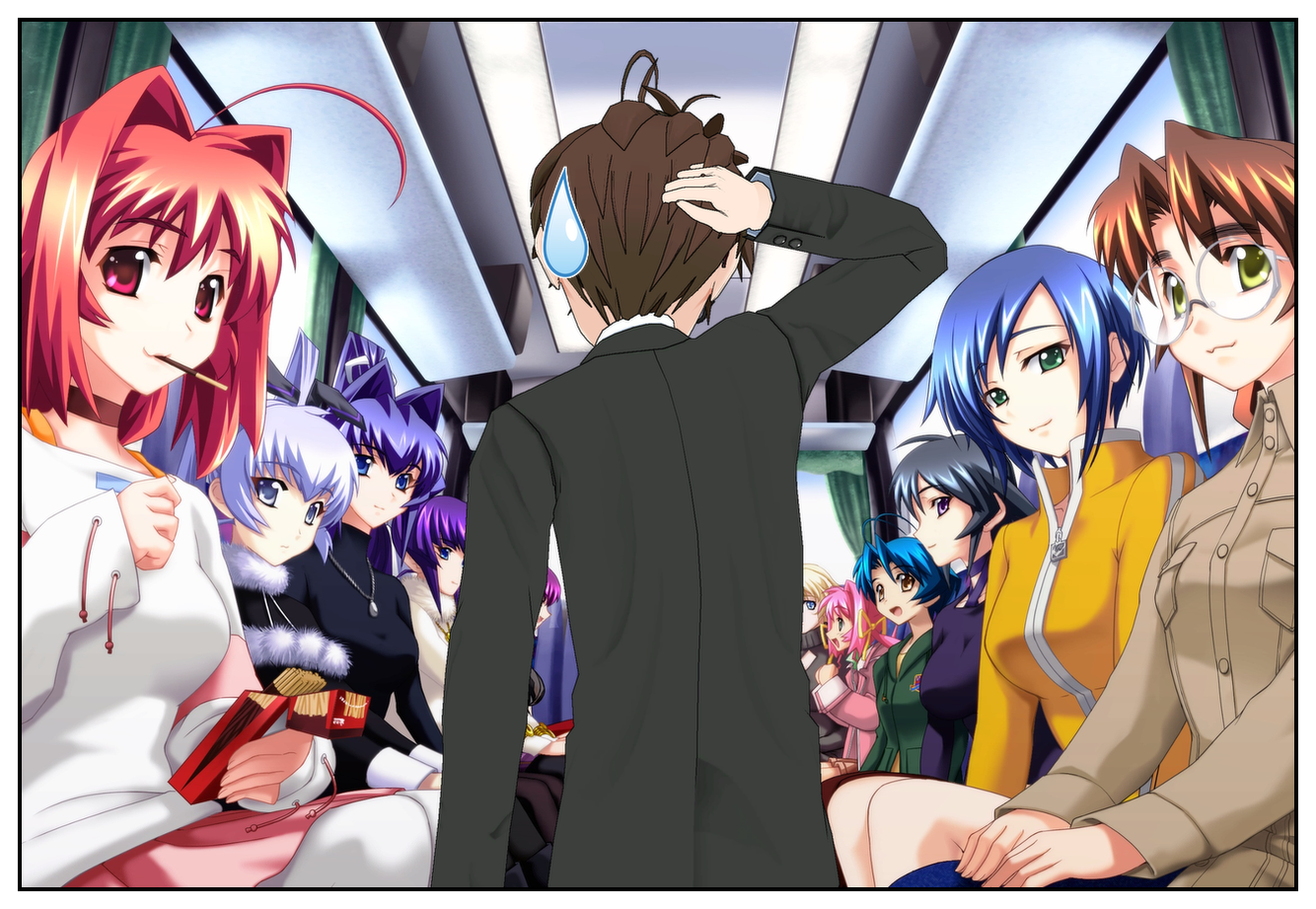
Yesterday, a new Kickstarter launched. This is nothing unusual in itself, particularly in the video games space, but the subject matter of the Kickstarter was. Specifically, it was a Kickstarter to localise Muv-Luv, a popular Japanese series of visual novels that originally appeared in 2003 and subsequently spawned a number of sequels, manga and anime spinoffs as well as a ton of merchandise.
Since its original release, Muv-Luv in its various incarnations has been extremely well-regarded, and it's probably not unfair to say the series as a whole is an influential, culturally significant work; some even credit it with the creation of the popular "Moe Military" trend most recently seen in shows like Girls und Panzer and Kantai Collection.
The localisation of Muv-Luv is Kind of a Big Deal, then, particularly as it's gone un-localised for so long — officially, anyway; fan translations have been around for a while, but the legality of these is always questionable, particularly as enthusiasts sometimes turn to piracy in order to acquire the game in order to patch it, and in some cases the fan-translated version is even illegally distributed with the original game files included. The launch of this Kickstarter is significant in that it aims to bring a well-established, important series to the West officially and with the full cooperation of the original development team.
What's even more significant about the Kickstarter is that approximately six hours after it launched yesterday, it had already smashed through its initial $250,000 funding goal. At the time of writing, still less than 24 hours since the campaign launched, it's sitting at $313,571: well on the way to its first stretch goal of new CGs, music and unlockable content at $400,000, and putting Android and Vita ports within reach at $500,000. There are 39 days still to go on the campaign, and the excitement of enthusiasts is palpable.
And yet…
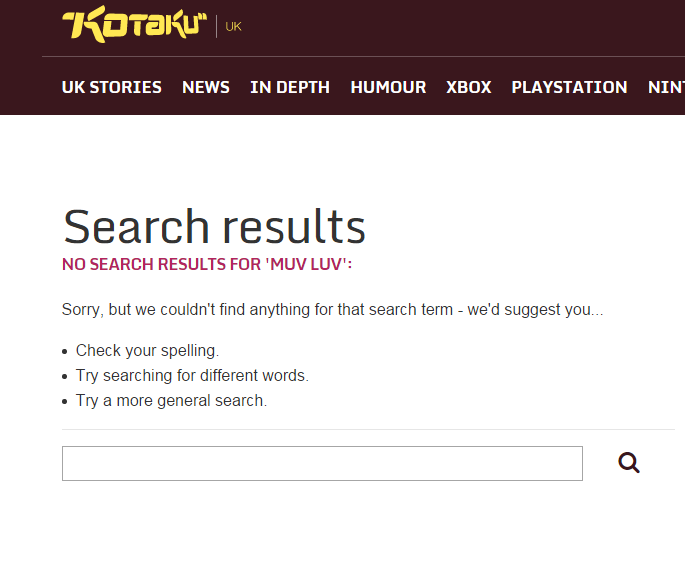
Nothing about this on Kotaku, a gaming site that has "otaku" as part of its name.
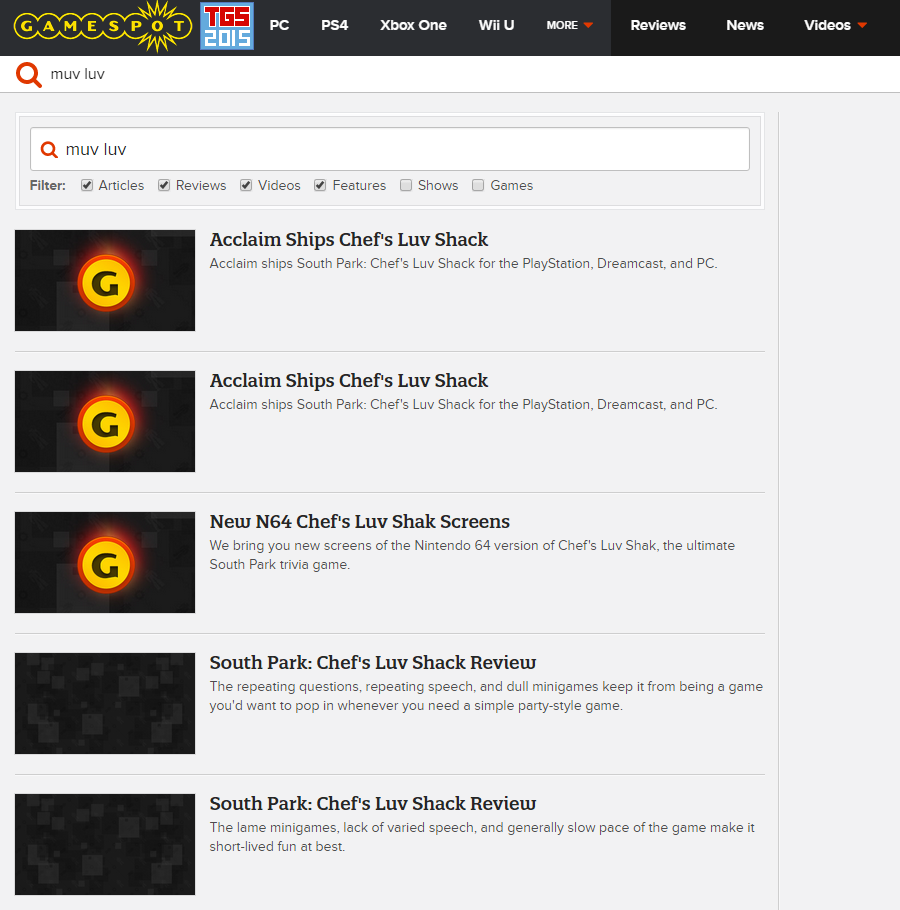
Nothing on Gamespot, one of the biggest gaming sites in the world, either; the site's last use of the word "luv" was for a Nintendo 64 game. That's three console generations ago.
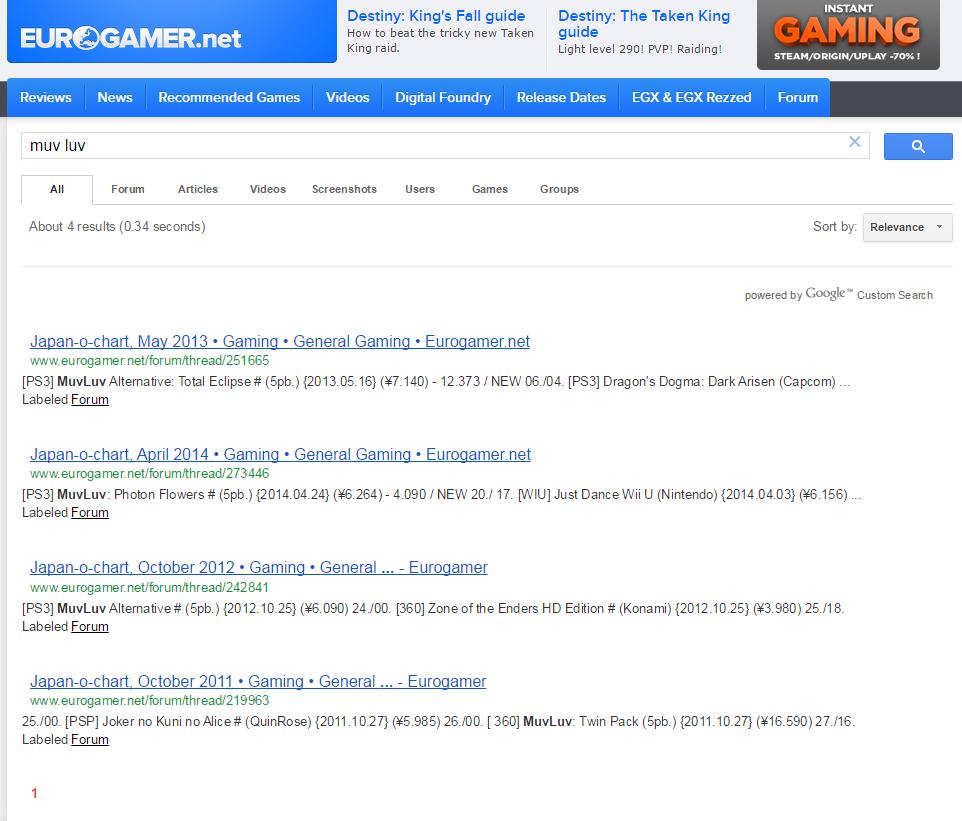
The only mentions of it on Eurogamer are forum threads about the Japanese charts.
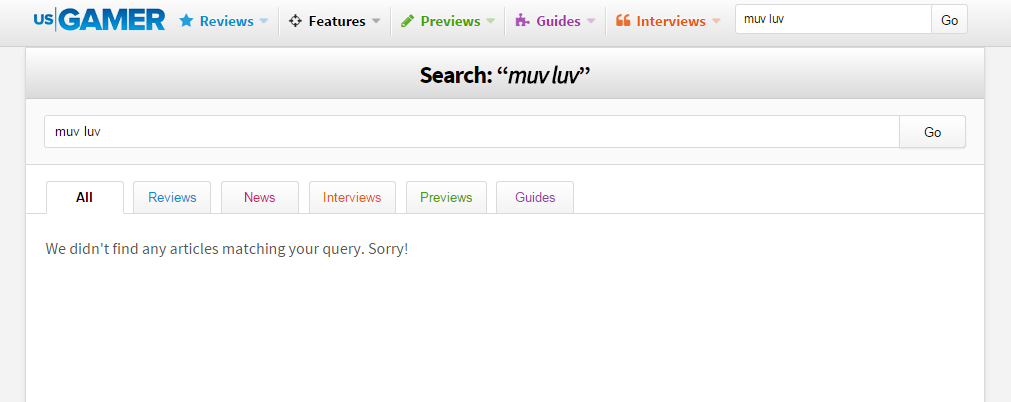
No mention of it at all on USgamer, even with their supposed experts on Japanese games and visual novels in residence.
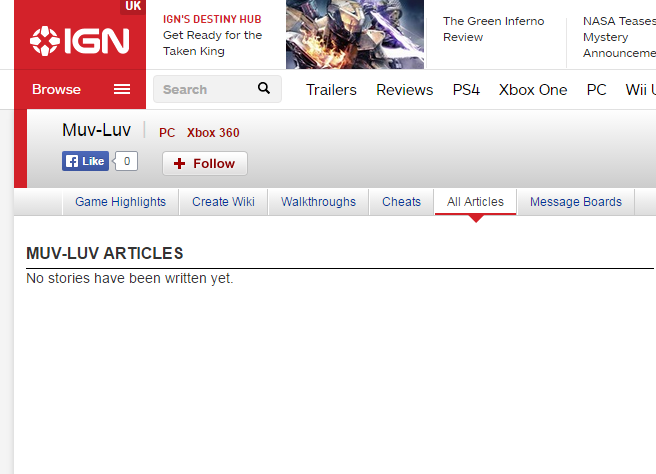
And nothing on the behemoth that is IGN.
This isn't to say that Muv-Luv's Kickstarter success hasn't been reported anywhere, of course; specialist Japanese sites such as Siliconera, Gematsu and Crunchyroll have all posted stories about the campaign, and social media has been abuzz with talk of the series, too.
But, as we've seen above, nothing at all on the biggest, most recognisable sites in the world — even those known to have writers on staff who are interested in Japanese games.
There's an argument, of course, that Muv-Luv is niche interest and consequently not worth covering on these sites because there wouldn't be significant interest. To that I would point out that on the front page of Eurogamer there is currently a story about a showering simulator getting banned from Twitch, on Kotaku there is a story about a Steam game called The Flame in the Flood that you probably haven't heard of… IGN, meanwhile, has a story about a spoon that can take selfies... a story that turns out to be a video, as is so frequently and frustratingly the case these days.
In other words, "niche interest" shouldn't be a barrier to coverage if that sort of stuff gets written about. And it could be argued without too much difficulty that Muv-Luv is of greater "importance" to the interactive entertainment medium as a whole than some showering simulator. (Seriously?)
Unfortunately, this is pretty much par for the course, it seems. Here's what, by way of example, Kotaku had to say about previous culturally significant visual novel localisation projects The Fruit of Grisaia ($475,255 raised via Kickstarter, plus subsequent sales on Steam and Denpasoft) and Clannad ($541,161 raised via Kickstarter):


Yep, sweet FA aside from a couple of offhand mentions of their anime adaptations.
I know exactly why this is, of course: Muv-Luv, Clannad and The Fruit of Grisaia are all seen as "too small" to be of interest to the broad, general audience of a site like Kotaku or Gamespot, and perhaps there's a point there: Muv-Luv has reportedly sold approximately half a million copies to date in Japan (plus over three million pieces of merchandise), which is small fry compared to today's heavy-hitters. And yet there's a bit of a paradox here: these sites have the reach and influence to make more people aware of these works — which are well-established as being of particularly high quality as well as culturally significant on their home turf — but instead they choose to focus on other things, be it predictable clickbait articles about whichever big-budget game has come out this week, or pieces about whatever the current indie gaming flavour of the month is.
Even so, and even taking into account the limited amount of time a games journalist has to report on the news each day — something which I know about first-hand, remember — it's kind of a shame that the impressive success of this campaign and others like it haven't even been acknowledged by the bigger, more mainstream sites. And yet they'll take the time to complain about the Sorceress' tits in Dragon's Crown, or how Omega Labyrinth only appeals to kiddy-fiddlers, or how Senran Kagura is a game about nothing but breasts.
It's little wonder that fans of Japanese games — and many gamers in general, for that matter — are turning their back on the games press of today.
Discover more from I'm Not Doctor Who
Subscribe to get the latest posts sent to your email.

Good article, Pete. I do have one quibble, though. "No mention of it at all on USgamer, even with their supposed experts on Japanese games and visual novels in residence." Supposed should be in quotes and highlighted and underlined. The last expert on visual novels in residence there was you. Repeatedly when talking about visual novels or confronting them over their horrible reviews of the medium it has become apparent that they may be aware of them over there, but they are hostile to them. The atmosphere over there isn't as bad as 1up got when I stopped going to that site, but it's getting close and I'm starting to not go there very often any more. It was already a one two gut punch when you left and when they got Kat Bailey. I have nothing against her gender, but I have everything against her cynicism. Now with their repeated hostility to anything sexual or anything otaku related, I just can't see myself going there much any more. The only place I even visit much any more is IGN, and that's really only to check their news feed for announcements and watch some game trailers. I don't need their editorials in my life either.
Yeah, I only put that in there as a bit of snark because last time I criticised Mackey (the purported "expert" in such things) when he wrote something terrible, Kat Bailey came and whinged at me in the comments.
It kind of baffles me that sites will trip over themselves to praise Danganronpa — which is fabulous, to be fair, but certainly not free of the "problematic" stuff they love to moan about — but will totally ignore or outright berate other stuff.
Oh well. For this sort of thing, it's up to word of mouth and specialist sites, I guess. Although judging by the success of the Grisaia, Clannad and Muv-Luv Kickstarters, that doesn't seem to be working out too badly…
Yeah, I love Danganronpa as well, but it's a good example of the overall theme. In the Western media horrifying brutal violence is fine, but a nipple or cuss words are not, especially among teenagers. Hunger Games, thumbs up, Fruit of Grisalia, thumbs down. Also, diversity in gender and ethnicity is all that matters in your editorial building, not actual diversity in the views of the media in which you cover. After all, it's not like Ebert actually ever sought out anyone that disagreed with him… or did he? Hmmm… >.>
Danganronpa actually gets coverage from the mainstream games press for the same reason why Ace Attorney and Zero Escape do- it has actual gameplay beyond watching the story go by and occasionally making choices, which makes it appealing to a wider audience. I don't think identity politics/culture war bullshit has that much to do with it.
Quite possibly… but then these sites will happily cover some indie game in which you watch videos or read text or whatever. (Her Story, Depression Quest, Christine Love's work, etc. etc. — not saying any of these are bad, but many are about as interactive as a pure visual novel.)
I'm trying a new zen approach wherein' I try not to let this stuff rile me up anymore. Blood pressure and better quality of living, etc etc. But I always read your pieces, and you're dead-on as usual. The biggest shame, as you point out, is that these sites have the power to bring attention to these titles with their broad readership, and they simply choose not to. These are choices too – not oversights – make no mistake. Sites like Kotaku, etc. have staff with their finger firmly on the pulse of the Japanese/niche gaming communities just like you or I do. Someone at some level is making a judgement call NOT to give these titles press.
On a less wiggy conspiracy theory note . . . my goodness something about the art and character design in Muv Luv strikes a tremendous cord with me. I think probably because the lines and colors are so bold. I'm not a big fan of more soft, painterly anime styles. Thematically, it's super in-line with the type of Japanese media I like to consume. I'm not sure if I'm more in love with the girls or the robots, and that's my favorite position to be in. I'll have to look into the anime.
Welp, there's one down- http://kotaku.com/one-of-japans-biggest-visual-novels-is-coming-to-the-we-1733474222
Yeah, just saw someone post this on Twitter. Better late than never, I guess!