2159: Splattack

0159_001

I spent a bit of time before my shift at work today playing Splatoon. Having finished the single player, I jumped back in to the multiplayer for a few games, and was reminded quite how much I like that game — a fact that surprised me somewhat when I first played it, given that I'm not normally one for competitive multiplayer shooters, team-based or otherwise.

Splatoon is a bit different from your usual multiplayer shooter, though, in that there are no game modes that require you to kill the other team. Instead, most of them are about territory control of various types: the basic "Turf War" game mode, for example, involves covering the ground with ink of your team's colour, with the winner being decided by majority coverage after three minutes. Other game modes found in the Ranked Battle mode vary somewhat in what they require you to do, but none of them are straight-up deathmatches, which means there's no necessity to be a 1337 MLG noscope pro.

Splatoon is testament to Nintendo's desire to make games accessible to everyone. Competitive multiplayer shooters are historically rather elitist in nature, with inexperienced players often being mercilessly mocked or picked on until they "git gud". Unpleasantness in chat — be it voice or text — is so expected that it's become something of a cliché to talk about racist thirteen-year olds playing Call of Duty; consequently there are many people — myself included — who, preferring their games to be fun rather than an unpleasant experience, avoid this type of thing and thus tend to miss out on games that, despite everything, are often quite culturally significant, not necessarily from an artistic perspective, but as an activity that brings significant numbers of people together.

Splatoon could have easily been a disastrous failure, being a Wii U game. Yet it has gone on to become one of Nintendo's biggest success stories all around the globe, with it rarely being difficult to find people to play with, whatever hour of the day you happen to be online. I was expecting it to be hard to get a full group together when I played this morning, for example, but was pleasantly surprised to be matched with a full team almost immediately — since Japan was awake and happily playing away already.

The other nice thing about Splatoon is that it doesn't have a chat function. Like, at all. This drew some criticism on its initial release, since it's sort of an expected feature in your typical multiplayer games these days, but in Splatoon's case it really isn't necessary or desirable. The GamePad screen allows you a tactical overview of the entire battlefield and what your team is up to, and simple controls allow you to send messages of support or requests for assistance to your teammates without having to speak. By taking away the chat facility, the ability to abuse one another is also taken away, keeping things family-friendly for everyone and encouraging veteran players to play nice with newbies, since if you're not being a team player you'll just end up dragging your teammates down and, in most cases, throwing the game as a result.

The other thing I particularly appreciate is that games are over quickly. No twenty-minute slugfests here; a single match is just three minutes long, meaning that even if you're stuck with a team of AFKers, you don't have to suffer for too long before things are mixed up and you can try again with some new companions. And since teams are jumbled up before each match, even if the same players stay together, it's rare to see unfair dominance from one side or another.

Above all, Splatoon is just plain fun. It's colourful, it's energetic, it's humorous and it's highly enjoyable — even if you don't typically like multiplayer shooters. I'd highly encourage you to jump on it even if it's not usually your sort of thing — you may just find yourself pleasantly surprised by how much fun you end up having.

2158: Farewell, Eorzea... For Now

0158_001

I made a difficult decision today: to quit Final Fantasy XIV. Temporarily, at least.

This is a decision I've been mulling over for quite some time, I must admit, since following the initial excitement over the expansion pack Heavensward, the new content that's shown up since was 1) very, very late indeed and 2) not great. The one thing that had kept me clinging on was the good friends I've made while playing it, but I've come to the conclusion that with the state of endgame as it is now, it's just not fun enough to warrant the endless grind.

Before we go any further, I would like to point out that Final Fantasy XIV is still an excellent game, and its storyline through A Realm Reborn and Heavensward is one of the best Final Fantasies I've had the pleasure of playing over the years. Its battle system is great, its graphics are wonderful, its music is without peer and it has numerous memorable setpieces and boss fights that will doubtless stay with me for years afterwards.

The issue comes with endgame — what you do when you get to level 60, have no more experience points to gain, and hit the ceiling of available content. At this point most people do one of two things: level another class, or get on the gear treadmill to equip their "main" class as well as possible, either simply for the satisfaction of doing it, or with a mind to taking on the game's most challenging content such as raids.

The main trouble with Heavensward endgame as it exists today is that it's not all that different from A Realm Reborn's endgame, only with a fraction of the level cap content that A Realm Reborn had by the end of its cycle of patches. This may be an unfair comparison, but given that most people who played through Heavensward spent months or more at level 50 in A Realm Reborn, the shift back to having a very limited selection of meaningful content to play was somewhat jarring — particularly as people raced through Heavensward's main scenario and initial levelling process to 60 way quicker than they beat A Realm Reborn, despite them being comparable in length.

So what do you do in endgame? As previously mentioned, you gear up. This is primarily accomplished by collecting "tomestones" from running dungeons, daily roulettes and a couple of other sources. There's a weekly cap on one of the types of tomestones — the one that gets you some of the best equipment in the game currently — which means that it unavoidably takes several weeks, even months, to put together a complete armour and weaponry set for just one class, let alone multiple.

There are other means of acquiring gear, of course; the newly added Void Ark raid is designed to get people into better gear without grinding for tomestones by allowing them one piece of gear per week of comparable level to an unupgraded Tomestone piece. And The Diadem, the home to the exploration missions, can drop some seriously good equipment, though in that case it's very much left up to random chance.

Part of the problem with Heavensward's endgame right now is that the high-level raid — the most difficult thing in the game, and source of some of the best equipment — just isn't very interesting. A Realm Reborn's The Binding Coil of Bahamut was spectacular: it told its own story, had unique bosses and music, and was extremely rewarding to play through, particularly once its entire saga was completed and gave you an opportunity to fight A Realm Reborn's "true" final boss.

Alexander, the current level 60 raid, meanwhile, suffers for a number of reasons: firstly, its Normal mode incarnation, designed so those who aren't up to the challenges of raiding could enjoy its story, is far too easy and quite dull. And secondly, said story is not interesting at all, building on one of the more ridiculous side stories from A Realm Reborn rather than the world-shaking drama that Coil offered. For many people, clearing Coil wasn't about gear; it was about seeing a cool story through to its conclusion. And while Alexander has a story, it's not a patch on Coil's.

There's also the fact that Normal mode removes that incentive to progress that Coil had. The only way to see Coil's story was to beat Coil, whether you did that when it was fresh, new and extremely difficult, or when it got considerably nerfed (but was still a stiff challenge) months down the line. With Alexander, you can beat its Normal mode rather easily, even if you have no experience with raiding, and by then you've seen its whole story, meaning its Savage incarnation becomes little more than a more difficult version of exactly the same thing.

This is my main problem, but there's a number of other issues that have been bugging me for a little while too. I was really looking forward to the exploration missions, since they sounded like something new and interesting, but they turned out to be glorified Hunts, and Hunts are rubbish, since all they are is 300 people dogpiling a monster designed to be fought by 8 people, closely followed by at least 150 more people whining in /shout about someone "pulling early". Diadem at least limits the chaos to 72 players at once, but there's no "exploration" going on; within hours of it appearing for the first time, people had already figured out the most "efficient" way of getting the best rewards, which involves standing in one place and fighting the same damage sponge enemies over and over again until some slightly stronger damage sponge enemies show up and hopefully drop some slightly better loot. There was a "loot whore" angle to Diadem that showed promise, but in practice, with the way Final Fantasy XIV is designed in terms of stats, it's not really a concept that works within the game's overall framework.

Perhaps the thing I've found most offputting, though, is the changing attitudes of a lot of the playerbase. I recall complimenting Final Fantasy XIV's community when it first launched for being incredibly friendly and helpful to one another, sharing information and tips with newcomers and cooperating to make the virtual world of Eorzea a better place for everyone. Over time, this appears to have dissipated somewhat, to be replaced with a bevy of whiny players who insult you if you don't speedrun a dungeon, and people who constantly run damage parsers in the background just so they can post screenshots on Twitter and bitch about how awful the Bard they just ran Brayflox with was. The unfortunate elitist attitude of a lot of these players drives off newcomers and makes them afraid to make mistakes, which in turn puts people off trying more difficult content, which ultimately only hurts the high-level players, who can often be found in Party Finder bitching about not having anyone to clear Alexander Savage with.

I'm not sure why this shift in attitude happened, or if it's always been there and I just hadn't been aware of it. I know that a lot of Final Fantasy XIV players that I follow on Twitter seem to have changed for the worse, though, preferring to post screenshots of bad parses and arguments in party chat rather than celebrating their victories.

There's part of the trouble, though, I think; there's not that many victories to celebrate for veteran players any more. Even victory over a floor of Alexander Savage feels somewhat hollow, because everyone doing Savage will have already beaten all those bosses in Normal mode. "I beat The Manipulator" doesn't have the same gravitas to it as "I killed Bahamut!", after all.

With the lack of new victories to celebrate, it's understandable that people might get jaded and want to complain about things. It's understandable that those who want to be challenged with new content would get frustrated and start to take it out on people who haven't been running Savage for several months, or who don't know how to beat Ravana Extreme. It's not particularly okay that these people do this, but it is at least understandable.

And I don't want to be one of those people, continuing to play a game that feels like work and complaining about it endlessly when I could, instead, be doing something more fun — exploring new worlds in other RPGs, or catching up on my backlog, or enjoying some retro classics for the nth time.

Final Fantasy XIV will always be special to me. It's a virtual world that I've spent a good proportion of the last few years in. I made some great friends while playing, all of whom I sincerely hope will continue to be friends outside the game — something I'm confident about, since we all hung out together at PAX and didn't kill each other. And it was the setting for my proposal to my wife. So although my criticisms above may sound harsh, they're entirely personal, and I certainly do not and never will hate the game at all. It's simply time to take a break from it — perhaps indefinitely, or perhaps just temporarily.

Either way, thanks, Eorzea, Square Enix and Yoshi-P; it's been a wild and magical ride for the last few years, and I'm never going to forget it.

2157: Enemy Unknown

0157_001

On something of a whim, I decided to fire up XCOM: Enemy Unknown this evening: a game that I have owned since 2013 and never even installed, let alone played. (Damn Steam sales.)

Regular readers will know that I'm quite a fan of the board game of this, with its interesting blend of cooperative action and real-time strategising overseen by an app that acts as both timer and gamemaster. The original video game it's based on is a somewhat different experience, but having finally played it a bit today, it's clear that the board game very accurately captures the atmosphere and overall "feel" of the source material.

For those unfamiliar, XCOM: Enemy Unknown is a remake of a much older PC game called UFO: Enemy Unknown, in which the player was tasked with overseeing the top-secret XCOM organisation in its attempts to repel an alien invasion of Earth. Rather than being a linear story-based affair, both UFO: Enemy Unknown and XCOM: Enemy Unknown are somewhat more freeform strategic affairs in which you're tasked with making the tough decisions as you go along — and dealing with the consequences of those decisions.

XCOM: Enemy Unknown is immediately more accessible than its much earlier counterpart, however. Since it was designed to be playable on console with a controller as well as with mouse and keyboard, the interface is simple, intuitive and easy to use with either control scheme. It also kicks off your first game with a selection of cutscenes and story missions introducing you to the various aspects of gameplay, which is a good way to ease you into what you should be doing. Over time, the game gradually stops holding your hand until you're running the whole operation, prioritising tasks as you see fit until Earth is either overrun by the aliens, or you successfully complete the final mission and humanity lives to survive another day.

Despite its new-found accessibility, XCOM: Enemy Unknown remains remarkably true to the formula set by its predecessor. You survey the world — initially a small area, but your coverage expands as you send more satellites into orbit — and respond to alien activity, be it UFO sightings, abductions or news of important people who might be able to help your war effort. Should a situation come up that requires the direct intervention of XCOM, the game switches to a tactical turn-based strategy game, in which you take a small squad of soldiers into battle against the alien menace.

Being a Firaxis game — they're the folks who made Civilization, for those who don't know their strategy classics — XCOM: Enemy Unknown is a game that expands in scope as you progress. Your squad members level up and learn new skills, allowing you to specialise them into various roles. Your research branches off in a number of different directions, allowing you to produce new equipment and items. You build up your base with new facilities to boost your overall capabilities. And along the way you need to make sure to keep the mysterious "Council" happy along with ensuring that the various regions of the world don't fall into panic.

The game is set up in such a way that you can't do everything. When alien abductions are reported, inevitably they're in several places at once, and you can only make it to one of the sites in time. The region you assist will reward you; the regions you leave to suffer will start to panic more at the horrible things happening to them.

The board game reflects all this really well with its inherent scarcity of resources. You never quite have enough soldiers or Interceptors to deal with all the shit that is happening in the world at once, so inevitably as you play through the game, various regions will start to panic more and more. It's essential to manage that as best you can; you can't prevent panic from mounting, but you can do your best to try and control it, and to prioritise tasks that will help you keep everything under control.

I'm interested to continue playing XCOM: Enemy Unknown, though. I'm playing on the Easy difficulty at the moment because I'm generally absolute crap at strategy games — particularly those by Firaxis — but I'm open to the idea of another playthrough on a harder difficulty if I make it to the end. So far it seems like an exciting and challenging but accessible strategy game, and I'm keen to check it out some more in the very near future.

2156: Five Favourite Final Bosses

0156_001

I beat Splatoon's single player mode this evening, and was thoroughly impressed with the final boss battle — a thoroughly old-school and long fight that demanded you put into practice pretty much every skill the rest of the game had subtly taught you up until that point.

That got me thinking, then: what are some of my favourite final boss battles? I am, as I've previously mentioned on these very pages sometime in the dim and distant past, a real fan of a good finale to a game, since I'm one of those apparently rare breeds of gamer that actually likes to beat games. I love well-done final boss fights that go the whole hog, with impressive graphical effects, a stirring and unique soundtrack and a feeling of excitement and satisfaction unlike anything else in the rest of the game.

So here are five of my favourites. Not necessarily my absolute favourites, but five that spring immediately to mind, and in no particular order.

Final Fantasy VIII: Ultimecia

The easy choice would be Final Fantasy VII's Sephiroth, of course, and to be sure the battles against Bizarro Sephiroth and Safer Sephiroth are indeed spectacular, particularly with the stirring tones of One Winged Angel accompanying the latter.

But I actually really appreciated Final Fantasy VIII's final conflict, because it unfolded in a number of interesting and dramatic phases, each one raising the stakes significantly until the final final boss, which, by this point, you absolutely wanted to throw everything you had at.

The battle begins with the party attacking a regular-sized Ultimecia accompanied by the "sorceress battle" music that has marked major battles throughout the rest of the game. This is then followed by Ultimecia summoning Griever, an embodiment of the protagonist's image of the "ultimate Guardian Force". New music comes in here. After this, Ultimecia "junctions" herself to Griever, creating a monstrous entity, and fighting the party to the sounds of the famous battle theme Maybe I'm a Lion. And finally, the obligatory "fighting the true form of the final boss in something that looks like space" phase is accompanied by The Extreme, a high-intensity, pumping piece of music that gives this final phase of the battle a real sense of urgency.

Like most Final Fantasy games, Ultimecia was a bit of a pushover if you'd spent the time preparing properly, since final bosses are never the most powerful things in a Final Fantasy game; optional, so-called "superbosses" are, since their extreme difficulty would likely prevent more casual fans of the game from clearing the story. Make no mistake, though, she didn't go down particularly easy — particularly compared to Sephiroth in VII — and the necessity of throwing your most powerful spells and Limit Breaks at her meant that the fight was consistently interesting and thrilling to watch.

Space Channel 5 Part 2: Purge

It's kind of strange to think of a rhythm action game having a final boss, but Space Channel 5 was far from being a typical rhythm action game; the emphasis was very much on the "action" side of things, as between the two installments, it told an enjoyable — if utterly camp — story filled with dancing, singing and guitar battles.

The final battle in Part 2 felt surprisingly climactic and movie-like. It was also a textbook example of a "spirit bomb" battle, in which the protagonist looks like they've been completely defeated — indeed, some theories suggest that Ulala is outright killed by Purge's initial assault — but is then given new-found strength and abilities by the power of friendship/love/belief/whatever. In the case of Space Channel 5, this is reflected in both the visuals — you see throngs of people dancing behind Ulala as the battle progresses — and the audio, which features a crowd of people shouting the directions as opposed to just Ulala as in the rest of the game.

This battle also does something I particularly love with its soundtrack: it provides a new twist on the game's main theme, bringing a wonderful sense of closure to the whole experience.

Super Mario World: Bowser

I mention this one not because it's a particularly amazing fight — compared to some other battles I could mention, it's fairly unremarkable — but because, to the best of my recollection, Super Mario World was the first game I ever played to completion and saw the end credits of. Consequently, it was also the first time I had ever encountered a final boss battle, and I very much enjoyed how it was a slightly different setup to the rest of the game, that made you realise Shit Was Getting Real.

The usual status bar at the top of the screen was no longer there, it was a single-screen stage rather than a scrolling level, and it was accompanied by unique music and graphical effects — in this case a rather rudimentary but effective thunder and lightning effect.

This being the era long before GameFAQs use was widespread, I had to work out how to defeat Bowser myself. It took a good few attempts to determine what to do, and a good few more to actually correctly put it into execution. But my goodness when I finally achieved it for the first time it felt absolutely amazing. I probably cheered. Like, out loud. I forget. But, needless to say, it was a very exciting moment indeed.

Ace Combat 4: Megalith

I came to the Ace Combat series relatively recently and still haven't played them all to completion, but I was thoroughly impressed with Ace Combat 4 from start to finish. It took air combat, something that could have easily been extremely dry and clinical — the old MicroProse sims of yore sprang to mind — and turned it into something cinematic and dramatic, with wonderful setpieces and incredible music.

The crowning glory of the game, though, was the final mission, which was set up and executed absolutely perfectly. The prior missions had set you up to expect something horrendous to fight against, and it's finally revealed as "Megalith", a superweapon that will, not to put too fine a point on it, wreck everyone's shit if allowed to do its thing.

You know that things are getting real when the pre-mission briefing screen, which usually had some rather arcadey music accompanying it, was instead accompanied by near silence, with only a heartbeat-like throb in the background. And then once the mission begins, you hear this:

Incredible stuff. Particularly as, in appropriate action movie style, you wreck Megalith's shit by flying inside it and dropping bombs in its most sensitive areas.

Splatoon: DJ Octavio

Finally, the reason I'm writing this at all: Splatoon's final boss.

The battle against DJ Octavio is a textbook example of an old-school boss battle, particularly those favoured by Nintendo. It's a lengthy affair that is far more than simple tank-and-spank: you need to make use of all your skills to beat it, and it's not easy. It's also quite unforgiving, giving you only three lives to play with (though you can replenish these by reaching checkpoints in the fight, which is one thing we didn't used to get in the old days) and lots of opportunities to fall off into oblivion or be splattered by his many and varied attacks.

The cool thing about DJ Octavio is that it's designed in the same way as the rest of Splatoon's single-player mode: it's made to encourage you to use various skills and techniques that will serve you well in competitive multiplayer, which is, after all, the meat of Splatoon. Multiplayer battles are chaotic, and the fight against DJ Octavio introduces you to this fact gradually over the course of the battle, beginning by simply throwing missiles and punches at you — the one constant throughout the fight is that you have to "reflect" his punch attacks back at him by shooting them before they strike you or the ground — and gradually, over time, stepping things up with more treacherous ground to fight on, additional enemies, powerful superweapons and more things happening at the same time.

By the end of the fight, you're essentially handling the same mechanics, but at a much higher speed and with more distractions. Deal with that and you're almost certainly ready for the unpredictability of human opponents.

For bonus points, the DJ Octavio fight also includes a lightweight spirit bomb in its final phases: the music changes from the dubstep-techno-type stuff Octavio has been playing at you throughout the fight to a song sung by Splatoon mascots Callie and Marie, who have been helping you out in not-very-good disguises throughout all of the single player mode. It's a great way to close out the fight, with a real feeling that you're being encouraged to do your best against seemingly impossible odds — and consequently finally getting everything right and clearing the game feels just as satisfying as that first time I beat Super Mario World all those years ago.

So good job, Nintendo; while many people may not think of you immediately when contemplating spectacular finales to games, it's clear you know your shit when it comes to badass bosses.

Now to get destroyed in multiplayer, I guess…

2155: On Dead or Alive Xtreme

0155_001

It will probably come as no surprise to you, dear reader, to learn that I enjoy the Dead or Alive Xtreme series — perhaps even more so than the fighting game series that they are a spin off of. Dead or Alive has always been the one fighting game series that I've actually felt like I sort of almost understood, though I've never been able to play it at anything approaching competitive level; however, the fact that I've always enjoyed it has, at least, meant that I know a lot of the characters reasonably well, and am a particular fan of several of them.

So when the original Dead or Alive Xtreme Beach Volleyball came out on the original Xbox, of course I was all over it, but not only for the prospect of seeing Kasumi's delicious curves in a swimsuit. No, the concept of the game actually sounded rather interesting to me; bear in mind that in the original Xbox generation, getting our hands on some of Japan's quirkier games — particularly those that weren't RPGs or fighting games — was a bit of a rarity, especially in Europe, and I had always been fascinated by the idea of non-violent games about relationships. Dead or Alive Xtreme Beach Volleyball, despite the name, is more a game about relationships than it is about volleyball — and this is a pattern that continued throughout subsequent installments.

Let's back up a moment for the benefit of those unfamiliar with the Dead or Alive Xtreme series. The concept is simple and rather silly: Zack, a character from Dead or Alive who is noteworthy for having some of the more outlandish costumes among the male cast, lures a bevy of beauties to his own private island under the pretext that he's holding a new round of the titular fighting tournament that forms the ultimately irrelevant backdrop to the plot of all the main installments in the series. When the girls arrive, they are momentarily shocked to discover that Zack lied to them, and instead has simply lured them to his island so they can take some time off from kicking each other in the tits and so he can enjoy the view. No-one involved appears to have a problem with any of this, and thus begins a virtual vacation in the extremely pleasant surroundings of Zack Island. Dead or Alive Xtreme 2 is based on the exact same concept, and almost certainly Dead or Alive Xtreme 3 will be too.

The gameplay involves you taking on the role of one of the girls and doing whatever you feel like on the island for two virtual weeks. On each day, you have the opportunity to hang out with characters, buy swimsuits and items, play volleyball, roll around in the sand provocatively, play a pool-hopping game and, in Dead or Alive Xtreme 2, go jetskiing and watersliding. It initially seems like a rather shallow, silly game — and it is — but there's actually more going on than meets the eye.

Essentially, at its core, Dead or Alive Xtreme is a game about collecting things. There's not really a set way to "beat" the game, but most players would probably agree that this is achieved when you've successfully filled every character's inventory with every single possible swimsuit and every single collectible item. This takes a very long time indeed, since it's not a simple case of just grinding out enough money to buy all the items; many of the swimsuits in particular can only be put in a girl's inventory by successfully giving them to her as a gift — and in order for her to accept them as a gift, she has to like both you and the gift itself, and in order for that to happen, you have to hang out with her, partner up with her, play volleyball with her and all manner of other things. Manipulating the relationship system in order to further your collection is the main point of the game once you get into it.

There's another reason I like Dead or Alive Xtreme, though, besides the relationship gameplay and the boobs. It's the fact that each game in the series is, without question, one of the most unashamedly happy, cheerful and genuinely summery-feeling games I've ever played. This is achieved through a combination of brightly coloured, highly saturated visuals, beautiful character models and animations, an airy, lightweight tone to everything that happens, and some simply wonderful soundtracks that feature some of the most horrendously cheesy summer pop hits you'll ever hear. We're talking Baha Men, B*witched, Hilary Duff and all manner of other goodness. It's quite something, and even if you don't particularly like listening to the songs on the soundtrack in isolation, it's hard not to have a broad grin on your face when they're used in context in the game to add to the overall atmosphere.

In short, it saddens me that there's so much negativity surrounding Dead or Alive Xtreme, largely from people who have never played it, because it's a wonderfully positive, happy, uplifting and enjoyable series of games in which you can just switch off your brain and enjoy a virtual holiday alongside beautiful people. And, in a world increasingly filled with cynicism, bitterness and snark, something so unabashedly honest about its intentions — to make the player happy — is refreshing and enjoyable.

So yes. I will be importing Dead or Alive Xtreme 3's Asian English version when it releases. And I'm far from the only one; import specialist PlayAsia has had so many preorders following the announcement that it would not be officially localised that they've even dropped the price today.

So much for people not wanting this game on Western shores, huh.

2154: Another Xenoblade X Post

0154_001

In conversation with a friend the other day, I realised one of the things I really like about Xenoblade Chronicles X: it feels like a new perspective on a genre of game I liked but was never particularly good at: the strategy/management/"god-game" genre, particularly with a sci-fi focus. Stuff like Alien Legacy, Outpost and its ilk.

The "new perspective" I mention refers to the fact that rather than acting as an overseer to your colonisation efforts, taking a somewhat detached view of everything that is going on and rarely, if ever, getting up close and personal with your colonists, Xenoblade Chronicles X sees you right in the middle of things. You're not running the colony as such, but everything you do has such a significant impact on the game world that you might as well be.

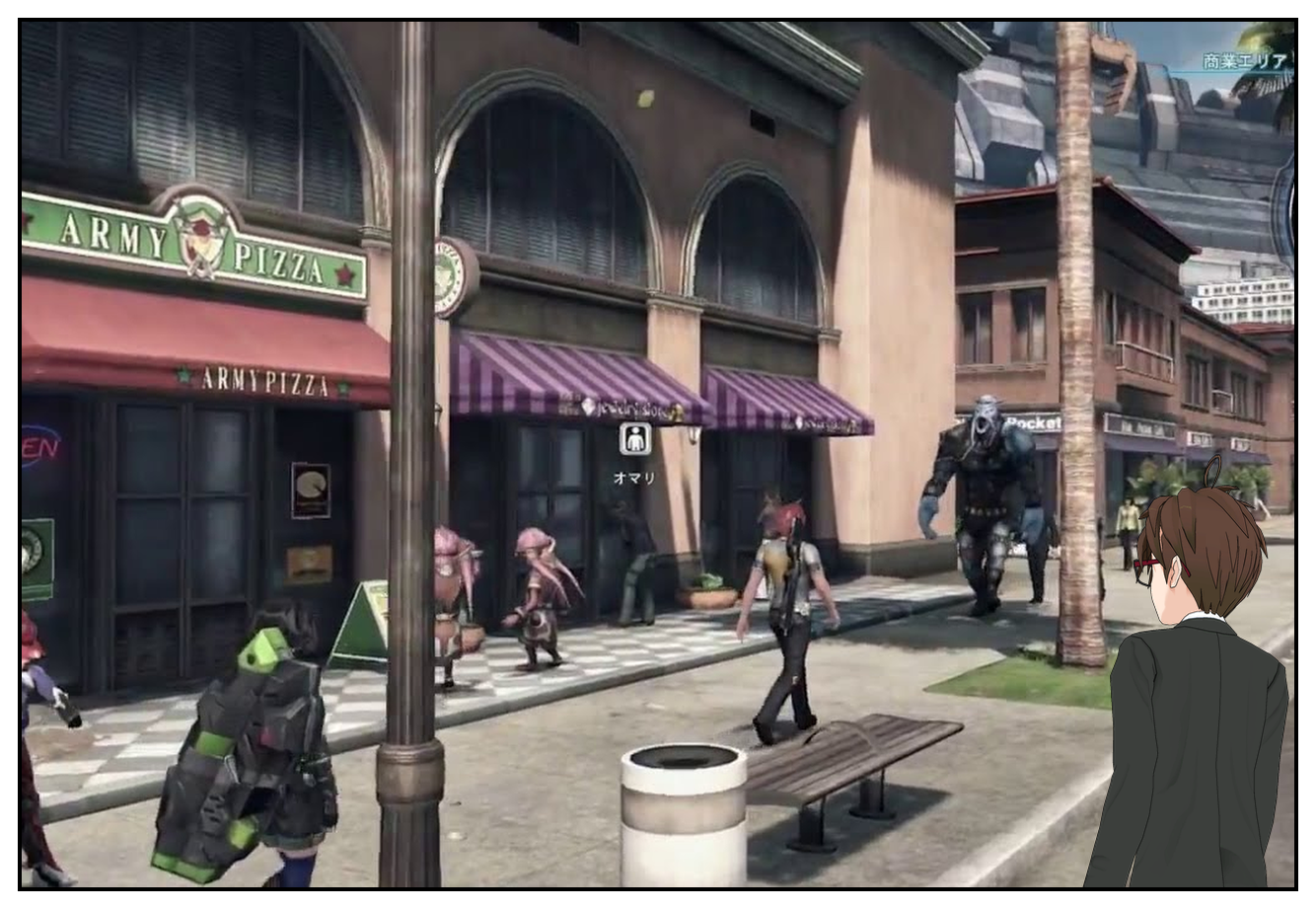
The feeling of "being inside" a strategy game is further compounded by the game's FrontierNav system, which uses the Wii U's GamePad to display a hex-based map of the planet Mira, the game's setting. Through methodical exploration and completion of objectives, you gradually "conquer" Mira hex by hex, setting up an infrastructure in the process. Placing data probes not only allows you to generate passive income of both credits and the raw material Miranium, it also allows you to collect rare resources from specific hexes, store more Miranium, increase the output of connected probes and all manner of other things. There's actually a rather deep metagame of chaining probes together to maximise your income between all your sites.

And it's important, too; this isn't an RPG where you can just grind out money until you can afford the best equipment in the game. Instead, this passive income is one of the only ways for you to be able to afford things, and Miranium is incredibly important for a wide variety of purposes: investing in arms manufacturers to unlock new gear, upgrading existing equipment, crafting new items and donating to various causes in exchange for credits and other rewards.

Early in the game, this metagame doesn't seem all that important, since you quickly find yourself with far more money than you know what to do with, meaning you can spoil yourself rotten on gear purely for aesthetic value thanks to the game's "fashion gear" system. Once you gain the ability for you and your party members to use the giant walking mechs called "Skells", though, your expenses start to mount up. Miranium is used to refuel them, while credits are needed to purchase frames, armour and weapons for them. Multiply these expenses by all the party members you want to equip with Skells (which is probably all of them eventually) and you'll be spending a lot of money in total — but these investments are ultimately for the good of the colony as a whole.

What's really interesting about Xenoblade Chronicles X compared to many other open-world games — and particularly MMOs, which it's most commonly compared to — is the fact that, as mentioned earlier, your actions have a clear and tangible effect on the game world as a whole over the course of the whole story. For example, one chain of sidequests sees you helping to gather resources to build a water purification plant out in the wilds of Primordia; later, you're sent there to investigate an incident out there, and it's actually there on the lake where there was once just a rocky beach. Characters that were once standing around in town are now there, and it has its own little plotline to follow.

You're not alone on Mira, either; the main scenario introduces you to a few members of other alien races on the planet — both indigenous and extraterrestrial — but there are plenty more sidequests that bring you into contact with all manner of other weird and wonderful peoples, and completing their requests causes them to immigrate to your colony. Once they're there, they set up shop in a particular area and you'll see them wandering the streets. Many of them provide beneficial services to the colony as a whole, and so your experience grows.

It's a really satisfying, organic sense of progression through more than just bars getting longer and numbers getting bigger. There's a wonderful sense of New Los Angeles becoming a real, living place, with people going about their business and clashing cultures learning to understand one another. It is, by far, the heart and soul of Xenoblade Chronicles X, which doubtless won't be entirely to everyone's taste — particularly those who prefer more structured linearity in their RPGs — but, for me, it's basically created the sci-fi game I always wanted to play: a game where I not only get to build a colony on a new world, but where I get to actually run around inside that colony, meet people, help them, go out into the world and make an impact on said new world as I help humanity spread its wings in its new home.

Did I mention Xenoblade Chronicles X is an amazing game? No? Go buy it now. I want more of this sort of thing, please.

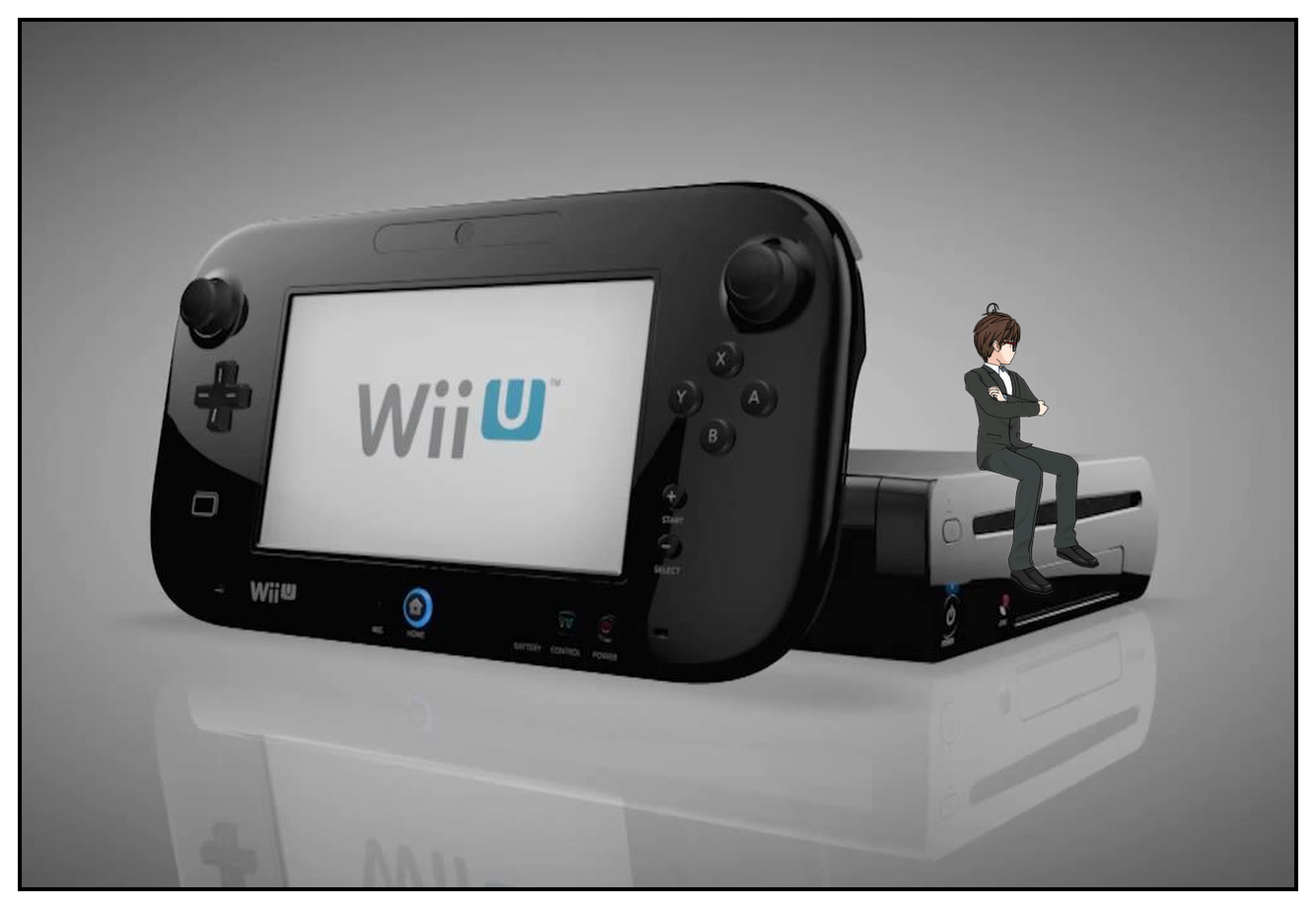
2153: Should You Buy a Wii U?

0153_001

The temptation to make this post just the word "YES" in 120-point bold underlined text is enormous, but most people will probably need a bit more convincing than that.

So, going against everything I learned about writing headlines — "never write a headline that is a question that can be answered with a single word" — I shall now attempt to explain to you why the Wii U is a really solid investment, certainly as much and possibly even more so than the Xbox One and PlayStation 4.

Hardware

The Wii U hardware may not pack as much of a punch as its competitors in this generation, but it's a nice bit of kit. The console itself is a pleasant, shiny black box with subtle lights on the front, and it will look good under pretty much anyone's TV. The accompanying GamePad is also an intriguing-looking piece of kit that is sure to be a conversation piece for people visiting your living room, and its second-screen functionality is impressive.

The Wii U doesn't have the flashing disc slot that the original Wii did for notifications while it was turned off; instead, the GamePad can light up with announcements about new patches, new content and new releases. These announcements also appear as a banner ad on the Quick Start screen when you first turn the console on, so it's usually pretty easy to find the thing that was announced.

The GamePad itself is a surprisingly pleasant controller, even with its enormous size. Its triggers are comfortable and ergonomic, despite not being that nice brand of squishy analogue that Microsoft in particular has specialised in, and all the buttons are easy to reach by people with normal-sized hands. The only slight adjustment some people may have to make is the fact that the A, B, X and Y buttons are presented in a mirrored arrangement to how they are found on the Xbox controllers (they go "YXBA" instead of "XYAB") but this will be nothing new to anyone who had a SNES.

The Wii U Pro Controller is a really nice controller, too. It doesn't come with the console, but it's a worthwhile investment for those who don't get on with using the GamePad as a controller, or simply as an extra controller for multiplayer games. Modelled somewhat on the shape of the Xbox 360 controller, it lacks analogue triggers but makes up for this with a much nicer D-pad than anything Microsoft has ever come up with, and a built-in rechargeable battery immediately puts it ahead of both the 360 and One controllers.

You can also use your old Wii Remotes, Nunchuks and Balance Board accessories on compatible games, which is a nice nod to backward compatibility that both the Xbox One and PlayStation 4 lack. That said, some games don't support some of the older, more specialised controllers such as the Classic Controller and Classic Controller Pro, so check the packaging for the games or reports online before expecting to jump into multiplayer. One example I can think of is Ubisoft's ZombiU, which supports Wii Remote and Nunchuk, but not the Classic Controller or Classic Controller Pro; for a second player to play with a controller, they must use the Wii U Pro Controller.

The only real letdown so far as hardware is concerned on the Wii U is the pitiful 32GB storage space it comes with. Fortunately, this is easily upgradeable using any standard USB hard drive, and this is highly recommended, even if you generally only play disc-based games — patches, DLC and optional "fast loading" content for larger games can chew through that available space incredibly quickly.

Oh, there's also no Ethernet port; you're stuck with wireless networking only by default, but a third party USB-to-Ethernet converter box works absolutely fine for those who prefer the stability and speed of a wired connection.

OS and Online

The Wii U's OS is a natural evolution from the Wii's "Channels" setup and is rather similar to the 3DS. One screen — the TV by default — shows a splash screen with your own Miis and others from the Internet — assuming you're connected — along with icons representing popular games at the time and related Miiverse posts selected randomly from the community. The other shows a customisable grid of the disc you have inserted into the console and any software you have downloaded. There are also icons for the various tools the system offers.

The Wii U's online service is a significant improvement over past iterations of Nintendo Network. Friend Codes are out of the window, replaced instead by the much easier to share Nintendo Network ID. Online activity is pushed into the background and is completely unobtrusive, perhaps to a fault; the only way you will know friends are online in many cases is if a game directly notifies you, or if you happen to press the Home Button and see a notification.

You're also pretty limited in what you can do with friends. You can see what they're playing and hit a link to it in the eShop, save their Mii to your console, and view their Miiverse profile, but that's about it. There's no chat, no messaging, nothing like that. For the most part, this is fine, since any Nintendo games that offer online functionality are generally designed to be played without requiring direct communication, but the option would have perhaps been nice. There are alternative solutions, though, so it's not exactly a dealbreaker, particularly for those who prefer to play solo.

Miiverse is an interesting idea, with communities for most games as well as more general topics. It's a good place to find comments and some surprisingly impressive fan-art for games, but its execution is a little slow and clunky to make it something most people will want to dip into on a whim. It can be a good place to find information, though, and it's always interesting to see what people are saying about a game. The latest version of the Miiverse software also allows you to save screenshots and keep a "Play Journal" with annotated screenshots, which is a nice evolution of the notes page in the back of old game manuals.

The eShop is a well-designed storefront that makes discovering new things to play quite easy. A colourful front page features new releases — including, in many cases, music from the games — as well as links to the store's various sections. A solid search function allows you to find what you're looking for, but browsing can throw up some interesting surprises too.

The selection available is pretty good, though prices are not particularly competitive with physical editions and in some bizarre cases, digital versions even cost more than their physical counterparts. A big highlight of the platform is the Virtual Console section, which includes games from older systems ranging from the NES to the Nintendo 64 and even the previous-generation Wii, though the selection here is relatively small. It's worth noting that switching the Wii U into "Wii Mode", though, allows you access to the older system's much more substantial Virtual Console library, though you'll have to satisfy yourself with playing these versions in 480p rather than the lovely sharpness of 1080p, but in the case of retro titles this may not be a dealbreaker for many of you.

The main issue with the Wii U's online functionality is that not much of it is explicitly explained. There's a very convenient image sharing website that allows you to quickly post screenshots to Facebook, Twitter and Tumblr, for example, but you won't know it's there unless you happen to peek into the system's default web browser bookmarks. A bit of experimentation — or perhaps being told about these things by friends — will reveal what it offers, though.

Games

This is the highlight, really. While the Wii U's overall library is very small compared to the Xbox One and the PlayStation 4, its quality is pretty consistently excellent. Here are some personal recommendations:

Super Mario 3D World — one of the best Super Mario games in years, Super Mario 3D World takes the isometric perspective of the 3DS game Super Mario Land and presents the player with more complex, longer levels and a wide variety of mechanics to learn and play with. It's a beautifully presented game with wonderful graphics and music (and a somewhat redundant "cooperative" multiplayer mode that doesn't really add much to the game) that is an essential purchase for anyone with a Wii U.

Super Smash Bros. for Wii U — Super Smash Bros. remains one of the most accessible fighting games out there, but its hidden depths mean that it is one of the most consistently popular titles on the tournament circuit, too. It's a tremendously fun game, and in terms of the sheer amount of content you get both on the disc and available as downloadable content, it's hard to think of a fighting game with more to offer both solo players and parties of fighters.

Mario Kart 8 — It's Mario Kart, so not much more needs to be said, really; it runs beautifully, it has some wonderfully inventive tracks (with more available via optional DLC) and it has an excellent online mode.

Super Mario Maker — It's wonderful to see a resurgence of the "Construction Kit" genre of games, and Super Mario Maker is a wonderfully accessible, friendly opportunity for people to try their hand at making 2D platformer levels with a Super Mario Bros, Super Mario Bros 3, Super Mario World or New Super Mario Bros U aesthetic. Even if you have no intention of creating levels, though, the sheer volume of custom levels available online is enough to keep any platform game fan busy, and the game's voting system ensures that badly designed levels drop to the bottom of the rankings pretty quickly.

Splatoon — The shooter for people who don't like shooters. Splatoon is a lovely twist on the team-based multiplayer shooter genre in that it's never just about killing the other team; rather, it's about claiming territory by painting it. A wide variety of weapon types and other equipment keep the game interesting in the long term without unbalancing it, and the fact the game is continually expanding over time means that it's always… fresh.

Xenoblade Chronicles X — If you've read my posts over the last few days about this, you already know how I feel about this. It's one of the most spectacular games I've ever encountered, one of the biggest open worlds I've ever seen and one of the best realisations of "sci-fi" in video games of all time. It's not a game for the faint-hearted as it is absolutely riddled with interlocking mechanics that you need to figure out for yourself in most cases, but it's a significant step forward for the role-playing game genre and absolutely one of the best games I've ever played.

NES Remix — Enjoy retro games but can't quite face playing a whole one through? Enter the NES Remix series, two games that feature numerous snippets of various popular Nintendo games, coupled with bizarre challenges and sometimes complete revamps of how you play them. Can you get through Super Mario Bros. backwards as Luigi? Can you perform perfectly in Excitebike? Can you do anything involving Zelda II without wanting to throw things? SNES Remix now please, Nintendo…

Conclusion

Yes.

2152: Skelleton Crew

0152_001

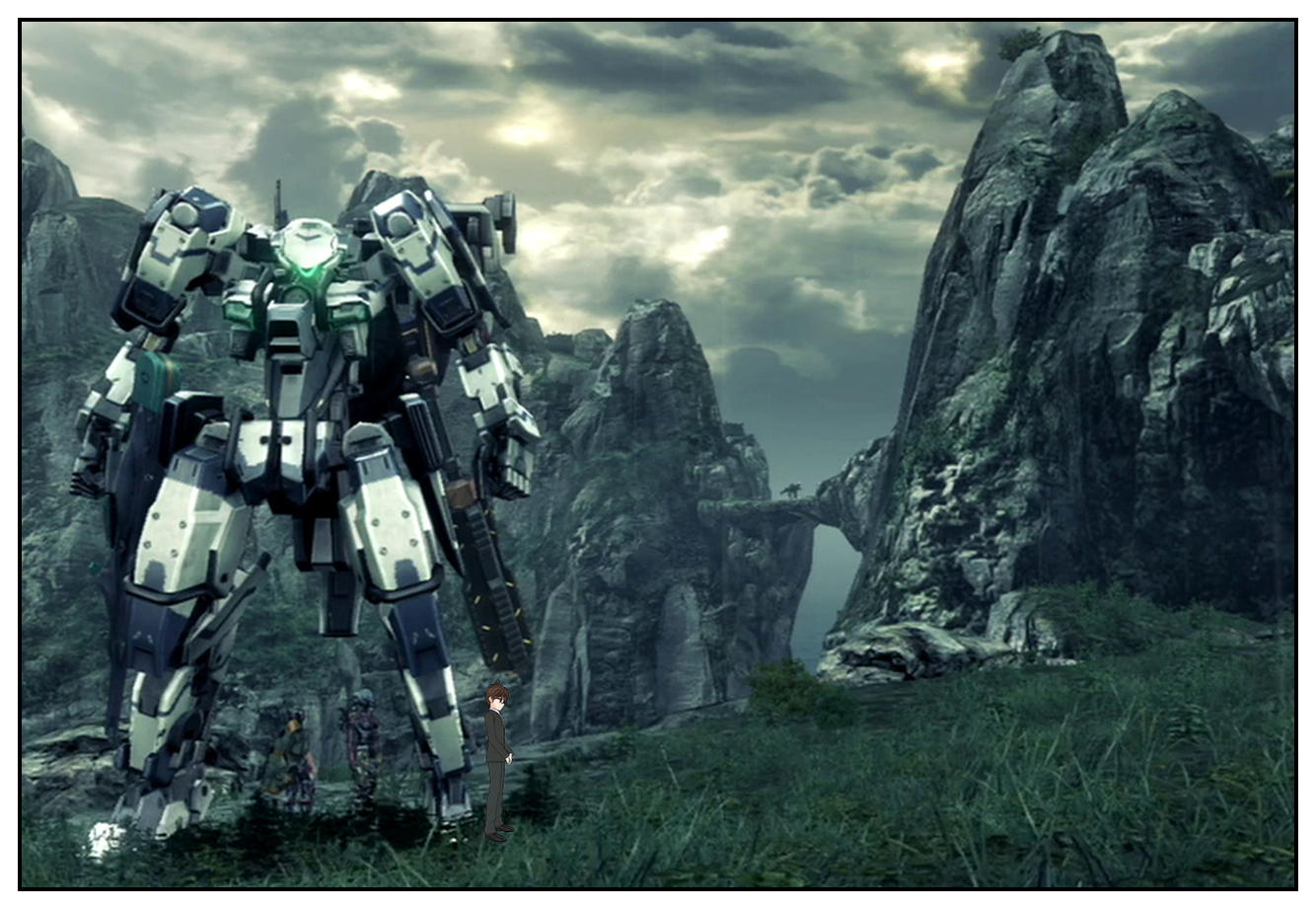
I've finally reached a point in Xenoblade Chronicles X where I can start using "Skells", the game's giant robot mech thingies that bring to mind Xeno series progenitor Xenogears. I'm not sure I've mastered them at all yet, but they certainly add some interesting things to the mix — and, like most things in Xenoblade Chronicles X, you're left to experiment a bit rather than having every piece of information you need spoon-fed to you.

A Skell is separate from your character; it's effectively a new party member that replaces one of the on-foot characters. To acquire one, you need to complete the main scenario up and including Chapter 6, then complete the Skell License quest in the BLADE Barracks, which tasks you with completing an appropriate objective for each of the Divisions. Once you've done this, you'll be generously provided with your first Skell for free, which allows you to get a feel for things somewhat. You and your party members will have to reach level 30 before you're able to make use of any more Skells, though — but when all characters are at the appropriate level you can have an entire party of Skells when necessary.

That "when necessary" part is important; while it can be most enjoyable to go stomping all over everything and overkilling them with a giant robot, Xenoblade Chronicles X's enemies and level scaling take size as well as level into account. In other words, let's say you're level 25: on foot, you can happily take down things around your own level — perhaps even slightly above — of a similar size to you. Tackle anything bigger, though, like the giant insects that you'll see in Primordia, and you'll almost certainly get flattened.

This is where Skells come in. Adding just one Skell to a party tips the balance in your favour, because a Skell is stronger than a person, and its simple presence increases the passive defense value of everyone on foot in the party. Adding more than one Skell to your party increases your overall total power level considerably. To give an idea of the difference it makes, earlier tonight I was reasonably comfortably taking on large enemies over 10 levels higher than me using two Skells: a Heavy-type one on my character, and the default (actually not very good) freebie you get on Elma. The two on-foot party members were usually KO'd by the time the fight was over, but since even KO'd members get experience for kills in Xenoblade Chronicles X — assuming the whole party doesn't wipe — this wasn't really a problem.

So Skells allow you to take on enemies that are both higher level and larger than you. They don't make you invincible, though; you have to be a bit careful. Running out of HP in your Skell doesn't kill you, but it does destroy the Skell, forcing you to continue the fight on foot. What happens then depends on if you pass the "Soul Challenge" reaction test as you eject from the Skell: get a Perfect rating and you're fine, though you'll still have to go back to base to pick up your repaired Skell; get a Good rating and, again, you'll be fine, but you'll lose one insurance "point" from your Skell when you retrieve it — once these are all gone, you either need Salvage Tickets or deep pockets to recover your wreck; miss the Soul Challenge completely and you'll eject from your Skell with 1HP, which is seriously dangerous.

Skells have a few interesting mechanics in battle. Firstly, they can Bind enemies that are Staggered. Stagger is a status effect that is usually a cue to use an Art that has the Topple effect, knocking the enemy to the floor and giving you a few seconds of uninterrupted pummelling as they try to get back to their feet. Bind, meanwhile, temporarily puts the Skell out of action while it holds the enemy in place, but the enemy is completely disabled for longer than your typical Topple effect. Successfully Binding an enemy also restores some of your Skell's fuel, which is necessary to use it in battle (and, later, fly).

The second interesting Skell mechanic is called "Cockpit Time", and it's awesome. Randomly throughout the battle, the camera will zoom inside your Skell's cockpit to show your character sitting in the seat, working the controls and generally wrecking the enemy's shit. When this happens, you are temporarily invincible and all your skill cooldowns reset, meaning you can immediately use them all again without having to wait. It happens at random, but it can make a huge difference, particularly in longer fights.

The third Skell mechanic worth playing with is Overdrive. On-foot characters can use Overdrive when they build up 3,000 TP and can then get various bonuses by stringing longer and longer combos together. Skells, meanwhile, build up GP rather than TP by fighting — and much quicker than on-foot characters — and, again, can trigger Overdrive when this reaches 3,000. Skell Overdrive doesn't have a combo counter; instead, it just has a timer that randomly extends when it expires, possibly according to how much punishment you've been dishing out in the meantime. Combine Overdrive with Cockpit Time and you become an absolutely unstoppable killing machine for a few seconds. The feeling of power is simply marvellous.

I haven't yet looked into optimising my Skells; the interesting thing about them is that the various weapons you equip to their hardpoints correspond to Arts you can use in battle, so optimising presumably means finding a good balance of stats, damage types, special effects, augments and Arts types. By tweaking your loadout, you can also effectively change the "role" of your Skell in a party situation; loading up on weapons with a Taunt ability turns you into an effective tank, for example, while other weapons come with Arts that can apply debuffs, affect enemy and party stats or boost damage from particular aspects of the enemy. It's all very deep and customisable.

I'm yet to find quite the right balance between being on foot and being in my Skell — I'm sure there's some sort of benefit to fighting on foot, perhaps against smaller enemies — but it's been really interesting to explore so far. At 50 hours into this incredible game, I feel like I'm still learning things. And that's pretty awesome.

2151: Life Line

0151_001

"You’re on a long flight, and a palm reader sitting next to you insists she reads your palm. You hesitate, but agree. What does she tell you?"

Daily Post, December 10, 2015

[This didn't post yesterday for some reason, so here it is today.]

"Hmm," she says in a long, drawn-out sort of way, clearly milking the moment for maximum drama. I look around, conscious that other passengers are surreptitiously watching to see what's going on, clearly having overheard her request. Then I look back at her. She's gazing intently at my proffered palm, running her fingertip down what I assume, as a layman, to be my "lifeline", but she's saying nothing for the moment; all I can hear is the low drone of the engines, and the somewhat subdued conversation of the other passengers in the cabin.

"Your path has been a meandering one," she says at last. "You have stumbled headlong into chaos on frequent occasions, or perhaps it is more accurate to say that chaos has sought you out; it is hard to tell at this point."

I say nothing but incline my head slightly in silent agreement. Well, she's off to a running start, at least.

"You have endured many hardships on your travels," she says. "They may not have been physical hardships, or even hardships that people could see you struggling with, but they were hardships nonetheless."

I feel my skepticism fading away a little as she offers what appears to be an accurate assessment of my life to date; that said, there's still a little voice in the back of my mind pointing out that everything she's said so far is fairly ambiguous and could probably be applied to anyone.

"Your pain has helped to forge you," she continues. "Your struggles have made you stronger, but at a cost: turbulence, uncertainty, a lack of clarity."

I glance around to see how many passengers had reacted to the mention of "turbulence" — not a word you want to utter on a plane in most instances — but most people in the immediate area appear to have returned to their own business, or at least are being subtle about their eavesdropping if they are indeed indulging their own curiosity.

She's not wrong, but again, these statements could probably apply to anyone out there. Without context and specifics, I remain not entirely convinced of her reading's veracity.

"Your future remains uncertain," she says, her finger apparently reaching its destination on my palm and ceasing its movement; she doesn't break contact, however. "You desire nothing more than to know exactly what the future holds, and how you can ensure you are on the correct path. But the truth is that there is no correct path, only the path that you choose to take. While it may feel like you are at something of a crossroads right now, be sure that you will make a decision and proceed down a road, and that road will be the correct one for you. It may not be today, it may not be tomorrow, it may not even be next year. But your route will one day be illuminated, and you shall find your way."

She releases my hand, which plops back into my lap.

"Thank you," I say simply. Ultimately I'm not sure I've learned anything particularly new from her statements, but if nothing else they gave me pause to reflect on my life, the decisions I've made, the decisions that were made for me, and what the future might hold, as uncertain as it might be.

Finding that route will be scary, no doubt, but as I look at her gently smiling at me, I feel like there's at least one person out there who has faith I'll make the right choices somewhere along the way, and that everything will work out for the best.

I hope she's right.

2150: My Beard Controls the Universe

0150_001

I'm pretty sure most of us have behaviours and signals that things are going well or badly at any given time.

For me, it's the length of my beard and hair. Generally speaking, the more unkempt I look, the worse I am feeling; in other words, the length of my beard and hair are directly proportional (inversely proportional?) to my current state of mental health.

I trimmed my beard to a somewhat more manageable length this evening. It wasn't necessarily because I'm feeling any better about things than I have done, but it felt like something of a symbolic gesture if nothing else: the desire to see things change and get better. To put it another way, I trimmed my beard in anticipation of an improvement in my mental health. If it happens, great; if it doesn't, well, I have a somewhat neater beard than I had when I woke up this morning.

The length of various hairs growing out of my body isn't the only indicator of my mental state, though. The tidiness of the rooms in which I spend the most time is, too. Specifically, when we're talking about the lounge, which is where I'm writing this from right now, the amount of crap there is on the coffee table is generally directly proportional to how miserable I've been recently. There's a fair bit of crap on there at the moment, though at least part of that is down to the takeaway curry we had for dinner this evening.

I say all this, but it's entirely possible that it all works the other way around, of course. Perhaps my hair and beard being long is what causes my mental health to decline. Perhaps the messiness of my environment causes me to feel bad.

Or, perhaps, it's the more likely situation: both sides contribute to each other. I feel miserable, so I let things slide, then I see how much I've let things slide, and that makes me miserable, so I let things slide further because it doesn't feel "worth" doing anything about them, then I see how much worse things have gotten… you get the idea and see how this works, yes? This is, broadly speaking, how depression works, and how it can get you into an endless spiral, circling the Drain of Misery but never quite — in most cases, anyway — getting completely sucked down it.

I've been in worse situations in my life. Things could be much worse right now. Certain aspects of my life are fairly positive. But on the whole, there are a lot of influences making me a bit miserable at the moment. Not exactly how you want to be feeling going into the festive season, for sure, but all I can keep doing for now is looking forward and hoping for better days ahead, I guess.