2335: Goddesses

0335_001

I finished Ys Origin's true route this evening, and if the first two games hadn't already convinced me this is a series that will stay with me a long time, that ending would have certainly done it. The way it establishes the backstory of things that are just a matter of course in Ys I and II is beautiful, and it brings a whole new layer of meaning to the overarching storyline and mythology of the series. I'm looking forward to seeing how — if? — this mythology fits into the games I'm yet to play.

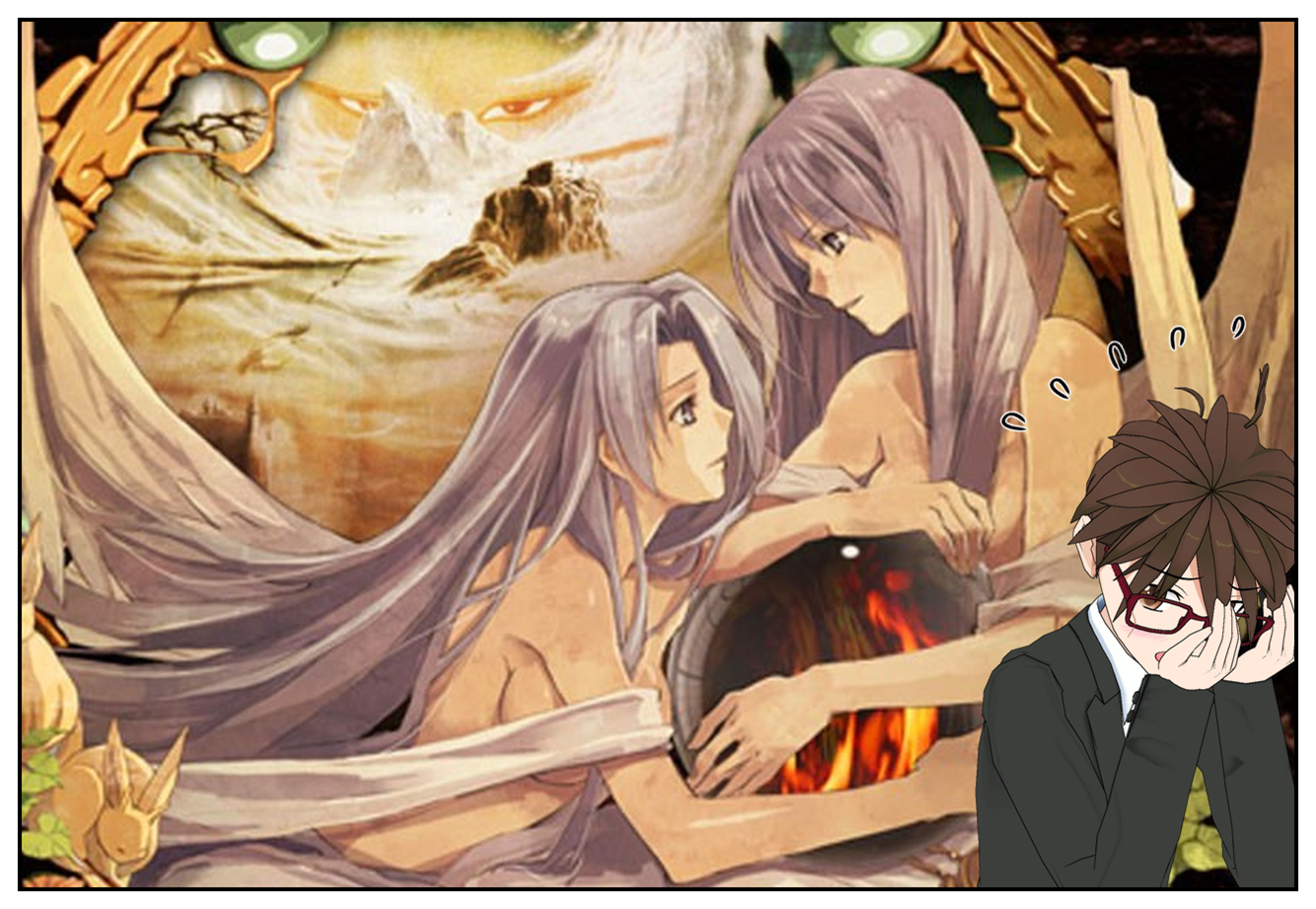
The thing that's struck me most from these three games in the series that I've played so far is how beautifully the goddesses Reah and Feena are handled. It's hard to tell whether this is the work of the original Japanese script or Xseed's excellent localisation, but either way, they're wonderfully depicted characters that act as an important centrepiece to these three episodes of the overall storyline.

The most striking thing about them is how overwhelmingly nice they are. And I don't mean in a bland, uninteresting way; both Reah and Feena are convincingly friendly, approachable characters despite being divine beings, and there's a decent amount of the backstory in Ys Origin in particular that deals with their loneliness and desire to have friends among the humans rather than being revered as the powerful beings they are. Indeed, even in Ys I where series protagonist Adol Christin encounters an apparently amnesiac Feena, she seems keen to cling on to him and develop a close personal relationship.

They're a study in contrasts, too, despite being similar in appearance and bearing. Feena is kind and gentle — the sort of person it would probably be nice to have a hug from. Reah, meanwhile, is more willful and stubborn, but counterbalances this with a similarly graceful demeanour and a desire to always be hospitable to those who have the confidence to approach and address her. They make a good pair, and while we don't see a huge amount of either of them in the first two Ys games, this is more than made up for in Ys Origin, where we get to spend quite a bit of time with both of them.

Perhaps the nicest thing about them is the feeling that the Ysian religion, based on following the teachings of the Six Priests and worshipping Feena and Reah, is both plausible as a belief system and comforting. It's not infallible, by any means, either — indeed, Toal comments to the goddesses in Ys Origin that they are "barely even half perfect", and it's partly everything the goddesses and their helpers put in place that led to the apocalyptic situation that greets you from the outset of Ys Origin — but it's obvious that the goddesses, both as people and as mythological figures, bring great comfort to the populace. In a world where JRPGs in particular often take rather ruthless aim at religion as part of their narratives, highlighting the negative aspects rather than the positives, the Ysian approach to belief systems is almost refreshing.

I think that sums up the tone of the series quite nicely, too. While there's plenty of darkness, evil and unpleasantness going on — arguably more so in Ys Origin than in and II — there's an overall warm feeling to the series that brings to mind comforting childhood stories like fairy tales and fables. I anticipate that this feeling will become stronger as I spend more time with regular series protagonist Adol in the subsequent games, but the three distinct stories in Ys Origin unfolded in a compelling, interesting manner, too; they presented a convincing back story to what unfolds 700 years later in Ys I and II, and I'm left with an almost overwhelming desire to immediately go back and play and II again having seen what Origins' story had to offer.

I'll save that for now, though; I've still got Oath in Felghana, Ys VI, Ys Seven and Memories of Celceta to get through. And I'm looking forward to all of them.

2331: Revenge of the Horde

0331_001

Patch day for Final Fantasy XIV today, and it seems like a good one so far. I haven't yet delved into absolutely everything on offer — partly because I went out for the evening — but what I've seen so far is pretty great.

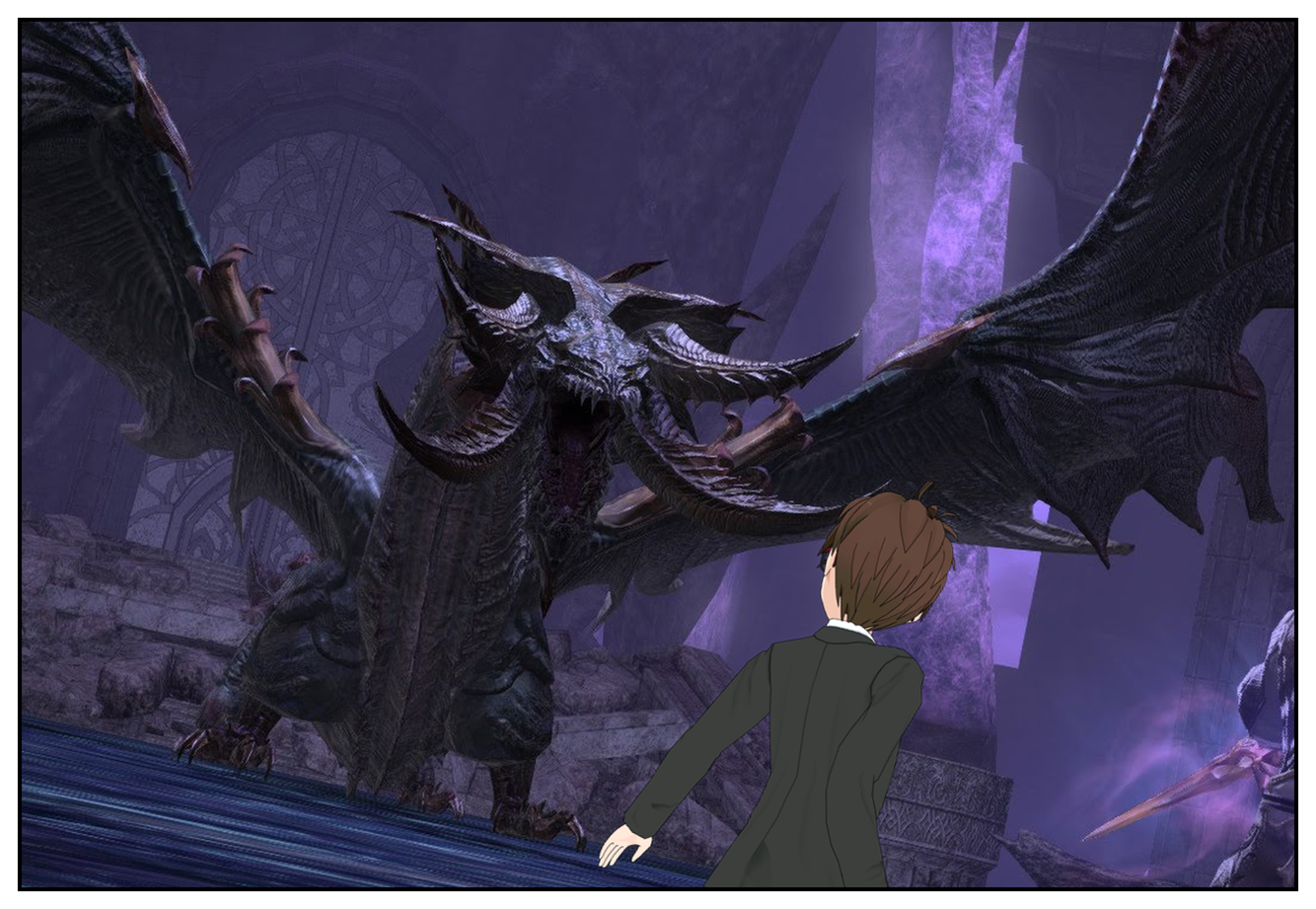
Of particular note is The Final Steps of Faith, the big new Trial for this patch. This sees players taking on the mighty Nidhogg in a battle to the death as he brings the full force of his rage down on Ishgard and those he believes to have betrayed him.

The Final Steps of Faith is a cool fight, because — at the moment, anyway — it's genuinely challenging, even in its story mode incarnation. It's not excessively difficult by any means — the challenge factor comes from the fact that you actually have to pay attention to mechanics and can't just cheese your way through it. I'm all for this; while there's a certain amount of pleasure in being able to overpower old content with top-end gear, it's always a bit of a disappointment when fights that were once challenging, exciting and dramatic become a matter of simply soaking up all the damage being thrown at you and repeatedly smacking the enemy in the teeth.

I'm sure this situation won't last with The Final Steps of Faith, but for now it's nice to have an important storyline fight carry the appropriate amount of drama for the context.

This got me thinking back to the reasonably hefty amount of time I spent playing World of Warcraft, and how that game never quite got me feeling excited about combat. Things got a little better when I went a bit crazy modding the game's UI and added a "Jukebox" mod that allowed you to play music in combat, but it still never felt quite the same as an exciting encounter in a single-player RPG.

Final Fantasy XIV, meanwhile, absolutely nails the drama aspect. While the movement-heavy nature of combat means that it's not able to include the sort of cinematic camera work that people have associated with Final Fantasy since VII hit PS1s all those years ago, the combination of amazing music, gorgeously spectacular visual effects and a genuine feeling that you're struggling against a foe of unimaginable power help make the game's most important fights shine as some of the most memorable things I've ever done in a game — and certainly in an online game.

I've now finished the main story (and the enjoyable, optional "post-story" quest, which had a really heartwarming ending) so I find myself pondering what's next for Heavensward. While this patch brings the Dragonsong War plot arc to a close, there are still some unresolved threads that are clearly going to be tugged at further in the next couple of patches, and I'm very much looking forward to seeing how the stakes will be raised towards some sort of dramatic showdown that will inevitably lead into the next full expansion pack.

And in the meantime, I hear those bloody Moogles need some help with their crafting…

2329: Another Trip Up Darm Tower

0329_001

I finished my first playthrough of Ys Origin earlier. I chose to play through for the first time with Yunica Tovah, who apparently handles most like Adol in the subsequent 3D Ys games, but now I'm going through it again with Hugo Fact, who plays impressively differently.

One thing that struck me with Ys II in particular, and it appears to be a pattern that continues with Origin and its ilk, is how much shoot 'em up DNA is in this series. Numerous bosses have distinctly "bullet hell"-style attacks requiring intricate dodging and pattern recognition, for example, but this connection is most obvious when playing Origin as Hugo, since even his basic attack involves firing bullets. Hell, he even has two "options" (sorry, "The Eyes of Fact") floating either side of him to fire additional bullets, which double in number when he uses Boost mode.

It's interesting quite how different a feel this contrasting playstyle provides, since you're otherwise going through pretty much the same levels and boss fights as in Yunica's story, albeit with different cutscenes and a few minor changes here and there. Boss fights in particular are a very different affair when playing as Hugo, since rather than it being necessary to get in melee range as with Yunica, as Hugo you have to play a lot more defensively, attacking from range in suitable openings and taking great care to avoid attacks, since Hugo is considerably squishier than Yunica is. Not only that, but Hugo's individual attacks do quite a bit less damage than Yunica's axe and sword swings, though he makes up for this by being able to attack 1) from a distance and 2) much more rapidly than Yunica.

I'm also playing this second runthrough on Hard difficulty; I'm not quite brave enough for the series' signature Nightmare difficulty yet, but I thought I'd step things up for Hugo, since I felt pretty confident with Yunica by the end of my first playthrough. It's noticeably harder, particularly when it comes to boss fights. I'm not entirely sure if this is down to enemies' boosted stats or simply the different way Hugo plays that I haven't quite gotten used to yet, but I'm finding myself having to retry boss fights more times than I did on Normal with Yunica.

One of the things I like about Ys Origin so far is that although the boss fights are very difficult, I don't think there's been a single encounter in the game where I felt like I was beating my head against a wall. In other words, although I might fail a boss fight several times in succession, I'd make noticeable progress each time, chipping away a little further at the enemy life bar each time until I was eventually successful. It's a matter of practice and skill rather than luck; in some ways, it reminds me quite a bit of Final Fantasy XIV raid bosses, where you need to know what's going to happen in the fight before you can even think about being successful; flailing wildly isn't going to work, at all.

Anyway. I'm keen to get through Ys Origin for a second time with Hugo, and then polish it off a third time with the "secret" third character, whose story is quite a bit different from Yunica and Hugo's, from what I understand. By playing all three stories, you get the full narrative; this is an approach that some people find tiresome — particularly if they have to play through the same levels again with a different character, as you do here — but it's something I always enjoy. I really enjoy seeing stories from multiple perspectives, and while Ys is fairly conventional fantasy in many ways, it's well-written, well-localised and features some entertaining, endearing characters, so I'm more than happy to plough through it to see everything it has to offer.

Then after that, there's Time Attack, Boss Rush and Arena Mode, of course, which I'm curious to at least try… so much for being a short game!

2328: Play of the Game

0328_001

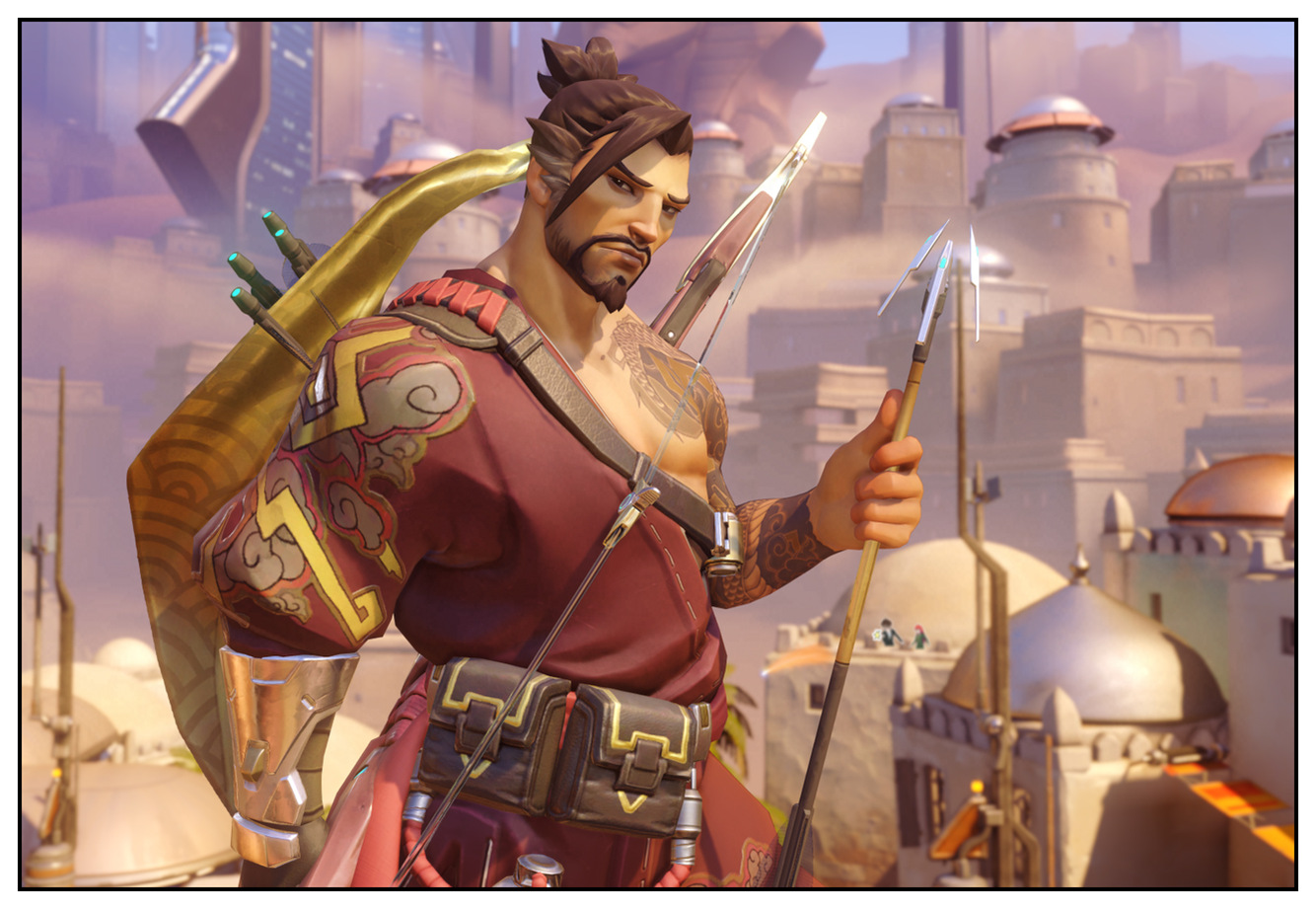
I'm really enjoying Overwatch. In fact, I'd go so far as to say I think it's the first competitive multiplayer game that I've actually wanted to "git gud" at enough to be truly competitive in the online sphere. I don't know if I actually have the skills or the talent to be able to do that, of course, but I've been performing reasonably well in the current "Quick Play" mode — effectively a "pre-season" warm-up — and getting a good feel for characters. So much so that when the proper Ranked Play mode makes an appearance in the near future, I feel confident stepping in and attempting to prove my worth.

Overwatch is also helping me to understand the appeal of e-sports. I'm still not entirely sure I would ever want to sit and watch a game of Dota 2 or something (as opposed to actually getting stuck in and playing it) but, playing Overwatch, I certainly feel something while I'm playing. It's particularly thrilling to claw back victory from the very jaws of defeat, and all of Overwatch's various game modes are well constructed to always make this a distinct possibility, meaning it's pretty rare to feel like you're being completely dominated unless your team is particularly incompetent.

It's quite entertaining to see the varying reactions of people you play against. Competitive gaming culture has, for the most part, instilled the impulse to type "gg" (Good Game) after a match has concluded — the online equivalent of a friendly handshake after a sports match — and more often than not you'll see this shorthand pleasantry being exchanged once the victor has been decided. (It's occasionally accompanied by "wp", which means "Well Played").

But there are some people out there who don't like losing. Some people like the guy who responded "no" to my "gg" after one match because he lost, and he didn't like losing. People like the guy who, in all caps, told his entire team to uninstall the game and that they were a "useless fucking team" after losing; he didn't like losing, either. And people like the guy who judged everyone on which character they picked, with sniper Widowmaker obviously being "for noobs".

Then, of course, there was the Chuckle Brothers my friend James and I encountered earlier, who starting sniping at each other in chat during the match and gradually escalated to threats to "wreck" each other. I may have prodded the fire a bit, but it was too hilarious not to troll a little bit; by the end of the match they'd both made themselves look like complete douchebags to the other participants, and one in particular (who was on the opposing team, who lost against me and my comrades) seemed to think that the fact he'd killed my character several times somehow made him superior than me and the rest of my team.

Me, I don't mind if I win or lose, because games of Overwatch are good fun, and the game is balanced well enough that I've only had one or two matches that I felt were completely imbalanced, and that was largely because the opposing side was using unconventional tactics that none of us knew how to counter. (Six Torbjorns is a force to be reckoned with… until you figure out Roadhog and Pharah.) It's a competitive game, after all, so by its very nature there has to be a winner and a loser in each and every match. If you want to win more, you practice and get better, just like anything — just like real sports. There's no sense getting angry and throwing a tantrum over it, because, more likely than not, that's just going to alienate you and make you less likely to be able to put a coherent team together — and coherent teams with good communication will always perform better at this sort of game.

I'm very interested to see how Blizzard plans to implement the ranked system into Overwatch; while I've never played Starcraft 2, I understand its online ranking system is pretty comprehensive and gives you a good idea of where you stand in relation to the rest of the community, so I'm expecting something similar here. I'm also expecting the game to have a good, long lifespan; Blizzard has a good track record of continuing to support its games over time — particularly those with multiplayer components — and with Overwatch proving as popular as it apparently has been so far (the amount of fan art out there already is insane!) I think we'll be seeing Overwatch tournaments and leagues for a good few years yet. And, for the first time, I want to be part of them.

2320: Never Pick One Main

0320_001

This advice is true for many different class-based games, be they massively multiplayer online RPGs like Final Fantasy XIV or competitive games like Dota 2 or, indeed, Overwatch. (Yes, it's another Overwatch post, for which I make no apologies.)

Overwatch is an interesting case study, though, in that unlike the other examples I gave above, you can change your character and indeed your complete role in the team at any time — either immediately after dying or if you're back in your base. This leads to a whole new interesting metagame where your team isn't bound by the principles of the "holy trinity" of tank, healer and damage-dealer (or, in Overwatch's case, the holy quartet of tank, support, offense and defense) and can instead evolve and change as a match progresses according to the team's needs.

Because this is such A Thing in Overwatch, you absolutely shouldn't pick a single character and "main" them like in other character-based games like competitive one-on-one fighters. At the bare minimum, you should be familiar with a hero in each of the four roles, and ideally you should at least know what every hero is capable of, even if you're not particularly skilled in playing as them.

You can read guides about this, but the best way I've found to learn which hero is good against which opponent is simply to experiment and see what happens. That way, you'll naturally figure out which heroes you enjoy playing and who they're effective against.

I have a number of heroes that I've started gravitating naturally towards so far. I intend to expand my repertoire over time, but for the moment here are my favourites.

In the offense role, I'm a fan of Tracer. Her rapid fire guns immediately hit their target when you fire them, so there's no need to lead targets in the same way as you need to with those who shoot more obvious projectiles — you still need at least a reasonable degree of precision, though. Her absolute best features are her special abilities, though. Her Blink ability lets her teleport a short distance up to three times in succession, letting her quickly dart across doorways and passages that are covered by dangerous sentry types such as Bastion or Widowmaker. And her Recall ability is great for confusing an enemy, as well as providing a means of self-healing by not only rewinding her location, but also the value her health was at a few seconds ago.

For defense, I like Mei. Her Ice Wall ability is great for blocking off specific routes and funneling the opposing team down a route you can cover more easily. Her weapon also has a great deal of flexibility; the short-range "ice thrower" acts a bit like a flamethrower only, you know, colder, and also has the added benefit of freezing enemies, initially slowing them and eventually freezing them completely for a brief moment. Her alt-fire, meanwhile, fires an immensely accurate icicle bolt that proves devastating to snipers such as Widowmaker, dealing a huge chunk of damage in a single hit at medium to long range. Combine this with her ability to freeze herself, making her temporary invulnerable while self-healing, and her Ultimate, which causes a freeze and damage effect over a decent-sized area, and you have a great defensive hero who is more than capable of going toe-to-toe with dangerous, occasionally insurmountable-seeming threats like Reinhardt.

In the tank role, I enjoy D.Va. D.Va is interesting to me in that she's not necessarily designed to soak up a huge amount of damage in the same way as some of the other tank characters, but is instead a rather mobile unit that can put out a good amount of close-range damage while having much better survivability behind enemy lines than the Offense heroes. Her absolute best thing, though, is her Ultimate, which self-destructs her mech suit, taking anyone in a significant radius with it, including herself if she doesn't get out of the way. What's fun about this ability is that you can combine it with her mech suit's jump jets ability, effectively "throwing" the self-destructing mech at the enemy team from a distance while she skips off happily into the distance. Also she's adorable.

Finally, in the support role, I've had most success with Lucio. A speedy character with a passive "aura" effect rather than a more active healer like Mercy, Lucio is an excellent support character who is very capable of putting out a decent amount of damage in his own right. His decent mobility thanks to his high speed and Wallride ability allows him to move unpredictably and avoid damage, while the relatively short cooldowns on his abilities let him provide either speed boosts or decent healing to nearby companions on a pretty consistent basis. Not only that, but the fact his buffs and healing work as an aura mean that he can concentrate on wrecking some fools while he's benefiting the team, meaning he can help out in several ways at once.

I'm sure I'll discover new favourites in the near future, but for now these are the ones I've had the most success — and fun — with.

2319: Pass into the Iris

0319_001.png

Overwatch is still excellent.

I'm tempted to leave it at that, but I should perhaps qualify my statement.

It's difficult to pin down a single, truly appealing element of it because there are so many, and that's perhaps it's biggest strength: there's something in there that will appeal to most people who are at least vaguely receptive to the idea of competitive first-person shooters.

For me, the absolute best thing about it is its accessibility. There's a wide variety of different heroes, some of which are more difficult to use, but all of which are rewarding. Plus some absolutely wonderful balancing has clearly gone into the game's development, since each hero has a clear "counter" that is eminently suitable for dealing with them when they start giving you grief.

It's a game with accessibility for casual players, in other words, but one which has sufficient depth to keep competitive players interested in the long term. It will be interesting to see how the community as a whole takes to the ranked competitive games when they launch soon, and whether the game as a whole takes off as an e-sport.

It's rather enjoyable to be in at the very beginning of what is clearly going to be a thriving game with the longevity of Valve's classic Team Fortress 2, a game to which Overwatch is often compared, and not unreasonably so. However, where I found Team Fortress 2 to be completely intimidating (due to the fact that by the time I had a computer and Internet connection that could handle running it, everyone else who had been playing for years was infinitely better than me, and it felt impossible to get any better), with Overwatch I'm finding it easy to contribute to a team effort, pick the right heroes for the right situation and help get the job done.

What seems nice about the community as a whole — at least on PC, I can't speak for the console versions — is that the player base isn't afraid to have a bit of fun. Earlier tonight, for example, I had a game where the opposing team started out by posting three Winstons (a giant Tesla cannon-wielding gorilla with a rather refined voice and attitude) outside our base, and gradually, as the match progressed, everyone else participating switched to Winston too, until by the end of things we had an absolutely chaotic melee made up of twelve mutant gorillas all going all HULK SMASH on one another at once. The results of that game really didn't matter in the end, because everyone involved had such a great time, and of course it was followed up with a couple of other matches in which everyone picked the same character again. Six Reinhardts bearing down on you is certainly a sight to behold, though this situation helped me realise Pharah's value in that she can leap high into the air and rain rocket death down on Reinhardt from above while staying well out of range of his big-ass hammer.

Overwatch is a game that hasn't forgotten a core reason we play games is, well, to play. It's a consistently joyful, smile-inducing experience that the vast majority of the community seem to play well and with a good attitude; you get the occasional ragequitter yelling "uninstall the game now" when their team loses, but they are relatively few and far between in my experience so far, and when this happens most people just shrug and move on. Overwatch's excellent matchmaking coupled with the significant player base means that their team slot will be filled in a matter of seconds anyway, so it's no great loss to the other players if that person wants to ragequit.

Assuming Blizzard keeps supporting Overwatch as much as it claims it will — we're promised free new heroes and maps on a fairly regular basis; the only "premium" paid content is the ability to purchase the Loot Boxes containing skins and other customisation items that you acquire for free every time your account levels up anyway — I can see myself playing it for a long time. And it's a nice feeling to find a multiplayer experience like that: it's one I can easily share with friends, since there's none of the MMO issue of you "outlevelling" each other, getting to different stages and being unable to play together due to the disparity in your characters' power levels, and its 5-10 minute matches make it eminently friendly to the more busy people I know who perhaps only have half an hour here and there to play some games together.

So yes. Overwatch. If you've been on the fence about grabbing it but you like the sound of it, stop hesitating and grab it. Then we can go and shoot some fools together.

Cheers luv.

2316: Overwatch is Out, and It's Awesome

0316_001

Well, it's here: the only multiplayer-only first-person shooter I think I've ever actually been genuinely excited to play and be on board with from day one: Blizzard's Overwatch.

The servers went live at a little after midnight my time, and aside from one incident where I lost connection from a game, everything seems to be running extremely smoothly. I am happy about this.

Here is a list of reasons why I like Overwatch when I typically haven't got into other competitive first-person shooters:

  • It has characters. Call of Duty is boring to me because soldiers are boring. Overwatch has a wide variety of characters that includes cute girls. So that's a win.
  • There's no complicated metagame. No challenges to unlock weapons, no perks to worry about, no loadouts, no higher-level people dominating you through use of higher-level unlocks: everyone is on an equal playing field.
  • The "you must be this skillful to play" barrier is lower than a lot of other shooters. The thing that puts me off a lot of competitive shooters is the fact that it's extremely difficult to learn how to play them effectively when some 10-year old can snipe you from halfway across the map before you've even got anywhere near the objective. Overwatch's characters cater to a wide variety of skill and confidence levels, and most don't require pinpoint accuracy to have a good time with.
  • The objectives are simple to understand but challenging to complete. The game modes may be straight out of Team Fortress, but they work. The Overtime mechanic makes for some genuinely exciting last-second turnarounds, too.
  • The weapons are satisfying. Each character only has one or two weapons at most, and they're all great fun to use. They make good noises and feel powerful.
  • The game gives excellent feedback. Through the use of sound and HUD elements, Overwatch keeps you nicely informed on what's going on. If you're getting shot in the back, a nearby character will tell you. If you're successfully hitting an enemy from a distance but can't see it very well, a sound effect lets you know that your shots are on target. And most characters' HUDs are designed so that you don't have to take your eyes off the action to know important information.
  • The abilities give characters unique identities. Not only that, but you need to know the best ways to avoid and/or counter these abilities. That keeps things interesting.
  • The support characters are more than just healbots. Most of them are more than capable of putting out respectable damage, too, and some even have other interesting abilities to support the team.
  • D.Va. Say no more.

Now I'd better go to bed before I get tempted to stay up all night blasting fools… doubtless there will be a lot more of this over the next little while, though!

If you're playing Overwatch on PC, feel free to add AngryJedi#2260 as a friend. If you do so, let me know if it's on the North American or European servers, because Blizzard inexplicably region-locks its friends lists rather than having one global one.

2312: After 1.5 Games, I Already Like Ys More Than Any Zelda I've Played

0312_001

A controversial statement, perhaps — and I make no apologies for a third post about Ys in a row — but one that I feel confident in making, even having only finished the first game and made it about halfway (I estimate?) through the second. (Aside: given how much I've enjoyed the first two games so far, you can count on a month of Ys over on MoeGamer at some point in the near future.)

Ys speaks to me in a way that Zelda never has. This isn't to say that I don't like Zelda, mind you — I count A Link to the Past, Link's Awakening and Majora's Mask among some of my favourite games of all time — but there's something just… kind of magical about Ys that I've been delighted to discover over the past few days, and a little disappointed in myself that I never took the plunge and explored this series earlier.

Let me try to explain what I mean.

I think the thing that sticks out to me most of all is how Ys provides a much more coherent and continuous feeling in its narrative than Zelda does. The fact that Zelda games up until Link's Awakening still referred to the various dungeons as "levels" made it pretty clear that despite the sprawling overworld in each instance, these were basically games designed on the same linear principles as more traditional action/arcade adventures. This very much gives Zelda games a feeling that persists today: a sharp demarcation between the overworld and the dungeons. This is not necessarily a bad thing, nor is it particularly unusual; many RPGs make this distinction, and massively multiplayer games in particular have an even more stark divide between the two types of content, with dungeons tending to be cooperative multiplayer affairs, while overworld action tends to be (for the most part) solo or social in nature.

But with Ys, there's no such demarcation. The world is continuous and coherent, and consequently far more believable. You're not pausing your exploration to get through the mysteriously puzzle-filled castle that happens to stand between you and your objective; you're continuing your journey, exploring the world, fulfilling the promises you made to the people who believe in you. It's a continuous, flowing process and narrative, rather than one that is heavily punctuated. Exploration flows into conversation flows into combat flows into more exploration; the only real punctuation comes in the form of the boss fights, which don't necessarily come at as predictable points as in Zelda games.

This coherent feeling is particularly apparent in Ys II, which expands on the excellent worldbuilding of its predecessor. Characters move around as the story progresses, and they make reference to the places you find yourself travelling to. Sometimes you run across them on your travels as they get up to things independently of you; sometimes you'll return from an adventure to find them acknowledging your deeds when you speak to them. Contrast with Zelda's worlds, which tend to be rather static in nature; populated with weird and quirky characters in many cases, sure, but there's not a lot of feeling of things going on while you're not there, with the exception of Majora's Mask, of course, where this sort of thing was the whole game's central design tenet.

My friend Chris also points out that Ys makes him feel powerful, and he's absolutely right. This is a big contrast between Ys and Zelda, and it's partly due to the nature of the protagonist character. While both games sport a visually distinctive but mute self-insert character for the player to inhabit and play as they see fit, Zelda's hero is a child, while Ys' hero is a young adult. There's always been an element of childish clumsiness to Zelda's combat; even once the series moved into 3D with Ocarina of Time and started having more complex combat mechanics than a single attack button that always did the same thing, Link always felt… not incapable or incompetent as such, but like he perhaps wasn't quite as comfortable holding a sword and shield as he perhaps should be. Which is understandable in several of the games, where he has the whole "Hero" thing kind of thrust upon him suddenly.

In the case of Ys, meanwhile, there's a strong feeling that, when played well, you are overwhelming your enemy with superior skill and power. This is depicted differently in both Ys I and Ys II, despite both being based on the same fundamental "bump" system, which allows for button-free attacking and a style of gameplay where you never really have to stop moving.

In Ys I, the feeling of overwhelming power is brought about by the rather brief levelling curve: with a level cap of just 10, each one of those 10 levels is a significant jump in power for protagonist Adol. If you keep pace with where you're "supposed" to be as you proceed through the story, you'll take down most enemies in a single hit. It's not until the very latter stages of the game, when you've been level 10 for a while, that you'll come across enemies that need multiple hits to fell, and even then, no more than one or two extra hits.

In Ys II, meanwhile, the combat is rejigged so that individual hits do less damage, but you can inflict them incredibly quickly, particularly while attacking diagonally. You also push enemies backwards while attacking them, giving the combat a feel somewhat akin to the sport of fencing, where dominating your opponent and forcing them to move how you want them to move is key. In Ys II, careful, tactical movement of enemies — not shoving them into a large group of their friends, for example, nor pushing them into a corner behind a rock that makes it difficult for you to keep up the assault — is absolutely key, and getting it right is an immensely satisfying feeling completely unlike any other action RPG I've played.

Then you have things like the items. In Zelda, the items you unlock as you proceed through the game are predictable and are used based on clear, recognisable visual cues that stay the same throughout the game. In Ys, meanwhile, you might use each item only once or twice throughout the game in circumstances where it makes narrative sense to do so, not because it would make a good puzzle or dexterity challenge. This gives the game much more of a traditional "adventure game" feel to it, and I like that very much about it. In Ys II, there are also a number of items you can use in unconventional ways, too, and the game rewards experimentation with, for example, giving healing items as gifts to NPCs, or using the "Alter" magic to turn yourself into a Roo and talk to monsters. While very few of these things are necessary to complete the game, they, like so much else in these games, provide a lovely sense of a world that has been well thought out and beautifully crafted, particularly in these revamped Chronicles+ versions that I'm playing on PC.

This is all my opinion, of course, and doubtless there are some die-hard Zelda fans out there who would feel the complete opposite to me — and doubtless some other people out there who would gleefully point out that Ys and Zelda aren't really directly comparable at all — but so far, I don't feel it's premature to say that I'm already in love with this series, and intend to devour as much of it as I can in short order. Count on further enthusing as and when that happens.
2311: I Finished My First Ys

0311_001

It's something of a novelty these games to start and beat a game over the course of a couple of days — particularly an RPG — but with Dungeon Travelers 2 being considerable in both length and difficulty, I felt that a palate cleanser of some sort was in order before I tackled the remaining 15+ floors of that game's final dungeon. I considered picking up the new Doom, but I couldn't quite bring myself to spend that much on it, so instead, as I noted yesterday, I turned to the Ys series.

This evening, I beat Ys I. Here are some things I thought about it.

Things I liked

  • That music! The PC version I was playing has three mixes of the soundtrack available: the original FM version, a remastered MIDI version from a later incarnation and a full-on rock the fuck out version from Falcom's in-house band. I must confess I didn't try the two earlier versions, as Falcom's band is pretty damn amazing. Wailing guitars and pounding drumbeats complemented the action perfectly, and brought a pleasantly nostalgic feeling over me, making me think of both Castlevania: Symphony of the Night (which had plenty of widdly-diddly guitars) and my brother (who was always very good at widdly-diddly guitars when I was growing up).
  • Levelling up is meaningful. There are ten experience levels in Ys I. Each one is a significant jump in power. From level 1 to level 2 is the difference between taking 4 or 5 hits to kill an enemy and being able to splatter it in a single hit. Your power continues to increase hugely as the game progresses.
  • You have an HP bar that gets bigger. I don't know why I like this, I just do. I liked it in Metal Gear Solid, I liked it in Kingdom Hearts and I like it here. It's a satisfying visual representation of your growth in power.
  • Your HP bar shows how much damage the last hit you took chipped off. This is really nice. Similar to how fighting game health gauges work, your HP bar in Ys highlights the amount of damage the last hit gave you in a brighter shade of red so you can estimate roughly how many more individual hits you can take before needing to worry about healing.
  • Tactical health regeneration. Healing items are few and far between in Ys I, so it's fortunate that you regenerate health by standing still… though only when you're in a place where you can see the sky. Later in the game, you acquire a healing ring that allows you to regenerate in dungeons, too, but for the majority of the time, finding an open-air "clearing" in a dungeon makes a nice checkpoint.
  • Cute girls. My goodness. I want to cuddle Feena forever.
  • The sense of place and character. I mentioned this yesterday, but Ys I's world feels remarkably coherent, even with its relatively tiny size compared to some other RPGs. By the end of the game, you recognise every character, and the character notebook feature in the game suggests that the writers thought long and hard about each and every NPC in the game, regardless of their importance (or lack thereof) to the plot.
  • The interesting structure. Ys I is broadly split into two parts: the first half sees you charging around the overworld completing various quests, and this will probably bring you up to the level cap of 10. Once you've done everything out in the world, you then enter the 25-floor final dungeon Darm Tower, where you'll need to use everything you've learned (and a few other things besides) to make it to the top and kick the last boss' face in.
  • The last boss is the hardest thing in the game. I've lost count of the number of RPGs I've played where the final boss is an underwhelming battle thanks to the ability to overlevel yourself for it by doing all manner of side activities beforehand. In narrative terms, the final boss should really be your most significant challenge, so it's always a little disappointing when you can mash it in a couple of turns. Not so in Ys I; this asshole puts up a fight.

Things I liked a little less

  • The bosses are a bit primitive. This is perhaps understandable, given the game's heritage — despite this being a modern remake, the original Ys I came out in 1987 and the bosses in particular make this abundantly clear, with very simple attack patterns that have no "intelligence" whatsoever — simply either randomised or predictable path-based movement.
  • The last boss is the hardest thing in the game… but for all the wrong reasons. The final boss is all kinds of bullshit. He bounces around the screen, frequently going out of reach. When you hit him, the floor falls away underneath where he was, and this can either kill you instantly or trap you in a corner if you're not careful. He shoots fireballs that split into so many bullets it's literally impossible to dodge them all. Fighting him is more a matter of being able to inflict enough damage on him before he kills you than any real skill at recognising and dealing with his patterns.
  • Inconsistent item behaviour is a little unfair. You can't use items or change your equipment in boss battles. This means you can't use that healing potion you've been saving, or the magic mirror to freeze your opponent in place. Worse, the various rings you acquire throughout the game — which vary in effect from doubling your damage dealt to halving your damage taken via allowing you to slowly regenerate when standing still — have no effect whatsoever in boss battles, either.
  • There are a number of instances where the game kind of forgets to tell you what to do next. This happens for the first time right at the very beginning of the game, where no-one tells you that in order to trigger an important event you first have to speak to each and every NPC in the starting town. There are a number of other such incidents later in the game, too, but again, this is perhaps a remnant of the game's 1987 heritage, when games were a lot less hand-holdy.

Ultimately, none of the things I liked a bit less about Ys I distracted me from playing it through from start to finish and really enjoying the experience. I'm not sure whether I'll go back and play it on the notorious Nightmare difficulty — I'm not sure I can face some of those bosses again! — but it's a definite possibility. For the immediate "now", though, I think I'm going to move straight on to Ys II to see how Adol's adventure continues.

Yep. I'm 100% on board with this series, and I look forward to exploring the rest of it.

2310: My First Ys

0310_001

I've been meaning to check out the Ys series for quite some time — my Steam library informs me that I have owned a number of the PC versions for several years, and I also have a number of the PSP versions loaded on my Vita, too. For some reason, though, I've never got around to it.

I decided that it was time to change all that, so I booted up Ys I to start at the beginning. And, well, I kind of wish I'd done this sooner.

Ys is a series I've been dimly aware of for many years. I remember some seriously random things from my childhood, and one of the things that is still stored in my memory for some inexplicable reason was seeing a review of Ys III: Wanderers from Ys in the SNES magazine my brother's girlfriend at the time was working on, Control. Something struck me as very interesting about this side-scrolling hack and slash adventure, and I often found myself wondering what it would be like to play. For one reason or another, though, I never did check it out, but the Ys series had always been at the back of my mind ever since.

Ys I is a rather different affair from Ys III, which took a distinctly Zelda II-esque approach of attempting to reinvent the series as a side-scrolling platform action RPG rather than the more traditional top-down perspective of other installments. But Ys I isn't like any other RPG I've played, either. It's not like Zelda because of its use of the rather peculiar (but fun and satisfying) "bump" combat, wherein you attack enemies just by walking into them, and whether or not they do damage to you depends on the angle you hit them at. It's not like Final Fantasy or Dragon Quest because it's not a turn-based RPG, nor is it a globetrotting adventure. Instead, it's something that very much has its own identity.

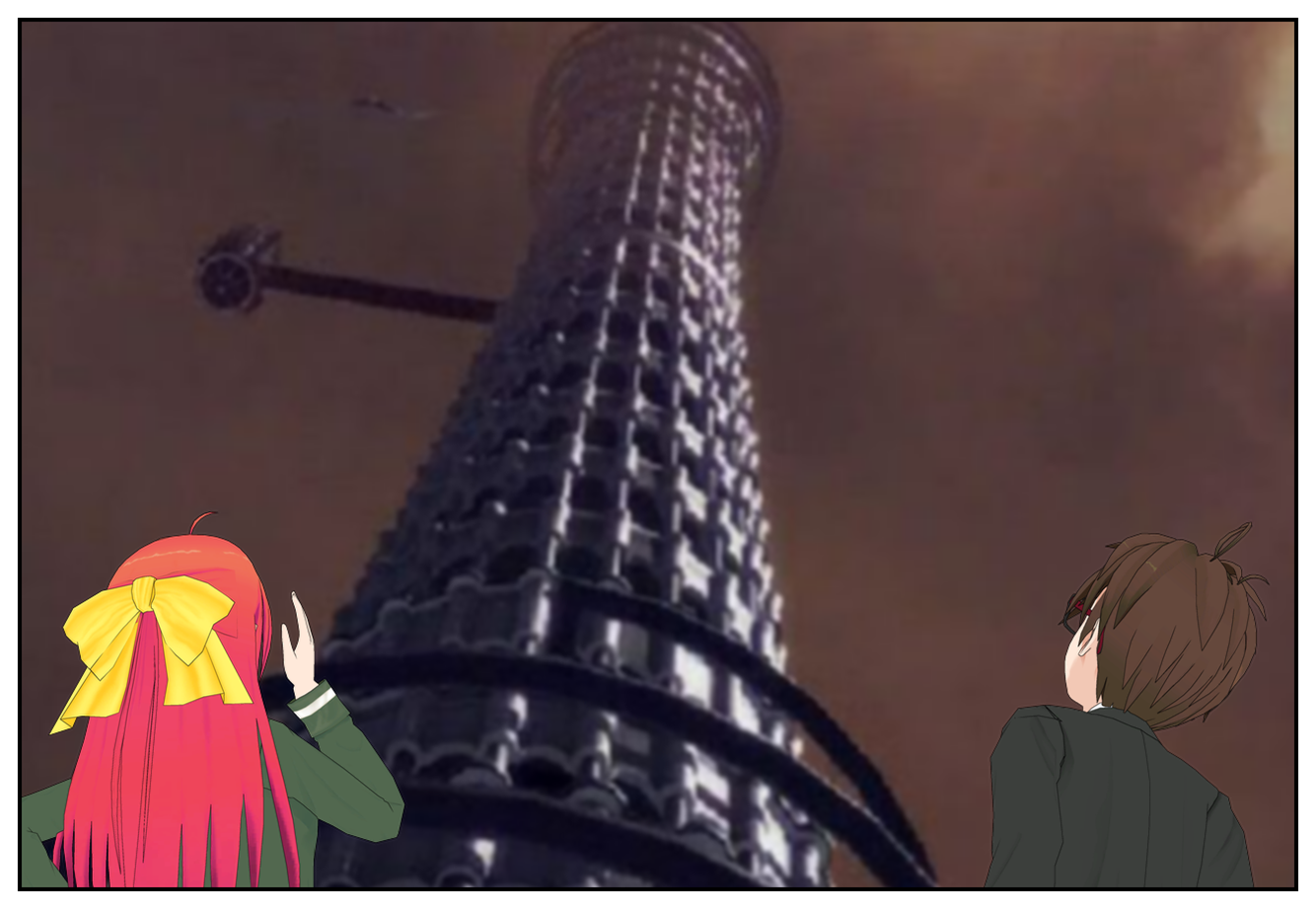
Ys I — and, indeed, most of the subsequent Ys games — casts you in the role of one Adol Christin, a redheaded adventurer lad who washes up on the shores of the land of Esteria against all odds after surviving a strange phenomenon surrounding the island called the Stormwall. After a brief convalescence — and specifically against the recommendations of his doctor and nurse — he heads out into the world to explore and figure out what is going on, and before long, oh, wouldn't you know it, he's some sort of Chosen One at the centre of all sorts of mystical happenings that appear to converge on Darm Tower, a hulking, sinister structure on Esteria that seems to be the source of everyone's troubles and woes.

Where Ys shines is in its small scale. In this sense, it's rather similar to the only other Falcom game I've played to date, The Legend of Heroes: Trails in the SkyTrails in the Sky featured a fairly hefty journey for its main cast, but its real appeal was in how much character and personality it gave each and every party member, shopkeeper, NPC on the streets and distinct region of the world. Ys I is the same, only in more concentrated form; the island is a very small place that you quickly learn to find your way around, even with the game's total lack of any sort of map function, and it's not long before you feel like you've got to know pretty much all of the 88 characters who are scattered around the game world, some of whom have something interesting to say, others of whom are simply background colour.

What's fascinating about Ys is that even the incidental, "useless" NPCs are full of personality and have clearly been written with a greater context in mind. They each have their own little stories to tell, and over the course of Adol's adventure, the things they say change subtly, giving you a good feeling of the sort of person they are and what they think about everything that's been going on. And the game sometimes surprises you by making what appeared to be an incidental character rather more important than they first appeared.

Couple all this with some really lovely pixel art in the field, some gorgeous visual novel-style illustrations when speaking with the more important characters, and an absolutely rockin' soundtrack, and, well, you have a game that is really rather good: unconventional, memorable, interesting and, most of all, fun.

If Ys I, the oldest and most primitive title in the series, is this appealing to me, I can only imagine how enjoyable the most well-regarded entries like Oath in Felghana and its ilk are. I'm looking forward to investigating the rest of the series in detail, and anticipate that I may well become a bit of a Falcom fanboy by the time I'm done with them.