2304: Blizzard's New Phenomenon

0304_001

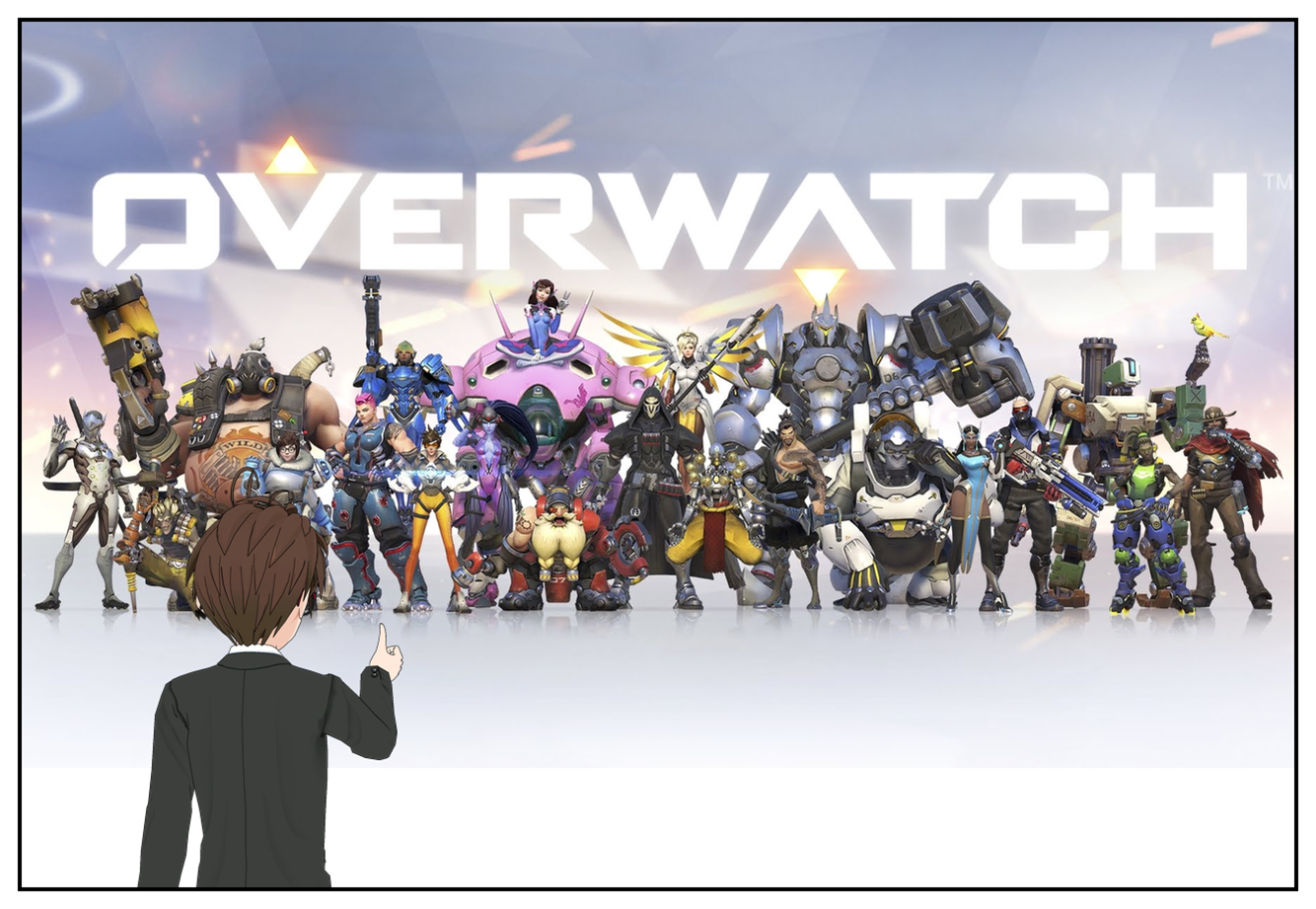
I know I wrote about Overwatch the other day, but having been, well, present on the Internet for the past few days I think it's fairly safe to declare that Blizzard has an honest-to-goodness phenomenon on its hands.

Overwatch's open beta (read: free demo — the best marketing tool they could have possibly used) ended at the start of this week, but people haven't stopped talking about it since. They also haven't stopped producing fan art, incorporating Overwatch characters into memes and cartoon strips, discussing strategies, taking the piss out of people who play nothing but Bastion and admiring Tracer's admittedly fine posterior.

It's kind of remarkable, really, because it seems to have come out of nowhere and evolved organically without a trace of interference from the marketing or PR machines. A few weeks ago, I knew very little about Overwatch and had little interest in it; after a couple of days with the beta on both PS4 and PC, I'm well and truly sold and am happily enjoying the wealth of fan-made content that's been produced seemingly in just the last few days.

Blizzard has always been a somewhat unconventional developer-publisher, producing wildly popular games that eschew popular conventions — mechanically, aesthetically and even functionally. Their insistence on using their own proprietary client Battle.Net to distribute, update and even sell their latest games initially drew criticism — particularly in the case of Diablo III — but as the world has become more and more comfortable with the idea of being always online and multiplayer-centric titles, these complaints have started to fade into the background until now, Blizzard's ecosystem allows it to have extremely successful titles without having to rely on the more established distribution channels such as Steam.

Overwatch's stealth marketing is another example of this. While there have been TV spots, video ads and site takeovers for the game, it has never felt like an aggressive marketing push in the same way that a Call of Duty or a Battlefield sees. Instead, Blizzard chose to rely on the most powerful marketing tool in the world these days: word of mouth. Putting their absolute confidence in their game and releasing it to the public for free for a few days achieved more than any multi-million dollar marketing campaign ever would; it allowed people to try the game for themselves and either confirm that yes, they did want to play it, or, in many cases, sate their curiosity as to what it was all about. In more than one case, the satiation of that curiosity has led to additional sales.

So why is Overwatch such a phenomenon? Well, a lot of it has to do with its striking visual design — it's immediately recognisable — but I think the biggest contributing factor is its wildly varied selection of playable characters. There's something for everyone in Overwatch's cast, whether you're into moody, dark types; big, stompy robots; hot girls; cute girls; frightening muscle-bound girls who probably have a Tumblr page; Westerns; sci-fi… there's a bit of everything. And somehow despite this massive variety in its cast, Overwatch feels coherent and none of its characters feel like token inclusions.

This, naturally, leads to people picking favourites — never underestimate the power of the waifus! — which, in turn, leads to people producing fan-created content based on their favourite characters. And, from there, other fans can enjoy this content and express how much they like their favourite character through sharing these fan-made productions or engaging with the artists. Over time, a whole meta-community outside of the game builds up, even bringing in people who don't actually play the game but just like watching it, or appreciate the art direction, or like the look of the characters.

In short, Blizzard would have to do something absolutely spectacular right now to fuck up Overwatch. I'm really looking forward to giving the full version a go at the end of the month, and if you're up for a multiplayer rumble in its wonderfully colourful world, be sure to hit me up.

2301: Overwatch

0301

I decided to give the game everyone seems to be talking about — Blizzard's new first-person shooter Overwatch — a bit of a go this weekend. They were running an open beta, after all, so there was no risk whatsoever involved in downloading it and giving it a shot.

And what do you know — it's actually pretty good. I'm not sure if I'm sold enough on it to want to pick up a copy when it comes out later in the month, but I certainly enjoyed the time I spent with it over the last couple of days.

For those who have perhaps heard of Overwatch but not found out any more information about it, it is, in many ways, similar to Valve's classic Team Fortress 2 in that two teams made up of various different characters with different capabilities face off against one another in order to complete an objective of some description. In the game as it stands at the moment, the objectives on offer include a "king of the hill" type affair, where over the best of three rounds, each team has to control a particular area on the map for a certain amount of time; an "attack and defend" situation, where one team has to defend a point against assault from the other team; an "assault" variant, where the attacking team has to escort a slow-moving "payload" vehicle from one end of the map to the other while the other team stops them; and a mode that mixes the "attack and defend" and "assault" objectives together.

Like Team Fortress 2, the different characters have different roles on the team. Offensive characters are nimble but fragile, with their weapons and abilities concentrating on inflicting damage efficiently. Defensive characters have the ability to do things like lay down turrets or, in the case of one particular character, turn themselves into a turret. Tank characters have a huge pool of health points so are designed to act as a distraction for the other team. And support characters generally have some sort of useful ability to help the team out — usually some form of healing, buffing or both.

Where Team Fortress 2 only had one character of each archetype, though, Overwatch has several, each of whom has a unique weapon and loadout of special abilities. Weapons have clips of ammo and have to be reloaded when empty, but you have infinite clips, so there's no hunting around for ammo or any punishment for spray-and-pray gunplay. You can restore your health by returning to your home base, similar to how Blizzard's MOBA Heroes of the Storm works. And if you find a hero isn't working out for you, you can switch either when you die or when you're in your base.

Overwatch strikes an excellent balance between simplicity and tactical depth. The characters are all easy to learn in terms of mechanics, but applying their weapons and skills to situations throughout a match is the real challenge. That and not blowing yourself up in some instances; my favourite character so far, D.Va, has the ability to self-destruct her mech suit, killing anyone nearby, which is an absolutely devastating skill, but also very likely to take you with it if you don't immediately run away.

There's also a fun metagame that doesn't fall into the Call of Duty trap of excessive challenges and skill levels: you simply have an experience level, which gives you a "loot box" every time you level up, and the items in the loot box are randomly selected skins, animations, spray paint logos and voice clips for the various characters in the game. None of these have any effect on the characters' abilities — they're just there as cool collectibles as an incentive for players to keep playing. The choice to make Overwatch a full-price game rather than a free-to-play affair also seems quite sensible, too; while some may balk at paying full whack for a multiplayer-only game, there's a substantial amount of content in here, both heroes and maps, and Blizzard claim that they're going to support the game post-launch with new, free add-on content rather than paid DLC. A round of applause for them, then; doubly so since their parent company is Activision, who loves milking the annual Call of Duty installments dry.

The other nice side-effect of it being a full-price game is that everyone has access to everything from day one. Everyone can pick a favourite character and get to grips with them without having to wait for them to come around in a free-to-play rotation; everyone is, in other words, on a level playing field to begin with, with no advantage given to someone who has paid up for characters, boosters or whatever.

As I say, I'm not yet sure if I'm convinced enough by the beta to hand over 50 quid for the full game when it releases later in the month, but I will say it's the most fun I've had in a first-person shooter for a very long time indeed, and I generally don't go in for competitive first-person shooters. The beta seems to have had some positive attention, too, so hopefully it will enjoy a solid community for some time — long enough for it to be worthwhile for Blizzard to keep adding new content.

If you want to give it a go for yourself, I believe you have until Monday morning to try it out. Better hurry!

2296: Games Called "Simulator" That Aren't Simulators: A Joke That's Run its Course

0296_001

Back in the Good Old Days, my Dad played a whole lot of Flight Simulator, both in its SubLOGIC days and subsequently when it became a Microsoft product. (He still does, though perhaps not quite as much as he used to.)

One recurring joke we had in our family was taunting my Dad by saying that Flight Simulator was a game (which it is), which he would inevitably respond to by vociferously declaring that "it is not a game", because he didn't play games. (He has relaxed this policy in recent years, largely due to the advent of iOS.)

While I didn't agree with his assessment of what a game was, I did, however, understand where his argument came from. Proper noun Flight Simulator was a cut above even other lower-case flight simulators in terms of realism and depth, and noteworthy at the time for being one of the only civil aviation flight sims. It was also noteworthy for being one of the first ever open-world sandbox games, in that there were no goals whatsoever besides those that you set for yourself; there wasn't even really a "fail" state, since if you crashed, you could just respawn and start again.

By far the most noteworthy thing about Flight Simulator was the fact that it did exactly what its title suggested: it provided an accurate simulation of what it was actually like to fly a plane. That means no simplified controls; that means no throwing your plane around the sky; that means the need for at least a basic understanding of physics (including lift, thrust and drag) in order to even get off the ground. And even outside of the more obvious realism aspects such as the flight model, even navigation was simulated accurately; you had to tune navigation radios, follow the needle and so forth. Many real-life honest-to-goodness pilots actually trained to fly on instruments using Flight Simulator, such was its level of realism and detail when it came to this side of things, even if the graphics weren't particularly impressive in the early days.

As a result of all this, I came to associate the word "simulator" with… well, simulations. Virtual depictions of something real — and a depiction that errs more on the side of realism than providing a thrilling gaming experience.

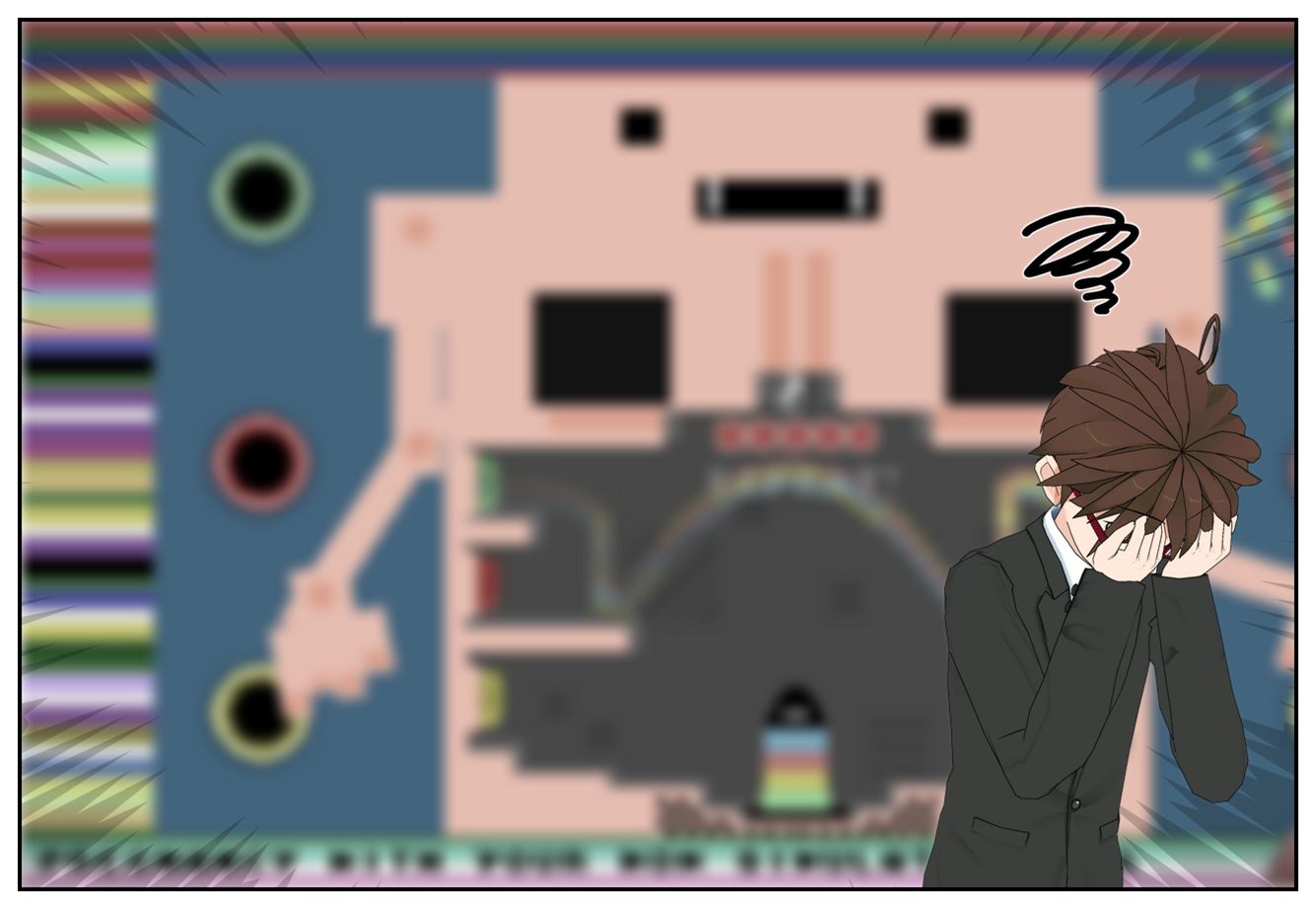
This morning I received an unsolicited Steam invite to a group promoting an upcoming game called Pregnancy with Your Mom Simulator 2016. This is what Pregnancy with Your Mom Simulator 2016 looks like.

If you have never encountered the modern use of the word "simulator", Pregnancy with Your Mom Simulator 2016 pretty much sums it up. These days, although Flight Simulator still exists, the word "simulator" is much more frequently used in a "hilariously" ironic manner to describe something ridiculous, obviously unrealistic and filled with puerile humour.

I generally have nothing against puerile humour for the most part, but the use of the word "simulator" for this kind of thing is just getting a bit beyond a joke now. In just the last few years we've had Surgeon Simulator, Goat Simulator, Shower with Your Dad Simulator, Zombie Training Simulator, Corporate Lifestyle Simulator, Domestic Dog Simulator… and, well, literally hundreds of others. While there are a few genuine simulators in among the dross — the most noteworthy being titles like Euro Truck Simulator and its ilk, which follow the Flight Simulator mould of actually providing a realistic simulation of a real-life activity — the vast majority of these games are designed to be stupid visual jokes for YouTubers and streamers to whoop and holler over on videos with headlines like "CRAZY game from HELL?! SHOWER with YOUR MOM!!"

More than anything, I find it a bit frustrating to see the word "simulator" thrown around so casually these days because sometimes you just want to actually indulge in a genuine simulation of something — you want to see what it's like to drive a truck, use heavy construction machinery, fly a plane, launch a rocket, whatever — and this nonsense's use of the word completely devalues the word "simulator" to such a degree that it's now meaningless. Moreover, it's actively difficult to find real simulators — which, in the past, have had pretty functional, self-explanatory titles, such as Flight Simulator — among all this shit.

Ultimately this sort of thing is just another side-effect of the attention deficit disorder that the Internet seems to collectively suffer from. The population of the Internet staggers drunkenly from meme to meme, desperately searching for the next joke they can milk until it becomes the opposite of funny, then all the people who only use Facebook can start posting about it and it officially becomes dead, at which point a new meme shall rise and everyone shall become sick of it once more.

Perhaps I'm just old and cynical. Or perhaps I'm just tired of Steam and the mobile app stores getting flooded with "joke" games like Pregnancy with Your Mom Simulator 2016. People complained about the Wii being laden with shovelware, but that was nothing compared to the shit we see on Steam and mobile in 2016 — shit that distracts attention away from stuff that is actually noteworthy and interesting.

2295: You Should Play Aselia the Eternal

0295_001

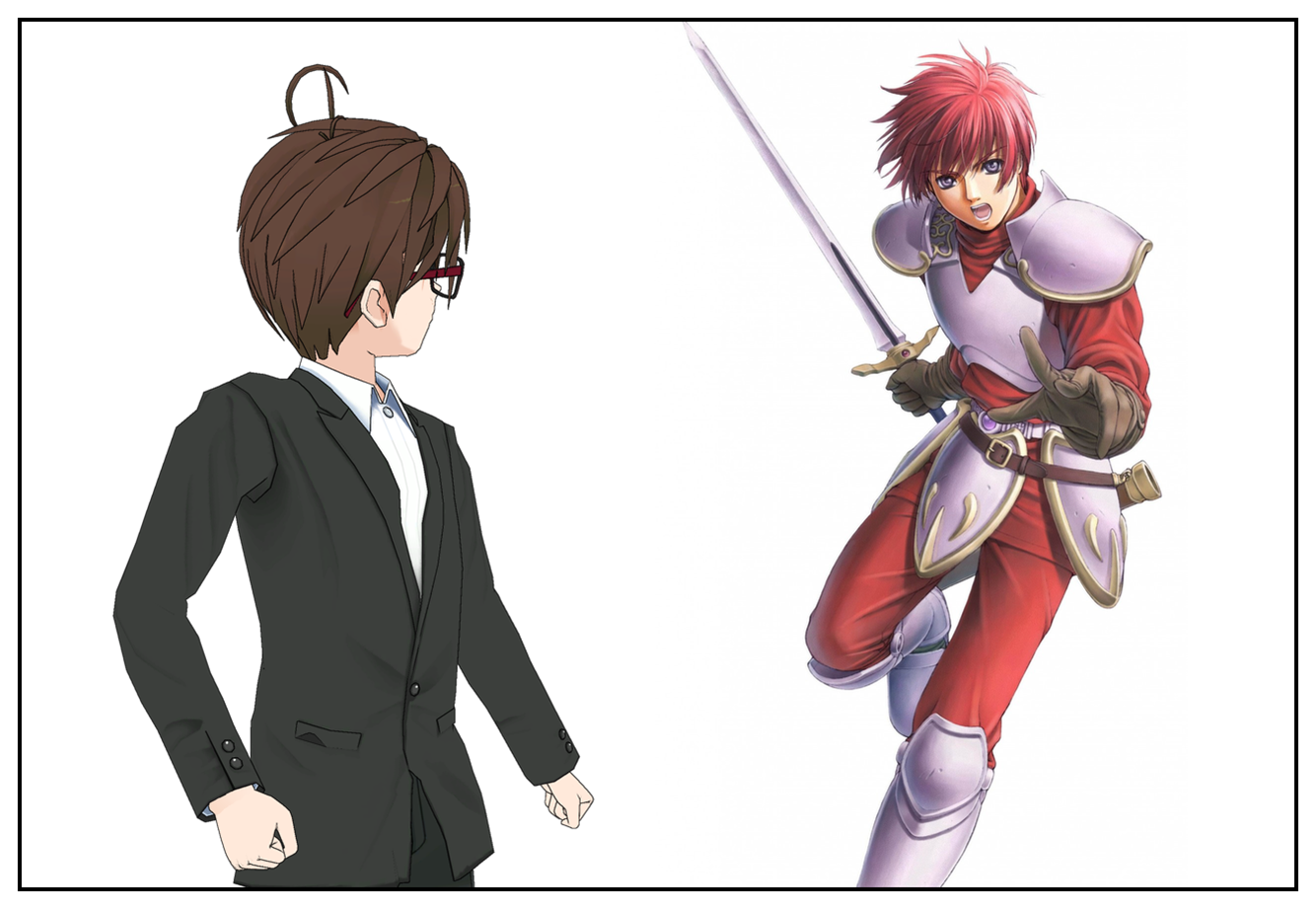
JAST USA recently released Aselia the Eternal on Steam. The game's been around for a good few years now — its original Japanese version for even longer — but its release on Steam will doubtless allow a whole new audience to (hopefully) enjoy it. I will now attempt to explain why it is worth giving it a go.

Aselia the Eternal is a combination of a visual novel and a strategy game. The overall balance is very much in favour of the story side of things — it's a good six hours of reading before you get to the game's first strategy battle sequence — but when you do get to the strategic aspect, it's a game that puts up a good fight.

The narrative concerns the player-protagonist Yuuto, who finds himself drawn into another world populated by people who speak a completely different language to him. Unable to find his way home, he gradually learns to communicate with these people — the ones with whom he's staying known as "Spirits" — and finds himself recruited into the army as an "Etranger", a wielder of a powerful, sentient sword that regularly threatens to eat his soul.

Gradually, as Yuuto becomes more and more involved in the lives of the Spirits, he starts to worry less and less about trying to find his way back home and more about helping to resolve the conflict that threatens to tear this fantasy world apart. As such, the narrative becomes very much a high fantasy sort of affair — war on a grand scale, magic and mayhem around every corner, transcendence of humanity not at all out of the question — and builds to a thoroughly exciting conclusion that I won't spoil here.

The story is compelling, interesting, well-written and well-translated, but it's the gameplay part that is perhaps the most interesting thing about it, since it's one of the most original takes on strategic RPG-style combat I've seen. Virtually eliminating all luck from the equation, combat in Aselia the Eternal is actually about putting units together in small squads to perform most effectively according to what type of unit they are — and by doing this correctly you can effectively guarantee that you'll win a conflict before you reach it. The tricky part is in finding those suitable combinations in the first place.

The basic rules of engagement have each of your squads made up of three ranks — a frontline fighter, a mid-range tank and a support fighter bringing up the rear. Each of the different types of Spirits perform best in a particular slot: Blue Spirits (such as the eponymous heroine) do their best work as speedy damage dealers in the front row; Green Spirits tend to have the highest defense and HP, so sit in the middle; Red Spirits often have support abilities that can damage an entire enemy squad or provide suitable benefits to your own, so sit at the back. You're not limited to this arrangement — and indeed, with Yuuto in the mix, who is none of those things, you'll have at least one squad with an unconventional lineup — but there are clearly optimal ways to do things, making each of the battles in the game as much of a puzzle as a strategic RPG experience.

Aselia the Eternal comes together so nicely because everything it does is in service to its narrative and worldbuilding. Despite not having an open world you can freely explore, its excellent storytelling and descriptive narration builds a wonderfully convincing setting that gives the strategic sequences genuine meaning and drama. And, as a result of that worldbuilding, your units in the strategic sequences become more than just sets of stats and abilities; they become people. People who you don't want to see die, because yes, this game has permadeath.

The question of being "more than just a soldier" is one of the main narrative themes explored in the game, and it's a rather wonderful moment when you realise that you, the player, are having the same epiphany that the characters in the game are. There are some wonderfully touching sequences with Yuuto and the Spirits as they get to know one another, and you're right there with them. And, as the narrative ramps up and you bring more and more allies with you, the tension becomes palpable as you take them into battles that you really don't want to see them lose.

I don't want to say too much more because part of the wonder of Aselia the Eternal is exploring the experience for yourself and discovering everything this remarkable work has to offer. Suffice to say if you enjoy in-depth storytelling — and lots of if — and aren't averse to a bit of red-hot strategy action, you should most certainly check it out. And then strongly consider supporting JAST's recent release of the sequel Seinarukanawhich I'll be investigating for myself in the near future!

2287: Deep Dungeon is Exactly What FFXIV Needs

0287_001

I got burnt out on Final Fantasy XIV a little while back and haven't felt particularly tempted to go back since — especially since my Free Company had been less than conversational for the last few months, making even the social aspect of the game less worth logging in for than it had been.

At PAX East this week, Square Enix announced an exciting new plan for some future content that has me clamouring to get back to the game once it releases: a new type of activity called Deep Dungeon, which will be familiar to fans of both Final Fantasy Tactics' Midlight's Deep optional dungeon and Final Fantasy XI's Nyzul Isle.

It sounds as if Deep Dungeon is going to be a discrete type of activity for players to participate in, with the eventual plan presumably being to have a number of different dungeons for players to challenge. Initially, there will be just one, called Palace of the Dead.

The reason this excites me so much is because it shakes up the established formula of Final Fantasy XIV — which, don't get me wrong, I like very much, but just needed a break from, thanks to the necessity of grinding the same content week after week in order to obtain the next incremental upgrade. Unlike the current substantial array of static content available in the game, Deep Dungeon has a strong random element, plus a great deal more flexibility than the rest of the game's reliance on the MMO "Holy Trinity" of tank, healer and DPS.

Deep Dungeon sees you and up to three friends tackling a randomly generated dungeon. It also has its own progression system separate from the main game's experience and item levels, mitigating the issue the game currently has of a significant proportion of players outgearing the majority of the current content. The in-game reasons for this are that the dungeon saps your character's strength, and in order to power back up again you'll have to make use of items you find within the dungeon itself, progressing and regaining your strength as you proceed.

If it's anything like Final Fantasy XI's Nyzul Isle — which FFXI veterans inform me, it sounds very much like — then each floor of the dungeon will not only be randomly generated, but it will also have various objectives to complete, as well as challenging boss fights every so often. It sounds like a lot of fun — and I really like the fact that it's seemingly flexible enough to cater to any party makeup from 1-4 players, hopefully leading to some interesting combinations of classes exploring the depths. All-tank runs? Bring it on!

I have questions that will hopefully be answered in the coming months: firstly, what will the point of Deep Dungeon be? Will it be another means of acquiring progression currency, or will it be a completely separate activity? My main concern with it is that it ends up being a Diadem, which sounded awesome in concept but turned out to be a bit toss when it was actually released. Part of this was down to player attitudes, admittedly, rather than any real fault with the content itself, but hopefully the smaller scale of Deep Dungeon will mitigate this risk somewhat.

To be honest, if Deep Dungeon proves to be a significant enough challenge with enough variation on each run, I can see it becoming one of my main activities in Final Fantasy XIV, particularly if I have the option of running it either solo or with friends. And with the promise of score rankings coming in a future update, there's the distinct possibility of some friendly competition, too.

The first Deep Dungeon, Palace of the Dead, is due to arrive in the game as part of Patch 3.35. I'm planning on jumping back into the game around Patch 3.3 to find out what happens next in the main scenario quest — the story is getting very interesting — but if Deep Dungeon lives up to its potential, 3.35 will see me getting back into things in a big way.

Please don't mess it up, Yoshi-P and co. I have faith in you!

2279: Matchmaking: A Great Way to Waste Time

0279_001

I downloaded the Doom beta on PS4 earlier out of curiosity. I hadn't heard particularly positive things about it — though admittedly, this was mostly from disgruntled PC players who were whining about the lack of mod support and how it was "obviously built for consoles" — but as someone who actually used to really like Doom, I was interested to take a look.

I booted up Doom, fiddled around in the options a bit, took note of the entertaining options to weather, dirty up and scuff your armour in character customisation — not to mention painting it lurid shades of pink and purple — and then jumped into the multiplayer playlist.

Then, I waited.

And waited some more.

And then a bit more.

Well, okay, this perhaps makes it sound a bit longer than it actually was: it was probably less than five minutes in total, all told. But that was five minutes utterly wasted in which I wasn't doing anything apart from staring at the screen and perhaps rotating my character model a bit.

My mind was cast back to a comment someone I follow on Twitter made a while back, whose sentiment was along the lines of "rather than wasting your time with endless, pointless matchmaking games, throw yourself into enjoying games with stories; games with clear beginnings, middles and ends". At the time, I thought it a slightly extreme viewpoint, since I have enjoyed multiplayer matchmaking games in the past, but on reflection, he was absolutely right: for me, right now, matchmaking multiplayer games are a total waste of time and energy for what I find to be a subpar, unsatisfying experience compared to something that is either a bit more structured or something that has immediacy.

Doom isn't the only game where I've encountered the tedium of waiting for matchmaking queues. Playing a damage-dealing class on Final Fantasy XIV often leads to long queues for dungeons — although at least in that game, you can do other stuff in the open world while queueing, though there are a few limitations on your activities to prevent your queue popping and you being unavailable. Grand Theft Auto Online is particularly unpleasant to try and find a matchmaking session in, since it's riddled with people who pop into a lobby, then quit out again after five seconds if it's not already full. And I'm sure there are plenty of other examples, too.

So, I think I've had enough. I've felt a slight temptation to check out things like Doom and even the more recent Call of Duty games in the recent past, but on reflection, I feel they'll only frustrate me: time spent "waiting for players…" is time not spent enjoying a story in a single-player game, or trying to beat a high score in an arcade game, or chasing trophies in a game I've reached the post-game for.

This isn't to say I'm not going to play multiplayer at all, mind you: TrackMania Turbo has an excellent multiplayer where you can just jump in and out of player-made rooms at will, with no waiting around for there to be "enough" people to play. And I have a lot of fun playing Grand Theft Auto Online with my local friends. Those represent two different ways of having a fun online experience without getting matchmaking systems involved.

Strangers who are beyond that great wall of matchmaking, then? Fuck 'em; I've got better things to do than wait for them to show up to my party.

2276: Video Computer System

0276_001

As I wrote in a few posts recently, I've been checking out the new Atari Vault compilation on Steam. Rather than talking about a specific game today, I wanted to talk a little bit about the value of the compilation as a whole, and why I'm enjoying exploring it.

Atari Vault is a compilation of somewhere in the region of 100 Atari games from the '80s. The bulk of the compilation consists of VCS 2600 games, but there are some arcade games in there too, including the likes of Crystal Castles, Missile Command, Major Havoc and Liberator.

I've owned a number of previous similar compilations in the past, and have typically gravitated towards the arcade games, since they seem more "palatable" from a modern perspective than the extremely primitive-looking 2600 games. I recall growing up with the Atari 8-bit home computers, and in comparison to those, 2600 games looked primitive even back at that time when it was relatively current, and as such, I've always found them a little offputting. I've made a specific effort to explore them a bit more this time around, though, and I've been pleased to discover some really interesting games.

Take Haunted House, for example. This is a fairly straightforward top-down "find all the things" game with an intriguing twist: you're in the dark. With your character represented as nothing more than a pair of eyes, you navigate around by either bumping into walls or lighting matches to illuminate the area immediately around you. A single game of Haunted House requires that you find all the pieces of a… thing… an urn? And you have to do so while using as few matches as possible and losing as few lives as possible, for this being a haunted house, it has a number of unpleasant beasties lurking around just waiting to nibble on you.

Or take Save Mary, a prototype game that never saw commercial release, but which presented an interesting twist on vaguely Tetris-ish block puzzles. The eponymous Mary is trapped at the bottom of a pit which is slowly filling with water. You control a crane and have to drop blocks into the well for Mary to climb up. You need to get her high enough to be able to grab her with the crane and save her. Once you've done this, you have to do it again, only with significantly more awkward-shaped blocks. The peculiar variation on the typical block puzzle formula is the fact that Mary has a mind of her own (albeit a predictable one) and you have to be careful not to squish her with the blocks you drop as she wanders back and forth trying to get to high ground.

Or how about Atari Video Cube, a really simple but surprisingly compelling puzzle game loosely based on Rubik's Cube? Controlling a weird little man (who has a name and a backstory and everything, though I can't remember it offhand), it's your job to pick up coloured squares from each of the 3×3 faces of the cube and lay them down so that each side is a solid colour. To make this more difficult, to pick up a coloured tile, you have to swap it with the one you're holding, and to make it even more difficult, you can't walk through tiles that are the same colour as the tile you're holding, even if they're on a different face of the cube.

The 2600 back catalogue appears to be filled with these sorts of interesting little games that we'd probably find laughable if released as full-scale, full-price commercial releases today, but as part of this compilation, they provide a surprising amount of entertainment value — and, in some cases, represent types of games that are very much deserving of a modern remake.

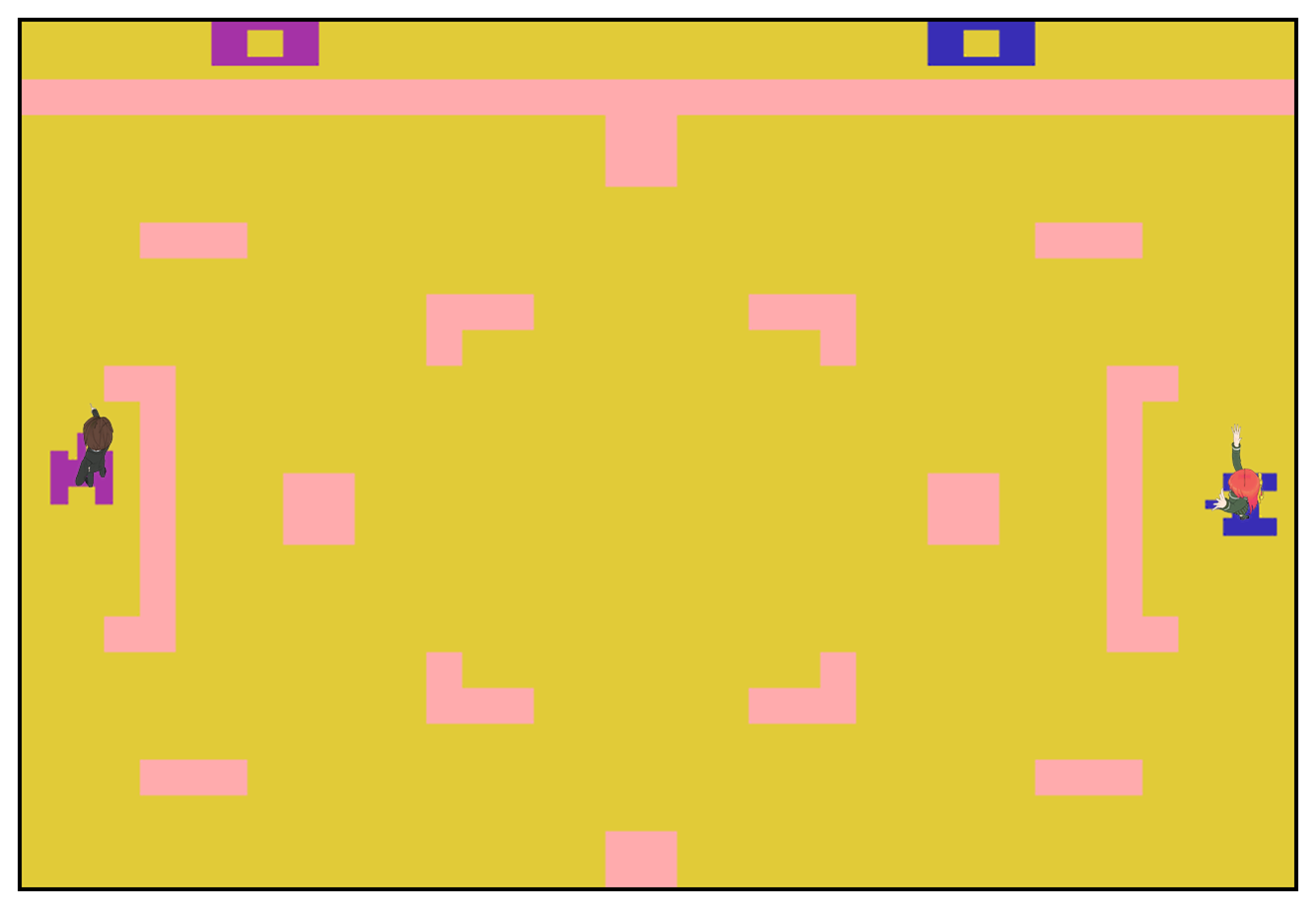
My only issue with them from a modern viewpoint is the fact that 2600 games tend to end rather abruptly, regardless of whether you "win" or "lose", and this can sometimes make victories over a particularly difficult level feel a bit less than satisfying. Still, this was from an age where gaming was quite a social pursuit — many of the 2600 games are very much designed to be played together with a partner — and so, I feel, a key part of the fun back then must have been making your own fun with the games to a certain extent; similar to how a tabletop game doesn't automatically set off fireworks as soon as you win, neither does a 2600 game. The celebrations and victory rewards are entirely up to you; I recommend betting each other a slice of pizza or a big lump of cake on a game of Combat and see how much you like each other by the end of the evening!

2270: HunieCam Studio: A Few Tips

0270_001

Have you been playing HunieCam Studio? If not, you should; it's great.

If you have, you've probably discovered that it's quite challenging, at least for your first few playthroughs. Here, then, are a few tips that I've figured out in my first three playthroughs, the last of which resulted in a lovely gold dick trophy.

The first few days on the job

While your overall goal in HunieCam Studio is to have as many fans as possible by the end of the 21st day, don't sweat fans at all to begin with, since you only have one girl and you need money.

It doesn't really matter which of the three starter girls you pick, since they all have identical stats and none of them are addicted to drink or cigarettes. Choose whoever you like the most, though take note of the fetishes they cater to, as these will be more important later in the game.

Immediately send your starter girl to do a few cam shows one after the other. This will give you enough money to spend on a few upgrades. You'll want to prioritise both the staffing upgrade that increases the number of girls you can hire, and the inventory upgrade that allows girls to carry accessories.

Once you've upgraded your staffing, send your girl to the model agency to find some hot new talent. Pick someone who won't break the bank with her hourly rate, because you don't have a lot of income yet. Once you've got your second girl up and running, you can start branching out a bit.

Getting into the rhythm

Now you can start building your fanbase a bit. Remember that when a girl does a photoshoot, she gains fans of some or all of the fetishes she caters to, so it's actually quite helpful to hire girls with overlapping fetishes. You can force overlaps with the accessories that unlock new fetishes, too; if every girl has a butt plug, for example, they'll all earn fans of Anal when they do a photoshoot, which will give you a fanbase that will apply to all of them when they do a cam show — which means more money.

Consider upgrading one of your girls' abilities with the strip club and the shopping mall, but keep a steady flow of income coming in; remember that you have to pay your girls by midnight every day, and if you get into debt and don't get back out again by midnight of the next day, the game is over! Don't over-upgrade, either, since your money will still be fairly limited until you have more girls with better skills.

Thrusting forwards

From your third girl onwards, don't be afraid to hire a drinker or a smoker, though perhaps steer clear of those who are heavily addicted. Drinkers and/or smokers build up stress more slowly so long as they have a supply of their particular vice(s), so they can perform more actions before you need to send them to the Day Spa to recover.

Once you do hire a drinker and/or a smoker, be sure to either use one of your unupgraded starter girls — or, if you've upgraded them both, a new hire with skills at the base level to save costs — to become your errand girl, doing nothing but running to the shops to get drink and cigarettes. You can make her considerably more efficient by acquiring a Shopping Basket from the Adult Shop, which doubles the yield of both shops, and you can make her even more efficient by dosing her up with coke each day, which makes her complete her activities at double speed. If you find yourself with a considerable surplus of drink and cigarettes, use the opportunity to send her to the Adult Shop whenever you can, as accessories are always useful. Grab condoms and antibiotics when you see them, as these are handy during financial emergencies.

Oh, God, yes

One of the most useful accessories is the Subscribe pillow. This allows a girl to earn fans when she does a cam show — it's not quite as quick as when she does a photoshoot, but it gives you a trickle of fan income, which will gradually increase your financial income and final score, too. Equip all your main camgirls with the best skills with one as soon as possible, and fill their remaining inventory slots with fetish accessories, as these increase the amount of fans they earn as well as allow them to cater to specific fetishes.

As you progress, don't forget about upgrades, particularly those that allow you to collect more money and fans with each click on the cam and photo studios. Time you're spending collecting resources is time you're not spending micromanaging your army of sex workers, so being able to collect it more efficiently is a godsend. Also be sure to invest in at least a couple of levels of the Automation upgrade, since this allows you to passively collect resources even when you're doing other things.

Uhhhhuhhhhggghhhhnnnngh

Money troubles? No worries. Whore out your girls at the Sleazy Motel and you'll earn all the money they'd earn from a camshow in a fraction of the time. There is, however, the risk of them catching an STD from this, and STDs range from mildly inconvenient and curable to completely incapacitating and incurable. If a girl gets AIDS, immediately hire another one to take her place, since AIDS victims are unable to do anything.

To prevent STDs, give the girl you're sending to the Motel — your highest earner, obviously — a condom, and you won't have to worry. If the worst does happen, however, dose her up with antibiotics and she'll be better in three days. Alternatively, you can give her a shot of steroids to negate the effects of the STD temporarily, though this is not an ideal solution.

Aaaaaahhh

Once you've got a good lineup of well-skilled girls and you're making good money, make sure you start investing in advertising, since this simply allows you to exchange money for fans. If your cashflow is a little limited, prioritise the ads that cater to fetishes you have on staff, since this will make those girls more profitable. If money is no object, buy all the ads you can, and upgrade your advertising to be able to purchase more — and better — ads each day. Note that this upgrade isn't retroactive, though; it takes effect from the following day, so it's useless if you forget about it until day 21.

Also, it is very much worth your while to upgrade your web hosting and photo equipment, as these significantly increase the cash you get from camshows and the fans you get from photoshoots respectively. They're expensive upgrades, but they pay for themselves before long.

Finishing off

In your last few days, ditch any "useful" accessories you've been using such as the Piggy Bank, Nicotine Patch or Wine Box, and make sure each girl has three fetish-catering items, increasing her fan yield. Rotate your girls between camming and photoshooting to keep both money and fans coming in, and be sure to buy ads each day. Keep your errand girl active, too; if you don't need drink and cigarettes, keep her shopping at the Adult Shop for condoms and antibiotics.

Most importantly for the whole game, make sure no girl is wasting time: everyone should always be doing something, even if that something is just resting at the Day Spa. If a girl finishes an activity and you're in the middle of collecting a resource, stop and assign her to something new before you resume collection, otherwise she's dead weight for those few moments, and if you want a huge fan count and that big, spunking platinum dick trophy, every second counts.

2267: HunieCam Studio: Private Time Management

0267_001

Remember "time management" games? Diner Dash and the like? They were a large part of what constituted "casual games" before free-to-play mobile shit entered the marketplace and ruined everyone's fun with microtransactions, throttling and "fun pain".

HuniePot, developer of HuniePop and now HunieCam Studio, clearly remembers the good old days of casual games before free-to-play. Not only have they made an excellent puzzle game in the form of HuniePop — a game that successfully puts an interesting twist on match-3 and doesn't just clone Bejeweled — but now they've made an enjoyable and surprisingly addictive time management game in the form of HunieCam Studio.

HunieCam Studio describes itself as a management/tycoon game, but set aside any thoughts of the complex '90s/'00s-era tycoon games here: this is a game that is extremely simple to pick up — thanks in part to an amusingly well-written (and skippable) tutorial starring Kyu, the perverted fairy from HuniePop — but challenging to master. And it's a game that's designed to be replayed and experimented with, too; both to beat your own high score and to tackle some of the challenging achievements on offer.

But what is HunieCam Studio? Well, let me rewind a bit and give some context. HunieCam Studio's predecessor HuniePop was a Kickstarter success story, promising a Western-style dating sim with anime-style graphics but a distinctly foul-mouthed Western comedy approach. It changed a little from its original brief, but maintained its core formula of using its puzzle mechanics to represent how well your dates with the game's various lovely ladies were going, and incorporated some resource management as you upgraded your character's abilities and bought the girls gifts.

huniecam3

HunieCam Studio takes much of HuniePop's cast along with some newcomers and puts them in a new context: the seedy underbelly of the Internet, specifically the "camgirl" industry. For those far too innocent to know what a camgirl is, you can probably work it out; just in case you really have led a sheltered life, though, a camgirl is an online sex worker, putting on shows from her bedroom (or studio) for the gratification of horny people who want to watch some live porn. Camgirls make their money through a combination of tips from the audience (delivered electronically) and particularly amorous punters who pay for some private one-on-one time with the girl.

In many ways, camgirl work is the "acceptable" face of the sex work industry, if such a thing exists, since many camgirls work independently for themselves, and the natural barrier that the Internet puts between them and their audience means that it's a lot easier for them to stay safe from dangers such as STDs and punters who get a little… overenthusiastic.

Ideal video game fodder, wouldn't you say? No? Well then, you'd be wrong.

huniecam2

HunieCam Studio's gameplay takes place on a static town map. Beginning with just one girl in your camgirl empire — HunieCam Studio's take on camgirls has you working for Kyu, who in turn wants nothing more than to roll in big piles of money obtained through the sleaziest means possible — you assign your charges to various tasks, each of which takes a varying amount of time, but which can be sped up by clicking or holding the mouse button down on it. This has led many people to arguably erroneously describe HunieCam Studio as a "clicker" game, but it differentiates itself from popular clickers such as Clicker Heroes by having a clearer structure and goals in place rather than just playing endlessly for the sake of it.

The tasks the girls can take on include putting on cam shows (which earns money), doing photo shoots (which earns fans, which equal more money when doing cam shows), training their talent (which improves the money they make per fan during cam shows) and style (which improves the number of fans they acquire per photo shoot), shopping for booze and cigarettes (both of which cause those with varying degrees of addiction to either or both to remain somewhat more stress-free than their clean counterparts), fucking punters in a sleazy motel (which makes money more quickly than cam shows, but which carries a risk of the girl catching one of several STDs, each of which has its own negative effects that restrict her actions), shopping for accessories (which carry passive bonuses) or resting at the day spa (which alleviates stress built up through all of the above activities).

Meanwhile, as Kyu's assistant, it's your job to manage the girls' time effectively and upgrade the overall operation using the money they earn. As you progress, you can unlock more slots to hire more girls and consequently perform more simultaneous actions, and you can also improve the pace at which clicking on things speeds things along as well as automating the collection of the resources actions produce. This becomes particularly important later when the girls start earning large amounts of money and fans with each action; clicking over a thousand times to collect all your ill-gotten gains isn't going to work.

huniecam1

You also have to manage the overall budget. The girls have an hourly rate of pay that increases as their talent and style levels increase, and at midnight each day you have to pay them. If this puts you in debt and you're not back out of debt by midnight on the next day, you lose. There are no other consequences to getting into debt, however, so sometimes it can be tactically advantageous to quickly blow all your money to get your operation in a good position, then spend part of the next day recouping the deficit you're left with after paying the girls.

The overall aim of HunieCam Studio is to have as many fans as possible by the end of a 21-day period. Once this time period is up, your final fan total is totted up and you're awarded a trophy according to how well you did. This, in turn, provides you with coins that can be spent on unlocking new hairstyles and costumes for the girls, with a mildly lewd picture on offer as a reward for each girl if you unlock all her variations. (Interestingly, during the game itself there's no explicitly lewd content whatsoever; everything is implied or mentioned in text. This is not a game to fap to.)

HunieCam Studio appears simple, but there are some interesting things going on under the (clitoral) hood, particularly with how the "fans" system works. Each girl starts catering to two specific fetishes, usually relating to their physical appearance — "MILF", "Teen", "Latina" and suchlike. Fans you acquire have specific tastes, meaning that girls who have a greater share of your total fanbase will make more money doing cam shows, and more money means faster upgrades. Ideally, you'll have multiple girls with overlapping fetishes, and this can be partially manipulated by purchasing accessories from the shop — buying butt plugs and giving them to a girl allows her to cater to fans who enjoy bum fun, for example, but this won't do you much good until you attract some fans of bum fun in the first place through photoshoots or paying for advertising to a particular audience.

As the game progresses and you get more girls in your little harem, things get surprisingly hectic if you want to keep things running as efficiently as possible, and STDs can throw a real spanner in the works, particularly if they're one of the serious, incurable ones — AIDS, for example, prevents a girl from doing anything at all because she's so depressed about the situation, making her completely useless to your operation. There is, sadly, little time to feel sorry for her, though; not if you want to make money and attract fans, anyway. Such is the way of a capitalist society.

huniecam4

I enjoy HunieCam Studio a lot more than I was expecting to. Its controversial new art direction — taking a distinctly more "Western cartoon" approach than the anime-inspired art of HuniePop — actually looks pretty good in the context of the game, and it's enjoyable to play. A full 21-day game only takes about an hour and a half tops, too, so it's easily replayable, and for those with little free time, you can save and come back at another time. You can also continue playing the game in "endless" mode after the 21 days are up, but you can't achieve the better trophies in this way — you'll need to start again for that.

A lot of people describe the people making consciously "arty" indie games as the punk movement of the games industry, but I have to say, I feel a bit differently; while I have nothing against the art-games movement and indeed encourage it in many cases, it's a very cliquey little part of the industry that has very specific ideas about what is and isn't "acceptable" or "good", particularly with regard to controversial and/or progressive themes.

HuniePot, meanwhile, don't give a shit what people think of them and deliberately set out with their games to be as provocative and offensive to those with delicate sensibilities as possible — while taking care to ensure that what they produce is also actually technically proficient and enjoyable to play. That sounds pretty punk to me — and they've set out to achieve what they wanted to twice now. I hope we see more from them in the future.

2262: Have You Played Major Havoc Today?

0262_001

Continuing my exploration of Atari Vault on Steam — and partly in honour of the fact that for some inexplicable (but welcome!) reason, Atari founder Nolan Bushnell followed me on Twitter earlier today — I thought I'd take a look at another game I was previously unfamiliar with: Major Havoc.

Major Havoc is one of those games from the early '80s that eschewed sprites, bitmaps and pixels in favour of vector graphics, giving it a very distinctive, recognisable look that stands alongside other vector games such as Asteroids, Battlezone, Red Baron, Tempest and Star Wars. In keeping with the inventiveness of video gaming's youth, Major Havoc is a rather peculiar game with some ambitious concepts, and quite possibly one of the first attempts at cross-genre gaming.

Major Havoc is split into several phases. First of all there's a quasi-3D shoot 'em up section, where you control Major Havoc's spaceship at the bottom of the screen and shoot incoming enemies as they come towards you. The interesting thing about this part is that it's not just straight Space Invaders-style waves of enemies: the first level features enemies that turn into a different form and home in on you when you hit them; the second features Galaxians-style swooping enemies, and the third starts with swirling, spiral enemies that draw lines on the screen, which subsequently become a maze you have to navigate your ship through as you approach your destination. (I can't get past this one, so I can't speak to what comes later!)

Following this, you have a Lunar Lander-lite section where you have to land Major Havoc's ship on a flashing white platform atop the target you were approaching in the first phase. Then Major Havoc gets out of the ship and you're seamlessly taken into a side-on platformer with weird gravity (hold the jump button down and you keep rising; let go and you'll fall) where you have to find a reactor, set it to explode and then get back out to your ship before you blow up with it. After that, the process repeats with a different wave of enemies, different platform to land on and different maze to negotiate.

It's a really cool game that tries some things I certainly haven't seen before, and the blend of space shooter and platforming hasn't really been attempted again (to my knowledge, anyway) until FuturLab's very recent Velocity 2x on PlayStation 4 and Vita.

It's also a stark reminder and interesting reminder that differences between Eastern and Western games have always been very apparent, though not always in quite the same way as today — Atari's games of the early '80s capitalised on the popularity of futuristic sci-fi thanks to Star Wars and made effective use of technologies such as vector graphics to create that aesthetic, while Japanese games of a similar era were often based around pixel art with cute aesthetics and more mascot-like characters.

Major Havoc, then: pretty neat, and another nice discovery from the Atari Vault. Looking forward to discovering more. (Also, hi, Mr Bushnell, if you're reading, which you probably aren't. Thank you for following.)