2076: Sachi and the Maid's Burden

0076_001

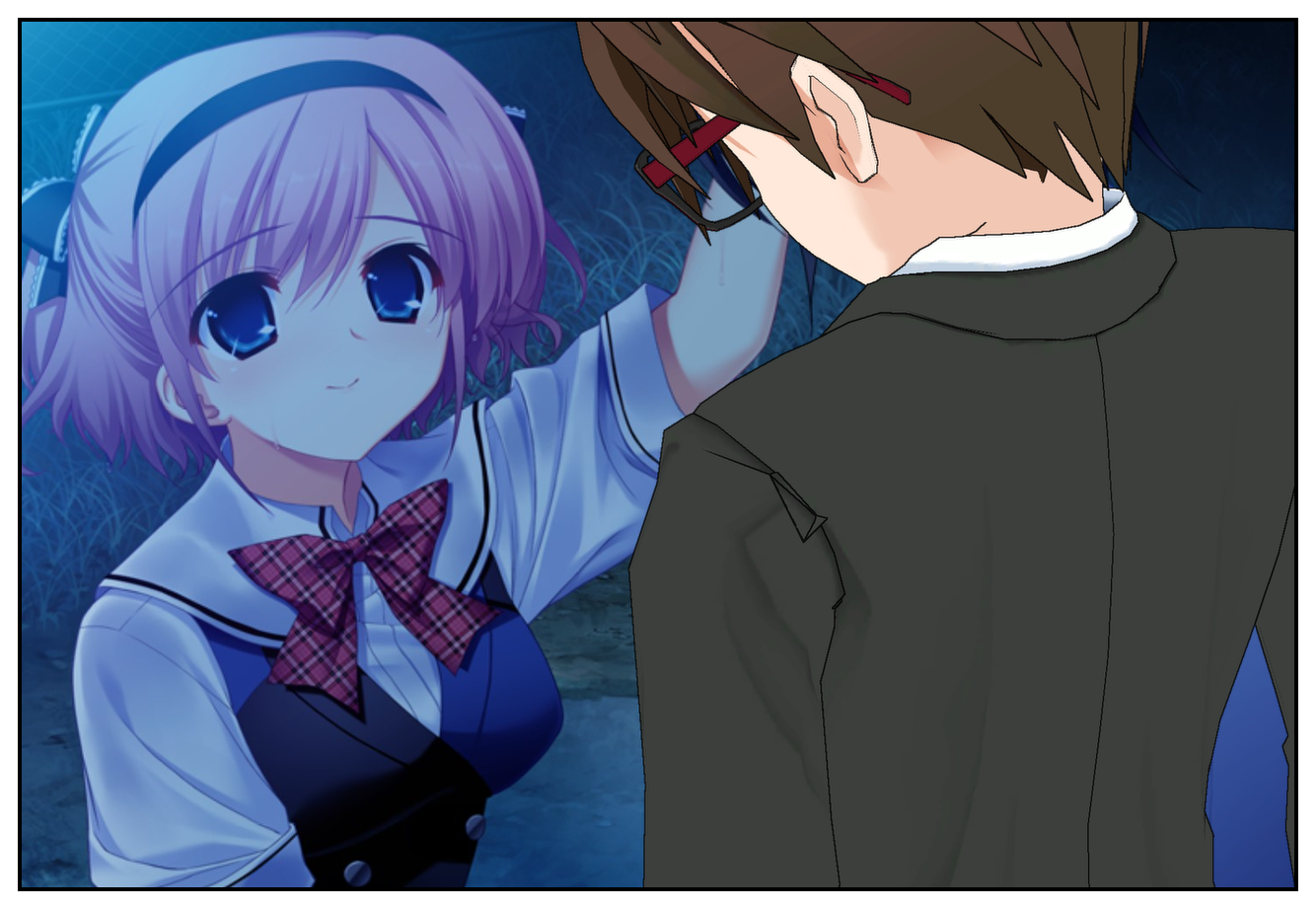
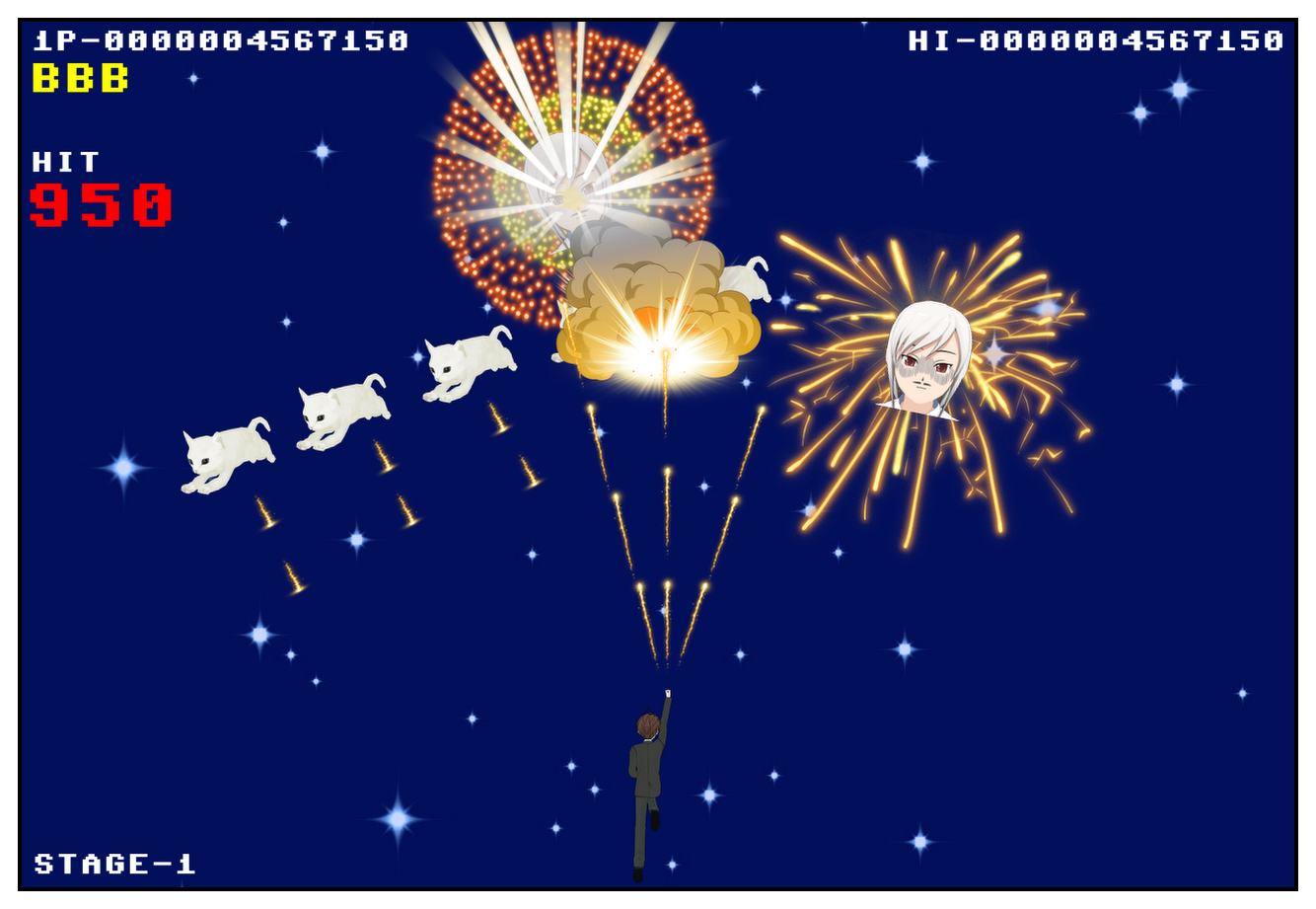
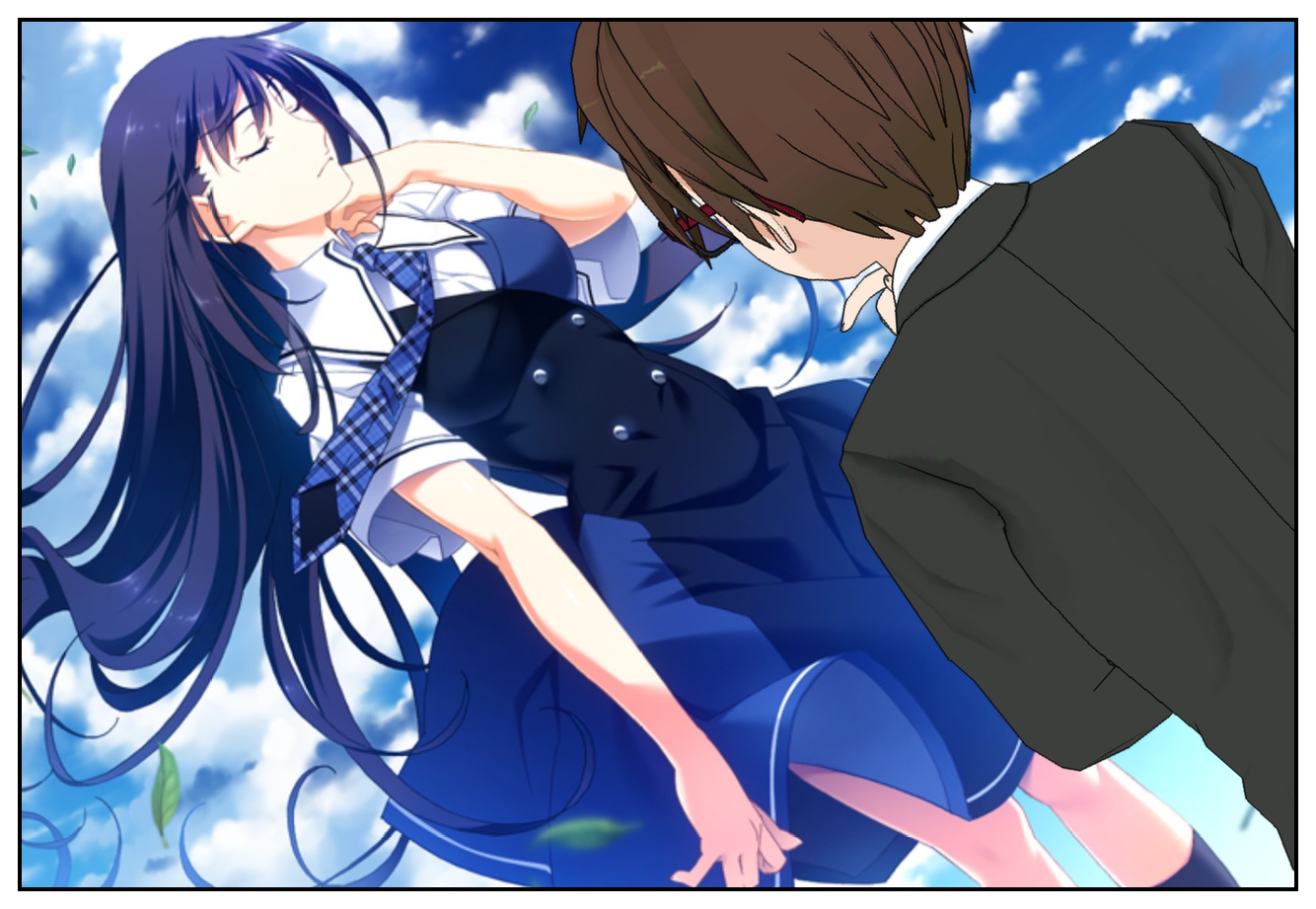
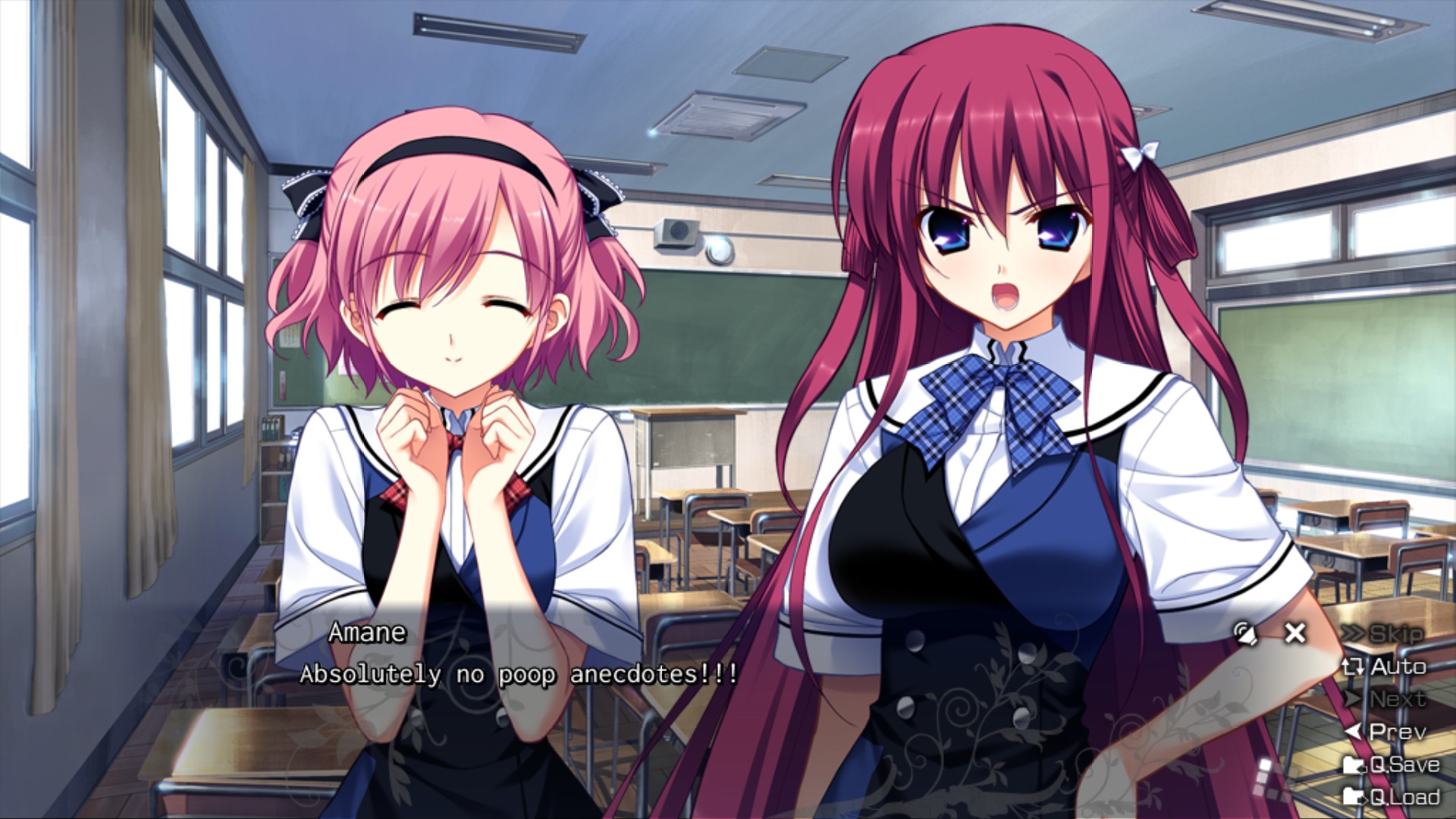
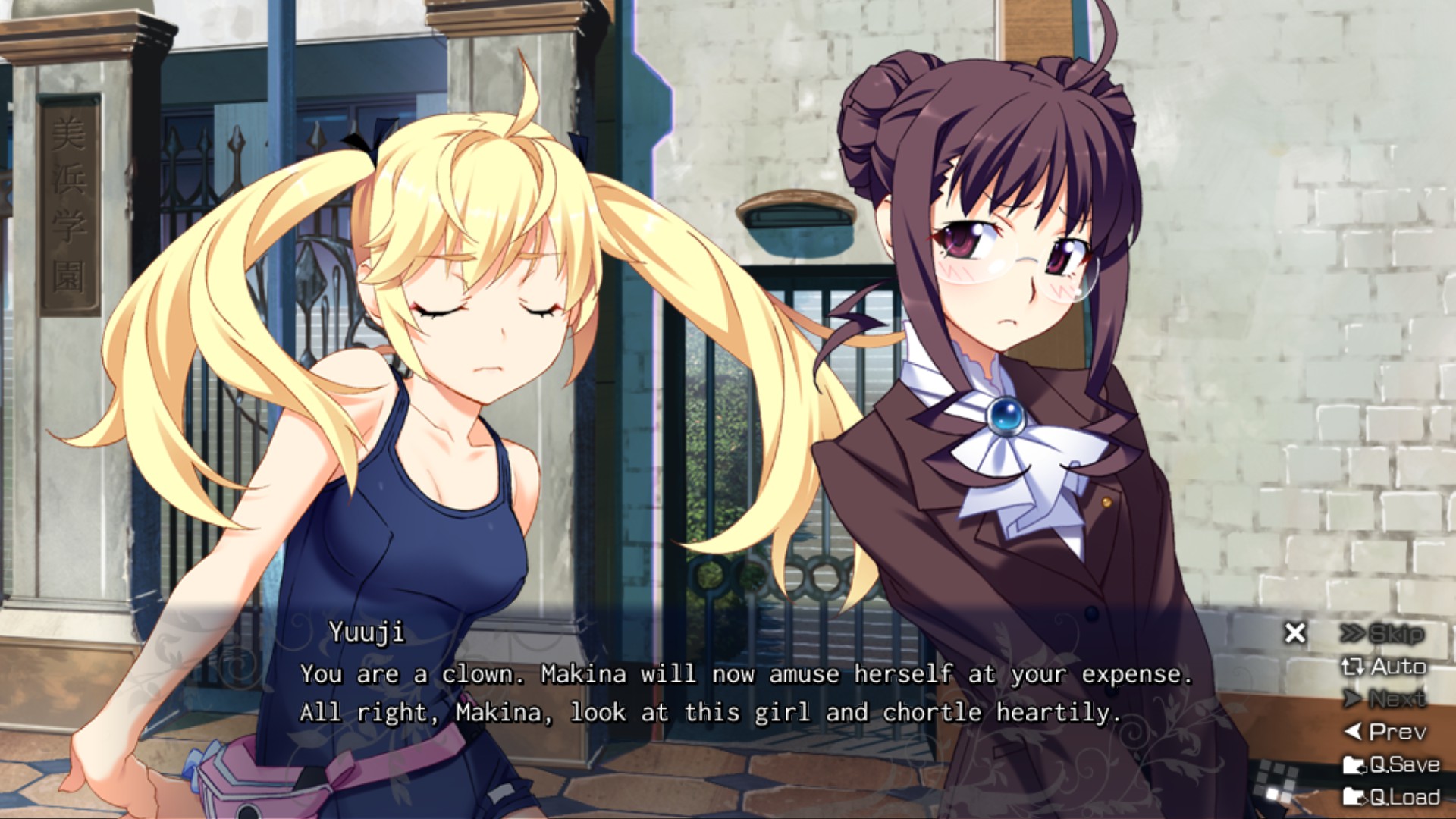
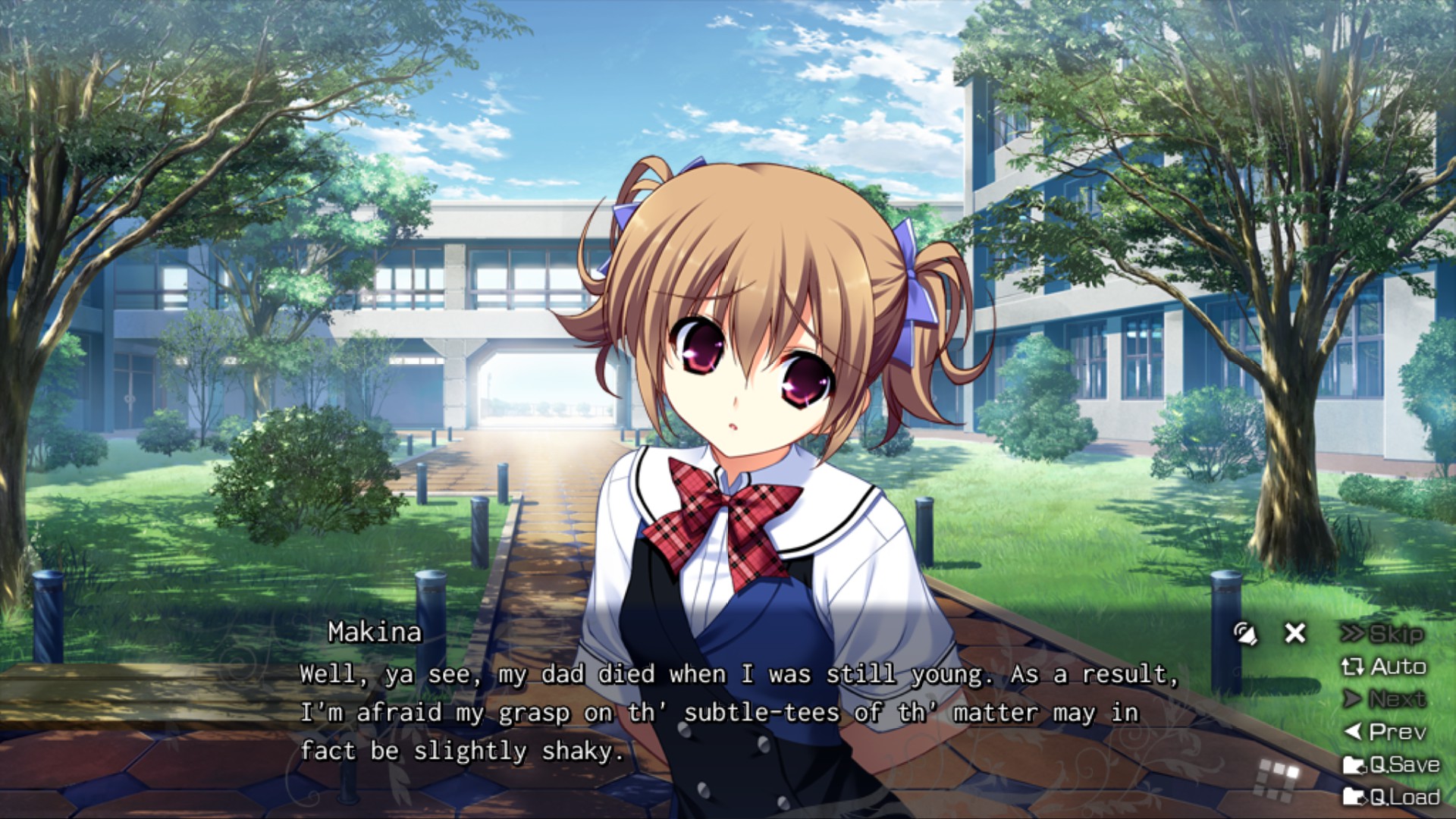
Finished Sachi's route in The Fruit of Grisaia last night. Once again, this route proves to be significantly different in tone and theme than the others I've seen so far (Michiru's and Yumiko's) — it also felt like it was a bit longer, for reasons I'll get into later.

As ever, this post will contain extensive spoilers for Sachi's route in The Fruit of Grisaia. As such, if you want to avoid being spoiled, don't read! Here's a More tag to prevent accidental spoilage from my front page…

Continue reading "2076: Sachi and the Maid's Burden"

2075: Where's the Luv for Muv-Luv?

0075_001

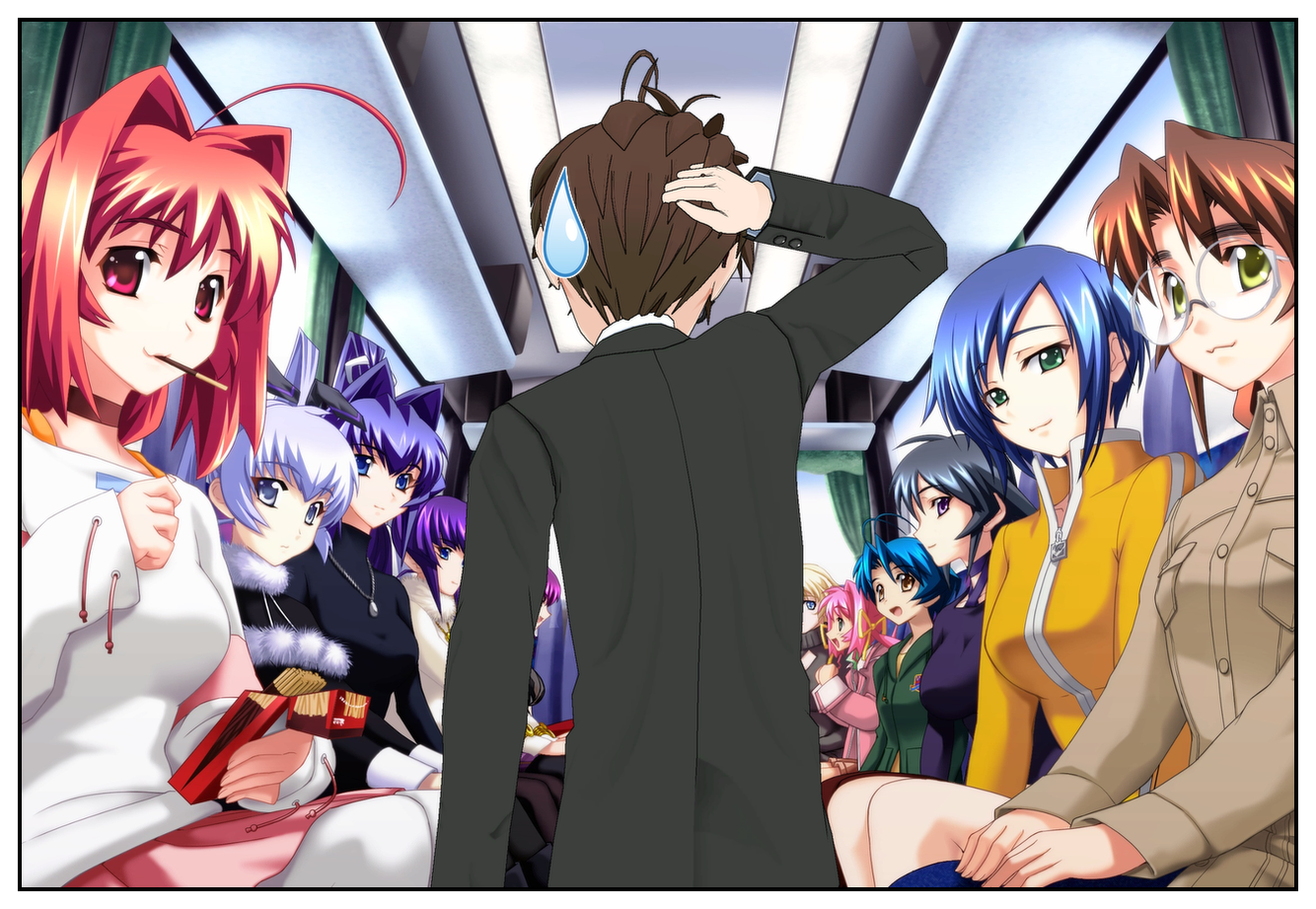
Yesterday, a new Kickstarter launched. This is nothing unusual in itself, particularly in the video games space, but the subject matter of the Kickstarter was. Specifically, it was a Kickstarter to localise Muv-Luv, a popular Japanese series of visual novels that originally appeared in 2003 and subsequently spawned a number of sequels, manga and anime spinoffs as well as a ton of merchandise.

Since its original release, Muv-Luv in its various incarnations has been extremely well-regarded, and it's probably not unfair to say the series as a whole is an influential, culturally significant work; some even credit it with the creation of the popular "Moe Military" trend most recently seen in shows like Girls und Panzer and Kantai Collection.

The localisation of Muv-Luv  is Kind of a Big Deal, then, particularly as it's gone un-localised for so long — officially, anyway; fan translations have been around for a while, but the legality of these is always questionable, particularly as enthusiasts sometimes turn to piracy in order to acquire the game in order to patch it, and in some cases the fan-translated version is even illegally distributed with the original game files included. The launch of this Kickstarter is significant in that it aims to bring a well-established, important series to the West officially and with the full cooperation of the original development team.

What's even more significant about the Kickstarter is that approximately six hours after it launched yesterday, it had already smashed through its initial $250,000 funding goal. At the time of writing, still less than 24 hours since the campaign launched, it's sitting at $313,571: well on the way to its first stretch goal of new CGs, music and unlockable content at $400,000, and putting Android and Vita ports within reach at $500,000. There are 39 days still to go on the campaign, and the excitement of enthusiasts is palpable.

And yet…

Nothing about this on Kotaku, a gaming site that has "otaku" as part of its name.

Nothing on Gamespot, one of the biggest gaming sites in the world, either; the site's last use of the word "luv" was for a Nintendo 64 game. That's three console generations ago.

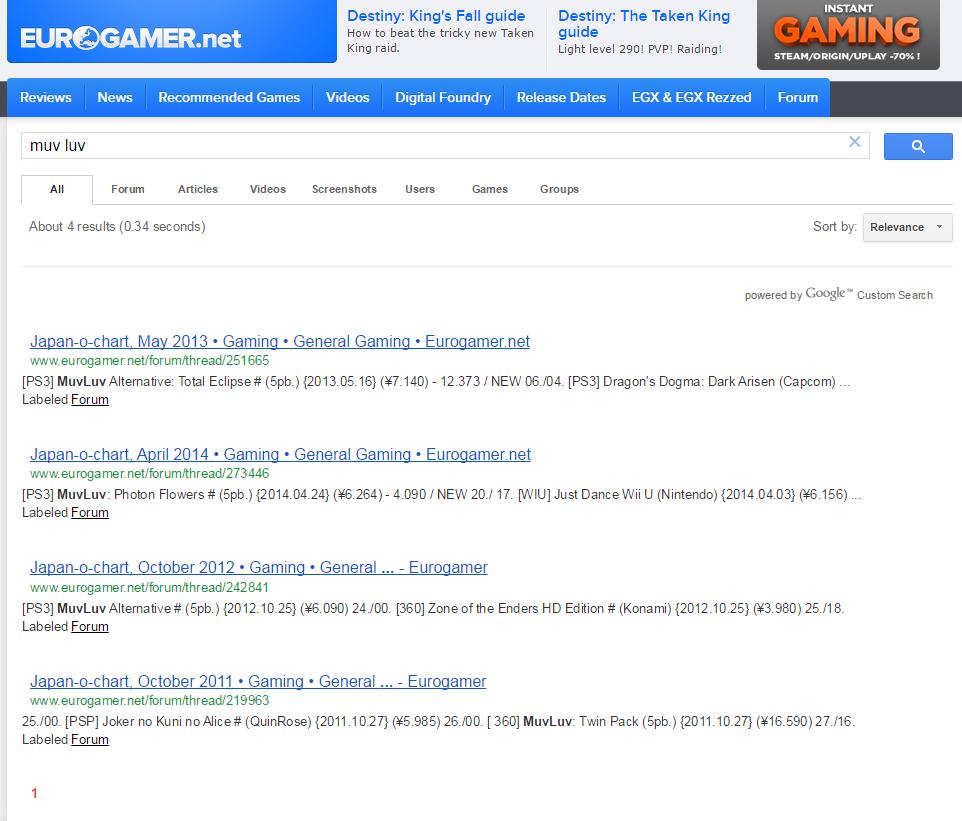
The only mentions of it on Eurogamer are forum threads about the Japanese charts.

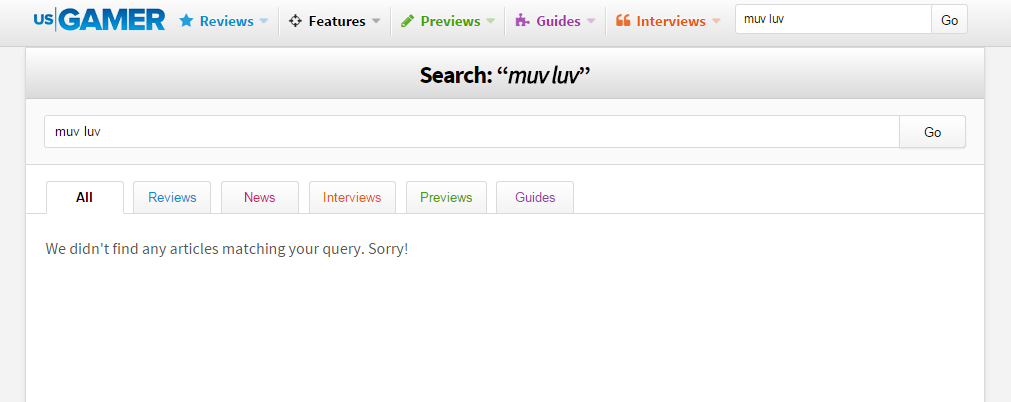
No mention of it at all on USgamer, even with their supposed experts on Japanese games and visual novels in residence.

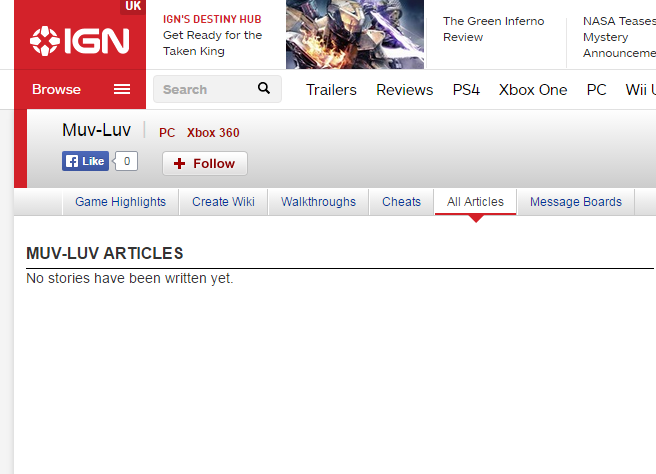
And nothing on the behemoth that is IGN.

This isn't to say that Muv-Luv's Kickstarter success hasn't been reported anywhere, of course; specialist Japanese sites such as Siliconera, Gematsu and Crunchyroll have all posted stories about the campaign, and social media has been abuzz with talk of the series, too.

But, as we've seen above, nothing at all on the biggest, most recognisable sites in the world — even those known to have writers on staff who are interested in Japanese games.

There's an argument, of course, that Muv-Luv is niche interest and consequently not worth covering on these sites because there wouldn't be significant interest. To that I would point out that on the front page of Eurogamer there is currently a story about a showering simulator getting banned from Twitch, on Kotaku there is a story about a Steam game called The Flame in the Flood that you probably haven't heard of… IGN, meanwhile, has a story about a spoon that can take selfies... a story that turns out to be a video, as is so frequently and frustratingly the case these days.

In other words, "niche interest" shouldn't be a barrier to coverage if that sort of stuff gets written about. And it could be argued without too much difficulty that Muv-Luv is of greater "importance" to the interactive entertainment medium as a whole than some showering simulator. (Seriously?)

Unfortunately, this is pretty much par for the course, it seems. Here's what, by way of example, Kotaku had to say about previous culturally significant visual novel localisation projects The Fruit of Grisaia ($475,255 raised via Kickstarter, plus subsequent sales on Steam and Denpasoft) and Clannad ($541,161 raised via Kickstarter):

Yep, sweet FA aside from a couple of offhand mentions of their anime adaptations.

I know exactly why this is, of course: Muv-Luv, Clannad and The Fruit of Grisaia are all seen as "too small" to be of interest to the broad, general audience of a site like Kotaku or Gamespot, and perhaps there's a point there: Muv-Luv has reportedly sold approximately half a million copies to date in Japan (plus over three million pieces of merchandise), which is small fry compared to today's heavy-hitters. And yet there's a bit of a paradox here: these sites have the reach and influence to make more people aware of these works — which are well-established as being of particularly high quality as well as culturally significant on their home turf — but instead they choose to focus on other things, be it predictable clickbait articles about whichever big-budget game has come out this week, or pieces about whatever the current indie gaming flavour of the month is.

Even so, and even taking into account the limited amount of time a games journalist has to report on the news each day — something which I know about first-hand, remember — it's kind of a shame that the impressive success of this campaign and others like it haven't even been acknowledged by the bigger, more mainstream sites. And yet they'll take the time to complain about the Sorceress' tits in Dragon's Crown, or how Omega Labyrinth only appeals to kiddy-fiddlers, or how Senran Kagura is a game about nothing but breasts.

It's little wonder that fans of Japanese games — and many gamers in general, for that matter — are turning their back on the games press of today.

2071: Eschatos

0071_001

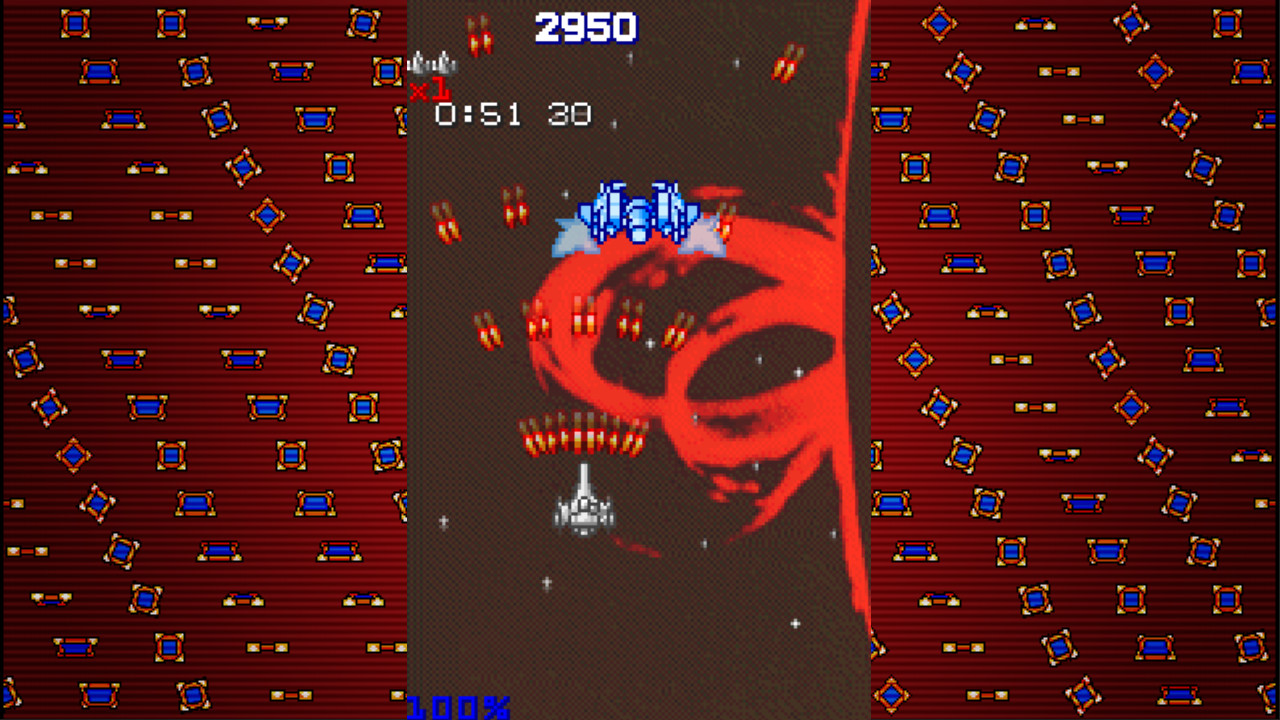
The other day, I talked a bit about shoot 'em up Cardinal Sins. Today, I've been spending some time with its follow-up (or, more accurately, the follow-up to Judgement Silversword) Eschatos.

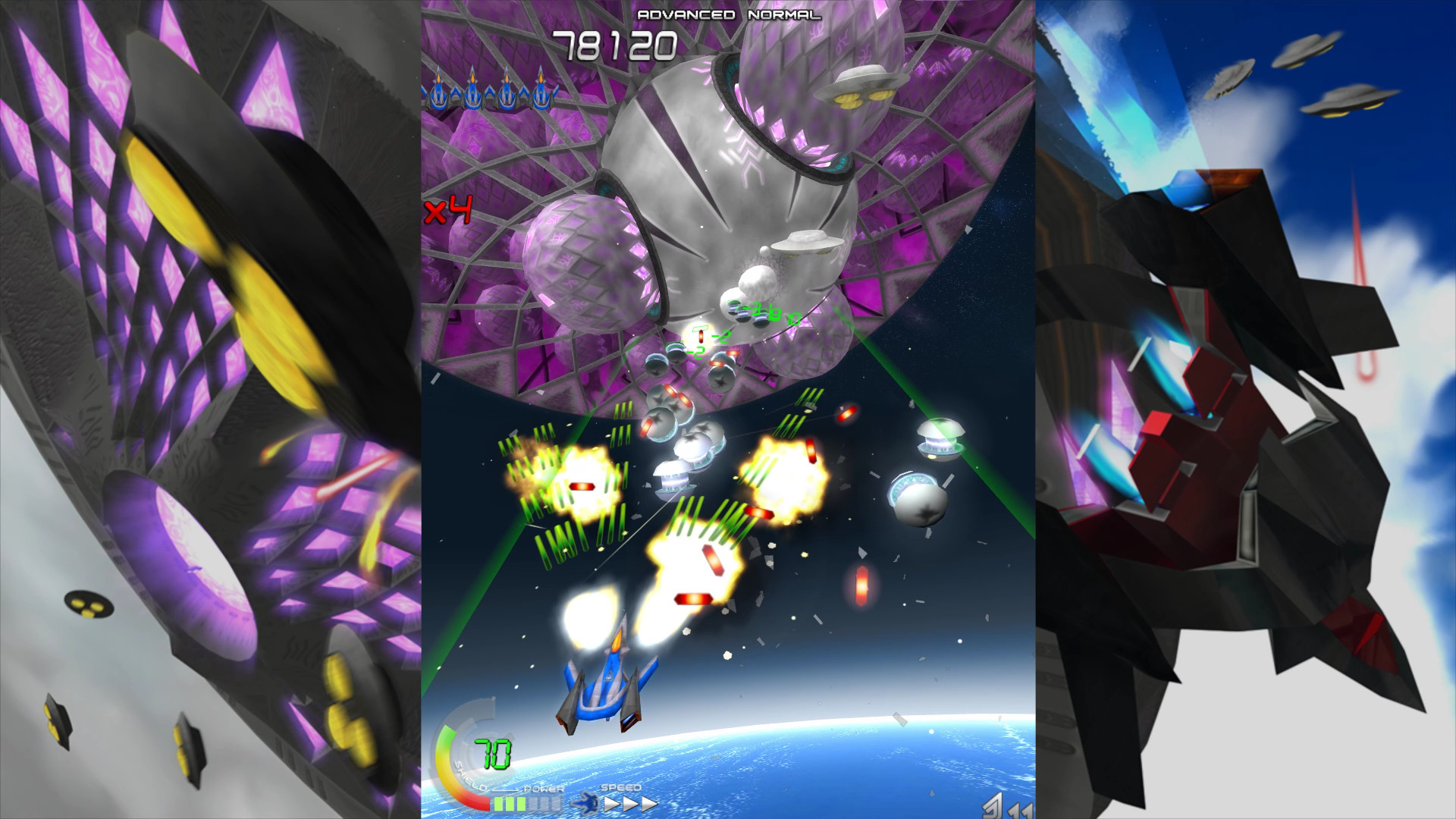
Eschatos is very obviously cut from the same cloth as its predecessors, since it plays almost identically. Its main difference is the fact that it's a considerably more technically advanced game, boasting dynamic camera angles, full 3D polygonal graphics and all manner of other goodies. It's not the most stunning game you'll ever see, but it looks good for a game of this type, and it runs gloriously smoothly, which is of vital importance to the genre.

(At least, the original Xbox 360 version of Eschatos runs gloriously smoothly; at the time of writing the newly translated PC version has some framerate issues on nVidia cards, but the devs are working on resolving this.)

Eschatos is a shoot 'em up that understands that shoot 'em ups should be thrilling theme park rides: exciting and surprising at first, predictable after a few goes. That "predictable" part is important: the essence of getting good at a game of this type is learning what the game is going to throw at you and then dealing with it accordingly, which is something you can only do with practice.

eschatos

Eschatos makes the learning process quite straightforward by splitting each of its stages into areas, and each of its areas into waves. In order to get the best scores, you need to completely clear waves in succession (which increases your score multiplier) as quickly as possible (which nets you a time bonus, multiplied by your multiplier). Even boss encounters are broken down in this way, making it relatively straightforward to learn what to expect, with the challenge then coming from correctly and consistently dealing with it.

It's particularly nice to note that the scoring system is easy to understand and parse, even on the game's "Advanced" mode; having largely come to modern shoot 'em ups through Cave games, which tend to have some of the most complicated scoring mechanics known to man, this is a very pleasant surprise indeed, because it makes it easy to understand how to get better at the game: destroy more stuff more quickly, simple as that. (This is where someone chimes in and points out it's actually much more complicated than that, naturally…)

I'm a fan. I must confess the 360 version had been on my shelf for a while unplayed, but the event release of the Steam version (and the realisation it could do with a patch) inspired me to dig it out again. I'm once again reminded that Japanese devs really are the masters of their craft… and, apparently, of glorious FM synthesis music that sounds like it's straight out of a Mega Drive game.

Time to go chase some high scores!

2069: Cardinal Sins

0069_001

In between some lengthy Grisaia sessions today — I'm tackling Michiru's route now, and my goodness is there going to be a lot to talk about there — I decided to check out some shoot 'em ups that hit Steam the other day: Eschatos and Judgement Silversword, previously available on Xbox 360 and, in the case of Judgement Silversword, the WonderSwan Color, of all things.

Judgement Silversword comes with a spinoff game called Cardinal Sins, and it's actually that I've spent the most time playing today. Cardinal Sins takes the basic gameplay of Judgement Silversword and, instead of pushing you through a sequence of stages with difficulty that gradually ramps up (with a few big spikes along the way, if the first boss is anything to go by!) it challenges you to complete various objectives in the stage.

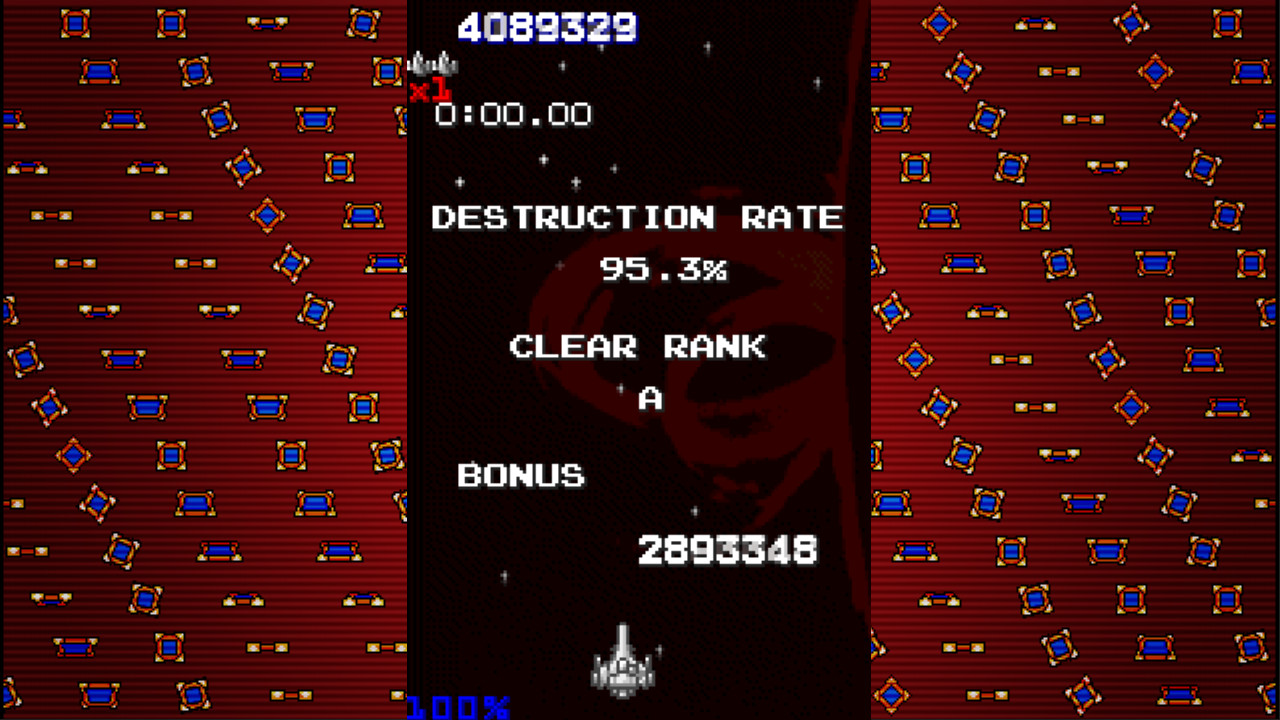
The game is themed around the Seven Deadly Sins, with each of the seven stages being named after one of them and providing you with a different means of attaining a strong grade or "judgement" at the end of the game. The first stage Envy, for example, tasks you with simply destroying as many enemies as possible, with your grade dependent on the percentage of all the available enemies you destroyed. Sloth, meanwhile, tasks you with simply grabbing as many extra life pickups as you can (and you can destroy them, so you have to actually ease off the shooting a bit), while Greed tasks you with "gathering data" on enemies by fulfilling various hidden conditions.

cardinal1

Greed is perhaps the most interesting of the stages as well as the most thematically appropriate, because getting too greedy for the "data" will result in your untimely destruction; instead, you need to learn moderation (or at least master the peculiar "shield" ability your ship has, which allows you to cancel bullets, but only from the front of your ship) in order to succeed.

After Greed comes Pride, where your job is to raise your score multiplier to x100 by destroying enemies as efficiently as possible — your multiplier increases by one for every enemy destroyed, but also drops by one every second or so. Following this is Lust, where you must clear as many enemy waves as possible; Gluttony, where you must destroy enemies for collectibles; and finally Wrath, where you are graded according to how many times your ship is destroyed during a horrid boss fight.

Interestingly, Cardinal Sins doesn't kick you out to a Game Over screen if you run out of lives at any point; you always play through the seven levels in order, with your lives being reset at the start of each stage. Run out of lives and you simply get a "failing" F-grade on that stage, but you can carry on. There's incentive not to do this, however; get through all the stages without any failures and you'll be presented with the final battle, initially against a series of small but strong bullet-spewing enemies, and subsequently against a larger version with some seriously unpleasant bullet patterns to fend off. Only by defeating this "Mirror of Cardinal Sins" can you clear the game and sit back with a satisfied expression on your face.

cardinal2

I really like this game for a number of reasons. Firstly, it's nice to play a game that is genuinely retro rather than the fashionable faux-retro of much of the indie scene today; the game features some simple but deliciously crunchy chiptune music and sound effects as well as some limited but effective and clear visuals.

Secondly, it's damn fun. The difference in structure from the usual shoot 'em up format of "survive as long as you can" makes it immediately stand out for me, and I'm a sucker for anything with an interesting grading and scoring system.

Thirdly, I'd never heard of it before, and now it's on Steam a whole bunch of newcomers — including me — will get to experience it for the first time, along with its companion game Judgement Silversword and its pseudo-sequel Eschatos.

With Cave shoot 'em ups apparently on the way to PC via Steam soon, it's starting to look increasingly likely I can finally retire the Xbox 360, which had previously been my shmup machine due to Japan's bizarre rejection of the platform for everything except fantastic arcade shooters.

2067: Yumiko

0067_001

Spoilers for not-quite-all of Yumiko's route of The Fruit of Grisaia ahead!

When we're first introduced to Sakaki Yumiko in the common route of The Fruit of Grisaia, it's clear that she is both troubled and likely to be trouble for Yuuji. When Yuuji first tries to introduce himself to her, she initially tries to ignore him, and subsequently tries to slap him when he persists. This eventually escalates into her lashing out at him with a box cutter whenever she sees him, a fact which Yuuji's fellow students just shrug off as being "something she does", because they've all been through it too. Yuuji, being a certified badass, shrugs off Yumiko's attacks without injury easily, and eventually they stop altogether, though she still proves herself to be a prickly individual who is generally unwilling to interact with others.

2015-09-13_00009.jpg

Except it's not that simple. Throughout the common route, Yumiko can often be found lurking on the periphery of the rest of the group's social activities; they're all aware of her and take care not to exclude her, but they also don't try to force her to participate in anything. It's clear that even if she doesn't show it on her face or through her behaviour, she finds comfort in being around people who care for her and are considerate of her feelings. Even the foul-mouthed Makina proves herself to be enormously perceptive of Yumiko's personality traits, accurately "reading her thoughts" in one particularly memorable scene.

In the common route, we're given a teaser of what has made Yumiko as withdrawn, sullen and prone to lashing out as she is — it's clearly to do with her father. Upon returning from a shopping trip to the town, a number of the group report a suspicious-looking black car outside the station, though those who have been at the school longer know that this is a sign that Yumiko's father is coming to inspect the school, which it seems he financed and had built. Yumiko, meanwhile, refuses to see her father, instead preferring to watch his cursory inspection of the school grounds from the dormitory rooftop; it's clear that he's not really inspecting anything, but is instead hoping that he might be able to get through to his daughter.

2015-09-10_00018.jpg

When Yumiko's route proper starts, we're given a bit more information about Yumiko's father, who has already been suggested to be a not very nice person. Indeed, early in Yumiko's route, we're given a third-person scene (i.e. protagonist Yuuji isn't present for it) in which we see Yuuji's handler JB and Yumiko's father discussing how they might get Yumiko to come back to her family and be prepared to take over the family railway business. Yumiko, until now, has been having none of this, of course, and so her father resorts to desperate measures, requesting that JB assign Yuuji to bodyguard duty for Yumiko and then arranging for her to be attacked and abducted. What he didn't count on is that Yuuji is more than capable of taking care of a few hired thugs, particularly as they had been specifically instructed not to actually harm Yumiko — at least initially.

Yumiko is initially resistant to Yuuji guarding her, insisting that "it's not as though [her] life's anything worth protecting", and that she "doesn't particularly mind if someone does come for [her]". The initial attack from her father's men puts her somewhat on her guard, though, and from that point on she is less resistant to Yuuji's efforts to protect her, and gradually softens towards him over time, eventually developing feelings for him because she's come to rely on his protection — a feeling of safety and security that she's never enjoyed before.

2015-09-16_00038.jpg

Yuuji, being a stubborn idiot prone to inadvertently annoying women with non-deliberate insensitive comments, of course, doesn't notice that Yumiko has started to feel something for him — or refuses to admit that this might be a possibility, at least — but sticks beside her "because it's [his] job". When JB pulls him off the case at the request of Yumiko's father, he is somewhat surprised to receive a direct request from Yumiko to continue working as her bodyguard in a private capacity.

On one excursion, the heavens open and Yuuji and Yumiko find themselves trapped under a bridge in a torrential downpour. Something doesn't seem right about Yumiko's behaviour to Yuuji, and it's not long before things come to a head; a thunderclap and flash of lightning absolutely terrify Yumiko, who crumples into Yuuji's arms in an uncharacteristic display of weakness, fragility and reliance on others. Having already come this far in showing her fragile side to Yuuji, she then relates the story of how she came to be the person she is today, and what she is doing at the mysterious school.

2015-09-16_00045.jpg

Yumiko's mother was the daughter of a pair of struggling business owners. She married into the Sakaki family primarily for financial and political reasons, and bore Yumiko as the family's only child. Being a girl, Yumiko was an immediate disappointment to the family, who had been hoping for a son and heir apparent, but Yumiko's mother was much too weak to survive another pregnancy, and eventually succumbed to a debilitating psychological disorder that saw her and Yumiko retreat back to the countryside and her family home. She was hospitalised, and Yumiko was left to live with her grandparents, who resented her existence because she was a symbol of their failing business, and how they wouldn't be able to rely on the support of the Sakaki family forever.

Yumiko tried to stay positive amid this bleak situation, but the youthful joy she once had at the simple sight of a passing dog eventually gave way to bitterness and resentment. Her only outlet was her neighbour, who had formerly been employed by her grandparents as a servant, but now continued to help them out for free. Yumiko was the only one to show her gratitude, and she resented her grandparents for taking advantage of her right up until her death — a feeling shared by her daughter and son-in-law.

2015-09-16_00073.jpg

Her hospitalised mother gradually comes to show an improvement, eventually reaching a point where it looks like she's going to be discharged from hospital, but suffers a catastrophic relapse upon hearing the news that her husband — Yumiko's father — had taken a mistress in her absence, and said mistress had borne him a son.

A year passes, and Yumiko's bitterness grows, since her mother had relapsed so severely that she couldn't even remember anything about her family. She had no-one to rely on, no-one to talk to, no friends, which is why when her father's aides come to collect her from her grandparents' house — bearing the offer "if you let me have Yumiko back, I'll continue supporting your family and your business" — she jumps at the opportunity.

2015-09-17_00011.jpg

Initially resenting her father for the anguish he caused her and her mother, Yumiko eventually softens towards him as he appears to be making a genuine effort to reconnect with his daughter. It eventually transpires that he is only doing this because his illegitimate son died and his mistress abandoned him shortly afterwards, leaving Yumiko once again as the only potential heir to his business. Feeling a familiar, growing sense of rage at this, Yumiko is in a fragile mental state and is pushed over the edge when she overhears one of her classmates speaking untruths about her.

Prior to this, she had taken to expressing her anger through destruction. "The clicking of the blade emerging from its sheath," she relates. "The sound of something once whole being severed apart. Those had become calming sounds to me. How wonderful would it be if I could slice away my femininity with a single box cutter? How wonderful would it be if I could sever my fate with the touch of a blade? How wonderful would it be if one movement of my hand could cut me free of all the troubles that coiled around me and choked the air from my lungs?"

2015-09-16_00072.jpg

The first thing she destroys is her long, black hair; an attempt to "slice away her femininity" and look more like a boy — a largely successful effort, though one that causes people to shy away from her even more than normal. Later, she destroys her artwork and the diary in which she had written down all the growing positive thoughts she had been feeling as she had mistakenly thought her father truly loved her.

And ultimately, the event which sees her totally severing her ties to her old life: she stabs her classmate, whom she had previously thought was a friend, but who had turned out to be just as much of a turncoat as everyone else in her life.

2015-09-17_00025.jpg

Yumiko escaped a criminal conviction for her violent outburst, because money can make anything go away, and her father knew that very well indeed. Knowing that the situation couldn't continue in the way it had been, however, he offloads her onto Mihama Academy, where she meets Yuuji, and her life undergoes some considerable changes once again.

When Yuuji ends up injured in the line of duty protecting her, Yumiko is wracked with guilt, not just at the trouble she's embroiled Yuuji in, but at how much she's hurt her other classmates too. This guilt eventually manifests itself in her deliberately allowing herself to be taken away by her fathers men and capitulating to whatever demands he might have — which turn out to be her attendance at a school in America, far away from anywhere she could possibly become a problem.
2015-09-17_00047

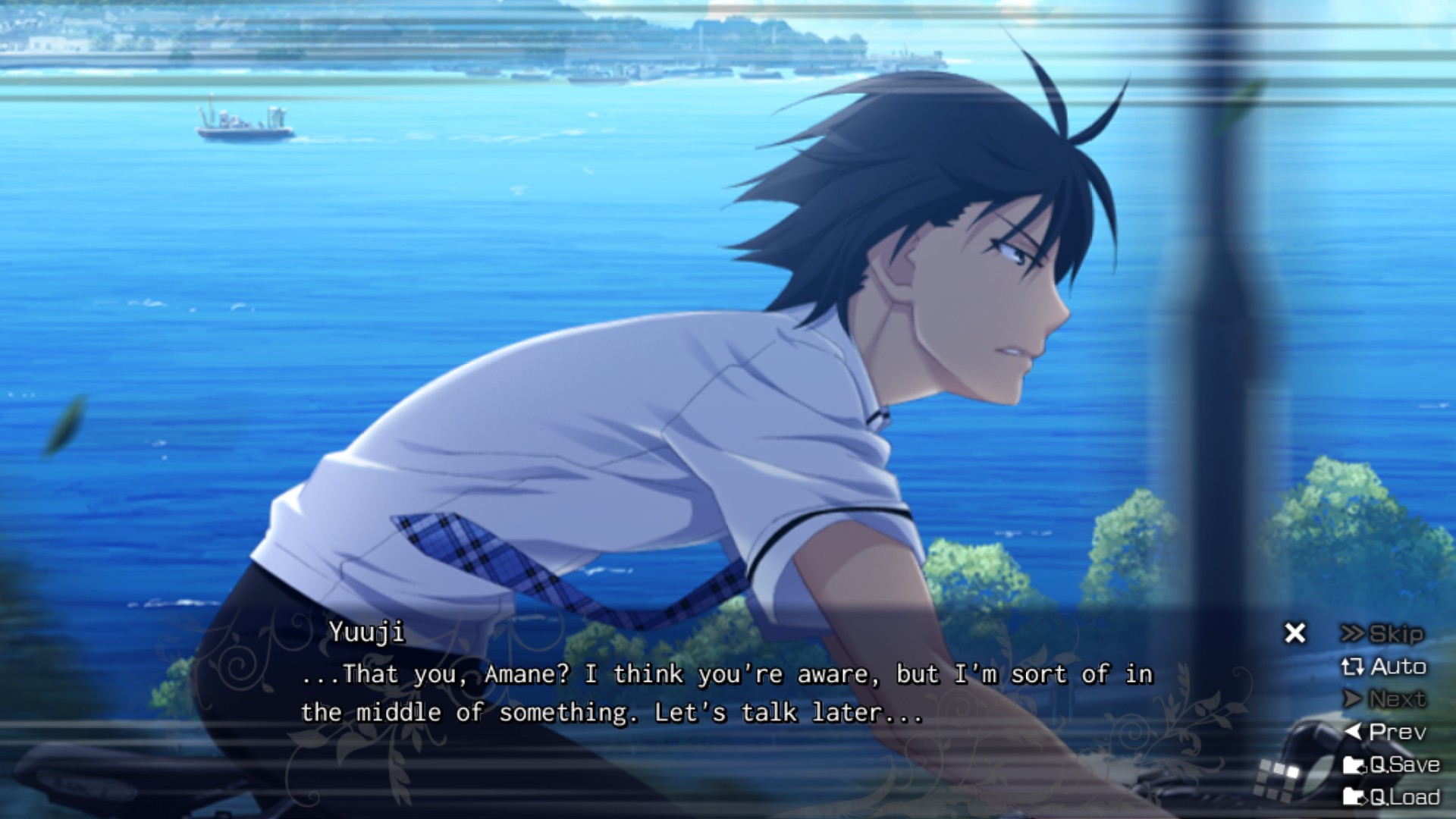
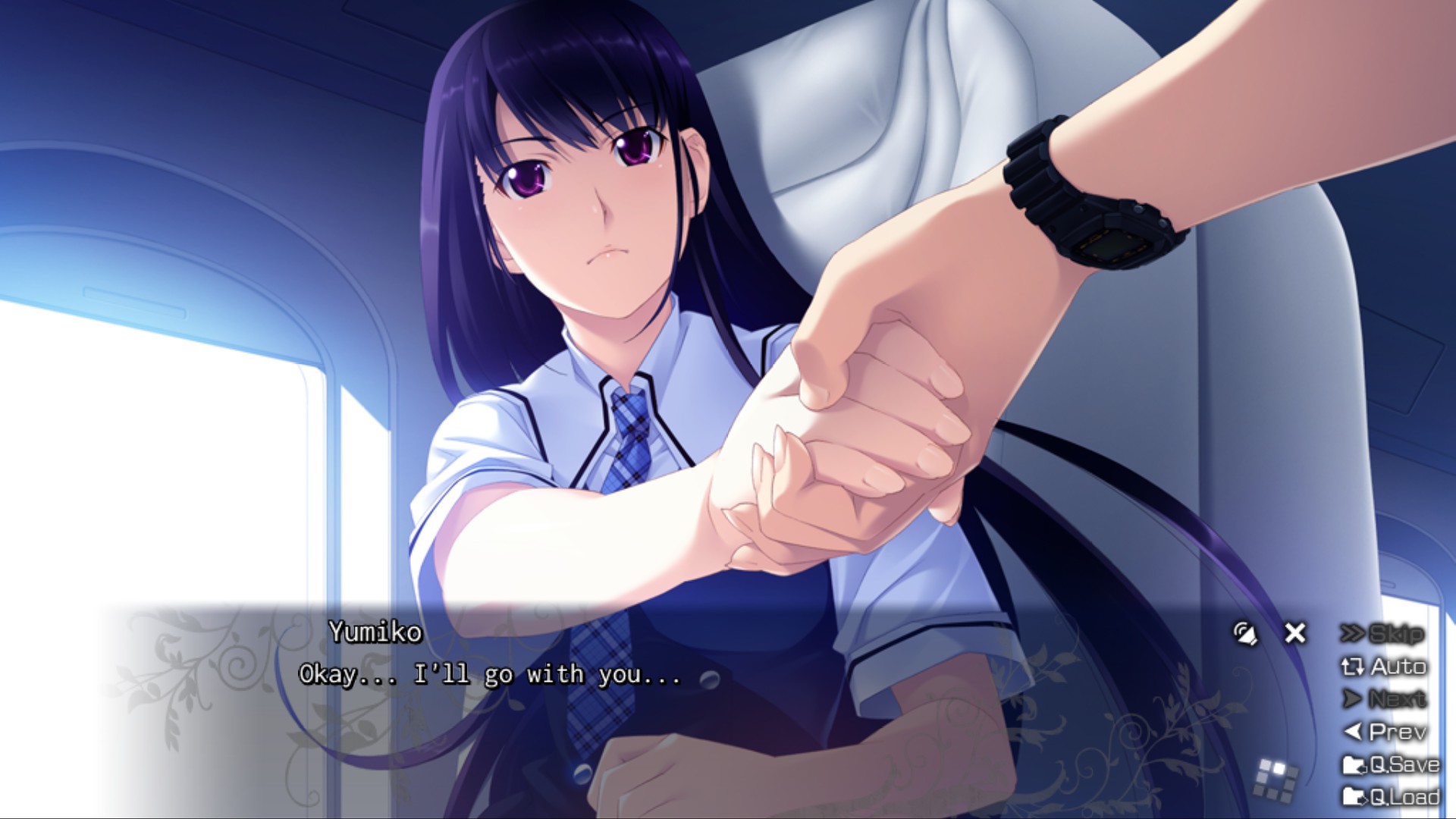
Yumiko's father doesn't count on Yuuji's stubbornness, though; spurred into action by a text message from Yumiko apologising for a situation that is in no way her fault, he eventually rescues her following a dramatic chase, and the two of them begin a life on the run, during which period they both eventually manage to admit their feelings for one another — though it takes Yumiko essentially sexually assaulting Yuuji in the middle of the night to spur the latter into action and contemplate that she might actually possibly maybe be interested in him.

Yumiko and Yuuji making love for the first time — and, for that matter, the subsequent time, during which she admits that she "doesn't dislike" playing a submissive, masochistic role — is a turning point for Yumiko in particular, and to a lesser extent for Yuuji. Yuuji reveals that he has some sexual experience thanks to sex workers that were laid on for him in a previous assignment, but comes to realise that sexual intimacy with someone you truly care about is on a whole other level of pleasure. Yumiko, meanwhile, allows this ultimate expression of intimacy as a means of demonstrating that she trusts Yuuji absolutely; the pair of them continually push the boundaries with each other to see how far they will each go, and it turns out that they both feel absolutely comfortable with one another after all the time they have spent together.
2015-09-17_00056

Yumiko's growth is pretty touching to see, but tragic at the same time. On more than one occasion, she ponders whether it's acceptable for her to be happy, or whether she "deserves" it. Yuuji has to admonish her several times for apologising when it's not necessary, though she does the same for him too; eventually the two settle into a pattern of gratitude for one another, neither of them quite sure how to deal with having been alone for so long and now having another person to take into consideration.

I haven't quite finished Yumiko's route as yet, but I'm excited to see how it concludes. There's been plenty of drama and touching, emotional moments so far, and the whole thing is clearly building towards what I hope will be a satisfying final confrontation with her father. I'll just have to wait and see how that pans out!
2066: Reflections on Grisaia's Common Route

0066_001

I've finally reached the end of the rather lengthy common route in The Fruit of Grisaia, and so it's on to the unique routes for each of the main cast members. I've decided to explore them in the order Yumiko > Michiru > Sachi > Makina > Amane so as to save my favourite heroine for last, but this also apparently works out quite well narrative-wise, since Makina and Amane's routes sound as if they are more important with regard to the series' overall continuity.

I've already started on Yumiko's route, but haven't read enough to be able to comment on it with any particular authority as yet, so I will save that for another time. Instead, I wanted to reflect a little on the common route, since it was very enjoyable in its own right.

2015-09-14_00007

The Fruit of Grisaia's common route is actually more of a collection of short stories loosely organised into chronological order to allow for references to past events and a certain degree of character growth as the chapters proceed. By the time you reach the decision points that determine which unique route you'll be proceeding down, you'll have a pretty firm understanding of all the characters on at least a superficial level, plus astute observers will have picked up a few hints as to what their own personal stories will be all about.

Aside from the overall development, though, each chapter of Grisaia is pretty much a self-contained story in its own right. They open with protagonist Yuuji delivering some philosophical narration about the situation, then the scene itself unfolding, then Yuuji wrapping things up with some conclusions from his own perspective. It's a structure that works well, and it keeps things moving along; none of the chapters feel like they particularly drag, even though there's not a lot of "action" in the whole common route, and the tone bounces around between comedic, romantic, dramatic and tragic between different chapters, giving you a chance to see all of the characters respond to various situations and understand them as people rather than archetypes.

2015-09-13_00005

And that's quite a key point, as I've mentioned in previous posts on the subject: none of the characters in Grisaia quite conform to the stereotypes you're clearly supposed to think of when you first see them. Amane's onee-san act is stymied by her Kansai coarseness; Makina's loli appearance belies a foul mouth that would make the dirtiest of dirty old men blush; Sachi's compliant nature and habitually calm tone of voice makes it all the more surprising when she comes out with a surprisingly cutting remark; Michiru is fully aware of the fact that her tsundere personality is a deliberate act, as is everyone else; and Yumiko… well, of the lot of them, she, so far, appears to have so far been the one who conforms most to her stereotype, but she's also the character whom Yuuji has had the most difficulty connecting, so I don't doubt we'll learn more about her in her unique route.

Peppered throughout the common route's short stories are little hints and clues about the cast's histories, though nothing is quite made explicit until towards the end of the common route, and even then there are still a lot of mysteries. Who is Yuuji, for example? What is his mysterious "job" that he keeps referring to? What is his connection with the school and its principal? Yuuji represents probably the most intriguing mystery of the lot, but the other cast members all clearly have their own skeletons in the closet, too.

2015-09-15_00002

But because those skeletons are all rather personal to the individual characters, they're left to be explored in their personal routes, leaving the common route free to let its hair down a bit and indulge in some light-heartedness such as the obligatory "beach episode" (which features a hilariously filthy scene between Sachi and Michiru) as well as everyday happenings around the school that give us an ideal of who these characters are and how they relate to one another. It's a close-knit bunch that starts to feel rather like family after a while — an observation that several characters comment on a few times.

So far, then, the common route has thoroughly enraptured me in the world of The Fruit of Grisaia and smitten me with its characters — all of them, too, which is nice; usually in this sort of setup there's at least one cast member that, even if I don't actively dislike them, I feel as if I like less than the others — and I'm very much looking forward to seeing how their stories unfold. And, from there, the fact that there are two sequels to look forward to at some point down the road makes me very happy indeed.

2057: Assault Android Cactus is Out Later This Month, and Here's Why You Should Buy It

0057_001

First things first: please forgive the Kotaku-style headline, but I started capitalising headlines in this way when I first started posting on this blog and now I can't bring myself to change to AP style without going back and changing all my previous ones. And, since there are well over 2,000 "previous ones", that would take a very long time indeed. So awkwardly capitalised headlines it is for now.

But I digress, and I haven't even started yet, so let's begin again.

Nearly two years ago, my then-managing editor Jaz Rignall pointed me in the direction of an intriguing-looking Early Access game on Steam called Assault Android Cactus. After taking a peek at the pre-alpha build, I began corresponding with Mr Sanatana Mishra from developer Witch Beam Games, and it transpired that the game would be on show at the then-new Eurogamer Expo (now known as EGX). Since I was heading to EGX anyway, I made an appointment to meet with Mishra and have a chat about the game, and in the meantime I familiarised myself a little more with the early build.

cactus3

When I first heard about Assault Android Cactus, I wasn't sure what to think. On paper, it sounds like any number of games that bloat Steam's marketplace daily — it's an arcade-style twin-stick shooter inspired by retro classics — but it quickly became apparent from playing through the limited number of levels in the early build that there was actually something quite special taking shape here. This feeling was further compounded when I eventually made it to the Eurogamer Expo and had a thoroughly enjoyable chat with Mishra about the game and the team's plans for it in the long-term — to cut a long story (which you can read in full here) short, it was apparent that Witch Beam was a small team who were absolutely dedicated to making Cactus the best experience it could possibly be, and to creating a truly authentic Dreamcast-style experience heavily inspired by the masters of Japanese shoot 'em ups like Treasure, Cave and their ilk.

Since I first gave Cactus its glowing write-up on USgamer, I've checked in on the Early Access build numerous times as it's developed, and regularly talked about how much I like it. I've also kept in touch with Mishra and the rest of the team at Witch Beam via Twitter, and it's been a genuine pleasure to witness the passion they've been pouring into their project. It's been a long and slow road to release for the game, but recently the team finally announced that the full, non-Early Access version would be hitting Steam on September 23, 2015, and that the promised console versions would be following early next year.

cactus1

I received an email from Mishra last night containing a beta code for the review build of Assault Android Cactus' full version as a "thank you" for the support I've shown them over the last couple of years. Touched by this thoroughly nice gesture of appreciation, I made a point of downloading the new build this morning and playing it for a good few hours. And it seems my early impressions were very much correct: Assault Android Cactus is something very special indeed, and if it doesn't end up taking its rightful place of honour alongside modern arcade classics like Ikaruga, DoDonPachi, Geometry Wars and their ilk, something is very, very wrong.

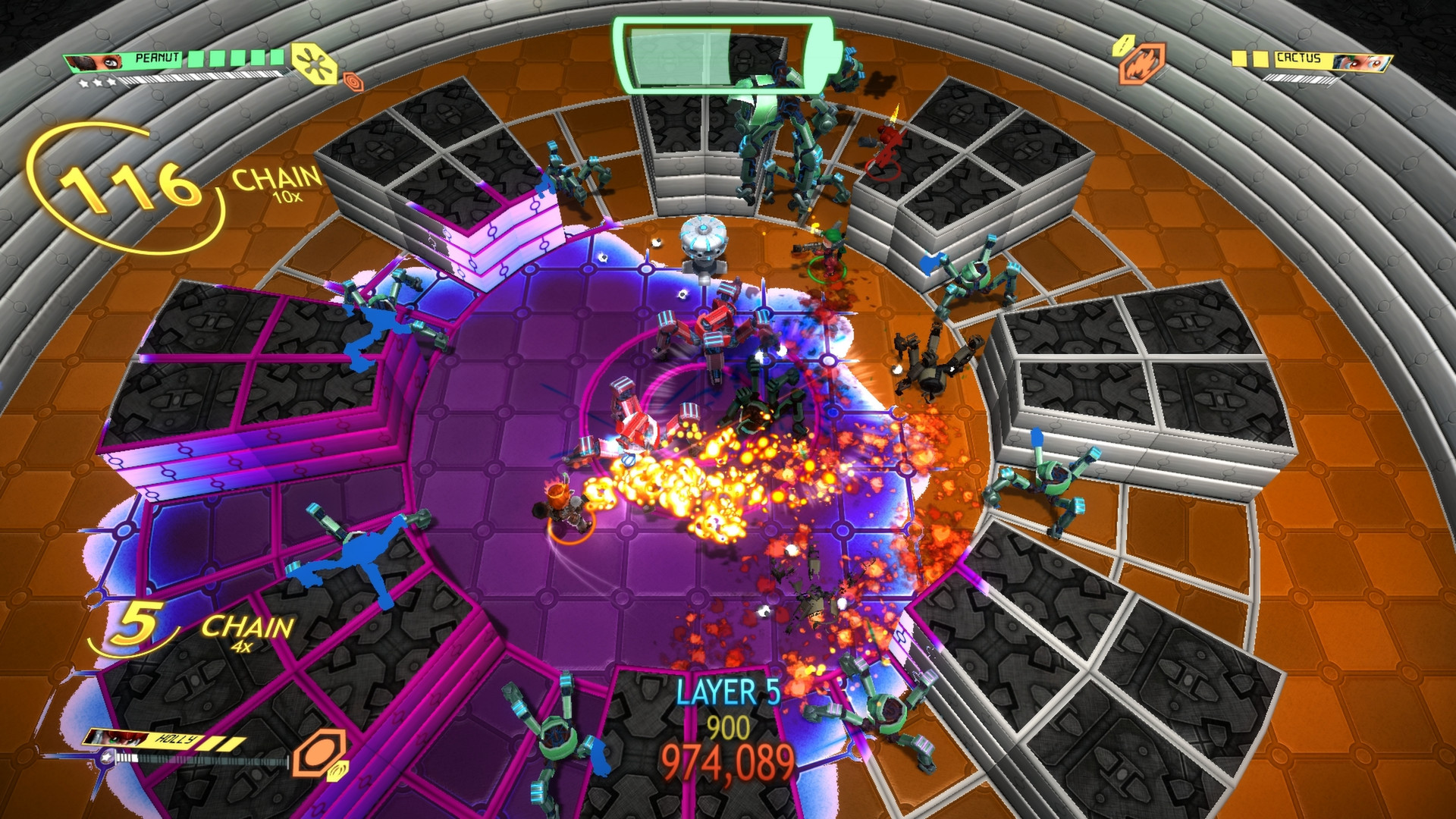
For the unfamiliar, Assault Android Cactus is, as previously mentioned, a twin-stick shooter. There's a few twists on the usual formula, though: the right stick just aims rather than shoots, for one, so you have to actually pull the trigger to fire, while the left trigger swaps between your chosen character's main and secondary weapon. Main weapons have unlimited ammunition; secondary weapons have a cooldown before they can be used again, but tend to be considerably more powerful.

Another major twist on the formula is the fact that there's no lives system, with the challenge factor instead coming from a time limit represented by the characters' declining battery charge. Blowing up a wave of enemies allows you to collect a recharge item, while getting knocked down wastes time and battery charge as well as costing you some points, so avoiding getting hit is a very important part of going for high scores. The battery system proved to be a controversial addition to the game when it was first put in place, but it's now such an integral part of the game structure that it's difficult to imagine Assault Android Cactus without it. It ensures the game strikes a good balance between accessibility for casual players and rewarding skilful play from the people who know what "1CC" stands for.

cactus2

One of the most noteworthy aspects of Cactus' gameplay is its selectable characters, who are gradually unlocked as you progress through the main series of levels. Far from just being different skins, each of the playable android characters handles uniquely, with very different main and secondary weapons allowing you to play in different ways. Title character Cactus is the most straightforward, boasting a simple machine gun and short-range flamethrower combination, while Aubergine is one of the more peculiar offerings due to her main weapon being an independently controlled helicopter drone and her secondary weapon being the ability to summon a quantum singularity and suck everything into it. The way the different characters play is one area where Witch Beam has clearly taken inspiration from classic Japanese shoot 'em ups, since many of these have selectable ships with different weapon setups. There's a huge amount of creativity in the way the characters play, though, and it's a real pleasure to get a handle on how some of the more outlandish characters work. (I still have no idea how to use Aubergine effectively, mind.)

Another interesting aspect is in the level design. Cactus could have easily been a straightforward arena shooter, but instead the levels show a great deal of variety in their structure. While they all have the same goal — destroy all the enemies — some of them take place in a confined space; some of them unfold in an arena that changes shape over time; some of them are in levels that force you to move from one place to another. One particularly memorable one scrolls infinitely in every direction, with checkerboard floor tiles flipping up and down according to which direction you're going; the backdrops are always interesting and exciting to look at as much as the main action is.

Cactus' long-term appeal comes from the same place as other arcade-style shooters: score attack. Completing a level immediately shows you a leaderboard as well as a letter grade, with the elusive "S+" rank being reserved for those who chained all of the enemies in a level into a single combo, didn't die and were generally a bit of a superstar. After attaining an S+ rank, you unlock "Pro Mode", which puts an on-screen indicator on your HUD showing whether or not it's still possible to attain an S+ on the level you're playing; you can also quickly restart a level if you make a mistake along the way somewhere.cactus4

The ranking system has been well thought out. Levels are designed so that you can "learn" them, much like a bullet hell shooter, and attaining the best ranks is dependent on you figuring out these enemy patterns, how to avoid their attacks and how to ensure that you're always on the offensive to keep your combo active. Bosses are similar, unfolding across several learnable phases, with the boss' health bar clearly showing where there's a phase transition so you can ensure you're in an advantageous position ahead of time.

If you're not in the mood for score attack, though, some Sega-inspired "EX options" allow you to play the game in various different ways. You can try the game in first-person, for example, or from a fixed isometric perspective rather than the dynamic camera angles of the regular game — though both of these options disable the leaderboards. There are also several graphical filter options — including an entertaining "JJ Mode", which spooges lens flare and bloom all over the screen for an incredibly colourful experience — as well as options for having AI players alongside you or taking on co-op enemy waves with just a single player.

In short, if you're a fan of arcade-style shooters and you're looking for something entertaining to feed your virtual quarters into, Assault Android Cactus is pretty much an essential purchase. Combine the solid main campaign with other enjoyable modes such as the never-ending Infinity Drive mode and the randomly generated Daily Drive confrontation, and you have a game that will keep you occupied for a very long time indeed — and one that I will quite happily purchase again on PS4 when that version hits early next year.

2056: Pete's Probably Non-Comprehensive Visual Novel Primer

0056_001

I posted the following over on the Squadron of Shame forums the other day, since we were getting into a discussion on visual novels. I thought it might be of some interest to people who don't frequent the Squawkbox, so I present it here in slightly extended format for your enjoyment and information.

Pete's Probably Non-Comprehensive Visual Novel Primer

What is a visual novel?

First things first, get out of the habit of thinking of a visual novel as a "game", despite the fact that they're typically sold as games, referred to as "games" and share a number of stylistic and mechanical elements with games. In Japanese popular culture, visual novels are treated as their own distinct medium, and in the pantheon of media which creators tell stories across, they comfortably sit alongside light novels, manga, anime, movies, live-action TV shows and, yes, video games. Transmedia productions often span several or even all of the above formats, and any one of them can prove the starting point for a successful franchise.

The reason I mention visual novels' distinction from traditional games is because visual novels very often don't have any "gameplay" as such, and coming to them with the expectation that you will be "doing" anything is often a recipe for disappointment. There are exceptions of course, since some visual novels do incorporate "game" elements — notable examples include Aselia the Eternal's extremely deep and satisfying strategy game and its spiritual successor Yumina the Ethereal's dungeon-crawling and peculiar argument-based battle system — but for the most part, visual novels are about reading reams of text accompanied by some combination of art, music and voice acting. In other words, they're a dedicated storytelling medium that occupies a peculiar space at the intersection between manga, anime and traditionally written prose.

Danganronpa, Corpse Party and Ace Attorney are often described as visual novels due to their text-heavy nature and emphasis on linear storytelling, but there's a strong argument that they are more adventure game than visual novel due to their balance between story and game being firmly in favour of "game". Ultimately it doesn't matter all that much; if you're less than familiar with the visual novel medium as a whole, though, just don't go in expecting to actually have any interaction whatsoever, and then you can only be pleasantly surprised if you do get to do something. The appeal of a visual novel is in the storytelling, not the interaction.

Types of visual novel

The presentation of pure visual novels can be roughly broken down into two main types:

  • NVL ("novel") types fill the screen with text, usually in a semi-transparent box so you can see the artwork behind it, and read like a traditional novel. Examples of this type include Kana Little Sister and KiraKira.
  • ADV ("adventure") types look more "gamey", with a dialogue box at the bottom of the screen and a clear view of the art and characters. These tend to have a sharper demarcation between narration and dialogue, compared to NVL types, which will often mix both on a single screen of text. Examples of this type include Katawa Shoujo and The Fruit of Grisaia. This is probably the more common type we see in the West.

Visual novels can also be split into a couple of different categories according to structure:

  • Kinetic novels have no choices whatsoever. You start them up, you read them, you reach the end. You have absolutely no interaction whatsoever — it's a pure storytelling medium.
  • Multi-scenario visual novels are the more common type. Most of these start with a common route, then branch off in a number of different directions according to choices you make in the common route. Some further split the branches into other routes, not all of them necessarily ending well; others guarantee you a specific good ending once you lock in a particular route.

You can then further subcategorise visual novels by basic subject matter and audience:

  • Bishoujo games — aka bishoujoge, literally "pretty girl games", have a (usually heterosexual) male protagonist and a cast of heroines who usually correspond to the various narrative routes. The story isn't necessarily focused on dating the heroines, but the girls tend to be the ones pushing the story forwards. This is by far the most common type of visual novel brought West.
  • Otome games — aka otoge, literally "maiden games", are the inverse of a bishoujoge in that they have a female protagonist and a cast of heroes who usually correspond to the various narrative routes. Again, the story isn't necessarily focused on dating the heroes, but the non-player characters are the ones who push the story onwards. We're starting to see more of these in the West — both Aksys and Idea Factory International are starting to bring more over — and Western visual novel developers seem to favour these over bishoujoge, perhaps because of the disparity in the number of bishoujoge and otoge from Japan that get localised.
  • Yaoi games — stories that focus on homosexual relationships between men. These are often designed to appeal to women as much as gay men, so if you like some hot man ass, go nuts. So to speak. These are relatively rare in the West, perhaps because of our seeming hesitance to depict homosexual relationships in interactive media, but we are starting to get a few. The most recent example is MangaGamer's No Thank You!!, but JAST USA have also released a few.
  • Yuri games — stories that focus on homosexual relationships between women. Like yaoi is designed to appeal to women as much as gay men, yuri is often designed to appeal to men as much as gay women. Notably, the first ever uncensored visual novel to make it to Steam unscathed is a yuri game.
  • Utsuge — literally "depression game", these are visual novels specifically designed to be upsetting, depressing or emotional. A visual novel of this type is generally an utsuge alongside being something else; Kana Little Sister, for example, is both bishoujoge and utsuge.

Alongside all that you can also refer to visual novels by basic genre, much like a book or movie — there are visual novels of all types, whether they're horror, comedy, romance, erotica, thriller or slice-of-life.

You can further subdivide visual novels by their approach to erotic content:

  • All-ages visual novels have no explicit erotic content, though the "all-ages" part is a bit of a misnomer in many cases; since visual novels tend to deal with mature themes even when there's no explicit depictions of sex in them, you should still be aware that "all-ages" visual novels might include challenging subject matter ranging from violence to explorations of sexuality and everything in between; the lack of traditional "gameplay" in a visual novel means that they're free to explore subject matter that wouldn't be "fun" to play.
  • Ecchi games are often found under the "all-ages" umbrella. They stop short of explicit sex, but may include "teasing" content such as non-explicit views of naked people, people in provocative poses and/or people in their undies. They may also strongly imply sexual activity without outright depicting it. This is as close to the knuckle as console and handheld visual novels and visual novel-style games get due to the platform holders' restrictions on what content they allow to be sold.
  • Eroge are visual novels that incorporate erotic content, but where the erotic content isn't the main point. In other words, these are stories where the characters might have sex with one another as part of their developing relationships — or there may also be explicit depictions of sexual abuse, so be aware of that — but the point of the game is not simply to jump into bed with one of the heroines. Eroge are a strictly home computer affair, since Microsoft, Sony and Nintendo are all unwilling to have fully explicit sexual material on their platforms for the most part, and you tend to have to acquire them through specialist retailers or direct from the publishers, since most regular retailers won't stock unrated games or those with an ESRB "Adults Only" rating.
  • Nukige are visual novels where the erotic content is the main point. These are your porn movies of the visual novel sector; while they often do have plot and characterisation — sometimes surprisingly good ones, too — make no mistake, the main reason to play one of these games is to see some fucking as quickly as possible. Like eroge, these are usually only available through specialist retailers or direct from the publishers.

Other useful terminology

  • Bad/Wrong/Dead End — an ending in which the protagonist and/or hero/heroine dies, usually. Not necessarily a "fail" state; if the story is a tragedy, there might be nothing but bad endings!
  • Good End — an ending in which everything resolves nicely and cleanly, and (usually) no-one dies.
  • True End — an ending which is treated as canonical for the purposes of sequels, whether or not sequels actually exist. True Ends are often inaccessible until you complete all the other routes.
  • Decision point — being presented with a choice. Not every choice in a visual novel has an impact on how the story ends out, but most don't tell you one way or the other, and some don't even allow you to save while a decision point is on screen, so choose wisely!
  • Clear — reading a visual novel to one of its conclusions.
  • Full/100% Clear — reading all of the possible routes to a visual novel, including bad endings, and unlocking all the bonus content.
  • Flag — hidden binary variables that are set and unset according to the choices that you make. The most commonly referenced is the "death flag", where a choice you made will result in someone's death, not necessarily immediately. Some visual novels use flags to determine which route you end up on.
  • Points/stats — other visual novels have hidden "stats" according to your choices, and use these to determine which route you end up on. Kana Little Sister is an example of this; the choices you make in the first half of the game determine the personality of the protagonist and his sister, and this determines how the latter half of the game plays out.
  • Skip — the ability to fast-forward through text you've already read. All but essential for subsequent playthroughs to get different routes, unless you really want to read all the same text again. Most visual novels stop skipping when they reach a decision point.
  • CG/event image — a piece of artwork that isn't a character sprite overlaid on a background, usually depicting something significant happening. You are considered to have 100% cleared a visual novel when you have unlocked every CG in the game's gallery page.
  • H-scene — pronounced "ecchi scene", these are the erotic scenes in an eroge or nukige. Many eroge and nukige allow you to watch these scenes by themselves once you've cleared the game once. You know, for… you know exactly why.

2054: The Fruit of Grisaia: First Impressions

0054_001

A while back, increasingly prolific visual novel localisation company Sekai Project — whose first commercially released title was the JAST USA-published School Days HQ, one of my favourite visual novels of all time — ran a Kickstarter campaign for the localisation of a series of Japanese visual novels collectively called Grisaia.

I didn't know anything about these save for the fact that they were particularly well-regarded for one reason or another so, wanting to support Sekai Project's efforts — their localisations are generally really solid efforts — as well as wanting to continue supporting the localisation of visual novels in general, I put my money where my mouth was and backed the Grisaia campaign to the tune of $120 — my largest pledge to a Kickstarter to date. Said contribution would net me a boxed set of all three Grisaia visual novels as they were released, and I later supplemented my original pledge with an additional $40 to support the digital release of the 18+ versions via Denpasoft, since Sekai Project's original plan was only to port the Vita versions of the trilogy, which had all erotic content excised in order to comply with Sony's platform requirements.

The Fruit of Grisaia, the first installment in the trilogy, came out a little while back, but I held off checking it out because I was waiting for the 18+ version for a more "authentic" and true to the original experience. (Also, boobs.) A short while ago, I received an email notification that the 18+ version was now available, so I decided that now would be a good time to finally check it out, particularly as I'd just finished up Hyperdevotion Noire and had a bit of a hankering for a pure visual novel, the last one of which I'd played was the PC version of Steins;Gate, and that was some time ago now.

2015-09-03_00007

I'm a few hours into The Fruit of Grisaia so far, still in the "common" route (at least, I assume so; I haven't made any choices as yet) but I am already enjoying it a great deal. It's a delightfully well-written (and well-localised) tale so far, with just enough intrigue about it to keep you reading in order to try and find out what happens next. I'm particularly excited to get into the branching routes in the latter half of the game, since I understand each of these are really interesting and go in some surprising and exciting directions.

In the opening of The Fruit of Grisaia, we're introduced to the protagonist Yuuji. Yuuji is a young adult of indeterminate age — we can assume he's around 18 or so, since he's still of school age — who, when we first meet him, has walked about 150km to start his new life at his new school. Unfortunately, things don't quite go according to plan, since his bedraggled figure seemingly wandering around aimlessly attracts the attention of the police, who take him in for interrogation even despite him skilfully taking down a purse-snatcher during his disagreement with the officer in question.

This minor inconvenience eventually dealt with — seemingly through someone pulling strings behind the scenes — Yuuji starts his new school life at what turns out to be a very strange educational establishment indeed. Yuuji is one of just six students at the academy, none of whom appear to be quite "normal", for want of a better description. Yuuji, meanwhile, is the first to admit that he isn't exactly normal, either, having suffered the loss of his entire family at an early age, lived on the streets and worked under the tutelage of an apparently Amazonian woman he refers to only as his "former Master" until she, too, died, leaving him as an employee of a mysterious organisation whose details have not yet been revealed to me so far as I've read.

2015-09-04_00003

Yuuji's five classmates — all of whom are female, as these things tend to go — are a peculiar bunch. Amane is the most seemingly "normal" of the bunch, with a warm, friendly — if somewhat sexually aggressive — "older sister"-type personality that means you can't help but like her; Yuuji feels a connection — or perhaps a morbid fascination — with her immediately as her rather tall stature can't help but remind him of his mysterious "Master".

Makina is the resident loli of the group, with what initially appears to be a distinctly childish attitude, as well as a habit of blurting things out in English instead of Japanese, a personality quirk that is attributed to her having spent lots of time in non-Japanese countries during her formative years. Makina claims not to be particularly bright, but it's not long before she starts revealing that she's oddly quick-witted and has a pretty acidic tongue at times.

Michiru, meanwhile, is a self-conscious tsundere, or at least she wants to be. Yuuji's first encounter with her comes as she is rehearsing stereotypical tsundere lines, and she even congratulates herself on the successful delivery of a cliched zinger like "i-it's not like I'm doing this for you or anything!" or its ilk. Yuuji takes great pains to point out to the reader that he's not someone who likes to judge people on first impressions, but he finds the conclusion that Michiru is, in fact, a complete idiot inescapable after just a few days — though she does gradually start to reveal other sides to herself as time passes, particularly a caring, considerate side.

Sachi is a character Yuuji refers to as being "robotic" or "cyborg"-like, and this is because of her naturally demure nature and seeming inability to be particularly flustered by anything. She's extremely loyal, but also has a tendency to take things very literally and follow the "orders" of others without question. I don't quite know what her deal is yet, but I'm very interested to find out.

2015-09-03_00002

Finally, Yumiko initially appears to be the stereotypical "class president" type — aloof and haughty — but quickly reveals herself to have somewhat more disturbing tendencies, most notably her habit of swinging around a box cutter willy-nilly when she feels threatened. Despite the risk of injury — she attacks Yuuji very aggressively and persistently at the outset of the story — everyone seems to just sort of accept this as "just part of who she is", despite no-one seemingly knowing the circumstances behind what made her this way. I can see that there's going to be some interesting revelations about her later.

What I've enjoyed the most about The Fruit of Grisaia so far is how much it sets things up and teases them, revealing little pieces of information over time. We know nothing about Yuuji at the outset of the story, but he drops in details to his narration and internal monologue piece by piece until we can start to figure out a few things for ourselves. This keeps things interesting and compelling, particularly when combined with the more intriguing aspects of the main heroines' personalities. It's clear that each of them have something if not outright traumatic in their pasts, then certainly something that affected them deeply; the reason for the school's existence isn't yet clear so far as I've read, but it seems that their shared bond of "something not being quite right" with each of them is going to be a key aspect of the overall story.

I've been very much enjoying The Fruit of Grisaia so far, then; I have no idea how far through the whole thing I am, but I'm looking forward to reading it from "cover to cover" as it were; each of the five heroines are intriguing in their own unique ways, and far from being a typical harem setup, each of the characters seems to go out of their way to subvert some of the more typical tropes found in this sort of story. In short, it's already clear why this visual novel was voted the number one visual novel of all time by the folks over on Reddit's /r/visualnovels subreddit a while back; I'm sure this deeply interesting creative work will continue to enthral me for quite some time yet.