2108: Heavensward Dungeon Boss Guides (For My Own Reference)

0108_001

I ran The Aery for the first time in months earlier tonight, and I realised that, having not run it for months owing to being at the level cap, I had forgotten almost everything about it. So in an attempt to brush up on my Heavensward dungeons as I continue to level Dark Knight — and also to provide an excuse to write a guide, which is something I enjoy doing — I present to you some information on how to beat the dungeon bosses in Final Fantasy XIV: Heavensward. Largely for my own reference.

The Dusk Vigil

Level: 51-52

Boss 1: Towering Oliphaunt

Towering Oliphaunt has a few abilities to watch out for. Firstly, there's Rear, which is an easily dodged area-effect attack around himself, and Prehistoric Trumpet, which hits the whole room.

You should also be aware of his other abilities: Rock of Ages will stun a non-tank player, Wooly Inspiration is a conal pull attack, and Rout is a charge attack. Similar to Wild Charge in The Final Coil of Bahamut, Turn 1, Rout's damage can be split between a party member and the targeted player. It's a good idea for the tank to get in between Oliphaunt and the targeted player when this happens.

Tank tank, healer heal, DPS DPS and this shouldn't present too much difficulty.

Boss 2: Ser Yuhelmeric

Tons of adds appear in this fight. There are two main types: melee adds have a few area-effect attacks, while caster adds have the ability to buff everyone around themselves, including the boss. The tank should try to keep the boss away from the adds.

The only real ability Yuhelmeric has that you need to be aware of is Death Spiral, an attack somewhat similar to Nael's Lunar Dynamo in The Second Coil of Bahamut, Turn 4. In other words, it's a doughnut-shaped attack that you can avoid completely by ensuring you're in melee range when it goes off.

Boss 3: Opinicus

This is the most complex fight in Dusk Vigil. Opinicus has several different abilities, some of which are easier to deal with than others.

Alpine Draft is a simple line attack that can be avoided without too much difficulty.

Freefall is an attack where Opinicus jumps at a player, destroying any piles of rubble they're standing near. These piles of rubble are important, so try and stay clear of them when you don't need them.

Whirling Gaol is a room-wide ability that causes you to be repeatedly "pushed" towards the middle. If you reach the middle, you'll be stunned and hit. To prevent being dragged in, hide behind one of the piles of rubble.

Winds of Winter is an ability that covers a reasonable area and stacks Wind Vulnerability Up on anyone hit, making Opinicus' other abilities more dangerous. This attack also destroys all current piles of rubble and causes new ones to drop from the ceiling.

Sohm Al

Level: 53-54

Boss 1: Raskovnik

This is a considerably more forgiving version of the Rafflesia fight from The Second Coil of Bahamut, Turn 1. If you've completed that, you'll know what to do here.

Acid Rain is a circular area-effect ability that takes aim for all players.

Sweet Scent causes Dravanian Hornets to spawn and slowly move towards the boss. These deal no damage, but should be killed if your party has low DPS, since they buff the boss if they're in range of Devour.

Devour is an ability that goes off after a player is marked and stunned for two seconds. It's a circular AoE attack, and any hornets in range will give Raskovnik a stacking damage increase.

Finally, Spit is a room-wide attack to simply be healed through.

Boss 2: Myath

Myath will periodically spawn jelly adds around the room, and use attacks based on which ones he consumes. When he consumes a blue add, move away from the party member with a blue marker. When he consumes a red add, stack up on the party member with the red arrow. Remember, blue is poo, red gives head. Or something.

The only other thing to be aware of here is the big green snot add. Kill this as a priority when it appears.

Boss 3: Tioman

Sohm Al's final boss has a number of different mechanics.

To minimise damage from the frontal cone attack Abyssic Buster, tanks should ensure that Tioman is facing away from the party.

Chaos Blast places AoE markers on each player, so avoid these.

Comet is the main ability to be aware of here. Two players will be marked and AoE circles will appear on the ground. When the marks fade, comets will fall where the players were standing, dealing room-wide damage to everyone based on how close they were to where the comets fall. To minimise damage from this, marked players should move away from the party — ideally to an edge — while the rest of the party keeps their distance too.

At around 45%, Tioman will become invincible and you must destroy her wings to continue damaging her. During this time, she will use Heavensfall, which marks a player and then spawns a cluster of circular AoEs on top of them. The marked player should move away from the rest of the party to minimise damage.

Finally, Dark Star is a room-wide AoE that you need to heal through.

After the wings are destroyed, the fight continues as before.

The Aery

Level: 55-56

Boss 1: Rangda

Rangda only has two main abilities to concern yourself with. To avoid being hit with Electric Cachexis, move into melee range with Rangda, similar to avoiding Nael's Lunar Dynamo or Chimera's The Dragon's Voice.

If you get marked with Prey, move to one of the tall pillars at the outside of the room to transfer it and stay safe.

You should also kill adds as they spawn; none of them are particularly tough. Rangda also has a few other AoE attacks, but none of them hit particularly hard, so just heal through them.

Boss 2: Gyascutus

Gyascutus will gain a damage-up buff for every cloud of poison it farts out around the room. To get rid of these, use the Mustard Gas bombs that spawn occasionally to eat one or two of the clouds, then kill them. If the bombs eat four clouds, they will self-destruct, deal damage to the whole room and poison everyone four times. Don't do this.

Boss 3: Nidhogg

Nidhogg's go-to attack is The Crimson Price, which shits out fiery orbs at you. These burn for a few seconds, then blast a line AoE. If Nidhogg faces you and you're not the tank, he's going to cast one of these at you. Step aside to avoid damage.

The Sable Price is Nidhogg's jailing ability. One player will get trapped, and the remaining party members must destroy it before Sable Weave casts, otherwise the trapped player will die.

At about 30% HP, Nidhogg will retreat to prepare his ultimate attack. During this time, you must defeat all the adds and ensure that Estinien remains standing. Tanks should grab the adds as quickly as possible, and healers should divide their attention between the party and Estinien to ensure he stays healthy. When the final add falls, Estinien will put up a shield, which you should dive inside to protect yourself from Nidhogg's ultimate.

After this, the earlier mechanics simply repeat.

The Vault

Level: 57-58

Boss 1: Ser Adelphel Brightblade

The first phase of this fight is a simple tank-and-spank — kill Adelphel's companions first, then knock him down. He'll change form and the fight proper will begin.

When Adelphel casts Holy Shield Bash, he'll jump to a player, stun and hit them. Paladins can Cover this.

Holiest of Holy deals damage to the whole room. Heal through this.

Finally, Adelphel will occasionally charge around the room and leave big explodey balls behind. Do not be near his balls when they explode, otherwise you'll be very sorry indeed. (Huehuehue.)

Boss 2: Ser Grinnaux the Bull

Like Adelphel, Grinnaux has a trash phase first. Batter him down to start the fight proper.

Most of this fight is about dodging the various ground AoEs that Grinnaux applies around the room, but there are a couple of specific abilities to watch out for.

Hyperdimensional Slash lays a red AoE in front of Grinnaux in the direction of a random player. When this goes off, anyone in the way will take damage, and an Aetherial Tear will appear where the attack hits the wall. These Tears will tether to anyone near them and damage them, so ideally bait them all to the same part of the room.

After two Hyperdimension Slash attacks, Grinnaux will cast Faith Unmoving, which will knock everyone directly backwards when it finishes casting. Make sure your back is to part of the wall that is free from Aetherial Tears to stay safe.

Boss 3: Ser Charibert

Filthy rats! Charibert has a bunch of nasty abilities that you need to watch out for. It's a good idea to tank him near the entrance to his arena rather than in the middle.

Altar Pyre is a simple room-wide damage attack. Heal through it.

Holy Chain tethers two players together — run apart to break it, otherwise you'll both take damage.

Heavensflame causes flame rings to appear on the ground. Avoid them.

Charibert's most annoying ability is to summon a row of knights, who will march across the arena and Slow anyone they trample over. Each row will always have a gap in it, so position yourself so they'll pass you by safely or run through the gap to avoid this.

At about 50% HP, Charibert will disappear, then reappear with a bunch of Holy Flames around the room. Kill as many of these as possible, because Charibert's next attack deals more damage the more Holy Flames are left. You can leave one or two Flames up and still be safe when this happens.

After this attack, the cycle repeats, though both Heavensflame and Charibert's knight-summoning become more dangerous: Heavensflame has two sets of flame rings, and two rows of knights appear instead of one.

The Great Gubal Library

Level: 59-60

Boss 1: Demon Tome

This is very similar to Demon Wall in Amdapor Keep, albeit without the time limit. Instead, there are some new abilities to watch out for, including an instant-kill.

The first thing to do is avoid Demon Tome's line AoEs, since these apply a Slow effect. The lines will come down the middle of the room first, then the sides. Position yourself ahead of time to avoid these.

Dark Blizzard III is a circle AoE that targets a random player during the line attacks. Avoid this.

Disclosure is Demon Tome's instakill ability. When it starts to glow, run around the side until you're behind Demon Tome to stay safe. If you're in front of Demon Tome when Disclosure finishes casting, you'll die.

Finally, Words of Winter is a ground freeze attack that causes you to slide while it is in effect. Plan your moves carefully, particularly when Disclosure is casting, and only move when necessary.

Boss 2: Byblos

When Byblos runs to the centre of the room, two books will spawn, with the ability to cast Death Ray at you, a line AoE that, despite the name, doesn't do all that much damage.

When they die, orbs will tether to players. Tethered players need to position themselves so the orb hits Byblos to break his invulnerability period.

In subsequent phases, Byblos will spawn clouds of fumes. Party members should take it in turns to disperse these by running through them, since this causes damage. It's important to manage them, though, as they can interfere with the orbs.

When Byblos isn't invincible, he'll perform Gale Cut on the tank. When this is being cast, the tank should run through Byblos or to the side to avoid it. He also has a Tail Swipe attack on anyone behind him.

Finally, Head Down is a charge attack similar to the one seen in Amdapor Keep (Hard). The targeted player should ensure the line AoE doesn't intersect with any other players to minimise damage. The easiest way to deal with this is simply to run straight at Byblos.

Boss 3: The Everliving Bibliotaph

Three times during the fight, The Everliving Bibliotaph will use Void Summon as a supernatural "Help Wanted" advertisement. In order to prevent his questionable hiring practices, you need to stand on the glowing platforms on the ground. The number of players who need to stand on a platform is indicated by how many lights are lit up on the platform in question. Multiple platforms will highlight at once, so be ready to spread out.

If you get targeted by Bibliotaph, run away from the party to bait the AoE he's preparing for you. Everyone should keep away from this, as it pulses several times, applying damage and Vulnerability Up in the process.

At around 55% HP, Bibliotaph will cast some combination of Deep Darkness and Magic BurstDeep Darkness covers the outside of the arena and causes a Heavy debuff for about 30 seconds. Magic Burst, meanwhile, deals damage and knockback. Neither are pleasant.


If you're new to Final Fantasy XIV and want some more help, I wrote a bunch of guides during my time at USgamer; some of this information is a little out of date now, but the basic boss strategies and suchlike are still valid.


2107: Dark Knight Chronicles

0107_001

Continuing to level Dark Knight in Final Fantasy XIV, and I'm having a lot of fun with it. I wasn't quite prepared for how much more powerful it feels than Paladin, but I'm really enjoying the overall feel of it a whole lot — much more than Warrior, which seemed enjoyable enough, but didn't quite "click" with me for some reason.

I think the reason I like Dark Knight so much is that it appears to be a little less dependent on strict rotations to perform its job most effectively — or, rather, there's more than one rotation to play around with. I particularly enjoy the fact that when playing Dark Knight it's absolutely okay — even encouraged — to drop out of Grit, the main "tank stance", in order to do some additional damage. This appears to be of particular benefit when fighting single-target bosses, since taking fewer overall hits means that Blood Weapon (increase attack speed, drain MP from enemy with every hit, only available when not in Grit) becomes a more efficient means of restoring MP than Blood Price (gain MP when taking damage).

Even though many of the abilities are somewhat similar in function to those found in Paladin, they somehow feel more satisfying to use. Dark Knight has an area-of-effect damage over time skill called Salted Earth, for example, that bathes an area in black and red lightning, whereas Paladin's nearest equivalent is Circle of Scorn, which has its own little pyrotechnics display but somehow doesn't feel quite as enjoyable to use. Dark Knight also has Scourge, which is a damage over time that can be immediately applied rather than only used at the end of a three-hit combo like Paladin's Goring Blade. When everything lines up nicely and you can apply Scourge and Salted Earth to an enemy before letting rip with a non-Grit Dark Arts Souleater combo for a significant amount of damage, it's a great deal of fun.

Learning my way around Dark Knight has been enjoyable, and it's helping me rediscover my respect for Final Fantasy XIV's combat system. People who come to FFXIV from more traditional, customisable role-playing games are sometimes a bit put out at the relative lack of personalisation FFXIV offers in terms of abilities — everyone gets the same abilities at the same levels, and the only real flexibility is in any cross-class skills you choose to use, but even here there are only certain ones that are particularly useful — but in practice it works enormously well, behaving, of all things, more like a fighting game than anything else. A slow-paced fighting game, admittedly, but a fighting game nonetheless.

Allow me to clarify. Modern fighting games demand that players learn specific button and directional inputs to perform various special moves. In order to get good at a fighting game, you need to develop a certain degree of muscle memory to be able to pull these moves off automatically. Once you've done that, you need to master the timing of these moves to chain them together into effective combos, and then you need to understand what the most appropriate situations to use these individual combos are.

Final Fantasy XIV is exactly the same, just at a fraction of the pace of your average fighting game. Positioning is important; responding to your enemy's moves is important; using the right ability at the right time is important. Even muscle memory is important, particularly if you're playing on controller — while you're not doing Hadoken button inputs to throw a fireball at someone, you do need to be able to remember where you put all your most important abilities and be able to practically automatically perform combos with no gaps for the most efficient possible damage output. For example, on Dark Knight, my average combo runs something along the lines of LT+Y, RT+Y, LT+A, LT+RT+X, A, LT+RT+B, LT+X, RT+B, RT+X, RT+A, RT+LT+B, RT+LT+X, RT+LT+up, RT+LT+A. This pulls an enemy with Unmend, cements aggro with Unleash, kicks them in the bollocks to stun them for a few seconds, drops a Salted Earth on the ground, applies Scourge, blasts them and anything near them with Dark Passenger, does my three-hit aggro combo then my three-hit, Dark Arts-buffed Souleater combo for a nice chunk of damage. And this isn't even getting into the situational weaving in of various defensive cooldowns to ensure that I don't take too much damage, or other skills to support the battle.

That may all sound exceedingly complicated, but I've done it so many times now that it feels "automatic" to be able to perform these abilities in the order that seems to work most effectively at my level. I'm sure I'll have to shake things up a bit as I get closer to 60 and challenging more difficult content, but for now it's extremely satisfying to nimbly pull off these combos without breaking a sweat.

Onwards to 60 then… I should hit 54 tonight, all being well.

2105: Into Darkness

0105_001

The official trailer for Final Fantasy XIV patch 3.1 came out recently, and it's looking simply marvellous. I am happy about this, because although I feel like I've got over my "rut" with the game, I'd still love to see something new at last. It's been a long time coming, after all.

My initial reaction to the announcement of 3.1 was slight disappointment, but in retrospect this was rather silly. I'll tell you my thinking, though: previous content patches for the game tended to include three new dungeons, a new raid (either a 24-player casual raid of the Crystal Tower ilk, or an 8-player hardcore raid of the Coil ilk) and maybe some new quests and minor mechanics here and there. And gear, of course. 3.1, meanwhile, only includes two new dungeons, one of which is a "Hard Mode" version of an existing dungeon — Pharos Sirius — which immediately made me feel a bit let down that we weren't getting as much new stuff as we had in the past.

But then I considered things a bit more, and there are plenty of interesting things happening outside the dungeons, because dungeons aren't the only interesting thing you can do in the game. They're cool, sure, but I get the impression that Yoshi-P and the FFXIV team very much want to try and shake up the basic formula of the game a little bit having got it where they want to be over the course of A Realm Reborn and vanilla Heavensward. In other words, that means getting people out of the "grind the same thing over and over" mentality and into doing more varied things.

Perhaps the thing I'm most intrigued by — and most mystified by — is the new Exploratory Missions system, whereby individual players, parties, alliances and Free Companies can fly off into the Sea of Clouds with their airship(s), explore a region for 90 minutes, kick the shit out of some monsters, find treasure, complete objectives and gather stuff. This has the most potential to shake up the basic structure of the game, and I really hope it turns out well.

Details are still a bit thin on the ground as yet, but it seems like there will be three difficulty levels for these exploratory missions, with the hardest level being pitched towards Free Companies with their own airships. Monsters will have difficulty ranks between 1 and 6 instead of conventional levels, and there are apparently Hunt-esque "marks" to defeat as well as regular monsters. There will be objectives to complete that will allow players to earn the all-important Tomestones to upgrade their equipment, and treasure chests that contain new Aetherial equipment with randomised stats.

The randomised element of the Exploratory missions is the thing I'm looking forward to the most, to be honest. Exactly how random it is I'm not entirely sure as yet, but I know at the very least there will be several different areas that you can fly to when you start one of these missions — it seems you won't be able to explicitly pick where you want to go and will instead be assigned a random landing point in a random region. The equipment you can find will be scattered in bronze, silver and gold chests, and presumably tracking these chests down will involve actual exploration of the area rather than the current situation in dungeons, where equipment can be found in boss chests and stuff in all the other chests is fairly underwhelming in its awesomeness, usually consisting of either potions or crafting materials.

Aside from the Exploratory Missions, the thing I'm looking forward to the most is the new Minstrel's Ballad trial, which is a considerably expanded version of the final boss fight from the Heavensward story quests. This was an absolutely spectacular fight, albeit not particularly difficult, so it will be exciting to have the opportunity to see this realised as something closer to what the creators apparently originally intended. It will be a ten-phase fight — they stopped short of going for thirteen phases to match the thirteen Knights of the Round — and will apparently be on par difficulty-wise with Extreme-level primal fights and the first area of Alexander (Savage). Hopefully this doesn't mean it will be a glorified DPS check like Alexander is, but from the little I've seen of it so far, it looks like there's going to be some interesting mechanics at play.

Anyway. Patch 3.1 is coming in early November, which isn't far away now. I'm really looking forward to seeing what it has to offer, and actually a little bit thankful that the new Relic weapons — which are apparently known as "Anima Weapons" — aren't coming immediately, instead inviting us to grind ourselves into oblivion from patch 3.15 onwards.

In the meantime, I've got Dark Knight to level 50 today, so only ten levels to go before I can officially retire Paladin for the most part and start playing a tank class with a bit more damage output at high level! Darksiiiiiiide!

2098: Makina, the Girl in the Wrong Place at the Wrong Time

0098_001

I finished Makina's route in The Fruit of Grisaia at last. It's a long route with a noticeably different tone to the previous three I've completed, but it was just as enjoyable.

Spoilers ahead, so I'll put the rest behind a More tag for the convenience of those browsing my front page.

Continue reading "2098: Makina, the Girl in the Wrong Place at the Wrong Time"

2095: Exploring Space

0095_001

I'm starting to get a bit interested in Elite Dangerous after chatting about it with a friend the other night. It sounds like the ongoing, active development of the game is starting to pay off a bit with some actual Stuff to Do, albeit Stuff that gets a bit repetitive after a while, from what I understand. There's a great deal of potential there, however, and with the status of Star Citizen a little uncertain, Elite Dangerous is starting to look a little more like the "safe" choice for next-gen space opera action.

I'm a little loathe to pay full price for Elite Dangerous at this point, however, since the thing I'm particularly interested in — the Horizons expansion, which adds planetary landings to the mix — costs about the same as the base game of Elite Dangerous and, in fact, comes with a copy of Elite Dangerous included, too, meaning that if you want to play Elite Dangerous now and enjoy Horizons when it comes out, you effectively have to pay for it twice, which is a bit poo, but that's not what I'm going to get into today.

Anyway. The point is, while I was looking at Elite Dangerous and willing the price to magically drop by itself, I spotted some "related" games on Steam that looked intriguing. One in particular caught my eye: Rodina. I became even more interested in this after reading a user review that compared it favourably to 16-bit classics Starglider and Damocles, so I decided to check out the free demo this evening.

Rodina is a game that prides itself on seamless exploration. And for once, that isn't an exaggeration: you start the game on foot on an asteroid, follow a signal to find your spaceship, hop into your spaceship, wander around inside your spaceship, take off, fly around the asteroid, find some bits to make your spaceship better, take off again, leave the asteroid, start flying around the solar system and start investigating planets for a mysterious alien menace that appears to have thwarted humanity's attempts to colonise the stars.

Rodina is technically in Early Access at the moment, but it is possible to "finish" it already, apparently, by seeing through the whole story. The story is primarily told through text boxes that appear through a combination of messages you receive on your ship's communication system and data crystals you find scattered around on the various stellar bodies around the solar system. It's an intriguing little tale with some good writing, though seeing interactions between people depicted through this rather cold medium makes the game itself feel like a rather lonely experience — doubtless intentional.

The premise is intriguing enough, to be sure. The execution… well, it's difficult to make a fully informed judgement based on just an hour of the demo — take note, Mike Diver of Vice and your atrocious Senran Kagura 2 review, no I haven't forgotten about you — but I have mixed feelings so far. On the one hand, it's cool to see a game with such a great sense of scale; the solar system in which the game unfolds feels big, and stellar bodies feel like more than bitmaps you fly towards until they suddenly, magically become a 3D planet surface. There's a cool atmospheric re-entry system where you have to wrestle with your ship's controls as you descend, and successfully popping out of the bottom of this is always a satisfying moment.

Trouble is, like many games of this type, the scenery is a little bit bland, or at least it has been in what I've seen so far. Everything, be it planet or asteroid, appears to be variations on "coloured ground with procedurally generated mountains"; there aren't any real geographical features to speak of, so don't expect something like No Man's Sky from this. This takes a little bit of the fun out of the exploration; a key part of space exploration simulators — and what I'm hoping Elite Dangerous: Horizons will nail later in the year — is allowing you to discover all manner of weird and wonderful things around the galaxy. Rodina has plenty of things to discover, for sure, but for one thing, they're all signposted with waypoints when you get close enough, and secondly, everything I've discovered so far has been nothing more than a few randomly scattered crates and barrels and one or two data crystals. While the story these apparent crash sites was revealing was interesting, by the end of the demo it was already starting to get a little bit tiresome to track down these logs.

There's a lot of potential, for sure, and just as I was finishing the demo, the game was starting to open up a bit, suggesting that I travel to the actual planets in the system to deal with the alien menace rather than just finding log after log. It sounds as if at the present time, there aren't really any friendly NPCs to interact with, which is a shame, but it's something the developer intends to include in the future.

I'm not sure I liked the demo enough to want to drop 11 quid on the full game just yet, but it's certainly an intriguing little game with a great deal of potential that I'll probably keep my eye on to see how it develops. I'm all for more space games, since we've been deprived of them for a good few years; hopefully this is the beginning of a renaissance.

2092: I Can Have a Darkside If You Want Me To

0092_001

I decided that I was going to get over my "rut" with Final Fantasy XIV today and get my mojo back, so I booted it up and decided to try something I hadn't done before: give Dark Knight a go.

Dark Knight is the new tanking class that was added in the Heavensward expansion. So far, I've levelled Paladin (the main "defense tank") to 60 as my main, and I have Warrior (the main "wallopy tank") at 50, so I have a reasonable understanding of it. Dark Knight was a bit of a mystery, though; although I'd read a bit about it, I didn't really have a bead on how it might actually feel to play it.

Turns out it feels like a hell of a lot of fun — far more so than the rather weedy-but-graceful-feeling Paladin, and, for my money, also more so than the cumbersome swings and heavy hits of Warrior.

I've only levelled fro 30-34 so far (you start Dark Knight at 30, unlike pre-expansion classes, which start at 1) so I don't have a huge amount of experience as yet, but I've enjoyed what I've done. The class feels like a good balance between the relatively straightforward, set combos and defense of Paladin and the more intricate combos and damage-buffing of Warrior. There also seems to be a bit more in the way of "stance-dancing", since there are a number of abilities that only work when you have a specific status effect active — or in some cases, if you don't have it active. The skill "Blood Weapon", for example, which increases your attack speed and allows you to drain MP from enemies, will not work if you're in the defensive "Grit" stance, but that's fine, since Blood Weapon is an offensive skill and Grit carries a hefty damage penalty, so the two aren't really compatible.

I like this way of playing; rather than Paladin's approach of sticking with Shield Oath most of the time and giving it a bit of Sword Oath only when you have a hefty aggro lead on the rest of your party, Dark Knight allows you to switch back and forth a lot more freely, giving combat a much more dynamic feel. The rhythm I was getting into by the end of tonight's session saw me doing my basic aggro combo, weaving in the "Low Blow" stunning kick (which is off the global cooldown) and also dropping in the off-GCD "Reprisal" proc to reduce enemy damage after a successful parry. Then, when Blood Weapon was up — it actually has a pretty short cooldown — I'd drop Grit, hit Blood Weapon, unleash as many attacks as I could manage — including DRK's DoT, which, unlike PLD's, isn't part of a combo, so can be applied immediately — before switching back into Grit again once Blood Weapon dropped. The timing of Blood Weapon's cooldown usually meant that I could rotate defensive cooldowns at the same time as throwing up Blood Weapon, too, so I could mitigate at least some of the increased damage I'd be taking by dropping Grit's considerable (20%) reduction in incoming damage.

DRK's AoE aggro move is also a bit more intuitive than PLD's Flash, whose radius I'm still not entirely 100% sure of. Unleash, meanwhile, displays a very clear area of effect when you use it, making it extremely apparent whether your positioning is right or not. It's not quite as satisfying as WAR's cone-area Overpower, being a weird-looking spell with an annoying sound effect rather than a distinctly HULK SMASH-style swing of your axe, but I've also found so far that DRK appears to be able to hold aggro pretty well even with only a couple of Unleashes at the start of the fight — perhaps a side-effect of its increased damage when compared to something like PLD.

I'm digging DRK so far, then, and although it's another tank class like my main, it feels different enough from PLD already that I feel like it's going to be enjoyable to level. And who knows? I might even end up maining it if and when I get it to 60.

2087: Virtual Photography

0087_001

I've been fascinated by the idea of "virtual photography" for quite some time now. For those wondering what on Earth I'm talking about, I'm referring to the idea of creating aesthetically pleasing screenshots using video games as the base medium, but sometimes involving editing software to touch them up a bit or get rid of some of the inevitable glitches you find in polygon-based games.

A lot of modern games are embracing their photo-realistic nature by including a photo mode right there in the game itself; these modes often include numerous realistic filters and settings that work like an actual camera, as well as, often, an enhanced version of the game engine that sacrifices framerate in the name of visual fidelity, since virtual photography is more concerned with the quality of still images than fluidity of movement.

What I've found more interesting over the years, though, is the ability of games to let us photograph things we simply wouldn't be able to in reality. Fantastic structures, stylised characters, improbable situations, that sort of thing. And as such, although I like the idea of photo modes in stuff like Forza Motorsport and its ilk, I'm inevitably drawn much more towards games that allow you to photograph characters and fantastic environments rather than cars. Nothing against cars, of course; I'm just more interested in people and places.

Second Life

A few years back, I spent quite a lot of time in the social/creative MMO Second Life. I was going through some difficult stuff at the time, and the people I met in there helped me through it a great deal — more than they perhaps knew. To my shame, I haven't been back for quite some time and I don't know how many of them would remember me now — it's been a good five years or so since I logged in, I think — but I have fond memories from that time, and pleasingly, I have a visual record of many of those fond memories.

3223947368_76b1819f2d_o

Early on in my time "on the Grid", as Second Life players called it, I developed a fascination with photographing people's avatars. Since your avatar was a reflection of your personality in Second Life — you could change appearance at will, and there was no "level-locked" equipment or anything; you just had to create, find or purchase items — I found this to be an interesting means of coming to understand various people. Above you can see one Kade Klata, someone who was a great friend to me during the aforementioned difficult times, and someone who got me into this whole virtual photography thing in the first place.

Kade disappeared off the Grid one day and I was never sure where she went; wherever you are, Kade, I hope you're happy, and I hope you know you touched my life for the better.

1602324153_14edba8df5_o

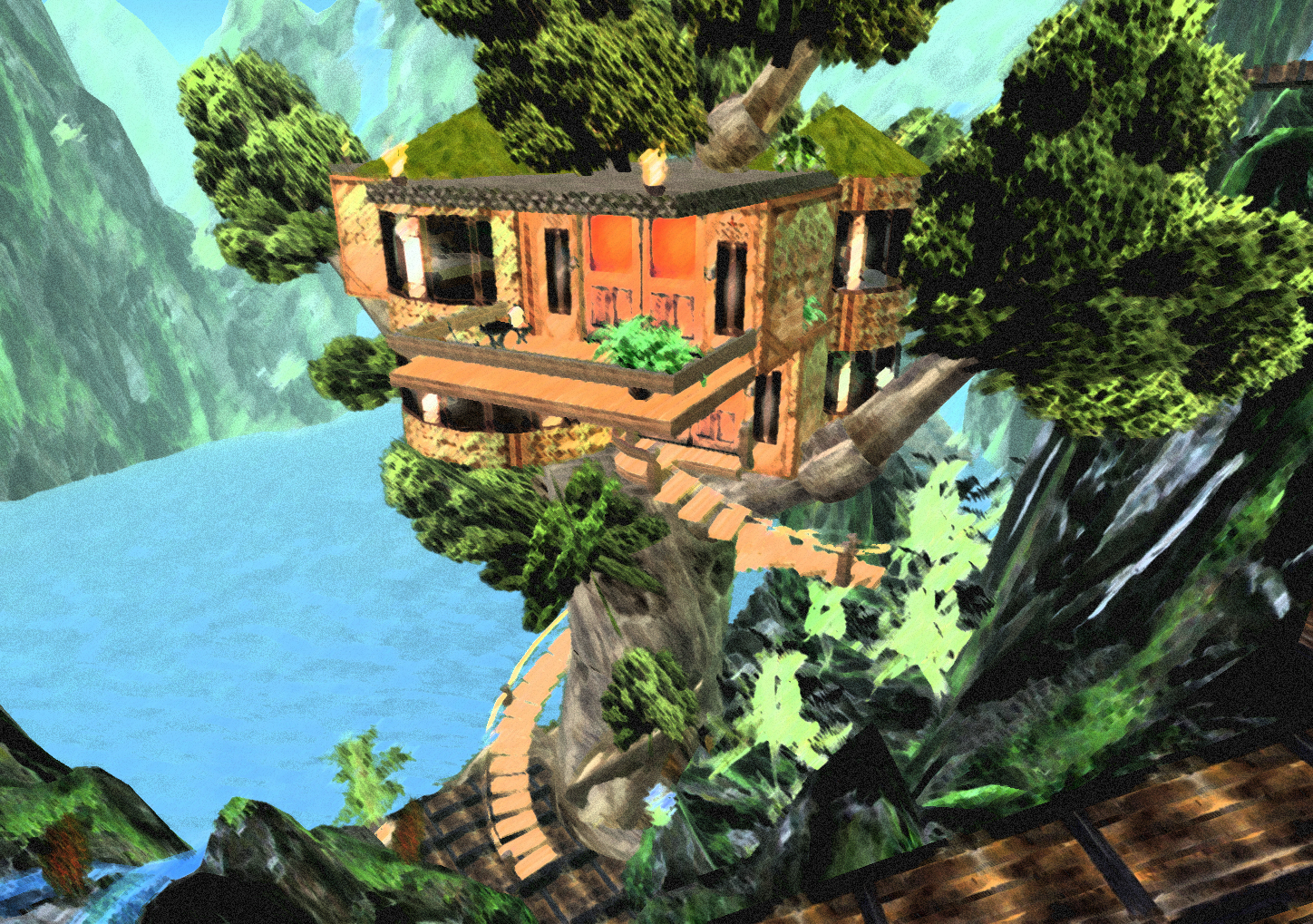
This was an early experiment with using heavily stylised filters to smooth off the rough edges of Second Life's graphics. This particular image was taken in a region called "Botanical", which was renowned for having beautifully constructed scenery. Worthy of note is the fact that all the buildings, scenery and objects in Second Life are constructed by the "players", so someone had spent a lot of time on this place; it seemed only fitting to immortalise it somehow.

3258277477_fbe89bfa7f_o

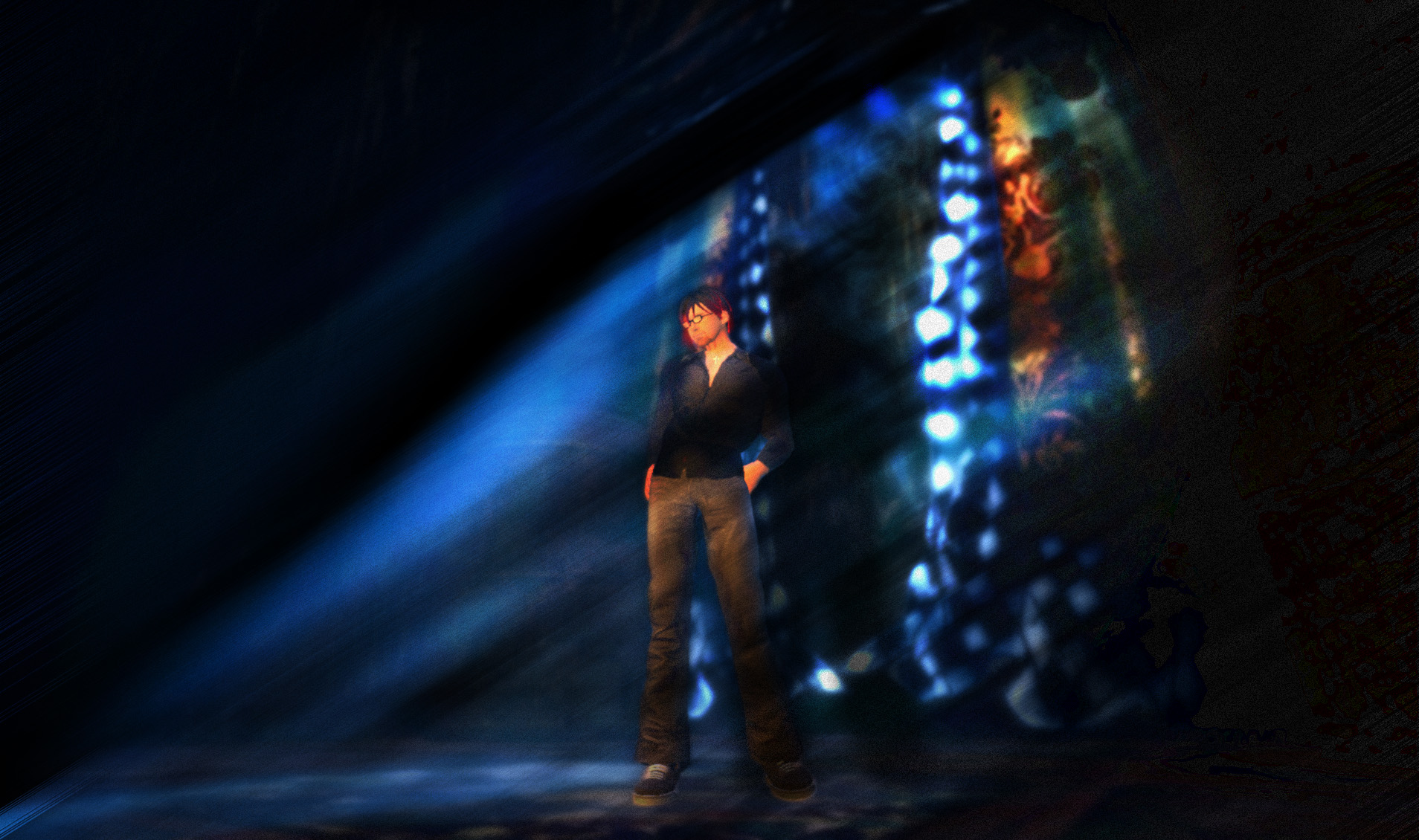
I normally hate taking pictures of myself, but even though I loosely modelled my Second Life avatar on myself, I actually enjoyed putting myself into virtual photographs. This image was in a moody area called "Templum Ex Obscurum"; I forget what its actual purpose was — perhaps just to look pretty — but I was pleased with how this shot came out, and even more pleased with the fancy lighting I managed to create while figuring out how Photoshop worked.

3285581914_daf20efc8f_o (1)

I don't mind admitting that when I was most involved in Second Life, I was somewhat emotionally fragile. One of the things I liked most about that virtual world when I was in it, though, was the fact that there were all manner of ways to express yourself. This image, taking alongside one "Rylan Carling", who graciously agreed to come and model for me, was actually rather cathartic to create. (That's "me" in the background; by this point, I'd been given something of a virtual makeover by a friend.)

3315075174_3e31bdb6f2_o

…Yeah, I was pretty emo around that time. (Hell, I still am; I still like this image and what it symbolised when I was putting it together.) Anyway, enough of that; if you want to see more images from that time, take a peek at my long-abandoned Flickr account.

Final Fantasy XIV

The inherent drama in a role-playing game makes for some great "photos", assuming you can time pressing that screenshot button correctly. Like this:

ffxiv_06092015_212131

Or this:

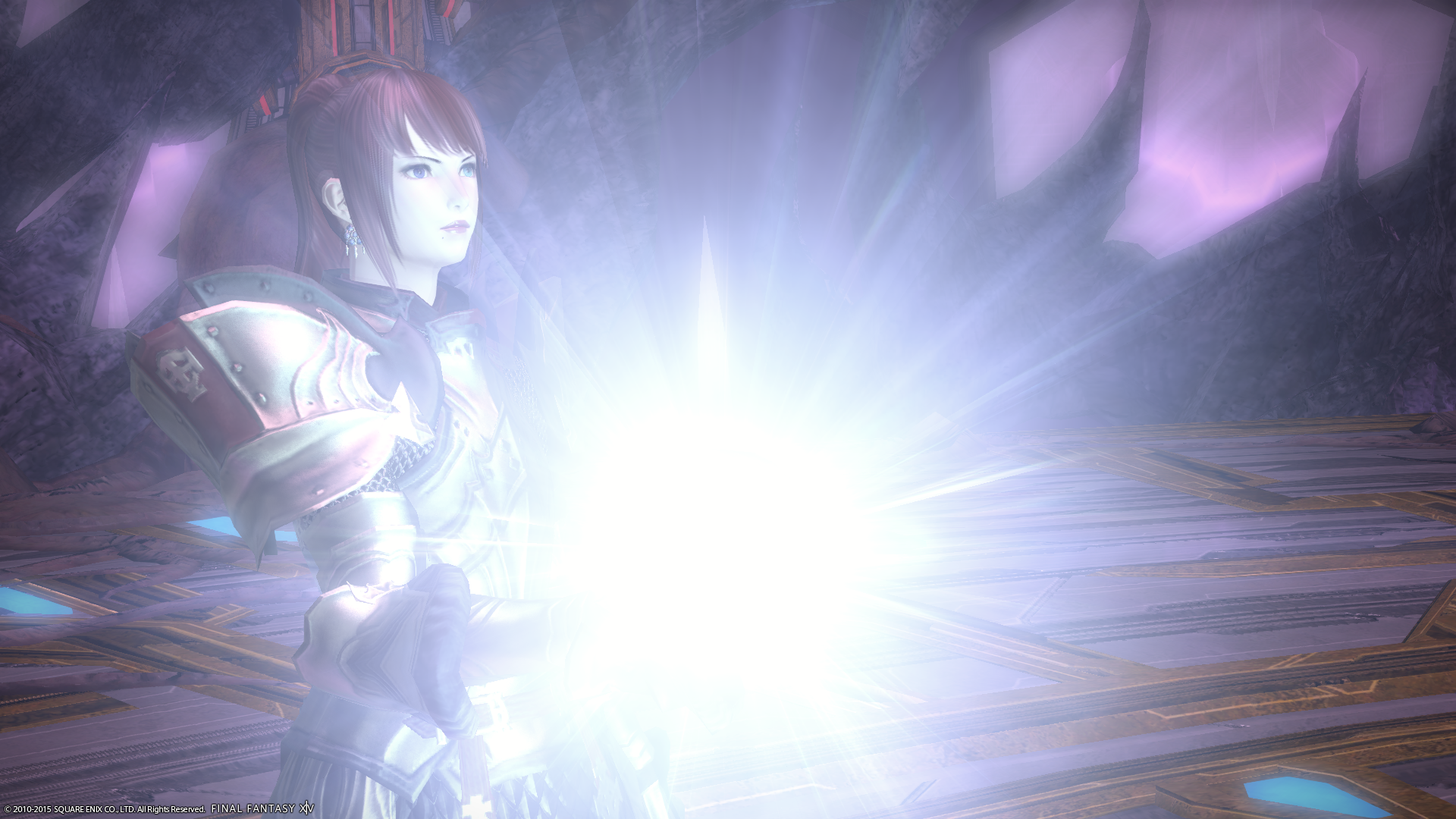
ffxiv_30062015_163714And then, of course, like Second Life, there's the self-expression element of everyone's avatars thanks to the "Glamour" system, whereby you can make one piece of gear look like another.

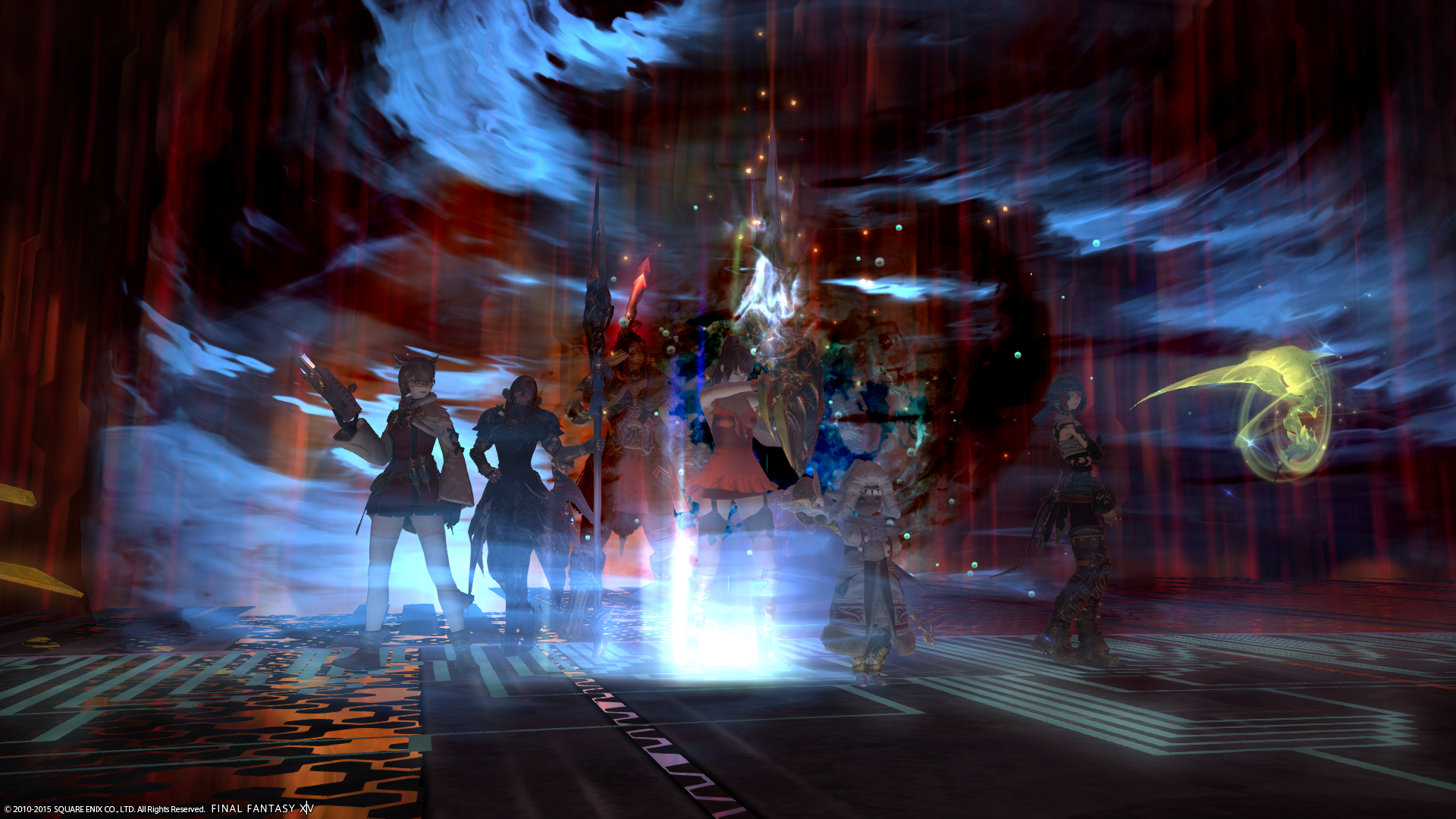
This image is pretty special to me; it's our whole Free Company meeting for a "group photo" shortly before the release of the first expansion pack Heavensward.

ffxiv_01062015_002447

Custom Maid 3D 2

And finally, it would be remiss of me to talk about virtual photography without mentioning Custom Maid 3D 2, which I introduced to you all the other day. Unfortunately, the vast majority of the "photographs" I've taken using this are, shall we say, not entirely suitable for publication on this particular blog (I have a few standards!) but, well, here's a few that I feel I probably can just about get away with…

img20151007103907

The thing that's impressed me most about CM3D2 so far is the fact that it's the closest I've seen 3D graphics get to 2D art. The character models, the art style, the outlining, the cel-shading and the expressiveness of the faces — all of those things combine to create something that is not at all "realistic", of course, but which is a very convincing recreation of the idealised anime style.

img20151007104322

As you'd expect from something with the word Custom in its title, the character creation system in CM3D2 is pretty astounding, allowing you to customise pretty much anything from face and body shape to eye style and whether or not the character has one or two of those cute little "fangs" you sometimes see anime girls depicted with. You can even set how heavy their boobs are. And choose their clothes, obviously. Dressing your maids up is one of the most fun parts of the game that doesn't involve doing lewd things.

img20151007103022

Even the lewd bits are eminently suitable for virtual photography, though, since there are a number of "actions" that simply pose rather than… you know… do stuff. Combine these poses with the control you have over their costumes as well as the camera control mod that allows seriously precise positioning of your viewpoint plus the wonderful ability to make the characters look at the camera on command (assuming it wouldn't be physically impossible) and you have a virtual photo studio that's a whole lot of fun to play around with.

Games are art, yo.

2086: Souls: Reaped

0086_001

I finally got around to beating the Diablo III: Reaper of Souls campaign today. I originally wasn't going to bother, as I was primarily interested in playing the new(ish) Adventure Mode rather than grinding through the campaign again, but I found myself enjoying the experience more than I expected, particularly in Act V.

I often think of Blizzard games as being rather weak on the story front. There are exceptions, of course — Warcraft III was particularly strong, for example — but on the whole, I've never really come to Blizzard games for the story. They are masters of their art when it comes to gameplay, but when it comes to storytelling, there are people out there who do it a whole lot better.

Or at least, that's what I'd been thinking. But replaying the Diablo III campaign and having my first run through the Reaper of Souls Act, I was actually quite surprised to see some reasonably decent writing along the way. I mean, the overall plot is still the sort of thing an angsty teenager would come up with if they wanted to write something dramatic (Angels! Demons! Eternal Conflict! Killing death itself!) but the individual moments that you encounter along the way are actually pretty good, even if some of the more supposedly "shocking" moments — the death of Cain, for example — were underwhelming due to their presentation.

I played through the campaign as the female Wizard, who has an endearingly posh voice and a penchant for sarcasm. Consequently, I found myself liking her a whole lot, which is not something you can usually say about the mostly-mute protagonists of loot-whoring dungeon-crawling action RPGs. Her interactions with some of the more tiresome characters — such as the perpetually grumpy head of the angels — were particular highlights for me. "Know this, nephalem," he said. "You may defeat Malthael, but I will not thank you for it." "No," replied my character, sighing. "Of course you won't. And that's part of your charm."

Since I'd already levelled my Wizard a fair bit in Adventure Mode before running through the campaign, I hit the level cap well before the end and started earning Paragon experience. The last time I played Diablo III, this system wasn't in place, so I was interested to see how it worked. Turns out it makes for an enjoyable endgame experience that doesn't rely on long-winded grinding for currency or large amounts of effort for relatively small, incremental amounts of progress. It would be completely inappropriate for a full-on MMO, mind you, given that it has the potential to totally unbalance your character if you put the time into it, but for Diablo, which has always been a series about seeing how big you can make the numbers that pop out of monsters when you smack them in the face, it's perfect.

If you've never capped a character in Diablo III and are curious, the Paragon system works like this: once you hit the current cap (level 70) your experience bar turns blue from its original orange, but you continue to earn experience as you did before. Early Paragon levels cost considerably less experience than the top end of the regular levels (7 million XP to go from regular Level 70 to Paragon Level 1 vs 83 million XP to go from regular Level 69 to 70) but the amount required increases gradually as you gain levels.

Gaining a Paragon level gives you a point to spend in one of four categories in turn. Your first point is in the Core Stats category, which includes your class' primary stat, which affects damage; Vitality, which affects your maximum HP and defence; Movement Speed, which is self-explanatory; and Maximum Resource, which is the thing your character spends to use skills or cast spells. Your next point is in the Offense category, which includes attack speed, critical hit rate, critical hit damage increase and cooldown reduction. Then there's the Defense category, which includes maximum life, armour rating, your natural regeneration rate and bonuses to your resistances. Then your fourth point goes in the Utility category, which includes area damage, the amount of life you get back per successful hit on an enemy, the amount of bonus gold you find and a reduction to the costs of your skills. Once you've spent a point in each of the four categories, your fifth goes into Core Stats, your sixth into Offense and so on.

The interesting thing about the Paragon system is that it's account-wide — in other words, your Paragon level applies to all your characters, even the ones that aren't yet at the level cap. This means that you can make levelling subsequent characters much easier if you have a decent Paragon level, because they'll be operating at a considerably stronger level than they would normally be otherwise. What's also quite nice is the fact that you can redistribute the Paragon points whenever you like (so long as you're not in combat) and each character can have a different setup as you see fit; the "shared" part is just how many points you have available.

Now I've beaten the campaign properly, I can focus on Adventure Mode, and now I'm at level 70 I can investigate some of the really interesting stuff like Greater Rifts and tracking down the Keymaster monsters. Endgame Diablo III certainly sounds like an intriguing time, and certainly a far cry from the completely non-existent endgame that it launched with. I'm glad I'm coming to it now, though; having experienced MMO endgame play in Final Fantasy XIV, I now understand the appeal of an endgame and why Diablo III needed one, whereas when I originally played the game I didn't really get why people seemed to be so annoyed that it was lacking in level-cap content.

Anyway. Time for bed before I get tempted to try and reach Paragon Level 30 this evening…

2085: Be Good to Your Meidos

0085_001

References to lewd stuff ahead. No actual porn though.

Largely out of curiosity (and in part due to being a filthy pervert) I decided to check out Custom Maid 3D 2 on the recommendation of some friends who also enjoy such things. And I've been pleasantly surprised by what this delightful package of filth offers.

Custom Maid 3D 2, is, like its similarly named predecessor, a sex game. I don't mean that in the way that mainstream press tends to refer to visual novels with explicit content, though it is Japanese, much like the visual novels in question; I mean it's a game where a significant component of the gameplay revolves around sex. I've long been fascinated with various interactive depictions of "virtual sex"; frankly, I find the whole scene to be a rather interesting means of living out all manner of fantasies safely and without hurting anyone, though naturally I hasten to add that nothing compares to actually having a real partner and doing things in the 3D world. I know that during "dry spells" over the years, though, stuff like this has proven to be an adequate substitute, if you know what I mean.

But anyway. I don't want to focus specifically on the pornographic aspects of Custom Maid 3D 2 because although it is hot as hell, the fact it depicts sex is not the most interesting thing about it. No; it's the fact that rather than being a straightforward "interactive porn movie" type of experience, there's actually a surprisingly deep and involved game in there too. Whether or not it is in good taste is another matter, of course, but if you can deal with the sexy stuff, there's an interesting experience to be had.

Custom Maid 3D 2 casts you in the role of the owner of an exclusive club. Your uncle passed it on to you, telling you only the bare minimum of details before buggering off to get married and leaving you with a failing business deep in debt. Essentially, the establishment you find yourself taking ownership of is an "adult entertainment" club where the maids who staff it, among other things, provide "night service" to paying customers. Unfortunately, owing to your uncle apparently being more of a playboy than a businessman, the club isn't in a particularly good state when you get your hands on it; there aren't even any maids left working there aside from your uncle's loyal secretary, who is strictly off-limits for anything other than professional discussions.

What then transpires is that you hire a maid to your own specifications (providing a loose narrative excuse for a shockingly detailed character creator that is almost the most fun part of the package) and then spend ten days "training" her to be a… suitable employee for this type of establishment. This involves a combination of sending her out to classes in the daytime, each of which affect various stats, usually in positive ways, and at night… well, you bang her, obviously.

Here's the interesting part: the sexy bits actually involve a certain degree of strategy and RPG-style resource management, of all things. Before you get it on, you have a certain amount of "stamina" you can spend on setting up a "playlist" of various activities. some of which are conditional on the location and whether or not she's drunk; going over the stamina limit will cause your maid to pass out during the session and perform poorly the following day, so it's in your interests to try and spend this as efficiently as possible.

Once you get started, each "activity" has several different actions you can take. Each one of these has an impact on a number of things according to what the action and overall activity is. Usually, an action will increase some sex-related stats significantly while reducing some of the more "innocent" stats (like "charm" and "leadership abilities") to a lesser degree. At the same time, the action will impact the maid's excitement, mind and reason levels; excitement affects the animations that play (and possibly the effect on stats? I haven't researched thoroughly yet), mind presents a limit on the actions you can perform during a single activity — running out of it means you can't do anything else, though it gets restored when you start a new activity — and reason causes negative impacts on stats to be stronger when it runs out.

On top of all that, the maid gains overall experience for each activity she participates in as well as "mastery" of the various activities. Improving mastery results in stronger, more efficient stat gains when performing that activity, and can also unlock new activities. Yes, we are indeed talking about a game with a skill tree that consists entirely of lewd things. Gaining experience can allow the maid to perform her various duties better — she has a separate level and "class" for sexy and non-sexy duties — and her disposition can change according to the activities she masters and does most frequently. In other words, you can "build" each maid as you see fit, and the game provides a number of special events and achievements as incentive for you to experiment with the maids you hire and discover the different types of character you can create.

It's an oddly fascinating little game, really; while there are doubtless people out there who will likely take umbrage at the very concept (particularly the "training" aspect), those of you with a penchant for the lewder side of life may want to give it a look. Just don't complain to me if you find yourself as engrossed by the gameplay as you are by the rude bits!

2082: Naked Fairies Blow Shit Up

0082_001

I seem to be having a bit of a shoot 'em up kick at the minute, which is no bad thing, since I have quite a good selection of them now. Most recently, aside from Eschatos, which I talked a bit about recently, I've been very much enjoying Raiden IV: Overkill on PC.

I like the Raiden series a lot. Raiden Project — an enhanced port of Raiden I and II — was one of the first games I played on the original PlayStation, and I've followed the series on and off ever since. Raiden IV, I'm pleased to note, remains very much true to the series' roots while being rather more up-to-date in terms of presentation — the recently released PC version happily runs in full 1080p resolution, which looks glorious.

One of the reasons I like Raiden — and Eschatos, for that matter — is that it's not a bullet hell shooter. I enjoy bullet hell shooters, don't get me wrong, but sometimes it's nice to enjoy something that isn't quite so buttock-clenchingly tense at all times. This isn't to say Raiden is without its moments of tension, mind; there's plenty of buttock-clenching throughout the course of a playthrough, but these instances tend to be spread out a bit more than in something like DoDonPachi Resurrection.

Another reason I like Raiden is its weapon system — and this is another contrast from many bullet hell titles. Rather than having a weapon that is enormously overpowered from the very beginning of the game, Raiden has always had three different weapons to choose between, plus three different subweapons to go alongside them. The standard Vulcan cannon has good power and, when upgraded, can happily fill the screen with a wide volley of bullets. The blue laser, meanwhile, is rather narrow, even at its highest power level, but is also the most damaging of all the weapons. And then there's the infamous "toothpaste laser" in the purple containers, which remains one of the most inadvertently (or perhaps deliberately?) hilarious weapons in a shoot 'em up ever, tying itself in knots as more and more enemies come onto the screen.

Interestingly, in Raiden IV you actually have several different ships to choose from. There's the default Raiden IV ship, which is like the ship from the previous games, only the basic, low-level Vulcan cannon you start with has a bit of a spread shot already applied to it. Then there's the ship from the previous games, whose basic Vulcan cannon fires straight ahead and only spreads when upgraded. And then there's a naked fairy — fairies have traditionally been the hidden, secret score items in Raiden games — that is much more agile than the standard fighters, and has her own complement of weapons that behave rather differently to the default ones.

Raiden IV Overkill is a comprehensive package with a number of different ways to play, each of which force you to approach it a little differently. The standard Arcade mode is where I've been spending most of my time, but the titular Overkill mode is fun, too; here, when you destroy a non-popcorn enemy you can continue shooting it to increase an Overkill meter, with bigger bonuses awarded for more post-mortem damage inflicted before it finally explodes. This forces you to play a bit more aggressively in order to score Overkills and collect the resulting medals, and it's an interesting twist on the original formula.

I am absolutely rubbish at Raiden IV so far, but as I've managed to improve my skills somewhat at Eschatos with a little practice, I don't doubt I'll eventually be able to get all the way through Raiden IV on a single credit, even if it's only on the easiest difficulty.

Still, as monstrously difficult as it is, it's a whole lot of fun, at least. I highly recommend grabbing a copy if you enjoy a good old-fashioned shoot 'em up.