2157: Enemy Unknown

0157_001

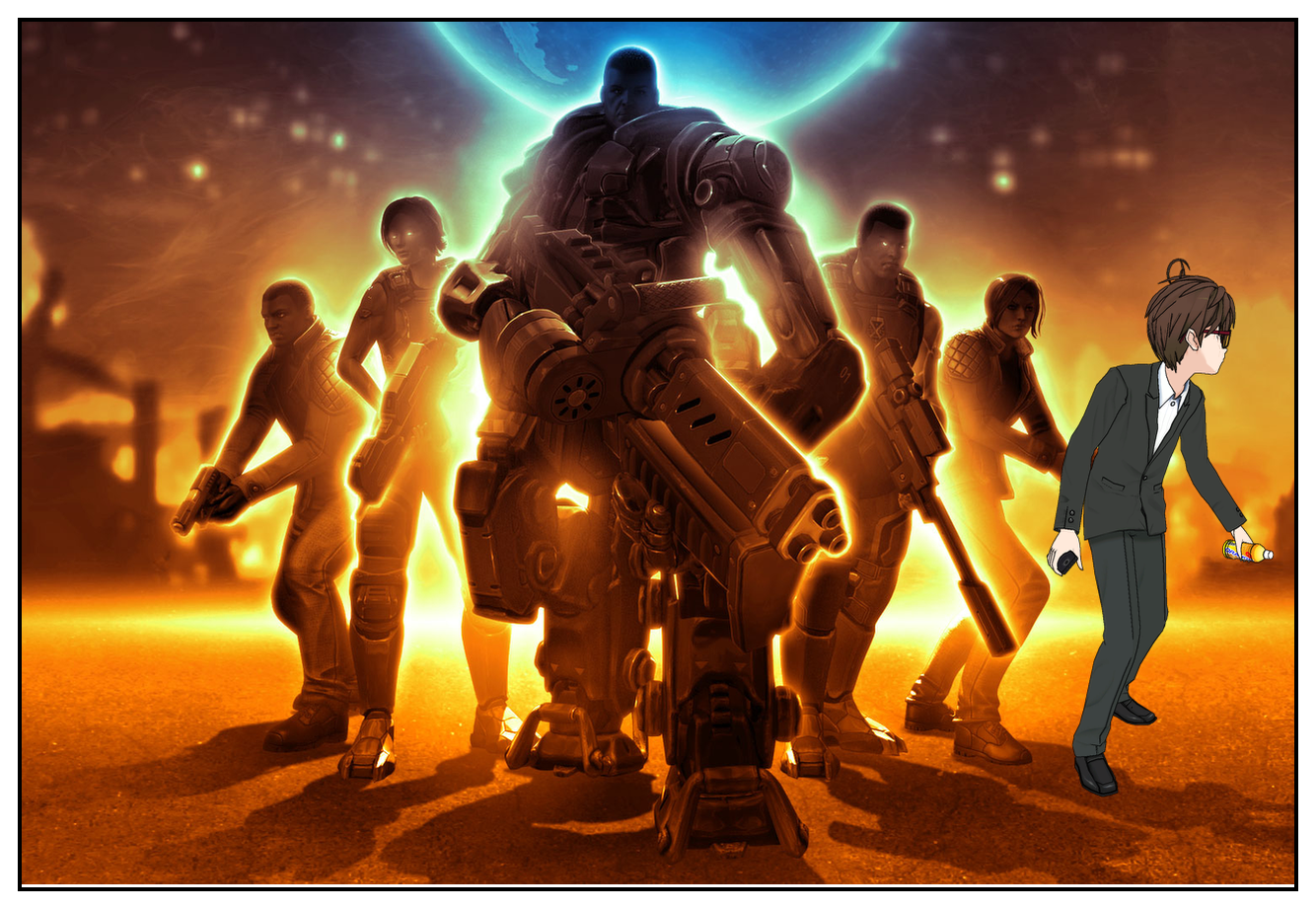
On something of a whim, I decided to fire up XCOM: Enemy Unknown this evening: a game that I have owned since 2013 and never even installed, let alone played. (Damn Steam sales.)

Regular readers will know that I'm quite a fan of the board game of this, with its interesting blend of cooperative action and real-time strategising overseen by an app that acts as both timer and gamemaster. The original video game it's based on is a somewhat different experience, but having finally played it a bit today, it's clear that the board game very accurately captures the atmosphere and overall "feel" of the source material.

For those unfamiliar, XCOM: Enemy Unknown is a remake of a much older PC game called UFO: Enemy Unknown, in which the player was tasked with overseeing the top-secret XCOM organisation in its attempts to repel an alien invasion of Earth. Rather than being a linear story-based affair, both UFO: Enemy Unknown and XCOM: Enemy Unknown are somewhat more freeform strategic affairs in which you're tasked with making the tough decisions as you go along — and dealing with the consequences of those decisions.

XCOM: Enemy Unknown is immediately more accessible than its much earlier counterpart, however. Since it was designed to be playable on console with a controller as well as with mouse and keyboard, the interface is simple, intuitive and easy to use with either control scheme. It also kicks off your first game with a selection of cutscenes and story missions introducing you to the various aspects of gameplay, which is a good way to ease you into what you should be doing. Over time, the game gradually stops holding your hand until you're running the whole operation, prioritising tasks as you see fit until Earth is either overrun by the aliens, or you successfully complete the final mission and humanity lives to survive another day.

Despite its new-found accessibility, XCOM: Enemy Unknown remains remarkably true to the formula set by its predecessor. You survey the world — initially a small area, but your coverage expands as you send more satellites into orbit — and respond to alien activity, be it UFO sightings, abductions or news of important people who might be able to help your war effort. Should a situation come up that requires the direct intervention of XCOM, the game switches to a tactical turn-based strategy game, in which you take a small squad of soldiers into battle against the alien menace.

Being a Firaxis game — they're the folks who made Civilization, for those who don't know their strategy classics — XCOM: Enemy Unknown is a game that expands in scope as you progress. Your squad members level up and learn new skills, allowing you to specialise them into various roles. Your research branches off in a number of different directions, allowing you to produce new equipment and items. You build up your base with new facilities to boost your overall capabilities. And along the way you need to make sure to keep the mysterious "Council" happy along with ensuring that the various regions of the world don't fall into panic.

The game is set up in such a way that you can't do everything. When alien abductions are reported, inevitably they're in several places at once, and you can only make it to one of the sites in time. The region you assist will reward you; the regions you leave to suffer will start to panic more at the horrible things happening to them.

The board game reflects all this really well with its inherent scarcity of resources. You never quite have enough soldiers or Interceptors to deal with all the shit that is happening in the world at once, so inevitably as you play through the game, various regions will start to panic more and more. It's essential to manage that as best you can; you can't prevent panic from mounting, but you can do your best to try and control it, and to prioritise tasks that will help you keep everything under control.

I'm interested to continue playing XCOM: Enemy Unknown, though. I'm playing on the Easy difficulty at the moment because I'm generally absolute crap at strategy games — particularly those by Firaxis — but I'm open to the idea of another playthrough on a harder difficulty if I make it to the end. So far it seems like an exciting and challenging but accessible strategy game, and I'm keen to check it out some more in the very near future.

2125: Walk a Mile in the Tank's Shoes

0125_001

One of the things I really like about Final Fantasy XIV is how easy it is to switch jobs to one of the other classes. Swap out your weapon (and, more than likely, armour) and bam: you're another class, with no need to create a new character.

This system encourages people to try out more than the class they start with, and provides a great opportunity for players to learn about not just the role they choose to "main", but also other types of character they might run into in cooperative content.

It's actually really interesting to run the same thing as each of the three main types of character — tank, healer, DPS — because the experience is often significantly different for each. And it's not always just a case of "tank stands in front of monsters, DPS stand behind, healer makes sure no-one dies" — one of Final Fantasy XIV's biggest strengths is that its encounters are often designed to keep things interesting for everyone in the party, with tanks, healers and DPS alike being expected to deal with mechanics and take care of themselves as much as possible.

Take something like the fourth floor of the Alexander raid, for example. As a tank, your job is relatively straightforward: stand at the front repeatedly hacking away at The Manipulator's legs until it falls over; try and mitigate as much of the incoming damage as possible. Straightforward, that is, unless you're the off-tank, in which case you'll be frequently sucked into a side "Quarantine" room with a DPS and expected to defeat a not-particularly-tough add before being returned to your party. DPS, meanwhile, are expected to pop exploding orbs that appear around the room, try and position themselves so tanks can intercept damage from laser attacks, defeat additional enemies as quickly as possible and, above all, try not to die. And the healers, aside from keeping everyone standing, have to deal with a unique mechanic in the last phase where they need to keep apart from each other and the rest of the party, lest everyone keel over dead.

It's not always this complex, of course, but even so, walking a few miles in each of the three roles' shoes gives you a better overall understanding of how the game as a whole works, and that's really important when playing cooperatively — if only to know exactly what all those buffs the healers are throwing on you mean, and that you shouldn't Stun enemies when the Dark Knight has Blood Price up!

That and it's just kind of fun to see how the different classes play, because even in ostensibly similar classes (Paladin, Dark Knight, Warrior, for example — all are tanks) there's plenty of variation in play style and overall "feel". You might even find yourself liking a new class more than what you originally considered to be your "main" — it's happened to me twice to date!

2119: Squishing a Bug

0119_001

Finally cleared Ravana Extreme in Final Fantasy XIV this evening, bringing me up to date on absolutely everything in the game so far with the exception of Alexander Savage, which I'm not in a particular hurry to rush through at the moment.

Ravana, though, was a lot of fun. I'd held off even trying that fight for a while for some reason — I'd got it into my head that it would be "scary", and I didn't want to be a burden on any group who took me along with them. In some ways, this was quite a nostalgic feeling; when I first started playing Final Fantasy XIV, the prospect of pretty much any group content was absolutely terrifying, and playing a role with responsibilities more than "dodge shit, do damage" (both important, to be fair) was simply out of the question. Now, of course, my best-levelled, best-geared classes are both tanks, and I have a healer on the way to the higher levels, too, while I haven't really touched my Black Mage — the class I started with — for quite some time.

Anyway. Ravana EX is a challenging fight, to be sure, even with decent gear. There's a lot of damage, and a lot of reliance on party members knowing and understanding mechanics together. But, for me, this sort of fight is the most satisfying kind of battle in Final Fantasy XIV; it's a really fun experience to see eight people working together, moving as a team and doing their best to overcome a stiff challenge. A couple of years ago when I first decided to check out Final Fantasy XIV more out of curiosity — and some fond memories of the 20 levels of Final Fantasy XI I played a few years back — I couldn't have imagined I'd be challenging difficult battles like this, but now I'm happy to be not exactly at the top tier of players in our Free Company, but certainly someone who can be relied on to jump in and try their best at whatever the game has to offer.

I like Ravana EX because there's a nice combination of learnable mechanics with a little bit of randomness thrown in to make things interesting. Ravana does the same moves in the same order for the most part, and the way in which you deal with them is the same. However, things like positioning and who is initially targeted for his most powerful attacks vary with each attempt, so you have to be on your toes. As a tank, there's also some fun mechanics, most notably dodging his frontal cone "Tapasya" (sp?) attack and sharing the damage from his devastating Blinding Blade tankbuster with the offtank; it's certainly a lot more than "stand there and get hit while doing as much damage as you can". Which is nice.

Now that I'm up to date on everything, I'm very keen to see what patch 3.1, which is out in a couple of days, has to offer. A few days ago I commented on the things I'm particularly looking forward to; mostly, I'm excited about the fact that the new content is likely to bring a bunch of people who maybe haven't played for a little while back to the game; they're tricking in already, but there will doubtless be a big surge once the patch is actually available, the main scenario storyline continues and the more impressive new content is ready to be challenged.

In the meantime, since my Dark Knight sword failed to drop in three successful clears of Ravana, it looks like I have a bit of farming in my immediate future if I want to have a decent weapon ahead of the new Relic's arrival in 3.15…

2118: Mini Metro

0118_001

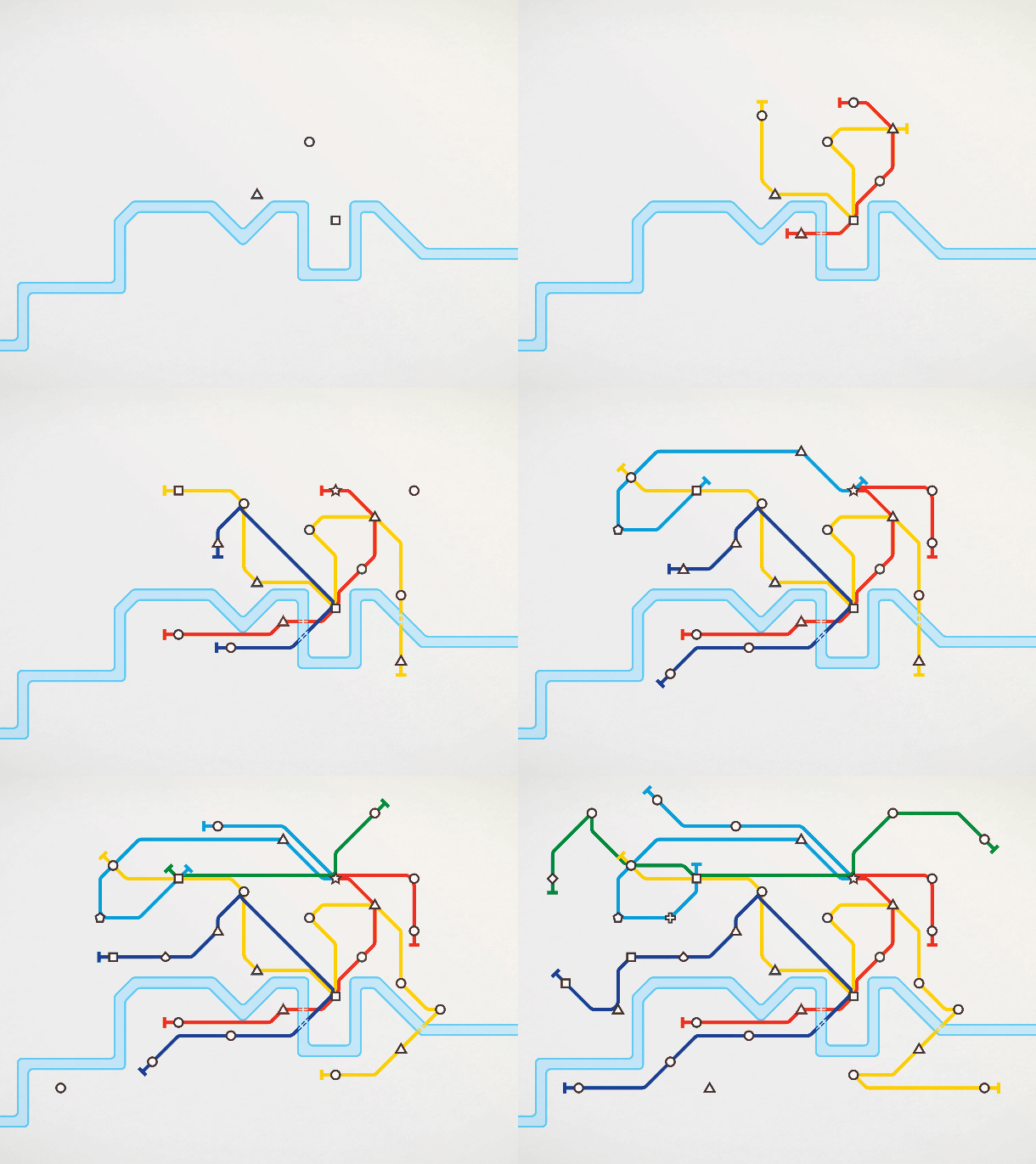
A new release on Steam caught my eye earlier today: one Mini Metro, an abstract puzzle game based around the idea of subway systems. Feeling like taking a punt on something unusual, I downloaded it and was delighted to discover a simple to understand but tricky to master puzzle game with some highly original, interesting mechanics and a gorgeous, clean aesthetic.

Mini Metro places you in charge of the subway system of one of several cities around the world. The city itself doesn't make a huge amount of difference save for the map on which the gameplay is based: most of them have some sort of body of water which will require you to construct tunnels or bridges to traverse, and you only have a limited number of these to use.

The mechanics are simple: stations appear across the map, represented as large shapes. At each station, small shapes appear to represent commuters. The shape of the commuter represents the station they want to get to. They're not fussy about which one of several identical stations they get to, but they most certainly do want to get to, say, a "triangle" station. In order to fulfil their requests, you need to draw coloured subway lines between the stations in order to set up efficient routes. You begin with just a couple of available colours, but as each in-game "week" passes, you have the option of adding more lines to your network — though you have to be careful, as if you don't have an actual train to put on the line, it's not much good to anyone!

London (1138)

As the game progresses, more and more stations appear and the map zooms out to expand the available playing area. Certain stations may be replaced by unique symbols such as stars or pentagons, too, forcing you to ensure that these stations have good access from all lines, or at least a relatively straightforward route of interchanges to use. In order to manage with the growing requirements of your city's commuters, each "week" you get a new locomotive to add to your network, as well as the choice between either a new colour of line to add or an extra carriage to add to one of your trains, improving its capacity. Using these upgrades effectively is key to success just as much as laying out your lines carefully.

There's a few different ways to play, too: the standard mode simply ends when one of your stations becomes overcrowded, the endless mode keeps playing regardless of overcrowding, and the Extreme mode forces you to live with your mistakes, as unlike the normal mode you are unable to edit your lines or trains once you've put them down. There's also a Daily Challenge mode, where everyone gets the same level to play on a given day, and competes for the best ranking on leaderboards.

I've only played about an hour of Mini Metro so far, but I anticipate it being one of those games I dip into every so often when I have a few spare minutes to while away. It's an understated, fun little game with some excellent mechanics and a lovely aesthetic, and if you're a fan of more abstract games it's well worth a look.

2117: Preparing for the Coming Darkness

0117_001

The preliminary patch notes for the long-awaited Version 3.1 of Final Fantasy XIV were released earlier today, and there's a lot to take in!

Main Scenario

Heavensward's main scenario was satisfyingly complete, with a wonderful final boss fight. But, in the best tradition of Final Fantasy XIV to date, it teased a coming storm, specifically involving a "Warrior of Darkness", who is presumably intended to be some sort of dark counterpart to our own player characters, the Warrior of Light.

Yoshi-P spoke in a Japanese language interview recently in a bit more detail about 3.1 and what to expect from the main scenario. It seems like the game will be moving away from the completely linear main scenario quest it's had to date, and will instead have a number of concurrent storylines. The reason for this is partly practical — parallel storylines afford the opportunity for the devs to unlock group content a bit more quickly rather than relying on linear main story progress — and partly to allow the story to develop in a few different directions simultaneously. It should also — hopefully, anyway — discourage people from skipping the (actually really good, well-written) main scenario quests just so they can get at the new dungeons/trials/whatevers.

Anyway. I'm not yet sure where the main scenario will be taking us, but it's clear we'll be seeing more of the shadowy Ascians, who are the Recurring Bad Guys You Never Actually Defeat that you always need in an MMO. We'll also be seeing the Warrior of Darkness, presumably, and perhaps visiting some strange and wonderful locales. Given that Heavensward appears to be heavily inspired by Final Fantasy IV, it's entirely possible we'll be taking a trip to the moon at some point, though exactly how that will be implemented remains to be seen, particularly as there's still a whole lot of Hydaelyn left to explore.

Dungeons

As I've previously noted, the fact that there are only two new dungeons in 3.1 was initially disappointing to me, but hopefully they should be good fun. The Arboretum dungeon in particular sounds like it has the potential to be interesting and challenging, and Pharos Sirius (Hard) apparently has a bunch of surprises in store; it's not just a run from the top of the lighthouse down to the bottom, as its appearance in the recent trailer seemed to indicate.

On the raid front, the Void Ark 24-man raid dungeon will doubtless be a highlight. It looks like it will have a suitably menacing atmosphere that's a bit different from other dungeons we've seen to date. It also sounds as if there will be some sort of diverging path mechanic, where the three 8-man parties will split off in different directions to do different things at the same time. Whether this is similar to the Atomos fight in Labyrinth of the Ancients, which simply involved three groups doing the same thing in different places at the same time, or something more ambitious remains to be seen. Either way, I'm looking forward to it a great deal — particularly as we're making a big effort to try and get a full 24-person Free Company run going the weekend after the patch.

Trials

Thordan Extreme, or rather The Minstrel's Ballad: Thordan's Reign is the big highlight here. A reprise of the formula from The Minstrel's Ballad: Ultima's Bane, Thordan's Reign is a more difficult version of Heavensward's spectacular but disappointingly easy final boss fight. Supposedly its difficulty is tuned somewhere between the current Extreme primals Bismarck and Ravana, and the current "Savage" raid dungeon Alexander, though it was also compared to the notorious Turn 9, still regarded as one of the most difficult fights in the game, even when playing with unsynced item and character levels.

Thordan's Reign will apparently be a ten-phase fight, making it sound as if it will be one of the most complicated fights in the game to learn, depending on how complex each individual phase is. To put this in context, the previous most difficult fights in the game had considerably fewer phases: Turn 5 had five, Turn 9 had four, Turn 13 had four, though each of these phases had a number of different mechanics that had to be dealt with appropriately. It's entirely possible that each "phase" of Thordan's Reign will have just one or two different mechanics at a time, but we shall see!

The Diadem

This is the bit I'm most interested in: the Exploration Missions, in which you fly off in an airship (either borrowed from Ishgard or belonging to your Free Company) to explore floating islands in the sky. Once there, you have 90 minutes to piss about with up to 71 other people, killing monsters, finding treasure, gathering goodies and completing objectives. The rewards are worthwhile, too; Tomestones of Esoterics will be awarded for completing objectives, and treasure chests dropped by monsters will contain item level 210 equipment, which is theoretically among some of the best in the game, though their randomised secondary stats will make them either amazing or useless for anything other than spiritbonding.

The reason I'm most excited about The Diadem is that it's probably the most significant shakeup to Final Fantasy XIV's structure since the launch of A Realm Reborn. Up until now, the game has followed a fairly standard formula: solo content in the open world, group content in linear instances, occasional group open world activities such as FATEs and Hunts. The Diadem occupies a curious space somewhere between an instanced dungeon and open world content; the area you're in is instanced and time-limited like a dungeon or trial, but there may be other players in there at the same time as you and your friends, and the structure is inherently more open-ended than the extremely linearly designed dungeons and trials. In other words, a trip to The Diadem will not be something you can "learn" and then perform by rote like the current dungeons and trials — not that there's anything wrong with that format! — but rather, hopefully anyway, will provide a degree of randomness that will make things interesting to revisit time and time again.

Relic

The new Relic — known as an Anima weapon — isn't launching with 3.1, but is instead coming a month later in 3.15. The previous Relic quest was one of the most notoriously time-consuming activities in the game, intended to be an alternative route to getting one of the best weapons in the game for those who didn't want to — or weren't able to — raid. We know next to nothing about what the new Relic questline will involve as yet, but you can probably count on it involving grinding, revisiting old content, completing objectives and a shared sense of camaraderie with your companions as you're gradually driven mad by what initially appears to be a completely unreasonable, unmanageable set of expectations.

Despite being at times irritating and demoralising, the original Relic quest was ultimately extremely satisfying, as it's the most convincing "build your own lightsaber" moment I've experienced in any game. This was a single weapon that you kept hold of for a long time, gradually improving bit by bit until it was a force to be reckoned with… and eventually transformed into something even more impressive. Doubtless the new weapon will be a similar situation — and those who made the effort to get a Relic weapon all the way to its final "Zeta" form will be rewarded with being able to skip about 10 hours' worth of grinding, apparently, so that's nice. (Of course, it took quite a bit more than 10 hours to make said Zeta, but any bonus is better than no bonus in this instance!)

Gold Saucer

The new addition to the Manderville Gold Saucer is the interesting-looking real-time strategy game Lord of Verminion. This appears to be a surprisingly well fleshed out game in which there's finally a use for all the collectable minions everyone has been racking up over time. Each minion has its own element, stats and abilities, and they're thrown into virtual combat against either the CPU or another player as you attempt to smash up your opponent's structures before they do the same to you. It will be really interesting to see if the player base takes to this, or if it ultimately becomes little more than an idle distraction.

Gold Saucer is also finally being added to the Challenge Log, allowing a much easier means of acquiring MGP for the Gold Saucer's exclusive rewards, most of which are primarily intended for vanity purposes. Simply adding things like the minigames to the Challenge Log will hopefully encourage people to party in the Gold Saucer once again, as when it launched, it was a whole lot of fun, but these days it seems a little bit dead, since people have mostly moved on.

Patch 3.1 is out next Tuesday. I'm looking forward to it a lot, and I'm also looking forward to the inevitable surge of people coming back to the game to check it out, too; hopefully I'll see some people I haven't had the chance to play with for a while. Doubtless I shall be gushing further thoughts on 3.1 over these pages once I've had the chance to play around with it a bit, so Please Look Forward To It.

2115: Jade Penetrate

0115_001

Had a go at a game that's been loitering in my Steam library for a while today: eXceed 3rd Jade Penetrate Black Package. This curiously named game is the third in a series of Japanese indie "bullet hell" shoot 'em ups that I grabbed in some Steam sale or other and have never really explored all that much. The first two games are rather Touhou-ish, while the third, developed by a different team and having a plot that seemingly has absolutely nothing to do with the first two, draws favourable comparisons to Cave's Mushihimesama series — that, coincidentally, is coming to Steam tomorrow.

Anyway. This being a Japanese game there is a plot where you perhaps wouldn't normally expect to find one, involving some sort of "to the death" tournament between what appear to be dragon girls aiming to rule over Pandemonium. As you might expect, angst and melodrama ensues and while none of it really matters to the actual game as such, the character designs are cute, the voice acting is decent and it infuses the game with a certain degree of personality that it might not otherwise have had.

The thing I like about eXceed 3rd is that it's not the kind of bullet hell game that immediately slams your face into a desk and then flushes your head down the toilet. It's accessible and easy to understand, though to get the highest scores you'll need to be a little more technical. There's just two modes of fire — a standard spread shot and a focused attack, which also doubles as a "precise movement" mode — along with the usual bombs, plus a super-powerful special attack. This charges up over time, but can also be charged by grazing bullets, collecting items and various other means.

Boss fights are split into clear and obvious phases, each with memorable names that assist with the learning process that is so important to this kind of game. In many ways, the boss battles are very much the focal point of the game, with the popcorn enemies during the main part of the level being more "filler" than anything else — though there are still some interesting bullet patterns to navigate through before you can challenge the stage's boss.

As is so often the case with Japanese indie games, eXceed 3rd runs at an incredibly low resolution — 640×480 — which means it will display on pretty much any screen and run at 60fps without too much difficulty. And as is so often the case with Japanese indie games, because eXceed 3rd has been specifically designed for this low resolution, it still manages to look good despite being technically inferior to pretty much everything else in the modern PC gaming market. The attractive, fluid visuals combine with an absolutely rockin' soundtrack to produce a shmup that really gets the pulse racing — exactly as it should be.

I don't feel I've played the game enough to comment in any more detail on it just yet, but I enjoyed the little I played earlier, and am looking forward to investigating it further. Pewpewpew!

2113: The Dark Knight Rises

0113_001

Level 58 on Dark Knight in Final Fantasy XIV now… almost there! I'm still really enjoying the class, and I'm looking forward to having my full suite of abilities to play with. I feel like I have a good handle on how it all works, now; Dark Knight seems to be a pretty flexible sort of tank, able to mitigate a decent amount of damage Paladin-style as well as heal themselves to a certain degree through abilities like Souleater and a cross-classed Bloodbath.

And the damage. Oh the damage. I haven't played Warrior enough to know what sort of numbers they put out on the road to 60, but Dark Knight is miles ahead of Paladin in terms of killing efficiency. Paladin isn't built for killing, of course, being a mitigation tank, but Dark Knight seems to strike a nice balance between being able to take some hits and put out some impressive damage numbers. It helps, of course, that I'm wearing almost entirely Strength-boosting accessories rather than the HP-boosting Vitality accessories, but I haven't had a problem with having too few HP at any point yet, so I intend to stick with that particular course of action for the immediate future until something comes along that twats me for more than I can take in a single hit.

Mostly I'm keen to get Dark Knight safely to level 60 — and preferably item level 190 — in time for the 3.1 patch on Tuesday the 10th. There's a bunch of interesting new stuff coming to the game that I'd like to be able to explore with my new class, most notably the two new dungeons (for which gear shouldn't be a problem for, since I already have tank gear up to about item level 189 or so) and the Extreme version of The Singularity Reactor fight.

The latter is one of the main attractions of the new patch for many people. Taking a similar approach to the "Minstrel's Ballad: Ultima's Bane" fight from A Realm Reborn, it's a remix of the final boss fight from Heavensward with (presumably) considerably more complex mechanics and a higher challenge factor. This is good, since although Heavensward's final boss fight is undoubtedly spectacular, at current average gear levels you can trounce it pretty quickly. It doesn't make the fight any less impressive, of course, but I know I certainly wish it would last a bit longer. Yoshi-P and the team say that the new fight will have a mighty ten phases to learn, so I'm looking forward to seeing how complex it can really be. It has the potential to be one of the most interesting, complex battles in the whole game at this rate.

Other than the more conventional content, the other appealing aspect of 3.1 is the Island Exploration mechanics that are being added. Heavensward added the ability for Free Companies to build their own airships and send them out on exploratory voyages into The Sea of Clouds, after which they'd come back bearing goodies, sometimes having discovered islands in the sky. I haven't looked into this much at all — our Free Company has one particularly dedicated member who has been taking care of our fleet of airships so far, so I haven't really needed to. The Island Exploration system, however, actually allows groups of players — up to 24 at once — to party up and explore some of the strange places the airships have been discovering. Once there, it's a much more freeform experience than the rather linear dungeons in the game. You have 90 minutes to explore, fight things and find stuff. Exactly what you'll find remains to be seen, but we know there is Aetherial gear to be found as well as gathering nodes for miners, botanists and perhaps fishers too. There will also be objectives to complete, which will reward players with the all-important Tomestones of Esoterics, which hopefully will be dished out with sufficient generosity to make Island Exploration a viable alternative to endless Dungeon Roulette grinding.

Then, of course, there's the continuation of the main story. Heavensward's main story was great, in my book even better than that of A Realm Reborn, so I'm interested and intrigued to see where it goes next. The "vanilla" Heavensward experience ended with an intriguing cliffhanger concerning the "Warrior of Darkness", presumably some sort of counterpart to the player character's "Warrior of Light", but it remains to be seen exactly what this means. There's also a number of unresolved teasers from A Realm Reborn's finale that need wrapping up, so I'm hoping we'll see some more information concerning what was going on here, too.

It's an exciting time to be a Final Fantasy XIV player, for sure, and I'm very glad that deciding to make the switch to Dark Knight has got me out of the "rut" I was feeling like I was in with only Paladin at the level cap. I'm really looking forward to putting a level 60 Dark Knight through its paces and seeing what the future holds for the land of Eorzea — more than that, though, I'm looking forward to lots of friends coming back to play the game once there's some new content in place that they haven't run a thousand times already… yet, anyway.

2109: Vermintide

0109_001

My friend Sam and I tried out Warhammer: The End TImes – Vermintide this evening, a game which has been positioned by various people as "Left 4 Dead in the Warhammer universe". I'm all for that as an idea, so we decided to give it a shot.

Turns out it takes most of its inspiration from its stablemate dungeon crawler board game Warhammer Quest, in that it is ludicrously difficult and very likely indeed to splatter your chosen heroes across the walls in fairly short order. Sam's tried the first mission on "normal" difficulty six times today, and we couldn't clear it once, though with two of us actually playing, thereby cutting down on the imbecilic AI, we got further than he was able to solo earlier in the day.

It seems like a good game, though. There's five different characters to play, each of whom have a different selection of gear to start with, and there's various bits of loot that you can collect and upgrade as you progress through the game — assuming you can actually clear a mission, of course. Having failed to clear the prologue mission, of course, we didn't see any of that, but it certainly seems that there should be a bit of variety in there — just the starting gear offers a couple of different ways to play for each class.

I tried out the Witch Hunter and Bright Wizard classes. The former is a plummy-voiced sort of chap with a sword (either one-handed or two-handed, depending on preference) and a pair of flintlock pistols that he fires alternately. The latter is a stern-sounding lady who wields a sword and a staff which can blast out simple fireballs or cast a particular spell.

The Witch Hunter seemed relatively straightforward. The choice of melee weapons gave him two distinct play styles — the one-handed sword allows you to slash quickly, making for a fast-paced experience when wading into melee. The two-handed sword, meanwhile, is much slower but deals much more damage, particularly when its attack is charged up. I'm not quite sure which one I actually preferred, but both were quite fun. The flintlock pistols seemed to be fairly accurate, too, making for satisfying ranged kills, often before the Skaven enemies noticed up.

The Wizard, meanwhile, had some interesting mechanics. Rather than ammunition for her ranged weapon — her staff — she has a little meter depicting how much she's tapped into the Winds of Magic. Casting spells — either the staff's basic projectile or the more powerful charged spell — increases this meter, which then gradually declines over time. If this pops over the top, she'll catch fire and potentially explode, which is not good, but going over a lower mark still causes damage to yourself if you're not careful. Playing as the Wizard, then, involves taking a bit more care with your shots and spells rather than just spamming fireballs at enemies. She also has the ability to "vent" her excess magic energy with the "reload" button, so during moments of downtime, it's advisable for her to do this — fling a couple of fireballs, hide, vent, pop out and fling a few more.

As you might expect from the name, Vermintide focuses pretty much exclusively on the ratmen Skaven monsters as enemies, but there's plenty of variety in there. Basic Skaven will swarm you like the zombies in Left 4 Dead, but there are also specialist monsters that will be familiar to anyone who played Warhammer Fantasy Battle or Advanced Heroquest in particular — there are Poison Globadiers, Warpfire Gunners, Assassins, Gutter Runners and all manner of other horrible bastards just waiting to make your life miserable, and, as in Left 4 Dead, many of them require cooperation to deal with. Packmasters, for example, grab a character with their hooked polearm and drag them away, so another player has to free them before they get "hung" from the polearm, at which point it becomes more time-consuming (and thus dangerous) to free them.

It was surprising quite how difficult the game was, but I'm interested to try it again — hopefully we'll be able to get a full four-player game going with a couple of other friends this weekend, so it will be interesting to see whether it's any easier with four human players!

2108: Heavensward Dungeon Boss Guides (For My Own Reference)

0108_001

I ran The Aery for the first time in months earlier tonight, and I realised that, having not run it for months owing to being at the level cap, I had forgotten almost everything about it. So in an attempt to brush up on my Heavensward dungeons as I continue to level Dark Knight — and also to provide an excuse to write a guide, which is something I enjoy doing — I present to you some information on how to beat the dungeon bosses in Final Fantasy XIV: Heavensward. Largely for my own reference.

The Dusk Vigil

Level: 51-52

Boss 1: Towering Oliphaunt

Towering Oliphaunt has a few abilities to watch out for. Firstly, there's Rear, which is an easily dodged area-effect attack around himself, and Prehistoric Trumpet, which hits the whole room.

You should also be aware of his other abilities: Rock of Ages will stun a non-tank player, Wooly Inspiration is a conal pull attack, and Rout is a charge attack. Similar to Wild Charge in The Final Coil of Bahamut, Turn 1, Rout's damage can be split between a party member and the targeted player. It's a good idea for the tank to get in between Oliphaunt and the targeted player when this happens.

Tank tank, healer heal, DPS DPS and this shouldn't present too much difficulty.

Boss 2: Ser Yuhelmeric

Tons of adds appear in this fight. There are two main types: melee adds have a few area-effect attacks, while caster adds have the ability to buff everyone around themselves, including the boss. The tank should try to keep the boss away from the adds.

The only real ability Yuhelmeric has that you need to be aware of is Death Spiral, an attack somewhat similar to Nael's Lunar Dynamo in The Second Coil of Bahamut, Turn 4. In other words, it's a doughnut-shaped attack that you can avoid completely by ensuring you're in melee range when it goes off.

Boss 3: Opinicus

This is the most complex fight in Dusk Vigil. Opinicus has several different abilities, some of which are easier to deal with than others.

Alpine Draft is a simple line attack that can be avoided without too much difficulty.

Freefall is an attack where Opinicus jumps at a player, destroying any piles of rubble they're standing near. These piles of rubble are important, so try and stay clear of them when you don't need them.

Whirling Gaol is a room-wide ability that causes you to be repeatedly "pushed" towards the middle. If you reach the middle, you'll be stunned and hit. To prevent being dragged in, hide behind one of the piles of rubble.

Winds of Winter is an ability that covers a reasonable area and stacks Wind Vulnerability Up on anyone hit, making Opinicus' other abilities more dangerous. This attack also destroys all current piles of rubble and causes new ones to drop from the ceiling.

Sohm Al

Level: 53-54

Boss 1: Raskovnik

This is a considerably more forgiving version of the Rafflesia fight from The Second Coil of Bahamut, Turn 1. If you've completed that, you'll know what to do here.

Acid Rain is a circular area-effect ability that takes aim for all players.

Sweet Scent causes Dravanian Hornets to spawn and slowly move towards the boss. These deal no damage, but should be killed if your party has low DPS, since they buff the boss if they're in range of Devour.

Devour is an ability that goes off after a player is marked and stunned for two seconds. It's a circular AoE attack, and any hornets in range will give Raskovnik a stacking damage increase.

Finally, Spit is a room-wide attack to simply be healed through.

Boss 2: Myath

Myath will periodically spawn jelly adds around the room, and use attacks based on which ones he consumes. When he consumes a blue add, move away from the party member with a blue marker. When he consumes a red add, stack up on the party member with the red arrow. Remember, blue is poo, red gives head. Or something.

The only other thing to be aware of here is the big green snot add. Kill this as a priority when it appears.

Boss 3: Tioman

Sohm Al's final boss has a number of different mechanics.

To minimise damage from the frontal cone attack Abyssic Buster, tanks should ensure that Tioman is facing away from the party.

Chaos Blast places AoE markers on each player, so avoid these.

Comet is the main ability to be aware of here. Two players will be marked and AoE circles will appear on the ground. When the marks fade, comets will fall where the players were standing, dealing room-wide damage to everyone based on how close they were to where the comets fall. To minimise damage from this, marked players should move away from the party — ideally to an edge — while the rest of the party keeps their distance too.

At around 45%, Tioman will become invincible and you must destroy her wings to continue damaging her. During this time, she will use Heavensfall, which marks a player and then spawns a cluster of circular AoEs on top of them. The marked player should move away from the rest of the party to minimise damage.

Finally, Dark Star is a room-wide AoE that you need to heal through.

After the wings are destroyed, the fight continues as before.

The Aery

Level: 55-56

Boss 1: Rangda

Rangda only has two main abilities to concern yourself with. To avoid being hit with Electric Cachexis, move into melee range with Rangda, similar to avoiding Nael's Lunar Dynamo or Chimera's The Dragon's Voice.

If you get marked with Prey, move to one of the tall pillars at the outside of the room to transfer it and stay safe.

You should also kill adds as they spawn; none of them are particularly tough. Rangda also has a few other AoE attacks, but none of them hit particularly hard, so just heal through them.

Boss 2: Gyascutus

Gyascutus will gain a damage-up buff for every cloud of poison it farts out around the room. To get rid of these, use the Mustard Gas bombs that spawn occasionally to eat one or two of the clouds, then kill them. If the bombs eat four clouds, they will self-destruct, deal damage to the whole room and poison everyone four times. Don't do this.

Boss 3: Nidhogg

Nidhogg's go-to attack is The Crimson Price, which shits out fiery orbs at you. These burn for a few seconds, then blast a line AoE. If Nidhogg faces you and you're not the tank, he's going to cast one of these at you. Step aside to avoid damage.

The Sable Price is Nidhogg's jailing ability. One player will get trapped, and the remaining party members must destroy it before Sable Weave casts, otherwise the trapped player will die.

At about 30% HP, Nidhogg will retreat to prepare his ultimate attack. During this time, you must defeat all the adds and ensure that Estinien remains standing. Tanks should grab the adds as quickly as possible, and healers should divide their attention between the party and Estinien to ensure he stays healthy. When the final add falls, Estinien will put up a shield, which you should dive inside to protect yourself from Nidhogg's ultimate.

After this, the earlier mechanics simply repeat.

The Vault

Level: 57-58

Boss 1: Ser Adelphel Brightblade

The first phase of this fight is a simple tank-and-spank — kill Adelphel's companions first, then knock him down. He'll change form and the fight proper will begin.

When Adelphel casts Holy Shield Bash, he'll jump to a player, stun and hit them. Paladins can Cover this.

Holiest of Holy deals damage to the whole room. Heal through this.

Finally, Adelphel will occasionally charge around the room and leave big explodey balls behind. Do not be near his balls when they explode, otherwise you'll be very sorry indeed. (Huehuehue.)

Boss 2: Ser Grinnaux the Bull

Like Adelphel, Grinnaux has a trash phase first. Batter him down to start the fight proper.

Most of this fight is about dodging the various ground AoEs that Grinnaux applies around the room, but there are a couple of specific abilities to watch out for.

Hyperdimensional Slash lays a red AoE in front of Grinnaux in the direction of a random player. When this goes off, anyone in the way will take damage, and an Aetherial Tear will appear where the attack hits the wall. These Tears will tether to anyone near them and damage them, so ideally bait them all to the same part of the room.

After two Hyperdimension Slash attacks, Grinnaux will cast Faith Unmoving, which will knock everyone directly backwards when it finishes casting. Make sure your back is to part of the wall that is free from Aetherial Tears to stay safe.

Boss 3: Ser Charibert

Filthy rats! Charibert has a bunch of nasty abilities that you need to watch out for. It's a good idea to tank him near the entrance to his arena rather than in the middle.

Altar Pyre is a simple room-wide damage attack. Heal through it.

Holy Chain tethers two players together — run apart to break it, otherwise you'll both take damage.

Heavensflame causes flame rings to appear on the ground. Avoid them.

Charibert's most annoying ability is to summon a row of knights, who will march across the arena and Slow anyone they trample over. Each row will always have a gap in it, so position yourself so they'll pass you by safely or run through the gap to avoid this.

At about 50% HP, Charibert will disappear, then reappear with a bunch of Holy Flames around the room. Kill as many of these as possible, because Charibert's next attack deals more damage the more Holy Flames are left. You can leave one or two Flames up and still be safe when this happens.

After this attack, the cycle repeats, though both Heavensflame and Charibert's knight-summoning become more dangerous: Heavensflame has two sets of flame rings, and two rows of knights appear instead of one.

The Great Gubal Library

Level: 59-60

Boss 1: Demon Tome

This is very similar to Demon Wall in Amdapor Keep, albeit without the time limit. Instead, there are some new abilities to watch out for, including an instant-kill.

The first thing to do is avoid Demon Tome's line AoEs, since these apply a Slow effect. The lines will come down the middle of the room first, then the sides. Position yourself ahead of time to avoid these.

Dark Blizzard III is a circle AoE that targets a random player during the line attacks. Avoid this.

Disclosure is Demon Tome's instakill ability. When it starts to glow, run around the side until you're behind Demon Tome to stay safe. If you're in front of Demon Tome when Disclosure finishes casting, you'll die.

Finally, Words of Winter is a ground freeze attack that causes you to slide while it is in effect. Plan your moves carefully, particularly when Disclosure is casting, and only move when necessary.

Boss 2: Byblos

When Byblos runs to the centre of the room, two books will spawn, with the ability to cast Death Ray at you, a line AoE that, despite the name, doesn't do all that much damage.

When they die, orbs will tether to players. Tethered players need to position themselves so the orb hits Byblos to break his invulnerability period.

In subsequent phases, Byblos will spawn clouds of fumes. Party members should take it in turns to disperse these by running through them, since this causes damage. It's important to manage them, though, as they can interfere with the orbs.

When Byblos isn't invincible, he'll perform Gale Cut on the tank. When this is being cast, the tank should run through Byblos or to the side to avoid it. He also has a Tail Swipe attack on anyone behind him.

Finally, Head Down is a charge attack similar to the one seen in Amdapor Keep (Hard). The targeted player should ensure the line AoE doesn't intersect with any other players to minimise damage. The easiest way to deal with this is simply to run straight at Byblos.

Boss 3: The Everliving Bibliotaph

Three times during the fight, The Everliving Bibliotaph will use Void Summon as a supernatural "Help Wanted" advertisement. In order to prevent his questionable hiring practices, you need to stand on the glowing platforms on the ground. The number of players who need to stand on a platform is indicated by how many lights are lit up on the platform in question. Multiple platforms will highlight at once, so be ready to spread out.

If you get targeted by Bibliotaph, run away from the party to bait the AoE he's preparing for you. Everyone should keep away from this, as it pulses several times, applying damage and Vulnerability Up in the process.

At around 55% HP, Bibliotaph will cast some combination of Deep Darkness and Magic BurstDeep Darkness covers the outside of the arena and causes a Heavy debuff for about 30 seconds. Magic Burst, meanwhile, deals damage and knockback. Neither are pleasant.


If you're new to Final Fantasy XIV and want some more help, I wrote a bunch of guides during my time at USgamer; some of this information is a little out of date now, but the basic boss strategies and suchlike are still valid.


2107: Dark Knight Chronicles

0107_001

Continuing to level Dark Knight in Final Fantasy XIV, and I'm having a lot of fun with it. I wasn't quite prepared for how much more powerful it feels than Paladin, but I'm really enjoying the overall feel of it a whole lot — much more than Warrior, which seemed enjoyable enough, but didn't quite "click" with me for some reason.

I think the reason I like Dark Knight so much is that it appears to be a little less dependent on strict rotations to perform its job most effectively — or, rather, there's more than one rotation to play around with. I particularly enjoy the fact that when playing Dark Knight it's absolutely okay — even encouraged — to drop out of Grit, the main "tank stance", in order to do some additional damage. This appears to be of particular benefit when fighting single-target bosses, since taking fewer overall hits means that Blood Weapon (increase attack speed, drain MP from enemy with every hit, only available when not in Grit) becomes a more efficient means of restoring MP than Blood Price (gain MP when taking damage).

Even though many of the abilities are somewhat similar in function to those found in Paladin, they somehow feel more satisfying to use. Dark Knight has an area-of-effect damage over time skill called Salted Earth, for example, that bathes an area in black and red lightning, whereas Paladin's nearest equivalent is Circle of Scorn, which has its own little pyrotechnics display but somehow doesn't feel quite as enjoyable to use. Dark Knight also has Scourge, which is a damage over time that can be immediately applied rather than only used at the end of a three-hit combo like Paladin's Goring Blade. When everything lines up nicely and you can apply Scourge and Salted Earth to an enemy before letting rip with a non-Grit Dark Arts Souleater combo for a significant amount of damage, it's a great deal of fun.

Learning my way around Dark Knight has been enjoyable, and it's helping me rediscover my respect for Final Fantasy XIV's combat system. People who come to FFXIV from more traditional, customisable role-playing games are sometimes a bit put out at the relative lack of personalisation FFXIV offers in terms of abilities — everyone gets the same abilities at the same levels, and the only real flexibility is in any cross-class skills you choose to use, but even here there are only certain ones that are particularly useful — but in practice it works enormously well, behaving, of all things, more like a fighting game than anything else. A slow-paced fighting game, admittedly, but a fighting game nonetheless.

Allow me to clarify. Modern fighting games demand that players learn specific button and directional inputs to perform various special moves. In order to get good at a fighting game, you need to develop a certain degree of muscle memory to be able to pull these moves off automatically. Once you've done that, you need to master the timing of these moves to chain them together into effective combos, and then you need to understand what the most appropriate situations to use these individual combos are.

Final Fantasy XIV is exactly the same, just at a fraction of the pace of your average fighting game. Positioning is important; responding to your enemy's moves is important; using the right ability at the right time is important. Even muscle memory is important, particularly if you're playing on controller — while you're not doing Hadoken button inputs to throw a fireball at someone, you do need to be able to remember where you put all your most important abilities and be able to practically automatically perform combos with no gaps for the most efficient possible damage output. For example, on Dark Knight, my average combo runs something along the lines of LT+Y, RT+Y, LT+A, LT+RT+X, A, LT+RT+B, LT+X, RT+B, RT+X, RT+A, RT+LT+B, RT+LT+X, RT+LT+up, RT+LT+A. This pulls an enemy with Unmend, cements aggro with Unleash, kicks them in the bollocks to stun them for a few seconds, drops a Salted Earth on the ground, applies Scourge, blasts them and anything near them with Dark Passenger, does my three-hit aggro combo then my three-hit, Dark Arts-buffed Souleater combo for a nice chunk of damage. And this isn't even getting into the situational weaving in of various defensive cooldowns to ensure that I don't take too much damage, or other skills to support the battle.

That may all sound exceedingly complicated, but I've done it so many times now that it feels "automatic" to be able to perform these abilities in the order that seems to work most effectively at my level. I'm sure I'll have to shake things up a bit as I get closer to 60 and challenging more difficult content, but for now it's extremely satisfying to nimbly pull off these combos without breaking a sweat.

Onwards to 60 then… I should hit 54 tonight, all being well.