2204: Elite

0204_001

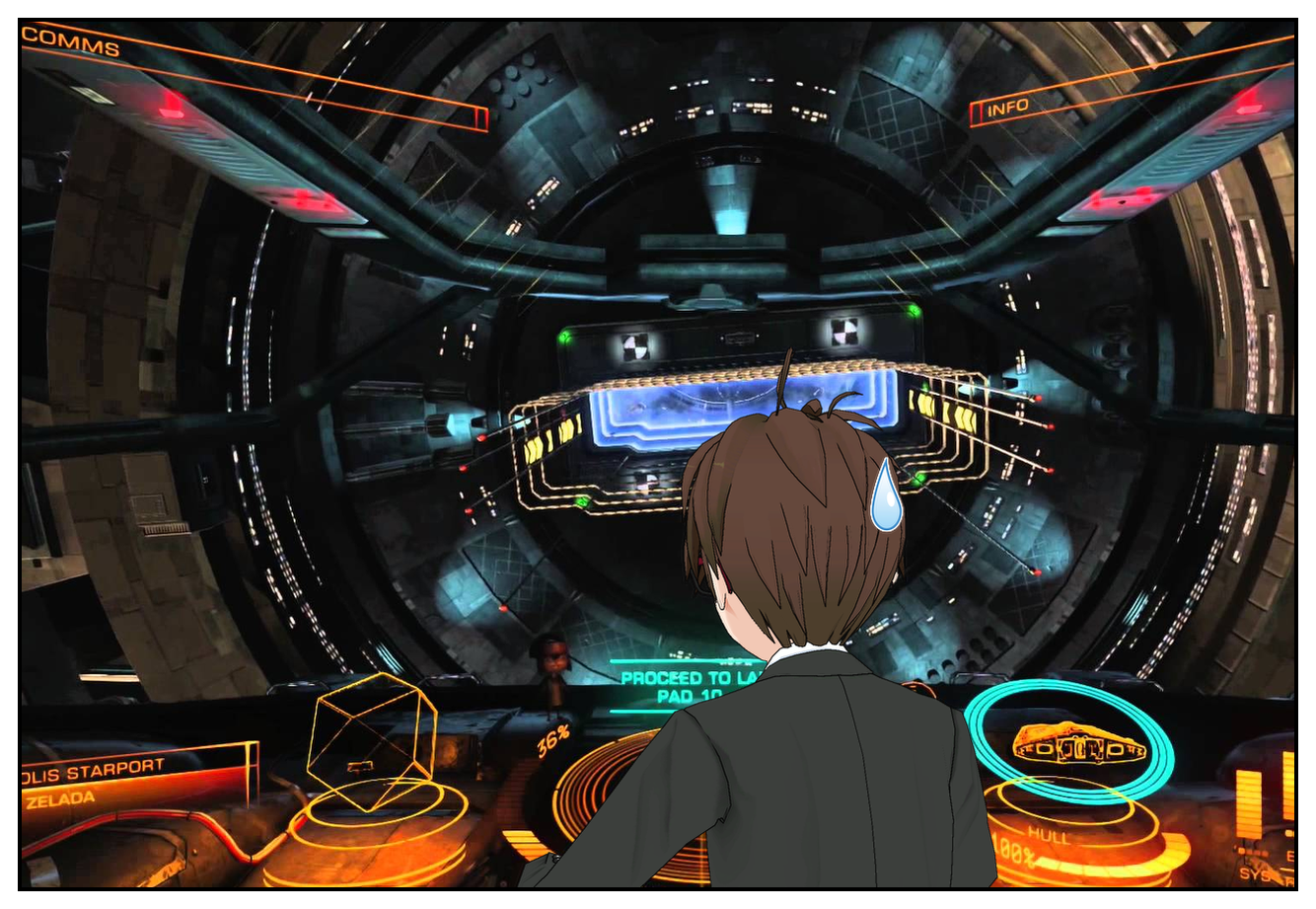
I spent a chunk of today trying out Elite Dangerous: Horizons. This was actually pretty much my first experience with Elite: Dangerous generally, aside from giving the tutorials a go yesterday, but I felt I was long overdue to try it out, particularly as I had bemoaned the lack of a good Star Trek game the other day. Elite is not a good Star Trek game, but it is one hell of a space sim. And, for once, that "sim" part seems apt; this certainly isn't an arcade-style dogfighting game, as evidenced by the fact that in several hours of play today, I didn't fire a single shot.

I used to really enjoy space games back in the 16-bit era — particularly those of a more free-form nature such as Paul Woakes' Mercenary series, Rainbird's Starglider series (particularly the enormously ambitious second installment) and, indeed, the original Elite. I say that — Elite is actually one that I never quite managed to get my head around when I was young, because there was a lot of things to think about while you were playing, and pages full of numbers that confused and bewildered me. Also docking with those spinning space stations was fucking impossible, so every time I tried I usually ended up quitting in disgust after smashing my ship to smithereens on the space station you start near.

I made the mistake of reading a few Steam reviews of Elite: Dangerous before giving it a go; while there are a few fair criticisms there, there's also a whole lot of whining about 1) not knowing what to do and 2) Frontier's business model for the game which, if you're unfamiliar, sees them essentially re-releasing the game at full price each year with the promise of a year's worth of major updates to the game systems. It's perhaps better to think of it as a yearly subscription fee, particularly as the game has a significant massively multiplayer element for those who care to engage with it.

Anyway. Discarding the Steam reviews and jumping in to try things out for myself, I was quickly enraptured by the feeling of flying my Sidewinder. I even unplugged the 360 controller and plugged in my 11-button joystick; it's no full HOTAS (Hands On Throttle And Stick) setup, admittedly, but it feels great when used in a game like this, particularly with the lovely visual feedback the game gives you with regard to movement: unlike the original Elite, whose cockpit was a static bitmap with a viewport into the flat-shaded 3D polygonal universe outside (I was playing the Atari ST version, so it had colours!), Elite: Dangerous' cockpit is set up to feel like you're actually sitting in it. Handling the controls causes your viewpoint to shift slightly according to how you're moving; it tilts when you roll, pulls forward and back when you speed up and slow down, and pulls up and down when you pitch. Given the game has been designed for virtual reality headsets from the get-go, it's understandable that the game would model head movement pretty well, but I'm glad to see that even when playing on a flat (admittedly large) TV screen it still looks very convincing.

What I've found most satisfying about the game so far is the moment-to-moment simulation of flying your ship. Everything you do is just satisfying to pull off, just for the sake of doing it. Especially fun is taking off and landing from various structures and space stations — and, in Horizons, you can now land on planets, too, either at settlements with dedicated landing facilities or just on the ground if you find a suitably smooth patch of terrain to set down. The handling of the ship is beautiful; pulling the stick around feels like you're wrenching a big, slightly unwieldy lump of metal around in zero- or low-gravity, and the sound design, where you hear your thrusters firing and your engines throbbing according to whatever you're doing, is absolutely impeccable. There's even a wonderful crescendo of your engines reverberating off the ground and surroundings as you set down for landing; it is, I think, the most convincing depiction of plausible pure sci-fi space travel I've seen for a very long time, perhaps ever.

The most common criticism of Elite: Dangerous is that it's "a mile wide and an inch deep", and I can kind of see where that's coming from: interactions with NPCs are rather sterile and menu driven, though later updates look set to put "faces" to significant characters in the universe. There's no prescribed narrative, either; you can get involved in the PowerPlay mechanic to swear allegiance to one of the various factions attempting to control the universe, which actually has a significant effect of the game for all players, but there's no "story" to follow as such besides that which you make for yourself.

In many ways, I think I sort of prefer that for Elite, though; while I do love a bit of story in my space games a la Wing Commander and the like, when playing something as freeform as Elite a story can kind of get in the way a bit, making you feel obliged to go and do certain things rather than exploring the galaxy at your own pace, making a name for yourself however you see fit.

I'll be interested to see if Elite holds my attention, but for now, it certainly feels like the space game I've wanted to play since I was a kid.

2196: Starward Rogue, a Game About a Severed Head in a Mech

0196_001

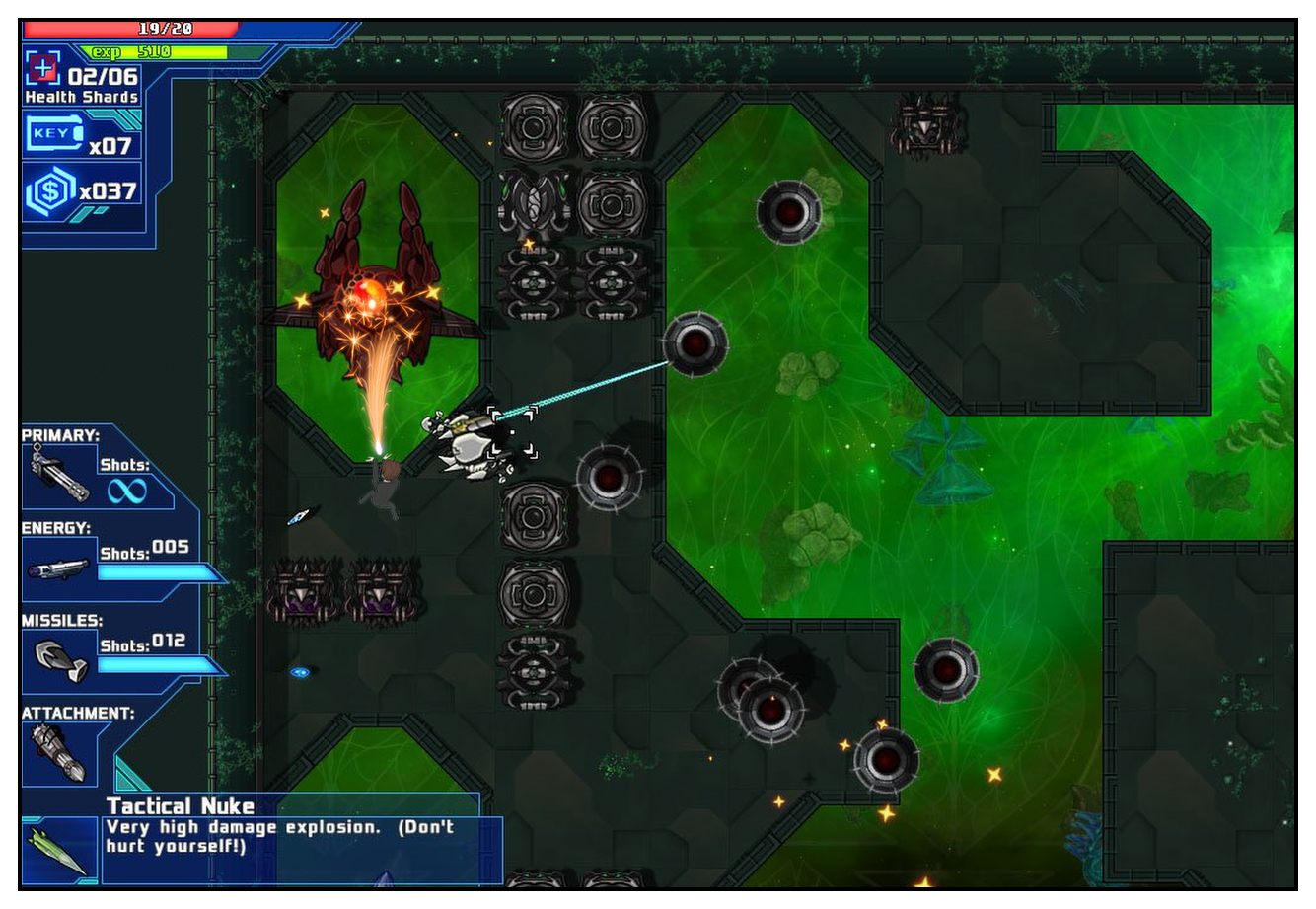
I took a look at Arcen Games' latest today. I've followed this interesting developer for a few games now, most notably A Valley Without Wind and its sequel: two games that fused, oddly enough, turn-based strategy with Metroidvania-esque platform shooting. Arcen's latest game Starward Rogue continues the dev's tradition of fusing disparate genres together, in this case arcade shooters and roguelikes.

I say "disparate"; Starward Rogue isn't the first game to combine roguelike elements with a shoot 'em up core, but it is the first I recall seeing designed around the principles of Japanese-style arcade shooters, particularly those of the "bullet hell" variety. That means intense, complex bullet patterns that you need to navigate through as well as enemies to defeat, and it makes for an exciting, very interesting take on a genre that all too often coasts along without any real innovation.

Starward Rogue casts you in the role of a severed head in a mech as you attempt to rescue someone called Rodney from the depths of a dungeon called the Megalith. I believe these two elements are a reference to one of Arcen's other games, but it's one I'm not familiar with at this time. Fortunately, no real knowledge of whatever the other game it's referring to is required; it's simply a bit of fanservice for those who have played the game's spiritual predecessor. Rodney is an entertaining character in his own right, though my only direct contact with him so far has been in the tutorial sequence.

Starward Rogue's gameplay is balanced nicely between exploration and action. Each level of the Megalith is split into discrete rooms, each of which has to be cleared of enemies before you can move on to the next one. Unlike similar games such as The Binding of Isaac, though, Starward Rogue's rooms are often more than a screen wide and tall, and there are a number of unique designs and layouts that you'll encounter over the course of the game, which are then combined with various enemy and trap waves — the latter tending to be non-destroyable obstacles or gun turrets that will spew out hot fiery death as you try and take down the enemies, then deactivate when you've cleared the room.

Levelling up is a simple process: no stat allocation here, simply pick one of three randomly selected perks. These vary from increased damage to having a full map available from the start of the floor — and even being able to skip the rest of the floor you're on. Alongside these passive bonuses you get from levelling, you can also equip and upgrade your infinite-ammo main gun, your recharging Energy-based weapon (which recharges when you enter a new room) and your limited-ammo Missile weapon. There are also various other passive upgrades you can collect, and one-shot consumable items that generally have some sort of "smart bomb" effect.

Much like the aforementioned The Binding of IsaacStarward Rogue is a game intended to be replayed and rechallenged. There are a number of different mechs with which to play the game, and there's a checklist of enemies and items you've found over the course of all your runs. There are also five difficulty levels to choose from, with Very Easy all but guaranteeing a full clear run unless you are the very worst kind of incompetent moron, and the highest difficulty claiming to offer difficulty on a par with the legendary Touhou series. And on top of that there are a bunch of achievements to earn, too, so it's very much a game that will keep you busy for a long time if you get it — though it's accessible enough to be able to pick up every so often for a quick blast even if you've left it alone for a while.

I completed a Very Easy run earlier — there's no shame in starting either a roguelike or a shoot 'em up on the lowest difficulty, and this game is both! — and am already looking forward to giving it another shot soon. If you're a fan of The Binding of Isaac and its ilk — "roguelites", to use the popular term — then you could do far worse than give Starward Rogue a look.

2190: Rubble Without a Cause

0190_001

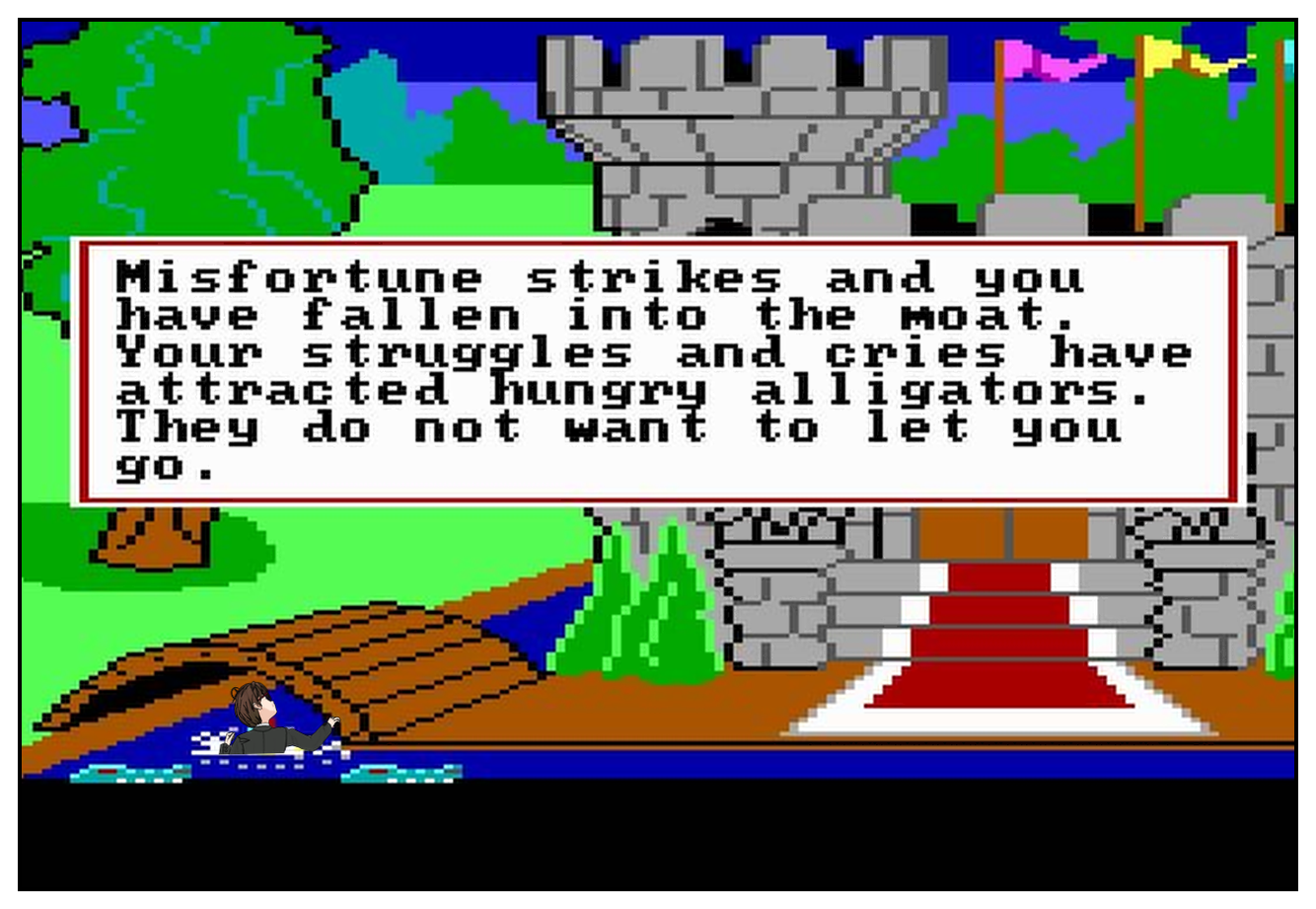
I played through the second episode of the new King's Quest game today. It's a lot shorter than the first one, so I was able to get through it in a single sitting. Despite being fairly short, though, it's an interesting contrast from the previous episode; rather than being a relatively large (for an adventure game) open world with a non-linear series of puzzles for you to tackle at your leisure, Rubble Without a Cause, as the second episode is known, takes place in a much more confined environment, and largely focuses around one big puzzle: how to free everyone from captivity at the hands of the goblins.

Yes, instead of throwing us back into Daventry, Rubble Without a Cause puts us underground in a goblin prison complex. Graham is dismayed to discover that most of the major characters from the town of Daventry appear to have also been abducted, along with the eccentric merchant's "unicorn" Mr. Fancycakes. Thus begins a quest to find a way out of this predicament.

There's a twist, though: unlike most adventure games, you don't have all the time in the world with which to achieve your goals. Unfolding over the course of several days, the adventure sees the health of all of the prison's occupants — with the exception of Graham — decline as the days pass. Thus you're presented with some difficult, mutually exclusive choices throughout as you determine who it is best to give medicine and food to as they require it. And once you start getting closer to escaping, you need to determine which potential companion is going to provide you with the best chance of succeeding, and ensure that they are in good health for when you make your attempt.

The small scale of the episode initially felt a little disappointing, but on reflection after finishing it, I very much liked the concept of it being based around one central problem for you to solve, and felt this was a good use of the episodic format to provide a short-form but complete-feeling experience. You can solve it in a number of different ways, too — it is, I believe, even possible to complete the episode without anyone running out of health and being carried away by the goblins, but I most certainly did not succeed in that particular endeavour today.

In many ways, the King's Quest episodes we've seen so far are a great example of "gaming short stories" — quite literally, since they are presented as stories narrated by the ageing King Graham (whom I'll be very surprised to see survive the fifth episode) to his grandchildren. This presentation of the narrative as a participant narrator looking back on his past actions is an interesting twist on how old Sierra games such as the original King's Quests used to work, with a strong contrast between the omniscient, non-participant narrator and the in-character dialogue between characters. King's Quest, as a series, maintained this style of presentation until its seventh installment, and it's good to see new developers The Odd Gentlemen returning very much to the "feel" of the classic Sierra adventures.

So was Rubble Without a Cause worth playing, given its short length? Well, if it was a standalone game by itself, I'd perhaps feel a little short-changed at its small scale and short length. In the context of the whole series, though, it makes a good, nicely contrasting follow-up to the excellent first episode, and has me once again hungering to know what happens next!

2187: Entering the Caves of Qud

0187_001

It's been a while since I delved into a full-on proper roguelike — and by "proper" I mean none of that "roguelite" nonsense — so I was excited to give Caves of Qud a go after picking it up in the Steam sale a while back.

So far I feel like I've barely scratched the surface of this game — largely because it's very fond of killing players off even in its introductory quests — but I like it a whole lot already, simply for the sheer amount of depth there is to it, while simultaneously remaining pretty much as accessible as it's possible to be for an almost-ASCII roguelike.

Caves of Qud is a far-future roguelike in which you play the part of Some Dude/Gal who shows up in a small settlement one day and… well, there's no real initial goal beyond finding out what interesting things there are in the mysterious and far-off region of Qud up in the top-right corner of the map. The inhabitants of the first village are more than happy to present you with a few quests, however, and it's these that will provide the motivation for your initial explorations.

Caves of Qud gets interesting before the game proper starts, though. Being set in the far future, we're not in a land of elves, orcs and goblins here; we're in a land where horribly mutated individuals are the norm, and indeed it's entirely possible for you to play the game as a four-armed furry narcoleptic esper who is good at butchery and first aid, and perhaps beneficial to do so. For those who prefer slightly more "conventional" characters, you also have the option of playing as a "True Kin", who start the game with better attributes, but less customisation, and as such are, in theory, better for beginners.

The mutations are pretty interesting, since many of them have attached game effects, not all of which are directly related to dealing or soaking damage. A character that is able to spit slime, for example, doesn't do so to damage enemies — instead, slime causes anyone who steps on it to have a chance of slipping, including yourself. In this way, it can be used as a defensive measure when gobbed out between you and the enemy while you're attempting to sprint away and heal the wounds you've taken.

That's not to say the more conventional aspects aren't interesting, though. The game has an intriguing twist on the usual roguelike formula of having unidentified items: as you progress, you'll occasionally come across "artifacts", which you can use your character's intelligence to attempt to make some sense of by examining them. Sometimes these artifacts are useful pieces of equipment; at other times, they're a folding chair. You can, however, use this knowledge to your advantage by offloading the aforementioned folding chair to a character that isn't all that bright on the grounds that it's a Mysterious and Wonderful Artifact From the Old World. There are lots of wonderfully subtle touches that the game doesn't explicitly tell you about, too. Little graphical effects may look like glitches until you realise that they're raindrops, or water splashing as something moves beneath the surface; characters, enemies and monsters can get splattered with blood during combat; and not every enemy is worth engaging "just because it's there". Stumble across a Slumberling in a dungeon, for example, and you'll discover that poking it with your sword is a very bad idea indeed; take a moment to examine it before poking it, however, and you'll discover that these are creatures that spend most of their time in a deep hibernation, completely oblivious to their surroundings — and that they really don't like being disturbed.

As I say, I feel I've barely scratched the surface of all the possibilities this interesting game offers so far, but it keeps me coming back for more despite its high level of difficulty — rather than easing you in and then spiking after an initial "tutorial" area, Caves of Qud starts hard and stays hard — and one day I might actually get beyond that first dungeon… until that time, however, I shall enjoy building new characters with increasingly outlandish combinations of mutations and watching them die at the hands of a swarm of snapjaws as they bleed to death after tripping over a thorny plant in the floor having been terrified by a nearby piece of Dreadroot.

2177: Black Screen of Death

0177_001

I've noticed something annoying about technology, particularly entertainment technology: the moment you want to revisit something you haven't played/watched/listened to for a while, the technology that makes doing so possible is almost certainly going to fail somehow.

This has happened to me on numerous occasions ever since I was a youngling. From games that refused to boot on our old Atari 8-bit to… well, today, games that refuse to boot on my Windows PC, it's an inordinately frustrating experience.

It's more frustrating than something just normally not working, because the fact that you haven't indulged in the thing in question for a while means that you build up a certain degree of anticipation in your mind for the first time revisiting it in weeks, months, perhaps even years. As such, it's extremely disappointing when you find yourself unable to satisfy your hunger for the thing you were craving.

Today, I had an extremely strong desire to play Bizarre Creations' swansong Blur, one of my favourite racing games of all time. I own both the Xbox 360 and PC versions of this game — the PC version being something that I'm actually seemingly rather lucky to own, since it has been pulled from the Steam store at some point in the last few years — but I was keen to play the PC version, since it runs at a superior framerate and resolution to the 360 version. Plus I'd been having idle thoughts about doing a "racing games supertest" series of videos, and Blur was one of the games I particularly wanted to highlight.

Blur has run fine on my machine before and I don't think I've made any significant changes to it since the last time I ran it. I've perhaps replaced the graphics card in that period — which may be the issue, though I don't see why — but that's about it. But no; I was to be denied. I fired up Blur via Steam, saw the familiar noisy Activision logo followed by the now somewhat forlorn-seeming Bizarre Creations logo… and then the menu music started.

And then nothing happened. No spinny thing in the corner saying the game was loading. No main menu. No prompt to login. Just the menu music, and a Steam popup with the CD key that I was unable to dismiss.

I tried again on the offchance it was a random crash; no luck. I took to Google in an attempt to find the cause of the problem, or indeed if anyone else had had it — note to game developers: if you name your game a single word, please don't name it after a common graphical setting, because it really makes situations like this a lot more difficult than they need to be — but I was ultimately disappointed, since this was, inevitably, one of those situations where lots of people in the last five years have had this problem, but none of them have come up with an adequate solution.

I tried the few solutions that were offered, and swore silently at Yahoo! Answers commenters making inane, generic comments about Windows updates and checking video drivers, but none seemed to work. As I type this, I'm restarting my PC — a rare treat for that machine, which tends to stay on most of the time — in a last-ditch attempt to see whether or not that works. If it doesn't, I guess I'll have to be satisfied with the 360 version; no great loss, since that's the version I originally "discovered" the game with, but it would be nice to run it at 60fps and 1080p.

Oh well. It's getting late now, anyway, so probably no Blur for me this evening. Fingers crossed I can get it working eventually though…

EDIT: Restarted computer. Game now works. Maybe those Yahoo! Answers idiots weren't such idiots after all.

2175: Nail'd It

0175_001

My good friend Mr Alex Connolly was kind enough to donate me a copy of Nail'd on Steam over the Christmas period. This is a game he's mentioned to me before, but I'd never gotten around to trying it. Now I'm regretting not checking it out sooner!

Nail'd is an offroad racing game from Techland and Deep Silver, the developer-publisher combo perhaps best known in recent years for the Dead Island series and its not-really-but-sort-of follow-up Dying Light. It's an unshamed arcade racer experience, with no pretensions towards having a plot or any reason for existing beyond simply being fun — nor, it must be said, is it making any attempt whatsoever to be the slightest bit realistic.

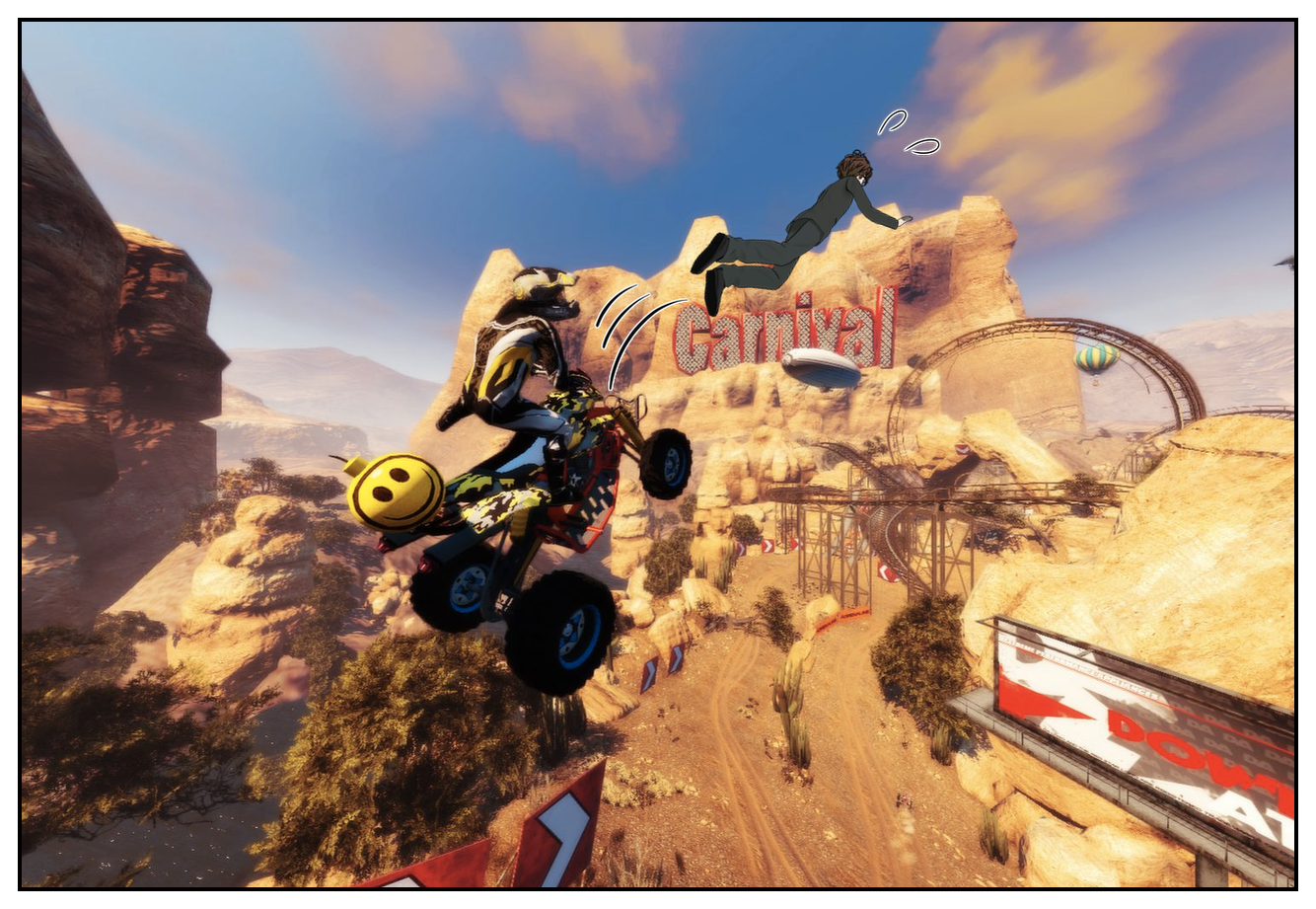
Nail'd is ridiculous. There's no other word for it, really. From the moment you squeeze the accelerator and you immediately ramp up to approximately three thousand miles per hour in less than a tenth of a second, it's clear that this is not a game intended to be taken seriously. This feeling is further cemented when you take your first jump and spend a good ten seconds airborne before landing with no ill effects, and set in diamond when you crash for the first time and your quad-bike explodes into fragments, while your driver goes spinning off into the distance with exaggerated ragdoll physics.

Taking part in a race in Nail'd is a rollercoaster ride. There's dips and undulations, huge jumps, banked corners, environmental hazards, narrow gaps to traverse and stunts to perform. Pleasingly, there are multiple routes through each track, too, bringing the races a feel somewhat akin to EA's classic SSX series back in its heyday, particularly as many of Nail'd's races are downhill point-to-point affairs rather than circuit races.

I hadn't previously been particularly interested in motocross or ATV racing games before, and I don't know how many of them are like Nail'd. But I do feel I've been missing out on some crazy offroad fun with this game, at least; it's an absolute pleasure to play, it's a challenge while keeping its mechanics extremely simple, and it's one of the most thrilling, exciting racers I've come across, ever. It's just a pity that the multiplayer servers are no longer active, so it's not currently possible to share the ridiculousness of a Nail'd race with other people, except by doing some jiggery-pokery with the LAN mode and external software.

My arcade racing renaissance continues, then; Nail'd has been a delight to discover, and it's inspiring me to check out some other racers I haven't spent all that much time with — or haven't tried at all — with a mind to doing a full roundup at some point in the future, either here on the blog or in video format, or perhaps even both!

Now I think I'll go hurl myself off a few cliffs before bedtime…

2174: Souls

0174_001

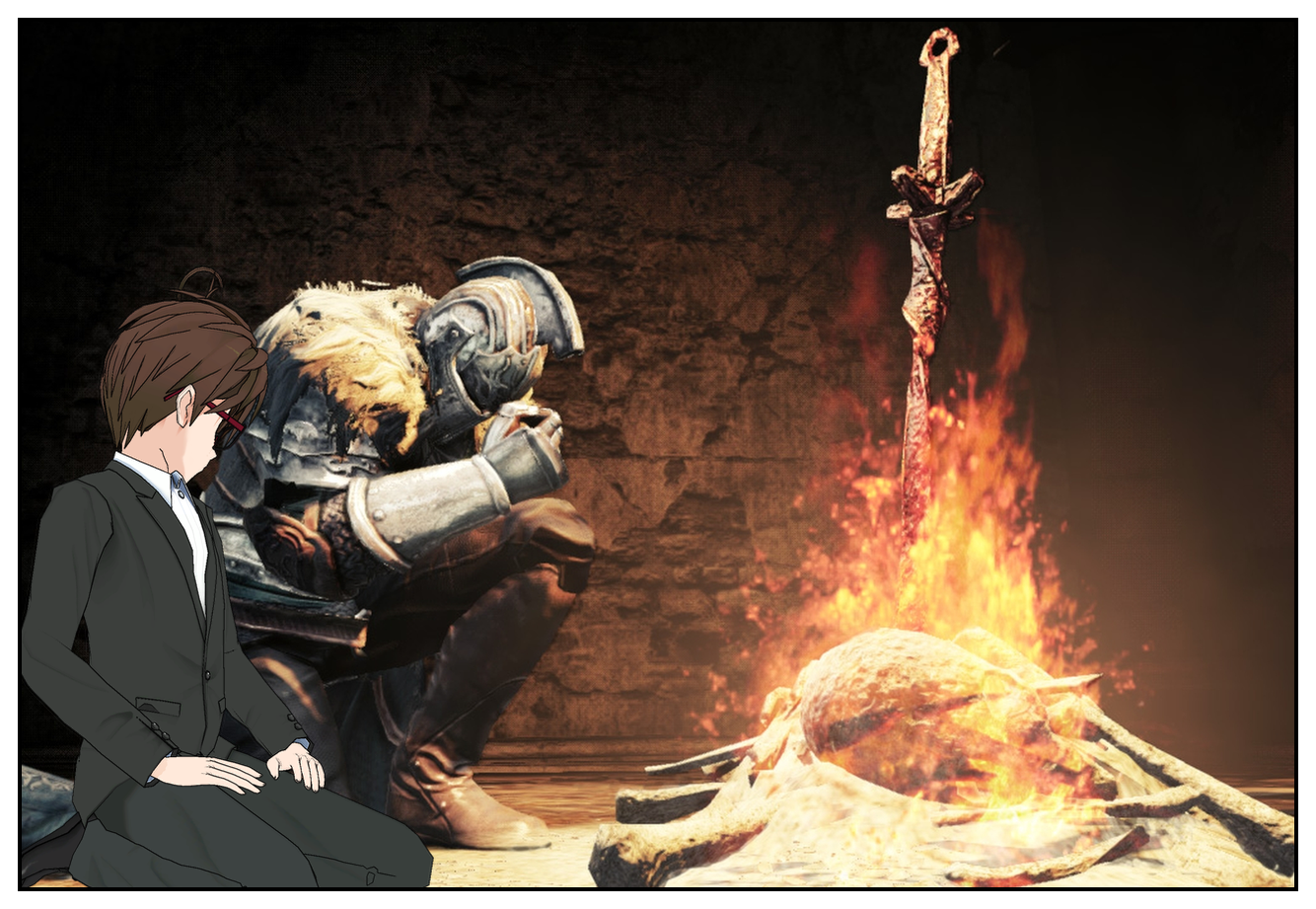
I've tried on several occasions to get into the Souls series from From Software, and have never quite succeeded, despite liking the overall atmosphere of the whole thing. This time around, though, I feel I'm finally starting to Get It. Kind of.

I'm playing Dark Souls II: Scholar of the First Sin, the rejigged and enhanced version of Dark Souls II that was released for PC and next-gen platforms a while back. It was a Steam sale acquisition; for its low price, I was willing to give it another chance, so I jumped in on the understanding that Dark Souls II is, on the whole, perhaps a little easier to get into than the other games of the series. I'm not sure if I believe that yet, but I feel like I'm starting to get a feel for it all.

There are several things to get into your mind when you start playing Dark Souls. Firstly, it's a good idea to think of it a bit like a "single-player raid". You need to learn things: develop a strategy and execute it, preferably flawlessly. This is particularly apparent when fighting the game's bosses, but it also applies to regular enemies: most of the time they spawn in the same places, so you can prepare for ambushes where they got the jump on you the first time you went down that particular corridor, and instead slice them to ribbons before they can even touch you.

On a related note, Dark Souls' combat, while initially appearing to be relatively straightforward, is very "Japanese" in nature in that it has a heavy reliance on pattern recognition. When fighting everything from the most lowly of crap enemy to the biggest of bosses, you need to recognise the patterns of their attacks and counter them accordingly: dodge them to avoid taking damage, and take advantage of an opening to attack, while simultaneously being aware of your own stamina so you leave a bit left over to dodge out of the way when the next attack comes.

Yes, Dark Souls is not a game where you can flail wildly and hope for success. My early encounters with the Souls series saw me hating that Stamina bar and how quickly it gets used up, but this time around, again, I feel like I'm getting more of a feel for it. You can almost relate it to a turn-based sort of system in a strange sort of way — or perhaps it would be more accurate to compare it to the "cooldown" system used by most MMO combat systems. In other words, you can't just spam the attack button and hope an enemy is dumb enough to walk into your swing; most attacks are slow and ponderous enough to leave openings wide enough for enemies to hit you, even while you're mid-attack. As such, timing is crucial.

So far, I'm playing a mage-type character, since it allows me to deliver some decent damage from afar, which in turn helps me to develop my confidence to fight the more difficult opponents a bit more. I'm getting a feel for the hand-to-hand combat too, though; I can now pretty confidently dispatch lowly opponents with a dagger rather than a couple of spells to the face, though it remains to be seen if my overall play style will change too dramatically by the time I get to the end of the game… if I get to the end, of course.

So, then, I think I finally sort of "get it". I'm not sure I love it quite as much as some people do yet — I don't think I'm far enough in to feel that way — but I'm interested enough to keep going and find out more. Which is, you know, nice.

2169: Starting GRID (2)

0169_001

One of my acquisitions in this year's Steam sale was Codemasters racing game GRID 2. I already owned the previous GRID game and had enjoyed what I played of its multi-discipline racing, but hadn't delved into it in depth. The price that GRID 2 and its more recent sequel GRID Autosport were going for was too much to resist, however, so I snagged copies of both and have been putting the former through its paces over the last few days.

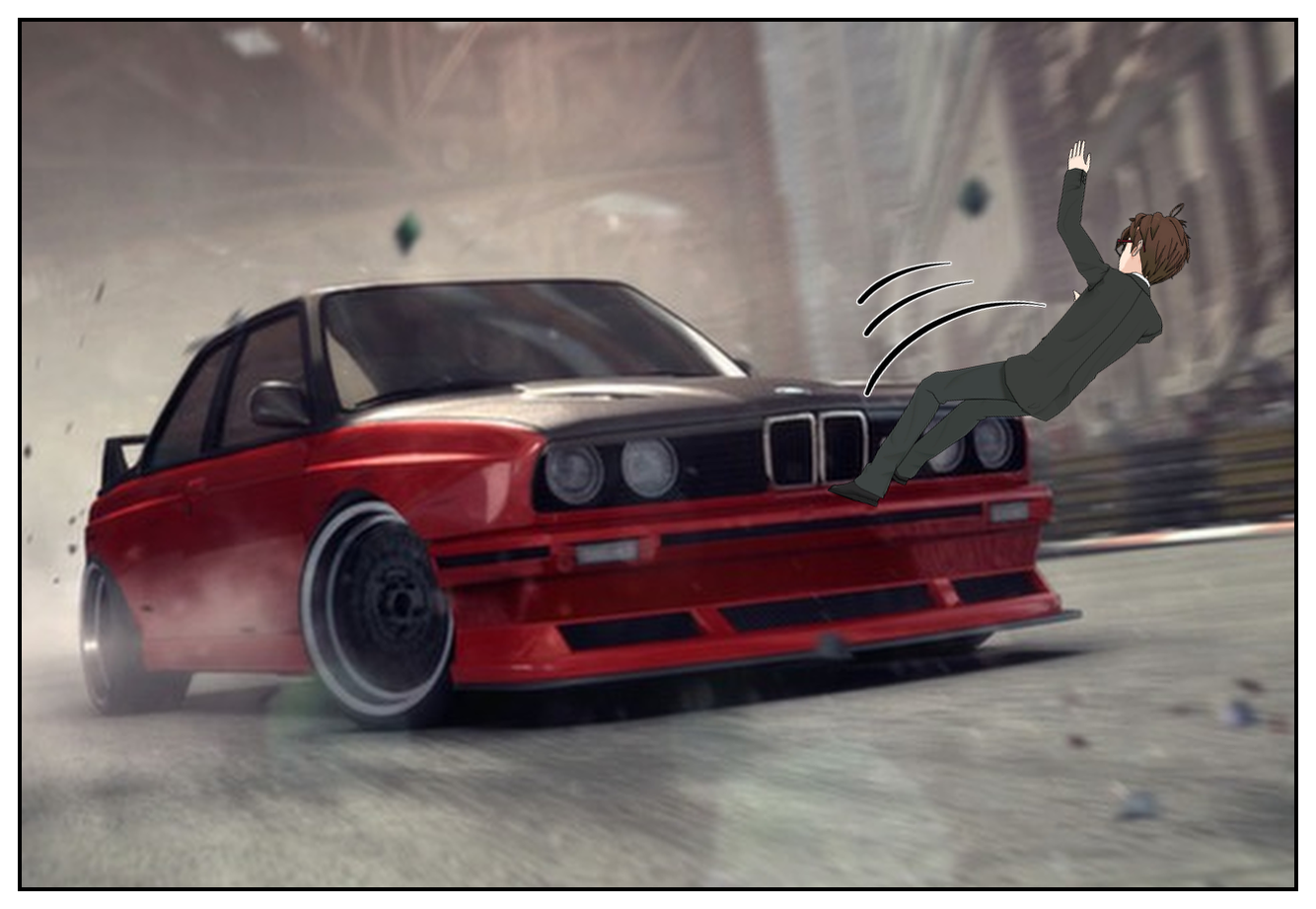
GRID 2 was a bit of a controversial release when it originally came out, since it's a distinctly more "arcadey" affair than its predecessor. That's not to say that the original GRID was particularly sim-like in the first place, but the true petrolheads of the Internet appreciated things like its lavishly detailed first-person cockpits and semi-realistic handling. In contrast, GRID 2's emphasis on drift-heavy driving and the removal of the cockpit view led to a bit of an uproar among the racing enthusiast community, who saw it as a step backwards from its well-regarded predecessor.

Me, though, I love it; GRID 2's slidey handling is exactly the sort of thing I love in a racing game, and to be honest, while I love the way a cockpit view looks, I find it extremely difficult to race from that perspective, since visibility is so limited in most cases, and you don't have the peripheral vision you'd have in reality. Consequently, I much prefer racing from a bumper or bonnet cam (preferably the latter) since I find it much easier to judge my own position and have a feeling of spatial awareness during a race.

I also appreciate GRID 2 for its attempt to spin a story throughout its single-player game. All too often, racing games are rather dry affairs in which you navigate boring-looking menus to get to the actual racing, and there's often very little in the way of personality. GRID 2 doesn't go so far as to be Wing Commander with cars — although man, I would so play that game — but it does feature voiceovers and a sense of narrative progression as you play through the game. It's not a complex narrative — you're an up-and-coming driver headhunted by an eccentric rich dude who has decided he really wants to set up a new worldwide multi-discipline racing league, and your efforts as the face of the series allow you to build up the fanbase required for the WSR to become a success — but it works well in context, and it's punctuated nicely with infrequent cutscenes, including authentic-looking TV broadcasts featuring full-motion video rather than in-engine characters.

This sense of narrative progression and personality carries over into the actual racing gameplay, too. You're constantly getting advice and feedback over your radio while you race, and most race series highlight a named rival for you to try and beat. While the personalities of these rivals aren't developed all that much outside of text messages and social media posts in the menu screens, it's a nice touch that gives you more of an incentive to do your best than simply trying to get into first place.

The game also makes minimal but cinematic use of music: most races don't have background music, instead featuring some impressive sound effects that allow you to hear not only the roar of the car's engine, but the rumbling of the tyres on different surfaces, the sound of the crowds as you whizz past them, and other environmental sounds according to where you're racing today. There's an exception to this, though: when you get into the final races of each season, the final lap or sector of each race is accompanied by some electro-orchestral music that lends a real sense of drama to proceedings, making some already butthole-puckeringly tense finishes even more exciting. Good job there.

There's a good variety of events, too, with both circuit races and point to point races — a subject that I was talking about wanting to see more of just a few weeks ago — as well as time attacks, overtaking challenges, endurance races and all manner of other disciplines. The aforementioned petrolheads don't seem to like the fact that the game's career mode insists that you participate in all the disciplines, since most seem to prefer picking and choosing their favourites, but I really like the amount of variety this brings to the campaign: it, again, gives a good sense of progression as each new season presents you with new disciplines to conquer and new types of car to get to grips with. By the time you reach the end of the career mode, you'll most likely be a well-rounded driver able to turn your hand to all manner of different events — ideal for jumping online and taking on all-comers.

So I like it a lot so far, then. I'd go so far as to say that it's shaping up to be one of my favourite arcadey racers for quite some time, and I'm very interested to explore it in more detail over the coming weeks.

2165: Dirt Showdown and Vulgar Racing

0165_001

I am a fan of what I described to my friend Alex yesterday as "the vulgar side of racing games". This is a pretentious way of saying that I'm a fan of arcade racers more than more realistic fare, but it kind of goes a little deeper than that: I'm a fan of racing games that firmly put an emphasis on fun and spectacle as opposed to providing a faintly plausible virtual driving experience.

Codemasters' Dirt Showdown, which I picked up in the Steam Halloween sale, pushes all of my buttons in this regard.

Dirt Showdown is the very essence of vulgar racing. It's loud, it's brash, it's very American (despite the Codies being British), it's full of scrappy-looking cars that you'd expect to find burnt out in a council estate in Croydon… and it's a ton of fun.

A lot of Dirt Showdown's fun factor comes from its hyperactive nature — and this is true both within single events, all of which are chaotic and specifically set up to encourage full-contact racing, and within the game structure as a whole. The single-player campaign sees you flip-flopping from one discipline to another — one minute you'll be racing, the next you'll be smashing your way around a course made up of barriers, the one after that you'll be trying to knock all of your opponents off a raised platform — and multiplayer is much the same, with the added chaos of some rather "sport-like" competitive games modelled on Capture the Flag and Halo's Oddball mode.

You're never stuck doing the same thing for very long, in other words, and this is what keeps the game interesting. Of course, there's nothing stopping you setting the multiplayer mode to do nothing but races, but where's the fun in that? The beauty of Dirt Showdown is that it encourages you to master flinging your car around with a variety of different goals in mind, be it dispatching opponents as quickly as possible, or simply beating them to the finish line.

The big appeal element in Dirt Showdown for me, though, is the fact that it's an honest-to-goodness arcade racer. This is not a game intended to be taken seriously or be regarded as a sim; it's not a game where you can admire lovingly detailed cockpit views; it's a game about taking a hunk of junk (or, indeed, a few licensed rally cars) and then hurling it at a bunch of other hunks of junk and seeing who comes out on top. It's a game about tapping the handbrake rather than using the actual brake to go around corners; it's a game that features races specifically designed to encourage pileups. I approve of all of this.

Plus it's super-cheap in the currently running Steam sale. So if you haven't given it a shot yet — assuming you're a racing game person — be sure to check it out.

2158: Farewell, Eorzea... For Now

0158_001

I made a difficult decision today: to quit Final Fantasy XIV. Temporarily, at least.

This is a decision I've been mulling over for quite some time, I must admit, since following the initial excitement over the expansion pack Heavensward, the new content that's shown up since was 1) very, very late indeed and 2) not great. The one thing that had kept me clinging on was the good friends I've made while playing it, but I've come to the conclusion that with the state of endgame as it is now, it's just not fun enough to warrant the endless grind.

Before we go any further, I would like to point out that Final Fantasy XIV is still an excellent game, and its storyline through A Realm Reborn and Heavensward is one of the best Final Fantasies I've had the pleasure of playing over the years. Its battle system is great, its graphics are wonderful, its music is without peer and it has numerous memorable setpieces and boss fights that will doubtless stay with me for years afterwards.

The issue comes with endgame — what you do when you get to level 60, have no more experience points to gain, and hit the ceiling of available content. At this point most people do one of two things: level another class, or get on the gear treadmill to equip their "main" class as well as possible, either simply for the satisfaction of doing it, or with a mind to taking on the game's most challenging content such as raids.

The main trouble with Heavensward endgame as it exists today is that it's not all that different from A Realm Reborn's endgame, only with a fraction of the level cap content that A Realm Reborn had by the end of its cycle of patches. This may be an unfair comparison, but given that most people who played through Heavensward spent months or more at level 50 in A Realm Reborn, the shift back to having a very limited selection of meaningful content to play was somewhat jarring — particularly as people raced through Heavensward's main scenario and initial levelling process to 60 way quicker than they beat A Realm Reborn, despite them being comparable in length.

So what do you do in endgame? As previously mentioned, you gear up. This is primarily accomplished by collecting "tomestones" from running dungeons, daily roulettes and a couple of other sources. There's a weekly cap on one of the types of tomestones — the one that gets you some of the best equipment in the game currently — which means that it unavoidably takes several weeks, even months, to put together a complete armour and weaponry set for just one class, let alone multiple.

There are other means of acquiring gear, of course; the newly added Void Ark raid is designed to get people into better gear without grinding for tomestones by allowing them one piece of gear per week of comparable level to an unupgraded Tomestone piece. And The Diadem, the home to the exploration missions, can drop some seriously good equipment, though in that case it's very much left up to random chance.

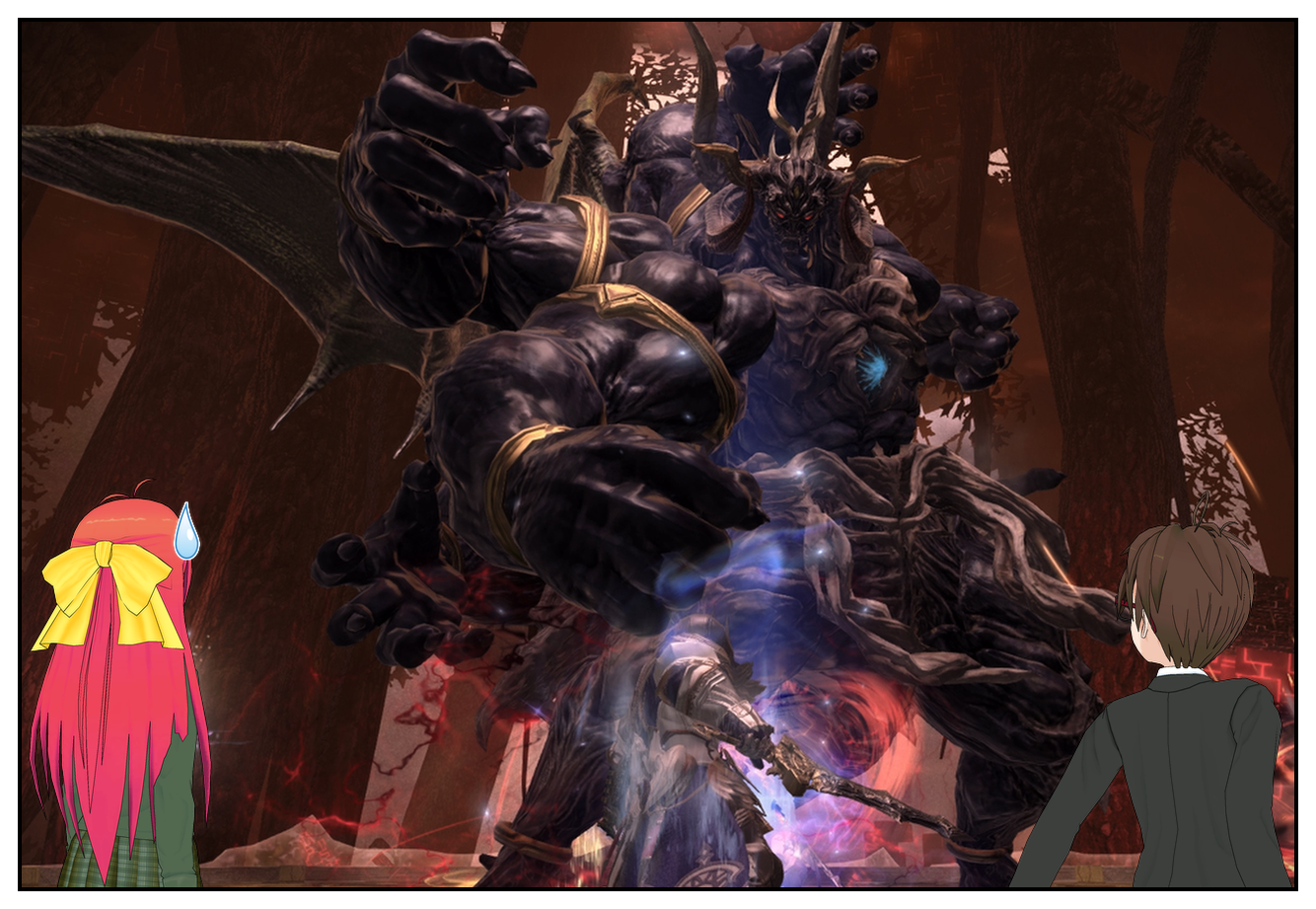
Part of the problem with Heavensward's endgame right now is that the high-level raid — the most difficult thing in the game, and source of some of the best equipment — just isn't very interesting. A Realm Reborn's The Binding Coil of Bahamut was spectacular: it told its own story, had unique bosses and music, and was extremely rewarding to play through, particularly once its entire saga was completed and gave you an opportunity to fight A Realm Reborn's "true" final boss.

Alexander, the current level 60 raid, meanwhile, suffers for a number of reasons: firstly, its Normal mode incarnation, designed so those who aren't up to the challenges of raiding could enjoy its story, is far too easy and quite dull. And secondly, said story is not interesting at all, building on one of the more ridiculous side stories from A Realm Reborn rather than the world-shaking drama that Coil offered. For many people, clearing Coil wasn't about gear; it was about seeing a cool story through to its conclusion. And while Alexander has a story, it's not a patch on Coil's.

There's also the fact that Normal mode removes that incentive to progress that Coil had. The only way to see Coil's story was to beat Coil, whether you did that when it was fresh, new and extremely difficult, or when it got considerably nerfed (but was still a stiff challenge) months down the line. With Alexander, you can beat its Normal mode rather easily, even if you have no experience with raiding, and by then you've seen its whole story, meaning its Savage incarnation becomes little more than a more difficult version of exactly the same thing.

This is my main problem, but there's a number of other issues that have been bugging me for a little while too. I was really looking forward to the exploration missions, since they sounded like something new and interesting, but they turned out to be glorified Hunts, and Hunts are rubbish, since all they are is 300 people dogpiling a monster designed to be fought by 8 people, closely followed by at least 150 more people whining in /shout about someone "pulling early". Diadem at least limits the chaos to 72 players at once, but there's no "exploration" going on; within hours of it appearing for the first time, people had already figured out the most "efficient" way of getting the best rewards, which involves standing in one place and fighting the same damage sponge enemies over and over again until some slightly stronger damage sponge enemies show up and hopefully drop some slightly better loot. There was a "loot whore" angle to Diadem that showed promise, but in practice, with the way Final Fantasy XIV is designed in terms of stats, it's not really a concept that works within the game's overall framework.

Perhaps the thing I've found most offputting, though, is the changing attitudes of a lot of the playerbase. I recall complimenting Final Fantasy XIV's community when it first launched for being incredibly friendly and helpful to one another, sharing information and tips with newcomers and cooperating to make the virtual world of Eorzea a better place for everyone. Over time, this appears to have dissipated somewhat, to be replaced with a bevy of whiny players who insult you if you don't speedrun a dungeon, and people who constantly run damage parsers in the background just so they can post screenshots on Twitter and bitch about how awful the Bard they just ran Brayflox with was. The unfortunate elitist attitude of a lot of these players drives off newcomers and makes them afraid to make mistakes, which in turn puts people off trying more difficult content, which ultimately only hurts the high-level players, who can often be found in Party Finder bitching about not having anyone to clear Alexander Savage with.

I'm not sure why this shift in attitude happened, or if it's always been there and I just hadn't been aware of it. I know that a lot of Final Fantasy XIV players that I follow on Twitter seem to have changed for the worse, though, preferring to post screenshots of bad parses and arguments in party chat rather than celebrating their victories.

There's part of the trouble, though, I think; there's not that many victories to celebrate for veteran players any more. Even victory over a floor of Alexander Savage feels somewhat hollow, because everyone doing Savage will have already beaten all those bosses in Normal mode. "I beat The Manipulator" doesn't have the same gravitas to it as "I killed Bahamut!", after all.

With the lack of new victories to celebrate, it's understandable that people might get jaded and want to complain about things. It's understandable that those who want to be challenged with new content would get frustrated and start to take it out on people who haven't been running Savage for several months, or who don't know how to beat Ravana Extreme. It's not particularly okay that these people do this, but it is at least understandable.

And I don't want to be one of those people, continuing to play a game that feels like work and complaining about it endlessly when I could, instead, be doing something more fun — exploring new worlds in other RPGs, or catching up on my backlog, or enjoying some retro classics for the nth time.

Final Fantasy XIV will always be special to me. It's a virtual world that I've spent a good proportion of the last few years in. I made some great friends while playing, all of whom I sincerely hope will continue to be friends outside the game — something I'm confident about, since we all hung out together at PAX and didn't kill each other. And it was the setting for my proposal to my wife. So although my criticisms above may sound harsh, they're entirely personal, and I certainly do not and never will hate the game at all. It's simply time to take a break from it — perhaps indefinitely, or perhaps just temporarily.

Either way, thanks, Eorzea, Square Enix and Yoshi-P; it's been a wild and magical ride for the last few years, and I'm never going to forget it.