1154: Operation Successful

I beat Trauma Team this evening, and I am very happy with the way it all played out. Despite having a touch of that recognisable Atlus craziness about it, the team did kind of keep to their promise of providing a more "realistic" experience that veered less into the realms of sci-fi and more into the realms of vaguely plausible… I don't know what you'd call it, really. Disease horror?

Of course, that realism doesn't extend to the operation sequences being in any way "authentic" — the Trauma Center series has always been about being quick and skilful rather than accurately simulating real-life surgical procedures — but it really doesn't matter too much. The six different styles of gameplay all complement each other very well, and the pace of the narrative is such that you never really get bogged down in a single discipline for too long — unless of course you choose to do so in the non-linear first half of the game.

As I predicted even before I played the game, I think the Dr Naomi forensics sequences were my favourite aspect. These combined some lightweight adventure game-style gameplay with a lot of lateral, logical thinking and some great character development. There was a wonderful sense of piecing together a narrative in these cases, even though you didn't directly see any of it unfold until you'd "solved" it all. Instead, Dr Naomi's habit of thinking out loud fulfils the same narrative function as things like Phoenix Wright's internal monologues in the Ace Attorney series, of the narration text in a more traditional visual novel. You have to use your imagination a fair bit, but somehow this doesn't diminish from the emotional impact of some of the tales told. The very nature of Dr Naomi's specialism means that there was always going to be a degree of darkness about her cases, but I was quite surprised how far they went in a few cases.

Trauma Team manages to be so emotionally engaging throughout thanks to its strong cast of characters. The focus is very much on them instead of the patients — indeed, in the surgery sequences, patients are always represented as abstract mannequin-like figures — and the game has a strong character-led story as a result. If we were getting bogged down in the individual tales of each and every patient these doctors came into contact with, the impact of the game's "true" story (which unlocks after you've completed all the individual episodes for each of the six doctors) would be somewhat diminished. Instead, each of the doctors' episodes is to do with their own sense of personal growth and coming to understand something about themselves, or about life, or about each other. By the end of the game, it's very clear that they're all better people in one way or another.

I think this point above is why I like the Trauma Center series so much. I was initially drawn to it by the fact that games about surgery are something you don't see very often, but it quickly became apparent that these aren't really games that are overly concerned with providing a realistic depiction of life in a busy hospital — though Trauma Team does a much better job of that than its predecessors. No, instead, they're games about the characters, and about the overarching plot, which is usually fairly ridiculous in nature but somehow seems perfectly reasonable in context.

Atlus' skill at storytelling — achieved through its excellent character artists, talented music team and skilled writers (and localisers, for that matter) — has pretty much earned them a "free pass" from me for anything they put out in the future. Between strong offerings like the Trauma Center and Persona series plus quirky one-offs like Catherine, they're easily one of my favourite developers, and I hope they continue to make great games for years to come.

Now, let's have a new Trauma Center game for Wii U, hmm?

1153: Reasons to Own a Wii

Poor old Wii. Despite being one of the biggest-selling consoles of all time and bringing new people who never would have considered gaming before to the hobby, it doesn't have the best reputation among self-professed "hardcore" gamers. In fact, it's not really taken seriously by the press or public alike in most cases, with Wii titles often being noticeably absent from "best of the generation" lists and people often forgetting that it is, in fact, home to some astonishingly good games.

What's also worth noting is that if you've picked up a Wii U recently, you have access to all of these previous-generation games and can discover them for the first time if you've never checked them out.

I'm going to share some of my favourite Wii games now, and none of them are going to be Mario or Zelda games. They are, however, all excellent games, and you should absolutely check them out. If the sole reason you haven't checked them out is because the Wii runs in 480p resolution, get over yourself and stop being so shallow. You're missing out on some fantastic experiences.

So without further ado and in no particular order, here we go:

Xenoblade Chronicles

First of the three "Operation Rainfall" games, Xenoblade Chronicles is a sprawling Japanese role-playing game that bucks almost every convention of the genre to create an experience that should get even the most hardened, grizzled Western RPG veteran to sit up and pay attention. The game features a sprawling open world populated with hundreds of unique NPCs, many of whom have quests to give you; an awesome real-time(ish) MMO-style combat system with some fantastic party AI; some brilliant British voice acting (and the option for Japanese if you prefer); a decent story in a highly imaginative setting; and a rockin' soundtrack, Xenoblade Chronicles is an absolute winner that will keep you busy for well over a hundred hours in total.

The only real criticisms you can level at it are that there's a bit of filler content (that you can easily ignore), the character faces are a bit blurry and facial animations are a bit inconsistent. The latter two are side-effects of the game being produced on a much smaller budget than a game of this magnitude would require on HD consoles, and as such are easily forgiven.

The Last Story

The second of the three "Operation Rainfall" role-playing games, The Last Story is a cinematic JRPG with a resolutely linear storyline that is over and done with within 25-30 hours, making it something you can play and enjoy without having to dedicate a month or two to it. It has interesting and unconventional characters, a well-realised "hub town", a cool story, an interesting combat system and the pedigree of Hironobu "Final Fantasy" Sakaguchi behind it.

Common criticisms include the prevalence of brown in the graphics (a deliberate stylistic choice to sepia-tint the whole thing that you'll either be into or not), the fact that some parts are pushing the Wii a little too hard, leading to drops in frame rate, and the fact the unusual real-time combat system takes a little while to get interesting. Still well worth a punt, though. There's also a multiplayer mode, bizarrely, though I'd be surprised if anyone's still playing.

Pandora's Tower

The third of the three "Operation Rainfall" games, and the most unconventional of the lot. Unfolding more like a cross between Zelda, Ico and Shadow of the Colossus than a typical Japanese role-playing game, Pandora's Tower is an emotional tale of a young man trying desperately to save the woman he loves from a horrific curse — and the pair of them doing anything it takes to survive the ordeal. By turns romantic and horrific, Pandora's Tower is simultaneously epic and intimate, with a wonderful sense of atmosphere and excellent use of the Wii's unique control scheme.

Trauma Center: Second Opinion

Despite the name, this was the first Trauma Center game to hit the Wii; the Second Opinion part of the title refers to the fact that it is a remake of the first Trauma Center game: Under the Knife for Nintendo DS. The plot tells the tale of rookie surgeon Dr Derek Stiles and his assistant Angie as they attempt to rid the world of a mysterious illness known as GUILT, and the Wii version adds some new story material to the mix courtesy of newcomer Dr Naomi Kimishima and her assistant Navel.

Gameplay is a peculiar fusion of visual novel sequences and frantic, terrifying, arcade-like surgery sequences in which your skill with the Wii Remote and its unique capabilities will be well and truly put to the test. Don't be fooled into thinking this is a realistic medical drama — this is entertaining Japanese sci-fi at its finest, and you'll find yourself doing everything from performing relatively conventional surgical procedures to battling mutant viruses and defusing bombs with your surgical implements. It's not perfect — lack of 16:9 aspect ratio support is a sticking point for some — but it's still worth playing. As is its sequel.

Trauma Center: New Blood

The first all-new Trauma Center game to hit the Wii brings a whole new cast, a new storyline and a new disease to battle against. It also adds 16:9 aspect ratio support, a rather unnecessary (and not particularly well-implemented) two-player cooperative mode, full speech for the story sequences and generally a nice refinement of the formula. The main theme tune also sounds like it was ripped off from House.

Trauma Team

The ultimate refinement of the Trauma Center formula, Trauma Team features not only the surgery gameplay of the previous two games, but also adds a variety of other gameplay styles — the frantic pace of First Response missions, the tense, skill-based gameplay of Orthopedics, the Descent-style first-person exploration of Endoscopy, and two distinct adventure game-style components in Diagnosis and Forensics. Each of the game's characters has their own distinct plotline to follow, and they all come together for a seriously epic final episode towards the end of the game. The traditional visual novel presentation of the earlier games has been replaced by a fantastic "motion comic" style, and the whole experience is absolutely gripping.

Fire Emblem: Radiant Dawn

I must confess to not having played this yet, but you can't go wrong with Fire Emblem. Radiant Dawn is the direct sequel to Gamecube title Path of Radiance, and continues the series' iconic strategy-RPG gameplay.

Zack & Wiki: Quest for Barbaros' Treasure

This unusual and all-but-unknown offering from Capcom is a curious fusion of traditional point and click adventure and puzzle game, and has a huge amount of visual charm. Deceptively simple gameplay — point at things with the Wii Remote and click on them — belies some absolutely fiendish puzzles that alternate between slow-paced headscratchers and tests of reflexes.

Silent Hill: Shattered Memories

Arguably one of the best Silent Hill games, and one of the most thought-provoking games out there. Silent Hill: Shattered Memories is a complete reimagining of the first Silent Hill game (and consequently requires no knowledge of the franchise) and features some immensely clever psychological tricks and treats over the course of its narrative. It's also noteworthy for featuring no combat whatsoever, instead replacing the fighting and gunplay of the other games in the series with "running frantically away in the dark" sequences that aren't entirely successful, but do evoke a pleasing feeling of panic.

Honourable Mentions (that I haven't played but have on my shelf)

No More Heroes/No More Heroes 2
Sin and Punishment
Resident Evil 4
Cursed Mountain

____

Got any more to share that don't have Mario or Zelda in the name? Feel free to comment!

1110: The Collector

Page_1Reading this post from Matt Mason earlier made me think somewhat about my own game buying and playing habits and how they have evolved over time. I've come to the conclusion that I'm becoming something of a "collector", particularly when it comes to more obscure games that almost inevitably become hard to find if you don't snag them immediately upon release.

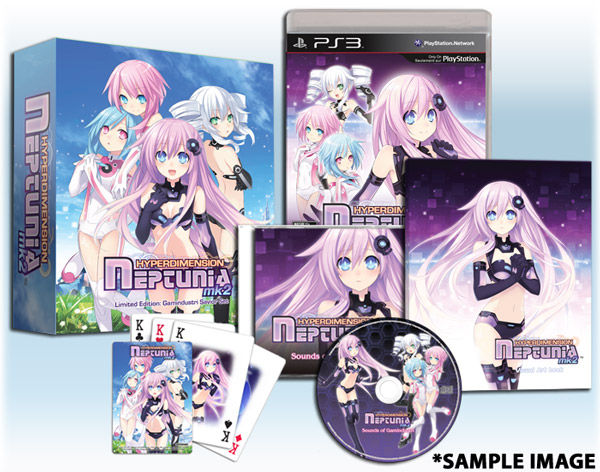
This doesn't mean that I pay over the odds to get "Collector's Editions" of games, though, because I tend to think that for the most part those are a waste of time — or perhaps it's just that I've never really had a Collector's Edition for a game that I felt particularly passionately about. Had I known how much I was going to love Hyperdimension Neptunia mk2, for example, I might have seriously considered spending a bit more and picking up the swanky limited edition that came with a soundtrack CD, an art book and some playing cards. (Yeah, I know the cards are a bit lame, but I love soundtrack CDs.)

NepnepLE-More often than not, though, the super-expensive limited edition versions are for games I have no interest in, like Call of Duty, Assassin's Creed and Skyrim. For sure, these limited editions are often cool, but there's only so many gigantic statuettes that you can scatter around your house before people start asking questions. (Particularly if one of those statuettes is a gory female torso… but let's not open that can of worms again.)

I'm actually fine with this, though, because I've been tending to find that the games I'm most interested in playing are the ones that maintain their value the best — simply because they're often not put out in particularly large quantities and thus often become quite hard to find after a little while. As such, I've come to accept that taking a chance on a new game like this often involves an outlay of at least £20 and may, in a few isolated cases, require payment of a price considerably inflated from what it would have cost when the game was first released. (I ordered a copy of Fire Emblem for Gamecube recently, for example… I'm pretty sure that's not what it cost when it first came out.) The fact that I've had to hunt for these games and occasionally pay a bit more for them than something of an equivalent age that had a wider release makes them feel somehow more "valuable", and makes me feel like my growing collection is something that I can be proud of. I know they're "just" games, but they represent a hobby that I truly love and which inspires me to do other things.

What this "collector's" attitude has meant in practical terms is that I'm now much more inclined to pick up interesting-sounding titles as soon as I become aware of them, rather than when I know I have time for them. This inevitably leads to an ever-growing backlog, of course, but it also means that I have things to look forward to. It's also an approach which works for my personal circumstances at present. In other words, I don't spend a lot of money on other "vices" — I don't drink, I don't smoke, I don't buy DVDs (with the exception of anime that can't be found for streaming online), I don't tend to travel a lot and, by the end of this month, I won't have any car expenses either (apart from any contributions I make to help Andie out with hers). This means that I tend to have a fair bit of disposable income that I don't feel guilty about splurging on my collection, and still have plenty left over for living expenses and to do nice things for Andie.

I like having physical things that I collect. My bulging Steam library also counts as part of my collection, but somehow that big list of games inevitably acquired for a couple of quid during a holiday sale isn't quite as satisfying as seeing that big shelf full of cases. Downloadable games feel more "disposable" somehow, like they won't last; I often find myself worrying what will happen to all these games when, say, Steam or PSN or Xbox Live don't exist any more. How will future generations be able to play awesome stuff like Flower, or Journey, or any of the other titles which everyone raves about now but which are only available via download? (I got around this issue with some of the visual novels I own by burning a copy to disc and printing my own inlay for the DVD case. Sad? Perhaps. But it means I can add them to my shelf with some degree of pride.)

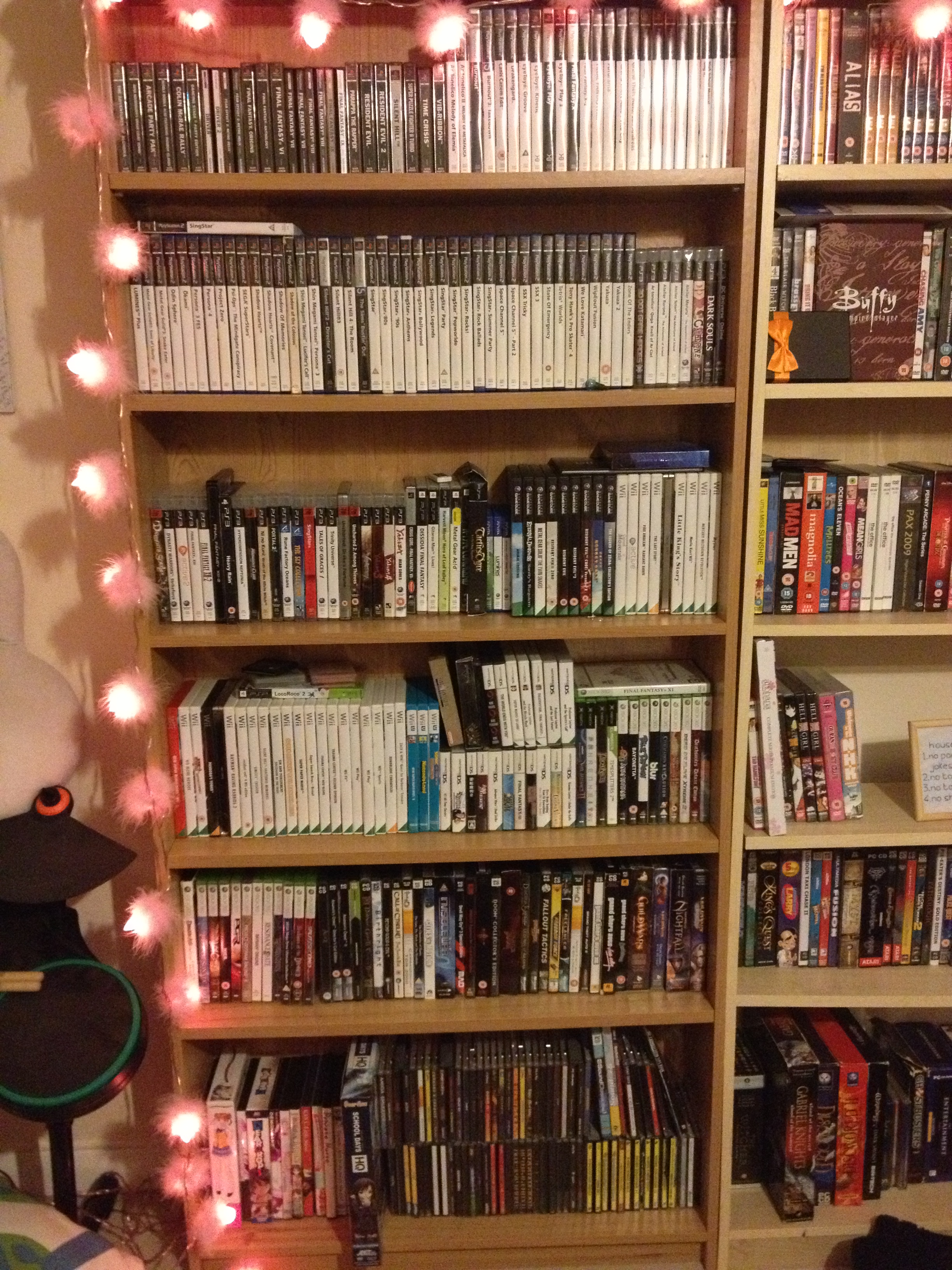
The unfortunate side-effect of collecting physical things, of course, is that you have to find space for all of them, and if you get into full-on "hoarding" mode, where you don't want to trade anything in, ever, then you need more and more space as time goes on. I've currently still got a few shelves free on the other bookcase, but it's starting to get a little bit tight… and then what? Creative packing time.

photo (3)If you're curious, here's my game shelf as it stands right now. (The fairy lights were Andie's idea, but they are pretty sweet.) If you click to embiggen and zoom in on the image, you might even be able to see individual titles of at least some of the games. I haven't played all of these, not by a long shot, but they each — even the array of PS2 SingStar titles — represent something with genuine meaning to me. And that's pretty neat to think about.


1073: It's-a Me!

As I said I probably would, I picked up New Super Mario Bros. U or whatever it's called today. Mario in HD is a pleasing sight, though I'm one of those people who still likes the blocky old pixel-art too, and to whom SD graphics aren't as offensive as they appear to be to some. But I digress.

It's somewhat ironic that the most old-school Mario experience you can get today comes from a subseries with "New" as part of its title. Ever since the first New Super Mario Bros. launched on the DS and provided traditional 2D platforming with an up-to-date 3D aesthetic, this particular offshoot of the Mario series has remained firmly and staunchly set in its ways, providing gameplay that is not fundamentally any different from Super Mario World, which, let's not forget, came out in 1990.

This is not, I hasten to add, a bad thing. Super Mario World is probably my favourite Mario game of all time — at least it was. It remains to be seen whether or not this new Wii U version will be able to uproot it, but I will always have a very fond place in my heart for the SNES classic. It was so perfectly balanced, so completely fair all the way through — even on the ridiculously difficult Special Island levels — and so packed with things to discover that I actually played it through several times, which I don't normally tend to do with platform games. 96 levels (or, more accurately, exits) was a big deal at the time, too. It's still pretty massive for a platform game even today.

New Super Mario Bros. U follows the Mario World tradition very closely, with a few bits and pieces from Mario 3 along the way. You have your top down map screen with multiple routes to your eventual destinations (castles housing bosses, naturally); you have a mixture of levels where the challenge comes from evading enemies and levels where your pixel platforming skills are tested to the limit; you have a selection of interesting but natural-feeling puzzles incorporated into the gameplay; and you have gameplay so intuitive that there isn't a tutorial because there really doesn't need to be one. (After playing so many Facebook games for work where the tutorial literally doesn't let you press anything you want to press for anywhere between ten minutes and half an hour, this is a breath of fresh air.)

There are a few intriguing additions, however, some of which may have been present in the previous Wii-based New Super Mario Bros. game which I haven't really played much of. First up, there's the baby Yoshis, who can be carried around and fed, but unlike in Mario World, their special abilities can be used even in baby form. The pink one, for example, blows up like a balloon and can be used to reach otherwise inaccessible areas; the yellow one explodes in light, useful for dark caves. I'm not sure (yet) if there's anything more to them than this, but they add some interesting new game mechanics which, as Mario games always have done in the past, encourage experimentation.

I really haven't played a Mario game seriously since Super Mario Sunshine, which I didn't really enjoy all that much, and certainly haven't finished one since Super Mario 64. I was never quite sure how I felt about Mario's shift into 3D — although I respected Mario 64 in particular, I always felt like I preferred 2D platformers, and the same is still true today. New Super Mario Bros. U looks set to scratch that itch with tight controls, challenging levels and an interesting-sounding cooperative mode that I'm keen to try out when I get some friends around.

I'm very much enjoying the Wii U so far, if you hadn't already gathered. It's a console designed for pure fun. Whereas both the PS3 and Xbox 360 are trying desperately to be that "one box you need under your TV," Nintendo are once again sneaking past to provide a system that is fun, accessible and entertaining for the whole family. It may not be the most technologically advanced system in the world (though the Gamepad is super-cool — I'm looking forward to seeing some creative uses of that), the games may not be the biggest-budget blockbusters (though the presence of Arkham City, Darksiders II and Call of Duty in the launch lineup suggests that big-name publishers are at least willing to give it a shot for now) and it's doubtful it will become any "serious" gamer's primary console, but it does what it does extraordinarily well — and that is to provide "pure" gaming experiences such as those Nintendo has always provided. Hopefully we'll see some niche publishers taking a few risks like we saw towards the end of the Wii's lifespan, too — sequels or follow-ups to Xenoblade Chronicles, The Last Story and Pandora's Tower would be just lovely, thankyouplease.

1067: I Accidentally a Wii U

As the title says, I most certainly did accidentally a Wii U. And no, it's not dangerous.

Actually, it wasn't accidental at all; I'd been pondering getting one for a little while, particularly after hearing a number of my friends were having fun with their respective ones, and I saw in Game today that they were doing some quite nice deals. So, after gaining suitable approval from Andie (who is actually quite interested in playing with it too) I appear to find myself with a shiny new black Wii U plus copies of Sonic and whatever Racing Transformed and NintendoLand, which comes with the console.

I can't comment too much on the system's capabilities as we don't have reliable Internet access at our new place as yet — we're leeching Wi-Fi off our neighbours' bandwidth at present. (Legally, I might add — service provider BT offers the ability for users to set aside part of their bandwidth for public use, so we're taking full advantage of the fact that our neighbours have this facility turned on while we wait for our own high-speed line to be installed… which won't be until January 16. Boo!) However, I can comment a little on the games I have played so far.

Let's start with Sonic and… ugh, I'm going to have to actually check what the sodding thing's called, aren't I? Let's see… *rummages* Sonic and All-Stars Racing Transformed, commonly shortened to just Sonic Transformed. Right. Yes. Sonic Transformed. It is a kart racing game. As seemingly usually happens, someone else has beaten Nintendo, supposed masters of the kart racing genre, to the kart racing punch on their own system. And wouldn't you know it, it's actually rather good.

Sega's had a few goes at this kart racing lark with previous entries in the Sonic and All-Stars Racing series, and they've actually been quite good in my admittedly limited experience — even the iOS version is pretty decent, and it is very easy to fuck up the controls in an iOS racer. (Believe me. I know. I have suffered through a lot of them for the sake of reviewing them.) With Sonic Transformed, though, what they've done is channel Diddy Kong Racing, which is something I am very happy about because Diddy Kong Racing was freaking awesome.

For those unfamiliar, Diddy Kong Racing was a kart racer for the Nintendo 64 console, developed by Rare, who were the undisputed masters of development for that platform besides Nintendo. One of many cool things about Diddy Kong Racing was that you weren't limited to just straight kart racing — you also got to fly planes and race hovercraft over watery courses, too. This gave the game plenty more variety than your average kart racer, and meant that not only did you have to figure out how each character handled, but you also had to get to grips with each of the three vehicles' idiosyncracies, too.

Sonic Transformed also features karts, hovercrafts and aircraft. Only rather than having races focused around just one of these at a time, a single event in Sonic Transformed will more often than not see you switching back and forth between them at various points, with frequently hilarious results. For example, an After Burner-themed level sees you racing your karts across an aircraft carrier deck as F-14 Tomcats launch either side of you. Drive through the blue gate that signals a transformation, and suddenly you're flying through the air on the way to the next carrier, surrounded by dogfighting aircraft and other mayhem. Fly through the blue gate on the next carrier and you're back in your kart again, powersliding around the deck to head back the other way and repeat the whole process.

Sonic Transformed is also fantastic for Sega fanservice. While the characters and settings may not be quite as universally recognised as the old Nintendo favourites seen in the various Mario Kart games, it is absolutely delightful to be reminded of some of Sega's past masterworks — everything from Jet Set Radio to Panzer Dragoon via Skies of Arcadia, all with wonderful remixes of their iconic music, and all having their own dynamic take on the game's chaotic, track-shifting racing.

Sonic Transformed is, of course, also available on other platforms and whether or not the Wii U is the "best" platform for it is a matter of debate as I haven't played it multiplayer yet, though five-player local multiplayer is not to be sniffed at, plus there are a couple of "Party Play" modes that make use of the Gamepad device. When racing in single-player, the Gamepad is used to display a top-down map view — not particularly practical to glance at while racing, but a nice touch nonetheless.

So I'm impressed with Sonic Transformed. How about NintendoLand?

NintendoLand is clearly the Wii Sports/Play equivalent, in that it's a series of simple little games designed to showcase the system. Unlike Wii Sports and Play, however, the whole experience is fleshed out a little better, with incentives for progress, trophy scores to challenge and achievement-like stickers to collect. The games make good use of the Gamepad's capabilities, and many of them include nice little touches like displaying your face on screen during play using the Gamepad's front-facing camera. They're little more than minigames in most cases, but I can see these being fun at parties, plus the obsessive collector types out there will want to get their hands on as many "prizes" as possible.

In more general terms, I like the feel of the Gamepad a lot — it's not too heavy, and it's shaped nicely in the hand, though as with Nintendo's handhelds having to hold the stylus and use the buttons can sometimes be a little cumbersome. The use of sound is very clever — the Gamepad sound tends to complement what is coming out of your TV/home theatre speakers, giving a really nice "3D" effect as some noises are literally closer to you than others. This is put to interesting effect in NintendoLand, where the "guide" character Monita typically talks to you through the Gamepad, but her voice can also be heard in a muffled, mumbly form through the TV/HT speakers. I anticipate plenty of other games will make intriguing use of this functionality in the future.

So far I'm pretty impressed, then. It seems like a decent system that will only improve over time, and if nothing else it's likely to continue the Wii's legacy as the go-to machine for fun, easy to understand local co-op experiences. I'll be interested to try out the online functionality — particularly MiiVerse — but that will have to wait until we have proper Internet access here!

#oneaday Day 828: It's Time to Get Over the Graphics Thing

20120426-001100.jpg

I read this piece on Game Informer tonight. It made me cross. If you can't be bothered to read it yourself, the gist of the piece is that Xenoblade Chronicles, one of the best games of the generation (in my humble opinion, anyway) "deserved better than what [Nintendo] forced [it] to be."

To be fair to the author Chris "Warcraft" Kluwe, he does commend the game's strengths: its excellent world, its inventive, creative ideas; even going so far as to say that the game had the potential to be "this generation's Final Fantasy VII". But to say that the Wii "laughs at [developer MonolithSoft's] dreams… and flushes them down the toilet of GameCube-era hardware Nintendo likes to call cutting edge" is a spectacularly blinkered viewpoint.

The fact is, it's unlikely that Xenoblade Chronicles (and its spiritual successors The Last Story and Pandora's Tower) would ever have been released had it not been for the Wii. The Wii's lower demands in terms of asset production means that a sprawling, ambitious game such as Xenoblade Chronicles can be produced on a fraction of the budget of an HD title. Even then, though, MonolithSoft had to cut corners; the "gasping fish mouths bobbing up and down through beautifully crafted dialogue" that Kluwe refers to are a symptom of this.

The sad fact is that Japanese role-playing games are not the unstoppable juggernaut they once were. Where once they were a system seller, now they are a niche interest at best. The "mainstream" has shifted well and truly to the West; even Square Enix's venerable Final Fantasy series is seen as little more than a particularly well-polished curio these days. Big-budget role-playing titles for HD consoles such as Lost Odyssey and, to a lesser extent, titles like Nier (aside: which I'm currently playing and is awesome) struggle to find a substantial audience (compared to "triple-A" titles, anyway) and, by extension, the ability to recoup the enormous spend necessary to craft a beautiful world in high definition and 5.1 surround sound. So developers and publishers simply aren't taking the risk because it's, well, too risky.

But the Wii gives them a platform to make these titles without having to spend as much money and time on the creation of assets. It's not a case of Nintendo "shackling an obviously talented team like MonolithSoft to the ball and chain of the Wii because [they] want to sell waggle" (for just one of many things wrong with that statement, Xenoblade Chronicles features no waggle whatsoever). It's a case of Nintendo giving talented teams the opportunity to do what they do best and then release them to a market of enthusiasts who are still clamouring for these titles. Yes, the Wii has a lot of waggle-based crap. But it also has an impressive library of Great Games That Absolutely Fucking No-One Has Ever Heard Of Ever Because They're A Bit Weird Or Nichey And Have 480p Visuals.

Just because JRPGs don't sell well compared to titles like Call of Duty and Mass Effect doesn't mean that no-one wants to play them any more. In fact, the audience for the genre is probably actually the same size that it's ever been; the difference is that the Call of Duty players have sprung up around them and outnumber them considerably. Given the simple choice between making something that will make fans happy and something that will make a metric fuck-ton of money, the vast majority of publishers will take the latter option. That's simply "good business", and there's nothing wrong with that at all — developers gotta eat, after all. But to deride Nintendo for providing a platform eminently suited to developers who actively want to create niche titles for console — games which often provoke intense passion among their fans (as you can probably tell from this post) — is simply ridiculous.

It's an age-old adage in the games industry that graphics do not maketh the game. Never has it been more true than in this strange period where we have two HD consoles and one SD system. Would Xenoblade Chronicles, The Last Story and Pandora's Tower have been better games had they been released on the Xbox 360 or PlayStation 3? Absolutely not. (Pandora's Tower, in fact, would have been considerably inferior due to the fact it actually makes good use of the Wii's unique control scheme.) They would have been better-presented games, sure, but the core gameplay in all three cases is brilliant — and, to add insult to injury, the graphics for all three aren't even what you could possibly describe as "bad" — just low-resolution. There's a difference — sadly, one seemingly lost on many reviewers who describe their visuals as "muddy" or "poor" and, in many cases, knock a point off the final score in punishment. I defy anyone who has stood on the Makna Falls overlook in Xenoblade Chronicles, seen the beautiful afternoon sunlight and shadows in the castle courtyard in The Last Story or stood atop the Observatory gazing towards the Thirteen Towers at sunset in Pandora's Tower to say that these games have "poor" visuals.

As such, I implore those of you who are gamers to stop caring so much about titles having pin-sharp graphics, fully orchestrated soundtracks and a voice cast of Major Hollywood Talent. Yes, these things make games more impressive and exciting to watch and play, but given the choice between a world made up of nothing but HD first-person shooters starring Morgan Freeman (with the world's population of racist teenagers on backing vocals via Xbox Live) and a world where I can play 100+ hours of Xenoblade Chronicles in 480p with a selection of unknown (but excellent) British voice actors, I know which I'd rather spend my time in.

That's just me, though. I illustrate my blog with stickmen, so take my word with a pinch of salt if you wish.

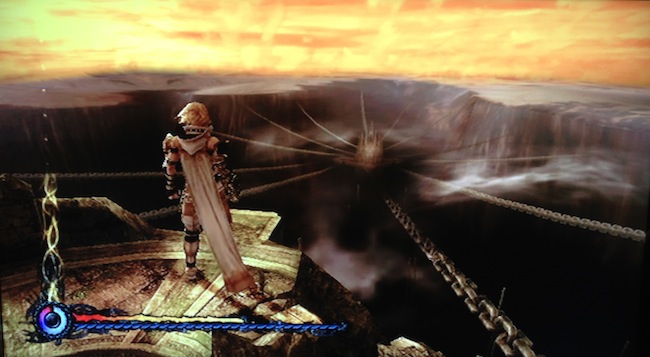
(Edit: Here's an unedited picture of Pandora's Tower running in 480p taken with my iPhone camera. Looks pretty lovely to me.)

#oneaday Day 815: Pandora's Tower -- Some First Impressions

20120413-014116.jpg

So, the third of the three "Operation Rainfall" titles is finally upon us here in the UK (well, technically tomorrow, but Amazon were good enough to ship it to me a day early), completing the Holy Trinity of Wii-based Japanese role-playing games that many are lauding as the real last hurrah of Nintendo's system. (I've actually lost count of how many times people have referred to Wii games as the system's "last hurrah" or similar, but with Wii U on the relatively near horizon, it might actually be true this time.)

Like its predecessors Xenoblade Chronicles by MonolithSoft and The Last Story by Mistwalker, Ganbarion's Pandora's Tower is far from what you'd call a conventional JRPG. In fact, of the three titles, Pandora's Tower is the least traditionally RPG-ish and will likely prove to be the most divisive due to its curious mix of game styles. That's not to say it's bad — far from it, in fact — but those coming in and expecting a traditional globetrotting adventure with a cast of loveable misfits will find themselves surprised by what they discover.

Pandora's Tower tells the story of a pair of young star-crossed lovers named Aeron and Elena. Aeron, the player character, doesn't say much besides the odd grunt and "yes" but is clearly devoted to Elena. Elena, meanwhile, has a bit of a problem; she's cursed. And, as curses go, this one's a doozy — she's slowly turning into a slobbering monster with icky skin and tentacles wriggling out of her shoulder. Discovering the nature of the curse at a harvest festival, Aeron and Elena flee into the wilderness accompanied by a strange old crone named Mavda who inexplicably carries a jar on her back containing an enormous skeletal man who occasionally babbles indecipherable gibberish. Madva reveals that there is one way to break the curse — for Elena to eat the flesh of twelve "masters" who reside in twelve towers that make up an imposing-looking fortress hovering over a terrifying-looking abyss known as The Scar.

As you have probably surmised, this is where the player comes in. Elena, being rather delicate and demure when she's not slobbering and betentacled, isn't exactly equipped to go monster hunting, so it's up to Aeron to take his improbably large sword, magic chain (provided by Mavda) and floppy hair (model's own) into the aforementioned towers to defeat the masters, rip out their "master flesh" and feed it to Elena (who was, at least until this whole mess started, a vegetarian for religious reasons) in order to save her from a hideous fate. Simple, right? All in a day's work for an almost-mute hero.

Gameplay evolves in several discrete sections, and it's the combination of these factors that makes Pandora's Tower such an original, distinctive experience. If you were to boil it down to video game math, then the following equation would probably cover most of what I've experienced so far:

(Castlevania: Lords of Shadow – Patrick Stewart) + Ico + Shadow of the Colossus * Zelda + dating sim = Pandora's Tower

There are two main components to gameplay: dungeoneering and downtime. During downtime, the player may, as Aeron, hang out with Elena in their makeshift hideout, ask her about the lore of the world, shower her with gifts, feed her various meaty treats and throw her untranslated texts so she can make herself useful. Aeron may also call up Mavda, who appears to perpetually live outside the back door of the hideout, and buy things from her, get her to craft and repair items, get her to upgrade equipment and offload excess meat. She'll also pay Aeron for any texts he's found — including newly-translated ones from Elena — which provides the player with a decent income stream if they take the time to explore and discover things. That completionist's nightmare — the "percentage completed" gauge — makes an appearance in the game's menu so those who want to make sure they get the full experience can see at a glance how close they are.

All this downtime activity isn't just for show — most of the Elena-related activity affects the couple's relationship, and providing certain gifts also causes her to spruce up the hideout with her own personal touches. The game's ending is supposedly determined by the relationship value between the two by the time the story comes to an end, so it's in players' interests to ensure that they keep their lady sweet.

Upon leaving the hideout and heading for one of the dungeons, however, gameplay takes a decidedly different turn. It becomes a combination of third-person combat and environmental puzzle solving. Aeron may attack beasties with his sword and unleash combos, but it's the chain that provides the most interesting gameplay possibilities. By aiming the chain with the Wii Remote's pointer (or the right analogue stick on the Classic Controller) and attaching it to enemies, environmental structures and all manner of other things, Aeron is able to cause all kinds of mischief. And there's plenty of scope for creative silliness, too — try attaching one end of the chain to one enemy's legs and the other to another enemy's face, for example.

Aeron's goal in each dungeon is, like a Zelda game, to unlock the boss chamber and then defeat said boss. Rather than relying on a huge inventory of items, however, the majority of the game's puzzle solving comes from creative use of the chain. Sometimes you'll be pulling levers with it, sometimes you'll be throwing chunks of ore into soft walls to use as hooks to grapple on to, sometimes you'll be tying sentient plants to pillars and chopping them to bits before they burrow into the ground. And you'll often be using the chain to rip out gobs of flesh and other crafting ingredients from fallen enemies, because Elena's curse isn't waiting for you.

No, indeed — a timer in the corner of the screen shows the progress of Elena's transformation. It can be reset by grabbing some tasty meat and taking it back to her, but this requires you to make your way back through the dungeon you've just battled your way through, then delve back into it once you've given her her treats. Fortunately, the dungeons are designed in such a way that progressing further in them allows you to set up various shortcuts, and knowing the layout of them a bit better also allows you to romp through them fairly quickly. Progress doesn't reset upon leaving the dungeon, so it's perfectly feasible to unlock the boss room, go back, feed Elena and then go kick some boss ass.

It becomes an exercise in time management — can you make it through the boss fight before Elena goes all tentacly? (Should she find herself going all tentacly, this does, as you may expect, have an adverse effect on the couple's relationship.) Or should you play it safe and head back with a bag full of meaty treats? This constant weighing up of pros and cons is further exacerbated by the fact that Aeron can only carry so much crap in his bag at once, necessitating a return to the hideout every so often to offload junk or craft it into useful items. This does, however, provide an opportunity for Aeron and Elena to spend some time together and improve their relationship, so it's not a wasted trip — though the traipsing back and forth may annoy some.

There's a lot to do, but the dungeons (at least the two I've completed so far) are well-designed and satisfying to figure out. A real sense of urgency is provided by the curse timer ticking away in the corner of the screen, and I can only imagine how the intensity of this will increase as the dungeons grow in complexity. The story is told in a less "in your face" manner than a lot of other games, with a strong focus on the relationship between Aeron and Elena, and a lot of environmental storytelling through discarded notes and architectural design. It's an intimate sort of game, by turns lonely and daunting in the dungeoneering segments and heartwarming when the couple is together. At its heart is the tale of a relationship between two people and the lengths people will go to for love — an experience that, so far at least, is altogether unlike any other Japanese role-playing game or action adventure that I've played in recent memory.

In short, it's a fitting dénouement to the "Operation Rainfall" trio of titles — and to the Wii's catalogue in general. It's actually pretty remarkable that three of the best "core" games of the generation are on a system that many people denounce as being "kiddy", "casual" or a waste of time — or dismiss outright for not being HD. Deprive yourself of these three games simply on the grounds that they don't look as good as, say, Mass Effect 3 and you're depriving yourself of three distinctive, bold and original titles that are the perfect antithesis to the "cookie-cutter" approach of triple-A development and publishing. I hope beyond hope that their small but loyal fanbases will be enough for these studios to be able to keep doing what they do.

Further thoughts on Pandora's Tower will follow when I've beaten it. In the meantime, if you're American, go pick up a copy of Xenoblade Chronicles before it becomes impossible to find, and be sure to support Xseed's release of The Last Story — and whoever picks up Pandora's Tower — when they show up later this year.

[Edit: Apologies — I misread some recent news that made it look as if Xseed was bringing Pandora's Tower to the US later in the year. It seems the status of that title's US release is still somewhat up in the air — but we can hope!]

#oneaday Day 808: Xenoblade Chronicles is Out Tomorrow, and Here's Why You Should Play It

20120406-005656.jpg

As a European, I was lucky enough to be able to play the Nintendo-published, MonolithSoft-developed Wii role-playing game Xenoblade Chronicles last year. It ended up being my favourite game of 2011, and many North American gamer friends were suitably jealous that I had been able to play it through while they hadn't. I didn't feel too guilty, though, because North America has its own branch of Atlus and doesn't have to depend on other publishers to bring titles like the Persona series over.

But I digress. Xenoblade Chronicles is out tomorrow — April 6 — in North America, and here is why you should play it if you're an American. Or even if you're not.

The Japanese role-playing game genre is often accused of stagnation and a lack of innovation. This is, in fact, not particularly true — even the much-maligned Final Fantasy XIII was trying things which other role-playing titles hadn't attempted before. Okay, they weren't always successful, but it was at least attempting to innovate.

The real issue is actually that for whatever reason, Japanese role-playing games (and, to a certain extent, Japanese-developed games in general) have lost the resonance they once had with the core gamer audience in the West. Players are quick to judge them as clichéd and derivative before moving on to whichever game starring men in armour with guns is the flavour of the week. Specific attempts by Japanese developers to create games that appeal to Westerners end up having limited niche appeal despite their quality (see: Platinum Games' Vanquish, which isn't an RPG but demonstrates the point effectively) or end up being laughable attempts to pander to the Japanese image of what a Westerner supposedly wants (see: The Last Remnant).

Xenoblade Chronicles is a remarkable game because it nails that balance between Western and Japanese sensibilities, making a game that combines the positive aspects of WRPGs (freedom, exploration, a degree of sort-of-non-linearity) with those of JRPGs (stronger storytelling, more memorable, well-defined cast members, a firm sense of being unafraid to continually up the ante). The result is quite brilliant, and a significant step forward for the genre in one possible direction it way wish to take in the future.

The game casts players in the role of Shulk. Initially, he seems like every other teenaged JRPG hero, but a number of aspects make him stand out. He doesn't whine. He's not moody or angsty. He's just a guy, but he has a personality. He has friends, too, who form your early party in the game, and these, too, don't fall into the trap of clichéd character archetypes. This pattern continues throughout the course of the whole game. Even the "small furry thing" character introduced later in the story isn't typically irritating — he's quirky and silly, sure, but his character is defined well, and he proves to be more than just a means through which to provide silly slapstick gags.

The diverse, likeable cast you find yourself travelling with over the course of Xenoblade Chronicles' lengthy adventure provides several highlights to the game experience. Firstly, and most simply, they're a good ensemble cast who help drive the story forward. That's not their only function, however. As you might expect from an RPG, they each have their own role to play (natch) in combat, and finding the best combinations of three characters to take into battle is a key part of the experience. This affects not only your battle effectiveness, but also one of many stats that the game tracks in the background — Affinity.

Affinity is, quite simply, how much characters like each other. Characters with high Affinity with one another fight better alongside each other, but as their relationship develops, they also have the opportunity to participate in numerous "Heart to Heart" events that are scattered around Xenoblade Chronicles' vast world. These short sequences provide the opportunity for two party members — not necessarily including protagonist Shulk — to spend a little alone time with one another and get to know each other a little better. These typically involve multiple-choice conversations, providing the "correct" answers to which will give a big boost to the pair's Affinity with one another. (Giving "incorrect" answers often provides very amusing exchanges and still gives a smaller Affinity boost, however, so you shouldn't feel like you have to reach for the walkthroughs immediately.)

Affinity doesn't just affect combat and unlock Heart to Hearts, however; there's a host of little touches in the game that it affects, most notably during and after combat. Rather than simply yelling individual stock "battle victory" phrases, characters will often have short conversations with one another. This banter between characters is a real highlight of the experience, and while you will have heard everything they have to say a good few times by the end of the game, they remain entertaining and endearing.

Speaking of combat, Xenoblade Chronicles' battle system is a refreshing change from the turn-based systems that Japanese role-playing titles usually adopt. You control a single character out of the three in your active party, and are able to freely move around during combat. You and your party lock on to a single enemy at a time and automatically attack it, though many battles involve multiple assailants. In order to gain the upper hand in battle, it becomes necessary to make use of the unique skills the character under your control has.

Most characters have more skills than it's possible to hold in the "quickbar" at the bottom of the screen, so it becomes possible to customize the way they play to your own personal style. Some skills manage aggro, some attack areas, some provide more damage or inflict status effects when unleashed from beside or behind an enemy. Some skills are dependent on other characters doing things like knocking the enemy down or stunning them, and the AI which controls the other two party members does an absolutely astounding job of keeping up with what you're doing and understanding the strategy you're going for. It's very rare that you will be cursing the game for causing you to fail — more often than not it's a result of you either adopting a poor strategy, or simply needing to go and do something else for a while until you're a little stronger. This doesn't mean you have to resort to grinding, either — inevitably there will be some quests you have missed that you can go back and do, and returning to earlier-visited locations often throws up even more things to do.

Another great thing about the combat is that you can elect to control any of the game's cast in battle, not just Shulk. Each character plays in a significantly different manner to all of the others, so if you find yourself getting bored of the same old skills over and over, simply switch to another character for a brand new experience. Fed up of tanking? Spend some time with Sharla, a ranged character with healing abilities. Or Melia, a magic-user who can summon elementals that either provide ongoing buffs or can be "unleashed" to deal direct damage. Or the aforementioned small furry creature, whose skill names are genuinely hilarious.

Perhaps the strangest but coolest innovation in the combat, however, is the fact that you're occasionally presented with "visions" of the immediate future, usually when a character is either about to die or be afflicted with a debilitating status effect. A countdown timer starts, and you're given the opportunity to either do something to take attention off the enemy's target or warn another party member. If you do the latter, you're able to pick one of the warned character's skills to unleash — usually either a healing or aggro-management skill — and hope for the best. If you do the former, you have until the countdown timer depletes to do something very special, or your party member will suffer their grisly fate. It's a neat system that isn't overused.

Outside of combat, there's plenty to do, too. Exploring each of the game's massive zones rewards you with experience points and uncovers part of the map as you discover each sub-area. There are collectible items scattered around each area at random, with rewards on offer for collecting whole sets. Those who find item-hunting frustrating, however, may instead complete these quests by trading with other non-player characters. There are rare monsters to take down, loot to find, secret locations to discover. Xenoblade Chronicles' world is more than just a pretty backdrop for combat — it's a rich, beautifully-rendered environment in which to spend time, and it looks gorgeous. This may be a Wii title, and it may have been even more lovely to see it in HD, but it doesn't detract from the fact that the hugely-varied vistas you find yourself running and fighting over throughout the course of the game look simply magnificent. There's a waterfall you'll come across partway through the game which is genuinely breathtaking to look at, for example — you'll know it when you see it.

If the game's combat, quests and exploration aren't enough for you, there's also a deep Achievement system to delve into. Since these Achievements aren't online-connected, they're simply there as challenges for you to undertake, and all provide you with experience point rewards. In essence, they're mini-quests (although some will take you the majority of the game to complete) and rarely feel as "gratuitous" as some examples seen on Xbox Live and PSN. Rather, they provide yet another means of getting an enormous amount of entertainment out of an already vast, sprawling title.

This isn't even getting started on the deep crafting system, which allows characters to team up to create enhancements for their weapons and armour, with the results of their collaborative efforts dependent on their Affinity and compatibility with one another. Or the fact that the game allows you to change the time and fast-travel at will, eliminating a lot of the inconvenience and backtracking endemic to the genre. Or the colony-building minigame. Or the fact the voice acting is all British rather than American, giving the game a unique aural aesthetic in a genre typically dominated by whiny teenagers and squeaky-voiced females. Or the fact that when you're all done, you can New Game+ it and do the whole thing again with your levels, Affinity and a suitably broad spread of awesome equipment intact — something I will be doing when North America gets its hands on the game tomorrow.

Xenoblade Chronicles is, in short, a magnificent evolution of the Japanese role-playing game genre. While it's easy to dismiss it as "an offline MMO" or "a Final Fantasy XII wannabe", the reality is something quite different. This is truly a game that is greater than the sum of its already-fantastic parts, and one which will have you bellowing "Now it's Reyn time!" at your friends for months to come.

(Grab yourself a copy soon, though, as this is the kind of game that will get pretty tough to find pretty quick.)
#oneaday Day 648: Xenoblade Chronicled

Finished Xenoblade Chronicles and can say with some confidence that it's my Game of the Year so far. With only a few months left and only a few things on the horizon which could be contenders, it's looking good for Monolithsoft's epic RPG extravaganza.

Of course, my Game of the Year vote is of interest only to my friends. Gamer culture at large will undoubtedly vote Battlefield 3, Modern Warfare 3 or Uncharted 3 (hang on a minute… there's a pattern there somewhere) as GotY. But that doesn't matter.

Xenoblade Chronicles toes the line perfectly between JRPG and WRPG. On the J front, you have your floppy-haired protagonists who wield physically improbable weapons; you have your large-breasted female companions (one of whom spends most of the game clad in "armour" that really wouldn't protect anything besides her modesty — and even then only just); you have your small, annoying creature; you have your ultimately quite predictable JRPG finale (I still love 'em, I don't care how cliched they are). On the W front, you have a huge open world with minimal loading breaks — individual zones are huge in area and packed with things to do: monsters to kill, quests to complete, people to find. Straddling the line between both, we have an excellent combat system somewhat reminiscent of MMOs like World of Warcraft or, probably more accurately, Guild Wars.

Why the Guild Wars comparison? Well, like that game, you only have a finite number of skills which can be "equipped" at once, from a larger potential bank. The number of skills you acquire in Xenoblade Chronicles isn't as ridiculous as NCSoft's title, but then you do have several characters to manage all at once. Mercifully, you only have to control one of them at once, with the AI doing an excellent job of performing whatever role each character is ideally suited to in the party.

Gameplay-wise, it's top notch. Simply proceeding through the areas, completing quests and following the story when I'd "cleared" an area was enough to get me almost to the very end — there was only a few levels' worth of grinding required to safely get through the home straight, and by that point you've learned plenty of EXP-boosting skills so it's not as painful as it could be.

This is all very clinical and mechanical — and that's fine, as an RPG can live or die on its mechanics. But the real star of the show in Xenoblade Chronicles is its cast. Brilliantly voiced by an English cast, the characters are all memorable and, despite my "floppy haired protagonist" comment earlier, manage to not fall into the usual stereotypes. Each of them is an interesting individual whom you get to know throughout the course of the game, both through story sequences and through optional "heart to heart" conversations, where two characters have a chat and come away from it either liking each other a little more or a little less.

Characterisation isn't just limited to story sequences, however — different combinations of characters in a battle party elicit different battle cries and responses to one another. And, as characters develop their Affinity for one another, they start to talk to each other during battle differently, often engaging in some light-hearted banter that makes them seem a lot more human. Okay, you'll hear "what a bunch of jokers!" and "my rifle's getting hotter!" an awful lot throughout the course of the game, but on the rare occasions where they start teasing each other after a successful battle, it'll definitely raise a smile.

For me, the sign of a good RPG is whether you have a kind of "empty" feeling after it's all over — you won't be spending any more time with these characters, and that's sad. I felt it particularly strongly with Persona 4, whose ending sequence made me tear up, and I'm not ashamed at all to admit it. Xenoblade Chronicles gives me that feeling, too. It's a different sort of ending to Persona, but once it's over you have very much left those characters behind to get on with their lives in their post-adventure world. It's a bittersweet moment.

By far the saddest thing about Xenoblade Chronicles, however, is how few people will get to play it. While it got a release in this country, it's likely to become harder and harder to find as the months go on — and there's sure to be plenty of people who will dismiss it out of hand purely because it's on the Wii. This isn't even getting into the whole fiasco of Nintendo of America stubbornly refusing to bring the game to the States, despite there clearly being an audience for it. The game is already translated and ready to go — we Europeans have to deal with American spellings in most games, so would it really kill you to put up with the words "armour" and "learnt"? No — but Nintendo of America apparently doesn't see it that way, presumably believing that sales will be poor.

The thing is, though, Nintendo is in a difficult position right now. The 3DS is ailing, the Wii is fading and the core of the gamer community has all but left the company behind. For Nintendo of America to bring Xenoblade Chronicles to the States would be a gesture of goodwill to all the loyal fans who still defend the company, even amid its gradual move away from the core audience. It would give people more faith in Nintendo's current and future products, and, in the long term, it would help attract people to the Wii U as people see it as a system that will cater to the core.

Sadly, it doesn't appear it's going to happen — so if you're an American and you would very much like to play Xenoblade Chronicles, I would say don't hesitate — import it, mod your Wii and enjoy. There's over a hundred hours of absolutely top-tier entertainment there, and you will not regret the time you spend in its highly distinctive world.

Now I better go to bed. Off to Legoland tomorrow!

#oneaday Day 570: Nintendon't

So apparently Nintendo are under pressure from their investors to say sod the 3DS and start developing for smartphones. I can't help but think that this is a really good idea. The 3DS was a bold experiment for the company, but it's not going particularly well for them right now — hence the massive price cut. Said price cut still isn't enough for me to want to purchase one, however, which I think is part of the problem. Nintendo doesn't seem to know who the 3DS is for. Is it for the casual market, a la Wii? Is it for core gamers? Is it for people who played their DSes religiously?

The answer to all of those questions is a shrug of the shoulders and a non-committal "Idunno".

The trouble is, of course, iOS and to a lesser extent Android. Why should people purchase a dedicated game system featuring an initially impressive but ultimately useless gimmick when they can have equivalent gaming experiences (albeit without the 3D) on their phones? The only real advantage I see of the 3DS (and, by extension, the Vita) over the smartphone platforms is the addition of physical controls — a relatively big deal, sure, but a lot of developers are getting wise to the best ways to work controls around a touchscreen now.

iOS and Android have a bigger ace up their sleeve than physical controls, though: pricing. This occurred to me today when considering the disgruntlement people expressed over Final Fantasy Tactics releasing at £10.99/$15.99 on iOS. Final Fantasy Tactics is about 14 years old, and was a full price title on its original release. It was then a full price title on its more recent PSP release before dropping down to around the $10 mark on PSN. The iOS port is more expensive than the PSP version, sure, but it has been revamped for the touchscreen — and rather well, I might add.

Still think it's expensive? Let's take a look at the one game people consider to be an "essential purchase" for the 3DS: The Legend of Zelda: Ocarina of Time 3D. A game of an equivalent age to Final Fantasy Tactics. Given a slight makeover with some new textures, 3D graphics and an interface revamp, sure — along with the addition of the Master Quest variant that I'm pretty sure no-one ever plays — but still, in essence, the same Ocarina of Time we were playing on the N64. The price? $40.

Now hold on a minute. Suddenly Final Fantasy Tactics doesn't seem like such a bad deal after all. If Nintendo are going to charge that much more for the privilege of having the game on physical media rather than a digital download, then I say bring on the digital future. If Nintendo are so stubborn as to remain dedicated to their own proprietary hardware, then they need to think about how they can be competitive. Because at the moment, they're not — and the sales figures are showing that. Perhaps the 3DS will show a sharp upswing in popularity when the price drop comes into effect tomorrow, but said price drop still isn't going to solve the system's most critical problem — a lack of good games, and those games that are good released at a price way higher than you'd find similar experiences on the App Store — even the most expensive ones like Final Fantasy Tactics.

It'd be sad to see Nintendo crushed after they dominated the handheld market for so many years. But I have a feeling it's going to happen — and the sooner they accept it, the better. I for one would certainly be very happy to see a Virtual Console app appear on the App Store, and I'd be delighted to play titles like Super Mario Bros., Castlevania and numerous others on the go. But I'm not buying a 3DS for the privilege — if Nintendo can't accept the common knowledge that people of 2011 want fewer devices in their pocket, not more, then frankly they deserve everything they get.