2263: Fuck This Culture War; Everyone Needs to Rebuild

0263_001

This is the "earliest" I've ever posted on here, at 12:22AM (edit: now 1:19AM, it's taken an hour to write all this crap), and since I haven't been to bed yet it's technically still "yesterday" so far as the original rules of #oneaday go, but I wanted to address this subject immediately while it was fresh in my mind, so here I go breaking with convention somewhat.

Today, Alison Rapp got fired from Nintendo. If you don't know who Alison Rapp is or why she got fired, I'd urge you not to look into it; it's a complicated, messy situation that everyone involved could have probably handled better — but it also, after a certain point, became a bit of an inevitable outcome to just one of many shitstorms the games industry has already endured in just the first three months of this year.

The matter of Rapp is a symptom of a much larger problem that has been rumbling away for the last few years now: a so-called "culture war" between two somewhat ill-defined sides whose edges have a tendency to blur into one another somewhat. It's a whole world of hypocrisy, kneejerk overreactions, dogpiling and public shaming, and it's made the Internet an altogether far more unpleasant place to be than the "global village" it was once positioned as.

The culture war in question is broader than the field of games, but it's in gaming that it's perhaps most clear to see. Described by commentators via the gross (and erroneous) oversimplification that it is a battle between "GamerGate" and "SJWs", the conflict is primarily between people who claim to be in favour of free speech, against censorship and against public shaming of politically incorrect viewpoints, humour or creative material, and people who claim to be in favour of increased diversity in culture, improving the representation of women, homosexual people, transgender people, people from non-white, non-English-speaking cultures and any number of other minorities you might care to mention.

Fundamentally, both "sides" have good points, and both sides actually also have a lot in common. The "free speech" side are all in favour of diversity — they just don't want it to come at the expense of the ability for traditionally privileged groups to be able to speak their mind as well, which is perhaps a valid concern, given the number of people on the "diversity" side who will explicitly state that they reject the opinions of white men, regardless of how much merit they might have. Conversely, the "diversity" side are also in favour of free speech — that's the core of the diversity they're fighting for, in fact: the ability for everyone, regardless of social, cultural, sexual, gender…al background, to be able to speak their mind, make the creative works they want to make and celebrate them.

Unfortunately, something went wrong somewhere along the line. The origins of the GamerGate controversy amid the tell-all blogpost of relatively unknown indie developer Zoe Quinn's ex-boyfriend — as well as accusations that aspects of her personal life had given her TWINE game Depression Quest rather more favourable coverage than it would have otherwise garnered — gave the "diversity" crowd a considerable amount of what they saw as ammunition to prove that "gamers" — inasmuch as that is a coherent group, which it absolutely 100% isn't — were misogynistic harassers keen to drive women out of gaming, which was something they'd been trying to argue for a couple of years already. "Gamers", meanwhile, hit back, quite rightly resenting the implications that they were a bunch of woman-hating fuckheads who wanted to play nothing but brown guntastic dudebro sims where people say "bitch" a lot.

No-one came out of this looking good. Quinn's name was dragged through the mud — whether it was justifiably so or not, I can't say for sure, though I must admit my few sightings of her on social media had always rubbed me up the wrong way — but at the same time, an entire group of people whose only common factor was a shared hobby that they all loved — and yes, that group includes men, women, straight people, gay people, cis people, trans people, black people, white people, Asian people, Latino people and any other arbitrary denominations you'd care to come up with — came under attack from people who decided that they knew better, and that they knew how the world should behave. And the conflict then proceeded to escalate, and now it's been going on for several years — and yes, this nonsense did start before "GamerGate" ever became a thing… remember the Mass Effect 3 controversy?

There's a lot more to it than all this, but I don't want to get bogged down in details, largely because I've only really casually observed from the sidelines while all this has been going down and can't speak with any great authority on what's been going on in either camp.

What I can talk about, however, is the overwhelmingly negative effect that the last few years has had on gaming culture as a whole, because it fucking sucks. It really does. As someone who loves games, and has done since he was a small boy; as someone who loves talking about games, and writing about games, and telling all his friends about games they've never heard of… it really, really fucking sucks.

This "culture war" we're living is not conducive to social progress, nor is it in any way making the games industry a better place for anyone. Why? Because both sides want it their way and no other way. Compromise is off the table, and opinions are firmly entrenched. GamerGate bad, progressiveness good. Unless you're involved in GamerGate, in which case GamerGate good-but-misunderstood, SJWs bad. Proceed to yelling at one another, making unpleasant attacks on each other and, if you're Graham Linehan, trawling through a young man's Facebook photos to find a picture of him with his mother to ask him if "she would be proud" of how he behaves online, simply because they are on opposing "sides" of this nonsense. (Yes, this really happened.)

There's no nuance in this discussion. No acknowledgement that both sides have good points — the progressives take things too far with their claims of "diversity" inevitably just veering into overcompensating "oppression of the privileged" territory while crying "GamerGate did it!" any time something bad happens; the free speechers are a little too resistant to things outside their comfort zone, consistently refusing to accept games like Gone Home as "real games" because they don't conform to arbitrary guidelines of what is acceptable in the medium — and no attempts to understand one another. Battle lines are drawn. Weapons of choice are snarky comments fired from deep in the trenches of the Internet, escalating to insults and name-calling, and in some cases even to having tangible effects on aspects of people's "real" lives, like their jobs and family.

And no-one will admit that this "culture war" is all a big steaming pile of shit that is just causing culture as a whole to stagnate. All we're achieving is making individual subcultures within the "gamer" umbrella become more and more isolated and insular from one another, when what we should be doing is encouraging cross-pollination and exploration of games from outside your comfort zone.

And make no mistake, no-one is blameless in this. The whiny channer who bitches about "walking simulators" and how they're bullshit is no better than the whiny Kotaku writer who bitches about how Senran Kagura's boobies make him feel uncomfortable. The Redditor who cries "censorship!" over changes to a game's script in localisation is no better than the forum poster who complains to Blizzard that he's upset he has to see a lady's bottom in tight pants. The feminist who claims everyone against her opinions is an "MRA" is no better than the actual MRAs who believe in feminist conspiracies. Get it? Fuck all of this conflict; none of it achieves anything whatsoever except making the people who just want to get on with their lives and enjoy the things they love completely and utterly fucking miserable.

Yes, I am talking about myself here. I have friends on both "sides" of this debacle, and I'm terrified of them interacting with one another, or of any of them believing me to be one "side" or the other for fear of being ostracised. I'm already a bit of a hermit; I don't need to lose friends over something that I really don't want to get involved in. But I am losing friends; there are people I don't feel comfortable talking to online any more because I know that they'd believe my opinions to be "wrong" in comparison to them, and there are people I just don't want to associate with any more because they appear to have turned into dribbling, rabid, irrational psychopaths who simply won't listen to reason.

All I want — and I realise saying this here is just pissing in the wind, but regardless — is for people to accept one another for who they are, and what they like.

No shaming people who enjoy Japanese games for being "paedophiles".

No shaming people who enjoy "walking simulators" for liking "not-games".

No shaming men for enjoying attractive women in their games.

No shaming creative independent developers for using gaming as an interactive medium for creating works of art.

No shaming writers for depicting things that they don't necessarily agree with, but want to show.

In fact, no more shaming, full-stop. No more blanket accusations. No more assumptions. Just acceptance. It doesn't even have to be understanding — I don't expect everyone I know to understand exactly why titles like the Neptunia series and Senran Kagura mean so much to me, so long as they respect that I feel that way, and don't call me and the things I love "skeezy" or "gross" or whatever 12 year old girl's words they're using this week. I certainly don't understand why people love, say, The Witness or Crusader Kings 2, but I'm certainly not about to start shaming the people who do, because I'm glad they have those things that they can enjoy while I have things that I can enjoy.

That's diversity, right there: everyone having something that is "for them". And the only way to make it better is to make more of everything for everyone — and accept that not every individual thing is aimed at every single individual person. And to accept that this is fine. And perhaps even to occasionally take a look at things you wouldn't normally consider just out of curiosity — all in the name of understanding.

Culture becomes richer and more interesting when its smaller subdivisions are able to go off and do their own thing in peace, occasionally crossing boundaries and drawing influences from one another, or at least recognising, contrasting and celebrating the things we do similarly and differently from one another. That's the exact opposite of what we have right now; currently, our smaller subdivisions in culture are erecting 30-foot tall barbed wire fences and firing artillery shells full of shit over the top of them.

So fuck this culture war. Fuck all the arguments I'm seeing on Twitter right now. Fuck the people who think that yelling "GamerGate did it!" or "SJWs did it!" is more important than enjoying this hobby that we all supposedly love so much. I want to go back to a time where anyone can post something about a cool new game they've tried out, and not have to worry about someone, somewhere getting offended or insulting them for it. I want to go back to a time when the press didn't hate its readers, and the readers didn't distrust the press. I want to go back to a time when Japan's weirdness was regarded as something people wanted to explore and find out more about, rather than get skeeved out by. I want to go back to a time when weird, experimental games were cool and exciting rather than "blargh, not another pretentious indie game".

Basically I think I probably want early '00s-era 1up.com back.

But sadly, I'm not sure we're ever going to get days like that back.

Oh well, all I can attempt to do, at least, is attempt to be the change I want to see in the world. Hopefully a little positivity will go a long way.

Now I'm going to bed. Please be a better place in the morning, world.
2254: The Irritating Trend of Gleeful Negativity

0254_001

Earlier today, a rumour broke that Nintendo would supposedly be stopping Wii U production by the end of this year. Nintendo subsequently denied this, of course — even if it turns out to be true, Nintendo keeps an Apple-esque veil of secrecy over all its upcoming plans and doesn't tend to comment on rumours and speculation.

Predictably, as soon as the first report was published, everyone was all over the news like vultures circling a still-warm corpse. The Wii U is arguably tied with the Vita as the gaming industry's favourite whipping-boy, and it honestly makes me feel a little disgusted at the amount of glee some people seemed to be directing at the prospect of what is a very good console — albeit less powerful than its Sony and Microsoft counterparts in this generation — going the way of the Dreamcast.

Nintendo aren't particularly popular with certain groups of gamers at the moment, largely due to the controversy surrounding the English localisations of Fire Emblem Fates and Bravely Second due to perceived unwelcome pressure from sociopolitical groups. Regardless of whether or not the decisions made for those games were mistakes or not — and sales figures for Fire Emblem certainly seem to suggest that there are a lot of people who aren't particularly bothered — Nintendo is still in a unique position in the business, however: they have a console platform that is completely separate from its competitors, which is the only place to play certain games, and which is still the only place to play first-party Nintendo games.

Platform exclusives might not be as much of a big deal as they used to be — both Sony and Microsoft's first-party work in recent years has been a little lacklustre for the most part — but they're still Nintendo's bread and butter. Super Mario, Mario Kart, Super Smash Bros. and Zelda are all staples of any Nintendo platform, and with the Wii and Wii U generations we've added Splatoon and the Xenoblade series to that list. All very strong, polished games; all games that make the Wii U a unique console with a ton of its own character.

This is what bugs me, y'see: the most important thing about a games console is the software library that runs on it — the games. And the Wii U, despite not being the most technologically advanced system on the market, has some of the very best games in recent years available for it. Not only that, but it continues to fly the flag for family-friendly gaming while Sony and Microsoft primarily court the gritty realism of modern triple-A titles. Wii U games, for the most part, are awash with primary colours, cheerful music and the clear self-awareness that they are games; they're not trying to be movies, or works of art, or anything like that: they're just trying to be a ton of fun for their audience — and succeeding.

But despite that strong (albeit small) library of games for the system, it's everything else about Nintendo's system that gets criticised: so much so that the worthwhile achievements of the games — and make no mistake, there are enough good games available for Wii U to make purchasing one worthwhile — get overshadowed. Their online system sucks! (Except all these bits that don't!) Their marketing is rubbish! (You're not helping!) The controller is weird! (Play Splatoon with it, then tell me that's not infinitely better than playing an FPS/TPS with a regular gamepad!) You can't buy new GamePads! (Then don't break it!) Their downloadable games are too expensive! (Then don't buy them!)

I'm being facetious to an extent — there are valid criticisms to be made of much of what Nintendo has done in recent years, but there's also a lot to praise. And when it comes down to it, none of these criticisms are particularly important to the Wii U doing what it is primarily designed to do: to play games.

Which is why I get so frustrated when I see people who don't own Wii U's revelling in its "failure". And why I get so frustrated with a media who will post 57 articles about the latest mediocre triple-A blockbuster game to be released on Xbox One and PlayStation 4, yet barely mention the incredible technical achievement of something like Xenoblade Chronicles X. It's part of an increasingly overwhelming culture of gleeful negativity in all aspects of society: schadenfreude has always been a thing, of course, but there seems to be an increasing number of people out there who do nothing but piss, moan and complain about absolutely everything rather than finding something they do like and enjoying it — either quietly or, as I tend to do, as loudly as possible so other people might be able to discover and enjoy the things I've grown to love.

Still. If the Wii U does fail and does cease production this year, it's all but assured a place in gaming's Valhalla alongside Sega's Dreamcast: consoles dead before their time, with libraries of great games that only a few people played when they first came out, and that more and more people regret getting rid of when they become super-rare a few years down the line. Yep, I'll be holding on to mine for sure; I may not have a ton of games for it, but those that I do have are among my favourites in my game collection.

And no, you may not borrow Xenoblade Chronicles X in five years' time.

2198: Petting Waifus and Gay Conversion

0198_001.png

It came to light today that Nintendo of America apparently hasn't stopped with the localisation edits to the upcoming Fire Emblem Fates that had already been revealed: it seems that the "petting" minigame, during which you can directly interact with the characters in your party — male and female — and improve your relationships with them has been excised completely. Kotaku described this as a "minor change in the name of localisation".

Perhaps it is "minor". Perhaps it is an unnecessary part of the game. Perhaps those who are unaware of the Japanese version won't even know it was there to be missed. But none of this changes the fact that a feature of the game — with this being the first Fire Emblem game where you could directly interact with party members in this way — has been removed entirely from the Western release, giving English speakers a version of the game which is comparitively gimped when placed alongside its original Japanese source material.

Before I go any further, I'd like to talk a little about my general views on localisation. In short: localisation can be helpful and sometimes necessary to ensure that the right audience can access a work. The Ace Attorney series, for example, benefited considerably from its rather drastic localisation, opening it up to a much broader audience than those who would have been comfortable with a protagonist called Naruhodo Ryuuichi rather than Phoenix Wright.

For me, the key thing when considering how drastic localisation changes should or could be is the question of cultural context. Sometimes the inherently Japanese context of a work is important — key examples include titles like the Persona series, which is set in and around Japanese high schools; the Shenmue series, whose entire first game was set in a few lovingly rendered regions of a Japanese town; the Yakuza series, which is about as accurate a simulation of Japanese nightlife as you're going to get, regular street brawls aside; the Senran Kagura series, which is steeped in both Japanese mythology and cultural peculiarities such as student rivalries and, you know, being a ninja; and any number of visual novels you'd care to mention, which often rely heavily on conventions of Japanese culture, particularly with regard to interpersonal relationships.

For other titles, though, it's less important to keep this authentically Japanese feel to it. Something like my perennial favourite the Hyperdimension Neptunia series, for example, works well with the breezy tone of its localisation, though more diehard fans remain dissatisfied with character traits introduced through NIS America's original translations of the PlayStation 3 games prior to Idea Factory International taking matters into their own hands. Likewise, the localisation of Final Fantasy XIV was excellently handled, featuring some well-done and deliberately flowery — almost Shakespearean at times — dialogue that many have noted added considerable depth to the original source's writing. Indeed, in Final Fantasy XIV's case, many of the things introduced through its localisation have found themselves "backported" to the Japanese version, so well-received were they — though I will admit if you know even a bit of Japanese, playing the game with Japanese voices and comparing to the English subtitles can be a little jarring.

Anyway: the point is, I'm not opposed to localisation where it's appropriate or necessary to broaden a work's appeal, and particularly if said work is aimed at mass market but is still riddled with Japanese cultural references no-one but 1) Japanese people and 2) weeaboos will recognise. Where a specifically Japanese tone and feel is necessary to an authentic translation of the work, though, I'd rather the translation be as literal (but readable) as possible where it can.

And so we come to Fire Emblem Fates. What we have here is a title that isn't particularly Japanese in feel or tone, since Fire Emblem has always erred on a stereotypically Western approach to fantasy at times. As such, I wouldn't be opposed to localisation changes that help a broad audience to access, understand and appreciate the work as a whole by toning down its "Japaneseness".

That's not what we're getting though. Fire Emblem Fates' most drastic localisation edits are nothing to do with helping people understand and access the work, but they are everything to do with minimising offense. Take the notorious "gay conversion" scene, for example: the original hoohah over this came about as a result of some Tumblrina spilling her spaghetti everywhere over what she perceived to be a male protagonist spiking the drink of a lesbian character and "converting" her to being straight enough to marry him. In actuality, the scene is about nothing of the sort: not only is the "magic powder" used to improve her battle effectiveness rather than get her into bed — fainting the moment you get close to a man isn't a good way to wage war — but the female character in question, Soleil, might not even be gay in the first place, if the Fire Emblem Wiki is to be believed: all Soleil's romantic interests are male, making the matter perhaps more one of something related to androphobia rather than homosexuality.

And as for the removal of the "petting" minigame, it just feels like a "mother knows best" moment; like we Westerners are somehow expected to be shocked and appalled enough at the prospect of physically interacting with a video game character and faint on the couch in protest.

I don't like this trend. It feels like a reversal of all the good work that was done in the late '90s and early '00s, where games were regularly praised for having the guts to include adult content other than the "usual" violence. I vividly recall Sierra's adventures Police Quest 4 and Gabriel Knight being highlighted as examples of the medium maturing because of their willingness to include the word "fuck" in their scripts, previously never heard in a game; and likewise I remember PC Zone magazine running a feature in one of its early issues about Megatech's hentai games, noting that their willingness to tackle adult themes — just like anime, which was starting to become popular and fashionable in the UK around the same time — was a sign that some game makers were finally starting to acknowledge that games weren't just for kids.

I'm no fan of Fire Emblem generally — largely due to a lack of experience with the series rather than an actual dislike of it — but these types of big changes made for the wrong reasons make me somewhat uncomfortable, because they're sanitising works of art in the name of appeasing small but loud groups of people, many of whom likely wouldn't have played the game in the first place. It's babying the Western audience, protecting them from things that might "offend" us, whereas one of the best things about art — any form of art, whatever the medium — is its ability to challenge us and get us to think about things in a different way. If you wipe out everything that might offend someone somewhere from art, you're left with a castrated culture that increasingly wants to retreat into its "safe spaces" rather than explore the strange, wonderful, terrible and fascinating things writers come up with.

Not to mention the inherent hypocrisy: Western games don't get butchered in this way in the name of "think of the children". Grand Theft Auto features strip club scenes where you can have a first-person view of a lap dance, which provides no gameplay benefits whatsoever. The recent Thief reboot featured a level where you could peek through a hole in a wall and witness an explicit BDSM sex scene — again, for no real reason other than for background decoration. One of the Far Cry games from a while back opened with a first-person sex scene. And there's the multitude of banging scenes in the Witcher series.

I don't object to any of the above — I'm of the opinion that it's nice for games to treat me like an adult who can handle seeing sexual material. But when Western games get away with stuff as explicit as this, whereas Fire Emblem Fates gets butchered for something far tamer than anything the aforementioned games included, I cry foul. It makes me particularly uncomfortable as a fan of Japanese games to feel that titles from certain publishers or localisation teams aren't providing me with an experience that's completely true to the source material. It may still be great, sure — and everything seems to indicate that Fire Emblem Fates is an ambitious, excellent game — but the experience is somewhat marred by the knowledge that I'm missing out on something that other regions are more than happy to include.

I hope this is a trend which fizzles out quickly; the sooner we get over this inane desire to "protect" people from content they might want to see, the better; in the meantime, I'm more than happy to continue supporting developers and publishers who bring titles over mostly if not completely unscathed: groups like Idea Factory International, Marvelous Europe, Koei Tecmo (with the exception of Dead or Alive Xtreme 3, of course), XSEED Games and latter-day NIS America.

"Gaming needs to grow up," the argument frequently runs. Well, for that to happen, you need to start acknowledging players like adults first.

2176: Life on Mira

0176_001

I finished the main story of Xenoblade Chronicles X today, but my time with the game is far from over, since there's still a whole lot to do once you clear the story.

I wanted to reflect a little on my experience with the game so far — 100 hours' worth — and reiterate that I think it was absolutely the best game released last year that I had the good fortune to play. There may be some spoilers ahead, but I'll try and keep them to a minimum.

The most common criticism I've read of Xenoblade Chronicles X is that its story is "weak" or "not as good as Xenoblade Chronicles". While I don't disagree that its manner of storytelling is an acquired taste, I don't agree at all that its story is weak or of poor quality — nor do I agree with the assertion that the characters aren't particularly well-defined.

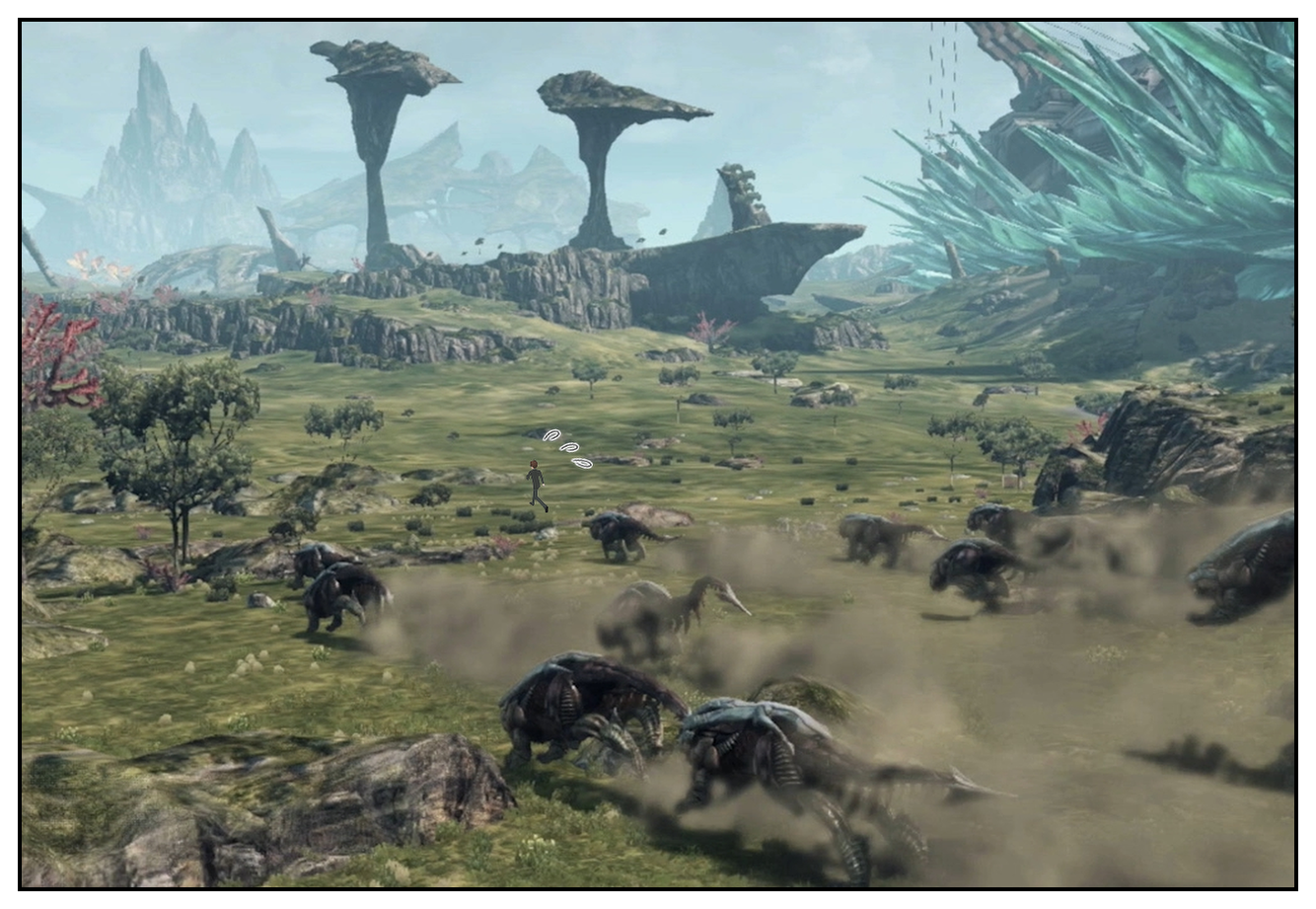
Let's take the first point first. I've already commented on this in depth in this post, but it bears mentioning again: Xenoblade Chronicles X's storytelling is about more than the main scenario quests and the cutscenes. It's an immersive storytelling experience in which you are part of the world of Mira, and things unfold around you, both with and without your intervention. The world changes and evolves as you complete missions and develop your relationships with characters, though the impact of your actions may not necessarily be immediately apparent. As you spend time in New Los Angeles and interact with its populace — initially all human, but later integrating several different xenoform cultures — you start to get a very strong sense of time and place from the people of Mira. It's ultimately one of the most well-realised worlds I've come across since the Final Fantasy MMOs — and, from me, that's high praise indeed, since these have previously been some of my favourite game worlds to hang out in.

Xenoblade Chronicles X's main story is a relatively straightforward affair, though its final act gets into some intriguing philosophical territory. But in many respects, the main story is the least important part of the overall narrative experience: the "true" Xenoblade Chronicles X, if you like, is in going about your day-to-day life as a BLADE, completing missions, interacting with others and developing your understanding of the world as a whole. Sidequests happen in the strangest of places at times, and you'll encounter a huge cast of weird and wonderful characters, many of whom have "affinity" links with one another just waiting to be discovered. Each of these sidequests is crafted with care, attention and meaning, and many of them tell their own compelling little "short stories" in their own right; others still form part of a larger ongoing narrative proceeding in the background alongside the main scenario. As a complete package, it's hard to think of an RPG with quite such a comprehensive narrative that you can explore in as much depth as you like.

Now, on to the second point: that of the characters. It's true that the main scenario largely focuses on the characters of Elma, Lin and Tatsu, with even your avatar not getting a lot in the way of development — though it's worth noting that in stark contrast to many JRPGs, you can play your character's personality in a lot of different ways, and there are often consequences for the choices you make — but to say that the other characters don't get explored is nonsense. For one, all the playable characters have their own chain of affinity missions and heart-to-heart events to explore as you develop your relationships with them, and some of these are even prerequisites for proceeding through the story. Plus, all of them have their own unique things to say during and after battle, with certain character pairings even having unique conversations with one another. Pleasingly, this even includes your avatar (who has a voice in combat despite being a silent protagonist for most of the game) — many of the things he/she says are responded to by other party members, which makes you feel like a more important part of the team than you might do otherwise.

Again, you're free to explore this side of the narrative in as much or as little depth as you please, since most of the affinity missions are optional affairs. The content is there, though — like most things in Xenoblade Chronicles X, though, it simply isn't handed to you on a plate. I like that, though; it gives a feeling of achievement when you discover something.

Final-ish thoughts for now, then? Xenoblade Chronicles X is a masterpiece of sci-fi, and the sci-fi game I've wanted to play since I was very young. It's not perfect by any means — the Wii U hardware arguably holds it back a little at times, though not as much as the original Wii held back titles like the original Xenoblade Chronicles and The Last Story — but it really is an astoundingly good game, and a truly impressive achievement. It deserves to be celebrated a whole lot more than I've seen, and I shall continue to bang my drum about it for as long as anyone will listen.

2173: Three Swords

0173_001

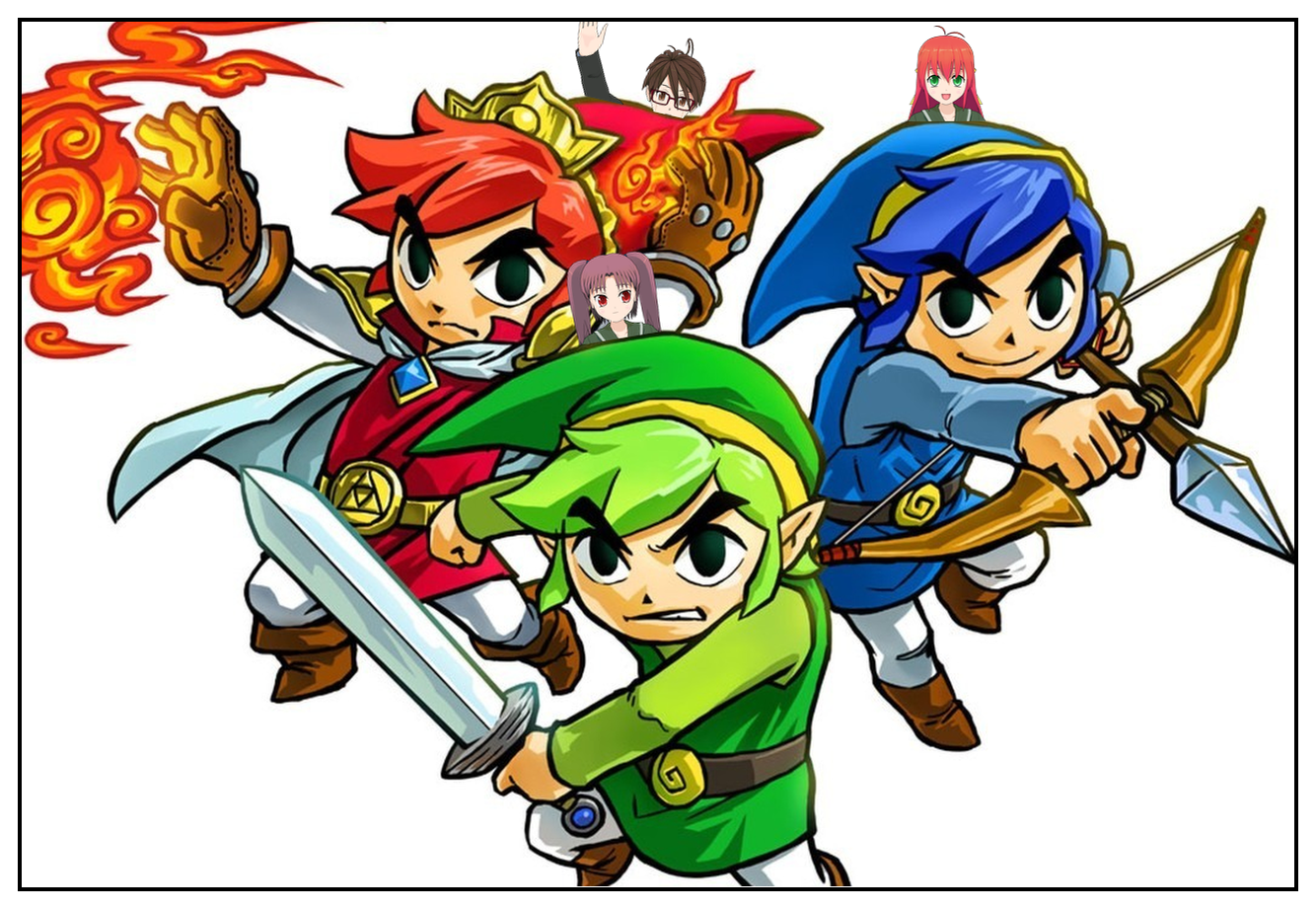
Been playing a little bit of one of my Christmas acquisitions recently: the intriguing The Legend of Zelda: Triforce Heroes. This isn't a "mainline" Zelda game in that it's not particularly narrative focused and is instead a largely cooperative multiplayer affair, but I've been very pleasantly surprised quite how playable it is — and how it very recognisably has that Nintendo "magic" about it.

Triforce Heroes casts you in the role of a Toon Link who may or may not actually be Link and throws you into the town of Hytopia, which is currently undergoing something of a crisis: the local evil witch is apparently cursing everyone who is getting a bit too fashionable, and thus it's up to the local heroes (for whom the populace have very specific requirements) to sort things out once and for all.

It's an eminently stupid premise, obviously, but in a way that works in the game's favour, because the lack of focus on a coherent narrative allows the game to instead concentrate on gameplay, and in a multiplayer-centric affair, this is by far the best approach.

Triforce Heroes unfolds over a series of discrete levels, each of which makes up a number of different regions in the Drablands, the area the witch calls home. As you complete the various levels, you'll acquire materials and Rupees, both of which can be used to create new costumes for maybe-Link and confer special abilities and bonuses — or, in some cases, penalties. You then repeat the process, gradually increasing your completion and/or grinding levels you've already done for more materials. That is, so far as I can determine, it. But rather than being a throwaway affair, it's actually rather compelling.

It helps that the levels are well designed to necessitate cooperation. Unlike, say, Super Mario 3D World, where additional players were more of a distraction than anything else, Triforce Heroes' levels are specifically designed with three players in mind. Most of the cooperation involves picking up and throwing around the other two players to reach out-of-reach platforms — not-Link, as ever, can't jump — but also making use of the "totem" ability to create a stack of up to three people in order to shoot at/smack/bomb/collect things that are too high off the ground for a single player.

One particularly charming aspect of the game is that as with most Nintendo online games, Triforce Heroes has no means of directly chatting with other players. Instead, you're given a set of endearing emotes ranging from "Over here!" to "Noooo!" that you can spam at will. Most players have already developed a means of "communicating" using these emotes creatively — and, indeed, it's a heartwarming moment when you come together with two strangers all spamming the "cheerleader" emote to signal your joy at having completed a particularly difficult area of the dungeon you're in.

Perhaps best of all for those who have friends with 3DSes, though, is the fact that the game supports Download Play, meaning that only one person needs to actually own a game cartridge for a group of three to be able to enjoy some cooperative fun. Obviously this doesn't apply when it comes to online play, but for local multiplayer sessions I can see it being a riot — I'm looking forward to trying it sometime.

It's not the sort of game I see being a thing you'd spend hours on at a time. But as something to while away a few minutes with at a time, Triforce Heroes is an impressive achievement: a cooperative game where yelling at each other is kept to a minimum, and where the whole experience just feels so delightfully wholesome that you can't help but enjoy it with a big smile on your face.

2168: Xenoblade Chronicles X: My Game of the Year

0168_001

It being the 28th of December, I feel fairly confident in declaring my own personal Game of the Year, and it will probably not surprise any of you to hear that it is Monolithsoft's spectacular Wii U role-playing game Xenoblade Chronicles X. In this post, I will attempt to explain exactly why this game has impressed me so much — and why I'm disappointed (though, I must admit, unsurprised) that the popular games press has given so little attention and/or Game of the Year consideration to it.

The first thing to note about Xenoblade Chronicles X is that it is not Wii classic Xenoblade Chronicles. Aside from a number of similarities in the combat system — including a bunch of abilities that have been brought over wholesale from the original game — Xenoblade Chronicles X is a completely different affair to its predecessor. Where Xenoblade Chronicles' focus was on its strong, linear narrative punctuated by sidequests, Xenoblade Chronicles X's main scenario is, in many ways, the least important part of the whole package, with the incredible sense of worldbuilding produced by the numerous sidequests and optional events instead being the main point of proceedings.

Let's go back a step, though, for the benefit of those who are unfamiliar with Xenoblade Chronicles X in general, and consider it on its own terms rather than getting too hung up on comparing it to its predecessor — which, as we've established, is a different (and not necessarily superior or inferior) experience.

Xenoblade Chronicles X's setup is classic sci-fi. Earth gets caught in the crossfire between some powerful alien races, and looks set for certain destruction. Numerous people manage to escape on colony ships, which take to the stars in search of a new home. Our story concerns the White Whale, a ship which crash-landed on a planet called Mira when one of the alien forces responsible for Earth's destruction caught up with it and destroyed it.

The White Whale broke up on its destruction, but its habitation section remained intact, and humanity quickly set about converting this part of the ship into Mira's first human city. Being modelled on 21st century Los Angeles, the city is dubbed New Los Angeles, and it doesn't take long for a suitable system of social structure to be put into place and help ensure everyone is doing their bit for humanity's survival.

Key to these efforts is BLADE, an organisation concerned with Building a Legacy After the Destruction of Earth — do you see what they did there? BLADE is made up of several Divisions, each of which specialises in important tasks for humanity's continued survival, be it scouting for raw materials, defending the city from dangerous indigenous creatures or maintaining the peace within the city walls.

Your character — for you can create your own avatar in this, rather than playing a pre-scripted character as in the original Xenoblade Chronicles — awakens in a crashed escape pod with the obligatory JRPG amnesia. Discovered by a young woman named Elma, who immediately shows herself to be a capable combatant and responsible individual, you're brought back to New LA and you join BLADE. From there, you become part of humanity's efforts to settle on Mira — and to defend your people from the threat of the Ganglion, a collective of aliens who want nothing more than to wipe humanity off the face of the universe for reasons known only to themselves.

As you progress through Xenoblade Chronicles X, more and more interesting things open up to you. The first couple of chapters are story-centric, but allow you to wander off and explore the game's enormous open world on foot as you see fit if you so desire. Once these are out of the way and your character has joined BLADE, you can start taking on missions, which range from simple MMO-style "collect this" or "kill this" Basic Missions to scene-setting, context-providing Normal Missions and character-centric Affinity Missions.

You're free to progress through the twelve chapters of the game's main story at whatever pace you choose, and the narrative is actually designed in such a way that it doesn't provide a sense of dissonance if you leave the main scenario hanging for a while. Instead, each chapter of the main scenario is effectively a self-contained mini-story in its own right, so there's no sense of putting Important Shit on hold while you go and pick flowers or hunt dinosaurs or whatever. This means that Xenoblade Chronicles X's story becomes as much about what happens in between those major story beats as it does during the more dramatic, cutscene-heavy nature of the main scenario.

In fact, in many ways, it's the side missions of Xenoblade Chronicles X that are the best part of the game, because they render the strange world of Mira and humanity's attempts to start over in far more detail than a linear story ever would. The side missions introduce numerous alien races, for example, many of whom choose to move in to New LA and coexist with humans after your successful first contact with them. Side missions also affect the world, and many of them are written in chains, where events that transpired earlier have an impact on what happens later, with some even having branching outcomes and questlines according to decisions you made earlier in the game.

Character development and customisation is pretty spectacular, being more akin to what you'd probably expect from a Western RPG than a Japanese affair. Your own character is completely customisable: you can switch between classes (and the associated weapons) at will, and mastering a particular branch of classes masters its weapons, allowing you to use them (and their associated abilities) in whatever combinations you see fit. You can also equip your character in armour that you feel suits your play style well, be this damage-absorbing heavy armour, evasion-heavy light armour or a mixture. Armour and weapons can be customised with augments, and upgraded with minerals mined via probes you place around the open world during your exploration. New armour, weapons and vanity clothing can be crafted. And your actions will cause various arms manufacturers to set up shop in the city, with the quality of their wares improving as you use their equipment and donate resources to their respective causes.

Once you hit the game's halfway point, a whole other set of systems opens up as you gain access to "Skells", the giant mechs that have been seen throughout much of the game's promotional material. Skells are just as customisable as characters, perhaps even more so; they're equipped with a vast array of weapons, each of which corresponds to a particular ability as well as affecting the Skell's performance as a whole. You can swap out various pieces of armour and weapons, paint it a lurid shade of pink and name it "Murderbot" if you so desire. And then you can equip the rest of your squad with them once they reach level 30, too, building your party into an unstoppable force of Big Stompy Robots.

Pleasingly, gaining access to Skells doesn't mean that you never participate in the excellent on-foot combat ever again. Rather, both in-Skell and on-foot fighting each have their own benefits according to what you're doing. Skells are generally better for fighting larger opponents, while you get more experience for taking down opponents on foot. On-foot combat also features a mechanic called "secondary cooldowns", where if you let a skill charge twice instead of just once before using it, it will have some form of added effect that could be anything from additional damage to being able to immediately reuse it. Skell combat, meanwhile, allows you to bind enemies so the rest of your team can wail on them uninterrupted, and also has an entertaining mechanic called Cockpit Time, where you get an awesome in-cockpit view of your character pulling levers and flipping switches to unleash the Skell's weaponry on your opponent. You are invincible while this is going on, too, so you can enjoy it without having to worry.

Later still in the game, you gain the ability for your Skells to fly, which gives the game a whole different feel again. Flight allows you to access numerous locations that you wouldn't have been able to get to before — plus Mira looks pretty beautiful from the air. It's also incredibly impressive that Xenoblade Chronicles X's world is genuinely seamless — you can take off from New LA's residential district in your Skell, take to the skies and fly all the way north to the fiery region of Cauldros on the other side of the ocean without seeing a single loading screen.

Xenoblade Chronicles X is, for me, my Game of the Year because it makes me happy on so many levels. It's a beautiful realisation of a classic sci-fi concept that has fascinated me for years. It features some of the best worldbuilding and sense of the setting being a real place that I've seen outside an MMO. It has incredible — and unconventional — music. And it tells great stories: the main scenario is interesting, compelling and dramatic, but just as entertaining are the more subtle stories told by the sidequests, the gossip you overhear in the streets and your own personal career as a BLADE.

Xenoblade Chronicles X deserves to be hailed as a classic. It's the most ambitious, impressive console RPG I've seen for years — perhaps ever — and, while it has its flaws and perhaps may not gel with everyone who tries it due to the obtuseness of some of its systems, it succeeds far better in its attempts to provide a convincing simulation of surviving life on a new and hostile planet than any number of procedurally generated Early Access Minecraft knockoffs you'd care to mention.

Buy a Wii U. Buy Xenoblade Chronicles X. This game deserves to be a success, and it deserves to be celebrated much more than it has been to date.

2161: Story is About More Than Cutscenes

0161_001

One of the most common complaints I've read about Xenoblade Chronicles X recently is that "the story isn't as good as Xenoblade Chronicles". And, if you look at it in a somewhat superficial manner, that's true to an extent; it suffers a little from the open-world RPG's perennial problem that is putting Important Things on hold while you go and pick flowers or whatever.

You may feel this way until you get your head into the mindset of Xenoblade Chronicles X. It's not a typical JRPG with a fast-paced, completely linear storyline that you can then break completely when the game opens up towards the end. With a few exceptions — most notably the giant mech "Skells" and, later, the ability to fly in them — much of the game is open to you from the very outset, and the whole game is designed around the concept of "what would happen if you (and the rest of humanity's survivors) were stranded on an alien planet with no hope of getting away any time soon?"

In that sense, Xenoblade Chronicles X's narrative — and the way it is told — starts to make a whole lot more sense. The story isn't just about the "story quests" and the cutscenes they incorporate; there's only twelve chapters to the main story, after all. Instead, the complete Xenoblade Chronicles X narrative consists of a blend of all the game's elements: your freeform career as a BLADE operative and the emergent narrative that comes from your adventures in the field; the simple, short stories that come from the Normal Missions and give context to many of the NPCs in the world — and, in many cases, have significant impacts on the world as a whole; the more in-depth, character-centric stories of the Affinity Missions — which also have cutscenes and are fully voiced, unlike the Normal Missions; the conversations you overhear from NPCs you meet in town and in the field; the implied, non-explicit narrative you can deduce from the scenery of the world; and, finally, the "main" story itself.

I mentioned at the beginning the open world RPG's curse of the party putting saving the world (or equivalent activities) on hold while they went to pick flowers, but in fact Xenoblade Chronicles X has been designed with that very criticism in mind. It's strongly implied that a fair amount of time passes between each of the story missions, since there are numerous references to time-consuming things happening "off-screen" throughout. Rather than simply asking you to accept that several days/weeks/months have passed, however, it's more than likely that, unless you're taking a "critical path" approach to racing through the storyline as fast as you can, a significant amount of time probably will have passed between each of the story missions. And it's in those "in between" moments that Xenoblade Chronicles X has some of its most interesting moments.

The aforementioned Normal Missions, for example. While these may appear to have had less attention lavished on them than the cutscene-heavy Affinity and Story Missions, in actual fact they tend to have more noticeable impacts on the world as a whole. As a result of Normal Missions and your choices therein, characters move around and live or die; buildings are built or destroyed; relationships between characters change; and, in the most drastic example of things changing as a result of your actions, new alien races move into the human city of New Los Angeles, meaning that you can then see them wandering around the streets as random crowd NPCs, talking to named members of their species and even accepting missions from them. As you play through the game, your understanding of Mira — and the wider universe outside the planet — begins to grow, as you get a feel for who the Ma-non, Zaruboggan, Prone and numerous others are, and, more importantly, how they feel about both one another and humanity.

The complete picture you build up in your mind as you play is one of the most comprehensively detailed pieces of worldbuilding I've seen for a very long time. It brings to mind the whole idea of "extended universes" for things like Star Trek and Star Wars, only in this instance, the "extended" universe is right there in the game for you to discover if you see fit. There's no obligation to do most of this stuff — though some story missions have prerequisite Affinity or other missions before you can proceed — but doing so makes the game several orders of magnitude more rewarding, as it starts to tell its story in all manner of different ways rather than simply through cutscenes.

As the year draws to a close, there's no doubt in my mind that Xenoblade Chronicles X is absolutely my "game of the year". It's full of all the things that I love, and, while its way of doing things may not to be everyone's taste — particularly the complexity of its systems and the subtleties in its storytelling — I feel pretty confident in saying that it's a landmark game that deserves to be counted among the greats of not just the RPG style of game, nor just the sci-fi genre of narrative games, but of gaming as a whole.

2160: Smash It

0160_001

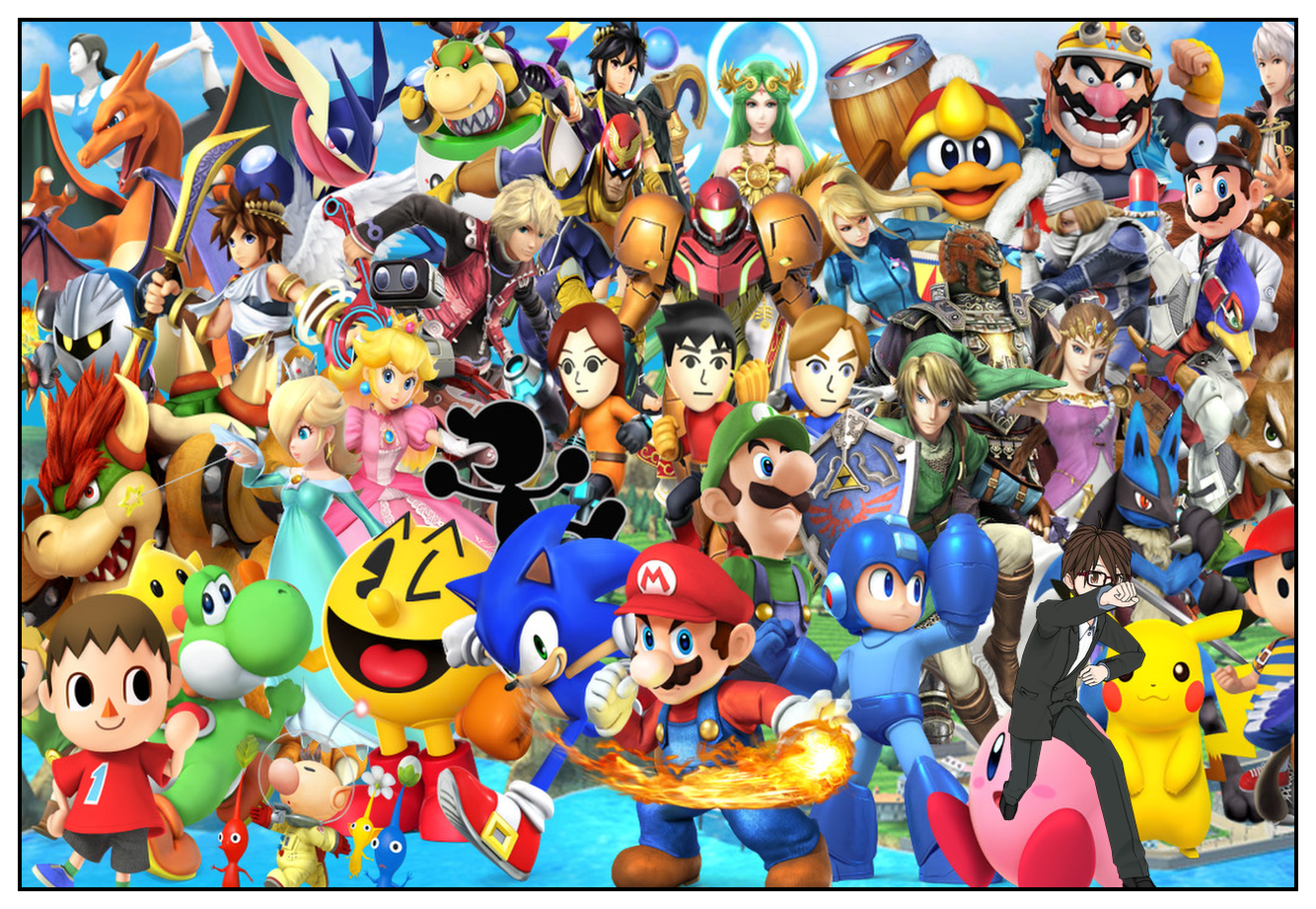
Super Smash Bros. really has become something rather marvellous: a kind of interactive "museum" of gaming, wrapped in an incredibly accessible but surprisingly deep fighting game shell.

I mention this because I grabbed the new Cloud Strife DLC for the game earlier and have spent a bit of time getting to know the new character. I like him a great deal; his moveset makes me very happy indeed, consisting almost entirely of Cloud's iconic Limit Break moves from Final Fantasy VII, and he's also a character I feel reasonably confident about how to use.

I've had mixed feeling about Super Smash Bros. over the years, partly because I've never been that good at it, and I have a friend who is very good at it, meaning it's not always 100% fun to play it with other people. Ultimately, though, I'm pretty sure I've come down on the side of liking it, because it really is a game like no other: the combination of characters, backdrops, music and sly references to all manner of games, both new and old, is absolutely delightful, and the complete antithesis to the homogeneous nature of most triple-A games.

It's also a damn good fighting game. A few weeks ago, out of curiosity, I read the beginning of an e-book about how to git gud at fighting games, since I've never really got my head around them. The book recommended learning to play using Street Fighter II, since that is the foundation on which most modern fighting games are built, but I was very surprised to discover that much of the advice contained therein very much applied to Super Smash Bros. I could feel myself playing better immediately after reading the book; it was the most obvious example of learning something new and then immediately putting it into practice that I've felt for a long time.

There are, of course, all manner of questions over whether Super Smash Bros. is balanced, whether it's "casual" and whether it's a "fighting game" by the traditional definition at all, since it's so different to your average one-on-one fighter such as the Street Fighter series. But its accessibility — no complicated button commands to learn here, allowing you to focus on using the moves effectively rather than struggling to use them at all — is its best feature, allowing rookie fighting game players to jump in and go toe-to-toe reasonably confidently against veterans. Sure, they'll almost certainly get obliterated — since despite how chaotic Super Smash Bros. looks for the most part, it's a very technical game that is almost frightening to watch high-level play of — but, unlike many other fighting games, it probably won't be for lack of knowledge of the mechanics. No special meters, no indecipherable jargon; all you really need to know is that you need to smack your opponents around a bit to increase their damage gauge, and the higher their damage gauge is, the further they'll fly when you whack 'em with a Smash move, with your ultimate aim being to knock or lure them off any side of the level.

I don't know if I'll ever be any good at Smash Bros., particularly compared to people who really know what they're doing with their favourite characters, but it's a fun time, and probably the fighting game series I've had the most fun with over the years.

But anyway. My original thinking that prompted this post was looking at the character select screen for my copy of Super Smash Bros., which includes the base game plus the DLC for Ryu and Cloud Strife, from Street Fighter and Final Fantasy VII respectively. Super Smash Bros. already has an incredibly diverse roster that draws from series ranging from Super Mario to Metroid via Star Fox and F-Zero, but the really interesting thing that started to happen in the last few installments is the addition of third-party, non-Nintendo characters, beginning with Solid Snake from the Metal Gear games a while back, and in the newer Wii U version, everything from Pac-Man to the aforementioned Ryu and Cloud.

Back when I was a kid playing Super Mario World on my Super NES at home, I would never have predicted that one day I'd be playing a game in which Mario, Sonic, Pac-Man, Cloud Strife, Ryu and the fucking dog from Duck Hunt all feature; it's kind of mind-blowing when you think about it, particularly if the horrible names Sega and Nintendo fans — including the press! — used to call each other are still fresh in your memory!

2159: Splattack

0159_001

I spent a bit of time before my shift at work today playing Splatoon. Having finished the single player, I jumped back in to the multiplayer for a few games, and was reminded quite how much I like that game — a fact that surprised me somewhat when I first played it, given that I'm not normally one for competitive multiplayer shooters, team-based or otherwise.

Splatoon is a bit different from your usual multiplayer shooter, though, in that there are no game modes that require you to kill the other team. Instead, most of them are about territory control of various types: the basic "Turf War" game mode, for example, involves covering the ground with ink of your team's colour, with the winner being decided by majority coverage after three minutes. Other game modes found in the Ranked Battle mode vary somewhat in what they require you to do, but none of them are straight-up deathmatches, which means there's no necessity to be a 1337 MLG noscope pro.

Splatoon is testament to Nintendo's desire to make games accessible to everyone. Competitive multiplayer shooters are historically rather elitist in nature, with inexperienced players often being mercilessly mocked or picked on until they "git gud". Unpleasantness in chat — be it voice or text — is so expected that it's become something of a cliché to talk about racist thirteen-year olds playing Call of Duty; consequently there are many people — myself included — who, preferring their games to be fun rather than an unpleasant experience, avoid this type of thing and thus tend to miss out on games that, despite everything, are often quite culturally significant, not necessarily from an artistic perspective, but as an activity that brings significant numbers of people together.

Splatoon could have easily been a disastrous failure, being a Wii U game. Yet it has gone on to become one of Nintendo's biggest success stories all around the globe, with it rarely being difficult to find people to play with, whatever hour of the day you happen to be online. I was expecting it to be hard to get a full group together when I played this morning, for example, but was pleasantly surprised to be matched with a full team almost immediately — since Japan was awake and happily playing away already.

The other nice thing about Splatoon is that it doesn't have a chat function. Like, at all. This drew some criticism on its initial release, since it's sort of an expected feature in your typical multiplayer games these days, but in Splatoon's case it really isn't necessary or desirable. The GamePad screen allows you a tactical overview of the entire battlefield and what your team is up to, and simple controls allow you to send messages of support or requests for assistance to your teammates without having to speak. By taking away the chat facility, the ability to abuse one another is also taken away, keeping things family-friendly for everyone and encouraging veteran players to play nice with newbies, since if you're not being a team player you'll just end up dragging your teammates down and, in most cases, throwing the game as a result.

The other thing I particularly appreciate is that games are over quickly. No twenty-minute slugfests here; a single match is just three minutes long, meaning that even if you're stuck with a team of AFKers, you don't have to suffer for too long before things are mixed up and you can try again with some new companions. And since teams are jumbled up before each match, even if the same players stay together, it's rare to see unfair dominance from one side or another.

Above all, Splatoon is just plain fun. It's colourful, it's energetic, it's humorous and it's highly enjoyable — even if you don't typically like multiplayer shooters. I'd highly encourage you to jump on it even if it's not usually your sort of thing — you may just find yourself pleasantly surprised by how much fun you end up having.