2527: One for One!

0527_001

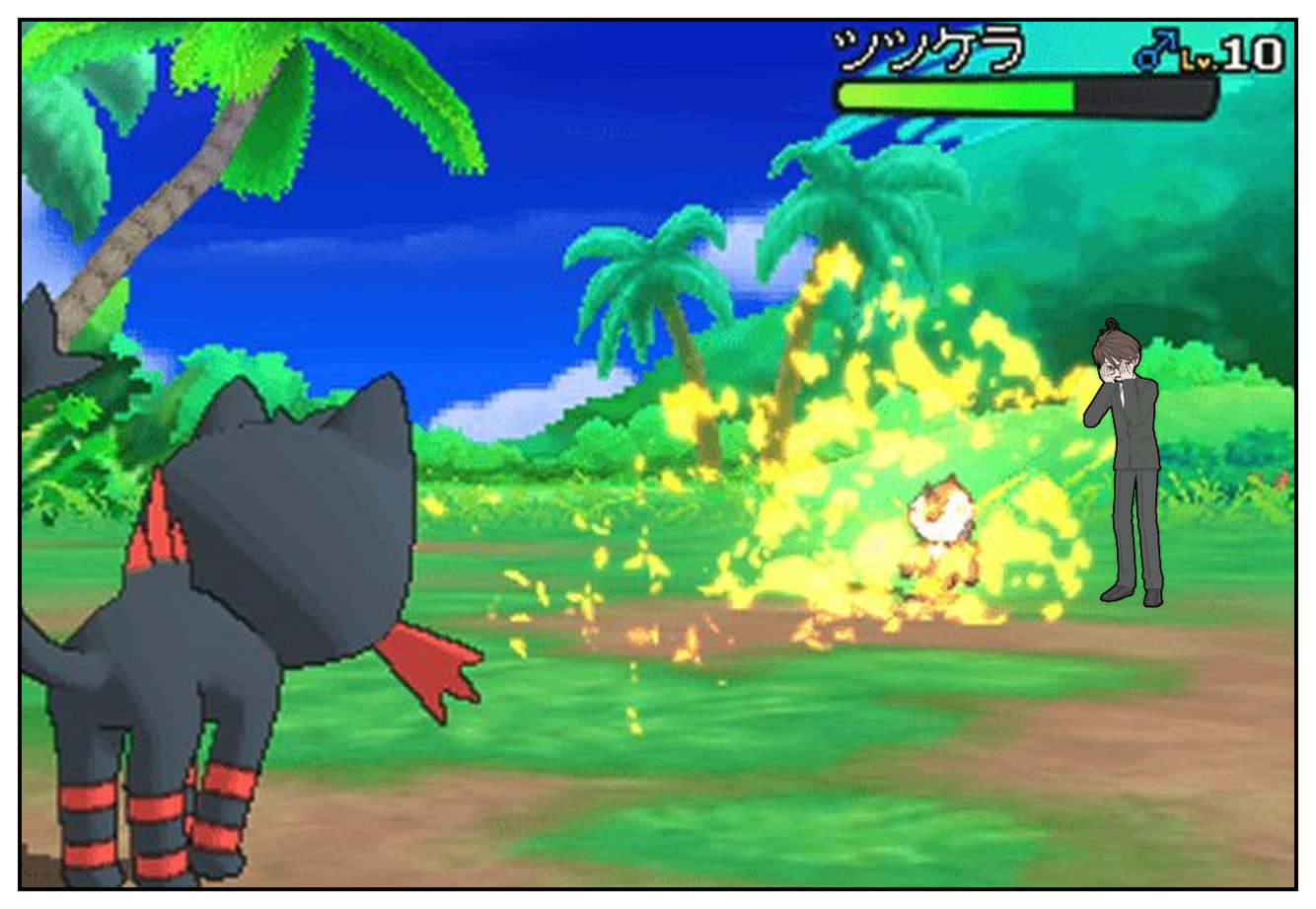
I completed my first couple of Pokémon trades over the last couple of days, giving me all three of the "starter" Pokémon from Sun and Moon to add to my Pokédex.

Since Pokémon is essentially a well-disguised trading card game (and a not-at-all-disguised trading card game in its Trading Card Game format, but that's something else entirely) a key part of its appeal is working with other players to collect the things you want to collect.

This is an aspect of the game I always felt like I was obliged to miss out on in the earlier installments, particularly back in the Game Boy days when it was direct link or nothing. Although I had a number of friends who were big into video games, I didn't know anyone who had a Game Boy and a copy of Pokémon, so I was denied access to what I understood from the beginning to be a significant part of the experience.

This has all changed with more recent platforms and widespread access to the Internet, meanwhile. Using Pokémon Moon's Global Trade System (GTS) I managed to find a Rowlet that someone wanted a Pokémon I had for, and subsequently I listed another Pokémon I had and indicated that I was interested in acquiring a Popplio. The first trade was immediate, since the Rowlet owner had already listed the little owl for trade, and the second trade was complete within a day. As a relative Pokémon newbie, I wasn't familiar with what is apparently a widespread Eevee trafficking market, but it seems as if evolved Eevees make for pretty reliable trade currency, so I'm probably going to have to farm some of those at some point.

Dipping my toes into this side of Pokémon is helping me to further understand the appeal of the series. Although the main game is a single-player adventure and there's a significant amount of content to play through, both during and after the main story, a core part of the Pokémon experience as a whole appears to be the social aspect of it. And while Nintendo's heavy-handed approach to online safety and privacy means that it's literally impossible to communicate directly with another player — all communication is asynchronous, using a wide selection of preset words and phrases that auto-translate into different languages — there's still a surprisingly strong feeling of "interaction" with other players when you successfully complete something like a trade or a Festival Plaza mission.

To be honest, I think I kind of prefer Nintendo's way of doing things online these days — at least when it comes to playing with strangers. Playing with friends is a great laugh if you get on voice chat and indulge in some light-hearted banter, but when playing with strangers, there's a fairly high probability you will run into at least one insufferable arsehole during a play session. With Nintendo's approach, said insufferable arseholes are completely neutered and will never bother you or disrupt your enjoyment of the game. Of course, with Nintendo's approach, your friends are similarly neutered, too, though chances are if you're actual friends with those people you have alternative means of communicating anyway.

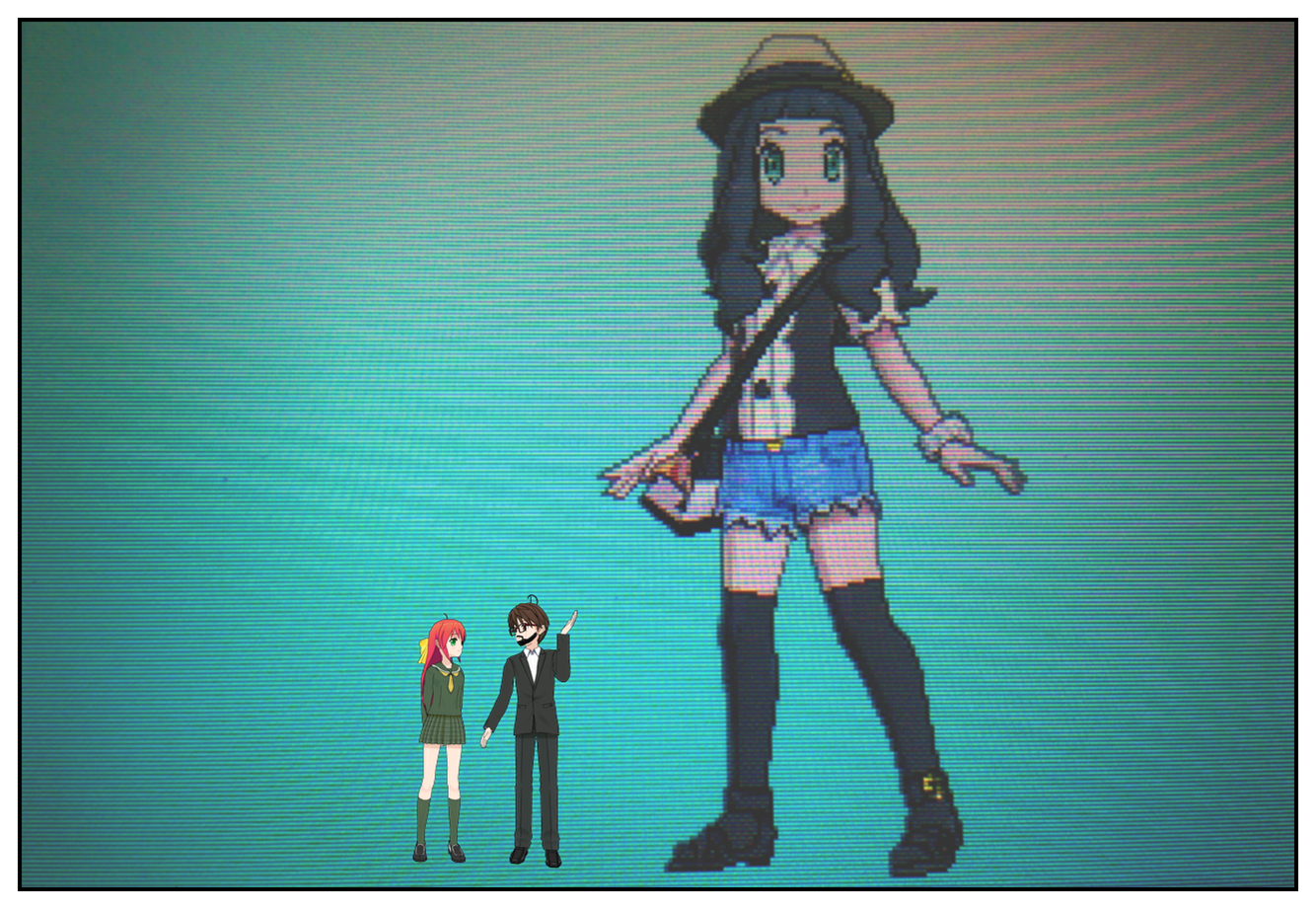
Meanwhile, my Pokémon Moon adventure is going pretty well. I'm onto the third island now with a strong team of Pokémon that cover a variety of different types, though I think I'll be needing to train up some Ground or Rock types next. I also have an outfit that I'm pretty pleased with for the moment — big love to Nintendo and Game Freak for providing the option to purchase thigh-high socks in the very first clothing shop you come to — and I feel like I'm deepening my understanding of the overall metagame with every hour I play.

So yep. Think it's safe to say I'm in this one for the long haul.

2521: Super Effective

0521_001

I'm continuing to enjoy Pokémon Moon. I've found myself on more than one occasion being keen to get to the end of my working day and be able to play it some more. I'm getting a feel for the shallow end of the overall metagame — most notably which types of Pokémon and attacks are strong and weak against other types — and I'm also getting curious to see what a Pokémon endgame is like after you've finished the story.

Of course, I'm a long way off the latter aspect in particular so far, since I'm still only on the second island in the game, coming up on that island's second Trial. I am making good progress on the Pokédex, however, being roughly around 30% complete on the first two islands, and I've assembled what feels like a solid team of well-leveled Pokémon that feel like they're pretty good for "general purpose" wandering around.

With the Trials on the second island, types become a lot more important, and the game drops a few hints your way as to which types of Pokémon you might want to make sure you have on hand for the upcoming challenges. The game seems to be well-paced in that the Pokémon you can catch in an area are of a suitable level to be reasonably competitive against both the local wildlife and Trainers, so grinding doesn't seem to be too necessary unless you want to take a Pokémon you caught much earlier into the Trials. Even then, however, just making sure a low-level Pokémon is in your party while your stronger team members deal with the wild Pokémon of the area allows them to get caught up reasonably quickly, at least across the early levels.

One thing that occurs to me — and I thought this with what little I played of and as well — is that Pokémon has quite a bit in common with MMOs these days. You don't play in a persistent shared world with other people, but many aspects of the game are similar, particularly with regard to character customisation and competitive play. Of particular note is the "fashion" feature where you can adjust your avatar's hair, makeup, eye colour and clothing and then share that avatar online through the Festival Plaza system. Your avatar can then be further customised through the text-based words and phrases they say when other players interact with them — asynchronously rather than in real-time, because this is a Nintendo game for kids, after all — and, later, you even get the opportunity to buy clothes that you see other characters wearing.

I haven't tried the online trading and battling systems yet, but I understand they're both fairly active. The trading facility in particular is a godsend when I think back to the early games; possibly one of the things that meant I bounced off Red and Gold back in the Game Boy days was because no-one else I knew was playing any of them, and thus I had no-one to trade or battle with. Nowadays, however, trading and battling is a simple case of visiting Festival Plaza and using the appropriate options — or, for someone in the same room as you, using the excellent Quick Link feature to quickly do something together.

Some 15 hours into the game so far, I remain curious as to whether it will hold my attention into its endgame and beyond, but I'm having a blast so far and anticipate I will continue to do so for quite some time yet.

2519: Chicken-chan x Lillie, OTP

One of the things that attracted me to try out the new Pokémon game was the amount of fanart it was generating even before its release. The Internet, it seemed, was particularly enamoured with Lillie, a major character in the story.

This animated GIF was the first time I noticed her:

tumblr_ogslhxbqyf1vhwy42o1_500

Said GIF is from the Pokémon anime rather than the game — and interestingly Lillie looks considerably younger in this than she does in the game and her official artwork, perhaps to ensure she is in keeping with the perpetually young Ash — but I found her immediately striking and endearing with her distinctive outfit, cute haircut and adorable reaction to Tauros. She doesn't react at all like this when the player-protagonist encounters Tauros in the games, suggesting that her anime counterpart may be depicted as a slightly different character.

Anyway, I digress. Lillie caught my attention for some reason, initially with this GIF and subsequently with a considerable amount of fanart that started popping up around social media and suchlike.

lillie_pokemon_pokemon_game_and_pokemon_sm_drawn_by_mei_maysroom__sample-3411f81deea614fcf976aa1afd62e77b
Source

Here Lillie is seen closer to her depiction in the game, including her bag, in which she carries "Nebby", a Cosmog Pokémon that she… "acquired" for reasons that are not yet apparent with my progress in the story. This somewhat pensive pose is also more characteristic of her depiction in the game; she's shown to be a rather sensible girl who cares for Pokémon, but dislikes the world's love of Pokémon battles because the participants often end up hurt. She's constantly down on herself for not being a "proper trainer", and attaches herself to the player-protagonist when the two develop an immediate connection by chance early in the narrative

You can play a male or female protagonist in Pokémon Sun and Moon, but with the Internet being the Internet, the fanbase of video games with Japanese origin loving a bit of yuri and the female protagonist being pretty cute in her own right, much of the fanart depicting Lillie with the game's protagonist has focused on the same-sex pairing to varying degrees.

female_protagonist_and_lillie_pokemon_pokemon_game_and_pokemon_sm_drawn_by_nonobuki__sample-2843bb2fb9457e1531f556890dfff18d
Source

The pairing is immediately appealing because the two characters are strong contrasts with one another. Lillie is blonde, pale and depicted as lacking in self-confidence, while "Chicken-chan" — so dubbed by a few people here and there owing to her silly hat — is dark-haired and shown to be curious, self-assured and more than willing to poke her nose into all manner of things. Even the way Chicken-chan walks in the games presents an air of confidence; she struts with great pride, while Lillie kind of saunters along, often looking like she's hoping no-one will notice her.

female_protagonist_and_lillie_pokemon_pokemon_game_and_pokemon_sm_drawn_by_nicola_pixiv_21072914__sample-f2262b8dc37a5a47c28dec8f1eade25a
Source

Naturally, there's a ton of fanart out there suggesting that Chicken-chan and Lillie are more than just friends, such as this lovely image that looks like it's straight out of a visual novel. And of course, there are plenty of images that take things… um… a little bit further, shall we say, but I'll leave you to investigate Rule 34 for yourself if you dare.

cosmog_female_protagonist_and_lillie_pokemon_pokemon_game_and_pokemon_sm_drawn_by_mimikaki_men_bow__c36d04312329f17442b22da9e6b19688
Source

I really adore seeing the community as a whole get so wrapped up and invested in a fictional (and, one would argue, non-canonical) relationship between two characters in this way. It's touching to see everyone "rooting" for these characters, and for so much of the artwork (explicitly lewd stuff aside, obviously) to just be so good-natured, positive and accepting that you can't help but feel good when you see it.

I mean, obviously a lot of the appeal of the Chicken-chan x Lillie pairing is the simple fact that it's two cute girls being cute together, but in a world where particularly vocal critics are constantly complaining about the "toxic" culture of gaming, the sheer volume of high-quality fanart of this kind — and the keenness with which it's shared — is a reminder to us all that perhaps things aren't quite as bad as the world's perpetual whingers might want us to believe.

2517: Learn as You Play

0517_001

One of the most interesting things about the new Pokémon games is, I think, the online "Festival Plaza" component that allows you to indirectly communicate with other players, earn rewards and participate in communal challenges. It's also the main hub from which you can challenge other players to battles, participate in tournaments, trade with friends or random people, list Pokémon for trade or seek out specific Pokémon that you're after and a bunch of other things besides.

In typical Nintendo fashion, all the technical side of connecting to the Internet and communicating with other people is made as painless as possible — so much so that were it not for the lengthy connection process and the message on screen that says when you're connected to the Internet, you'd think you were just playing another part of the main game. But you're not; you're in an area where every character you meet represents someone else who is playing the game somewhere in the world, and the things they say reflect things they have done and choices they have made.

One particularly interesting aspect of the Festival Plaza is the fact that you can host "missions". These are simple minigames that usually involve running around the plaza and either talking to the correct people based on their greetings to you, or answering their questions correctly. The more points you score with correct actions, the more Festival Coins you earn, which can subsequently be used on Festival Plaza's attractions.

What's interesting about these missions is that it's not just you playing them. Host one while you're playing online and you may well notice your "total score" increasing faster than you're contributing to it, and the number of participants rising. This is because when someone hosts a mission, other people connected to Festival Plaza at the same time receive a message and have the option to take part. Everyone who takes part gets rewards, and the higher the overall total score at the end — which can usually be inflated considerably by just a few more participants — the bigger the rewards everyone gets. It offers a nice balance of simple gameplay, light competitiveness — there's a leaderboard at the end of the mission to show who contributed the most points — and jolly cooperation. And with Nintendo's typical lack of direct communication facilities — something which I'm increasingly thankful for with the growing unpleasantness of many online playerbases — the whole thing just feels like a nice bit of fun.

The other interesting thing about these missions is that you can learn something from them. Some of them challenge you to name the correct types of Pokémon that would be strong against another particular type, for example, while some of them challenge you to pick out people who are naming specific types of Pokémon. But these missions aren't all about the game itself; some of them are straight-up educational and seemingly developed in the interests of making people from all over the world feel a bit closer together. Of particular note are the "Language Lesson" missions in which all you have to do is find the people who are saying "hello", "goodbye" or "thank you" in a given language. You're given the set phrases to look out for in the mission information, then after that it's up to you to remember them. By the end of the couple of minutes the mission takes, you'll feel confident at saying those three phrases in another language, which is pretty neat.

Since Pokémon is primarily aimed at kids, despite a considerable adult-age enthusiast community of competitive players, I'm not anticipating any of these missions will get into anything too deep or complicated, but they've been a nice diversion from the main game, they feel in keeping with the overall tone of the whole thing and I've learned a thing or two from them, both about Pokémon in general and a couple of foreign languages to boot.

2516: Alola!

0516_001

When I've not been playing Final Fantasy XV, I've been giving Pokémon Moon a serious shot, as I'm determined to try and understand the obsessive appeal the series has. And I think, finally, I'm starting to "get it".

Part of this is, as I described a few days ago, the fact that Sun and Moon have refined their systems and interfaces to a level where I'm not frustrated by a lack of information any longer, although I do feel there's a certain amount of "assumed knowledge"; an understanding that many of the people who are playing this have previously played at least one Pokémon game to death. This leads to a certain amount of flailing around in the early hours as you try to figure certain things out — though pleasingly, the game does actually take the time to point out what common series abbreviations like "TM" stand for, which is something I don't recall and Y doing.

Pokémon has evolved considerably over time. I played Red and Gold when they first came out on Game Boy, then set the series aside until and which I gave a go for a bit but didn't really feel, although there were certain aspects I did like. Chief among these was the amount of customisation there is in the game, which has really come to the forefront in the 3D installments. I'm a sucker for any game that gives me the opportunity to play a cute girl and dress her up in cute outfits, and Moon certainly hasn't been disappointing in this regard, with plenty of hair and clothing options to choose from. (I actually found myself not wanting to customise and Y's default female character because I liked her standard look so much, though I understand there was a similar situation here.)

Moon's online feature — the Festival Plaza — is a little peculiar in that true Nintendo "no direct online interaction!" way, but it's charming, endearing and friendly in, yes, that true Nintendo way. Not only do you get the opportunity to ogle the wonderful avatar creations of other players — both from your friends list and randomly gathered from online — but you also get to interact with them in various ways. Perhaps the most appealing part of all this is the fact that it's possible to populate your online profile with a questionnaire covering all manner of different topics, and there are a wide variety of different responses you can give to the prompts — some sensible, some nonsensical. This allows players the opportunity to express themselves and their personality without the potential for unpleasantness that unfiltered direct online communication often brings with it.

As for the main game itself, the setup has been enjoyable so far. In typical Pokémon fashion, you set out from your childhood home to have an adventure, largely prompted by the local crazy professor. Along the way you encounter a rival (who is more of a friend in this character than in some previous installments) and a recurring team of villains (who are, as usual, comedically incompetent in this installment, with the main difference being that the general populace of the Alola region knows how comedically incompetent they are rather than living in fear of them) as you seek to prove your might as a Pokémon master.

I like the fact the structure of the game has been shaken up a bit from "get to each town, visit gym, defeat everyone in there" from the previous games. The new "trials" concept covers the same basic ground, but seems to handle things more like a traditional RPG dungeon, with objectives to complete along the way followed by a boss at the end. I'm interested to see how this develops further in the game — I'm still on the first island at present.

I'm not yet quite sure if I'm "doing it right" with regard to my team makeup and levelling strategy, but I'm sure there are no mistakes I might make that can't be corrected with a little grinding or, if the worst comes to the worst, catching a fresh new Pokémon of a particular type. In the meantime, I'm genuinely enjoying Moon, and I'm keen to see how the game develops in its later hours.

2511: Maybe Catch Some of 'Em

0511_001

I decided to give Pokémon another go with the latest installments Sun and Moon, specifically Moon, since Andie picked up a copy of Sun.

I've only spent a little over an hour with it so far but already it looks as if Sun and Moon have addressed some of the things I found frustrating about the previous installments, and that, coupled with reports from friends who say it's a lot more story-heavy than previous Pokémon games, makes me think I'm probably going to enjoy it a lot more.

One of the things that always frustrated me about earlier Pokémon games was the fact that it was pretty vague about things like debuffs and suchlike. "Pikachu's attack fell!" the game would say. "How much?" I would want to know. "Does that debuff stack if the opponent keeps using the same move?" Neither of those answers were particularly forthcoming in previous installments — or if they were, I certainly didn't know where to find them.

In Sun and Moon, however, there's a handy mid-battle status screen that allows you to see that yes, debuffs do stack, and how many times your Pokémon has been inflicted with a particular debuff. (It still doesn't tell you how much your stat has been reduced by, but you can make an educated guess as to the impact according to the levels of your Pokémon and your opponent.)

Even better, Sun and Moon use information from the Pokédex to allow you to quickly see which moves are effective, super-effective and not very effective against your current opponent, negating the need for constant flipping back and forth between menu screens or keeping copious notes on what was weak and strong against what. Doubtless for some purists learning all this stuff was part of the appeal, but the way Sun and Moon does things is a lot more friendly to people like me who haven't invested thousands of hours in the series as a whole.

These niggly little features aside, I'm impressed with the overall presentation of Sun and Moon, a lot more so than previous installments. While and had some reasonably nice character models, their proportions were a bit weird in comparison to the official art. In Sun and Moon, meanwhile, the characters look just like their hand-drawn counterparts and are animated well, to boot. The only sign it's running on the underpowered 3DS hardware is any time the camera gets a bit close to a character and you can see big jagged pixels on the textures.

I'm not far enough in the story to be able to comment on it as yet, but the early introduction of the character Lillie — current darling of the fanart community, from what I can tell online — gives the story some interesting momentum right from the get-go, and the incidental characters are appealing and fun. In particular, the protagonist's mother is extremely likeable, helping to make your character's home feel a lot more… well, homely.

I'm looking forward to seeing how it develops further; I'm going to give it a proper chance this time around, even if I am currently attempting to juggle it with Final Fantasy XV, which is monopolising most of my gaming time at present. Perhaps I'll finally understand why people go apeshit for each new Pokémon release.

2338: Link's a Boy, Deal With It. Or Spend Some Time With These Awesome Female Protagonists Instead of Moaning

0338_001

Nintendo revealed its new Zelda game today, or, more accurately, showed off a decent amount of gameplay. It looks lovely, both from an aesthetic and gameplay standpoint, though it remains to be seen if they can provide a Zelda narrative that keeps me interested more than most of the previous incarnations.

Naturally, this being the ever-offended Internet, most of the discussion surrounding Zelda was about the fact that, shock horror, Link is still a boy. You know, like he's been for the last 30 years, as an established character — indeed, one of the most recognisable characters in gaming after his Nintendo stablemates Mario and Luigi.

A bunch of people seemed to have got the idea in their head that Link "should" be female in this new Zelda. Nintendo had fueled the fire a little with some concept art and, later, a character called Linkle (seriously?) in 3DS title Hyrule Warriors Legends, but nope; the new Zelda game will feature a male protagonist, just like its predecessors, and — spoiler — will probably also feature a princess called Zelda.

Don't get me wrong, a female Link could be cool, but that's about all. If Nintendo were to change Link to a female character now, it would look like change for change's sake, and Nintendo isn't really about that… to a fault, some might say. There's also an argument that people want to see a representation of themselves on the screen, but no; despite the fact that Link has never spoken in any of the Zelda games, he's still an established character. You are playing as Link; you are not playing as you.

But let's not get bogged down in this; there's a whole argument to be had over Zelda lore and Link actually being lots of different incarnations of one heroic spirit, but that's for another day. Instead, I want to talk about something more general on this topic.

This exchange on Twitter bothered me:

https://twitter.com/IvoryOasis/status/742786606466142208

"They" presumably being either Nintendo, or Japanese developers in general. Either way, it's just plain wrong. Here are some excellent female protagonists from Japanese developers, including Nintendo:

Samus Fucking Aran

If Nintendo consider women "2nd class", how is it one of their most beloved characters is a woman? The fact that Samus is a woman is widely known now, of course, but back when the original Metroid came out it was a genuine surprise to see her take off the helmet of her power armour and reveal that yes, indeed, she was a woman.

This was in 1986. 30 years ago. To my knowledge, not one person has argued that Samus should be rebooted as a man.

Arnice

The protagonist of Nights of Azure by Gust is a thoroughly capable young woman who doesn't take any shit from anyone. Not only that, she's also gay, so double diversity points there.

Pretty much every protagonist in the Atelier series

With the exception of the three Atelier Iris games and half of Atelier Escha and Logy, all the protagonists of the Atelier games have been female. There are 16 Atelier games, plus spinoffs and reboots, and the series has been running since 1997.

Everyone in the Senran Kagura series

The Senran Kagura series has a cast that expands with each new installment, and there are very few male characters. The focus is squarely on the female characters, each of whom get a decent amount of time in the limelight and, in the Versus games on PlayStation platforms, their own side stories to further flesh out their characters. Estival Versus has 25 playable female characters, plus several additional DLC characters.

Everyone in the Neptunia series

The entire main cast of the Neptunia series (with the exception of important character Umio in the latest installment) is female. In fact, there seem to be very few men in these games at all, and when they do show up, they are usually shown to be incompetent or evil. The Neptunia cast has become so strong and recognisable now that it's transcended its original role-playing game genre into visual novels, strategy games and beat 'em ups, with more doubtless to come in the future.

Estelle Bright

Estelle from Trails in the Sky was easily my favourite thing about that game. She was a great protagonist for a traditional RPG: optimistic, enthusiastic and courageous. She also had a dry wit and a good line in putdowns for those who thought she was too tomboyish in her behaviour, and acted as an excellent, well-crafted centrepiece for an interesting, memorable ensemble cast.

Yunica Tovah

One of the three protagonists in Ys Origin, Yunica overcomes a considerable amount of adversity in her world: she can't use magic like many of her peers, but instead of getting mopey and depressed about it, this just makes her throw herself into bettering herself in other ways. She strikes an interesting balance between traditional femininity in her behaviour and being a total badass when it comes to combat, swinging around battleaxes and two-handed swords like they weigh nothing at all.

2B

Not much is known about Nier Automata yet, but if the first game's ambitious, emotional story is anything to go by, there's going to be a very interesting story surrounding the female android protagonist of this sequel.

Bayonetta

Two of the best character action games in the last few years have a woman in the leading role. Bayonetta is designed in the exaggerated superhero mould, and her portrayal in the games deliberately emphasises her sexuality, which she takes total ownership of throughout. Also she rides a motorbike up a rocket into space before punching God in the face.

Milla Maxwell

My love for Tales of Xillia protagonist Milla is well documented, but she bears mentioning again, because she's awesome. An incredibly interesting character with some fascinating development over the course of the two games in which she appears, Milla subverts a ton of tropes and ended up being one of the most memorable characters I've had the pleasure of spending time with in the last few years.


I could go on, but that's probably enough for now.

Needless to say, my point is probably clear: Japanese devs (including Nintendo) emphatically don't think of women or female characters as "second class". In fact, I can name considerably more Japanese games with female protagonists than Western ones. And they're cool, interesting, well-written characters, too — even in the more fanservicey games like Senran Kagura, which many people find to have an extraordinary amount of character development if they go in on the assumption it's about tits.

But let's not let facts get in the way of a good bit of stupid, pointless outrage, shall we?

In other words: stop getting upset that a character who has been male for 30 years is still male when there are a huge number of awesome female-led games from Japanese devs. And stop lying, while you're on. kthxbai

2288: Star Fox Zero Isn't Too Hard, We've Just Grown Complacent

0288_001

A much-mocked Polygon non-review of Nintendo's new Wii U title Star Fox Zero criticised the game for being a "miserable experience" on the grounds that it was too difficult. The article's author Arthur Gies cited the game's controls as a sticking point for him, and indeed the most vocal critics of the new game — most of whom, it has to be said, haven't actually played it — constantly point to the control scheme as the reason the game is somehow "bad".

Well, having cleared the main game three times now (with my last run unlocking a bunch of hidden levels) I can confirm my initial impressions of the game: the controls are really not a big deal, and in fact, for my money, are better than the inherent limitations of the fixed aiming reticle from the previous installments, allowing you to shoot in one direction while flying in another.

I don't want to get hung up on the controls, though. I do, however, want to address the question of it being "too hard" because, having hurled a number of choice swear words both at Andross the first time I reached the final boss and at the optional hidden boss on Corneria when I first came across it, I realised I was encountering something that has become quite unfamiliar in a lot of modern games: the game putting up a bit of resistance to the player and challenging them to get better at it, rather than just brute-forcing their way through.

(That said, Star Fox Zero does have Nintendo's "pity powerup" system that they introduced in the Mario games a while back, in that if you fail a mission repeatedly, you have the option to collect a powerup at the start of the mission that makes you completely indestructible in exchange for your score not being recorded. Gies did not mention this in his not-review, but it's surely pretty plain to see that this option would allow even the most incompetent moron to clear the game without too much difficulty.)

So no. Star Fox Zero isn't too hard; we've just become accustomed to console games — particularly high-profile, big budget and/or first party productions — holding the player by the hand and going out of their way to make sure the player gets to see everything without giving up in frustration. The difference between a Dungeons and Dragons Dungeon Master (who wants the players to see their adventure through, albeit with a few obstacles in their way) and an actual adversarial player in a role-playing or board game situation (who wants to defeat their opponent and claim victory), if you will. Star Fox Zero takes the latter approach; most other games of today take the former. (Which is fair enough, when you think about it — given the astronomical budgets of modern triple-A games, it's not at all surprising that developers want to make sure that players get to see all the stuff they've spent time, effort and money creating.)

There are exceptions to this rule, of course, the most well-known being From Software's Souls series, which is legendarily unforgiving and demands that players practice each and every encounter until they can complete it perfectly. Many independently developed games, too, err on the side of punishing difficulty, particularly if they're going for an old-school feel to their gameplay as well as old-school visuals, as is (still) currently fashionable in that particular part of the games biz. But for the most part, a game on the scale of Star Fox Zero — that is to say, a high-profile, potential system-seller from a first-party publisher — is more likely to err on the side of giving the player a theme park ride: it seems dangerous and challenging at first, but in actual fact, the player is a lot more safe (and constrained) than it might initially seem. Star Fox Zero, meanwhile, gleefully allows the player to fail, and continues to hide things from the player even once you've beaten the final boss.

Take the hidden levels, for example — a wonderfully old-school nod to the previous games in the series. You are never given an explicit warning that a trigger point for one of these is coming up — you're expected to notice the cues for yourself and act accordingly, and if you miss them, well, you miss them; no awesome secret level where you get to play as Peppy taking down a this-totally-isn't-a-Super Star Destroyer-honest for you. (Delightfully, Peppy joyfully shouts "Barrel roll!" every time you do a roll while you're playing as him.)

On top of that, clearing the game for the first time unlocks Arcade Mode, which challenges you to play from the start of the game to the end with no continues and the ability to only stock one spare life if you successfully manage to collect three gold rings. This mode isn't actually any harder than the main game (in which you can freely select any level you've previously cleared) but the added pressure of having to do it without fucking up (well, without fucking up too much) makes it feel like it's slapping you around a bit, though the satisfaction of seeing a mounting high score makes it eminently worthwhile. And, in a pleasant homage to classic arcade games such as Out Run, this mode records an independent high score for each and every possible route through the game you can take, and there are quite a few different alternative routes throughout.

So no; Star Fox Zero isn't too hard. But it is a game that you can fail at, or be bad at. And it's kind of telling that we've reached a point where, outside of the Souls series and a few other exceptions here and there, this has become unusual to some people.

2285: A Day with Star Fox Zero

0285_001

My copy of Star Fox Zero arrived today, and I've spent most of today playing it. Here are some thoughts, organised under various headings for your convenience.

Is it Star Fox?

Most definitely yes. Combining the basic core mechanics from Lylat Wars/Star Fox 64 (most notably the scoring system) with a number of levels and encounters inspired by the original Starwing/Star FoxStar Fox Zero is very much a Star Fox game that knows its roots, knows what the people want and delivers on all fronts.

You want specifics? Okay. The forced-scrolling stages are as pure a Star Fox experience as you're going to get. Learnable groups of enemies (chainable for high scores and bonuses), environmental obstacles, hidden collectibles, alternative routes triggered by various actions you take in the level — it's all here. On top of that, clear inspiration has been drawn from the SNES original with levels based primarily around simple (albeit beautifully textured) geometric shapes in awkward arrangements — plus the final boss battle against Andross is, of course, against a giant head that spits flat blocks at you.

Not only that, but there are plenty of direct quotes and callbacks to the old games, both in dialogue and music, and the end sequence is pretty much a shot-for-shot recreation of the N64 game's ending.

So why not just play Lylat Wars?

Well, besides the fact that Star Fox looks glorious and spectacular in HD, there's plenty of new stuff, too. The most notable addition is the ability for vehicles to transform. The Arwing fighter can turn into a bipedal walker for more precise navigation through confined spaces — ideal for blowing up capital ships from the inside, say — and the Landmaster tank is able to turn into a bomber aircraft for a limited period. There's also a helicopter-like vehicle called the Gyrowing that can move and strafe in all directions, and this also comes with an attached robot-on-a-string called Direct-i that can either be used to grab objects (like conveniently placed bomb boxes) or sneak into tiny holes to hack computers or grab secret shiny things.

As a result of the varied vehicle lineup, stages have much more variety than the previous games. There's a much stronger emphasis on the free-roaming All-Range Mode when you're in the Arwing, and there are some dogfights throughout the game that rival the Ace Combat series for twisty-turny lock-on fun.

What about those controls?

People have been making much too big a deal about these. They're really not that complicated — and not that different from the N64 version, for that matter.

Here's how they work in the Arwing: left analog stick turns and climbs or dives. Right analog stick rolls, boosts and brakes, fulfilling the role that the C-buttons had on the N64 pad. ZR fires your guns — tap for rapid-fire laser, hold for lock-on charged shot.

Simple, right? The thing that people are getting hung up on is the addition of motion controls using the GamePad. These work by making your aiming reticle independent from the way your ship is facing, allowing you to move in one direction and shoot in another, eliminating the problem the past games had of forcing you to be in a potentially inconvenient position on the screen if you wanted to hit something in an awkward place. Much like the motion controls in Splatoon, these are surprisingly sensitive and precise, and can be re-centred at any time if you find your hands drifting from their original position. They're really not a big deal, though; you can get through the vast majority of the game without needing the added precision of aiming using them.

A slightly bigger adjustment for some people will be switching your attention between the TV and the GamePad screens during play, because you'll need to. The GamePad displays a first-person cockpit view of whatever vehicle you're in, while the TV screen usually displays a rear view of your vehicle, but has the option of switching you into a '90s flight sim-style Target Lock mode, which keeps both your ship and the thing you're targeting in view, meaning that the camera won't necessarily stay behind you. Most of the time, this is optional, but there are a number of boss battles in particular where you're forced into Target Lock view, which is your cue to keep one eye on the TV to recognise your relative position, but give most of your attention to the cockpit view on the GamePad. This is particularly important in the final battle, in which important elements are only visible through the cockpit view on your GamePad, but where dodging some of the boss' attacks is considerably easier from the Target Lock view, which gives you an overview of the action.

Once you become accustomed to using Target Lock view in combination with the cockpit view on the GamePad, you can have a full awareness of your position relative to the enemy on the battlefield, and position yourself accordingly. There's a small learning curve, but the payoff is great — plus it makes the TV screen really fun to watch for anyone sitting with you.

Does Peppy say "do a barrel roll"?

Of course he does.

Is the "barrel roll" still not actually a barrel roll in aeronautical terms?

Correct. This is a barrel roll.

I heard this game's really short.

You haven't played many shoot 'em ups, have you? Star Fox Zero is actually pretty long by shmup standards, at a couple of hours from start to finish, but the point is not to play it once and never touch it again. The point is to replay it to find alternative paths, secret levels, hidden collectibles and the five medal conditions on each stage… then replay it some more in the "Arcade Mode" that unlocks after clearing the main game once to beat your best clear times and scores. There's plenty to do.

What is Star Fox Guard?

Ah yes. I actually hadn't heard of this at all until I preordered my copy of Star Fox Zero, but conveniently the edition of the game I got came with a physical copy of Star Fox Guard as well, which, it turns out, is a fun game in its own right, too.

Star Fox Guard is… kind of a tower defense game in that you have a thing you need to protect against being destroyed by evil things, and you have other things that shoot stuff at the evil things in order to prevent them reaching your thing.

Where it differs from your usual tower defense affair is that you're in direct control of all your towers. Twelve of them, in fact, scattered around maps of various layouts, and all of which have a camera attached to them. During a level, you'll have to keep an eye on twelve screens at once (thirteen if you count the GamePad map) and switch focus to one at a time in order to shoot incoming enemies manually.

Another twist is that you don't have to destroy all the enemies: the only enemies necessary to destroy to clear each level are the "Combat" variety, which will immediately destroy your core if they reach it. There's a specific number of these you'll need to defeat on each level, and once you reach it, the level is over immediately. All other enemies are "Chaos" enemies, which have various abilities that interfere with your cameras and towers, but which can't destroy your core directly. Some blow up and knock out nearby cameras completely for a few seconds; others spew gas that ruins your visibility; others still replace your camera's view with intermittent nonsense.

Unusually, there are also boss fights, in which you use your twelve cameras to take down a single large enemy, which may or may not have minions.

There's also a levelling system, which unlocks new types of camera and weapon to use — including some that can lock on to multiple enemies or slow enemies down — and a selection of Extra missions that add additional objectives or mechanics to the mix. Then when you're done with all that, you can create your own Squads of robots you've unlocked by progressing through the game and design your own fiendishly difficult waves of enemies for other players around the world to challenge, and you can challenge other players' Squads too.

While simple in execution, Star Fox Guard has has a surprising amount of care and effort put into it, and I can see it being an entertaining little diversion.

Is it good, then?

It's not an exaggeration to say that Star Fox Zero is the Star Fox game I've been waiting for since Lylat Wars. While it doesn't do anything particularly interesting with the story — it's a remake/reboot rather than a sequel — Star Fox has never been about narrative and characterisation. Instead, it's about satisfying, spectacular, cinematic space combat, and in that regard, it well and truly delivers.

Not too hard?

No. If you think it is too hard, you have no business reviewing games.

Right then.

Okay.

Thank you.

You're welcome.


Barrel roll diagram by ZaerethOwn work, CC BY-SA 4.0.

2283: Emergency, Emergency, Incoming Enemy Fighters

0283_001

Star Fox Zero is out this week. This game has kind of snuck up on me, but I'm very excited to give it a go, because I love Star Fox.

Or, well, I love the original Star Fox/Starwing and the N64 sequel/remake/reboot/whatever it was Star Fox 64/Lylat Wars — I must confess, I never played the more recent games on the Gamecube and DS, partly because they weren't particularly well received and partly because they didn't quite sound like what I wanted from a Star Fox game, which is to say, a solid rail shooter in '90s arcade style.

I vividly remember playing the original Star Fox (in Japanese) for the first time. Having been playing computer games on the Atari ST, I was already used to what was supposedly Star Fox's biggest innovation: polygonal 3D graphics. And, in fact, in many regards, the polygonal graphics found in Atari ST games were often more complex and impressive than those found in Star Fox, though there were a few fancy tricks that Nintendo's game used sparingly that absolutely couldn't have been done on the ST, most notably some occasional texture mapping and the combination of hardware-scaled sprites with the polygonal ships and structures.

The fact that I wasn't as immediately gobsmacked by Star Fox's graphics as I felt like I was supposed to be didn't matter, though, because everything else about that game made up for its relatively simplistic polygons. The spinning, digitised speech-accompanied launch sequence that reminded me of an arcade game; the incredible music; the G-LOC-style zooming in and out of the cockpit in the spaceflight sections — all of these things combined to give me an experience on a home console that, while I recognised wasn't quite up to the standard of arcade games — most notably in terms of frame rate, resolution and screen size — certainly came damn close, reminding me in particular of Namco's Starblade, particularly in the first-person spaceflight sections.

Lylat Wars was interesting because there were a lot of things it did better than its predecessor, and some things it did worse. Most notably, the graphics were considerably better, with the game being probably one of the most visually impressive games on the N64, and the music was fairly atrocious, making use of Nintendo's dreadful MIDI synth chip that it used throughout most of the N64 era, which somehow managed to sound worse than the wonderful wavetable synthesis music of the previous generation's SNES. Thanks to its inclusion of digitised speech throughout instead of nonsensical babbling, Lylat Wars was also the birthplace of what was arguably one of the first ever gaming memes in the form of "Do a barrel roll!" — though my friends and I always preferred "You've gotta use the boost to get through!" for some reason.

I'm looking forward to trying out Star Fox Zero for myself, an am unperturbed by question marks over its strange-sounding control scheme; Splatoon's control scheme sounds strange on paper, and that certainly works extremely well, so I'm open to being convinced. I'm also reassured that Arthur Gies of Polygon hates it, because Arthur Gies of Polygon hates anything fun.

Game assures me that my copy has been shipped so if I'm lucky it might even arrive a day early tomorrow… if not, expect some first impressions on Friday.

All ships check in!!