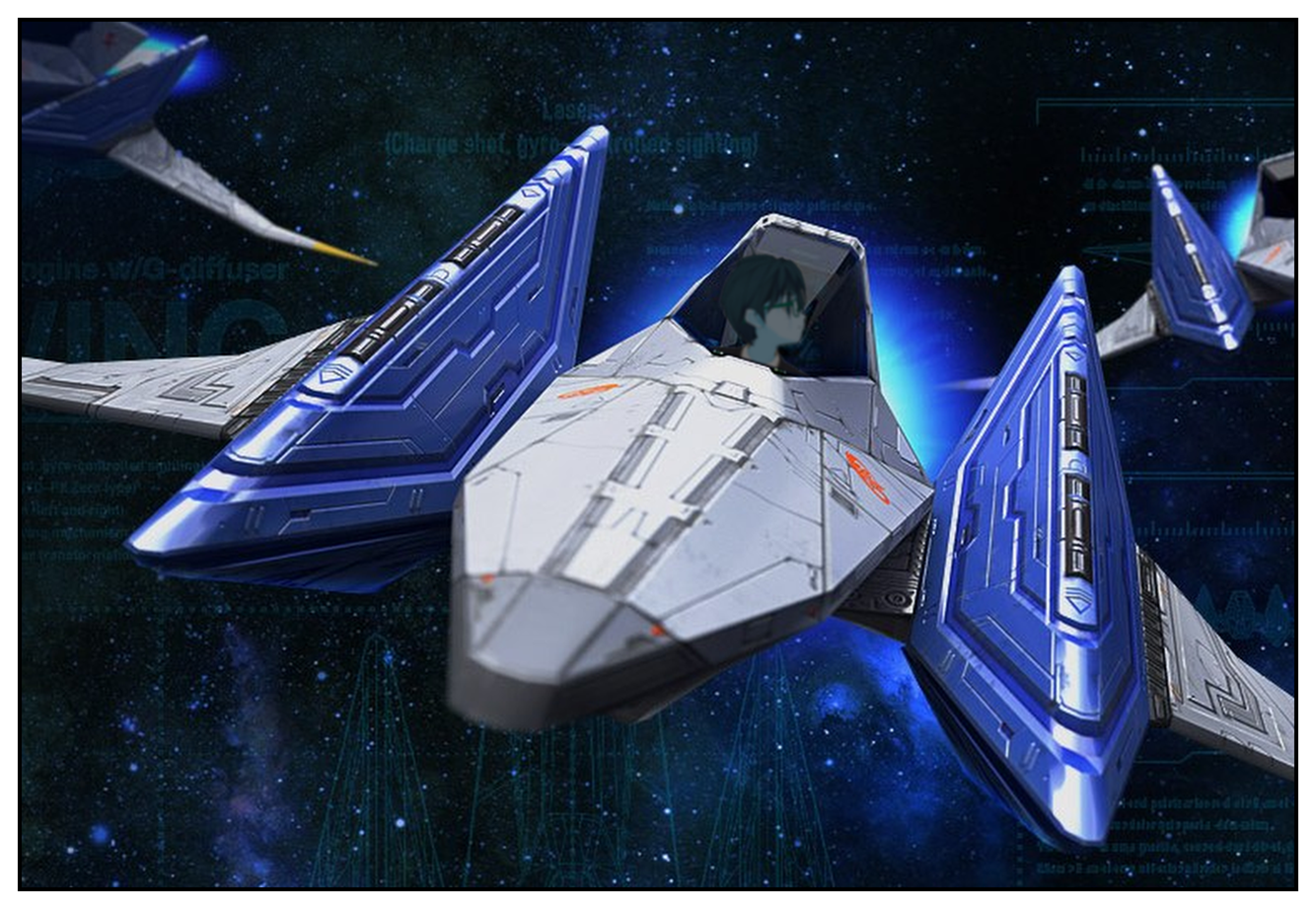
A much-mocked Polygon non-review of Nintendo's new Wii U title Star Fox Zero criticised the game for being a "miserable experience" on the grounds that it was too difficult. The article's author Arthur Gies cited the game's controls as a sticking point for him, and indeed the most vocal critics of the new game — most of whom, it has to be said, haven't actually played it — constantly point to the control scheme as the reason the game is somehow "bad".
Well, having cleared the main game three times now (with my last run unlocking a bunch of hidden levels) I can confirm my initial impressions of the game: the controls are really not a big deal, and in fact, for my money, are better than the inherent limitations of the fixed aiming reticle from the previous installments, allowing you to shoot in one direction while flying in another.
I don't want to get hung up on the controls, though. I do, however, want to address the question of it being "too hard" because, having hurled a number of choice swear words both at Andross the first time I reached the final boss and at the optional hidden boss on Corneria when I first came across it, I realised I was encountering something that has become quite unfamiliar in a lot of modern games: the game putting up a bit of resistance to the player and challenging them to get better at it, rather than just brute-forcing their way through.
(That said, Star Fox Zero does have Nintendo's "pity powerup" system that they introduced in the Mario games a while back, in that if you fail a mission repeatedly, you have the option to collect a powerup at the start of the mission that makes you completely indestructible in exchange for your score not being recorded. Gies did not mention this in his not-review, but it's surely pretty plain to see that this option would allow even the most incompetent moron to clear the game without too much difficulty.)
So no. Star Fox Zero isn't too hard; we've just become accustomed to console games — particularly high-profile, big budget and/or first party productions — holding the player by the hand and going out of their way to make sure the player gets to see everything without giving up in frustration. The difference between a Dungeons and Dragons Dungeon Master (who wants the players to see their adventure through, albeit with a few obstacles in their way) and an actual adversarial player in a role-playing or board game situation (who wants to defeat their opponent and claim victory), if you will. Star Fox Zero takes the latter approach; most other games of today take the former. (Which is fair enough, when you think about it — given the astronomical budgets of modern triple-A games, it's not at all surprising that developers want to make sure that players get to see all the stuff they've spent time, effort and money creating.)
There are exceptions to this rule, of course, the most well-known being From Software's Souls series, which is legendarily unforgiving and demands that players practice each and every encounter until they can complete it perfectly. Many independently developed games, too, err on the side of punishing difficulty, particularly if they're going for an old-school feel to their gameplay as well as old-school visuals, as is (still) currently fashionable in that particular part of the games biz. But for the most part, a game on the scale of Star Fox Zero — that is to say, a high-profile, potential system-seller from a first-party publisher — is more likely to err on the side of giving the player a theme park ride: it seems dangerous and challenging at first, but in actual fact, the player is a lot more safe (and constrained) than it might initially seem. Star Fox Zero, meanwhile, gleefully allows the player to fail, and continues to hide things from the player even once you've beaten the final boss.
Take the hidden levels, for example — a wonderfully old-school nod to the previous games in the series. You are never given an explicit warning that a trigger point for one of these is coming up — you're expected to notice the cues for yourself and act accordingly, and if you miss them, well, you miss them; no awesome secret level where you get to play as Peppy taking down a this-totally-isn't-a-Super Star Destroyer-honest for you. (Delightfully, Peppy joyfully shouts "Barrel roll!" every time you do a roll while you're playing as him.)
On top of that, clearing the game for the first time unlocks Arcade Mode, which challenges you to play from the start of the game to the end with no continues and the ability to only stock one spare life if you successfully manage to collect three gold rings. This mode isn't actually any harder than the main game (in which you can freely select any level you've previously cleared) but the added pressure of having to do it without fucking up (well, without fucking up too much) makes it feel like it's slapping you around a bit, though the satisfaction of seeing a mounting high score makes it eminently worthwhile. And, in a pleasant homage to classic arcade games such as Out Run, this mode records an independent high score for each and every possible route through the game you can take, and there are quite a few different alternative routes throughout.
So no; Star Fox Zero isn't too hard. But it is a game that you can fail at, or be bad at. And it's kind of telling that we've reached a point where, outside of the Souls series and a few other exceptions here and there, this has become unusual to some people.
Discover more from I'm Not Doctor Who
Subscribe to get the latest posts sent to your email.

Considering most of the games I review for Operation Rainfall are indie games or arcade re-releases and fighting games, I live in a totally different world. My world of games are still pretty difficult. Honestly when I go back to play the various Souls games or Bloodborne, they do not feel difficult at all for me, just meticulous and wonderfully crafted. If anything those games and dungeon crawlers are a calming down period before my next indie arcade roguelike dungeon of death.
The way I approach games these days makes them challenging, too; I tend to want to get the Platinum trophy on games I particularly enjoy, and that can often be a challenge (or at least a test of endurance!).
The challenge factor of Star Fox didn't bother me because so much of the rest of the game feels like the old installments that it kicking my ass every so often was entirely in keeping with what it was going for.
I'll consider it when I have some spare cash and time. The motion controls put me off, but touch controls put me off as well but I still enjoyed Severed (Drinkbox Sudio's new dungeon crawler, my review posts today). So maybe if a game can make me enjoy touch controls, another game can make me enjoy motion.
As I say, they're really minor. The basic gameplay is still the same as Star Fox has ever been. Motion is just for fine-tuning, and there are relatively few instances where it's outright necessary to pay attention to them.
As I find myself pulling back from games a bit, particularly longer games, it's titles like this that remain the one's that I'm most interested in. Brief, well-crafted games that emphasize skill, challenge and replay. Sounds like Starfox will scratch any number of itches for me if/when I finally get around to grabbing a copy. I'm currently infatuated with Enter the Gungeon for similar reasons.
I don't know man.
My main issue with Star Fox Zero is that I'm not sure the focus on motion controls and the GamePad screen actually makes the game better. I don't think the motion controls really accomplish anything that couldn't really have been done with standard dual analog shooter controls.
Nintendo is a company that always likes to feel innovative, sometimes for better and sometimes for worse. I feel like it's an extreme version of how so many Japanese games insist on having their own unique sets of rules. The reason that feels exacerbated with Star Fox is because it's at-heart a shooter — a genre with countless established examples of "good" control schemes. I'm just not in agreement that Star Fox Zero's version of "different" necessarily means "better" or even "as good."
Dark Souls has a learning curve, but the control scheme actually isn't part of that learning curve at all. It took me like a minute to get used to the control scheme the first time I played Demon's Souls. The learning curve has been pretty much everything else in the Souls games.
Aside from the motion controls Star Fox Zero feels like a very incremental iteration on Star Fox 64 (Lylat Wars), and I don't know if that's god enough for a lot of people nine years after that game came out. The seamless Arwing-walker transformation is a really good idea with some more potential, but that's about it. The motion controls soured me on doing any extra content or arcade mode after clearing the main game once. This is coming from someone who probably cleared Lylat Wars a hundred times back in the day.
Nintendo just hasn't figured out how to definitive evolve the Star Fox franchise.