2266: Nights of Azure: A Peculiar Game Destined for Cult Status?

0266_001

Two of my favourite games of all time are Cavia's Nier and Ganbarion's Pandora's Tower. They're both gloriously unconventional takes on the role-playing game genre, mechanically and narratively, and they're both extremely rewarding to engage with. They were also both the recipient of mediocre to middling reviews when they were first released, and have since — at least, in Nier's case — broken free of that critical mire and attained cult status.

I've only played a couple of hours of it so far, but Gust's Nights of Azure looks like joining these two overlooked classics in "flawed masterpiece" territory, as it has a lot in common with these two ambitious titles.

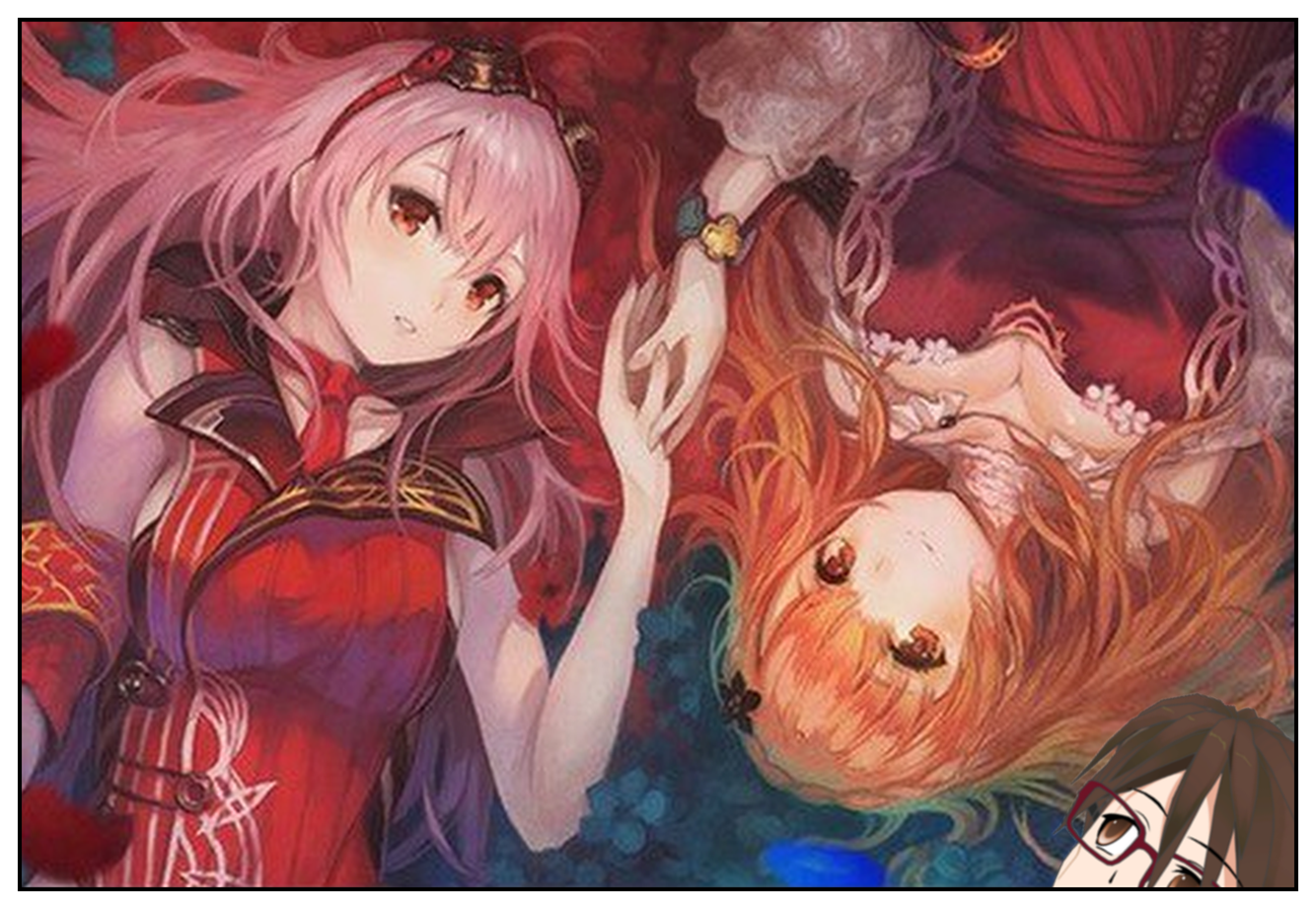
Nights of Azure casts you in the role of Arnice, a half-demon woman tasked with slaying Fiends and keeping a young woman called the Saint safe so that she can perform a ritual that will seal away the evil Nightlord and prevent the world from falling into perpetual darkness. There have been numerous Saints throughout the generations, but this time around the young maiden who has been chosen happens to be one Lilysse, a woman with whom it quickly becomes very apparent that Arnice has previously had an extremely close relationship with. Like, lovers close.

The two women are polar opposites in many ways. Lilysse is carefree and demure, while Arnice is confident and serious, though she has an easily rattled side to her. Their reunion after what has seemingly been quite some time apart begins with the two displaying that characteristic awkwardness around one another that two former lovers often show, but it's obvious that there are still feelings there — particularly once Arnice starts finding crystallised memories around the city that forms the backdrop to the story, and when she starts exploring dream sequences that give you the option of either exploring the overall lore of the setting or the relationship between Arnice and Lilysse.

The gameplay of Nights of Azure isn't your standard action RPG. There's a bit of Castlevania in regard to the gothic opera aesthetic; there's a bit of Shin Megami Tensei in the demon-summoning mechanics — the majority of your damage output in combat will come from your summoned demons; Arnice is mostly there to give orders and support; there's a bit of 3D brawler action in terms of the basic controls; and there's even a touch of the Souls series in there with regard to one of the game's two main currencies being "blood" which can be used either to power up Arnice or purchase things.

Combat is fairly straightforward but satisfying. Arnice has a weak and a strong attack — initially with just a sword, but later with three other weapons — and a special attack that consumes her SP bar. She also has four decks of up to four Servans each to summon, and these also cost SP to summon. When a Servan is summoned, it performs a special ability, so it's tactically advantageous to wait for a good moment to summon them rather than getting them out right away; once they're out, they also have access to a Burst ability as well as their skills that they use automatically. This Burst ability is strong and tied to the Servan's role in the party, be it tank, damage dealer or healer, and is limited by the Servan's own SP bar.

The Servan stuff is interesting because it reminds me of the good bits of Japanese collectible card games on mobile: you collect units, you level them up and upgrade them, you customise them with attachments, and you take a suitable deck into battle with you to deal with any encounters you might face. Unlike Arnice, Servans level up just by engaging in combat — no Blood required — and gain access to more abilities as they reach higher levels. Arnice can find or purchase Fetishes throughout the game, too, and these can either be "actualised" into a new Servan, or given to an existing Servan to buff them up. Servans' skills can also be customised by giving them various items.

The structure of Nights of Azure is pretty intriguing, too. All the main action goes on at night-time, and you're limited to bursts of 15 minutes in the action stages before you have to go back to Arnice's home base. In practice, this never really becomes an issue because you'll reach a checkpoint or finish an area long before the timer expires in most cases. After coming back from the evening's adventures, Arnice does some "daytime activities" that can result in the acquisition of skill points in four different fields, which can then be spent to acquire different abilities. She's also able to take on quests aside from the main story, which are generally either "kill [x] of [y]" or "find [z]", but reward her with useful items and currency. There's also a battle arena where she can take on combat challenges with specific conditions to clear, with varying rewards on offer according to what her score is when she's completed the challenge in question.

All in all, it feels like a very, very odd game so far — though this isn't a bad thing at all. It feels inventive and interesting rather than being same old, same old, and I'm interested to see how it develops further. The core narrative of the relationship between the two leading ladies is intriguing and compelling, and the whole narrative is dripping with initially unexplained mysteries, supported by the overall aesthetic having a wonderful otherworldly feel to it — drenched in blue mist with character models that look like flowing pencil sketches, somewhat similar to the Atelier series.

And the music. Oh gosh. How wonderful is the music? Combining Michiru Yamane-style gothic rock tracks in the action stages with some distinctly Shoji Meguro-style jazz and funk back at the hotel and some beautiful solo piano pieces during the more heartfelt moments, the soundtrack is absolutely lovely.

It's a pity the translation is so atrocious, riddled with typos and grammatical errors — and one of the PSN trophies even refers to the protagonist by the wrong name, presumably an erroneous transliteration from the original Japanese — but ultimately even these flaws don't detract from an immediately intriguing, compelling and downright bizarre action RPG that deserves a great deal more love and attention than I can guarantee it's (not) going to get from the gaming community at large.

2265: Final Fantasy XV's Going to Be Something Special

0265_001

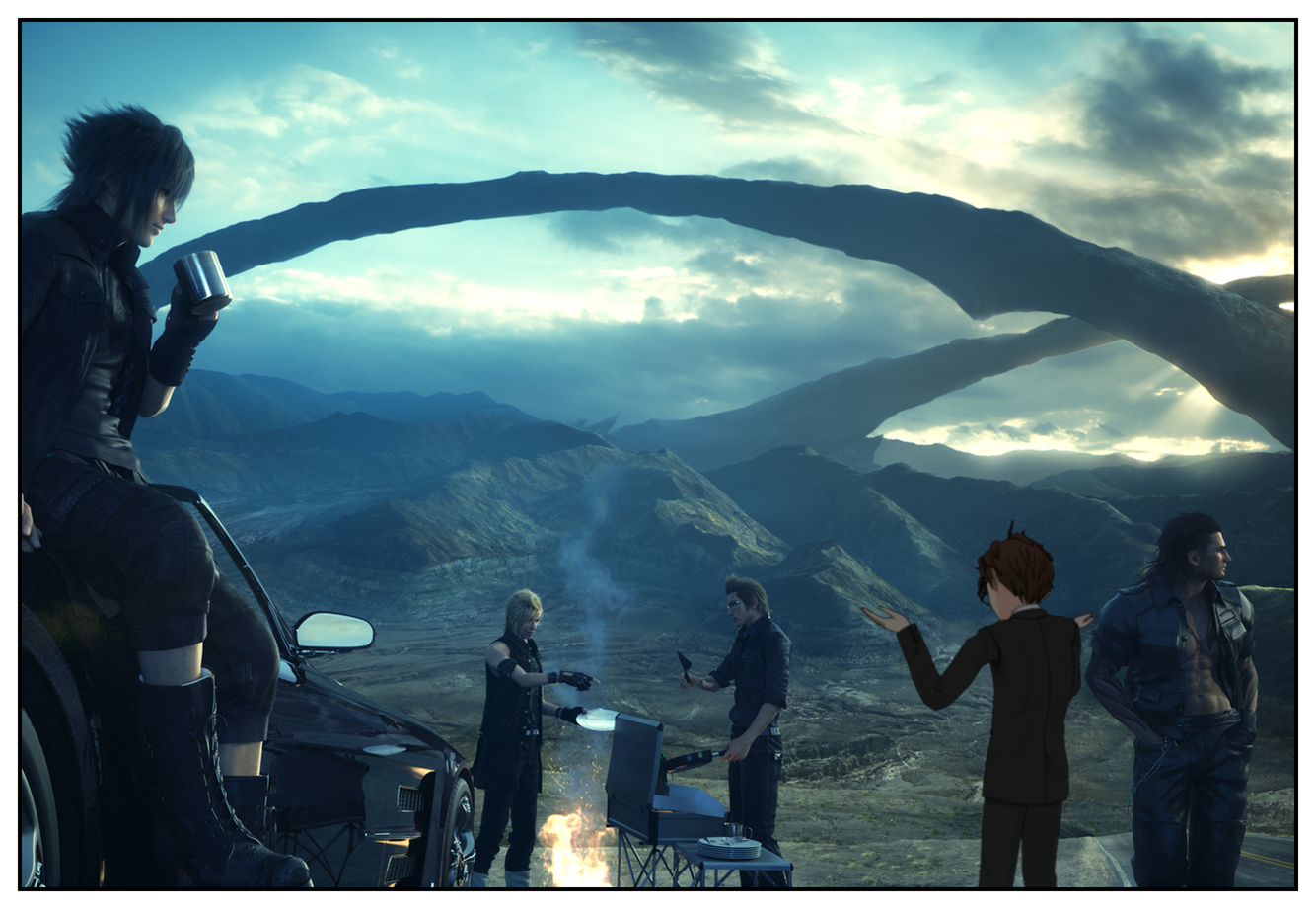
The other night, Square Enix held a livestreamed event showing off some information about their upcoming RPG Final Fantasy XV. It was, I think, the biggest deal I've ever seen any company make about one single game, and as a marketing exercise, it was enormously successful — despite the rather irritating hosts (I now have even less desire to check out Kinda Funny Games than I did before, which wasn't much) the event did a good job of teasing the game as well as uncovering some genuine surprises.

This latter aspect is no mean feat in this day and age of leaks and rumours, and it was almost ruined earlier in the day when Gamespot "accidentally" (yeah, I'm sure you hated all the traffic you got) leaked the game's September 30th release date. Fortunately, the other surprises — and there were several — were successfully kept under wraps, and Square Enix were even able to have a bit of fun with the knowledge that the release date was already out in the wild rather than doing the usual po-faced corporate thing.

So what's so exciting about Final Fantasy XV then? Well, for me, the most interesting and exciting thing about it is the fact that Square Enix is clearly going all-out on this one. They are taking it very seriously and obviously throwing an enormous budget at both the game and its extended universe.

Yes, I said extended universe: that was one of the biggest surprises of the presentation for me. Because Final Fantasy XV won't just be telling its story through the game, though this will naturally be the main focus. Alongside the game we're also getting a prequel anime series, depicting how the main character Noctis and his friends became so close, and a feature-length CG movie called Kingsglaive, which shows a parallel story to the game focusing on Noctis' father King Regis. Not only that, but we're also getting a mobile game that actually looks like it might be quite fun, and is actually part of the main game's world.

Final Fantasy XV does have a bit of an uphill struggle ahead of it, however, for numerous reasons. Although Final Fantasy XIV built a considerable amount of goodwill for the series — particularly among lifelong Final Fantasy fans — its audience was relatively limited compared to the rest of the series thanks to its status as a massively multiplayer online game, and a subscription-based one at that. Its single-player predecessors, the three games in the Final Fantasy XIII series, however, had a somewhat peculiar reception — Final Fantasy XIII was roundly praised on its original release, but since then it has seemingly become fashionable to bash it, with complaints ranging from the protagonist Lightning being boring (she isn't), the game systems being too simple (they aren't) and the tutorial being 20 hours long (kind of true, but it actually keeps the early hours of the game moving along at a good pace).

Not only that, but Final Fantasy XV is a radical reinvention of how we play Final Fantasy. Or, at least, that's what people think. In truth, Final Fantasy hasn't been what the people complaining about XV's systems think it is for quite some time now, and XV is simply following a pattern of the game gradually experimenting, changing and innovating with each new iteration.

The reason why people feel that XV is such a sudden shift in direction — even though it really isn't — is because their frame of reference is still, for whatever reason, limited to Final Fantasy games up to maybe at the latest, and is the point where the series started getting a lot more experimental than it had been.

That's not to say, however, that the series had rested on its laurels; on the contrary, despite the early installments in particular seeming quite similar in terms of mechanics, each did something very different. Don't believe me? Well, all right. I'll prove it.

  • Final Fantasy: First in the series. Eschewed static character classes in favour of the ability to "promote" each of the classes to a more powerful, effective version partway through the game. Established the "Jobs" that have been used in many other Final Fantasy installments since.
  • Final Fantasy II: Eschewed a traditional progression system in favour of an Elder Scrolls-style "level it up by doing it" system. Get more HP by getting hit. Get more MP by casting magic. Get more strength by hitting things. Took some getting used to, but was an interesting twist on the standard RPG formula, and is all the more remarkable considering it came out in 1988.
  • Final Fantasy III: Returned to a traditional levelling system but combined this with the ability to switch character Jobs without having to completely respec or reset levels. You could change your party makeup on the fly without having to change characters, in other words.
  • Final Fantasy IV: First 16-bit installment in the series. First use of the Active Time Battle system, which combined the strategy of turn-based combat with a real-time element. Stronger emphasis on story and characterisation through static, non-customisable characters.
  • Final Fantasy V: Revamped Final Fantasy III's Job system and made it even more flexible with the ability to equip abilities you had learned from other Jobs, allowing you to effectively create hybrid characters. Used Active Time Battle.
  • Final Fantasy VI: One of the most impressive games on the Super NES, both technically and in terms of storytelling. First use of the "learning abilities from equipping things" system used in several other installments — here, abilities were learned by equipping Espers, the summonable creatures. Used Active Time Battle.
  • Final Fantasy VII: First 32-bit installment in the series, first CD-based installment in the series and first 3D polygonal installment in the series. A spectacular achievement of the time, both technically and in terms of storytelling. Introduced Materia, which have made an appearance in a couple of other Final Fantasy games. Used Active Time Battle, brought to life in animated 3D rather than relatively static 2D for the first time.
  • Final Fantasy VIII: First installment to have realistically proportioned characters. Outlandish character development system in which character level was less important than the Guardian Force (summon) you had equipped on the character, and what magic spells you had Junctioned to stats. An unpopular installment due to its initially baffling and easily gamed mechanics, but a solid story and visually very impressive for the time. Used Active Time Battle.
  • Final Fantasy IX: A supposed "return to the roots" of the series, featuring less realistically proportioned characters but maintaining the polygonal characters on pre-rendered backdrops aesthetic of VII and VIII. Brought back the "learn things by equipping stuff" system, this time with abilities attached to equipment. Used Active Time Battle.
  • Final Fantasy X: First entry on the PlayStation 2, and first entry to have full 3D polygonal environments both on the field and in battle. Also first entry to have voice-overs, which also meant the end of being able to rename your characters — except for the protagonist, whom no-one ever said the name of throughout. Did not use Active Time Battle, instead using a turn-based system with a manipulable turn order called Conditional Turn-Based Battle. Also eschewed traditional levelling in favour of the "Sphere Grid" system, which allowed either a little or a lot of control over character development depending on if you chose the original or "advanced" version at the outset of the game.
  • Final Fantasy X-2: First direct sequel in the series. Returned to Active Time Battle, but revamped it with variable length turn bars. Also brought back the Job system, but revamped it with the ability to change Job in mid-battle. First non-linear entry in the series, with the whole world map open from the outset and the freedom to tackle challenges in whatever order you want, level and gear permitting. Also featured multiple endings according to how much optional content you saw.
  • Final Fantasy XI: First massively multiplayer installment in the series. First entry since the original Final Fantasy to feature a player-created character. First entry to use a freely rotatable over-the-shoulder camera rather than fixed camera angles. First entry to feature pretty-much-kinda-sort-of-real-time combat.
  • Final Fantasy XII: First single-player installment to feature MMO-style pretty-much-kinda-sort-of-real-time combat. First truly open-world single-player Final Fantasy in which it was possible to run from one end of the world to the other without having to go to a separate "World Map" screen. First (and only) use of the License and Gambit systems, allowing for a considerable amount of character customisation and tweaking of party members' AI respectively.
  • Final Fantasy XIII: First PlayStation 3 entry in the series. First use of Paradigm system, allowing for switching of roles in mid-battle — though these weren't the old Jobs from past installments. Changed focus in battle from micromanaging turn-based combat to switching your party lineup (and, consequently, abilities) to respond to situations. Had a lot more tactical depth than people in the last few years gave it credit for.
  • Final Fantasy XIII-2: Built on XIII's base systems and mixed things up a bit with two fixed party members and a third slot taken by recruitable, trainable, nameable monsters. Featured an absolutely baffling non-linear time-travelling storyline, showing everyone that XIII's linearity perhaps wasn't such a bad thing after all. First Final Fantasy to have DLC. (Oh, yay.)
  • Lightning Returns: Final Fantasy XIII: First second sequel in the series. First game to focus exclusively on one character (with the arguable exception of Final Fantasy XI, though you try doing anything solo in that game). Featured a Job-like system where you could change outfit in mid-combat for access to different abilities, and each outfit had its own independent Active Time Battle-esque bar. Allowed free movement and dodging in combat. Featured a non-linear, time-limited structure designed to be replayed.
  • Final Fantasy XIV: Second attempt at a massively multiplayer installment in the series. Massively ambitious — too much so. Gave players a great deal of freedom but not enough direction. Had a seamless open world. Technically impressive — if you could run it — but a disastrous failure.
  • Final Fantasy XIV: A Realm Reborn: The most impressive "phoenix from the ashes" I've ever seen. A Realm Reborn ditched its predecessor's more unconventional aspects and adopted a more traditional MMO structure with a heavy focus on matchmaking cooperative content and a Job system in which you could individually level Jobs as if they were completely different characters. The most story-heavy MMO I've played for some time, and a true love letter to fans of the series, with guest appearances from characters including Gilgamesh, Ultros, Shantotto, Lightning and numerous others. Expanded by Heavensward.

So as you can hopefully see from that breakdown, Final Fantasy has consistently reinvented and updated itself with each installment. While the entries between IV and IX all used the Active Time Battle system for their battles, their core progression mechanics were very different to one another. And from onwards, the series became considerably more experimental with both battle and progression mechanics; its only look back to the "line up in a row and take it in turns to hit things" approach was X-2, and even that did plenty of interesting things with the basic format.

Now we've established that Final Fantasy has been pretty consistently inventive throughout its considerable lifespan, XV's approach doesn't seem quite so scary a change. And it seems even less scary when you actually play either the Episode Duscae demo that came out around the time of Final Fantasy Type-0 HD — we didn't even get into spinoffs in the list above, otherwise we'd be here all night — or the recently released Platinum Demo, which primarily acts as a showcase for the game's engine and basic mechanics.

My friend Chris described Final Fantasy XV's approach to combat as taking the philosophy behind turn-based combat and applying it to a real-time depiction. This is why you don't button-mash — you hold a button down to attack. You have time to consider what you're doing rather than hack-and-slash. You have limited resources to use for casting spells or defending. The strategy is there, it's just in a slightly different form to what we might be used to.

And, having spent some time with both Episode Duscae and Platinum Demo, I'm convinced. The fluidity of the combat animations and how seamlessly you can switch from one weapon to another mid-combo is sure to make for some interesting battles, and once party members and more spectacular abilities start coming into play I don't doubt we'll be seeing some truly exciting setpieces, of which the battle with Behemoth in Episode Duscae is just a tame example.

Final Fantasy may not be what it used to be, then, but it's never really been "what it used to be", because it's reinvented itself with each and every installment. Embrace and enjoy the change — XV genuinely does look like it's going to be a real work of art when it's finally with us at the end of September, and I for one can't wait to get my hands on it.

Or, if you really can't deal with Final Fantasy doing new things… well, there's always Bravely Default, which absolutely is doing what Final Fantasy used to do, and I say that with great fondness.

2233: MegaNep's True Ending: A Love Letter to the Dreamcast, and to the Player

0233_001

I cleared Megadimension Neptunia VII's True Ending path this evening, after a horrible moment where I thought I hadn't triggered it and would have to do the whole thing through again (which is actually not quite as monumental an undertaking as you might think) — and I was very impressed with one of the most satisfying finales I've seen in a story-based game for quite some time.

Mild spoilers ahead.

At the core of MegaNep's overarching narrative is the story of Uzume Tennouboshi, a new character to the series who, like the series regulars, embodies a games console — in this case, Sega's ahead-of-its-time Dreamcast. For those unfamiliar with their gaming hardware history, the Dreamcast was a 128-bit console that came out towards the tail end of the console generation that was primarily 32- and 64-bit: that of the original PlayStation and the Nintendo 64. It was astronomically powerful in comparison to its contemporaries and was home to some wonderful games, many of which are still fondly remembered today. But for one reason or another, it was regarded as a commercial failure, and both it and its games dropped out of mainstream distribution after just a couple of years, with the 128-bit era only starting in earnest once the PlayStation 2 shattered all expectations of what console gaming was all about following its launch in 2000.

Uzume's identity and background is initially a mystery to Neptune and company, but over the source of MegaNep's complete story, her past comes to light. Having once been a goddess to what is now Neptune's domain of Planeptune, she was voluntarily sealed away due to the fact that she was unable to control her "illusion" power and largely forgotten about; an allegory for the Dreamcast being released onto the market too early and developers and publishers alike arguably not being sure how to make best use of this new power on offer.

The main villain of the piece is revealed very late in the story to be the darker side of Uzume, representing her irrational hatred and bitterness at feeling abandoned by her people. Through a complicated series of happenings too twisty-turny to describe in detail here, Neptune and her friends eventually manage to help Uzume come to terms with her past and realise that her memories have become tainted by hatred and regret; her people, in fact, loved her and cherished her, and it was with a heavy heart that they saw her sealed away for the protection of everyone.

There are two endings to MegaNep: one in which Uzume sacrifices herself to ensure her dark counterpart is not able to send a horde of monsters from her delusional "Heart Dimension" into Neptune's Hyper Dimension, and another in which Neptune and her friends refuse to leave her to die, and ultimately help her to overcome her darkness. This latter one is the True ending, and it demonstrates beyond a shadow of a doubt that the team at Idea Factory and Compile Heart hold the Dreamcast in considerable esteem; the truth about Uzume's past is described with such a wonderfully warm feeling of fondness that it's hard not to feel extremely nostalgic if you happened to be there when it all happened in our world, and the Neptunia series' biggest strength — characterisation and the feeling of bonds between these characters — really shines through as everyone expresses their love for Uzume and she, likewise, expresses her love for them.

What also made the ending satisfying, aside from this wonderfully genuine-feeling appreciation for the Dreamcast and its games, was the Neptunia series trademark "Thank You Corner", where the cast completely break the fourth wall and address the player directly, thanking them for playing and showering them with praise for beating the game. This is always a lovely moment in every Neptunia game, but in the case of MegaNep it feels particularly heartfelt; it's obvious that the words coming out of the mouths of the characters are actually those of the series' creators, expressing their gratitude for the series having gone from strength to strength over the years, overcoming the adversity of its early installments' poor reviews, widespread ignorance from the press and self-professed RPG "experts" that persists to this day, and ultimately becoming a genuinely rather wonderful franchise that I really don't want to see the back of any time soon.

In many ways, it was like a "curtain call" for the game, and while previous Neptunia games have handled this in much the same way, there was something about this moment in MegaNep that made it more satisfying and touching than it's ever been before. It's a rare and wonderful feeling for a creative work to seem like it's talking directly to you, but the Neptunia series has always felt that way, and never more so than with Megadimension Neptunia VII.

Onwards to the post-game, then; I have trophies to clean up and Colosseum battles to fight! (And in the meantime, I promise I'll find something new to write about soon.)

2231: Initial Impressions on Alexander: Midas

0231_001

Tonight, we cleared the last area of the new raid dungeon in Final Fantasy XIV… in its "normal" incarnation, anyway. Savage is likely to prove a somewhat stiffer challenge, but regular ol' vanilla had plenty of hurdles to overcome, too.

Now that we've been through all four of the new raids, I thought I'd ponder how I felt about them, and about Alexander as a whole compared to The Binding Coil of Bahamut.

The first thing to note about Alexander is that the overall tone of the whole thing is very different to Coil. Coil represented one of the most serious, dramatic parts of Final Fantasy XIV's story, and over its entirety revealed some very significant background lore about the Allagans and the Meracydians, both of whom we'd seen mentioned (and occasionally explored the relics of) but never encountered, mostly due to them both being long dead.

Alexander, meanwhile, largely concerns the goblins, and much like their Final Fantasy XI counterparts, goblins in Final Fantasy XIV are rather silly, afflicted with distinctive speech patterns and, for the most part, there for comic relief. They're not very threatening, in other words, so for them to be introduced as the main villains of the new raid cycle was… interesting, to say the least.

The overall aesthetic of Alexander is very different to Coil, too. Coil began as an expedition into the bowels of the earth and gradually gave way into a combination of fantastic, otherworldly scenery and pure sci-fi, futuristic environments, many of which were absolutely breathtaking in their scale. Alexander, conversely, has a pretty consistent "steampunk" look throughout its entirety, though Midas does a somewhat better job than Gordias in terms of presenting a bit of variety in the way things look.

This difference in aesthetic extends to the main attraction of the raids, too: the bosses. In Coil, you fought a wide variety of foes, ranging from a giant genetically modified snake to a fearsome dragon god via technologically advanced defence systems, a bioengineered lamia, a robot treant and, of course, the reincarnation of Final Fantasy XIV 1.0's main villain, Nael van Darnus, now going by Nael deus Darnus having apparently changed gender and gone a bit, well, dragonish.

Alexander, conversely, sees you fighting a lot of things in a similar mould: in Gordias, you fight a large steampunk robot thing, followed by a swarm of goblins and large steampunk robot things, followed by a squishy Pepsiman wannabe in what appears to be a sewage outlet, concluding with a battle against The Manipulator, which is a large steampunk robot thing. Midas is a bit better: first you fight a mad scientist goblin who keeps drinking his own concoctions and growing to Hulk-like proportions, then you fight a series of four large steampunk robot things, then you fight the main villain of the plot arc (and his cat), then finally you fight five large steampunk robot things — four of which you fought earlier in the raid — that then combine to make one enormous steampunk robot thing.

While I still like Alexander less than Coil in terms of its aesthetic and enemy designs, Midas is a big step in a better direction. Everything about it is better, from the variety between the four areas to the background plot that is revealed as you progress, which was rather lacking and forgettable in Gordias. It still lacks some of the outright drama that Coil had — the final boss of this particular cycle is an intense fight, but it's more chaotically humorous than terrifying like Twintania, Nael and Bahamut were — but things are improving a lot.

Of particular note is the boss music for the final boss, which I present with some pleasure for you below, in all its '70s anime glory:

Happy with how things have turned out with 3.2. I was getting concerned the game was losing its magic, but it's well and truly back on target.

2230: A Reminder that Dungeon Travelers 2 is Excellent

0230_001

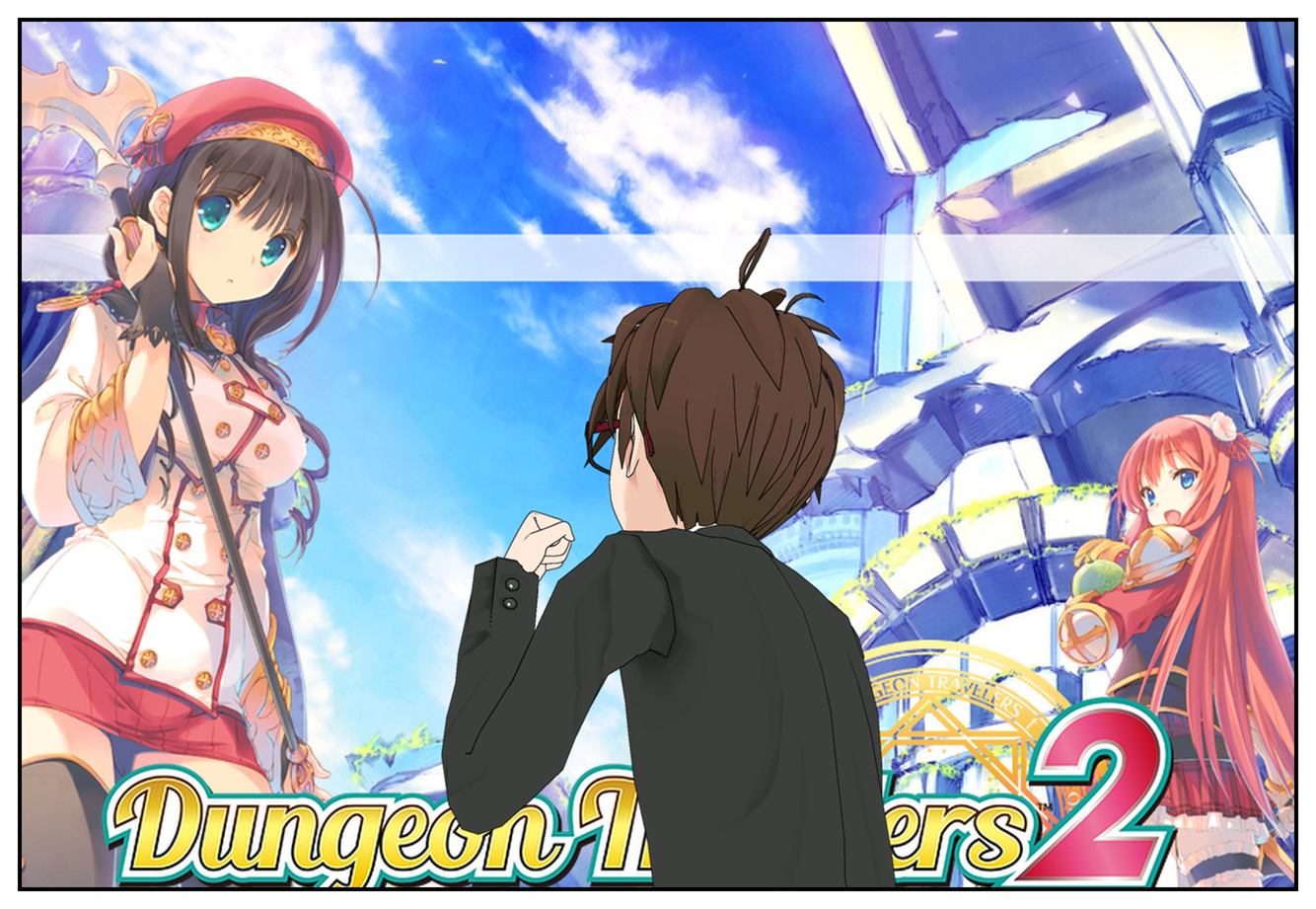
I forget why I paused my playthrough of Dungeon Travelers 2 a while back, but it certainly wasn't because I didn't like it. On the contrary, I absolutely love it, and have been really enjoying getting back into it sporadically in the evenings over the last week or so.

For those who missed my previous enthusings on the subject of this game, allow me to explain.

Dungeon Travelers 2 is an old-school "gridder" dungeon crawler for PlayStation Vita, developed by Sting and published by Atlus. Absolutely no-one would have heard of it were it not for Polygon's Phil Kollar writing an indignant article called "Atlus can do better than this creepy, porn-lite dungeon crawler" a while back, after which everyone who thought Kollar was being a shallow, judgemental douchebag promptly preordered the game and eagerly awaited its arrival. While a lot of this immediate backlash was simply to spite Kollar's terrible article — which didn't even make an effort to understand anything about the game beyond "it has somewhat suggestive images in it" — those in the know were quick to point out that developer Sting has an impeccable pedigree when it comes to mechanically solid and interesting role-playing games that are often just a little bit unusual, making them very memorable.

Structurally, Dungeon Travelers 2 is fairly business as usual for the gridder genre; it's the moment to moment gameplay where it shines, and particularly the variety of ways in which it's possible to play. Heavily based on party composition and character classes, the frequent combat in the game is not the sort of thing you can get through by mashing the "Attack" button — indeed, this is a game that will happily obliterate your entire party in the very first dungeon if you don't take appropriate precautions and play cautiously, remembering that in dungeon crawlers, it is usually inadvisable to attempt to clear out an entire dungeon in one single expedition.

No, rather Dungeon Travelers 2's combat is based very much on making appropriate use of your party's abilities, both active and passive. There's a certain amount of MMO-style conceit in there, too; unlike many turn-based RPGs, it is absolutely possible to have a tank up front maintaining the attention of the enemies as much as possible, while the back row rains down death from a distance.

Timing is absolutely key, too, even though the game is strictly turn-based. Spells and certain abilities don't cast immediately; they have a period of time during which the caster has to chant the spell or song, and it's only after this that it activates. Spells can be interrupted by a significant amount of damage or being afflicted with a status effect such as Stun or Silence — see, told you it was MMO-ish.

A lot of the passive abilities are really interesting, too. There's one of the Berserker tank abilities that afflicts enemies with some significant stat debuffs when they hit you, and others that counterattack with nasty status effects or even outright damage in return. Certain buffs and debuffs can make these procs (there I go with the MMO lingo again) more or less likely to trigger, so effective combat is a case of judging the situation and making your party handle it in the most efficient manner.

A good example comes from the Girimekhala boss I fought in my last play session. She had a bunch of really unpleasant abilities, including a heavy physical attack on a whole row of party members, another heavy physical attack on characters adjacent in the turn order, a dance that lowered party stats and inflicted damage every round, and an ability similar to the Berserker's counter-debuff mentioned above.

The first couple of times I fought Girimekhala, I went all-out attack and was quickly obliterated; tanks can't tank very well if their stats are shot to shit, and once they went down, the back line quickly followed.

What I ended up doing was have Alisia the Valkyrie (defense tank) use her Cover ability for a one-off (until recast) chance to take damage in place of a party member, her Parry ability to completely nullify damage from one physical attack, and her Material Barrier ability to shield the entire party against physical damage. I then activated Grishna's Blood Rage ability to boost her maximum HP so she could soak up some damage, too; as a Berserker, her defence isn't anywhere near as good as a Valkyrie, but she makes up for this with her auto-debuff ability and strong offensive abilities which, while not very useful in this battle as they would always be countered, are often a big help.

Meanwhile, the back row got to work. Melvy the Witch (one of the strongest caster classes) repeatedly cast heavy damage single-target spells on Girimekhala, and acted as the main DPS (or DPT if we're being picky, I guess) of the group. Fiora the Priestess, meanwhile, simply acted as a healbot, throwing out Circle Heal every turn to cure any damage that had managed to get through Alisia's monstrous physical resistance. And Conette the Diva (support class) sang a song that helped Melvy and Fiora to chant their spells more quickly as well as using her Cook ability from her base Maid class to keep everyone's TP (needed to use abilities or cast spells) topped up.

Puzzling this out and putting the plan into action was extremely satisfying, and much more interesting than simply throwing attacks out and occasionally healing. This fight simply wasn't possible to win with an all-out attack strategy; as you'll see from my description above, only one out of my five party members was inflicting damage on the boss, with the others all simply supporting the group in various ways. Thankfully Melvy's magic damage as a Witch is absolutely astronomical, so her burst damage more than made up for the relative infrequency of hits on the boss.

To cut a long story short, Phil Kollar could not have been more wrong about Dungeon Travelers 2. While it is filled with suggestive artwork and distinctly ecchi scenes both involving the main characters and when you defeat the monstergirl bosses, that's certainly not a reason to write it off or wag your finger at publisher Atlus, telling them they "can do better". In fact, it's absolutely one of the best examples of the dungeon crawler genre I've had the pleasure of playing to date, although be ready for a seriously stiff challenge, particularly once you start getting into the optional dungeons and boss fights.

2228: MegaNep: Thoughts After a First Playthrough

0228_001

Well, I finally finished Megadimension Neptunia VII for the first time. Took about 62 hours or so in the end; that was taking it fairly leisurely through the game and taking the time to unlock stuff here and there that I perhaps didn't need to do on a first playthrough. Next up for me is a New Game Plus run in which I go for the "true" ending, which leads on to a post-game segment during which you can clean up any bits and pieces you didn't finish off first time around. Or trophy hunt.

For now, though, I want to talk about my experiences with the game after a complete playthrough.

The first thing to say about the game is that, as I've mentioned before, this is Compile Heart's finest work to date. There are no significant technical issues beyond a couple of very minor frame drops in a few places; the script and translation is excellent (although there are a few more typos than there should be); and the gameplay is satisfying, enjoyable and well-balanced.

The first and last points there address two of the biggest criticisms the Neptunia series has had since its inception. From the original PS3 game onwards, the series — and Compile Heart's work in general — had been plagued with technical issues, most notably atrocious framerates that weren't really justifiable given the relative simplicity of the graphics compared to bigger-budget titles that ran a whole lot better. And, again, from the original game onwards, game balance has been an off-and-on problem: the original game (and the total overhaul Re;Birth1) was inconsistent in its difficulty, erring on the side of "suddenly way too hard" without warning; sequel mk2 and its Re;Birth counterpart was much too easy (and rather short, although it does still have the widest variety of endings in the series); Victory and Re;Birth3, meanwhile, got the closest to nailing the formula, but still had a few elements that could be a bit of a pain, most notably the heavily RNG-based Scout system.

So how does MegaNep counter these original problems? Well, in the case of the technical issues, it seems that Compile Heart is significantly more comfortable developing for PS4 than PS3. MegaNep runs at a pretty consistent 60fps pretty much all of the time; the only time it drops is in particularly busy scenes such as the "sakura"-style dungeons with cherry blossoms everywhere. MegaNep is even an improvement over the company's last game Omega Quintet, which ran very nicely in battle scenes, but which juddered a little bit in the (admirably large and sprawling) field areas. It's not going to win any awards for looking amazing, of course, but the graphics are perfectly acceptable and, as is the norm for the series, the character models and animations are very nice indeed.

As for the gameplay balancing, Compile Heart really feel like they've nailed it this time around. At no point did I feel like the game was too easy or too difficult, and progression was paced well. It's not a game that you need to grind to level 99 to be able to beat the last boss, either; my clear party consisted of characters between levels 40-60 (Nepgear being the highest at 60, not that I show her any favouritism, nosirree) and they dispatched the last boss without any difficulty. In other words, it's a game that you can stumble your way through from start to finish without running into too much trouble, but if you go a little off the beaten track from the linear storyline, there are plenty of ways to challenge yourself — and plenty of things to do in New Game Plus, too.

The game systems, having been significantly revamped from the Victory/Re;Birth formula, work extremely well. Skills don't feel over- or under-powered, and the basic combo attacks each character can perform are actually useful for things other than building up the EXE Drive meter now, too. Each character feels unique, too, with a variety of different skills, weapon types, combo arrangements and multi-person formation attacks to play with; there are a clearly number of "optimal" party setups that provide you with the most flexibility in terms of formation and partner moves in particular, but the systems are balanced well enough that you can take pretty much any combination you like into battle and have a good time. Oh, and while there are a few recycled dungeons from past games — it's series tradition by this point — there's also a ton of brand new, original content, including the wonderfully inventive (and infuriating) Neplunker dungeons as well as the mapless Senmuu Labyrinth.

Now, narrative and characterisation has never really been an issue for the Neptunia series, though my one criticism has been that it tends to have slightly weedy finales, particularly the final boss fights, which have previously been quite underwhelming at times. Pleasingly, MegaNep's finale (at least in the ending I got) is spectacular, dramatic and even emotional; it really tugs on the heartstrings as you see what these characters — characters who many players have spent many hours with — are going through to resolve the latest crisis.

The story in general is very good; split into three distinct acts, each with their own focus and expanding scale, it's interesting, enjoyable, varied and clever. It's not a rehash of the previous games' stories at all and it has worthwhile things to say, but it's never forgotten the series' roots in satire and parody. It's laugh-out-loud funny in places, tearjerkingly emotional in others. It's the best script the Neptunia characters have ever had to work with, and, like so much else about this game, feels like such a magnificent step up from the previous games that it's a delight to see. I'll talk more about this after I've seen the "true" ending and how it resolves things in an alternative manner.

In other words, it's not just a great Neptunia game, it's a great RPG, period. The only thing that saddens me is the fact that so many people will write it off without even giving it a shot for themselves; still, I guess that makes it all the more special for those of us in the know who can enjoy and appreciate it, both on its own merits and as, to date, the absolute pinnacle of the series.


Enjoy my games writing? You can now support me on Patreon. If I earn enough, I'll be committing to producing content on my specialist subject of Japanese games on a regular basis. See this page for further details. Thanks for your support!

2224: Megadimension Neptunia: 50 Hour Report

0224_001

50 hours deep in Megadimension Neptunia VII and I'm just starting the third and final "episode", Heart Dimension Neptunia H. So far I haven't set foot in the titular Heart Dimension, but the plot has been set up; in the meantime I've been doing a little bit of questing and grinding with the CPU Candidates, who are the focus of the initial part of the arc.

The game continues to be the most enjoyable Neptunia game yet. Everything about it is honed and refined to round off the scrappy edges of the previous installments; while the Re;Birth remakes provided small, incremental improvements on the format set in place by Hyperdimension Neptunia VictoryMegaNep is, as I've previously noted, a complete overhaul of pretty much every system in the game, from the battle mechanics to the way "shares" work.

Perhaps one of the best changes is how unique each character now feels to play in battle. Rather than all essentially working in the same way outside of the SP-powered special skills and super-powerful EXE Drive attacks, now each character very much has their own distinctive feel and circumstances in which they are useful. This is achieved in several ways, largely to do with the weapons and combo attacks they are able to use.

Each weapon in MegaNep not only has the usual stats, but it also has a specific arrangement of combo slots, split into three categories: Rush, Power and Standard. (Break attacks have gone the way of the Guard Points bar that they were used to damage; I can't say I miss the system, since it became largely irrelevant after a certain power level in the old games.) As in previous games, Rush attacks focus on a high hit count, with less power per individual hit, and also have a more significant impact on the EXE Drive meter, which now, incidentally, resets between every battle rather than carrying over as in the previous games. Power attacks, meanwhile, have fewer hits, hit harder and in many cases carry an elemental affinity, allowing you to exploit weaknesses. And Standard attacks are somewhere in between the two.

Where things get interesting is in trying to arrange these combos optimally. Characters learn new combo moves as they level up, but each can only be put in a single slot. Moreover, the first attack a weapon performs is fixed and not tied to the character's unlocked skills; this comes into play when considering the individual combo moves' Combo Traits, which, if fulfilled when you use them in battle, means that the combo move that triggered it will 1) be guaranteed to hit and 2) be guaranteed to crit with every hit, increasing overall damage considerably. Combo Traits vary from "All previous attacks did not use a Combo Trait" to "Haven't used Power attacks" and numerous others besides. The challenge when customising a character is to give them as many workable combos with Traits as possible, enabling them to respond to different situations in an optimal manner. It seems to be impossible to build the "perfect" combo — every move triggering a Combo Trait — at my current level, but I wonder if it will be an option with later weapons and/or combo moves.

Anyway. Given that each character has their own set of combo skills and their own set of weapons (each of which has its own arrangement of combo slots as well as its own area of effect) there's a considerable degree of flexibility in how you set up your party, particularly with the sheer number of playable characters on offer in the game. And you'll want to rotate them around, too; back-line characters no longer gain experience points (with a couple of exceptions) and there are certain circumstances where you're obliged to use one or more specific characters in a fight, so they better be suitably set up when that time comes! The series' Lily Rank system is back, too, only this time Lily Ranks are gained by characters fighting together in the front row, making them somewhat easier to gain — at least it feels that way so far — and in order to max these out you'll need to tweak your party arrangement every so often, particularly if you're Trophy hunting.

Elsewhere in the combat, while there are a lot of disposable popcorn enemies — particularly on the world map, where after a certain point random battles become more of an inconvenience than an actual hazard in getting to your destination — the highlights of the game are the boss fights. The game knows this, too, presenting you with unique interface elements, including one thing that I oddly like very much and can't quite explain why: the boss HP meter with multiple bars. Yes, rather than depleting one bar very slowly while battering down a boss-level enemy, MegaNep takes a Final Fantasy XII-esque approach of having a number of "lights" beneath the main HP bar for a boss, with a light dimming each time you empty the bar. Dim all the lights and you've won. It's essentially a variation on the system that was used in titles like Shining Force and Senran Kagura, where different coloured HP bars represented how many "extra" bars a character or enemy had over the maximum possible to display on screen proportionally.

Outside of my rather specific, peculiar tastes in HP meters, though, back to the boss fights themselves: a lot of them are pretty good, and this is largely thanks to a couple of new mechanics introduced in MegaNep. One is the "Parts Break" system, whereby certain enemies have breakable sections with their own durability counts. In order to damage the part, your character needs to be standing in an appropriate place when they either unleash their combo or a special move. Break the part and you get extra XP, credits and a chance at some extra drops. In many cases, breaking the part also has an effect on the boss, either reducing an aspect of its defences or removing the capability for a particular attack. In one particularly memorable confrontation, a boss is completely immune to all damage except Parts damage until you break the cape on his back — to make matters more challenging, the cape can only be damaged by attacks with an elemental affinity. The fight quickly turns into an entertaining dance as you decide whether to try and break his gauntlets and the horn on his head to cripple his special attacks, or whether to focus on trying to get behind him to destroy his cape and be able to deal some real damage.

The new EXE Drive system works well, too; rather than encouraging you to get into a bunch of random fights in a dungeon just to charge it up before a boss fight, the fact it 1) resets at the start of combat and 2) fills much more quickly than in past games means that you're much more likely to be using the spectacular, entertaining EXE Drive moves, which is good, because there are a lot more of them, including several multi-character ones that necessitate surrounding an enemy in appropriate formations. Transforming the CPUs and their sisters into their HDD (and, later, their Next Form) incarnations also costs a bar of EXE Drive rather than SP, meaning you can pretty much guarantee the ability to transform in every fight if you need it — to discourage spamming this, however, transforming now costs Shares, though getting KO'd costs significantly more Shares, so you'll want to weigh up the pros and cons before doing anything rash. Shares work like their original intention in the first Hyperdimension Neptunia game: the more shares one of the nations has, the stronger their CPU (and her sister) is. They're no longer a zero-sum game, however; increasing one nation's shares no longer means taking them from someone else; it's possible to have all four nations with maxed-out share bars, all enjoying the benefits of being Top Nep.

Anyway. I've waffled on for over 1,300 words on the systems in this game and not even mentioned the story and characters, which are still my favourite bit of the series. I'll save that for another day, though, perhaps when I've finished my first playthrough: there's a lot to talk about, with this being by far the most interesting Neptunia game story-wise as well as in terms of mechanics.

It's pretty good, in other words. Very good, in fact. Buy it. Support it. I want to see more Neps. (At this point, I don't think we have a lot to worry about there.)

2218: Megadimension Neptunia: Report from 21 Hours In

0218_001

Good Lord, this game is good.

As I mentioned the other day, Megadimension Neptunia V-II marks something of a watershed moment for the series in that it's no longer "good, but [insert caveat of your choice here]" and is just plain good. Great, even.

I'm about 21 hours in so far. I've finished the first of the three main stories that make up the complete experience — Zerodimension Neptunia Z — and am now in the second, Hyperdimension Neptunia G. This part — at least the first bit of it; I don't know how long it is in total — is split into four distinct scenarios, each of which focuses on one of the four main goddess characters (and one of the four new "Gold Third" characters, who personify various Japanese game companies from Capcom to Square Enix), and so far I've played through Blanc's route from start to finish.

Like Compile Heart's previous game Omega QuintetMegaNep spreads out its mechanics over the course of quite a few hours. 20 hours in, I'm still getting tutorial messages when I'm afflicted with a status effect I haven't suffered before, though I think that most of the main core mechanics of the game have now been introduced by this point. Unlike Final Fantasy XIII, which often draws the ire of commentators for taking a similar approach to spreading out its new mechanics, MegaNep never feels like it's artificially constraining you, though; the new systems I've seen so far were all introduced at the changeover between Zerodimension Neptunia Z and Hyperdimension Neptunia G, which was an eminently sensible way to do things, since it allows to stand by itself as a complete-feeling experience, then to move on and feel distinctive in its own right thanks to the additional things you have to juggle.

What of those additional things, though? Well, aside from the things that already shook up — the world map is now node-based a la Final Fantasy Tactics, and you can have random encounters while moving from place to place; the battle system has been completely revamped from previous installments — introduces (and, in some cases, reintroduces) a number of new systems.

First is the Scout system originally seen in Hyperdimension Neptunia Victory. Essentially, this is a small army of chibi characters (series veterans will recognise them as the "Chirper" characters who fulfil the role of incidental NPCs) that you can send out to dungeons, and they will then report back with what they find. Whereas Victory's Scout system simply required you to enter and leave locations a certain number of times before the Scouts would return, MegaNep's Scouts head out in real time and then report back with items, money, new dungeon features (boss monsters or clues to hidden treasure) or whole new dungeons. There's still a heavy degree of RNG involved, but it's a fairly painless process, and the real-time element means you can easily leave it running while you're doing other errands in-game. Scouts also provide passive bonuses to you if you're exploring the same dungeon they're deployed to, so they're helpful in ways other than just finding stuff, too.

Next is the Investment system, which allows you to develop towns by spending your hard-earned Credits in three areas: Commercial, Industrial and Public Relations. Upgrading Commercial increases the stock in the shops; upgrading Industrial gives you access to new crafting recipes; upgrading Public Relations triggers events that can reward you with items, new Scouts or simply an entertaining scene. That's pretty straightforward.

Then you have the Route Building system, which is also reasonably straightforward. Discover a new dungeon and you can't just click on it on the map like in the older games; you have to build a node-based pathway to it first, which costs money.

Then you have the Hidden Treasure system for each dungeon, which replaces the old games' spamming the "sonar"-type ability to find invisible items. Here, to find a hidden treasure, first of all you have to have a Scout discover a clue to its location, then fulfil the conditions in the clue, then collect the treasure. Sometimes dungeons have more than one treasure, which means you have to do the process twice, though the conditions are usually different. The conditions make the dungeon-crawling a bit more interesting, because they have a decent amount of variety in them: some require you to collect all the regular treasures in a dungeon (some of which may be in awkward places or behind barriers that require the "Breaker" ability to smash) while others require you to execute 8 "Symbol Attacks" in a row without getting spotted by any enemies, which challenges your stealth and pattern-spotting skills. Others still require you to defeat each and every enemy symbol in the whole dungeon at least once — they don't all have to be dead at the same time, but you do have to keep track of what you've already killed and what you haven't.

In Blanc's route, we get a number of different characters to play with, each of whom handles rather differently, fixing the issue from the older games where most of the characters felt rather interchangeable with the exception of their special skills. Blanc herself has a marked disparity between her physical and magic defense, for example, while her sisters Rom and Ram have half of Blanc's HP but much stronger magic resistance and the ability to attack both at range and over a wider area. The brief time you get to play with Capcom personification C-Sha is a ton of fun, too; her combo skills are all named after fighting game terminology, and it's more fun than it should be triggering Rush attacks called simply "PPPK" then seeing her doing a punch-punch-punch-kick combo on the enemy.

The story is proving to be surprisingly compelling so far, too. The Zerodimension episode had a mixture of lightheartedness and post-apocalyptic bleakness and worked well. Blanc's route of the Hyperdimension story deals with a plausible view of a dystopian society where everything and everyone is controlled by the state, and how revolutionaries fighting against this sort of regime aren't always in it for the right reasons. Neptunia's stories have always been far more clever than most reviewers give them credit for, being heavily allegorical for the most part, but so far MegaNep seems to have taken things to a new level. The writing and localisation is good (aside from a few easily ignored typos here and there) and, crucially, the new characters — of whom there are quite a few — fit right in to the world without breaking a sweat.

It does feel very different to previous Neptunia games, but after the three Re;Births that all had the same basic mechanics, it's refreshing to have a game that feels both comfortingly familiar and fresh at the same time. I'm delighted with the experience so far, and am looking forward to playing it to death over the course of the next few weeks. Expect further reports to follow.

2161: Story is About More Than Cutscenes

0161_001

One of the most common complaints I've read about Xenoblade Chronicles X recently is that "the story isn't as good as Xenoblade Chronicles". And, if you look at it in a somewhat superficial manner, that's true to an extent; it suffers a little from the open-world RPG's perennial problem that is putting Important Things on hold while you go and pick flowers or whatever.

You may feel this way until you get your head into the mindset of Xenoblade Chronicles X. It's not a typical JRPG with a fast-paced, completely linear storyline that you can then break completely when the game opens up towards the end. With a few exceptions — most notably the giant mech "Skells" and, later, the ability to fly in them — much of the game is open to you from the very outset, and the whole game is designed around the concept of "what would happen if you (and the rest of humanity's survivors) were stranded on an alien planet with no hope of getting away any time soon?"

In that sense, Xenoblade Chronicles X's narrative — and the way it is told — starts to make a whole lot more sense. The story isn't just about the "story quests" and the cutscenes they incorporate; there's only twelve chapters to the main story, after all. Instead, the complete Xenoblade Chronicles X narrative consists of a blend of all the game's elements: your freeform career as a BLADE operative and the emergent narrative that comes from your adventures in the field; the simple, short stories that come from the Normal Missions and give context to many of the NPCs in the world — and, in many cases, have significant impacts on the world as a whole; the more in-depth, character-centric stories of the Affinity Missions — which also have cutscenes and are fully voiced, unlike the Normal Missions; the conversations you overhear from NPCs you meet in town and in the field; the implied, non-explicit narrative you can deduce from the scenery of the world; and, finally, the "main" story itself.

I mentioned at the beginning the open world RPG's curse of the party putting saving the world (or equivalent activities) on hold while they went to pick flowers, but in fact Xenoblade Chronicles X has been designed with that very criticism in mind. It's strongly implied that a fair amount of time passes between each of the story missions, since there are numerous references to time-consuming things happening "off-screen" throughout. Rather than simply asking you to accept that several days/weeks/months have passed, however, it's more than likely that, unless you're taking a "critical path" approach to racing through the storyline as fast as you can, a significant amount of time probably will have passed between each of the story missions. And it's in those "in between" moments that Xenoblade Chronicles X has some of its most interesting moments.

The aforementioned Normal Missions, for example. While these may appear to have had less attention lavished on them than the cutscene-heavy Affinity and Story Missions, in actual fact they tend to have more noticeable impacts on the world as a whole. As a result of Normal Missions and your choices therein, characters move around and live or die; buildings are built or destroyed; relationships between characters change; and, in the most drastic example of things changing as a result of your actions, new alien races move into the human city of New Los Angeles, meaning that you can then see them wandering around the streets as random crowd NPCs, talking to named members of their species and even accepting missions from them. As you play through the game, your understanding of Mira — and the wider universe outside the planet — begins to grow, as you get a feel for who the Ma-non, Zaruboggan, Prone and numerous others are, and, more importantly, how they feel about both one another and humanity.

The complete picture you build up in your mind as you play is one of the most comprehensively detailed pieces of worldbuilding I've seen for a very long time. It brings to mind the whole idea of "extended universes" for things like Star Trek and Star Wars, only in this instance, the "extended" universe is right there in the game for you to discover if you see fit. There's no obligation to do most of this stuff — though some story missions have prerequisite Affinity or other missions before you can proceed — but doing so makes the game several orders of magnitude more rewarding, as it starts to tell its story in all manner of different ways rather than simply through cutscenes.

As the year draws to a close, there's no doubt in my mind that Xenoblade Chronicles X is absolutely my "game of the year". It's full of all the things that I love, and, while its way of doing things may not to be everyone's taste — particularly the complexity of its systems and the subtleties in its storytelling — I feel pretty confident in saying that it's a landmark game that deserves to be counted among the greats of not just the RPG style of game, nor just the sci-fi genre of narrative games, but of gaming as a whole.

2148: Xenoblade X Tips and Tricks

0148_001

I've been playing Xenoblade Chronicles X for about 25 hours so far, and I've picked up a few tips and tricks along the way. I will now share them with you, in case you're a newcomer to the game somewhat daunted by the sheer scope of what's on offer.

Your character

  • Don't sweat early decisions like which Division to join too much; you can change most things later. About the only thing you can't change is your character's basic appearance.
  • Progression is measured in three main ways:
    • Your character level (sometimes referred to as your "inner level") which increases with experience points gained, and affects your base capabilities.
    • Your class rank, which increases with class experience, and which unlocks new Arts and Skills as you rank up. When you reach rank 10, you unlock one or more new classes in that particular tree.
    • Your BLADE level, which increases with BLADE points, acquired through pretty much everything you do in the game, and which unlocks new facilities in the Barracks as well as allowing you to level up your Field Skills. The rate at which you acquire BLADE points for various activities is determined by your Division, so pick a Division that encourages you to do the things you enjoy the most for fastest progress.
  • Speaking of Field Skills, level up Mechanical first, since you'll always need this to install probes.
  • You can change class at any time. Note that each class has its own signature pair of weapons, so ensure you have appropriate gear before changing.

Equipment

  • Determine whether your class's strengths are in ranged or melee combat — this is partly determined by the weapons you use, and partly by the Arts you have equipped. Focus on acquiring equipment that plays to your strengths; for example, the Enforcer class tree particularly specialises in ranged combat, so pick equipment that emphasises your Ranged Attack and Ranged Accuracy stats.
  • A higher Attack value on a weapon isn't necessarily better; check the attribute of the weapon, too. Sometimes a weapon with a non-physical attribute and a lower Attack score can be more effective than a physical weapon with a higher Attack attribute; insectoid enemies, for example, are weak against Thermal damage and strong against standard physical damage.
  • The colour of a piece of equipment indicates its rarity and quality. White equipment is basic, green is Unique, blue is Rare, yellow is rarer (I've forgotten the official term offhand) and orange is Intergalactic.
  • Augments are important. Two weapons that look the same but have different augments can have a very different impact on your character. Using the ranged Enforcer class as an example again, there's not a huge amount of point equipping a gun that boosts your Melee Attack stats; better to play to the class's strengths and try to boost range.
  • Don't forget Augments can be upgraded at the AM console in NLA. You'll need Miranium and crafting materials to do this. By upgrading Augments, you can make a piece of equipment several orders of magnitude better than it was when you first acquired it, but note that there's a maximum total number of times each weapon can be upgraded.
  • New equipment will become usable every 5-10 levels or so, but you should also make sure you level up the AMs by using their equipment and donating Miranium to unlock additional options within each "tier" of equipment.

Combat

  • The most important thing in combat is positioning. Try and put yourself to the side or rear of the enemy whenever possible, as this boosts accuracy and damage. Use the Sprint function liberally in battle to change position quickly, and take note of the position indicator at the bottom right (the thing that says something like "FRONT / MIDDLE") — this indicates your relative horizontal and vertical positions to the enemy. Ideally, you want to be at "BACK / ABOVE" and least ideal would be "FRONT / BELOW".
  • When using Arts, there's really no reason not to go for positional bonuses when available. Familiarise yourself with your equipped Arts outside of battle and be prepared to shift your position to unleash them from the appropriate location.
  • For Arts that offer bonuses for things like Aura use, keep an eye on your TP meter, because you may need that TP for something other than an Aura at some point.
  • Pay attention to Soul Voice; it's the main way of keeping your party standing. When a character calls out to you, match the colour of their speech bubble to the colour of an Art for a bonus effect and a small heal to both you and the person calling out. (Appropriate arts will also pulse on your action palette to allow you to pick a suitable one to use.)
  • Set up your own character's Soul Voice to play to your party's strengths. If you're rolling with a group of melee specialists, you're not going to be much help yelling for them to use ranged Arts. Also take the time to customise the four Custom Voice options to suit your play style; there's some really nice effects in there, such as temporarily invincibility if you Sprint for three seconds.
  • Hit every Soul Challenge you can. Not only does this trigger a Soul Voice from your character, it also does a significant heal on the whole party. In longer fights against tougher foes, it is essential you hit these, so practice that timing!
  • Watch your enemies closely. There are no telegraph markers for most attacks, so you'll need to learn the visual cues to avoid taking too much damage. A helpful indicator is whether the position indicator is flashing red or not; if it is, you're in melee range, and will be hit by melee Arts. You'll hear a buzzer sound when you enter melee range, too, so take a step or two back if you're wielding your ranged weapon at the time.
  • Breaking enemy appendages is useful for several reasons. Firstly, the more appendages you break, the more damage the enemy takes. Secondly, certain special attacks are tied to particular appendages. Thirdly, breaking an appendage usually triggers a Soul Voice. Fourthly, breaking specific appendages allows you to acquire specific drops from the enemy related to that appendage.

Exploration

  • You're actually fairly mobile even on foot. Sprint when you can, because not only do you move faster, but you also jump significantly higher. This is useful for hopping over obstacles or "mountain goating" up cliff faces.
  • Install every probe you can. Every successfully installed probe nets you Miranium and credits income, but also acts as a fast travel location.
  • Probe sites shoot a beam of light into the sky to help you find them. If you know you're in the right hex but can't see the beam of light, look up to see if it's on top of a mountain or cliff, and if you still can't see it, it's probably underground in a cave somewhere.nearby.
  • When you install a probe, the hexes around it on the Segment View map reveal their main feature. To complete a hex's Sector Recon, you need to complete the objective indicated by the icon. A page icon indicates a mission takes place there (but doesn't necessarily start there); a sparkle icon indicates a specific treasure to be found; a monster icon indicates the Tyrant in that hex must be defeated.
  • NPCs with recon info will have a gold smiley face speech bubble icon over their heads. Walk near them to eavesdrop on their conversation and automatically update your map. The hex they referred to will be marked with "New" on the GamePad; tap it once to reveal the details, and it will be marked with a checkmark to show you've read the information but not yet acted on it.
  • The world layout isn't like an MMO, with "levelled" zones; instead, each hex on the map has an overall danger level in relation to your character's inner level. Don't be afraid to go into areas with higher level enemies, because sometimes you need to pass through these to get to where you're going. Do take care around enemies with red eye or lightning bolt icons, however; steer clear of them to avoid detection.
  • If you see something that looks interesting, go and check it out. It might be a landmark, scenic viewpoint or unexplored area, and these are all worth experience.
  • Grab every Collectible you see lying around on your way to a destination. Some are used as quest items; some are crafting materials; some are simply things to put into your Collectopedia. Curators in particular also gain a decent amount of BLADE points per Collectible acquired.

Online

  • It's worth playing online if you can, since there are helpful rewards available, including:
    • Division Spoils, which unlock at midnight each day according to the total number of BLADE points each division acquired
    • Squad Tasks, which are shared objectives (usually killing specific enemies or types of enemy) that reward everyone in a Squad with Reward Tickets for completing them
  • Reward Tickets can be traded in for a huge variety of material items. If a quest or upgrade is calling for a specific item and you don't feel like killing hundreds of enemies in the hope of a rare drop, see if you can afford it with your Reward Tickets; just use the terminal in the BLADE Barracks to check.
  • If you're stuck on something, try sending a Free Report asking for help; someone might have an idea. Free Reports have a very tight character limit, but be as specific as you can, since it may not be obvious where you are or what you're talking about.
  • Don't forget to register your character as scoutable at the console in the Administration District. You can also hire other players' characters here, and you can also team up with other players' characters if you come across them in the field. Note that they'll only stick with you for half an hour if you do this, whereas hiring them from the console will keep them with you for 2-4 hours depending on their Scout Level. The former is free, however; the latter can get expensive!
  • To encourage other players to scout your character, be sure to customise your Public and Personal greetings as well as your Fashion Gear. Having a distinctive character means people are more likely to pay attention and hopefully hire you.

Think that'll do for now. More tips once I get a bit further and unlock Skells!