One of the things that really annoys me about modern websites is the obsession with feature creep, and nowhere is that more apparent than on social media and adjacent sites, with YouTube being a particularly prime example.
As if the scourge that is YouTube Shorts wasn't enough, the latest feature that it's impossible to dismiss permanently — telling it to go away only makes it disappear for a month at most — is "YouTube Playables", a range of bottom-of-the barrel mobile game crap designed to placate the ever more attention-deficit body of users who can't possibly just do one thing at a time.
I honestly don't get it. Who looked at YouTube and went "you know what this needs? Shitty mobile games!" Who looked at Netflix and decided that needed to be a gaming platform? For that matter, who looked at fricking Facebook and thought games on there would be a good idea?
The argument that usually gets trotted out with this sort of thing is that it "gets more people into gaming". Frankly, I've always thought this to be bollocks. Gaming has never been more accessible and affordable on platforms that are specifically built for it, and there is only one possible reason it is being shoehorned in everywhere that it doesn't belong: to monetise the crap out of it, be it through ads, in-app purchases or subscription price hikes.
At this point I'd almost pay YouTube a fee to not have to see garbage like Shorts and Playables ever again. There are fundamental features of their platform that still don't work properly and they waste time with this shit? Someone wants firing.
But I guess someone, somewhere has decided this junk "adds value", so here we are, stuck with it, in yet another example of the Web being enshittified. At least there's no "AI" features in YouTube… yet. Don't you love our cyberpunk dystopian future?
Want to read my thoughts on various video games, visual novels and other popular culture things? Stop by MoeGamer.net, my site for all things fun where I am generally a lot more cheerful. And if you fancy watching some vids on classic games, drop by my YouTube channel.
If you want this nonsense in your inbox every day, please feel free to subscribe via email. Your email address won't be used for anything else.
I know, I know, it's pretty rich saying that while I'm tracking how many non-stop days of blogging I've done, but my opinion stands. Streaks, as implemented everywhere from Wordle to Duolingo, are unhealthy. They're transparent attempts to get "engagement metrics" up, designed to guilt-trip people into doing things on the assumption that getting people addicted to something is the same as encouraging them to develop a healthy habit.
My daily blogging here? Something I'm doing by choice, and not punishing myself if I happen to fail to live up to. Forget a daily lesson on Duolingo, though, and you can expect to be on the receiving end of multiple guilt-tripping notifications (assuming you haven't turned notifications off for everything like I have) and emails with crying owls suggesting in no uncertain terms that you are an awful person for forgetting to study a foreign language today.
I tried Duolingo for a bit a few years back, and found it quite good, but eventually got annoyed with this. It's always bugged me about Wordle, too, because it doesn't just encourage you to play every day — it encourages you to cheat. Because you break your streak if you don't get the word. And what person in their right mind would break their streak when they can just Google "five letter words that end in READ"? (Me, that's who, though I am making no attempt to position myself as being in any way "of sound mind".)
Building healthy habits is, as I've said elsewhere on this blog, a good thing. It is also a difficult thing, and I think the prevalence of "streaks" everywhere these days actually makes things more difficult. The original intent behind this sort of thing — incentivise and reward continued engagement — may well have been honourable, but now it just feels cynical and manipulative, with Duolingo being by far the most obnoxious implementation of it by a long shot.
Streaks, as implemented via technology these days, are designed to get you addicted to the Skinner Box mentality: to get you checking in regularly so you make Number Go Up. More often than not there's no actual incentive to do anything beyond checking in to the service in question to keep your streak unbroken — though some sites (Duolingo again is guilty of this) also implement things like "leaderboards" to make things really unhealthy.
How do I know this is unhealthy? Because I've experienced it. Duolingo isn't incentivising you to do well by guilt-tripping you into checking in every day, or even by inviting you to attempt to top the leaderboards. It's encouraging you to game the system, because inevitably these systems are intensely, deeply fallible and can be manipulated without too much effort. And once you figure out how to do that — and a lot of people do — any value these systems might have once had in building healthy habits goes right out of the window.
If you need further evidence of how such systems are fundamentally broken, look at the PlayStation Trophies/Xbox or Steam achievements systems. In theory, these systems should enable people who are good at a game to be rewarded for that. What actually happens is that people deliberately purchase games where they can get an "easy Platinum" in order to buff up their statistics. More often than not, this takes the form of a visual novel that the person in question will just stick on fast-forward mode, ignore completely and then claim their completely pointless virtual shiny thing.
It's the same with Duolingo, or anything else that uses such a system. Why bother with letting the things you're learning truly sink in when you can just check in, quickly click through the answers until you get the right ones, then enjoy Number Go Up?
I'm sure there are exceptions to the rule — people who do find streaks helpful in motivating themselves. If that's you, and you use them honestly, fair play to you. Keep it up. But I've seen enough of how people behave in 2024 to know that is not the norm at all. If there's a way to cheat — even if doing so provides no real benefit whatsoever — then people will find and use it.
Now I'm off to go watch some Deep Space Nine. Wouldn't want to break my streak, now, would I?
Want to read my thoughts on various video games, visual novels and other popular culture things? Stop by MoeGamer.net, my site for all things fun where I am generally a lot more cheerful. And if you fancy watching some vids on classic games, drop by my YouTube channel.
If you want this nonsense in your inbox every day, please feel free to subscribe via email. Your email address won't be used for anything else.
One of the most truly insufferable things about the "gaming community" over the course of the last decade has been the rise of the "anti-woke" crowd, which started to really raise its head around the same time as the Gamergate saga — and, indeed, which many people still point to as the real point behind Gamergate rather than any legitimate concerns over ethics in games journalism.
To be clear and completely transparent, around the time of Gamergate being active I may well have expressed some sentiments and concerns that might have got me lumped in with this crowd.
However, I made an effort to distance myself from the movement as a whole, because I could see it was something of a scarlet letter, regardless of whether or not an individual had legitimate, worthwhile concerns.
My issues were always to do with the games journalism side of things, with my particular focus being on reviews and articles that treated Japanese titles (particularly those which featured sexually provocative content) unfairly and from an ill-informed perspective. I steered well clear of any discussions where it was clear people were being full-on racist and sexist — i.e. objecting to a game because it had a woman in a leading role, or a non-white person appearing prominently. I was entirely concerned with how certain portions of games journalism were treating specific games — and the people who enjoyed them — like absolute shit: nothing more, nothing less.
To put it another way, I always thought the people who were objecting to "woke" content in games were being massive weirdoes, and I didn't want anything to do with them. Where games did feature obnoxiously over-the-top "look how progressive we are!" content, I tended to just steer clear of those — or perhaps comment on them in terms of alternatives that did the same thing, but better. To date, my favourite example of this is Read Only Memories and VA-11 HALL-A. Both of these games unfold in the same "world", with the latter being a spinoff of the former, developed by a completely different team. Read Only Memories is absolutely obnoxious about how it handles progressive themes; VA-11 HALL-A integrates them extremely well into the plot.
But I digress. I have zero time for people who object to games purely on the grounds that they contain "woke content". Particularly when the definition of "woke content", as defined by the Woke Content Detector group on Steam, is so broad. I invite you to take a look at their official spreadsheet of which games are and are not "woke" and have a good laugh at it, and we'll pick out some classics below.
Starfield
Here's a prime example of what this list is actually about: being sexist, racist, transphobic and homophobic. I'm not sure much more needs to be said about this definition, other than to clarify for those who are somehow unfamiliar with Starfield that it is an open-structure role-playing game set in space, in which you play a self-insert character. Therefore having the option to select your name, gender, ethnicity and appearance makes a lot of sense. The implication of "many important people are [people of colour]" is that in The Future, we will have moved beyond white dominance and oppression of non-white people, but this is a bridge too far for the anti-woke crowd.
Civilization VI
This one is particularly hilarious. A game about running a civilisation on our planet, and considering important matters that both occurred in history and which might occur in the future is "woke" for acknowledging things like climate change. I guess we add "climate change denier" to the "sexist, racist, transphobic and homophobic" list. Some racism and sexism on open display there, too.
BioShock Infinite
Another good one. The funny thing about this one is that they clearly got the point of BioShock, but then got offended by it.
Forza Horizon 5
I have to include this one just for how stupid it is. Forza Horizon 5, the game in which you spend your entire time in a car, is "woke" because it allows you to choose how the in-game characters refer to you. Because only big strong boys play car games, you know.
Spider-Man: Miles Morales
This one is brilliant, because it's criticising the fact that the protagonist named in the game's title is "overshadowing" the character who is explicitly not the protagonist. Because he's black. Let's not beat around the bush here: this is racism. Again.
Disco Elysium
I'll take "I played Disco Elysium and didn't understand any of the big words" for 2,000, Alex. If you played Disco Elysium and didn't understand whether it was pro or anti communism, you don't deserve to be playing video games that have words in.
Final Fantasy VII
And I have to include this one just for the giggles. Final Fantasy VII features "subtly pro-climate action messaging". Yeah, Final Fantasy VII is real subtle about its environmental message, guys. Real subtle.
I'm utterly amazed at how committed these people are to being pathetic and weird. Because that is exactly what they're being. There are 386 entries on their "Recommended" (i.e. "not woke") list, while there are 746 "Not Recommended" ("WOKE!!!") titles and 299 "Informational" ("A BIT WOKE!!!") titles.
That's a thousand and forty-five games that these people will refuse to consider because they might be exposed to a black person, a gay person or, heaven forbid, a woman. There's no way you can look at that and not think it's utterly pathetic.
Unless you're one of them. In which case fuck off. I don't want to know you.
Want to read my thoughts on various video games, visual novels and other popular culture things? Stop by MoeGamer.net, my site for all things fun where I am generally a lot more cheerful. And if you fancy watching some vids on classic games, drop by my YouTube channel.
If you want this nonsense in your inbox every day, please feel free to subscribe via email. Your email address won't be used for anything else.
I'm not entirely sure when exactly "influencer" became a widely accepted job title, but I do vividly remember when I first heard it that I felt "…we probably shouldn't make that a thing". And in 2024, I stand by that. I find it horrifyingly dystopian that we live in a world where people are unironically referred to as "influencers" — and, perhaps even worse, there are people out there who see "influencers" as somehow inherently more trustworthy than traditional media.
The traditional media has its problems, of course, and it always has done. But there has always been a certain separation between editorial and commercial content — and when there isn't, it is clearly demarcated. There are no such demarcations when it comes to "influencer marketing" — and, from where I'm sitting, there appears to be absolutely zero scrutiny or oversight of how "influencers" are doing business, with minimal obligations for them to share the fact that they're being paid to say things.
The scourge of "influencers" is a universal one, but obviously my most direct experience with it is in the world of gaming. One of the most common criticisms thrown at old-school games journalists is that they've been "paid off" by publishers to do things a certain way — either to inflate a product's review scores above what it is perceived to "deserve", or perhaps to disparage rival products.
Having spent several years in the industry, I don't doubt that there have been occasions where that goes on. And there have been plenty of related incidents, too, with probably the most famous being "Gerstmanngate", where a writer was let go from Gamespot for giving a bad review to a game whose publisher had spent a considerable amount on advertising said game.
Most people would agree that a games journalist being in the pocket of a publisher is a bad thing. I don't believe it goes on nearly as often as the most insufferable people on the Internet think it does, but I think we can all agree that if money changes hands in this way, the "journalism" on the thing in question is compromised.
And yet the same people who would take a games journalist to task for accepting money from a publisher to cover a game are all over the world of "influencers", believing that having your face on YouTube makes you inherently more "real" and "trustworthy" than those people who hid behind all those pesky written words. And "influencers" (no, I'm not going to stop with the scare quotes, I fucking hate the term) are openly accepting paid promotional deals, then covering the products in question. Some of them remember to disclose this; not all do. But regardless of whether or not any disclosure is going on, how is that any fucking different?
I find it absolutely unfathomable that "influencers" accepting money for coverage of things is apparently just tickity-boo, whereas the exact same thing was one of the worst accusations you could throw at a games journalist. How does that make any sense whatsoever?
I feel mostly immune to influencer marketing, but it's very clear that the younger generation in particular are very susceptible to it. And it's dystopian. It's horrible. And it's one of those things that we can't just "walk back" any more, because the influencer "industry" has become so massive over the course of the last decade or so.
I saw someone argue earlier that we're probably overdue for a brand new "segment" of the Internet, like how we once had stuff like Telnet and Gopher alongside the World Wide Web. If the Web has become this utterly devastated late-stage capitalism wasteland, perhaps it's time for people to move on to something else? And no, not the fucking Metaverse. Honestly, at this point, I'd welcome the ability to engage with a fully text-based Internet that wasn't 99% controlled by advertisers. Then we can leave all the "influencers" and their mindless zombie followers to it, and build something better elsewhere.
And then wait for that to be ruined. Still, it might be fun for a few years at least, before the Brands find it.
Want to read my thoughts on various video games, visual novels and other popular culture things? Stop by MoeGamer.net, my site for all things fun where I am generally a lot more cheerful. And if you fancy watching some vids on classic games, drop by my YouTube channel.
If you want this nonsense in your inbox every day, please feel free to subscribe via email. Your email address won't be used for anything else.
Just recently at the day job we've been having some Thoughts about using social media for marketing. I won't go into the details for obvious reasons, and I will note that everything I say here is my own opinion and no-one else's. But I feel like the age of social media marketing is coming to a close.
To be perfectly honest, I've never been on board with social media marketing from a consumer's perspective. Facebook went from being tolerable to almost unusable once The Brands™ arrived, and it's only gotten worse year after year. And back when I was an active user of Twitter, I not only didn't follow any Brands™, I actively went out of my way to block any that ended up in my feed through "promoted" tweets or whatever.
Y'see, I've always had the somewhat controversial viewpoint that social media is best used for socialising. I used to actually quite enjoy using Facebook when it was a place to interact with friends. Likewise Twitter used to be a ton of fun when it was just people hanging out and shooting the breeze. But today? Both of those platforms are nigh-unusable for different reasons. And with people jumping ship from both, I struggle to see how their usefulness as marketing tools can continue.
This comes particularly to mind after the recent news that the "live service" game Concord has taken the unprecedented step of not only ceasing its online features, but actively refunding anyone who bought the game just 11 days after it hit store shelves. The writing was already on the wall for it; reports shortly after its launch suggested it had made "just" $1 million and only about 25,000 sales; these might seem like big numbers, but they really aren't in today's gaming industry, particularly towards the big-budget end of things, which is the space Concord occupies.
This occurrence got me thinking: how much of Concord's disastrous launch was down to the troubled landscape of social media today? A few years back, a big game launch like this would be accompanied by a frenzied Twitter campaign in an attempt to drive "organic" (ugh) word-of-mouth promotion. To put it in non-marketing speak, the game itself would post something on social media, then other people would share it, gradually spreading word of the game through shares, replies and retweets.
Today, we live in a world where Twitter is fast becoming a dirty word, as Elon Musk's "X", as Twitter is now known, is increasingly becoming prone to the "Nazi Bar Problem", since his constant bleating about "free speech" and "wokeness" has meant pretty much the only people left there now are some of the absolute worst dregs of humanity imaginable. It's no longer fun or useful to the vast majority of people who used to hang out there, so a lot of people have jumped ship — either abandoning social media entirely, or moving to alternative platforms such as BlueSky. So one has to wonder how much value there is in marketing to what is rapidly looking like a room full of Nazis.
The same can often feel like it's true of other platforms that are less of a "problem". I talked recently about the issues we had attempting to enforce rules more specifically on a Discord I help manage, and it's hard not to think about that "Nazi Bar Problem". We don't have a problem with "Nazis" as such (the few who have shown inclinations in that vague direction have been shown the door) but there are a few people who have become so entrenched that they're a problem… and it's honestly making us wonder if the time, effort and mental health expended on said server is worth it.
Can a product or Brand™ survive without social media? The assumption has always been "no", but like I said above, I've found myself actively repulsed by Brand™ presences on social media for the most part, and I'm sure I'm not the only one. Sure, there are some Brand™ accounts that post interesting things — and the one I'm in charge of I try and make an effort to use in such a manner — but are they really adding any value?
I'm not convinced they are. We are living in a peculiar time, and I don't think anyone quite knows what's going to happen next.
Want to read my thoughts on various video games, visual novels and other popular culture things? Stop by MoeGamer.net, my site for all things fun where I am generally a lot more cheerful. And if you fancy watching some vids on classic games, drop by my YouTube channel.
If you want this nonsense in your inbox every day, please feel free to subscribe via email. Your email address won't be used for anything else.
One of the things that continually surprises me is quite how toxic the retro gaming community, particularly in the UK, can really be. I'm fortunate that I have only ever really encountered people who are thoroughly nice and lovely — and, even better, have been able to draw inspiration from them to make my own creative work better.
Sadly, there's a really unpleasant underbelly to the retro gaming community in the UK, and a lot of it centres around an individual known variously as "George Bum", "George Cropper" (not his real name), "Funky Spectrum" and any number of other aliases. "George" is a serial harasser who has been thrown off YouTube for his behaviour, and now festers in his own filth on his own little website (which, no, I'm not linking to), surrounded by chirruping sycophants who hang on his every shit-encrusted word — many of whom are very much old enough to know better.
I'm not pulling any punches here: "George" is an absolutely vile human being, and the way he has picked on several members of the retro gaming community for years at this point without any sort of punishment is utterly repugnant. He has particularly targeted the YouTuber Octavius with stalker-like obsessiveness, and is almost as bad with his fixation on Peter "Nostalgia Nerd" Leigh and his Norwich-based vegan bar-cum-arcade Barcadia. Most recently, he's had Kim Justice in his sights, because he thinks her well-researched book is not as good as his AI-generated drivel that he listed on Amazon for £250.
And yet no-one does anything about him. Because there's not really anything that can be done about this festering waste of space any more.
He's in his element on the Twitter of 2024, which is a disgusting sinkhole full of the absolute worst people on the entire Internet — many of whom are openly spouting their garbage under their real names — although I take some small comfort from the fact that anyone with any sense has abandoned the platform long ago.
He's been banned from YouTube for his harassment videos. (Of course, he maintains he did "nothing wrong".) Now, at least, he's confined to his stupid website. Sadly, as it's self-hosted I suspect there's not much anyone can really do about him short of actually raising a legal objection to some of the things he posts on there. And I doubt anyone wants to go through the time, energy and expense involved in doing that.
Which sucks, really, because it means this festering boil on the arse of UK retrogaming will never truly get lanced. All I can really do is encourage anyone reading this to never go anywhere near him. He is Bad News.
Want to read my thoughts on various video games, visual novels and other popular culture things? Stop by MoeGamer.net, my site for all things fun where I am generally a lot more cheerful. And if you fancy watching some vids on classic games, drop by my YouTube channel.
If you want this nonsense in your inbox every day, please feel free to subscribe via email. Your email address won't be used for anything else.
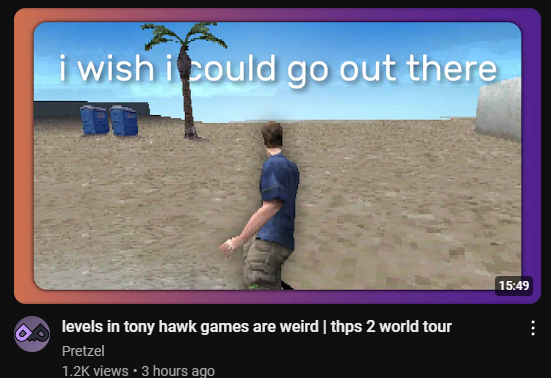
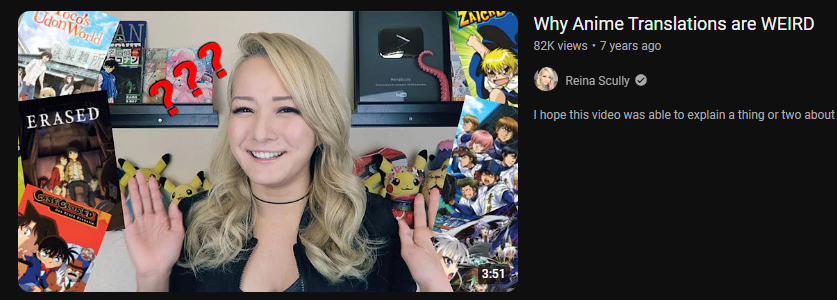
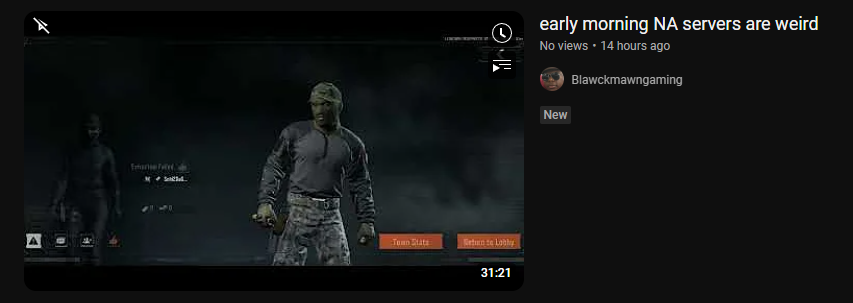
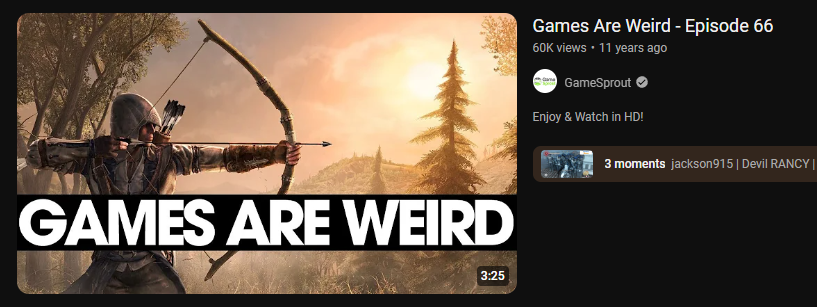
It seems that people of a certain — I don't even know if it's age, but it's definitely a specific social group of some description — are incapable of describing something via any word other than "weird". This is particularly apparent on YouTube, where there is a veritable surfeit of videos called, simply, "[x] is weird".
Here's one:
And another:
Here's a brand new one with no views:
And here is part of what is apparently a whole series of the bloody things:
What these videos inevitably go on to describe is something that is emphatically not weird, usually rather mundane and which could have probably been better served with a more descriptive title.
At this point I'm sure someone desperately wants to bring up the American left-wing tendency to refer to anyone on the right of them as "weird", which is a current trend in the run up to the next U.S. presidential election. This is a separate issue — and one which, I have to say, I'm kind of on board with, because nothing shuts down a raging idiot like telling them they're being weird and making an idiot out of themselves — so I am not including it in the trend I am describing above, which has been around a lot longer.
I often find that the "[x] is weird" trend goes hand in hand with the tendency for Certain Types of People (again, not necessarily age-specific, but a definite type) to write things all in lower-case. You can see this in the first video example above. Nothing in the video title or the text on the thumbnail uses a capital letter, even when one is really needed (such as in the word "I", on the name "Tony Hawk" and the abbreviation "THPS" for "Tony Hawk's Pro Skater"). And, again, the people who do this sort of thing often like to make out that exceedingly mundane things are somehow outlandishly remarkable.
I'm not even entirely sure why this bothers me so much. I think it's that "[x] is weird" does the video (it's usually a video), the subject matter the video is covering and the creator of the video a disservice. I'm sure many of these "[x] is weird" videos are actually quite interesting, but I am, at this point, completely put off from clicking on them almost as much as if I see "I played 100 days of [game]".
I guess it's just another example of Stuff That Isn't For Me. And judging by the viewing figures on a couple of those videos I posted above, it seems I'm in a bit of a minority. But still. If you ever catch me posting a video with the name "[game name] is WEIRD" you have full permission to slap me. Even if I'm covering a French home computer game from the early '90s. Now those really WERE weird.
Want to read my thoughts on various video games, visual novels and other popular culture things? Stop by MoeGamer.net, my site for all things fun where I am generally a lot more cheerful. And if you fancy watching some vids on classic games, drop by my YouTube channel.
If you want this nonsense in your inbox every day, please feel free to subscribe via email. Your email address won't be used for anything else.
Yesterday, we updated the rules on a Discord server I help run. The rules did not change from what they were before; they were simply expanded and clarified in a way that allows any of us on the moderation team to easily step in if things look like getting out of hand.
And you know, people absolutely lost their shit over it to a frankly baffling degree. We had people claiming that the server had been "destroyed", that they were no longer able to express themselves fully, that mods were "power hungry"… if you've been on the Internet any length of time all this will be familiar, I'm sure, particularly if you were ever part of forum culture.
I have found the whole experience baffling and extremely frustrating. The new rules amount to "don't be a hateful bigot", "don't be mean to other people" and "please use the channels as they are designed to be used". Bizarrely, it's that last one that got people most upset, because apparently asking people to keep off-topic discussions to the off-topic channel is something approaching a fascist dictatorship.
All this gave me exceedingly unpleasant flashbacks of "behaviour management" when I was working as a teacher. A classroom full of screaming children and a Discord server full of crying adults who are very much old enough to know better are remarkably similar. And it all comes down to people, regardless of age, having a great amount of difficulty with someone who isn't them laying down boundaries.
In both cases, kids and adults, they feel they're not able to behave as they please. In both cases, the rules are in place to help keep things somewhat more orderly: so that lessons can be taught in the classroom, and so that people who came to the Discord server to get specific information can find that information in the latter case.
No-one has quite gone as far as throwing out the "but my free speech!" card as yet but some people came remarkably close earlier. And I suspect we will continue to have some unrest for a few days.
I don't get it. I've always been quite happy to follow the rules when I've been invited into someone's house, be it real or virtual. I'm still mortified about one time, aged 12, when I used the word "bog" to refer to the toilet at a friend's house, only to be admonished that "we don't use that word in this house" (or at least not in front of his mother anyway). If someone asks me to behave myself online, I behave myself. It's really not all that difficult.
I suspect much of it stems from the people in question never having had those boundaries set in the past, and not knowing what to do when they are set — even if they were already following the rules anyway. I suppose it's easy to feel a weird sort of guilt when you're involved in a community and that community feels the need to lay down the law, even if you know you had nothing to do with it.
But honestly, come on now. If you have difficulty with rules that amount to "don't be a dick" and "use this server for its stated purpose", that's an issue with you, not the rules.
Want to read my thoughts on various video games, visual novels and other popular culture things? Stop by MoeGamer.net, my site for all things fun where I am generally a lot more cheerful. And if you fancy watching some vids on classic games, drop by my YouTube channel.
If you want this nonsense in your inbox every day, please feel free to subscribe via email. Your email address won't be used for anything else.
I've been pondering my YouTube channel ever since I wrote this post. Indeed, I'm still firmly of the opinion that Not Everything Has To Be Content, but I also think I work best when I have some sort of "structure" to proceedings, to know what I'm doing when. So I've come up with something for myself.
This is not intended to be a completely rigid structure of [x] videos per week or anything like that, but more some guidelines for me to work within that allow me to cover my diverse interests, celebrate a variety of games and still focus on the things that I'm most passionate about.
So here's what I'm going to do. I'm going to work on a four-week cycle, which will go as follows:
Week 1: Atari 8-bit. One or two videos on Atari 8-bit games. Now I've covered all the built-in games of The400 Mini, this will be pretty much anything.
Week 2: Atari ST. I love the ST, and there are sections of my audience who love it too, so I want to make sure I make some time for it. Like the Atari 8-bit week, this will be one or two videos on Atari ST games.
Week 3: Public Domain and Magazines. This is relatively "open" to interpretation each time it rolls around, but in this week I'd like to either take some time to read through a magazine on camera, or to cover some of the Page 6 Public Domain Library disks for Atari 8-bit and ST, as I enjoyed the few videos I made on those a while back.
Week 4: Wild Card. This can be absolutely anything I feel like doing. If I feel like playing some DOS games, I'll do that. If I feel like playing some SNES games, I'll do that. If I feel like playing some Amiga games, I'll do that.
I feel good about this; it lets me cover the things that I definitely want to keep covering on the channel, as well as the flexibility to do other stuff. And at any point, I won't feel guilt if I want to take a week off due to fatigue or the weather or anything like that… I'll just pick up where I left off!
So that's that. I'm going to start implementing this from this coming weekend and we'll keep moving from there. I hope you enjoy!
Want to read my thoughts on various video games, visual novels and other popular culture things? Stop by MoeGamer.net, my site for all things fun where I am generally a lot more cheerful. And if you fancy watching some vids on classic games, drop by my YouTube channel.
If you want this nonsense in your inbox every day, please feel free to subscribe via email. Your email address won't be used for anything else.
I've gone on the record numerous times about how much I hate the word "content" to describe individuals' hard creative work online, but that's not what I want to talk about today. Instead, I want to talk about a somewhat related matter that has arisen as self-publishing your own writing, videos and all manner of other creative material online has become more and more straightforward.
And that is: not everything you enjoy has to become "content". Not everything you do has to turn into a video or an article or a blog post or even something on social media.
I am saying this primarily to myself, because I've definitely felt myself veering in that direction at times. Indeed, a significant portion of my game collection consists of stuff I picked up because I thought it would be fun and/or interesting to write about at some point — though this was back when I was working an incredibly boring job pre-COVID and had both the time and mental energy to be able to post something substantial about video games nearly every day.
The trouble with thinking that "everything has to be content" (and I'm using that phrase as a shorthand, not as approval of the term) is that it gradually makes it more and more difficult to just enjoy yourself — to such a degree that it can lead to a form of analysis paralysis where you end up discarding certain experiences on the grounds that they won't be "meaningful" enough. And by "you" in that sentence, I mean "I".
I am proud of what I have created online: there's this blog, which might be of interest to someone; there's MoeGamer, which features a wealth of in-depth articles about games that don't get much attention anywhere else; and there's my YouTube channel, which focuses primarily on retro platforms that don't get as much love as others.
But my brain is always going. It's always thinking "oh, yeah, wouldn't it be cool to make an in-depth video about Disco Elysium?" or "go for it! You absolutely can write one article for every single game on Evercade!" or "don't start playing something else until you've finished what you're playing, because you might not be able to write about it otherwise".
These of the words of someone who is at risk of turning his hobby into work, and I have become increasingly conscious of it over the last few years. The trouble is, I am increasingly aware of how I'm growing older, and thinking about what sort of "legacy" I want to leave behind. My wife and I aren't having children — by choice, I should probably add — but that doesn't mean I don't want to leave anything behind. I would love it if some of my writing and videos were useful to someone down the road, even if they only have something of a niche interest audience now.
But that doesn't mean I should spread myself too thin and try to cover everything. That's simply unrealistic. So I think I should probably try and impose some restrictions on myself to keep my "ambitions" under control, because otherwise I risk 1) overwhelming and burning myself out, and 2) never being able to "just enjoy" something ever again.
So for now I think what I'm going to do is I'm going to keep my YouTube channel focused near-exclusively on Atari stuff: primarily 8-bit and ST, perhaps with some 2600 stuff thrown in here and there if I can be bothered. MoeGamer I'd like to get back to doing some stuff a little more regularly with, so I think I will continue to use that as a means of posting in-depth thoughts on games I've actually finished in the case of narrative-heavy games, or spent enough time with to be able to comment on in the case of gameplay-centric titles. That may mean updates are sporadic, but there's nowt wrong with that. It's not a professional site, and I'm not in a position where I need or want to use it as a "portfolio" of sorts right now.
Evercade stuff is my day job, so any time I'm tempted to write something or make a video about Evercade stuff in my free time, I should instead channel that energy into doing something about it during working hours, particularly if I hit a period of "downtime" between major time-sensitive jobs. Of course, there are things I can't do or say when doing things from a "professional" perspective, but honestly it doesn't really matter too much; if I was doing Evercade stuff privately, I'd be wanting to explain why each and every game (yes, even the "bad" ones) is interesting and worth exploring rather than tearing it apart, and that's not much different from taking a slightly more "marketing" approach. (Incidentally, if you want to see some of the stuff I've done professionally for Evercade, check out the official Evercade blog, and particularly the Evercade Game Spotlight, Evercade Cartridge Preview and Top 5s sections.)
Everything else? I should just enjoy it. Sit back, enjoy without guilt. Write about it or make a video if I feel like it, but don't place undue pressure on myself to make everything into a video or an article. Sometimes a good time is just a good time and doesn't need writing about. Sometimes a good time is something best kept to yourself. Sometimes it's nice to try and forget that the Internet exists, and get yourself back into the '80s mindset of just enjoying things because.
Anyway, that's my ramble for today. I'm off to go put it into practice.
Want to read my thoughts on various video games, visual novels and other popular culture things? Stop by MoeGamer.net, my site for all things fun where I am generally a lot more cheerful. And if you fancy watching some vids on classic games, drop by my YouTube channel.
If you want this nonsense in your inbox every day, please feel free to subscribe via email. Your email address won't be used for anything else.