1106: Nepgagaga Complete... Mk2

Page_1I beat Hyperdimension Neptunia Mk2 tonight, and have now seen one of its seven endings. The one I got tonight was the most fiddly and awkward to get — those who have played the game will know it as the "Conquest Ending" — and was also very, very, dark. Said darkness was all the more effective considering how light and breezy the rest of the game had been; after some 20-odd hours of all-female yuri moe shenanigans in the party, to suddenly be confronted by something that was quite genuinely emotionally affecting was testament to what a good job the game had done in building up its characters' personalities and relationships.

But I shan't talk too much more about the plot for fear of getting into spoiler territory. I do, however, want to make a point of talking about the game itself a bit more, and reiterating a few things I have previously said about it.

The main thing that I would like to say about it is that it's quite possibly the most fun I've had with a JRPG in ages. It was consistently fun, didn't outstay its welcome (a single playthrough clocks in at under 30 hours on your first time through and is considerably quicker if you New Game+ it up after that) and made use of some great (and quite original) systems. It then wrapped the whole experience in a plot that, while a little preachy at times, provided a great opportunity for the characters and setting to shine and show that the world of Hyperdimension Neptunia was far more than just a one-trick pony of self-referential humour relating to anime and games.

It's a stark contrast to the first Hyperdimension Neptunia; I had a huge amount of fun with the original game, but any time I talk about it I feel the need to add a disclaimer that I'm aware of all its flaws and that it was critically panned on release. And that's at least partly justified; if you don't get into the plot, setting and characters of the first Hyperdimension Neptunia, there's little more than a mediocre dungeon crawler with an interesting combat system underneath — probably not enough to hold the interest of someone who is not fully invested in the experience.

The second installment, meanwhile, is quite simply a good game. While it's still got its cheeky, innuendo-filled self-referential sense of humour intact and its tongue firmly planted in its cheek for most of the way through, it doesn't rely on cheap gags and references alone to carry the experience. Beneath the silliness is a rock-solid JRPG with some really cool mechanics.
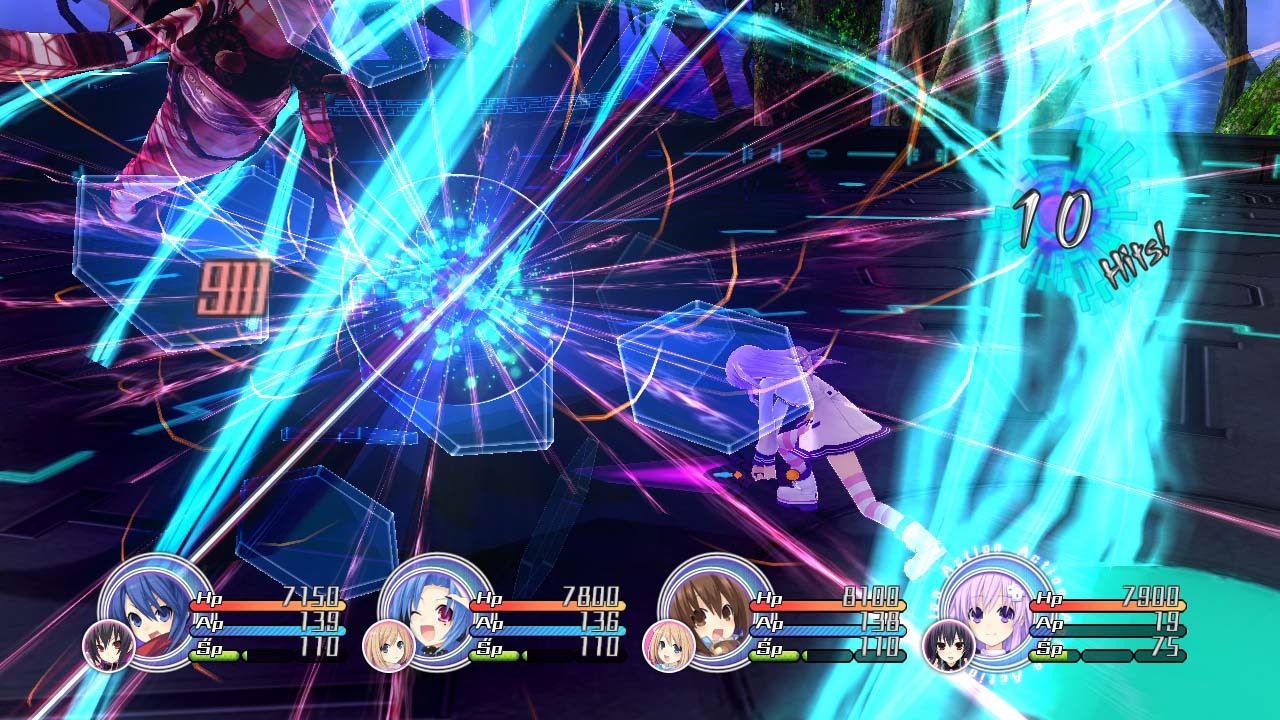
hyperdimension_neptunia_mk2_featured_screenshot_04Let's start with the combat system. Unlike the previous game, which followed a fairly conventional turn-based system coupled with a Xenogears-style combo-making mechanic, Hyperdimension Neptunia Mk2's battle system brings in some additional tactical elements that really change things up.

In the first game, each character had a set amount of "action points" (AP) to expend on their combos each turn, and various achievements such as breaking an enemy's guard or performing a special "combo link" move would give some of these points back, allowing a single turn to last for longer. You could also switch the currently-active member with one who was in the off-screen "back row" using certain special combo finishers, effectively allowing you a free turn if you were careful about your AP expenditure.

The second game maintains the AP system, but provides a degree more flexibility. Each character has a base amount of AP that top up to full at the start of each turn if they used them all the previous turn, but AP can also "overflow" over their maximum if the character deliberately finishes their turn early. This is a necessary tactic to unleash some of the more effective "EX combos" — special moves triggered by specific button combinations, some of which require more than a full AP bar's worth of AP to use.

Alongside the AP system is a new stat called Skill Points (SP). This is a mechanic in which hitting an enemy and taking damage adds to a bar which gradually counts up to 300. Characters' unique skills — now selectable from a separate menu rather than having to be incorporated into a combo — all cost a particular number of AP and SP to unleash, with the more devastating moves requiring more SP. SP skills vary from powerful attacks on a single enemy to area or line attacks, or buff/healing skills to benefit the party. Protagonist Nepgear and the other "CPU Candidate" characters can also transform into their "Hard Drive Divinity" goddess forms by spending 100 SP, but the remaining SP after the 100 ticks down each turn, and they revert to human when SP runs out completely.

There are three different types of move that can be performed in combat: fast moves hit multiple times and thus build up the SP bar faster, hard moves inflict more damage and are often magical in nature, and breaker moves concentrate on damaging the enemy's "guard" bar, which, when depleted, allows the player characters to do more damage than usual. Fighting effectively is a case of knowing what moves to use when — some enemies are more susceptible to magical hard attacks, for example, while others take more damage from multi-hit combos. Building up a big combo also helps Nepgear and her friends to maintain their goddess forms for longer.

Oh, you can move around in combat, too. It's surprising what a huge difference this makes; the simple addition of a mechanic whereby attacks affect a physical area rather than a specific enemy/character means that positioning is very important.
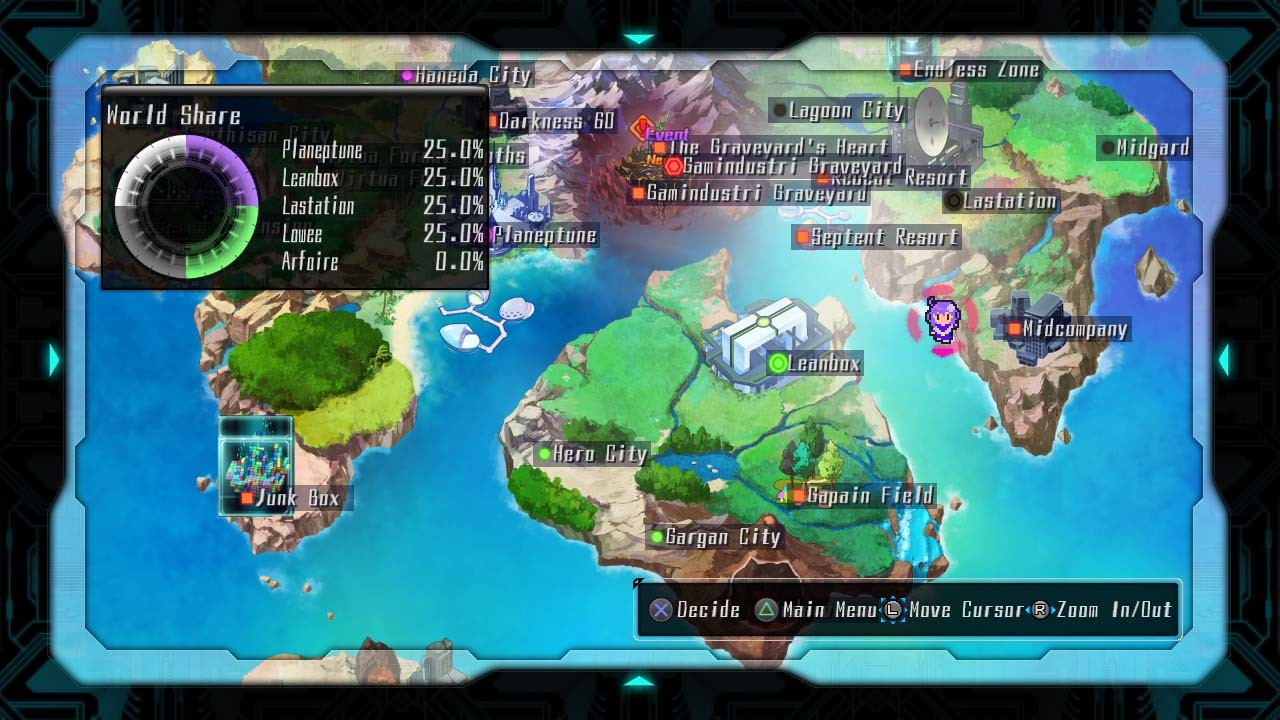
hyperdimenision-neptunia-mk2-01 (1)So that's the combat system. The other interesting mechanic is the "shares" system, which was also present in the first game but never explained at all, despite its manipulation being necessary to attain the "true" ending. The amount of control the game's four "friendly" nations and the antagonist faction have over the game world is reflected by the shares, and forms an interesting (if lightweight) strategic metagame atop the whole experience. There's an overall "world control" chart, which shows which faction has the upper hand — initially the antagonists by a considerable degree — and localised charts corresponding to each nation's capital and smaller, non-interactive towns around their landmass.

You can manipulate the shares by doing quests. Each quest has a sponsor city somewhere on the map — either one of the four capitals or one of each nation's smaller towns — and will increase one faction's shares in that area while depleting another's by the corresponding amount. By manipulating the shares, you can effectively change which faction controls each area, and which area has greater dominance over the world as a whole. It's not always simple, though — sometimes you'll have to run one quest to wrest an area's control away from the antagonists and into its native hands, then another to give these shares to another territory if necessary.

While it may be tempting to simply plough all your efforts into increasing Nepgear's native Planeptune shares as high as possible, this isn't necessarily advisable — controlling more than 55% of the world by a particular point in the story unlocks the aforementioned "Conquest" ending, which is rather traumatic if you're not ready for it!

The shares are used for a number of different purposes. Firstly, they affect various characters' stats — if you're using one of the "goddess" characters from the land of Lastation, for example, increasing Lastation's world share will make these characters stronger while others become weaker. It is possible to keep things nicely balanced if you want to use all the goddesses in your party — you'll just have to eradicate the antagonist's faction altogether to do that.

The second function of the shares is to help determine the ending you get. I've already mentioned the 55% world share that Planeptune requires for the "Conquest" ending; that's by far the hardest one to get, as it involves effectively taking over the other countries through a whole bunch of careful questing. Other endings have less stringent requirements; faction-specific endings simply require that particular capital cities have a strong majority control by their native territory as well as Nepgear having a good relationship with the goddess characters of the area, while the "human" ending requires that you avoid any sort of dominance whatsoever. Finally, the "true" ending, which goes on for a whole extra chapter after the game usually ends, requires that the world is divided up nice and neatly between the four factions, and that the antagonists are wiped out as much as possible.
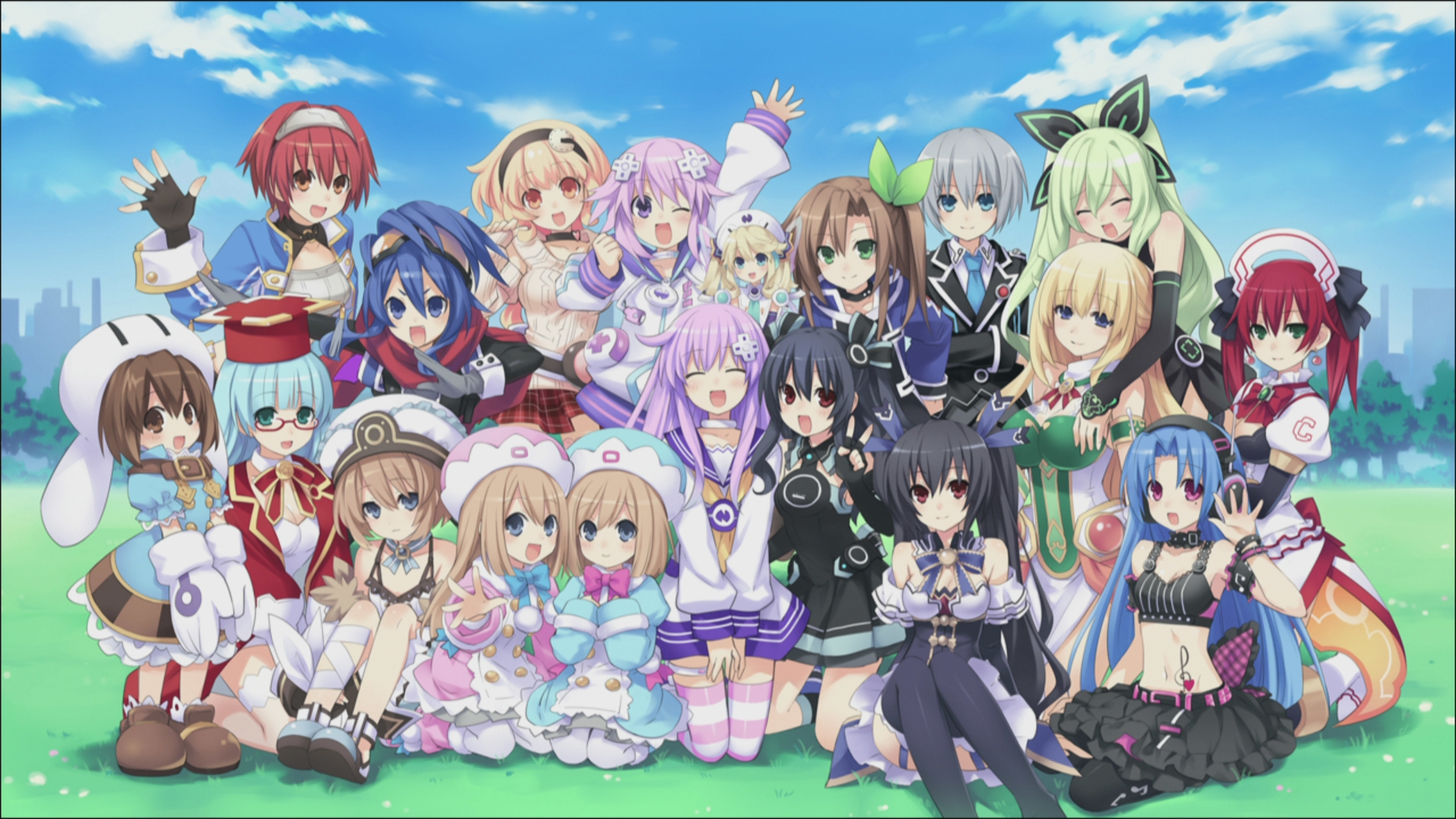
Neptunia_Mk2_CastYou'll notice I've barely mentioned the plot at all in this post, and that's because I want to make a point about Hyperdimension Neptunia Mk2 — even without its big-eyed anime girl shenanigans, it would be a rock-solid game. It's a crying shame that so many people I've spoken to won't even consider playing it because of 1) its predecessor's poor reputation and 2) its aesthetic and character design. Hopefully the things I've said in this post have at least piqued your curiosity a little — it's a great game and genuinely well worth your time, and if you don't feel like you can stomach the first in the series (which I maintain is fun and entertaining despite its myriad flaws) it's perfectly accessible to newcomers.

I'll see you in Gamindustri!
1104: Tsuntsun, Deredere

Page_1It's funny to think that it was only this time last year that I played Katawa Shoujo, rekindled my love for all things Japanese and got properly "into" the visual novel medium. Over the course of last year, I played a bunch of VNs and took some tentative steps into the world of anime, too, and I haven't really looked back since. I've found a medium (well, several forms of closely-related media, really) that "speaks" to me, and that's always a pleasant feeling, particularly when there is a whole shitload of stuff in that medium for you to explore and discover.

Because it was only last year that I got into all this shit, though, it was only last year that I found out what the word "tsundere" means. I had occasionally heard it mentioned by people I knew were into anime and Japanese games, but I'd never thought to look it up before — perhaps because I assumed it was an obscure, specialist piece of jargon relating to something that I wasn't, at the time, particularly immersed in.

There's a good chance that there are a few of you reading this who have absolutely no fucking idea what I'm talking about right now, so allow me to educate you. Then you can walk away from one of these posts feeling like you've learned something for once. Wouldn't that be nice? Of course it would. Let's go, then.

"Tsundere" is a word primarily (though not exclusively) used in relation to characters in Japanese media (manga, anime, games and everything in between) who run "hot and cold". Tsunderes are usually female, though not always. The word is a portmanteau that combines parts of two different words to describe the two main moods of the character — tsuntsun describes the part of the personality that is aloof and/or irritable or even outright hostile; deredere describes the soft, squishy and adorable lovestruck centre that the abrasive exterior is protecting.

The tsundere is a stock character in a variety of Japanese works, and can pretty much be guaranteed to put in an appearance in any "harem" stories — i.e. those that include a male protagonist and a disparate gaggle of female heroines who flock to him for various reasons that are not always to do with love or sexuality. (Popular anime Sword Art Online has been described by some as a harem work, for example; even though the main focus of the story is on the romantic relationship between protagonist Kirito and female lead Asuna rather than Kirito attempting to knob his way around cyberspace, a number of episodes introduce a female character who is drawn to the protagonist for some reason before disappearing without a trace by the next episode.) They are a character type that is obviously exaggerated for either comic or dramatic effect — sometimes both — and thus it's unlikely that you'd find a real-life tsundere. At least, not one that takes quite the same form as you'd see one in an anime or game.

The tsundere can be recognised through a number of different means. Most commonly, it's through the use of the iconic combo of stuttering slightly when around the object of their affections, and the curiously-specific denial of something that belies their deredere side through what initially appears to be tsuntsun behaviour. ("What? I-it's not like I've been thinking about you or anything…!") Other tell-tale signs include excessive use of the word "baka" (idiot, stupid) for the slightest misdemeanour and blushing beet red when confronted with an obviously romantic or sexual situation that they haven't steeled themselves for.

Most tsunderes have tsuntsun as their default behaviour pattern and lapse into deredere when they let their guard down, but characters who represent an inversion of this format exist, too, spending most of their time adorably lovestruck and occasionally lapsing into abrasiveness and hostility if provoked. The latter type can easily be confused with the yandere, which also has deredere as their default behaviour type, but hides proper full-on psychotic mania underneath if the object of their affections either doesn't want them or is taken away from them. (A tell-tale sign that an anime yandere is about to go bonkers, incidentally, is that their eyes go completely blank, lacking the usual "sparkles" seen in the corner of anime eyes. If a character goes like that, you should probably get worried, and you can pretty much guarantee that someone is going to die very soon.)

Yanderes aside, the tsundere's behaviour is usually tolerated and accepted by their friends, and rarely commented on directly — it's just the sort of person they are. The object of their affections usually has to take the brunt of the tsuntsun side, but close friends who want to help the tsundere get closer to the person they obviously like often have to deal with this, too. More often than not, the long-suffering best friend either just shakes it off or is completely oblivious to it, having presumably learned to tune it out a long time ago.

There's something oddly attractive about a tsundere character, which probably explains why it's such a commonly-appearing trope. I couldn't possibly speak for everyone on why this is, but from my own personal perspective, I find the commonly-used "hard-hearted bitch showing a softer side" approach to be an effective one that helps me to sympathise with the characters in the relationship. Reasons that "tsuntsun by default" tsunderes act the way they do vary by story, but one thing is constant — letting that deredere side out is a sign that they're letting down the barriers around themselves and showing another character that they both trust them and care about them. It can be a very touching moment if handled effectively.

Here are a few of my favourite tsunderes. Oh come on, you knew this was coming.

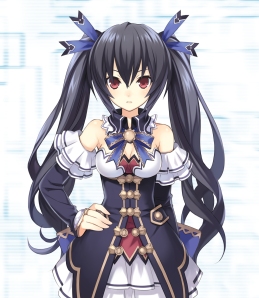
noireNoire (Hyperdimension Neptunia)

Noire, the character who represents Sony and the PlayStation in the Hyperdimension Neptunia series of games, is very obviously a tsundere thanks to her regular use of curiously-specific denials when talking to Neptune in particular. She seems aloof, arrogant and abrasive most of the time, but gradually reveals herself to be someone who just really likes to try and do their best at all times. She obviously likes Neptune, despite what often appears to be open hostility, and has found that her efforts to make the land of Lastation as good as it can be have left her lonely.

President4Irina (My Girlfriend is the President)

Irina Vladimirovna Putina, the Rusian [sic] president in the visual novel My Girlfriend is the President, is a textbook tsundere. Spending most of her time early in the game alternating between yelling at the protagonist Junichiro and twatting him around the head with her slapping fan every time he does something pervy (which is quite often), she eventually shows a softer side and ends up being a positive influence on Jun. Jun also has a positive effect on her; while she manages to mellow him out somewhat, his easygoing nature helps her be less uptight.

Yuru Yuri no Uta Series 07 - Sugiura AyanoAyano (Yuru Yuri)

Poor old Ayano is the butt of a bunch of jokes in the slice-of-life anime Yuru Yuri. The feisty redhead is obviously carrying a rather large torch for resident chaotic character Kyoko and is completely unable to express her feelings adequately, instead regularly flying into a blind rage at Kyoko's slightest misdemeanours. Kyoko, being Kyoko, doesn't mind at all, and is oblivious to Ayano's feelings. The only one who is truly aware of Ayano's crush is student council member Chitose, who regularly fantasises about the pair of them, usually resulting in a violent nosebleed.

1103: One Hundred Percent

Page_1I very rarely "100%" the games I play. The reason for this is that in many cases, doing so involves a lot of abject tedium and just stops being fun after a while. Often it requires the systematic use of a walkthrough to find all the hidden packages/shoot all the pigeons/see all the events, and once you start playing with a walkthrough next to you, I often feel you're missing out on part of the game's fun — discovery.

And yet I find myself tempted to pursue all of the endings in Hyperdimension Neptunia Mk2 simply because it's one of the most enjoyable, entertaining games I've played for a very long time. Whether or not this means I will actually play through the whole thing enough times to get each separate ending or just cheat the system with a well-timed save I haven't decided yet… but I do sort of want to see all the different endings and all the content on offer.

An exception to the 100% rule is visual novels. I'll usually try and see everything a visual novel has to offer before moving on, because it's often quite straightforward to do so — though in games with a huge number of decision points like School Days HQ, it's often quite a time-consuming process. I have, to date, 100%ed several visual novels, though, including Katawa Shoujo and Kana Little Sister. When I finished them, I did feel satisfied that I'd seen everything the game had to offer because, in those cases, very little felt like filler.

In the case of RPGs, though, a lot of that additional content to push you up towards the magic 100% figure is very grindy, rather dull and has nothing to do with the story. But in some cases, the game can wrap you up in its world and its systems enough for that to not matter. Final Fantasy VII is the earliest example I can think of that my friends and I worked all the way through and acquired (almost) all of the secret stuff — all the hidden materias, all the nightmarish Chocobo breeding and at least a good attempt at the secret areas and bosses. We loved that game so much we didn't want to stop playing; pursuing these time-consuming, ultimately irrelevant and often game-breaking sidequests meant we could continue playing for longer, so we did. Then we played it again. To date, I have no idea how my friends and I found time to complete Final Fantasy VII as many times as we did.

So far as Hyperdimension Neptunia Mk2 goes, a single playthrough is apparently relatively short (for an RPG, anyway) and thus charging through it multiple times isn't out of the question. The advent of the "New Game+" mode means that you can carry a bunch of stuff over from game to game, too; given that a number of the endings are dependent on some gradually-increasing relationship statistics that will likely be a bit of a pain to achieve in a single playthrough without some serious grinding, it almost makes sense to play it through several times to make building up these values a more natural process. Hmm. Hmm.

Oh, what the hell. I saw all four endings of Nier (and had my save file deleted by the game to prove it) and enjoyed the experience hugely. (Yes, I enjoyed Nier.) It is but a small jump from four different endings to seven, right?

Right?

Place your bets now on how many I get through before I give up.

1102: The Golden Age of Magazines

Page_1I really love re-reading old games and tech magazines, particularly those from the '80s and '90s. There's a rather wonderful sense of innocence about the monsters that video games and Internet culture would become, and an even more pleasant feeling of knowing that an article was written to be a lot more "permanent" than the somewhat disposable writing for websites we have today. I'm not saying that writing is inherently worse today, of course — on the whole I think it's a lot better for the most part — but that the sheer volume of it these days makes it more and more difficult to build up a portfolio of specific pieces you're really proud of rather than stuff that's just been churned out for the daily grind.

Taking video games magazines specifically, I particularly enjoy the completely different approach to games criticism seen in the mid- to late '90s. Because reviews came out on a magazine's street date rather than under the carefully-timed embargo of a PR department, you could generally feel pretty secure that the writers in question had spent a healthy proportion of the preceding month with the game, and that you knew they would have explored it inside out in most cases rather than rushing through. Consequently, we got a lot of reviews that were more like multi-page features, filled with big images, annotated screenshots, quotes from the developer and all manner of other things. Sometimes you even got reviews in a completely different format — PC Zone magazine, which I was loyal to initially because I liked it and later because my brother became the big boss man over there (also I wrote a number of articles for it), liked to experiment with short-form quick reviews for budget or crap games, and also held regular "Supertests", in which they took a variety of different games in the same genre (often flight sims of various descriptions) and compared them directly to each other to determine which one was "best".

You know what the absolute best thing was, though? No comments sections. I must confess that when reading a 1998 copy of PC Zone on the toilet the other day, I instinctively found myself glancing at the end of a somewhat contentious article (written by none other than Charlie Brooker, who used to be a regular for Zone, believe it or not) to see the ranty comments. I had already flipped the pages to the end of the piece before I realised I was holding a magazine in my hands, and that its content was static and non-interactive. It was probably for the best; Brooker's article was a candid exploration of "why girls don't like games" which was very, very amusing, very, very irreverent and would not have got within a mile of today's Misogyny Police before being torn to shreds — despite the fact that it had a wealth of valid points and was clearly intended to take the piss out of anyone who believed that games were solely "boys' toys". But I digress. The point was, there was no opportunity to respond immediately to an article and belch forth the first opinionated effluvia that came into your head; if you wanted to respond, you had to damn well write a letter (or, later — much later — an email) and hope it got published in the following issue. PC Zone engaged in what is surely one of the first acts of trolling their comments sections on a number of occasions, tasking Brooker with responding to the most offensive, rude and generally disrespectful messages on a special "Sick Notes" page. Hilarity inevitably ensued, usually at the expense of the person who had written in.

I kind of feel like there was a lot more character about the old magazines in general. I read PC Zone primarily because I enjoyed the writers' work and knew their tastes and senses of humour; I knew that David McCandless was obsessed with Doom and Quake (particularly multiplayer); I knew that Chris Anderson loved X-Com; I knew that you could count on Brooker for an irreverent, hilarious article — his Fade to Black preview written entirely as a short story about "Monsieur Conrad 'Art" in Franglais was a particularly memorable example.

Different magazines had their own distinctive personalities, too — I contributed walkthroughs and tips books to the Official UK Nintendo Magazine for a while and was obliged to write using a particularly loathsome house style that effectively required me to write like a chav. Lots of "ya"s and "yer"s, and Mario was perpetually referred to as "Mazza". It was a magazine primarily aimed at children, of course, so this style was understandable, of course — looking back on it, though, it's more than a little cringeworthy.

I sort of miss magazines, then — I know they're still around and all that, but the magic just isn't there any more when you can get access to high-quality writing for free at your fingertips thanks to the Internet. That's sort of sad, really; while you can take an iPad into the toilet with you and browse your favourite sites, it's still not quite the same as having a proper magazine to leaf through at your leisure.

1101: Just Finish the Damn Thing

Page_1I've lost count of the number of "make my own game" projects I've started and abandoned over the years. I've started a new one recently which, theoretically, should be relatively straightforward to finish, so I will keep you all updated on its progress occasionally via this blog.

I'm no programmer, so I tend to gravitate towards solutions that allow you to flex your creative muscles and create interactive entertainment without having to, well, code anything. My weapon of choice for the last few attempts has been the excellent RPG Maker VX Ace, which is an immensely powerful tool capable of doing some really great things while at the same time allowing pretty much anyone to churn out a fairly generic top-down JRPG without too much difficulty.

It's the "capable of doing some really great things" part that I often find myself struggling with. Y'see, the trouble with being presented with a wealth of possibilities is choosing which ones you want to pursue and which ones you want to ignore. The temptation is to incorporate as many of them as possible in an attempt to make something as awesome as possible, but inevitably if you do that — particularly if you're working alone — you'll hit a brick wall where something doesn't quite work properly with something else, get disheartened and probably give up.

I'm talking vaguely. Let me give some specific examples. The new game I've started making as a means of proving I can take a project through from start to finish is simply an adaptation of the quests from MB/Games Workshop's classic board game Hero Quest. Given that the structure and storyline of the Hero Quest board game is very much a generic sort of dungeon crawler, this shouldn't be too difficult once I've done what I always initially think of as "the annoying bit" — setting up the characters, statistics, skills and whatnot, and finding some appropriate graphics for their sprites. (I call it "the annoying bit" but if I sit down and get on with it, I actually find this part quite fun after a while.)

Anyway, I'm about halfway done with "the annoying bit" — its initial stages, anyway — and already I'm finding myself torn in several directions. Do I stick with RPG Maker's rather generic first-person battle interface? It doesn't evoke the feel of Hero Quest that much, but then trying to adapt a board game and sticking too religiously to its rules can often ruin the "computer gaminess" of it. All right then, I thought, I'll stick with this battle system, but I'll tweak it so things like damage formulae are a little closer to rolling the dice in the game. Except when I thought I'd done that, I discovered that my ineptitude with composing damage formulae to accurately simulate dice rolls created a number of monsters that were literally impossible to hurt. Not good. I replaced the formula with its original one, which deals with much higher numbers than your average tabletop game. Will that ruin the atmosphere? Is "Rogar does 96 damage" somehow less powerful than "Rogar does 4 damage"? Probably not. That's a stupid thing to think.

I'm probably overthinking it, I know, and should just get on with it. What I think I really need to do is just make the game with the default systems, and then tweak and fine-tune afterwards. Difficulty balancing and that sort of thing is an important part of testing, so I'll leave that until there's actually a game there to test — there's no point getting hung up on problems that don't actually exist yet.

So that's the plan. Over the next few days I will be taking some time to plug in Hero Quest's various spells and items into the game in a format that will work within RPG Maker's style of play, then I'll put the game itself together. Then I'll show it to some select friends — this project probably won't get a wide release, unless it actually ends up being surprisingly good — and then, flush with satisfaction at having actually carried something through to completion for once, I can embark on something a little more ambitious.

One step at a time.

1099: Nep-Nep-Nep-Nep

Page_1It's another Hyperdimension Neptunia post, I'm afraid. Normally I'd make an effort to try not to talk too much about the same thing several days in a row, but having started the sequel to Hyperdimension Neptunia (imaginatively titled Hyperdimension Neptunia Mk2) this evening, I felt compelled to share some of my first impressions. (Besides, this is my blog, dammit.)

That first impression can largely be summed up by me nodding and smiling at developers Compile Heart and Idea Factory and going "Good job, guys."

You see, Hyperdimension Neptunia Mk2 takes all the things that were good about its predecessor — an amusing but oddly well-realised world; some excellent, memorable characters; some lovely 2D art — and ditches all the things that were a bit rubbish. Consequently, out go the endless cookie-cutter dungeons, out go the PS1-era random encounters, out go the weirder aspects of the battle system (like the bizarre mid-combat "item crafting" system and the seeming necessity to skip animations to take full advantage of the "guard break" mechanic) and out go the sequences that served no purpose (waiting for landmasses to approach and then having to run an insultingly easy dungeon every time you wanted to travel anywhere).

In comes a game which is not just a dream come true for a Hyperdimension Neptunia fan, but a game which actually appears to be a very good JRPG generally. Okay, you're still controlling an all-female party of candy-coloured self-referential anime archetypes so if you're not on board with that you're never going to be on board with this series, but almost everything about the first game that sucked a bit has seemingly been rectified with this new game. It's still not perfect and it's still rough around the edges — the in-engine graphics are still a bit PS2-ish in quality, riddled with jaggies (can't remember the last time I wrote that word!) and the frame rate still blows, but just like the original managed to be entertaining despite its flaws and technical shortcomings, so too does its sequel. Only said sequel is, as I say, a much better game on the whole, too.

The biggest overhaul to the game's base can be seen in the battle system. It's still focused on making combos, but there's no longer the need to micromanage every possible combination of three different buttons pressed up to four times. I actually quite liked this aspect of the original, as it gave the game a fun puzzly mechanic as you attempted to make combos that flowed nicely in to one another, but it did make getting a new character a bit tiresome, as you had to spend a good 10-15 minutes setting up their button combinations — usually only to discover in a boss fight that you'd done something wrong somewhere. (Fortunately, it was possible to rejig combos in mid-fight, which was nice.)

Nope, what we have now is a much more streamlined system — triangle button does multi-hit attacks, square button does powerful attacks, cross button does attacks that prioritise damage to the enemies' "guard gauge". Like before, each attack costs a certain number of Ability Points (AP) to perform. An initial attack is of a fixed type, but from that point on, you can customise the specific "move" (and AP cost) that is assigned to each of the three buttons depending on if it is the second, third or fourth attack in a combo. Characters unlock "EX" attacks as they level up, requiring that the player use both a specific button combination and expend a particular number of AP during a combo before triggering a more powerful special move. Each character has their own suite of "skills" outside the attacks, too, which cost a combination of AP and Skill Points (SP, which charge up through attacking enemies) to perform. These vary from special attacks to support buffs and healing skills, and mean there's no longer the reliance on random chance when attempting to keep your party at full health.

Combat now allows characters to move, too, giving the whole thing a light strategic feel, as all attacks cover a particular area, and characters clustered together can all feel the brunt of one enemy's attack if you're not careful. The whole thing is way more fast-paced than the previous game — a feeling helped even more by the fact that the load times between field and battle screens are lightning-fast.

I'm not far into the story yet, but it's been enjoyable so far, despite what essentially amounted to an extremely mild tentacle scene approximately five minutes into the experience. (Said "tentacles" — actually cables — weren't doing any more than just holding the previous game's "CPU" goddesses prisoner, but it's very clear that it was a reference to… well, you know.) New protagonist Nepgear (hah) is appealing and endearing, and successfully distinguishes herself from her ditzy sister — the previous game's protagonist — by basically being the exact opposite in terms of personality. Where Neptune was loud, brash, confident and, let's not beat around the bush, endearingly stupid at times, Nepgear is much more reserved, rational, intelligent and innocent. There's a lot of scope for her to grow as a character — particularly when accompanied by the increasingly world-weary IF (rapidly becoming my favourite character in the series) and the ever-optimistic Compa — so I'll be interested to see how she develops as her journey progresses.

There's still a heavy focus on non-linear and repeated sidequesting in the new game, but it actually explains what effect doing quests has right from the beginning this time instead of, you know, not at all. Yes, the "shares" system from the previous game is back again, but it's integrated into the story this time, representing the world's level of belief in the "good" goddesses and the evil forces of "Arfoire" — the previous game's villain and a thinly-veiled reference to the popular Nintendo DS storage device that was often used for piracy. Essentially, doing quests now wrests back "control" of particular areas from Arfoire's followers, allowing you to strengthen an area's belief in the goddesses and ultimately turn things around for the world, which has seemingly gone to shit in the intervening time between the end of the first game and the start of the second. Manipulating the shares is also key to unlocking certain events.

Oh, and there's a whole relationship system between Nepgear and her party members now, rather charmingly called "Lily Rank". (For those who don't get why it's called this, the Japanese word for "lily" is "yuri", which is a word also often used to refer to same-sex romantic and/or sexual relationships between women — rather appropriate for describing the relationships between members of an all-female party, particularly as within the first three hours Nepgear has already been kissed by one of them, ostensibly to shock her into transforming into her "goddess candidate" form for the first time since escaping captivity in the intro.) Characters with a better Lily Rank between them provide bonuses to one another in combat, and can be paired up to do various joint special abilities. Naturally, a better relationship between them also results in more scenes between them, too.

Also the music's much better by about a thousand percent.

Also it's just great. I like it a lot. Actually, I liked the first one a lot, despite its flaws. I can see myself really loving the second one. And the third one's coming in March! Yay!

I'll shut up now.

1098: Nepgagaga Complete!

Page_1I finished Hyperdimension Neptunia tonight, thereby proving beyond a doubt that review scores are now completely and utterly useless to me. I kind of suspected this already, but the fact that I devoured and loved a game that Eurogamer gave a 2/10 speaks volumes about how far my tastes have drifted from the mainstream.

With that in mind, some people have been expressing curiosity about this game after hearing me talk about it, so I am going to use this post in an attempt to share some facts about it that may help you reach a decision as to whether or not you would find it an enjoyable experience. Not everyone will like it, and that's fine — I really enjoyed it, but I recognise its flaws.

So here we go then.

It's roughly 50% visual novel. Story scenes in Hyperdimension Neptunia are selected from a menu rather than occurring naturally during exploring a town or something, and are all presented in a head-and-shoulders visual novel style. In a twist on the usual way in which VNs are presented, however, the portraits are animated — they breathe, change expressions, have lipsyncing and move their heads. It's not quite the same as a fully-animated anime scene (or indeed in-engine cutscenes) but it looks very nice and the art is lovely.

The other 50% is old-school JRPG dungeon crawler. You'll spend your non-story time in Hyperdimension Neptunia wandering through a variety of rather samey dungeons. There are a very limited number of environments, and only a set number of layouts to explore. Objectives are generally either "reach the exit" or "kill the boss", with occasional "collect [x] of [y]". Structurally, it's nothing special, and the "collect [x] of [y]" or "kill [x] of [monster]" objectives are largely dependent on luck, which some may find frustrating. The game is non-linear all the way through, however, meaning if you're struggling on one dungeon (or even the final boss!) you can simply shoot off and do something else for a bit.

There are random encounters. A hangover from the old days of JRPGs, random encounters are the bane of some RPG fans' existence. They are present and correct in Hyperdimension Neptunia. Whether or not you get irritated by random encounters will play a big part in determining whether or not you will have an enjoyable time.

This girl is the PlayStation personified. I'm not even joking.The combat system is GREAT. To counter the potential annoyance of random encounters, the combat system is hugely enjoyable. Taking its cues from Xenogears, each character has a set number of Action Points to spend per turn. Three of the PS3 controller's face buttons are assigned to different attacks (each costing a particular number of AP) by default, and as each character levels up they learn new moves. These moves must then be manually assigned to individual button presses in any of the possible combinations of four buttons that make up a combo. Different moves have different "end bonuses" if placed in the fourth slot of the combo — some allow the combo to continue registering after the fourth button press, others allow the party member to "switch" with one in the back row, effectively granting the player a free turn, and some characters have the magical girl-esque ability to transform. It's great fun setting up and naming your own combos, and there's a pleasing almost puzzle-like element to working out which ones will flow nicely into other ones while still leaving you with enough AP to be effective.

You can customize a whole ton of stuff in combat. You can rename button combos and apply your own images to certain special attacks. Other special attacks that you find throughout the course of the game are all based on old Sega games, allowing you to do things like summon the dude from Altered Beast or Alex Kidd to lay the smack down on your enemies.

There's a really weird item system. Rather than a conventional item system, Hyperdimension Neptunia makes use of a strange "crafting" system in combat to handle healing and the like — you can't heal outside battle, except by leaving or completing a dungeon. There are four crafting materials that you collect and/or purchase, and different combinations of these are required to activate each character's unique "item skills", each of which has a time when it occurs, a trigger condition and a target. For example, a basic healing item skill might be "When damaged and HP is 50% or less, heal 30% of HP in exchange for 5 of one item and 5 of another." The twist is that each character only has a limited number of "item skill points" which can be funneled into any of their item skills — one point equates to a 1% chance that when the condition is fulfilled at the appropriate time, the skill will trigger. For example, the character IF has a skill that will resurrect any fallen party members with 50% HP at the end of her turn, but this is only absolutely guaranteed to happen if you put 100 points into that skill. You can shift these points around at will — even during combat, except in the middle of a combo — and it adds an interesting degree of strategy to an otherwise attack-focused combat system, but it's bizarre, only sort-of works as a concept and will almost certainly piss some people off. I quite liked it by the end of the game, but it takes some adjustment to get your head around.

There's a "skip animation" button in combat. If you're starting to find the endless fighting rather dull, you can simply tap the L2 button to skip any animation, whether it's a regular attack by you or the enemies or a lengthy piece of JRPG "final attack" showboating. This means that you can romp through combats super-quickly if you're not too concerned about watching animations.

There's a bunch of grinding later in the game if you want to get the best ending. There are three endings to the game that are dependent on whether or not you recruit three characters in the story — a "bad" one if you don't recruit any of them, a "good" one if you recruit one or two of them and a "true" one if you recruit all three of them. Getting all three of them involves manipulating a mechanic which is never explicitly explained in the game, and requires replaying a lot of dungeons that are, by that point, far too low-level for you and thus almost insultingly easy. Fortunately, you can make use of the aforementioned "skip animation" button to rip through most of these dungeons in a minute or less.

The in-engine graphics aren't great. While the hi-res visual novel scenes look lovely, the in-game graphics look distinctly PS2ish and suffer from a fairly poor frame rate when compared to their mediocre quality. This is, apparently, fairly common practice for the developers Compile Heart and Idea Factory, and doesn't affect the enjoyment at all, but those who appreciate super-pretty graphics will only find functional visuals here. That said, the animations are nice and the characters all have plenty of personality about them.

The music is annoyingly catchy, but limited. There aren't many different music tracks in the game, which means by the end you may well be tiring of some of them. That said, they are catchy, recognisable themes that you may well find yourself humming along with, and there are multiple battle themes rather than the same one all the way through the game.

The game offers both Japanese and English voiceovers. Both have their merits, though some parts haven't been dubbed into English, meaning they're just text. On the whole, the Japanese voice track is superior in terms of acting quality (though beware the high-pitched voices if that sort of thing bugs you), but it's nice to hear the American voice actor who plays Yukari in Persona 3 again on the English track.

The game is genuinely amusing… if you're a fan of Japanese media and video games. The game prides itself on affectionate lampshading of anime and video game tropes, with the characters regularly breaking the fourth wall to talk about their role in the game. There are also plenty of optional scenes with references to various video games and anime, though some feel a little forced. If you don't like things being very obviously referenced, the humour in this game may not be for you. See also:

The game is stuffed full of innuendo and fanservice. The party in Hyperdimension Neptunia is exclusively female, and male characters throughout are very limited, mostly represented as silhouetted portraits alongside the huge, animated head-and-shoulders shots of the girls. There's a lot of boob-related humour, particularly surrounding the discrepancy in size between several party members' breasts, and a number of comic misunderstandings that initially appear to be somewhat sexual in nature but later turn out to be something far more innocuous. There's also a clearly-underage openly-lesbian character (though it's implied that most of the characters have at least a slight inclination in this direction), you'll see a lot of pantsu-flashing and suggestive positions (see below) over the course of the game, most of the girls wear incredibly impractical outfits (see below), and their boobies bounce on the special "event" pictures that normally accompany a character's first appearance (see below!). It's all fairly harmless and there's nothing outright pornographic; it feels cheeky and light-hearted rather than malicious or exploitative and is certainly no worse than anything seen in popular anime, but some may object to it or find it embarrassing.

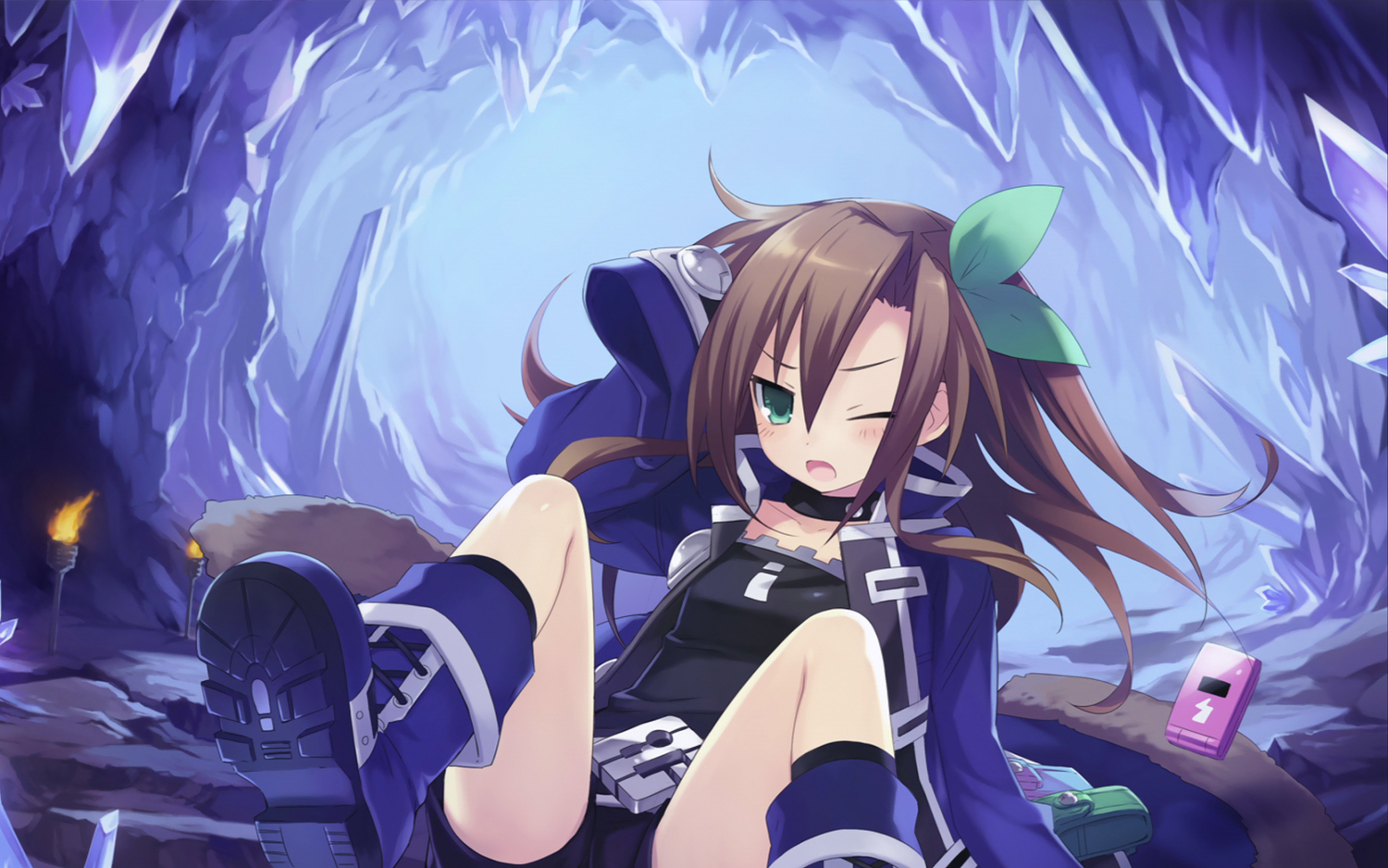
This is how you first encounter IF, Iffy, I-chan.There's a bunch of DLC, 90% of which is completely unnecessary. For the true Hyperdimension Neptunia fan, the game carries a wide selection of downloadable content, most of which takes the form of free additional quests that can be added into the game. Most players who download these will be very surprised to discover that a lot of them have recommended levels well into the hundreds, while the level cap in the game is just 99. You can, however, purchase extensions to the level cap to take it right up to 999, along with "boosters" to increase the various characters' stats if you're really struggling. None of these are essential, and these high-level dungeons provide the exact same experience as the rest of the game, so they're really not worth downloading. (If you do want to grind to 999, it will take you roughly the length of the rest of the game put together doing the same dungeon over and over and over again. Methinks someone was having a laugh with this DLC.)

The other 10% of the DLC should probably have been in the game in the first place. There are four pieces of DLC that are worth buying — two "battle tickets" that allow the use of otherwise non-playable party members in combat, and two additional characters who have their own sequence of event scenes. Again, none of these are essential — the additional characters' plotlines tend to be kept fairly separate to the main core of the party, and you get plenty of characters over the course of the main game to fill up your party — but it's curious that these weren't just included on the game disc. (They're not on-disc DLC, either — each is a 100MB+ download.) Given that you can find a copy of the game for not-very-much-money fairly easily these days, I didn't really object to paying a couple of extra quid to see what I might be missing out on — as it happens, they were a nice addition, but I'm not sure I would have missed them if I chose to forgo the DLC.

The characters are memorable and adorable. For all the game's flaws, the thing that kept me coming back over and over again until the very end was the cast. While most of them are recognisable anime archetypes, the self-aware nature of much of the game's humour means that they're not above calling each other out when they're behaving in a particularly stereotypical fashion. The central cast of the ditzy, airheaded Neptune, the pink and fluffy cries-at-the-slightest-provocation girly-girl Compa and the rational, sensible but somewhat tsundere IF complement each other perfectly, and poor old IF, as the "straight man" (well, woman) of the ensemble usually ends up having to deal with the aftermath of all the other characters' idiosyncracies. She's by far the most sympathetic character by the end of the game, but there's something eminently likeable about all the rest of them, too.

So there you go. A list of facts about Hyperdimension Neptunia. Don't go into it thinking it's going to be the best thing ever because you will almost inevitably be disappointed. If you have a lot of patience for what is essentially a combination of an old-school, combat-heavy JRPG and a visual novel, however, there's a highly enjoyable experience with some very memorable characters and some endearingly self-referential humour to be had here. If that sounds like your sort of thing, give it a shot.

I'll be starting the sequel tomorrow, and I understand that's a superior experience. I'll be interested to see quite how different it is.

1097: Five Reasons Kotaku Made Yakuza Fans Angry Today

Page_1Fan of Sega's long-running modern-day JRPG series Yakuza? Then you may want to give Kotaku a wide berth today, as they published an article (FreezePage link so as not to direct traffic to the piece in question; petty, I know, but I know a few people who won't click Kotaku links on principle) which has incited the ire of an angry mob of Yakuza fans. And since Yakuza is a fairly niche game with a dedicated core of fans keen to see Sega continue to bring it to the West, they're pretty passionate about the series that they love.

The main issue with the article is that it is clearly written by someone who has very little knowledge of the Yakuza series at all — the author even states this up-front, noting that prior to taking Yakuza 5 for a spin they had played nothing more than the demos of Yakuza 3, 4 and Dead Souls and hadn't felt inspired to purchase or try the full games. Leaving aside the fact that he was coming in at the fifth installment to a series that is very strict about its chronology — each subsequent game follows on directly from the previous one — the bigger question is why on Earth this writer was picked to write an "Import Preview" for this game when his familiarity with the series is questionable by his own admission?

Of course, there is merit in judging the accessibility of a long-running series to newcomers, but just as certain series of books, movies and TV shows expect you to start from the very beginning and work your way along, so too are there series of games that demand the same of their audience. Yakuza is one of these, though it does give a cursory nod to newcomers in each game by allowing them a sequence where the protagonist "reminisces" about the events of the previous installment. These are primarily intended for series veterans who have endured a significant wait between games, however, and are designed to remind them of the key events rather than the actual experience of playing through a Yakuza game. They are not really designed to tell the entire story of a whole game in 30 minutes of cutscenes. You want to know what happened in, say, Yakuza 2? Go play it — it's still out there and (relatively) readily available.

I won't go through and address all of Eisenbeis' five points in the article one at a time as that just seems somewhat petty, but it's abundantly clear from the things he says that he is unfamiliar with the series and its conventions, and has also not spent a significant amount of time with it to discover its hidden depths. Pleasingly, the comments from Yakuza fans beneath the article have mostly been relatively respectful (if incredulous) and systematically point out how most of his arguments are flawed or, in some cases, completely incorrect.

I will address one point specifically, however, and that is the matter of "unskippable conversations". This is a particular bugbear for me. Yakuza is notorious for being a story-heavy, character-focused game in which the moments when you're kicking back in a hostess club attempting to woo your lady of the hour are just as important as the times when you're punching goons in the face and smashing traffic cones over their heads. If anything, they're more important, as they're where the characters get to demonstrate their hidden depths — far from being generic, silent protagonists, the playable characters in the Yakuza series are all very complex people with interesting motivations and outlooks on life. More interestingly, they're all grown-ups.

Brief aside: a friend and I were discussing this recently, and we thought it would be very interesting if there was a Japanese-style role-playing game that instead of featuring your usual band of Plucky, Idealistic Teens Who Are Always Right getting to save the world from Some Great Evil, put the spotlight on a group of older, more jaded and cynical adults who maybe had more complex motives for embarking on whatever the game's "quest" happened to be. The Yakuza series provides just that sort of experience, with characters who age and evolve as the series progresses, giving the complete franchise a truly remarkable feeling of coherence and changing with the times. At the same time, however, certain things remain constant — Kazuma will always care for his adoptive sort-of-"daughter" Haruka; Kamuro-cho will always be by turns beautiful and terrifying; Majima's sanity will always be somewhat questionable.

Anyway, my point with all that was that the very essence of Yakuza is in the story, so why would you skip it? I'll allow you the answer "because I died on a boss fight and I've already seen this bit", but anything beyond that — such as the reason Eisenbeis gives in his article — is very much missing the point. "I started to dread playing through the plot, knowing that the game's pace would be about to grind to a halt," he writes. Good grief, man. The point is the plot. If you were hoping for a brawler or character action game — or even a Grand Theft Auto-alike — there are plenty of other titles that will better fit your needs.

One thing I will say at this point is that I'm not attempting to convert anyone to the Yakuza fold who isn't already there. As has probably been made clear by the fact I'm writing this at all, you're either "in" or you aren't, and getting "in" these days involves playing four (possibly five if you count Dead Souls) games of between 10-40+ hours that straddle the generation gap between PS2 and PS3. From the second game onwards, you also have to be able to deal with the fact that there's no English dub, either — it's all subtitled with Japanese speech (and is an infinitely better experience as a result, I might add). It's a worthwhile experience, but equally it's one I'd understand people forgoing as the perceived barrier of entry gets higher.

Consequently, I'm not denying that some of the criticisms Eisenbeis makes of Yakuza in his article are valid; many of them are, and yes, they're offputting to series newcomers. However, this article really didn't need to be written, and in the worst-case scenario, it may have done some damage to the already-tenuous chances of Sega bringing this latest installment to the West. The piece's content essentially boils down to "Guy Who Doesn't Like Yakuza Doesn't Like Latest Yakuza", which is a matter for a personal blog, not for one of the world's most heavily-trafficked video games websites. Fans of the Yakuza series who see the "Import Preview" header would likely have been hoping for some insights on the ways in which the new game has evolved its systems and what has happened to the characters in the intervening time since Yakuza 4 and Dead Souls; instead, what they get is a poorly-researched opinion piece that does nothing but frustrate the people who are most likely to read it.

I'm sorry that Eisenbeis didn't enjoy his time with Yakuza 5, but it's his prerogative to dislike it if he pleases. He should clearly not, however, have been given the opportunity to write about it in the way that he did, as it does a great disservice to both the game and its fans who were hoping for some genuine new information. I hope that Kotaku will think much more carefully about who they assign preview articles to in the future, but I won't hold my breath.

1096: Colourspace

Page_1I wrote a thing about veteran independent game developer Jeff Minter the other day for Games Are Evil — you should go read it, then go buy all the iOS games I listed in that article, as they're all fab.

For me, though, some of Jeff Minter's most memorable creations weren't games at all — they were what he called "light synthesisers". The first of these was Psychedelia for the 8-bit computers of the time, superceded the following year by Colourspace, which is where I first became aware of… whatever lightsynths actually are.

Essentially, a lightsynth — as it existed back then, anyway — is a piece of software that allows you to play with colours and shapes as you see fit. In the case of the Atari 8-bit version of Colourspace, which is where I first encountered it, you used the joystick to move a cursor around the screen, then held the fire button and moved around to make shapes, colours and swirly patterns. The exact behaviour of the program could be tweaked in various ways, too, allowing for colour-cycling, variable pixel sizes — something the Atari was good at due to a nifty little feature called Display List Interrupts — and for the colours and shapes to flow over or under static on-screen graphics such as logos. Minter notes on his website that for a long time, this was his "performance lightsynth" of choice, and he often showed it off as a means of demonstrating both what he and the hardware of the time were capable of. (He also claims he sold a copy to Paul Daniels and was subsequently rude to him when he phoned up for technical support.)

The 16-bit era saw a new version of Colourspace released for the Atari ST. The shift to a platform that is much closer to what we understand as being a "PC" today meant that Minter could take advantage of things like mouse control for more fluid movement of the shapes, colours and patterns, and the relatively large amount of memory in the ST (512K or a whopping 1MB!) meant that performers could load a selection of images and switch between them at will to help supplement their dancing swirly patterns. Minter himself performed using Colourspace for the ST on a number of occasions, including hiring out the London Planetarium for a laser-and-Colourspace extravaganza to celebrate the new version's launch.

Following Colourspace came Trip-A-Tron, an evolution of the formula that still allowed for simple real-time swirly patterns, but also featured its own scripting language allowing clever people (cleverer than I was at that tender age) to remotely control other computers running Trip-A-Tron via the MIDI port, triggering various animations, rendering scenes in 2D and 3D and all manner of other exciting things. I never really got deep into Trip-A-Tron because the thickness of the manual was somewhat disconcerting for a youngster like I was then — Minter notes it took him longer to write that manual than it did to write some of his earlier lightsynths!

One thing that does stick in my mind from Trip-A-Tron, however, is a peculiar artistic project Minter undertook with a musician named Adrian Wagner known as MerakMerak was a wordless, abstract story about the adventures of an android in space, and it was a spectacular combination of psychedelic visuals and memorable music that I can still remember today. Disappointingly, there don't appear to be any clips from Merak anywhere on YouTube, but Wagner did rerelease the video on DVD more recently — I'm quite tempted to pick up a copy, but worried that my memories of this remarkable work won't match up to the reality.

The really interesting thing about this whole "lightsynth" concept of Minter's is that it was one of the first real examples of computers being used for pure creativity and self-expression. It was entirely what you made of it, and it was fuel for the imagination. I remember vividly spending hours at a time playing with the Atari ST version of Colourspace, which allowed you to render starfields and came with a preset background that looked like the bridge of a spaceship. I'd imagine a grand space opera, rendering the abstract shapes and spectacular light shows of this vessel flying into combat, putting up a brave fight and being eventually destroyed. I'd swirl the mouse around to create abstract shapes and trails, adjust the colour-cycling patterns to change the atmosphere and eventually fill the screen with an explosion of colourful particles as the ship, in my mind, blew to pieces.

Minter's latest lightsynth is known as Neon, and a version of it comes built in to every Xbox 360 console as the music visualiser. The sad thing is that the frustrations Minter expressed in the article I linked to above mean that it's unlikely we'll see a new lightsynth from this eccentric genius any time soon. His tweets on the subject pretty much speak for themselves.

The end of an era, to be sure. Unless anyone's up for crowdfunding a new Colourspace?

1094: Today: The Walkthrough

Page_1January 16

This is quite an easy day to get through — all you have to do is make sure you get all the tasks done by the end of the day and you're good to go. As always, save your game as the day begins in case you make a mistake, and use any free time you have to go secret-hunting. See the SECRETS section for more details.

Morning

You have three main objectives in the morning: wake up, have breakfast and complete your work. All can be easily achieved quite quickly if you focus on the task at hand and save item-hunting for later.

You'll start the day with "tired" status, which makes it more difficult than usual to wake up. After the cutscene where Andie leaves for work, repeatedly tap the Triangle button to force yourself out of bed. Don't worry if you fail, though — it's actually pretty challenging to succeed in this. You can try again, but you'll take a hit to your HP each time you do so, so you might find it easier to just fall asleep again and wake up once the "tired" status has evaporated — there's no real benefit to the early start beyond having more time available.

Once you're up, walk to the bathroom and press X to start the morning routine. Skip the animation if you want — you've probably seen it plenty of times by now. Once you re-emerge, walk to the kitchen and press X in front of the bread bin to examine it. Pick up the BREAD and make sure you examine it in your inventory rather than just eating it — it's mouldy, so use it on the bin unless you want to find yourself with a rather inconvenient toilet-focused status effect lasting the rest of the day.

Pick up the BREADSTICK instead, then open the fridge and pick up the EGGS. Open the drawer next to the fridge and take the SMALL PAN. Use the pan on the cooker, then use the cooker again to turn it on. You can stand and wait — there's some amusing comments if you keep examining it — but it's a better use of your time to walk over to the other side of the room and use the coffee machine. Pick a CAPSULE according to how much EP you have — if you've been following this walkthrough exactly so far, a green one will probably suffice. Use the capsule on the machine, then open the cupboard across the room from the machine to take a CUP. Use the cup on the machine, then use the machine. Voila! One coffee. Drink it immediately — coffee provides a nice boost to EP, but isn't nearly as effective if you allow it to cool.

By now the pan should be starting to boil, so use the eggs on the pan, then use your phone in your inventory to automatically set the timer. You have four minutes in which to wander around the house and its environs before the eggs are ready. A good use of your time is to empty the bin — walk up to the bin and use it to take the BINBAG out, then use the bag to pick it up. You won't be able to open your menu or access your inventory while carrying the bag, though you can put it down if you need to.

Open the front door while carrying the bag, run down the stairs and out of the front door. Use the binbag on the green bin, NOT the blue one, then run back into the building, up the stairs and back into your flat. You should be back just in time for the timer to expire and your eggs to be ready — use the cooker to automatically take them out and prepare them; use the breadstick on the resulting plate to finish preparing your meal; use the finished meal to trigger a cutscene.

When you regain control, you'll be in the study in front of the computer. Three battles will ensue as you attempt to get your work done, but you can pause to regain lost HP/EP between each one.

Battle 1: Blitz (HP 50,000)

This is an easy one. Kick off with a Comparison, follow it up with Context, Quip and finally Verdict.

Battle 2: Cross (HP 60,000)

This one's a little tougher. Kick off with a Comparison again, but use your phone in the second round for additional damage. Follow with Praise, Quip, Question and finally Verdict.

Battle 3: Snapper (HP 70,000)

Despite the higher HP, this is the easiest one of all. Quip, Question and Verdict is all you need to do here.

Afternoon

The main objective in the afternoon is to pick up the missing package, but it'll help you out to pick up some supplies at the same time. Fortunately, we can do both things in one expedition.

Pick up the CARD from the desk in the study. Then go to the living room and open the drawer to pick up the DRIVING LICENSE. It's very important you get both of these items!

Pick up your COAT and equip it — it'll be on the back of the chair as usual. Pick up your SHOES and equip them — they'll be in the hallway. Then open the front door and use your keys on it to lock it. You don't have to do this — burglaries are triggered by random chance, so you won't always suffer one if you don't lock the door — but it's best to be safe.

Run down the stairs and out of the building's front door. There's no need to use your keys on the building's main door — this one doesn't affect the odds of burglary.

Now we have a fair old trek ahead of us. You can trigger a time challenge now if you want to — the rewards are pretty worthwhile, so we might as well do so. Run around the back of the building to the  car park and look behind your car — you should see the icon there. Use it to start the clock.

Head out of the car park and on to the main road. Keep an eye out for cars and cross if it looks clear, but remember they don't stop for you! If you're worried about safety, you can use the crossing, but you'll find attaining the best rank on the time challenge difficult if you do so.

Follow the road west for quite some time. When you come to some more traffic lights, turn right and start heading north-west. You'll see there's a shop here, but we're not going to use that just yet — priorities!

Continue north-west up the road, and cross the road when you come to McDonald's — it's not a true crossing, but the small island in the middle of the road means you can keep safe if the traffic gets heavy. Continue north-west on this side of the road, taking care to avoid the hoodie-wearing enemies. They won't bother you if you don't bump into them, so keep a wide berth as much as possible.

Don't worry about finding the post office — you'll get a cutscene when you reach it. When you regain control at the counter, use the card then use your driving license to identify yourself. Pick up the package but don't open it yet.

If you were quick enough, an S-rank on the time challenge should be yours. Enjoy the reward in the gallery.

Now retrace your steps south-east back to the shop we saw earlier. Purchase some BREAD and some items of your choice to restore the HP and EP you've used up today. Then continue back east to return home. Run into the building, up the stairs and use your keys on your door to enter. Use any of the food items you bought in the kitchen if you need to.

Open the package when you're ready to trigger a cutscene. Oh my!

Evening

There's not much you need to do in the evening, so spend some time restoring your HP by playing with the rats in the living room. When Andie returns, you'll get a cutscene; after it finishes, talk to her again, then go to the kitchen, pick up the JUICE, open the fridge, pick up the WATER and use them both on a GLASS from the cupboard. Pick up the resultant DRINK and take it to Andie for a reward.

When you're ready to start the final events of the day, go to the study and use the computer. A battle will ensue as usual.

Battle: Inspiration (HP 109,400)

Whew, these battles are starting to get pretty tough now, huh? Charge up a bit by using Focus three times, then Ponder. This should give you the Inspired buff, which is when you should trigger your Tortured Metaphor ability. While this is active, simply repeatedly attack Inspiration and it'll all be over before you know it.