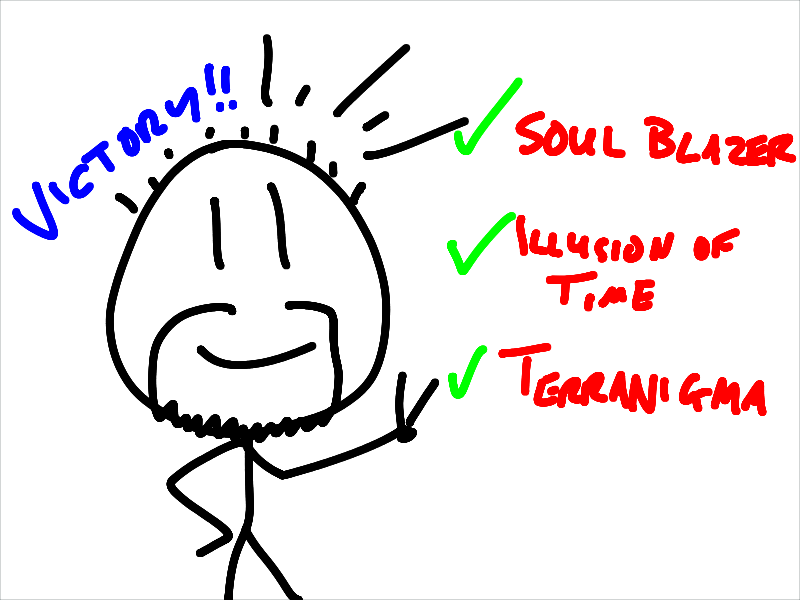
Well, I've done it. I've finally gone and played through all three of Quintet's "Heaven and Earth" games on Super NES: Soul Blazer, Illusion of Timeand Terranigma. (I've also played through The Granstream Saga twice in my life, as well as Actraiser once, as both of those games can be argued to be tangentially linked to the core "trilogy" as much as they're linked to one another directly.)
This is a small thing and some might argue "beating three video games" as not being something particularly worth crowing about, but I am seeing this as a victory for several reasons.
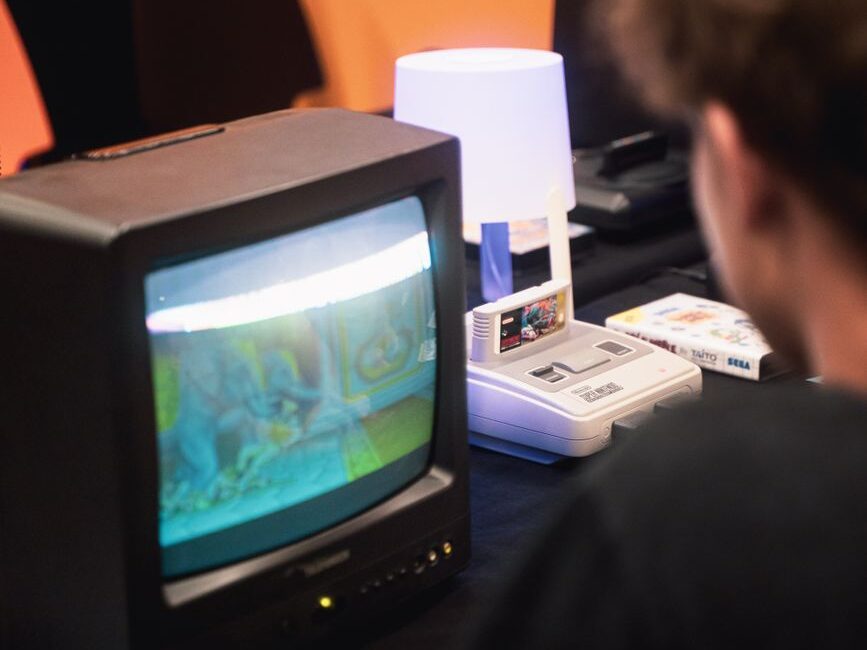
Firstly, it's something I've been "meaning to get around to" for literally years at this point, and have never just, y'know, made the time to do it. But with my lovely MiSTer Multisystem setup on my childhood CRT, it felt like the right time to give these games the time and attention they deserve. Because they're all really, really good! Even with Illusion of Time's absolutely dogshit English translation!
Secondly, one of the reasons I've been putting it off for so long is because I knew I wanted to write about each of these games as I played them, and I wanted to do each of them justice while I did so. Now I've written an article about each of them (with the exception of The Granstream Saga and Actraiser, which I will… contemplate doing in the near future) of about 3-4,000 words each, I am satisfied. I think I have done them justice. And I am glad I have finally taken the time to experience something that I was inadvertently keeping just out of arm's reach by myself. There was nothing stopping me playing these games at any time. I just didn't.
I suppose you can look on it as a sort of mental health issue. When you build something up in your brain to be somehow "important", it can start to seem further and further out of reach — particularly if, in your life generally, you are also pursuing far-off goals that will take a long time to accomplish. As such, you start thinking that you'll never get around to The Thing, because it has taken on such a scary amount of "importance" in your brain that you subconsciously start avoiding it so you don't have to face it directly.
I'm aware that this sounds stupid! We're talking about some video games that are commonly agreed to be very good, so why should I find myself not wanting to "face them"?
Well, that's the thing about mental health. It doesn't always make sense. It doesn't always make you behave rationally, or see things for what they really are. And that's why, at times like this, you need to celebrate the victories that you have achieved. Because if you can achieve victory over something that seemed like it was far off, but was actually relatively straightforward to accomplish when you get down to it, you can also achieve victory over those longer-term goals, as your brain has been treating them in almost the exact same way.
Since, as I've said, I have a bunch of my own long-term goals to accomplish — primarily with regard to my health, fitness and weight — thinking about things in these terms is immensely valuable. You wouldn't think that completing a 30 year old SNES game would provide motivation to better your life in general, would you? But that's what I'm feeling right now, and I'm not sure I've explained it 100% effectively. Regardless, that is what I'm feeling right now — and I'm going to do my best to ride that wave of motivation as far as I can.
Want to read my thoughts on various video games, visual novels and other popular culture things? Stop by MoeGamer.net, my site for all things fun where I am generally a lot more cheerful. And if you fancy watching some vids on classic games, drop by my YouTube channel.
If you want this nonsense in your inbox every day, please feel free to subscribe via email. Your email address won't be used for anything else.
As a pleasant perk of my job, I get copies of all the Evercade cartridges ahead of when they actually release. Consequently, I have been enjoying the two upcoming Visco Arcade collections for a little while now, and, shush, come over here where no-one will overhear — I think they're my favourite carts this year.
Yes, I know we have some Big Names lined up for the rest of the year, one of which everyone already knows about (The Banjo-Kazooie Double Pack, which is releasing alongside Evercade Nexus in October) and another of which is pretty bloody obvious if you've been paying any sort of attention, even though it hasn't officially been announced as yet. And don't get me wrong, both of those carts are great. I am proud of the immense amount of work we put into them, and I think people are going to have some thoroughly pleasant surprises with them besides just rediscovering some old favourites. (There are also two more carts we haven't talked about at all yet, which are also going to be a fun time.)
But Visco Arcade 1 and 2? These carts reflect one of the main reasons I, personally, got into Evercade in the first place: the celebration and enjoyment of weird and wonderful stuff that I've never heard of before, and which has never seen official rereleases for one reason or another. (That's not quite true in the case of the Visco games, in that current rights holder PixelHeart sells NEOGEO cartridges, but the ability to enjoy those is dependent on you owning a working NEOGEO, which is… not something a lot of people have just lying around… although it will be interesting to see what effect, if any, the upcoming NEOGEO AES+ has on the market. But I digress.)
Anyway, yes. Visco Arcade 1 and 2 are both jam-packed full of games I'd mostly never heard of prior to working on the cartridges, and which are now titles I find myself playing and enjoying quite a lot. I'd previously come across the shoot 'em up Andro Dunos and the fighting game Breaker's (although we all learned recently about the apostrophe in the name, which is seemingly not common knowledge despite it being right there in the logo) and I also knew the Drift Out series by reputation (if only because everyone always mistakes Gaelco's excellent World Rally series, which is on Evercade too, for Neo Drift Out) but the others? Brand new to me.
Helicopter shoot 'em up action in Ashura Blaster! Time-travelling jet fighter shoot 'em up fun in Asuka & Asuka! Triple weapon space blasting in Galmedes! Driving a definitely-not-Volkswagen Beetle around mazes and hunting for treasure in Maze of Flott! Hacking and slashing Sengoku-style in Ganryu! Delightful, one and all.
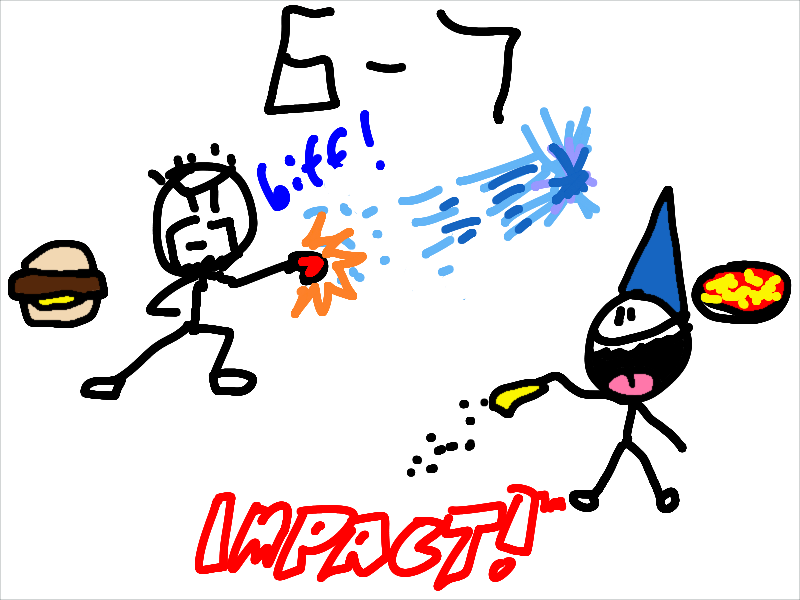
Two of my favourite discoveries are Battle Flip Shot and Bang Bead, two games that are effectively evolutions of Pong, in which you control colourful anime-style characters and try to knock down targets behind your opponent. I partly like these because they're just simple, fun, well-presented arcade games — and I suspect they'd be great with a friend — but I mostly like them because they remind me of a Klik and Play project my friend Edd made once, which he dubbed Impact!
Impact! was a game in which two of the default, included sprites from Klik and Play — "Merlin" and "Street Puncher" — faced off against one another on a top-down representation of a tennis court. They then proceeded to knock an energy ball back and forth, each attempting to hit the item of fast food behind their rival in order to either score points or deplete the opponent's energy bar, I forget which. I believe Street Puncher guarded a hamburger, while Merlin guarded a pizza, though it may have been the other way around. There were lots of burping and farting noises, and it was an endearingly stupid, completely unbalanced but enormously fun way to while away an afternoon with a friend.
I couldn't stop myself from laughing when I booted up Battle Flip Shot for the first time and realised what the game was. "This is just Impact!" I said to myself, realising that there was absolutely no-one around who would have any idea whatsoever what I was talking about. That made me a bit sad, but mostly I smiled at the good memories, and consequently both Battle Flip Shot and its fairly similar (but notably different) successor Bang Bead suddenly became quite special to me, despite me only learning about them relatively recently.
In fact, if I think about the dates we were most likely fiddling with Klik and Play — between 1997 and 1999, during our time at sixth form, primarily — it's entirely possible that Impact! did, in fact, predate Battle Flip Shot, which came out in 1998. And certainly none of us were playing NEOGEO at that time; around then, the NEOGEO was a mythical beast, spoken of only in hushed tones in multiformat games magazines, and we didn't have any arcades anywhere near us to go play an MVS cabinet, either. So Edd's creation was all original do not steal.
I have idle thoughts of trying to get The Old Gang™ back together for some sort of Event that will likely involve drinking, cake and video games. I am also not entirely sure how to go about organising such a thing, as there are several members of said Old Gang I have not spoken to, let alone seen, for many years at this point. But that is, at least partly, why I think it would be fun to get everyone together and have a drunken Battle Flip Shot tournament. And see how long it takes Edd to notice that we're really just playing Impact! – Pro-Gear Spec Edition.
[Obligatory note, since I am talking about Work Stuff: the above is my opinion and my opinion alone, and does not reflect or represent the views of my employer and all that guff.]
Want to read my thoughts on various video games, visual novels and other popular culture things? Stop by MoeGamer.net, my site for all things fun where I am generally a lot more cheerful. And if you fancy watching some vids on classic games, drop by my YouTube channel.
If you want this nonsense in your inbox every day, please feel free to subscribe via email. Your email address won't be used for anything else.
I apparently completely forgot to write anything yesterday. To be fair, I was mildly hungover and thus didn't really want to do much other than play Terranigma, which I made some excellent progress on. I think I'm coming towards the end of that game, so I'll have more to write about it over on MoeGamer when that's done and dusted.
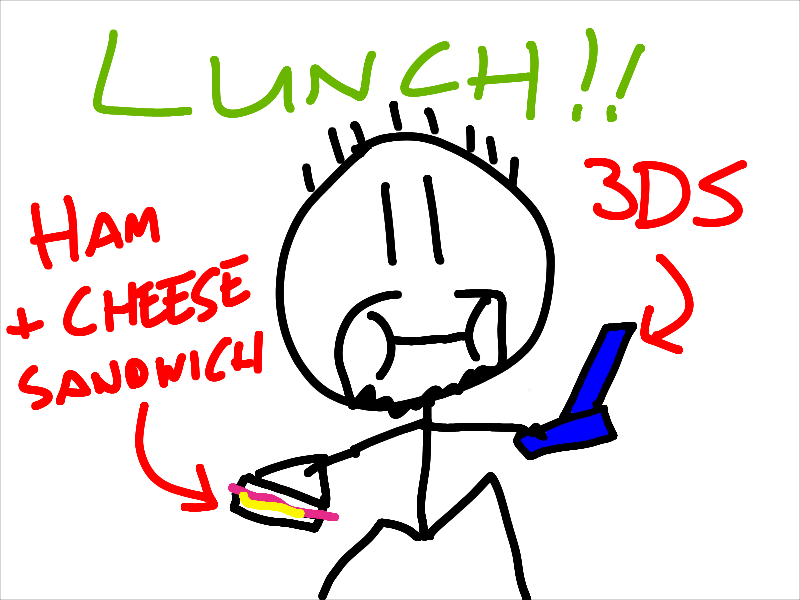
As I'm typing this, it's lunchtime, and this makes me think about what games are suitable for lunch break play. Really, you can play anything over your lunch — and indeed I have done in the past — but there are certain types of games that are eminently more suitable than others.
Long RPGs, for example, are probably not optimal for lunch break play — unless they're designed with a sort of "bite-sized" structure. Good examples of this that I've enjoyed in the past include the Neptunia series, which has small dungeons you can delve into, beat up some enemies, get some crafting materials and maybe complete some quests, and be done in less than an hour. The inverse of this is the grid-based dungeon crawler, where you really need to sit down and concentrate on what you're doing, lest you completely lose the thread of your explorations.
I found Splatoon Raidersto be an ideal lunch break game, because each of its stages are no more than about five minutes, tops. That means you can dip in and play a good few levels in just a short space of time, and feel like you've had a worthwhile experience. Recommended.
Driving games can also be good for this — in fact, after I'm done here, I might just boot up Forza Horizon and drive around a bit. Again, the bite-sized nature of most events in driving games make them eminently suitable for short sessions, such as playing over lunch.
Then, of course, there are arcade games, which are the very definition of this sort of thing. Arcade machines were designed for you to pass by, think "ooh, that looks fun, I'll have a quick go" and while away a few minutes. In most cases, the games are challenging enough, or designed with a built-in maximum play time, that you can enjoy one game multiple times during a short break — or you can sample multiple for a varied bit of fun.
This is why handhelds used to be brilliant to take to the office pre-COVID. Back in those Before Times, I had an office job that was about a 15 minute drive away, so in theory I could come back home and play something at home — indeed, on several occasions I even managed to get a full YouTube video recorded over lunch, which I'm not sure how I achieved in retrospect — but it was much more practical to pop the Vita or 3DS in my bag, stick on my headphones and just blot everything out while I sat on the sofa near the coffee machine, eating sandwiches and playing Neptunia.
I kind of miss that! I mean, I don't miss having to go out to work every day, but having a reason for handhelds to exist was fun. These days, of course, it would probably be the Switch 2 and/or the Evercade EXP-R coming out with me, and both of those are amply stocked with plenty of good "lunchtime games".
But now I work from home, I have a lot more choice. That can sometimes be overwhelming, but it's also nice. It means I can enjoy a wide variety of different things over my lunch break, and then easily get back to work at a suitable stopping point.
So that's what I'm going to go and do right now…
Want to read my thoughts on various video games, visual novels and other popular culture things? Stop by MoeGamer.net, my site for all things fun where I am generally a lot more cheerful. And if you fancy watching some vids on classic games, drop by my YouTube channel.
If you want this nonsense in your inbox every day, please feel free to subscribe via email. Your email address won't be used for anything else.
People in Steam reviews like to declare a game "dead" when the author of said game hasn't updated it for more than about two weeks, but we all know that's just entitled little shits who don't understand that sometimes a creative work is actually finished. However, there absolutely are "dead" games out there, by varying definitions — some are impossible to play any more (I weep for Darkspore, which I bought on sale once, never got around to playing, and it was made completely unplayable before I even had a chance to try it at all) while some are just delisted from digital storefronts. It's the latter I want to talk about today — specifically, the first Forza Horizon.
My first — and, prior to last night, last — encounter with Forza Horizon was with Forza Horizon 4, which I had extremely mixed feelings about. Sure, it was cool to have an open-world driving game set somewhere that looked and felt a bit like the UK, but the way it was structured to have all the hard edges completely smoothed off, lest some player somewhere felt any "friction", made the whole thing feel utterly meaningless. We're talking about a game where you can come last in every event you enter and still make progress. Not what I'm looking for in a driving game, so after getting frustrated with that, I pretty much swore off the subsequent entries in the series.
However, I was aware that earlier entries in the series were very well-regarded, and in the absence of owning an Xbox One or Series Whateverthefuck, the only one accessible to me was the first one for Xbox 360. This has apparently been delisted from everywhere for some time now, but you can still get second-hand physical copies, and indeed, that's what I did on a trip to CEX some time ago.
I booted it up last night for the first time and found it quite enjoyable. However, one thing became increasingly apparent the longer I played: the fact it, plus all its DLC and microtransactions, had been delisted from sale made it well and truly "dead" — to such a degree that there are certain functions in the game you just flat-out can't access any more, despite the menu options still being there.
This is apparent right from the game's title screen, where you have the option to play "Horizon Rally"… except you don't, because you need the Horizon Rally DLC for that, and you can't get that any more, leaving you with a completely useless menu option, plus a number of loading screen tips informing you that you can buy it from the Xbox Marketplace… which, as previously noted, you cannot.
I thought I was going to have a real problem when I opened the map screen and there were button prompts for "Treasure Map" and "Fast Travel Anywhere". Now, you see a button prompt in a game, and it's reasonable to think that it's a built-in function of the game, right? You press the button indicated, and the thing happens. That's how it usually works, right? Not in Forza Horizon land. Pressing either of these buttons gives you a pop-up informing you that you can buy those two pieces of functionality — which, respectively, allow you to immediately teleport anywhere on the map, and reveal the location of hidden items on the map — using "Tokens", which you can, of course, get from the Xbox Marketplace. Except you can't do that because everything about Forza Horizon has been delisted.
I was concerned in the former case that this meant the entire fast travel feature would be unusable because you couldn't buy a fucking microtransaction any more, but thankfully progressing a little further revealed that there is still a built-in fast travel facility — it's just a bit more inconvenient, since you can only fast travel to specific landmarks that you've previously visited and not, like, the various race events that appear across the map. I wasn't so concerned about the treasure map, meanwhile, since all it is, basically, is a cheat code that you have to pay for.
Little remnants of Forza Horizon really, really wanting you to pay up for microtransactions that no longer exist are riddled throughout the entire game. At least one load screen tip for every loading break will have some sort of exhortation to buy something. Those broken Fast Travel Anywhere and Treasure Map buttons don't go away. If you want to buy a new car in the game, you can do so with the credits you earn through gameplay or "Tokens" that you can no longer purchase with real money.
I guess I should be thankful that Forza Horizon is, at least, still playable, even with all its online functionality and purchasable bullshit inaccessible. If anything, I prefer the fact that there's now no means of simply paying money to not play the game, which is what at least some of these options amounted to. You'd just think they'd, you know, turn all that shit off in a patch if they knew it was no longer going to be available. I mean, presumably they added in the "Horizon Rally" option at some point when it was actually available — why not just remove it again in a final update when the servers and DLC went offline?
We're going to start running into this more and more as time goes on, and it's not always going to be optional DLC and microtransactions that are affected. Thankfully, we have not yet reached a point where patch servers are no longer available for console games that require them, but at some point we are going to have to reckon with the fact that a lot of today's physical releases ship either broken or incomplete, and I'm not sure the work has been adequately done to prepare for that time when the "official" patch servers are no longer available.
This, of course, is a big part of what the whole "Stop Killing Games" movement is about — and I know that certain parts of the gaming history and preservation communities are at least starting to have a think about the best way of handling all this. I'm just concerned that it's going to be too late by the time we find a solution; how many more games out there are technically functional, like Forza Horizon, but have elements that are now completely inaccessible?
Want to read my thoughts on various video games, visual novels and other popular culture things? Stop by MoeGamer.net, my site for all things fun where I am generally a lot more cheerful. And if you fancy watching some vids on classic games, drop by my YouTube channel.
If you want this nonsense in your inbox every day, please feel free to subscribe via email. Your email address won't be used for anything else.
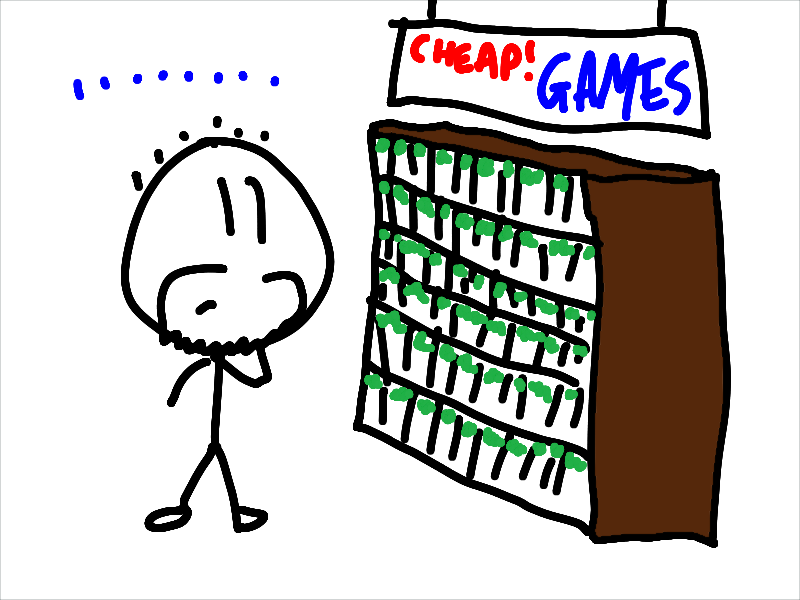
At lunchtime today, I thought I would actually go out for a bit and have a quick look in my local CEX. It's only about a five minute drive away, so I had plenty of time to grab a sandwich and then have a bit of a browse. And on past visits to CEX, I have usually come away with an armful of goodies, which I have acquired for pretty good prices — even if some are missing the manuals. Today, however, I found myself browsing the selection and not really feeling drawn to anything in particular.
I've been feeling this a bit recently, particularly with regard to recent releases. There are exceptions, of course — I've picked up Star Fox, Rhythm Paradise Groove and Splatoon Raiders for Switch 2 over the course of the last month, and when I got home from CEX, I found myself ordering copies of the first four Saints Row games (original versions, not remasters, as I've heard mixed reports about the latter) as well as the newly announced EDITIONS from LostInCult for Sektori, Dread Delusion and Easy Delivery Co. So in actual fact I probably spent a lot more than I would have spent if I'd come out with an armful of 360, PS3 and PS4 games from that CEX.
But I don't know. I just wasn't feeling it in the store today. I had a couple of things in mind that I thought I might like to look out for (notably, the aforementioned Saints Row games, following a discussion with a pal earlier) and those did not appear to be in attendance, and there wasn't much else jumping out at me. I thought about trying to expand and/or complete my collection of Need for Speed games on Xbox 360, but the vaguely responsible part of my brain pointed out that I haven't played the parts of that collection I already own as yet, so it would probably be a little silly to get more. (Actually, it wouldn't have made much difference; they were like £1.50 each; I just couldn't be arsed.)
I don't want to say that I'm falling out of love with gaming, because that very obviously isn't true. But with all the recent, unwelcome moves in the current industry — Microsoft continually stepping on rakes, Sony putting an expiration date on physical media, Nintendo continuing to push Game Key Cards — it's hard not to feel a bit cynical about current things, and that my relationship with the hobby is changing. On top of that, stuff that is a few years old now is still good! Since I'm not someone who has ever got particularly sniffy about resolution and frame rate, I'm pretty sure I'll have just as good a time with those Xbox 360 versions of the Saints Row games as I would have done if I'd picked up the (pricier) PS4 or Switch versions.
I mean, hell, outside of Splatoon Raiders, the other "big game" I'm currently playing is on the SNES. And I'm glad that I have the ability to enjoy this broad range of stuff — ranging from late '70s/early '80s computer and console stuff right up to brand new releases. I know not everyone feels able to do that for one reason or another, and honestly I feel a bit sorry for those people who can't. Perhaps you just had to "be there" for it all to have those positive associations, and if I was 20-30 years younger I might feel differently about games that ran at sub-1080p resolutions and less than 60 frames per second.
But, as it happens, that is not the case, and thus I will continue to enjoy my Old Shit alongside very carefully selected and curated New Shit, and try not to spend too much time mourning an industry that, in its current state, seems determined to self-destruct.
Want to read my thoughts on various video games, visual novels and other popular culture things? Stop by MoeGamer.net, my site for all things fun where I am generally a lot more cheerful. And if you fancy watching some vids on classic games, drop by my YouTube channel.
If you want this nonsense in your inbox every day, please feel free to subscribe via email. Your email address won't be used for anything else.
Splatoon Raiders arrived yesterday, a day earlier than I was expecting it, and I've been playing it. It's a good time! It's the latest in an increasingly long line of titles from Nintendo that feel like video games used to feel like. It's not trying to be a movie, it's not trying to be an overly elaborate piece of art, it's not trying to tell an in-depth story — it's just trying to be a fun, enjoyable game. And it's succeeding at that. (This is not to say that there is no artistry within the game itself, mind. Rather, attempting to "be a work of art" is not its primary focus.)
For the unfamiliar, Splatoon Raiders is a Nintendo Switch 2 game that, in contrast to the prior three Splatoon games, places the single-player experience at the forefront. Those of you who have never played a Splatoon game before may be surprised to note that there is, in fact, a single-player game in every Splatoon game, and even more surprised to hear that it has been consistently very good in the past — it's just very few people ever really talk about it, as the focus of the series has always been on its competitive multiplayer modes. And that's a pity, because although each game's single-player campaign is perhaps a little on the short side, they (and the DLC for the more recent ones) have been consistently excellent, featuring top-notch level design and some quality gameplay that blends action, platforming, puzzle solving and simple observation skills.
Splatoon Raiders is a little bit different. Although it unfolds in a series of self-contained levels, these are, for the most part, a tad more open than the rather linear, abstract levels of prior Splatoon campaigns. There are some stages that very much have the feel of classic single-player Splatoon — mostly the "Sample Dungeon" stages which challenge you to overcome a series of obstacles and encounters with a specific loadout — but on the whole, the focus is a bit different.
That's no bad thing, though, and one thing Splatoon Raiders does pretty well is keep things varied. On some levels you'll be fighting your way through a relatively linear path to an end point, where you receive a treasure. On others, you'll be in an arena, battling to defeat enough enemies to build up an energy bar before time expires. Some levels present you with a series of these arenas. Others still are more open, tasking you with building up energy by defeating enemies on a relatively large map until you are able to mine a large crystal and obtain its resources.
The very nature of the game means that there's not quite as much of the clever platforming and observation challenges of classic single-player Splatoon, but that's not to say it's completely absent. In fact, most of the non-arena stages have a series of hidden items on them, and tracking these down very much has the feel of the older Splatoon campaigns, because they will require you to go a bit off the beaten track, investigate interesting-looking areas and sometimes take a few risks. And the rewards are worthwhile; besides scrolls that contain lore, most of these stages also contain a compass, which unlocks access to a semi-secret level — one of the aforementioned "Sample Dungeons".
I'll doubtless have more to say about the game when I've played it a bit more, but so far I'm impressed. The "looter shooter" element provides plenty of interesting opportunities for progression — and incentive to try various different types of weapon — without being overly obnoxious or overloading you with pointless variants on the same equipment. A variety of simple and straightforward crafting systems allow you to unlock new abilities and features. And the ability to revisit past levels in "Spicy" mode provides alternatives for gathering materials and loot than simply grinding the same level over and over again.
The only thing I'm not entirely sure about is the music. I get why it is the way it is — it's an attempt to reflect the chaos of the battles in which you find yourself — but dear Lord, there are certain tracks that sound like a school orchestra tuning up and then immediately launching into a failed attempt to play the complete soundtrack to Darius. I would have much rather had music somewhat akin to what there was in the multiplayer matches of regular Splatoon, but you can't have everything I guess. It certainly creates an atmosphere of sorts, I'll give it that!
There will, of course, be a full write-up of Splatoon Raiders on MoeGamer when I'm satisfied that I've played enough of it to be able to speak with complete confidence about it. But for now, I'm happy to say that I'm having a good time, and I'm looking forward to playing some more!
Want to read my thoughts on various video games, visual novels and other popular culture things? Stop by MoeGamer.net, my site for all things fun where I am generally a lot more cheerful. And if you fancy watching some vids on classic games, drop by my YouTube channel.
If you want this nonsense in your inbox every day, please feel free to subscribe via email. Your email address won't be used for anything else.
A trait I have somehow been able to hold onto over the years — and which I have no intent of letting go of — is the ability to be impressed by things which, today, are not actually "impressive" as such, but which would have been impressive back when they were current. To give just one example, my mind is still blown by the parallax scrolling in the backdrop of Sonic the Hedgehog's Green Hill Zone.
To give another example — and the one that prompted me to write this today — I am currently playing Quintet's Illusion of Time (aka Illusion of Gaia to North Americans) and I have been thoroughly impressed by its visual design overall, but one of my favourite things is the fact that its parallax backdrops, when it uses them (it's a top-down game) accurately reflect the things that you're supposed to be "above". To put it another way, when you're high above something, the things you can see down below are accurate to what you would see if you were actually down there.
Looking back over my Soul Blazer video, I'm pretty sure Soul Blazer did this in a few places as well, but Illusion of Time seems to do it fairly consistently. And I'm impressed! They didn't have to go to that much effort, but they did!
The reason this impresses me is that a lot of games like this would have used a fairly generic parallax backdrop, and no-one would have minded too much. The illusion of depth would be there — which is what parallax is used for — and the fact that it wasn't "accurate" wouldn't have mattered, because it has no real impact on the actual gameplay.
For example, The Legend of Zelda: A Link to the Past uses a very simple tiled parallax backdrop to show that there is something beneath you rather than it being a bottomless pit. You can use this information to recognise which pits it is safe to jump down — to get to otherwise inaccessible areas, for example — and which it is not. While an accurate reflection of the floor beneath's map might be helpful in this situation, Zelda has enough other features to allow you to calculate the place where you will end up without having to be able to see down the hole. And, indeed, with the limited area you can see through Zelda's holes (pardon me), it's probably more practical to just look at the map and recognise "this is a hole I can jump down" rather than try to figure out exactly where you'll land from the tiny bit of parallax background you can see through said hole.
In Illusion of Time, however, these parallax backgrounds are purely there to look cool. In one sequence where you're exploring a mine, for example, you initially see ropeways with hanging platforms "in front of" the screen, suggesting they're above where you currently are. Later in the stage, you get up to the level of the ropeways and ride one across a large gap. Since, so far as the game is concerned, you are in a different "room" while you're doing this, there probably didn't "need" to be a parallax background at all, but not only did Quintet include one, it was a full, accurate map of the floor beneath.
That, to me, is impressive! It is not impressive by today's standards, because today you would just build your entire level in 3D and be able to see through holes and chasms to the floor beneath naturally. I am impressed with this in Illusion of Gaia, however, because I know that it wouldn't have been that simple to do. Well, it might have been relatively simple — all it really needs to be is an image of the floor below's map used as the parallax background — but it's a level of effort I recognise as being outside of the norm for the time, and thus I appreciate it.
This is where having an understanding and an appreciation of a wide range of things within your hobby is helpful. Someone who had only ever played modern games would think nothing of this little feature. But having grown up with all these different "generations" of gaming hardware, developing a vague (if non-technical) understanding of their capabilities (and lack thereof) along the way, I can recognise when something is an impressive achievement for its original time of release.
I hope I never let go of this trait. It adds so much depth of enjoyment to my appreciation of older games — and I encourage you to try and develop it, too.
Want to read my thoughts on various video games, visual novels and other popular culture things? Stop by MoeGamer.net, my site for all things fun where I am generally a lot more cheerful. And if you fancy watching some vids on classic games, drop by my YouTube channel.
If you want this nonsense in your inbox every day, please feel free to subscribe via email. Your email address won't be used for anything else.
There was yet another round of Tedious Discourse™ today over what the word "retro" really means, if anything, when it comes to video games. As always, there were lots of varying definitions, no agreement, and a bunch of people getting in a bit of a flap about it when their definitions of "retro" didn't line up with other people's definition of "retro".
Several people, as part of this process, pointed out that the term "retro" is not really all that helpful any more, and I'm inclined to agree. And yes, I'm aware I say this as part of a company that specifically markets itself as "retro gaming"-focused — and someone who has a "Retro Video Games" category on his blog — but what I'm about to talk about applies to all that, also.
My feelings are pretty simple: drop the "retro". They're just games. Zork? Game. Adventure for 2600? Game. The Last of Us? Game. The Witcher 3? Game. Gone Home? Game. (There, that should have covered everything that might piss at least one person off.)
The reason I say this is that as soon as you introduce the word "retro" into the mix, you also introduce a perceived barrier to entry. "Retro gaming" is perceived as a markedly different hobby to "gaming", whereas this doesn't really happen with any other medium. You might have people who are into different genres of books, movies, music, TV shows and suchlike, but you don't get people going "yeah, I'm a retro reader". Even people who make the majority of their reading time involve pre-20th century literature just "enjoy reading" — because most of them don't confine themselves to that one, single niche all of the time. Why? Because that's daft. Just because you like Jane Eyre doesn't mean you can't enjoy The Da Vinci Code or whatever. And you're not any less of a "reader" if you do.
The net effect of this when it comes to gaming is that you get people who will only ever play the latest and greatest games, and if it came out more than three weeks ago it might as well not exist, and you get people who will happily play a triple-A cinematic blockbuster one evening, an 8-bit home computer game another and a PlayStation RPG the next. You also get people who fall somewhere between those two extremes, which is a perfectly reasonable and healthy way to approach things. No-one is saying you have to enjoy everything from throughout the entirety of gaming history, but to draw a completely imaginary "hard cutoff" line between what is "modern" and what is "retro" based on, let's face it, nothing other than vibes is kind of ridiculous.
Case in point: currently, I am playing through Soul Blazer. This is a game originally released for Super NES in 1992 (1994 if you're PAL like me). There is absolutely nothing about this game that someone who has only ever played games released in the last three weeks would not be able to grasp. There's a common misconception that "retro games are complicated, you need to read the manual", but Soul Blazer is literally "move in four directions, hit things with your sword", and everything else is introduced either organically through gameplay, or explicitly told to you. You could release Soul Blazer today, completely unchanged — gorgeous pixel art has never gone out of fashion, thankfully — and it would be regarded as a good game, because it is a good game. It's not a good retro game, it's just a good game.
I think some of this likely originally stems from the crossover between the Mega Drive and SNES era to the age of PlayStation, Saturn and N64. Rumours abounded at the time that developers were specifically being discouraged from making 2D pixel art games on PlayStation, because polygonal 3D — even the relatively janky polygonal 3D of the PlayStation — was regarded as the One True Future. But I'm not sure quite how true that ever was, because one of the absolute most beloved games of that particular period — Castlevania: Symphony of the Night — was resolutely 2D, with only very occasional polygons used for special effects or parallax backgrounds. And there are countless other beautiful, wonderful and well-loved 2D games from that era — particularly on Saturn. Marginally less so on N64, but that was operating in a bit of a world of its own anyway. (Also, play Mischief Makers.)
That doesn't really explain how this sort of thinking appears to have persisted for this long, though. Yes, over the last 20 years or so there very much has been a rise in the sort of gamer who only ever buys that year's Call of Duty, FIFA/Madden or equivalent and leaves it at that, who doesn't really consider the history of the medium. But there seems to be the perception that there are plenty of people who have been gaming since the '80s — even earlier in some cases — who, for whatever reason, will not play anything released before a certain date — or, at the very least, will corral those experiences into a distinct "retro gaming" category, distinct from the implied "proper" modern gaming sector where they spend the majority of their time. I don't doubt people like that exist, but I wonder how widespread they really are.
Some of this is down to access; we're all familiar with that Video Game History Foundation report, or at least I hope we are at this point. But "not commercially available" is by no means the same as "inaccessible" these days. You don't even need original hardware; emulation of pretty much everything up to the Xbox 360 and PlayStation 3 era is in a good place, and after that (some would argue during that period) the newer games consoles were basically just PCs anyway, so outside of a dwindling number of genuine exclusives, you can play all that stuff pretty easily, too. At this point, everyone, everywhere, so long as you have some combination of an Internet connection, a computer and a monitor or TV, can enjoy pretty much any game released within the last 50 years without very much in the way of effort.
And modern rereleases of stuff that first came out many years ago are happening, too, if you don't want to delve into the proverbial high seas! There's Hamster's Arcade and Console Archives series on the current consoles. There are numerous bespoke releases of classic console, computer and arcade games on various platforms. Evercade, the platform I work on, has a huge number of cartridges at this point, covering more that 700 games between them, all of them officially licensed rereleases!
Any perceived barrier to entry that "retro gaming" might have had in the past — be that the technical knowhow required to get old finicky hardware up and running; the possession of vintage CRT TV hardware; an understanding of what "RGB" is; the ability to recap an Xbox or replace the battery in a Dreamcast — has not been there for a good long while, unless you want to enjoy a specific type of experience. (Snobbery over whether you're "doing retro gaming right" is a whole other discussion, mind, and it's hopefully already clear where my opinions fall on that side of things.)
If you enjoy games, you (hopefully) just enjoy games. There is absolutely no rule written down anywhere that places down a hard boundary of what you are allowed to enjoy, based on whatever combination of "year of release" and "age of player" people are using to calculate their completely arbitrary definition of "retro". Sure, some older stuff might take a little adjusting to if you're unfamiliar with it — much as reading Jane Eyre takes a bit of adjustment after reading The Da Vinci Code — but it's still the same basic form of entertainment at heart: push buttons, fun (or at least interesting) stuff happens.
Go on. Spoil yourself. Play something from a system you've never explored before. Revisit a game you haven't played since childhood. Fire up a copy of that one game you always saw in magazines and lusted over, but which you never got for Christmas or birthdays. And, with an appropriately receptive and open mind, I pretty much guarantee that you'll have an experience just as interesting, compelling and worthwhile as if you played something that released last week.
Want to read my thoughts on various video games, visual novels and other popular culture things? Stop by MoeGamer.net, my site for all things fun where I am generally a lot more cheerful. And if you fancy watching some vids on classic games, drop by my YouTube channel.
If you want this nonsense in your inbox every day, please feel free to subscribe via email. Your email address won't be used for anything else.
I started typing out a post about how shit everything was. I got to about 600 words, and I even found a really good stock image of some horseshit.
Then I looked at what I had written and thought, "no, I should not give in to despair, even if it does seem like it has been a very long time since anything has happened which I can honestly say is to the betterment of humanity as a whole". So I deleted all of it, replaced the image of horseshit with a picture of Patti (above) and decided that a helpful thought exercise would be to ponder some Nice Things. Doesn't matter what they are, how big they are, how important they are — just that they are Nice Things that I thought were worth celebrating. So let's pick out… ooh, let's say, five, as that's a nice number to work with. And I'm going to focus on gaming because a lot of stuff in gaming sucks right now.
Mike Bithell's new game looks cool
Mike Bithell, of Thomas Was Alone fame, has been teasing his new game for a while, and yesterday he finally revealed it. It's called Vampirium: 1997and is set in an alternate near-history where Dracula is the king of England, and you are one of his retainers, with dark powers all your own.
Bithell describes the game as an "immersive sim", but if you're thinking of a first-person adventure-style affair — which is what the term "immersive sim" usually gets applied to — you might be surprised to discover that this is a rather more abstract affair that, from what we've seen so far, looks to take a lot of cues from tabletop gaming. The "immersive sim" aspect comes from how you have a lot of freedom to tackle situations as you see fit — supposedly you can "click and combine game tiles to access verbs and craft your own diabolical resolutions". Sounds pretty interesting to me!
The game doesn't have a release date as yet, but will be launching into Early Access in the near future, and having a bunch of stuff added to it as the community gets to grips with it. It will then have a "1.0" release when all that is done, and we should have another great vampire game on our hands.
Wadjet Eye Games is 20 years old
If you (yes, you!) have ever uttered the fateful words "adventure games are dead" at any point in recent history, you have not been paying attention, because one of the absolute best developer-publishers to ever Do That Thing turned 20 years old today. Yes! Wadjet Eye Games has been releasing excellent adventure games since 2006, and their work has been going from strength to strength year after year — both in terms of the stuff they've made themselves, and the titles they've published from other developers.
I honestly, genuinely believe that the point-and-click adventure game is in a better place today than it ever was back in the LucasArts and Sierra heyday; don't get me wrong, I adore the "golden age" games and always will, since they were formative experiences for me. But you cannot look at incredible recent(ish) releases like The Excavation of Hob's Barrow(developed by Cloak & Dagger and published by Wadjet Eye) and Old Skies(developed in-house at Wadjet Eye) and think "nah, it was way better back then".
It fills my heart with gladness to know that amid all the chaos in the games industry right now, a company dedicated to releasing games of the kind it believes in — not what shareholders want, not what passing trends say you "should" be making, not what is supposedly the most profitable — is able to not only survive, but thrive. I sincerely hope Wadjet Eye Games continues to stick around for many years to come.
Scott Pilgrim EX is fun
My limited edition copy of Scott Pilgrim EX, which comes in a lovely oversized NeoGeo-esque clamshell case, arrived yesterday, and I spent most of the evening playing it through. It's a lot of fun! It successfully manages to feel true to the prior game — which is an all-time favourite — while shaking things up a bit and keeping things interesting.
I'll have more to say about this over on MoeGamer at some point in the near future, but suffice it to say for now that I had a lot of fun with my first playthrough — and with a full run through the game only being about 2.5 hours in total, I can see plenty more in my future, particularly with the possibility of online multiplayer in the mix.
Soul Blazer is great
I already knew this, but my recent starting-a-new-playthrough-and-I'll-probably-definitely-finish-it-this-time go at Quintet's awesome SNES action RPG Soul Blazer has reminded me how much I like that game. Again, I will write more about this on MoeGamer when I've actually beaten the damn thing — I'm a little shy of halfway through so far, I believe — but I am happy to say, right now, that if you have never played this delightful little game (and it is pretty little — I reckon it'll take less than 10 hours to beat, which begs the question why I've never gotten around to doing so) then you are very much missing out on one of the most charming 16-bit games there ever was.
I have finished "The Best Bit" of Final Fantasy XI
A lot of people seem to agree that Chains of Promathia is the best bit of Final Fantasy XI and now, outside of the epilogue quests and the optional Bahamut fight (which I might wait to do until I'm level 99 for the sake of simplicity) I have finally beaten it! This has been a kind of "gaming ambition" for me pretty much ever since I played Final Fantasy XI for the first time, and I have finally made it a reality.
This is another thing I would like to write about on MoeGamer in the very near future, so I will simply say that I enjoyed myself, and I'm glad I finally took this journey. I think I need at least a short break before heading off to seek the Treasures of Aht Urhgan though…!
Anyway, those are Five Good Things of Varying Relevance in gaming right now. I post these not to diminish the impact or importance of the Bad Stuff happening at the moment, but instead to hopefully provide a little reprieve. I sincerely wish that everyone who is going through tough times right now — and there are a lot of people going through tough times in the industry right now — is able to at least find some joy in the day-to-day, and doesn't give in to despair; I also hope that many of these people will tell their stories, frankly and honestly, because they need to be told. And they need to be told by the people who have been affected, not by some random idiot on the Internet.
One day, I hope these terrible times will be behind us, and we will be able to look back on them and go "fucking hell, never do that again". Until then, take care of yourselves. Don't give up. And play Soul Blazer.
Want to read my thoughts on various video games, visual novels and other popular culture things? Stop by MoeGamer.net, my site for all things fun where I am generally a lot more cheerful. And if you fancy watching some vids on classic games, drop by my YouTube channel.
If you want this nonsense in your inbox every day, please feel free to subscribe via email. Your email address won't be used for anything else.
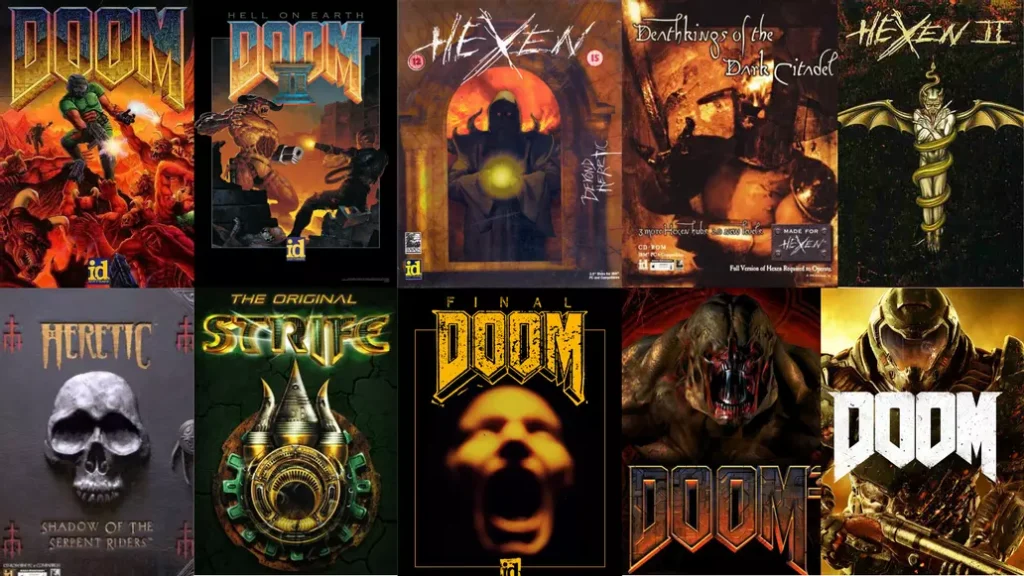
I think one of the hardest things to watch during the latest of myriad sessions of layoffs over at XBOX, The Everything Console has been seeing id Software be gutted. Everyone has That One Company who always made stuff that they liked, which has been there since their childhood, and for me I think that company is id Software.
Some of my fondest memories of playing games in the early (relatively speaking) days of PC gaming were of id Software titles. Commander Keen. Wolfenstein 3-D. Doom. Quake. All absolute legends of gaming history, each for their own reasons.
I didn't just love id's games for the games themselves — though that was a big part of it. I loved them for the way they brought my friends and I together over shared enjoyment of them. I loved them for helping me come out of my shell a bit and do some part-time work for a local shareware library. I loved them for how they allowed me to relate to the people I worked alongside during my Year 10 work experience in the PC Zone offices.
And, of course, I loved them for introducing me to shareware, providing me with hours of entertainment for absolutely no cost whatsoever. I played the shareware episodes of Commander Keen, Wolfenstein 3-D and Doom to absolute death, only coming to the full versions some time later — many years later in some cases. At the time I was playing these games, I was still a teenager, and not financially independent enough to do something as serious as mail-ordering the full version of a game from the States. I kind of wish I had at least ordered a copy of Doom; those original mail-order boxed versions are worth a fair bit now!
And there's all the surrounding culture, too. Wolfenstein 3-D introduced me to modding games. I'm not generally a huge fan of modding games these days, but back in the Wolfenstein 3-D and Doom days I found it fascinating, and highly enjoyable to make Wolfenstein 3-D maps in particular. (At the time, I found Doom editing to be a bit confusing and never really got on with it. Maybe I should try it again now I am old and, in theory, less stupid.) Hell, as I've told the story numerous times before, modding Wolfenstein 3-D once earned me $200 and a place in the official "Super Upgrades" expansion pack by Apogee — an oft-forgotten but nonetheless official addon to the original game.
Of course I'm aware that the id Software of today is very different from the id Software I grew up with — but I'm sure there were at least some people who have built a whole career and a life there. While the company isn't going away entirely, I am saddened to see it take such a devastating blow; the current state of the games industry is, frankly, really quite worrying, and I'm concerned a lot of well-established names aren't going to survive what is increasingly looking like a full-on crash.
I'm not going to be angry and yell about what has happened, for a variety of reasons. Most of all I just want to raise a glass to id Software, makers of some of the greatest games of all time, and celebrate the amazing times they have given me over the years — and continue to give me, as I so often return to their most famous works.
Who knows what the future holds? I certainly don't. I sincerely hope that, in the long term, it looks a lot brighter, especially for everyone who has been affected by Recent Happenings.
Want to read my thoughts on various video games, visual novels and other popular culture things? Stop by MoeGamer.net, my site for all things fun where I am generally a lot more cheerful. And if you fancy watching some vids on classic games, drop by my YouTube channel.
If you want this nonsense in your inbox every day, please feel free to subscribe via email. Your email address won't be used for anything else.