2140: Rate Me!

0140_001

I've been thinking about user reviews. It's a long-standing joke that user reviews aren't always entirely useful, particularly when it comes to people who think they're more hilarious than they actually are, but on balance, I think they're a pretty good thing. Or, rather, I do actually look at them when considering whether or not to purchase something or make use of a service.

The reason I got thinking about this is because I tend not to leave reviews myself very often. I am, for the most part, one of those people who tends only to leave bad reviews when I hate something, and just let good work go silently appreciated.

This is no help to anyone, of course, because recommendations are just as important — if not more so — than advice to Steer Well Clear. And, given I'm a reasonably intelligent sort of chap and I make use of user reviews to inform my purchasing decisions, I should probably make more of an effort to be helpful to other prospective purchasers.

From hereon, then, I'm going to try and review more things in the hope that the things I have to say are helpful to someone. I've already done a fair few Steam reviews over the years, and I always make a point of trying to be informative when I write them. But I'm also going to try and review more of the apps I use on my phone, and software I download on my other devices such as my 3DS, Vita and PlayStation.

I'm actually quite taken with Nintendo's approach to reviews on the Wii U and 3DS; rather than allowing people free reign with their comments, it simply asks a number of simple questions that, in their own right, are quite informative and helpful. Firstly, there's the question of whether you think the game would appeal more to men or women. Then it asks you how old the person who enjoyed the game the most was. Then it asks you to give it a star rating between one and five, and finally asks you whether you think it's more suitable for "Everyone" or "Gamers", and whether it's more suited to "Casual" or "Intense" play sessions.

Five questions that give you a reasonably good idea of what the game experience is all about, and it takes a matter of seconds to fill them out. I am all for that.

In that spirit, then, I present to you a series of five-word reviews of things I've played recently.

Nintendo presents New Style Boutique 2: Fashion Forward – More fun than you'd think.

The Legend of Zelda: A Link to the Past – Still relevant now, in 2015.

The Legend of Zelda – The Dark Souls of Zelda.

DiRT Showdown – Lots of fun in cars.

Sonic and Sega All-Stars Racing Transformed – Mario Kart meets Blur. Yes!

Mini Metro – Minimalist puzzler with lovely sound.

Hyrule Warriors – Impa is the most badassest.

OutRun 3D – Arcade classic still plays well.

Streets of Rage 3D – Mega Drive brawler still fun.

2118: Mini Metro

0118_001

A new release on Steam caught my eye earlier today: one Mini Metro, an abstract puzzle game based around the idea of subway systems. Feeling like taking a punt on something unusual, I downloaded it and was delighted to discover a simple to understand but tricky to master puzzle game with some highly original, interesting mechanics and a gorgeous, clean aesthetic.

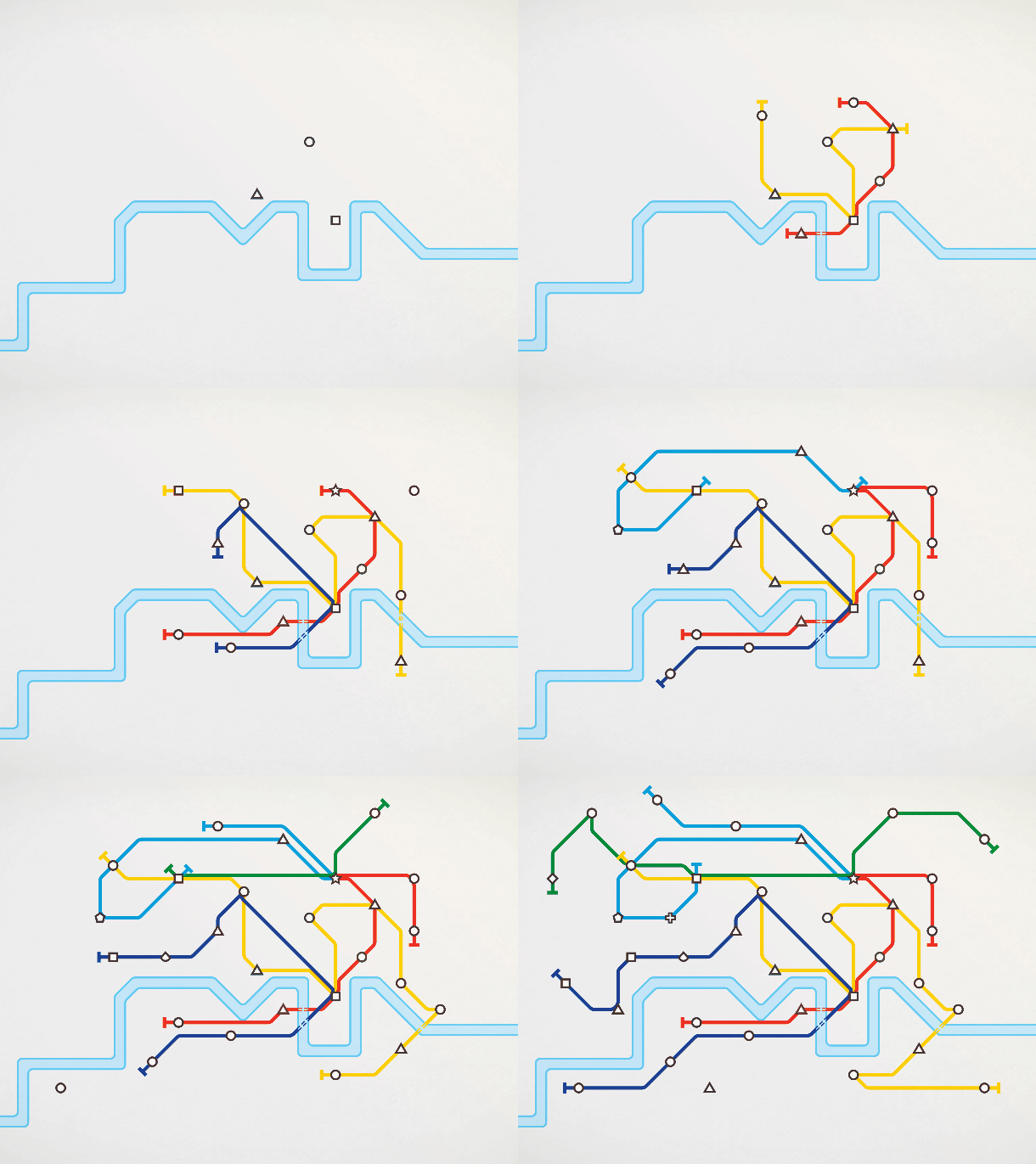
Mini Metro places you in charge of the subway system of one of several cities around the world. The city itself doesn't make a huge amount of difference save for the map on which the gameplay is based: most of them have some sort of body of water which will require you to construct tunnels or bridges to traverse, and you only have a limited number of these to use.

The mechanics are simple: stations appear across the map, represented as large shapes. At each station, small shapes appear to represent commuters. The shape of the commuter represents the station they want to get to. They're not fussy about which one of several identical stations they get to, but they most certainly do want to get to, say, a "triangle" station. In order to fulfil their requests, you need to draw coloured subway lines between the stations in order to set up efficient routes. You begin with just a couple of available colours, but as each in-game "week" passes, you have the option of adding more lines to your network — though you have to be careful, as if you don't have an actual train to put on the line, it's not much good to anyone!

London (1138)

As the game progresses, more and more stations appear and the map zooms out to expand the available playing area. Certain stations may be replaced by unique symbols such as stars or pentagons, too, forcing you to ensure that these stations have good access from all lines, or at least a relatively straightforward route of interchanges to use. In order to manage with the growing requirements of your city's commuters, each "week" you get a new locomotive to add to your network, as well as the choice between either a new colour of line to add or an extra carriage to add to one of your trains, improving its capacity. Using these upgrades effectively is key to success just as much as laying out your lines carefully.

There's a few different ways to play, too: the standard mode simply ends when one of your stations becomes overcrowded, the endless mode keeps playing regardless of overcrowding, and the Extreme mode forces you to live with your mistakes, as unlike the normal mode you are unable to edit your lines or trains once you've put them down. There's also a Daily Challenge mode, where everyone gets the same level to play on a given day, and competes for the best ranking on leaderboards.

I've only played about an hour of Mini Metro so far, but I anticipate it being one of those games I dip into every so often when I have a few spare minutes to while away. It's an understated, fun little game with some excellent mechanics and a lovely aesthetic, and if you're a fan of more abstract games it's well worth a look.

2115: Jade Penetrate

0115_001

Had a go at a game that's been loitering in my Steam library for a while today: eXceed 3rd Jade Penetrate Black Package. This curiously named game is the third in a series of Japanese indie "bullet hell" shoot 'em ups that I grabbed in some Steam sale or other and have never really explored all that much. The first two games are rather Touhou-ish, while the third, developed by a different team and having a plot that seemingly has absolutely nothing to do with the first two, draws favourable comparisons to Cave's Mushihimesama series — that, coincidentally, is coming to Steam tomorrow.

Anyway. This being a Japanese game there is a plot where you perhaps wouldn't normally expect to find one, involving some sort of "to the death" tournament between what appear to be dragon girls aiming to rule over Pandemonium. As you might expect, angst and melodrama ensues and while none of it really matters to the actual game as such, the character designs are cute, the voice acting is decent and it infuses the game with a certain degree of personality that it might not otherwise have had.

The thing I like about eXceed 3rd is that it's not the kind of bullet hell game that immediately slams your face into a desk and then flushes your head down the toilet. It's accessible and easy to understand, though to get the highest scores you'll need to be a little more technical. There's just two modes of fire — a standard spread shot and a focused attack, which also doubles as a "precise movement" mode — along with the usual bombs, plus a super-powerful special attack. This charges up over time, but can also be charged by grazing bullets, collecting items and various other means.

Boss fights are split into clear and obvious phases, each with memorable names that assist with the learning process that is so important to this kind of game. In many ways, the boss battles are very much the focal point of the game, with the popcorn enemies during the main part of the level being more "filler" than anything else — though there are still some interesting bullet patterns to navigate through before you can challenge the stage's boss.

As is so often the case with Japanese indie games, eXceed 3rd runs at an incredibly low resolution — 640×480 — which means it will display on pretty much any screen and run at 60fps without too much difficulty. And as is so often the case with Japanese indie games, because eXceed 3rd has been specifically designed for this low resolution, it still manages to look good despite being technically inferior to pretty much everything else in the modern PC gaming market. The attractive, fluid visuals combine with an absolutely rockin' soundtrack to produce a shmup that really gets the pulse racing — exactly as it should be.

I don't feel I've played the game enough to comment in any more detail on it just yet, but I enjoyed the little I played earlier, and am looking forward to investigating it further. Pewpewpew!

2069: Cardinal Sins

0069_001

In between some lengthy Grisaia sessions today — I'm tackling Michiru's route now, and my goodness is there going to be a lot to talk about there — I decided to check out some shoot 'em ups that hit Steam the other day: Eschatos and Judgement Silversword, previously available on Xbox 360 and, in the case of Judgement Silversword, the WonderSwan Color, of all things.

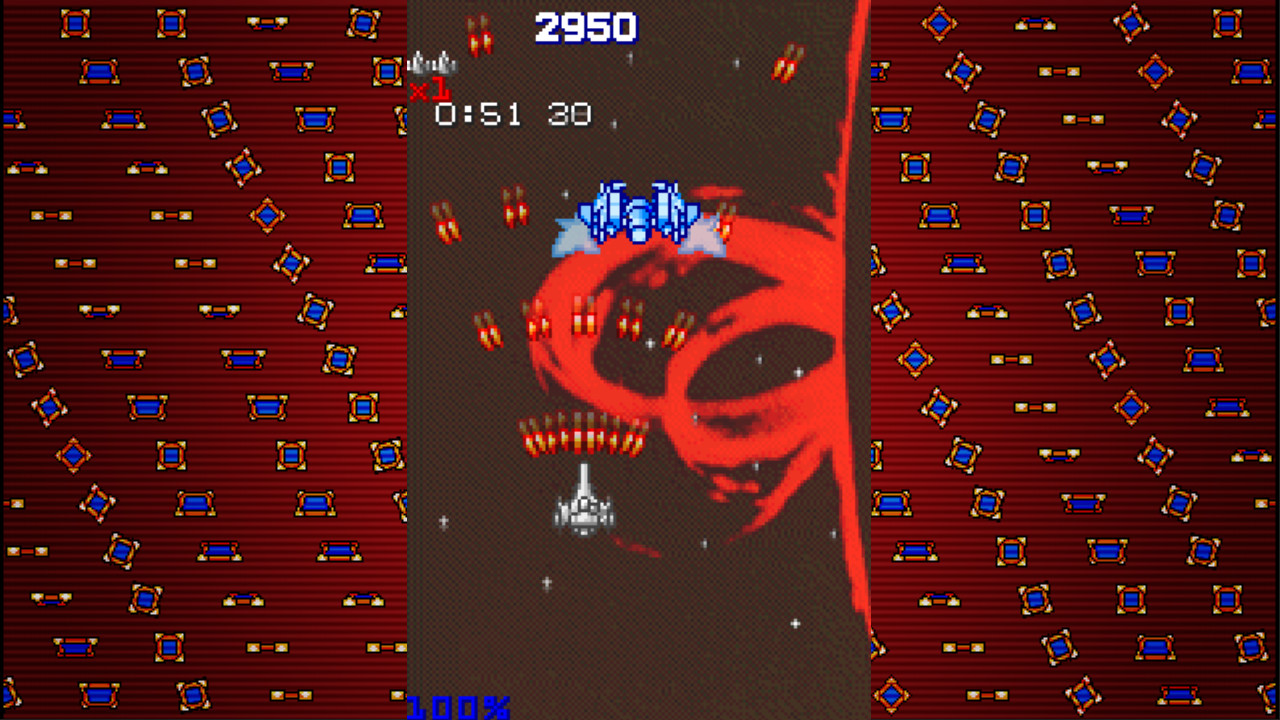
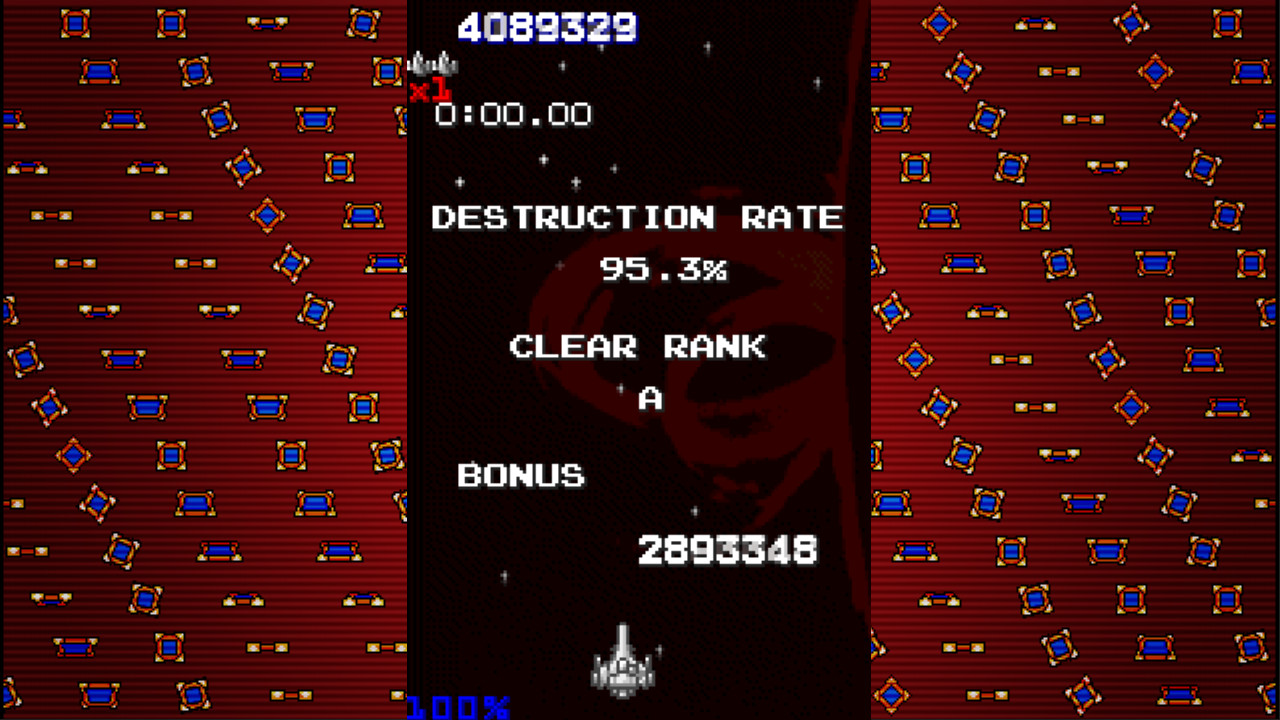
Judgement Silversword comes with a spinoff game called Cardinal Sins, and it's actually that I've spent the most time playing today. Cardinal Sins takes the basic gameplay of Judgement Silversword and, instead of pushing you through a sequence of stages with difficulty that gradually ramps up (with a few big spikes along the way, if the first boss is anything to go by!) it challenges you to complete various objectives in the stage.

The game is themed around the Seven Deadly Sins, with each of the seven stages being named after one of them and providing you with a different means of attaining a strong grade or "judgement" at the end of the game. The first stage Envy, for example, tasks you with simply destroying as many enemies as possible, with your grade dependent on the percentage of all the available enemies you destroyed. Sloth, meanwhile, tasks you with simply grabbing as many extra life pickups as you can (and you can destroy them, so you have to actually ease off the shooting a bit), while Greed tasks you with "gathering data" on enemies by fulfilling various hidden conditions.

cardinal1

Greed is perhaps the most interesting of the stages as well as the most thematically appropriate, because getting too greedy for the "data" will result in your untimely destruction; instead, you need to learn moderation (or at least master the peculiar "shield" ability your ship has, which allows you to cancel bullets, but only from the front of your ship) in order to succeed.

After Greed comes Pride, where your job is to raise your score multiplier to x100 by destroying enemies as efficiently as possible — your multiplier increases by one for every enemy destroyed, but also drops by one every second or so. Following this is Lust, where you must clear as many enemy waves as possible; Gluttony, where you must destroy enemies for collectibles; and finally Wrath, where you are graded according to how many times your ship is destroyed during a horrid boss fight.

Interestingly, Cardinal Sins doesn't kick you out to a Game Over screen if you run out of lives at any point; you always play through the seven levels in order, with your lives being reset at the start of each stage. Run out of lives and you simply get a "failing" F-grade on that stage, but you can carry on. There's incentive not to do this, however; get through all the stages without any failures and you'll be presented with the final battle, initially against a series of small but strong bullet-spewing enemies, and subsequently against a larger version with some seriously unpleasant bullet patterns to fend off. Only by defeating this "Mirror of Cardinal Sins" can you clear the game and sit back with a satisfied expression on your face.

cardinal2

I really like this game for a number of reasons. Firstly, it's nice to play a game that is genuinely retro rather than the fashionable faux-retro of much of the indie scene today; the game features some simple but deliciously crunchy chiptune music and sound effects as well as some limited but effective and clear visuals.

Secondly, it's damn fun. The difference in structure from the usual shoot 'em up format of "survive as long as you can" makes it immediately stand out for me, and I'm a sucker for anything with an interesting grading and scoring system.

Thirdly, I'd never heard of it before, and now it's on Steam a whole bunch of newcomers — including me — will get to experience it for the first time, along with its companion game Judgement Silversword and its pseudo-sequel Eschatos.

With Cave shoot 'em ups apparently on the way to PC via Steam soon, it's starting to look increasingly likely I can finally retire the Xbox 360, which had previously been my shmup machine due to Japan's bizarre rejection of the platform for everything except fantastic arcade shooters.

2006: Interstellaria

0007_001

I'd made a promise to myself not to get suckered into trying any more endearingly retro-styled 2D pixel-art exploration-centric games, because the last few I've tried (Terraria and Starbound spring immediately to mind) ended up being enormously disappointing and pretty boring to me. (I'm not necessarily saying they're bad, mind, more that the Minecraft model of "here's a world, do stuff in it" just doesn't really appeal to me any more.)

However, I happened to see Interstellaria on Steam earlier today, and for just £7 I felt I had to take a look at it. And, for once — so far, anyway — I wasn't disappointed.

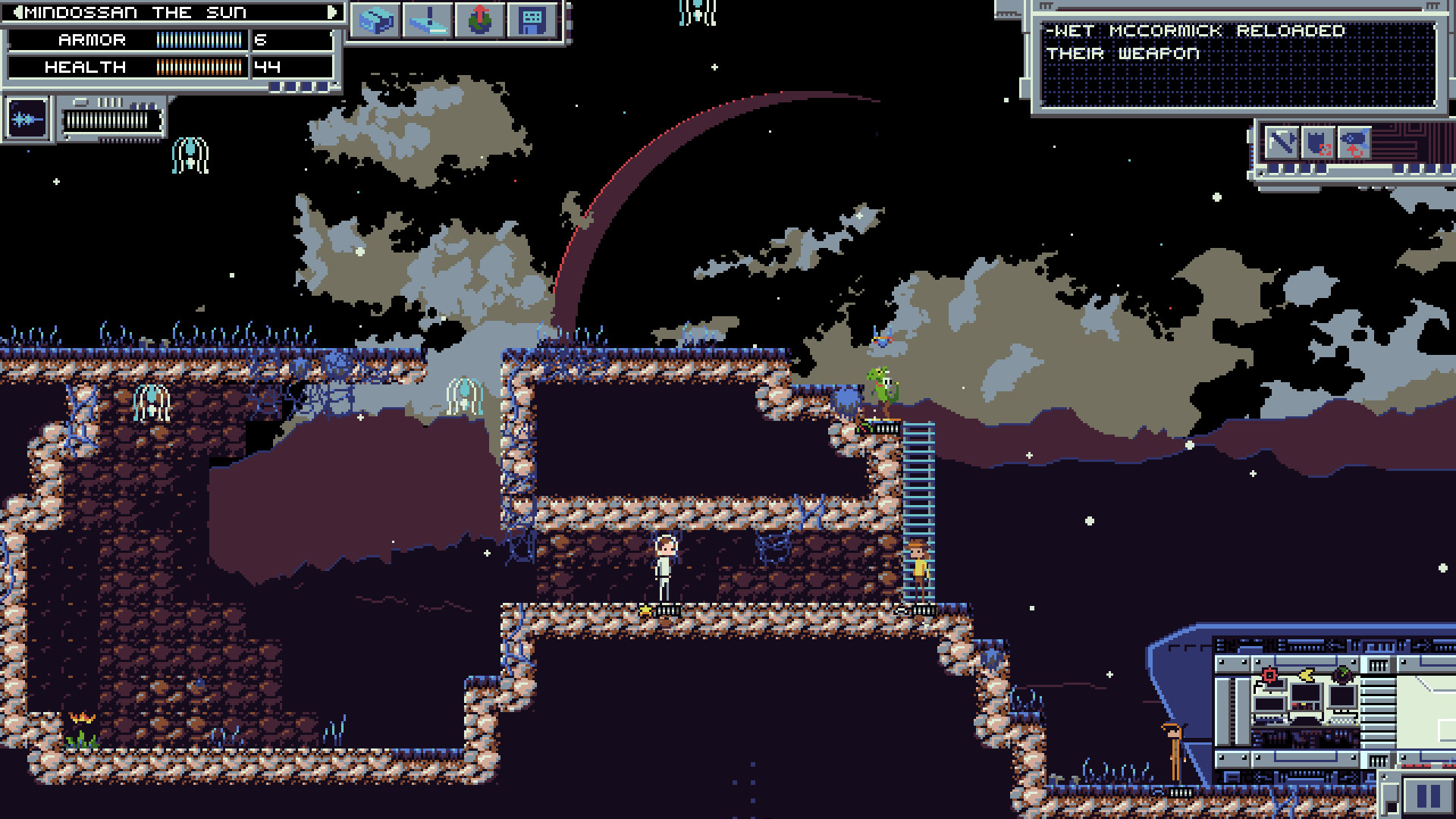
Interstellaria is perhaps best described as a successor to the old late-'80s/early-'90s space exploration games like StarflightStar Control II and Space Rogue. You get a ship, you recruit a crew, you upgrade your ship, you explore the galaxy, you fight things, you discover treasures, you uncover a galaxy-spanning mystery and (perhaps) save the universe in the process.

interstellaria1

Interstellaria throws you straight in to its world from the outset. Thrown out of your erstwhile home by your flatmate who is no longer content to have a scrounging, unemployed wastrel living rent-free under their roof, you take to the streets in search of gainful employment. After dismantling a robot for the nice man who lives just over the road from you, you find yourself recruited into the slightly shady-seeming crew of a starship that is about to take off. The starship begins its grand adventure and fends off a pirate attack in a thinly-veiled combat tutorial, then is ripped to pieces by an unknown enemy craft, but not before your former captain runs away, leaving you in charge of the crash landing from which you are ultimately the only survivor.

Fortunately, it seems, you've crash landed on a planet where there's another starship that's almost in working order. You come across a fellow survivor and team up to get the elderly ship back into space again, and from there it's up to you to start discovering the truth behind the mystery of the "Abductors", a race of aliens who appear to be giving the galaxy a certain degree of grief.

interstellaria2

From here on, you have freedom to explore and do stuff around the galaxy, though you're nudged pretty strongly in the direction of following the plot. Gameplay is split into a few different areas: managing your ship, space combat and planetary exploration.

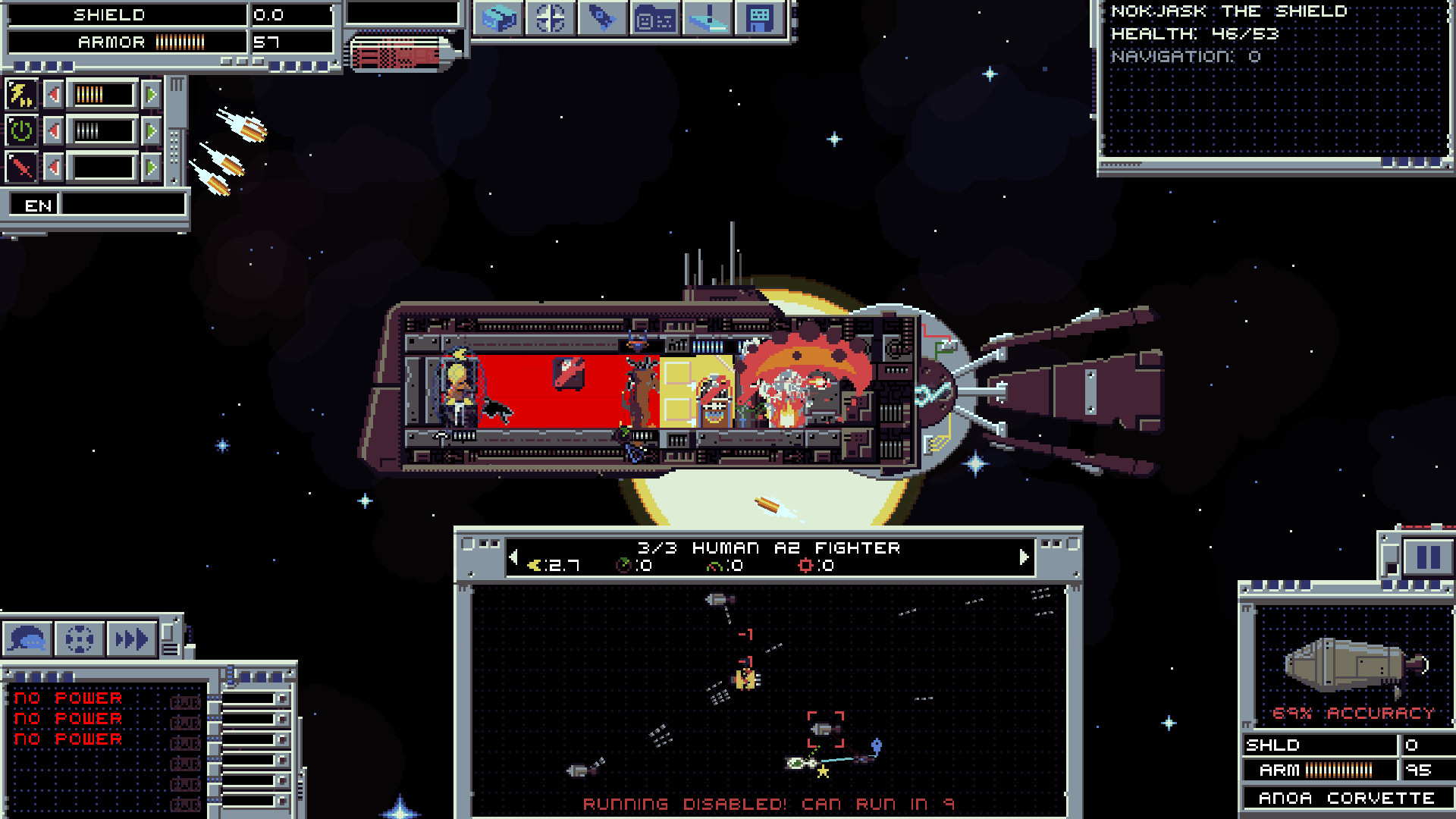
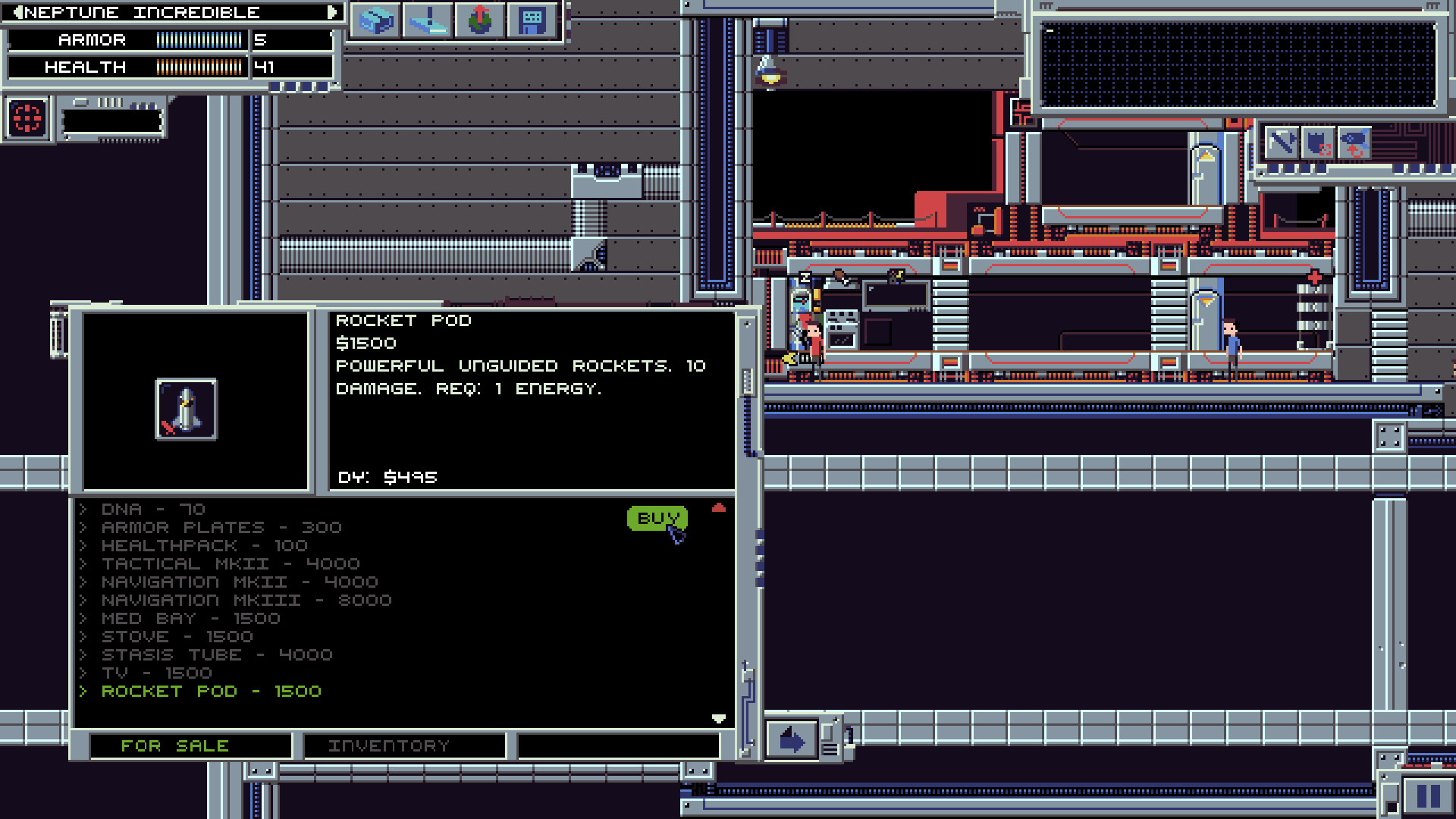
Managing your ship is a little like FTL: Faster Than Light in that you have to assign crew members to stations according to their skills (which develop over time). You also have to take care of your crew's needs — hunger, boredom and fatigue — by providing them with facilities to relieve these issues whenever necessary. The ship you start with has both limited space to include modules — there's pretty much room for basic navigation, sensors, engineering and tactical stations and one of each of the "needs" modules and not much else — and power to devote to them, so you have to juggle power around according to your ship's needs at any given moment.

Get into combat and you'd better hope you remembered to put some power into the weapons systems and charge them up, because you'll need them. Unfolding on a small tactical display (which provides more information if you have someone manning the sensors) you can move your ship around in real time as well as see incoming missiles, cannon fire and other projectiles. In this way, you can dodge and avoid enemy fire while attacking your foe; it's an interesting, slow-paced take on "bullet hell" in some ways, and it's a nicely unconventional take on space combat that is in keeping with the 2D pixel art aesthetic.

interstellaria3

Head down onto a planet and you'll have the option of visiting one or more different landing sites, assuming the planet has a breathable atmosphere. Each landing site is a few screens wide (rather than a never-ending procedurally generated world) and usually features some enemies, some resources to harvest and, occasionally, interesting artifacts, characters and plot-related shenanigans. Controlling each of your crew members independently (or as a group) you can direct them to explore, harvest materials, enter into combat with enemies and interact with the locals. Each planet has a distinctive look, feel and soundtrack (the music is by chiptune artist Chipzel and is really rather good) and manage to feel relatively "organic" without falling back on random procedural generation. (At least I don't think so.)

The game's not without its flaws — the interface is a bit clunky in places, the keyboard inputs aren't as responsive as they could be, camera controls on ground missions are bugged and combat is… lacking in depth, to say the least — but all these issues are more than made up for by the fact that it's the first game in a very long time that I feel has proven to be an adequate successor to the classic space exploration sims I mentioned earlier. It has a lot of potential to improve over time, and is already an interesting, charming game that is well worth your time, particularly if you're feeling nostalgic.

1789: Broadcasting Live

In case you weren't aware — and indeed cared — the latest beta version of the Steam client software features broadcast functionality, which means that anyone else out there who is also running a copy of Steam's beta version (or possibly via the Web too; I haven't tried yet) can drop in and start watching the game you're playing at a moment's notice.

This is noteworthy for one important reason: you don't have to set anything up. It's just there. It just, seemingly, works. And, unlike other, dedicated streaming solutions like Twitch and Hitbox, Steam's streaming is intelligent, only actually actively broadcasting when someone shows up and clicks the "Watch Game" button. This means that you can enjoy full performance when no-one is watching — streaming can cause a slight hit to graphics performance in some games — but seamlessly start sharing what you're playing with friends without having to do anything, and without compromising the experience with tiny windows, huge chatboxes and all manner of other rubbish.

This, to me, is the optimum solution for streaming — at least for me. It wouldn't work particularly well for professional streamers or those who run to more of a schedule, but for more casual players who simply want to use streaming as a means of showing other people what a game is like, it's absolutely ideal. I mean it when I said there was absolutely no setting up required, too: no buggering around with encoding, no worrying about bitrates, no creating application sessions or whatever. It just, as they say, works.

I'm still not the sort of person who will sit down and watch a scheduled stream of someone else playing a game — I'd much rather spend my time playing games myself — but that's not really what Steam's broadcasting system is for. Instead, as I noted above, its ideal functionality is for demonstrating games to one another, and pleasingly, it works with anything you run through the Steam client, not just games sold via Steam's storefront. In other words, any game that you've added to Steam via the "Add Non-Steam Game…" option in the menu — and which supports the Steam overlay, allowing you access to your friends list and chat functionality in-game — can be easily broadcasted using the new functionality.

But don't worry; if you're concerned about your lack of skills being shown off to the world and everyone showing up to laugh at you, you do have control over who can watch you. The first time someone requests to watch your game, you have several options — broadcast openly to anyone who wants to watch; broadcast to friends; or don't broadcast at all.

So far the only thing missing from the functionality seems to be some sort of record or archive function, though with the system's seemingly intended use as described above, I'm not sure we'll get that. I'm not too worried, though; I doubt there are many people who would want to watch three hours of prerecorded video of me grinding for my Relic Nexus weapon in Final Fantasy XIV — though there may be some people who have seen me playing it and are interested in taking a look for a few minutes just to see how it plays, as my friend Bowley did this evening.

I'm quietly impressed with the system, then; it'll be interesting to see how much it gets used once it rolls out into the Steam client proper.

1661: Dead Dancing

Fancied a bit of a change today, so I decided to grab a copy of a game I've been keeping one eye on for a while now: indie title Crypt of the NecroDancer, which hit Steam Early Access recently.

Several hours later, I realised that I'd been playing Crypt of the NecroDancer for a very long time, and I was starting to do everything — not just in-game actions — in time with the beat in my head.

Rewind a moment, for those unfamiliar with Crypt of the NecroDancer: what the hell is this curiously-named game? Well, it's yet another example of one of the current "indie darling" genres: the roguelike. But this game's a bit different from the many, many other procedurally generated hack-and-slash RPGs out there, in that it's actually more of a rhythm action game than anything else.

Yes, you read that correctly: a rhythm action game. Crypt of the NecroDancer eschews the complexity of more stat-heavy roguelikes and RPGs in favour of an extremely simple system that only requires you to use four buttons on the keyboard: the directional arrows. Everything you do involves pressing one or two of these keys in time with the music — even using items. It takes a little getting used to, but the reason for this lightweight control system becomes obvious almost immediately: this is a game about sticking to the beat, watching for patterns and learning to exploit them, not about min-maxing your gear and gaining experience. It has a distinctly arcadey feel to it thanks to mechanics like score multipliers and powerups, and it's structured in such a way that play sessions are quick and brutally difficult, particularly once you get out of the first of the four "zones" that make up the game in its current Early Access form.

Speaking of Early Access, this is one of the most "complete" Early Access titles I've played to date, consisting of four zones with four levels each (three standard, one boss), each of which has their own music, composed by Danny Baranowsky, of Super Meat Boy and Desktop Dungeons fame. The music is absolutely fantastic, covering a variety of different electronic dance music styles and tempi, and gives each level a unique feel that you'll come to know and love (or hate) very well as you try again and again to make a little progress.

Progress in the game is somewhat akin to that other well-regarded lightweight roguelike of the moment: Rogue Legacy. Through playing the game normally, you'll acquire diamonds, which can be used to purchase permanent upgrades for the dungeon and your character, ranging from extra health to new items that show up in chests. The twist is that diamonds "expire" after you enter the dungeon again, so in order to unlock something expensive you'll need to collect all the diamonds you need in a single run — something that becomes "easier" (in that you'll start picking up more than one diamond at once) as you get into the harder zones.

The whole game is utterly charming, with some lovely pixel art — though a V-sync option would be nice to prevent the occasional bit of screen tearing that is apparent — and some well-designed, distinctive monsters, each of whom have their own attack patterns you'll have to learn how to tackle while staying on the beat. The use of a female protagonist feels a bit like she's there for the sake of it just so people can point at the game and use it as an awesome example of a game that uses a female protagonist by default — but this isn't a problem as such, more a pointed response to the growing focus on social issues that much of the games business has right now, for better or worse. Only idiots will actually complain about it, and besides, the finished version will have numerous unlockable characters, anyway, a la Spelunky, so I can only assume that those who do have violent objections to playing as a woman for any length of time will be catered to in this way.

Long story short, Crypt of the NecroDancer is looking (and sounding) absolutely fantastic so far, and I can't wait to see the finished version. There's every possibility that this could be one of the next big things in the indie space, and I would absolutely love to see it on other platforms — its quick-fire gameplay would make it an ideal fit for Vita in particular. Let's hope it sees enough success to make that happen.

1347: Om Nom Nom Nom (Plus)

Pac-Man Championship Edition DX+ is a magnificent game, though I'm still at a loss as to whether or not Namco are taking the piss with that title or if they genuinely thought Pac-Man needed that many suffixes.

To be fair, though, Pac-Man CE DX+, as I shall refer to it from hereon, isn't actually all that unreasonable a title if you analyse it. It's a variation of Pac-Man (hence Pac-Man) that evolved into a version designed specifically for competitive play (hence Championship Edition) that subsequently evolved further into a considerably expanded version (hence DX, short for Deluxe) which was then expanded even further with some additional content for the new PC version (hence Plus).

If you haven't played Pac-Man CE DX+ yet, you'll be pleased to know that it's now available for PC via Steam as well as consoles, so you can play it pretty much regardless of whatever system you favour.

If you're a fan of the original Pac-Man, be warned, though; Pac-Man CE DX+ is a noticeably different game, though its ancestry is obvious.

While the original Pac-Man required you to repeatedly clear the same screen of dots over and over again while contending with the unwanted attentions of four ghosts, Pac-Man CE DX+ is a much faster-paced game. The maze is divided into two halves, each of which, when cleared, causes a piece of fruit to appear in the other half. Eating said fruit causes the empty maze to regenerate with a new layout, and thus the process repeats. In the main modes, you're against the clock, attempting to score as many points as possible in either five or ten minutes, so it's in your interest to find the quickest routes possible.

The twist on the formula that DX added was the ridiculous number of ghosts that can be involved. Rather than the four ghosts of the original Pac-Man, each maze half in Pac-Man CE DX+ has a number of sleeping ghosts who are disturbed if Pac-Man passes by them, at which point they form an increasingly long chain and chase him, following the same route he does. High scores are dependent on eating a power pill and then gobbling up a massive chain of ghosts, so as well as finding the best route through the dots, it's actually in your interests to attract as many ghosts in your wake as possible, too. There's very much an "optimum route" for each of the courses in the game, though human error means that, unless you've practiced enough to be literally perfect every time, there'll be slight variations in each run you make — usually costing you a few points or precious seconds in the process.

It's a really interesting game that maintains the basic mechanics of the original Pac-Man while simultaneously turning it into a kind of game that's hard to define. Is it a score attack game? Yes. Is it a puzzle game? Yes. Is it a racing game? Yes, kind of.

It's one of the most peculiar games I've ever played, and revisiting it thanks to the new PC version reminds me that it's also one of my favourite games of all time, and I highly recommend you give it a try if you've never had the pleasure. Enjoy, and I make absolutely no apologies if you end up addicted.

1214: Inner Sanctum

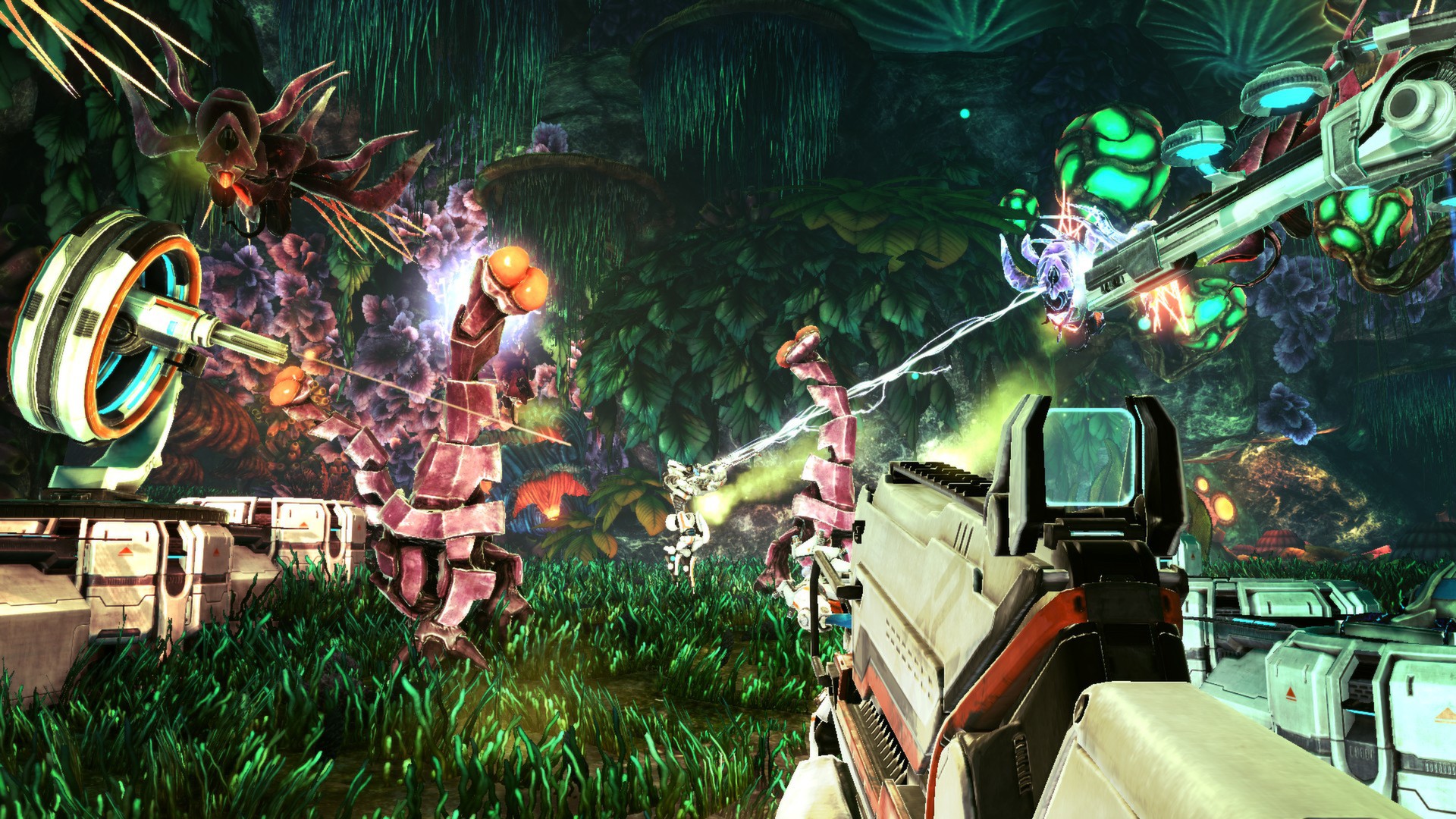
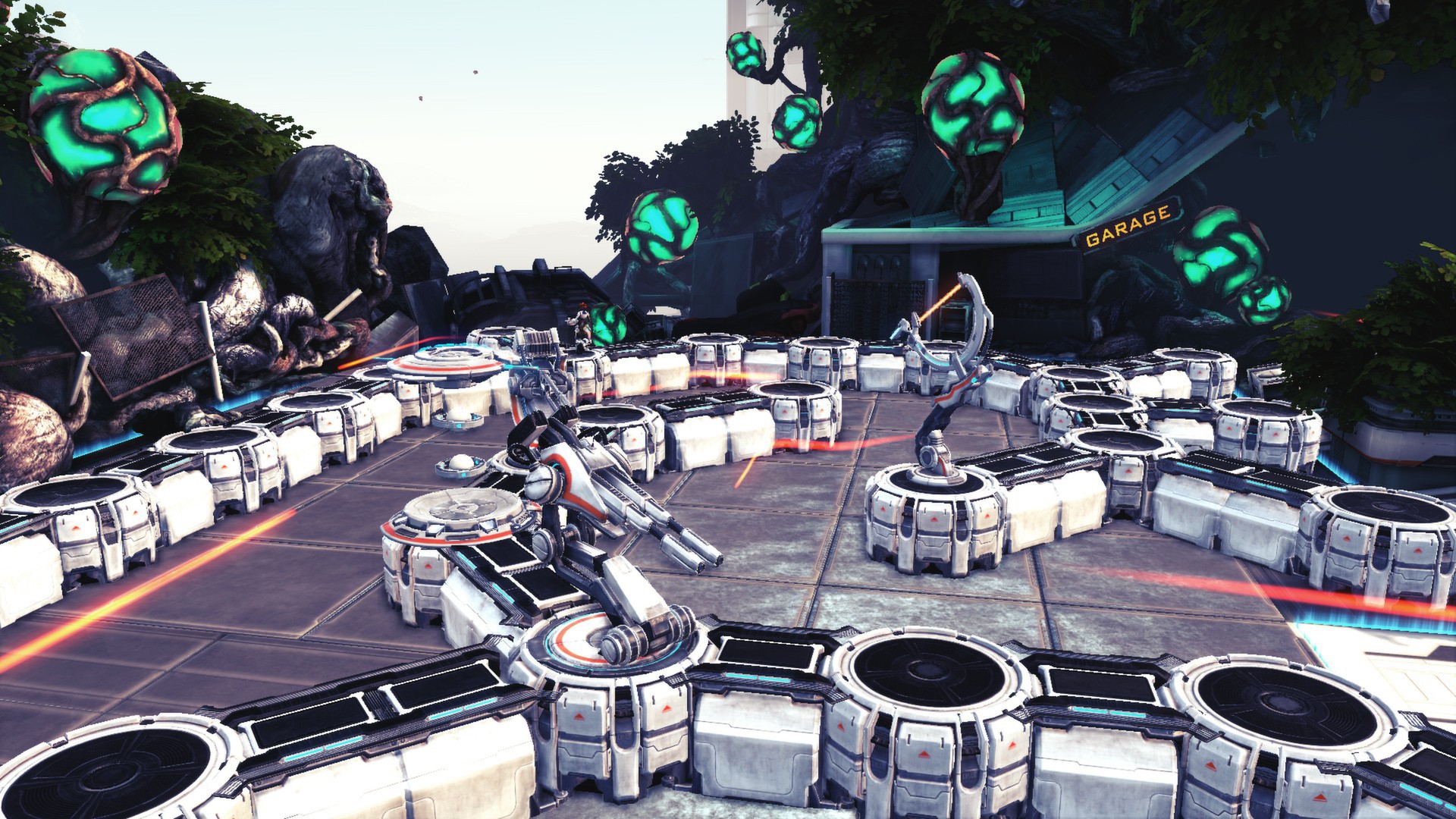
ss_41673936cf0df5cdf2b4c0549e118829730d8e88.1920x1080Mark and I played a bunch of a recently-released indie game today. That game is Coffee Stain Studios' Sanctum 2, which I purchased a copy of for Mark as a thank-you present for putting us up for the last couple of weeks, and which I was also interested in playing. I enjoyed the original game's interesting fusion of tower defense and first-person shooter mechanics as well as its distinctive presentation and excellent music, so I was actually quite interested to try the second game, and purchased a copy without a second thought.
Then the game was released, and I decided to take a peep at the Steam Community page to see what the rest of the world thought of it.

Big mistake.

It seems that Sanctum 2 is the latest victim of elitist players expecting one thing from a game and getting something slightly different, then throwing all their toys out of the pram, demanding refunds and hurling abuse at the developers. Because Sanctum 2 is not the same game as the original Sanctum, it seems, it is worthy of scorn and vilification. Because Sanctum 2 incorporates a number of features that not only make it workable on console — it's also being released on Xbox Live Arcade — but change the game balance significantly from the original, apparently it is worthy of review-bombing on Metacritic and endless, endless whining on forums.

ss_18b928231ce4b8b50c8e6f1bd11e9ef7cbd88164.1920x1080You know what, though? I've played a good 4 or 5 hours of Sanctum 2 today in total, and it's great. It isn't the original game, no, but why would you want it to be? Sanctum is still available for download, so if you like that, go play that. Sanctum 2 is a distinctive experience that, while in possession of a couple of strange design decisions, is a lot of fun to play both solo and cooperatively with other people. It is both strategic and action-packed; challenging and fun; and it offers a significantly greater amount of content and depth than the original game did when it came out of the gates.
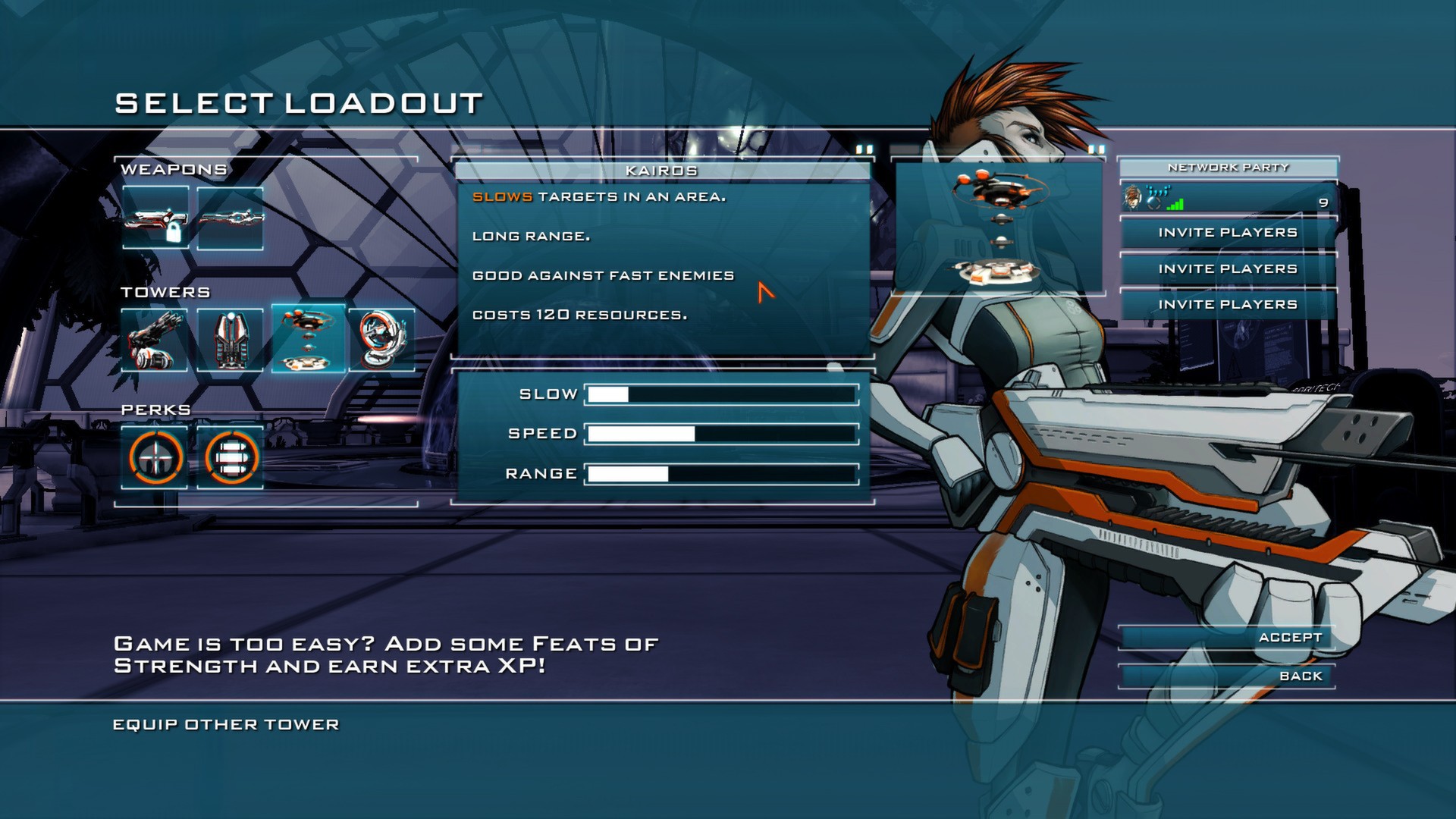
The complainers' biggest issues with the new game seem to be the fact that resources to build towers are now delivered as "drops" that have to be picked up manually, and that there is a hard limit of ten towers per level. The "drop" system means that everyone playing has to either agree on who is going to be in charge of building what — or charge off and race to be the first to pick up the resources. If you're playing with friends or people with whom you can communicate well, no problem. If you're playing with griefers and trolls, potential problem, but not insurmountable. (For what it's worth, I always prefer playing cooperative games with people I actually know anyway, and I'm sure I'm not the only one — and as such I probably won't run into this problem personally.)

The ten-tower limit also simply isn't an issue in practical terms. I am yet to hit said limit, because plonking down "tower base" blocks to create a maze to hold up enemies does not count towards this limit, and the limited quantity of resources on hand means that it's only really practical to build a few towers per level anyway — you have to support your towers with your own gunplay in order to succeed. It's a true hybrid, in other words; you can't win without your towers, and your towers can't win without you.

Some complainers have also whinged about the fact that you supposedly can't make complex mazes in this new game. To those people, I would invite them to have a go at the level Mark and I were playing before we wrapped up for the evening, in which we were defending two cores simultaneously from assault, and built impressive mazes on both sides of the level in order to keep the enemies away from our precious charges as long as possible. Careful tower placement and resource management was a must, and the nature of many of the enemies that came along made it necessary to cooperate, communicate and use skill and tactics to take them down rather than simply firing blindly at anything moving.

ss_8a9cbab892d41cb1734508a572f1471a5b5a2117.1920x1080In short, Sanctum 2 is a very good game if you enjoy both first-person shooters and tower defense games that demand a slightly heavier degree of thought and strategy than normal. It's an excellent fusion of two fairly disparate game genres, and while there are a few things that could be tweaked here and there, it's perfectly enjoyable as it is. Not only that, Coffee Stain Studios have demonstrated that they are open to constructive feedback, too, and will likely continue to improve the game after its release. Given the abuse and vitriol that has been hurled their way today, they would be perfectly within their rights to just say "fuck you" to all the ungrateful gamers who are bitching about their new release, to be honest, so I have to admire them for their self-restraint in dealing with these people.

It is, essentially, yet another case of a not-insignificant number of people suffering under the assumption that Their Way is the Right Way, and that anyone who disagrees with them is somehow an awful person. These people preferred the original Sanctum to its sequel and that's absolutely fine; their behaviour towards Coffee Stain Studios and anyone who has expressed a liking for the new game is not.

1060: Magical Diary

Still feeling shitty, but you don't want to read entry after entry about how shitty I feel, so I'll talk about a game I've been playing instead. I've had it in my Steam library for probably well over a year now — possibly more — but have only just got around to it. And wouldn't you know it? It's great.

The game in question is Magical Diary. This game initially attracted my attention with its promise of combining dating sim-like mechanics with dungeon crawling and puzzle solving. Any combination of "dating sim and…" will immediately get my attention and has done ever since I played Persona 3 for the first time, and here it's particularly well-implemented.

Here's the setup: you're a 16 year old girl (yes you are!) who has recently been inducted into Iris Academy, a Hogwarts-like establishment in New Hampshire that trains witches and wizards in the ways of pentachromatic magic. During your time at the school, you'll be juggling your time between studying the five colours of magic, each of which unlocks various different types of spells; managing your stress levels (which, naturally, increase with too much studying); and getting to know your fellow students, some of whom are rather more odd than others.

The gameplay is something like ancient eroge (and particular favorite of mine) True Love — at the start of each week, you set up your schedule, choosing which classes to attend (if any) and then letting the week unfold. Depending on your whereabouts at various points in the week along with past choices, numerous events will unfold and you'll have the opportunity to do things like run for class president, shop for magical accessories (which, pleasingly, appear on your character avatar as well as affecting your various stats) and, of course, go on dates.

Every so often, the school will throw you an "exam", which involves tossing you into a dungeon and demanding that you find your way out using the spells you've managed to learn. Generally there are several ways to solve a dungeon — for example, in one early case, you're locked in an area with no apparent exits, so you can do several things: methodically search the walls for illusions, cast a spell to stir up the air and indicate where the way out might be, cast a spell to determine if any living creatures passed by recently and so on. As you level up your five colours of magic, you learn a variety of interesting-sounding spells — and this isn't your usual "fireball, ice bolt" and that sort of thing — no, here you're dealing with things like empathy spells, manipulating matter, fooling the senses and all sorts of other things. It's really quite something.

I'm not that far into it yet, but I'm liking what I've seen so far. The graphics are good, the music is catchy, the writing is witty and full of character and the gameplay is interesting. It also looks like being a game that will be well worth replaying several times to tackle situations in different ways — I'll be very interested to do so when the time comes.

Right. Time to dope myself up on drugs and try and get some sleep. Or possibly play some more Magical Diary. One or the other…