2496: Type Zero

0495_001

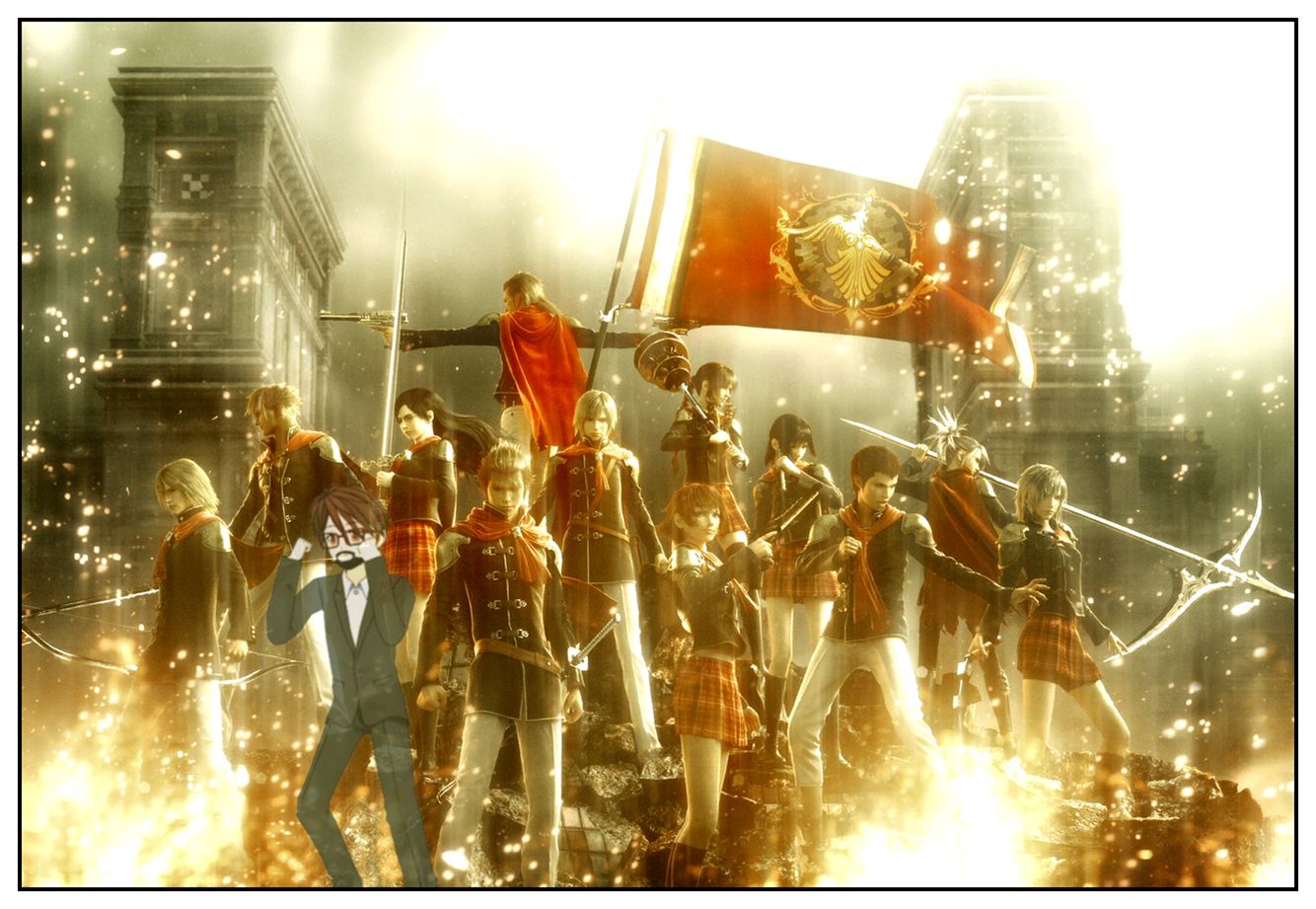
In anticipation of the imminent Final Fantasy XV — a game which I am getting increasingly desperate to play the closer its release date creeps — I decided to boot up a game I've had on my shelf for a while, but haven't really done anything with: Final Fantasy Type-0 HD for PlayStation 4.

I had pretty much no idea what I was in for when I fired it up for the first time. I just knew, prior to its release, that it was a well-regarded game for PSP that had previously been confined to Japan, and that people had been clamouring for a localisation for quite some time. In fact, so desperate were English speakers for an English version of the game that there was already a decent quality fan translation of the PSP version available, though in order to play that you'd need to 1) know how to "do" PSP homebrew and 2) be willing to "do" PSP homebrew.

In other words, Final Fantasy Type-0 was a mystery to me when I first started it. After about 15 or so hours with it so far, I think I've kind of got my head around what it's all about and where it sits in relation to other Final Fantasy spinoff games — and the mainline series, for that matter.

Type-0 (formerly Final Fantasy Agito XIII) is part of the overly ambitious Fabula Nova Crystallis series which also includes the Final Fantasy XIII games and the upcoming Final Fantasy XV (formerly Final Fantasy Versus XIII), though since the series was first conceived each of the projects kind of diverged off in its own direction — hence the name changes, abandoning the direct links to XIII — so that now they only have the loosest of thematic and stylistic connections with one another.

That said, Type-0's mythology is quite closely related to that of Final Fantasy XIII despite unfolding in a different world, with particular regard to the existence of "l'Cie", individuals who have submitted themselves to the will of a superior entity (in FFXIII's case, powerful godlike beings called fal'Cie; in Type-0, the "peristylium" crystals that form the centrepieces of the game world Orience's various city-states) and an obligation to fulfil some grand purpose called a Focus in exchange for kinda-sorta immortality and badass magical powers. Unlike Final Fantasy XIII, you don't play l'Cie in Type-0; they're part of the backdrop of the ongoing story.

Type-0's narrative focuses on the dominion of Rubrum and its elite training facility Akademeia. Across thirteen classes, Akademeia trains young people to become Agito, the best of the best when it comes to martial and magical prowess. Among the classes, the cream of the crop is found in Class Zero, a unit of youngsters with particularly exceptional powers that has, until the events at the start of the game, been kept somewhat secret from the rest of Akademeia.

Class Zero is brought out of hiding and into immediate active service as Agito Cadets when the Militesi Empire invades Rubrum's capital and Akademeia itself. Against rather improbable odds — including a l'Cie — they manage to push back the imperial incursion and retake Akademeia, giving Rubrum the opportunity to pick itself up and start planning a counter-offensive. From here, Class Zero plays a leading role in helping Rubrum to expand its territory, push the Militesi Empire back and prevent them from deploying any more of their weapons of mass destruction, such as the Ultima Bomb which devastated one of the other city-states of Orience.

If this all sounds highly political and like the setup for a strategy game such as Final Fantasy Tactics… well, you'd be wrong, technically, but there is something to that comparison, which we'll get onto in a moment.

In actual fact, Type-0 is an action RPG in which you control a single member of Class Zero at once — accompanied by up to two of their classmates, depending on the situation — as they attempt to complete missions for Rubrum and, in between mission days, wander the dominion generally helping out and making life miserable for the Militesi Empire. Unlike mainline Final Fantasy games (with the possible exception of XII) where the emphasis tends to be on the core cast's personal stories, Type-0's plot is less about individuals and more about the ongoing conflict between Rubrum and Militesi.

Each member of Class Zero is unique in their capabilities. Each one wields a different weapon, which all handle very differently from one another, and each one has a unique skill tree, though there is some overlap in common abilities between numerous class members. Some are better at dealing or taking physical damage, some are ranged attackers, others have particularly strong magical capabilities. Ultimately, the best approach to playing the game is to try and keep the entire squad levelled up pretty evenly, which means you're going to need to get comfortable with playing at least a few of the characters, and perhaps bring the ones you don't like so much in the AI-controlled slots so they still get some experience.

The reason I mention Final Fantasy Tactics earlier is that the way you set up your characters in Type-0 bears more than a passing resemblance, albeit without the deep and complex Job system that Tactics has. In Tactics, each character had the ability to equip two different "Job commands" at the same time, allowing them to mix abilities and spells from two classes at the same time. In Type-0, your character has two main ability slots, up to one of which can contain a spell — though some characters can unlock an ability to equip two spells — and the other of which can contain one of their unique abilities. There's also a third ability slot dedicated to defensive magic and abilities, allowing characters to equip curative spells, protective spells or physical abilities such as blocking damage.

In order to succeed in Type-0's missions, you ideally need a mix of different capabilities, since you'll run into enemies that are strong or weak against particular types of attacks, and sometimes you'll encounter enemies that are out of melee reach — on balconies, for example — necessitating ranged attacks. In other words, it's not simply a case of equipping all of your cadets with equipment and abilities that boosts their physical attack power as high as possible; you need to understand which ones are intended as mages, outfit them accordingly and them complement them with physical melee and ranged attackers to cover every eventuality.

The combat system itself takes a little getting used to. You control a single character at a time, and the face buttons on the PlayStation controller are mapped to normal attack with your weapon (Square), abilities and spells (Triangle and X) and defensive abilities (Circle). You can "lock on" to enemies and keep them in sight by holding the right shoulder button, and dodge with Circle while moving.

Notably, attacking doesn't require button-mashing; characters instead continuously attack while you hold down Square. Some characters have different moves available if you push forward or backward on the analog stick while holding square; Sice, for example, has a gap-closing leaping slash forwards when you push forward, an attack behind her when you push backwards and a standard melee combo if you just hold the button without a direction.

The different weapons are all very… well, different, and in order to succeed with a character you need to familiarise yourself with not just the abilities you can equip, but the amount of time the character's various animations take to complete. This is because Type-0's combat is heavy on timed hits; while locked on to an enemy, they will occasionally show a weakness, usually right after an attack or if they're knocked off balance. During this time, depending on the enemy's remaining HP, your lock on reticle will turn either yellow (Breaksight) or red (Killsight), and if you land a successful hit with either a physical attack or magic while either of these is active, you'll do enormous damage, even killing the enemy immediately in the case of Killsight.

Just hitting the attack button as soon as you see the markers isn't generally enough, however; most characters have a bit of a wind-up to their attacks, meaning if you start an attack when the marker appears, you'll probably miss the window by the time it actually impacts the enemy. Instead, you need to watch the enemy animations to anticipate when Breaksight or Killsight are going to appear, and over time you'll come to recognise how different enemy types behave in order to take maximum advantage of this feature. Pudding-type enemies, for example, rear back before they swipe at a foe; when you see them do this, dodging to the side to avoid the strike then immediately launching a forward+Square attack with most characters is a good way to hit their Killsight window perfectly every time.

Type-0 is very much a mechanics-focused game rather than a story-centric game, which puts it somewhat at odds with the mainline Final Fantasy series, but firmly in keeping with many of the spin-off titles such as the aforementioned Final Fantasy Tactics. That's not to say the story is bad — I'm not that far in so far, but it's been a suitably dramatic "wartime epic" so far, with many of its important moments presented in an appealing "documentary" style — but rather it's a game in which its individual characters are of significantly lesser importance than the big picture.

It's an acquired taste, in other words. I wasn't sure I was going to like it all that much when I first started playing, and indeed I know a few people who bounced off it quite quickly. However, give it some time and get to know how the combat works, and it becomes quite rewarding and satisfying. There's plenty of side content to do besides the main missions, and it's one of the most replayable Final Fantasy games I've ever seen, with a second playthrough not only seeing your Cadets at a suitable level to tackle tougher challenges, but also rewarding you with additional story material at various points.

Give it a chance if you haven't already. It's not the best game to ever bear the Final Fantasy name, but it's a solid, interesting game in its own right that demonstrates, once again, that Square Enix isn't at all afraid to experiment and do all manner of strange, wonderful things beneath the Final Fantasy banner.
2489: Kingsglaive

0489_001

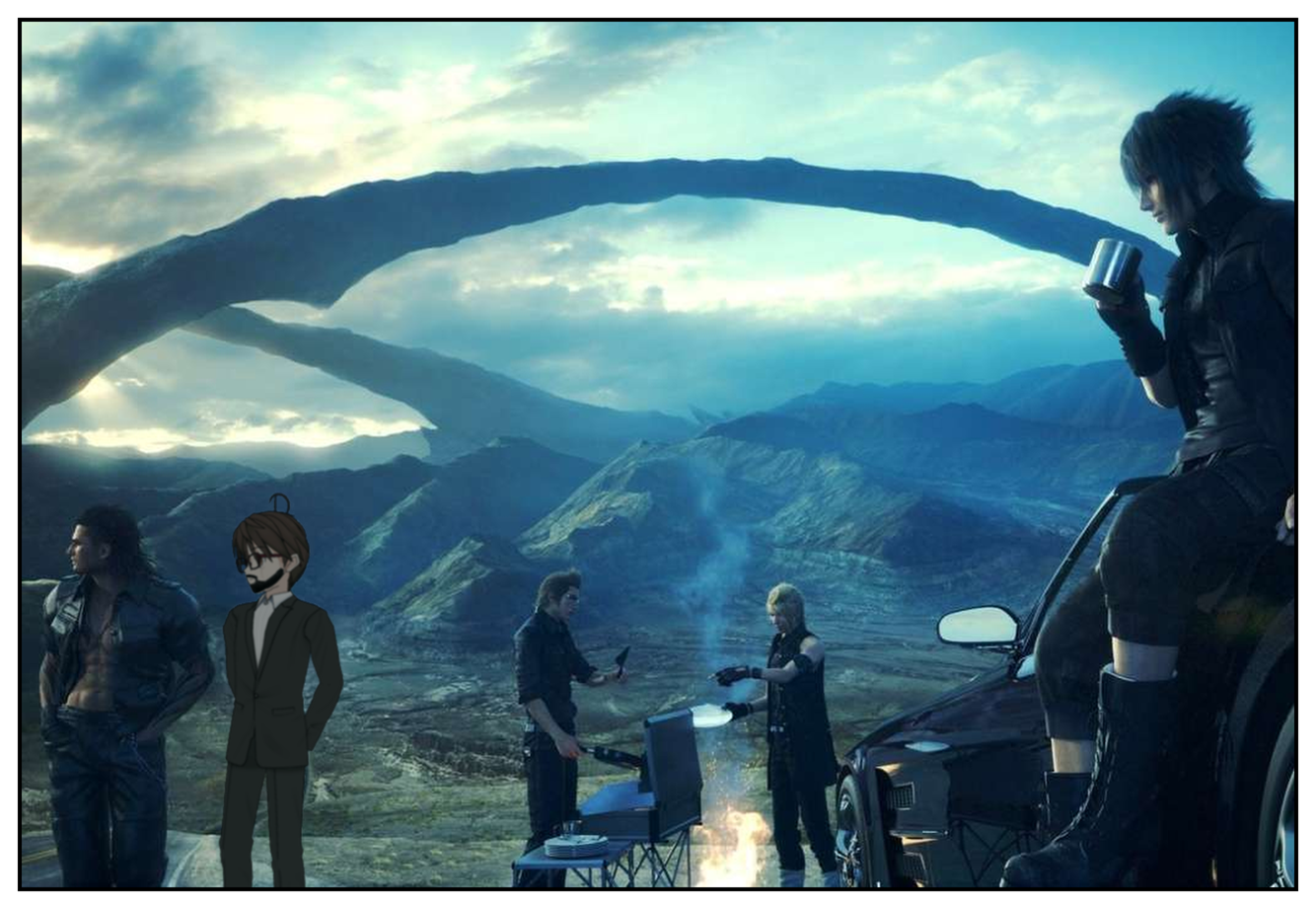
I watched the Final Fantasy XV movie Kingsglaive this evening. It was pretty spectacular, and as something to get one in the mood for Final Fantasy XV it does its job admirably. Taken by itself, it's perhaps a little heavy on the action sequences and light on the justifications that link them together, but for a Final Fantasy fan such as myself, it was fanservice heaven.

Unlike the previous Final Fantasy movie The Spirits Within, which wasn't based on an existing game and only had the loosest of thematic similarities to the venerable series, Kingsglaive very much knew who its primary audience was. As such, the whole thing was riddled with little nods and references to other games in the series.

A wide shot of the Lucian city of Insomnia had a billboard for the "Bank of Spira", a reference to Final Fantasy X's world. Water-based summon Leviathan just happened to be in a giant fishtank present at a highbrow reception. One of the enemy airships inexplicably had everyone's favourite pervy octopus Ultros inside it, though sadly without a speaking role. The "demons" that the antagonists of the piece, the Empire, bring to bear on the Lucians are a dead ringer for Final Fantasy VII's Diamond Weapon. And let's not, of course, forget the presence of Knights of the Round who, after Heavensward, have now played a starring role in two consecutive Final Fantasy works as opposed to being a "secret" summon for the truly dedicated player to uncover.

The movie did a great job of setting the scene and introducing some of the lore that is clearly going to be central to Final Fantasy XV as a whole. It's nice to see that the game is incorporating elements of both classic Final Fantasy — crystals being of paramount importance to the world's magic being the main one — and the more recent titles with modern-to-futuristic technology being in evidence.

I'm a big fan of settings that combine technology and magic, and I think it's traditionally been a rather underexplored variant on fantasy. Sure, the idea of magic combined with the modern world has been popularised by the Harry Potter series in recent years, but it's something that is always interesting to explore, I think. There's a quote from horror game Outlast that stuck with me and that I will now probably butcher for you now: "show a man from the past technology and he will think it is magic; show a man from the present magic and he will think it is technology." This is the core of what's interesting about it, I think: if you have magic, why do you need technology, and vice versa?

This is something I also found interesting about Shadowrun Hong Kong, which I finished earlier today. Shadowrun actually almost plays down its fantastic elements outside of some occasional references to "The Awakening", mages occasionally being among the foes that stand in your way and the fact that orks, elves and dwarves are happily wandering around in a traditionally human-only world. By de-emphasising the fantastic elements, they simply felt natural and "normal" even though they're far from reality.

Final Fantasy has always played up its more fantastic elements, by contrast, and Kingsglaive was no exception to this rule, with a spectacular and lengthy final battle raging between the protagonist and the antagonist, set to a backdrop of gigantic summoned titans and demons smacking the shit out of each other, the foreground and background conflicts taking turns to mirror one another.

I absolutely love this particular breed of overblown insanity and always have done. It's so fantastic and unbelievable that it becomes perfect escapism: something that literally cannot be done in reality, so becomes all the more appealing to be a part of, even if it's only as a passive observer.

If the main game of Final Fantasy XV is half as spectacular as Kingsglaive was, I'll be very happy indeed. But since it's the centrepoint of an incredibly ambitious transmedia campaign encompassing a computer-generated move, an anime series, mobile games and then finally the damn game itself when it comes out at the end of this month, I'm anticipating something even more joyfully exuberant.

I don't doubt the game will have its haters, as its predecessors also have. (I've given up arguing with people who can't see the good in the FFXIII series, it's just not worth the stress.) But I for one cannot wait to step into Noctis' lovingly-rendered boots and start exploring this fantastic new world, and watching Kingsglaive this evening has made the wait just a smidge more agonising.

2482: Palace of the Dead: Solo Guide

0482_001.png

Been soloing a bunch of Palace of the Dead in Final Fantasy XIV over the last few days, so I thought I'd assemble some tips for those who are looking to challenge it.

General tips

  • Take your time on the early floors. You want to equal or exceed the boss' level when you reach it, so clear each floor thoroughly rather than rushing through. You can safely avoid enemies once you hit level 60.
  • Stay aware of your surroundings at all times. Most floors have patrolling monsters; keep an eye out for these and engage them in the corridors between rooms before pulling the monsters in the rooms themselves.
  • When fighting on the normal floors, DPS as hard as you can. Summoners, use Garuda-Egi. Tanks, use your DPS stance. The quicker things die, the easier a time you'll have. In most cases you'll probably want to concentrate on one enemy at a time — pull from a distance whenever possible.
  • When fighting bosses, the priority is on doing mechanics rather than DPSing as hard as possible. Summoners, get Titan-Egi to tank for you. Tanks, use your tank stance.
  • Drink potions whenever you can if you're not at full health. The last thing you want is to die to a landmine or exploding chest.
  • Save Pomanders of Serenity for floors where Auto-Heal is disabled. Most of the other floor effects aren't really anything to worry about, but Auto-Heal not working can really fuck you up.
  • Don't use Pomanders of Safety and Pomanders of Sight on the same floor because they're redundant. Safety removes all traps on the floor, and Sight allows you to see traps and thus avoid them. There's no need to use both.
  • Pomanders of Alteration are a gamble best used before you hit 60. If they spawn Mandragora-type enemies on the next floor, that's free EXP. If they spawn Mimics, however, you're in for a miserable time.
  • When using one of the transformation Pomanders, remember that you're not invincible. The Manticore may be able to kill everything in a single hit (assuming Knockback isn't disabled by a floor effect) but its HP and defense are the same as yours in your regular form.
  • Transformations are immune to Toad traps, and Pacification/Silence doesn't affect the transformation's ability. Landmines are still very dangerous, however, particularly as you can't drink a potion to heal yourself while transformed.
  • Save Pomanders of Resolution for the floor 100 boss. You'll need all three during the fight.

Enemies to watch out for

  • Hornets, found in the 1-10 block, have Final Sting, which will do a shitload of damage if you let it go off. You can actually run away from it and avoid the damage if you get far enough away, but it's best to try and kill the hornet before this happens.
  • Slimes, found in the 11-20 block, cast Rapture if you take too long killing them. This will almost certainly kill you, so kill them as quickly as you can.
  • Gaze attacks — marked by a very obvious glowing purple eye over the enemy model while they're casting it — can be avoided completely by simply turning your back to the enemy. It's particularly important to do this when dealing with Palace Cobras (petrification), Palace Deepeyes (powerful paralysis) and Palace Pots (Mysterious Light, which causes heavy damage and Blind).
  • Morbols will show up in the 11-20 block towards the end, complete with Bad Breath attack. Run towards them for the easiest path to avoid the large cone AoE.
  • Wraiths have a huge AoE attack that causes Terror. If you can stun it, do so. Otherwise, run for dear life as soon as you see the marker appear.
  • Palace Skatenes will cause Sleep on you shortly after they cast Chirp. This isn't a huge issue, however, since you'll wake up immediately upon taking a hit.

Boss tips

Floor 10: Palace Deathgaze

Pretty easy, and if you've fought basic Deathgaze-type enemies in the game you'll know what to expect. It has a heavy attack called Whipcrack that will do a chunk of damage, so pop a potion after it does this. Stormwind (a large cone AoE) and Bombination (circular AoE) can both be avoided. Aerial Blast covers the whole arena and causes Windburn (damage over time for a few seconds). It will cycle through these abilities until one or the other of you are dead.

Floor 20: Spurge

The Easy Way: Level to 35 or 36, pop a Pomander of Strength and a Pomander of Lust and then just go ham on Spurge and you'll probably kill it before it summons its first set of Hornets if your gear is up to snuff.

The Proper Way: There are two main phases to this fight, and they simply cycle around and around. In the first, Spurge will twat you for a chunk of damage with Bloody Caress, then fling two circle AoE attacks at you — one around itself and one aimed at you. During this time, keep your HP topped up and wail on Spurge as much as you can. The second phase starts when Spurge moves to the side of the arena. At this point, two Hornets will spawn, and Spurge will stay in place, occasionally shooting a large linear AoE attack called Rotten Stench. Avoid Rotten Stench while knocking the Hornets down as quickly as possible — otherwise they will use Final Sting on you — before returning to the punishment on Spurge.

Floor 30: Definitely-Not-Hydra

Pretty easy. When it hits you with Ball of Fire or Ball of Ice, immediately move to avoid the effect of the circular area the attack causes — damage over time for Ball of Fire and slowed movement for Ball of Ice. Keep hitting it while this is going on, and try not to bait any Balls of Fire or Ice into the very middle of the arena. When Definitely-Not-Hydra moves to the centre of the arena and starts casting Fear Itself, stand inside its hitbox to avoid the attack completely. Then repeat the process.

Floor 40: Ixtab

Ixtab will spew void crap over the ground every so often — move out of this to avoid damage. He will then summon two Bhoots which you should kill as quickly as possible to avoid being caught in their attacks. He also has an arena-wide attack that causes Terror, often causing you to stumble into the Bhoots' area of effect if they're still up. Aside from this, not a lot else to say.

Floor 50: Edda Blackbosom

Pay close attention to what Edda is doing. If she uses Cold Feet, turn away to avoid its Terror effect. If she uses In Health, you'll either need to get well away from her or stand right on top of her — react quickly to the AoE marker, but you have plenty of time to get from one extreme to the other if the cast goes off. If you get hit by In Health, one of the letters on the floor will light up. The more of these lit up when she casts Black Honeymoon, the more damage you'll take. Aside from this, she's pretty straightforward. Watch out for In Sickness, which causes Disease and slowed movement; cleanse this off yourself if you can.

Floor 60: The Black Rider

A few things to watch out for here. Firstly, keep out of the large purple circles he drops on the ground at all cost — they cause Bleed, which deals heavy damage while you're in them. Secondly, watch out for the aether sprites he summons around the outside of the arena and don't get caught in their blasts, as these deal extreme damage. Their appearance will often coincide with his charge attack, a linear AoE marker that follows you around. While this is casting, make sure your back is to a "safe spot" away from the aether sprites to avoid being knocked into their blast radius.

Floor 70: Big Snake Thing

I can't remember Big Snake Thing's name, but it's a big snake thing. The most important thing to do in this fight is move Big Snake Thing out of the watery patches it drops on the ground when it casts Douse. While it is in these areas, it gains Haste, which makes it nigh-impossible to avoid Electrogenesis when it casts. Aside from this, Big Snake Thing should cause you no real difficulty.

Floor 80: Definitely-Not-King-Behemoth

This is a daunting fight, but fairly straightforward if you know how to handle all the mechanics. Firstly, when DNKB casts Charybdis, move well away from the AoE marker because it will drop a tornado. Said tornadoes inflict a heavy damage over time debuff if you get sucked into one, and periodically they will suck in everything around them — there'll be a very brief AoE marker to show the effective range of this when it happens, so to be safe don't be anywhere near the tornadoes. Next, when DNKB walks away from you, follow him, because he's about to use Trounce, a massive conal AoE attack that is much easier to avoid if you're right next to him. Thirdly, at around 10% HP remaining, he will begin channelling Ecliptic Meteor, and unlike the other times in the game where this happens, there's nothing to hide behind. Try and kill him before it hits, but don't worry too much if it does — it hits for about 80% of your HP, so if you're topped up before it happens, you'll be safe and free to finish him off after the attack.

Floor 90: The Godmother

This is a bit like the final boss of Pharos Sirius (Hard). Attack The Godmother until a red bomb spawns, at which point you should stun its Blast ability if you can and kill it as quickly as possible while avoiding the AoE markers from the untargetable smaller bombs that spawn around it. When it's down, return to wailing on The Godmother. When a blue-grey bomb spawns, hit it with an instant ability while facing The Godmother to knock it towards her. You want the blue-grey bomb's Hydrothermal Combustion ability to hit The Godmother and interrupt her ultimate attack. From here, simply repeat these two processes until The Godmother is down.

Floor 100: Nybeth Obdilord

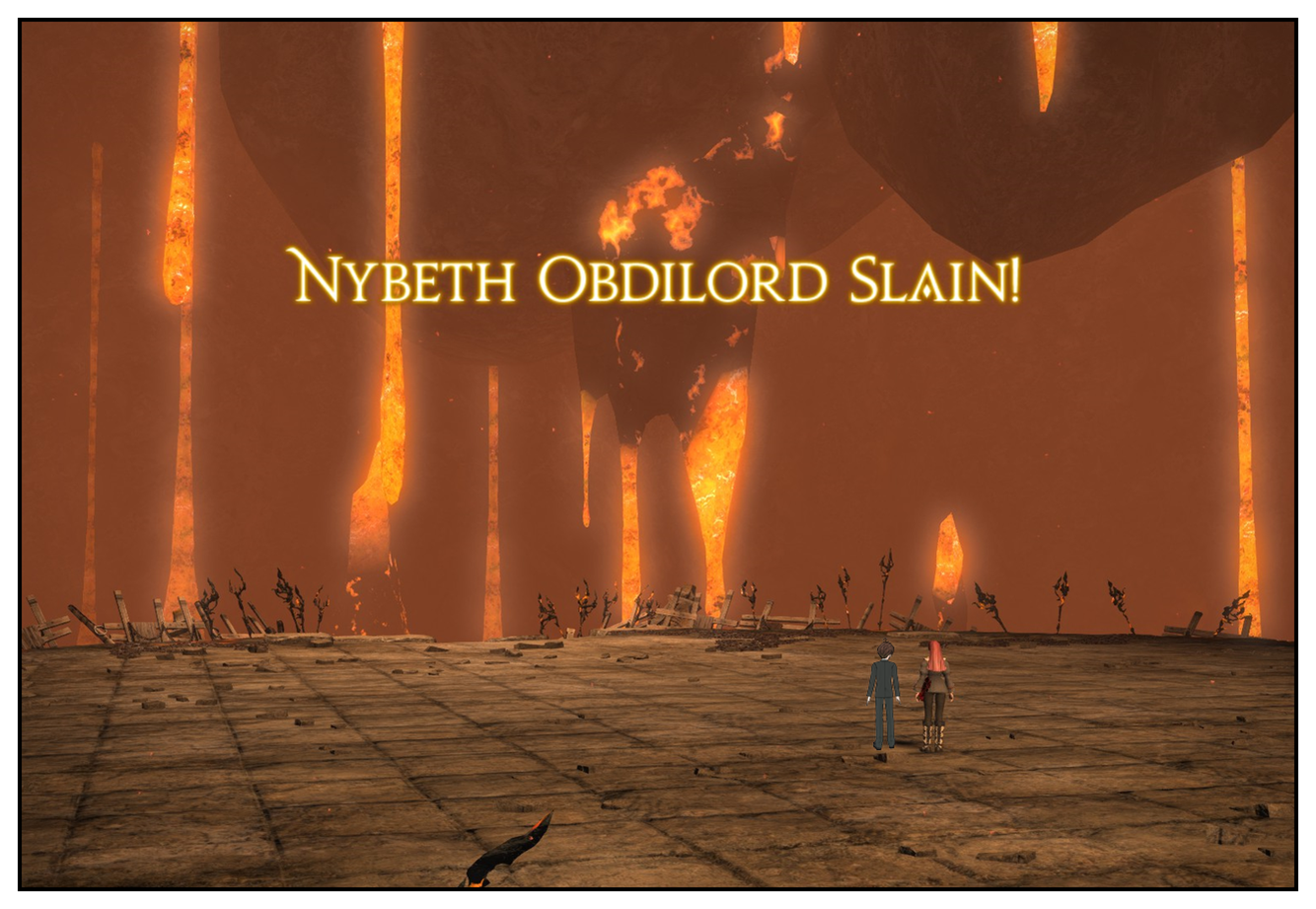
Try to make sure you have three Pomanders of Resolution by the time you reach floor 100 — block 91-100 seems to throw them at you, but save them up from earlier blocks to be safe if necessary. Nybeth himself isn't too much of a threat if you take care to avoid his AoEs, particularly the large cone-shaped Doom attack. The important mechanic in this fight is the adds that he spawns at roughly 90%, 70% and 30% of his HP remaining. As soon as they appear, pop a Pomander of Resolution and use Kuribu's attack to firstly kill the enemies, and then use the ability again on their corpses to remove them permanently from the fight. Click off the transformation before you turn your attention back to Nybeth. Repeat two more times and you're home free.

2479: Palace of the Dead, Solo

0479_001

One of the things that had me most interested in patch 3.45 for Final Fantasy XIV was the ranking system for the Palace of the Dead dungeon I talked about yesterday. This tallies a score for you whenever you play with a fixed party (be it solo or up to four players) and thus allows you to compare your progress against other players from around the world.

Alongside the introduction of this ranking system came a few rebalancing changes to make soloing Palace of the Dead a lot more practical than it was when it was first introduced; previously, anything above about floor 20 at a push was very difficult if you were by yourself, but now, you can theoretically go up to floor 100 and beyond if you've upgraded your gear enough and your skills are up to snuff.

One of the things I've appreciated about Palace of the Dead since its launch was the fact that since it's largely impossible to "outgear" it — your regular gear has no meaning inside, only your Aetherpool upgrade levels, and even those are capped and synced if they're too high for the floor you're on and the level you are — you had to actually play properly. That means no cheesing mechanics, no standing in AoEs because you have enough HP to just soak them up, and swift punishment if you don't know how to play your job properly and effectively, sometimes in an unconventional party lineup.

Today, I made it to floor 60 solo, initially using Arcanist to go as far as floor 50 (my Arcanist hadn't yet reached level 30 and thus couldn't be upgraded into Scholar or Summoner, but the experience point rewards from completing these floors were enough to get me from 23 to 30 without too much difficulty) and subsequently as Summoner.

Arcanist/Scholar/Summoner aren't classes I've played much in the past, though I found Palace of the Dead's accelerated levelling to be quite a good way to learn how they work. In particular, levelling Arcanist to 60 without Summoner's extra Job abilities was a solid way to learn the basics of how the class worked, then upgrading to Summoner built on that foundation. I am now regretting the fact that I haven't levelled Summoner prior to today, because goddamn, that class is fun.

The reason I picked Arcanist and Summoner to run solo is that they seemed the most naturally geared towards soloing in that they have the option of summoning a tank pet that can maintain the enemies' attention while you cover them in festering boils and fling magic at them. The tank pet doesn't get a lot of use in party play — largely because you normally have an actual human-controlled tank there that can perform the role better than an AI routine — but in Palace of the Dead, Topaz Carbuncle (Arcanist) and Titan-Egi (Summoner) have both proven invaluable, particularly when it comes to the bosses.

And speaking of the bosses, soloing floors 1-60 today has given me a new appreciation of these fights. When tackled in a party of four, they're mostly rather easy (with the possible exception of floor 80's boss, which has been the source of many a party wipe so far), though from floor 60 onwards they do start to have some more interesting mechanics. Solo, however, they all present a pretty formidable challenge as you have to dodge their mechanics, chug potions to keep your health topped up (assuming you're not a healer) and somehow in the middle of all that find time to fling a few damaging abilities in their direction. I'm sure you can already see how helpful a tanking pet would be in this situation!

Thus far the secret to successful soloing seems to be having decently levelled gear — currently mine is around the +64 mark, which has seen me safely to floor 60 so far, and from this point onwards the upgrades from the silver chests are less likely to fail, too, so repeated runs will eventually push it up towards +99, which I suspect will be strongly recommended to tackle floor 80 and onwards.

According to the leaderboards on The Lodestone, no-one on Primal data centre has made it to floor 100 solo yet. I have little doubt that will probably change by tomorrow — I think someone on Reddit from another data centre had done it already — but for now it's fun taking aim for the top spot. And if I don't attain that top spot, well, at least I'll be able to say I've done it.

2467: Encylopaedia Eorzea

0467_001

I'm going to do a more detailed write-up on this over on MoeGamer when I've read and thoroughly digested everything in this massive tome, but I thought I'd give some initial thoughts here.

Encylopaedia Eorzea is here! Yes, for a long time the Final Fantasy XIV team had been suggesting that a lore book might be on the cards, and at FanFest last week, it was finally revealed. It was put up for sale at the start of this week and seemed to develop a waiting list very quickly; fortunately, I managed to get in early and snag a copy.

£34.99 gets you a formidable hard-backed book over 300 pages in length, printed on gorgeous thick, parchmenty paper and presented in full colour. The book is heavy enough that it would probably do some damage if you smacked someone with it — and you all laughed at Arcanist, Summoner and Scholar's auto-attack!

The tome as a whole is split into eight different "books", each dealing with a different aspect of Eorzean lore.

The first, and shortest, concerns "the basics" of the planet Hydaelyn and what makes Her tick, including geography, the relationship between Hydaelyn's light and Zodiark's darkness, the Twelve gods in the Eorzean pantheon, and the basics of "aetherology" — the underlying (fictional) science of how the elements interact with one another to create life, magic and other effects.

The second, and one of the longest, concerns Hydaelyn's history, reflecting on the world's cycle of Astral and Umbral eras, with the latter's arrival being heralded by a Calamity of some description — each elementally themed in the case of the first six, and the seventh (used as the initial story catalyst for A Realm Reborn) covering all elements in the sheer magnitude of its disaster. This book is particularly interesting because it gives some background reading on the mysterious ancient civilisations of the Amdapori, the Mhachi and the Allagans, all of whom are explored to a certain degree in the game itself. It also provides a good primer of the storyline for Final Fantasy XIV 1.0, which is no longer playable, but which is concluded through A Realm Reborn's cycle of raid dungeons, The Binding Coil of Bahamut, The Second Coil of Bahamut and The Final Coil of Bahamut.

The third book provides a primer on the different people of Eorzea and where they came from. It only explores the playable races of Hyur, Elezen, Lalafell, Miqo'te, Roegadyn and Au Ra — those hoping for some information about the Padjali or a hint as to whether or not we'll ever see Viera in the game will have to keep theorycrafting.

The fourth book is the longest and concerns the geography of Eorzea, including all the zones from A Realm Reborn and Heavensward as well as short look at Ala Mhigo (subject of the upcoming expansion Stormblood) and the Garlean Empire (recurring villains).

The fifth book concerns Hydaelyn's "servants", and explores the various characters that you come into contact with throughout the game, right from the main "protagonists" the Scions of the Seventh Dawn to the recently introduced Warriors of Darkness. This section also includes information about groups involved in sidequests in the game, too, such as Hildibrand's Agents of Inquiry, the organisation NOAH who spearheaded the investigation into the Crystal Tower and a section entirely devoted to more minor NPCs such as those who served as the face of the Relic quests, and poor old Edda, who has had a rough ol' time of it both during life and in death.

The sixth book looks at Hydaelyn's "disciplines" — in other words, the playable classes in the game. Interestingly, the book makes no mention of the base classes on which the more familiar "Jobs" are based; the focus is entirely on the higher-level incarnations of the Jobs.

The seventh book concerns Hydaelyn's "burdens" — the various beast tribes of the realm, and the Primals associated with each of them. This section also looks a little at as-yet underexplored groups such as the gigants, as well as the eikons of the Warring Triad, which we're halfway through the story for in the game at the time of writing.

The eighth and final book is a bestiary of monsters from around the realm, divided into the various "-kin" categories. It also incluides a look at voidsent, elementals and chimeras.

There is a lot of information in this book, and it's presented in a clear, enjoyable to read manner. The thing I've found most beneficial about it is that it provides a good summary of the various storylines that have unfolded during the game since its launch; this is several years ago now, so it's not surprising that some details may have slipped many players' memories! The lore book acts as a good reference guide for those who may have forgotten some of the finer details.

Above all, though, Encyclopaedia Eorzea is clear evidence that the team behind Final Fantasy XIV have built more than just a game. They've truly built a world for people to inhabit, which has its own history leading up to today, as well as many more stories yet to tell. And if you flip through it's pages, you'll understand just why so many people still like to call Eorzea home.

2464: The Palace of the Dead (Savage)

0464_001

Final Fantasy XIV's patch 3.45 is coming in early November, and bringing with it an additional 150 floors to the game's current Deep Dungeon, The Palace of the Dead. I am excited.

Palace of the Dead is a great piece of content that I'm pleased has remained popular since its launch. It flips most of the conventions of MMOs on their head and provides something different for people to do, with meaningful rewards and a decent shot of experience points for those levelling alt classes.

Palace of the Dead, in case you're unfamiliar, is a 50-floor dungeon that you tackle in blocks of 10 floors at a time, with a boss on each 10th floor. Each floor consists of a number of rooms arranged in a randomised layout, with an exit portal in one room and a resurrection gizmo in another for if things happen to go south and you don't have a healer. Both of these things are inactive at the start of a floor, so you have to kill enough enemies to turn them on before they can be used.

Some rooms have treasure chests and occasionally monsters drop them too. These come in three different varieties: bronze chests hold consumable items such as Phoenix Downs to resurrect fallen comrades and potions to heal HP; silver chests have a chance to upgrade either your weapon or armour (with the chance getting smaller as they get more powerful) up to a maximum of +30; gold chests reward you with "Pomanders", which are items that have immediate beneficial effects such as increasing your damage, turning all enemies in the nearby vicinity into chickens or frogs, temporarily transforming you into a manticore or removing all the hidden traps on the current floor.

In the last major patch, the Accursed Hoard was also added to Palace of the Dead; these are hidden treasures that have a chance of spawning on each floor. Standing on a spot where a Hoard is hidden reveals it, and if you successfully clear the block of 10 floors, you get one sack per Hoard you found, each of which contains a randomly drawn item from what seems like quite a large selection, ranging from the useless (fireworks) to the very useful (grade V materia) via formerly expensive glamour items.

The thing I like about Palace of the Dead is it takes almost everything the rest of Final Fantasy XIV established in terms of gameplay and throws it out of the window. Item level doesn't matter, stats don't matter and even conventional party composition (one tank, one healer, two damage-dealers) doesn't matter. There's some variation in individual performance according to the upgrade level of your aetherpool gear (which you can only use in Palace of the Dead until it reaches its fully upgraded level of +30, at which point it can be exchanged for a level 60, item level 235 weapon that you can use in the rest of the game) and your character level in Palace of the Dead (which is different to your character level in the rest of the game; you level up at a considerably accelerated rate in the dungeon, but have to reset to 1 every time you restart from floor 1) but otherwise, how well you do in there is entirely down to how well you know how to play your class.

It's interesting to see people realising this for the first time. You can't just ignore mechanics in Palace of the Dead because it's literally impossible to outgear it. You can't stand in area-effect attacks and soak the damage because, again, you can't outgear it. And you can't pull 30 enemies at once and hope to survive because, you guessed it, you can't outgear them. It's all about careful use of your abilities, consumable items and the Pomanders; you have to be constantly aware of the situation of both yourself and your party members, as an unfortunate mistake could lead to a wipe — and if you wipe in Palace of the Dead, you fail that set of floors immediately and have to start again from the last "checkpoint" you reached. (This is particularly heartbreaking if you reach the final boss on floor 50 with 5 Accursed Hoards in your pocket and then wipe because you forgot to pay attention to mechanics.)

The reason I'm looking forward to Patch 3.45 is that it promises not just more of Palace of the Dead, but that its last 100 floors in particular will be very difficult. And not "very difficult" in the sense that the current Savage raids are very difficult — i.e. they get quite a bit easier if you take the time to buff up your gear level — straight up difficult in that you'll have to pay attention, dodge shit and play your class effectively, perhaps in an unconventional party formation.

I'm interested to see quite how they're going to make it difficult. People have been clamouring for difficult ("Savage") four-player content for quite some time now, and Yoshi-P and the team specifically said during the last Live Letter that the lower 100 floors of Palace of the Dead were designed to be just that. What I find particularly interesting is that this is (hopefully) super-difficult content that you don't need to have spent ages preparing to be ready for, because your gear level when you go in doesn't matter; everyone in the entire game, assuming they have Palace of the Dead unlocked (which they can do as early as level 17 rather than having to reach the current cap of 60), has the potential to be a "world first" clear, which is something that has never happened before. Previous "world firsts" in the game were by raiders who were at the absolute top of their game with the best possible gear available, so in most cases it was fairly predictable who the acclaim would go to. With this, however, the title is anyone's.

I'm also intrigued by the proposed ranking system and how it works, since that hasn't been explained in much detail before. We know that there will be rankings for both individuals and parties, and that rankings are stratified by class/job, but we don't know exactly what causes you to score the "points" that determine your place on the rankings. Progress through the floors is a given — the mockup leaderboards we saw during the Live Letter displayed both the floor the characters had got to and their score — but what else will contribute to it? Clear time? Damage done? Kills? Accursed Hoard finds? Treasure chests looted? All of the above?

If they handle this properly, Palace of the Dead has the potential to become an enormously compelling metagame in its own right within the wider context of Final Fantasy XIV, not to mention a great way to learn and level alt classes that you perhaps haven't used much before. I'm very much looking forward to challenging the lower floors of this Deep Dungeon, and hope that it provides a suitable alternative to raiding for those who seek a challenge but perhaps don't have a group, have difficulty getting everyone together at the same time, or simply aren't geared enough.

I guess we'll see soon enough! (Also, I really want to see what happens when you sit on that bench…)

2455: Not-So-Super Max

0455_001

I finally got around to finishing the last episode of Life is Strange yesterday. My final feelings about the whole thing were… overall positive, but a little mixed in a number of areas. Personally speaking, I didn't feel it was the utter masterpiece most critics made it out to be; in fact, there were a number of aspects in the final episode that I found fundamentally unsatisfying and downright awkward. More on those in a moment; let's talk more generally.

SIGNIFICANT SPOILERS FOR LIFE IS STRANGE AHEAD. YOU HAVE BEEN WARNED!

Continue reading "2455: Not-So-Super Max"

2445: The Best Music of Final Fantasy XIV

Since I appear to be on a Final Fantasy XIV roll at the moment thanks to the excellent new patch, I thought I'd devote today to some of my favourite tunes from the game as a whole.

I respond very strongly to music that I enjoy — so much so that any time I think about hanging up my Eorzean adventurer's shoes for good, it's pretty much always the music that gets me coming back time after time. Or, if it's not the only reason, then it's certainly a leading reason as to why I keep coming back.

So let's look at some great tracks from the game.

"Patch 3.4 boss theme"

I don't know if anyone knows the actual name for this theme yet, but it's an excellent one. It seemingly became tradition with A Realm Reborn that the last couple of patches in a cycle would use different boss music from the ones we had been enjoying previously, and Heavensward is continuing — or, perhaps more accurately, confirming — this tradition.

This boss theme mixes two important themes from the game as a whole: Heroes, which we'll come to in a moment, and Penitus, which we'll also come to in a moment. To put it another way, it mashes together one of the most recognisable musical motifs from Heavensward with one of the most recognisable musical motifs from A Realm Reborn to produce a track that very much feels like a "reward" for people who have at least been playing since 2.0.

Heroes

This theme, played during vanilla Heavensward's final boss fight against King Thordan and Knights of the Round, brought the already exciting story of FFXIV's first expansion to a climactic head. While the fight was a bit easy even when it first launched, people still enjoy running it today just to enjoy this music and the spectacular graphical effects throughout the battle.

Penitus

I was already thoroughly wrapped around this game's little finger by the time I got to level 50 and was faced with the two 8-player story dungeons that wrap up vanilla A Realm Reborn's storyline, but getting into Praetorium and hearing this wonderful piece of music — snatches of which had been heard in a variety of different styles right the way through from level 1 all the way to 50 — got me absolutely hyped to see the story through to the end.

Ultima

And then the game goes and throws this incredible track on you for the Absolutely Definitely Last Boss, Yessirree (Not). I'll let this one speak for itself.

Thunderer

Ultima is followed by this little wonder featuring one of the best key changes ever. Sadly the first time you hear it, it doesn't last anywhere near long enough because everyone absolutely obliterates the Real Final Boss, Definitely Totally For Real This Time in a matter of seconds these days.

Thankfully, Square Enix clearly knew they were on to a good thing with Thunderer, as it was reused in a couple of places — most notably in the Chrysalis trial which was added in one of the content patches, and, for many people, its most iconic appearance in Turn 5 of the Binding Coil of Bahamut, in which you fought the dread dragon Twintania, and which in the game's vanilla release acted as the "true" final boss. (Of course, this later all changed with Second and Final Coil, but still.)

Footsteps in the Snow

Shiva was one of my favourite Trials to be added to the game almost entirely because of this excellent piece of music that opened the fight and ran until the phase change. This music was first heard in the trailer for patch 2.4Dreams of Ice, and got everyone well and truly hyped.

From the Ashes

Raid dungeon The Final Coil of Bahamut was, for many players, a highlight of the game due to its fascinating story — which, unlike the narrative of A Realm Reborn itself, which span off in a different direction, followed up on how Final Fantasy XIV 1.0 ended. Turn 12, the penultimate turn, is often cited as a particular favourite by many players simply due to this unique music, which was a highly dramatic, spine-tingling take on A Realm Reborn's main theme song Answers. The whole of The Binding Coil of Bahamut had featured music based on Answers, and this track felt like it was bringing everything to a dramatic conclusion.

Answers

And, having mentioned Turn 12, it would be remiss of me not to mention the way Answers was used in Turn 13, the absolutely definitely positively totally final boss of the game, or at least of the raids. I present it here in context, including battle sound effects, to show how it is used in the fight itself. The incredible crescendo during Teraflare is made of goosebumps.

I'm yet to do the new Alexander raid — my item level isn't quite high enough yet — but I understand the grand finale is suitably spectacular. T13 is going to take some topping, though.

2444: Wondrous Tails and the Accursed Hoard

0444_001

Spent a bit more time with the non-story aspects of FFXIV's 3.4 patch Soul Surrender today, so here's a few thoughts with that in mind.

First up, I finished my first Wondrous Tails journal, albeit rather poorly, so I have a good handle of what that's all about now.

Wondrous Tails is a new weekly quest where you acquire a journal from the adorable young Miqo'te Khloe Aliapoh. Khloe wants to hear all about your adventures, so you agree to help her out by filling in her journal with tales of some of your exploits. You are then presented with 16 different challenges for the week, nine of which you need to clear to complete the journal.

On the opposite page to the challenges you are to face is a 4×4 grid of blank spaces for stickers. You acquire these stickers by completing the challenges — one per challenge, though you don't get to choose which sticker you get. Fill a line in the journal and there's a reward separate from the one for completing 9 challenges. Fill two lines and there's another reward. Fill three and there's another still. These rewards are significant, at higher tiers consisting of Allagan Tomestones of Scripture, the current "top end" endgame currency, and even item level 250 armour which, while not the best in the game at the moment, is certainly pretty good.

They are not, however, easy to accomplish, as I've discovered this week. It's not completely random chance as to whether or not you fill some lines — by helping new players complete duties for the first time, you earn "Second Chance" points, which can be used in one of two ways: firstly, to mark a completed challenge as incomplete while marking an incomplete one as complete. This effectively allows you to do something again while removing the need to do something you don't want to do. You can choose the complete challenge to make incomplete, but not the incomplete challenge to make complete. Alternatively, you can spend two Second Chance points to shuffle the entire board of seals (including the ones you've already placed) in the hope that you will get a more advantageous arrangement. In order to make three lines with nine seals, you need their placement to be absolutely perfect — a horizontal, a vertical and a diagonal. As such, it's a bit of a gamble that you can't necessarily rely on.

I gambled and failed, ending up with no lines at all by the time I had nine seals — you can only use the shuffle option when you have between three and seven seals, so you can't just shuffle a completed board around. Still, I at least got the reward for completing the journal for the week, which is meaningful in itself, and there's always next week to try again.

Next up, I jumped in to the randomly generated Palace of the Dead in an attempt to finish my Aetherpool weapon and get something to take the place of my outdated i210 Anima weapon until I can finish the upgrade process. New to Palace of the Dead in this patch is the addition of the Accursed Hoard, a series of hidden treasures that can only be located by using Pomanders of Intuition, which last until you unearth a piece of the Accursed Hoard. Your party banks the pieces of the Hoard until you complete the tier of the Palace that you're on, and like everything else, if you party wipes you lose them.

Assuming you successfully completed a tier, each piece of the Hoard the party acquired will reward you with a sealed sack which must be taken to a new NPC in Quarrymill to appraise. There then follows a gacha-style appraisal sequence, during which you can anticipate how good the item you're about to get is via the animation that plays (or not!) during the appraisal sequence. There are some decent items available through this system — in my first batch of three sacks, I got a paissa minion, the expensive Thavnairian Bustier top and a firework. In the seven other sacks I acquired throughout the evening, I got more fireworks. It seems fireworks are the default "normal" draw, at least from the common bronze sacks, but there seems to be an above-zero chance of getting rare items from this, too, making Palace of the Dead a worthwhile activity for reasons other than acquiring the weapon.

There's obviously a lot of RNG in both of these systems that I've described, and some people don't like that, preferring a predictable goal that you can take aim for and always see your progress towards. Final Fantasy XIV has always been heavily RNG-driven, however, and so these two systems, while having the potential for enormous frustration, are firmly in keeping with what we've come to expect from the game to date!