2170: The Slowest Racing Game You'll Ever Play

0170_001

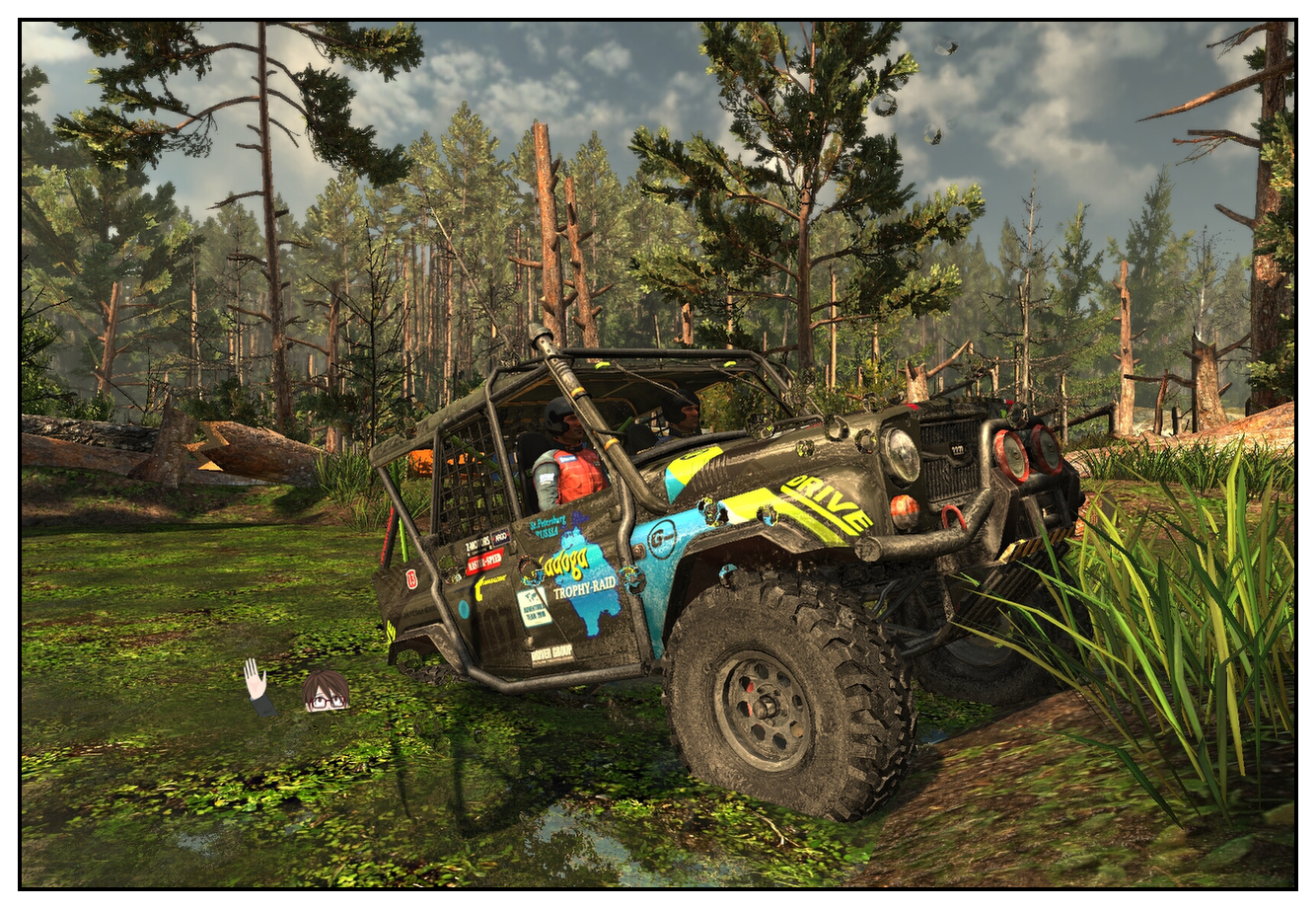
My good friend Mr Alex Connolly saw that I had been investigating various racing games recently, and recommended something of an oddball curiosity to me: the rather literally named Off-Road Drive, a charming, clunky mess of a game from Russian publisher 1C Company.

Off-Road Drive is a game about offroading. Not offroading in the usual video game sense — that is to say, racing like you're playing Ridge Racer, only with mud textures — but rather a more realistic(ish) take on offroading in heavy duty vehicles more suited to chores on the farm than barreling around courses at high speed.

The interesting thing about Off-Road Drive is that it goes into a lot more detail than many other racing games, yet at the same time manages to do so without making itself completely obtuse to the non-petrolheads among us. The game features not only the usual accelerate and brake buttons, but also switches to toggle between two- and four-wheel drive, do something or other with your differential, hoist yourself up with a winch, downshift into a low gear and let the air out of your tyres.

You may wonder why on Earth you would want to do any of those things and it's initially baffling. However, a good tutorial mode gives you an introduction to the most common hazards you'll face while offroading — and the appropriate tool from your arsenal to make use of when attempting to traverse it. By the end of a couple of laps of the tutorial circuit, you should have a pretty good idea of how things work and what you should do when. It's perhaps best thought of as a racing game in which you're required to use various special abilities at specific points on the track; thinking of it this way rather than trying to get your head around what the "differential" does is the way to go, it seems.

Off-Road Drive is not a particularly polished product. It doesn't support VSync in full-screen mode, leading to screen tearing; its menus are clunky and don't work properly with a controller (despite the game itself supporting controller); controller buttons are labelled the wrong way around (LT instead of RT and vice-versa); and its collision detection is occasionally a little questionable, but there's little doubt that the developers set out to create something different to the norm and have succeeded in producing something that's actually rather interesting and fun to play.

One of the greatest things about gaming is that it gives us the opportunity to try things we'd never do in real life. I don't see myself ever flinging a Land Rover around a muddy course in Thailand, so Off-Road Drive acts as an eminently suitable substitute for now, at least.

Now, to go and look up what the fuck a "differential" is.
2169: Starting GRID (2)

0169_001

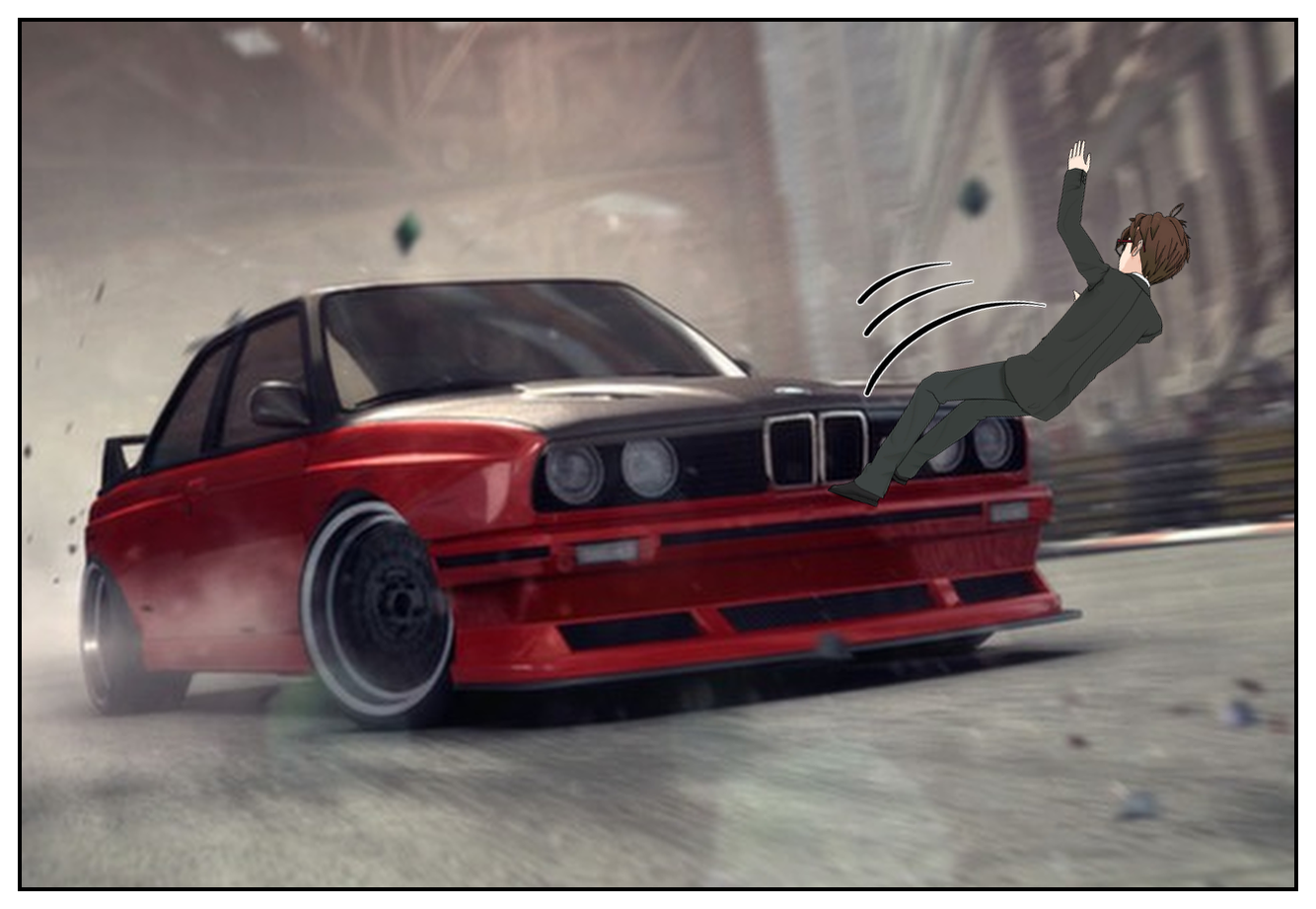
One of my acquisitions in this year's Steam sale was Codemasters racing game GRID 2. I already owned the previous GRID game and had enjoyed what I played of its multi-discipline racing, but hadn't delved into it in depth. The price that GRID 2 and its more recent sequel GRID Autosport were going for was too much to resist, however, so I snagged copies of both and have been putting the former through its paces over the last few days.

GRID 2 was a bit of a controversial release when it originally came out, since it's a distinctly more "arcadey" affair than its predecessor. That's not to say that the original GRID was particularly sim-like in the first place, but the true petrolheads of the Internet appreciated things like its lavishly detailed first-person cockpits and semi-realistic handling. In contrast, GRID 2's emphasis on drift-heavy driving and the removal of the cockpit view led to a bit of an uproar among the racing enthusiast community, who saw it as a step backwards from its well-regarded predecessor.

Me, though, I love it; GRID 2's slidey handling is exactly the sort of thing I love in a racing game, and to be honest, while I love the way a cockpit view looks, I find it extremely difficult to race from that perspective, since visibility is so limited in most cases, and you don't have the peripheral vision you'd have in reality. Consequently, I much prefer racing from a bumper or bonnet cam (preferably the latter) since I find it much easier to judge my own position and have a feeling of spatial awareness during a race.

I also appreciate GRID 2 for its attempt to spin a story throughout its single-player game. All too often, racing games are rather dry affairs in which you navigate boring-looking menus to get to the actual racing, and there's often very little in the way of personality. GRID 2 doesn't go so far as to be Wing Commander with cars — although man, I would so play that game — but it does feature voiceovers and a sense of narrative progression as you play through the game. It's not a complex narrative — you're an up-and-coming driver headhunted by an eccentric rich dude who has decided he really wants to set up a new worldwide multi-discipline racing league, and your efforts as the face of the series allow you to build up the fanbase required for the WSR to become a success — but it works well in context, and it's punctuated nicely with infrequent cutscenes, including authentic-looking TV broadcasts featuring full-motion video rather than in-engine characters.

This sense of narrative progression and personality carries over into the actual racing gameplay, too. You're constantly getting advice and feedback over your radio while you race, and most race series highlight a named rival for you to try and beat. While the personalities of these rivals aren't developed all that much outside of text messages and social media posts in the menu screens, it's a nice touch that gives you more of an incentive to do your best than simply trying to get into first place.

The game also makes minimal but cinematic use of music: most races don't have background music, instead featuring some impressive sound effects that allow you to hear not only the roar of the car's engine, but the rumbling of the tyres on different surfaces, the sound of the crowds as you whizz past them, and other environmental sounds according to where you're racing today. There's an exception to this, though: when you get into the final races of each season, the final lap or sector of each race is accompanied by some electro-orchestral music that lends a real sense of drama to proceedings, making some already butthole-puckeringly tense finishes even more exciting. Good job there.

There's a good variety of events, too, with both circuit races and point to point races — a subject that I was talking about wanting to see more of just a few weeks ago — as well as time attacks, overtaking challenges, endurance races and all manner of other disciplines. The aforementioned petrolheads don't seem to like the fact that the game's career mode insists that you participate in all the disciplines, since most seem to prefer picking and choosing their favourites, but I really like the amount of variety this brings to the campaign: it, again, gives a good sense of progression as each new season presents you with new disciplines to conquer and new types of car to get to grips with. By the time you reach the end of the career mode, you'll most likely be a well-rounded driver able to turn your hand to all manner of different events — ideal for jumping online and taking on all-comers.

So I like it a lot so far, then. I'd go so far as to say that it's shaping up to be one of my favourite arcadey racers for quite some time, and I'm very interested to explore it in more detail over the coming weeks.

2165: Dirt Showdown and Vulgar Racing

0165_001

I am a fan of what I described to my friend Alex yesterday as "the vulgar side of racing games". This is a pretentious way of saying that I'm a fan of arcade racers more than more realistic fare, but it kind of goes a little deeper than that: I'm a fan of racing games that firmly put an emphasis on fun and spectacle as opposed to providing a faintly plausible virtual driving experience.

Codemasters' Dirt Showdown, which I picked up in the Steam Halloween sale, pushes all of my buttons in this regard.

Dirt Showdown is the very essence of vulgar racing. It's loud, it's brash, it's very American (despite the Codies being British), it's full of scrappy-looking cars that you'd expect to find burnt out in a council estate in Croydon… and it's a ton of fun.

A lot of Dirt Showdown's fun factor comes from its hyperactive nature — and this is true both within single events, all of which are chaotic and specifically set up to encourage full-contact racing, and within the game structure as a whole. The single-player campaign sees you flip-flopping from one discipline to another — one minute you'll be racing, the next you'll be smashing your way around a course made up of barriers, the one after that you'll be trying to knock all of your opponents off a raised platform — and multiplayer is much the same, with the added chaos of some rather "sport-like" competitive games modelled on Capture the Flag and Halo's Oddball mode.

You're never stuck doing the same thing for very long, in other words, and this is what keeps the game interesting. Of course, there's nothing stopping you setting the multiplayer mode to do nothing but races, but where's the fun in that? The beauty of Dirt Showdown is that it encourages you to master flinging your car around with a variety of different goals in mind, be it dispatching opponents as quickly as possible, or simply beating them to the finish line.

The big appeal element in Dirt Showdown for me, though, is the fact that it's an honest-to-goodness arcade racer. This is not a game intended to be taken seriously or be regarded as a sim; it's not a game where you can admire lovingly detailed cockpit views; it's a game about taking a hunk of junk (or, indeed, a few licensed rally cars) and then hurling it at a bunch of other hunks of junk and seeing who comes out on top. It's a game about tapping the handbrake rather than using the actual brake to go around corners; it's a game that features races specifically designed to encourage pileups. I approve of all of this.

Plus it's super-cheap in the currently running Steam sale. So if you haven't given it a shot yet — assuming you're a racing game person — be sure to check it out.

2164: The Specialists

0164_001

I find the evolution of British developer-publisher Codemasters rather interesting, since they've been part of my life since I was very young, and they've changed significantly over the years.

When I was a kid, Codemasters was a label primarily associated with budget-price games for 8- and 16-bit computers. Their games were typically released on a wide variety of platforms ranging from the ZX Spectrum to the Commodore Amiga and everything in between, and development of these games was such that every platform had a decent version of their games within the limitations of its respective hardware. It was quite an impressive achievement, when you think about it, especially considering the sheer number of different platforms that were around between the '80s and '90s.

Old-school Codemasters' most well-known franchise was probably the Dizzy series. Vaguely positioned as a home computer alternative to the fashionable "mascot platformers" of the consoles — stuff like mainstays Mario and Sonic as well as third-party attempts like Bubsy and Cool Spot — the Dizzy games were actually rather interesting in that they weren't so much platform action games a la Mario and Sonic, but instead were more akin to adventure games. You explored a 2D side-scrolling open world, you probably wanted to make a map, you collected items to put into your inventory, you used said items to make things happen and solve puzzles.

Each Dizzy game was essentially the same structurally, but they differed in setting, and this often made a surprisingly large difference to the overall "feel" of the games. Compare Treasure Island Dizzy, which unfolded on a tropical island, to Fantasy World Dizzy, which took place in a world that stretched from the ground to the clouds. Despite having the same basic mechanics, both were very distinctive from one another, and well worth playing.

I'm not sure when it was that Codemasters shifted from a budget label to their present position, but it's gratifying to see what a huge success they've made of themselves in the last few years in particular. Not through modernising Dizzy, though; instead, the Codemasters of today is a very specialist publisher, focusing entirely on racing games of various descriptions.

And it's been a huge benefit to them to focus on this one, single genre of game that they've ended up being rather good at. Much like the different Dizzy games shared mechanics but had a unique look and feel to them, the various series that Codemasters offer today all have similar structures and mechanics, but unique feels to them. Compare the rally-centric Dirt series with the disparate disciplines of the GRID series, for example — or even the destructive chaos of Dirt Showdown to the rather more disciplined but still fun Dirt 3.

An awful lot of developers and publishers these days try to have a broad portfolio and appeal to lots of different people. But, to my mind, Codemasters have the right idea: find what you're good at, then focus exclusively on that. That's how you build up a loyal fanbase who will almost certainly purchase pretty much anything you put out — and how you become recognised as industry leaders in your specialist field.

Now, about applying the same philosophy to the games press…

2128: Point to Point

0128_001

I'm apparently on a minor retro kick at the moment, what with playing The Legend of Zelda and, also, downloading the "3D Classics" version of OutRun on my 3DS.

I love OutRun. It's one of those games that I used to see in the arcade but, for whatever reason, didn't play very often. (I feel it was probably something to do with my Dad baulking at the idea of paying 50p for one credit, but I usually managed to convince him that it was worth paying this much to play G-LOC, which at least had aeroplanes in it.) We also had the dreadful Atari ST port of Turbo OutRun, which I actually rather enjoyed despite its atrocious framerate, appalling load times (in the middle of a race!) and loss of various animations and game features if you had less than 1MB of RAM in your computer.

Despite all these setbacks, OutRun has always remained a racing game that I've been very fond of, and when the Shenmue series hit Dreamcast with a variety of playable Sega games right there within the game itself, I spent a great deal of time recapturing past glories (or, more commonly, indignities) on OutRun and Super Hang-On. When the PlayStation 2/Xbox era rolled around, I spent a lot of time playing the wonderful OutRun 2, which brought the basic gameplay of the original up to date with fresh graphics, but otherwise played just like an old arcade game. And when the Xbox 360 got a tweaked port of OutRun 2 on its downloadable Xbox Live Arcade service, well, of course I was going to play it again.

3D Classics OutRun is arguably a step back technology-wise from OutRun 2 and its spinoffs; it's based on the original 16-bit sprite-based graphics rather than being rendered in full polygonal glory. This is true to the original game, however, and there are a few little tweaks here and there to bring it a bit more up to date. It runs at 60 frames per second, for one thing, making it look smoother than the arcade version ever did, and makes excellent use of the 3DS' glasses-free stereoscopic 3D for some impressive visual effects. Possibly my favourite "pointless but cool" feature in it, however, is the simulation of the arcade cabinets' movement that you can turn on; OutRun was one of the many arcade games in the period that had "Deluxe" cabinets featuring hydraulics that would cause your seat to move around as you played. Your field of vision on the tiny screen of the 3DS isn't quite the same as literally feeling your car being slammed around corners, but it's a decent enough approximation, and a fun (and optional) effect to play with.

But enough about the technical side of things; every time I play some variation on OutRun I find myself pining for this lost age of racing games. Not necessarily because of the graphics or the style of play or anything — playing racing games with strict countdown time limits can be a bit of a culture shock these days! — but because they feature a subtle difference from most modern racing games in that they are point-to-point racers rather than lap-based.

I like point-to-point races, and we don't see nearly enough of them in modern racing games. There are exceptions, mind you: Burnout 2 had a nice little feature where once you completed the various events in one area, you then had a point-to-point race to get to the next one; Burnout Paradise was almost entirely point-to-point races; the Midnight Club series took an enjoyably chaotic approach to point-to-point racing by allowing you to choose your own route through an open-world city, so long as you hit the checkpoints along the way. But despite these examples, many of the racers we have today are lap-based.

Why is this something I care about? Well, lap-based racers are fun, of course, and allow you to learn the course, even within a single race. Point-to-point racers, meanwhile, have a wonderful sense of going on a journey, and in the case of games like OutRun, it's immensely satisfying to successfully reach the next stage of said journey and see what new scenery there is to admire a little further down the road. OutRun even takes this one step further, by providing a fork in the road at the end of each stage, allowing you to continue in one of two different directions to create your own custom route through the game.

3D Classics OutRun isn't a deep game in the slightest, especially when held up against more modern examples. But there's a purity to the experience that you just don't get in more realistic fare; it's a game that revels in the enjoyment of taking a fast car on a rollercoaster ride and seeing how far you can get this time. I love it, and I'm happy it's still a relevant game in 2015!

1141: Give Me A Reason to Race

Page_1Why are there no racing games with stories? No, wait, scratch that, why are there no racing games with good stories? Or at the very least well-told stories?

It is surely not a difficult thing to do. You take the basic game structure from Wing Commander and replace all the space combat with racing cars around tracks and/or city streets. Then you profit. Why has no-one done this?

The few racing games out there that do have storylines of sort are generally half-assed efforts where all the plot is delivered through badly-written text put into the game as an afterthought, or they simply don't carry their potential through far enough.

I can think of a few recent examplesMotorstorm Apocalypse, though I didn't play it, reportedly had a plot of sorts, but it fell into the former category above. Motorstorm Apocalypse, lest you're unfamiliar, had you racing around a city that was blowing up and falling to pieces — surely an ideal situation for a rudimentary Michael Bay-style plot with some characters and shouting. It wouldn't have to be a complex plot, just something to break up the racing with some motivational scenes that gave it some meaning.

Split/Second had a go, too, with its TV show-style presentation, incredible electro-orchestral cinematic soundtrack and episodic structure. It stopped short of actually giving the game's antagonists, the "Elite Racers", any degree of personality (or indeed faces), though it did end on a cliffhanger (which will now never be resolved — thanks a lot, Disney).

Recent Need for Speed games have taken a pop at it too, but tend to lose interest after the introductory sequences. The closest example I've seen to what I'm looking for is Need for Speed The Run, but apparently — again, I haven't played it — neither the racing nor the plot are particularly up to much. (I must say, I am curious to try it, though, purely to see how close they get to what I'm imagining in my head.)

There's also a Japanese eroge called Moero Downhill Night Blaze that reportedly combines a visual novel with racing action, but judging by its required system specifications, I'm not counting on it being an especially spectacular offering on the racing front. (I do intend to play it, though, as the whole series sounds like fun in story terms, even if the racing ends up sucking.)

And then there's Midnight Club Los Angeles, which occasionally has Grand Theft Auto-style cutscenes, but not nearly enough to carry a coherent plot.

I'm honestly bewildered as to why no-one has tried this properly yet. We live in an age where video games are more "cinematic" than ever, and yet the racing game genre is still following the same old conventions it's been using since the PlayStation 1 era — and possibly before. I would pay good money for a racing game with a good, well-written plot — given that I never, ever complete racing games (Split/Second is, to date, the only exception), an unfolding narrative with interesting characters and a degree of overblown drama would be just the incentive I need to up my game and see the experience through to its conclusion.

If I had any clue how to make such a game — or indeed access to a team to make such a game — I would do so in a heartbeat. Sadly, though, I have a sneaking suspicion my desire to see a game like this will remain nothing but a far-off dream.

#oneaday Day 95: Car Pee Gee

There's a ton of things that people haven't tried in the world of video games—mostly because of certain assumptions that are made about the people who play them, or more specifically, the demographics of who plays what.

Let's take the racing game genre as an example. It's generally assumed that racing games will be played by petrolheads of varying degrees. The überhardcore petrolheads who actually know what a limited slip differential is rather than just treating it as a powerup will be into the Forza Motorsports and Gran Turismos of the world. Those who just enjoy flinging cars around corners are built for the Ridge Racers, Need for Speeds and Project Gothams of the world.

And that, it seems, is the limit of what the market assumes to be "people who like racing games". But I like racing games, and I wouldn't describe myself as a particular petrolhead as such. I also like other genres, and I would pay good money for a game that fused together some different genres and gave racing games a bit of personality. Because let's face it, however good the driving action is, the in-between races bit of most racing games is about as interesting as a spreadsheet. Sure, it might have a soundtrack by Junkie XL or The Prodigy, but it's still dull as ditchwater and completely character-free.

I want a racer with a plot. I'm not talking about half-assed efforts like Need for Speed Underground or Ridge Racer Type 4. I'm talking about a game where the unfolding storyline is just as important as throwing a BMW M5 around a 90-degree corner. It's been tried once before with TOCA Race Driver, but to my knowledge, never again since. There's also Square's Racing Lagoon, but good luck finding a copy of that ever.

No; what I envision is something along the lines of the old Wing Commander games, where there's an unfolding story and some good character interaction punctuated by, in this case, racing rather than space-shooty-bang-bang action. If your character has been talking to a rival racer and talking smack to them in these interstitial "plot" sequences, it's going to make you feel all the more inclined to do your very best against them when you see their name flash up over the top of their car in the middle of a race. Perhaps you could have a co-driver sitting in the car with you talking to you and making comments as you race as well as helping you out by warning you of upcoming corners and hazards.

Unfortunately, I doubt it's ever going to happen, because most racing games these days are treated as triple-A titles, which means that they get tightly focus-grouped and marketed at a specific demographic: the petrolhead.

I want to play the racing game for the RPG fan, the interactive movie fan, the adventure game fan. There's no reason why either side of the experience has to be compromised—just replace the battles from a JRPG with races. Why shouldn't it work?

Oh well. I can dream on.