2016: What an Achievement

0017_001I was chatting with my friends earlier this evening about the matter of achievements and trophies in games. As long-term readers will know, my opinions on these metagame awards that were introduced with the last generation of games consoles have gone back and forth somewhat, but on the whole I feel I'm starting to come down on the side of liking them.

The reason for this is simple: after nearly 10 years of them being A Thing in gaming, a lot of developers are getting the hang of how to use them effectively — and the reasons for using them.

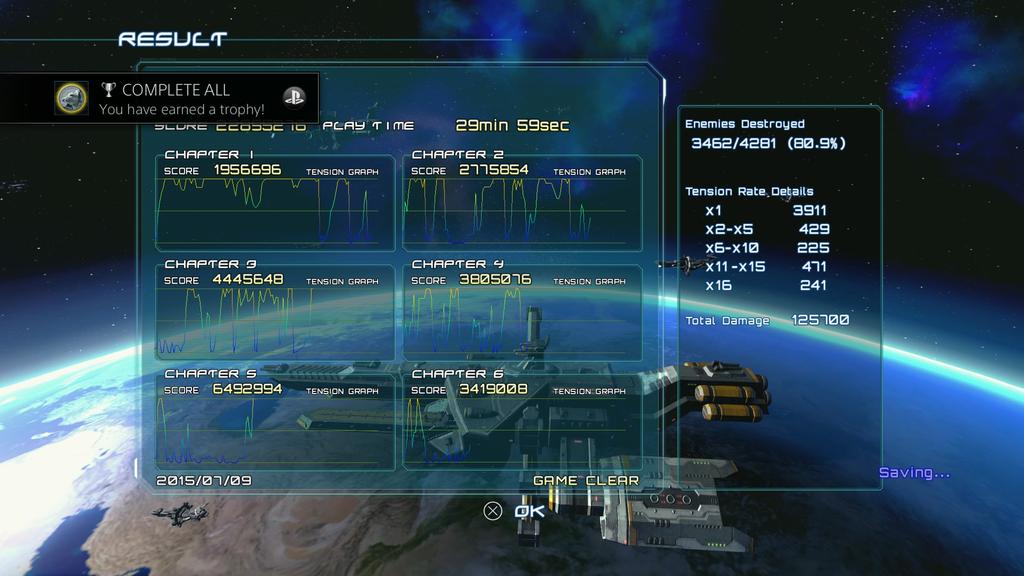
There are, in fact, several reasons for the existence of achievements. From a developer perspective, they provide feedback on just how much people are playing games and what they're doing. This is why so many games have a "started the game" achievement — look at the rarity statistics on PSN and you'll see that there are a surprising number of people who have booted a game up for long enough to add the trophy list to their profile, but not actually started to play it. I couldn't even begin to contemplate what the reasons for doing this might be, but it happens; as an example, the wonderful shoot 'em up Astebreed gives you a trophy for completing the interactive prologue sequence — something you have to do before you can even access the game's main menu — and yet only 91% of players have accomplished this, suggesting either that 9% of players simply turned the game off for some reason or other during the prologue, or were unable to complete it. And I'm not sure that last option is even possible.
CJex_cVXAAAFJlV

From a player perspective, a well-designed trophy list provides a metagame to layer on top of the existing game structure. They can provide challenges for players to complete and encourage them to explore a game in full rather than simply making a beeline for the credits — and, again, those rarity statistics suggest that relatively few people who pick up any game, regardless of length and quality, make it to the end, which is kind of sad — or suggest new ways to play.

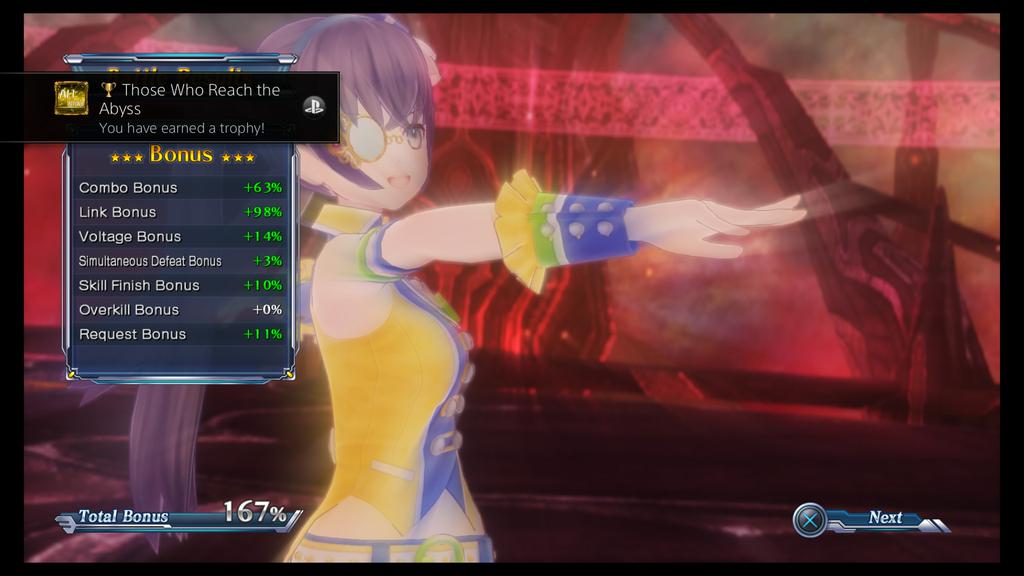
A good example from recent memory that I'm still engaged with is Compile Heart's PS4 RPG Omega Quintet. I have gone for the Platinum trophy in most of Compile Heart's games to date (largely the Neptunia games) because I have a keen awareness of how the developers probably use them for statistics, as mentioned above. I see attaining a Platinum trophy — which for those unfamiliar with PSN is the trophy you acquire when you have achieved all of the other trophies in a game — as a mark of support for the developer; a sign that someone out there cared enough about a game to play it to absolute death. (Omega Quintet's Platinum trophy, incidentally, has a 1.1% rarity rating, which is not altogether surprising as going by my own experiences it's something of a beast to attain.)
CKys-zPWUAES5s7

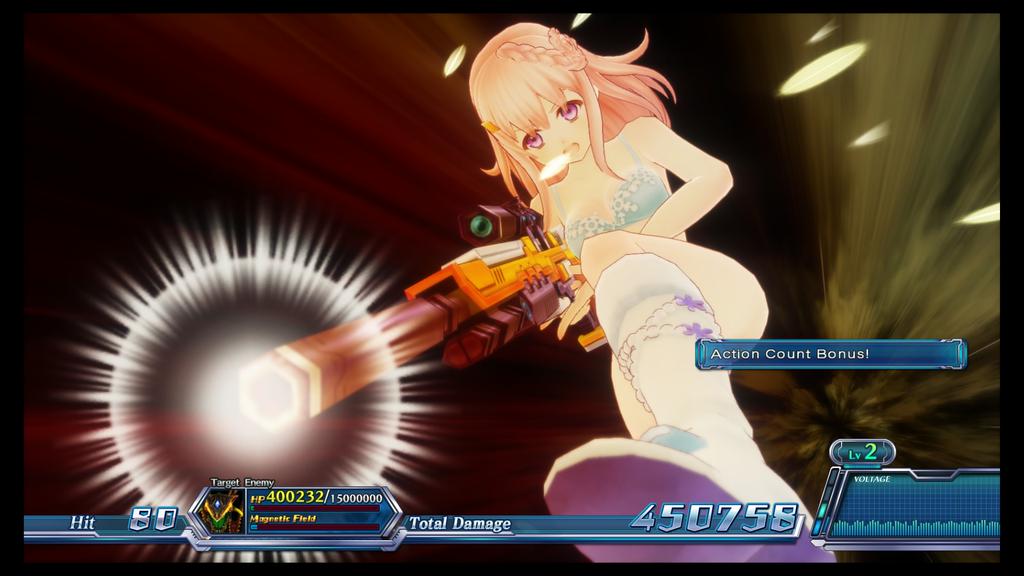
And in Omega Quintet's case, that Platinum trophy really is a sign that you have explored everything the game has to offer, because it's a good trophy list that runs the gamut from "deal 1 million points of damage in a single combination attack" (something that gets significantly easier the further in the game you go) via "complete all the quests" (something which you can miss in a single playthrough if you're not fastidious about cleaning up quests before advancing the story) and "see the True Ending on Advanced difficulty" (having figured out the conditions to do so, of course — hint: get Aria and Otoha's affection levels to 4 to guarantee this) to "defeat Double X" (a superboss who sits at the bottom level of the optional Training Facility dungeon and provides one of the stiffest challenges the entire game has to offer)

The interesting thing about Omega Quintet's trophy list is that by the time I finished my second playthrough (during which I achieved the True Ending on Advanced difficulty) I had only accomplished about 50% of the available trophies. Deciding early on that I wanted to go for the Platinum, I jumped into the post-game (the ability to keep playing the game after you've beaten the final boss and seen the end of the story) to explore what these additional challenges might be.
CKw_OBRWcAIOjoj

Nearly 50 hours of gameplay later, I'm still playing, though the end is finally in sight. In those 50 hours, I've beaten the 13-floor Training Facility dungeon, pretty much mastered the game's combat system — the extreme difficulty of the Training Facility encounters, including Double X, demands that you know what you are doing, otherwise you will get your ass kicked, even if you grind all the way up to the level cap of 999 — maxed out the affection values for all my party members, mastered all the weapon proficiencies with Kyouka and have come pretty close with a couple of the others, completed all the sidequests and recovered all the hidden archives. This latter one is particularly interesting, as the archives reveal an absolute ton of story context that isn't made explicit in the main narrative, largely because it's not directly relevant to the main cast's personal stories, but instead provides some interesting background lore and worldbuilding context. You stumble across some of these as you simply explore the main game, but quite a few of them are hidden in post-game content.

In other words, without the trophies to give me a nudge in the direction of this additional content, I might not have gone looking for it. One might argue that the game not necessarily signposting this sort of thing is a problem, but if the trophy system is there — and it's compulsory to use on both Xbox and PlayStation  — it may as well be used to push people on to explore things further. Combine that with PSN's "rarity" feature and there's a really nice sense of… well, achievement when you know that you're one of the 1.1% who has seen everything Omega Quintet has to offer.

CLBJINSWoAASbZh

(Just two more trophies left to go: kill 10,000 enemies and get 1 billion approval rating points. I sense that the challenging DLC dungeons and bosses — including the fearsome Banana Demon pictured above — will be my main means of achieving this!)
2002: Arcade Games are Alive and Well

0003_001

We live in an age where the default assumption about video games is that they will be big-budget affairs with star-studded voice casts, more pyrotechnics than a Michael Bay movie and, indeed, a budget to match. The reason for this is that many of the games that become household names — Call of Duty, Assassin's Creed, Grand Theft Auto — very much fall into this category, at least partly due to their marketing budget, but also due to their perceived "quality". Games have moved on since their roots in the '70s and '80s, or so the popular theory seems to go, and we should be looking to our interactive entertainment for challenging creative works that offer interesting new spins on social themes; deep emotional narratives; and innovative play mechanics.

As someone who grew up roughly alongside the birth of gaming (give or take a few years; I wasn't quite around for Pong) I think I speak for many other members of my cohort when I say that the above is all very well and good and should be celebrated when it's done well, but sometimes all you want to do is shoot or punch the shit out of some things without having to think about anything too complicated.

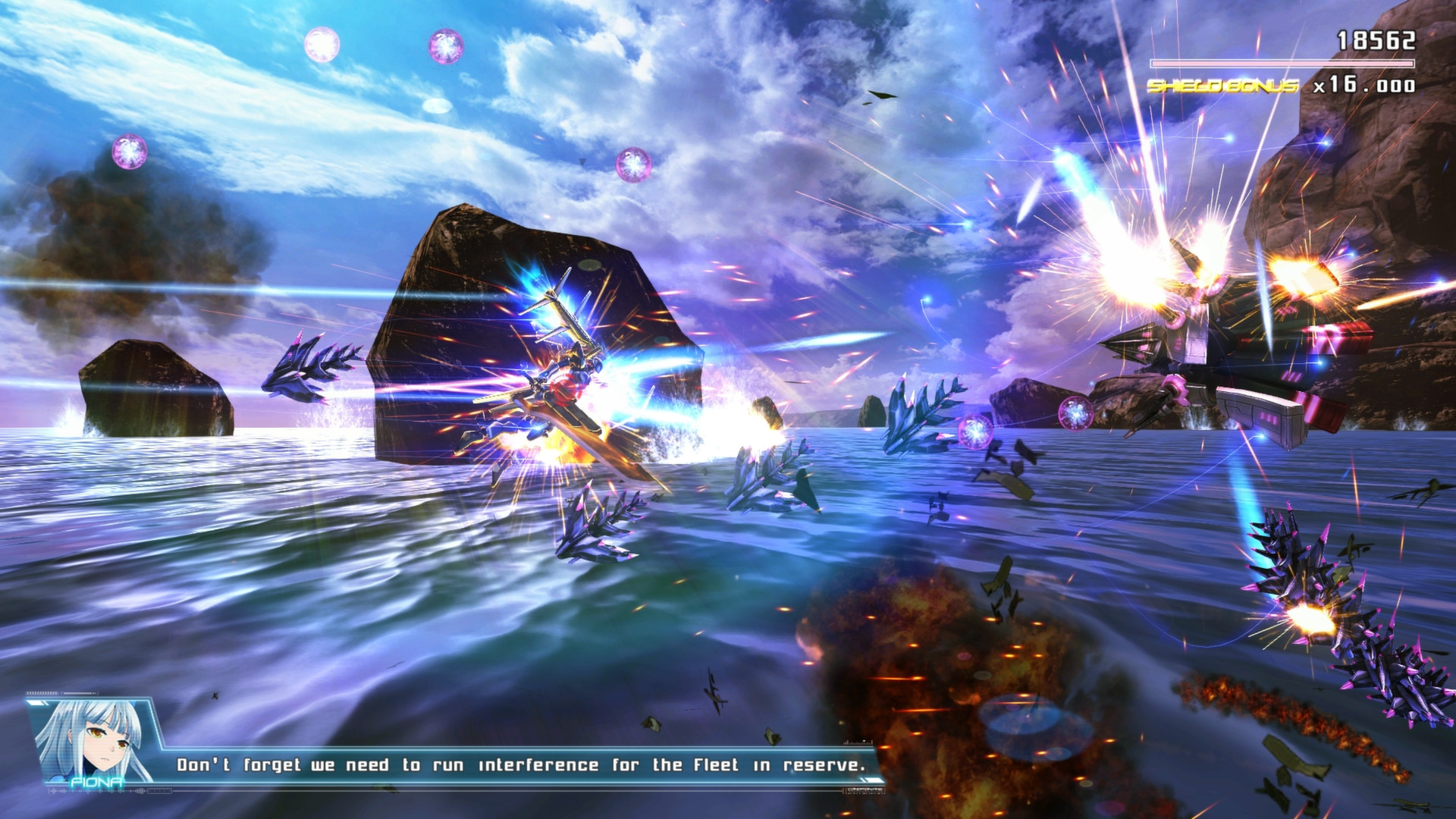
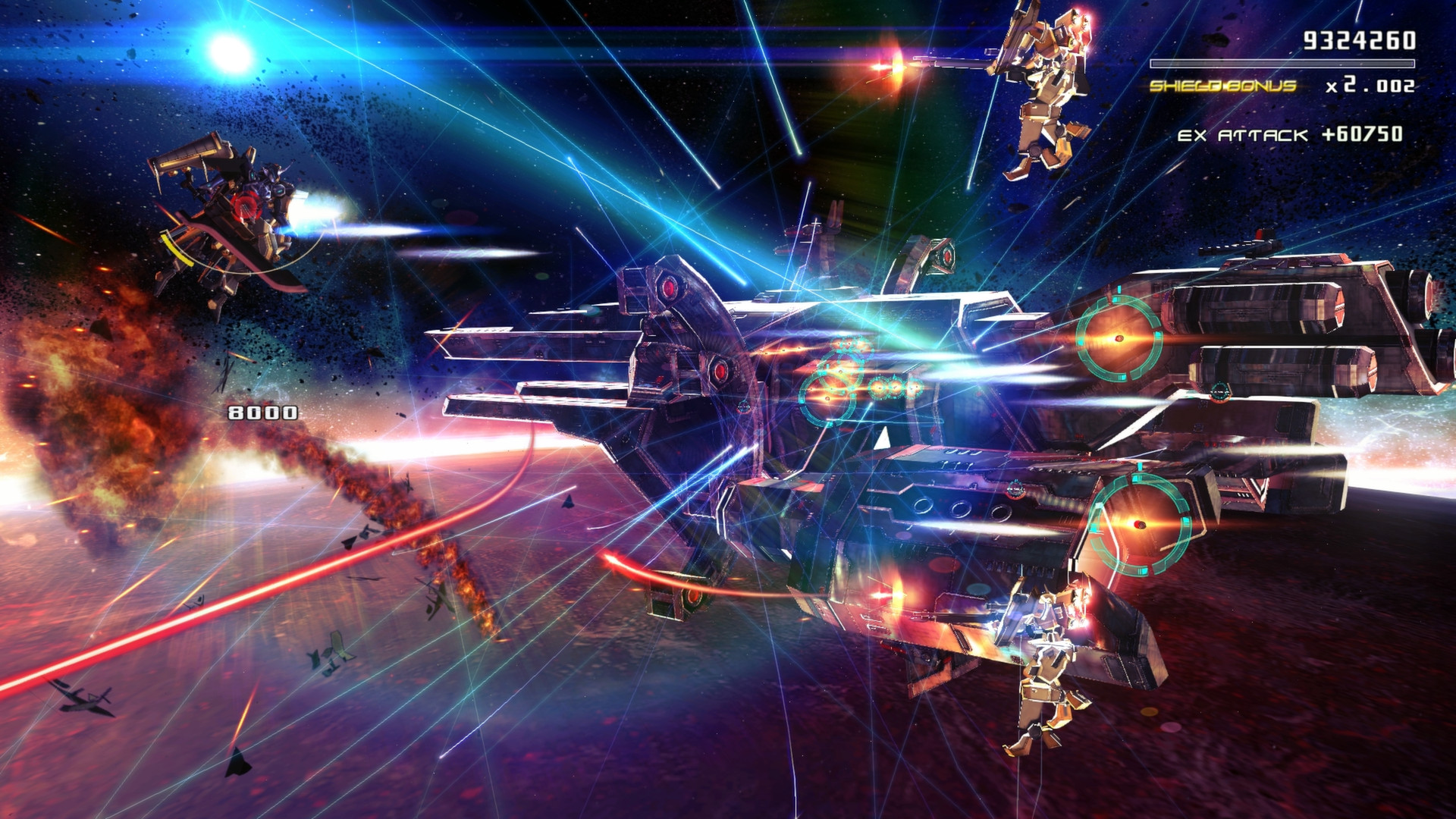
Astebreed is a great shooter with a ton of immediacy but a rewarding amount of depth for those willing to learn its intricacies.

One of the things I've been gratified to discover about the PlayStation 4 as a gaming platform is that it appears to be becoming an excellent home to a wide variety of arcade-style experiences as well as the big-budget, big-name games of today. The PC has been happily championing this sort of thing for a while thanks to its well-established digital distribution systems, and the Xbox 360 looked for a while like it might be assisting in the revitalisation of the "arcade-style" experience thanks to Xbox Live Arcade (which started to disappear up its own arse once things stopped costing 400 or 800 Microsoft Spacebux and instead took 1200 as the "default") but I feel like this is a field where the PlayStation 4 in particular is really starting to come into its own.

While I'm still ploughing through Omega Quintet on PlayStation 4 (I'm approaching the Platinum trophy now, at last!), the last few games that I've bought and really enjoyed on the platform are all short, arcade-style, score attack-type titles that are just plain fun. None of them are trying to say anything particularly deep and meaningful (with the possible exception of Astebreed, which has one of the densest half-hour narratives I think you'll ever find in a video game) and are instead focused on the simple joy of play: the thrill of taking on seemingly insurmountable odds, the fun of seeing scores climb into the millions, the satisfaction of beating your friends.

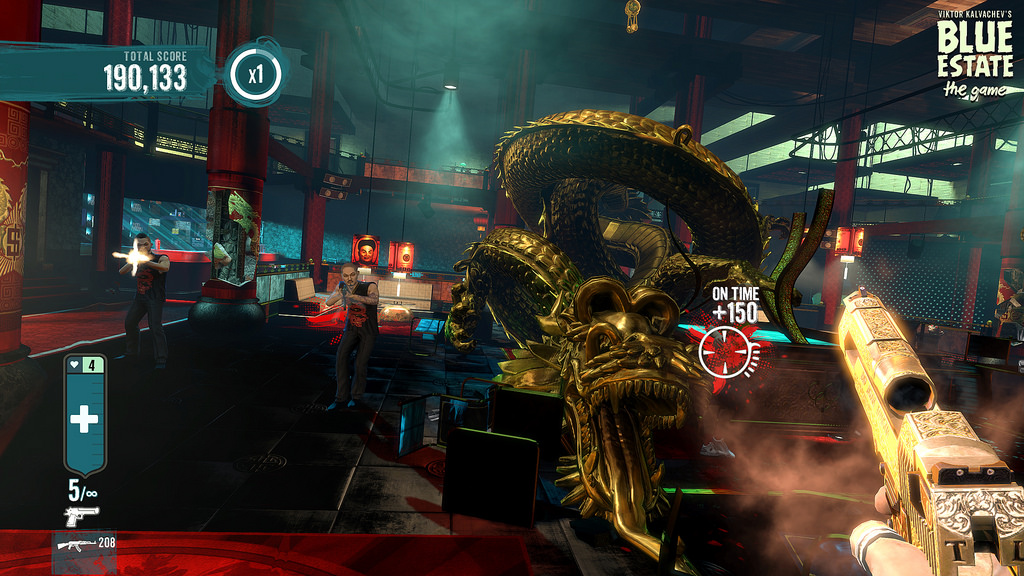
Blue Estate is pretty much a PS1/Dreamcast-era lightgun shooter, making good use of motion controls to approximate the arcade experience.

The games in question — and doubtless there are more, but these are the ones I've been particularly enjoying — include cinematic Japanese shoot 'em up Astebreed, Western bullet-hell shooter Jamestown+, the Defender-inspired Resogun, the inordinately satisfying rock-bursting shmup Super Stardust and lightgun-style rail shooter (a genre I thought was dead) Blue Estate. If you're looking for a quick fix of gaming and don't have the time or inclination to sit down and start chipping away at something more substantial like an RPG, I can happily and confidently recommend all of the above; they're fun, they have a ton of immediate appeal but a lot of hidden depth, they're easy to understand and teach to others (and, in most cases, have some form of multiplayer mode) and, for those concerned about such things, they're cheap.

Smoky, beer-scented arcades may well be fast becoming a thing of the past, but the arcade-style experience still very much lives on at home on PS4… and on Vita too, for that matter, but that's probably a whole other day's post, so we'll leave that for another day!

1998: Fist of the Father

Final Fantasy XIV's new raid dungeon Alexander launched earlier this week, and our regular raid group (with a few tweaks) took our first steps in there this evening.

I'd heard Alexander was significantly easier than The Binding Coil of Bahamut and was mildly concerned about this, but there are two things that set my mind at rest, having run through the first area now: 1) it's not easy, though it's straightforward enough once you know what to do, and 2) "Savage" mode is coming in a couple of weeks for the truly hardcore. (And it has different loot from the sound of things, too, unlike the Savage mode of Second Coil of Bahamut, which was largely a "bragging rights" sort of situation.)

I wasn't quite sure what to expect from Alexander. The concept itself is pretty weird: an iron giant raises itself out of the water in the Dravanian Hinterlands, but stops moving just as its hand grasps the bank. Through a convoluted series of interactions with the local goblins, you manage to find a way through the portal that is in its hand, and start working your way through in an attempt to find and destroy the core; the giant, it seems, is a Primal, and while it's active, even if it's not moving, it threatens to suck the very life out of the land.

Once inside you're in a cool, mechanical and metal environment. It's a big contrast from the previous raid dungeon, which made heavy use of the neon-glowing Allagan aesthetic, but since Heavensward as a whole has a lot of neon-glowing Allagan stuff just in its normal content, it seems the devs made the wise decision to not continue down this road with the new raid. Fine by me.

The bosses so far are appropriately steampunky in nature, and unlike Coil, which tends to be a short run to a single boss, the first level of Alexander features two bosses. The first is pretty much a pushover, but it's fun that it's more than just a single thing to fight. The main boss of the level, meanwhile, is a fairly involved fight that demands everyone knows what to do and performs their role appropriately. It's a little more forgiving than Coil was — mistakes are less likely to immediately wipe the whole group, though they will put you all at a disadvantage — but still challenging. We managed to clear it within a couple of hours, though, and even went back in to go get some more loot for those who lost the rolls after we'd finished.

We're hopefully going to jump in and see some more of it over in the weekend; I'm curious to see what mechanical mysteries the later levels have in store, and excited to be running with my regular group again.

1996: Daylight

I gave the PS4 horror game Daylight a go this evening. It was super-cheap thanks to a hefty discount on PlayStation Plus, and I'd always found the concept to be interesting, so I felt like giving it a shot, even though its reviews hadn't been all that positive. (But when have I, a proud Hyperdimension Neptunia fan, ever cared what reviews thought of a game?)

Daylight's unique selling point is that it's a procedurally generated horror game. What this means in practice is that the various environments you wander through as you piece together the fragmented story are chopped and changed around a bit with each playthrough. I've only done a single playthrough so far — it's pretty short — so I can't say with confidence quite how much it's different each time around, but I can see how it would make changes without altering the fundamental structure and "journey" that the protagonist goes through.

Daylight casts you in the first-person role of Sarah. We don't know much about Sarah upon starting the game, save for the fact that she's woken up in what appears to be a ruined hospital, and some random dude with a frankly villainous voice is talking to her through her cellphone, which she has the good sense to use as a torch to light the darkness. (It's also a handy minimap.)

Gameplay is, I am assured, somewhat of the Slenderman mould, in that the vast majority of what you are doing throughout the game is picking up notes with various bits of Plot on them while attempting to fend off the unwanted attentions of various lurking horrors and ultimately unlocking the way to the next area. In Daylight's, case, you achieve this by collecting a particular number of "remnants" — notes and memos scattered around the area — until a "sigil" unlocks in a creepy room covered in strange symbols, and you must then take the sigil to a locked door to open it and proceed to the next area. The game alternates between these "scavenger hunt" sequences and calmer puzzle areas until you eventually reach the game's conclusion.

There's no combat in the game; this is a horror game in the Amnesia mould, in which just being near an enemy is enough to hurt you. However, there are several means of dealing with them rather than just running away screaming: simply making sure you're not looking at them keeps you safe, for one, but if you do happen to find yourself face to face with one of these bloody horrors, lighting a flare will cause them to combust in a satisfying fwoof of supernatural smoke and fire. These flares are, naturally, in rather limited supply — you can only carry four at once — so on occasion, it's better to try and avoid trouble rather than defeat your foes. You also can't use flares while you're carrying the sigil for an area, so it's a good idea to find the exit before you pick up the sigil just so you can make a break for it.

Like a lot of horror games, Daylight's story is piecemeal and leaves a lot up to interpretation — perhaps a little too much. It's not especially clever like the stories of its genremates in the Silent Hill series, and it's riddled with cliches, but it was enjoyable enough to pick through and come up with a few theories about, and it had a nicely creepy atmosphere to the whole thing.

Not the best horror game I've ever played, then, but an interesting one, nonetheless, and worth giving a shot to while it's cheap on PSN.

1993: The Joy of Smaller Games

You know me by now; I enjoy a good 100+ hour RPG that I can sink my teeth into over a long period of time, but I'm often reminded quite how much a short, simple, straightforward game can hit the spot on occasion.

There's a lot of different places you can get this sort of experience, but I've been finding it particularly pleasant on the PlayStation 4 recently — thanks in part to freebies delivered through PlayStation Plus, and partly simply due to the selection of excellent, low-cost indie titles available on the platform.

Triple-A junkies are quick to whinge about the number of indie titles on PS4, particularly when they show up as PlayStation Plus freebies — they're seen as "less valuable" somehow — but, in actual fact, the PS4 is a good home to them. Not only is the Dual Shock 4 eminently suitable for fast-paced arcade games — which a lot of these titles, which tend to channel retro sensibilities somewhat, err on the side of — but social features like the screenshot sharing, online leaderboards and live video broadcasting make otherwise solo experiences into much more compelling prospects that can be shared with others.

Most recently, I've been particularly enjoying a couple of games, and in many ways they are polar opposites of one another.

woahdave

The first is a title called Woah Dave, an Atari 2600-style platformer from the people who created the Bit Trip series a while back. Woah Dave is a deceptively simple but enormously addictive take on the Mario Bros/Bubble Bobble formula in that all you have to do is survive for as long as possible while fending off never-ending waves of enemies. You can jump, you can pick up things, you can throw them. That's it. It gets more frantic as you progress, and the only reason to play is to try and get a high score. And that is reason enough.

Woah Dave is testament to the fact that strong gameplay will always be compelling and enjoyable, regardless of technical proficiency. That said, while the game looks like a mess of gigantic pixels in about 8 colours, it runs at a silky smooth framerate, with extremely responsive controls and a very enjoyable overall "feel" to the whole experience. It's dumb and it's silly and it's shallow, but it's a lot of fun.

Astebreed3

The other game I've been playing a bit recently is a shoot 'em up called Astebreed. I was a big fan of this when it originally released on PC, so I decided to "double dip" on the PlayStation 4 version, and haven't been disappointed.

Astebreed is a beautiful-looking, 1080p, 60 frames per second cinematic shoot 'em up in which you pilot a giant mecha with some unconventional weapons systems as you attempt to fend off the unwanted advances of alien race the Filune. Along the way you learn more about their human experimentation and the true fate of your adoptive father and his two daughters, who have been made into living parts of a Filune reality alteration system that has the potential to be used as a deadly weapon.

The plot is pure anime — and, frankly, a little difficult to follow, given that a lot of it unfolds while the action is coming thick and fast on screen, leaving little time to read subtitles — but it's snappy, pacy, dramatic and even a little emotional. Unlockable documents that you can read after clearing the game once show that the game world, setting and backstory have been very comprehensively fleshed out, too, and the whole experience is wonderfully polished until it shines.

I'm still rubbish at it, though.

1990: Idols' Journey

Having finished the main story of Heavensward, I returned to Omega Quintet this evening in the hopes that I would be able to polish off the "true ending". I succeeded, though this isn't the end of my time with the game just yet: there's the optional "training facility" dungeon, which features some of the toughest monsters in the game, and there's a bunch of sidequests that open up even after the "final" boss. I'm undecided as to whether or not I'm going to pursue the Platinum trophy, as a few of the trophies are a bit grindy, but I probably will end up going for it.

As for the true ending — oh, spoilers ahead, by the way — it was a satisfying conclusion.

For context, the "normal" ending was surprisingly downbeat, even bleak, leaving the story with a somewhat bittersweet ending that didn't really leave any of the characters in a situation that could really be called "happily ever after". Aria was revealed to have become a Blare when she was attacked prior to the events of the game, with the Blare in question effectively devouring her emotions and turning her into the seemingly morose individual she is depicted as throughout the main narrative. Said Blare is revealed to be the cat-like creature that had been following her around for the whole game, and this obnoxious little creature "awakens" Aria to her true Blare self.

This sets up the final confrontation of the normal ending, where the depleted ranks of the Verse Maidens, now a quartet rather than the quintet they had been for the majority of the game, have to strike down their former friend, who is, it becomes clear, utterly beyond help. But even after she's defeated, the people of the city no longer trust the Verse Maidens thanks to Aria having tricked them for so long, and as such they're doomed to a life of unappreciated toil, fighting back the Blare for a populace that hates them.

The true ending takes this as a starting point but makes a few changes. When the time comes to fight Aria, she doesn't completely lose herself and transform into the "Avatar of Destruction" she becomes in the normal ending. Instead, the Verse Maidens strike her down but refuse to eliminate her, instead dragging her back to their headquarters despite her protestations — but not before "Pet" has revealed its true nature and threatened to bring even greater chaos to a world that is already practically in ruin.

It's a slow route to healing for the populace, but eventually they come to accept and support Aria once again, as her mysterious nature had always meant she was one of the more popular members of the quintet. Ultimately, the girls discover that Pet's plan is to gather as many Blare as possible in one place and attempt to control them in the name of "fun"; Pet, having consumed Aria's original cheerful personality but lacking the emotional maturity to know how to handle it correctly or appropriately, is more concerned with entertaining herself than any great master plan, and it eventually transpires that she neither knows what to do with all the Blare once she gathers them in the city's Central Tower, nor is she really able to control them effectively.

Thus begins the true final battle, first against Pet, who eventually admits defeat and volunteers to try and get rid of the trouble she caused following an epiphany brought on by having the shit kicked out of her, and subsequently against a gigantic, horrible monster that appears as Pet allows herself to be completely consumed by the Blare she summoned. The Verse Maidens are ultimately triumphant over this fearsome foe, and a convenient side-effect of the fact that it was made up of so many Blare concentrated in one place means that their conflict all but frees the city itself from the oppression of the Blare.

The world still has some healing to do, however; the story ends with protagonist Takt and one of the five girls (you get to choose) setting out on a grand journey into the wider world, clearing out the Blare as they go and discovering a new-found appreciation for one another. The post-final boss gameplay, meanwhile, unfolds before this happens, and sees Takt and the Verse Maidens — plus their predecessor Momoka, who manages to come out of retirement thanks to a useful bit of experimental technology — attempting to clear up the last few stragglers around the area of the city and continuing their work as Verse Maidens, bringing hope to the people.

It was an enjoyable ending and the final boss battles were pretty great; the last one in particular had some superb music. I'm interested to see what the post-game has to offer now; the Training Facility dungeon promises to be a stiff challenge, and there's proficiencies to level up, affection to increase, archives to find and quests to complete, so I think even though I've technically "finished" the game there's still probably a fair amount left to do!

To cut a long story short, Omega Quintet is an excellent RPG that I'm very glad I took the time to play. It's another in a long line of titles from Compile Heart that has helped cement this quirky Japanese developer's position in my mind as one of my absolute favourite game makers out there, and I have to feel a little sorry for those people who can't find joy in their colourful, humorous, witty games that are absolutely bursting with character and soul.

1988: The End of Ascalon

Finished the Heavensward main story quest today. WOW.

Spoilers ahead!

I was pleased that the team went all-out and gave us a full-on Final Fantasy finale. The final dungeon, the Aetherochemical Research Facility, gradually gets weirder and weirder as you progress through it, until you eventually reach what is clearly The Final Boss Room, in which you're set upon by not one but two Ascians, the dark-robed ne'er-do-wells whose evil machinations have been behind most of the Bad Things happening in Eorzea throughout the Final Fantasy XIV narrative.

Delightfully, this battle against the Ascians even does the typical Final Fantasy thing of unfolding across multiple forms, with the "merged" form of the two Ascians creating "Ascian Prime" and battering you with some of the most spectacular attacks in the entire game. Lest you thought that Final Fantasy XIV would lose some of the series' trademark spectacle owing to the fact that its multiplayer nature makes cinematic camera angles and lengthy spell sequences impractical, this confrontation very much dispels that notion.

ffxiv_30062015_163714

That's not the end, though. The battle against Ascian Prime — the conclusion of which finally sees recurring villain Lahabrea apparently dealt with once and for all — is followed up by an eight-player Trial in the research facility's Singularity Reactor, in which you face off against Ishgard's Archibishop, Heavensward's main villain.

This being Final Fantasy, however, you don't just fight a doddering old man with an obscene amount of hit points. No; shortly before your battle with him, he draws upon the power of the Eyes of Nidhogg to channel the spirit of Ishgard's legendary king Thorden — he who, with his knights twelve, originally laid Nidhogg low and took the great wyrm's eyes — and become a Primal incarnation of the ancient king. Naturally, this involves him growing to approximately ten storeys in height in the process, and his bodyguards, the twelve knights of the Heaven's Ward (do you see what they did there) undergo similar transformations prior to your final battle against the whole sorry lot of them.

The actual battle against Thorden and the knights is amazing. Final Fantasy veterans will doubtless recognise this setup as an excuse to bring in the notorious summon "Knights of the Round", and indeed the final boss battle is effectively you fighting Knights of the Round, complete with ridiculously overblown attack animations — including, at one point, the reactor in which you're fighting seemingly floating up into space, then your entire screen shattering to bring you back to reality. (This animation is pretty much a direct reference to Knights of the Round's appearance in Final Fantasy VII, whose attack animation "Ultimate End" was the most powerful ability you could equip your characters with in the whole game.)

ffxiv_30062015_011836

It's a fitting end for Heavensward's story, which has overall been a great addition to the ranks of Final Fantasy narratives throughout history. And it leaves some nice open teaser threads at the end ready for future content patches and the continuation of the story — most notably the character Estinien's possession by the spirit of Nidhogg, the latter of whom is understandably pissed off at the world for numerous reasons, not least of which being the fact that he had his eyes scooped out, and some thousand years later, was killed by some young upstart claiming to represent the spirit of the planet itself.

Anyway. It was good stuff, and sets the scene nicely for the launch of the new raid dungeon Alexander, which must be due pretty soon now. (Indeed, the ending cutscene shows Alexander rising out of the water in the Dravanian Hinterlands, though it is as yet impossible to enter the great iron giant.)

I'm glad I beat the story (and the two "post-ending" dungeons Neverreap and The Fractal Continuum, both of which are a lot of fun — and pleasingly challenging) and am looking forward to seeing what's next. In the meantime, I have an official full-on review of the expansion to write for Gamespot, so watch out for that soon.

1987: At the Gates of Heaven

Back to "reality" for Andie and I now, and we're both closing in on the finale of the main story quest in Heavensward. It's been a pretty spectacular journey up until this point, which I shall endeavour not to spoil to a significant degree in this post, largely because I don't yet know how it all ends.

Heavensward has achieved that which I wasn't sure it would be able to do: it's surpassed A Realm Reborn in almost every possible way, but particularly when it comes to the main story. While A Realm Reborn had a solid narrative that chronicled your character's humble beginnings up to their awakening as the Warrior of Light and beyond, taking in their victories over the fierce Primals of Eorzea and the Empire's ultimate weapon in the process, I found the Final Fantasy XII-style political manoeuvring that made up a significant part of the plot to be less interesting than something a bit more, for want of a better word, "JRPG".

Heavensward, meanwhile, feels more like a "Final Fantasy". This isn't to say that A Realm Reborn didn't feel like Final Fantasy at all — I described it as one of the best new Final Fantasies in recent years back when I reviewed it for USgamer, after all — but Heavensward feels more like a traditional Final Fantasy.

It achieves this in a number of different ways. For one, it tones down the political machinations that gradually built up over the course of A Realm Reborn, and which came to a rather shocking climax at the end of patch 2.55, Before the Fall, which acted as a prelude to Heavensward. These narrative threads are picked up and explored further — though some look as if they're going to remain unresolved until a later content patch — but for the most part Heavensward is an all-original story.

For another, the narrative feels more like an epic journey. In A Realm Reborn, you spent a lot of your time going back and forth between the three main areas, and, aside from the initial quest where you leave your starting city to go and visit the other two, it didn't really feel like the typical JRPG journey of gradually getting further and further away from your starting point, with more and more outlandish things happening as you go. Heavensward, meanwhile, does adopt this style of journey, beginning in the familiar snowy wastes of Coerthas, some of which we had the opportunity to explore in A Realm Reborn, but before long giving way to the lush forests and rocky mountains of the Dravanian Forelands, the otherworldly floating islands of the Churning Mists and the Sea of Clouds, the mysterious abandoned city of the Dravanian Hinterlands — an important location to Final Fantasy XIV lore as a whole, as it turns out — and, ultimately, a final region which doesn't feel at all like a typical MMO field, instead very much feeling like an authentic JRPG The Very Definitely Final Dungeon.

The journey you undertake throughout the narrative is emphasised by some lovely narration from David Warner upon your first entry to each area. A Realm Reborn had plenty of florid prose, but Heavensward refines this with some almost poetic writing that gives the game a very distinctive voice and tone throughout. It feels strange to compliment the writing in an MMO, a type of game not particularly known for stellar storytelling (Hi, World of Warcraft!) but Heavensward really doesn't skimp on this front, and it's all the stronger for it.

I'm really looking forward to seeing how the story ends — and, of course, getting involved with what comes after that. It can't be long now until the launch of the new raid dungeon Alexander, and I'm very intrigued to see how all that fits in with the overall lore. Previous raid The Binding Coil of Bahamut turned out to be extremely relevant to the original game's lore — and even more relevant to Heavensward, as it happens — so I'm looking forward to experiencing Alexander's encounters and story to see what happens.

For now, though, I'm still flagging a bit after all the excitement of the weekend, so I think it's time to get some sleep.

1980: A Right Way and A Wrong Way

I know I said I wouldn't write about Heavensward again today and I'm not going to focus on it too much, but it will enter into the discussion a little, for reasons that will shortly become apparent.

The separately-sold "expansion pack" as it existed in the '90s and early '00s is something of a rarity these days, typically confined to the MMORPG subgenre, while other types of games tend to leverage the high-speed Internet connections most people have these days by offering lots of smaller bits of piecemeal downloadable content.

In some ways, this works well; the "a la carte" approach of piecemeal DLC means that you can pick and choose the things you want to bolt onto your game for a lower price without potentially being stuck with some things you don't want. On the flip side, however, in my experience, a lot of DLC — though not all — is significantly less substantial in terms of content and value for money than your average expansion pack. There are exceptions, of course — Oblivion's Shivering Isles DLC springs to mind, as does Burnout Paradise's additional island whose name escapes me right now — but those are actually both getting back into "expansion pack" territory again, and thus are outliers to a certain degree.

Bungie's MMO shooter and "thing that isn't HaloDestiny had its new expansion announced recently, and it's kicked up a bit of a fuss, specifically over its pricing. The base game of Destiny has plummeted in price since its original launch, meaning that the new expansion — which costs the same as a full game at £40/$60ish — will, in most cases, be more expensive than the main game. But that's not what's got people riled up: the problem is that there's a super-expensive "Collector's Edition" coming that features some exclusive content that can only be acquired through this special edition.

Nothing unusual, you might think, until you hear that the Collector's Edition is only available as a bundle deal including Destiny, its expansion and the pieces of DLC that have been released to date. This means that fans of Destiny who want to get their hands on the exclusive content pretty much have to buy the game and DLC again just to play the expansion. And the alternative means of buying the game for new players — a bundle including Destiny and its expansion for around the £55 mark — effectively means that new players are getting the expansion for considerably less than veterans.

I can't say I care a whole lot personally because Destiny simply isn't my type of game, but what surprised and dismayed me a bit about the whole situation was this interview on Eurogamer with creative director Luke Smith — a guy I don't know that well myself, but who used to work with my brother and was, as I recall, part of the 1up crew. Smith was, to my recollection, always rather outspoken about things, particularly when it came to companies doing shitty things, so it was a tad disappointing to read his responses to Eurogamer coming out as little more than PR-fed "we can't talk about this" nonsense. And if it was PR-fed, the PR company wants sacking, because Smith's responses did nothing to alleviate the concerns of players who are upset over all this, and more than likely infuriated them further.

The reason I brought up Heavensward at the beginning is because it's actually in a similar position to Destiny's expansion. Final Fantasy XIV itself can be picked up for a pretty low price these days, but Heavensward is not-quite-full-price-but-nearly. The difference, however, is that both existing and prospective players have plenty of choices of how they pick it up. They can buy A Realm Reborn and Heavensward separately. They can buy a bundle including both A Realm Reborn and Heavensward. They can buy Heavensward by itself, in standard and special editions. And they can buy most of these options in both physical and digital formats.

As such, even though Heavensward might seem expensive for an expansion pack — though it's worth noting that in terms of content, it's seriously rivalling A Realm Reborn's base game, at least in terms of story length, sidequests and open-world areas — the player base has had absolutely no objections to how it's been positioned and sold. In fact, I've seen more new players in the game in the last week or so than I have for a very long time — and those new players won't even be able to touch any of the Heavensward content until they complete A Realm Reborn and its five subsequent content patches.

But they don't mind, because they've been given options, and those options have been made clear. Where Bungie is falling down with Destiny — and where they're going to lose a lot of previously loyal players if they're not careful — is this communication side of things. Smith's responses suggested that Bungie was either unwilling or unable to listen to player concerns on these matters; it may well be a matter of the company's hands being tied by publisher Activision, but still. That's not how you build loyalty. That's how you destroy loyalty.

P.S. Heavensward is amazing. (Sorry.)

1979: One More Post Where I Gush About Heavensward, Then I'll Find Something Different To Talk About Tomorrow (Probably)

Level 56 now, and I'm starting to really get a feel for the new skills that have been added to Paladin.

Paladin often drew some criticism — or, rather, accusations of being "boring" — for the fact that it was a relatively straightforward class to play, with only two real combos of abilities to use in different circumstances compared to a much wider array of things to do if you're playing a Warrior. Its main perk over its raging counterpart, however, was its survivability; Warriors have a ton more HP than Paladins, but they also take more damage, while Paladins have fewer HP but a lot more in the way of defensive abilities to mitigate or even nullify damage.

Still, though, I understand the criticisms; once you unlocked all the abilities to form your basic combos, it very much became a case of pressing ability 1, 2, 3 and occasionally stepping out of enemy ability telegraphs. Post-50, though, things get a lot more interesting.

ffxiv_22062015_005755

The oddly-named Sheltron, for example, is an ability whose usefulness doesn't become immediately apparent. What it does is guarantee that you will block the next physical attack you take. Blocking an attack is usually determined by random chance, influenced by the stats on the shield you're wielding alongside your sword. Sheltron guarantees a block, and while blocking doesn't nullify damage altogether, it does reduce the damage by a significant amount. It also has the handy side-effect of restoring some of your magic points when the block goes off, meaning that the Riot Blade combo is no longer the only way to regenerate MP.

Blocking also allows you to counterattack with a move called Shield Swipe, which is actually one of the Paladin's more potent offensive moves, and also inflicts a status that prevents the enemy from using abilities of the "weaponskill" type. It's not quite as good as a Stun or Silence, but it can be helpful and give a moment's grace. The damage is very nice, though — particularly as it's been buffed since its original incarnation — and it also now generates aggro, meaning you're not losing out by weaving in a Shield Swipe when it's up.

The other ability I've had the opportunity to play with now is Goring Blade, which follows on from the Riot Blade combo, previously used just for regenerating magic points to allow you to keep casting Flash, your main means of controlling larger groups of enemies at once. Goring Blade, meanwhile, has a solid initial hit followed by a damage-over-time effect. Paladins don't do a lot of damage generally — it's not their role, after all — but adding the ticks of damage to what you're doing anyway — particularly if combined with other DoT effects like Circle of Scorn and Fracture — you can actually put out some fairly respectable numbers. Plus Goring Blade has like the coolest visual effect of all Paladin's moves that I've unlocked so far.

ffxiv_22062015_033423

I just reached level 56 this evening, which is a level at which I unlock another new ability. I'm not sure what it is yet, but I'm very much looking forward to finding out and experimenting with it — one of the most exciting things about the new expansion is the fact that everyone is getting these new abilities at the same time, so there isn't yet an established "right way" to do things. As such, experimentation is key, and it's really rewarding to work out an efficient use of abilities for yourself.

But anyway. That's three days in a row I've talked about Heavensward. (It's really, really, really good.) I promise I will attempt to talk about something else tomorrow. Probably. Maybe.