Been playing a bit more Splatoon, and I really like it for a number of reasons. Turns out that Nintendo's first real foray into the dedicated online multiplayer sphere (as opposed to titles like Super Smash Bros. and Mario Kart, which include online but don't make it a focal point) is a really solid effort that does things a bit differently from the norm and is consequently a better, friendlier, more accessible experience as a result.
Splatoon's structure may seem restrictive to those who have been raised on more well-established shooter franchises. You can't purchase any new weapons or other equipment (each piece of which confers a buff of some description, and which can be levelled up at least once to unlock additional abilities) until you hit level 4, and until you hit level 10 you're restricted to playing just the "Turf War" battle mode.
In practice, though, this all works really well. Turf War — a mode where whichever team covers more of the map with their colour after three minutes wins — is a good introduction to the game, emphasising how it's important to work together as a team. By the time you hit Rank 10, at which point Ranked Battles with different rulesets unlock, you should be pretty comfortable with how the game works and perhaps even have found a favourite weapon style.
The other interesting thing about how Splatoon works is that rather than throwing all the maps and modes into the rotation and making people either vote on them or set up their own lobbies, it simply uses a small, rotating roster: two maps for Turf War, two more for Ranked Battle, and one of the available game modes chosen for Ranked Battle too. Every few hours this rotates.
This is also an excellent system. It encourages you to familiarise yourself with the maps, and since there are only two in a given set at any point, if you settle down to play a few games, you'll get the opportunity to learn their intricacies rather than being forced into always playing community favourite levels until the end of time.
So far I've only played the Splat Zones mode in Ranked Battle: a variant on King of the Hill in which you have to take control of one or more zones by painting its floor in your colour to score points. It's a different experience to Turf War; while Turf War is usually on the move, often with a scuffle over the map's middle ground, Splat Zones forces you to both go on the offensive and defensive according to the position you're in. Taking advantage of the squids' abilities to hide under their ink makes for some enormously satisfying stealth "kills" (sorry, "splats") and there's a real sense of fun when you manage to outwit an opponent who's been giving your team grief.
I haven't yet had the courage to jump into some games with the folks on the /r/splatoon Discord server, but they seem like a friendly bunch open to giving advice, so I may look into that in the next few days. After all, I am level 12 now; that's at least a bit fresh, I think…
You know, I really shouldn't be surprised about this any more, what with us living in the Information Age or whatever it is we're in, with the Internet an omnipresent, omniscient collective of intelligences (in most circumstances) that, as a whole, never sleeps. But it does.
What, I hear you ask? The fact that someone, somewhere in the world, is probably doing the same thing you are at the exact same time as you.
I don't often think about this, but it occurs to me when I fire up a multiplayer game that isn't the current "flavour of the month" or Call of Duty. For example, I downloaded Tetris for my PlayStation 4, as it's a long time since I seriously played Tetris and I fancied something that I could play together with Andie. The PS4 version of Tetris has an online mode where you can play any of the game modes with up to three other people playing at the same time as you. In the case of the "Battle" modes, you can directly interfere with one another, as is the tradition in Tetris multiplayer, but there are also a number of modes where you're pretty much just playing alongside other people, perhaps to compare performance or pick up tips.
Now, Tetris is one of the most well-known, loved and respected games in the world, but I still find it surprising that there are people out there who make time to sit down and compete online. I'd ask "why?" but then I'd be forced to ask myself why I had chosen to play it online, too — and their answer would probably be the same as mine: to have some sort of "connection" with another person, even if it's a non-verbal one that is as simple as a shared interest. (Aside: Online Tetris players are frighteningly good.)
It's not just Tetris, either; I can sit down and play a mobile game like Brave Frontier, Love Live! School Idol Festival or Drift Girls and jump into one of the online modes in those and still find a live opponent to compete against. Again, in most cases, communication isn't direct — most of these games don't have a chat facility due to the impracticality of it in a mobile game — but it's oddly heartwarming to be sharing an experience with other people, even if it's only for a few short minutes as you attempt to full-combo Snow Halation or raise your ranking in the Drift Girls world tour mode.
Anyway. It's kind of cool to occasionally connect with people in passing like this; with gaming often being a relatively solitary pursuit, it is sometimes nice to feel like there are other people out there who are into the same things as you — and perhaps even to share an experience with them.
Now I've probably got time for a quick Love Live! score match…
Not really sure what to write about today, to be perfectly honest. All in all, aside from the motivating weight loss I successfully achieved the other day, it's been a fairly shitty week all round. I won't bore you with the reasons, but suffice to say it's been rubbish and crap throughout, and I'm glad that I now have a weekend to (hopefully) enjoy before a new week begins and hopefully continues somewhat better than the last.
Played a bit of Final Fantasy XIV earlier and had the pleasure of playing alongside some players I've got to know via Twitter recently. This is, I think, the first time I've really spent much time hanging out with people outside the "Free Company" I've been a member of since the beta version launched back in 2013, and it's been pleasant.
It's also been interesting how this little social circle has expanded quite quickly in the last couple of weeks. I initially met "Farah Maxwell" (character name, not real name) when I heard about the tragic passing of an FFXIV player, and participated in an emotional (virtual) beachside vigil to pay my respects to the fallen. We stayed in touch via Twitter after that, however — it was Twitter that made me aware of the event in the first place, since Farah had been tweeting about it — and I gradually started to get to know a few other members of this group, including one who runs an immensely entertaining (if you're an FFXIV player, anyway) account highlighting the hilarious, bizarre and rude things some players put in the game's "Party Finder" system, essentially a bulletin board allowing you to recruit members to help out with pretty much anything the game has to offer.
Coincidentally, one of the people I got to know through this group was someone I'd seen around during the game's "Hunt" system, whereby large monsters occasionally spawn in various areas and large groups of players promptly dogpile them and kill them considerably quicker than I imagine the developers intended. Their character, one "Emi Katapow", had caught my eye for one reason or another, though I forget exactly why now: perhaps it was their wearing of the yukata costume, which was once my character's attire of choice; or perhaps it was the fact that in my brief encounter with them at the time, they seemed like a nice person. FFXIV's community is, on the whole, pretty good — with a few exceptions — but pleasant people to be around still stand out somewhat.
It so happened that Farah and Emi were both online this evening, so I had the opportunity to play a little with them, accompanied by a number of Free Company-mates who came along for the ride. We tackled "Turn 7", aka The Second Coil of Bahamut, Turn 2, and failed miserably to defeat it, but we had some fun regardless; even with the lowered difficulty of this encounter, it can still be a challenge to make it through successfully, particularly if you're with an unfamiliar group that you might not have run with before. No-one seemed to mind that we didn't clear, though; for many, getting a full group together to challenge Coil is a seemingly insurmountable challenge unless you have a "static" — a group of people who meet regularly specifically to take on this difficult content — and so our little failed trip into Melusine's lair may have provided a rare opportunity for some of our number to try their hand at some of the toughest fights FFXIV has to offer.
Anyway. Even with the enjoyment of earlier, I'm still feeling a bit shitty about the week just gone by, and so I'm headed in a bedwardsly direction. I plan on sleeping in tomorrow and doing absolutely nothing of note all weekend. That sounds like a fine idea right now.
I rarely leave user reviews on things, be they App Store/Google Play downloads, Amazon purchases, eBay sellers or Steam downloads. And I've realised that in not doing so, I'm being a bit of a fool.
Why? Because whenever I consider purchasing something, one of the first things I do is have a look at the user ratings and reviews and determine whether or not they're 1) genuine 2) worth listening to and 3) something that might need to make me reconsider or confirm my purchase.
But when they work, they can be extremely useful — and every time I write one, I'm reminded how much I have always enjoyed reviewing things. Not necessarily critiquing them in depth or from any sort of theoretical perspective, but providing a simple, straightforward analysis of how much I liked something, how it made me feel, whether I think other people would like it and all that sort of good stuff.
It's also really fun to write a negative review, though it's also very easy to be extremely unfair when you're doing so, which is why I try and remain positive most of the time. (People are also more inclined to disagree with something negative than positive in my experience, too, and I really don't enjoy arguing with people.) I have made one fairly consistent exception over the years, though, and that's with mobile games that have been truly, truly awful, particularly those that have desecrated beloved franchises like Dungeon Keeper, Theme Park and SimCity. (Oh, hi, EA.)
But I've decided as a belated and rather lame resolution that I'm going to start making an effort to review things that I've bought, played, used, whatever. Because if I make use of user reviews for their intended purpose — to find out what the average Joe on the street thinks of something that I'm considering purchasing — then I'm sure other people will do too. And, not to blow my own trumpet too much, but I feel like I'm quite good at expressing myself about the things I do and don't like about something.
I give it a couple of weeks before I stop doing it, but for now it's a little something I can do to help make the Internet as a whole a slightly better place. I made a start this evening by reviewing HuniePop on Steam; see if you can spot my review if you're pondering whether to drop some cash on a pornographic puzzle game!
Over the weekend, mankind enjoyed a significant step forward in the field of space travel. Unmanned spacecraft Rosetta successfully detached its probe, named Philae, and landed on Comet 67P, aka Chryumov-Grasimenko. It was the culmination of a ten-year mission for Dr Matt Taylor and his colleagues at the European Space Agency, and a historic moment for humanity: we finally had the chance to examine a comet up close, and perhaps make some steps forward in understanding the way the universe works; how the solar system formed; perhaps even how there came to be life on this planet.
As much as it was a historic moment for humanity, then, imagine how Dr Matt Taylor felt as a significant portion of his life's work finally came to fruition as the probe successfully touched down and began transmitting data back to Earth.
Then imagine how Dr Matt Taylor felt when confronted with a giddy press more concerned with his sartorial choices than with the scientific milestone he had just passed — the shirt in question being a rather loud Hawaiian-style number featuring rather vivid, camp, retro-style imagery of women in PVC outfits shooting guns and generally looking pretty badass. (A shirt, I might add, made for and given to him as a gift by his friend Elly Prizeman.)
"I don't care if you landed a spacecraft on a comet," read a headline on The Verge put together by the two-person team — yes, this garbage took two people to put together — of former Polygon editor Chris Plante and his colleague Arielle Duhaime-Ross, "your shirt is sexist and ostracizing." And this was far from the only article published that day attacking him and his wardrobe rather than celebrating his achievements.
We don't have to imagine how Dr Matt Taylor felt. Because it was captured on film.
Can you imagine. Can you imagine reaching the culmination of a ten-year project, making such a significant step forward, and then some blowhard on the Internet telling you that your shirt is directly responsible for women not wanting to enter the fields of science, technology, engineering and mathematics? Can you imagine having to deal with abuse seemingly supported by the mainstream media, whom you previously thought would be keen to celebrate your achievement but now are, quite rightly, somewhat wary of?
Welcome to a world dominated by bullies.
The Internet has brought with it many great things, one of the most powerful being the principle that "everyone has a voice". The Internet has done more to advance the concept of free speech than pretty much anything else in the world, but while some people use this for good — to share information, to reach out to people who need help, to make friends in far-flung corners of the world without having to physically travel there — there are others who use it for ill. To lie, to cheat, to accuse, to blow things out of proportion, to bully.
This particular breed of unpleasant individual has been seemingly growing in numbers — or, if not numbers then certainly prominence — in the last few years, largely thanks to social networking sites Twitter and Tumblr. Ostensibly concerned with admirable-sounding concepts such as "social justice" and feminism, these individuals purport to be progressive thinkers who want to make the world a better place for everyone, but in actual fact are nasty, narrow-minded bullies who simply attack anyone who doesn't see the world in the same way they do.
The mission is a colossal achievement. Millions of us have been watching Philae's heart-stopping journey. Everyone in this country should be proud of Dr Taylor and his colleagues, and he has every right to let his feelings show.
Except, of course, that he wasn't crying with relief. He wasn't weeping with sheer excitement at this interstellar rendezvous. I am afraid he was crying because he felt he had sinned. He was overcome with guilt and shame for wearing what some people decided was an "inappropriate" shirt on television.
Why was he forced into this humiliation? Because he was subjected to an unrelenting tweetstorm of abuse. He was bombarded across the Internet with a hurtling dustcloud of hate, orchestrated by lobby groups and politically correct media organisations.
And so I want, naturally, to defend this blameless man. And as for all those who have monstered him and convicted him in the kangaroo court of the Web — they should all be ashamed of themselves.
Sadly, Dr Matt Taylor's trials were far from the first time this sort of outrage has erupted, and it will be far from the last time this happens, too. These supposed advocates of social justice — referred to in the vernacular by their opponents as "social justice warriors" or "SJWs" — are renowned for two things: taking offence at everything it's possible to take offence at, and then bullying people into submission, often until those suffering the bullying end up apologising, as Dr Taylor did.
This sounds ridiculous, but it's all too painfully familiar for me. I was bullied repeatedly throughout primary and secondary school — and once again at one of my previous workplaces — and the execution was exactly the same. Wear down the victim's defences with repeated, unprovoked, unwarranted attacks until they snap in one way or another — be it violently, at which point the bullies can point at the victim and say "look how violent they're being!", or tearfully, as in Dr Taylor's case, at which point the bullies can point and laugh at the victim and claim that they're only upset because they know they did wrong — and then move on in the knowledge of a job "well done".
It keeps happening, too, and these people never get called on it because they wield a considerable amount of influence and power — influence and power that lets them get away with a whole lot of nonsense.
Consider, if you will, the recent case of Independent Games Festival judge Mattie Brice, an outspoken, anti-men feminist who has claimed to be "leaving" the games industry on several occasions due to the abuse she was supposedly receiving.
Brice tweeted that she was "automatically rating low any games with men in them" during the course of her IGF judging duties and that she was "loving all this power". Understandably, this tweet — whether or not made in jest — upset a number of people, who complained to the IGF, who subsequently, admirably and promptly asked politely that she, you know, stop doing that lest people think that their judging was rigged. Brice then complained publicly to her Twitter followers about how she was being "harassed" and how the IGF were treating her poorly, and continued until the IGF issued an apology, not her. Her defence in all this? "It was a joke" — the last fallback of the bully, and an excuse I heard many a time when working as a teacher. It was never, ever, true, and you'll forgive me for being skeptical of this particular instance being a "joke" when we're talking about a person who made a game called "Destroy All Men" and has often posted anti-men rants on Twitter.
And lest you think I'm singling out Brice here, she is far from the only one; she's simply one of the most recent examples. I've thankfully remained largely free from this sort of nonsense up until now (though it remains to be seen if this blog post will attract zealots) but I've witnessed friends and former colleagues being attacked too many times over the last few years for me to sit here continuing to bite my lip.
YouTuber and PC gaming enthusiast TotalBiscuit demonstrated a good understanding of the issue in a recent post, and came to what is quite possibly the crux of this whole social justice thing and why it bugs me so much:
It's so goddamn American.
A lot of this social justice stuff seems to be focused on a very American set of ideals and circumstances that doesn't take into account much going on outside the country's borders. I mean the idea that racism against white people doesn't exist: let's take that one on for a second. [Fellow YouTuber and Irishman] Miracle of Sound accurately pointed out the genocide perpetrated against a portion of the Irish population and the hundreds of years of oppression that they suffered under the English. Sounds pretty damn racist to me.
The concept of white privilege is very American, too. You'll find a lot of British people, particularly Northerners like myself, bemused by it. I grew up in pit towns, or should I say, ex-pit towns, because Thatcher destroyed our economy when she broke the miners' unions and put a lot of people out of work. Our towns were vast white majorities but I can safely say we had no privilege, no advantages for being white. Some of the richest and most successful people in our towns were Indian and Pakistani.
He's absolutely right. These social justice types take a very American — specifically, West Coast — view of the world and assume it is the correct one, then shout down anyone who doesn't agree with them. They release the hounds on Twitter; they publicly shame them on Tumblr; they encourage the media to buy in to the narrative, and, worryingly, they succeed. Compare, for example, the media portrayal of consumer revolt "Gamergate" as a misogynist hate campaign that wants to drive women out of gaming with the reality of it being one of the most articulate, passionate, genuine, diverse, intelligent and inclusive — albeit at times somewhat ill-focused — groups of gamers of all genders, races and creeds that I've ever observed. (As an aside, I haven't involved myself in Gamergate's activities — as a former member of the press I don't agree with everything they stand for, though I feel they do have a number of fair points to be made — but I have spent a couple of weeks lurking around their regular online haunts to see what made them tick. It's been eye-opening to see the dissonance.)
It is worth clarifying at this juncture — and it pisses me off that I have to add this disclaimer — that I am not against the concept of "social justice" or, more accurately, equality. Quite the opposite; I believe in equal opportunities and equal, fair treatment for everyone, and my behaviour towards other people in my own life reflects this. Meanwhile, however, these keyboard crusaders make themselves immune to criticism by simply responding to any critics with "so you're against social justice, are you? You're against progressiveness?" but there is a right way and a wrong way to go about things — and bullying people until they seemingly agree with you is very much the wrong way to go about it. That is what this post is about, not about standing against the very principles of progressiveness.
All this has been going on for several years now — longtime readers will doubtless recall a number of posts where I've alluded to this in the past, and I've seen more friends than I'd care to mention either fall victim to these Internet bully mobs for a careless word at the wrong time or get swept up in their twisted ideology, never to have a rational word to say ever again — and it's time it stopped.
Why do I bring this up now? Why do I feel that this one lone blog post can make a difference?
Well, frankly, I don't; I am but one voice shouting into the void, and I would doubtless be argued to be a textbook example of a white cishet male privileged neckbeard shitlord (yes, this is genuinely something that these believers in "social justice" call people), but it's worth mentioning — particularly as the debacle over Dr Matt Taylor's shirt has brought this whole sorry situation very much into the public eye. I hope that this helps more people to see what has been brewing in online culture for a few years now — and I hope it helps put a stop to it.
This is not a move towards a progressive society. It's a move towards 1984-style Thought Policing, and it's not the direction that we as a society should be moving.
The bullying needs to stop. And it needs to stop now.
Given the ubiquity of technology these days, there's a lot more competition between apps and online services than there ever was in the past. This means that all of them have to stoop to increasingly low levels in order to get people to "engage" with them, leading to a situation we've simply not had prior to the last few years.
That situation comes in the form of apps and services begging you to use them. It's obnoxious, obtrusive and, more to the point, makes me disinclined to make use of that app or service ever again. In fact, in most cases, if an app or service begs me to use it or come back, I will simply uninstall it or unsubscribe from their mailing list.
The most egregious example I can think of recently was an app called TuneIn Radio. I was recommended this as a good means of listening to both streaming Internet radio and podcasts, but was dismayed to discover after firing it up just once that it then insisted on reminding me of its own existence at least once a day via a push notification that was usually recommending something I had absolutely no interest in whatsoever. ("Listen to TalkSport!" Oh, how little you know me.) However good the app is, notifications bug me enough at the best of times, so in the bin it went.
I'm still getting email messages from services I had to sign up for when I was reviewing endless reams of shitty mobile-social apps for Inside Mobile Apps, too. Eventually I simply registered for these services with an email address I don't use any more, and this mitigated the problem somewhat, but there are still times where there are services that I haven't touched for a year or more feel the need to email me and remind me that they exist.
Worse, when you unsubscribe from these mailing lists you inevitably end up signed up to, you're often questioned as to why you'd ever want to stop your inbox being cluttered up with this meaningless crap. I had one email the other day from a service called AppData, a ludicrously expensive analytics service that was attached to the Inside Social Games and Inside Mobile Apps sites I used to write for, which asked whether I had unsubscribed "by mistake". Seriously. Look.
The sheer arrogance of this is absolutely astonishing. "Oh, no, whoops, I unsubscribed from your marketing spam by mistake. I actually do want you to try and sell me things! Sign me back up, quick!" Or, indeed, "oh no, the pointless marketing spam I forwarded on to my friend [who does this?] annoyed them so much that they tried to unsubscribe themselves and instead unsubscribed me! Sign me back up, quick!"
I kind of understand why this happens. As I said at the beginning, the sheer amount of competition between mobile app and online service providers these days is ridiculous, so they have to resort to ever more drastic measures to retain their users, and hopefully convert them into paying customers — or at least people who will click on ads.
I can't say I feel much sympathy, though. Surely having to resort to this is not a signal that you should market harder. Surely having to resort to this is, instead, a sign that there is far too much pointless, useless crap on the market, and maybe you should try a bit harder to come up with an idea that is actually innovative and helpful to people rather than a rehash of other things people already use? Harsh as it may sound, these days I find myself smiling a little with every email I receive that informs me a pointless, stupid mobile-social service that I reviewed a year or more ago is closing down. I'm glad; there's too much noise in our lives anyway even with just the well-established services like Twitter and Facebook, so stop adding to it.
I had an interesting conversation with my friend Calin the other day. Calin is someone I've known for quite a while, have shared lots of interesting and enjoyable gaming stories with over the years — mainly through the Squadron of Shame — and even managed to meet face-to-face on one occasion at PAX East in 2010, an event which, as a whole, I regard as the last great thing in my life before everything came crumbling down shortly afterwards. (I have since largely rebuilt my existence, but there's still some work to do after that chaos.)
Anyway, the point is: Calin is, if you must put a label on such things, a "gamer". And yet he confessed to me that he's not entirely comfortable admitting that any more, for fear of being lumped in with what he regards as "gamers". His definition of gamers, it transpires, are those who are the most vocal on the Internet, and often the worst examples of the gaming community. They who shout loudest get the most attention and all that.
This is, of course, a gross generalisation about the entire community of people who enjoy computer and video games, and I said as much in our conversation. The IGN and Gamespot comments sections are not representative of the entirety of humanity who enjoy computer and video games, in other words; there are plenty of other people out there who don't rage and swear at one another, who don't tell writers to kill themselves over reviews they disagree with, who don't act like spoiled children when things that they, personally, aren't interested in show up.
And yet I can understand Calin's position somewhat. As I noted above, those who shout loudest get the most attention, and it's entirely natural to start believing "gamers" as a whole are the scum of the Earth if the representatives of the community you seem to hear the most from are the ones who are acting like complete tools.
In vaguely related news, earlier today I observed a Twitter exchange between the members of Witch Beam, developers of the excellent upcoming arcade-style shoot 'em up for PC, PS4, Vita and Wii U, Assault Android Cactus. They were feeling disheartened by a tweet from a member of the Gamespot community who made some disparaging remarks about Sony "only" having titles like Assault Android Cactus — smaller-scale, lower-budget but no less interesting or enjoyable games — to show at E3, while Microsoft was promising that its Xbox One-centric E3 presentation would focus on games, presumably triple-A by implication. I commented to them that it's not worth worrying about the opinion of people who believe that triple-A is all there is to video games. In a way, those people are also judging something in its entirety by a small subsection of it — in this case, that anything outside the big budget triple-A space is somehow unworthy.
The important thing in all this is to remember that not everyone agrees on everything, and not everyone behaves in the same way. For some people, trash talk and being a jackass online is just part and parcel of the way the modern Internet-connected world works. For others, they prefer to spend their time actually playing games rather than typing comments or tweets to each other online. And for others still, they prefer to engage in intelligent, lengthy discussion about things some people may not have heard of. (I kind of straddle the latter two categories.)
Of those groups, the people acting like jackasses are but a small part of the whole. They're a problem, for sure, and it's difficult to know what — if anything — it's possible to do about their behaviour. (Hint: It's not posting lengthy social justice-themed editorials on the sites they frequent; that just makes them defensive and even more inclined to be obnoxious.) But here's the important thing: they are not everyone. They do not represent an entire medium. They do not represent the entirety of people around the world who are interested in games. Chances are, in my experience, there's a considerable amount of crossover with those people who believe in nothing but triple-A.
Fuck those guys. If you enjoy games — however you enjoy them — enjoy them in your own way, and never, ever feel ashamed of something you enjoy because of the behaviour of people you probably have nothing to do with on a regular basis. In an extreme case, simply think back to how it all was before the Internet came along and ruined rational discourse for a lot of people; everyone could enjoy video games without feeling ashamed, guilty or disgusted then, because you never, ever came into contact with the more objectionable parts of humanity. Simply stay out of comments sections and only talk about games with your friends, just like things used to be. Works out pretty well for me, personally.
And if you're one of the jackasses I've mentioned in this post? If you've ever told a writer to kill themselves over giving a game an 8 when you thought it deserved a 9? (For those who don't frequent gaming sites, this actually happens on occasion, though it's usually over more extreme differences of opinion.) If you believe there is only one "true" way to game, and that everyone else's interests and passions in one of the most diverse creative mediums in the world is somehow invalid? Take a good, long, hard look at yourself and decide whether or not that's the person you really want to be.
Contemplating my time in the virtual realm of Eorzea so far, I feel that Final Fantasy XIV has had something of a positive effect on my mental wellbeing in a number of ways. I also acknowledge that it brings with it its own problems and considerations — primarily the fact that what is one of its best qualities — its inherently social nature — is also something that makes it compelling and addictive, and consequently distracts from other things. As with anything, it's all about finding a good balance.
But I don't want to focus too much on the less positive aspects of the experience because they're all things that can be solved with a degree of self-control and discipline. What I instead want to focus on is, as I mentioned at the beginning, the positive impact it's had on me.
I started playing Final Fantasy XIV's new version A Realm Reborn for several reasons: I'd been curious about it for a while, but had never played the much-maligned version 1.0; I'd enjoyed my time in Final Fantasy XI, but had never got that far; and someone I knew via a combination of Twitter, 1up and possibly some other places around the Web too invited me to come and play with a group of like-minded somewhat casual players who were in it to have fun rather than become the sort of people who run tightly-regimented raids and complain about "noobs".
When I fired up the closed beta version of the game, I was instantly smitten, and my love for the game only continued to deepen as the closed beta became open beta, and open beta became live service — with significant, noticeable improvements along the way. But what keeps me playing day after day is the fact that the people whom my friend invited me to come and play with have turned out to also be extremely pleasant virtual company — and while I don't know very much (or indeed anything) about their real-life selves in many cases, in the land of Eorzea I most certainly consider them to be friends.
The growth of these friendships has not only helped me from the simple perspective of making friends and having a reliable group of people to interact and play with every time I log on, but it's also helped me to build up my own confidence slowly and gradually.
As longtime readers will know, I struggle somewhat with social anxiety, particularly from an assertiveness perspective. Even when I'm among friends, family or other people I trust, I find it difficult to be truly assertive and say what I'm thinking or what I want. And indeed I often find myself acting the same way in online games — I find myself apologising in advance for messing things up, or not knowing how something works, or not being as familiar with the challenges ahead as more experienced players.
Over time with FFXIV, however, I've noticed myself changing somewhat. Whereas a month or two ago I'd respond to a guildmate's request for companions to take on a dungeon or boss fight with an "I'll come if you've got room for me" or "I'll come if you don't mind a newbie coming along" whereas now I feel a lot more confident in stepping forward right away without qualifiers. I've even stepped up and led my own expeditions into particular dungeons, or helped provide the impetus for a group excursion into more challenging content by expressing my desire to see it.
There was still the question of strangers to conquer, though. Final Fantasy XIV features a system called the Duty Finder whereby you can queue up to play the multiplayer content by yourself or with friends, then get matched up with other people to fill the spare slots in your party. For someone with anxiety issues about meeting new people and disappointing them, this is a daunting prospect, but again over time I've noticed myself changing. I've not only been happy to queue for the level 50 dungeons I now know quite well by myself, I've become more confident at stepping into the "Duty Roulette" option to challenge a random dungeon with a group of random strangers.
Not only that, but I've started experimenting with party roles other than my traditionally-held post of black mage — a damage-dealing class that specialises in standing back from the main melee, flinging spells, killing monsters and trying not to draw the attention of the more powerful enemies. No, while I still consider Black Mage to be my "main" class — largely because it's the one I've spent most time with, feel most attached to and have consequently kitted out the best — I've been having a lot of fun with playing as a healer, though I haven't yet got to the dungeons where it's a significant challenge to be the healer, and this evening I tried tanking for the first time.
Tanking is a particularly daunting prospect in a game like this because you become the de facto leader of the party. You're the one who goes up front; you're the one who starts fights; you're the one who's supposed to protect everyone else. The tank has important responsibilities — ensure you maintain the attention of the monsters, and don't die. A tank is generally expected to know what they're doing but, of course, everyone has to begin somewhere.
I'd levelled Final Fantasy XIV's "Gladiator" class to level 15 previously, which is the earliest point at which you can take on the game's multiplayer dungeons. But I'd never yet had the courage to step into a dungeon and lead one like a proper tank. The prospect was scary; I was worried about doing a bad job and getting yelled at by my fellow party members. And as such, I'd put it off.
This evening, however, I formed a party with my "real life" friend and board-gaming buddy James, who's recently started playing, and another guildmate who agreed to come along. That only left one slot for strangers, and that helped me feel a bit more confident about using our run through the game's first dungeon as a learning experience.
It didn't start well; I died at the first monster, but that was because James was busy figuring out important healer things like how to target me and how to cast curative magic on me, not himself. As we progressed through the dungeon, I felt myself getting the hang of what was expected of me — still hesitant and keen to get the advice of my comrades, but more confident about being the one standing at the front. By the time we reached the end and successfully beat the boss, I felt like I'd happily take on that challenge again — though I couldn't resist a quick apology to the lone stranger in our party — who was also something of a newbie, as it happened — for my "incompetence".
"It's cool," she said. "We made it through, and that's all that matters."
As any social anxiety sufferer will tell you, the reality of a situation that's been a considerable source of anxiety to you is rarely anything even a little bit like what you've built it up to be in your head. And that's something that Final Fantasy XIV is helping me remember more regularly.
It may not be fashionable to like a new (well, rebooted) MMORPG that steadfastly follows the old-school subscription model, but given the alternative is the inherent restrictions and inconveniences of the free-to-play model or the regular badgering to check out the "cash shop" in pay-once-play-forever games, I'll take a few quid a month on the promise of gradually-evolving content.
I'm not going to rabbit on about the game itself here — I've already written twoarticles over at USgamer on that very subject — but I do want to talk about one thing I'm quite looking forward to: the game's social aspect.
A touch of context here: I have a pretty wide circle of friends, but unfortunately the vast majority of them are scattered across the globe, from California to Japan and everywhere (well, not everywhere) in between. I get to see the friends I have in the local vicinity every so often and we have a good time, but 1) I don't necessarily get to hang out with them as often as I'd like — none of us are in our twenties any more — and 2) not all of them are into the same things as me.
One thing I'm looking forward to with Final Fantasy XIV is the opportunity to make new friends. But I have some personal struggles to overcome in order to make that happen.
As longtime followers will know, I suffer from a degree of social anxiety, particularly when confronted with strangers. I worry a lot about what people will think of me, and my low self-esteem and low opinion of my physical appearance causes me to immediately believe people will think the worst of me.
So strong is this issue — and yes, I know I should do something about it; that's not really the issue here — that I've been surprised to discover myself having the same feelings of anxiety when playing online games. I'm actively afraid of voice chat with strangers, for example — a hangover from when I was young and really, really hated the sound of my own voice — and I even find myself hesitant to do what I feel would be "butting in" to online conversations in virtual worlds such as World of Warcraft and Second Life. I haven't hung out in Second Life for a very long time, but on more than one occasion I behaved in that virtual world's virtual clubs exactly the same way as I did in real clubs; I'd sit or stand at the side of the room, watching everyone, and wondering what it would be like to talk to that person over there, who I found quite attractive, or that person over there, who was wearing a T-shirt emblazoned with a design based on something I found interesting.
Well, I feel like I need to take control of this somewhat. While my issues with interpersonal interactions with strangers in "reality" are a more deep-seated issue that probably requires a degree of professional help (or at least a lot of self-discipline), I can do more about the online thing. I chat with people with no problem on Twitter, for example, and pretty much every means of online communication has some form of "safety net" where you can either "escape" from an uncomfortable situation or "mute" people who are bothering you. Chances are I won't need to use either of those things, but the knowledge that they're there is comforting.
So where does Final Fantasy XIV fit into all this, then? Well, once the current phase of the beta test ends and the characters everyone starts playing as become "permanent," I intend on actually making some new friends. I want to play with other people; I want to enjoy the game together with people who like it as much as I do.
I've been hesitant to join "guilds" or equivalents in MMOs in the past because I fear not being able to commit to the regular play schedules that they often require. But the more I think about it, the more I think it might be something worth pursuing. After all, at present, I have no regular "social" event in my weekly calendar; my board gaming nights with my best "real-life" friends are sporadic and irregular, and hanging out with everyone else tends to be a more "spur of the moment" thing. Why shouldn't playing Final Fantasy XIV be some sort of regular, albeit electronic, social event, in which I can get to know people and hopefully make some good friends? Stranger things have happened.
The reason I'm picking Final Fantasy XIV for this purpose? Because Final Fantasy XI is, out of all the MMOs I've tried over the years — and that's quite a lot — the one in which I found people whom I most enjoyed hanging out with virtually. I have no idea where the delightfully entertaining "Bendix" and "Nefertari" are now, but I do quite often find myself missing them. Obviously having some friends a long time ago in a completely different game is no guarantee that the same thing will happen in Final Fantasy XIV, but it's as good a starting point as any, I figure. I've long since abandoned all hope of getting existing friends to play with me in an MMO, because it's impossible to coordinate.
It remains to be seen whether this plan is successful once the game enters open beta and rolls ever-onward towards its August launch. But I feel strangely optimistic about this coming opportunity to meet some new virtual people; I can represent myself however I want in the game, with no-one pre-judging anything about me besides my character's name and their appearance. And since everyone in Final Fantasy land is impossibly attractive in that distinctively "Japanese video game" sort of way, I don't even really have to worry about that, unless I accidentally call myself Pooface McScruntyflange. Which I probably won't.
Anyway, in the meantime, rest assured that Final Fantasy XIV is shaping up to be something actually quite special, and I'm really looking forward to getting stuck into the game as a whole for realsies. Enthusiastic blog posts will undoubtedly follow once my "real" character is born.
After the events of the last few days, which I won't go into right now, I feel compelled to write a few words about bullying in general. I've already written a considerable number of words on the time I suffered workplace bullying towards the end of my time working at an Apple Store (check it out here) but I wanted to talk a little more about the subject in general.
The word "bullying" is an incredibly loaded one that brings to mind images of schoolkids taking the piss out of each other for the most ridiculous reasons. When I was a young child at primary school, it was my ears. They stuck out and looked quite large, so naturally I was picked on and ridiculed for that — not just occasionally, but pretty much daily. The experience left me with mental scars that are yet to heal, and which manifest themselves in my cripplingly low sense of self-esteem.
But bullying isn't just something that children suffer from. Adults can suffer bullying, too, in a variety of forms. It could be workplace bullying such as that described in my previous post, where those in a position of "power" or "authority" use their influence to negative, unfair ends; it could be one group of people taking an irrational dislike to another group and expressing that dislike through verbal or physical abuse; it could be organised campaigns of hatred using the Internet.
The latter is an option that didn't exist when I was a youngster. The Internet wasn't a widespread thing until I was well into my teenage years, and social media certainly was nowhere to be seen. As such, any instances of bullying tended to confine themselves to the "real world" where they could normally be dealt with relatively easily, since there was usually an identifiable perpetrator to pin the blame on. It wasn't always easy for the victim to come forward and report the perpetrator, of course, for fear of reprisals — that "knowing them in real life" thing worked both ways — but if they could muster up the courage to do so, then the situation could often be dealt with.
With online bullying, though, it's a much more difficult proposition. There isn't always a visible perpetrator, because they often choose to hide behind a veil of anonymity. Some particularly arrogant online bullies do so under their real name because they've also taken steps to ensure that they will never get caught, and herein lies part of the problem: the very nature of online crime makes it extremely difficult to police, meaning that more often than not the groups responsible for making some people feel really, really shitty go completely unpunished and thus receive the message loud and clear that what they are doing is Okay.
The worst thing about bullying in all its forms is the degree of self-doubt it can instill in its victim. Am I worthless? they'll think. Do I deserve this? Are those things they're saying actually true? Do people really think that about me? Is that how other people see me? These are, of course, all things that I've found myself thinking at various points in my life.
It's useless and irrational to think that way, of course, but sadly, often the sort of people who are affected the worst by the actions of bullies are those who, like me, turn irrational when they have to deal with a difficult situation like this. Because it's not easy to stay rational in the face of totally irrational, unprovoked hatred, either, for in many cases these instances of bullying are born from little more than boredom rather than feeling particularly strongly about the person or group in question. It becomes a sport for the bullies, more about the chase and the observation of the victim's behaviour than specifically trying to hurt a person. This is particularly apparent when it comes to online bullying, where it's very easy to conveniently forget that the target of your vitriol is actually a real person with real feelings, and that any hurtful things you send off into the ether after you click that "Send" button may have a very real impact on that person's emotional, mental and, in some cases, physical wellbeing.
There's no easy solution, either. And that's sad. What's even more sad is the fact that we seem to have got to a stage as a society where we just accept that this sort of thing happens, and we don't do anything about it. I don't have any suggestions or solutions, either, mind you, but surely by the year 2013 you'd think humanity might have gotten over irrational hatred by now.
But apparently not.
(Sorry for the lack of comic today. I'm emotionally exhausted and there's no real way I can make all this shit funny.)
 Been playing a bit more Splatoon, and I really like it for a number of reasons. Turns out that Nintendo's first real foray into the dedicated online multiplayer sphere (as opposed to titles like Super Smash Bros. and Mario Kart, which include online but don't make it a focal point) is a really solid effort that does things a bit differently from the norm and is consequently a better, friendlier, more accessible experience as a result.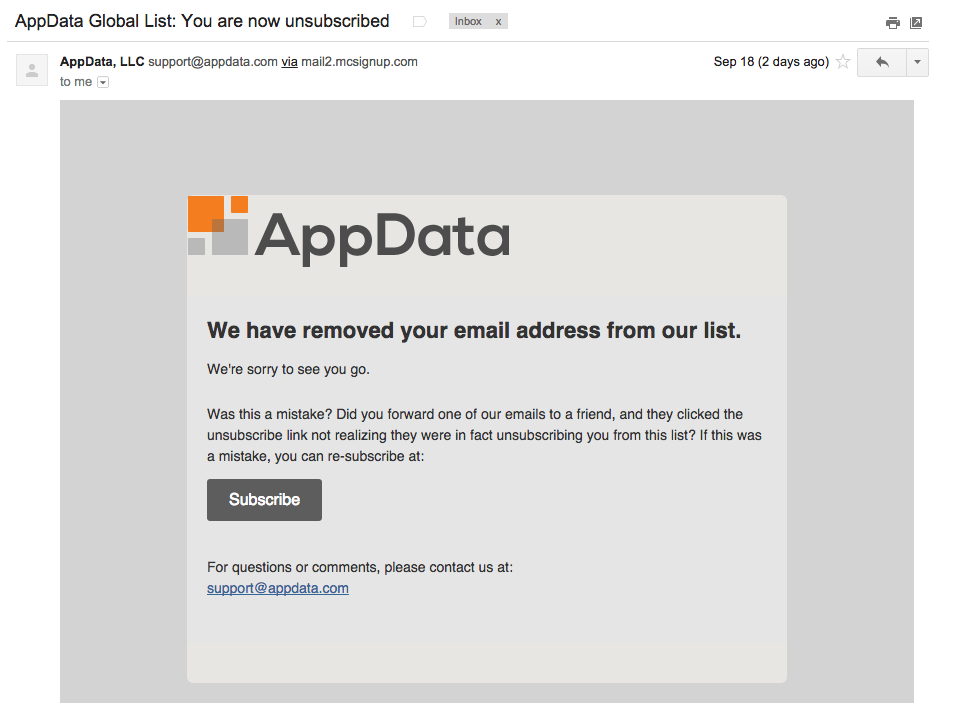
 Contemplating my time in the virtual realm of Eorzea so far, I feel that Final Fantasy XIV has had something of a positive effect on my mental wellbeing in a number of ways. I also acknowledge that it brings with it its own problems and considerations — primarily the fact that what is one of its best qualities — its inherently social nature — is also something that makes it compelling and addictive, and consequently distracts from other things. As with anything, it's all about finding a good balance.
 I really, really like Final Fantasy XIV.