2493: Japan's Great Games, and Their Lack of Coverage

This tweet from the Editor-in-Chief of gaming news site DualShockers caught my attention earlier tonight:

As regular readers will know, I'm a big fan of Japanese games and visual novels and will frequently wax lyrical at great length on the subject of my favourite titles. Hell, I even set up a whole new website — MoeGamer — to have a convenient place to put my more in-depth commentary on games that I've found particularly interesting.

Over the last couple of years — in particular since I started my JPgamer column on USgamer, and subsequently moved on to my MoeGamer project after I was laid off from the site — I've gotten to know a fair few "faraway friends" on the Internet thanks to a mutual love of games from Japan. And all of them — including me — feel the same way: it's sad that almost the entirety of a whole country's output gets thrown under the bus, usually in the name of "progressiveness", and usually with woefully little understanding of the works they have cast aside.

Sure, the Final Fantasies (except XIV) and Souls games of the world still get plenty of column inches, but the rest, as Nelva points out in his tweet, is ignored at best, and treated appallingly at worst.

I found Nelva's tweet noteworthy because it's the first time I recall seeing a member of the games press (aside from me) come out with sentiments like this, outside of sites that specifically dedicate themselves to this sort of thing. As such, I thought it worth talking about a bit, and to draw particular attention to a number of noteworthy developers, publishers and series that are well-regarded and regularly praised among players, but which receive less than stellar treatment from the press.

Let's talk about the Vita

Dear old PlayStation Vita. One of my favourite platforms of all time, and declared "dead" roughly every two months by some idiot who sees that there hasn't been a Call of Duty game on it since the atrocious Call of Duty: Black Ops Declassified.

As a handheld gaming machine, Vita is never going to match the big boys in terms of power, and it doesn't need to: when you're playing something on the go, aspirations of being some grand cinematic masterpiece are largely wasted on a screen the size of an envelope. And this is why we don't get any triple-A games on the platform.

ss_46a23fc88e8dcba5f08d62533038e4820875fac1

What we do get is an absolute shitload of Japanese games. What we do get is an absolute shitload of Japanese role-playing games — a genre frequently and erroneously declared "dead" alongside the Vita by people who don't know what they're talking about. What we also get is a bunch of visual novels and strategy games. And this is just Japan we're talking about, remember; all this is on top of all the great indie titles we get from Western developers.

There are a number of developers out there who put out their games on Vita as their lead (or only!) platform. And if these games got any coverage, it would be plain as day to see that the Vita is far from dead; there are plenty of great new games coming out for it on a monthly basis, many of which hail from Japan.

Let's talk about "progressiveness"

It's the current fashion in the games press to be as "progressive" as possible. That is to say, it's fashionable to berate any games that feature attractive women or any kind of provocative, adult-leaning content as "problematic", in the hope that frequent use of that word will make these critics look somehow educated and intelligent. In practice, all it does is undermine the other big argument these people make, which is that "games need to grow up". You can have one or the other. You can treat gamers as adults and trust them to handle provocative content, or you can sanitise the medium to such a degree that everything becomes generic, inoffensive waffle.

The ironic thing about the supposed "progressive" arguments against these games — particularly against the ones that feature attractive women — is that they completely fail to explore the game on anything other than the most superficial level. It is, quite simply, "this game has women in short skirts with big boobs, so it's bad". This isn't an exaggeration; this is a paraphrase of several Senran Kagura articles I've read from "progressive" games journalists.

SENRAN KAGURA ESTIVAL VERSUS_20160427172247

As I've written at great length over on MoeGamer, I find it interesting that a lot of these games from Japan actually handle some pretty weighty themes throughout, and do so sensitively and enjoyably. In some cases, games, much like anime, allow creators to explore aspects of society that are still somewhat "taboo" in parts of Japan, such as homosexual relationships.

Others set a great example by having an all-female cast, often with no mention of men or romantic entanglements whatsoever.

Others still have a point to make with their erotic or quasi-erotic content; a while back, for example, I wrote a lengthy piece about how Criminal Girls uses its S&M-themed ecchi content to reinforce the narrative's key message about trust. Or there are works like visual novel The Fruit of Grisaia, in which its erotic content is used as part of the characterisation process, particularly when it comes to the character Amane, who is an aggressively sexual individual for reasons that become apparent later in her narrative arc.

In damning the majority of Japan's cultural output on the grounds of "progressiveness", the self-proclaimed "progressives" are ironically missing out on some of the most progressive games out there.

Let's talk about Falcom

Let's talk a bit about Falcom first of all. Falcom is a developer who has been around since pretty much the dawn of gaming, with its long-running Ys series arguably playing a defining role in the modern action RPG.

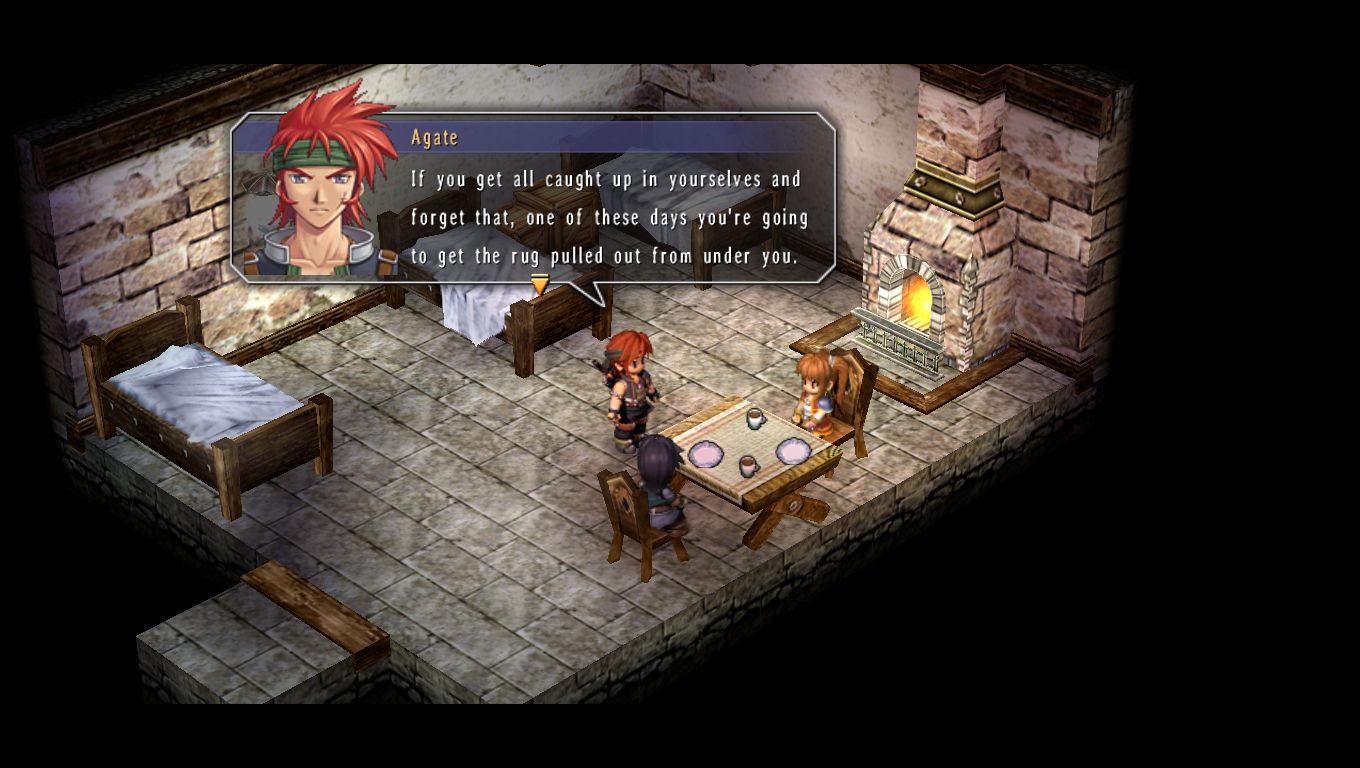
Of perhaps even greater note, meanwhile, the most recent installments in the Legend of Heroes series — Trails in the Sky and Trails of Cold Steel — are absolute masterworks in how to blend the best bits of Western and Eastern RPGs. They're well-written with excellent characterisation (though admittedly too wordy for some), they have some of the most astonishingly detailed worldbuilding I've ever seen in a game through a combination of their visuals and their texts, and they're simply great games, to boot. And yet, it's rare to hear them mentioned, even by self-professed JRPG enthusiasts in the press.
ss_8cdb7a4dc5289c6f75ca678bd03486446aae3497

Why? Well, at least partly because they were on PSP and Vita as their lead platforms, though Trails in the Sky's two currently available localised chapters have made the jump to PC since then. It goes back to what we said about the Vita before; it's a self-fulfilling prophecy. If you don't cover the games, the platform withers, though at least in the case of the Trails series, there's the formidable combination of XSEED's enthusiastic social media team and plenty of fans who are more than happy to promote the series via word of mouth.

But it saddens me that there are probably a whole lot of people out there who have no idea that these games exist, or have no idea quite how good they are. That, surely, is the press doing these games a great disservice.

Let's talk about Neptunia

And Idea Factory in general, while we're on.

Idea Factory and its label Compile Heart have been very prolific over the last few years, and it's fair to say that in the twilight of the PS3 era it took a while for them to find their feet. Titles such as Trinity Universe and Hyperdimension Neptunia were very much inferior to much of the platform's other fare in technical terms, though those who played them will happily attest that they are both overflowing with charm to more than make up for their technological shortcomings.

Unfortunately, some people have never got past a bad experience they had with a game a few years back, and seemingly outright refuse to cover new titles from a company that has grown astronomically in popularity over the last few years — and, moreover, a company that has clearly learned from its mistakes, with each new game being better than the last by a considerable margin.

ss_506f8073bfe353ec56691e857ca5ea49406d027c

This is most clearly demonstrated by the Neptunia series, which has gone from unknown niche-interest JRPG to full-on cultural phenomenon over the course of the last six years or so. People online love Neptunia. There's fan art everywhere, there are role-players on Twitter, there are mods for popular Steam games to insert the characters, there are people using Source Filmmaker to create their own Neptunia dioramas and videos — and, of course, there are the games, which tend to enjoy solid sales on console platforms (typically Vita, though the most recent mainline installment jumped to PS4) and then again a few months down the line when they hit PC.

Neptunia games still aren't the most technologically advanced games on the market, but what they have always had since day one is an absolute ton of soul — not to mention the aforementioned progressiveness thanks to homosexual characters and a strongly capable all-female main cast — and something which is very much underexplored in gaming as a whole: satirical humour. Their developers know what the players want from a Neptunia game, and they provide it. And they are widely loved as a result.

Coverage? Some idiot on Kotaku writing about how the animated Live2D character sprites in the dialogue sequences freak them out. And little else.

I love Neptunia, as you know. But even if I didn't, it would seem very strange to me not to acknowledge something that is so popular on the Internet at large that it's frequent meme fodder. And yet that's exactly what happens with today's games press: it doesn't fit the unwritten criteria, so it doesn't get explored.

Let's talk about overlooked games

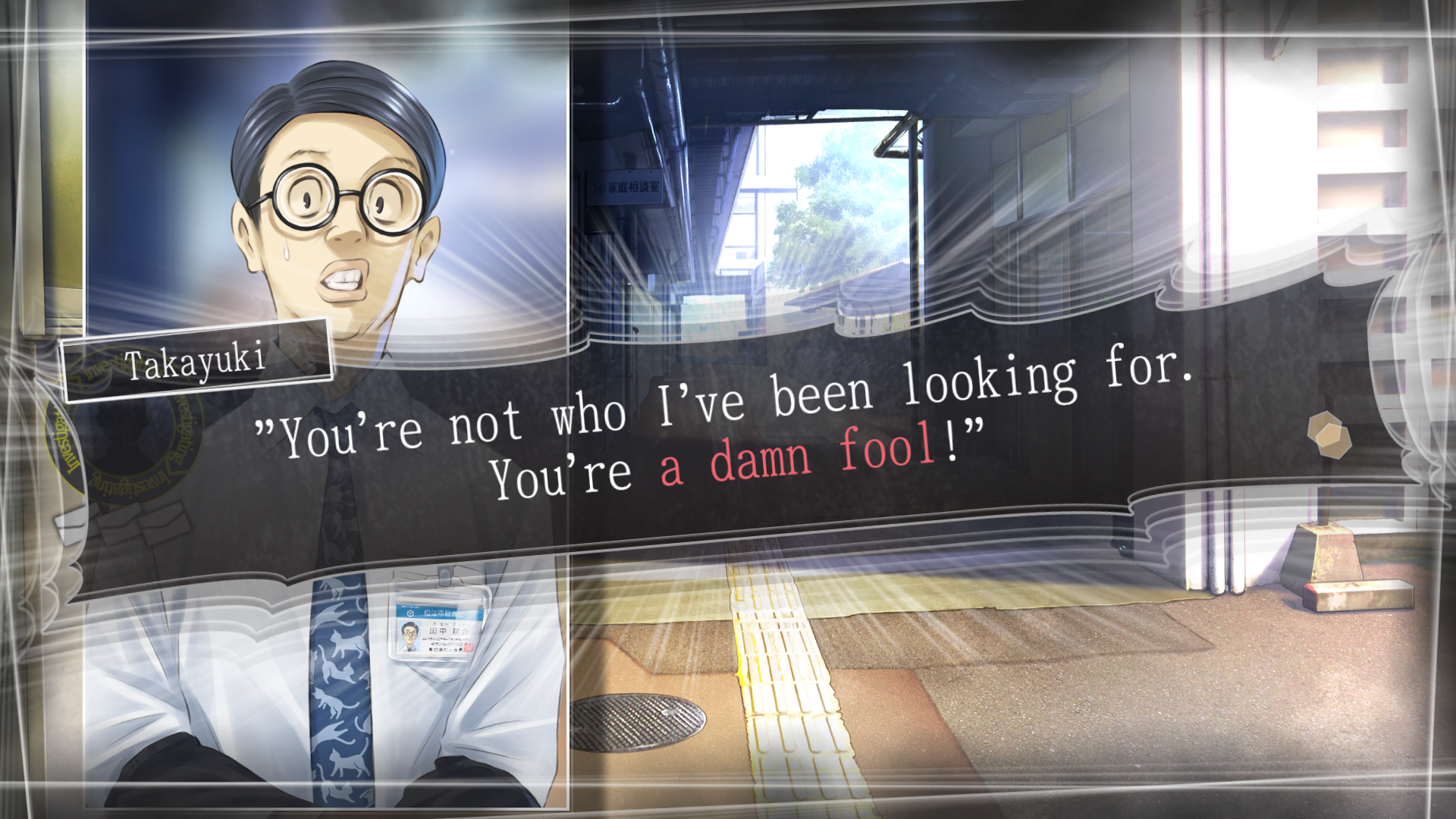
I played through the visual novel Root Letter recently and had a great time with it. I only knew about it because it happened to catch my eye one day when I was browsing the publisher's other works. I've barely seen a peep about it on other websites. I, meanwhile, wrote a bunch about it here.
e2889aletter_20161113191512

In the case of Root Letter, the press can't even play the progressive booby card to refuse to cover it: Root Letter has no ecchi content whatsoever, instead adopting an art style that features hand-drawn characters and "painted" backdrops of real locations in Japan. On top of looking beautiful, it's the start of a new series from a fairly major publisher in Japan (Kadokawa) and, judging by the speed we got an English version over here, it looks likely that we're going to see the other installments shortly after their native versions, too. Not only that, it's noteworthy in that it focuses not on a group of teenagers as many other Japanese works do, but instead on a group of 33-year olds.

Let's talk about why this happens

We all know why this happens: clicks. What games critic has time to cover obscure Japanese games when they could be raking in the clicks by posting meaningless, needless "guide content" for Watch Dogs 2 or Call of Duty? know, I've been there, done that.

The thing is, this approach to content strategy becomes a vicious cycle. These games remain popular at least partly because they're always plastered all over the major gaming sites, and the relentless pursuit of This Tuesday's Article On The Big Game That Came Out Last Week does damage to gaming criticism as a whole because it gives needless amounts of attention to titles that already have a ton of attention on them thanks to their astronomical marketing budgets.

ss_0550d39236a87c6e219389ad101b8375db035488

What I'd really like to see is more sites making a specific effort to go out of their way to cover games that are a little more off the beaten track, but which still have cultural significance of some sort — whether it's the popularity of something like Neptunia, or the self-conscious maturity of Root Letter — and helping to broaden the medium for everyone. Some sites already make an effort to cover Western indie games in this regard, and while there are occasionally some questions to be asked over whether certain games would be covered if the developer and the writer weren't friends with one another, I feel it's more important to note that this is a start.

While we're on, what I'd also like to see is a complete end to the mockery of Japanese games in the press, particularly by those who clearly have no intention of attempting to engage with a game. No-one should be mocking anyone else's taste — particularly those in positions of power as "tastemakers"; live and let live.

The insufferable "progressive" crowd are always going on about "diversity", so what I would very much like to see is an acknowledgement of Japan in 2016 as part of that diversity. There's still a rich flow of quality games coming out of that country on a monthly basis, and as Nelva noted in that tweet that sparked off this whole entry, very few of them that don't have Souls or Fantasy in their title get a look-in. Wouldn't it be great to see that change?

I'm not going to hold my breath, mind you. In the meantime, well, I'll do what I can with MoeGamer — so please, show your support if you like what you see.
2492: Fresh Meat

0492_001

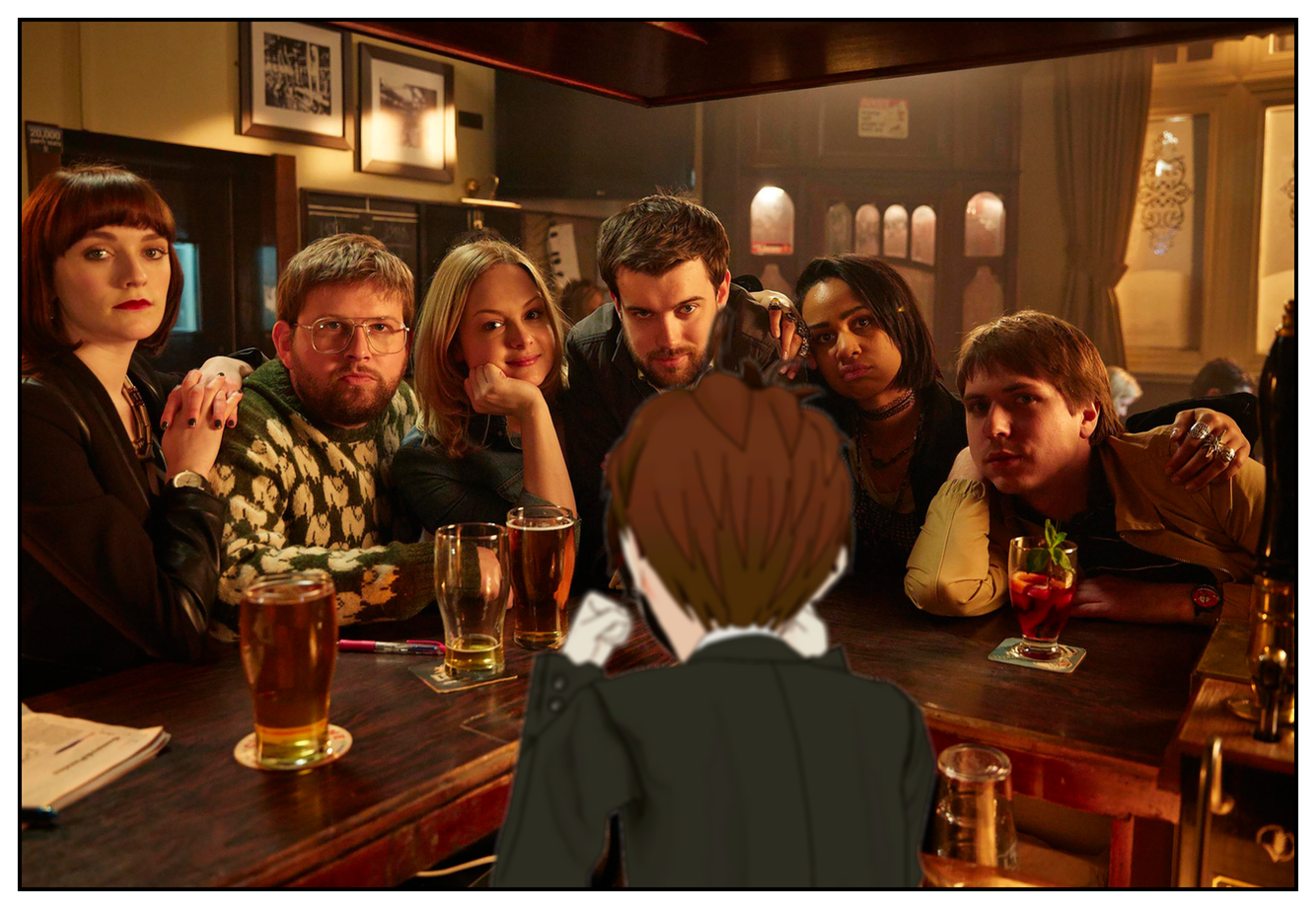
Fresh Meat is a show by Jesse Armstrong and Sam Bain, of Peep Show fame. Across four seasons, it concerns the lives of a houseful of university students from their initial arrival at university through to the end of their final exams.

I remember watching the first few episodes of the first season and really enjoying it, but for one reason or another I never finished watching that season. More recently, however, I've been watching the complete run on Netflix and enjoying it a great deal; much like one's university life, it evolves and changes over the course of the three years/four seasons, but it manages to maintain enough coherence throughout to feel like a convincing serialised story rather than simply an episodic comedy-drama, which it could have easily turned into.

Part of the reason for its feeling of coherence is the fact that it managed to keep its core cast together for the entire run, and said cast is an excellent lineup. All of them are flawed to one degree or another, but none of them are so far beyond redemption as to become dislikeable. On the contrary, the show frequently demonstrates that behind prominent displays of bravado, there is often someone crying for help or struggling to express themselves.

One of the first characters we see in Fresh Meat is Greg McHugh's portrayal of Howard. His first appearance is wearing only a jumper, no trousers or underpants, and drying some dead poultry on a washing line across the kitchen using a hairdryer. It would have been easy for the show to keep Howard as a deranged character, only coming out for comedy relief or gross-out factor, but even within the first episode, we quickly see that he's been designed with a lot more thought behind him. Across the entire run, Howard actually becomes a character that it is easy to sympathise and empathise with, since in many regards he's the character who makes the biggest strides outside his comfort zone — particularly with regard to social situations and taking perceived "risks" like asking a girl he likes out — and who manages to pick himself up repeatedly after numerous setbacks.

Zawe Ashton's portrayal of Vod is also noteworthy, as Vod initially comes across as an arrogant, dislikeable young woman with an attitude problem. Her abrasive edge doesn't dull throughout the entire run of the series, keeping her as a formidable person that most people would probably find tough to get close to, but piece by piece, we start to understand the difficulties she's endured through her life and why she has ended up as the person she is. Most people probably won't end up liking Vod as such, but we certainly understand her pretty well and can sympathise with her by the series' end.

Kimberley Nixon's Josie subverts the "sensible girl" trope often found in series of this nature. While initially appearing to be the cast member who has it together the most among the group, Josie's character goes into a downward spiral early in the series, succumbing to a combination of alcoholism, stress and depression that sees her getting kicked off her dentistry course for drunkenly putting a drill through a woman's cheek, moving to Southampton, moving back to Manchester in the hope of a relationship with fellow cast member Kingsley, and from there seemingly repeatedly sabotaging her own potential for happiness. Outwardly, Josie is one of the most cheerful, optimistic-seeming characters, but as the show progresses, she becomes one of the most tragic figures in it.

Joe Thomas' depiction of Kingsley initially appears almost identical to his portrayal of Simon in The Inbetweeners — mostly due to his trademark rather sardonic delivery — but over time Kingsley becomes a distinctive character in his own right. Whereas Simon was fairly aloof and detached from the idiocy of the rest of the group in The Inbetweeners, Kingsley becomes a character who consistently tries too hard and often finds himself coming a cropper as a result. His relationship with Josie is initially set up to be the "Ross and Rachel" of the show through its on-again, off-again nature, but in the latter seasons in particular it becomes clear that the two are simply not right for one another. Kingsley repeatedly puts across the impression that he desperately wants to "grow up" but isn't entirely sure how, with his attempts ranging from developing an interest in composing his own rather emo music to growing an ill-advised and rather pathetic soul patch. His desires are perhaps most explicitly demonstrated in the final season, when he gets together with an older woman and is initially ecstatic about the prospect, even when it becomes abundantly clear that she is not going to treat him well.

Charlotte Richie's portrayal of Oregon is one of the strongest performances in the show, ironically because of how understated a lot of her delivery is. Oregon, or Melissa as she's really called, desperately wants to appear cool and it's immediately apparent from the outset that she's attempted to "reinvent" herself for university life after a privileged upbringing. She has a habit of getting drawn into positions that initially seem like a good idea at the time, but which quickly turn sour. In the first season, this is exemplified through her relationship with her English tutor Professor Shales; in the final season, we see her mount a successful campaign to become Student Union president only to be lumbered with massive debt, impending legal action and the realisation that she's little more than a "ribbon cutter" for the people who actually have power. To her credit, Oregon always tries to fight her way out of these situations and is often successful in doing so; while the adversity she encounters throughout the series is usually of her own creation — perhaps deliberately so, given the life of privilege she grew up with — she doesn't ever buckle under the pressure, and usually comes out stronger and having learned something from her experiences. Of all the characters, she's probably the least overtly "tragic" in one way or another; in many ways, she becomes the most admirable after initially being one of the biggest fakers there is.

Finally, Jack Whitehall's depiction of J.P. largely consists of Jack Whitehall playing an exaggerated version of himself, but it really works, at least partly because J.P. is written as more than a one-dimensional "posho" laughing stock of a character. Over the course of the four seasons, we come to understand J.P. as a deeply confused, conflicted young man who doesn't understand how the world works — like Oregon, he grew up with a life of privilege, but unlike her, he initially makes no attempt to reinvent himself, instead preferring to try and solve his problems by throwing money at them. In an early episode, he learns the folly of this approach when he gets taken advantage of to a ridiculous degree by his former schoolmates, and from here his growth as a character begins. Each time he proclaims that he wants to have "a large one" or that he is desperate to be regarded as "a legend", it rings a little less true; inside, he's a man who sees his future looming ahead, but he can't see what lies beyond the veil at the end of his university life. That's a scary feeling, and not just limited to university students; J.P.'s struggle to understand how life as a whole works is something that a lot of us can relate to.

All in all, Fresh Meat is an excellent (if occasionally mildly unrealistic) look at student life in the early 21st century. It captures both the soaring highs — the excitement of meeting new people and striking up relationships that may last the rest of your life; the nights out that seem like the most enjoyable, fun times ever — and the crippling lows — mounting debt; loneliness; the uncertainty of your (and everyone else's) future — and in the process manages to depict a collection of flawed but interesting, likeable characters as they work through one of the most turbulent periods in their respective lives.

2490: Root Letter: Some First Impressions

0490_001

Today I've been playing a bunch of Root Letter from Kadokawa Games, localised and published by PQube over here. I'm honestly surprised that I've heard pretty much jack squat about this game except press releases from the publisher, because it's turning out to be a most intriguing, enjoyable visual novel/adventure game hybrid.

Root Letter's basic premise runs thus. 15 years ago, you were penpals with a high school girl named Aya Fumino. In total, you exchanged ten letters with one another before drifting apart, but one day, 15 years later, you discover an eleventh letter with no postmark. In this letter, Aya appears to confess to a murder, but gives no details about the crime, the victim or her current status. Understandably somewhat perturbed by this alarming discovery, you set off for her hometown with only her return address to guide you.

Upon arriving, you find an empty plot where her house is supposed to be, and quickly discover two rather strange stories: firstly, that while the Fumino house did indeed once stand on that plot, it burned down fifteen years ago; secondly, and more disturbingly, the only person by the name of "Aya Fumino" that people in the area seem to know died twenty-five years ago from a mysterious disease.

What unfolds from this point is a mystery story as you attempt to piece together what really happened to Aya — and, if the stories about her death are true, who the person you've been corresponding with actually is — by using her letters from 15 years ago as guidance. Using a combination of the information in the letters and evidence you gather through investigating scenes and conversing with various characters, you gradually come to figure out the identities of "Aya's" classmates, each of whom theoretically hold a piece of the puzzle, but all of whom are extremely reluctant to speak of the past, and of their classmate — the girl you knew as Aya — in particular.

I'm roughly halfway through a first playthrough after a little over five hours, and I believe there are four discrete "routes" for the final two chapters to take, varying according to how you remember your replies to Aya's letters went at the start of each chapter. It's given me a solid idea of how the game works.

Essentially, it's a modern take on old-school "ADV"-style visual novels such as Nocturnal Illusion in that you're given an interface and a variety of actions to perform — including moving between locations, looking at things in a location, asking characters about topics, showing items from your inventory to characters and just standing around thinking — but in practice there's generally only one "correct" option to push the story onward. At the end of most of the chapters, there's an "investigation" sequence where you interrogate someone you suspect to be one of Aya's classmates from 15 years ago, using knowledge you've obtained and physical evidence you've gathered to destroy their arguments.

If this all sounds a bit Ace Attorney, you'd be absolutely right; the structure is very similar, with the standard wandering around exploring gameplay mirroring Ace Attorney's investigation sequences, and the interrogation sequences working much like the courtroom scenes, right down to having a limited number of chances to present the correct piece of evidence and proceed. Pleasingly, the interrogation sequences also feature some ridiculously overdramatic music that rivals Ace Attorney's classic Pursuit ~ Cornered! theme in terms of ramping up the intensity.

One interesting mechanic the game has comes from the protagonist's nickname "Max", which comes from his apparent predilection to give things everything he's got, even when it's not strictly necessary to do so. In mechanical terms, this is represented as "Max Mode", where a meter pulses up the sides of the screen with four different divisions, each representing a particular "intensity" of comment that you want to fling at someone. The bottom of the meter represents simple statements, moving up through lightly provocative, very provocative all the way to "I can't believe you just said that". When these sequences present themselves, you have a limited amount of time to determine how intensely would be appropriate to argue the point Max is presently debating, and the meter moves seemingly unpredictably at times, making it a bit of a test of reactions as much as choosing the right option. Fortunately for those blessed with less than stellar reflexes, you don't lose a "life" if you get one of these wrong; you can simply try again.

Thus far the story has been highly intriguing and hinted at several different directions it could (and probably will) branch off into in its final chapters. The setup is an interesting one, and it's satisfying to gradually see the truth slowly coming into focus as you progress. I have no idea what the actual "truth" is at this point, but I'm very interested to find out.

Since this game has had so little coverage on the Internet at large, I'm going to devote some time on MoeGamer to it at some point in the near future. Whether there's enough to give it the full Cover Game treatment or if it will simply be a one-off article remains to be seen, but count on some more detailed thoughts once I've seen how the whole thing ends up.

For now, if you've been thinking about grabbing this, I'd say do so. And if you've never heard of it and enjoyed titles like Danganronpa or Ace Attorney, you'll definitely want to give this one a go.

2489: Kingsglaive

0489_001

I watched the Final Fantasy XV movie Kingsglaive this evening. It was pretty spectacular, and as something to get one in the mood for Final Fantasy XV it does its job admirably. Taken by itself, it's perhaps a little heavy on the action sequences and light on the justifications that link them together, but for a Final Fantasy fan such as myself, it was fanservice heaven.

Unlike the previous Final Fantasy movie The Spirits Within, which wasn't based on an existing game and only had the loosest of thematic similarities to the venerable series, Kingsglaive very much knew who its primary audience was. As such, the whole thing was riddled with little nods and references to other games in the series.

A wide shot of the Lucian city of Insomnia had a billboard for the "Bank of Spira", a reference to Final Fantasy X's world. Water-based summon Leviathan just happened to be in a giant fishtank present at a highbrow reception. One of the enemy airships inexplicably had everyone's favourite pervy octopus Ultros inside it, though sadly without a speaking role. The "demons" that the antagonists of the piece, the Empire, bring to bear on the Lucians are a dead ringer for Final Fantasy VII's Diamond Weapon. And let's not, of course, forget the presence of Knights of the Round who, after Heavensward, have now played a starring role in two consecutive Final Fantasy works as opposed to being a "secret" summon for the truly dedicated player to uncover.

The movie did a great job of setting the scene and introducing some of the lore that is clearly going to be central to Final Fantasy XV as a whole. It's nice to see that the game is incorporating elements of both classic Final Fantasy — crystals being of paramount importance to the world's magic being the main one — and the more recent titles with modern-to-futuristic technology being in evidence.

I'm a big fan of settings that combine technology and magic, and I think it's traditionally been a rather underexplored variant on fantasy. Sure, the idea of magic combined with the modern world has been popularised by the Harry Potter series in recent years, but it's something that is always interesting to explore, I think. There's a quote from horror game Outlast that stuck with me and that I will now probably butcher for you now: "show a man from the past technology and he will think it is magic; show a man from the present magic and he will think it is technology." This is the core of what's interesting about it, I think: if you have magic, why do you need technology, and vice versa?

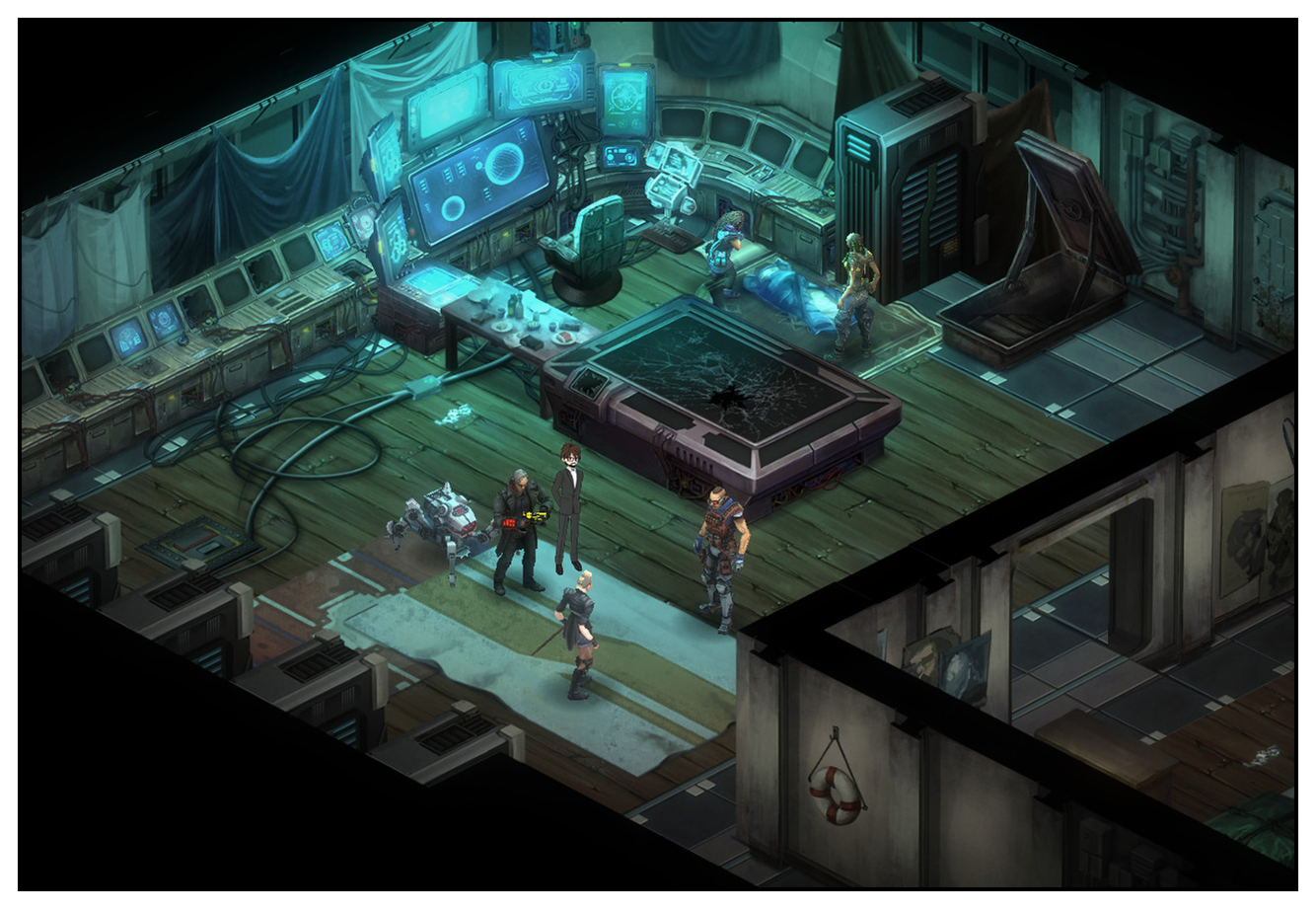
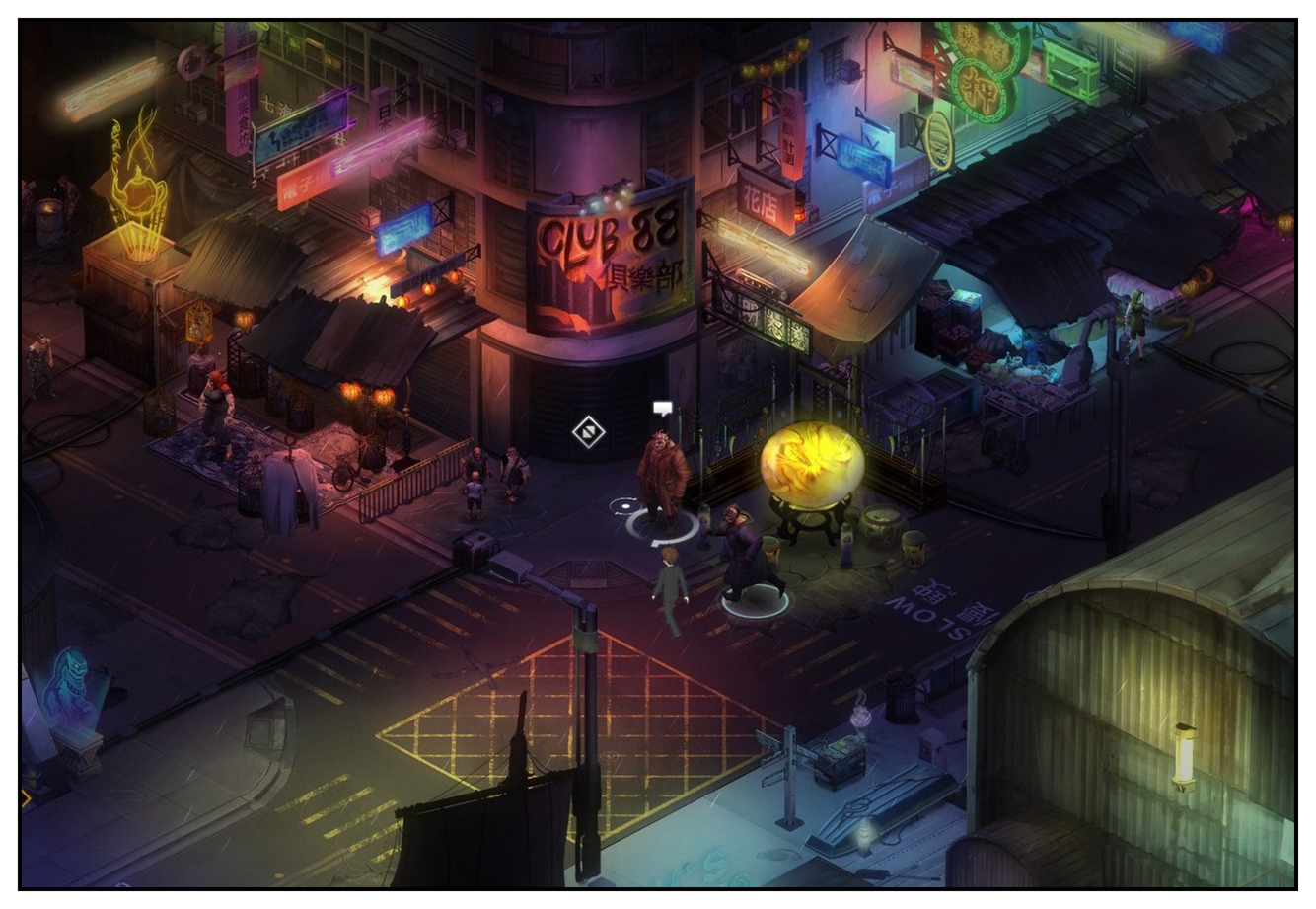
This is something I also found interesting about Shadowrun Hong Kong, which I finished earlier today. Shadowrun actually almost plays down its fantastic elements outside of some occasional references to "The Awakening", mages occasionally being among the foes that stand in your way and the fact that orks, elves and dwarves are happily wandering around in a traditionally human-only world. By de-emphasising the fantastic elements, they simply felt natural and "normal" even though they're far from reality.

Final Fantasy has always played up its more fantastic elements, by contrast, and Kingsglaive was no exception to this rule, with a spectacular and lengthy final battle raging between the protagonist and the antagonist, set to a backdrop of gigantic summoned titans and demons smacking the shit out of each other, the foreground and background conflicts taking turns to mirror one another.

I absolutely love this particular breed of overblown insanity and always have done. It's so fantastic and unbelievable that it becomes perfect escapism: something that literally cannot be done in reality, so becomes all the more appealing to be a part of, even if it's only as a passive observer.

If the main game of Final Fantasy XV is half as spectacular as Kingsglaive was, I'll be very happy indeed. But since it's the centrepoint of an incredibly ambitious transmedia campaign encompassing a computer-generated move, an anime series, mobile games and then finally the damn game itself when it comes out at the end of this month, I'm anticipating something even more joyfully exuberant.

I don't doubt the game will have its haters, as its predecessors also have. (I've given up arguing with people who can't see the good in the FFXIII series, it's just not worth the stress.) But I for one cannot wait to step into Noctis' lovingly-rendered boots and start exploring this fantastic new world, and watching Kingsglaive this evening has made the wait just a smidge more agonising.

2488: That Happened

0488_001

Are you familiar with the subreddit /r/thatHappened? It is one of the more popular subreddits out there, devoted to posting the sort of "PLEASE LIKE AND SHARE!!" garbage that people so like to festoon their social media walls with these days.

Posts that crop up on /r/thatHappened typically have a number of things in common.

Firstly, they usually involve someone making a point of saying they were doing something entirely mundane, like going to school or filling their car with petrol.

Next, they introduce another character of some description, typically a stranger, but one whom the author of the post mysteriously seems to know absolutely everything about, right down to their ethnicity, age, employment status, affluence and anything else you'd care to mention.

Optionally, a child can be involved in the story. If a child is involved in the story, said child will be quoted saying something that no child in the world has ever said, something which can easily be discerned by the use of vocabulary or turn of phrase. Even at my most precocious growing up, when I knew what words like "floccinaucinihilipilification" and "antidisestablishmentarianism" meant (and how to spell them), I still spoke like, y'know, a kid. Kids in these stories never do, usually coming out with some sort of profound wisdom you'd normally expect to hear from a wizened old karate master or something.

The author of the story, the character they introduced (who is inevitably a minority of some description) and/or the child will then become involved in some sort of altercation with an antagonist, who is almost definitely a white male, because as we all know white men are all literally Satan.

The story will then go one of two ways. 1) The author, the character and/or the child will then devastate their opponent in some exaggerated manner, either physically or with razor-sharp wit. The white male(s) will then inevitably leave with their tails between their legs. Alternatively, 2) The author, the character and/or the child will suffer some sort of sexist, racist, ableist, homophobic or transphobic indignity that is so profoundly terrible that the author's immediate reaction was to post it on Facebook rather than take it to the authorities.

In the case of 1): If the altercation took place in a public place such as a school, petrol station or coffee shop, everyone surrounding the author, the character and/or the child will then spontaneously break into applause and at least one person will be crying.

In the case of 2): The author will blame the altercation on a major event that has happened in the news recently and will confess to be "crying right now", with bonus points if they are doing so "into [their] cereal" or some other foodstuff.

In both cases, the author will then attempt to sign off with some sort of quasi-poetic but ultimately asinine truism and encourage everyone to Like, Comment and Share their post to "raise awareness". Said post (which is inevitably set to Public visibility, even if the author typically keeps their social media pages private) will then receive multiple thousands of Likes, Comments and Shares through the phenomenon of virality, with a significant number of people sharing it doing so blindly without bothering to ponder how exactly something quite so improbable happened, or indeed questioning the author on further details of the incident. (This was a terrible racist/sexist/ableist incident, don't you know? You can't ask questions, you might traumatise the poor soul further!)

Once you're familiar with this template, you can spot bullshit a mile off. I encourage you to get intimately acquainted with it before clicking that "Share" button in the future. On a related note, I also encourage you to familiarise yourself with Snopes.com if you aren't already.

That is all.

2487: The Utter Insignificance of You and Everything You've Ever Known

0487_001

I had the great pleasure of seeing Professor Brian Cox speak at the Southampton Guildhall this evening. This isn't the sort of thing I'd generally go along to, but a friend had an extra ticket and said he would rather it went to someone in his immediate circle of friends rather than his backup list, so along I went.

I won't pretend to have followed much (or possibly any) of the lecture as a whole, but it was an interesting and inspiring experience to be in the presence of someone so obviously knowledgeable and passionate about their work. Cox's lecture was punctuated by occasional interruptions from his podcast partner Robin Ince, perfectly timed so that just when the sciencey bits were getting a bit heavy, he was there to inject some much-needed levity into proceedings with impressions of his colleague and Brian Blessed, among others.

Cox's lecture was on cosmology and the study of the universe, with particular emphasis on theories surrounding the Big Bang, the theoretical period of "inflation" which took place before the Big Bang that we've historically regarded as the beginning of everything — "the day with no yesterday" — and how modern theories suggest that what we understand as "our universe" might actually just be one of a potentially infinite number of "bubbles" out there in the wider context of perpetually inflating space.

I won't bore you with the science or the mathematics — largely because I didn't understand a lot of it and can't accurately remember the rest of it — but I will share with you one thing that I found particularly impactful in his whole lecture.

My friend Emily told me as we were going in to the lecture that she was almost hoping for a reminder of how utterly insignificant we and everyone around us actually are in the grand scheme of things; how unimportant our little blue dot is to the universe as a whole, and how little things like, say, Donald Trump being elected president of the United States really matter when you actually think about it in the context of the whole universe.

Cox delivered on this front, acknowledging that while we are a seeming anomaly — the Fermi paradox suggesting that if there were other advanced civilisations out there, we should almost certainly have seen some sort of evidence of them by now — we are ultimately insignificant to the universe as a whole. Just one pale blue dot, as Sagan put it, a "very small stage in a vast cosmic arena".

And yet both Sagan's quote and Cox's lecture continued beyond this point: apparent insignificance can also be interpreted as uniqueness that should be cherished and treasured. We may be just one pale blue dot, but it's our blue dot, a home we've made our own, for better or worse. And each of us may just be one individual taking up a tiny fraction of a tiny pale blue dot, but there is no-one in the world exactly like us, there never has been and there never will be. All of us, every single one of us, is precious and important in our own way, because there'll never be anyone quite like us ever again.

"Think of the rivers of blood spilled by all those generals and emperors so that in glory and in triumph they could become the momentary masters of a fraction of a dot," said Sagan in his famous 1994 speech. "Think of the endless cruelties visited by the inhabitants of one corner of the dot on scarcely distinguishable inhabitants of some other corner of the dot. How frequent their misunderstandings, how eager they are to kill one another, how fervent their hatreds. Our posturings, our imagined self-importance, the delusion that we have some privileged position in the universe, are challenged by this point of pale light… to my mind, there is perhaps no better demonstration of the folly of human conceits than this distant image of our tiny world. To me, it underscores our responsibility to deal more kindly and compassionately with one another and to preserve and cherish that pale blue dot, the only home we've ever known."

2486: One and Only Post About America's New President

0486_001

America elected Donald Trump, noted toupee wearer and generally unpleasant person, as their President. This is either terrifying or highly amusing — or perhaps a combination of both.

I have no love for Donald Trump. He's shown himself repeatedly in both social and popular media to be a bigoted twat who frequently speaks without thinking, promising entirely unreasonable things and making objectionable comments about all manner of groups of people. He is not, in short, who I would have voted for as President, were I an American.

I feel that it's worth contemplating exactly why so many people voted Trump, though, much as it was also worth contemplating why so many people voted Brexit, and why so many people voted for the Conservatives to govern the UK after seemingly widespread dissatisfaction with their previous work and particularly their former leader David Cameron.

This article from The Guardian offers an explanation.

Clinton’s supporters among the media didn’t help much, either. It always struck me as strange that such an unpopular candidate enjoyed such robust and unanimous endorsements from the editorial and opinion pages of the nation’s papers, but it was the quality of the media’s enthusiasm that really harmed her. With the same arguments repeated over and over, two or three times a day, with nuance and contrary views all deleted, the act of opening the newspaper started to feel like tuning in to a Cold War propaganda station. Here’s what it consisted of:

  • Hillary was virtually without flaws. She was a peerless leader clad in saintly white, a super-lawyer, a caring benefactor of women and children, a warrior for social justice.
  • Her scandals weren’t real.
  • The economy was doing well / America was already great.
  • Working-class people weren’t supporting Trump.
  • And if they were, it was only because they were botched humans. Racism was the only conceivable reason for lining up with the Republican candidate.

How did the journalists’ crusade fail? The fourth estate came together in an unprecedented professional consensus. They chose insulting the other side over trying to understand what motivated them. They transformed opinion writing into a vehicle for high moral boasting. What could possibly have gone wrong with such an approach?

In short, instead of allowing people to make their own mind up and encouraging them to think critically about both candidates — or the pros and cons of Brexit vs Remain, since a very similar situation unfolded with that vote — the mainstream media attempted to rely on its power over society by clearly marking one option as the "wrong" one. Trump is evil because x,y,z, Brexit is bad because a,b,c. It didn't stop there, though. It then repeatedly listed all the reasons why you would be a terrible person for voting for the "wrong" option along with all the reasons you would be an absolute paragon of virtue, ally to the oppressed and generally wonderful human being if you voted for the "correct" option.

It may be that if you critically analysed the positions of both options, you still thought that Hillary was the right choice, and if so, great. If it had been left at that, she could have probably won. But people need to reach that conclusion naturally rather than being shepherded away by barbed wire, locked gates and signs saying "DANGER! TRUMP AHEAD". People, particularly in the age of the Internet, are curious beasts, and if you tell them they can't or shouldn't have something, that will only make it more attractive to a particular type of individual. "Why is the media so absolutely adamant that I shouldn't choose this option?" they'll think. "What are they trying to hide?"

We are in an age of social media, where buzz and influence can be created artificially to a certain extent, but more commonly it is an organic, natural process that occurs seemingly randomly and at the bitter, twisted and above all unpredictable whims of the great Internet Gods. In this age, where everyone likes to feel like Their Opinion Matters — and where we're repeatedly told that Our Opinion Matters, even when it clearly doesn't — people really don't like to be told what to think. People really don't like to be talked down to or told that a conclusion they may or may not have reached themselves is "wrong", or that there is only one "correct" option, regardless of whether or not you personally actually think it's right for you if you take a closer look at it.

This kind of attitude — a "journalists' crusade", as Frank puts it in his Guardian piece — leads to people feeling bitterness and resentment towards the media. We're already in a place where general trust in the media is at something of a low, so it wouldn't have taken much to push people into "spiteful" mode, where they deliberately go against whatever the media is telling them to do simply to send a very clear message: we want to make up our own minds, and fuck you for trying to tell us we're awful people for doing so. There is, of course, a certain irony in doing this causing everyone who feels that way to vote the same way, but when you only really have two practical options, there are limits to how effectively you can protest.

"[Hillary Clinton]  was exactly the wrong candidate for this angry, populist moment," writes Frank. "An insider when the country was screaming for an outsider. A technocrat who offered fine-tuning when the country wanted to take a sledgehammer to the machine."

Well, I'd say that sledgehammer has well and truly been taken to that machine, and a clear message has been sent. I'm not excusing the result or saying that it was the "right one", just saying what has seemingly happened from an outsider's perspective. It is pretty much exactly the same reason there is so much resistance to perceived "political correctness" — people do not like to be told how to think or feel.

It remains to be seen whether or not this election result is ultimately "good" or "bad" for America — and the world — as a whole, but as a friend on Facebook noted, "I look forward to four years of people learning how little power the President has."

2485: The Value of Short Experiences

0485_001

You know me, dear reader, I love getting my teeth into a meaty RPG as much as the next man — assuming the next man is as much of a loser as I am — but sometimes it's nice to cleanse the palate with something shorter. Perhaps even something that you can finish in a single sitting.

I thought this with Outlast and its DLC, which I played recently, and I've also thought it with the visual novel Negligee, which I'm going to do a writeup for on MoeGamer later this week. I also think it whenever I play games that are friendly to bite-size sessions, like arcade-style games where the emphasis is on getting better at a short, sharp experience rather than slogging your way through hundreds of levels.

There seems to be something of an assumption among many people online these days that a game somehow lacks value if its developers don't "support" it post-release with regular updates. Now, in some cases, this makes sense — massively multiplayer games like Final Fantasy XIV would grow stale quickly if they didn't get an injection of new stuff to do now and then, for example — but in others, particularly games that are heavily story-based, there's a great deal of value in simply drawing a line under it, saying "that's it" and calling it finished.

This clamouring for constant updates is particularly pronounced in the mobile game sector, where a lot of games seem to have designs on being "massively multiplayer" experiences anyway, even when they involve little to no actual player interaction. Google Play and App Store reviewers (and, to a marginally lesser extent, Steam reviewers) will get seriously whiny if even the dumbest of timewasters doesn't have regular updates with new levels or seasonal events or whatever — and even worse if the experience costs "too much" for what they perceive the mythical money-to-hours ratio is supposed to be — and it always bothers me a bit. Are they seriously saying that they don't want that game to ever end, that they'll be happy doing nothing but flicking birds at pigs or matching candy sweets forever? I can't imagine feeling that way. I need new and interesting things to do on a fairly regular basis; while my longstanding love affair with Final Fantasy XIV would seem to run counter to this statement, that game does at least reinvent itself with new stuff every so often, and I play other things alongside it anyway.

Back to the original point, though: there is a great deal of value in shorter experiences that forego bloat and filler in favour of a concise but still enjoyable experience. Not everything needs to be a 50+ hour epic, at least partly because no-one has time to play all the 50+ hour epics that are already out there, let alone a new one.

Outlast would have got exhausting and tiresome if it was any longer than it was — the main game was already skating on that boundary by the time I finished it; I much preferred the snappier DLC — and Negligee tells the story it wants to tell in less than an hour, albeit with eleven different endings to encourage replays. A game that provides an enjoyable experience without taking over your whole life is something to be celebrated, particularly when you're waiting for the next exciting thing to come over the horizon as I am right now with the imminent Final Fantasy XV. And I for one am glad that there are plenty of developers out there who don't feel the need to add unnecessary bloat to their games for the sake of an artificially inflated playtime, or a set of Achievements, or simply because the ever-whiny general public insists that £15 is "too much" for a game that is over in two hours.

Short game developers, I salute you, and you'll always have my business in that awkward period just before a big release! 🙂

2484: Further Adventures in Hong Kong

0484_001

Shadowrun Hong Kong continues to be an excellent game. The best thing about it, I think, is quite how varied the different missions are — and how the game is structured, allowing you to accept multiple missions at a time, but forcing you to focus on a single one at a time once it begins. This approach helps prevent the problem a lot of Western RPGs have, where you get completely bombarded with quests and have no idea where to go and which order it is "best" to do them in, leading to an unfocused, meandering experience.

Shadowrun Hong Kong, meanwhile, features missions that take maybe 30-60 minutes to complete, tops, each of which has its own set of objectives and mini storyline to follow through. And they're not all a matter of "go somewhere, have a fight, get out again".

Over the course of last night and tonight, I've completed a variety of missions and no two have been alike. In one, I had to infiltrate a museum and steal the most valuable artifacts possible without tripping the alarms. In another, I had to solve a serial murder case — this had the option of concluding without combat were I to let the culprit go free. In another still, I had to disrupt the qi flow in the offices of a company that took great pride in its geomancy.

What it kind of feels like — which is fitting, given Shadowrun's background — is a tabletop role-playing session, with discrete adventures linked together to form a campaign, each of which features its own story, evocative narration and interesting characters. Where Shadowrun differs from other games that have attempted to evoke the feeling of tabletop roleplaying sessions, however, is that it keeps things focused and trims the fat.

It doesn't have Baldur's Gate's problem of pretty much everything being lootable, only for you to discover to your dismay that 95% of the containers in the game house identical rubbish shortswords and suits of leather armour. It doesn't have The Elder Scrolls' problem of everyfuckingthing being pick-upable, making it extremely difficult to distinguish meaningful, helpful items from pointless window dressing, particularly if, God forbid, you drop a key item in the room where you've been storing all the thousands of wheels of cheese you've been hoarding "just in case". And it doesn't have the older Dungeons & Dragons games' problem of sticking a little too rigidly to the tabletop ruleset and consequently not really taking full advantage of the benefits of playing on a computer.

The combat in Shadowrun takes this approach, too. It doesn't overwhelm you with tactical options, but it does allow you to do things like take cover and use your weapons in a variety of different ways according to your proficiency with them. Not everyone in the party is necessarily a "combat" character, either — my protagonist, for example, is a Decker, which means she's more suited to marking targets using her knowledge of technology than actually firing a gun or going toe to toe with opponents — though I must admit, this didn't stop me from outfitting her with retractable cybernetic claws for close combat should the need ever arise. Who doesn't want to be Cyber-Wolverine?

All in all, Shadowrun Hong Kong has been a pleasure to play so far. It's telling an interesting story and its mechanics are really solid. Its graphics are nothing special but, having grown up on Baldur's Gate and Fallout, this really doesn't bother me all that much — and, like those old classics, Shadowrun's visual shortcomings are more than made up for by its spectacularly good sound design, with excellent music complemented by ambient sound that shifts in volume and position according to where your character is standing on the map. It's incredibly atmospheric and does a great job of immersing you in the setting despite unfolding from the typically rather impersonal-feeling isometric viewpoint.

A winner, then. And cheap in GOG.com's current sale! Grab yourself a copy now and you won't be disappointed.

2483: Shadows of Hong Kong

0483_001

GOG.com has a sale going on right now; it's really rather good. Like their previous sales, they have a tiered reward system where if you complete various arbitrary tasks on the website and/or buy a couple of games, you'll get some freebies, no questions asked. This seemed like an ideal opportunity to acquire a few titles I've wanted to grab for a while, even if I didn't want to play them immediately.

Among the titles I nabbed in the sale today were two of the new Shadowrun games: Shadowrun Hong Kong and Shadowrun Dragonfall. I've spent a bit of time with the former this evening and come away very impressed — and a little surprised.

I'm not particularly familiar with the Shadowrun setting, but it's a concept I like: combining hacking, grime-and-neon cyberpunk with orcs, elves and magic fantasy brings together two of my very favourite things, so Shadowrun was always something I was interested in. I'd just never gotten around to checking it out.

I went in expecting something along the lines of the old Infinity Engine role-playing games — that is to say, largely functional graphics, excellent writing, deep character and party building and a non-linear storyline in which you were free to pursue all manner of different sidequests at your leisure before deciding that yes, now was the right time to go and confront The Big Bad, whoever it was this time around.

What I got from Shadowrun Hong Kong was… almost that, but with enough differences to the standard formula to give it a very distinct identity.

I'll back up a moment and give you some background. In Shadowrun Hong Kong, you play a player character of your own design, who can be male or female and any of the main races found in the setting: human, ork, elf, dwarf or troll. You can then either pick a starting class or build your own by spending "Karma", the game's skill point equivalent. There are no traditional experience points or levels in Shadowrun; you simply gain Karma in varying degrees for accomplishing various tasks. Consequently, you can build some interesting characters without having to "grind" as such.

The opening of Shadowrun Hong Kong sees you contacted by your onetime foster father Raymond Black, who urges you to come to Hong Kong to discuss something very important. When you arrive there, you're met by your adoptive sibling Duncan, an ork man that you grew up with but subsequently became estranged from following an unfortunate run-in with corporate security in your past. Your reunion is far from joyful, since Duncan doesn't quite know what to make of you having spent so much time apart from you, and before long it becomes clear that something very bad indeed is going on. A group of mercenaries that Black hired to escort you are murdered along with Duncan's superior officer Carter, and all of a sudden you're on the run, thrust into Hong Kong's seedy underbelly to wipe your old identities clean and take up the mantle of Shadowrunners: individuals who work on the fringes of society, often doing illicit deeds for whoever will pay the most. Your eventual aim is to determine what has become of Black, and perhaps to make sense of some mysterious dreams you start having shortly after the story begins.

So far so RPG. Where Shadowrun Hong Kong diverges from what I expected is in its structure: rather than unfolding in a large open world that you can explore at will a la Baldur's Gate or the first two Fallout games, Shadowrun Hong Kong is instead mission-based. There's a "hub" area from which you can interact with NPCs, purchase equipment and accept new missions, but each of these missions are self-contained areas that combine a variety of different gameplay styles, each telling their own mini-story along the way, ultimately — I presume, anyway — combining to tell the entire narrative.

The missions are pretty varied; none of them appear to be simple "get to point X" or "kill Y". Rather, you're often given a fairly vague objective — perhaps with some optional additional tasks along the way — and then left up to your own devices to decide how to handle it according to how you've built your character and the party you've brought with you.

One of the first missions in the game, for example, sees you having to deliver a message from the local crime lord Kindly "Auntie" Cheng to one of her underlings, who has started to take things into his own hands a little too much. In order to get to the recipient, you can fight your way in through the guards that block the entrance (in which case you'll fail the optional "don't kill anyone" objective), or you can sneak across the rooftops, or you can hack the electronic locking system in the basement, or you can learn the keycode to another "secret" entrance. Along the way, you'll encounter a number of side objectives, including assisting a young woman who is researching qi flow in the area and retrieving a stolen credit stick from an old man who is mugged by one of your target's henchmen. Most of these side objectives can be resolved in multiple ways, too; for example, when attempting to recover the credit stick, you can fight the guy and take it by force, attempt to smooth-talk your way through the situation or use your knowledge of criminal culture (assuming you have it) to appeal to his sense of "honour among thieves".

If and when combat does erupt, the action switches to mechanics straight out of the more recent XCOM games. Each character has a number of "action points" per round, and these can be used on moving, using items or performing various attacks with their weapons. More powerful techniques, spells or items tend to take multiple action points to perform, and some also have a "cooldown" of a number of rounds before they can be used again. There's a simple cover-and-flanking system in play, allowing you and your enemies to gain tactical advantages over one another through careful movement, and as your characters grow stronger they have more and more different abilities available to use.

Hacking, meanwhile, results in a gloriously abstract minigame straight out of a 1990s RPG whereby you control an "avatar" of yourself in cyberspace, attempting to avoid the various security measures or brute-forcing your way through using "combat" programs if necessary. Reach your eventual destination — be it a valuable piece of data or simply the method to unlock an electronic door — and you'll have another minigame within the minigame, whereby you'll have to remember numerical combinations and then decrypt a sequence of glyphs before time runs out. And, in true cyberpunk tradition, fucking up hacking can damage your physical body, so you have to be careful.

The whole thing is tied together by a wonderfully evocative script written by people who actually know how to write, combining vibrant, descriptive narration with believable dialogue. In many ways, it's as much a piece of interactive text-based fiction as it is an RPG or tactical strategy game; whatever it is, I really like it so far, and am looking forward to playing some more as a much-needed break from all the Palace of the Dead in FFXIV!