2503: What We Do in the Shadows

Watched a pretty great movie this evening: What We Do in the Shadows.

This is a 2014 movie written by and starring Jemaine Clement (Flight of the Conchords) and Taika Waititi. It's a mockumentary film that focuses on the lives of a household of vampires that live in Wellington, New Zealand, and chronicles both the mundanity of their daily lives and some of the more outlandish events that transpire over the course of several months.

It's a brilliantly written, beautifully acted film, delightful in its understatedness and use of awkward humour. The mockumentary style is used effectively in a similar style to The Office — there's no commentary on the action, it's pure "fly on the wall" observation, and in presenting itself in this manner it seems oddly plausible even with the obviously supernatural nonsense going on throughout.

The movie captures the struggle between vampires' baser urges and their desire to retain at least some of their humanity. The central characters are all rather likeable chaps despite obviously being killers, and it's all set up so that we sympathise with them. You get the real impression that they feed only out of necessity, and certainly aren't averse to befriending humans, as exemplified by the presence of "Stu", a singularly unremarkable man who works in IT that the gang all latch onto and make a pact never to feed on.

It's not an angsty vampire movie by any means, however. There are a couple of tragic scenes that are played down to such a degree that they're almost shrugged off, and this is both amusing and representative of the rather casual attitude towards existence that those blessed or cursed with eternal life tend to hold. The movie also subverts the audience's expectations in a number of places, particularly with regard to one of the central cast members supposed nemesis, known only as "The Beast".

It's a lot of fun, in short. It's a movie where not a lot happens — much like mockumentary TV series such as The Office didn't really have a lot going on either — but this means it can focus almost entirely on the characterisation of the central cast. In doing so, we're led to sympathise and empathise with them despite their obviously dark tendencies, and shown that a touch of humanity can show up in the strangest of places.

Most of all, though, it's a movie that's just plain funny, whether it's the ridiculous visual gags involving the vampires' ability to fly, the overblown gore when one of them accidentally nicks a major artery while feeding and makes "a real mess in there", or the hilarious rivalry between the vampires and the werewolves, with both groups acting like silly teenagers rather than immortal beings of pure darkness.

Highly recommended, in other words; if you get the chance to sit down and watch it, it's well worth a couple of hours of your time, even if you're not typically into horror or vampire movies. It's just some wonderfully gentle — and, at times, deliberately awkward — humour with plenty of heart, and a real feeling that everyone involved just wanted the audience to have as much fun as they did. And, for me anyway, something being produced with that kind of attitude is well worth praising and enjoying in this age of increasingly commercialised productions.

2502: Black Friday

Spare a thought for the retail workers of the world, who have to work on days like today.

I'm still not 100% clear on where Black Friday came from — and, moreover, why it crossed the pond from America to Europe — but I have pretty mixed feelings about it on the whole.

On the one hand, it's nice to have a period of time when you know you can rely on getting low prices and decent deals on things that you might be interested in buying. In the online sector, events such as Steam sales and "Cyber Monday" deals demonstrate this clearly.

On the other hand, compressing aforementioned low prices and decent deals into a single weekend — or, in some cases, a single day — seems a little counterproductive when it comes to brick-and-mortar operations in particular.

An event such as Black Friday means that stores are probably going to be rammed full of people, making it a less pleasant experience for everyone shopping and significantly harder work for those people working the store who have to try and answer questions, ensure everyone gets served, keep the shop looking as presentable as possible and ensure no-one is wandering out of the door in possession of things they haven't paid for.

At the same time, though, an event such as Black Friday may encourage people to pick up things that they otherwise wouldn't have thought to purchase or been able to purchase at their normally higher prices. I personally haven't bought anything this Black Friday — at least partly because I was working the damn thing — but if I was going to buy something like an Xbox One (the one "next-gen" console I still don't own), Black Friday would appear to be a decent time to do so.

Like I say, mixed feelings. And if you've been out there in the rush and the chaos of people trying to get a hot deal, as I say, spare a thought for the folks who are rushed off their feet trying to make sure everyone leaves satisfied.

Now I'm going to bed to pass out and wait for my feet to stop hurting.

2501: Thanksgiving

We don't really "do" Thanksgiving over here in the UK, but I thought it would be a nice thought exercise in positivity to use today's post to simply list some things I'm thankful for. There's plenty that is shit in my life at the moment, but this post is not about that.

I am thankful to my wife for standing by me while times have been tough, even as she had her own shit to deal with.

I am thankful for my friends who have stuck by me through the difficult times in my life over the last few years. Some of them I speak to more often than others; some of them I see more often than others; some of them I don't speak to or see nearly as often as I'd like. I'm still thankful for all of them.

I am thankful for my family who, likewise, has stuck by me through the trials and tribulations of the last few years. There has always been support there when I needed it, even if I didn't really know how to ask for it without feeling bad.

I am thankful for those who read my blog, whether they're silent readers or those who reach out to talk about the things I've posted. The purpose and angle of this blog has sort of evolved over the years, but as I said yesterday, I've always found it to be a helpful outlet.

I am thankful to video games for providing me with something to be passionate about; a medium that excites and inspires me on a daily basis. I am particularly thankful to those creators (mostly, though not exclusively, of Japanese origin) who have created works that particularly resonated with me for one reason or another; titles with which I could get emotionally invested, or titles in which the main casts became like "friends".

I am thankful to the people I interact with online who are interested in similar things to me, who don't judge me negatively or make assumptions based on my tastes, and who are happy to be enthusiastic with me.

I am thankful to the written word for providing me with a more reliable means of expressing myself than the spoken word.

I am thankful that I have somehow survived all the trials I've faced to date, which gives me a small amount of hope that one day, someday, everything will finally turn out all right.

2500: Traditional 500-Post Pondering

So, post 2,500. I was going to try and write something meaningful, but then I worked a 12-hour shift (voluntarily) and now I'm knackered and my feet are killing me, so my heart's not quite in it. Still, onward we go.

Occasionally in recent months I've found myself wondering if I should keep this blog going, and/or if so, how long for. Why am I still doing it, who is it for and am I getting anything out of the experience?

On the whole, I think that yes, I do find it to be a valuable and helpful experience on the whole. It's a means for me to express myself to people who know me in a way that I might not find particularly easy or practical to do so in person. It's a means for me to talk about the things I love without having to worry about boring people in the same room as me — if you're not interested in something I talk about for a post or two, simply don't read it. And, of course, it's a means to continue practicing the craft of writing, not that there's a "right" way to do it. (Except for those people who insist on writing all their posts in lower-case letters. Those people are wrong.)

There are things on here that I'm glad I've talked about, and things I wish I'd never brought up. There are good times and bad times; there are things I'm happy about and things that make me infuriated.

More than anything, though, this blog is me. It's a record of, frankly, what has ended up being a rather turbulent period in my life, and it's been something I can focus on each day even if everything else around me might have been shit. It's been a great outlet and a good means of broaching difficult topics as well as a place where I can happily vent my feelings, good and bad, on a daily basis.

So yes, I'm carrying on. Until when, I can't say. But 2,500 daily posts in, it kind of seems like a shame to stop now, huh?

2499: One Week to Go

Until what, you ask? Until Final Fantasy XV, of course.

Regular readers will know that I don't often get hyped up about big-budget releases, but ever since I played Final Fantasy VII for the first time back in my schooldays, the mainline Final Fantasy series has been something that I cannot — will not — miss out on. And the signs are good for XV to be an incredible installment.

Here's a new trailer if you're not sure what the fuss is about:

There are so many things I like about this trailer, and what it promises from the full game.

Broadly speaking, I really like the "fantasy based on reality" idea that appears to have been the main impetus behind its design. Final Fantasy XV's game world, Eos, is based on the modern age in a believable manner — right down to your party sometimes spending downtime with their heads stuck in their respective smartphones rather than talking to one another — but incorporates classic Final Fantasy material in amongst all that. I'm a big fan of this idea; I love the concept of "supernatural crazy things happen in a world that is like ours", so I'm very much on board with Final Fantasy XV's overall setting.

One of the things I'm most interested in is the small playable cast, which consists of just four members plus occasional guests. This is one of the smallest playable casts in Final Fantasy history, though the last time the party was this small (FFI and FFIII; you could perhaps make the argument for FFV too) the technology wasn't really there to do anything interesting with characterisation. (EDIT: descarte25 quite rightly pointed out in the comments that we've also seen small casts in X-2, XIII-2 and Lightning Returns.) Now, though, we have incredibly realistic character models doing believable things in a plausible fantasy world. And the small cast size means that everyone is going to get some exploration; no-one is going to feel like a "bonus party member" who is little more than a walking collection of stats and abilities.

It's an interesting bunch of characters, too. Noct, while looking like one of the most emo teenagers in the entire history of the series — which is saying something in a series that features Squall Leonhart — has already shown himself across a couple of demos and an anime series to be a likeable, interesting and anything but morose protagonist with plenty of depth to his character. The fact that it is his story rather than an unlikely group of heroes who just happen to stumble into their destiny to save the world puts an interesting twist on the series' prior formula. Noct starts the game as someone unique and special, though perhaps doesn't quite know what to do with his status, and thus relies on his friends to help him through his journey.

One of the key themes of the game as a whole is intended to be the bonds of brotherhood between the four characters in the main cast. They grew up together, fight together and live together on the road as Noct continues his journey; although the circumstances of each of them meeting, as depicted in the Brotherhood anime, were anything but natural — not least because Noct is a prince — it's clear that their mutual relationships are going to develop and deepen over the course of the adventure. The best RPGs convey a clear sense of party members being true companions, closer than family, and if Final Fantasy XV pulls it off correctly, it's going to be a memorable ensemble cast for sure.

Outside of the story, there are a bunch of gameplay systems I'm looking forward to, too. The Ascension system looks like an intriguingly deep means of developing the four characters' abilities, for one, and the magic system, where you mix elemental energy with other items to produce all manner of different effects, looks particularly fascinating. Magic is also interesting in that it has an impact on the environment around you, too; fling a Fire spell and the surroundings will burn and become scorched; fling a Blizzard spell and everything will become coated in frost. This is not something that is normally acknowledged in role-playing games, so I'm interested to see how it fits in here.

There look to be a wide variety of sidequests along the way, too, including Final Fantasy XII-style hunts. I'll be interested to see how deep these sidequests are; technically the Behemoth hunt in the Episode Duscae demo was a sidequest, and that had a ton of things to do along the way, including investigating the area, tracking the beast to its lair and devising a spectacular strategy to deal with it — including abilities for each character that were unique to that fight rather than simple hack and slash. While I'm not counting on all sidequests being that interesting, the designers have claimed that they've made an attempt for there not to be "filler" content ("bring me 50 pelts from the monsters on the plains!") and so hopefully this stuff will be worth doing. It remains to be seen how well they achieve this.

That's probably enough enthusing for now, because you can bet there'll be plenty more to come next week once the game's actually in my PS4. Here's an hour-long video of some of the music from the game.


2498: Contributing Something

I went back to "proper" work today for the first time in quite a while. It's nothing fancy or exciting — just a seasonal retail job in our local video game emporium — but I enjoyed my time there last year and was fortunate enough to be called up to help out over the impending holiday season.

While retail is fairly mundane work for the most part, it is at least a nice opportunity to get out of the house, do something and actually interact with human beings, which is something I feel like I've been sorely missing for a while. Don't get me wrong, social anxiety is still present and correct, but I feel like I can usually cope better with interactions in a structured environment such as retail, where both parties involved in a conversation are there for a specific reason. The customer is there to either get some information or buy something, and I am there to provide whatever it is they are asking for, or to provide them with a suitable alternative if the thing they want isn't available.

It can be quite rewarding, too — not financially, since retail pay remains fairly poo across the board, but in terms of knowing that you've helped someone. At this time of year in particular, a lot of people come into shops they might not normally go into wanting to buy presents, and this means that they often need advice. Well, that exhaustive knowledge of video games had to be useful for something, didn't it?

Since I worked my first retail job — I've done several over the years — I've found that the way I communicate with customers usually puts them at ease and encourages them to trust what I am saying. I'm not sure exactly what it is — perhaps it's the fact I display genuine enthusiasm for the things I'm talking about, or perhaps my teacher training lets me explain things suitably for all levels of knowledge — but it usually seems to go down well, and I've sent many a customer on their way with a smile on their face over the course of the last few years.

I'm not sure I'm cut out for anything more than working the floor, keeping things tidy and ringing up sales — although I guess you don't know until you're in a position to take a bit more responsibility and try it for yourself — but for now at least, this is providing both something to do and some money coming in, which is what I needed.

What will happen to me next year is anyone's guess. But I suppose that's the holiday period covered, at least.

2497: The Further Adventures of Class Zero

0496_001

After some further time with Final Fantasy Type-0, I'm now 100% on board with what it has to offer. It's a slow burn, to be sure — its rather drab early hours don't really sell it all that well, but by the time it's flinging Alexander, Bahamut Zero and Gilgamesh (including the correct music) around with gay abandon it's hard not to enjoy the ride.

I'm planning a Final Fantasy month over at MoeGamer at some point in the near future, so I'll write more about this then, but I did want to comment a little on the game's tone, because it's markedly different from the mainline Final Fantasy series, and makes this abundantly clear from the outset.

Mainline Final Fantasy games are benchmark JRPGs for many people; they're regarded as the quintessential example of "young hero gathers a band of companions and saves the world", despite a number of installments deviating from this stereotypical formula. One thing you can say with a reasonable amount of confidence, however, is that, on balance, they're optimistic affairs, all about bonds of friendship and love overcoming great evil and that sort of thing. This isn't to say that the series doesn't have its dark moments — in fact, several installments' darkest moments make up some of the most iconic and influential moments in all of gaming history — but on the whole, it's a series designed to make you feel like part of a heroic epic with all the optimism that involves.

Type-0, meanwhile, occupies the complete other end of the spectrum. I talked a little yesterday about how it de-emphasises the role of the individual in favour of a large cast of characters, and the further you play, the more this becomes apparent. Part of Type-0's background lore is the fact that when someone dies, anyone who knew them forgets who they were, even if they were very close. This is one of many reflections the game makes on the horrors of war; a very literal interpretation of Stalin's supposed (and possibly misattributed) quote "when one dies, it is a tragedy; when a million die, it is a statistic".

Type-0 lays it on fairly thick with its depictions of the brutality and the senselessness of war. It doesn't do so in a particularly preachy manner, however; the game's setup is such that it's fair to spend some time pondering whether anyone — including the side you're on — are the "good guys" in the conflict depicted. Instead, we simply see various horrors unfolding, both through the eyes of Class Zero on the ground, and through the distant detachment of the narrator during the documentary-style cutscenes that punctuate the main beats of the narrative as a whole.

One particularly chilling moment comes in the aftermath of a mission late in the game, which culminates with your side in the conflict summoning Alexander as an ultimate weapon of mass destruction; in order to do so, many of your allies give up their lives as they channel their magic and life force into the summoning. The devastation that Alexander wreaks is immense, presented to you in simple, cold statistics — white text on a black screen — after the battle is over. While in the heat of the moment, Alexander's summoning is pure Final Fantasy fanservice, the realisation that the spectacular light show you just witnessed cost the lives of many people on both sides of the conflict makes you wonder whether or not it was worth it.

I'm nearing the end of the game now, I think; just two more chapters to go. I'll be interested to see how it ends — particularly if it concludes on as bleak a note as its opening sequence, featuring a seriously wounded soldier trying his best to reach his destination with his also wounded chocobo, then finally dying, forgotten, on the streets as the conflict continues to rage around him. I'm also interested to do a second playthrough once I've beaten it once; not only are you at a more suitable level to tackle the optional "Expert Trials" on a second playthrough, there are also additional missions called "Code Crimson" which add additional details and context to the story.

Considering Type-0 is a spinoff game in the Final Fantasy series rather than a mainline installment — and considering it originated as a Japan-only, handheld-only title — it's impressive quite how much lore has been packed into this game, all of it reviewable through an in-game encyclopaedia. You don't need to know most of it to appreciate the story, mind you; it's simply there as "additional reading" if you find it interesting. While I wasn't sure about Type-0 when I first started playing it, the longer I spend with it, the more fascinating I find this war-torn world that seems to be on a collision course with absolute disaster, so I very much welcome this additional content, particularly as some of it comes in the form of cutscenes that explain what happens to a number of minor characters along the way.

I'll have definitely beaten it at least once by the time Final Fantasy XV rolls around; whether I'll have made it through any more of that remains to be seen, but now I'm familiar with how it all works and got to know the characters, I'm certainly up for a bit of New Game Plus.

2496: Type Zero

0495_001

In anticipation of the imminent Final Fantasy XV — a game which I am getting increasingly desperate to play the closer its release date creeps — I decided to boot up a game I've had on my shelf for a while, but haven't really done anything with: Final Fantasy Type-0 HD for PlayStation 4.

I had pretty much no idea what I was in for when I fired it up for the first time. I just knew, prior to its release, that it was a well-regarded game for PSP that had previously been confined to Japan, and that people had been clamouring for a localisation for quite some time. In fact, so desperate were English speakers for an English version of the game that there was already a decent quality fan translation of the PSP version available, though in order to play that you'd need to 1) know how to "do" PSP homebrew and 2) be willing to "do" PSP homebrew.

In other words, Final Fantasy Type-0 was a mystery to me when I first started it. After about 15 or so hours with it so far, I think I've kind of got my head around what it's all about and where it sits in relation to other Final Fantasy spinoff games — and the mainline series, for that matter.

Type-0 (formerly Final Fantasy Agito XIII) is part of the overly ambitious Fabula Nova Crystallis series which also includes the Final Fantasy XIII games and the upcoming Final Fantasy XV (formerly Final Fantasy Versus XIII), though since the series was first conceived each of the projects kind of diverged off in its own direction — hence the name changes, abandoning the direct links to XIII — so that now they only have the loosest of thematic and stylistic connections with one another.

That said, Type-0's mythology is quite closely related to that of Final Fantasy XIII despite unfolding in a different world, with particular regard to the existence of "l'Cie", individuals who have submitted themselves to the will of a superior entity (in FFXIII's case, powerful godlike beings called fal'Cie; in Type-0, the "peristylium" crystals that form the centrepieces of the game world Orience's various city-states) and an obligation to fulfil some grand purpose called a Focus in exchange for kinda-sorta immortality and badass magical powers. Unlike Final Fantasy XIII, you don't play l'Cie in Type-0; they're part of the backdrop of the ongoing story.

Type-0's narrative focuses on the dominion of Rubrum and its elite training facility Akademeia. Across thirteen classes, Akademeia trains young people to become Agito, the best of the best when it comes to martial and magical prowess. Among the classes, the cream of the crop is found in Class Zero, a unit of youngsters with particularly exceptional powers that has, until the events at the start of the game, been kept somewhat secret from the rest of Akademeia.

Class Zero is brought out of hiding and into immediate active service as Agito Cadets when the Militesi Empire invades Rubrum's capital and Akademeia itself. Against rather improbable odds — including a l'Cie — they manage to push back the imperial incursion and retake Akademeia, giving Rubrum the opportunity to pick itself up and start planning a counter-offensive. From here, Class Zero plays a leading role in helping Rubrum to expand its territory, push the Militesi Empire back and prevent them from deploying any more of their weapons of mass destruction, such as the Ultima Bomb which devastated one of the other city-states of Orience.

If this all sounds highly political and like the setup for a strategy game such as Final Fantasy Tactics… well, you'd be wrong, technically, but there is something to that comparison, which we'll get onto in a moment.

In actual fact, Type-0 is an action RPG in which you control a single member of Class Zero at once — accompanied by up to two of their classmates, depending on the situation — as they attempt to complete missions for Rubrum and, in between mission days, wander the dominion generally helping out and making life miserable for the Militesi Empire. Unlike mainline Final Fantasy games (with the possible exception of XII) where the emphasis tends to be on the core cast's personal stories, Type-0's plot is less about individuals and more about the ongoing conflict between Rubrum and Militesi.

Each member of Class Zero is unique in their capabilities. Each one wields a different weapon, which all handle very differently from one another, and each one has a unique skill tree, though there is some overlap in common abilities between numerous class members. Some are better at dealing or taking physical damage, some are ranged attackers, others have particularly strong magical capabilities. Ultimately, the best approach to playing the game is to try and keep the entire squad levelled up pretty evenly, which means you're going to need to get comfortable with playing at least a few of the characters, and perhaps bring the ones you don't like so much in the AI-controlled slots so they still get some experience.

The reason I mention Final Fantasy Tactics earlier is that the way you set up your characters in Type-0 bears more than a passing resemblance, albeit without the deep and complex Job system that Tactics has. In Tactics, each character had the ability to equip two different "Job commands" at the same time, allowing them to mix abilities and spells from two classes at the same time. In Type-0, your character has two main ability slots, up to one of which can contain a spell — though some characters can unlock an ability to equip two spells — and the other of which can contain one of their unique abilities. There's also a third ability slot dedicated to defensive magic and abilities, allowing characters to equip curative spells, protective spells or physical abilities such as blocking damage.

In order to succeed in Type-0's missions, you ideally need a mix of different capabilities, since you'll run into enemies that are strong or weak against particular types of attacks, and sometimes you'll encounter enemies that are out of melee reach — on balconies, for example — necessitating ranged attacks. In other words, it's not simply a case of equipping all of your cadets with equipment and abilities that boosts their physical attack power as high as possible; you need to understand which ones are intended as mages, outfit them accordingly and them complement them with physical melee and ranged attackers to cover every eventuality.

The combat system itself takes a little getting used to. You control a single character at a time, and the face buttons on the PlayStation controller are mapped to normal attack with your weapon (Square), abilities and spells (Triangle and X) and defensive abilities (Circle). You can "lock on" to enemies and keep them in sight by holding the right shoulder button, and dodge with Circle while moving.

Notably, attacking doesn't require button-mashing; characters instead continuously attack while you hold down Square. Some characters have different moves available if you push forward or backward on the analog stick while holding square; Sice, for example, has a gap-closing leaping slash forwards when you push forward, an attack behind her when you push backwards and a standard melee combo if you just hold the button without a direction.

The different weapons are all very… well, different, and in order to succeed with a character you need to familiarise yourself with not just the abilities you can equip, but the amount of time the character's various animations take to complete. This is because Type-0's combat is heavy on timed hits; while locked on to an enemy, they will occasionally show a weakness, usually right after an attack or if they're knocked off balance. During this time, depending on the enemy's remaining HP, your lock on reticle will turn either yellow (Breaksight) or red (Killsight), and if you land a successful hit with either a physical attack or magic while either of these is active, you'll do enormous damage, even killing the enemy immediately in the case of Killsight.

Just hitting the attack button as soon as you see the markers isn't generally enough, however; most characters have a bit of a wind-up to their attacks, meaning if you start an attack when the marker appears, you'll probably miss the window by the time it actually impacts the enemy. Instead, you need to watch the enemy animations to anticipate when Breaksight or Killsight are going to appear, and over time you'll come to recognise how different enemy types behave in order to take maximum advantage of this feature. Pudding-type enemies, for example, rear back before they swipe at a foe; when you see them do this, dodging to the side to avoid the strike then immediately launching a forward+Square attack with most characters is a good way to hit their Killsight window perfectly every time.

Type-0 is very much a mechanics-focused game rather than a story-centric game, which puts it somewhat at odds with the mainline Final Fantasy series, but firmly in keeping with many of the spin-off titles such as the aforementioned Final Fantasy Tactics. That's not to say the story is bad — I'm not that far in so far, but it's been a suitably dramatic "wartime epic" so far, with many of its important moments presented in an appealing "documentary" style — but rather it's a game in which its individual characters are of significantly lesser importance than the big picture.

It's an acquired taste, in other words. I wasn't sure I was going to like it all that much when I first started playing, and indeed I know a few people who bounced off it quite quickly. However, give it some time and get to know how the combat works, and it becomes quite rewarding and satisfying. There's plenty of side content to do besides the main missions, and it's one of the most replayable Final Fantasy games I've ever seen, with a second playthrough not only seeing your Cadets at a suitable level to tackle tougher challenges, but also rewarding you with additional story material at various points.

Give it a chance if you haven't already. It's not the best game to ever bear the Final Fantasy name, but it's a solid, interesting game in its own right that demonstrates, once again, that Square Enix isn't at all afraid to experiment and do all manner of strange, wonderful things beneath the Final Fantasy banner.

2495: A Step in the Right Direction

0494_001

When I heard that VICE Gaming was rebranding to Waypoint, my reaction was a hearty "shrug and move on". In the past, VICE Gaming has been responsible for some truly terrible articles about games many of my friends and I are interested in, most notably the Senran Kagura series. I won't bring them up here, but suffice to say, I've written many angry words in the past on the subject.

Consequently, when I happened to see this tweet earlier, my immediate reaction was to predict yet another ill-informed, overly judgemental article about the prevalence of boobs in the game, without exploring any of the things that actually make it an interesting series. (Yes, yes, gratuitous plug for my own work there, but I've written a lot about Senran Kagura.)

Out of curiosity — or perhaps partly to vindicate what I will freely admit was prejudice — I clicked through to the article when someone else shared it and took a look.

Here it is.

My goodness me.

I was genuinely surprised to read not the usual screed about how it's a piece of misogynist filth that everyone should feel ashamed of the mere existence of, but instead a good interview with series creator Kenichiro Takaki about his philosophy towards character design, sexualised content and all manner of other things. Even more notably, the article acknowledges that Senran Kagura games are actually damn fine brawlers in their own right, and far from being simple ecchi delivery vehicles.

I have to give some kudos to Waypoint for publishing this article, and to Patrick Klepek for writing it in the first place. I've had my differences of opinion with how Klepek covers things in the industry in recent years — like many other full-time games journos, he has often shown a significant lean towards the oft-irrational "social justice" side of the spectrum — but in this instance, he's done what he was once known for back in what many regard as "the good old days". It's a solid piece of reporting with some interesting questions and no moral high-horsing. Klepek acknowledges that Senran Kagura's sexualisation is not the sort of thing that generally appeals to him, but doesn't put it down for that; moreover, he even says that he's enjoyed playing the games after a few hours.

The article is just plain nice to read; a breath of fresh air in the current climate. Every interview I've read with Takaki in the past has shown him to be an incredibly enthusiastic creator with a clear vision; he's someone who's passionate about his work and utterly in love with the characters he and his team have created, and this absolutely comes across in Waypoint's piece. It makes me happy. It makes me really happy to see this.

And when I'm happy to read something, I absolutely don't mind sharing it with other people. You'll notice that I've added a direct link to the article in this piece rather than using archive.is to deprive the site of ad impressions, and this is because I firmly believe that this is the sort of thing we need to see a lot more of in the future.

I've grown very tired of writing the same article about the shitty deal Japanese games get when it comes to the Western games press, and yet every time I see another ill-informed rant on anime girls, I feel I have to say something, because not enough other people are. I'm sure you can understand and appreciate how absolutely wonderful it is to be able to share a piece of writing about the games I enjoy so much that doesn't tear them to shreds, that doesn't brand anyone who enjoys them as some sort of sexual deviant, and that does allow a creator to celebrate both the success and popularity of their work while acknowledging that it may not be to everyone's liking.

While VICE Gaming's past misdeeds mean that Waypoint has a lot of work to do in order to gain my trust, this article is very much a step in the right direction, and I think everyone — particularly those who have been angry about poor coverage of Japanese games in the past — should acknowledge that; hell, celebrate it, even.

Let's see more of this in the future, please, and less of the moral crusading. Games are fun; games are thing that people get great joy from; games cater to diverse interests and tastes. The games press of recent years seems to have forgotten that somewhat, despite regularly spouting buzzwords like "diversity" (when what they actually mean in most cases is "people who aren't white" rather than true all-encompassing diversity). But seeing articles like this gives me a glimmer of hope that we might have turned a corner.

Now we just need to see other sites follow suit — and Waypoint to continue in this manner.

[EDIT: It did not. How naive I was.]

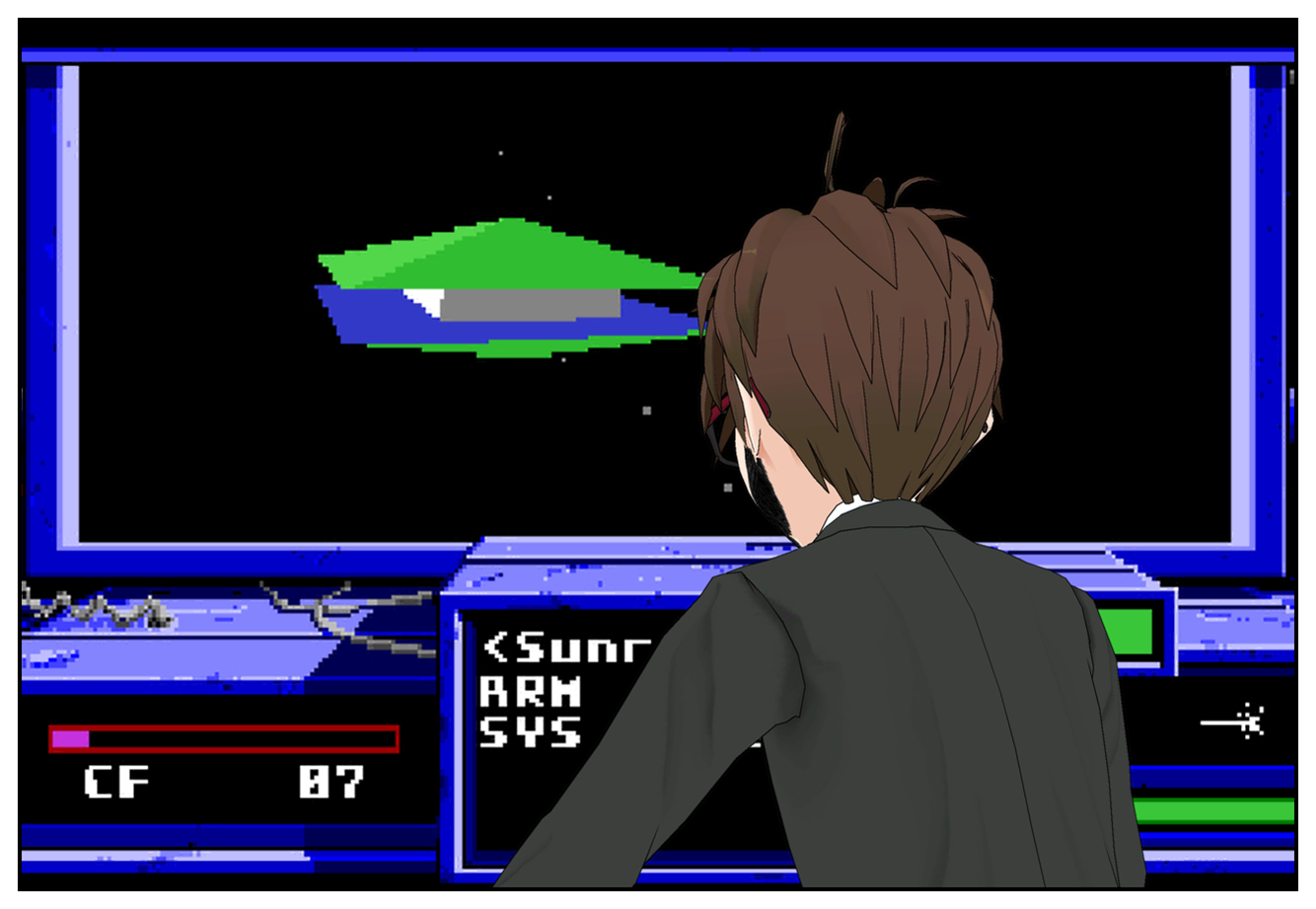
2494: Space Rogue

0493_001

I was pleasantly surprised earlier today to see GOG.com release an elderly Origin (old-school Origin the software company, not Origin the unnecessary piece of EA bloatware) title called Space Rogue.

I was particularly surprised to see Space Rogue on GOG.com, primarily because they had already released a game of the same name that had no relation to it — although in retrospect, given that a considerable amount of discussion around the newer game was along the lines of "hey, remember that old Origin game called Space Rogue?" I should have perhaps seen this coming. Still, it's a pleasant surprise regardless.

I have very fond memories of Space Rogue. It was a game from the 16-bit computer era with everything that entailed, which usually meant a box packed with stuff other than the game disks. In Space Rogue's case, there was a wonderful "in-character" manual for the spaceship you pilot in the game, complete with sarcastic notes scrawled "by hand" in the margins. I really miss this kind of thing; the only place we tend to get "feelies" like this any more is in limited edition releases of games, and those tend to be considerably more expensive than standard editions.

But I digress. Space Rogue was an interesting game for its blend of genres — part space sim, part RPG. Origin proved themselves to be masters of both over the years — with their most well-known series including Wing Commander (space sim) and Ultima (RPG) — but Space Rogue was an early example of mashing the two together, which makes it, to date, still pretty distinctive in its respective genres. Sure, titles like Star Citizen, No Man's Sky and Elite have all taken a few tentative strides in the direction of allowing you to get out of your ship and do stuff other than fly around, but none yet have captured what Space Rogue did, which was include a fully-featured "walking around" mode as well as its 3D polygonal space flight sequences.

Details of the plot of Space Rogue elude me, though there are odd bits that I still remember. Of particular note was a lengthy sequence that I was thoroughly enamoured with as a youngster in which you play messenger boy between two sisters living on different space stations. The sequence culminates with one of the sisters throwing her arms around you and thanking you for all your hard work. I found this to be a satisfying conclusion to the episode, even presented purely in text as it was.

I also remember the space stations having various different designs, and greatly enjoying the experience of landing on the one that looked like an aircraft carrier in space. Elite Dangerous does very good space station docking sequences, but 20 years ago, Space Rogue was my favourite.

also remember the spaceflight sequences having a peculiar "Newtonian" movement option, in which rather than adopt the usual space sim convention of always thrusting forwards and simply turning the direction you're moving, you could spin your ship around and face one direction while moving in another, allowing you to, say, shoot enemies who were on your tail while running away from them.

Due to technological limitations of the time, not all of the space flight sequences took place from the 3D cockpit view. Long-range navigation unfolded from a top-down map that clearly used the same engine as the on-foot segments. While relatively primitive in comparison to the 3D graphics, it gave the game a good feeling of "context" and of moving across vast distances.

I have no idea if Space Rogue is still a good game, but I'm interested to try it again anyway. While it's not a game that ever went down in any Great Gaming History books or whatever, it's nonetheless a game I consider to be a defining experience in my youth, and as such even if it plays like a dog in 2016, I will always have a soft spot in my heart for it.