2058: Hi Games Journalism, It's Time We Had Another Chat

0058_001

And so soon after the last one! My goodness me. It's almost as if you don't listen or have any consideration for your audience whatsoever. Although if you're writing for "dead" people, I guess I shouldn't be all that surprised, since the dead don't usually talk back.

Today in Unacceptable Articles That Should Never Have Gotten Through the Editorial Process, If There Even Is One, I present Vice UK's depressingly predictable article "Is There Anything More to Senran Kagura 2 Than Big, Bouncing Cartoon Breasts?".

I learned early on that you should never write a headline that is a question that can be answered with a single word. There are a number of reasons for this, the most obvious being that most people will look at the headline, think of their own personal answer to the question and then not bother to read the article to find out what the author thought. But beyond that, these sorts of headlines are often inherently loaded questions, too, demonstrating clear prejudice before you even get into the article itself. In the case of the article here, it's immediately apparent that the author has come to Senran Kagura 2 with the assumption that there is "nothing more" to the game than "big, bouncing cartoon breasts" and, as such, will probably take some convincing that, in fact, the series is considerably deeper than that. Or, more likely, he simply won't even entertain the possibility that his prejudices might, in fact, be mistaken and based on flawed assumptions.
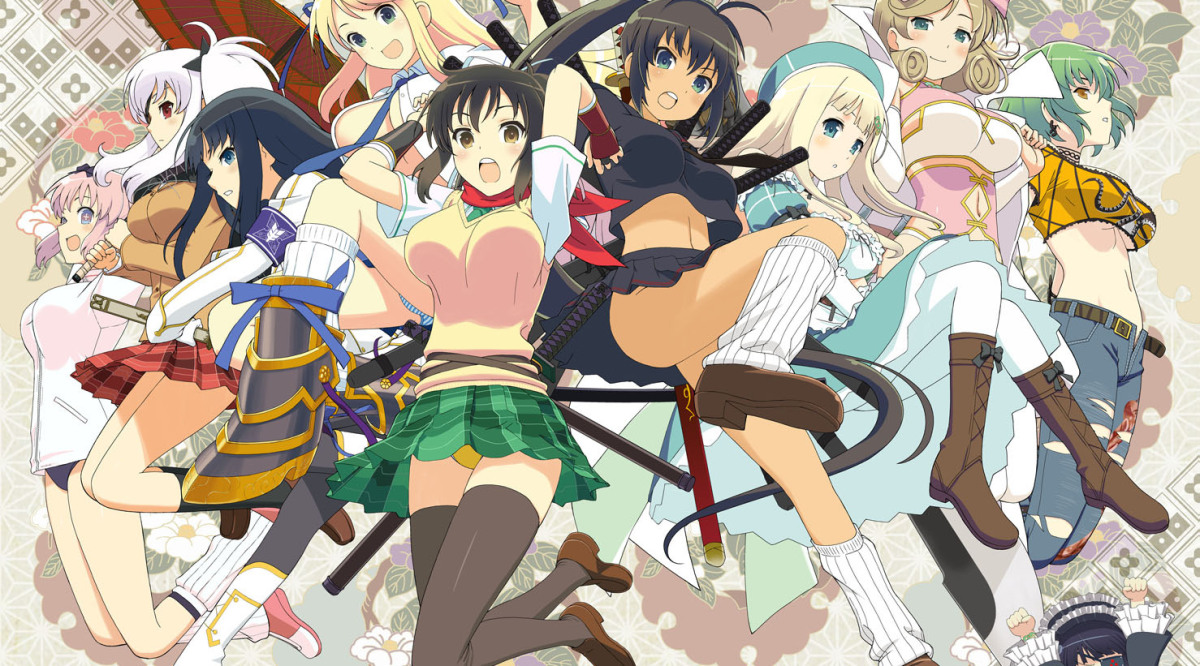
senran-kagura-2-deep-crimson

The author kicks off his article by burying the lede — admittedly only by a single paragraph, but he still opens the article by talking about Metal Gear Solid V, Mad Max and Super Mario Maker instead of Senran Kagura 2. This is an immediate warning sign; it sends the signal that he would rather be doing anything other than writing about Senran Kagura 2, which, of course, begs the question as to why he is writing about it in the first place, but I think we all probably know the answer to that already. (Hint: it rhymes with "dicks".)

The second paragraph then introduces Senran Kagura 2 by giving some important context: the fact that the author downloaded the game "a couple of weeks ago" and, since that time, has "played maybe an hour" of the game in total, across "five or six brief sessions" that we can extrapolate to have been no longer than ten minutes each. He also briefly discusses developer Tamsoft's history, implying that the PS1 era's Toshinden is their most noteworthy and "acceptable" work, while everything since (including Senran Kagura and Oneechanbara) has been "rather more exploitative fare". (He's not wrong to call Oneechanbara in particular exploitative, but in that game's case in particular, it's a direct reference to "exploitation" horror films and as such is rather more clever than he gives it credit for.)

"60 minutes is enough to know what [Senran Kagura 2 is] all about," the article goes. "Breasts. Boobs. Tits. Baps. Knockers, Bosoms. Norks. Melons. Insert your own local, colloquial variation, here. Seriously. That's it. Breasts. This is a game about breasts."

I would perhaps be more receptive to this appraisal were it not for the fact that the article contradicts itself in the same paragraph by saying "oh, sure, there's fighting too, and a storyline I cannot even begin to fathom on account of it directly following the events of its preceding game, Senran Kagura Burst, which I'd not even heard of prior to picking this up."

Hold on there. Hold on just a minute. There's a little thing that you can do as a journalist called "research". If you're not familiar with a series — and the fucking great "2" in Senran Kagura 2's title should be a pretty obvious tip-off that it is part of a series and a sequel to something — then you should probably find out a bit more about it before you jump in halfway. You wouldn't start reading The Lord of the Rings (or watching the movies) halfway through The Two Towers without at the very least familiarising yourself with a synopsis of what had come before; you wouldn't start watching Breaking Bad halfway through its third season and then whinge that you had no idea what was going on; you wouldn't read His Dark Materials starting at the third book. (Or at least, you shouldn't do any of these things, or if you do, you shouldn't moan that you "cannot even begin to fathom" what is going on, because it's your own stupid fault.)
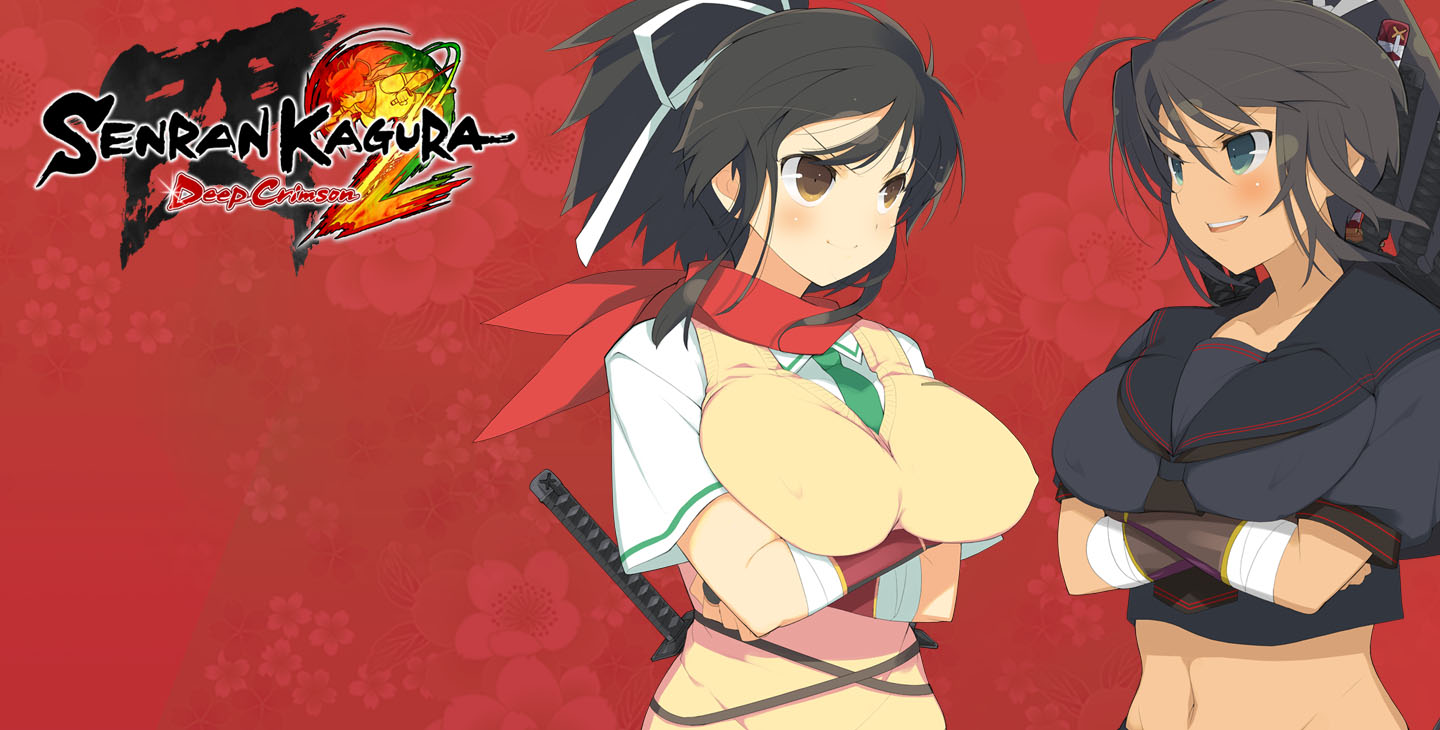
Feature-Banner-Homesk21440x730-8

"There's an extremely long, context-setting intro, but I fell asleep halfway through it," continues the piece, again contradicting itself by demonstrating that the game clearly does make an effort to get people up to speed even if they haven't played Burst, and also demonstrating a clear unwillingness to engage with the game on anything more than the most superficial level.

Here's the thing: Senran Kagura, as a series, is essentially a visual novel in which story sequences are punctuated by brawler-style action sequences — the 3DS games feature 2.5D-style fighting similar to arcade classics such as Streets of Rage, while the Vita and PS4 games feature 3D brawling somewhat akin to the Dynasty Warriors series. Although the games are regarded as "brawlers", their main reason for existence is not, as the article claims, "breasts", but to tell their stories. And they do this through a medium that Japan has proven time and time again to be an effective means of exploring and developing characters: the visual novel.

It is quite surprising to a lot of people coming to Senran Kagura for the first time quite how much effort the game makes with its storytelling. Certainly, it's not particularly flashy in its execution — it alternates between "NVL"-style full screens of text overlaid on static backdrops or event images for longer, more dramatic sequences or internal monologues exploring characterisation, and "ADV"-style head-and-shoulders conversations for shorter, more incidental and immediate conversations between characters — but it's an effective means of getting its point across. The longer NVL sequences put the story in context and often feature past-tense narration explaining things that happened in the past, while the shorter ADV sequences give us an insight into how the characters are right now, and how they are responding and reacting to one another.

In other words, ignore Senran Kagura's visual novel sequences — or "fall asleep" during them — and you are Missing The Point fairly spectacularly, not to mention completely invalidating your own assertion that "this is a game about breasts".

kagura2_release_1920x1080B

"That a game like this can come out in 2015 is ridiculous," continues the article, now in full-on table-thumping mode. "It's brazenly, unapologetically sexist. And it's all as arousing as a dinner date with Des O'Connor, where [at this point it trails off into the author's own bizarre fantasy which I will spare you for now]. The thin waists and titanic whimwams might represent wank fantasy material for teenage boys who, for some reason, can't bring themselves to find actual pornography on the Internet, but to a grown adult, a married man, a father of two, this is just the dullest, most tired tripe masquerading as titillation. I get more excited making toast."

Here we get to one of the important issues with this piece's appraisal of the series: the assumption that it is pornography. As anyone who has actually played the series will tell you at great length, Senran Kagura is most certainly not pornography. It has positive attitudes towards sexuality — most notably fetishes such as sadism and masochism as well as lesbianism — but that doesn't make it pornographic.

Even the game's notorious "clothes ripping" mechanic and its jiggly breasts don't make it pornographic; both of those things have been put in there for two reasons: firstly, simply as part of the game's aesthetic, in the same way that Bayonetta has masturbating angels and naked witches all over the place but isn't "porn" — to be honest, you sort of stop actively noticing it after a while, and it just becomes "the way the game looks" — and secondly, as a reflection of the characters' attitudes towards their own bodies, sexuality and selves as a whole. Compare Haruka's positive glee as her opponent shreds her defenses to Mirai's embarrassment at her skinny, childlike body no longer being hidden by her big, baggy Gothic Lolita dress as a great example of how this is used as a means of characterising the cast in a non-verbal manner.

The author then plays what he clearly believes to be his trump card: that he's a "grown adult, a married man, a father of two" and that this somehow makes him better than all this. To refute this, all we have to do is go back to his first paragraph, where he mentions Metal Gear Solid V (a game in which you can make a horse shit on command), Mad Max (a game in which you fix up a pretend car and blow up people you don't like) and Super Mario Maker (a game in which you fashion crudely-drawn penises out of platforms floating in the sky in a magical mushroom kingdom, and then invite your friends over to giggle childishly as they leap all over them). I don't actually think all of these games can be reduced down to these stupid descriptions, of course — but in the same way, Senran Kagura as a series cannot be reduced down to "this game is about breasts", particularly after just 60 minutes across five or six sessions with a single game in the fucking series.
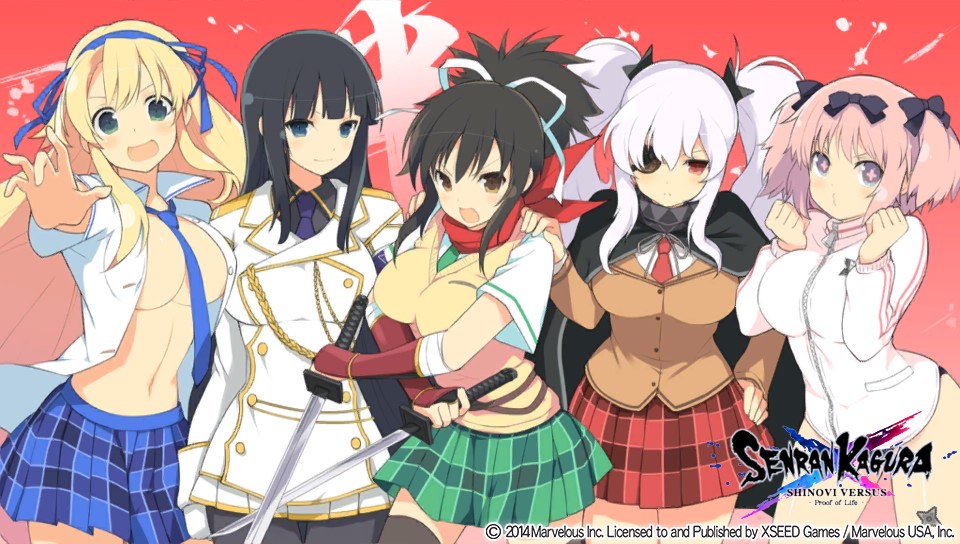
It continues, though. "Yet this is a game — a series, which has spawned its own manga and anime offshoots — with so many fans," says the author with apparent surprise that something he doesn't like could possibly be popular or well-received. "Sales of the games to date have passed the million mark [significant for a niche-interest title like this] and coverage elsewhere has emphasised the gameplay improvements made to Deep Crimson, compared to its predecessor. And, you know, I'm absolutely fine with people playing this game, and enjoying it (be fair, most likely in the privacy of their own homes, despite the portability of the platform), and claiming that they're primarily in it for everything but what's inside all those fancy blouses."

No you're not, sir. You are not "fine with people playing this game, and enjoying it", as your incredibly judgemental parentheses indicate. But we've already covered this; in your five or six ten-minute sessions with the game, you made no effort to engage with its more interesting aspects, and instead chose to reduce it down to "what's inside all those fancy blouses". I feel that you, sir, may be the one with the issue here.

"Of course, they're fucking lying, as this is a game about breasts," continues the author, proving the point I made in the last paragraph. "And nothing else, so stop kidding yourself. You're not playing Deep Crimson for its multi-layered gameplay, for its sole playable male…"

Hold on a minute. Games journalism as a whole is always whingeing about how there's no female representation in games, and yet here we have a game with eleven playable female characters, each of whom are developed and explored in great detail across the course of the series as a whole, and yet the "sole playable male" is something worth fixating on or criticising? I'm not even sure what point the author is trying to make by mentioning this — perhaps the mistaken assumption that horny young men refuse to play as women and as such will only want to play as Murasame? I don't know. But I digress.

"…its pair battles or its tangled tale of… sorry, again, no idea, but I get that the baddies aren't all that bad in the big scheme of things."

Senran Kagura's "baddies" want to summon youma and take control of these legendary monsters to assert their dominance over the world, and have no problems resorting to kidnapping and even murder in order to further their own goals. I guess the author is right about one thing: he really does have "no idea" about what the game's "tangled tale" is all about.

"You're playing it because misshapen cartoon girls with weirdly massive eyes, piss-poorly made outfits and ginormous gazongas do it for you," he continues. "And that's okay, I suppose. Better that you feel up fictional girls on your 3DS screen rather than grope a stranger on the bus."

Hold on a fucking minute there. The rest of this piece has been dismissive and judgemental, yes, but this particular passage crosses the line into just plain offensive. The not-at-all-subtle implication that people who enjoy Senran Kagura would be committing sexual assaults in public if they didn't have their terrible, awful pornographic games to sate their depraved appetites and slake their thirst for young flesh is absolutely unacceptable. I don't think any more really needs to be said about this, particularly as we've already had words about this. You do not imply that portions of your audience are criminals based on what kind of entertainment they choose to enjoy. You do not demonise people based on their open-mindedness. And you do not get to pass judgement on a game you have played for "five or six" ten-minute sessions without making any attempt to engage with it beyond "this is a game about breasts".

This article is completely unacceptable, and should never have made it through Vice's editorial process — if indeed there even is one. I've mentioned before that I strongly believe in a case for specialist writers who know what they are talking about in the field of video games, and nonsense like this just goes to prove the point. The article achieves nothing other than reinforcing prejudices and frustrating people who know better. It doesn't drive discourse about gaming forwards, it's utterly backwards and completely closed to debate; for all the author's protestations that he's "fine" with people liking it and that it's "okay, I suppose", it's abundantly clear that he believes anyone who has even a passing interest in the Senran Kagura series is a sexual deviant who is just one 3DS away from committing a criminal sexual assault in public.

Well, sir, your attitude is not fine. It is not "okay, I suppose". Your piece is a vile, hateful, ill-considered and poorly researched screed about a topic you clearly have no business writing about. Go back to Mad Max and pimp up your wasteland-mobile, since that's clearly what you'd rather be doing — though I'll expect a 3,000-word essay from you about how the game's depiction of women is "problematic" by the end of the week, assuming someone from Polygon doesn't beat you to it.

In the words of Senran Kagura creator Kenichiro Takaki, "the world is full of stuff people will think is fun to them. It just seems so pointless to waste your time on things you don't like or can't understand." If only a few more people took those words to heart.

2057: Assault Android Cactus is Out Later This Month, and Here's Why You Should Buy It

0057_001

First things first: please forgive the Kotaku-style headline, but I started capitalising headlines in this way when I first started posting on this blog and now I can't bring myself to change to AP style without going back and changing all my previous ones. And, since there are well over 2,000 "previous ones", that would take a very long time indeed. So awkwardly capitalised headlines it is for now.

But I digress, and I haven't even started yet, so let's begin again.

Nearly two years ago, my then-managing editor Jaz Rignall pointed me in the direction of an intriguing-looking Early Access game on Steam called Assault Android Cactus. After taking a peek at the pre-alpha build, I began corresponding with Mr Sanatana Mishra from developer Witch Beam Games, and it transpired that the game would be on show at the then-new Eurogamer Expo (now known as EGX). Since I was heading to EGX anyway, I made an appointment to meet with Mishra and have a chat about the game, and in the meantime I familiarised myself a little more with the early build.

cactus3

When I first heard about Assault Android Cactus, I wasn't sure what to think. On paper, it sounds like any number of games that bloat Steam's marketplace daily — it's an arcade-style twin-stick shooter inspired by retro classics — but it quickly became apparent from playing through the limited number of levels in the early build that there was actually something quite special taking shape here. This feeling was further compounded when I eventually made it to the Eurogamer Expo and had a thoroughly enjoyable chat with Mishra about the game and the team's plans for it in the long-term — to cut a long story (which you can read in full here) short, it was apparent that Witch Beam was a small team who were absolutely dedicated to making Cactus the best experience it could possibly be, and to creating a truly authentic Dreamcast-style experience heavily inspired by the masters of Japanese shoot 'em ups like Treasure, Cave and their ilk.

Since I first gave Cactus its glowing write-up on USgamer, I've checked in on the Early Access build numerous times as it's developed, and regularly talked about how much I like it. I've also kept in touch with Mishra and the rest of the team at Witch Beam via Twitter, and it's been a genuine pleasure to witness the passion they've been pouring into their project. It's been a long and slow road to release for the game, but recently the team finally announced that the full, non-Early Access version would be hitting Steam on September 23, 2015, and that the promised console versions would be following early next year.

cactus1

I received an email from Mishra last night containing a beta code for the review build of Assault Android Cactus' full version as a "thank you" for the support I've shown them over the last couple of years. Touched by this thoroughly nice gesture of appreciation, I made a point of downloading the new build this morning and playing it for a good few hours. And it seems my early impressions were very much correct: Assault Android Cactus is something very special indeed, and if it doesn't end up taking its rightful place of honour alongside modern arcade classics like Ikaruga, DoDonPachi, Geometry Wars and their ilk, something is very, very wrong.

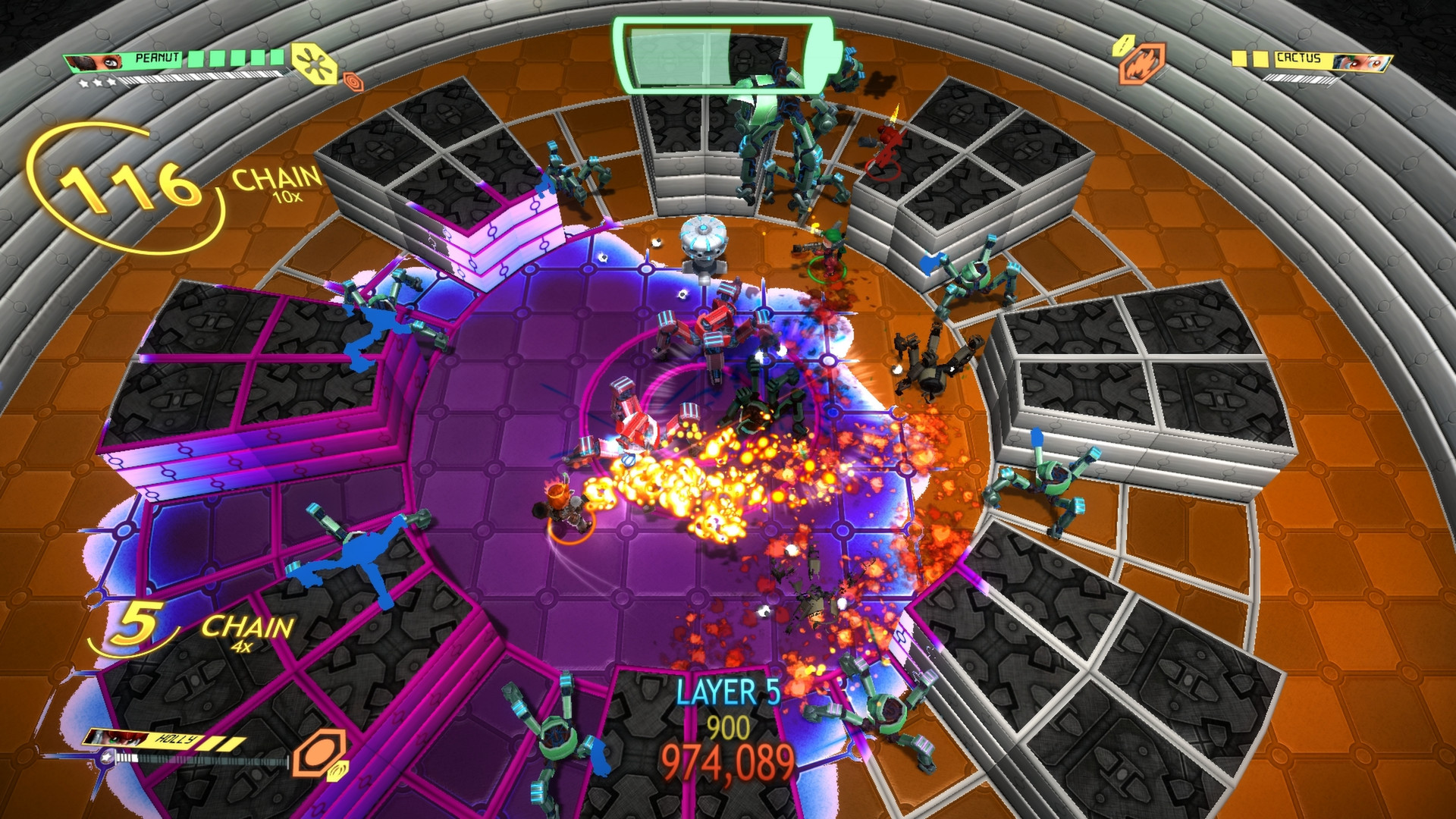
For the unfamiliar, Assault Android Cactus is, as previously mentioned, a twin-stick shooter. There's a few twists on the usual formula, though: the right stick just aims rather than shoots, for one, so you have to actually pull the trigger to fire, while the left trigger swaps between your chosen character's main and secondary weapon. Main weapons have unlimited ammunition; secondary weapons have a cooldown before they can be used again, but tend to be considerably more powerful.

Another major twist on the formula is the fact that there's no lives system, with the challenge factor instead coming from a time limit represented by the characters' declining battery charge. Blowing up a wave of enemies allows you to collect a recharge item, while getting knocked down wastes time and battery charge as well as costing you some points, so avoiding getting hit is a very important part of going for high scores. The battery system proved to be a controversial addition to the game when it was first put in place, but it's now such an integral part of the game structure that it's difficult to imagine Assault Android Cactus without it. It ensures the game strikes a good balance between accessibility for casual players and rewarding skilful play from the people who know what "1CC" stands for.

cactus2

One of the most noteworthy aspects of Cactus' gameplay is its selectable characters, who are gradually unlocked as you progress through the main series of levels. Far from just being different skins, each of the playable android characters handles uniquely, with very different main and secondary weapons allowing you to play in different ways. Title character Cactus is the most straightforward, boasting a simple machine gun and short-range flamethrower combination, while Aubergine is one of the more peculiar offerings due to her main weapon being an independently controlled helicopter drone and her secondary weapon being the ability to summon a quantum singularity and suck everything into it. The way the different characters play is one area where Witch Beam has clearly taken inspiration from classic Japanese shoot 'em ups, since many of these have selectable ships with different weapon setups. There's a huge amount of creativity in the way the characters play, though, and it's a real pleasure to get a handle on how some of the more outlandish characters work. (I still have no idea how to use Aubergine effectively, mind.)

Another interesting aspect is in the level design. Cactus could have easily been a straightforward arena shooter, but instead the levels show a great deal of variety in their structure. While they all have the same goal — destroy all the enemies — some of them take place in a confined space; some of them unfold in an arena that changes shape over time; some of them are in levels that force you to move from one place to another. One particularly memorable one scrolls infinitely in every direction, with checkerboard floor tiles flipping up and down according to which direction you're going; the backdrops are always interesting and exciting to look at as much as the main action is.

Cactus' long-term appeal comes from the same place as other arcade-style shooters: score attack. Completing a level immediately shows you a leaderboard as well as a letter grade, with the elusive "S+" rank being reserved for those who chained all of the enemies in a level into a single combo, didn't die and were generally a bit of a superstar. After attaining an S+ rank, you unlock "Pro Mode", which puts an on-screen indicator on your HUD showing whether or not it's still possible to attain an S+ on the level you're playing; you can also quickly restart a level if you make a mistake along the way somewhere.cactus4

The ranking system has been well thought out. Levels are designed so that you can "learn" them, much like a bullet hell shooter, and attaining the best ranks is dependent on you figuring out these enemy patterns, how to avoid their attacks and how to ensure that you're always on the offensive to keep your combo active. Bosses are similar, unfolding across several learnable phases, with the boss' health bar clearly showing where there's a phase transition so you can ensure you're in an advantageous position ahead of time.

If you're not in the mood for score attack, though, some Sega-inspired "EX options" allow you to play the game in various different ways. You can try the game in first-person, for example, or from a fixed isometric perspective rather than the dynamic camera angles of the regular game — though both of these options disable the leaderboards. There are also several graphical filter options — including an entertaining "JJ Mode", which spooges lens flare and bloom all over the screen for an incredibly colourful experience — as well as options for having AI players alongside you or taking on co-op enemy waves with just a single player.

In short, if you're a fan of arcade-style shooters and you're looking for something entertaining to feed your virtual quarters into, Assault Android Cactus is pretty much an essential purchase. Combine the solid main campaign with other enjoyable modes such as the never-ending Infinity Drive mode and the randomly generated Daily Drive confrontation, and you have a game that will keep you occupied for a very long time indeed — and one that I will quite happily purchase again on PS4 when that version hits early next year.

2056: Pete's Probably Non-Comprehensive Visual Novel Primer

0056_001

I posted the following over on the Squadron of Shame forums the other day, since we were getting into a discussion on visual novels. I thought it might be of some interest to people who don't frequent the Squawkbox, so I present it here in slightly extended format for your enjoyment and information.

Pete's Probably Non-Comprehensive Visual Novel Primer

What is a visual novel?

First things first, get out of the habit of thinking of a visual novel as a "game", despite the fact that they're typically sold as games, referred to as "games" and share a number of stylistic and mechanical elements with games. In Japanese popular culture, visual novels are treated as their own distinct medium, and in the pantheon of media which creators tell stories across, they comfortably sit alongside light novels, manga, anime, movies, live-action TV shows and, yes, video games. Transmedia productions often span several or even all of the above formats, and any one of them can prove the starting point for a successful franchise.

The reason I mention visual novels' distinction from traditional games is because visual novels very often don't have any "gameplay" as such, and coming to them with the expectation that you will be "doing" anything is often a recipe for disappointment. There are exceptions of course, since some visual novels do incorporate "game" elements — notable examples include Aselia the Eternal's extremely deep and satisfying strategy game and its spiritual successor Yumina the Ethereal's dungeon-crawling and peculiar argument-based battle system — but for the most part, visual novels are about reading reams of text accompanied by some combination of art, music and voice acting. In other words, they're a dedicated storytelling medium that occupies a peculiar space at the intersection between manga, anime and traditionally written prose.

Danganronpa, Corpse Party and Ace Attorney are often described as visual novels due to their text-heavy nature and emphasis on linear storytelling, but there's a strong argument that they are more adventure game than visual novel due to their balance between story and game being firmly in favour of "game". Ultimately it doesn't matter all that much; if you're less than familiar with the visual novel medium as a whole, though, just don't go in expecting to actually have any interaction whatsoever, and then you can only be pleasantly surprised if you do get to do something. The appeal of a visual novel is in the storytelling, not the interaction.

Types of visual novel

The presentation of pure visual novels can be roughly broken down into two main types:

  • NVL ("novel") types fill the screen with text, usually in a semi-transparent box so you can see the artwork behind it, and read like a traditional novel. Examples of this type include Kana Little Sister and KiraKira.
  • ADV ("adventure") types look more "gamey", with a dialogue box at the bottom of the screen and a clear view of the art and characters. These tend to have a sharper demarcation between narration and dialogue, compared to NVL types, which will often mix both on a single screen of text. Examples of this type include Katawa Shoujo and The Fruit of Grisaia. This is probably the more common type we see in the West.

Visual novels can also be split into a couple of different categories according to structure:

  • Kinetic novels have no choices whatsoever. You start them up, you read them, you reach the end. You have absolutely no interaction whatsoever — it's a pure storytelling medium.
  • Multi-scenario visual novels are the more common type. Most of these start with a common route, then branch off in a number of different directions according to choices you make in the common route. Some further split the branches into other routes, not all of them necessarily ending well; others guarantee you a specific good ending once you lock in a particular route.

You can then further subcategorise visual novels by basic subject matter and audience:

  • Bishoujo games — aka bishoujoge, literally "pretty girl games", have a (usually heterosexual) male protagonist and a cast of heroines who usually correspond to the various narrative routes. The story isn't necessarily focused on dating the heroines, but the girls tend to be the ones pushing the story forwards. This is by far the most common type of visual novel brought West.
  • Otome games — aka otoge, literally "maiden games", are the inverse of a bishoujoge in that they have a female protagonist and a cast of heroes who usually correspond to the various narrative routes. Again, the story isn't necessarily focused on dating the heroes, but the non-player characters are the ones who push the story onwards. We're starting to see more of these in the West — both Aksys and Idea Factory International are starting to bring more over — and Western visual novel developers seem to favour these over bishoujoge, perhaps because of the disparity in the number of bishoujoge and otoge from Japan that get localised.
  • Yaoi games — stories that focus on homosexual relationships between men. These are often designed to appeal to women as much as gay men, so if you like some hot man ass, go nuts. So to speak. These are relatively rare in the West, perhaps because of our seeming hesitance to depict homosexual relationships in interactive media, but we are starting to get a few. The most recent example is MangaGamer's No Thank You!!, but JAST USA have also released a few.
  • Yuri games — stories that focus on homosexual relationships between women. Like yaoi is designed to appeal to women as much as gay men, yuri is often designed to appeal to men as much as gay women. Notably, the first ever uncensored visual novel to make it to Steam unscathed is a yuri game.
  • Utsuge — literally "depression game", these are visual novels specifically designed to be upsetting, depressing or emotional. A visual novel of this type is generally an utsuge alongside being something else; Kana Little Sister, for example, is both bishoujoge and utsuge.

Alongside all that you can also refer to visual novels by basic genre, much like a book or movie — there are visual novels of all types, whether they're horror, comedy, romance, erotica, thriller or slice-of-life.

You can further subdivide visual novels by their approach to erotic content:

  • All-ages visual novels have no explicit erotic content, though the "all-ages" part is a bit of a misnomer in many cases; since visual novels tend to deal with mature themes even when there's no explicit depictions of sex in them, you should still be aware that "all-ages" visual novels might include challenging subject matter ranging from violence to explorations of sexuality and everything in between; the lack of traditional "gameplay" in a visual novel means that they're free to explore subject matter that wouldn't be "fun" to play.
  • Ecchi games are often found under the "all-ages" umbrella. They stop short of explicit sex, but may include "teasing" content such as non-explicit views of naked people, people in provocative poses and/or people in their undies. They may also strongly imply sexual activity without outright depicting it. This is as close to the knuckle as console and handheld visual novels and visual novel-style games get due to the platform holders' restrictions on what content they allow to be sold.
  • Eroge are visual novels that incorporate erotic content, but where the erotic content isn't the main point. In other words, these are stories where the characters might have sex with one another as part of their developing relationships — or there may also be explicit depictions of sexual abuse, so be aware of that — but the point of the game is not simply to jump into bed with one of the heroines. Eroge are a strictly home computer affair, since Microsoft, Sony and Nintendo are all unwilling to have fully explicit sexual material on their platforms for the most part, and you tend to have to acquire them through specialist retailers or direct from the publishers, since most regular retailers won't stock unrated games or those with an ESRB "Adults Only" rating.
  • Nukige are visual novels where the erotic content is the main point. These are your porn movies of the visual novel sector; while they often do have plot and characterisation — sometimes surprisingly good ones, too — make no mistake, the main reason to play one of these games is to see some fucking as quickly as possible. Like eroge, these are usually only available through specialist retailers or direct from the publishers.

Other useful terminology

  • Bad/Wrong/Dead End — an ending in which the protagonist and/or hero/heroine dies, usually. Not necessarily a "fail" state; if the story is a tragedy, there might be nothing but bad endings!
  • Good End — an ending in which everything resolves nicely and cleanly, and (usually) no-one dies.
  • True End — an ending which is treated as canonical for the purposes of sequels, whether or not sequels actually exist. True Ends are often inaccessible until you complete all the other routes.
  • Decision point — being presented with a choice. Not every choice in a visual novel has an impact on how the story ends out, but most don't tell you one way or the other, and some don't even allow you to save while a decision point is on screen, so choose wisely!
  • Clear — reading a visual novel to one of its conclusions.
  • Full/100% Clear — reading all of the possible routes to a visual novel, including bad endings, and unlocking all the bonus content.
  • Flag — hidden binary variables that are set and unset according to the choices that you make. The most commonly referenced is the "death flag", where a choice you made will result in someone's death, not necessarily immediately. Some visual novels use flags to determine which route you end up on.
  • Points/stats — other visual novels have hidden "stats" according to your choices, and use these to determine which route you end up on. Kana Little Sister is an example of this; the choices you make in the first half of the game determine the personality of the protagonist and his sister, and this determines how the latter half of the game plays out.
  • Skip — the ability to fast-forward through text you've already read. All but essential for subsequent playthroughs to get different routes, unless you really want to read all the same text again. Most visual novels stop skipping when they reach a decision point.
  • CG/event image — a piece of artwork that isn't a character sprite overlaid on a background, usually depicting something significant happening. You are considered to have 100% cleared a visual novel when you have unlocked every CG in the game's gallery page.
  • H-scene — pronounced "ecchi scene", these are the erotic scenes in an eroge or nukige. Many eroge and nukige allow you to watch these scenes by themselves once you've cleared the game once. You know, for… you know exactly why.

2055: Adventures at Seal Rock

0055_001I've been playing some of Final Fantasy XIV's player vs player mode recently, and I've been pleasantly surprised how much fun it is.
I've tried PvP in various other MMOs and never really got along with it. I never got far enough through Guild Wars for the PvP to be relevant outside of the single match you're forced to play in the introductory chapter; Star Wars: The Old Republic's PvP was unbalanced garbage; and The Secret World's PvP just seemed too chaotic to be manageable.

The trouble with PvP in a game with RPG mechanics is that it often becomes nothing more than a numbers game rather than a test of skill. In other words, whoever has the best gear will almost definitely win every time. This is particularly apparent in games that make seemingly no effort whatsoever to balance things out for a fair competition, the most egregious example of this I can think of being Blizzard's Diablo II. (To be far, PvP wasn't really the point of that game at all, but the fact it was in there at all in such a gleefully unbalanced state was just baffling.)

One of the nice things about Final Fantasy XIV's PvP is that it puts everyone on a pretty level playing field by syncing gear levels to a relatively low standard — iLevel 80 for level 50 PvP and iLevel 150 for level 60 PvP. This means that even if you haven't spent months farming content for the very best gear, you can still be both competitive and an asset to your team, making PvP as a whole a lot more accessible to a wider bunch of people. Which is good, because it's pretty large-scale, with 72 participants across three teams fighting it out all together in most cases.

Seal Rock is the newest addition to Final Fantasy XIV's PvP lineup. The previous PvP matches on the Carteneau Flats saw you either capturing and defending points from enemy assault, or simply attempting to defeat as many of the enemy teams as possible. The "Seize" mode you play on Seal Rock, meanwhile, is a slightly more involved, dynamic affair that requires coordination and teamwork, challenging your team to activate and hold Allagan Tomeliths that activate at random at various points across the battlefield, with the ultimate goal being to score 800 points before the other teams.

Points are scored by holding onto the Tomeliths; when one is in your team's possession, your Mammets gradually download data from it until it runs dry, at which point new Tomeliths will activate after a short period, and the process continues. The twist is that not all Tomeliths are created equal; there are B-, A- and S-rank varieties, with B-rank Tomeliths being worth the least potential number of points and S-rank Tomeliths being worth the most.

It's not as simple as just charging for the most valuable Tomelith, though. At times, it can be more advantageous to watch the other two teams scrap over an S-rank while you sneak around behind their backs and capture all the other ones for a greater total number of points than the S-rank by itself is worth. Add to that the fact that every time one of your team members is knocked out, your team loses a few points, and you have a mode where confrontation is something you want to avoid as much as you can unless you have a significant numbers advantage, at which point it's enormously satisfying to steamroller members of the enemy team.

What I think I like most about playing PvP is how different it feels from the PvE content. PvE can often feel quite "by rote" after a while, particularly in the more scripted encounters, and while this is satisfying in its own way at times — I've described the more intricate boss fights as being delightfully dance-like — PvP keeps you on your toes, challenging you to respond to new and unexpected situations as they crop up, and no two matches are ever quite alike. This makes it fun and enjoyable even if you're on the losing side, particularly as matches are wrapped up within 20 minutes at the very most, usually less.

I haven't quite figured out what the best strategies are quite yet, but I've been enjoying the experience a great deal so far, and I'm looking forward to battling those scoundrels of the Maelstrom and the Adders again soon.

2054: The Fruit of Grisaia: First Impressions

0054_001

A while back, increasingly prolific visual novel localisation company Sekai Project — whose first commercially released title was the JAST USA-published School Days HQ, one of my favourite visual novels of all time — ran a Kickstarter campaign for the localisation of a series of Japanese visual novels collectively called Grisaia.

I didn't know anything about these save for the fact that they were particularly well-regarded for one reason or another so, wanting to support Sekai Project's efforts — their localisations are generally really solid efforts — as well as wanting to continue supporting the localisation of visual novels in general, I put my money where my mouth was and backed the Grisaia campaign to the tune of $120 — my largest pledge to a Kickstarter to date. Said contribution would net me a boxed set of all three Grisaia visual novels as they were released, and I later supplemented my original pledge with an additional $40 to support the digital release of the 18+ versions via Denpasoft, since Sekai Project's original plan was only to port the Vita versions of the trilogy, which had all erotic content excised in order to comply with Sony's platform requirements.

The Fruit of Grisaia, the first installment in the trilogy, came out a little while back, but I held off checking it out because I was waiting for the 18+ version for a more "authentic" and true to the original experience. (Also, boobs.) A short while ago, I received an email notification that the 18+ version was now available, so I decided that now would be a good time to finally check it out, particularly as I'd just finished up Hyperdevotion Noire and had a bit of a hankering for a pure visual novel, the last one of which I'd played was the PC version of Steins;Gate, and that was some time ago now.

2015-09-03_00007

I'm a few hours into The Fruit of Grisaia so far, still in the "common" route (at least, I assume so; I haven't made any choices as yet) but I am already enjoying it a great deal. It's a delightfully well-written (and well-localised) tale so far, with just enough intrigue about it to keep you reading in order to try and find out what happens next. I'm particularly excited to get into the branching routes in the latter half of the game, since I understand each of these are really interesting and go in some surprising and exciting directions.

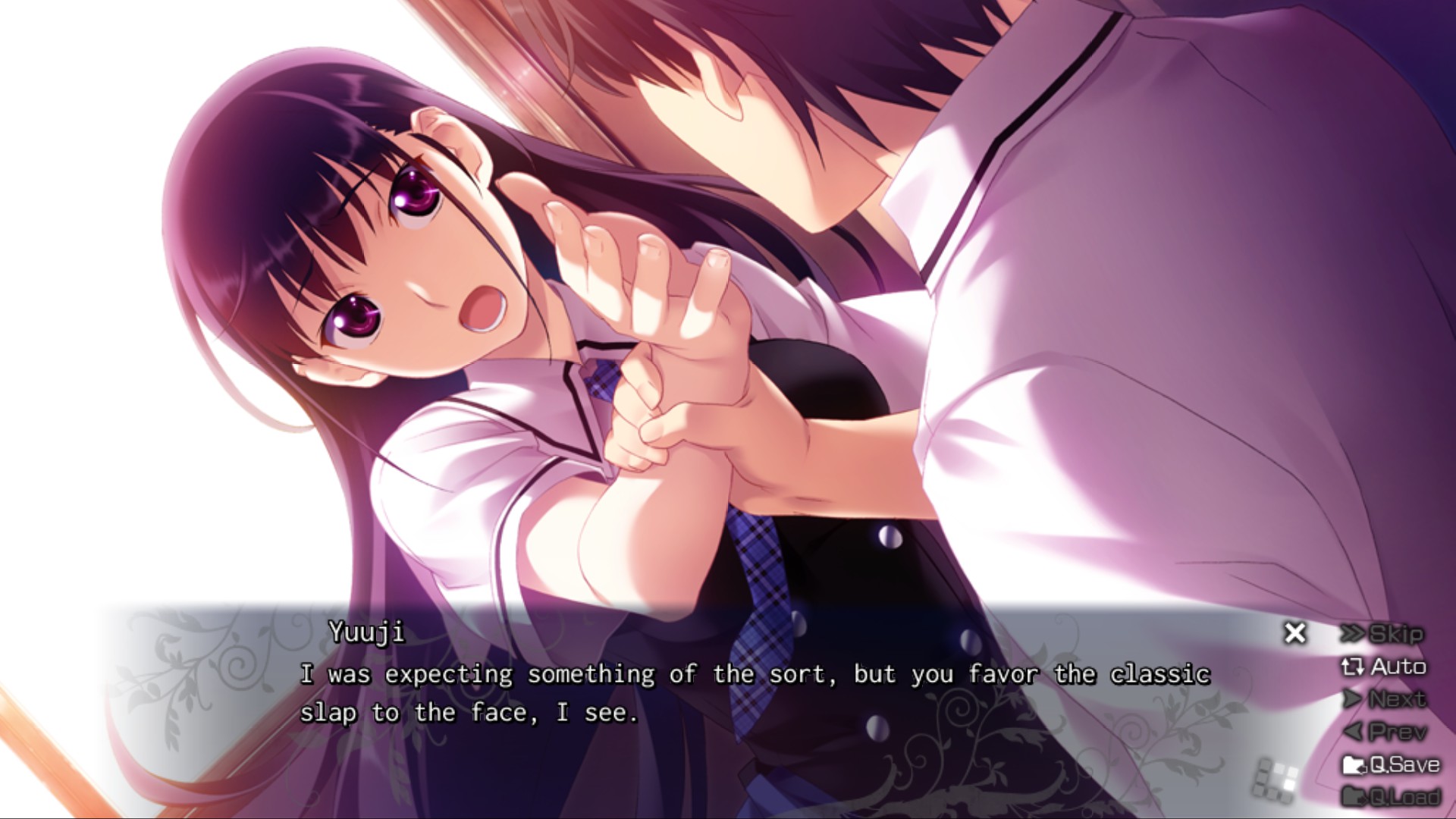
In the opening of The Fruit of Grisaia, we're introduced to the protagonist Yuuji. Yuuji is a young adult of indeterminate age — we can assume he's around 18 or so, since he's still of school age — who, when we first meet him, has walked about 150km to start his new life at his new school. Unfortunately, things don't quite go according to plan, since his bedraggled figure seemingly wandering around aimlessly attracts the attention of the police, who take him in for interrogation even despite him skilfully taking down a purse-snatcher during his disagreement with the officer in question.

This minor inconvenience eventually dealt with — seemingly through someone pulling strings behind the scenes — Yuuji starts his new school life at what turns out to be a very strange educational establishment indeed. Yuuji is one of just six students at the academy, none of whom appear to be quite "normal", for want of a better description. Yuuji, meanwhile, is the first to admit that he isn't exactly normal, either, having suffered the loss of his entire family at an early age, lived on the streets and worked under the tutelage of an apparently Amazonian woman he refers to only as his "former Master" until she, too, died, leaving him as an employee of a mysterious organisation whose details have not yet been revealed to me so far as I've read.

2015-09-04_00003

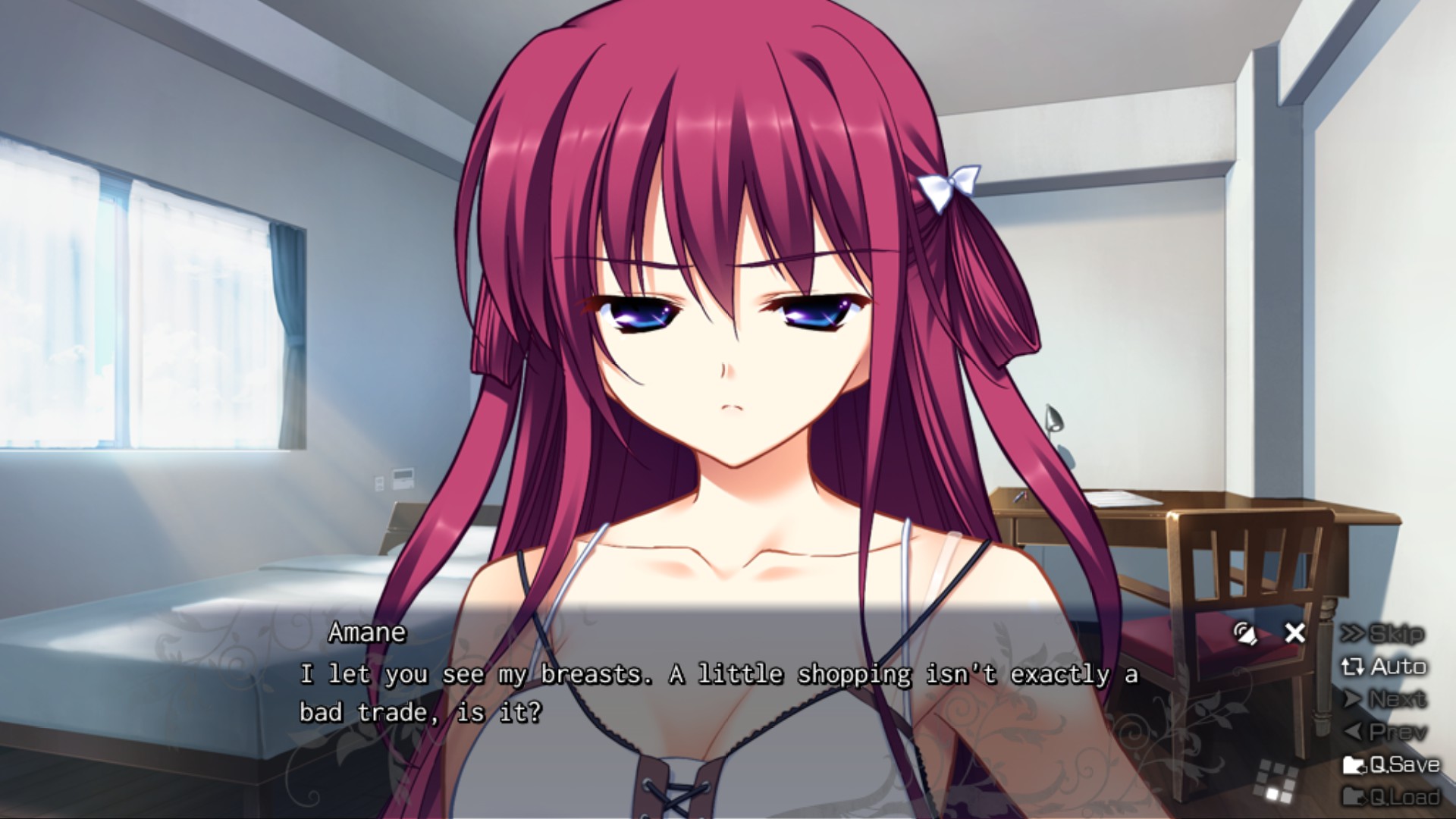
Yuuji's five classmates — all of whom are female, as these things tend to go — are a peculiar bunch. Amane is the most seemingly "normal" of the bunch, with a warm, friendly — if somewhat sexually aggressive — "older sister"-type personality that means you can't help but like her; Yuuji feels a connection — or perhaps a morbid fascination — with her immediately as her rather tall stature can't help but remind him of his mysterious "Master".

Makina is the resident loli of the group, with what initially appears to be a distinctly childish attitude, as well as a habit of blurting things out in English instead of Japanese, a personality quirk that is attributed to her having spent lots of time in non-Japanese countries during her formative years. Makina claims not to be particularly bright, but it's not long before she starts revealing that she's oddly quick-witted and has a pretty acidic tongue at times.

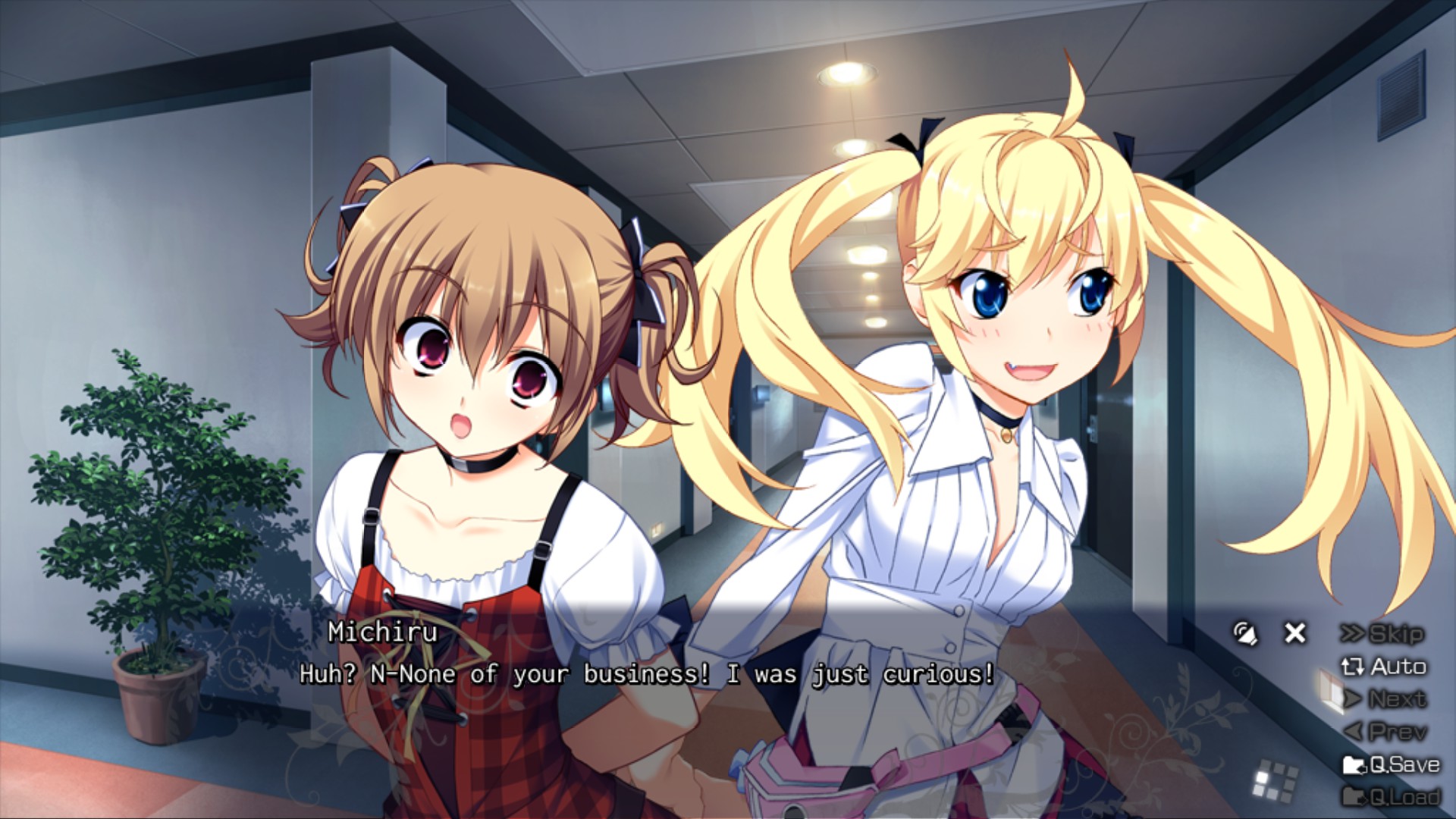
Michiru, meanwhile, is a self-conscious tsundere, or at least she wants to be. Yuuji's first encounter with her comes as she is rehearsing stereotypical tsundere lines, and she even congratulates herself on the successful delivery of a cliched zinger like "i-it's not like I'm doing this for you or anything!" or its ilk. Yuuji takes great pains to point out to the reader that he's not someone who likes to judge people on first impressions, but he finds the conclusion that Michiru is, in fact, a complete idiot inescapable after just a few days — though she does gradually start to reveal other sides to herself as time passes, particularly a caring, considerate side.

Sachi is a character Yuuji refers to as being "robotic" or "cyborg"-like, and this is because of her naturally demure nature and seeming inability to be particularly flustered by anything. She's extremely loyal, but also has a tendency to take things very literally and follow the "orders" of others without question. I don't quite know what her deal is yet, but I'm very interested to find out.

2015-09-03_00002

Finally, Yumiko initially appears to be the stereotypical "class president" type — aloof and haughty — but quickly reveals herself to have somewhat more disturbing tendencies, most notably her habit of swinging around a box cutter willy-nilly when she feels threatened. Despite the risk of injury — she attacks Yuuji very aggressively and persistently at the outset of the story — everyone seems to just sort of accept this as "just part of who she is", despite no-one seemingly knowing the circumstances behind what made her this way. I can see that there's going to be some interesting revelations about her later.

What I've enjoyed the most about The Fruit of Grisaia so far is how much it sets things up and teases them, revealing little pieces of information over time. We know nothing about Yuuji at the outset of the story, but he drops in details to his narration and internal monologue piece by piece until we can start to figure out a few things for ourselves. This keeps things interesting and compelling, particularly when combined with the more intriguing aspects of the main heroines' personalities. It's clear that each of them have something if not outright traumatic in their pasts, then certainly something that affected them deeply; the reason for the school's existence isn't yet clear so far as I've read, but it seems that their shared bond of "something not being quite right" with each of them is going to be a key aspect of the overall story.

I've been very much enjoying The Fruit of Grisaia so far, then; I have no idea how far through the whole thing I am, but I'm looking forward to reading it from "cover to cover" as it were; each of the five heroines are intriguing in their own unique ways, and far from being a typical harem setup, each of the characters seems to go out of their way to subvert some of the more typical tropes found in this sort of story. In short, it's already clear why this visual novel was voted the number one visual novel of all time by the folks over on Reddit's /r/visualnovels subreddit a while back; I'm sure this deeply interesting creative work will continue to enthral me for quite some time yet.

2053: Back to Work

0053_001

I had my first "proper" day at a new (part-time, seasonal, temporary) retail job today. While I've been earning a bit of money through some freelance work recently, it hasn't really been "stable" enough to provide predictable income, so I had been looking around for other opportunities for a while. One such opportunity presented itself, and while it wasn't what I'd maybe call my ideal job — minimum wage, part-time, seasonal, temporary — it is at least both relevant to my skills and interests.

I've worked retail before and was surprised at both how much I actually quite enjoyed it and the fact I seemingly had a reasonably natural "talent" for it. While I talk a lot about my social anxiety and shyness, this largely relates to being stuck in a "small talk" situation with someone else; when I'm given something clear and structured to talk to people about — such as selling them something — I generally have no problems with communicating, and I like to think I come across as personable and friendly. So far my experiences with returning to the retail environment after a few years away have backed that up.

Among other things, it's quite nice to have a reason to get out of the house for a few hours. Working from home, as I've mentioned before, sounds like a dream come true, but in reality it's a fairly miserable and lonely existence a lot of the time, particularly if you find yourself going through something of a dry spell with assignments. Sure, you can talk to people on the Internet, but it's not quite the same as being surrounded by actual real living and breathing people you can look in the eye and hear the voices of. Despite everything I may have indicated to the contrary here on these very pages, I do actually quite like having company sometimes, particularly if they're people I get along with and enjoy spending time with. And while it's much too early to determine whether or not I'll truly consider the people I'm working alongside to be "friends" — to be honest, after a few previous negative experiences with what I thought were workplace "friendships", I'm very much inclined to keep everyone somewhat at arm's length rather than getting too chummy — I certainly haven't found myself walking out of the door thinking "what a tosser" about anyone, which is a pleasant position to be in.

When I was younger, I always wondered if I'd "make something" of myself and have an exciting, high-powered job with lots of responsibility or whatever. To be honest, as I get older I'm just content with something I can get on with and not be bothered too much. I'm not going to rule out the possibility of developing a career from this position if the opportunity presents itself once the "seasonal" season is over, but for now I'm just happy to have a bit of semi-predictable money rolling in alongside the more erratic income from freelancing.

I would like to find myself in a position where I can just get on with life without having to wonder if I'm doing enough to "get by". For a while last year — and on a number of previous occasions — I thought I'd found that, but unfortunately that wasn't to be. I have low expectations this time around; hopefully that means I won't be disappointed, regardless of whatever ends up happening in the long term. In the short term, meanwhile, this will at least help me to survive, which is, to be honest, all I'm really concerned with for the moment.

2052: Platinum Grind

0052_001

I'm coming up on the Platinum trophy for Hyperdevotion Noire on Vita, and I've asked myself more than once why I was doing it, given that it's completely unnecessary to fully appreciate the game, and has extended what would probably be a 40-50 hour game well over the 100 hour mark.

Despite questioning my motivation a few times, I've never found myself resenting the game, somehow — this is partly because I undertook the most grindy of grinds for the Platinum trophy while watching several seasons of Community on Netflix (#teamhandheld) and consequently wasn't just staring at a screen repeating the same actions over and over again, which is essentially what I was required to do to get 20+ of the trophies in the list.

Now I'm approaching the end of that epic grind, I'm glad that I've done it. It hasn't been difficult in the sense of the game being difficult to complete — on the contrary, once all the characters are level 99 you can steamroller pretty much everything in the game with a few exceptions — but it has been challenging from the perspective of committing to the long-term goal and seeing it through to its conclusion.

This raises an interesting point about the nature of "challenge". When we talk about "challenge" in games we're normally referring to something along the lines of Dark Souls, which requires you to understand its systems thoroughly, otherwise it will punish you until you mend your ways and play better. But "challenge" can exist in other ways, too. It can refer to subject matter that makes you uncomfortable — not generally a problem with the Neptunia series, though mk2 does some interesting things with the squick factor and some people still won't check the series out because of assumptions about fanservice. It can also refer to the challenge of making it through something lengthy and weighty, or holding out in a test of endurance, such as I've been doing with Hyperdevotion Noire.

And that, I think, is why I've been doing the Platinum grind. The challenge factor. Overcoming challenges is satisfying, even if they're more endurance than skill. Endurance and patience are worthwhile traits, and I've noted on a number of past occasions that I feel my experiences with role-playing games over the years — and my willingness to see them through to the end, even if they have a three- or four-digit hour count — have helped me train these particular abilities in myself. And these abilities are something that transfers across to life at large; it can be difficult to wait for things, or hold out against something that is proving to be an obstacle, but with patience and endurance in spades, you can usually overcome most challenges.

Anyway. After all that, I will say that I will be glad to finally see that Platinum trophy pop in Hyperdevotion Noire, because it means I'll finally be able to put that game to bed and move on to something else without feeling like I need to try and get anything else out of it. And, as I've noted before, it feels good to know that trophies are used as metrics by developers and publishers — unlikely though it might be, someone might see my Platinum trophy in the game and recognise that it is something only achieved by people who have truly engaged with it and want to see everything it has to offer.

Also I can't break my streak of Platinum trophies on Neptunia games now, can I?

2051: In My Stomach

0051_001

Metal Gear Solid V: The Phantom Pain is out this week and… I'm not excited at all.

Me not being excited at the latest big new release is nothing new, of course, but this is Metal Gear we're talking about. I was a huge fan of both Metal Gear Solid and its sequel Sons of Liberty, but kind of fell off the wagon a bit before Snake Eater came out and have still never even touched Guns of the Patriots despite owning a copy. (I fully intend to play them at some point, I might add; I just haven't done so yet.)

The Phantom Pain feels a bit different, though. My friend Chris and I have been discussing this recently and trying to pin down exactly what it is that's bothering us both about it — particularly as we're both fans of the older Metal Gear Solid games as well as Kojima's batshit craziness.

I think the best way of summing up my feelings towards The Phantom Pain right now is to simply say that everything I hear about it sounds like almost the exact opposite of what I want from a Metal Gear Solid game. Past games were short, tightly focused, highly linear, well-directed experiences that had the pacing and structure of a (particularly long) movie. They kept you always moving onwards because there weren't any unnecessary side missions or distractions; sure, there were a few secrets here and there that you could dig up if you wanted to, but for the most part things like Sons of Liberty's dog tags were largely only there for the completionists; I didn't care about the stats screen at the end of the game — I just liked enjoying the story, and Kojima's vision for how that story should be presented.

The Phantom Pain, meanwhile, abandons the tight linearity in favour of an open-world environment and (apparently) upwards of 30 hours of gameplay compared to its predecessors' 6-10. This set off warning bells as soon as it was first announced, I must confess, and what I'm hearing so far isn't making me feel much better about it. Open worlds are cool technical achievements when done well, but they also often make for rather drab "gameplay by numbers" as you spend all your time looking for little icons on the map, completing arbitrary objectives and killing the pacing of the story, since open world games never, ever have any sense of urgency about them — they tend to be the very worst examples of "the world needs saving, but Armageddon will wait until you're good and ready".

Other things that I'm not a fan of the sound of so far are the microtransactions and the resource-gathering, base-building element. I don't know much about either, to be honest, and it may well be that neither are particularly intrusive to the gameplay experience as a whole, but I don't like what I have heard so far. I still believe that microtransactions have absolutely no place in a full-price brand-new triple-A game — if you want to get me to pay extra, provide me with some worthwhile content, not a means of paying to win. As for the resource-gathering element, a friend posted a screenshot on Twitter that looked to all intents and purposes like the message you get when logging into a grind-heavy Facebook or mobile game for the first time each day — yes, it's a Daily Bonus, with rewards for logging in frequently and so forth. Not exactly what I have in mind when I think of the traditionally single-player, offline, "just you and Kojima" experience that is the previous Metal Gear Solid games, though granted I never delved into Metal Gear Online while it was a thing.

Then there's the fact that several reviews have mentioned the fact that there's more gameplay than cutscenes, and that the series' iconic codec conversations have been replaced by cassette tapes that you can listen to while you're walking around doing things. To be honest, a lot of things are making it sound more like a Splinter Cell game than a Metal Gear Solid game, and this is enormously offputting — Splinter Cell is one of those series that I respected for what it was doing, but just didn't enjoy at all, and I always greatly preferred Metal Gear's distinctly "comic book" approach to military espionage action, with all its supervillains, quasi-supernatural powers and giant walking nuclear warhead-equipped death tanks.

I don't know. I'm sure I'll end up playing The Phantom Pain at some point, but that time is not right now; the hype is just too much at the moment, and the things I do hear are offputting. I also want to play Snake Eater and Guns of the Patriots (and possibly Peace Walker) before I play The Phantom Pain, too, so I feel it's going to be a while before I jump into Kojima's swansong for Konami — if indeed I ever jump in at all.

We'll see. I'm keeping half an eye on people's reactions to the game now it's in the hands of American players, but unfortunately as I've said so far, the things I have heard aren't making me want to dash out and grab it as soon as it hits store shelves.

I'm also kind of bummed that Until Dawn came out last week and is promptly going to be forgotten about amid Metal Gear Solid mania — why the hell didn't they hold that one back until Halloween? Who knows why these people do anything?

2050: Three Hours Until Dawn

0050_001I've been really enjoying Until Dawn so far. Not only is it one of the most impressive-looking games I've seen for a very long time — the lighting, character models, animation (particularly facial expressions) and overall cinematography are all gobsmacking — it's also one of the best "interactive movies" I've ever played, outdoing all of David Cage's work in terms of coherence, tension and emotional impact. (And I'm one of the people who actually likes Cage's work!)

I'm really pleased with how well it balances the interactivity of a game with the storytelling of a movie. Choices you make throughout are meaningful, and are often referred to later through conversations or consequences. Plus, even though everyone knows the worst possible thing you can do in a horror movie is "just go and see what that was", the game encourages and rewards exploration with hidden collectible items aplenty, each of which contribute to your clue database and help to unravel the several mysteries at the heart of the narrative.

One of the most interesting things about the game is how your choices affect the characters themselves. Each character has a series of "stats" reflecting things like how honest, brave, romantic and funny they are, and the way you choose to have them behave throughout the game affects these stats, which in turn determines how they behave in certain other situations. Alongside these stats are relationship values that increase and decrease according to your choices throughout the game — again, with consequences at certain junctures according to how much the characters like each other.

20150831233023

The game makes effective use of its multiple characters as a means of presenting the player with different perspectives on the story. Individual characters by themselves might not know exactly what is going on, but by seeing what is happening to each of them, you can start to put the pieces together yourself. Like a visual novel, the game also encourages repeat playthroughs to discover all the collectible clues and piece together what happened, and I can already see a number of obvious branching points based on decisions I've made — with some of the more drastic choices resulting in the (apparent) death of one or more of the characters. (I say "apparent" because the game has pulled the "that person couldn't have survived that… unless…" thing more than once so far — plus it's apparently possible to get through the whole thing with everyone surviving.)

It makes nice use of timed decisions and quick-time events, too. Quick-time events are loathed and detested by an awful lot of people, but I've actually rather liked them since the phrase was coined way back in ShenmueUntil Dawn makes relatively sparing use of them throughout, and they help add a great deal of tension to already nerve-wracking scenes that have made my palms sweaty more than once. Perhaps the best part of the game's use of quick-time events, however, is the fact that the game occasionally requires you to not do anything at all — literally. "DON'T MOVE!" urges the screen, and the game begins tracking your real-life movement through the motion sensors in the controller. It's hyper-sensitive, too, so the slightest movement and you'll be discovered. (You can, of course, cheat the system by resting your controller on something, but it's more fun to grip it tightly in your hands and hold your breath.)

20150831233016

On that note, it's also gratifying that in a number of situations, not making a choice is also a valid choice. I liked this when I saw it in visual novel/interactive anime School Days HQ; I liked it when Telltale used it in some of its games; and I like it very much here. Until Dawn takes School Days' approach on a number of occasions — presenting you with a single (rather than binary) choice on screen and giving you a few seconds to decide whether or not to do it. These choices usually involve choosing whether or not to use violence to solve a situation and have tight timers, so you have to think fast about what the consequences might be — or simply throw caution to the wind and try to deal with whatever happens a bit later.

I have a few more chapters of the game still to go, and the story has thrown up some interesting twists that I sort of half-saw coming but wasn't sure about — I'm generally not all that great at spotting twists ahead of time, I must confess — so I'm intrigued to see where it all ends up, and who, if anyone, is going to walk away from that mountain retreat.

It's been a great experience so far, and I can heartily recommend it to anyone looking for something a bit different from the usual "run and gun" nature of triple-A spectacles.

2049: Dear Diary

0049_001There are times when I wonder whether this blog is the best way to handle getting thoughts out of my head in some form or another.

I used to keep a diary when I was younger. I'm not really sure why; I think it was partly due to the fact that I very much enjoyed the Adrian Mole books and fancied myself as being a similar sort of person to him in some ways. (I later realised that Adrian was a bit of a twat — or at least became a bit of a twat in the later books — and rescinded my earlier appraisal.) Mostly, though, it was about the fact that I enjoyed writing and found it cathartic, particularly if there were things bothering me.

I remember my first diary. It was a really nice leather-bound book with lovely paper, and it said "Journal" on the side of it. It was a souvenir from somewhere or other; I forget exactly where, but my first entry recounted a trip with my parents to the thrilling-sounding National Stone Centre, and subsequent entries had a touch of the "scrapbook" about them, with bits and pieces stuck in and all manner of things.

Then one day I decided to change things up a bit. I decided to use my diary as something a little more personal. Rather than effectively doing what I would do in a school English class — "today we went to [x] and did [y], it was [z]" — I decided that I would use the diary as a means of expressing the thoughts, feelings and emotions that I felt unable or hesitant to talk about with anyone, be it my friends or relatives.

My mental state throughout my school years was a little turbulent, to say the least. I suffered dreadful bullying at primary school, and this continued in secondary school until I punched my main tormentor in the face just as the school principal was coming around the corner. (I largely got away with it, because frankly he had it coming.) Although the instances of outright bullying calmed down somewhat after this watershed moment, my social awkwardness and inability to understand the concept of being in any way fashionable — a trait I maintain to this day, though it matters a bit less now — meant that I was occasionally still the butt of jokes, even from people who were my friends most of the time. If the cool kids were around and there was the opportunity to make a joke at my expense, people normally took it, and this didn't do much for my self-confidence.

I learned quite early on in my life that I was the sort of person who was prone to falling for people pretty quickly. My crippling self-doubt meant that I was ecstatic anyone would even give me the time of day, and even more so if said person was a girl. Having little to no understanding of relationships, though, I didn't really know how to approach girls and try to take things anywhere beyond friendship; this was about the time Friends was airing on TV, so I found myself relating very much to David Schwimmer's Ross character, and would watch the episode where he and Rachel got together over and over again while fantasising about one day being in that situation myself.

Anyway. The upshot of all this is that I found it difficult to express my feelings about people that I found myself liking. I was embarrassed if anyone found out who I "fancied", and my friends would often take advantage of my squirming by hijacking the middle pages of my exercise books, scrawling my beloved's name in huge letters and decorating the page overly flamboyantly. I'd protest, but secretly I actually quite appreciated the fact that they were acknowledging my feelings, and in their own strange, mocking way, I think they were trying to make me feel better, because it almost certainly became clear to them over time that regardless of my feelings towards any of these girls that I fell for during my time at school, I would never, ever do anything about it.

It's not that I didn't want to, though, and that's where the new part of my diary came in. I would use the diary to express myself and try to figure out my feelings about the people that I liked. I'd even — and I realise that this is probably depicting me as a weird sort of creepy psycho — plan out how an "ideal" encounter with my beloved at the time would go. I'd script a conversation — like a play — as if everything was going exactly the way I would want it to, and on one memorable occasion I even drew diagrams of how I'd get my friends to occupy my beloved's friends so I could get her by herself and talk to her alone. (I actually followed through on this on one occasion of uncharacteristic courage; it didn't work, though I did get a hug and a "let's be friends" out of it.)

None of the romances I dreamed of in my diary came to fruition — I had precisely two girlfriends in secondary school, one of whom I became involved with when I was actually trying to get it on with someone else, who cheated on me at the school prom (and is now, so far as I know, married to the dude she cheated on me with, so, err, good job, I guess?) and another with whom I got together during a recording of the BBC's Songs of Praise at the local animal shelter, kissed precisely once, didn't see for three days and then got dumped by proxy because she "wanted things to go back to the way they were before". And, at times, this lack of "action" got to me a bit, particularly as I saw some of my friends getting started with what would turn out to be pretty long-term relationships. But the diary helped. In some ways, it didn't matter that I couldn't muster up the courage to go and talk to these people that I was attracted to, because my diary provided me with a means to express myself without having to put myself on the line, without risking humiliation, and without threatening my real-life friendship with the objects of my affections; my greatest fear was telling someone that I liked them, and them promptly never speaking to me ever again after that. In retrospect, this was a silly fear, but it was a big deal to teenage me.

I'm not sure when it happened, but one day I looked back over my diary and I suddenly felt ashamed of myself. It was a fantasy world, I knew; these conversations I'd script, these scenarios I'd describe, these fancies I'd indulge — none of them would ever be real, and that got to me. I also became absolutely terrified at the prospect of my diary ever being found by someone I really didn't want to read it, so one day while I was alone in the house, I took one last look through that lovely leather-bound journal's pages, stared at it for a few moments, then took it outside to the dustbin and buried it beneath a number of stinky, empty cans of cat food. I can only assume it ended up on a rubbish dump or landfill site somewhere, but occasionally I wondered if anyone would ever actually find it and read it — and what they would think of the clearly troubled mind that scrawled in its pages on an almost daily basis.

To my knowledge, though, no-one ever did read it. And for that I'm sort of grateful, because it would have been mortifying; but at the same time, I wonder if I might not have been able to make myself a little more understood if people had read it. And I guess that's partly what this blog is about; it's not quite the same as my diary and I'm certainly not going to start scripting fantasy conversations between me and people I fancy (largely because I'm married to the person that I love and thus have no need to), but it lets me get the weights off my mind at times, and, since it's public — the journal left lying open on my desk, as it were — I hope it makes me at least a little more understood to others.

And if not, well, you can have a good old giggle at how messed up I am, huh. Either way, thanks for reading.