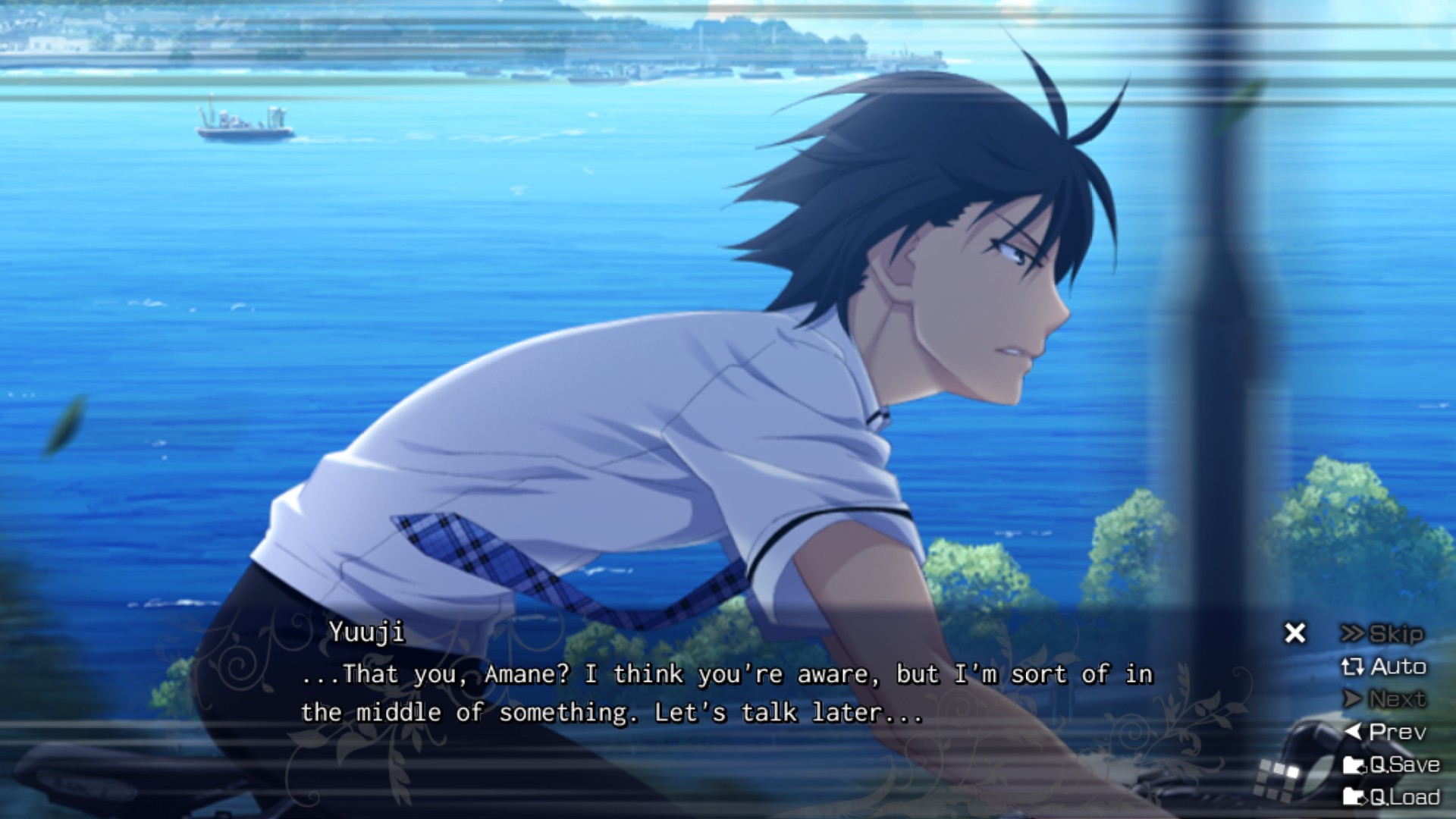
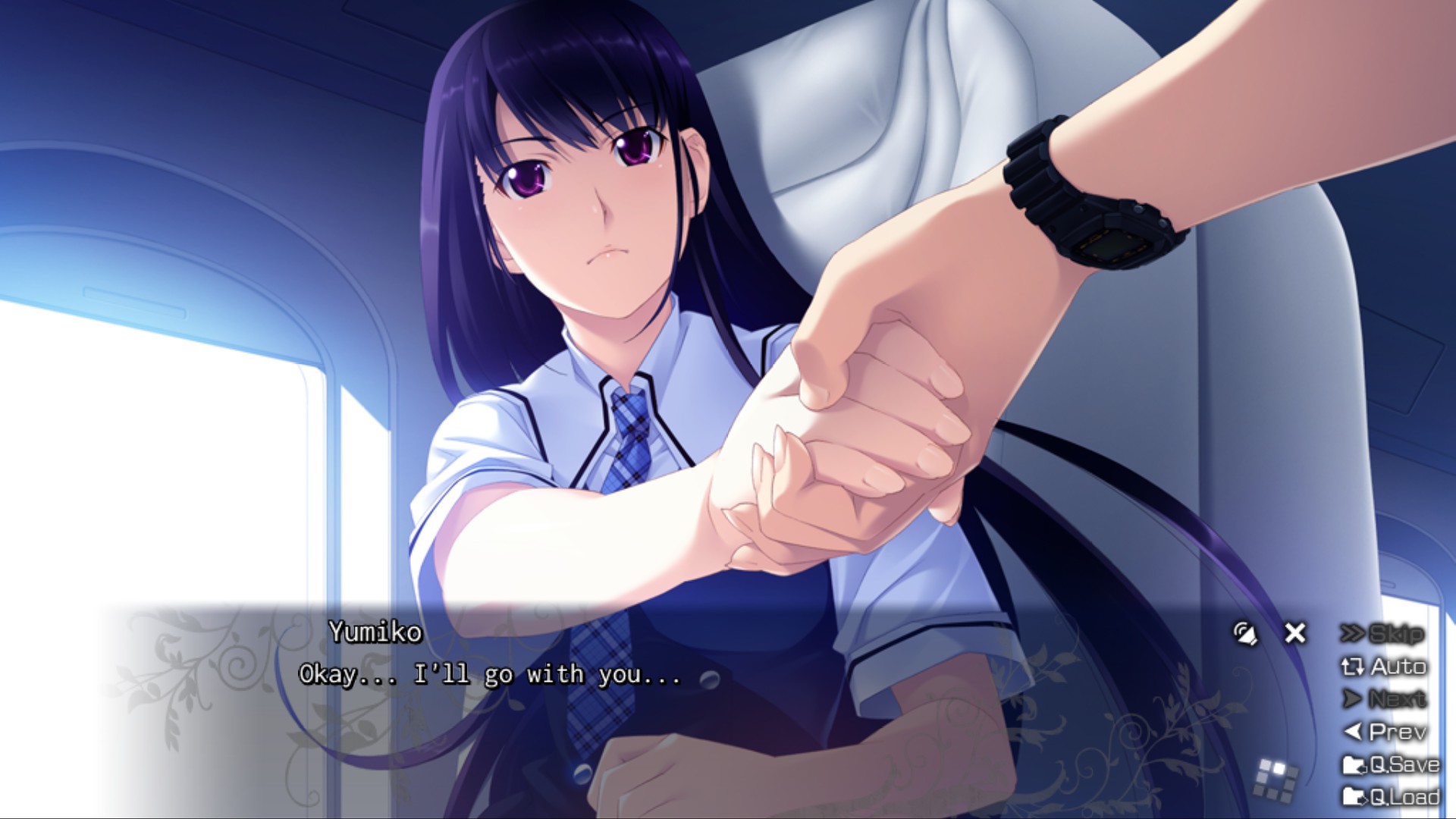
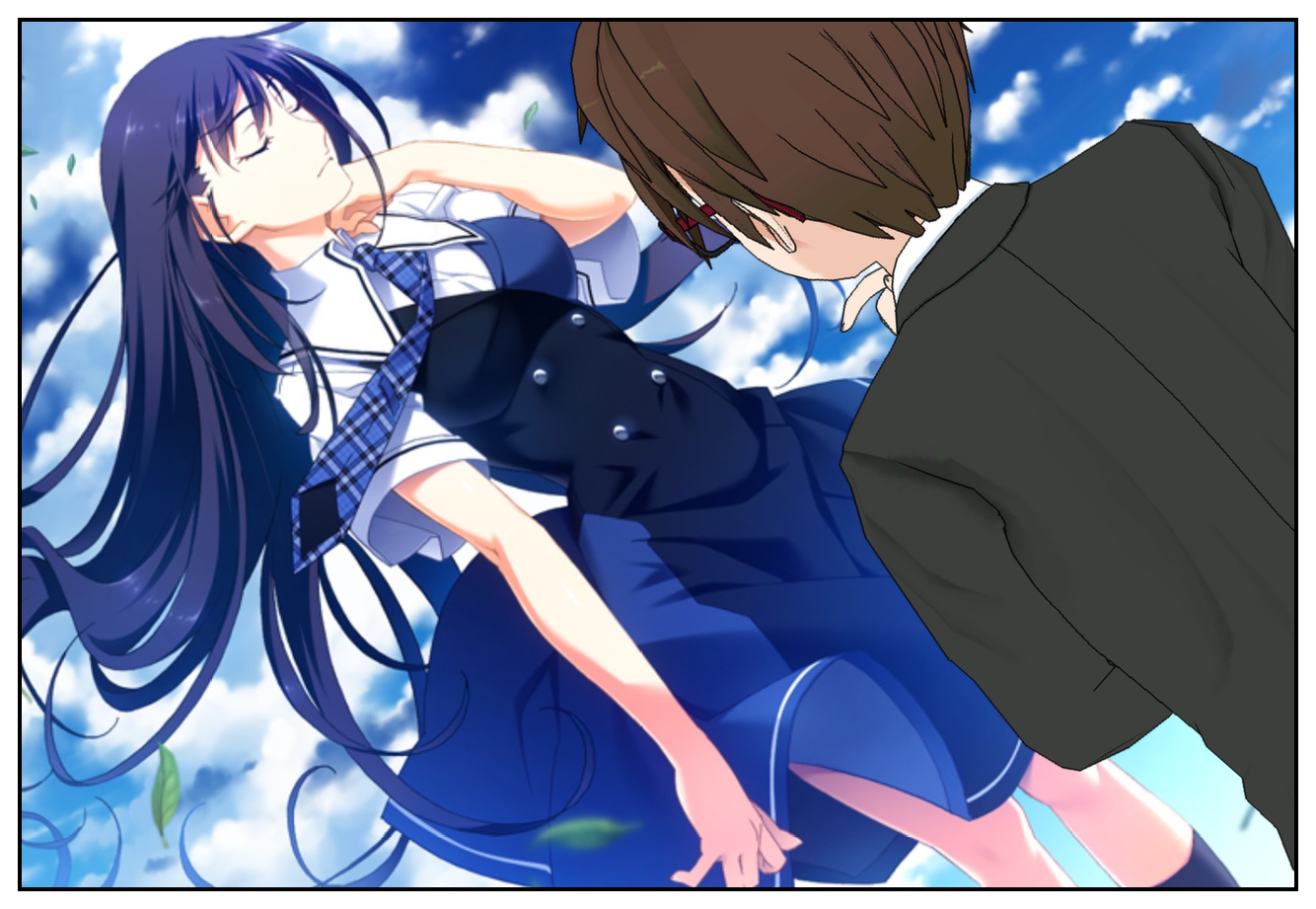
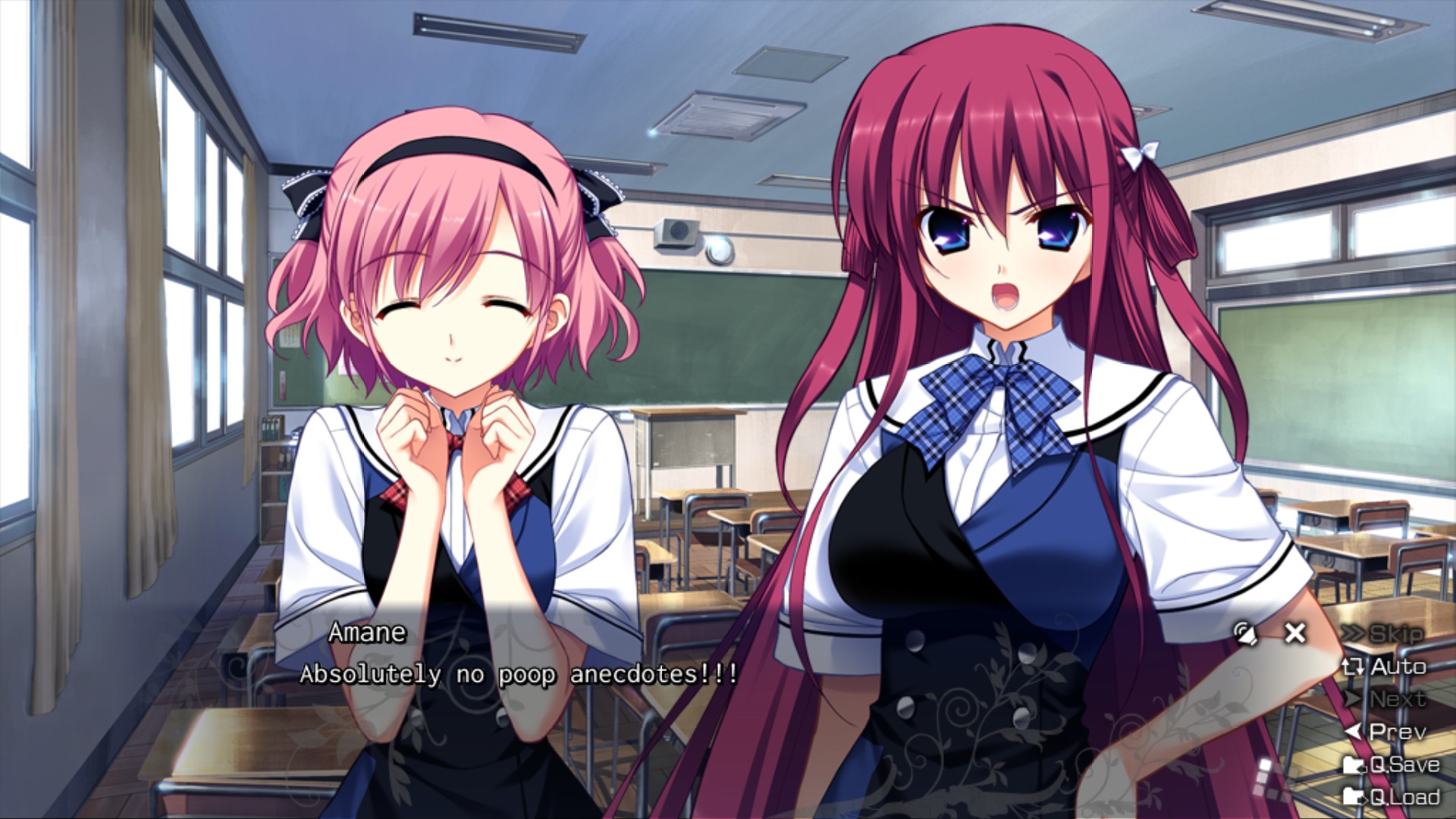
2068: Personality is Like a Cube

0068_001

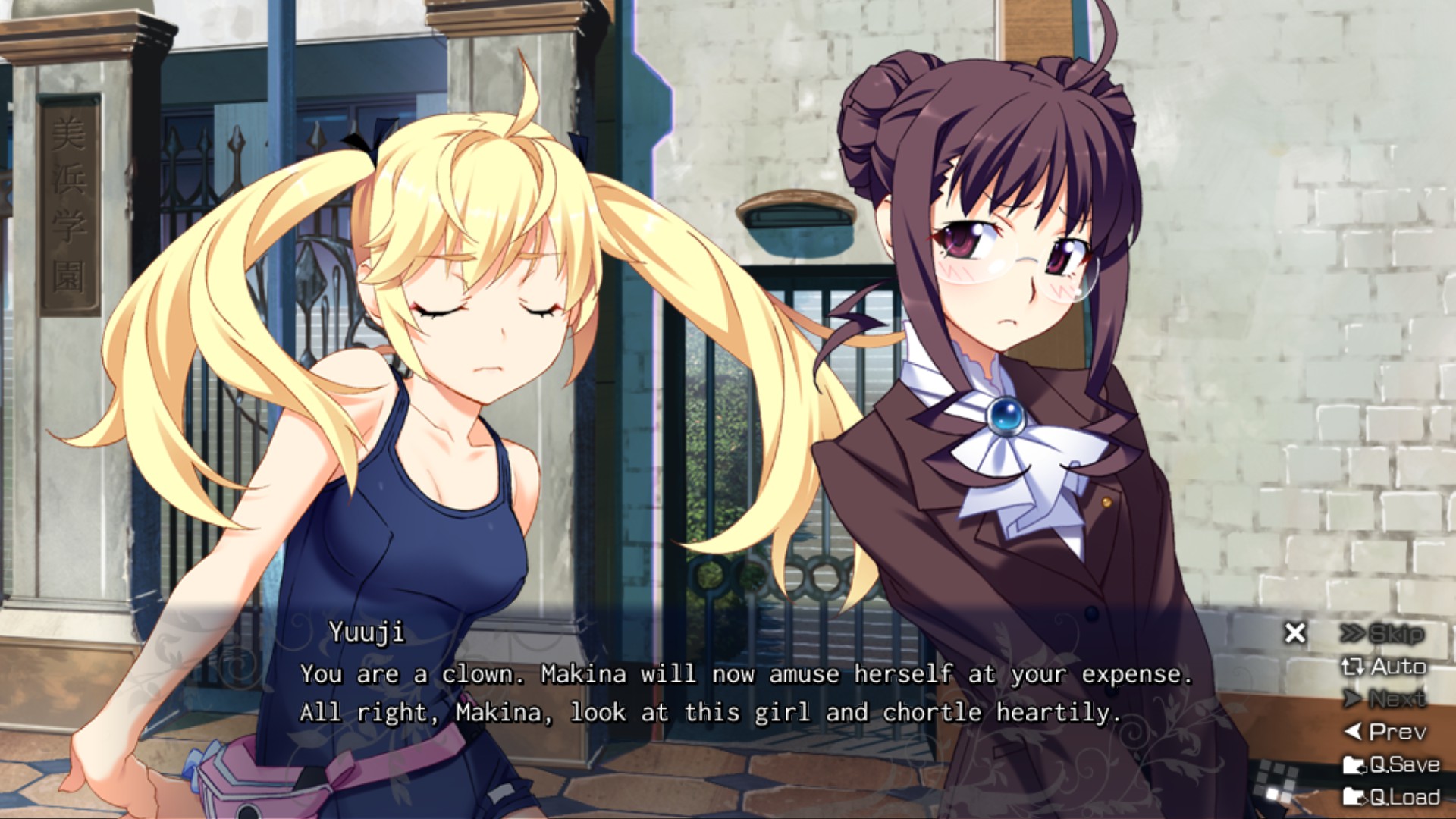
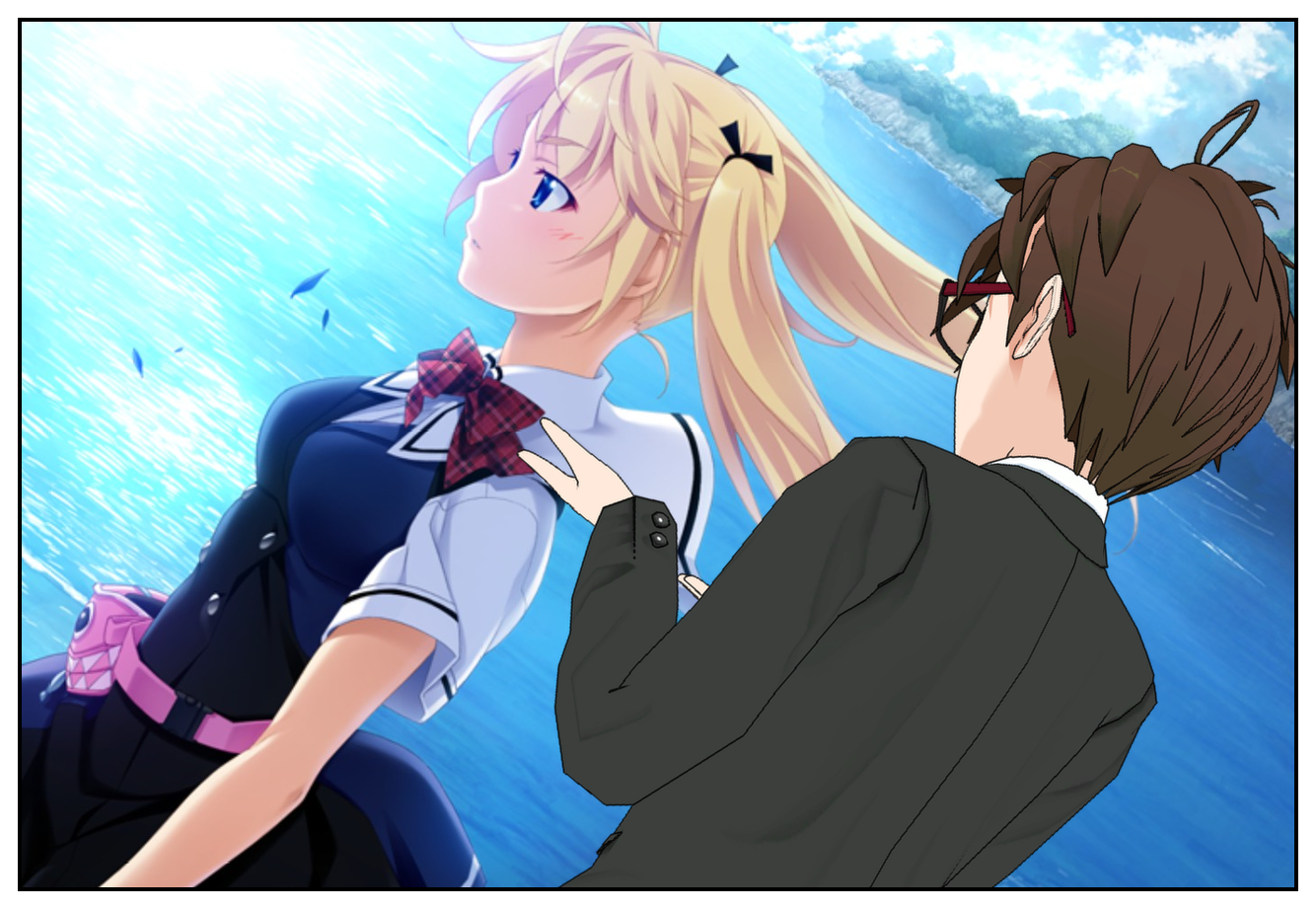
"Personality starts off like a cube," says The Fruit of Grisaia's protagonist Yuuji in Yumiko's route. "When we're young, we clumsily bump our corners against other people in the form of childish conflicts. Eventually, our sharp edges are worn away to leave something more like a sphere. That's more or less what people are describing when they say someone's 'softened'.

"Moderate collisions with others help us mature. But when those first impacts are too strong, they can have a different effect: instead of losing our corners little by little, we splinter in strange, harsh ways, warping into crooked shapes. Once crooked, it's hard to become a sphere. Even as the people around them mellow, their sharpness only grows harsher, and everyone who approaches ends up getting hurt."

I immediately liked this analogy when it first scrolled across my screen following Yumiko's revelations about her past. And, not for the first time, I found the writing in a visual novel resonating with me somewhat. While I'm in no way comparing my life situation to the struggles Yuuji and Yumiko have to deal with in The Fruit of Grisaia — struggles which I won't discuss specifically here, for those who are interested in reading it and wanting to avoid spoilers — I could certainly relate to a lot of the sentiments involved.

Most recently, I've been becoming conscious of how I've "softened" somewhat in the last few… months, maybe? My own personal struggles over the last five years — and even earlier than that, to a lesser degree, if I'm completely honest — have certainly chipped away at my original "cube", and there have been more than a few crooked splinters here and there that make me into a not-exactly perfect specimen of normalcy. But then, who is "normal" anyway?

Some of those sharp edges feel like they're wearing away a little bit, though, after a long time. I contemplate my new part-time work in retail and realise that I'm actually quite enjoying interacting with other people, both colleagues and customers alike, even despite my long-standing struggle with social anxiety. I contemplate my fight against my once-constantly rising weight, and how I've scored a resounding victory over it so far by shedding just under five stone since February of this year. I can look in the mirror now and not hate myself; I can speak to other people now and not worry that they hate me.

In other areas, there are still sharp corners and splinters, though, preventing me from becoming that perfect "sphere". I still harbour a considerable degree of resentment towards people who have done unpleasant things or treated me unfairly in the past, and I just can't seem to let go of those feelings. There are nights when I can't get to sleep because my mind insists on replaying some of my most upsetting memories over and over again — sometimes with slight variations depicting how I wish I'd acted, sometimes unfolding exactly as they did in reality — and this makes it clear that I'm still rather more "crooked" than I'd like to be.

I don't know if I'll ever be that perfect "sphere"; by this point, I feel like I've "splintered in strange, harsh ways" so many times that it probably won't ever happen, but I can at least try to round off as many corners as I can and make the best of things, one day at a time.

2067: Yumiko

0067_001

Spoilers for not-quite-all of Yumiko's route of The Fruit of Grisaia ahead!

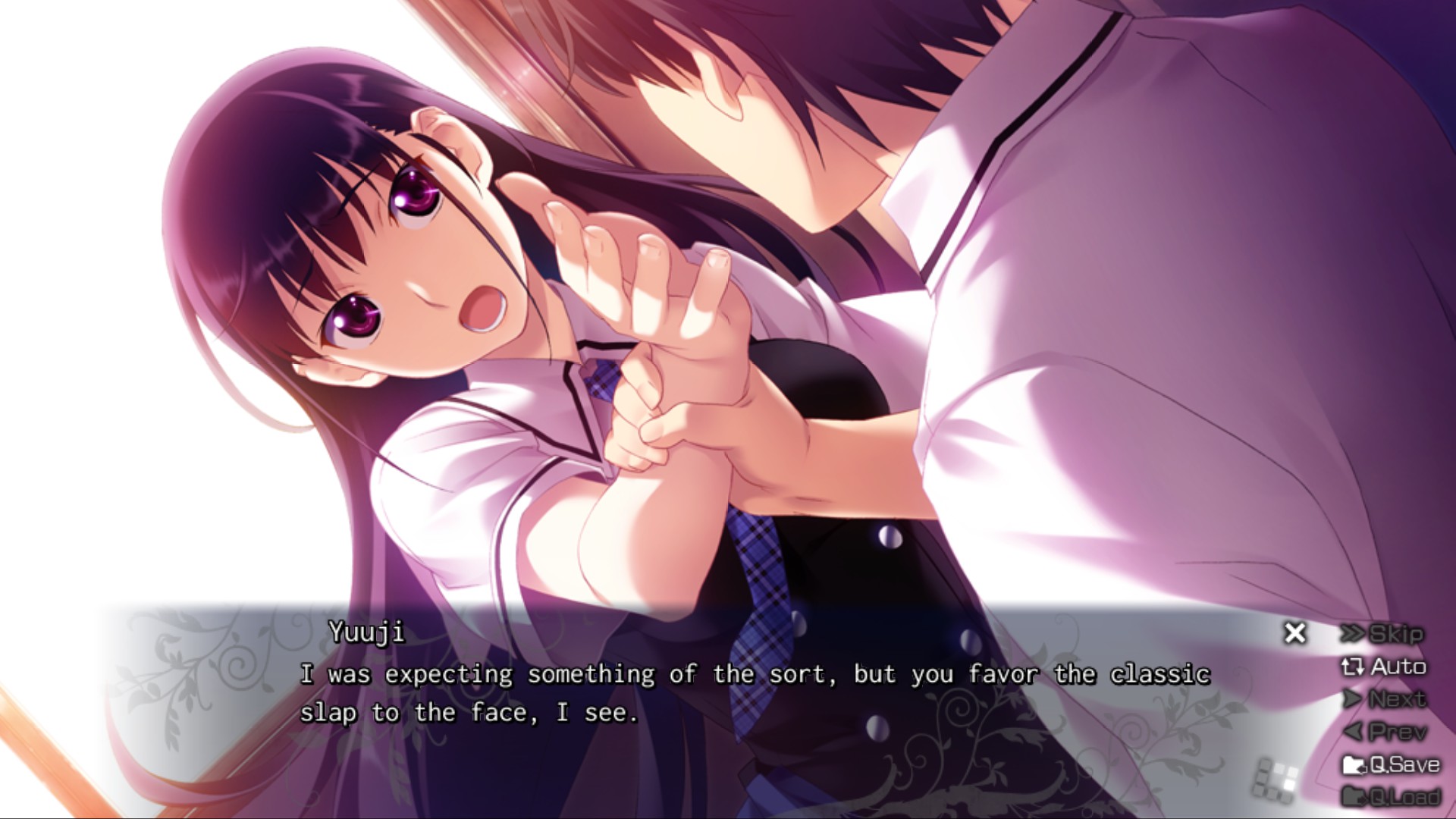
When we're first introduced to Sakaki Yumiko in the common route of The Fruit of Grisaia, it's clear that she is both troubled and likely to be trouble for Yuuji. When Yuuji first tries to introduce himself to her, she initially tries to ignore him, and subsequently tries to slap him when he persists. This eventually escalates into her lashing out at him with a box cutter whenever she sees him, a fact which Yuuji's fellow students just shrug off as being "something she does", because they've all been through it too. Yuuji, being a certified badass, shrugs off Yumiko's attacks without injury easily, and eventually they stop altogether, though she still proves herself to be a prickly individual who is generally unwilling to interact with others.

2015-09-13_00009.jpg

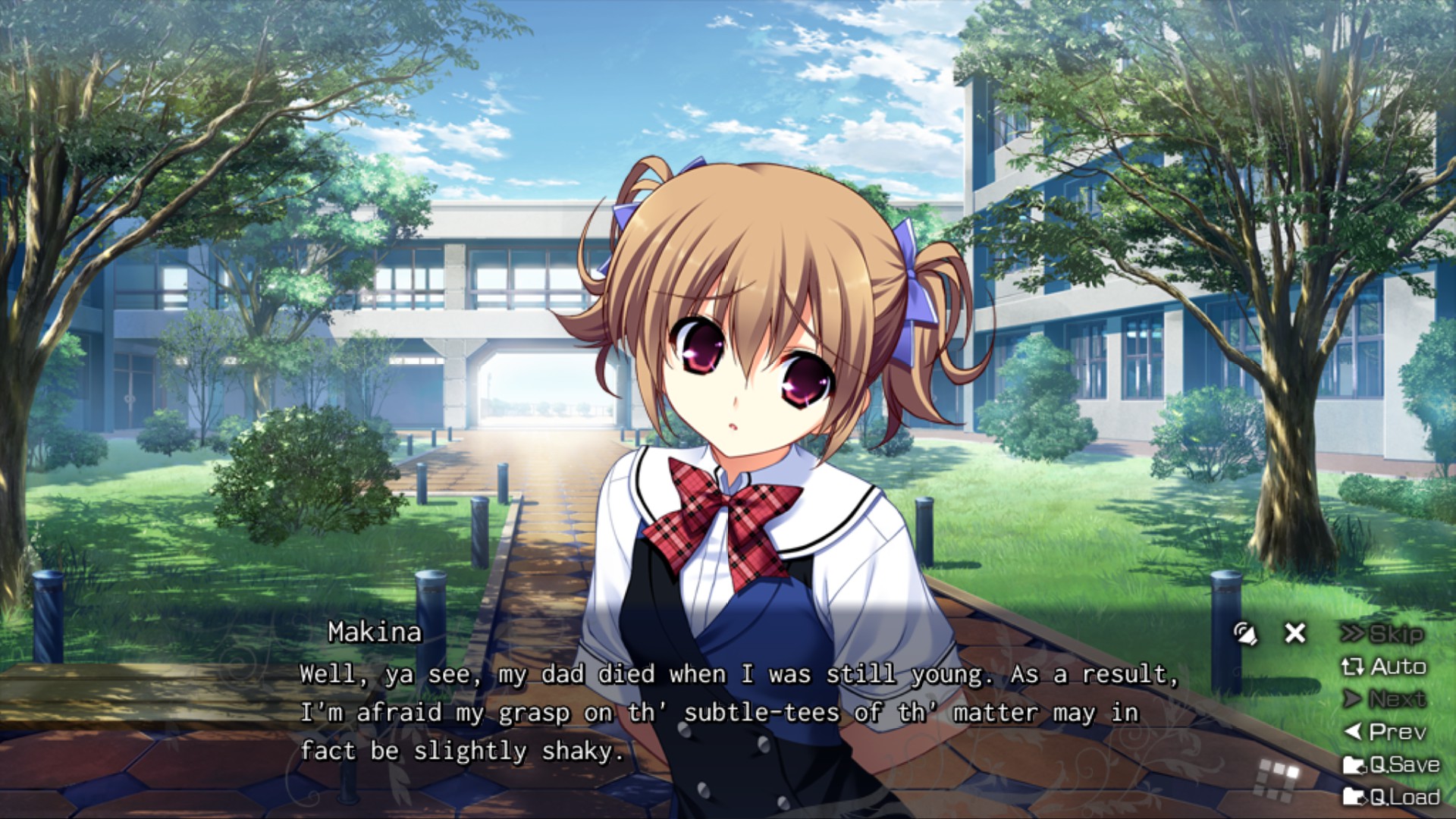
Except it's not that simple. Throughout the common route, Yumiko can often be found lurking on the periphery of the rest of the group's social activities; they're all aware of her and take care not to exclude her, but they also don't try to force her to participate in anything. It's clear that even if she doesn't show it on her face or through her behaviour, she finds comfort in being around people who care for her and are considerate of her feelings. Even the foul-mouthed Makina proves herself to be enormously perceptive of Yumiko's personality traits, accurately "reading her thoughts" in one particularly memorable scene.

In the common route, we're given a teaser of what has made Yumiko as withdrawn, sullen and prone to lashing out as she is — it's clearly to do with her father. Upon returning from a shopping trip to the town, a number of the group report a suspicious-looking black car outside the station, though those who have been at the school longer know that this is a sign that Yumiko's father is coming to inspect the school, which it seems he financed and had built. Yumiko, meanwhile, refuses to see her father, instead preferring to watch his cursory inspection of the school grounds from the dormitory rooftop; it's clear that he's not really inspecting anything, but is instead hoping that he might be able to get through to his daughter.

2015-09-10_00018.jpg

When Yumiko's route proper starts, we're given a bit more information about Yumiko's father, who has already been suggested to be a not very nice person. Indeed, early in Yumiko's route, we're given a third-person scene (i.e. protagonist Yuuji isn't present for it) in which we see Yuuji's handler JB and Yumiko's father discussing how they might get Yumiko to come back to her family and be prepared to take over the family railway business. Yumiko, until now, has been having none of this, of course, and so her father resorts to desperate measures, requesting that JB assign Yuuji to bodyguard duty for Yumiko and then arranging for her to be attacked and abducted. What he didn't count on is that Yuuji is more than capable of taking care of a few hired thugs, particularly as they had been specifically instructed not to actually harm Yumiko — at least initially.

Yumiko is initially resistant to Yuuji guarding her, insisting that "it's not as though [her] life's anything worth protecting", and that she "doesn't particularly mind if someone does come for [her]". The initial attack from her father's men puts her somewhat on her guard, though, and from that point on she is less resistant to Yuuji's efforts to protect her, and gradually softens towards him over time, eventually developing feelings for him because she's come to rely on his protection — a feeling of safety and security that she's never enjoyed before.

2015-09-16_00038.jpg

Yuuji, being a stubborn idiot prone to inadvertently annoying women with non-deliberate insensitive comments, of course, doesn't notice that Yumiko has started to feel something for him — or refuses to admit that this might be a possibility, at least — but sticks beside her "because it's [his] job". When JB pulls him off the case at the request of Yumiko's father, he is somewhat surprised to receive a direct request from Yumiko to continue working as her bodyguard in a private capacity.

On one excursion, the heavens open and Yuuji and Yumiko find themselves trapped under a bridge in a torrential downpour. Something doesn't seem right about Yumiko's behaviour to Yuuji, and it's not long before things come to a head; a thunderclap and flash of lightning absolutely terrify Yumiko, who crumples into Yuuji's arms in an uncharacteristic display of weakness, fragility and reliance on others. Having already come this far in showing her fragile side to Yuuji, she then relates the story of how she came to be the person she is today, and what she is doing at the mysterious school.

2015-09-16_00045.jpg

Yumiko's mother was the daughter of a pair of struggling business owners. She married into the Sakaki family primarily for financial and political reasons, and bore Yumiko as the family's only child. Being a girl, Yumiko was an immediate disappointment to the family, who had been hoping for a son and heir apparent, but Yumiko's mother was much too weak to survive another pregnancy, and eventually succumbed to a debilitating psychological disorder that saw her and Yumiko retreat back to the countryside and her family home. She was hospitalised, and Yumiko was left to live with her grandparents, who resented her existence because she was a symbol of their failing business, and how they wouldn't be able to rely on the support of the Sakaki family forever.

Yumiko tried to stay positive amid this bleak situation, but the youthful joy she once had at the simple sight of a passing dog eventually gave way to bitterness and resentment. Her only outlet was her neighbour, who had formerly been employed by her grandparents as a servant, but now continued to help them out for free. Yumiko was the only one to show her gratitude, and she resented her grandparents for taking advantage of her right up until her death — a feeling shared by her daughter and son-in-law.

2015-09-16_00073.jpg

Her hospitalised mother gradually comes to show an improvement, eventually reaching a point where it looks like she's going to be discharged from hospital, but suffers a catastrophic relapse upon hearing the news that her husband — Yumiko's father — had taken a mistress in her absence, and said mistress had borne him a son.

A year passes, and Yumiko's bitterness grows, since her mother had relapsed so severely that she couldn't even remember anything about her family. She had no-one to rely on, no-one to talk to, no friends, which is why when her father's aides come to collect her from her grandparents' house — bearing the offer "if you let me have Yumiko back, I'll continue supporting your family and your business" — she jumps at the opportunity.

2015-09-17_00011.jpg

Initially resenting her father for the anguish he caused her and her mother, Yumiko eventually softens towards him as he appears to be making a genuine effort to reconnect with his daughter. It eventually transpires that he is only doing this because his illegitimate son died and his mistress abandoned him shortly afterwards, leaving Yumiko once again as the only potential heir to his business. Feeling a familiar, growing sense of rage at this, Yumiko is in a fragile mental state and is pushed over the edge when she overhears one of her classmates speaking untruths about her.

Prior to this, she had taken to expressing her anger through destruction. "The clicking of the blade emerging from its sheath," she relates. "The sound of something once whole being severed apart. Those had become calming sounds to me. How wonderful would it be if I could slice away my femininity with a single box cutter? How wonderful would it be if I could sever my fate with the touch of a blade? How wonderful would it be if one movement of my hand could cut me free of all the troubles that coiled around me and choked the air from my lungs?"

2015-09-16_00072.jpg

The first thing she destroys is her long, black hair; an attempt to "slice away her femininity" and look more like a boy — a largely successful effort, though one that causes people to shy away from her even more than normal. Later, she destroys her artwork and the diary in which she had written down all the growing positive thoughts she had been feeling as she had mistakenly thought her father truly loved her.

And ultimately, the event which sees her totally severing her ties to her old life: she stabs her classmate, whom she had previously thought was a friend, but who had turned out to be just as much of a turncoat as everyone else in her life.

2015-09-17_00025.jpg

Yumiko escaped a criminal conviction for her violent outburst, because money can make anything go away, and her father knew that very well indeed. Knowing that the situation couldn't continue in the way it had been, however, he offloads her onto Mihama Academy, where she meets Yuuji, and her life undergoes some considerable changes once again.

When Yuuji ends up injured in the line of duty protecting her, Yumiko is wracked with guilt, not just at the trouble she's embroiled Yuuji in, but at how much she's hurt her other classmates too. This guilt eventually manifests itself in her deliberately allowing herself to be taken away by her fathers men and capitulating to whatever demands he might have — which turn out to be her attendance at a school in America, far away from anywhere she could possibly become a problem.

2015-09-17_00047

Yumiko's father doesn't count on Yuuji's stubbornness, though; spurred into action by a text message from Yumiko apologising for a situation that is in no way her fault, he eventually rescues her following a dramatic chase, and the two of them begin a life on the run, during which period they both eventually manage to admit their feelings for one another — though it takes Yumiko essentially sexually assaulting Yuuji in the middle of the night to spur the latter into action and contemplate that she might actually possibly maybe be interested in him.

Yumiko and Yuuji making love for the first time — and, for that matter, the subsequent time, during which she admits that she "doesn't dislike" playing a submissive, masochistic role — is a turning point for Yumiko in particular, and to a lesser extent for Yuuji. Yuuji reveals that he has some sexual experience thanks to sex workers that were laid on for him in a previous assignment, but comes to realise that sexual intimacy with someone you truly care about is on a whole other level of pleasure. Yumiko, meanwhile, allows this ultimate expression of intimacy as a means of demonstrating that she trusts Yuuji absolutely; the pair of them continually push the boundaries with each other to see how far they will each go, and it turns out that they both feel absolutely comfortable with one another after all the time they have spent together.

2015-09-17_00056

Yumiko's growth is pretty touching to see, but tragic at the same time. On more than one occasion, she ponders whether it's acceptable for her to be happy, or whether she "deserves" it. Yuuji has to admonish her several times for apologising when it's not necessary, though she does the same for him too; eventually the two settle into a pattern of gratitude for one another, neither of them quite sure how to deal with having been alone for so long and now having another person to take into consideration.

I haven't quite finished Yumiko's route as yet, but I'm excited to see how it concludes. There's been plenty of drama and touching, emotional moments so far, and the whole thing is clearly building towards what I hope will be a satisfying final confrontation with her father. I'll just have to wait and see how that pans out!

2066: Reflections on Grisaia's Common Route

0066_001

I've finally reached the end of the rather lengthy common route in The Fruit of Grisaia, and so it's on to the unique routes for each of the main cast members. I've decided to explore them in the order Yumiko > Michiru > Sachi > Makina > Amane so as to save my favourite heroine for last, but this also apparently works out quite well narrative-wise, since Makina and Amane's routes sound as if they are more important with regard to the series' overall continuity.

I've already started on Yumiko's route, but haven't read enough to be able to comment on it with any particular authority as yet, so I will save that for another time. Instead, I wanted to reflect a little on the common route, since it was very enjoyable in its own right.

2015-09-14_00007

The Fruit of Grisaia's common route is actually more of a collection of short stories loosely organised into chronological order to allow for references to past events and a certain degree of character growth as the chapters proceed. By the time you reach the decision points that determine which unique route you'll be proceeding down, you'll have a pretty firm understanding of all the characters on at least a superficial level, plus astute observers will have picked up a few hints as to what their own personal stories will be all about.

Aside from the overall development, though, each chapter of Grisaia is pretty much a self-contained story in its own right. They open with protagonist Yuuji delivering some philosophical narration about the situation, then the scene itself unfolding, then Yuuji wrapping things up with some conclusions from his own perspective. It's a structure that works well, and it keeps things moving along; none of the chapters feel like they particularly drag, even though there's not a lot of "action" in the whole common route, and the tone bounces around between comedic, romantic, dramatic and tragic between different chapters, giving you a chance to see all of the characters respond to various situations and understand them as people rather than archetypes.

2015-09-13_00005

And that's quite a key point, as I've mentioned in previous posts on the subject: none of the characters in Grisaia quite conform to the stereotypes you're clearly supposed to think of when you first see them. Amane's onee-san act is stymied by her Kansai coarseness; Makina's loli appearance belies a foul mouth that would make the dirtiest of dirty old men blush; Sachi's compliant nature and habitually calm tone of voice makes it all the more surprising when she comes out with a surprisingly cutting remark; Michiru is fully aware of the fact that her tsundere personality is a deliberate act, as is everyone else; and Yumiko… well, of the lot of them, she, so far, appears to have so far been the one who conforms most to her stereotype, but she's also the character whom Yuuji has had the most difficulty connecting, so I don't doubt we'll learn more about her in her unique route.

Peppered throughout the common route's short stories are little hints and clues about the cast's histories, though nothing is quite made explicit until towards the end of the common route, and even then there are still a lot of mysteries. Who is Yuuji, for example? What is his mysterious "job" that he keeps referring to? What is his connection with the school and its principal? Yuuji represents probably the most intriguing mystery of the lot, but the other cast members all clearly have their own skeletons in the closet, too.

2015-09-15_00002

But because those skeletons are all rather personal to the individual characters, they're left to be explored in their personal routes, leaving the common route free to let its hair down a bit and indulge in some light-heartedness such as the obligatory "beach episode" (which features a hilariously filthy scene between Sachi and Michiru) as well as everyday happenings around the school that give us an ideal of who these characters are and how they relate to one another. It's a close-knit bunch that starts to feel rather like family after a while — an observation that several characters comment on a few times.

So far, then, the common route has thoroughly enraptured me in the world of The Fruit of Grisaia and smitten me with its characters — all of them, too, which is nice; usually in this sort of setup there's at least one cast member that, even if I don't actively dislike them, I feel as if I like less than the others — and I'm very much looking forward to seeing how their stories unfold. And, from there, the fact that there are two sequels to look forward to at some point down the road makes me very happy indeed.

2065: Some Thoughts for Critics

0065_001

Hi critics of the world. I'm going to try and keep my anger in check today, but I'm making no promises, because this heap of crap from (once?) respected critic Jim Sterling was brought to my attention earlier today.

I don't want to dwell on Sterling's piece specifically too much because, to be honest, there's even less substance there than there was in this piece for Vice UK a little while back. Instead I want to talk about a more general philosophy that I think would be of benefit to everyone: critics involved in the industry, PR representatives whose job it is to get the word out about their clients' games, the developers and publishers of said games and, of course, the various audiences who are interested in all the different types of games out there.

It's actually a pretty simple philosophy, and it would go a long way towards preventing me from ever having to write another post like this, which, to be perfectly honest, I would be very happy about.

It goes like this: if you're not going to give something a chance, I'd rather you simply didn't cover it at all than spew ill-informed nonsense.

It makes perfect sense, surely: you don't have to write about something you personally find repugnant/offensive/boring/unengaging/rubbish; PR representatives don't have to look at the pipes in their ceiling and wonder if they can support the weight of a dangling human body; developers and publishers get their creative efforts into the hands of people who will actually respect their work, even if it's not "flawless" (and nothing is flawless); and audiences aren't belittled by people branding things they enjoy with pejorative statements.

You'd think it'd be that simple. You'd think that, with all the diversity in the modern gaming landscape, that supposedly respected critics like Jim Sterling and Mike Diver would recognise that something like Senran Kagura 2 is not going to interest them in the slightest, and, rather than posting provocative nonsense on the Internet about them, which only has the effect of riling fans up and cementing the attitudes of the prejudiced, they would simply move on to something that they are willing to engage with, that they are willing to explore in detail, that they are willing to do justice to.

Because coverage such as the pieces from Sterling and Diver recently — and God knows, there's a bunch more of crap like this out there — helps no-one, not even the critics themselves. In demonstrating a clear unwillingness to even attempt to engage with a work they find personally objectionable, they undermine their credibility in the eyes of people who are interested in it. Note: this doesn't necessarily mean that the people who are interested in it like it — there are plenty of Senran Kagura fans out there who prefer the Vita and PS4 games to the 3DS installments, for example — but rather, it just means that the critics in question become someone whom those audience members will not trust the opinions of in future.

As I say, this is easy to do. I don't like Call of Duty and Battlefield, so you know what? I don't talk about them at all, except on the occasions where I've decided to give them a try just to ensure that I really do dislike them and I'm not just against them because they're popular. I don't understand in-depth strategy games — I wouldn't say I dislike them, because I'm often enamoured with the concepts, I just don't "get" them — so, you know what? I don't talk about them, either, because I can't do justice to them. I don't like Dota 2, so you know what? Of course you do by now.

The only reason that critics like this put out pieces like they have done recently is to get a reaction. And it pisses me off that it works. In an ideal world, we would be able to ignore this sort of thing, and I would love to do that, but as I've commented previously, the world we live in right now means that it's important to call attention to bad practice like this, because there's not enough in the way of high-profile good practice to counteract the damage that bad critics like this are doing. Sure, there are sites like Niche Gamer, Operation Rainfall and the like who give this sort of thing a fair chance — as well as following the eminently sensible idea of having specialist writers rather than generalists attempting to cover everything and doing justice to nothing — but their reach is still limited compared to more well-established, profitable, commercial sites like Vice and high-profile Patreon beneficiaries like Sterling.

As I said before, it's important to fight. I'd love to see outlets like Niche Gamer and OpRainfall grow into sites that can truly compete with the big boys, but I can't help thinking before that happens there really needs to be a dramatic shift in how content is produced for the Web, and how people pay for it. Because it all comes down to clickbait; Sterling's piece today is provocative nonsense, pure and simple, designed to rile up the Senran Kagura fanbase and allow those who dislike Senran Kagura the opportunity to laugh at their expense. And the only reason he felt it was appropriate to publish this — much as Vice thought it was appropriate to publish that pile of crap the other day — is because it would get people to click on it. Well, great job at being a critic. Ebert would be proud.

To summarise: if you don't think you can do justice to something, or feel unwilling to put in the effort to engage with something on anything more than a superficial level, do us all a favour and don't cover it. There's plenty of other stuff out there that needs your attention, so rather than wasting everyone's time — including your own — how about putting your critical faculties to use on something you're actually interested in?

Just a thought.

2064: Makin' Marios

0064_001

I picked up Super Mario Maker for Wii U the other day. I originally wasn't going to bother with it, but a lot of positive feedback from people I know, like and trust convinced me to give it a shot.

I like the concept of games with built-in level designers very much, but the execution has to be good to make them something I want to engage with in the long-term. TrackMania does it well; LittleBigPlanet less so. For me personally — and this doesn't apply to everyone, I know — the key is the balance between simplicity and flexibility: the freedom to realise your creative ideas without it being too much work to do so.

Fortunately, Super Mario Maker strikes an excellent balance, and part of that is due to how it gradually dishes out new parts, themes and level types over time from launch. It can be mildly frustrating to have a level concept in mind and be unable to realise it completely until you've unlocked the relevant pieces of content, but there are ways to game the system if you feel that strongly. In the meantime, though, it's worth exploring the initially limited toolset, because artificial limitations can often stimulate creativity in the strangest of ways.

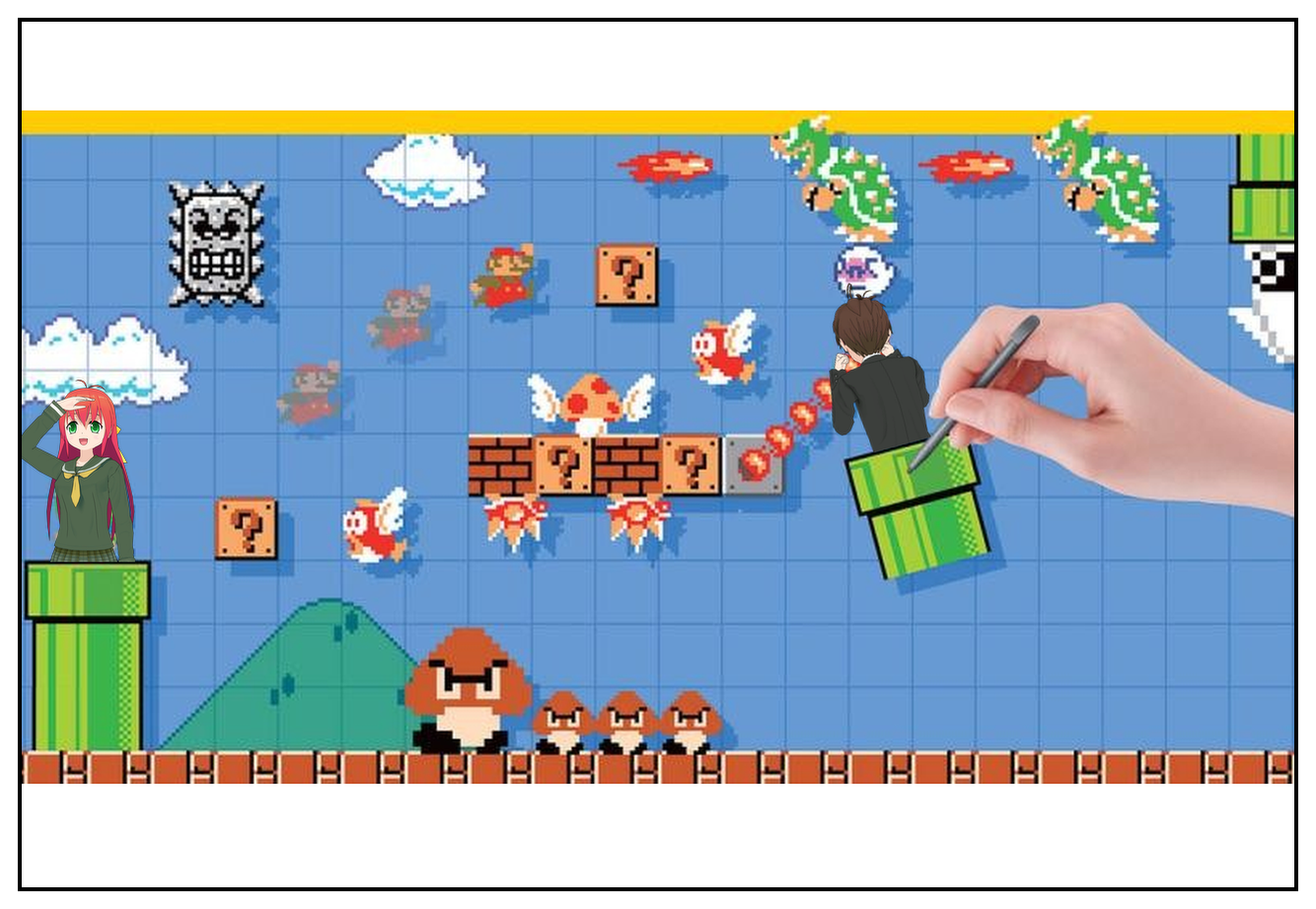
It's ridiculously easy to make a level in Super Mario Maker. Choosing from a palette of objects at the top of the screen, you just draw things onto the level using the Wii U GamePad stylus. There are limits on how much you can put down, but they're pretty generous; likewise, the overall width and height of a level can be fairly large. We're not talking Metroidvania territory, of course, because that would go against the philosophy of a Mario game, but you can certainly put together some fairly intricate designs in the available space if you so desire.

As with any type of game like this, it's always fascinating to see what other people have come up with, and the creative ways in which they've used the tools. TrackMania, for example, fostered a subculture of track creators who made "press forward" tracks, in which all you had to do to complete it was simply continuously accelerate; the design of the track would take care of the rest, automatically flinging the car through a series of ridiculous stunts, with objects placed in the absolute perfect locations to ensure that you always landed in the right place and the right way up.

It's the same with Super Mario Maker. The game's only been out for a few days, and some of the most popular levels out there are already of the "don't press anything" variety; in other words, they play themselves. These levels aren't any challenge to play, of course, but it's fascinating to see the intricate "machinery" these creators have put together, and worthy of respect, because it must have been a painstaking process of trial and error to get it working perfectly.

As for me, I haven't unlocked everything just yet, but I've been enjoying dipping in and out of the game, playing a few levels here and there and even making a few. I like the whole package very much, though there are a few things it would be nice to see expanded on over time: most notably, it would be good to see the in-game score and coins actually matter, because outside of the "Mario Challenge" modes, in which you're presented with a randomly selected series of levels to complete, even the concept of "lives" is completely irrelevant. It would be good to see some sort of leaderboard system with clear times, scores and number of attempts, for example, and perhaps coins could be used to unlock additional features.

It remains to be seen if Nintendo will expand this over time, but with Mario Kart and Splatoon on Wii U, Nintendo has shown itself to be open to the idea of games growing and changing over the course of their lifetime. Super Mario Maker already has a wealth of content in it, but it would be fantastic to see more features — perhaps even based on the Amiibo compatibility, since most currently available Amiibo already unlock character sprites; it would be cool to be able to unlock visual themes, sound effects and music through the Amiibo, too; I might even be tempted to collect a few more then.

In the meantime, though, Super Mario Maker is an enjoyable package that is well worth a purchase. Even if you never make any levels yourself, it's great to fire up for a quick blast of Mario action — and if you do make your own levels, it will give you a whole new level of appreciation for what professional level designers do all day!

2063: No, Apple TV Isn't "Game Over" for Xbox and PlayStation

0063_001

Cometh the new Apple announcements, cometh the silly season of people making all sorts of bold statements about how what Apple is doing is somehow The Future, even if what Apple is doing is actually the same thing as other people have been doing for several years, only with more shiny knobs on.

The latest instance of this happening comes courtesy of Forbes, where contributor David Thier gave Smule's Jeff Smith the opportunity to wax lyrical about How Amazing iOS Is, and How Amazing tvOS Will Probably Be.

Smith brings up some good points about "mobile" development (I'm going to keep calling it that, even if we're referring to Apple TV, because the iOS and tvOS ecosystems are intertwines) — the most important being the fact that iOS and Android are both relatively "open" platforms so far as development is concerned; pretty much anyone with the knowhow can download development tools and crank out an app or two if they have the inclination to learn the ins and outs of both development and the two platforms' respective publishing processes.

This is admirable in some respects: it lowers the barrier of entry to fledgling developers and allows them to get their name known without being subject to the whims of a monolithic megacorporation like Sony or Microsoft, though it's worth noting that the barrier isn't completely gone; Apple still has a reasonably rigorous approvals process for the App Store, though unfortunately this isn't always enough to prevent some fetid turds from filtering through.

We've seen more than a few success stories over the last few years, where small developers put out a simple game that turned out to be a huge success, though, as with Flappy Bird creator Dong Nguyen (who was unprepared for the attention his shitty but popular game attained and subsequently retreated from the Internet) these tales don't always end entirely happily.

But unfortunately a low barrier means that it's easier for people to get over it, and, as well as allowing talented but unknown developers to get stuck in, it also allows the very worst kind of shovelware to get churned out by the bucketload. And, as we've already seen over the last few years, neither Apple nor Google are inclined to do anything about the massive "cloning" problem on mobile, where the market is flooded with literally hundreds of knockoffs of a popular game, all in the hope that, in the best cases, they can score some sweet income from people who think they're downloading the actual popular game, and in the worst cases, mislead ill-informed customers into downloading something outright malicious.

We see this elsewhere, too. Popular PC digital distribution storefront Steam used to be much more heavily curated than it is now, and while its somewhat more relaxed approach these days means that we get lots of stuff on there that we wouldn't have seen three or four years ago, it also means that there's a veritable deluge of crap hurled at an unsuspecting public on pretty much a daily basis. This is bad for customers, who are forced to wade through lots of inferior products in order to find what they're looking for, but it's also bad for developers, because it absolutely tanks discoverability; sometimes word of mouth is enough to mitigate being pushed off the front page of "new releases" by the latest triple-A game, but more often than not something small-scale gets released on Steam and is promptly never heard from again.

Smith's assertion that Apple TV means "game over for console" appears to be otherwise based on the fact that the iPhone and iPad made fairly rapid leaps in graphical fidelity and performance over the course of several hardware generations. But what this — and his enthusiasm for the relative "openness" of the iOS and Android marketplaces — doesn't take into account is the quality issue. Sure, there are developers putting out decent-quality games for mobile devices (and, Smith clearly hopes, many of these will jump to Apple TV when the new tvOS arrives) but I am yet to play any mobile game that truly competes with a game on a dedicated games-playing platform, be it a handheld like the Vita, a console like the PlayStation 4 or a gaming-spec PC. The experiences you get on the latter platforms are just more fleshed out; they may be more expensive to buy a ticket for in the first instance, but once you're in, you're in for a good long while, immersed fully in the experience.

By contrast, the sort of games that iOS and Android developers are mostly inclined to put out are short, bite-sized experiences designed to be dipped in and out of throughout the day. This is fine for those who just want a bit of lightweight entertainment or brain exercise, but it's far from ideal for those of us — and there are many of us! — who take our gaming time seriously, sitting down with a game much like an avid reader would sit down with a book, or a movie buff would enjoy their favourite director's works. Mobile platforms treat gaming as disposable, moment-to-moment entertainment; the market for Xbox, PlayStation, PC and handhelds, meanwhile, expects more substance — something more than a timewaster: something they can truly call a hobby.

So no, Apple TV isn't "game over" for Xbox and PlayStation. It will probably do quite well, sliding nicely into the niche the Wii left behind and which the Wii U has subsequently struggled to fill — family entertainment for people who don't really know a whole lot about gaming and are disinclined to explore in great detail — but there's no way it's ever going to replace dedicated gaming boxes for those who take their playtime deadly seriously.

2062: By Request: 100 Reasons You Should Play Metal Gear Solid V

0062_001

Continuing with my exercise from the last few days in which I take "requests" from my Twitter followers, today I follow the suggestion of Josh "Musubi Azeyma" Major, a friend whom I originally met through Final Fantasy XIV. Josh requested that I present a hundred reasons why people should play Metal Gear Solid V, because he's obsessed with it right now and thinks everyone else should be too. So, who am I to argue with that logic?

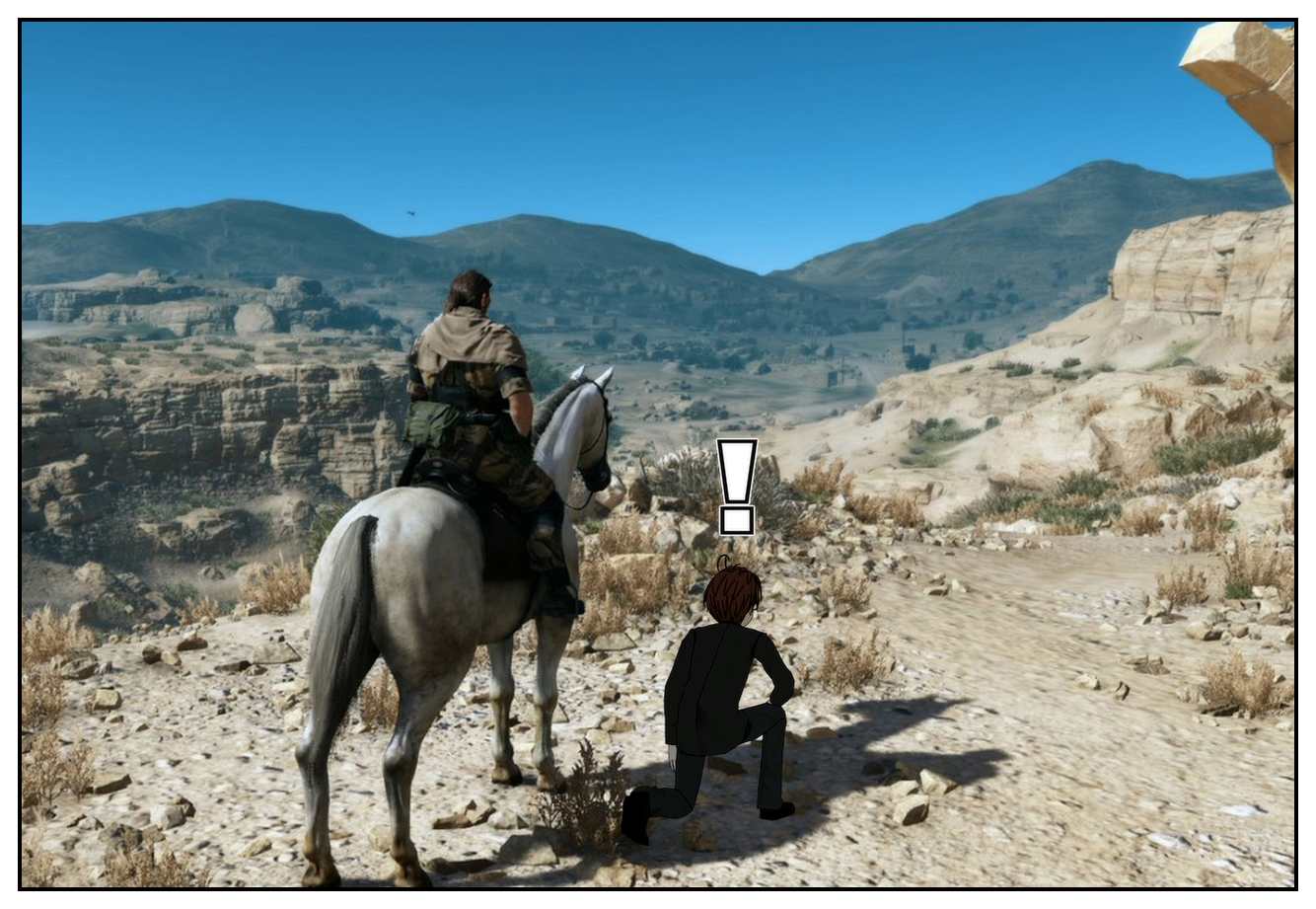
DISCLAIMER: The only real potential issue with this task is that I haven't actually played Metal Gear Solid V, nor do I own a copy. Since we have, however, established that it is acceptable for professional journalists to comment negatively about things without putting in a substantial amount of time with them — or in some cases, without even playing them at all — it's surely fine for some nobody blogger in the wilds of the Internet (albeit one who used to be a professional games journalist) to speak positively about something he has absolutely no experience with whatsoever. So, without further ado, let's begin.

  1. It's part of the Metal Gear Solid series, which people have heard of.
  2. Hideo Kojima is a cool dude who posts pictures of Eggs Benedict on Twitter and makes jokes about them jiggling like boobs.
  3. Konami fucked Hideo Kojima up the ass pretty royally towards the end of Metal Gear Solid V's development, so while buying a copy and enjoying it may support Konami to a certain degree, it also shows your support for Hideo Kojima's creation.
  4. The graphics are quite pretty.
  5. It's available on Xbox 360, Xbox One, PlayStation 3 and PlayStation 4, so unless you're a weirdo who only has a Wii U in the house, you can almost certainly play it.
  6. Quiet has nice tits.
  7. Quiet is pretty badass.
  8. Appreciating Quiet's feminine wiles pisses off the outrage brigade.
  9. There are guns in this game.
  10. And dogs.
  11. And a horse that you can command to shit whenever you want.
  12. You can attach balloons to bears and send them flying off into the sky.
  13. You can do the same with enemy guards.
  14. There's apparently some sort of story that's pretty good.
  15. Something interesting happens in the medical bay or something, everyone keeps yammering on about it without actually saying what it is because spoilers.
  16. Something about cassette tapes.
  17. METAL GEAR?!
  18. It is, I am assured, open world without being directionless.
  19. It does that thing I like where it presents each mission as its own self-contained "episode", complete with intro and outro credits sequences.
  20. Each mission is apparently pretty tightly focused rather than making use of the open world unnecessarily.
  21. It's not Splinter Cell.
  22. Revolver Ocelot.
  23. Metal Gear is a Japanese series that it's apparently still acceptable to like without people calling you a paedophile.
  24. There are achievements and trophies in the game.
  25. If you're really good at a mission, you get an S-rank and feel all happy.
  26. You can tranquilise people.
  27. You can kill people.
  28. You can sneak up on people.
  29. You can charge in the front door of an enemy base brandishing an assortment of improbable military hardware, then blow everything up with reckless disregard for the "Tactical Espionage" part of the game's subtitle.
  30. Something about tanks.
  31. Anita Sarkeesian's puppetmaster Jonathan McIntosh doesn't like Hideo Kojima for the jokes he makes on Twitter (see #2).
  32. Posting things about Metal Gear Solid online at the time of writing is a sure-fire means of getting those sweet-ass clicks.
  33. There's a Mother Base that you manage or something.
  34. You can get soldiers and dogs and stuff for your base or something.
  35. Some of it's a bit like Peace Walker, which I also haven't played but people seemed to like.
  36. Kojima has dialled back the "I'M MAKING A MOVIE!!" chaos. A bit.
  37. Kiefer Sutherland is like a proper famous actor, innit.
  38. The probably-vain hope that David Hayter will show up at some point in the same, growl "SURPRISE", snap the neck of KieferSnake, forcing you to play the rest of the game as Snake with his proper voice.
  39. Lid from Hyperdevotion Noire was pretty fit.
  40. You can hide in cardboard boxes.
  41. You can play as people who aren't Snake if you so desire.
  42. Including women. SHOCK
  43. But Snake has a robot arm or something, so he's clearly the best.
  44. If you're playing this game, you are contractually obliged to put the word "Punished" in front of your Twitter name, because it makes you at least 20% cooler to do so.
  45. This coolness quotient increases to 30% if you also scrawl an eyepatch on your avatar using Microsoft Paint.
  46. Hurt me more, Snake
  47. There's a sweet-ass limited edition PlayStation 4 to tie in with the game's release, because we all know Metal Gear is a series that belongs on PlayStation.
  48. There's some sort of online feature, I think.
  49. You're banned from soliciting relationships with other people through Metal Gear Solid V's online features, which means you can protect yourself against people who are on the pull through Metal Gear Solid V's online features.
  50. Who does that?
  51. I anticipate it will be less than a week before someone recreates a scene from this using nothing but Super Mario Maker.
  52. Someone already did the microwave tunnel scene from Metal Gear Solid IV.
  53. This game is longer than Ground Zeroes.
  54. It is also a lot longer than previous Metal Gear games.
  55. My friend Josh claims to have spent over a hundred hours on this game so far.
  56. A lot of stuff is optional, so you can probably whizz through it a bit quicker if you want to.
  57. Something about vagina bombs. (I didn't play Ground Zeroes either.)
  58. You like Castlevania, don't you?
  59. There are no navel-gazing codec conversations between Raiden and Rose.
  60. There are, instead, navel-gazing cassette tapes, but you can listen to these while you're attaching helium balloons to bears.
  61. Metal Gear games usually have good villains. (I have absolutely no idea who the villains are in this.)
  62. Ditto boss fights. (Likewise.)
  63. The old games had good music. This one probably maybe does too.
  64. Ditto voice acting.
  65. You can level up Snake or something.
  66. I think you can possibly maybe level up the other soldiers you collect too.
  67. If Quiet's boobylicious outfit bothers you that much, she has numerous other costumes, including being completely covered in blood and Sniper Wolf's somewhat more conservative but still boobylicious outfit.
  68. Apparently there's some explanation for why Quiet dresses the way she does.
  69. Something about photosynthesis.
  70. Or possibly nanomachines. Son.
  71. That big speech at the end of Metal Gear Solid 2 was kind of cool in how eerily prescient it was.
  72. That means that in roughly ten years' time, something in Metal Gear Solid V will probably be looked back on and numerous chins stroked thoughtfully.
  73. This installment uses a Roman numeral instead of the Arabic digit 5, because Roman numerals are, as everyone knows, inherently classier.
  74. The Phantom Pain sounds kind of cool as a subtitle.
  75. Although it's a bit close to The Phantom Menace for my liking.
  76. Although it looks as if Metal Gear Solid V may well be reclaiming the subtitle structure The Phantom [x] from the damage that Star Wars did to it.
  77. George Lucas had nothing to do with this game.
  78. This game does not feature, at any point, in Disney Infinity.
  79. If you play this game, you can talk about it with your friends rather than just nodding and smiling and pretending to know what they're blathering on about.
  80. The Steam version might have trading cards or something, I don't know because the Steam store isn't working for me right now.
  81. The PC port has to be better than that dogshit effort with the last Batman game.
  82. Hey, it's a Metal Gear Solid game that you can actually play on PC without dicking around with emulators!
  83. You should still probably play it on PlayStation, preferably on that sweet-ass limited edition console.
  84. If you buy one of those sweet-ass limited edition consoles from me when I'm working, do me a solid and also buy the extended warranty coverage and preorder some other stuff.
  85. The person who hired me for my part-time seasonal retail job is a huuuuge fan of Metal Gear Solid.
  86. I was hired for said job partly because I included the words "nanomachines, son" under the "Skills" section on my CV.
  87. I'm running out of things to write here.
  88. I'm honestly impressed that I've made it to 88 without much padding.
  89. If you buy a physical copy of the game you can put it on your shelf alongside all the previous Metal Gear Solid games for a cool display of the series over time.
  90. The uneven sizes of the boxes for Metal Gear Solid over the years — CD-sized PSone cases, DVD-sized PS2 cases, slightly-smaller-than-DVD-sized PS3, PS4 and Xbox One cases — makes for an attractively wibbly-wobbly effect on your shelf.
  91. The hardback strategy guide for Metal Gear Solid V is very pretty indeed, and if you can still find a copy anywhere you often get a free poster with it.
  92. The softback one is still pretty meaty and can probably do some damage to an assailant if you have it to hand when you come under attack.
  93. Even if you have no intention of playing Metal Gear Solid V, tossing the disc case out in front of a passing guard will distract them long enough for you to sneak up behind them and snap their neck.
  94. You probably shouldn't do that.
  95. Instead, you can indulge such fantasies in the new video game from Hideo Kojima, Metal Gear Solid V: The Phantom Pain.
  96. There's some sort of kawaii idol girl posters scattered around the place in the game.
  97. Have you considered trying Mad Max as well, which came out the same day? Polygon hated it, which is reason enough to try it.
  98. You should probably also give Until Dawn a go if you have a PlayStation 4, because Sony idiotically released it last week and not at, I don't know, Halloween.
  99. You can probably edit together some entertaining and silly videos using the next-gen consoles' video capture facilities and software such as the PS4's ShareFactory.
  100. If you bugger off and play Metal Gear Solid V, I don't have to keep writing this, and I can get on with playing Super Mario Maker instead.

2061: By Request: More About My Stint as a Teacher

0061_001

Continuing with yesterday's little exercise of taking suggestions from my Twitter followers, today I come to a request from another Michael, in this case Michael J. Hughes, aka @mobilesworking. Michael wanted to hear more about my stint as a teacher, so that's what I'm going to write about today.

Longtime readers will, of course, be aware that when I started doing this whole oneaday thing, I was still employed in education, just coming to the end of a short-term maternity cover contract where I was looking after a Year 4 class while, at the same time, the school in question was gradually collapsing into Special Measures. This meant an inordinately stressful period of my life, although anyone who has ever worked in education will know that education in general is pretty stressful; throw in regular visits from government inspectors, though, and things get a bit too much to bear. If you really want to read my thoughts and feelings from the time itself, start here and go right ahead!

In the meantime, I will attempt to give a potted history of my time at the chalkface in this single post, since it's now a few years ago and I've subsequently had time to reflect on my experiences — which, while I look back on them in such a way as to know that I never, ever want to be a classroom teacher ever again, aren't entirely negative. Just mostly negative.

I kind of fell into teaching. While I was still at school, I took on a few piano pupils, since my mother and my teacher thought that I would do a decent job of teaching them. Turns out that I did; it was hugely nerve-wracking to begin with, but I gradually settled into it, noticing things like different pupils learning in different ways and the different tutor books handling things very differently from one another. As time went on, I developed my own unique style of teaching, as most teachers did, and I was enjoying myself. I was particularly enjoying it as piano tuition can be very lucrative indeed, and when you're a highschooler with no real "expenses" besides the latest video games, that money soon mounts up if you have a few pupils.

Anyway. A few years later, I was coming towards the end of my degree studies at Southampton University. I'd been studying English and Music, though the English component had proven to be somewhat disappointing, focusing rather too much on philosophy rather than actual English for my tastes, and the Music component had demonstrated to me that in terms of ability, I wasn't anything particularly "special" among the overall musician community. A little disheartened, the time came for me to ponder exactly what I'd do when my degree course came to a close; I was on track to receive a decent grade (it eventually turned out to be a 2:1, which I was more than happy with) but it was occurring to me a little too late that my original idea of taking a "good, general degree" and falling into a job straight afterwards due to the multi-purpose nature of my qualification wasn't really going to work; an awful lot of jobs that I might have been interesting were looking for specific degrees in things like management, computing and whatnot, and so I was finding myself a little despondent.

I'll add at this point that I certainly don't regret my time at university, as I'm aware all of the above may sound a little negative. On the contrary, I actually rather enjoyed the chance to have three years studying things that I found interesting, and I wish I could have that opportunity again in the future. I enjoy learning, even if I don't end up being amazing at the thing I'm learning, and for that reason alone — coupled with the very good friends I made while I was there — the experience was worthwile. But I digress.

The time came to make a decision, and I thought back to my time teaching piano. I knew that teaching in the classroom wouldn't be the same as teaching an individual pupil one-on-one, but I thought it was something potentially worth pursuing, anyway. Taking a teaching qualification, I thought, would give you a ready-made career path and hopefully sort you out for if not life then certainly the immediate future.

My PGCE (PostGraduate Certificate of Education) studies remain some of my fondest memories of university. Our tutor Rebecca Berkeley was one of the most charismatic, entertaining teachers I've ever had, and she set a fantastic example of how to engage and thrill people in the music classroom. Our small but dedicated cohort of trainee music teachers were enthusiastic and passionate, too, and we all had our own ideas and approaches to lessons.

Then we got into the classroom. The university had a whole bunch of partner schools in the nearby area, and I ended up at a place in Eastleigh, the next town over. This necessitated the catching of an early-morning train every day, at least until I made friends with the painfully gorgeous trainee Geography teacher Debbie, who started giving me a lift after seeing my sad figure trudging through the rain to the station one day. The school itself was an interesting structure, with its main concourse being all concrete and glass, looking to all intents and purposes like a small shopping centre rather than a school. The music department was, I recall, upstairs on the left as you went in; it consisted of a single, very wide room that always seemed much too big.

Following the suggestions and ideas we'd been given during our initial training — and after an initial period of observing the school's resident music teacher — I prepared to deliver a short series of four lessons that I'd planned out in advance. I was very pleased with them; they represented a gradual progression from simple, straightforward activities to a more freeform assessment-style activity to finish off with, and I'd made an effort to drop in some references to things that I knew the kids would relate to in my worksheets. Thought I knew, anyway; turns out my subtle references to Grand Theft Auto: Vice City, which was a recent release on PlayStation 2 at the time, were… well, too subtle for them, and no-one appeared to notice them. Disappointing.

My actual delivery of the lessons varied in quality somewhat, though I attribute this partly to the variation in the makeup of the different classes. Some classes are "better" than others; sometimes all it takes is a single unruly child — usually one with "special educational needs", it has to be said — to disrupt everything and spoil the flow of a lesson, and sometimes kids just have off days. (Sometimes teachers do, too.)

Anyway, to cut a very long story short, my teacher training proved to be a bit of a rollercoaster of emotions. When it went well, it was a fantastic feeling. When it went badly, it was the worst feeling in the world… actually, no, when I thought it had gone well but my mentor in the school told me he thought I was actually getting worse, that was the worst feeling in the world.

I passed my course comfortably in the end, and was ready to begin my career, though I already had a few misgivings based on my experiences as a student teacher. In particular, the one aspect which I had worried would prove to be the most difficult — behaviour management — did indeed turn out to be the most difficult, and more so than I'd expected. And the trouble with behaviour management is that you can fill your head with all the theories and strategies you like, sometimes they just simply don't work; sometimes you're just faced with a class of shitheads who don't want to do anything, don't like you and don't like school in general. In which case, you're pretty much fucked.

I encountered this position on a fairly regular basis in my first full-on teaching position, which was at a school in an army base town on the Hampshire-Surrey border. The school's population was made up of a melting-pot of Forces kids and local traveller children, and consequently clashes were frequent and often violent. The polite term for the school would be "challenging"; the area wasn't exactly impoverished as such, but it wasn't particularly well off, and the school wasn't especially well-equipped, either.

The school's approach to staffing was to recruit people into a main position, then encourage them to try out some other subjects, too, broadening the staff's expertise and making the whole workforce a little more flexible. It also gave the kids a bit more variety, too. I was recruited as the second music teacher at the school, but I was also presented with a few English, ICT and "Key Skills" classes. I didn't really know what Key Skills was, but being relatively bright-eyed and keen to make a good impression, I agreed to jump in and have a go at them.

Key Skills turned out to be the "get the naughty kids out of our fucking hair for an hour or so" subject. Each class was made up of no more than about ten or twelve kids, all of whom were either painfully stupid or behaved like psychopaths. There were a few instances of kids exhibiting both characteristics, but for the most part the stupid kids weren't the problem; they'd happily get on with doodling something in crayon while the psycho kids would kick off. Because they always fucking kicked off.

In a way, I don't really blame them; they almost certainly knew why they were in the Key Skills class, and the subject matter — which included, among other things, how to operate a washing machine — wasn't exactly the most inspiring stuff in the world. But the amount of rage, resentment and abuse directed at me as a result was almost intolerable. On one occasion, a kid threatened to knife me because I asked him to stop talking; on another, most of the class locked me in the classroom and broke the door; the couple of pupils who had remained behind then climbed out of the window.

On another memorable occasion — and this isn't exactly abuse, but it's a story I delight in telling — I had taken the Year 8 Key Skills group to the library for some innocuous activity, and noticed that two members of the class — Fat Barry and his friend Shane — had been gone for some time. I eventually found them behind some bookshelves, Fat Barry straddling a face-down Shane and… gyrating.

"What are you doing?" I asked, foolishly, kicking myself mentally for not simply being assertive and telling them to "get up".

"We're doing a bumsex, Sir," replied Fat Barry, with admirable politeness and deference.

Anyway. I digress. My stint at this first school lasted just a single year because the headteacher who was in charge when I first joined was seemingly Not Very Good With Money, and this meant that when the new head came on board partway through my first year as a qualified teacher, he was faced with the unenviable task of laying off a considerable proportion of the school's staff. As one of the last in, I was, of course, one of the first out, though thankfully it wasn't long before I managed to secure a new position in another nearby school that, this time, was in a slightly more affluent area.

I stayed at my second school for just under two years. During that time, I had some good experiences. I absolutely adored working with my GCSE group, for example, because they treated me like a human being rather than a teacher, and I reciprocated. Also it's a magical feeling to successfully convince an entire class to spend two hours writing arrangements of Battle on the Big Bridge from Final Fantasy V. They did a great job!

I also loved working with the drama department on the production of Blood Brothers, and on the 24-hour Music Marathon for charity. I enjoyed introducing a hitherto-unexplored aspect of music technology into the classrooms of the school, and I enjoyed running groups such as the choir and the jazz band. I even quite enjoyed being a group tutor; although I didn't teach my tutor group for any classes, we built up a reasonable rapport over the course of the two years I was with them just from registration and tutorial periods.

Unfortunately, this job nearly killed me. I had been aware of my stress levels rising for some time, but I thought I could handle it. I couldn't. The theft of an £80 microphone from out of my locked desk in my locked classroom flipped a switch in my head, and I knew I didn't want to do this any more, but intended to stick it out for as long as I could.

"As long as I could" turned out to not be very long at all. A particularly obnoxious year 9 class were outright refusing to sit down, be quiet and listen to the activities I had planned for them, and this turned out to be the tipping point. I ran out of the classroom, into the department's walk-in storage cupboard — which was a bombsite after the year 9 class had, once again, failed to treat anything with any respect whatsoever — and just started crying.

I couldn't stop. The tears kept flowing, the sobs made me gasp to a point where I could barely breathe. I collapsed to my knees, no longer caring if anyone saw or heard me. I don't remember who did see or hear me, but someone did, because before long I was finding myself ushered into the drama department's office — the drama room was presently vacant, and it was adjacent to my classroom. I found myself confronted with a couple concerned-looking faces; my head of department, whom I'd lashed out at over my frustration with the microphone theft a little while ago (and subsequently felt awful about) and the head of drama, a woman of considerable dry wit whom I'd always found a bit intimidating, but was now showing a softer side I hadn't expected.

"This isn't me," I wheezed, gasping and gulping for air as I continued to sob. "I can't do this. This isn't me. This isn't who I am."

I don't remember how the conversation went from there, but before long I was at home making an appointment with the doctor. I related my experiences to him and, without asking any further details or examining me, he signed me off work until the end of the term. I snuck into the school when I knew no-one would be around but it would still be open and left the doctor's note on the reception desk; it was one of the most terrifying experiences of my life. I didn't want to ever set foot in that school ever again; I felt like I had disgraced myself and that I would be mercilessly abused and mocked if I was ever seen again.

I ended up only going back in there once; after I went back to the doctors as my note was nearing its expiration, I explained that I didn't feel like I could go back, and again without hesitation, he signed me off until the end of the school year. Evidently I wasn't the first teacher to come to him in this state. My final visit to that school was on the last day of the year, after all the kids had gone home, and I had to pick up my things. The campus was deserted; I didn't even see any of my colleagues. I collected my things, walked out of the door and didn't look back, swearing never to return to teaching.

Except, of course, I did. As I was coming to the end of a period working in retail, I found myself with the opportunity to try my hand at primary school teaching; my previous experience had been with secondary school teaching, and too many people had said to me that they'd thought I'd be good at primary school teaching for me to ignore. So I spent some time with a friend of mine who taught in the local area, and found the experience both enjoyable and less stressful. So I pursued it, eventually netting the maternity cover position I had when I started writing this blog every day.

Primary school teaching was, without a doubt, a better experience than secondary school teaching for the most part, even in as shitty a school as I was working in. The lessons were varied and fun to teach, and they challenged me as well as the kids; I had to flex mathematical brain muscles I hadn't worked out in years, for example, and I enjoyed things like reading them stories and suchlike. It was also cool to be in education just at the time when new technologies like interactive whiteboards and suchlike were starting to be incorporated into classrooms, and it gave me a feeling of actually being somewhat worthwhile by being The Guy Who Knew About Computers, compared to my middle-aged female colleagues, most of whom knew how to log on to Facebook and little else.

I knew it wouldn't last, though. I still had difficulty with behaviour management, particularly with a couple of notorious kids in my class, one of whom had a somewhat turbulent homelife that manifested itself in some seriously unpleasant tendencies. Despite the support of my long-suffering teaching assistant in the classroom — whose help I will forever be grateful for, particularly as having support in the secondary school classroom was incredibly rare — I just didn't know what to do; I didn't know how to make this child do what I wanted him to do, and I didn't know how to get through to him.

I could feel the tell-tale signs of stress creeping up on me again, and I knew I didn't want to have another experience like the last time. So I got ahead of the game; I quit. I explained to the acting headteacher of the school what was happening with me and why I needed to get out, then I got out. Then I went to PAX in Boston to meet some friends who had previously only been usernames on the Internet. Then my then-wife left me and my life fell to pieces. But that's a story for another day — or, more specifically, one that I've already told on these pages if you know where to look, and one that I can't help but feel is still going on right now, and that is yet to reach a satisfactory conclusion.
2060: A Fruitful Relationship: More Grisaia Impressions

0060_001

In an effort to steer away from three solid days of ranting about games journalism, I asked my followers on Twitter for some suggestions of things to write about, and got a few nice ideas, so I'll be making use of those over the next few days.

I thought I'd start with a request from my friend Mr Michael Cunningham, who wanted to hear a bit more about The Fruit of Grisaia, the visual novel I'm currently reading, and which I gave some first impressions of here.

So far, I believe I'm still in the "common" route of Grisaia, since I've only made a single choice so far, and that didn't come until after a considerable number of hours of reading. The lack of interaction hasn't been a problem, though; the early hours of Grisaia are clearly intended as a means of helping you get to know the characters and the context in which they find themselves, and the distinctly leisurely pace at which the early hours of your typical visual novel such as Grisaia unfolds allows it to dangle some truly tantalising mysteries in front of you, mostly with regard to the backgrounds of the characters and what has actually brought them all together.

Even the basic concept of Grisaia is still a slight mystery to me at this juncture. Although the early hours have been relatively typical high school slice-of-life so far, there's clearly something more going on. From the protagonist's frequent references to his mysterious "job" and use of military terminology and tactics to the unpredictable, trope-subverting nature of all the heroines, nothing seems quite "right" in Grisaia's world, and that's what makes it so intriguing. The fact that the school which they all attend has no-one but them in it — making for a student body of just six people — is perhaps the biggest mystery: why are they all there? What has pulled them out of "normal" life? What is the school for?

2015-09-09_00008

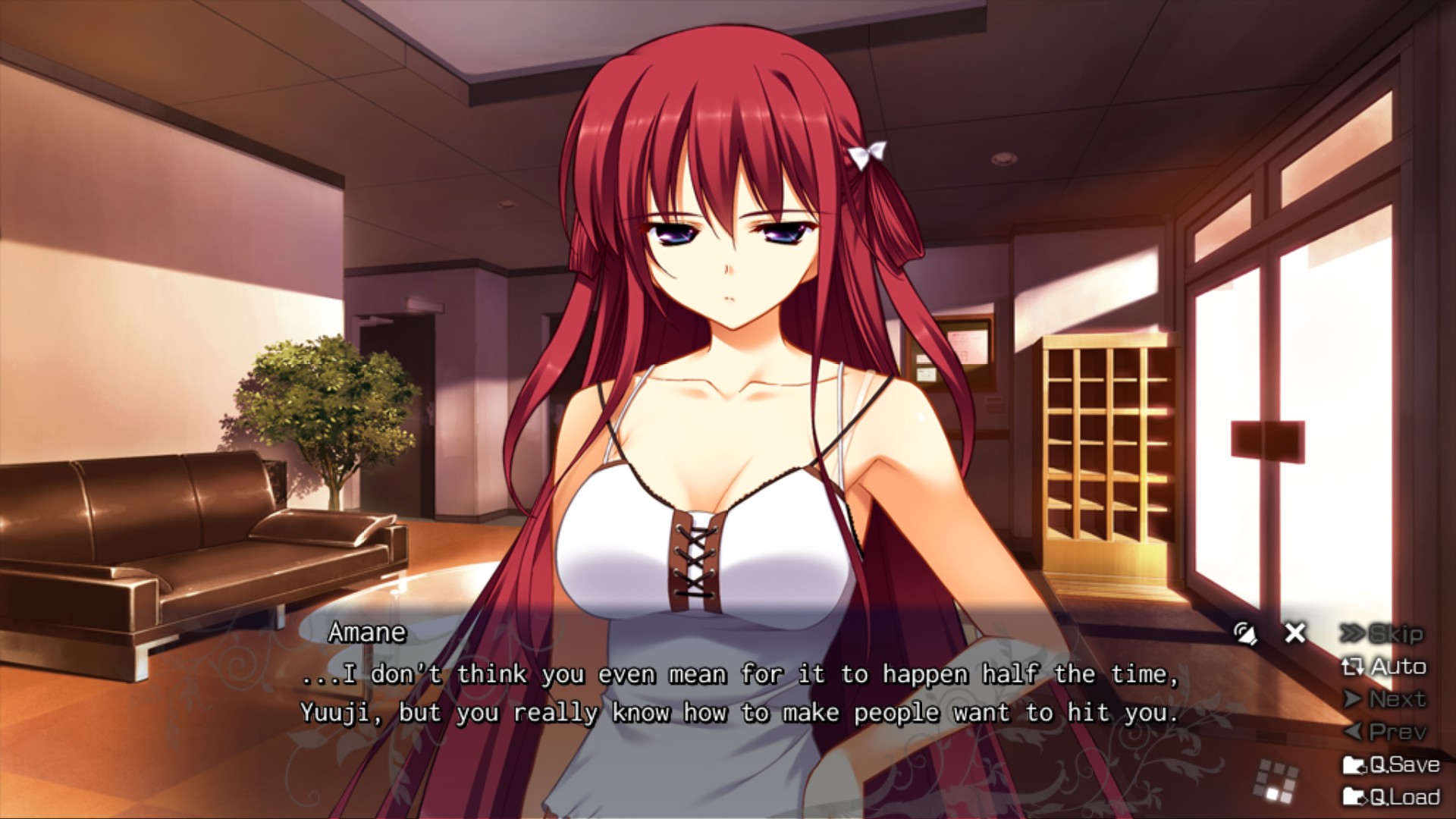
Amane initially appears to be the most "normal" of the cast. She likes to play the role of the older sister, and does so with great enthusiasm, particularly when it comes to protagonist Yuuji. Yuuji is initially resistant to her advances but eventually allows her to indulge a little for the sake of having a marginally quieter life, because even when she's getting what she wants, Amane is forthright, frank, open and honest about everything — arguably to a fault.

She's also seemingly very much at ease with herself as a woman, happily stripping off and getting changed in front of other people (including Yuuji) and wearing clothes that emphasise her curves. She's also rather sexually aggressive towards Yuuji even as they're first getting to know one another, often grabbing him and pressing herself against him, and on one memorable occasion, sneaking into his room while she thinks he's out and inhaling his scent from his clothes and his bed; Yuuji catches her just before she starts masturbating.

I'm not quite sure what to make of Amane yet. I certainly like her a great deal, but I have a feeling that her forthrightness may, in fact, be compensating for something. Exactly what, I couldn't say just yet, but I'm pretty convinced that there is more to Amane than meets the eye.

2015-09-06_00003

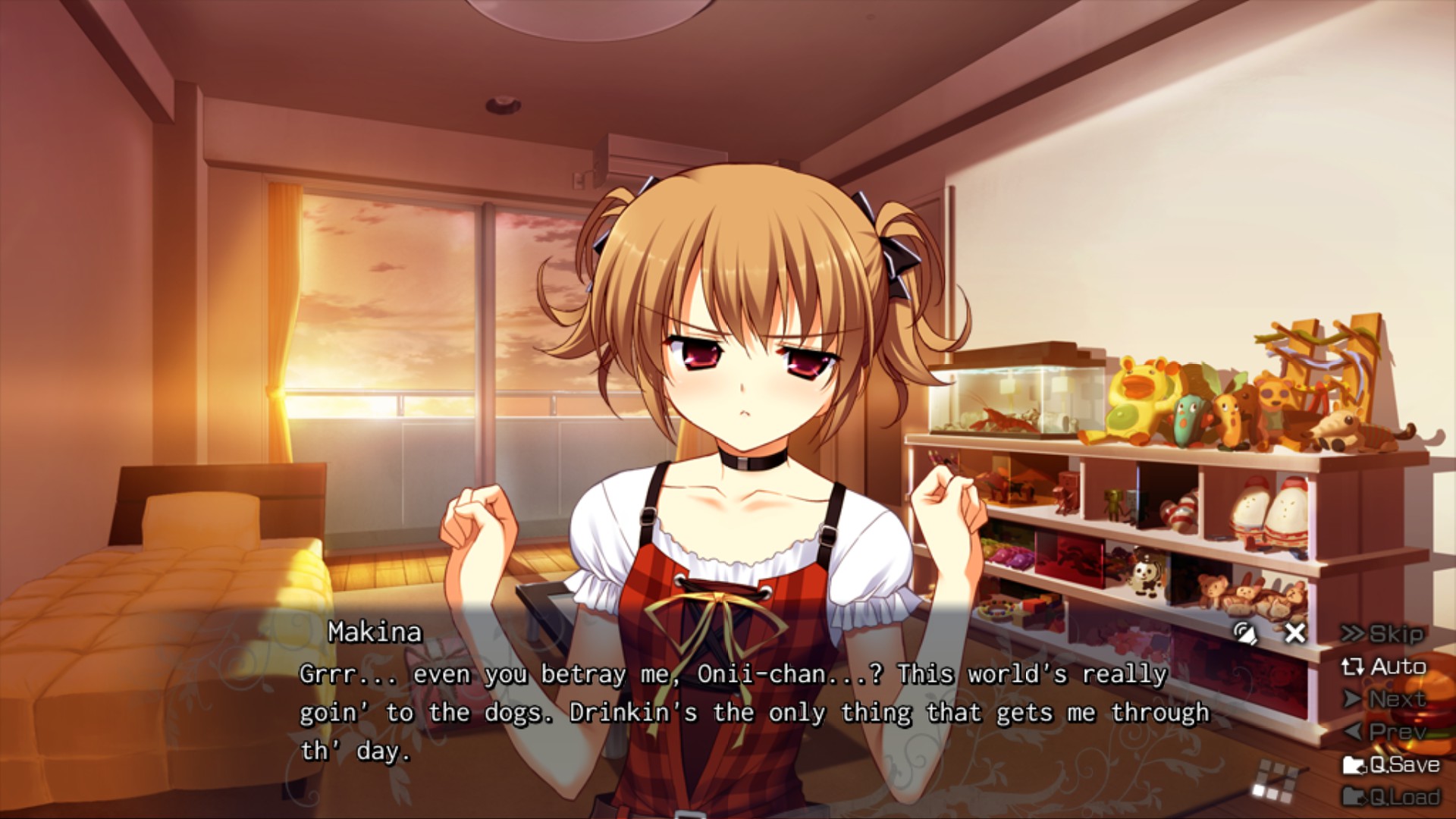
Makina is brilliant. Initially presented as the dimwitted loli of the group, it takes a little time for Makina to take to Yuuji, but they eventually bond, much to the surprise of Amane, from whom Makina is otherwise almost inseparable. It transpires that Makina is far less stupid than she likes to make out, and that she may well be putting on an act for her own mysterious reasons.

This doesn't mean that she's entirely "normal", though. Her impressive ability to take mental photographs of books she's reading and instantly recall information from them — albeit only in black and white — reminds Yuuji of his deceased sister, who had a similar ability. Perhaps not coincidentally, Makina quickly starts calling Yuuji "Onii-chan", despite his resistance; much like he softens towards Amane somewhat, so too does he eventually just let Makina continue along in her own bizarre little world.

Perhaps the most amusing and intriguing thing about Makina is the way she talks. Far from being stereotypically cute and shy, Makina is foul-mouthed and frequently comes out with things you'd expect a dirty old man to say. Amane occasionally admonishes her for this, but since she occasionally slips into her own Kansai region colloquialisms, she doesn't really have a leg to stand on in this instance.

Again, I wouldn't like to conjecture what brought Makina to Mihama Academy in the first place, but it's clear that something traumatic happened in her past; so far, however, the conversation has always been steered away from it any time it looks like getting into dangerous territory.

2015-09-04_00004

In contrast to Makina's front of stupidity, Michiru actually does appear to be pretty dimwitted. Obsessed with the tsundere character trope to a fault, Michiru deliberately tries to act as stereotypical as possible, but in the process frequently breaks character in order to seek the approval of others — and, to a certain degree, herself — on how well she's doing at playing the spoiled princess.

In keeping with the other characters, though, there's seemingly a lot more to Michiru than meets the eye. As time progresses, whenever she is alone with Yuuji, she seems to want to open up to him somewhat. In some instances, she drops the tsundere act completely and attempts to have a serious conversation, though her inability to articulate herself in anything more than the most simple terms sometimes means she finds it challenging to get across quite what she wants to say.

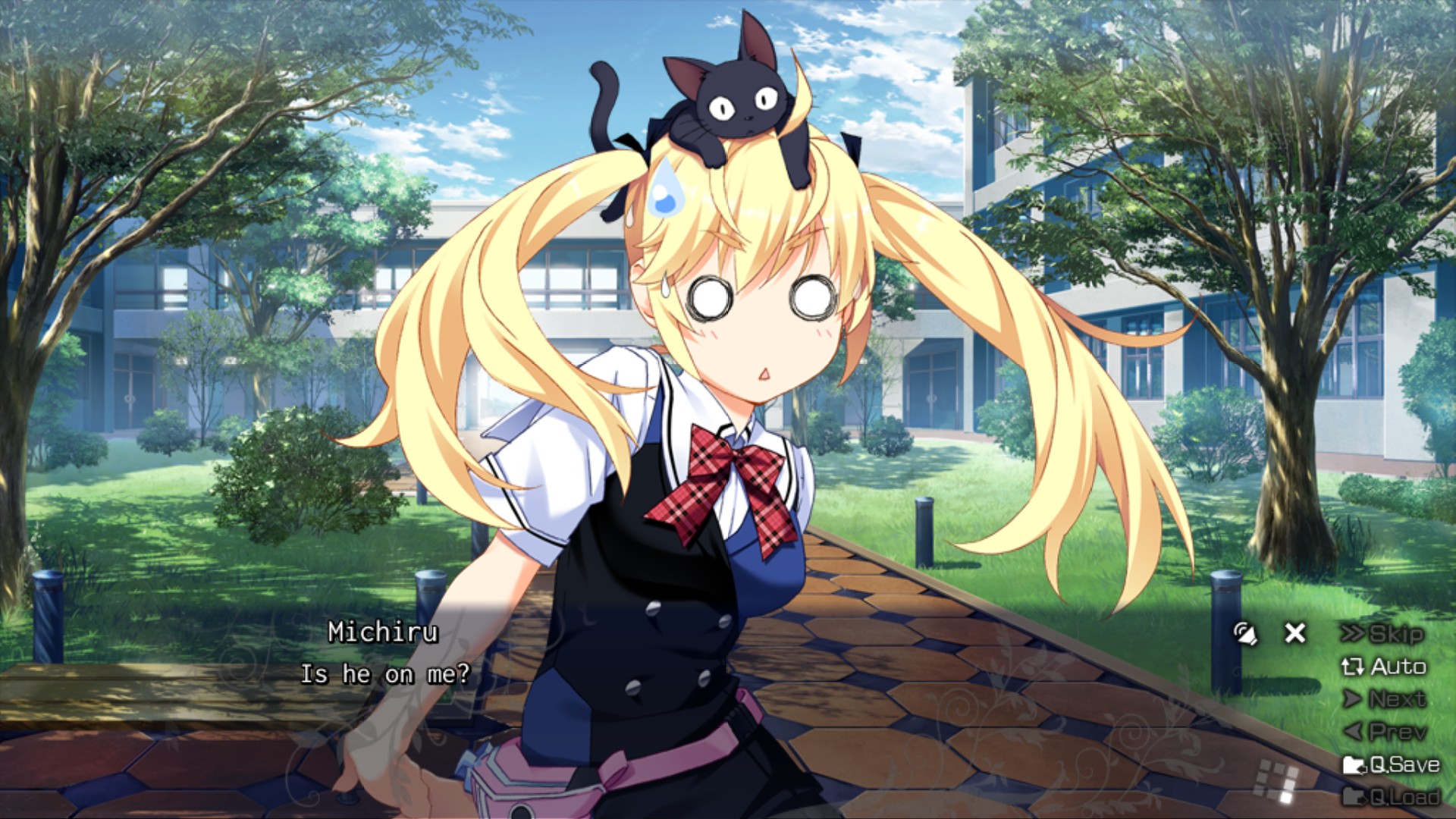
Michiru is clearly struggling with depression — perhaps as a result of a condition or illness she has. Her adoption of the tsundere personality is a coping mechanism designed to hide any outward signs of her pain and suffering; by being deliberately aggressive and contrary about everything, she puts up a formidable barrier around the truth that lies in her heart, though, of course, I'm sure by the end of her own narrative route we'll get to the bottom of exactly what is bothering her so much. She is the butt of a considerable number of jokes throughout the common route, but I have the distinct feeling she's going to end up being one of the most sympathetic characters.

2015-09-05_00001

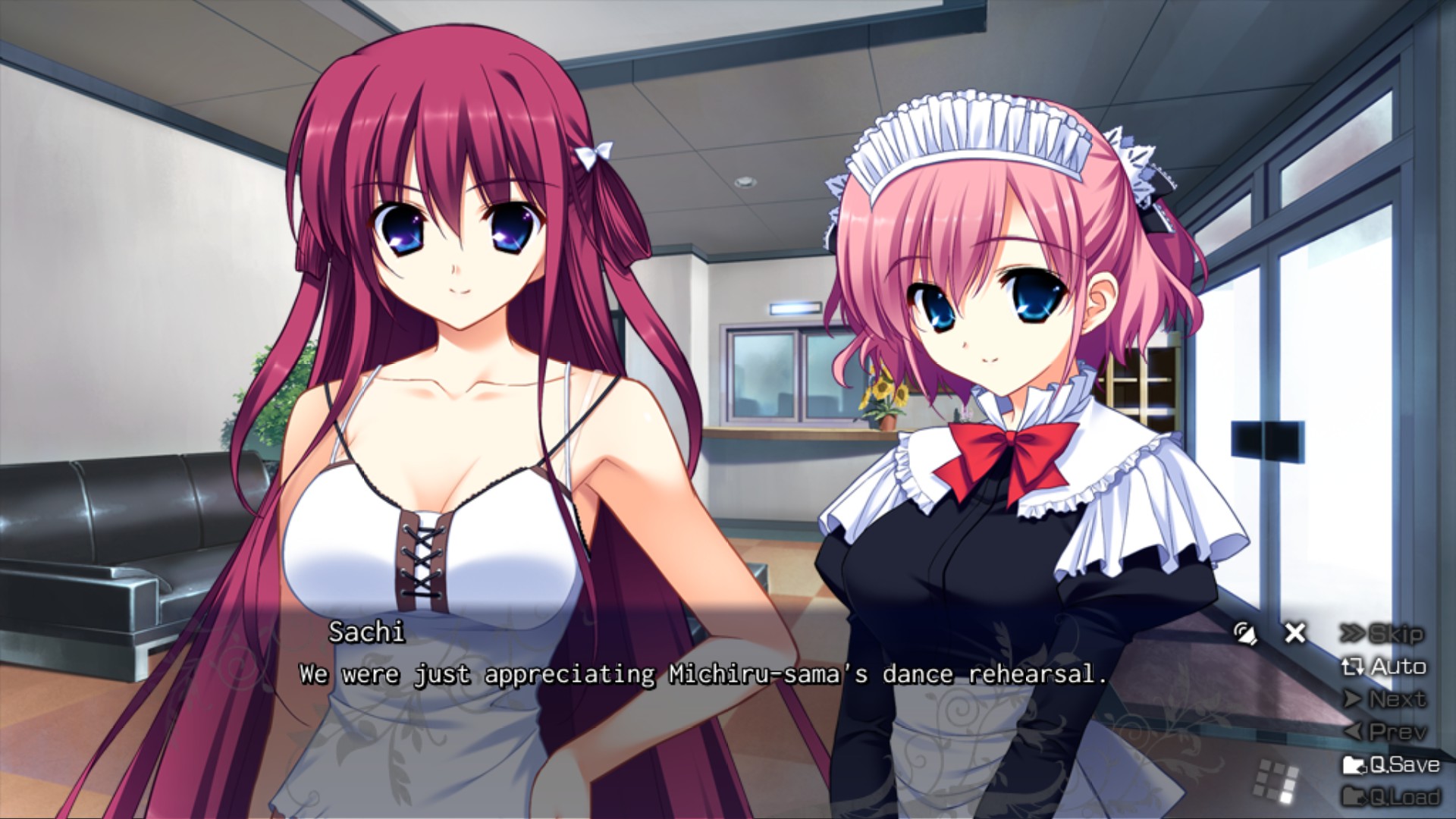
Sachi (right) is something of an enigma. Sweet, innocent and largely emotionless to a fault, something in Sachi's past has caused her to become someone who takes everything she hears absolutely literally. This means that a joke about how she should wear a maid costume all the time because of all the hard work she does for others means that she now wears a maid costume whenever she's not in her school uniform; it means that someone requesting "the freshest milk possible" sees her catching a train out to the countryside to go and milk a cow.

Sachi's initial impression is that she's a thoroughly nice and considerate person, but there's something else at work. Occasionally — particularly when she's dealing with Michiru — some uncharacteristically hurtful, acidic comments will come out of her mouth. There's evidently some bitterness festering beneath the surface, though for the most part, she simply refuses to talk about it and quickly puts her façade of being the perfect maid back up.

The other thing about Sachi is that her tendency to take things literally means that she has absolutely no sense of shame or propriety whatsoever. When Yuuji jokes with her about the power a glimpse of lingerie has over men, she turns up to school the next day in nothing but lacy undies, stockings and suspenders. When she and Yuuji are cleaning the dormitory bathroom together, she falls over and gets her maid costume wet, then subsequently decides that the appropriate thing to do — after another joke from Yuuji — is to take it off, attach it to her mop ("to cover more ground") and continue the rest of the cleaning job in her underwear. I anticipate that this aspect of her character in particular will cause more than a few awkward situations by the conclusion.

2015-09-03_00002

Finally, Yumiko is the most obviously fucked up of the main cast. Initially refusing to even speak to Yuuji, instead preferring to first of all slap him when he approaches her, and subsequently attack him with a box cutter at every opportunity, the barriers around Yumiko's heart are nigh-impenetrable, it seems, but Yuuji's ability to shrug most awkward situations off — perhaps due to his own background, which he hints at regularly throughout the common route without explicitly explaining it — means that he takes her violence and anger in his stride. He eventually manages to get through to her enough to be able to speak to her and subsequently have an honest conversation with her, even spending some time with her alone without her trying to attack him.

Yumiko's basic character trope is that of the perpetually grumpy "student council president" type, but rather than being a blushing, awkward individual beneath the façade, it's clear that her outward grumpiness is a sign of outright rage and bitterness bubbling beneath the surface. She is, so far as I've read at least, the biggest mystery among the main cast — both to me and to the rest of the cast, too. She keeps herself to herself, and no-one seems to know anything about her history. No-one even seems to know where she's going or what she's doing at the weekends when she sneaks out of the dormitory in the early hours of the morning carrying a tote bag full of "wooden objects". I'm looking forward to finding out more about her.


That's what I know so far, then. They're an interesting bunch of characters, to be sure, and I'm really looking forward to each of their routes to discover exactly what makes them tick and what has brought them to the strange circumstances in which they find themselves. I sense it's going to be a long road to find out, but up until this point, it's been a compelling and intriguing ride with a ton of tantalisingly unanswered questions.

Number one visual novel of all time? I couldn't say with confidence as yet. But it's certainly one of the most immediately compelling, well-written — and well-localised — ones I've read for quite some time, and if you have the slightest interest in the medium, I'd encourage you to support it.

2059: Why I Care, and Why It's Important to Fight

0059_001

I grew up with computer and video games journalism all around me.

I mean that literally: while I was growing up, both my father and my brother wrote for a newsstand magazine initially called Page 6, then subsequently New Atari User once it merged with another publication called, unsurprisingly, Atari User. My father regularly wrote about flight simulators and making music with computers and MIDI instruments, and my then-teenage brother had a steady stream of incoming Atari ST games which he would play, explore and then write about in chunks of anywhere between 250 and 1,000 words according to how much discussion the game in question warranted. Pretty much our entire collection of Atari ST games was made up of review copies; I think I remember purchasing a grand total of about four or five games altogether during the 16-bit era.

I was both fascinated by and proud of the work my father and brother did at the time — so much so that, in that way that kids do, I tried to imitate them. I would fire up AtariWriter on the Atari 8-bit — for some reason I always enjoyed using the 8-bit computers just that little bit more than the 16-bit ST — and write my own reviews of things that I'd played, trying my best to imitate the style and structure of my father's and brother's work. I would then print them out on our noisy Epson-compatible dot matrix printer and file them away in a blue binder that had come home from my father's day job at some point — it once housed the IBM "Manager of Managers Programme" material, and I have no idea why I remember that — and pretend that I, too, was a published writer.

Some years later, I had the opportunity to follow in my family's footsteps and provide my own contributions to New Atari User, and I took to this with great enthusiasm, reviewing games such as Psyclapse's Defender-alike Anarchy and taking an in-depth look at Atari's revolutionary but regrettably flawed forays into the handheld and home console markets, the Lynx and Jaguar. Meanwhile, by this point, my brother was getting ready to finish his school career and contemplate his future, whether that be heading off to university or jumping straight into a job.

He chose the latter option, finding himself working for Europress up in Macclesfield on a revolutionary new games magazine called Games-XGames-X was remarkable for one main reason: rather than being monthly, as most magazines were at the time, it was published weekly. This meant that it had the opportunity to be a whole lot more timely with the things it was writing about, and essentially acted as a precursor to the immediacy of Internet writing we have today. It ran for a decent number of issues before it folded, too, and was a pleasure to read, combining a somewhat irreverent, humorous editorial voice with authoritative, knowledgeable content from staffers who knew their stuff about gaming.

I followed my brother's career with great interest and pride as it developed through a series of further magazines on which he took increasing levels of responsibility — among them Mega Drive Advanced Gaming (whose speculative feature about what Sonic 2 might be like from well before any details were actually revealed to the world remains one of my favourite video game magazine articles of all time, alongside its Super Mario 5 counterpart in its sister publication Control) and the deliciously classy PC Player — before eventually hitting what can arguably be called "the big time" in the games magazine industry of the late '90s by landing the role of Editor on PC Zone.

Such was my interest in the games press and pride in my brother's career that when it came time for my Year 10 Work Experience placement at school, I chose to take the awkward route and refuse any of the convenient positions my school would have been able to arrange for me, instead opting to spend a couple of weeks down in London with my brother helping out in the PC Zone offices. I spent a lot of time making tea and being mothered by art editor Thea, but I also had the opportunity to write a full review of the non-3D accelerated version of Virtua Fighter and write the captions for some screenshots in a number of different articles.

I was sold. This was what I wanted to do, and I was good at it. In the subsequent years, I found myself freelancing both for PC Zone — both during and after the time my brother was in charge, and in all honesty, even when he was editor, he wouldn't have allowed me to contribute if he didn't have faith in my abilities, so this certainly wasn't a nepotism situation — and the Official UK Nintendo Magazine. Most of the time I found myself writing walkthroughs, which were things that no-one else really wanted to do, but which I enjoyed doing because it gave me an excuse to play through some favourite games in great detail while writing about them. (I liked it less when my preview copy of Turok 2 on N64 crashed on the last boss and I had to play the whole thing through again on a retail copy just to get a single screenshot, but thankfully this only happened once.) I even found myself writing a whole book on Carmageddon which was subsequently included in the Virgin Megastores special edition of the game one Christmas, and which can now be found as a .PDF e-book included with GOG.com's rerelease of the game.

It would be a number of years before I'd have the opportunity to do some more work in the games press. I went to university, I trained as a teacher, I did some teaching work, I had a nervous breakdown, I did some other work. Eventually I found myself working alongside some friends I'd met on 1up.com — a site that my brother had taken charge of, initially as an extension of the magazine Electronic Gaming Monthly, but which subsequently became very much its own thing — on a site called Kombo. Kombo wasn't a particularly big site, nor did it pay especially well, but during an extremely rough period of my life — shortly after my first wife had left me and I knew that I was going to end up having to move back home — it provided me with a connection to some other human beings as well as a trickle of income and a reason to get up in the morning. I proved myself to be pretty good at the whole news reporting thing, picking out interesting stories and presenting entertaining editorial spins on them where appropriate.

Kombo, unfortunately, folded after a while, and eventually I found myself living back at home again. After a period of unsuccessfully looking for work that I wanted to do, I stumbled into an opportunity to write some freelance articles for GamePro, yet another publication which my brother had worked on but had subsequently moved on from. I wrote the articles, they turned out well, and eventually found myself with a regular position on the site's staff, covering the news shift on UK time so the site would have plenty of content by the time its native North America woke up. Again, I made a point of picking out interesting stories that other sites weren't necessarily covering, and this helped to make GamePro a distinctive publication rather than one of the many identikit blogs out there. My contributions were effective, too; on a number of occasions, I was responsible for some significant traffic spikes to the site thanks to the interesting articles I'd written — though ultimately, sadly, it was all for naught as the publication folded, with most of its online content lost and the rest devoured by its sister site PC World.

A few years later, I was contacted by Jaz Rignall, with whom I'd previously worked at GamePro. Jaz was working on a new project that was hush-hush at the time, but he wanted me on board. Said project turned out to be USgamer, a North American counterpart to the popular Eurogamer. My job would be both to cover the news shift on USgamer, much as I had done on GamePro, as well as "localising" Eurogamer articles and republishing them on USgamer to give them a wider audience. Initially, we were given almost total editorial freedom with USgamer, with each of the writers contributing articles in their own particular areas of expertise and interest, and this made for a site with a very distinctive editorial voice that reminded me of 1up.com back in the glory days. Unfortunately, however, this proved too good to be true, and in the interests of that ol' bugbear of online publications, traffic, we all ended up having to rein it in a bit and taking a more structured approach to "content strategy".

It was during my GamePro-USgamer years that I first became conscious of something I hadn't seen before in the games press: an apparently growing level of hostility towards the audience. This was at its clearest when Mass Effect 3 was released and the player base objected to what they felt was a poor ending to the series as well as EA's increasingly exploitative DLC strategy, which in this case even went as far as to excise a whole playable character from the game if you didn't purchase a particular edition. Suddenly, the press turned on gamers as a whole, declaring them "entitled" and claiming that they didn't have a right to complain at BioWare choosing to end their series in that way. There's an element of truth in there, of course — a work of art is its creator's responsibility, not its audience's — but the wilfully aggressive manner in which this argument was presented just didn't sit right with me at all.

Around the same time, we started to get a lot more in the way of sociopolitical commentary in gaming. My friend Jeff Grubb, with whom I'd previously worked on Kombo, found himself on the receiving end of an Internet dogpile after reporting on some off-colour comments that Twisted Metal and God of War creator David Jaffe had made, but without editorialising on them or condemning them as being "wrong". Such was the ferocity of attacks he suffered from supposedly respected critics such as Brendan Keogh and Justin McElroy that he had to retreat from Twitter for a while, and I became genuinely concerned for his safety. Thankfully he was all right, and was eventually able to dismiss the whole situation — though when the GamerGate thing broke last year, he once again came under attack for not condemning the people hurling abuse at Zoe Quinn and instead just reporting on the facts.

I was starting to feel a little uncomfortable about this. This was not the games press which I had admired from afar and eventually from within as I was growing up. I wasn't sure what was happening, but I sure as hell didn't like it.

Things came to a personal head for me when USgamer published a review of Hatsune Miku Project Diva F for PlayStation 3 in which the reviewer Dustin Quillen repeatedly referred to the game as "creepy" and "voyeuristic" and, in an earlier draft which was thankfully edited out, referred to people who might enjoy the game as "degenerates". Both I and my colleague Cassandra Khaw took great exception to this, particularly as prior to this, we had both made USgamer a site that was inherently friendly to fans of Japanese games — an aspect of gaming which most modern gaming publications were, by this point, either ignoring completely or devoting a disproportionately small amount of their attention and effort towards. We made our feelings known, and, after a bit of arguing, this situation eventually resulted in the creation of my weekly JPgamer column for USgamer, a feature through which I made a number of very good friends, and which my audience seemed to appreciate very much indeed.

Things proceeded comfortably for some months from here, though I was conscious that the sociopolitical commentary surrounding gaming — particularly with regard to the treatment of women, spurred in part by Anita Sarkeesian's high-profile Kickstarter campaign, and with regard to representation of people outside the heterosexual cissexual majority — was ramping up. This was particularly apparent on sites like Polygon, which appeared to have interpreted its original mission of "reinventing games journalism" as "posting as much inflammatory nonsense under the pretense of 'progressiveness' to blow things out of proportion as possible", which, to be fair, is something Kotaku had been doing for years and still continues to this day.

Now, I've commented a number of times with regard to my feelings about this, but I'll reiterate them here: I have absolutely no objection with people using theoretical frameworks such as feminism to talk about games — they're a mature art form and means of creative expression by now, and as such it is absolutely possible to analyse them in these terms. Where the problem comes is when only a single ideology — in this case modern, borderline radical "third wave" feminism — becomes completely dominant to the exclusion of all others, and where any attempt to question, challenge or refute the claims made by this ideology is met by ridicule at best, harassment and abuse at worst.

This problem only gets worse when writers with no background in artistic criticism try to jump on board the feminist bandwagon by throwing in terms like "problematic", "sexist" and "misogynist" at every opportunity, often without backing up their assertions with evidence or explanations of why they feel [x] is problematic, sexist and/or misogynist. This is high-school English stuff; even at the age of 34, I remember my English teacher Ms Derbyshire encouraging us to "PEE all over our work" by making a Point, giving an Example and Explaining its context and relevance, but this simply doesn't happen a lot of the time; "sexist" and "misogynist" in particular are used as catch-all terms to look "progressive", but because of the amount of power these words have managed to attain over the last few years, we've reached a situation where mainstream journalists now seemingly feel that they don't have to back them up with evidence, explanations or theoretical context.

Which — finally — brings us to yesterday's Senran Kagura 2 article, why it's unacceptable and why it's worth criticising rather than ignoring. That Senran Kagura 2 piece was the perfect example of what I've just described: he refers to the game as "unapologetically sexist" without giving any evidence other than the fact that the girls have big breasts and some of the art is sexualised. Pro-tip: "sexualised" or "sexy" is not the same as "sexist".

The reason the author doesn't give any evidence is that, despite appearances, Senran Kagura is not sexist. Senran Kagura as a series features an increasingly large cast of capable female protagonists who don't need men to help them out, save them or tell them what to do. They're comfortable with their bodies (for the most part — characters like Mirai are an exception, but this is used as one of the aspects of her overall character development) and many of them take ownership of their sexuality, with characters such as Katsuragi, Ryouna and Haruka being pretty up-front about their tastes and fetishes. Each game passes the Bechdel Test, as flawed and stupid as it is, with flying colours, and the overall story and lore of the Senran Kagura world is fleshed out to a surprisingly comprehensive degree, repeatedly refuting the author's shallow assertion that "it's about breasts".

Now, the reason why we shouldn't stand for this, why we should criticise this and why we shouldn't ignore it should be clear: passivity simply sends the message that it's okay to carry on like this. Passivity is why things have gotten to the situation they are now; people haven't been willing enough to stick up for themselves and demand better from the press that is supposed to be representing them. The perpetually offended outrage brigade already have the press on their side, whereas fans of games like Senran Kagura and its ilk only have each other to turn to. The "feminism as default" ideology adopted by most of the mainstream press these days means that there is absolutely no way that games such as Senran Kagura will ever get a fair shot at coverage and criticism because of an overwhelming unwillingness to engage with them on anything more than the most superficial level possible. And that's unfair both to fans of the games, and to the people who make, publish and localise them for the fans.

Let me close with a few relevant quotes from the SPJ Code of Ethics, and how they relate in particular to the Senran Kagura piece but also to games journalism as a whole.

Journalists should:

– Take responsibility for the accuracy of their work. Verify information before releasing it. Use original sources whenever possible.

– Remember that neither speed nor format excuses inaccuracy.

– Provide context. Take special care not to misrepresent or oversimplify in promoting, previewing or summarizing a story.

– Gather, update and correct information throughout the life of a news story.

That piece breaks all of these principles. It is inaccurate, it does not verify its information, and it does not provide any sources. It outright boasts about its lack of context, misrepresents and oversimplifies the subject and, following its publication, the author has proven that he is unwilling to "gather, update and correct information" regarding the game. It may not be a "news story" as such, but it should still be held accountable, and the audience should demand better.

Journalists should:

– Balance the public’s need for information against potential harm or discomfort. Pursuit of the news is not a license for arrogance or undue intrusiveness.

– Show compassion for those who may be affected by news coverage. Use heightened sensitivity when dealing with juveniles, victims of sex crimes, and sources or subjects who are inexperienced or unable to give consent. Consider cultural differences in approach and treatment.

[…]

– Avoid pandering to lurid curiosity, even if others do.

[…]

– Consider the long-term implications of the extended reach and permanence of publication. Provide updated and more complete information as appropriate.

That piece has the potential to cause if not outright harm then certainly discomfort. Consider if someone who knew nothing about Senran Kagura read nothing but that post, then met another person who told them that they were a huge Senran Kagura fan. What impact would the author's piece have on the first person's perception of the second? I'd like to think that the first person would have enough in the way of critical faculties to realise that the second person probably isn't a sex offender, but as human beings we are inherently judgemental creatures, and there will be at least a hint of negative prejudice there.

Not only that, but the piece shows woeful insensitivity towards a variety of people, including victims of sex crimes. He also shows a complete lack of consideration for "cultural differences in approach and treatment" with regard to Japanese games, in the process pandering to "lurid curiosity" by giving woefully ill-informed impressions of a creative work he spent no more than an hour with in total.

And on top of that, there is no consideration for the long-term implications of the extended reach and permanence of publication. Consider an extreme case, if you will: a lonely, depressed individual who finds great comfort in video games and who draws strength and courage from the things they enjoy, particularly if they're as rich in story and characterisation as Senran Kagura is. Now consider how that lonely, depressed individual might react to reading that piece, with its dismissal of the thing that is so important to them and its implication that enjoying it makes them a deviant at best and a criminal at worst. The potential consequences aren't pretty — granted, as previously noted, this is an extreme example, but you need to take these things into account.


The final thing I want to address is why we should give pieces like that any attention in the first place instead of just ignoring them: the argument runs that giving them attention just "gives them what they want", and falls into the trap of clicking on clickbait.

Well, aside from the fact that not criticising these severe lapses in judgement sends the implicit message that It's Okay To Keep Doing That, we live in an age where it is almost painfully easy to completely nullify clickbait through the use of archive sites and adblockers. In doing so, we are able to acknowledge, discuss and criticise bad and potentially harmful examples of writing without providing any benefit to the outlet on which they are published. Some may see that as a low blow, but it's the Internet equivalent of "voting with your wallet", and it's important to do so.

Why? Because as is so often said that it's become a running joke now, games journalism is broken. Completely broken. Until we get that message across, sites like Vice are going to continue doing a disservice to significant proportions of their audience — and that, to me, is completely unacceptable. So let's do something about it.

TL;DR: I used to love games journalism, now I hate it, because it hates me for the things I love.