2088: μ's, Music Start, and Never Stop

0088_001

It's been quite a while since I watched Love Live! — long enough that I'm considering watching it again, particularly as what appears to be Love Live! The Next Generation of sorts is currently brewing — but ever since I watched it, it's been a pretty regular part of my life. Specifically, it's pretty rare that I go a day without listening to at least a few of the songs both from the show and which were released as singles and albums as spin-off products.

One of the reasons I really enjoyed Love Live! as much as I did when I first watched it was because of the music. Sure, the story was fun and the characters were loveable and memorable, but if a show about music doesn't have good music in it, then, well, it fails. Fortunately, Love Live! had great music that complemented the story really nicely, even if you don't understand the Japanese lyrics.

The reason I like Love Live!'s music so much is because each and every one of them is an absolutely perfectly crafted pop song. Everything about pretty much every Love Live! song is put into place so immaculately, so beautifully, that it's hard not to get swept up in the energy of it all. The choice of vocalists; the backing track; the melodies; the harmonies; the chord sequences — all these elements combine to make something naturally delightful and pleasing to listen to, and intoxicatingly addictive.

Here are a few favourites.

This song is only heard as an instrumental in the show itself, but I liked it as soon as I heard it with lyrics in the Love Live! mobile game. It's a wonderfully cheerful, upbeat piece about friendship or something; it doesn't really matter. It just sounds nice, has a catchy tune and is eminently suitable for singing along to, even if you just babble Japanese-sounding syllables to the rough melody.

Also I like the "la, laaaa, laa laa laa laaaaa" bit at the end. Andie hates it, but whatever.

I adore this song, partly because it's the first song (aside from the OP) in the show, and it's a beautiful moment: Honoka, Umi and Kotori all coming together to try and achieve something for the first time, even in the face of adversity. It's also another really catchy song with some toe-tapping rhythms that fit well with the dance moves depicted in the show. And come on, listen to it. I defy you to reach the end of that without cracking a smile.

This is a gorgeous song in many ways. I particularly like it as it highlights Umi's voice, which is one of the most understated yet pleasant to listen to voices in the cast — a fact that goes with Umi's rather straight-laced personality. This song also reflects Umi in another way: the fact that in many ways she's the most "Japanese" of the cast, without any particularly exaggerated physical or personality traits, and this song — particularly its calming opening — fits her perfectly.

This one… well. What more can you say about a heavy metal song about enjoying hamburgers after school? Just rock out to it.

This one took some tracking down and I wasn't sure why… until I realised that it's not from Love Live! itself at all, but actually from a disc of character songs for the PS3 game The Guided Fate Paradox. That said, it does feature Eli from Love Live! on vocals, and as such is worthy of inclusion. It's also a pretty awesome song in the Castlevania mould in its own right. So there. And now I think I actually need to play The Guided Fate Paradox because I had no idea how good its music was.

2087: Virtual Photography

0087_001

I've been fascinated by the idea of "virtual photography" for quite some time now. For those wondering what on Earth I'm talking about, I'm referring to the idea of creating aesthetically pleasing screenshots using video games as the base medium, but sometimes involving editing software to touch them up a bit or get rid of some of the inevitable glitches you find in polygon-based games.

A lot of modern games are embracing their photo-realistic nature by including a photo mode right there in the game itself; these modes often include numerous realistic filters and settings that work like an actual camera, as well as, often, an enhanced version of the game engine that sacrifices framerate in the name of visual fidelity, since virtual photography is more concerned with the quality of still images than fluidity of movement.

What I've found more interesting over the years, though, is the ability of games to let us photograph things we simply wouldn't be able to in reality. Fantastic structures, stylised characters, improbable situations, that sort of thing. And as such, although I like the idea of photo modes in stuff like Forza Motorsport and its ilk, I'm inevitably drawn much more towards games that allow you to photograph characters and fantastic environments rather than cars. Nothing against cars, of course; I'm just more interested in people and places.

Second Life

A few years back, I spent quite a lot of time in the social/creative MMO Second Life. I was going through some difficult stuff at the time, and the people I met in there helped me through it a great deal — more than they perhaps knew. To my shame, I haven't been back for quite some time and I don't know how many of them would remember me now — it's been a good five years or so since I logged in, I think — but I have fond memories from that time, and pleasingly, I have a visual record of many of those fond memories.

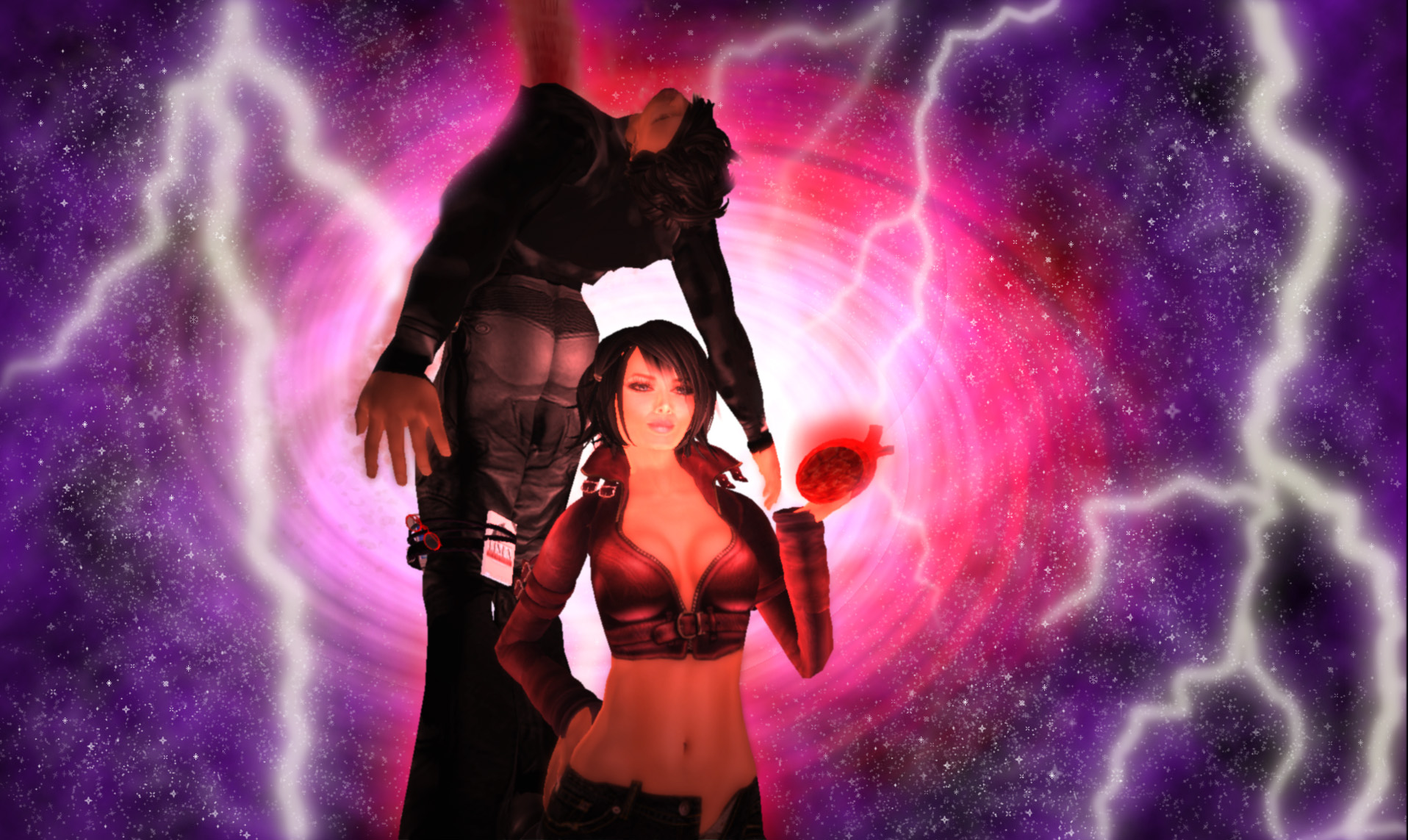
3223947368_76b1819f2d_o

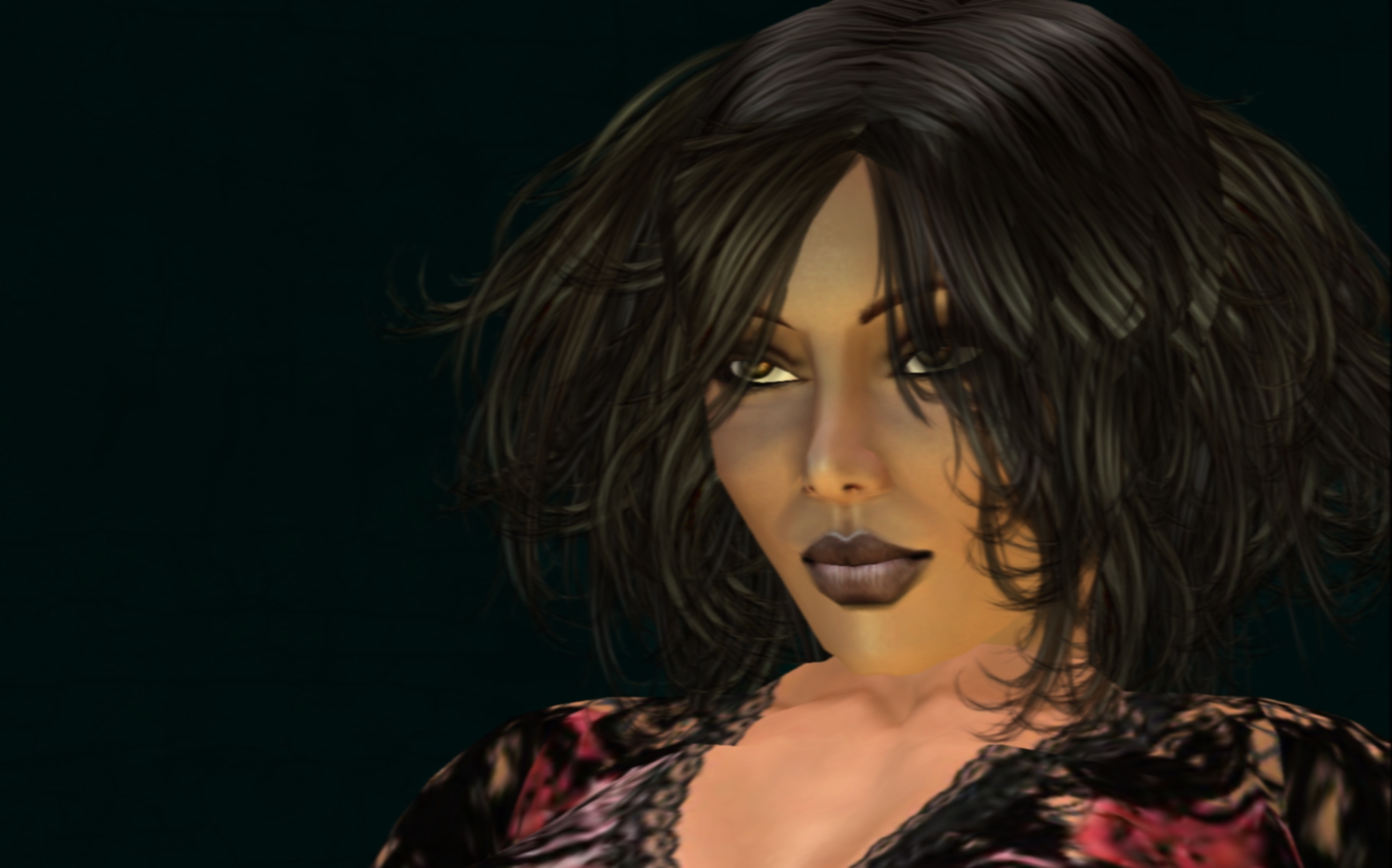
Early on in my time "on the Grid", as Second Life players called it, I developed a fascination with photographing people's avatars. Since your avatar was a reflection of your personality in Second Life — you could change appearance at will, and there was no "level-locked" equipment or anything; you just had to create, find or purchase items — I found this to be an interesting means of coming to understand various people. Above you can see one Kade Klata, someone who was a great friend to me during the aforementioned difficult times, and someone who got me into this whole virtual photography thing in the first place.

Kade disappeared off the Grid one day and I was never sure where she went; wherever you are, Kade, I hope you're happy, and I hope you know you touched my life for the better.

1602324153_14edba8df5_o

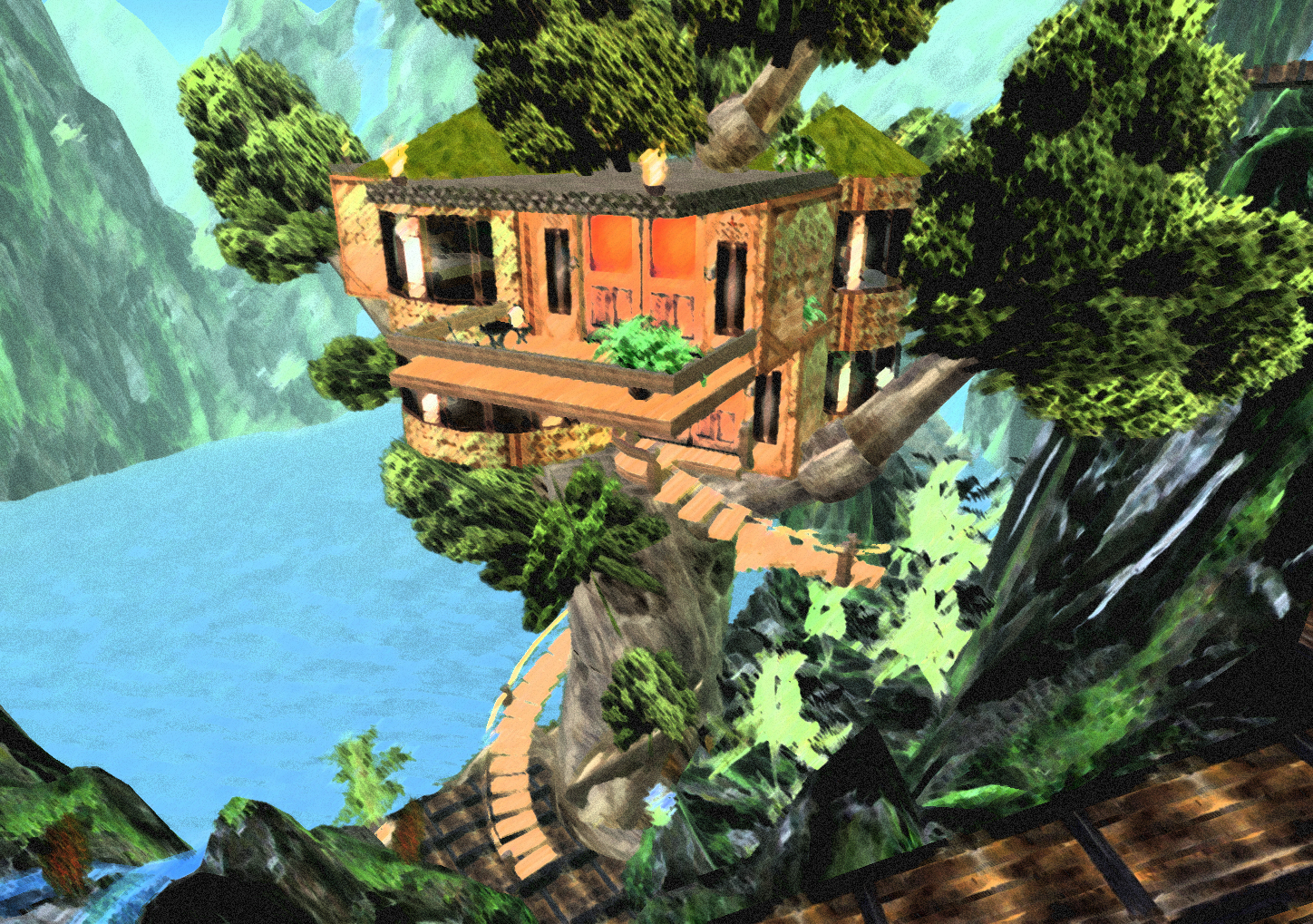
This was an early experiment with using heavily stylised filters to smooth off the rough edges of Second Life's graphics. This particular image was taken in a region called "Botanical", which was renowned for having beautifully constructed scenery. Worthy of note is the fact that all the buildings, scenery and objects in Second Life are constructed by the "players", so someone had spent a lot of time on this place; it seemed only fitting to immortalise it somehow.

3258277477_fbe89bfa7f_o

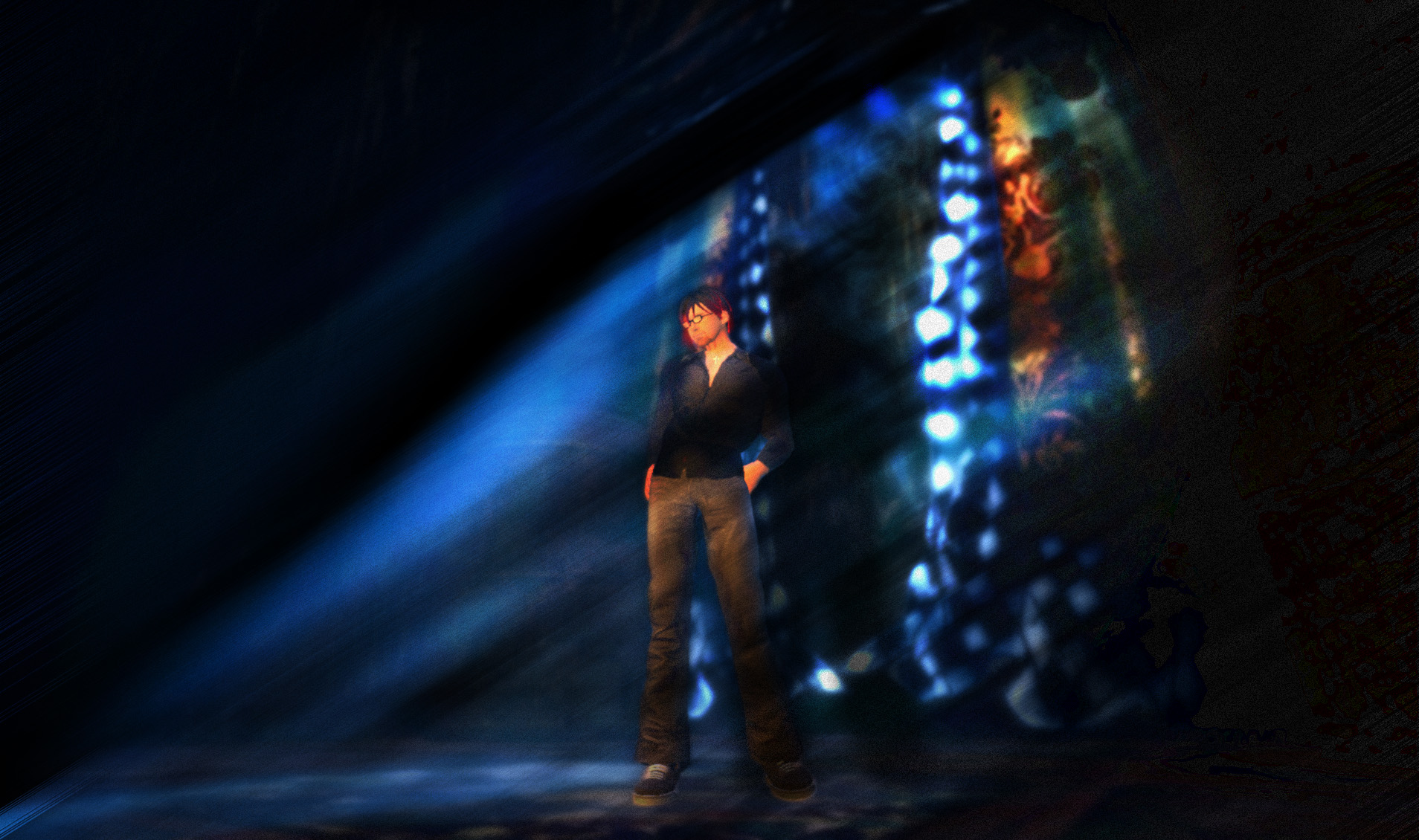
I normally hate taking pictures of myself, but even though I loosely modelled my Second Life avatar on myself, I actually enjoyed putting myself into virtual photographs. This image was in a moody area called "Templum Ex Obscurum"; I forget what its actual purpose was — perhaps just to look pretty — but I was pleased with how this shot came out, and even more pleased with the fancy lighting I managed to create while figuring out how Photoshop worked.

3285581914_daf20efc8f_o (1)

I don't mind admitting that when I was most involved in Second Life, I was somewhat emotionally fragile. One of the things I liked most about that virtual world when I was in it, though, was the fact that there were all manner of ways to express yourself. This image, taking alongside one "Rylan Carling", who graciously agreed to come and model for me, was actually rather cathartic to create. (That's "me" in the background; by this point, I'd been given something of a virtual makeover by a friend.)

3315075174_3e31bdb6f2_o

…Yeah, I was pretty emo around that time. (Hell, I still am; I still like this image and what it symbolised when I was putting it together.) Anyway, enough of that; if you want to see more images from that time, take a peek at my long-abandoned Flickr account.

Final Fantasy XIV

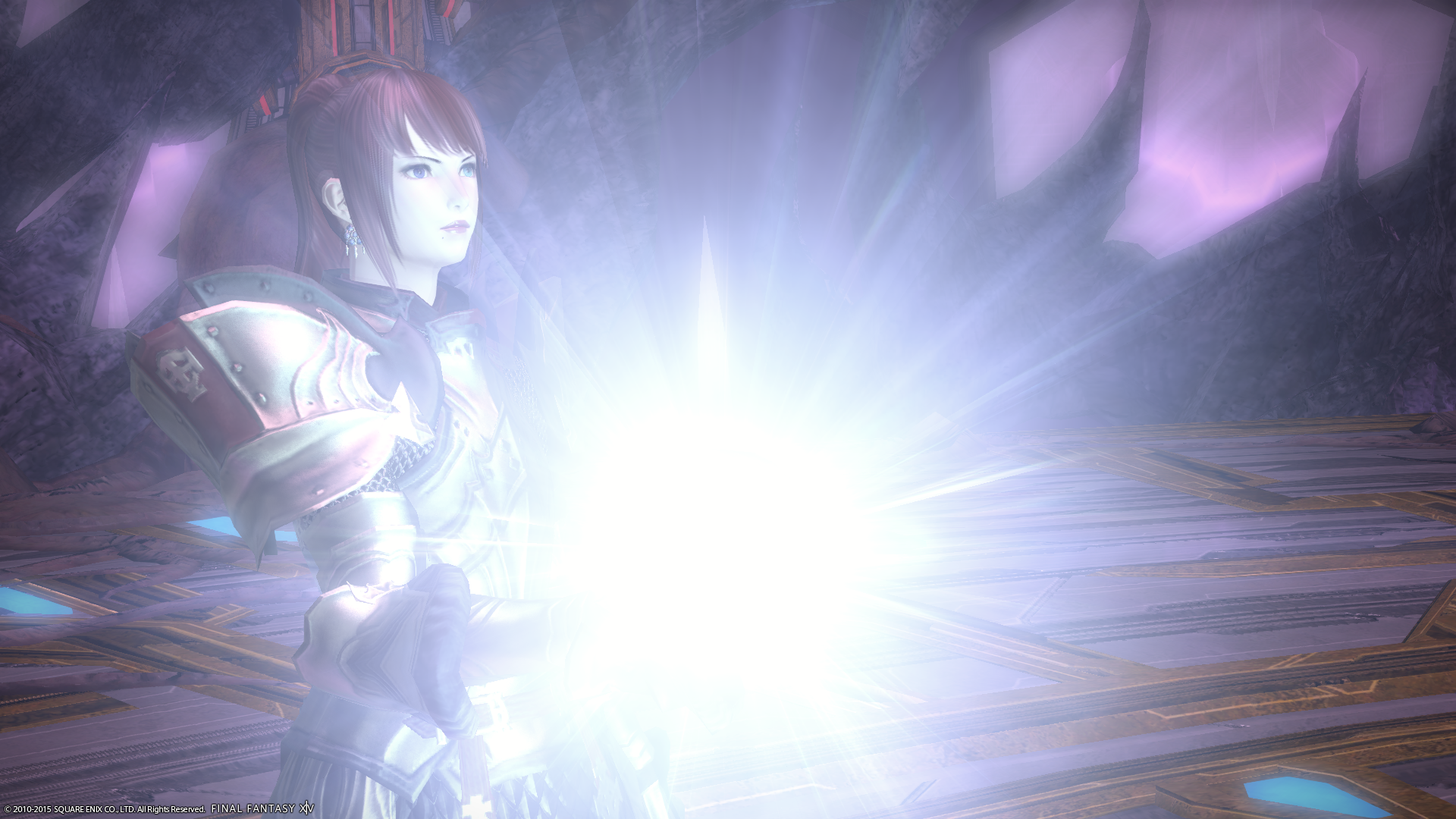
The inherent drama in a role-playing game makes for some great "photos", assuming you can time pressing that screenshot button correctly. Like this:

ffxiv_06092015_212131

Or this:

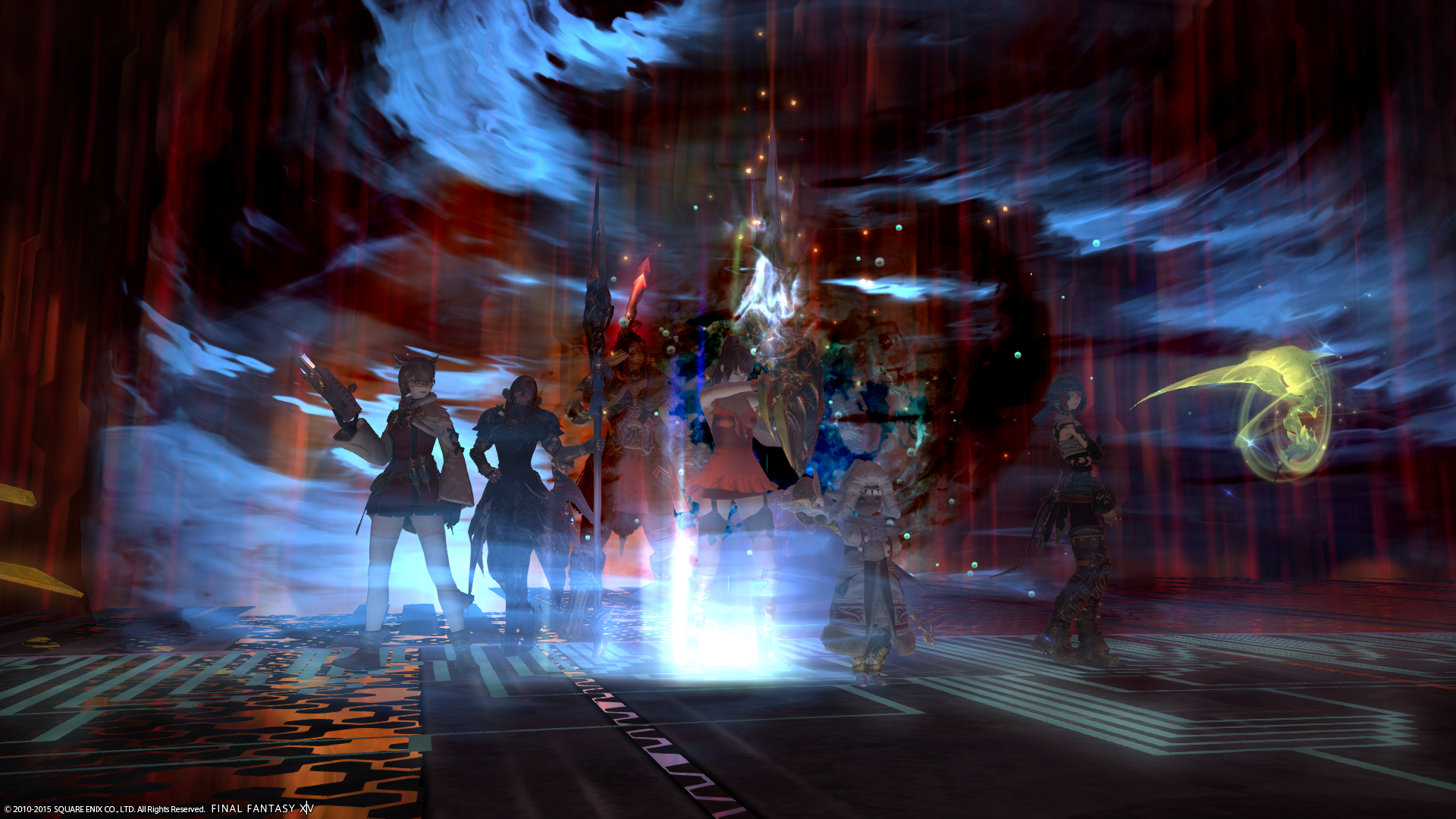
ffxiv_30062015_163714And then, of course, like Second Life, there's the self-expression element of everyone's avatars thanks to the "Glamour" system, whereby you can make one piece of gear look like another.
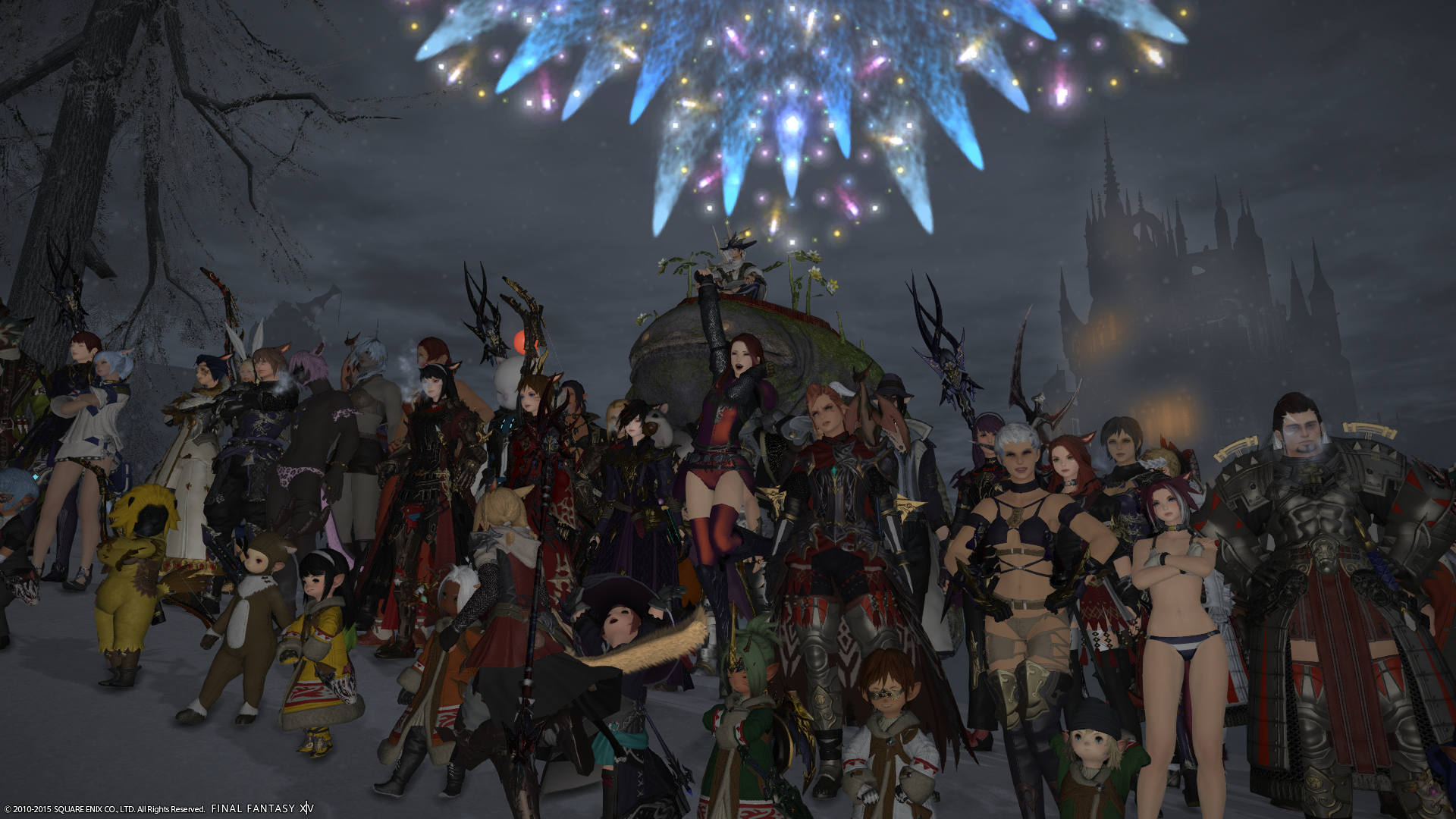
This image is pretty special to me; it's our whole Free Company meeting for a "group photo" shortly before the release of the first expansion pack Heavensward.

ffxiv_01062015_002447

Custom Maid 3D 2

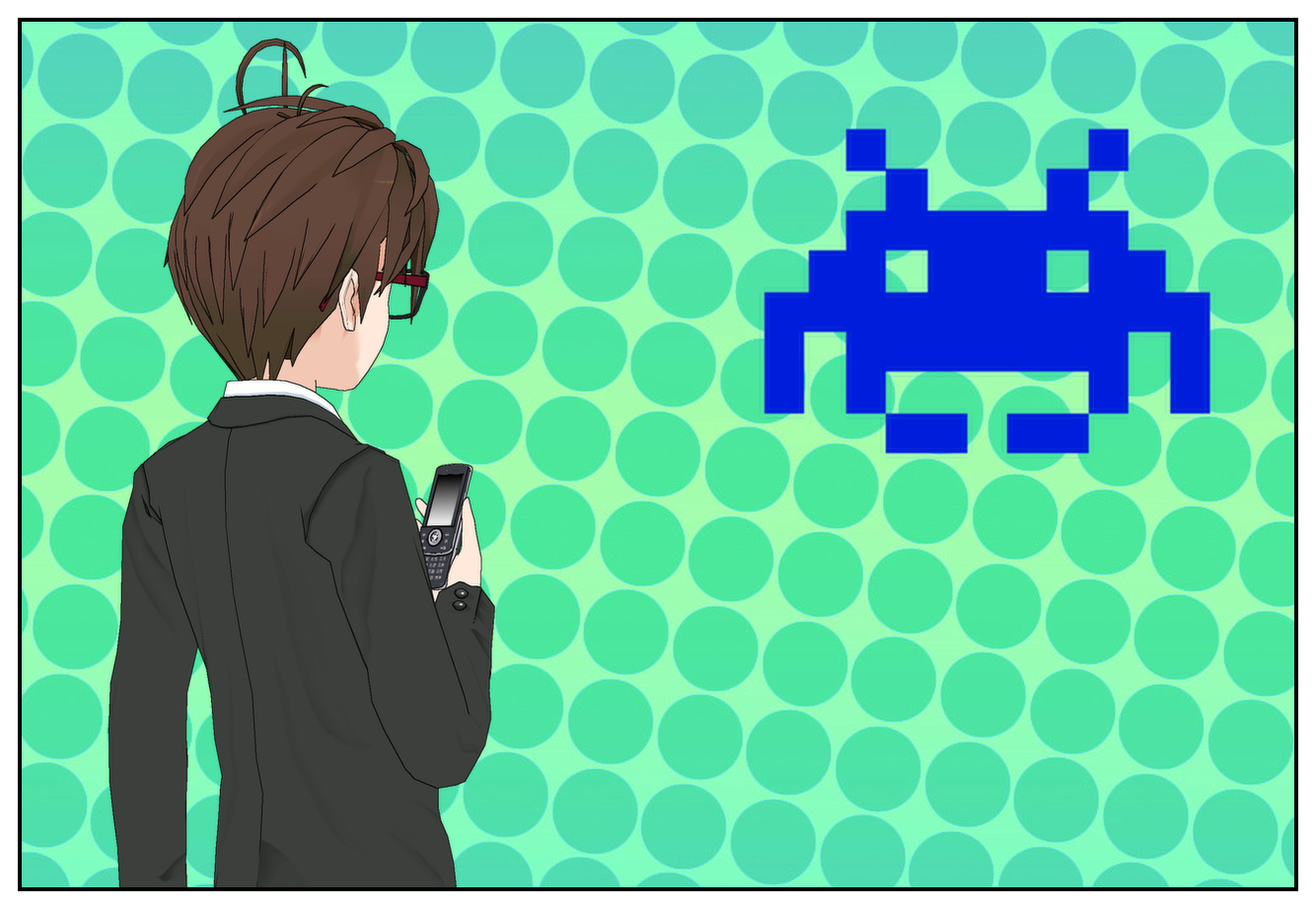
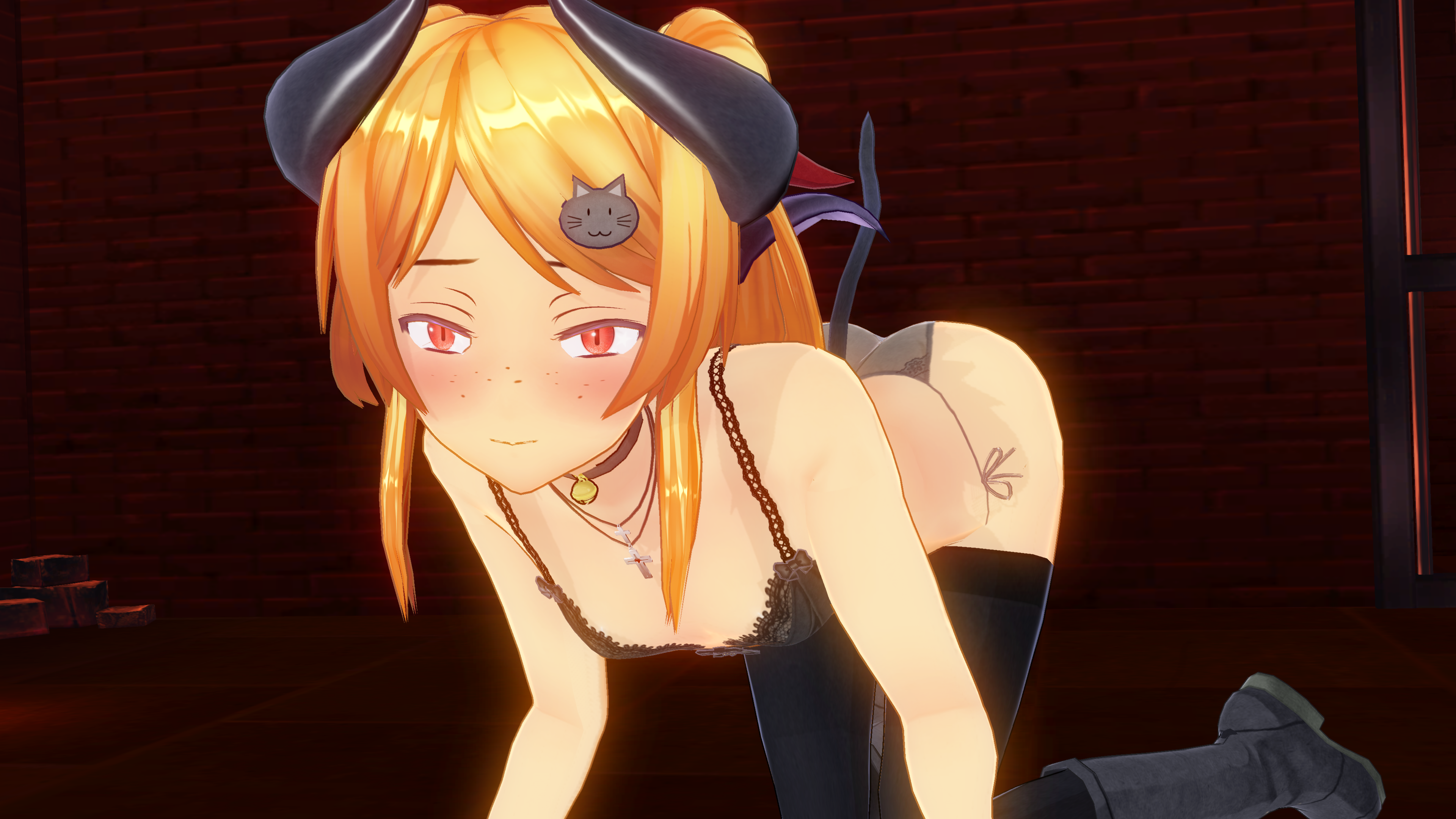
And finally, it would be remiss of me to talk about virtual photography without mentioning Custom Maid 3D 2, which I introduced to you all the other day. Unfortunately, the vast majority of the "photographs" I've taken using this are, shall we say, not entirely suitable for publication on this particular blog (I have a few standards!) but, well, here's a few that I feel I probably can just about get away with…

img20151007103907

The thing that's impressed me most about CM3D2 so far is the fact that it's the closest I've seen 3D graphics get to 2D art. The character models, the art style, the outlining, the cel-shading and the expressiveness of the faces — all of those things combine to create something that is not at all "realistic", of course, but which is a very convincing recreation of the idealised anime style.

img20151007104322

As you'd expect from something with the word Custom in its title, the character creation system in CM3D2 is pretty astounding, allowing you to customise pretty much anything from face and body shape to eye style and whether or not the character has one or two of those cute little "fangs" you sometimes see anime girls depicted with. You can even set how heavy their boobs are. And choose their clothes, obviously. Dressing your maids up is one of the most fun parts of the game that doesn't involve doing lewd things.

img20151007103022

Even the lewd bits are eminently suitable for virtual photography, though, since there are a number of "actions" that simply pose rather than… you know… do stuff. Combine these poses with the control you have over their costumes as well as the camera control mod that allows seriously precise positioning of your viewpoint plus the wonderful ability to make the characters look at the camera on command (assuming it wouldn't be physically impossible) and you have a virtual photo studio that's a whole lot of fun to play around with.

Games are art, yo.

2086: Souls: Reaped

0086_001

I finally got around to beating the Diablo III: Reaper of Souls campaign today. I originally wasn't going to bother, as I was primarily interested in playing the new(ish) Adventure Mode rather than grinding through the campaign again, but I found myself enjoying the experience more than I expected, particularly in Act V.

I often think of Blizzard games as being rather weak on the story front. There are exceptions, of course — Warcraft III was particularly strong, for example — but on the whole, I've never really come to Blizzard games for the story. They are masters of their art when it comes to gameplay, but when it comes to storytelling, there are people out there who do it a whole lot better.

Or at least, that's what I'd been thinking. But replaying the Diablo III campaign and having my first run through the Reaper of Souls Act, I was actually quite surprised to see some reasonably decent writing along the way. I mean, the overall plot is still the sort of thing an angsty teenager would come up with if they wanted to write something dramatic (Angels! Demons! Eternal Conflict! Killing death itself!) but the individual moments that you encounter along the way are actually pretty good, even if some of the more supposedly "shocking" moments — the death of Cain, for example — were underwhelming due to their presentation.

I played through the campaign as the female Wizard, who has an endearingly posh voice and a penchant for sarcasm. Consequently, I found myself liking her a whole lot, which is not something you can usually say about the mostly-mute protagonists of loot-whoring dungeon-crawling action RPGs. Her interactions with some of the more tiresome characters — such as the perpetually grumpy head of the angels — were particular highlights for me. "Know this, nephalem," he said. "You may defeat Malthael, but I will not thank you for it." "No," replied my character, sighing. "Of course you won't. And that's part of your charm."

Since I'd already levelled my Wizard a fair bit in Adventure Mode before running through the campaign, I hit the level cap well before the end and started earning Paragon experience. The last time I played Diablo III, this system wasn't in place, so I was interested to see how it worked. Turns out it makes for an enjoyable endgame experience that doesn't rely on long-winded grinding for currency or large amounts of effort for relatively small, incremental amounts of progress. It would be completely inappropriate for a full-on MMO, mind you, given that it has the potential to totally unbalance your character if you put the time into it, but for Diablo, which has always been a series about seeing how big you can make the numbers that pop out of monsters when you smack them in the face, it's perfect.

If you've never capped a character in Diablo III and are curious, the Paragon system works like this: once you hit the current cap (level 70) your experience bar turns blue from its original orange, but you continue to earn experience as you did before. Early Paragon levels cost considerably less experience than the top end of the regular levels (7 million XP to go from regular Level 70 to Paragon Level 1 vs 83 million XP to go from regular Level 69 to 70) but the amount required increases gradually as you gain levels.

Gaining a Paragon level gives you a point to spend in one of four categories in turn. Your first point is in the Core Stats category, which includes your class' primary stat, which affects damage; Vitality, which affects your maximum HP and defence; Movement Speed, which is self-explanatory; and Maximum Resource, which is the thing your character spends to use skills or cast spells. Your next point is in the Offense category, which includes attack speed, critical hit rate, critical hit damage increase and cooldown reduction. Then there's the Defense category, which includes maximum life, armour rating, your natural regeneration rate and bonuses to your resistances. Then your fourth point goes in the Utility category, which includes area damage, the amount of life you get back per successful hit on an enemy, the amount of bonus gold you find and a reduction to the costs of your skills. Once you've spent a point in each of the four categories, your fifth goes into Core Stats, your sixth into Offense and so on.

The interesting thing about the Paragon system is that it's account-wide — in other words, your Paragon level applies to all your characters, even the ones that aren't yet at the level cap. This means that you can make levelling subsequent characters much easier if you have a decent Paragon level, because they'll be operating at a considerably stronger level than they would normally be otherwise. What's also quite nice is the fact that you can redistribute the Paragon points whenever you like (so long as you're not in combat) and each character can have a different setup as you see fit; the "shared" part is just how many points you have available.

Now I've beaten the campaign properly, I can focus on Adventure Mode, and now I'm at level 70 I can investigate some of the really interesting stuff like Greater Rifts and tracking down the Keymaster monsters. Endgame Diablo III certainly sounds like an intriguing time, and certainly a far cry from the completely non-existent endgame that it launched with. I'm glad I'm coming to it now, though; having experienced MMO endgame play in Final Fantasy XIV, I now understand the appeal of an endgame and why Diablo III needed one, whereas when I originally played the game I didn't really get why people seemed to be so annoyed that it was lacking in level-cap content.

Anyway. Time for bed before I get tempted to try and reach Paragon Level 30 this evening…

2085: Be Good to Your Meidos

0085_001

References to lewd stuff ahead. No actual porn though.

Largely out of curiosity (and in part due to being a filthy pervert) I decided to check out Custom Maid 3D 2 on the recommendation of some friends who also enjoy such things. And I've been pleasantly surprised by what this delightful package of filth offers.

Custom Maid 3D 2, is, like its similarly named predecessor, a sex game. I don't mean that in the way that mainstream press tends to refer to visual novels with explicit content, though it is Japanese, much like the visual novels in question; I mean it's a game where a significant component of the gameplay revolves around sex. I've long been fascinated with various interactive depictions of "virtual sex"; frankly, I find the whole scene to be a rather interesting means of living out all manner of fantasies safely and without hurting anyone, though naturally I hasten to add that nothing compares to actually having a real partner and doing things in the 3D world. I know that during "dry spells" over the years, though, stuff like this has proven to be an adequate substitute, if you know what I mean.

But anyway. I don't want to focus specifically on the pornographic aspects of Custom Maid 3D 2 because although it is hot as hell, the fact it depicts sex is not the most interesting thing about it. No; it's the fact that rather than being a straightforward "interactive porn movie" type of experience, there's actually a surprisingly deep and involved game in there too. Whether or not it is in good taste is another matter, of course, but if you can deal with the sexy stuff, there's an interesting experience to be had.

Custom Maid 3D 2 casts you in the role of the owner of an exclusive club. Your uncle passed it on to you, telling you only the bare minimum of details before buggering off to get married and leaving you with a failing business deep in debt. Essentially, the establishment you find yourself taking ownership of is an "adult entertainment" club where the maids who staff it, among other things, provide "night service" to paying customers. Unfortunately, owing to your uncle apparently being more of a playboy than a businessman, the club isn't in a particularly good state when you get your hands on it; there aren't even any maids left working there aside from your uncle's loyal secretary, who is strictly off-limits for anything other than professional discussions.

What then transpires is that you hire a maid to your own specifications (providing a loose narrative excuse for a shockingly detailed character creator that is almost the most fun part of the package) and then spend ten days "training" her to be a… suitable employee for this type of establishment. This involves a combination of sending her out to classes in the daytime, each of which affect various stats, usually in positive ways, and at night… well, you bang her, obviously.

Here's the interesting part: the sexy bits actually involve a certain degree of strategy and RPG-style resource management, of all things. Before you get it on, you have a certain amount of "stamina" you can spend on setting up a "playlist" of various activities. some of which are conditional on the location and whether or not she's drunk; going over the stamina limit will cause your maid to pass out during the session and perform poorly the following day, so it's in your interests to try and spend this as efficiently as possible.

Once you get started, each "activity" has several different actions you can take. Each one of these has an impact on a number of things according to what the action and overall activity is. Usually, an action will increase some sex-related stats significantly while reducing some of the more "innocent" stats (like "charm" and "leadership abilities") to a lesser degree. At the same time, the action will impact the maid's excitement, mind and reason levels; excitement affects the animations that play (and possibly the effect on stats? I haven't researched thoroughly yet), mind presents a limit on the actions you can perform during a single activity — running out of it means you can't do anything else, though it gets restored when you start a new activity — and reason causes negative impacts on stats to be stronger when it runs out.

On top of all that, the maid gains overall experience for each activity she participates in as well as "mastery" of the various activities. Improving mastery results in stronger, more efficient stat gains when performing that activity, and can also unlock new activities. Yes, we are indeed talking about a game with a skill tree that consists entirely of lewd things. Gaining experience can allow the maid to perform her various duties better — she has a separate level and "class" for sexy and non-sexy duties — and her disposition can change according to the activities she masters and does most frequently. In other words, you can "build" each maid as you see fit, and the game provides a number of special events and achievements as incentive for you to experiment with the maids you hire and discover the different types of character you can create.

It's an oddly fascinating little game, really; while there are doubtless people out there who will likely take umbrage at the very concept (particularly the "training" aspect), those of you with a penchant for the lewder side of life may want to give it a look. Just don't complain to me if you find yourself as engrossed by the gameplay as you are by the rude bits!

2084: Too Soon?

0084_001

In response to The Daily Post's writing prompt: "Too Soon?"

Can anything be funny, or are some things off limits?

There isn't an easy response to this question, because there are so many variables involved that it's simply impossible to state with certainty that "X is always okay to joke about, Y is never okay to joke about".

There are certain topics that are commonly accepted as being "taboo" for joking about, but even these have contexts in which they're appreciated or even welcomed. Jokes about AIDS, 9/11, rape, cancer, disabilities — all of these are fair game in the right context, so part of it is a matter of knowing your audience and determining whether or not now would be an appropriate time to deliver that zinger you've had brewing in your mind for months now. By the same token, of course, one person's completely inoffensive, "safe" subject matter might be shocking and offensive to another person — this is a particularly hot-potato issue when it comes to anything involving religion.

Just to complicate matters, whether or not a joke is "appropriate" for a particular context isn't simply a matter of "don't make jokes using a subject that is personally relevant to the person you're talking to", because that ignores the existence of "black" or "gallows" humour, whereby humour is used as a means of coping with difficult, even horrific things. Just because someone has AIDS, say, doesn't mean that you shouldn't joke about AIDS with them, though naturally your relationship with that person should be at such a point whereby you're absolutely sure they won't mind you making a joke about AIDS with them. To simply make a joke about one of these "taboo" subjects without establishing whether or not your prospective (and perhaps unwitting) audience is okay with you is insensitive, and can leave you looking like a complete asshole.

Aside from this consideration, though, I honestly don't think that anything is particularly "off-limits" for comedy in general. I personally wouldn't pepper my own conversation with words like "faggot" and "nigger", but there are people out there who do, and manage to be genuinely amusing — i.e. not just provoking shock value — in the process. Louis C.K., for example, does a great bit about the words "faggot", "cunt" and "nigger", which tend to be regarded as the most awful words in the English language, at least in part due to the baggage that at least two of them carry from history.

And I say that I wouldn't pepper my own conversation with words like that; I mean I wouldn't pepper my own conversation with words like that if I was with people that I didn't feel particularly comfortable being offensive with. When I'm with my closest friends, meanwhile, all bets are off; we hurl the most hideously offensive insults at one another while we're playing games or just hanging out, but none of us mean any of them, nor do the things we say reflect the way we actually feel about issues such as racism and homophobia — it's simply something we do to let off steam when we're around each other. Modern society — particularly these days — is so concerned with the appearance of propriety and not offending anyone that it can actually be quite liberating to just let rip with a string of the most awful, horrible, disgusting things you can think of when you're in an environment where it's safe to do so. It is, of course, when you start taking those words seriously or using them in inappropriate contexts that you need to take a bit more of a look at what you're doing.

So my answer to the question, then? Yes, anything can be funny, given the right context. Nothing is off-limits — or nothing should be off-limits, anyway. Because if you can't laugh at awful things, the world would be a very depressing place indeed.

2083: Insomnia

nuttybass_001

I find it really difficult to get to sleep. I think I always have to a certain degree, but I feel like I've become a lot more conscious (no pun intended) of it in the last year or two.

My issue, I think, is that I don't really know how to make myself fall asleep. I can lie down in bed, get comfortable, close my eyes and everything, but actually getting my body to go "It's now safe to turn off your computer" proves somewhat difficult; many is the night I find myself lying awake until 2 or 3am attempting to drift off and failing miserably, even as my wife Andie succumbs to slumberland in a matter of seconds next to me.

The fact that I don't really know how to make myself fall asleep is coupled with the fact that night-time, when it's dark and quiet and oddly lonely (even if you're sleeping next to someone), is the time when my brain generally decides that now would be a great time to start thinking about all the things I don't really want to think about.

I have anxiety issues, and these manifest most clearly during the night. The exact circumstances vary from night to night, but at present the most commonly recurring one is thinking back to my last day at my previous job and remembering how awful the people there made me feel, then contemplating what might have happened if I had allowed myself to fly off the handle at those people who had made my life a misery. So vivid are the images and the feelings that these thoughts give me that they make me feel even more anxious — and, naturally, the more I try not to think about them, the more the images loop around and around in my mind.

Ultimately, I do get to sleep every night, but given how long it generally takes, I often find myself pretty tired in the morning and disinclined to get up at a "normal" time unless I absolutely have to; oddly enough, I find it really easy to fall asleep in the morning after having woken up once, and one side-effect of this that I find intoxicatingly addictive in many ways is the fact that the dreams I have during these morning sleeps are far more vivid than any I might have during the night. It's rare that these dreams feed off my anxiety, either; generally, they are interesting, or strange, or exciting rather than scary, unpleasant or upsetting. I look forward to days when I can have a guilt-free lie-in and enjoy these experiences, but I do wish I could get my sleep patterns back to being a little bit more "normal".

Still, at least they're not quite as fucked up as they were five years ago when my first wife and I had split up; my body clock ballsed up so much during that stressful period that I couldn't get to sleep before about 5am, and I would sleep through until about 5pm without waking up at all, making it somewhat embarrassing when I'd go into the local shop to get provisions and the cashier would ask how my day had been. I guess I should be thankful for that, at least.

Tonight, it may be 3am but I have been enjoying an evening of pleasant company with my regular gaming buddies, so I haven't yet gone to bed. I feel I may not have too much difficulty drifting off tonight, for once, but we shall see, I guess!

2082: Naked Fairies Blow Shit Up

0082_001

I seem to be having a bit of a shoot 'em up kick at the minute, which is no bad thing, since I have quite a good selection of them now. Most recently, aside from Eschatos, which I talked a bit about recently, I've been very much enjoying Raiden IV: Overkill on PC.

I like the Raiden series a lot. Raiden Project — an enhanced port of Raiden I and II — was one of the first games I played on the original PlayStation, and I've followed the series on and off ever since. Raiden IV, I'm pleased to note, remains very much true to the series' roots while being rather more up-to-date in terms of presentation — the recently released PC version happily runs in full 1080p resolution, which looks glorious.

One of the reasons I like Raiden — and Eschatos, for that matter — is that it's not a bullet hell shooter. I enjoy bullet hell shooters, don't get me wrong, but sometimes it's nice to enjoy something that isn't quite so buttock-clenchingly tense at all times. This isn't to say Raiden is without its moments of tension, mind; there's plenty of buttock-clenching throughout the course of a playthrough, but these instances tend to be spread out a bit more than in something like DoDonPachi Resurrection.

Another reason I like Raiden is its weapon system — and this is another contrast from many bullet hell titles. Rather than having a weapon that is enormously overpowered from the very beginning of the game, Raiden has always had three different weapons to choose between, plus three different subweapons to go alongside them. The standard Vulcan cannon has good power and, when upgraded, can happily fill the screen with a wide volley of bullets. The blue laser, meanwhile, is rather narrow, even at its highest power level, but is also the most damaging of all the weapons. And then there's the infamous "toothpaste laser" in the purple containers, which remains one of the most inadvertently (or perhaps deliberately?) hilarious weapons in a shoot 'em up ever, tying itself in knots as more and more enemies come onto the screen.

Interestingly, in Raiden IV you actually have several different ships to choose from. There's the default Raiden IV ship, which is like the ship from the previous games, only the basic, low-level Vulcan cannon you start with has a bit of a spread shot already applied to it. Then there's the ship from the previous games, whose basic Vulcan cannon fires straight ahead and only spreads when upgraded. And then there's a naked fairy — fairies have traditionally been the hidden, secret score items in Raiden games — that is much more agile than the standard fighters, and has her own complement of weapons that behave rather differently to the default ones.

Raiden IV Overkill is a comprehensive package with a number of different ways to play, each of which force you to approach it a little differently. The standard Arcade mode is where I've been spending most of my time, but the titular Overkill mode is fun, too; here, when you destroy a non-popcorn enemy you can continue shooting it to increase an Overkill meter, with bigger bonuses awarded for more post-mortem damage inflicted before it finally explodes. This forces you to play a bit more aggressively in order to score Overkills and collect the resulting medals, and it's an interesting twist on the original formula.

I am absolutely rubbish at Raiden IV so far, but as I've managed to improve my skills somewhat at Eschatos with a little practice, I don't doubt I'll eventually be able to get all the way through Raiden IV on a single credit, even if it's only on the easiest difficulty.

Still, as monstrously difficult as it is, it's a whole lot of fun, at least. I highly recommend grabbing a copy if you enjoy a good old-fashioned shoot 'em up.

2081: Adventures in Sanctuary

0081_001

On a bit of a whim — well, after talking a bit about it with Andie the other day — I reinstalled Diablo III and thought I'd give it another go. I bought the expansion pack a while ago, anyway, and hadn't really explored it all that much; my main stumbling block with it was that in order to access "Adventure Mode", which was the thing I was really interested in, you had to complete the campaign storyline. I had completed the campaign storyline, but due to Diablo III's online nature coupled with Blizzard's region-locked servers, the fact I had done so on the North American servers back around the game's time of release didn't allow me to pick up where I'd left off in Europe.

Fortunately, I timed my return well: a new Season has just begun, and Seasonal characters can jump right in to Adventure Mode without having to complete campaign first. So that's exactly what I did. (For the uninitiated, Seasonal characters in Diablo III are similar to Diablo II's ladder characters; their progress is tracked separately from your regular characters, and you can't twink them out with gear you've put in your Stash on previous characters. In other words, they effectively allow you to start the game "from scratch" and see how quickly you can accomplish things like getting to the level cap and suchlike.)

Adventure Mode, as it turns out, is exactly what I hoped it would be: in other words, exactly what the Diablo series should have been doing for a long time: providing a freeform, flexible, grinding-and-loot-whoring experience where even though there's no real "finish" to it, there are plenty of short- and long-term goals to pursue as well as short mini-quests you can play around with for half an hour or so and still feel like you've achieved something.

Adventure Mode, when you start out, is basically split into two main components: Bounties and Rifts. Bounties are quests that are scattered around the game world; each of the game's five Acts have five Bounties available at any given time, and completing all five rewards you with Stuff. One of the Acts has a Bonus Bounty attached to it, too, which means you get more Stuff when you complete all five Bounties. The Bounties are different each time you play; sometimes it will involve killing the big bosses of the game, others it will require you to complete special events and sidequests. There's a nice amount of variety, and each session feels quite focused as a result.

Rifts, meanwhile, are self-contained dungeons that basically take everything in the game, put it all in a blender and then tell you to go have fun. You'll face a random combination of enemies in a random combination of dungeons, and be tasked with defeating a specific amount of enemies to summon a boss, at which point you have to defeat the boss to clear the rift. Rifts differ slightly from normal dungeons in that they have some interesting "Pylons" around the place that imbue you with significant special effects that are more powerful than the regular shrines you find in the base game. One particularly enjoyable one, for example, sees you automatically spewing lightning that pretty much instantly kills most foes for about 30 seconds or so, allowing you to build up some impressive multi-kill combos.

Once you reach a particular level, you can start tackling Greater Rifts. I don't know how these work yet, but I'm interested to find out.

What I particularly like about Adventure Mode is that it abandons all pretence of having a coherent story — something that the Diablo series has never really handled all that well, despite its lore being interesting and well-crafted — and instead fully embraces its "game-ness", which is why most people keep playing Diablo, after all. Diablo III's story was enjoyable enough the first time around but ultimately forgettable, and so I wasn't particularly enamoured with the idea of running through the whole campaign again. And once you've beaten it once, you probably skip all the cutscenes and conversations anyway, so a dedicated mode that trims out all that fat and means that you're not forced into following the campaign's linear sequence of progression is wonderful. I just wish it was automatically unlocked for non-Seasonal characters, but it's not the end of the world; when the current Season ends, Seasonal characters become regular characters, at which point I can take my geared and levelled Seasonal character through the Campaign on the lowest difficulty and curbstomp everything in a couple of hours to quickly unlock Adventure Mode, I guess.

Anyway, I've been enjoying my return to Sanctuary, and it's been a really pleasant surprise quite how much the game has changed since I last played it shortly after its initial release. It's grown into a really solid, interesting, enjoyable game that will appeal greatly to those who enjoy grinding and seeing numbers go up into astronomical values; I don't know how long I'll stick with it this time around, but it's proving to be an enjoyable distraction at the moment.

2080: Five Stones

0080_001

I've finally crossed a significant milestone in my weight loss journey: I've now lost over five stone in total, a loss that also coincides with me dropping into a new stone bracket that represents the lowest weight I can remember being for a long time. I still want to — need to? — lose at least a couple more stone from here, but I've come a long way and I'm genuinely happy with what I've accomplished so far.

For those who have come to my blog more recently, I started Slimming World back in February of this year having decided that enough was enough, and that I really needed to lose some weight. This wasn't just a vanity thing; my weight had gotten to the point where I was physically uncomfortable. I was having trouble fitting into "normal"-sized chairs; I was encountering situations and pieces of equipment that I was too heavy to use — I had to skip out on part of a friend's stag night because they were doing some activities that I was significantly overweight for; and many of my clothes didn't fit any more.

More than anything, I was miserable. I suffer with depression anyway, but my weight problem was making things worse by having a physical effect on me. I was perpetually out of breath; I couldn't get comfortable in a chair or in bed; it was difficult and embarrassing to wear clothes that I knew once fit me. I felt physically repulsed when I saw my body in the mirror, I felt ashamed when I saw my stomach hanging down out of the bottom of a T-shirt I was wearing, and, to be perfectly frank, I was horrified that I couldn't see my knob when I looked down.

I had been aware of my weight problem gradually getting worse over the course of the last few years — probably at least the last ten years or so, if I'm perfectly honest — but every time I had tried to do anything about it previously, I had failed to have a significant impact. I'd tried dieting of various kinds — Atkins left me with a perpetual headache, and Slim-Fast was like eating wood chippings — as well as intensive exercise routines, and nothing had seemed to shift the weight at all. It was demoralising and upsetting; I didn't know what to do. I considered trying to be one of those people who is happy about being fat — or at least, someone who accepts that they're fat — but I couldn't do it. I was too ashamed of myself.

It's not an exaggeration to say that Slimming World has changed my life for the better. I first came to it because my wife's sister had had a considerable amount of success with it. Skeptical, I went along to a meeting, found out about their "food optimising" methods — a surprisingly flexible, enjoyable plan that doesn't really restrict you so much as make you think about making sensible choices — and stuck carefully to it. I lost a big chunk of weight in the first week, and have been losing weight pretty consistently ever since; with only two or three exceptions since February, I've lost at least a pound pretty much every week, and I certainly don't feel like I'm starving myself or anything, just being careful about what I put in my mouth.

Changing the way I think about food isn't the only way it's changed my life for the better, though. I'm more positive about myself and feel like I have more self-esteem as a result. I would still describe my sense of self as "somewhat fragile" if pressed, of course, but I no longer repulse myself when I see my reflection, which is progress. Now, when I see my body, I can think "yes, that's going well, but there's still a way to go" rather than "ugh, that's disgusting, who would ever want to look at that?"

Since that February, I've had a difficult time. I was ousted from the job I had back when I started under circumstances that, on reflection, actually feel somewhat "traumatic", for want of a better word — I keep remembering my last day, and how horrible those bastards made me feel; it stops me from sleeping quite often — but my progress with my weight loss has helped keep me sane even as I struggle to scrape together some meaningful work and income to survive into the future. And I don't think the importance of that should be underestimated; feeling like one thing is going right in your life helps you to believe that other things can eventually go right, too — you just might have to work at it a bit.

Five stone, then. That's a hell of a lot. Our previous Slimming World consultant used to bring in these little sandbags that weighed a pound, half a stone, a stone and so on; a stone is actually pretty heavy, and I was carrying five more of those around with me all day every day back in February. No wonder I was knackered and uncomfortable all the time. I hope I never get back into that situation — and I don't think I will, either.

2079: WTF is Wrong with Video Games? Absolutely Nothing

0079_001

Yesterday, social media was abuzz with something stupid that gaming site Polygon published. This is, of course, nothing unusual, since Polygon appears to have shifted its identity from "reinventing games journalism" to "posting the most idiotic things possible in the name of those sweet clicks from people who think we're dumb, but really they are the dumb ones for clicking on it, oh wait, don't use archive.is please, stop it, my aaaaad revenuuuuuue".

Said article was called WTF is Wrong with Video Games? and was, in fact, an excerpt from an e-book of the same name by self-professed "Mean Guy" Phil Owen. As the title suggests, it's yet another in a long series of navel-gazing articles that suggest video games need to "grow up" if they really want to be respected as art. And the main thrust of Owen's argument throughout the piece is that "gameplay" gets in the way of "art".

Dara O'Briain did a good comedy routine about Call of Duty a few years ago in which he commented on the seeming absurdity of a game restricting access to the rest of the story based on your skill — and yet it's something that, over the years, we've become accustomed to. The concept of "story as reward" is a powerful motivation for many game enthusiasts — I'm one of them — and being able to advance an enjoyable story as a result of proving your own skills is often inherently more satisfying than just having a story served up to you passively.

But Owen's argument is also a gross oversimplification of the situation. Let's ponder a few things.

The interminable game/not game argument

As a medium, video games have expanded and flourished enormously over their lifetime — far more quickly than any other medium in history. Early games were technically limited and as such tended to focus on the mechanical aspects while making narrative little more than an afterthought. In other words, the technology simply wasn't there for games to be able to tell a compelling story convincingly, so as such the mechanical aspects were emphasised, because even with primitive technology, it was possible to make something that was fun to play.

Today, of course, there are very few technological barriers to realising a creative vision. Modern 3D technology is more than capable of rendering photo-realistic scenes at convincing framerates; virtual reality allows us to immerse ourselves fully in virtual worlds; and many games have production values that rival the most expensive movies. But at the same time, alongside this improved technology has come the understanding that "video game" these days means far more than its literal definition. "Game" no longer means just something in which you prove your skill or master mechanics; it can refer to all manner of interactive entertainment, whether or not there's a way for you to "lose" or "win".

This aspect of things is what gets a lot of self-professed hardcore gamers' backs up. "Gone Home isn't a game!" they'll cry, since Gone Home is the habitual poster boy for being "not a game". "Visual novels aren't games! Walking simulators aren't games!"

Well… yes they are, assuming we're using the term "game" as is most commonly used these days to refer to any form of interactive entertainment, however limited the interaction might be. They may not be the sort of games you want to play, but that doesn't make them not games by the popular definition. All they show, really, is that the term "game" has really become woefully inadequate to describe the diversity of experiences we have these days. And none of them are "invalid" or "need to grow up"; some of them simply might not appeal to particular groups. And that is absolutely fine.

Games as art

I've been a believer in games as art since I played Final Fantasy VII for the first time, and its story blew me away with its emotional intensity and drama. It may be clichéd and laughable these days, but back on its original release, it was incredible. And I've held strongly to the fact that games are art ever since, with my understanding of what this really means changing and growing over time.

The mistake a lot of people make — Owen included — is assuming that "art" is synonymous with "narrative", and this absolutely isn't the case at all. Sure, some of the most explicitly "artistic" games out there place a strong focus on their narrative, but there's plenty of artistry in purely mechanical games, too.

There are few places where this is more apparent than in the more technical side of arcade-style games: specifically, fighting games, shoot 'em ups and rhythm games. Fighting games — good ones, anyway — are precisely and immaculately tuned to be balanced in such a way that skilled players can make the on-screen characters do exactly what they want as the result of split-second decisions. Watching skilled fighting game players going at it is a thing of beauty, and something that relatively few of us can hope to master to quite such a degree.

Shoot 'em ups, meanwhile — again, good ones, anyway — are crafted in such a way as to be intricately choreographed, enemy waves hurtling onto the screen in such a way as to be both positioned in a way for the player to be able to defeat them and to be aesthetically pleasing at the same time. Bullet hell games become a ballet of the player sprite weaving through screen-filling, moving patterns that, although initially appearing chaotic, are in fact orderly, predictable and navigable.

As for rhythm games, well, anyone who has played Project Diva f on Hard difficulty or higher will know well the fact that playing that game is more playing a percussion part for an actual piece of music from memory than paying any attention to what is actually happening on screen at any given moment. Just as shoot 'em ups are choreographed, so too are rhythm games, with player inputs complementing the existing music in such a way as to immerse the player in the creative work in a way that simply isn't possible if you're listening in a more passive way.

Games are art, and art doesn't mean narrative. Deal with it.

WTF is wrong with video games?

Really? Nothing. Nothing at all. There may be some individual games that you, personally, don't care for or enjoy playing, but that doesn't mean the amorphous concept of "video games" has anything wrong with it. It simply means that you're not playing the right games for you.

This, I think, is a key problem with Owen's argument that the "game" gets in the way of the "art" (meaning "narrative", in his case). Some people like that. Some people like being rewarded with story, or in-game trinkets, or numbers going up or whatever — and that's an important part of the gaming medium as a whole. It's not something that is present everywhere in gaming, of course, and when inappropriate mechanics are shoehorned into a situation where it really doesn't make sense, it can be jarring and uncomfortable. But a lot of designers these days have a pretty good idea of what elements go well together with what. Naughty Dog made the decision that crafting shivs in The Last of Us complemented the game's post-apocalyptic storyline, and the game as a whole was well-received for its combination of storytelling and gameplay.

At the other end of the spectrum, of course, we have stuff like The Fruit of Grisaia, which is almost completely non-interactive — there are only five decisions to make in a single playthrough, three of which are totally irrelevant for four out of the five routes — and yet still manages to be incredibly compelling. So the kind of experience Owen is apparently looking for — interactive narrative without any requirement for skill — already exists, and is pretty damn good, too. Not only that, it comfortably exists alongside games that are pure skill — the aforementioned fighting, shooting and rhythm games — without anyone needing to tell each other that what they're playing "isn't a game" or that their experiences are somehow invalid.

I think the only W that is TF with video games right now is the unreasonable expectations and preconceptions some people come to the medium with. Video games are not everything to everyone, and neither should they be. No form of art is universally appealing to everyone, and video games are no exception. If you object to crafting shivs in The Last of Us, don't play The Last of Us. If you object to wandering around a house without killing anything in Gone Home, don't play Gone Home. It's not as if you don't have any other choices as to what you can experience from a medium that has become as incredibly broad and fascinating as gaming in 2015, and it can sometimes lead to pleasant surprises if you step out of your comfort zone and try something new once in a while.

Let's not water down and homogenise gaming into a single, bland, lowest-common denominator, non-offensive, "universally appealing" form; let's instead celebrate all the different experiences we can have on our computers, consoles, handhelds, phones and tablets. Let's marvel in how easy it is for us to explore new worlds, to put ourselves in the shoes of another, to immerse ourselves in narratives more deeply than any other medium, to challenge our prejudices, to show our skills in ways that don't require physical strength or even mobility and to engage our emotions in everything from a feeling of "fun" to blood-curdling "terror".

WTF is wrong with video games? Absolutely nothing, so stop moaning and go play something.