2294: Partners in Space Empires

0294_001

Finally got the chance to try out the physical version of Star Realms today, and it turns out to be an excellent game that appeared to go down well with all four people who were playing it.

I was particularly interested to try out the physical version of Star Realms because it provides the opportunity to play in ways other than the head-to-head two-player default style that the computer and mobile versions offer. You need more than one deck to do so (one deck per 1-2 players) but since the game is not expensive in the first place, getting enough cards to play with up to 6 people is still eminently affordable, and probably cheaper than many other, bigger-scale games.

We played in two different ways: firstly as a "free-for-all" game in which anyone around the table could attack anyone else on their turn, including splitting their combat scores between multiple opponents if they saw fit. The climactic moment of this particular game came when my friend James scored a massive 34 points of damage on my friend Tom, taking him down to just 7 Authority remaining. Conveniently, the hand I had drawn for my next turn — I was after James — had exactly 7 damage worth of combat power in it, so Tom was swiftly dispatched, to our great satisfaction; Tom generally beats both James and me in most games, so it's always a genuine delight to utterly destroy him.

Following that, we tried a team game in which two two-player teams face off against one another, each team starting with a single Authority pool of 75 instead of the usual 50. In the team game, both players on the team play simultaneously and have their own "in-play" area, hand, draw deck and discard pile, but can pool the Trade and Combat resources they accumulate by playing cards. This means that the game's "ally" abilities (which tend to trigger when multiple cards of the same colour are on the table) can only happen within an individual team member's in-play area, but players can pool their resources in order to more easily acquire expensive cards or deal significant amounts of damage to their opponents.

I particularly enjoyed the team game; the dynamic was very different to the free-for-all multiplayer and two-player head-to-head variants, and the cooperative aspect worked well. In many cooperative or team-based games, "alpha player" syndrome rears its head, with one player tending to dominate discussions to such a degree that teammates go along with whatever they say without any real input. In Star Realms, however, the fact that each player is building their own deck — and teammates are mutually agreeing on how to proceed — allows for them to feel like they're taking independent actions, but also to feel as if they're contributing to the overall effort. Discussion and collaboration is essential to success — and can lead to some spectacular combos of cards hitting the table — but at no point did I feel like one player was dominating the table talk, nor did I feel like the game was especially unbalanced when played in this way. In fact, there are many aspects of the game that actually feel more balanced when played in a team game — certain abilities appear much stronger and more useful than they do in the free-for-all or head-to-head game, and specialising your deck with particular colour cards becomes even more important than it already is.

Star Realms was a resounding success, then, which I'm pleased about. It's a simple, quick and easy to set up game that has a nice blend of theme and mechanics. I'm looking forward to playing it some more in the near future.

2293: Scorched Earth

0293_001

Had the pleasure of playing a game of Netrunner this evening. I still don't know the game all that well, but with each new game I'm learning new things about it — most notably what cards to expect to come up against, how to counter them and, most importantly, what not to do.

Tonight, the main lesson was the existence of a card on the Corporation side called Scorched Earth; this is an Operation (something that takes effect immediately when you play it) that, for the low, low price of just 3 Credits, allows the Corporation to immediately and unavoidably do 4 damage to the Runner if the Runner has a Tag on them. Given that the Corporation deck in which Scorched Earth appears has a number of security programs that automatically give the Runner a Tag, Scorched Earth appears to be a very real and constant danger, and the way to deal with it is to ensure that you don't end a turn 1) with a Tag on you and 2) with less than 4 cards in your hand. As it stood, I did end the turn with 3 cards in my hand and a Tag on me, meaning that the 4 damage immediately and unavoidably killed me horribly. And after I was doing so well at stealing my opponents' Agenda cards, too.

I really like Netrunner, even though I haven't played a whole lot of it so far. It's very strongly thematic, despite being a game in which you primarily focus on the mechanics of the cards you play. The lore is clearly very well thought out, as the various Corporation and Runner decks available are very consistent in their overall themes — one Corporation deck (Jinteki) is all about being sneaky and laying traps for unsuspecting Runners, while others focus on acquiring income, Tagging the Runner or all manner of other nasty things.

I don't yet know the game well enough to feel confident about building my own deck, but the starter decks that the basic Core Set comes with are providing more than enough variety for me to be getting on with. Given that it's pretty rare you'll get through a whole deck in a single game — in fact, the Corporation loses if they get through their whole deck — I find that I'm still seeing new cards with each new game I play, which is nice, though not necessarily entirely conducive to developing effective strategies for the game. I am at least getting a feel for how the different factions play; tonight I played the Anarchs faction of Runners, who have a strong emphasis on playing Virus programs, which become more powerful and effective over time or through repeated use. This has, I think, so far been my favourite Runner faction to play, but I don't think I've had the opportunity to try the Criminals yet, who, I believe, focus on acquiring money, which is very important. (I, in fact, struggled a bit for cashflow in this particular game until the neutral Armitage Consulting cards came out, allowing me to earn a little more per turn rather than a measly 1 Credit for 1 Click).

I'm interested to play more. I don't know if I'll ever be good enough to play at a tournament level or anything like that — probably not, to be honest — but I certainly enjoy the experience of playing it. It's a game that is surprisingly straightforward to understand once you decipher the basic rules (and the non-standard, asymmetrical terminology it uses for different parts of the play area) and, more importantly, pretty quick to play, too. It's easy to set up, highly portable and expandable, though I will likely hold off on acquiring new packs of cards for it until I have a better handle on the basic mechanics and the ways the different factions handle.

We'll hopefully be playing a bit more tomorrow. Now I know to watch out for that damned Scorched Earth cards, I can hopefully survive a little longer without embarrassing deaths such as the one I suffered this evening!

2292: Thirty-Five

0292_001

It was my birthday today; I am now thirty-five years of age, which means on some forms I'm officially in the next age bracket. If ever there were a more obvious marker of our respective mutual creeping towards the grave, it is surely moving down through the age ranges on official forms. I'm not sure if this means I count as "middle-aged" or not yet and honestly I don't really care all that much; age has always just been a number to me, and, for better or worse, I've always preferred to act the age I feel rather than the age I am.

It was a pleasantly quiet day today — something much-needed for both my wife Andie and me after numerous recent stressors. We had a lazy morning, Andie made a "mug cake" in the microwave for me (delicious), and then we went out to our local Japanese eatery Zen for some sushi and deep-fried goods (also delicious). The remainder of the day has been spent writing an article about Senran Kagura's art and soundtrack, playing Final Fantasy X HD and, as a lazy post-dinner activity, a spot of Dead or Alive Xtreme 3.

I'm probably supposed to reflect on where I've come from and where I'm going on such a momentous occasion as my age going up by one. Right now that's a fairly depressing prospect, though, to be honest, so I'm going to refrain from going too much into that. Let's just say that things haven't been great, but plans are in motion to make life a little better, even if it takes a while to bring them to fruition.

For now, I'm pursuing home-based work so I can be with my wife while she's off work with her chronic pain condition; hopefully this will provide enough of an income to at least survive on, if not live a particularly exciting life, but then I never really lived much of an exciting life anyway, with the most exciting things I tend to buy being either video or board games. With that in mind, please do get in touch if you have any (paying!) writing work that I might be able to do from home — or if you'd like to support me directly, please consider making a pledge to my Patreon, which was set up with a mind to making my work on MoeGamer a bit more regular and in-depth.

You may ponder why I don't pursue writing gigs in the games press any more. To be honest, I wouldn't mind that, though the way I've been treated in the past has somewhat soured me on the business as a whole — plus there's the fact that the mainstream games press (i.e. the ones that pay) all still have the "feminism" stick firmly jammed up their collective asses which, far from promoting the amorphous concept of "diversity" as they'd like to think, actually just stifles criticism from a variety of perspectives, not to mention thoughtful, meaningful exploration of games on the more provocative end of the spectrum. And as my good friend Chris was kind enough to say the other day, I'm better at writing about games than 1,200 word reviews talking about how nice the graphics are and whether or not there's any screen tearing, or 500-word news pieces on industry Twitter spats and inevitably fake rumours about new Nintendo hardware.

MoeGamer, as it stands, is an experiment in sustained long-form writing on very specific topics in games, and if this proves to be worthwhile I'll consider expanding the project into perhaps putting together a book or two. That would be exciting. As longstanding readers well know, I firmly believe that there's an absolute ton of scope for thoughtful, interesting, meaningful analysis of games beyond what the current clickbait model of games journalism focuses on, and longform articles not beholden to advertisers or honest-to-goodness books are clearly the way to go for this sort of thing.

Other people out there are already doing this sort of thing; Boss Fight Books is a particularly interesting project, though it takes a somewhat scattershot approach to which games are noteworthy for one reason or another, and many (though not all, thankfully) of the authors involved are members of "the clique" of games writers and developers that has made viewpoints that deviate from the standard (and fallacious) "everything is sexist and gamers are awful people" rather unwelcome. In other words, I don't see them publishing a book exploring the satire of Hyperdimension Neptunia or the meaning carried in the sexual content of The Fruit of Grisaia any time soon.

Basically, now I've made the decision to, at least for the immediate future, stay at home for work, I can start looking at ways to 1) pin down a reasonably secure monthly income and 2) start pursuing passion projects in earnest. Because for all the noble intentions in the world, the last thing you want to do after coming home from a 9-5 is sit down at the computer and do something else that feels like it's "productive", even if it's something you do genuinely really want to do. I'm going to have to make some decisions on how to proceed from here — do I keep attempting to promote my Patreon, or look into something like Kickstarter to fund a book series? Do I look into monetising MoeGamer's content somehow, or share it across some other channels such as video? (I kind of hate video for anything other than TV shows and the occasional Zero Punctuation; give me some nice words any day, millennials' attention spans be damned.) Do I attempt to pitch some articles to mainstream games press sites? (Probably not.)

There are lots of things to think about and it's both exciting and scary. I want everything to be all right, as it emphatically isn't right now, but at least I have options to explore, so everything isn't hopeless quite yet. I hope, anyway.

Now, I'm off to bed to hopefully sleep soundly, and then I'm going away for the Bank Holiday weekend to play some board games with friends and probably get attacked by a dog. I sincerely hope this coming weekend is as relaxing as I need it to be, as the last few… weeks, months, I lose track… have been pretty hellish stress-wise, and I'd rather have just one weekend where I can just enjoy myself without having to worry about anything.

Thankfully, I don't see anything standing in the way of that happening, so expect suitably enthusiastic reports throughout the weekend, and be prepared to commiserate with me on my inevitable losses at games that involve any sort of strategic thinking.

2291: Alienation: Loot, Guns and Unobtrusive Multiplayer

0291_001

I'd been umming and ahhing over whether or not to give Housemarque's latest PS4 game Alienation a go, but I eventually decided to take the plunge and try it out this evening, even feeling the trepidation I already did that it would have too great a focus on online multiplayer for my liking.

Thankfully, it turns out to be an excellent game that looks to have a decent amount of depth — and best of all, while it does have an emphasis on online co-op (as well as optional Dark Souls-style "invasions") it can be played solo or with friends only if you so desire, though I don't doubt that soloing the game will prove to be an exercise in frustration.

But what is it? Well, it's basically Diablo with guns, with a touch of competitive arcadey high-score systems added for good measure. It's not an out-and-out arcade game like previous Housemarque titles Resogun and Super Stardust in that there's a persistent campaign with character levelling, skill trees and all that good stuff, but it does feature mechanics such as score multipliers, powerups, bonuses and the like. Plus apparently once you finish the main campaign there's a whole host of more arcadey stuff to enjoy — randomised levels, harder difficulties, special mission types — and so there's clearly a fine pair of legs on this game.

The moment-to-moment gameplay is satisfying. The guns feel suitably powerful, and the interface reflects your interactions well, with health bars being chipped away, damage numbers flying around and overdramatic pyrotechnics punctuating every firefight. The destructible environments are both impressive and hazardous, and there's a good variety of both enemies to contend with and weapons with which to dispatch them. Objectives are simple and straightforward — usually "go here and interact with this" or "go here and blow up these things", at least in the first few levels — but allow for game sessions to run smoothly with minimal aimless wandering and backtracking, and minimal need for voice communication, for that matter, which is the aspect of the online multiplayer I was most concerned with. (I hate voice chatting with strangers.)

Thankfully, in the few games I played this evening, no-one was using voice chat; everyone was instead making use of the three preset stock phrases "Over here!", "Wait!" and "Nice!" assigned to the D-pad. This was all that was needed for effective teamwork and coordination, and because the game doesn't particularly reward lone wolves or trolls — it is a purely cooperative affair, after all, unless you enable the Invasion feature, which is strictly optional — there's no real reason for someone to jump into a game and spoil the experience for everyone else. Consequently, while there wasn't much in the way of socialising between me and the players I teamed up with for a few missions, I don't mind that at all; it was a pleasant enough experience just fighting alongside them, and I don't actually really need the social element to feel like playing with others is worthwhile.

This is what I mean by the game having "unobtrusive multiplayer". The multiplayer is drop-in, drop-out, meaning that you can start playing without having to wait for hours in a lobby for three other people to be on the same mission as you, and once the other players are in there are no interruptions; they appear in your game seamlessly, and the action isn't interrupted any time they want to access the menus to level up or change their gear. In a way it's kind of just like playing with computer-controlled squadmates, only it's actual humans from all over the world controlling them. You may wonder what the point of this is, but it just works, okay? And speaking as someone who is generally terrified of playing online games with other people — particularly cooperative ones, which, oddly, seem to foster some of the most aggressively perfectionist assholes in all of gaming — I found my brief foray into Alienation this evening to be most satisfying and enjoyable.

I'll definitely be playing some more; the combination of loot whoring (with variable rarity items a la Diablo), upgrading weapons, cooperative blasting and high score chasing — with your "score" here doubling as the experience points you earn in a mission — makes for an addictive formula that I'm pleased and happy I decided to take a chance on.

2290: The Excruciating Accuracy of W1A

0290_001

The other night, I was randomly trawling Netflix for something to watch while I couldn't sleep, and I stumbled across a BBC show I'd never seen before called W1A. I later discovered that this was the follow-up to Twenty Twelve (which I also haven't seen yet), and is one of the most effective "fake documentary" series I've seen since the original British version of The Office.

W1A focuses on the BBC itself, which is a pretty ballsy move given how scathing the show is of BBC corporate culture. Casting Hugh "Downton Abbey" Bonneville in the role of Ian Fletcher, the BBC's new Head of Values, the show follows Fletcher's efforts to make sense of the waffling business-speak world that one of the world's most celebrated broadcasters has become in the last few years. Fletcher is by no means a blameless character in all this, but he, by far, comes across as one of the most "normal" and relatable characters in the cast.

The reason for this is that the rest of the cast members are exaggerated parodies of various office archetypes. I would say that they are exaggerated to the degree of absurdity, but not far through the first episode I realised that I had met and interacted with each and every one of these archetypes at various points in my professional life — in education, in office work and in retail — and suddenly it didn't feel quite so absurd after all. It was still amusing, but in a tragic sort of way; the realisation hit me that this is what the world has become these days.

One of the most frequent character traits on display is relentless, unnecessary positivity, even when it's completely inappropriate. It's not unusual to see serious issues being raised in meetings, with the only responses from around the table being a chorus of "Brilliant." "Great." "Well then." "Marvellous." and "Okay then." Likewise, to my chagrin, I've caught myself using some of the character traits of intern Will, most notably his blind agreeing (and declaration that it's "cool" and "no worries") with everything that people say, only to admit that he didn't actually hear what he just agreed to just a moment later.

While I find W1A pretty excruciating to watch — particularly when Jessica Hynes and her painfully millenial PR company "Perfect Curve" are on screen — it's nonetheless rather compelling and almost reassuring in a strange sort of way: a viewer's initial reaction to these seeming caricatures — their repetitiveness and their relentless, inappropriate cheerfulness — as them being absurd in some way is entirely deliberate. The writers of the show know how ridiculous and absurd the situation is, along with all the nonsense that goes on in modern corporate culture — which more often than not cares more about outward appearances than actually making life good for its employees and clients — and the show itself acts as a means of people who are tired of this aspect of modern life to come together, point and laugh, then perhaps go and have a little cry in the corner.

You're not alone in hating the way the world has turned out, says W1A. We hate it too; we've just decided to laugh at it, because what's the alternative?

2289: Star Realms: Space Cards

0289_001

There are certain themes that, it seems, just lend themselves to adaptation into tabletop games, and space is one of them. It's perhaps a side-effect of the overlap between sci-fi nerddom and board game geeks, but whatever the case, it works; there are some fantastic sci-fi games out there, including Eclipse, Race for the Galaxy and Space Alert, all of which are games I like very much.

Recently, I've discovered a new game called Star Realms which I find particularly appealing due to its simple mechanics and short play time. I initially discovered it through its mobile and PC versions, but have since picked up some physical packs to play it with friends, since it's a very quick and expandable game that doesn't require much setting up and only takes about 20-30 minutes to play, even with newbies.

Star Realms is a deckbuilding game. For the uninitiated, this means that it's a game where you start with a small (fixed) deck of cards that provide you with some basic abilities, and over the course of the game you add to this deck to gradually make yourself more and more powerful, hopefully culling some of the less useful cards from your deck as you progress. It's not the same as a collectible card game or CCG (in which you buy starter decks and booster packs of cards, then customise your deck to your liking before taking the whole thing into battle against another player), nor is it the same as a living card game or LCG (similar in execution to a CCG, only without the random chance element of collecting cards through booster packs) — it's a game where you gradually build your deck as you play rather than before you start, and thus it's a game where all players start on equal footing rather than those with rarer or more powerful cards having a distinct advantage.

In Star Realms, there are three resources to manage. Authority represents your overall "life". You start with 50, and if you run out, you lose. You can, however, go over the initial maximum of 50 because it's eminently possible to gain Authority as you play as well as lose it. Authority is a constant resource that you don't dispose of when you discard a hand of cards.

Combat and Trade, meanwhile, are disposable resources, which means that they're temporary and tied to the cards you play on any given turn. The basic mechanics of the game run thus: cards that you play with Trade on them add points to your Trade pool for the round, which can then be used to purchase cards from a selection of six available in the middle of the table. When purchased, these cards are added to your discard pile, so they'll be shuffled into your deck whenever you reach the end of your current deck cycle. Meanwhile, Combat cards, likewise, add points to your Combat pool, which is used to directly deal damage to your opponent or destroy their bases. Outpost-class bases must be destroyed before you can damage your opponent; for those who have played Hearthstone, they're a bit like cards with the Taunt ability.

Many cards then have various special abilities on them that trigger via various circumstances. Ally abilities, for example, trigger if you have two or more of the same "suit" on the table. Scrap abilities give you a one-shot powerful ability in exchange for permanently removing the card from the game. And in some cases, cards simply provide you with a helpful ability (such as drawing extra cards, or being able to scrap useless cards from your hand or discard pile to trim your deck) when you play them.

It's a simple and elegant game that in execution is quite similar to Ascension, but the directly adversarial nature of it — you're fighting each other, rather than trying to gain the most points — makes it a little more interesting to me, and almost gives it the feeling of a CCG like Magic: The Gathering or its ilk. This is entirely deliberate on the part of the game designers, of course, a couple of whom previously worked on Magic. By stripping out the collectible part of the game, however, Star Realms becomes accessible to everyone by putting everyone on an equal footing at the start of the game. It's also expandable with additional decks and expansions that add interesting new cards to the game (such as Gambits, which give players super-special abilities they can trigger when they need to) but the base game is a lot of fun, and well worth a look for those who enjoy adversarial card games but perhaps balk at the idea of ponying up for booster packs for games such as Hearthstone and its ilk.

2288: Star Fox Zero Isn't Too Hard, We've Just Grown Complacent

0288_001

A much-mocked Polygon non-review of Nintendo's new Wii U title Star Fox Zero criticised the game for being a "miserable experience" on the grounds that it was too difficult. The article's author Arthur Gies cited the game's controls as a sticking point for him, and indeed the most vocal critics of the new game — most of whom, it has to be said, haven't actually played it — constantly point to the control scheme as the reason the game is somehow "bad".

Well, having cleared the main game three times now (with my last run unlocking a bunch of hidden levels) I can confirm my initial impressions of the game: the controls are really not a big deal, and in fact, for my money, are better than the inherent limitations of the fixed aiming reticle from the previous installments, allowing you to shoot in one direction while flying in another.

I don't want to get hung up on the controls, though. I do, however, want to address the question of it being "too hard" because, having hurled a number of choice swear words both at Andross the first time I reached the final boss and at the optional hidden boss on Corneria when I first came across it, I realised I was encountering something that has become quite unfamiliar in a lot of modern games: the game putting up a bit of resistance to the player and challenging them to get better at it, rather than just brute-forcing their way through.

(That said, Star Fox Zero does have Nintendo's "pity powerup" system that they introduced in the Mario games a while back, in that if you fail a mission repeatedly, you have the option to collect a powerup at the start of the mission that makes you completely indestructible in exchange for your score not being recorded. Gies did not mention this in his not-review, but it's surely pretty plain to see that this option would allow even the most incompetent moron to clear the game without too much difficulty.)

So no. Star Fox Zero isn't too hard; we've just become accustomed to console games — particularly high-profile, big budget and/or first party productions — holding the player by the hand and going out of their way to make sure the player gets to see everything without giving up in frustration. The difference between a Dungeons and Dragons Dungeon Master (who wants the players to see their adventure through, albeit with a few obstacles in their way) and an actual adversarial player in a role-playing or board game situation (who wants to defeat their opponent and claim victory), if you will. Star Fox Zero takes the latter approach; most other games of today take the former. (Which is fair enough, when you think about it — given the astronomical budgets of modern triple-A games, it's not at all surprising that developers want to make sure that players get to see all the stuff they've spent time, effort and money creating.)

There are exceptions to this rule, of course, the most well-known being From Software's Souls series, which is legendarily unforgiving and demands that players practice each and every encounter until they can complete it perfectly. Many independently developed games, too, err on the side of punishing difficulty, particularly if they're going for an old-school feel to their gameplay as well as old-school visuals, as is (still) currently fashionable in that particular part of the games biz. But for the most part, a game on the scale of Star Fox Zero — that is to say, a high-profile, potential system-seller from a first-party publisher — is more likely to err on the side of giving the player a theme park ride: it seems dangerous and challenging at first, but in actual fact, the player is a lot more safe (and constrained) than it might initially seem. Star Fox Zero, meanwhile, gleefully allows the player to fail, and continues to hide things from the player even once you've beaten the final boss.

Take the hidden levels, for example — a wonderfully old-school nod to the previous games in the series. You are never given an explicit warning that a trigger point for one of these is coming up — you're expected to notice the cues for yourself and act accordingly, and if you miss them, well, you miss them; no awesome secret level where you get to play as Peppy taking down a this-totally-isn't-a-Super Star Destroyer-honest for you. (Delightfully, Peppy joyfully shouts "Barrel roll!" every time you do a roll while you're playing as him.)

On top of that, clearing the game for the first time unlocks Arcade Mode, which challenges you to play from the start of the game to the end with no continues and the ability to only stock one spare life if you successfully manage to collect three gold rings. This mode isn't actually any harder than the main game (in which you can freely select any level you've previously cleared) but the added pressure of having to do it without fucking up (well, without fucking up too much) makes it feel like it's slapping you around a bit, though the satisfaction of seeing a mounting high score makes it eminently worthwhile. And, in a pleasant homage to classic arcade games such as Out Run, this mode records an independent high score for each and every possible route through the game you can take, and there are quite a few different alternative routes throughout.

So no; Star Fox Zero isn't too hard. But it is a game that you can fail at, or be bad at. And it's kind of telling that we've reached a point where, outside of the Souls series and a few other exceptions here and there, this has become unusual to some people.

2287: Deep Dungeon is Exactly What FFXIV Needs

0287_001

I got burnt out on Final Fantasy XIV a little while back and haven't felt particularly tempted to go back since — especially since my Free Company had been less than conversational for the last few months, making even the social aspect of the game less worth logging in for than it had been.

At PAX East this week, Square Enix announced an exciting new plan for some future content that has me clamouring to get back to the game once it releases: a new type of activity called Deep Dungeon, which will be familiar to fans of both Final Fantasy Tactics' Midlight's Deep optional dungeon and Final Fantasy XI's Nyzul Isle.

It sounds as if Deep Dungeon is going to be a discrete type of activity for players to participate in, with the eventual plan presumably being to have a number of different dungeons for players to challenge. Initially, there will be just one, called Palace of the Dead.

The reason this excites me so much is because it shakes up the established formula of Final Fantasy XIV — which, don't get me wrong, I like very much, but just needed a break from, thanks to the necessity of grinding the same content week after week in order to obtain the next incremental upgrade. Unlike the current substantial array of static content available in the game, Deep Dungeon has a strong random element, plus a great deal more flexibility than the rest of the game's reliance on the MMO "Holy Trinity" of tank, healer and DPS.

Deep Dungeon sees you and up to three friends tackling a randomly generated dungeon. It also has its own progression system separate from the main game's experience and item levels, mitigating the issue the game currently has of a significant proportion of players outgearing the majority of the current content. The in-game reasons for this are that the dungeon saps your character's strength, and in order to power back up again you'll have to make use of items you find within the dungeon itself, progressing and regaining your strength as you proceed.

If it's anything like Final Fantasy XI's Nyzul Isle — which FFXI veterans inform me, it sounds very much like — then each floor of the dungeon will not only be randomly generated, but it will also have various objectives to complete, as well as challenging boss fights every so often. It sounds like a lot of fun — and I really like the fact that it's seemingly flexible enough to cater to any party makeup from 1-4 players, hopefully leading to some interesting combinations of classes exploring the depths. All-tank runs? Bring it on!

I have questions that will hopefully be answered in the coming months: firstly, what will the point of Deep Dungeon be? Will it be another means of acquiring progression currency, or will it be a completely separate activity? My main concern with it is that it ends up being a Diadem, which sounded awesome in concept but turned out to be a bit toss when it was actually released. Part of this was down to player attitudes, admittedly, rather than any real fault with the content itself, but hopefully the smaller scale of Deep Dungeon will mitigate this risk somewhat.

To be honest, if Deep Dungeon proves to be a significant enough challenge with enough variation on each run, I can see it becoming one of my main activities in Final Fantasy XIV, particularly if I have the option of running it either solo or with friends. And with the promise of score rankings coming in a future update, there's the distinct possibility of some friendly competition, too.

The first Deep Dungeon, Palace of the Dead, is due to arrive in the game as part of Patch 3.35. I'm planning on jumping back into the game around Patch 3.3 to find out what happens next in the main scenario quest — the story is getting very interesting — but if Deep Dungeon lives up to its potential, 3.35 will see me getting back into things in a big way.

Please don't mess it up, Yoshi-P and co. I have faith in you!

2286: Disappointment

0286_001.png

This post is a response to WordPress' "Daily Post" writing prompt for today.

My immediate reaction to the word "disappointment" when seeing today's writing prompt was… well, disappointment in The Daily Post's prompts of late.

Longtime readers may recall my occasional use of The Daily Post's writing prompts and the fact that they led to some interesting explorations of topics I might not normally explore on this blog. My default go-to topics for writing about are video games, games journalism and mental health issues, but the prompts from The Daily Post gave me a nudge to consider other topics now and again, whether they be nostalgic, hypothetical or just plain weird.

Lately, though, the prompts on the site have just been single words, and these don't inspire me nearly as much as the questions or phrases that used to make up The Daily Post's bank of writing prompts. I'm trying to pin down exactly why the change to this style of prompt fills me with such disappointment, and I think it's because it provides the opportunity for too broad a range of things to write about; single-word prompts are too flexible.

Let me explain what I mean. When I decide to make use of a writing prompt for a day's post, I like it being in the form of a question or an exam-style "Phrase. Discuss." prompt because it provides some sort of direction to the writing. Creativity is, to me, at its most interesting when you work within some sort of constraint, because you then have to not only use your creativity to produce the work itself, but you also have to use your creativity to perhaps bend the rules of the constraint in question, too. A single word doesn't constrain me at all; I can still pretty much write about anything tangentially related to, say, "disappointment", and I've technically fulfilled the brief. That, to me, isn't a helpful writing prompt. That, to me, makes me feel like I should have just started writing any old thing off the top of my head rather than looking for a prompt.

I'm aware that my experiences and feelings about this aren't going to be the same as everyone else's, and that there are doubtless plenty of bloggers out there who relish the chance to tackle the challenge of a single-word prompt and make it interesting. But for me, I always found The Daily Post much more enjoyable when it provided much clearer briefs and prompts on what to write about — and much more interesting to see how other people interpreted these briefs, too.

Hopefully we'll see a return to form for The Daily Post at some point in the near future. If not, well, I may have to contemplate setting up something of my own. I can't be the only one feeling disappointment in this way!

2285: A Day with Star Fox Zero

0285_001

My copy of Star Fox Zero arrived today, and I've spent most of today playing it. Here are some thoughts, organised under various headings for your convenience.

Is it Star Fox?

Most definitely yes. Combining the basic core mechanics from Lylat Wars/Star Fox 64 (most notably the scoring system) with a number of levels and encounters inspired by the original Starwing/Star FoxStar Fox Zero is very much a Star Fox game that knows its roots, knows what the people want and delivers on all fronts.

You want specifics? Okay. The forced-scrolling stages are as pure a Star Fox experience as you're going to get. Learnable groups of enemies (chainable for high scores and bonuses), environmental obstacles, hidden collectibles, alternative routes triggered by various actions you take in the level — it's all here. On top of that, clear inspiration has been drawn from the SNES original with levels based primarily around simple (albeit beautifully textured) geometric shapes in awkward arrangements — plus the final boss battle against Andross is, of course, against a giant head that spits flat blocks at you.

Not only that, but there are plenty of direct quotes and callbacks to the old games, both in dialogue and music, and the end sequence is pretty much a shot-for-shot recreation of the N64 game's ending.

So why not just play Lylat Wars?

Well, besides the fact that Star Fox looks glorious and spectacular in HD, there's plenty of new stuff, too. The most notable addition is the ability for vehicles to transform. The Arwing fighter can turn into a bipedal walker for more precise navigation through confined spaces — ideal for blowing up capital ships from the inside, say — and the Landmaster tank is able to turn into a bomber aircraft for a limited period. There's also a helicopter-like vehicle called the Gyrowing that can move and strafe in all directions, and this also comes with an attached robot-on-a-string called Direct-i that can either be used to grab objects (like conveniently placed bomb boxes) or sneak into tiny holes to hack computers or grab secret shiny things.

As a result of the varied vehicle lineup, stages have much more variety than the previous games. There's a much stronger emphasis on the free-roaming All-Range Mode when you're in the Arwing, and there are some dogfights throughout the game that rival the Ace Combat series for twisty-turny lock-on fun.

What about those controls?

People have been making much too big a deal about these. They're really not that complicated — and not that different from the N64 version, for that matter.

Here's how they work in the Arwing: left analog stick turns and climbs or dives. Right analog stick rolls, boosts and brakes, fulfilling the role that the C-buttons had on the N64 pad. ZR fires your guns — tap for rapid-fire laser, hold for lock-on charged shot.

Simple, right? The thing that people are getting hung up on is the addition of motion controls using the GamePad. These work by making your aiming reticle independent from the way your ship is facing, allowing you to move in one direction and shoot in another, eliminating the problem the past games had of forcing you to be in a potentially inconvenient position on the screen if you wanted to hit something in an awkward place. Much like the motion controls in Splatoon, these are surprisingly sensitive and precise, and can be re-centred at any time if you find your hands drifting from their original position. They're really not a big deal, though; you can get through the vast majority of the game without needing the added precision of aiming using them.

A slightly bigger adjustment for some people will be switching your attention between the TV and the GamePad screens during play, because you'll need to. The GamePad displays a first-person cockpit view of whatever vehicle you're in, while the TV screen usually displays a rear view of your vehicle, but has the option of switching you into a '90s flight sim-style Target Lock mode, which keeps both your ship and the thing you're targeting in view, meaning that the camera won't necessarily stay behind you. Most of the time, this is optional, but there are a number of boss battles in particular where you're forced into Target Lock view, which is your cue to keep one eye on the TV to recognise your relative position, but give most of your attention to the cockpit view on the GamePad. This is particularly important in the final battle, in which important elements are only visible through the cockpit view on your GamePad, but where dodging some of the boss' attacks is considerably easier from the Target Lock view, which gives you an overview of the action.

Once you become accustomed to using Target Lock view in combination with the cockpit view on the GamePad, you can have a full awareness of your position relative to the enemy on the battlefield, and position yourself accordingly. There's a small learning curve, but the payoff is great — plus it makes the TV screen really fun to watch for anyone sitting with you.

Does Peppy say "do a barrel roll"?

Of course he does.

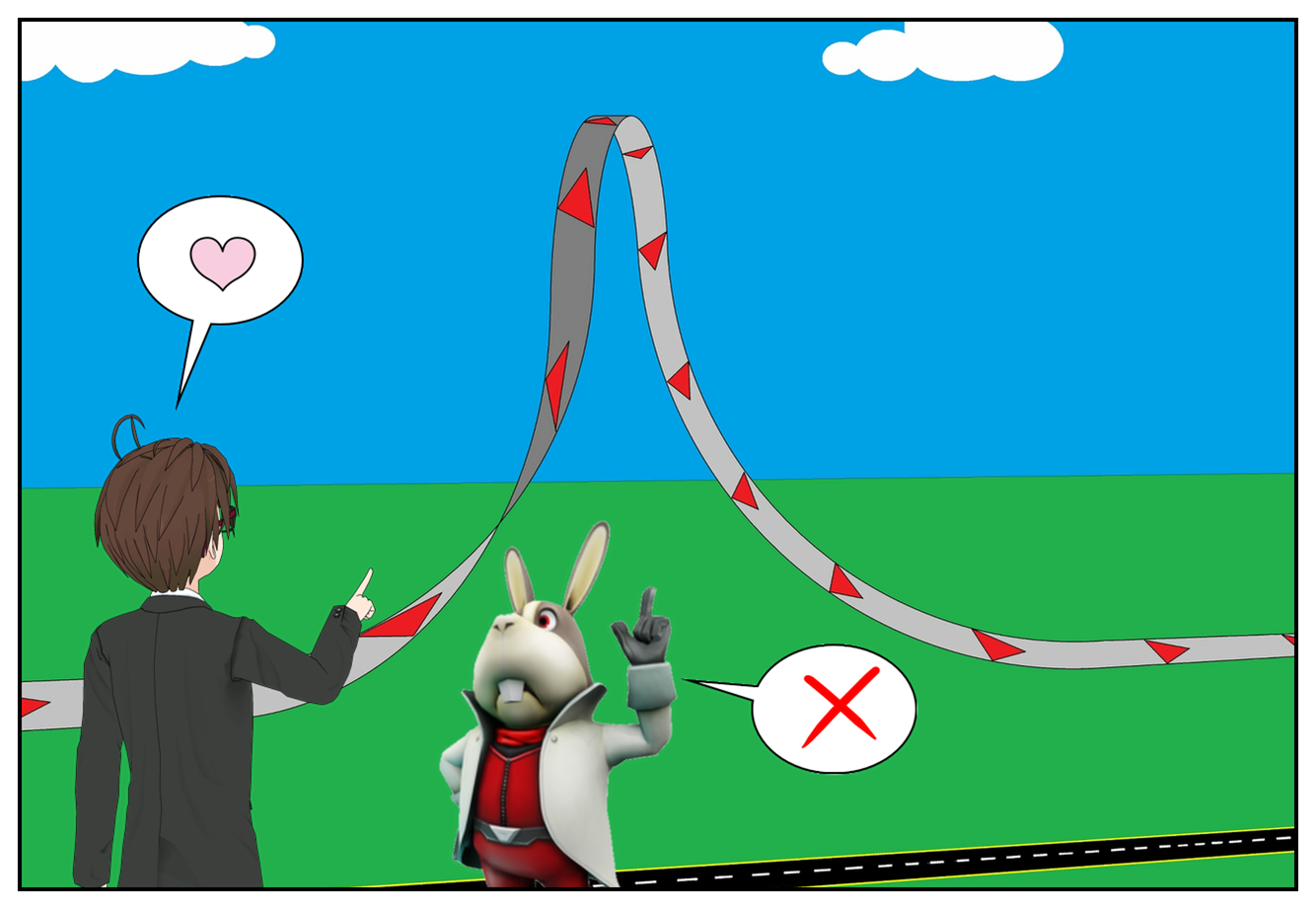
Is the "barrel roll" still not actually a barrel roll in aeronautical terms?

Correct. This is a barrel roll.

I heard this game's really short.

You haven't played many shoot 'em ups, have you? Star Fox Zero is actually pretty long by shmup standards, at a couple of hours from start to finish, but the point is not to play it once and never touch it again. The point is to replay it to find alternative paths, secret levels, hidden collectibles and the five medal conditions on each stage… then replay it some more in the "Arcade Mode" that unlocks after clearing the main game once to beat your best clear times and scores. There's plenty to do.

What is Star Fox Guard?

Ah yes. I actually hadn't heard of this at all until I preordered my copy of Star Fox Zero, but conveniently the edition of the game I got came with a physical copy of Star Fox Guard as well, which, it turns out, is a fun game in its own right, too.

Star Fox Guard is… kind of a tower defense game in that you have a thing you need to protect against being destroyed by evil things, and you have other things that shoot stuff at the evil things in order to prevent them reaching your thing.

Where it differs from your usual tower defense affair is that you're in direct control of all your towers. Twelve of them, in fact, scattered around maps of various layouts, and all of which have a camera attached to them. During a level, you'll have to keep an eye on twelve screens at once (thirteen if you count the GamePad map) and switch focus to one at a time in order to shoot incoming enemies manually.

Another twist is that you don't have to destroy all the enemies: the only enemies necessary to destroy to clear each level are the "Combat" variety, which will immediately destroy your core if they reach it. There's a specific number of these you'll need to defeat on each level, and once you reach it, the level is over immediately. All other enemies are "Chaos" enemies, which have various abilities that interfere with your cameras and towers, but which can't destroy your core directly. Some blow up and knock out nearby cameras completely for a few seconds; others spew gas that ruins your visibility; others still replace your camera's view with intermittent nonsense.

Unusually, there are also boss fights, in which you use your twelve cameras to take down a single large enemy, which may or may not have minions.

There's also a levelling system, which unlocks new types of camera and weapon to use — including some that can lock on to multiple enemies or slow enemies down — and a selection of Extra missions that add additional objectives or mechanics to the mix. Then when you're done with all that, you can create your own Squads of robots you've unlocked by progressing through the game and design your own fiendishly difficult waves of enemies for other players around the world to challenge, and you can challenge other players' Squads too.

While simple in execution, Star Fox Guard has has a surprising amount of care and effort put into it, and I can see it being an entertaining little diversion.

Is it good, then?

It's not an exaggeration to say that Star Fox Zero is the Star Fox game I've been waiting for since Lylat Wars. While it doesn't do anything particularly interesting with the story — it's a remake/reboot rather than a sequel — Star Fox has never been about narrative and characterisation. Instead, it's about satisfying, spectacular, cinematic space combat, and in that regard, it well and truly delivers.

Not too hard?

No. If you think it is too hard, you have no business reviewing games.

Right then.

Okay.

Thank you.

You're welcome.


Barrel roll diagram by ZaerethOwn work, CC BY-SA 4.0.