#oneaday Day 671: Doki Doki janai

Apparently Doki Doki Literature Club has been removed from the Google Play store. According to its publishers, Serenity Forge, this was because "the game's content violates [Google's] Terms of Service in its depiction of sensitive themes".

Chances are if you are even a little bit plugged into gaming news you know what Doki Doki Literature Club is at this point; if you don't, I did a spoileriffic writeup on it over on MoeGamer back around the time it first started getting attention — nearly ten years ago at this point, Jesus. To summarise for those disinclined to click a link (you know who you are), Doki Doki Literature Club is a visual novel that plays with expectations and tropes of the format to deliver a potent narrative, primarily about mental health but also dealing with subjects such as parasocial relationships with non-existent (or perhaps it would be better to say non-sentient) entities like game characters.

It's a modern classic! Granted, uncharitable sorts might argue it started a somewhat unwelcome trend of western-developed visual novels that felt the need to be self-consciously subversive, insincere and ironic, but it can't really be blamed for what other people did in its wake; Doki Doki Literature Club itself, despite deliberately subverting a lot of classic visual novel/dating sim tropes in the name of telling what is essentially a horror narrative, is a well-written piece of work that makes good use of its medium (and the unique characteristics of that medium) to engage the player and get them thinking about how they are interacting with the characters involved.

Make no mistake, it goes to some dark places — its ESRB M/PEGI 18 ratings are well-deserved, though for those about to make an assumption about it being a visual novel, these ratings are not due to any sexual content. Rather, it gives an uncompromising look at mental health matters, and that sometimes there is no "winning", particularly when you are attempting to support someone else through a difficult time in their life, rather than taking command of your own destiny.

But there's the thing: it's already got those ratings, which make it suitable for worldwide distribution, along with various other ratings from other worldwide ratings bodies, such as CERO in Japan (where, interestingly, it only netted a "C" rating — an equivalent to 15/16 ratings elsewhere in the world) and it is, at this point, widely agreed to be a worthwhile work of art. For Google Play to suddenly decide that it is unacceptable is… bizarre, but not entirely unexpected, sadly.

Those who follow certain corners of the Internet may be aware that there has been a lot of unrest surrounding Visa and MasterCard seemingly interfering with online purchases of late — particularly when those purchases relate to adult (and specifically sexual) content. Naturally, this put sex workers, erotic artists, adult performers and makers of adults-only games in a somewhat difficult position, as it was making it significantly more difficult for them to make a living.

These things always start with porn, because porn is easy to attack. It's the thing that, while people might talk about it openly on the Internet, is still a great taboo in society — and one that is difficult to defend, particularly when you're talking to people who aren't breathing Internet fumes all day. Who wants to be the one standing up and saying that yes, porn is fine and good and should be protected just as with any other form of creative expression? Don't you know that porn is exploitative, and no-one gets involved in it willingly?

While I won't deny that there are parts of the sex work industry — speaking very broadly here — which are exploitative, in the modern day we live in an at least somewhat enlightened age where there are plenty of people who choose to get involved in various forms of adults-only entertainment because they like doing it. Not just because they like having sex, either; consider the artists, who just enjoy drawing naked people because, it turns out, they're good at it — to name just one example.

Why am I talking about porn? Because there are some who fear that Visa and MasterCard's at least partially successful encroachment into determining what it is and is not "acceptable" for people to get their rocks off to in the privacy of their own homes will mean that they will then start looking at what they might consider to be other forms of "unacceptable" media. Media that, say, tells the stories of marginalised groups, or which deals with challenging themes that society would rather we just swept under the rug.

Doki Doki Literature Club is not porn. But it being suddenly branded as "unacceptable" on a platform as big as Google Play sets a worrying precedent — one that people need to stand up and object to, forcefully. Thankfully, the game is still available on a variety of other platforms, including iOS, Switch, PlayStation, Xbox and PC — but for how long?

"[Doki Doki Literature Club] is widely celebrated for portraying mental health in a way that meaningfully connects deeply with players around the world, helping them to feel heard, understood and less alone on their journey," says creator Dan Salvato. "Managing to achieve that — making a truly meaningful difference by using the power of fiction to connect to others — is what I'm most grateful for. It inspires me every day to keep making cool new things, things that can really reach others, especially those in need of connection."

It's an important piece of work that does not deserve to be silenced, so I sincerely hope Salvato and Serenity Forge are able to get the situation resolved as soon as they can — without having to compromise on the work they have created.


Want to read my thoughts on various video games, visual novels and other popular culture things? Stop by MoeGamer.net, my site for all things fun where I am generally a lot more cheerful. And if you fancy watching some vids on classic games, drop by my YouTube channel.

If you want this nonsense in your inbox every day, please feel free to subscribe via email. Your email address won't be used for anything else.
#oneaday Day 655: I would rather play Atari 2600 games than mobile games

I probably don't need to say anything more than the headline, but I will expand on it for the sake of having actually written something today. I mean what I say, though! I would genuinely rather play literally anything on the Atari 2600 than a modern mobile game. And with the 2600 being so easy to emulate these days — not to mention the fact I have worked on both devices and game cartridges featuring Atari 2600 games — you can even take the experience on the go with you.

I remember when mobile gaming first became a thing with the Java phones. Well, actually, technically it first became a thing with Snake and the other games no-one remembers on the Nokia 3210 and company. But expandable mobile gaming — by that I mean the ability to download new games onto your phone — really took off in the Java era.

At first, it was mildly exciting… at least until you downloaded a Java game and realised that a lot of them were Not Very Good. Often not for lack of trying, and there were some genuinely decent ones — I recall a good version of Lumines, for example — but for the most part, they were a pale imitation of even the dedicated handheld games consoles that were around at the time. The Game Boy and its successors ruled the roost in that regard for a good long while — and deservedly so.

The advent of iOS was a huge shift, though. Anyone who was around for the launch of the App Store will doubtless remember things like ngmoco's output (before they became free-to-play garbage peddlers), Epic's "Castle" tech demo that eventually became Infinity Blade, and doubtless many others that are lost to time. Quite literally in many cases, because these were digital-only games that were often exclusive to iOS — and while I'm sure some have been preserved, I bet there are plenty more that we'll never see again.

Things seemed… interesting for a while. The ambition of this new breed of mobile game was hard to fault, but many folks (including me) found that touchscreens were less than ideal for console-style experiences. The best games were ones that were built around the inherent limitations and inaccuracy of a finger-based touch interface — or which used other methods of control, such as tilt.

Then, one day, Apple announced that it would be introducing the concept of "in-app purchases". I knew immediately that this would be an awful idea, as the general gaming community had a collective bee in its bonnet about DLC at the time, and adding DLC to mobile games sounded like a really bad idea in that climate.

Unbelievably, though, I underestimated quite how awful things would end up becoming in the mobile space. While there are still a few "premium" games available for a one-off purchase these days, most of them are available on other platforms with actual controllers, leaving the vast majority of mobile-exclusive titles these days as free-to-play gacha crap.

I've done my time in the gacha mines. I've made the mistake of thinking I'd sling a game twenty quid to "support" it because I'd been playing it quite a bit and I liked the look of the current character banners. But in more recent years I've become hyper-aware of quite how much those games exploit horny young men in particular, with massively sexualised artwork designed not to add depth to the characters they depict, but purely to get said horny young men convinced to open their wallets in the hope of acquiring a JPG — or an animated GIF if you're lucky — of their favourite waifu in a skimpy outfit. And I say this as someone who likes sexy games!

No more. I swore off all mobile games quite some time ago now, and I don't feel like I'm missing out on anything. Now, at the times when I would typically want a mobile game — when I have a few minutes to spare, when I'm bored, when I just want something to do with my hands that I don't have to think about too much — I will quite happily reach for an Atari 2600 game, because those fit the bill perfectly.

Your average Atari 2600 game can be played for sessions of maybe 1-5 minutes at a time, and that feels like a satisfyingly self-contained play session. You can keep playing to beat your high scores, or to get a little further, or compete against a friend if you're playing together — or you can move on to something else, and have another 1-5 minutes of fun. And at no point in the entire process will these games attempt to monetise your erection.

On that note, may I remind you that Activision Collection 2 is coming to Evercade next month…?


Want to read my thoughts on various video games, visual novels and other popular culture things? Stop by MoeGamer.net, my site for all things fun where I am generally a lot more cheerful. And if you fancy watching some vids on classic games, drop by my YouTube channel.

If you want this nonsense in your inbox every day, please feel free to subscribe via email. Your email address won't be used for anything else.
#oneaday Day 554: The Battle of Polytopia

After my post the other day, concerning a mobile game developer complaining that mobile games aren't taken seriously because people (correctly) assume that the scene is a "world of predatory monetisation and low quality", I decided to be fair to the chap and actually give his game a try.

The game in question is called The Battle of Polytopia, and it's a lightweight 4X strategy game heavily (heavily) inspired by the classic Civilization series, swapping semi-realistic visuals (aside from the city-sized horses) for a distinctive, untextured, voxel-esque "low-poly" look.

In The Battle of Polytopia, your task is to be the civilisation that comes out on top. In the default "Perfection" game mode, this requires you to have scored the most points by the end of 30 turns; alternatively, you can play in "Domination" mode, which is a last-man-standing mode; there's also a "Creative" mode that allows you to set up a game however you please, with up to three computer-controlled opponents (or no opponents at all, if you prefer) and the ability to play in the previous "Perfection" or "Domination" modes, along with an "Infinity" mode that has no win state. You can also play multiplayer, and the official website seems to indicate there are regular tournaments going on.

There are a selection of civilisations to play as, but the only real differences between most of them are the tech that they start with, the number of "star" resources they begin with, and their aesthetics — however, there are some tribes available as one-time in-app purchases that add some unique mechanics to the mix, such as being able to live and build in the water, having the ability to use magic, or an emphasis on poisoning and corrupting the land.

Once into the game, you're presented with an isometric view of the land around your starting city, with the remainder of the map covered by fog of war. Tapping on resources in the tiles around your city allows you to harvest them in exchange for the generic "star" resource, and doing so will add population to your city. Once the city's population has reached a certain stage, it will advance a level, and this usually rewards you with a choice of two benefits. These vary from level to level; sometimes you'll be able to expand the borders of the area the city controls; at others you'll be able to build special one-time only buildings that provide additional benefits; at others still you'll have the opportunity to "scout", which uncovers part of the fog-obscured map.

Some resources can have buildings constructed on them, which allows them to provide an income of stars each turn. Some buildings can be boosted by having other buildings in close proximity. Many of them require you to have unlocked a particular technology in the tech tree, which, again, costs stars.

Cities can also construct troops, which can then be sent out into the world to explore, uncover more of the map and potentially attack other civilisations, and the exact troop types you can build are determined by your unlocked technologies. Some troops can move further, some can attack from range, others still are better suited for a defensive role.

Other civs aren't necessarily hostile when you encounter them, but the game feels balanced in such a way that conflict will become inevitable before long, particularly if you want to expand your territory beyond its starting area.

And that's basically it. The game is easy to pick up and play thanks to it being considerably less complicated than the games that inspired it, and I can see it being a reasonably fun little diversion to play on one's phone if you want to while away a few minutes and don't have any other gaming devices with you. It's not obnoxiously monetised and it doesn't blast ads at you every five minutes, which in itself is worthy of praise in today's mobile sector.

But, I don't know. I played it and I felt… nothing. I didn't really feel attached to my little civilisation, I never really felt like there was much threat from the rival CPU-controlled players — although, granted, I was playing the tutorial map, which is likely set to the easiest difficulty level — and I didn't feel like I was making a lot of meaningful choices along the way.

The area where this stood out the most was in the tech tree. Simply unlocking features with the currency you earn each turn makes the "discovery" of each new tech feel quite underwhelming, particularly as in the late game you can unlock a whole bunch at once without really feeling like you've had to work for them or prioritise what to concentrate on next. There's no real "weight" to the game, for want of a better word, and that leaves the whole experience just feeling a bit unsatisfying.

"Civilization Lite" can work, as anyone who ever played the excellent but largely forgotten Civilization Revolution on Xbox 360 will attest. The Battle of Polytopia plays it just a bit too "lite", though, leaving it feeling like pretty much every other mobile game for me — fun for a few minutes if there's literally nothing better to play, but ultimately rather forgettable, and not something I'm going to go out of my way to spend time on.

And definitely not Game of the Year material!


Want to read my thoughts on various video games, visual novels and other popular culture things? Stop by MoeGamer.net, my site for all things fun where I am generally a lot more cheerful. And if you fancy watching some vids on classic games, drop by my YouTube channel.

If you want this nonsense in your inbox every day, please feel free to subscribe via email. Your email address won't be used for anything else.
#oneaday Day 551: Mobile gaming is perceived as a "world of predatory monetisation and low quality" because that's what it is

A recent article on Gamesindustry.biz drew attention to a LinkedIn (ugh) post from one Christian Lövstedt, CEO of a company called Midjiwan AB, who is complaining that people don't take mobile gaming seriously.

Midjiwan AB, if you were curious, apparently make a mobile game called The Battle of Polytopia, which I've never heard of, which I suspect is at least partly what this is all about. In fairness to all the following, The Battle of Polytopia does not look all that bad… but I'd still rather play a game like that anywhere other than my phone. But I digress before we've even begun, so let's get back on track.

"Mobile gaming is one of the most played and most profitable platforms in gaming," Lövstedt says, "currently representing 55% of the global gaming market, but is often ignored and looked down on [because] it is perceived by too many as a world of predatory monetisation and low quality."

Okay. Let's start with this. People love to trot out that "over 55% of the market" figure (with variations on the exact figure quoted) but let's be real about this: the reason why mobile accounts for so much revenue in the global games market is precisely because it is a world of predatory monetisation and low quality.

Consider some of the most popular mobile games out there. Candy Crush Saga, which charges up to £34.99 for cheats that allow you to bypass levels — coupled with design that makes it near-impossible to win without buying these cheats. Gacha games such as Azur Lane, Granblue Fantasy and Fate/Grand Order, which exploit horny young people (particularly, though not exclusively, men) with attractive JPGs of hot anime characters, necessitating that you pay at least £20 at a time to be in with a reasonable chance of actually getting the character you want. And I'm pretty sure there are still plenty of "tap and wait" games out there that ask you to pay up to make things go faster or be able to simply play the game more.

When you consider that the term "whale" was coined to describe those who spend excessive amounts of money on free-to-play games, particularly in the social and mobile spaces — and that pursuing these whales to exploit them (at the expense of providing a good experience to free players) is a primary goal of the developers of these popular games — you will perhaps start to see exactly why mobile accounts for so much of the "market". It's because one user playing one heavily monetised mobile game will account for considerably more revenue than one user playing one pay-once-play-forever premium game on PC or console.

Games like this, you see, don't just ask you to buy them and are then happy with that. No; the most "successful" mobile games — measured by most folks who complain about mobile not getting its dues as the ones that generate the most revenue — are the ones that provide the opportunity for perpetual monetisation: the ones that entrap players into dark patterns that make them feel like they have to continually pay money into the game, month after month, in order to remain "relevant" and "current".

When you start from there, it's understandable why people see mobile gaming as rife with predatory monetisation and low-quality games. But let's look at the rest of this open letter.

"While some amazing mobile-first titles, like Monument Valley, manage to get the industry's attention," Lövstedt continues, "many other extremely popular and successful titles do not."

Monument Valley came out in 2014. That's over ten years ago! If you can't think of a more recent example than that of Doing It Right, I think we may have found the problem!

But he continues:

"Mobile games like Clash of Clans, Temple Run, Crossy Road and Candy Crush Saga are critically and commercially successful, yet are never or rarely acknowledged at game awards."

Perhaps that's because Clash of Clans, Temple Run and Candy Crush Saga are all prime examples of games with predatory monetisation and low quality? I actually don't know about Crossy Road, so I am willing to take a moment to actually research it before I brand it with the same scarlet letter. Give me a moment.


Tangent: Pete tries Crossy Road

"Contains ads. Contains in-app purchases". We're not off to a good start already. But let's download this and see.

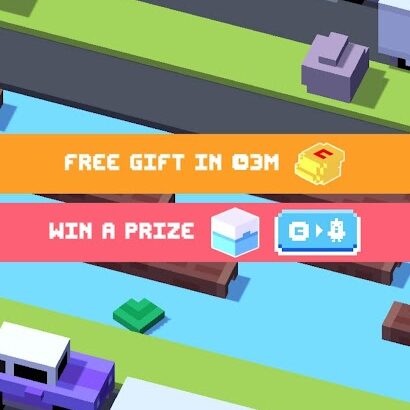
After an initial tutorial, during which the simple tap-and-swipe, Frogger-inspired gameplay is introduced, I am given a "free gift" of in-game currency and then immediately invited to "win a prize". It costs the 100G of in-game currency I was just "gifted" to draw from a virtual gacha machine, which awards me with a mallard duck avatar to play in the game instead of the default chicken.

I am then taken to a main menu screen where I get an immediate popup about a new time-limited game mode and "sweet sales in the store". I'm then taken into that mode without having asked to play it. After playing it briefly, I am shown my top score with two non-descript icons, the purposes of which are not made entirely clear. It seems the one that the eye is most immediately drawn to — i.e. the one where you'd expect an "OK" button to be in typical UI design — is a "share" function for you to send a screenshot of your concluded run to any of your phone's connected social services or contacts.

After that, I am given a timer countdown to my next "free gift" and informed how many "G" of in-game currency there is "to go" until my next blind box of whatever the fuck you unlock in this game.

To Crossy Road's credit, it has no play-throttling energy system, no paying to bypass timers and it does have a one-off payment of £7.99 to remove all ads (if you're not already blocking them), but it also sells extra game modes, has "limited time sales" on special characters and sells a power-up to double your in-game currency income. And you can bet that it gets regular "content updates" to ensure there are always new things for people to pay for.

But it's just not very fun, the countdown timers and grind for currency make it feel more like work than play, and the "business" part of it being so front and centre is exactly why people don't take it as seriously as premium, pay-once games for PC and consoles.

So in conclusion to that little bit, while Crossy Road isn't as egregious as the other examples cited, it's still not… great. And certainly not the sort of thing that is in any way deserving of an award.


"Just because [low-quality] games [with predatory monetisation] like that do exist in the mobile market, it should not diminish the achievements of the market's best games," Lövstedt continues. "It perhaps makes them more impressive. And if we're honest with ourselves, there are AAA industry darlings crammed with the same monetisation mechanics."

Two things to pick out here: firstly, outside of the aforementioned Monument Valley (which, again, is eleven years old at this point), he cites no specific examples. And yes! Yes, triple-A does pull all this shit, too! And you know what? People hate it there, too!

"D.I.C.E., one of the better award bodies for acknowledging mobile gaming, has only ever nominated a mobile game for Game of the Year twice," he continues. "Angry Birds HD and Pokémon Go. And they were the only dedicated game awards body to nominate them, despite how commercially and culturally impactful both games are."

Okay. I have to look into this. Bear with me.


Tangent: Pete looks into the D.I.C.E. Awards

Angry Birds HD was nominated for Game of the Year in 2011 alongside Mass Effect 2 (which won), Call of Duty: Black Ops, God of War III and Red Dead Redemption. Honestly, the fact that it was even nominated is borderline laughable, because Angry Birds is not a particularly amazing video game. It's fine for what it is, but in 2011 people were still feeling the novelty of playing games on a tablet — the iPad first launched in 2010 — and the calibre of the other games that were nominated is just in a completely different league. What Lövstedt doesn't mention is that Angry Birds HD did win a D.I.C.E. Award that year — for Casual Game of the Year. Which is absolutely fair, although given it was up against Pac-Man Championship Edition DX, Plants vs. Zombies and Bejeweled 3, it wouldn't be my vote. (And I don't even like Plants vs. Zombies.)

Pokémon Go, meanwhile, was up for the 2017 Game of the Year award, where it was up against Overwatch (which won), Battlefield 1, INSIDE and Uncharted 4. My personal tastes put that as a much weaker overall lineup than that of 2011, but there's still a world of difference between gamifying Google Maps and the cultural phenomenon that was Overwatch in its first year. And, again, Pokémon Go won a perfectly acceptable award for what it is: Mobile Game of the Year.

Lövstedt is right; Pokémon Go in particular did have a certain amount of cultural impact, particularly as we moved into the pandemic years. But, again, it's just not a very good video game, which is why it lost out on the overall Game of the Year award. "A lot of people played this because they were bored" is not the same as "this is an incredible video game that should be celebrated as the pinnacle of its medium".


In conclusion, then, I have to reiterate that mobile gaming's reputation as being filled with low-quality games with predatory monetisation is well-earned. This isn't to deny that there are developers apparently doing interesting things on mobile — Lövstedt's own The Battle of Polytopia looks quite worthwhile, so I might have to actually give it a go — but at this point, the damage done by Apple introducing in-app purchases (and Google following suit) has already been done. There's no easy way to turn that back; no easy way to reclaim mobile gaming's reputation from those who, thanks to their greed, generate enough income to account for a supposed 55% of the global games industry's revenue.

Because what are Apple, Google and the other app store platform holders going to do? Just suddenly give up such a profitable revenue stream? Because let's not forget they get a cut of every purchase, so it is absolutely not in their interests to try and fix this.

Also, playing games on a touchscreen — particularly on small ones like those found on phones — sucks ass. This, honestly, is one of the biggest reasons I have zero desire to play any games on my phone today — even if they weren't low-quality games with predatory monetisation. Which a significant portion of them are, so I have precisely zero incentive to look any deeper — particularly because the vast majority of those which are cited as "good examples" (including the aforementioned Monument Valley, plus titles like Stardew Valley and Vampire Survivors) are available on platforms with control schemes that don't suck!

So in summary: if you want to be taken seriously, release your game on a platform that people will take seriously. Have you seen the shit they let onto Steam these days, recent examples notwithstanding…?


Want to read my thoughts on various video games, visual novels and other popular culture things? Stop by MoeGamer.net, my site for all things fun where I am generally a lot more cheerful. And if you fancy watching some vids on classic games, drop by my YouTube channel.

If you want this nonsense in your inbox every day, please feel free to subscribe via email. Your email address won't be used for anything else.

#oneaday Day 494: Goddamn gacha

Recently, Square Enix announced that it was doing a new Dissidia Final Fantasy game. For a brief, blissful moment, I was hoping that we might actually have a proper new Dissidia, and not whatever that last thing on PS4 was, but no. Of course it's a fucking free-to-play gacha game. Of course it is.

I'm so sick of gacha games. I'm sick of them exploiting people, I'm sick of them being poorly designed games, I'm sick of them being the only peep we hear from once-beloved franchises, and I'm even sick of them leaning hard into the "sex sells" angle. And I say that as a card-carrying lover of anime tiddies.

The new Dissidia game supposedly has Final Fantasy characters brought to real-world Tokyo and has full Japanese voice acting. Great! Why isn't it a proper game? Because I'm sorry, another thing I'm sick of is people who scold you for "looking down" on gacha games "because they're successful".

Gacha games are shite. They're marginally less shite today than they once were, but they're still shite.

I'll give you a bit of context. Following the surprise and sudden closure of GamePro, I found myself working on a business-facing publication that looked at mobile and social games. Free-to-play games — both on mobile and, at the time, Facebook — were really starting to take off around that point, so I was paid a frankly impressive salary to suffer through playing them every day.

One that I remember specifically being encouraged to look at was Rage of Bahamut by Cygames. This, I was told, was part of a new trend for what was, at the time, known as "card battling" games. Great, I thought. I like Magic and Ascension and Dominion — this'll be a great fit for mobile.

Except Rage of Bahamut had about as much gameplay as a '90s webpage — and had an interface to match. Progressing through the game's plot literally involved nothing more than clicking the "Advance" button multiple times, watching your "Energy" bar decline with each step and your "Experience" bar increase concurrently. Occasionally you'd be thrown into "battle", during which the numerical values of the cards in your hand were added up and compared to your opponent's, and whoever had the bigger number won. There was absolutely no interactivity whatsoever — the sole "strategy" for the game, if you can call it that, was making those numbers as big as possible. And, of course, the most efficient way to do that was to pay money, which would guarantee you "rare" (higher value) cards.

Zoom forward a few years and you have games that are at least attempting to hide this formula somewhat, but they're all still, at their core, nothing but "make bigger number than opponents" games. Two of the most popular examples, Cygames' Granblue Fantasy and Aniplex's Fate/Grand Order, dress it up with fancy turn-based battles that look like they're from proper RPGs, but ultimately both are about just making sure you have valuable enough cards to overpower everything in your path.

The frustrating thing is that these games often have quite good, interesting stories to them, but the gameplay is so unimaginably tedious that I have absolutely no desire to play them whatsoever — and even if that wasn't the case, the utterly exploitative monetisation would do the trick for me.

Most of the gacha games in my experience provide various different "packs" of the premium currency required to draw new cards, characters or whatever, but pretty much every one has required that you spend at least twenty quid in order to get a worthwhile draw. The alternative is grinding, grinding, grinding through the tedious, shitty gameplay in the hopes of being given a scrap of premium currency to draw some rare cards once in a blue moon. Twenty quid can buy you multiple good games that you can just enjoy at your leisure from thereon!

And many of these games are flagrantly, transparently attempting to use quasi-erotic artwork as a means of extracting money from their player base. Azur Lane is one of the worst in this regard, with more recent competition from Nikke: Goddess of Victory, a game with more jiggling arses than I think I've ever seen, even in Senran Kagura. They'll offer a "limited banner" of some exceedingly attractive character in a skimpy outfit, and players will gullibly throw money at the game in the hopes of getting a PNG or a Live2D image of their waifu, and the cycle will repeat over, and over, and over again.

These games have no soul. These games have no value. And I wish they would go away. But after over 10 years of suffering their presence, it doesn't seem like they're going anywhere any time soon, with a significant number of companies now seemingly reliant on the obscene income they draw in (and the minimal expenses they almost certainly cost to run).

Mobile gaming is dead to me. And, apparently, so is Dissidia. At least I still have the two PSP games to enjoy.


Want to read my thoughts on various video games, visual novels and other popular culture things? Stop by MoeGamer.net, my site for all things fun where I am generally a lot more cheerful. And if you fancy watching some vids on classic games, drop by my YouTube channel.

If you want this nonsense in your inbox every day, please feel free to subscribe via email. Your email address won't be used for anything else.
#oneaday Day 270: New Suikoden being a mobile game sucks, stop trying to pretend it doesn't

Apparently Konami announced a new Suikoden game! Hooray! Hold your horses there, Bucko, they announced that it's a free-to-play mobile game with microtransactions. How do you feel about that?

If your first reaction to this was violent revulsion, congratulations, you still have good sense. But I've seen a surprising amount of resistance to the perfectly reasonable viewpoint that a beloved series getting a free-to-play mobile game is shit. And I think we're long past the point where we should be making excuses for this sort of thing.

"But phones are the most popular gaming platform!"

This argument has been trotted out for nearly two decades at this point, and it doesn't mean anything. Yes, you can point to numbers, and based on raw figures, there are probably more people playing games on phones than on any other platform — possibly all platforms put together. But those numbers don't mean anything.

Instead, we should be focusing on the quality of the experience. And while there certainly are games for phones that are peers of full-price PC and console games, designed to keep you feeling invested and involved in the gameplay over the long term and make you feel like you got value for money, the overwhelming majority of them are free-to-play, microtransaction-infested shitholes that inspire some of the most formidable instances of Stockholm syndrome I think I've ever seen. (And the phone games that are the peers of PC and console games… are probably available on PC and console.)

Pro-tip: if you ever have to use the phrase "it feels like a proper game" when you're playing a mobile phone game, that game is not a good game. Likewise, if you ever have to utter the phrase "well you don't have to spend any money at all", you have already lost the battle.

I've been through my gacha phase, during which I said both of those phrases on more than one occasion.

I played some Fate: Grand Order, some Granblue Fantasy, Arknights, Azur Lane, Goddess of Victory Nikke, Final Fantasy Record Keeper, Final Fantasy Brave Exvius and Dragalia Lost. I even played some obscure ones even further back — anyone remember Ayakashi: Ghost Guild? Brave Frontier? Valkyrie Crusade? Didn't think so. Anyway, one thing was constant with all of these games when I played them: I spent more time trying to find the "proper game" in each of them than they really deserved, and came away from each and every one of them wishing that they were something else: something more substantial than boring interaction-free story sequences followed by battles that required no strategy beyond "equip items to make big number". Final Fantasy Brave Exvius came the closest to feeling like an actual Final Fantasy game, but it was all smoke and mirrors; the "wandering around town" part had no substance to it whatsoever.

Not one of them felt like an actual game. And I gave all of them tens of hours in an effort to understand their appeal. And I was forced to conclude that, indeed, they were little more than thinly veiled casinos where you gambled real money in the hope of getting the picture (and sprite, if you're lucky) of the hot anime girl you most wanted to fuck.

And in some cases, the "sex sells" aspect of this was so flagrantly transparent Azur Lane and Goddess of Victory Nikke are particularly outstanding in this regard — that it's actually offensive. Not because of the content of the artwork, which, let's be clear, is absolutely lovely and super-sexy when taken in isolation, and totally fine that it exists in and of itself. The offensive thing is how that sexy artwork is used to manipulate lonely, horny players into spending way more money than any of these games deserve.

So I swore off them, and I am seeing nothing about this new Suikoden game so far to suggest that it's going to be any different.

Is this elitist? Supposedly it is. But as someone who has been involved with video games since their very earliest days, I absolutely cannot look at a mobile phone game that asks you to pay up repeatedly and without limits, and which ties both mechanical and narrative content to what is effectively gambling, and see it on the same level as a game developed for PC or console where you buy it once, pay up front and then play it as much as you want without it even looking in the direction of your wallet.

Because let's face it, this is exactly the form the Suikoden mobile game is going to take. No amount of fancy 2D-3D HD pixel art on polygonal backdrops is going to change the fact that it will be gacha hell at its heart. The number of musical tracks on its soundtrack does not mean that it is going to be a good, fair game. And because games like this are "live service" games, folks who could be making a proper new Suikoden game for PC and console, like people actually want, will be doomed to continually churning out content for this until it is inevitably "sunset" in a year's time when they realise that no, they actually can't take on Genshin Impact.

There's been a lot of talk today about people being overly negative about this, not having played the game and suchlike. And look, I get it. I hate it when people are negative about things they haven't played.

But this is different from someone talking shit about a game that you like. There is considerable historical precedent for a free-to-play mobile game based on a beloved franchise to be a pile of predatory, manipulative bullshit that closes down six months after launch because no-one ever actually wanted it.

And I have seen zero reason so far to believe that a Suikoden mobile game will be any different. I'll be happy to be proven wrong, but I am not holding my breath.


Want to read my thoughts on various video games, visual novels and other popular culture things? Stop by MoeGamer.net, my site for all things fun where I am generally a lot more cheerful. And if you fancy watching some vids on classic games, drop by my YouTube channel.

If you want this nonsense in your inbox every day, please feel free to subscribe via email. Your email address won't be used for anything else.

#oneaday Day 213: Knotwords is a Mobile Game That Isn't Shit

Mobile games are, to me, mostly absolute bobbins. I have no desire to engage in tap-and-wait non-gameplay, I don't want to play rigged puzzles designed to get me to cough up money for "boosts" and I absolutely want nothing to do with fucking gacha. On top of that, I have zero desire to play "console-quality" experiences on my phone because touchscreens fucking suck for games like that.

As a result of all of the above, there are very few mobile games that I will give any time to whatsoever. One of them is Take It Easy by Ravensburger, an adaptation of a tabletop game that I think works a lot better as a video game because you don't have to do any of the maths or checking for valid moves yourself, but that's not what we're here to talk about. (I talked about it at length here, and I am always pleased to note that it is still supported after originally being released in 2015, which is practically caveman days in smartphone gaming terms.)

No, today I want to talk about Knotwords, a simply presented game by Zach Gage and Jack Schlesinger. This is a game that is, for me, an ideal mobile game. It has short play sessions, it's easy to control using nothing more than the touchscreen, and perhaps most importantly, it's not trying to shake you down for your life savings or make you endure ads every ten minutes. No, in fact the game is ad-free, and simply monetised via either an optional subscription (£4.59 a year) or a one-off purchase (£11.49).

The free version of Knotwords allows you to play the daily "Mini" and "Classic" challenges (the difference simply being the size and complexity of the complete puzzle) as well as a monthly "Puzzlebook" (though I would add that at the time of writing, the Android version of the game has broken this feature, asking for an update that doesn't exist). Paying up allows you to access a mode called "Twist" (which I don't know anything about because I haven't paid) as well as the archived previous Puzzlebooks, plus a couple of extra benefits such as additional hints, if you need them.

So what is Knotwords? It's a word puzzle based on crosswords, but also drawing influences from sudoku (or perhaps more accurately, kenken) and anagram puzzles. You're presented with a blank crossword divided into areas, with each region telling you which letters go in it, but not the order those letters should be in. Your job is to untangle these "knots" and solve the crossword using valid words, ideally as quickly as possible. That's it — at least for the Mini and Classic puzzles; I don't know if Twist is any different.

The pleasant thing about Knotwords is that it's simple to understand, but it gets you thinking. Supposedly the puzzles are easy on Mondays and ramp up in difficulty as each week approaches Sunday, but I haven't been playing the game regularly enough to notice the differences as yet.

I have been playing the game, though, which is more than I can say for pretty much any other mobile game released since… well, 2015, when Take It Easy came out. I appreciate a game that makes good use of the platform it's on, doesn't constantly bug me to pay up, and which is simply a fun little challenge. A Knotwords puzzle is the sort of thing you can do on the toilet or before going to bed; it doesn't demand a lot of commitment, but it does get your brain working in a way that doomscrolling the shitty end of the Internet absolutely does not.

The only thing I don't like about it is its use of "streaks", a la Wordle, because that's a shitty way to engage players and I dislike it intensely. But it's also easily ignored, so I'm not particularly mad about it. I do feel sorry for the people online who seem to have a genuine addiction to anything with a "streak" involved, though, including this. You should be playing things like Knotwords because you want to, not to Make Number Go Up.

Anyway, Knotwords is A Good, and I'm happy to have randomly stumbled across it the other day. If you're burnt out on Wordle (or just feel weird giving the New York Times any of your time and/or attention, regardless of reasons) then I highly recommend giving it a shot.


Want to read my thoughts on various video games, visual novels and other popular culture things? Stop by MoeGamer.net, my site for all things fun where I am generally a lot more cheerful. And if you fancy watching some vids on classic games, drop by my YouTube channel.

If you want this nonsense in your inbox every day, please feel free to subscribe via email. Your email address won't be used for anything else.
2389: Mobius Final Fantasy: Also Doing Mobile Free-to-Play Games Right

0389_001

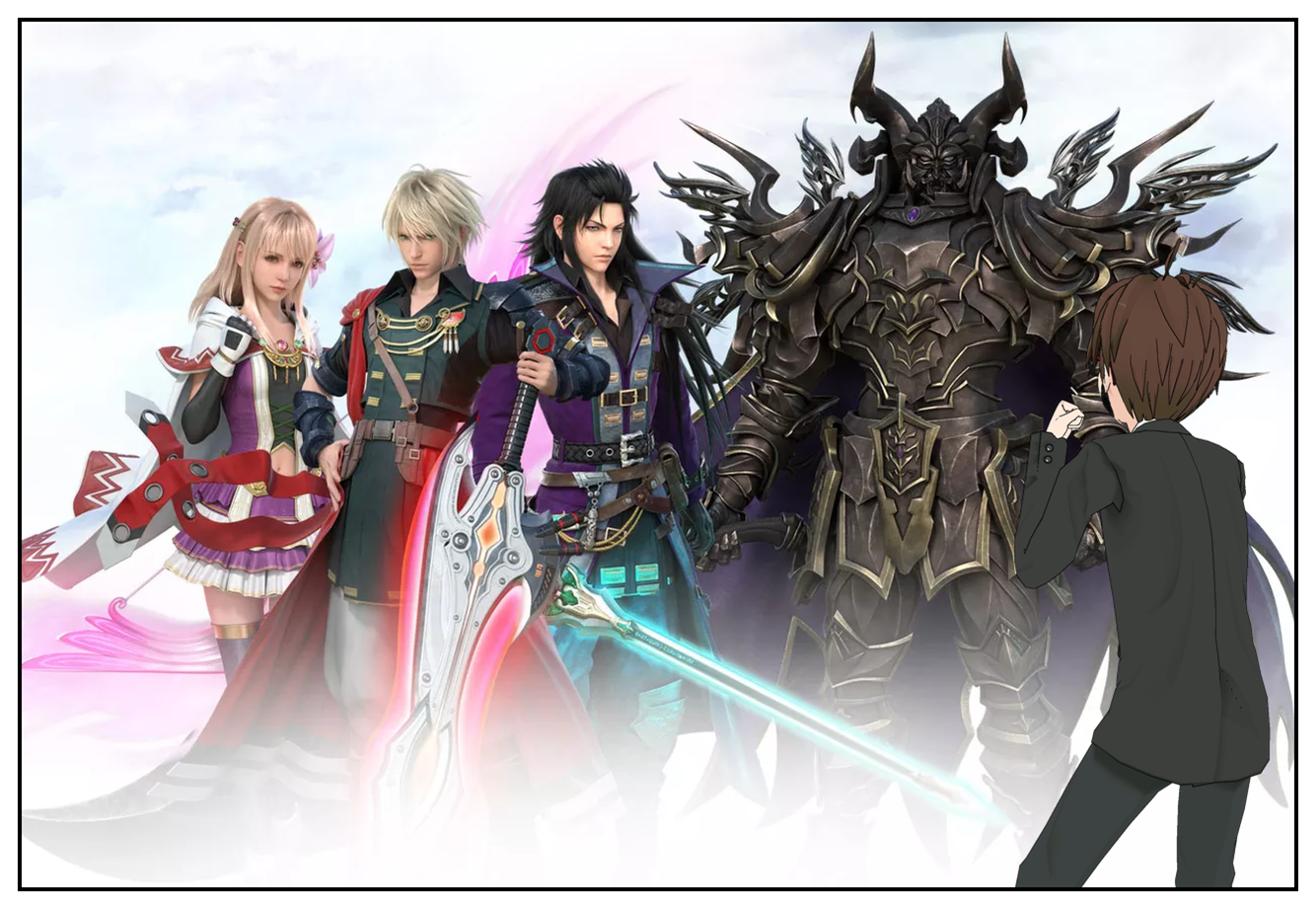
Square Enix is on a roll with the mobile games at the moment; a few months after Final Fantasy Brave Exvius hit the market, we find ourselves faced with a brand new free-to-play Final Fantasy game for mobile devices in the form of Mobius Final Fantasy, a game that has been shrouded in a considerable amount of mystery for a while, but which is finally available to play for both iOS and Android devices.

Let's get one thing out of the way first: this is a distinct experience to both Final Fantasy Record Keeper and Final Fantasy Brave Exvius, and has a very strong identity in its own right. In fact, I'd go so far as to say that despite it being based around the usual "gacha" core of drawing and upgrading cards to progress, it is one of the most distinctive, original mobile games I've ever had the pleasure of playing. And if you know how much I hate 98% of mobile games, you'll know that's high praise indeed from me.

Mobius Final Fantasy casts you in the role of (insert your name here), who finds himself drawn through time and space to the ruined world of Palamecia, which appears to have been laid waste to by the malevolent force that is Chaos. Alongside the other "Blanks" who appeared in Palamecia alongside you, you must begin a journey to determine your worthiness to become the Warrior of Light and defeat Chaos once and for all.

If all this sounds rather familiar, you'd be absolutely right; Mobius Final Fantasy draws heavily from the very first Final Fantasy game in terms of thematic ideas, even going so far as to include a number of characters with the same names — most notably Garland and Princess Sarah of Cornelia. It remains to be seen whether these individuals are actually the same people as in the original Final Fantasy — Palamecia was the name of the empire in Final Fantasy II, not the original, so it's entirely possible their resemblance and nomenclature is pure fanservice — but it's a nice touch if nothing else.

Gameplay-wise, however, Mobius Final Fantasy is entirely original, although its overall aesthetic is somewhat similar to Final Fantasy XIII in terms of character and interface design.

Playing Mobius Final Fantasy involves traversing a node-based world map, with each node housing a number of different battles and perhaps a stronger boss to fight. Most of the nodes represent your journey across the ruined world of Palamecia, but some are dungeons that have several floors to clear and sometimes even an area you can explore freely at the end. Unlike many free-to-play mobile games, after just a few short hours of gameplay, Mobius Final Fantasy opens up and starts to give you a considerable amount of freedom in where to go and what to do. There's always an obvious place you should be going next to advance the story, but in some instances you'll be presented with a path that won't open until you clear a particular quest — and you'll have to find the target for that quest yourself by exploring.

You don't freely explore the areas (thankfully, since controlling free movement in mobile games using just a touchscreen is horrid) but rather advance from battle to battle, defeating enemies and earning rewards along the way. The emphasis, in other words, is very much on fighting.

So it's fortunate that Mobius Final Fantasy has such a fun, interesting and original battle system. Rather than reskinning Brave Frontier as Brave Exvius did, or taking the retro approach of Record KeeperMobius Final Fantasy has its own take on how you fight. You're alone, for starters; no party members to back you up here, but you are able to take a number of different "cards" into battle, each of which has an ability attached and an elemental affinity.

The flow of combat is relatively straightforward, though takes a little explaining. Normal attacks deal damage and also draw out elemental orbs of four out of five possible types: fire, water, earth, wind and life. Each Job can only draw three of the elemental types plus life orbs, which are drawn at a much lower chance than the others. These elemental orbs are primarily used to trigger the abilities on your cards, each of which have a requisite number of a particular element before you can unleash them.

The card abilities have two main functions: to exploit elemental weaknesses of enemies, and to make their "Break" gauge vulnerable. This latter feature is somewhat akin to Final Fantasy XIII's "Stagger" system, whereby if you empty an enemy's gauge, they will become significantly weaker against your attacks along with being unable to hit you for a short period. If you can Break an enemy, in most cases you'll be able to press the advantage right up to victory before they're able to get back on their feet.

But what if you don't draw the right elemental orbs to use your abilities? Well, here's the other use for them: you can absorb them, which removes them from your stock and gives you temporarily increased resistance against that element (or, in the case of life orbs, heals you). That's not the only effect, though; absorbing elemental orbs in this way shifts the balance of elements, making you less likely to draw that type from enemies for a short period and consequently more likely to draw the others. In this way, you can absorb an element an enemy is strong against, which in most cases will make you strong against the enemy's attacks, and increase the likelihood that you draw orbs suitable for unleashing abilities that will damage the enemy to a greater degree.

I don't feel like I've explained that all that well. Let's give a practical example.

Battle begins. You're faced with an enemy that has a wind affinity. You're playing a Ranger job, so your normal attacks will draw water, wind, earth or life orbs — no fire for Rangers.

You attack three times, the standard amount you are able to do in a single turn. In doing so, you draw a bunch of wind orbs and a couple of earth, though not enough to use an earth ability. A wind-element enemy would be weak against earth abilities, so it's in your interest to get one up and running as soon as possible.

The enemy attacks. You take a bit of damage, though nothing to worry about.

For your first action, you absorb the wind orbs you drew last turn. This gives you temporarily increased resistance against wind attacks — i.e. any attacks the enemy will throw at you. It also makes you less likely to draw wind orbs for a few turns.

For your second action, you attack. This draws enough earth orbs to attack an earth ability, which requires four orbs to use.

For your third action, you unleash your earth ability, which causes the enemy's Break bar to turn red and become vulnerable. Your turn is over.

The enemy attacks. You take a bit of damage again, though a bit less this time thanks to your increased wind resistance.

Next turn, you throw out three normal attacks, which are enough to empty the vulnerable Break bar of your opponent. It enters Break status, and you get another turn as it topples to the ground. You throw out three more normal attacks, which are now significantly more effective against your downed foe, and defeat it. You win! One step closer to Warrior of Light-hood.

What all this means for Mobius Final Fantasy is that it's by no means a glorified clicker game with boring, automated combat like so many other "card battle" games on mobile. There's depth and strategy here, but it's presented with such glorious visual panache that you can't help but be drawn in to this strange ruined world, particularly as the exciting battles are punctuated with fully voiced cutscenes (with dual audio, for those who prefer Japanese speech) and some beautiful sights.

I'm relatively early in the game so far, and the game as it stands only features two "chapters" of the main story so far (plus a special region for grinding XP and other resources against the clock) but it's already clear that Mobius Final Fantasy is something quite special. And that's the last thing I ever expected to say about a mobile game in 2016.

I'm very interested to see where the game goes next and how it expands on its already solid mechanics over time — and I'm invested in the story, too; I want to know whether or not this actually is Final Fantasy I's world — which is plausible, given that part of Final Fantasy I's plot dealt with Chaos creating a time loops, and "Mobius" can be used to describe the characteristic "infinite loop" symbol — and, if not, what on Earth happened to allow Chaos to ruin it as comprehensively as he did.

Find out more about Mobius Final Fantasy at the official site; there are links to download it for iOS and Android devices there, too.

2386: Final Fantasy Brave Exvius: Doing F2p Mobile Games Right

0386_001

A while back, I wrote a piece on my other site MoeGamer about how free-to-play games had quietly got good. While there is, make no mistake, still a veritable flood of absolute shit being released on a seemingly daily basis, occasionally someone gets it right, and it's worth celebrating when they do.

Which brings us to Final Fantasy Brave Exvius, a free-to-play mobile game developed as a collaboration between Final Fantasy rights holder Square Enix and mobile game specialists Alim and Gumi.

The astute among you will recognise the latter two as being behind Brave Frontier, one of the mobile games I had previously praised for not being a total pile of shit. Brave Frontier wasn't without its problems — most notably a lack of any real strategy in the combat thanks to a relatively limited number of things you could do — but so far as mobile free-to-play RPGs went, it was certainly one of the better ones, featuring an interesting story with some enjoyable characterisation and a wide variety of units presented in beautiful pixel art.

FFBE, as I shall refer to it from hereon, is essentially Brave Frontier 2 with a Final Fantasy skin. And that's not a bad thing at all, because it manages to fix the few issues I had with Brave Frontier while simultaneously being a surprisingly decent Final Fantasy game in its own right.

I'll rewind a moment for the benefit of those not already familiar with Brave Frontier and explain FFBE.

In FFBE, you take on the role of Rain, a young and rather idealistic member of the castle knights, who appears to have some unresolved daddy issues in true Final Fantasy tradition. Rain is accompanied by his longstanding friend Laswell, who ironically seems to have gotten on with Rain's father better than Rain himself. While out on patrol, Rain and Laswell encounter some strange happenings, including a mysterious girl called Fina trapped in a crystal and a man in dark armour who appears to be up to no good.

Unsurprisingly, the man in dark armour is indeed up to no good, and Rain and Laswell return to their home city to find it has been attacked. Their adventure then begins in an attempt to determine what the motivations of the black-clad man are and who exactly this "Fina" girl actually is.

Gameplay has a number of components. Firstly is the metagame, where you collect various units by "summoning" them using premium currency (which the game is pretty generous about doling out for reaching significant milestones), summon tickets (which often come as rewards for logging in regularly, or as part of events) or "friend points" accumulated when making use of your friends' units. The units vary in strength and their rough power level is denoted by a "star" rating — the more stars, the more powerful, or rather, the more stars, the more potential a unit has, because in order to make it useful, you're going to have to level it up. In other words, a fully levelled two-star unit may well be a better choice than a completely unlevelled four-star unit.

Levelling up can be accomplished in two ways: by gaining experience from participating in battle (an option that was absent in Brave Frontier) or by "fusing" it with other, unneeded units. In the latter case, you can fuse a unit with any other unit, but there are particular benefits if you fuse with an identical unit, or with a special "experience" unit, the latter providing you with significantly more experience points than a regular unit and thus being the best means of quickly levelling a character if you happen to have any on hand.

Your party can also be equipped with weapons, armour and accessories, which improve their stats to varying degrees, and most units can also equip up to two additional Abilities above and beyond their innate abilities that they acquire as they level up. In this way, you can customise your units as you see fit according to the challenges you know you're likely to be facing, or simply munchkin them all with the best gear possible so you can steamroller your way through every encounter.

On top of the battle units, you'll also acquire Espers a la Final Fantasy VI along the way, which can be attached to specific characters to provide them with various passive bonuses as well as a super Summon attack when a meter fills up to maximum in battle. Espers can be levelled up independently of characters, though you have to use collected materials to do this rather than just grinding, and each level awards them with Skill Points that can be used to unlock various abilities, both passive and active.

Once you're finished fiddling with your party lineup, you can either visit a town or go into battle. Pleasingly, visiting towns is presented in traditional top-down RPG style and there are even sidequests to complete, giving a great degree of personality to the world that Brave Frontier lacked somewhat, thanks to it being entirely menu-driven. For those for whom time is money, however, there's also a quick access menu that quickly warps you around town to the important places like the shops, though in doing this you'll probably miss out on NPCs who might have useful information or quests for you.

When you choose to go into battle, there are several different ways you can do this. You can advance the story, which presents you with a string of battles that you have to complete without stopping, punctuated by cutscenes. You can "explore" an area you previously completed the story for, which again goes into a top-down RPG-style exploration mode punctuated with random battle encounters. You can visit the Colosseum to battle monsters and earn points towards various prizes. Or you can enter the Vortex to the Farplane, which has a different special dungeon every day, plus a series of other specialised dungeons that you can unlock as you desire — one for free, additional ones for premium currency. These specialised dungeons provide a convenient means of acquiring experience points for your units, money, crafting materials or other materials needed to power up units or Espers, but the payoff is they tend to cost significantly more energy to jump into than story missions.

Yes, there's an energy system, but like in Brave Frontier, if you manage it carefully it never becomes an issue. Following story quests tends to see you level your player up regularly enough that your energy bar rarely empties — not only does its capacity expand when you level up, but it also gets refilled to maximum — so this is the best thing to do if you're spending a bit of time with the game. Alternatively, if you know you only have a few minutes, by far the most effective use of your energy is to tackle the most difficult Vortex dungeons you can manage, as not only will this burn through your energy but it will also provide you with far more loot and experience than regular missions tend to provide in the same amount of time.

The battle system itself is very much like Brave Frontier, with one notable exception: units have more options than just attacking or using their special Burst attack when it's charged up. Individual units can use items now, rather than you using items on your party from your omniscient overseer perspective, and each unit unlocks individual abilities as they gain levels, which are appropriate either to their Job if they're generic units or appropriate to their original incarnation if they're making a guest appearance from another Final Fantasy.

Yes, indeed, Brave Exvius features a considerable amount of series fanservice by incorporating characters from past Final Fantasy games, and they work exactly as they should; Edgar from Final Fantasy VI has his machinist "Tools" abilities present and correct, for example, while more magically-inclined characters have plenty of magic spells to fling around to take advantage of enemies' elemental weaknesses.

Which perhaps brings us to an obvious question: is this better than Final Fantasy Record Keeper, which is also a fanservice-heavy Final Fantasy free-to-play mobile game?

Yes, it is. And I don't hesitate one bit when saying that.

Record Keeper is a clunky mess of a game, with loading screens literally every time you tap a button. It's slow, sluggish, poorly optimised and generally a chore to play, and even the wonderful SNES-style pixel art depictions of every Final Fantasy from to XIV don't make up for this. Record Keeper also has no real focus; it sees you leaping around from timeline to timeline pretty much at random, attempting to act as a sort of Final Fantasy Greatest Hits but losing all sense of coherence in the process. This lack of focus also extends to its progression and collection systems, in which you collect characters, but also equipment items, and the main "fuse and improve" mechanics come with the far less interesting equipment than the characters; it's way less fun to upgrade a sword that supposedly appeared in Final Fantasy XII than it is to buff up Balthier to the max.

Record Keeper makes nostalgia the main — no, the sole — point of its existence, and it suffers for this, particularly when it comes to the underrepresented Final Fantasies like XIV and XI. FFBE, meanwhile, uses nostalgia wisely; it just drip-feeds you classic characters without making a big deal about it, and it doesn't demand any knowledge of the previous games — if you're a Final Fantasy newcomer, you might just find that Firion is an awesome fighter, but if you know your Final Fantasy history, you'll have an understanding of where he actually came from, for example.

FFBE, while suffering from occasional loading breaks and the requirement to be online at all times while playing, at least preloads enough stuff into memory for it not to have to load after every button press, and both in combat and when wandering around town, it's smooth as butter.

Oh, and FFBE is also a beautiful-looking game. And a beautiful-sounding game, featuring one of the best Final Fantasy battle themes of all time. Yes, seriously. Listen.

Basically… look, it's really good, all right? And regular readers will know I don't say that lightly about free-to-play games.

Check it out here on Android, and here on iOS.

2309: Ingress' Real-World Cyberpunk Shows Us What Mobile Games Should Aspire To

0309_001

One of the most popular buzzphrases that mobile game developers use is "console-quality graphics and gameplay". (This ranks just behind "THE #1 RPG ON MOBILE!!" — as voted by the developer's mum, presumably.) And indeed, it certainly is impressive how powerful today's mobile phones are; I remember when Epic first released that cool tech demo showing Unreal Engine working on the iPhone (and it later turned out to be the rather uninspired Infinity Blade) and everyone lost their shit over mobile phones killing dedicated gaming handhelds.

Here's the thing, though: I don't want a console-quality experience on my mobile phone, and I doubt many other people do, either. In circumstances where the only gaming-capable device I have on my person is my phone, I probably don't have the time or inclination to sit down and play some sort of battery-guzzling game that looks great but takes ages to load, demands more than a couple of minutes of my time for a meaningful play session and controls like complete ass because touchscreens suck for traditional input schemes. To put it another way, if I want to play games while I'm out and about, I'll have my Vita in my bag; a device with actual buttons on which I can play games that are actually good, don't require an Internet connection, don't try and fleece money out of me at every opportunity and, as previously mentioned, don't control like complete ass.

Mobile games are very much in a rut at the moment, with the vast majority of the most successful titles being Asian-origin "gacha" games, in which you draw cards/items/heroes/weapons of varying rarity with real money or in-game currency, add them to your party and level them up until they overpower everything the game has to offer. The exact execution of these games varies — Granblue Fantasy looks and plays somewhat like a traditional JRPG without the exploration, for example, while Love Live! School Idol Festival is a rhythm game — but their basic structure and game loop is always the same:

  • Log in, get daily bonus
  • Spend all your energy points (or equivalent) on either linear main story quests (if you're trying to level up) or daily dungeons (if you're trying to collect specific items)
  • Draw a free crap card/hero/item/weapon
  • If you've earned enough premium currency/paid for premium currency, draw guaranteed "rare or above" card/hero/item/weapon
  • Use collected crap cards/heroes/items/weapons to fuse with "rare or above" cards/heroes/items/weapons to level them up
  • Close game, wait for energy to regenerate
  • Repeat

Once you've played one, you've played them all, with the only real variation being the exact execution of how the quests play out. Even then, they tend to be grossly simplified versions of what you'd get on a full console — Granblue Fantasy's combat, for example, has very little strategy beyond picking the right element for each enemy and/or overpowering them with overleveled or rare heroes.

It's this rut that mobile gaming has been stuck in that means I have very little interest in modern mobile games — and it makes the original, bold claims that mobile gaming was something new and revolutionary that was going to take over the whole gaming industry look somewhat laughable.

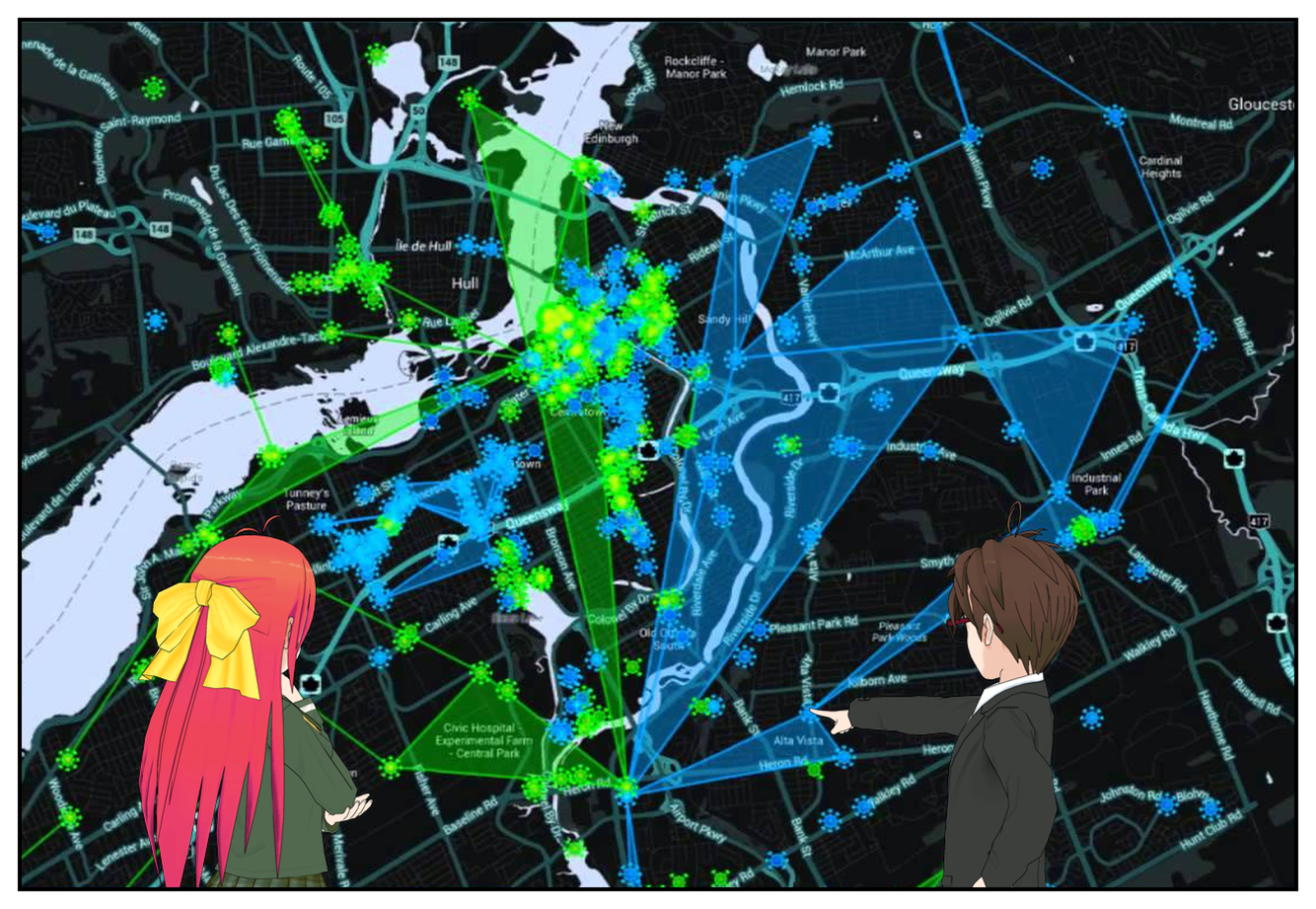
However, there are some experiences out there that do make good use of mobile gaming's unique capabilities, and Ingress is one of them. Ingress is a daunting prospect to get into, but I've spent a bit of time with it today, and it turns out it's not nearly as scary as I thought it was.

Ingress is an augmented reality game — that is, it's a game that overlays fictional game elements on the real world. The concept is that "exotic matter" or "XM" has started leaking into our world, and aliens called "Shapers" are up to some sort of mischief. Two factions have risen up to try and deal with the XM situation in their own way: the Enlightened want to learn more about it and how they can use it to help humanity, while the Resistance want to get rid of it and protect humanity from the unwanted machinations of the Shapers.

At the start of the game, you pick one of these two factions, and that's your team for the duration you play the game. You can switch sides, but it's a lengthy process to do so and effectively entails you starting the game all over again, so there's not a lot of point unless you really need to play for the other team.

Ingress' augmented reality nature comes in the form of "portals" scattered around the real world. It's the job of the Ingress players on both sides to proceed to these portals — like, actually go to the places they are — hack them to acquire various useful items, and capture them for their respective faction. You can then use the items you've acquired to protect your own portals from enemy attack or go and try to cause some mischief on enemy portals. There's an overarching metagame that tasks you with linking nearby portals strategically and covering the map with triangles made up of three linked portals to score points for your faction, too, and meanwhile the game's overall plot unfolds organically in the background with special, live events around the world, video clips that you can loot from portals and all manner of other goodies.

Even its core game loop is interesting:

  • Check the intel site for portals you're interested in visiting/hacking/attacking/capturing
  • Go to the portal location
  • Hack the portal to acquire items if it belongs to your team
  • Attack the portal's resonators with weapons if it's an enemy portal
  • Capture the portal with your own resonators if you sufficiently weakened it
  • Link captured portals together with Portal Keys acquired through hacking — but note that links can't intersect, so do this strategically
  • Form Fields by linking three portals together in a triangular formation, capturing a region of the map for your team and adding MU (Mind Units — overall score) to your faction's overall rating.

Within that, there's plenty you can do to mix things up. You can collaborate and coordinate with other nearby players to carry out a heavy assault on a well-defended portal. You can strategise with teammates on what will be the best formation for linked portals and fields. You can post and follow "Missions" — sequences of portals designed to take you on a tour. Or you can simply use the game as an excuse to get out and about to visit some places.

By far the best thing about Ingress is that it's something that couldn't be done anywhere other than on a mobile device. Everything about it — the fact that it's GPS-based, the fact that it pulls information from the Internet, the fact that it's an inherently social game, the fact that it works best on a device you can keep on your person at all times — is made for mobile gaming: it's a completely unique experience that simply wouldn't work anywhere else, and it's a much, much better experience for it.

Also its cyberpunk-style aesthetic is absolutely gorgeous, with neon, glowing colours on a black background; stereotypical "computer" noises and speech synthesis; dramatic "ping" noises as you approach a portal; and well-produced videos to advance the ongoing plot. It's an extremely well-crafted product, all round, and best of all it's completely free to play, with no play throttling attempting to squeeze money out of you at any point by preventing you from playing as much as you'd like.

I spent a good couple of hours just wandering around the local area experimenting with Ingress earlier, and I enjoyed the experience enough to know it won't be the last time I do so. It's one of the most interesting mobile games I've ever played, and studios considering churning out yet another identikit gacha RPG should take a long, hard look at Ingress to see how to really take advantage of mobile devices as a platform for unique, fascinating gaming experiences.