2194: Second Re;Birth

0194_001

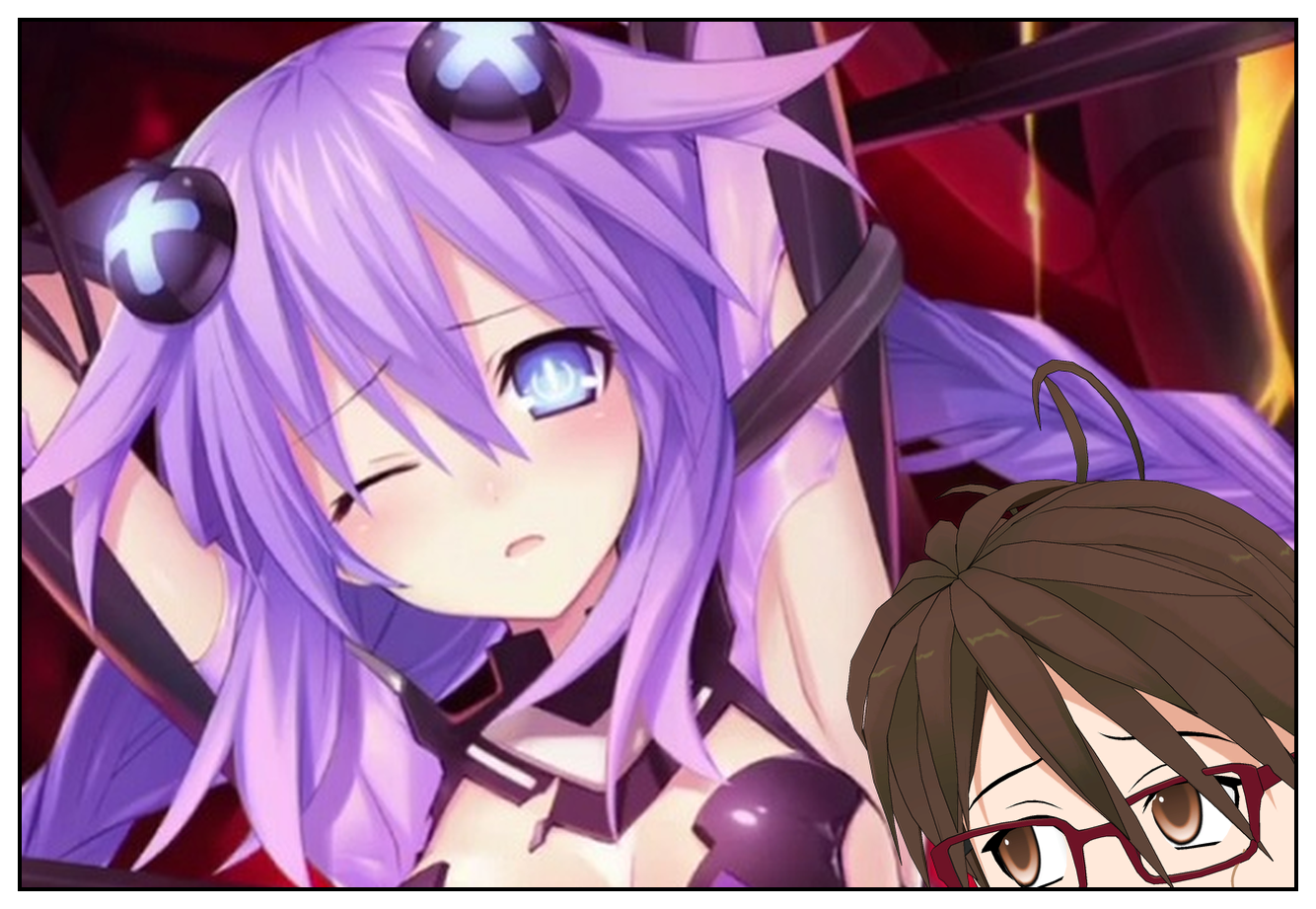
Having beaten Hyperdimension Neptunia U Action Unleashed to my satisfaction by successfully attaining the Platinum trophy, I immediately started on Hyperdimension Neptunia Re;Birth2, the Vita-based remake of Hyperdimension Neptunia mk2, previously my favourite game in the series, if not mechanically then certainly in terms of story and characters.

Re;Birth2 is less of a drastic difference from its predecessor because mk2 was already using the initial, slightly unrefined version of the systems seen in Hyperdimension Neptunia Victory and beyond. Re;Birth2 is still worth playing if you're already familiar with the original, however — not only has the battle system been updated to be in line with the solid, enjoyable mechanics of the later installments of the series, the game has also been updated with new scenes and new characters, including the welcome reappearance of RED, one of the best characters from the very first Hyperdimension Neptunia game, and one who was sadly absent from Re;Birth1. Not only that, but the presentation has been brought in line with the rest of the series, too — rather than mk2's somewhat muddy character models used in dialogue sequences, Re;Birth2 makes use of the beautiful Live2D incarnations of Tsunako's art like the other games.

Also added to the base game is the Remake system previously seen in Re;Birth1. This is essentially a crafting component, but as well as crafting items — which you do to make them available in shops rather than adding them to your inventory — you can also craft new game mechanics and visual options. Re;Birth1 had a few interesting options in this regard, but Re;Birth2 takes the idea and really runs with it, going so far as to add everything from a whole real-time passive minigame called Stella's Dungeon that you set running in the background while you play the rest of the game to the ability to make the girls' eyebrows stand out more on their 3D models so they look more like the 2D artwork.

As is tradition for most of the Neptunia series, Re;Birth2 is a gradual evolution rather than a dramatic reinvention, but some of the new additions and changes are very welcome. One of the craftable Plans in the Remake system, for example, allows you to obtain items and experience points from enemies you "symbol attack" on the field screen. In the original mk2, if you attacked an enemy that was significantly lower level than you on the map, they'd simply die and you wouldn't get anything. It was for clearing your way through a dungeon rather than grinding, but it actually wasn't all that useful, since you often wanted to fight enemies in order to collect their drops for various purposes. Re;Birth1 added the option to turn this off via its Remake system, which was a start, but the ability to get rewards from this is new for Re;Birth2, and extremely welcome in the late game, where you're likely to completely destroy most enemies as you grind out Lily Ranks and rare drops.

Coming to this game straight off the extremely light-hearted and silly Hyperdimension Neptunia U Action Unleashed was quite surprising: the overall tone of the whole experience is very different. It's significantly darker, particularly in the opening sequence, and it features some of the best villains the series has seen, each of whom are complex and interesting characters. The use of the extremely girly Nepgear as protagonist was inspired in this instance, since the juxtaposition of her innate sweetness and naive nature with some of the nasty shit that goes on — particularly in the Conquest ending path — is very effective indeed.

I'm only in Chapter 2 of Re;Birth2 so far, but I'm already having a blast with it and reminding myself how and why I love this series — particularly its mainline games. It's going to be a Nep-Nep-filled few months, I'm afraid, since there's Hyperdimension Neptunia Re;Birth3 to go after this, by which point a lovely shiny copy of the actually-brand-new-and-not-a-remake Megadimension Neptunia V-II for PlayStation 4 will finally be in my grasp. Can't wait.

2176: Life on Mira

0176_001

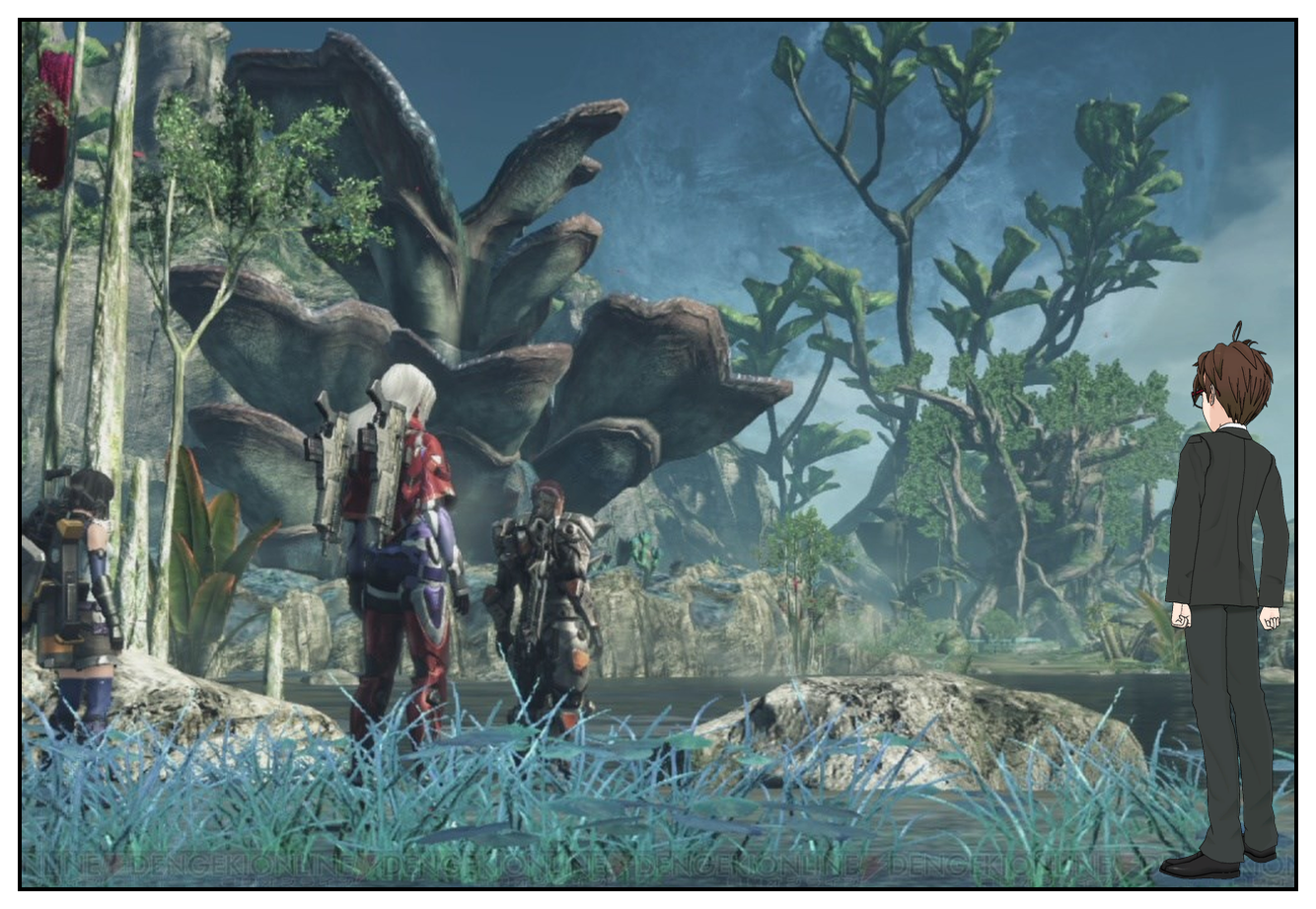
I finished the main story of Xenoblade Chronicles X today, but my time with the game is far from over, since there's still a whole lot to do once you clear the story.

I wanted to reflect a little on my experience with the game so far — 100 hours' worth — and reiterate that I think it was absolutely the best game released last year that I had the good fortune to play. There may be some spoilers ahead, but I'll try and keep them to a minimum.

The most common criticism I've read of Xenoblade Chronicles X is that its story is "weak" or "not as good as Xenoblade Chronicles". While I don't disagree that its manner of storytelling is an acquired taste, I don't agree at all that its story is weak or of poor quality — nor do I agree with the assertion that the characters aren't particularly well-defined.

Let's take the first point first. I've already commented on this in depth in this post, but it bears mentioning again: Xenoblade Chronicles X's storytelling is about more than the main scenario quests and the cutscenes. It's an immersive storytelling experience in which you are part of the world of Mira, and things unfold around you, both with and without your intervention. The world changes and evolves as you complete missions and develop your relationships with characters, though the impact of your actions may not necessarily be immediately apparent. As you spend time in New Los Angeles and interact with its populace — initially all human, but later integrating several different xenoform cultures — you start to get a very strong sense of time and place from the people of Mira. It's ultimately one of the most well-realised worlds I've come across since the Final Fantasy MMOs — and, from me, that's high praise indeed, since these have previously been some of my favourite game worlds to hang out in.

Xenoblade Chronicles X's main story is a relatively straightforward affair, though its final act gets into some intriguing philosophical territory. But in many respects, the main story is the least important part of the overall narrative experience: the "true" Xenoblade Chronicles X, if you like, is in going about your day-to-day life as a BLADE, completing missions, interacting with others and developing your understanding of the world as a whole. Sidequests happen in the strangest of places at times, and you'll encounter a huge cast of weird and wonderful characters, many of whom have "affinity" links with one another just waiting to be discovered. Each of these sidequests is crafted with care, attention and meaning, and many of them tell their own compelling little "short stories" in their own right; others still form part of a larger ongoing narrative proceeding in the background alongside the main scenario. As a complete package, it's hard to think of an RPG with quite such a comprehensive narrative that you can explore in as much depth as you like.

Now, on to the second point: that of the characters. It's true that the main scenario largely focuses on the characters of Elma, Lin and Tatsu, with even your avatar not getting a lot in the way of development — though it's worth noting that in stark contrast to many JRPGs, you can play your character's personality in a lot of different ways, and there are often consequences for the choices you make — but to say that the other characters don't get explored is nonsense. For one, all the playable characters have their own chain of affinity missions and heart-to-heart events to explore as you develop your relationships with them, and some of these are even prerequisites for proceeding through the story. Plus, all of them have their own unique things to say during and after battle, with certain character pairings even having unique conversations with one another. Pleasingly, this even includes your avatar (who has a voice in combat despite being a silent protagonist for most of the game) — many of the things he/she says are responded to by other party members, which makes you feel like a more important part of the team than you might do otherwise.

Again, you're free to explore this side of the narrative in as much or as little depth as you please, since most of the affinity missions are optional affairs. The content is there, though — like most things in Xenoblade Chronicles X, though, it simply isn't handed to you on a plate. I like that, though; it gives a feeling of achievement when you discover something.

Final-ish thoughts for now, then? Xenoblade Chronicles X is a masterpiece of sci-fi, and the sci-fi game I've wanted to play since I was very young. It's not perfect by any means — the Wii U hardware arguably holds it back a little at times, though not as much as the original Wii held back titles like the original Xenoblade Chronicles and The Last Story — but it really is an astoundingly good game, and a truly impressive achievement. It deserves to be celebrated a whole lot more than I've seen, and I shall continue to bang my drum about it for as long as anyone will listen.

2040: Perhaps We Should Stop Insulting Fans of Japanese Games

0040_001Earlier today (or possibly yesterday, I think), a former colleague posted a piece on a site I used to work for bemoaning, not for the first time, the amount of "ecchi" content in modern Japanese games, particularly dungeon-crawling RPGs. (I'm not going to link to it.)
The piece did have an interesting point to make, which was to conjecture that many creators are interested in making sexually explicit — outright pornographic — games rather than just flashing the odd pair of panties like they do nowadays, and that it's the current strict censorship laws in Japan coupled with the platform holders' stranglehold on what sort of content does and doesn't get approved for sale that is holding this back from happening. I'm not sure I entirely agree with this — the nature of ecchi as opposed to hentai is to tease and titillate rather than be outright explicit, erotic, masturbation material — but it was an interesting point to consider.

Unfortunately, he then went off the deep end with accusations of games like Dungeon Travelers 2 — a game that, by all accounts from people who have played it and not pontificated for thousands of words about How Bad And Wrong Anime Panties Are, is very good indeed — being "borderline child pornography". When called out about it on social media and in comments, he then took to his personal blog to wag his fingers and make some snide remark about the current situation with former "Face of Subway" Jared pleading guilty to numerous child sex-related charges and how, given that situation, people really shouldn't be defending games that "advocate child molestation".

For fuck's sake.

I feel like I have written this post a thousand times over by now, but it seems that I need to write it again, if only to blow off the steam I've had building up inside my head all day. So this may get a little bit angry, and for that I make no apologies whatsoever.

For fuck's sake.

The "child pornography" line is one that is usually trotted out by people who want to criticise Japanese media without knowing anything about it. Yes, Japan has plenty of morally questionable material — to Western sensibilities — readily available. Yes, Japan was somewhat "late to the party" when it came to legislating against this sort of thing. Yes, Japanese creators still produce media that would simply be illegal in Western countries. But Japan is also a different culture. And this isn't excusing any of the things that I personally find morally repugnant — because there are plenty of things I want nothing to do with, just as there are plenty of aspects of Western culture I want nothing to do with — but it is worth considering when contemplating whether or not you should tarnish an entire country's cultural output with as scathing a brush as "paedophilia".

The assumption that "if you're into ecchi games, you're a paedophile" makes — mistakenly — is that people who enjoy this sort of thing cannot distinguish between fantasy and reality. I can guarantee you — speaking from experience — that a considerable proportion of people who like to take a walk on the ecchi side of life are doing so because it entertains them, not because it arouses them. Ecchi games are refreshingly frank, honest and open; ecchi games often have strong characterisation and realistic depictions of how relationships progress — including sexual encounters (or implied sexual encounters at the very least); ecchi games are completely up-front about what they are, and unashamed of that fact. More often than not, ecchi games are having fun with sex. They're using it in a cheeky way, or in some cases as a means of exploring characters. (Criminal Girls is a great example of the latter, with the characters' reactions to the light S&M scenes throughout changing as they grow and mature as people, and their relationship with the protagonist changes.)

What these games are emphatically not is a means for people who want to abuse children to get their rocks off. And this also means that people who enjoy these games are emphatically not paedophiles, or "advocates for child molestation". Do you seriously fucking believe that because someone made use of a silly game mechanic in Omega Labyrinth that they're going to go out and start squeezing the tits of random girls on the streets? Do you seriously fucking believe that someone finding a hand-drawn character in a game — with nothing whatsoever real about them except their voice actor, who is inevitably an adult — attractive in some way means that they're going to be pulling up a dirty old van outside schools and kidnapping children?

In other words, if you must acknowledge them at all, how about you criticise things you don't like without fucking insulting the people who do like them? That would be simply lovely.

I am absofuckinglutely sick of having to defend my hobby against people who take the lazy, "moral majority" approach and decry something they don't like as being "sleazy" or "skeevy" or, as we've seen above, far worse. In my experience, the Japanese games and anime enthusiast community are some of the nicest, most articulate, most friendly, most passionate people I have ever met. Through my coverage of Japanese games back when I was on USgamer — I'm sure fucking glad all the time and effort I spent on that wasn't a complete fucking waste of time — I've made some great and doubtless lifelong friends. And, moreover, I've been exposed to some really, genuinely great games — and not one of them has made me want to go out and fuck kids. Not even a little bit. How about that?

Compare and contrast with these puritanical fuckwits who just want to brand everything not on their Pre-Approved List of Things That Are Super-Rad!! as somehow Bad, Wrong and Problematic, and, well, I know which side I'd rather be on. I'll be over here with my fellow deviants, thank you very much.

1992: The Essence of a Great RPG

I've been playing some Omega Quintet and Final Fantasy XIV today. I've technically "finished" both of them from a story perspective, but both have an "endgame" that you can keep playing after the main story is completed. In Omega Quintet's case, it's an opportunity to take on some challenging quests that require you to defeat very strong enemies as well as clean up any loose ends you might have left behind such as the optional "Training Facility" dungeon; in Final Fantasy XIV's case, it's a matter of gearing up and/or levelling other classes, largely in preparation for future content additions such as the imminent raid Alexander.

Playing both of these games from this perspective today made me come to something of a realisation: the essence of a truly great RPG — or, perhaps more accurately, one that I will doubtless think back on particularly fondly long after I've finished, even if it might not be critically acclaimed or widely beloved — is twofold: firstly, it has to draw me in and captivate me with its story and/or characters, then after that, the mechanics have to stand up to hours of play. If both of these things are true, I will happily spend hundreds — even thousands, in the case of Final Fantasy XIV — of hours on the game in question.

There are quite a lot of games that have fallen into this category for me over the years. Gust's Ar Tonelico series is one, for example; while there's not really an "endgame" in any of its three installments, they do have multiple endings that necessitate additional playthroughs (or strategic saving). Compile Heart's Neptunia series is another; with pretty much all of the games in that series (with the exception of the very first and the idol sim Hyperdimension Neptunia PP, which I fully intend to go back to at some point soon) I've seen fit to exhaust absolutely everything they have to offer rather than playing them through once and being done with them. Both Hyperdimension Neptunia Victory and Hyperdimension Neptunia Re;Birth1 took up well over a hundred hours of my life, for example.

Most recently, as previously noted, Omega Quintet has been keeping me busy in this regard. Omega Quintet has such a pleasing blend of story, characterisation and hugely enjoyable mechanics — its battle system is one of my favourite takes on turn-based combat I think I've ever seen — that I find it fun to just boot up and have a few fights in. The fact that the endgame section rewards you with massive amounts of experience for many of the battles, allowing you to level the girls up to ridiculous power levels — there doesn't appear to be the usual level cap of 99 in place — makes for a hugely satisfying experience. Enemies that once caused me considerable grief can now be defeated relatively easily — though pleasingly, Omega Quintet, particularly on its hardest difficulty, isn't afraid to smack you about a bit every so often if you get a bit cocky; I think I've had more "Game Over" screens in the endgame than I did throughout the whole story, and it's usually been because I made foolish assumptions that I was then punished for.

The only trouble with finding games that I want to spend hundreds of hours with in this way is that it means beating a single game to my satisfaction takes a hell of a long time. Still, I guess it means I shouldn't run out of things to play any time soon, huh? And that's quite a nice feeling.

1718: The Joyless Wankers of the Games Press

What I'm about to write would have been enormously unprofessional a few months ago, but since I'm no longer a member of the games press, nor do I have any intention of going back any time soon, I am more than happy to express myself freely.

My statement is simple: If you're that cynical about video games, find something else — anything — to write about.

I say this after a day in which not one but two utterly dreadful articles were brought to my attention — I'm not going to link to either; you can seek them out yourself if you're that interested.

First up was the review of Fairy Fencer F over on my former stomping grounds of USgamer. After witnessing… the reviewer in question's review style on a couple of other Japanese role-playing game titles — most notably the actually rather excellent Tales of Xillia 2, which he panned — and the fact that, back when I was still on the staff, he wouldn't review Atelier Rorona Plus on the grounds that a Google Image Search for the game looked "creepy", I wasn't altogether surprised to see that he tore this title to shreds, also. And he did so in such a way that told me three things: 1) he had a pre-existing dislike of the company that produced the game (Compile Heart) 2) he hadn't taken the time to engage with the game on anything more than the most superficial level and 3) he simply didn't give a shit about JRPGs as they exist in 2014.

I haven't yet played Fairy Fencer F, but given the way in which the review in question was expressed — telling people who might actually be interested in the game absolutely nothing about the game, its story or its characters and instead bashing Compile Heart and its parent company Idea Factory, bemoaning easily ignored technical issues and generally looking down its nose at people who might want to play it — I don't have much faith in it as a whole. I intend to give the game a fair shot myself once I have time to settle down with it, and when I do I intend to provide some detailed thoughts on the subject over at MoeGamer, much as I did with Tales of Xillia 2 recently.

Now, games journos will often point out how stupid it is to disagree with a review, which is, after all, a subjective opinion. And it kind of is; if you like something which someone else hates, then great; more power to you. But what we had here was more than that — it was an outright unhelpful review, instead more concerned with scrawling "I Hate Compile Heart" over everything than actually providing any sort of interesting, helpful analysis or criticism. It actually felt borderline insulting at times — though thankfully not so much as the site's notorious Hatsune Miku Project Diva F review, which was so offensive to fans of Japanese games that emphatic complaints from me and my then-colleague Cassandra led to the formation of my JPgamer column.

If this was a one-off, I wouldn't mind so much, but the reviewer in question has now done this several times — leading me to question the motivations for assigning him (or him stepping forward; I don't know which way round it was) to these titles in the first place. As the former staffer who single-handedly built up a ton of goodwill with fans of niche titles that get ignored at best, marginalised or even ridiculed at worst by other sites, I can't deny that it smarts a little to see all that goodwill getting well and truly pissed up the wall by giving the sort of games that I would have been all over — and that my fellow enthusiasts would have loved to hear more about — to someone who clearly and obviously hates them. Something that helped make USgamer unique has been lost; now it's just another site with a predictable "loljapan" attitude about it. I would rather the site simply didn't review these titles at all than let this joyless arse anywhere near one ever again, but sadly it's not up to me. How very disappointing.

But let's not get too hung up on Fairy Fencer F because this was, surprisingly, not the most stupid thing posted today. No, that honour goes to the epic-length editorial over on Polygon about finding the tutorial to the new Lord of the Rings game troubling. Why? Because at one point, you sneak up on your wife and kiss her, using the same control scheme and animations as you use later in the game to assassinate people and monsters. Somehow this bizarre objection was spun out to somewhere in the region of 1,500 words — an impressive achievement on the part of the author to take that long to say absolutely nothing, I must admit. (Although frankly, given the state of some of the entries on this blog, I'm probably not one to talk. But eh; there's a difference between a professional, commercial games site and a personal blog I use as an outlet for mental detritus.)

Polygon has been going down the toilet for a long time; I can't say I've ever been a particular fan of their uniquely pretentious brand of games journalism, nor the sanctimonious attitude of several of its staff writers, but since ditching their features staff a while back — the one part of the site that actually had anything meaningful or interesting to say — it really has been circling the drain. I wasn't surprised or angry to read this article today after someone pointed me in its direction earlier; my only real reaction was a sigh and a shake of the head. Games journalism in 2014, ladies and gentlemen; better to say 1,500 words of nothing at all about the week's big release than, you know, say nothing at all. Because if you make people angry you'll at least get some page hits as people share it indignantly.

Today has been one of numerous days that I've looked back on my time with the games press and thought "That was fun while it lasted, but I don't want to go anywhere near that ever again." If a prerequisite for being a member of the games press of 2014 is being a joyless wanker who can't find the fun in anything, then count me out. Give me a call when you ditch the clickbait business model, fire all these miserable tossers and start bringing on board people who are actually enthusiastic — even passionate — about this exciting medium. I won't be sitting by the phone waiting for your call, however; I've got better things to do.

You know, like playing games… and actually enjoying them.

1253: Nepgagaga the Third

Jun 24 -- NeptuniaAs I mentioned yesterday, alongside Atelier Rorona, I'm also finally getting around to playing the third Hyperdimension Neptunia game, Hyperdimension Neptunia Victory.

For those who haven't read my numerous enthusiastic rants on the previous entries in this much-berated series, allow me to get you up to speed.

The first Hyperdimension Neptunia was critically panned for numerous reasons, but I found myself enjoying it a huge amount despite its crap 3D graphics, repetitive gameplay and clunky mechanics. It established some immensely endearing characters, and it was largely this fact that encouraged me to check out the subsequent entry in the series.

Hyperdimension Neptunia mk2 was more of a reboot than a sequel, since it didn't really acknowledge the first game existed. It was superior in almost every respect — better graphics (though the frame rate was still on the low side), an almost infinitely better battle system, more streamlined mechanics and massively better music — but kept the things that were good about the original game: the wry, self-referential sense of humour; the endearing, memorable characters; the amusing setting; the gorgeous 2D art. It was one of the few games I actively wanted to play all the way through and see every single bit of content it had to offer — including the surprisingly dark "conquest" ending that took a considerable amount of effort to unlock.

Now, I'm playing Hyperdimension Neptunia Victory, the third game in the series. This is more evolution from mk2 than the revolution that mk2 was over the original, but that's fine; I loved mk2, so I'm happy to effectively play it again with a bunch of refinements. The adorably ditzy Neptune is back in the lead role this time around, after giving up the spotlight to her sister Nepgear in the previous game, and there's been a strong focus on the rather tsundere girl who represents the PlayStation platform, Noire so far in what I've played. (This is absolutely fine by me, as I have a total crush on Noire.)

I'm still quite early in the new game so far, so I'm hesitant to comment on it too much. What I instead wanted to mention was an Extra Credits episode I watched earlier today, in which the different between game mechanics, the dynamics they create and the aesthetic reasons to play were explored. It got me thinking about the various JRPGs I've been playing recently, and how not all of them would appeal to everyone — even among JRPG fans.

Given the diversity of the games industry today, it's very difficult and not particularly helpful to say that you're a fan of a specific "genre" of games any more, because these genres exclusively describe game mechanics. "I like RPGs," people will say, implying that they like games that involve hit points, statistics and equipment. And yet if I plonked Skyrim's biggest fan down in front of Hyperdimension Neptunia mk2, they'd probably look at me in disgust, walk out then never speak to me ever again. (I'm seeing my friend Tim tomorrow night, who is possibly the biggest Skyrim fan in the world; I might try it. Though he probably won't walk out of his own house in disgust.)

What we should actually start doing a little more is considering our tastes with regard to things like subject matter, mood and the aesthetics described in the Extra Credits piece. Hyperdimension Neptunia doesn't appeal to me because it's a JRPG — though I enjoy those mechanics and the related play aesthetics — it appeals to me because of its characters; because of its bright colours; because of its light-hearted nature and refusal to let you take it seriously. We're talking about a series of games where one special attack allows you to summon Keiji Inafune in the form of a sword, then hit things with it; and another where a girl using an electric guitar as a weapon smacks an enemy into a giant microwave and then turns it on for massive damage. We're talking about a series of games in which Sega, Sony, Nintendo and Microsoft's gaming platforms are personified as a series of young girls who rather aptly embody many of their inspirations' key characteristics.

Despite superficial similarities, I wouldn't necessarily expect someone who enjoyed, say, Ar Tonelico to enjoy Hyperdimension Neptunia — though there may be some crossover. (I love both, for example!) Ar Tonelico has its light-hearted moments but, for the most part, takes itself reasonably seriously; Neptunia, meanwhile, is flippant and silly. Both are emotionally engaging but in completely different ways; Ar Tonelico is dramatic and affecting; Neptunia feels like hanging out with old friends.

Anyway, I'm looking forward to playing more of Neptunia V, particularly as the story seems to have some interesting, mind-bending twists this time around. It's early days yet, but I'm already having a blast, and I anticipate spending a considerable amount of time on this game.

#oneaday Day 791: Give Me More J

20120320-013144.jpg

The Squadron of Shame recently tackled the subject of Japanese role-playing games in the first of a new format show that we're experimenting with. You can check out the show here, or if you're on something Flash-enabled, you can use the fancy-pants player below. (If you're not, you'll simply see a white space, for which I apologise.)

If I had to pick a favourite genre of interactive entertainment, it would, without doubt, be the Japanese role-playing game. I came to the genre relatively late (yes, I was one of those people who discovered RPGs in general through Final Fantasy VII) so I didn't really have the NES-era epiphany of realising that RPGs were the only genre of games that were attempting to tell a story — for a while, at least. I also didn't discover the earlier Final Fantasy games until much later, though I have, to date, played every one of them (except XIV) and have finished most of them. I still have V and VI outstanding. Shameful, I know.

There's something about the JRPG genre that has resonated with me ever since I first got off that train in Midgar and that awesome music started up, though. For one, I find the sort of over-the-top wackiness and melodrama that typifies the genre to many people to be entertaining and fun to get invested in. For another, I have absolutely no objection to a bit of moe in my games, and generally find anime characters of this type very appealing despite the fact that in many ways they're just as generic and widespread as the bald space marine with no neck. And for yet another, I enjoy the creativity frequently on display in the genre, both from an artistic and a narrative perspective.

It's a cliché to say that Japanese RPGs are clichéd, and a lot of people who accuse the genre of that probably haven't played one for a while. Sure, there are certain thematic elements and tropes which many of them have in common, but all are unique in some way. I can remember pretty much every JRPG I've played over the years in great detail — contrast this with the fact that there are a whole bunch of shooters I struggle to distinguish from one another, and it's pretty rare than I can even remember characters' names from Western RPGs like The Elder Scrolls. Each JRPG has its own unique cast of characters who are (in most cases) well-developed and display plenty of growth and change over the course of the story. Sure, some of them start their journeys as unlikable arseholes (Squall from FFVIII and Neku from The World Ends With You spring immediately to mind) but having a strong emotional reaction to a character — "I really don't like this guy" — is surely a sign that the writers have done their job well. It's sometimes a difficult experience to play a game with a seemingly dislikable protagonist, but often this is a sign that he's going to go through some experiences to soften that stony heart of his, and I'm a big fan of that particular narrative trope.

Leaving narrative aside, I've always been a fan of the often abstract, creative battle systems that populate Japanese role-playing games. This is perhaps best exemplified by the Final Fantasy series, which significantly shakes up its core mechanics with every single instalment. Don't believe me? Here's how the battle system and related mechanics differ from game to game:

  • Final Fantasy — Traditional D&D-style turn-based combat without movement. Spells split into levels, like D&D, and characters have a limited number of casts per level that increases with their character level. Characters have set classes and, later in the game, may promote these to "prestige" classes.
  • Final Fantasy II — Turn-based combat, but progression is tied to an Elder Scrolls-like system whereby using something makes it improve. Whack things with a sword and your sword skill will increase. Take a lot of damage and your hit points will increase. Use a lot of magic and your magic points will increase. This system proved rather divisive at the time, and predated Bethesda's implementation of a very similar levelling system into its flagship Western RPG series by six years.
  • Final Fantasy III — Turn-based combat, with progression tied to a "Job" system where characters could switch classes almost at will, allowing players to dynamically build a party to fit the situation at hand.
  • Final Fantasy IV — The first appearance of "Active Time Battle", the almost-real-time-but-not-quite system which has been present in most of the subsequent titles. Progression and skill unlocks were static and unique for each character.
  • Final Fantasy V — The Job system returns in a much more well-implemented fashion. Players may develop Jobs at will, and may also equip certain skills that they have learned from another Job to build multi-purpose characters.
  • Final Fantasy VI — Each character has unique special abilities but everyone has the opportunity to learn the same spells by fighting with "Espers" equipped.
  • Final Fantasy VII — The Materia system allowed for deep customisation of characters with a slightly puzzly element — how best to fill the available slots in a character's weapon and armour?
  • Final Fantasy VIII — By drawing magic out of enemies and "junctioning" these spells to statistics, players could create powerhouses that made their character level practically irrelevant. A bizarre and abstract system that didn't quite work.
  • Final Fantasy IX — Characters learned skills from their equipment. Once they had learned the skill, they could use it any time, otherwise they had to keep the equipment in question in use to perform the action.
  • Final Fantasy X — A brief break from the Active Time Battle system brought a clever turn-based system where certain actions could rearrange the turn order. Also saw the first appearance of a non-traditional levelling system in the form of the "Sphere Grid"
  • Final Fantasy X-2 — A return to the Active Time Battle system and a variation on the Job system came with X-2's Dressphere setup, whereby each of the game's three playable characters could equip several Jobs and switch between them mid-battle.
  • Final Fantasy XI — The first MMO entry in the series had another variation on the Job system whereby a single character had levels in every Job, but could only have one active at a time, with a "Sub-Job" becoming available after some progression had been made and allowing characters to use skills from this second Job.
  • Final Fantasy XII — Taking the combat of XI and applying it to a single-player game allowed XII to have a real-time feel while still feeling strategic, as players were able to pause the game to issue commands to characters while battling without being sent to a separate screen. Progression was split between a traditional levelling system and the "License Grid", whereby characters had to purchase licenses to use specific pieces of equipment and abilities, then purchase the equipment and abilities separately.
  • Final Fantasy XIII — Active Time Battle on a separate combat screen returns, this time with players taking control of a single character in fights that focus more on carefully-timed Paradigm Shifts (effectively Job changes by another name) rather than using specific abilities. Had a distinctly unconventional levelling system whereby characters could gain levels and abilities from six different classes independently.
  • Final Fantasy XIII-2 — Similar to XIII, but with only two characters available. Players could catch various monsters to fill the third party slot. Characters could once again develop down the six different paths, though monsters had a fixed class which could also be developed. Unlike XIII, where you were stuck playing as the party leader, in XIII-2 you could switch between the two characters at will, and one of them getting knocked out did not mean failure.

As you can see, Final Fantasy is a series which has evolved significantly over the years, and yet many accuse Square Enix of letting it stagnate. Sure, they've arguably made a few missteps over the years — XII, XIII and XIII-2 have all proven somewhat divisive in particular (though I enjoyed all three of them) — but one thing that the Final Fantasy team really can't be accused of is sitting on their laurels and churning out the same old thing year after year. The same is true for many other JRPG developers. It's one of the richest, most creative genres out there.

So why has it fallen from grace? A combination of factors. With the increasingly-busy lives people lead today, a 100-hour game is no longer necessarily seen as a good thing. Budgets for high-definition games spiral out of control, making the production of an HD JRPG an impractical prospect for many studios, particularly when they can't necessarily count on huge sales numbers to recoup their expenditure. (This is perhaps why MonolithSoft and Mistwalker chose to release the gobsmackingly brilliant Xenoblade Chronicles and The Last Story on the Wii rather than the more popular/"hardcore" Xbox 360 and PS3.) And the eye of "the average gamer", whoever that might be, has drifted towards the West these days for the majority of their gaming fixes, rather than the East as once was.

There's still a rich back catalogue of excellent titles out there to explore in this deep genre, however — even more so if you learn Japanese. I'm making a point to go back and revisit some titles I missed the first time around at the moment — having recently played Shadow Hearts I'm now on to its excellent sequel, for example — and I'm having a great time. For the vast majority of these games, they're a reminder of a simpler time — no "Your friend is online!" notifications, no party chat invites, no DLC, no controversy over endings even when they sucked — and they're great.

So while the rest of the Internet yells and screams about each other about Mass Effect 3 (still!) I'm more than happy to immerse myself in a world of HP, MP, Attack, Magic, Item, Escape.

#oneaday Day 763: A Question That No-One Seems To Have Asked Regarding RPGs

20120221-010149.jpg

Here's a stumper for all you RPG fans: exactly how much does taking one hit point of damage hurt?

It's not a particularly straightforward thing to work out, given that hit points are a representative abstraction of physical condition rather than a measurable, uh, measurement. But let's assume for a moment that it is indeed possible to measure one's own hit points. How much, then, would taking one hit point of damage hurt?

The answer to that question would largely depend on what model of hit points you are using. If you're talking Dungeons and Dragons hit points, taking one damage would fucking hurt if you're not in tip-top physical condition. The average "man in the street" sort of person (i.e. not a warrior, rogue, wizard, cleric or what have you) is regarded as a "level 0 human" and generally has something in the region of 2 or 3 hit points, if that. Level 1 wizards often only have in the region of 4 or so. As such, taking one hit point of damage as an average person following the Dungeons and Dragons model would hurt a great deal, putting you potentially up to halfway towards death (or rather, being knocked out, since people don't officially die until bleeding out to -10 hit points in D&D).

Compare and contrast with the JRPG approach to hit points, however, where totals frequently extend into the thousands and, in some cases, the tens of thousands. As a beginning character in a JRPG, you'll often have a low three-figure hit point total to start with, which will progress towards that elusive 9999 (or 99999) as you level up. Assuming that your average person hasn't really levelled up a great deal thanks to a notable lack of monsters (big spiders battled with Hoovers notwithstanding) we can work on the assumption that a single hit point's worth of damage doesn't really hurt a great deal. 'Tis but a scratch and all that.

So, since it's late and my brain is starting to shut down a little bit, let's take this to the next logical extension and consider a variety of horrific injuries to determine exactly how many HP damage they'd do following the two approaches outlined above. We're assuming that the person being injured here is not a Destiny-chosen hero who has been infused by the power of the Goddess/branded by the fal'Cie/chosen by Fate/revealed to be the wielder of the legendary blade Monado but rather, say, that man who works behind the fish counter in Sainsbury's. As such, we'll say he has 4HP in D&D and 150HP in a JRPG.

  • Getting an electric shock off an escalator handrail — D&D: 0HP, interrupt current action in surprise; JRPG: 1HP electric damage.
  • Falling out of bed while asleep — D&D: 0HP, lose "Sleep" condition; JRPG: 1HP physical damage, lose "Sleep" condition, afflict with "Embarrassment" (special moves charge slower)
  • Walking into a coffee table — D&D: 0 HP, maybe stun for a turn, staggering randomly around the room going "OUCH"; JRPG: 1HP physical damage.
  • Paper cut — D&D: 0 HP, afflict with "very mild bleeding" status, lose 1HP every 500 turns unless the cut heals (use a bandage or roll a D20 every turn, on a number between 3 and 20, it heals naturally); JRPG: 2HP physical damage.
  • Accidentally grating your fingers while attempting to grate cheese — D&D: 0HP, afflict with "very mild bleeding status" as with "paper cut" above; JRPG: 1HP physical damage.
  • Stubbing your toe — D&D: 0HP, incapacitate for a turn, remove ability to use vocal components of spells and stealth due to yelling "FAAAAAAAHHHHK!"; JRPG: 3HP physical damage.
  • Having a cat that is standing on you decide that it needs to hold on tightly with its claws — D&D: 0HP, 50% possibility of affliction with "very mild bleeding" status as with "paper cut" above, movement forbidden (you've got a cat on you); JRPG: 3HP physical damage, afflict with Rooted (you've got a cat on you).
  • Inadvertently ripping off a toenail by catching it on something — D&D: 0HP, afflict with "bleeding" status, lose 1HP every 50 turns unless the cut heals (use a bandage or roll a D20 every turn, on a number between 8 and 20, it heals naturally); JRPG: 10HP physical damage, afflict with Slow.
  • Burning your hand on the handle of a poorly-insulated saucepan — D&D: 0HP, interrupt current action, forced shouting of obscenity breaks any Stealth-related effects; JRPG: 10HP Fire damage.
  • Standing on an upturned three-prong plug — D&D: 0HP, movement forbidden for 5 turns, remove ability to use vocal components of spells and stealth due to yelling "FUCK. Cunt! ARSE! SHIT that fucking hurts. AAAAARGH."; JRPG: 15HP physical damage, afflict with Rooted.
  • Banging your head on a low ceiling even after seeing a "mind your head" sign — D&D: 0HP, dazed for one turn. temporary reduction to Wisdom and Intelligence; JRPG:10HP physical damage, 10MP magic damage for a blow to the head.
  • Getting punched in the face by some drunk dude at a bar who thought you were eyeing up his missus but in fact you were trying to read the scrawled sign on the front of that fridge that said that the cheap drinks might actually be a bit out of date — D&D: 1HP; JRPG: 25HP physical damage.
  • Suffering any sort of trauma to the testicular area — D&D: 2HP (probably won't kill you unless you've just been punched twice by a drunk dude at a bar who thought you were eyeing up his missus, but it bloody hurts), stunned for 5 turns, temporary reduction to Constitution; JRPG: 50HP physical damage, afflicted with "Stop" status as you wheeze and cough in an attempt to recover your dignity.
  • Getting stabbed in the leg, whether accidentally or deliberately — D&D: 2HP, movement rate halved; JRPG: 50HP physical damage, afflicted with "Slow".
  • Failing to escape the unwanted affections of an amorous gorilla — D&D: Your adventure is over. You have been adopted by an amorous gorilla as its mate. Any attempt to escape will result in death. JRPG: Perform a badly-executed stealth/platforming sequence to escape.
  • Getting stabbed in the face — D&D: 5HP (you will likely bleed to an unhappy -10HP death), permanent reduction to Charisma; JRPG: 100-150HP physical damage.
  • Suffering an apparently successful attempt to behead you — D&D: 14HP; JRPG: 150HP
  • Getting the smackdown from an angry God/being hit with a planet by the final boss — D&D: 50HP; JRPG: 5000HP
  • Standing quite close to the epicentre of a nuclear explosion, you know, enough to get a good view and think "ooh, that's a bit hot, I wish I'd stood back a bit more" — D&D: 998HP; JRPG: 9998HP.
  • Standing in the epicentre of a nuclear explosion — D&D: 999HP; JRPG: 9999HP.

Should you find yourself suffering any of these injuries, though, fear not; for a good night's sleep cures all ills, as everyone knows. Unless you're already dead, in which case you'd better get on good terms with your local Cleric or purchase some Phoenix Down.

#oneaday Day 73: The Late Review - Final Fantasy XIII

[This post contains spoilers.]

Final Fantasy XIII is a game about control in its many forms. What happens if the State or Church has complete control over the populace? What happens if beings beyond our understanding control the resources that determine humanity's survival? How do you challenge a fate which seems to be set in stone?

This theme permeates the entire game, from its visual design through its progression structure to the oft-criticised linearity. The game starts with the Sanctum-endorsed "Purge" sending hundreds of citizens to their death. Lightning and her soon-to-be companions are the ones who step up to challenge this seemingly-inevitable fate, but they don't really have a choice. It's fight or die, and to our heroes, death is not an option. This sets them on their path, and once they're on this path, there's no escaping their destiny: they are going to become Pulse l'Cie and receive their Focus: to destroy Cocoon as Ragnarok.

This inescapable destiny is reflected by the fact that there's no deviation from the path on which you, the player, can move. The first part of the game is completely linear for some time, and this is entirely appropriate for the theme. It reflects several things: the tightly-ordered society that is the Sanctum-dominated Cocoon, and the inevitability of preordained destiny. It's not until much, much later in the game that our heroes come across the verdant green hills of Pulse, a land devoid of human life and thus free of the "control" and corruption which the Sanctum and, by extension, the fal'Cie hold over the heads of the population of Cocoon.

But there's subtler things, too. As our heroes progress along their path, they grow in power. At the start of the game, they don't learn from their experiences. Shortly after they become l'Cie, they have the opportunity to develop themselves in the disciplines in which they're good at. Shortly before they arrive at Pulse, when they make the decision to challenge the unjust fate which appears to lie before them, their options open up. The player is able to develop them down pathways which were formerly closed to them. It's harder work for seemingly relatively little benefit, at least to begin with, but the option is there. The path of least resistance still allows the greatest benefits, but those who are willing to make the effort and invest the time will find it pays off later. And as their l'Cie brands advance, bringing them ever-closer to their inescapable destiny—destroy Cocoon or endure an existence worse than death—ironically, their options open up and their potential for advancement becomes ever stronger.

It transpires throughout the course of the story that the party has, in fact, been manipulated for nefarious ends. The interesting thing about the end section of the game is that it jumps firmly back onto rails, but this time it's rails that the party (and/or the player) has chosen to jump onto and follow to their conclusion. There's nothing stopping the player keeping the party down on Pulse, indulging in sidequests, trying to hunt down elusive treasure and wondering if they'll ever be tough enough to take down one of those enormous Adamantoise creatures. The player makes the choice to return to Cocoon and see the story through to its eventual conclusion. And when the final confrontation ends up causing that which the party had struggled so hard to avoid, it's through strength of will that Fang and Vanille manage to use Ragnarok's power to make a choice. A choice not to destroy Cocoon, but to save it instead. The two worlds are changed forever by their actions. The choices that they made put into motion a chain of events that inextricably tie Pulse and Cocoon together—literally, physically.

Ironically, of course, the ultimate control of Final Fantasy XIII's world is that which the creators hold over the player. The characters make choices for themselves and the player is powerless to do anything about it. The player is just along for the ride. But the lengthy setup, the introduction of the characters and the resolution of all their personal stories by the time the party reaches the relative "freedom" of Pulse—if the player has let themselves become invested in the fates of these diverse characters, if they can let themselves look past these characters' first impressions: that Lightning is an aloof, arrogant arse; that Snow is an idiot; that Hope is a whiny brat; that Vanille is an irritatingly girly girl; that Sazh has a stupid name and never quite seems to understand what's going on; that Fang is all too quick to jump off a metaphorical cliff at the slightest provocation—then they'll be right there with them, rooting for them as they decide the fate of the world.

Final Fantasy XIII isn't for everyone. The mixed critical reception the game got on its initial release is more than enough to make that abundantly apparent. Is it the large tracts of linearity, the characters, the fact it's not Final Fantasy (insert number here) that puts people off? I don't know. But I absolutely loved it. It was a spectacular thrill-ride with characters that despite occasional pretensions of obnoxiousness that they display at the outset, end up being a good, memorable ensemble cast—and seriously, what JRPG cast doesn't have occasional pretensions of obnoxiousness? I found it fun to play and beat it with a sense of satisfaction and closure, not least because of the fact that I know that it's over (until the full-on sequel of course) and won't feel obliged to return because of some piecemeal DLC.

I am half-tempted to go Trophy-hunting and/or finish off the last 24% of sidequests on Pulse that I didn't complete—but if I don't, I still feel like I've had a satisfyingly "complete" experience. And that, in this day and age of games that keep getting extended, extended, extended and thus losing the impact of their original "ending"… that's something to be celebrated.

#oneaday, Day 344: Bullshit Filters

One of the biggest challenges in creative writing is overcoming your own personal bullshit filters—those parts of your brain that point out what you're writing is complete worthless nonsense and garbage that no-one in their right mind would ever want to read.

My own tolerance for nonsense is pretty high, as my enjoyment of JRPGs and love of Bayonetta will attest. But even when I'm writing creative stuff myself, I end up picturing some variant on Comic Book Guy reading what I've written and saying "BUT THAT WOULD NEVER HAPPEN!" I guess I have bullshit filters by proxy, as if I were writing stuff purely for myself, it could make as little sense as I please.

One simple way to overcome your own bullshit filters (whether or not they're proxies like mine), though, is to watch some movies or read some books. When you see how much nonsense other people—published people who actually get paid for their bullshit—put out, you'll feel a lot better.

Let's take Tron: Legacy for a moment, which I went to see the other night. This is a movie built almost entirely on nonsensical premises. Why are the programs in the computer personified as humans? Why do they behave in a human way? Why do they need vehicles? And given that the main distinguishing feature of one group in the movie is that they act "more human", what, in fact, is the difference between them and those who are already acting pretty human? How does a virtual projection of an aircraft stall at altitude in a virtual environment which presumably has no air? THAT WOULD NEVER HA—

Stop. Tron: Legacy isn't a bad movie despite the fact that all of the above issues are clearly nonsensical plot holes which spectacularly fail to be resolved by the end of the movie. I enjoyed it very much and intend going to see it again. In fact, Tron: Legacy is a movie which actually benefits from you specifically not trying to read too much into it. The reason the programs act human? Because it's relatable. The reason they drive vehicles? So there can be awesome action sequences. The reason a virtual aircraft stalls at altitude? Because it's exciting. Nothing more than that.

So it is when you're writing. Not everything has to be laced with hidden meanings, metaphors and commentary on the human condition. In fact, some of the best "hidden meanings" come about completely unintentionally, as an unconscious communication on the part of the author, an unconscious expression of something deep-seated in their mind that comes out in the things that they are writing. A window onto their soul, if you will.

Of course, some people can transcend that kind of writing and deliberately do clever things. But then they probably get labelled as "pretentious" and don't get appreciated in their own lifetime. And everyone wants to be appreciated in their own lifetime, right?

So, the next time you're writing something, take care that it makes sense, sure. But if you want to write something which initially appears to be "stupid", think about the rest of what you're writing too. Does it make sense in context, however "unrealistic" it might be when compared to reality? If so, then there absolutely is no reason that the Blood Sausage of Agamemnon can't turn into a semi truck at the push of a button when combined with the Amulet of Lindor under a full moon.

And if you still feel what you're writing is ridiculous, go watch Tron: Legacy.