2427: 10 Atari 8-Bit Classics*

0427_001

Still curious about the Atari 8-Bit? Here are 10 classic games.

River Raid
river-raid-1

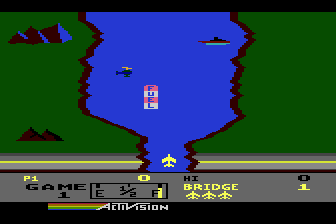
The 2600 version of River Raid has been whored around the place numerous times over the last few years, but the infinitely superior Atari 800 version never gets any love.

While the formula remains the same — fly up the river, don't crash into the sides, don't run out of fuel, blast any helicopters, ships and bridges in your way — the execution is better thanks to the addition of numerous features that use the additional power the 8-Bit computers had over the 2600.

Atari 8-Bit River Raid also had tanks, hot air baloons, jet planes that flew across the screen ignoring the river boundaries and more complex level designs. It's still a top-notch shoot 'em up today.

Miner 2049'er
s_miner2049er_4

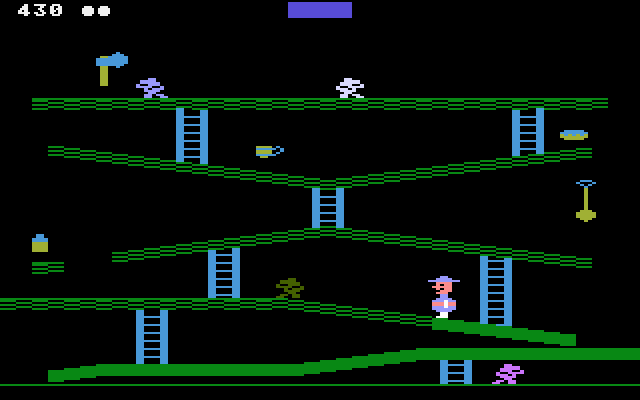
Any self-respecting Atari enthusiast will almost certainly put this game near the top of their "favourite games" list, though interestingly I didn't warm to it much first time around. Replaying it again now, however, I see its appeal — it's a well-crafted platform game with interesting environmental puzzles that never gets too complicated for its own good.

Playing the role of renowned (and rather chubby) mountie Bounty Bob, it's your job to make your way through a uranium-infested mine in search of the nefarious Yukon Yohan. In order to do this, you need to "paint" every platform in each screen by walking over it, while simultaneously avoiding the mutant uranium beasties that prowl the platforms. But in true Pac-Man tradition, grabbing a bonus item allows you the temporary ability to turn the tables on the meanies, eliminating them from the screen and helping to clear a path for you.

Star Raiders
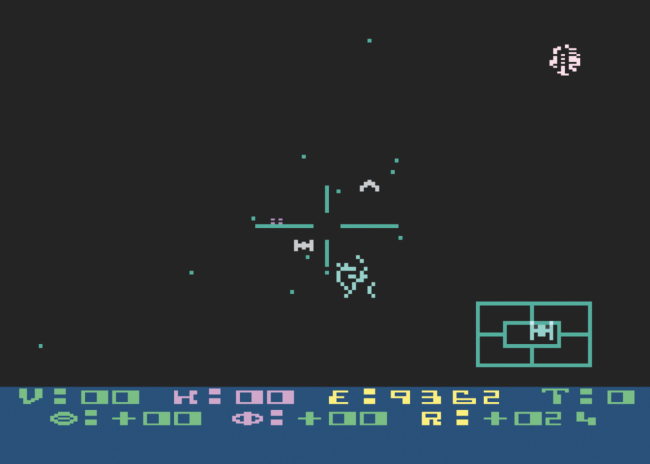
star-raiders-perfectten

Again, the 2600 version of this has been re-released time after time, but the Atari 8-Bit version is much better. It's the original 3D space sim, essentially being a more action-oriented take on the traditional grid-and-vector-based "Star Trek" game that can be played on anything from a mainframe to a graphic calculator.

Aliens are invading the galaxy. You need to stop them. You do this by reviewing the galactic map, determining which of your starbases are in most immediate need of attention, then warping to the aliens' location, blasting them to smithereens and then repeating the process until the galaxy is safe once again.

Notable for being more complex than simply "point and fire", you had to manage your energy levels by determining when was (and wasn't) an appropriate time to switch on systems such as your shields and targeting computer.

Star Raiders II
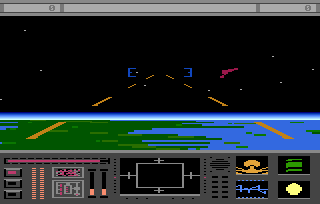
star_raiders_ii

Not perhaps as fondly regarded as the legendary original, I still loved Star Raiders II (originally intended to be a licensed game of the movie The Last Starfighter), because to me it kept what made the original great while improving almost every aspect of it.

Instead of a grid-based galactic map, you now had a convincing looking solar system map and could even orbit planets. The enemies you confronted were more than just fighters that went down with a single shot, too; in one of the earliest examples of boss fights, Star Raiders II often put you up against enemy destroyers and battlecruisers, requiring you to change tactics somewhat.

Star Raiders II also saw you going on the offensive rather than playing strictly defensively, too; when you thought you saw an opportunity, you could warp into the aliens' star system and bomb their planets in an attempt to stop their invasions once and for all.

Oh, and you could fly your ship into the sun and the on-screen cockpit would melt.

Ballblazer
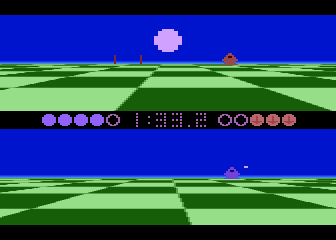
ballblaster

An early Lucasfilm game, Ballblazer was a split-screen arcade sports game for one or two players. The basic premise was similar to soccer in that you had to gain possession of a ball and shoot it between the opponent's goal posts, but there was only one person on each team and the goalposts moved.

Ballblazer made use of a convincing first-person 3D perspective using a patchwork grid effect on the ground and automatic 90-degree turns whenever you needed to face the ball. Despite its simplicity, the game was fiercely competitive, and had some fantastic music, too.

Rescue on Fractalus
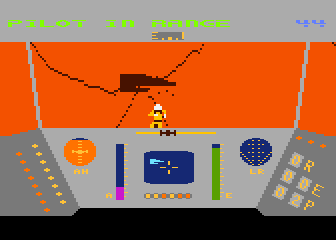
rescue_on_fractalus_atari_us_8

I mentioned this the other day, but I can't talk about 8-Bit classics without discussing Rescue on Fractalus, another early Lucasfilm game.

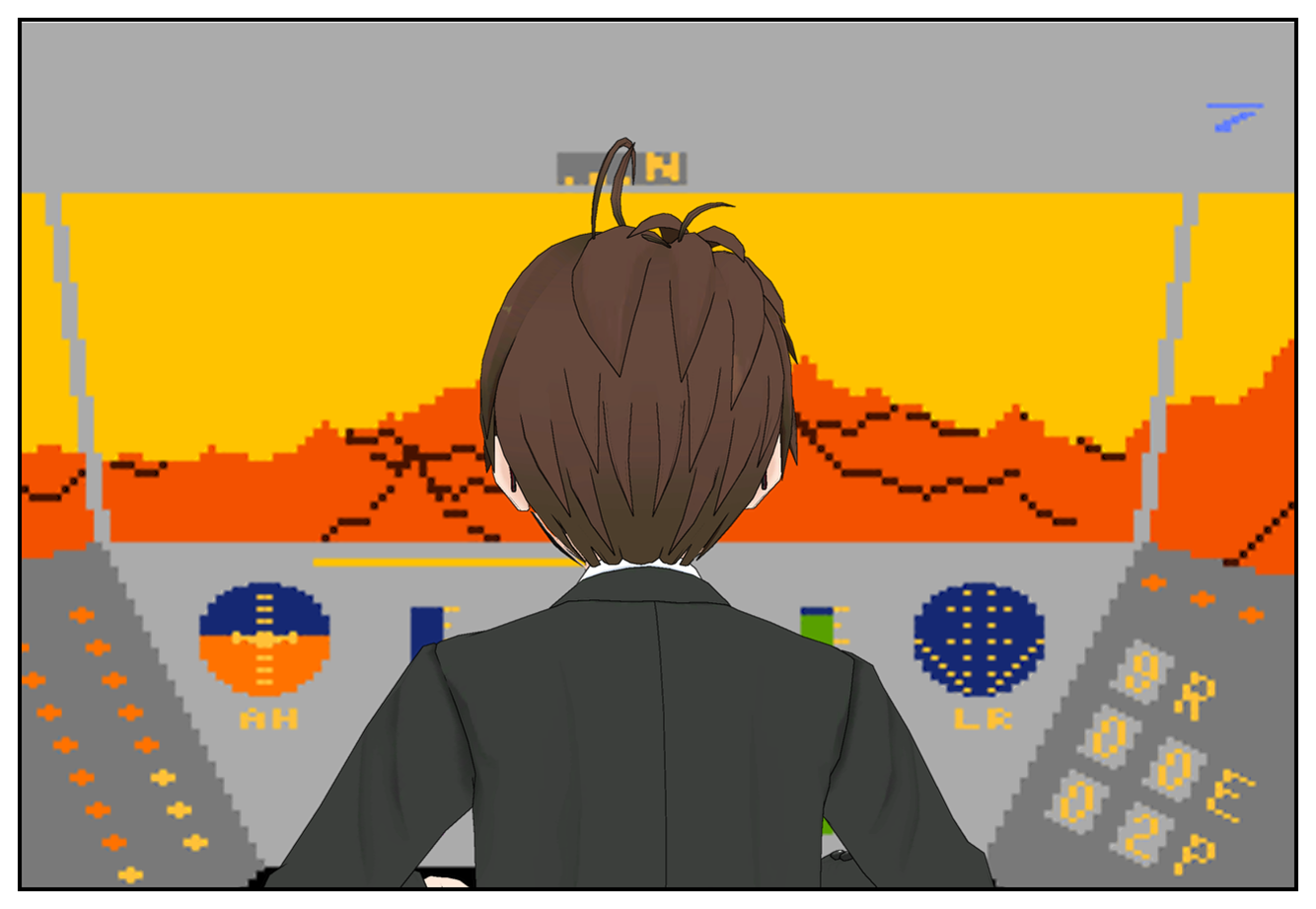
Unfolding from a first-person in-cockpit view, you were sent down to the planet Fractalus (so named because its 3D landscape was generated using fractals) to rescue crashed pilots and fend off the evil Jaggi forces. The game was remarkably complex for its time, featuring numerous keyboard commands that made it feel like a proper simulation of flying an advanced spacecraft, and the 3D graphics were extremely impressive.

Rescue on Fractalus was most noteworthy for its little touches: the sound of a pilot banging on your airlock door would get more and more faint if you failed to open it for him in a timely manner; if you switched your engines back on before the pilot was on board, you'd fry the poor bastard to a crisp; and occasionally on later levels, the downed pilots would turn out to be aliens that would leap up and hammer on your windshield. Absolutely terrifying… until you switched the engines back on for their benefit and watched them fry.

M.U.L.E.
mule_colony

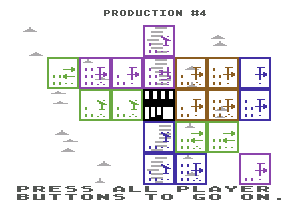
One of the finest multiplayer games of all time, and one of the finest strategy games of all time. Accessible and understandable yet filled with complexity, M.U.L.E. was — is — an absolute masterpiece.

Marooned on the planet Proc Irata (seriously) for six or twelve months depending on the difficulty you were playing on, it was up to you to make the most of the situation by making use of the land that was granted to you and which you bought at auction. You could assign land to harvest food, energy, smithore or, on the higher levels, a "cash crop" called crystite. The type of terrain determined what type of facility a plot was most suitable for, with the river running down the middle of the map being the most abundant for food, while mountains were best for smithore.

M.U.L.E. challenged you to combine cooperative play with competitiveness — while you were competing against three other players, all of whom could be human-controlled if you had an Atari that supported four joysticks, if you didn't all work together to ensure the colony as a whole had enough food, energy and smithore to survive the next month, you'd all be in trouble.

The game made use of an interesting graphical depiction of negotiating prices by allowing buyers and sellers to "walk" up and down the screen to determine the prices they were willing to buy or sell at. By meeting another player — or the colony store — you could buy and sell goods as you saw fit — stockpile for later or sell for a high price right now?

Final Legacy
final_legacy

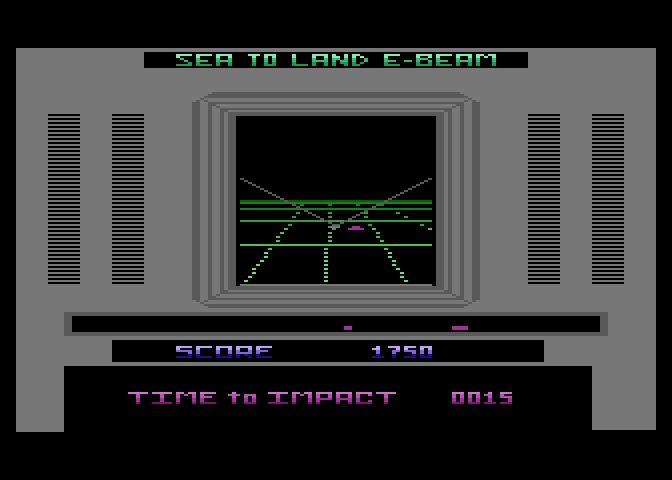
A lesser-known game, this one, Final Legacy was a strategic shoot 'em up with elements of Missile Command to it, and, like many other games of the period, was the embodiment of Cold War paranoia.

In Final Legacy, you were in charge of the good ship Legacy and were tasked with destroying the nasty horrible enemy missile bases that were pointing their nasty horrible missiles at your cities. You had to torpedo enemy ships, blast the enemy bases with your laser cannon and shoot down the missiles that inevitably got fired the moment you started attacking a base.

Later difficulty levels added some interesting mechanics such as having to destroy "Intelligence" ships in order to find out the locations of the enemy missile bases, but mostly the game was about frantically zipping back and forth between four different screens and hoping you didn't accidentally let anyone get nuked.

Batty Builders
battybuilders

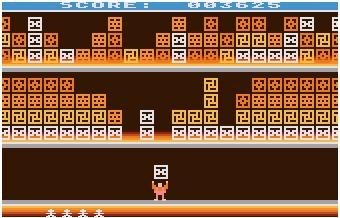
Another lesser-known game, this time from the once-prolific English Software. Batty Builders saw you in the role of a builder attempting to build a wall. In order to do so, you'd have to catch bricks falling from the conveyor belt at the top of the screen, then toss them into place in the wall, all without killing yourself in the process.

That's pretty much all there was to it, but it was enormously addictive, and is noteworthy for being one of the earliest examples of a frantic puzzle game I can remember.

Bruce Lee
bruce_lee_4

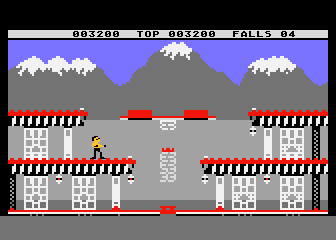
An interesting and peculiar game, Bruce Lee combined elements from a number of different game types, most notably beat 'em up and platform adventure.

As Lee, you'd have to make your way through each screen collecting lanterns. Attempting to stop you from doing so were an anonymous ninja and The Green Yamo, both of whom would pursue you around each screen with a surprising amount of simulated intelligence (or, in the case of Yamo, who could be controlled by a second player, actual intelligence), making your life miserable. Fortunately, you could deal with them by giving them a smack in the chops or a flying kick to the face, though they'd always be back.

Bruce Lee remains one of the finest licensed games out there, thanks in part to the fact that it's not trying too hard to follow any particular movie. It's still a fun platformer today.


* your definition of "classic" may vary, but I enjoyed all these.

2425: Life in the 8-Bit Era

0425_001

I've been on a proper nostalgia trip with my old magazines and retro machine emulation recently, so I thought I'd share some memories and factoids about growing up in a household filled with home computers rather than games consoles.

This post was inspired by a conversation with my friend Chris earlier today, who noted that it's an area of gaming history that he's not as familiar with as the consoles of the time.

I'm writing this from the perspective of someone who grew up with the Atari 8-Bit range of home computers. Your experiences may vary if you were a Commodore 64 or Spectrum child!

The early machines were massive

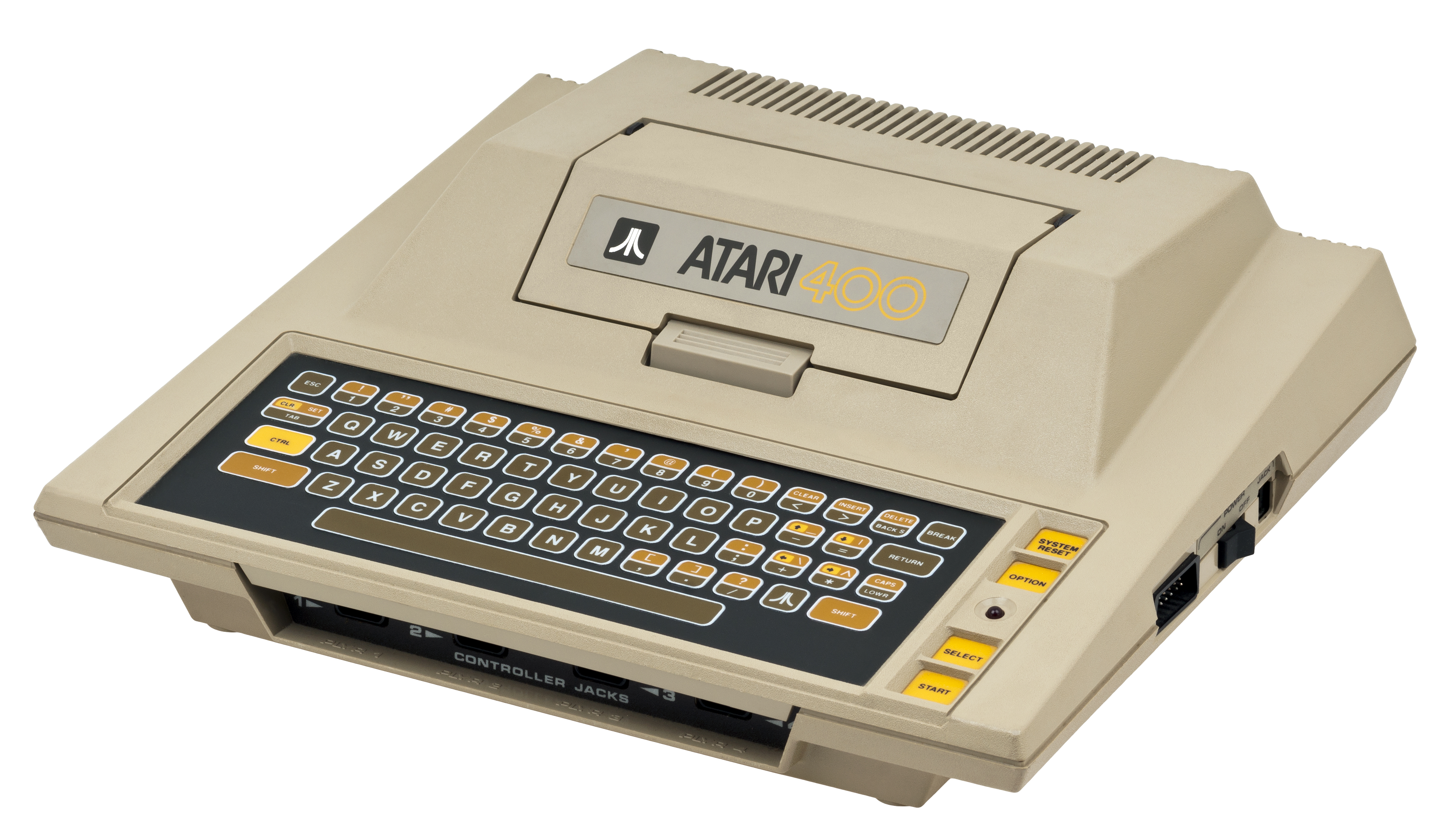
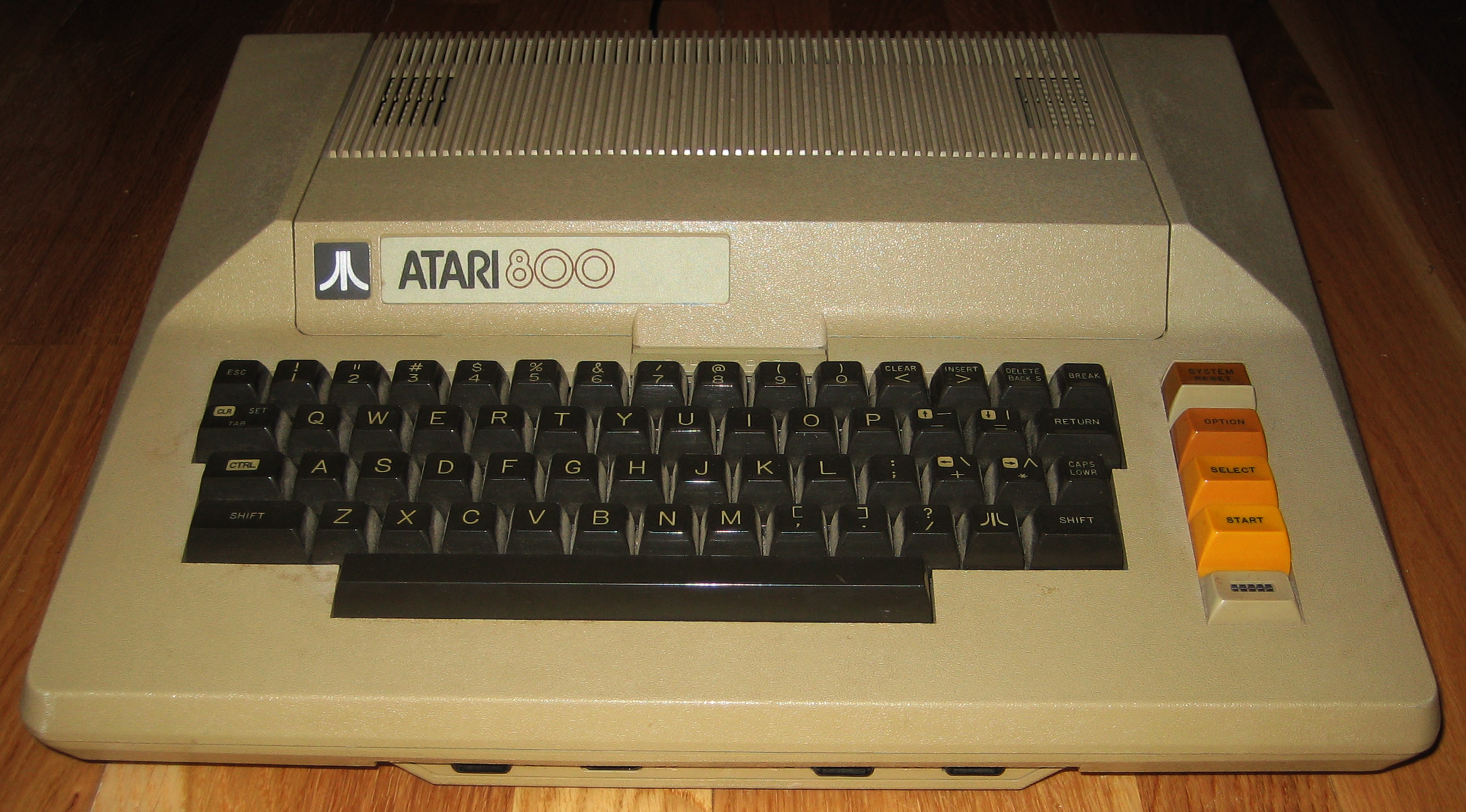
The Atari 400 and 800, the first models of home computer released by Atari, were absolute behemoths — the size and weight of a typewriter. The reason for this was that due to FCC regulations regarding signal leakage protection, their innards had to be encased in solid aluminium.

This is the Atari 400.

SONY DSC

And this is the Atari 800.

atari_800_closed

There were a few differences between the two. The 400 was originally set to ship with 4K RAM and the 800 with 8K, but by the time they hit the market, the price of RAM had already come down enough to outfit them both with 8K. The 800, which had expandable memory, eventually underwent numerous upgrades to end up with a then-massive 48K of RAM.

The 400 had a horrible membrane keyboard (which many users, including our family, replaced with mechanical keys) while the 800 had mechanical keys as standard. Both featured a then-revolutionary bit of kit called Serial Input/Output or SIO, which could be regarded as a modern precursor to USB in that it allowed the connection of multiple, automatically configuring devices to the computer. It was mostly use to connect tape decks and disk drives.

The later machines were smaller and looked a bit nicer

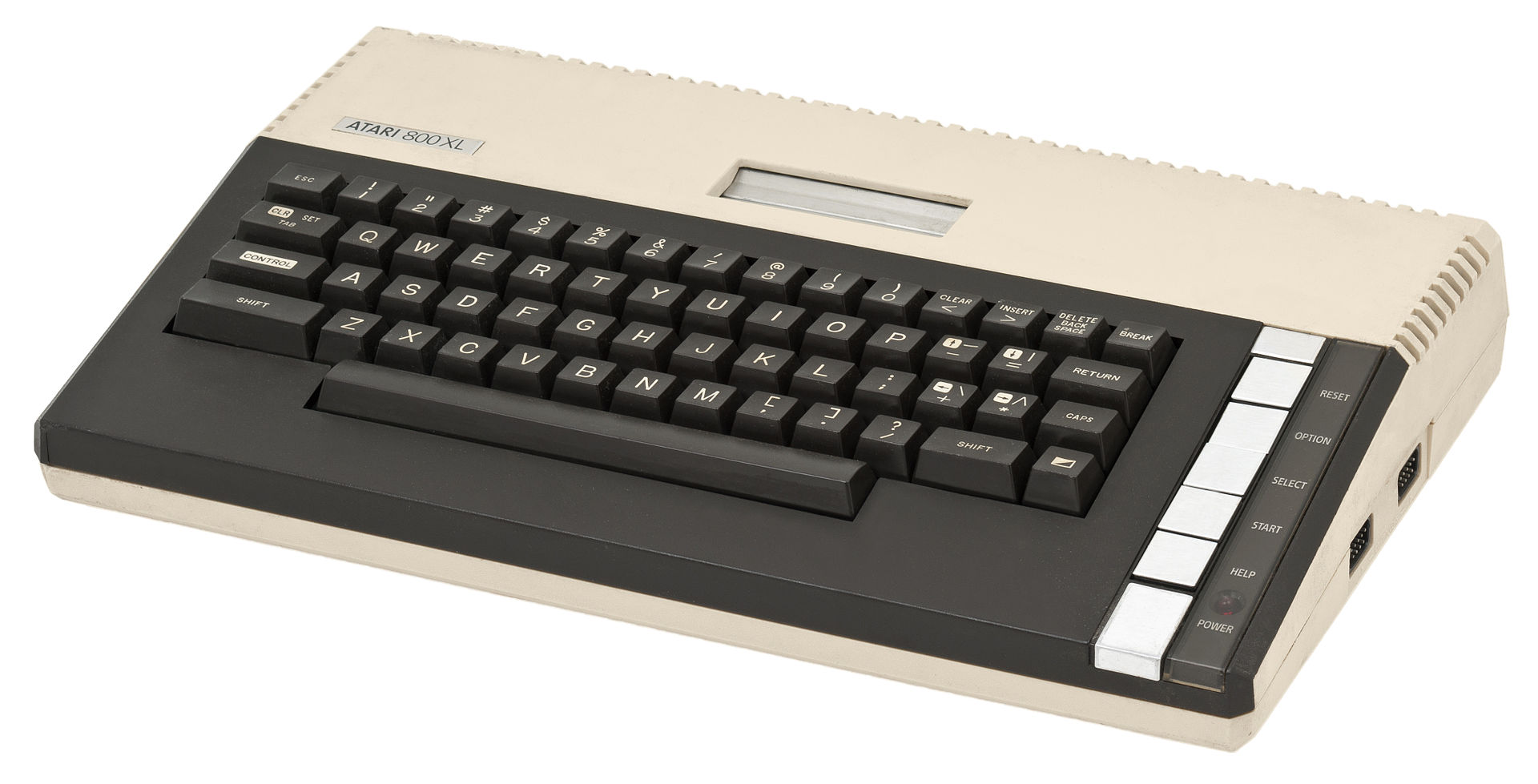
Here's the 64K 800XL, probably the most direct competitor to the Commodore 64:

1920px-atari-800xl

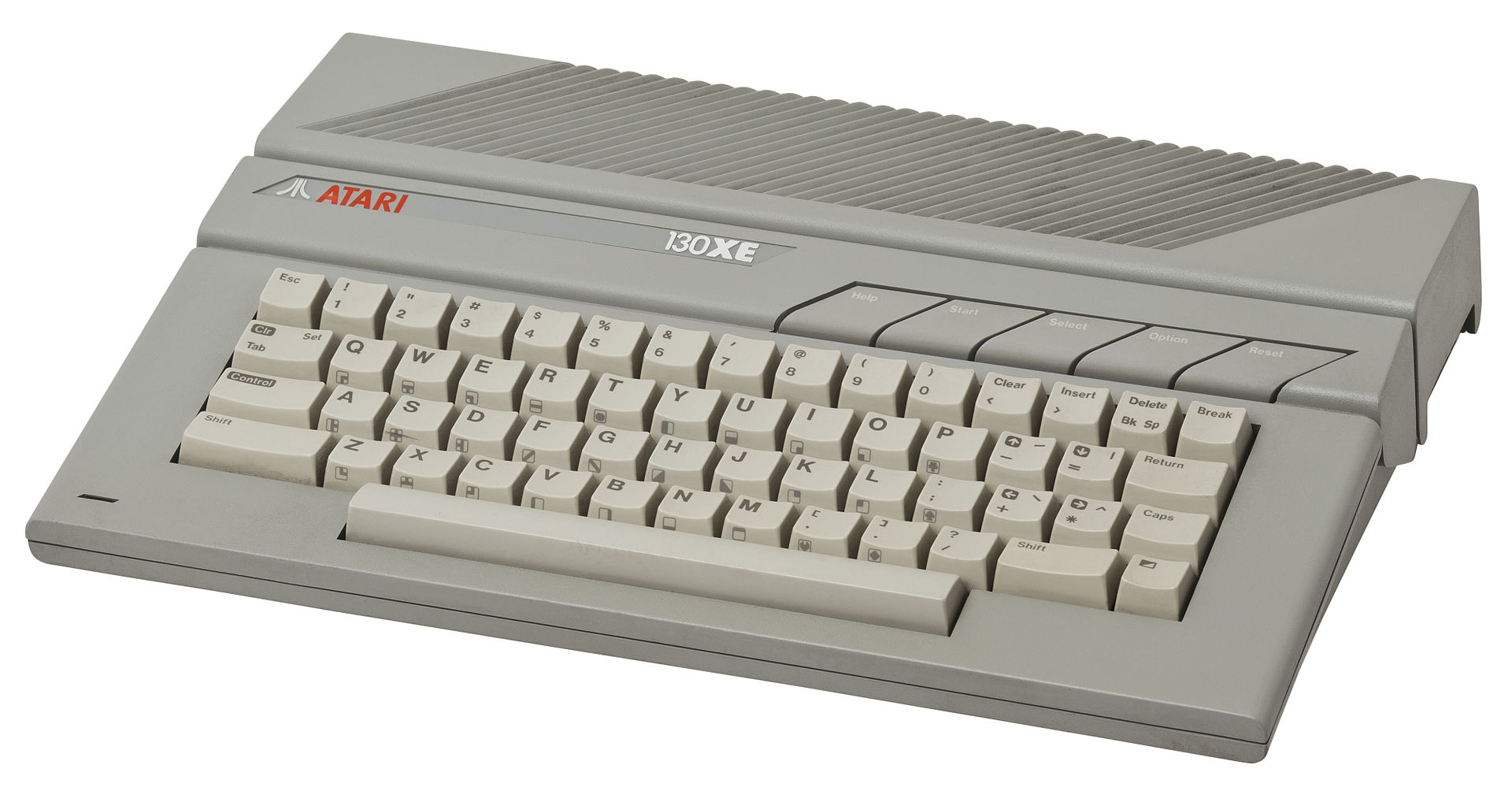
And the 128KB 130XE, whose extra power went largely unused due to it coming out pretty late in the 8-Bit life cycle; its resemblance to the 16-bit Atari ST is no coincidence.

1920px-atari-130xe

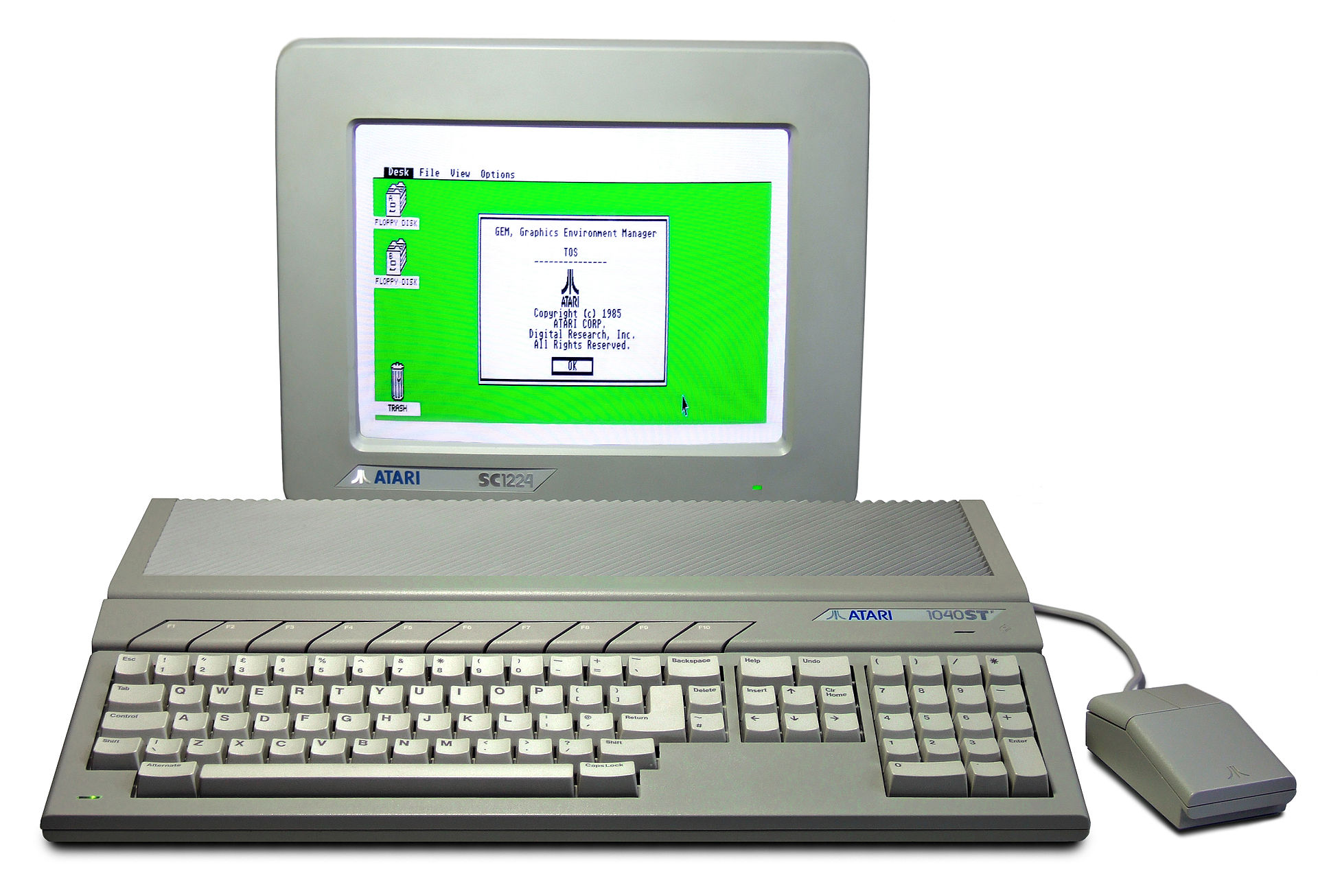
(Here's the ST, for comparison's sake:)

1920px-atari_1040stf

Early games came on cartridge

Part of the thinking behind the early systems was that they should be as user-friendly as possible. With that in mind, the very simplest method of getting a program up and running on the 400 and 800 — and indeed all subsequent Atari 8-Bits — was to plug in a ROM cartridge, turn on the power and enjoy the instantaneous load times of the format.

Many of the 8-Bit's earliest and most well-regarded games — most notably the excellent Star Raiders, one of the first 3D space sims, and still a great game today — came on cartridge, but eventually games got big enough that they needed to be distributed on cassette tape or 5.25" floppy disk instead.

The 400 and 800 had four joystick ports

…but very few games used them. However, one of the very best games on the system, Electronic Arts' highly competitive strategy game M.U.L.E., allowed for four players simultaneously. Later versions of the Atari 8-bit only had two joystick ports, so true four-player titles remained rare.

Programming for the Atari and other 8-Bit machines was a big British industry

A lot of the software companies that are doing proud business today — Eutechnyx (formerly Zeppelin Games), Rare (formerly Ultimate Play the Game), Codemasters (still Codemasters) and Electronic Arts began their lives in the 8-bit era, and many of them (all of the above except EA, among others) started in Britain.

The 8-Bit era saw the birth of what we would now call the indie games industry. Single programmers or small teams of friends would assemble games in school holidays or during free time and release them on cassette at budget prices. Many would go on to become hugely popular. And many of them chose to create extremely creative titles rather than lazy copycat clones of arcade shoot 'em ups — though make no mistake, there were plenty of lazy clones around, too.

The reason why so many people got into programming on their Atari is that when you booted it up you were straight into Atari BASIC and could start writing code straight away. Granted, BASIC wasn't the speediest language in the world, but learning it formed a great foundation for discovering more complex languages.

Loading from tape took ages

This can't be overstated. It's a well-known fact that loading a game from cassette took a long time, but really. It took a long time. In the case of the Atari, you'd have to ensure the system going "BURRRRRRRRR, BURRRRRRRRRR!!" over and over while the data loaded from the cassette.

Loading from disk made a great noise

One thing I really miss from the original 8-Bit days when using an emulator is the sound that loading things from disk made. There was this weird farting sound when the machine started up, then loading combined the whirring snark of the drive's mechanisms with a weird "BLBLBLBLBLBLBLBLBL" noise, punctuated by zurbits from the drive. I was always a bit disappointed when developers poked the appropriate memory location to make loading quieter. (And yes, "poke" actually is the technical term.)

And of course someone's made a YouTube video featuring that noise. It's number 4 in this video:

Magazines were a key part of the ownership experience

Getting copies of Analog, Antic, Atari User and Page 6 each month meant that we were never short of toilet reading material. And as I noted yesterday, the articles you got in these old mags ran the gamut from in-depth technical explorations of the systems themselves (and how to harness that technology) to the sort of game reviews we're familiar with today.

The Atari sound chip was awesome

Commodore's SID chip gets all the love these days, but Atari's POKEY was no slouch either. Here's a selection of fine tunes from renowned composer Adam Gilmore.

Piracy was rife

It's a wonder we didn't kill the fledgling games industry completely in the '80s, since very few people seemed to purchase original games; I know it was certainly a rare treat in our household.

Instead, bootleg cassette tapes and floppy disks did the rounds in the schoolyard, at workplaces and even at gatherings specifically for people to swap dodgy copies of the latest goodness. I was too young to attend at the time, but I remember my father and brother attending a local "computer club", which was the source of most of the boxes full of floppy disks I still own today.

Interesting, for the pirates themselves, piracy was less about getting something for free and instead all about proving their worth. "Cracked" games often came with elaborate introduction sequences (typically including some great chiptune music) and made use of advanced compression technologies to fit multiple games on a single floppy disk. Today, retro enthusiasts are as keen to preserve cracked versions of games as they are originals.

The systems weren't as powerful as consoles, but they tried hard

Being general-purpose computers rather than dedicated games machines, the Atari 8-Bit range struggled to keep pace with the specialist machines from Sega and Nintendo, but that didn't mean developers would rest on their laurels. Particularly late in the 8-Bit's lifespan, developers were squeezing every possible ounce of graphical power they could out of the little machine's chips, and the results could be both impressive and heavily stylized. Check out Lucasfilm's games in particular, which featured full 3D fractal landscapes and detailed sprites.

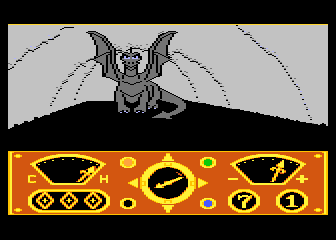
Here's strange action adventure The Eidolon, in which you travelled through time, fought mushrooms and battled rather arrogant-looking dragons:

eidolon_4

Here's wonderful flight sim/first-person Defender-alike Rescue on Fractalus, surprisingly one of the most terrifying games in existence for reasons I'll leave you to discover if you ever play it:

rescue_on_fractalus_atari_us_8

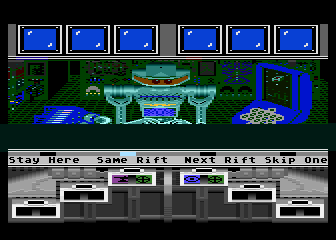
And here's the rather strange (but impressive) Koronis Rift:

koronis_6


I don't think it's an exaggeration to say that the 8-Bit era was probably one of my favourite times to be into computers. It was exciting, it was accessible and it felt like these machines could do anything; there was none of the cynicism or taking things for granted that we have today.

Oh to go back, eh.

2422: A Different Time

0422_001

I've been doing some retro gaming stuff recently which involved trawling the AtariAge and AtariMania forums for information, and as it happened, one game I was looking for information about — the rather peculiar Pondering About Max's [sic] — linked to a scan of an old edition of New Atari User magazine, the very publication that I, my brother and my father all used to contribute to.

I spent quite a while distracted by the format of the magazine, because it's a relic of a very different time indeed. New Atari User — or its former incarnation Page 6 — wasn't a games magazine per se, though coverage of the latest video game releases on Atari 8-Bit and ST formed a core part of each issue. What I found much more interesting was the inclusion of other features. I was well familiar with the Making Music with Your Atari column that my Dad used to write, as I think our whole family remembers numerous MIDI incarnations of various '60s and '70s classics blaring out from the studio at all hours of the day — but I was surprised to see quite how… specialist some of the other articles were.

Take the issue I was looking at earlier, for example. There's a three-page feature in this issue about maths. Just maths, and how to make use of it in Atari BASIC. The article begins with an exploration of the use of the RND function in BASIC, which generates a random number between 0 and 1, expands on this by describing how using multiplication allows you to generate random numbers between 0 and much higher upper limits, and concludes by using the INT function to generate only whole numbers. This is stuff that most bedroom programmers were already familiar with, but the article then goes on to look at powers and roots, signs and absolute values, logarithms and exponentials and finally probabilities — each of which was punctuated with a short BASIC listing for you to type in on your own computer to see how the functions worked in practice. I've never seen anything quite like it.

Elsewhere in the same issue there's four pages devoted to making the Atari 8-bit display an 80-column text screen — this was deemed exciting enough to get a mention on the front cover of the magazine, which is unthinkable these days — an in-depth exploration of the AtariLab computer-aided scientific experimentation kits, and plenty of other things besides. It really is a fascinating relic of a period in computer media that I thought I remembered pretty well, but evidently have forgotten more than a few things about over the years. Looking back on it now… I miss those times a lot.

If you want to enjoy a bit of nostalgia — or are just curious what computer and games mags used to look like back in the early days — then AtariMania has a substantial collection of scans that you can enjoy right here.

#oneaday Day 892: In Memory of Floppy Drives

20120629-015705.jpg

I was struggling to think of something to write about until an offhand comment on Twitter got me thinking about, of all things, floppy disk drives.

I miss floppy disk drives.

No, wait. Bear with me. Not in practical terms — I'm sure no-one misses the days when games had a whole disk just for their intro sequence, or the era when Microsoft Office came in a box roughly the size of a Borg Cube — but in terms of… of… you know what? It's hard to describe exactly, so let me just wax nostalgic about a few things.

I used to find something oddly comforting in the sound of floppy drives whirring away doing their thing. Every floppy drive sounded different, too — the ridiculously huge 810 drive for the Atari 8-bit computers snarked and farted; the later 1050 was a little quieter (though had squeaky mechanical parts sometimes); the external floppy drives for the Atari ST made a pleasant frog-like croaking noise; the internal Atari ST drive was subtler, giving the occasional chug; and the drives in our first PCs were pretty quiet, putt-putt-putting away, usually installing something.

Their uses varied over the years, too. Up until DOS and Windows-based PCs started to take off as a serious gaming platform and required you to install everything, pretty much all software ran directly from floppies, making it necessary to have lots of those big plastic disk boxes (inevitably full of pirated software) — organised alphabetically if you wanted to remain sane. In practical terms, this meant things often took quite a long time to load, which brings us to something that is all but forgotten these days except in the most inefficiently-programmed and/or massive video games: the loading screen.

Loading screens used to be the place where the graphic artist for the game could really let rip and show off what they could do with the limited colour palette and resolution of the hardware they were working on. My most fondly-remembered loading screens were the work of Herman Serrano, a dude who could really make the Atari ST sing. (Visually. Whatever the visual equivalent of singing is. Oh, be quiet.) He did good loading screens for companies such as Argonaut and Psygnosis, and always signed his name prominently on them, which is something you don't see these days, either. Often they were just pixel-by-pixel recreations of the box art, but sometimes there were variations, and it was fun to look carefully at them, pick out the details and spot the occasional Easter eggs. You didn't have much choice, really, since there was nothing else you could do while it was loading.

While games still ran from floppies, loading breaks — now considered to be a thing of great evil that should be avoided at all cost — were considered something of a perk, as they generally indicated that you had done something good. This was true whether you were playing an Infocom text adventure on the Atari 8-bit or a LucasArts adventure on the Amiga. If the disk started chugging immediately after you did something, you were usually on to a winner. (Unless you were playing a Sierra game, of course, in which case it was entirely possible it was simply loading one of its many elaborate death scenes for your long-suffering character.) Some emulators of old systems even allow for the simulation of these loading breaks for the fully-authentic experience — though without the sound of a disk drive chugging away it loses something.

So yes. I miss floppy drives. I don't begrudge the 21st century's massive storage capacities and lightning-fast access, of course, but I do miss that comforting feel of sliding a disk into a slot with a satisfying "clunk", turning the computer on (yes! Remember having to turn the computer off every time you wanted to run something else?) and then sitting listening to the distinctive mechanical whirrs, groans and farts of the disk drive as it loaded whatever it was you wanted to play or use.

Rest in peace, floppy drives. You're missed!