#oneaday Day 999: Appeal Elements

I think I might have nailed down one of the big reasons that Japanese games and anime appeal to me quite so much. It's actually a relatively obvious conclusion, now that I think about it, but watching several different types of anime and playing several different types of Japanese game recently has pretty much confirmed what I suspected.

The thing I find most appealing about these forms of media is that they consciously and obviously divorce themselves from reality while retaining just enough that is relatable to make it still feel "relevant" to the viewer. I'm not just talking about the obviously outlandish storylines of titles like JRPGs and My Girlfriend is the President here, I'm talking about the heavily stylised way in which characters are represented, emotions are depicted visually and how character traits are often exaggerated to make individual cast members obviously distinctive from one another.

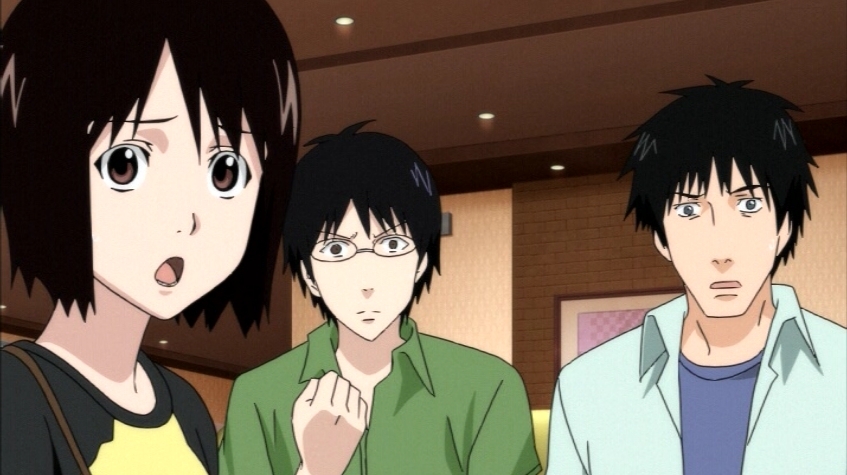
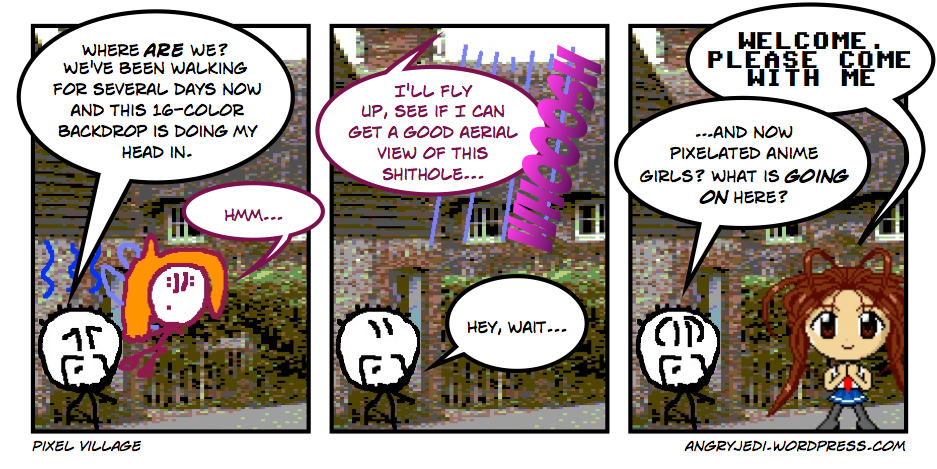
As I gradually get deeper in to the world of anime in particular, a lot of conventions are starting to make themselves apparent. One of the most obvious breaks from reality is the use of "emoticons" to depict how characters are feeling. (There may be a proper name for them, but I'm not sure what it is, if so.) Things like the throbbing red "vein" when someone's angry; the physically-impossible shadow being cast over someone's face when they're disappointed or scared; characters who literally catch fire or become engulfed in dark mists when they're feeling particularly strongly about something; the fact that anyone having pervy thoughts immediately gets a nosebleed. They're crazy and completely physically implausible, of course, but they create a handy visual shorthand for emotional reactions that might be otherwise difficult to depict in the relatively simplistic imagery of animation. For as much as anime characters (particularly of the moe variety) are designed to elicit emotional responses from the viewer, there's only so much you can do when you're not working with a real person who doesn't have all those muscles in their face to work with.

Actually, that's not true at all — when you're dealing with a drawing of someone, you can do absolutely anything with them, even things that are physically impossibleWhat you can't really do quite so easily, though, is show subtle nuances of emotion, which may account for the fact that an awful lot of anime features not only heavily-exaggerated characters, but also strongly-exaggerated emotional responses to situations too. Everything from the embarrassed "arm-flap" of a teenage girl having her crush revealed to a heroic protagonist running towards his rival engulfed in flames — these exaggerated, symbolic responses make it abundantly clear to the viewer what these characters are thinking and feeling.

At the same time, as I said at the start, they divorce the work from reality. They make a statement — this is not real — and encourage the viewer to suspend their disbelief. And that, for me, is one of the more appealing things about this type of media. I indulge in video games and watching anime as a means of escaping from the doldrums of everyday life which is, let's face it, rather tedious and dull at the best of times. At the same time, though, I like to maintain a connection to something relatable — usually characters — and I've found that anime and Japanese games have often provided a good balance between those two considerations for my tastes.

Obviously I don't expect everyone to agree with me — it'd be easy to see anime's exaggerated reactions as overly-comic, silly or childish, for example, sometimes making light of serious situations — but it works for me. Perhaps I just like having emotional responses clearly telegraphed to me rather than being expected to read the often-inscrutable faces of real human beings.

As a vaguely-related contrast to this, we went to see the Lion King stage show last night in Bristol. I did not enjoy it that much, and while I was sitting there a bit bored I found myself wondering exactly why I could suspend my disbelief for an anime about schoolgirls who have perverted fantasies about their classmates (and subsequent nosebleeds) every time they take their glasses off, but not for a bunch of people dressed as savannah animals leaping and cavorting around on stage. I found this a particularly interesting question to ponder given that I normally have a lot of patience for musicals.

The conclusion I came to is somewhat difficult to describe, but it's largely the fact that I found The Lion King difficult to relate to. I enjoyed the original Disney movie, but the stage show focused, for me, far too much on visual spectacle rather than making the characters relatable in any way. I didn't give a toss about young Simba (who was not portrayed particularly well by the child actor, which didn't help) and was painfully aware that these were just people wearing masks and weird costumes throughout. I couldn't suspend my disbelief and think of them as their characters. It went too far off the edge of reality and deep into the realm of "this is pretentious arty wank" for me, not helped by the amount of frankly unnecessary prancing around from certain members of the cast.

I was somewhat in the minority, though, as the show got a standing ovation at the end. Oh well. This certainly isn't the first time something with mainstream popularity has left me somewhat cold, as this blog will attest on a number of occasions!
#oneaday Day 989: Blackout

I was all set to write something profound tonight, then the Internet died and I'm relegated to blogging from my phone.

All right, I didn't have anything hugely profound to say and even if I did I could clearly still say it from my phone, but the Internet has gone down, which is, as everyone thoroughly immersed in 21st century living knows, incredibly annoying.

Given its prevalence in our everyday lives, it's very easy to forget what life without the Internet was like. Something as simple as checking the news or finding out what time something was on TV relied on you having… oh, it's back. I'll return when I finish watching this episode of The World God Only Knows. Ja ne!

… … … …

20 minutes later…

There we are, that's better.

Shit, now there's pressure on me to write something meaningful. Umm…

Nope, I got nothing. And fuck all that Internet talk. I've written that exact same post at least five or six times already in the last 989 days.

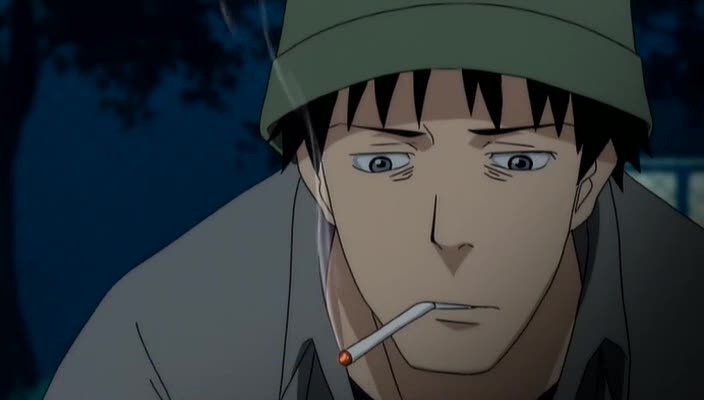
I finished watching Welcome to the NHK today. The last few episodes were major-league Feels territory. It was a fascinating show, all-told, that I may write about in more detail at some point in the near future. What I particularly liked was that it wasn't particularly easy to pigeon-hole into a specific category of genre. It had elements of comedy, drama, romance, surrealism and all manner of other stuff too. On the whole it was quite an emotional experience for me — I'm not sure how much it would resonate with someone who couldn't relate to some of the issues therein, but I certainly found it to be an excellent, worthwhile, enjoyable and moving watch.

Tonight, as I mentioned earlier, I've started watching The World God Only Knows after recommendations from several people. I'll blog in more detail about this when I've watched more than two episodes, but it seems to be highly entertaining so far.

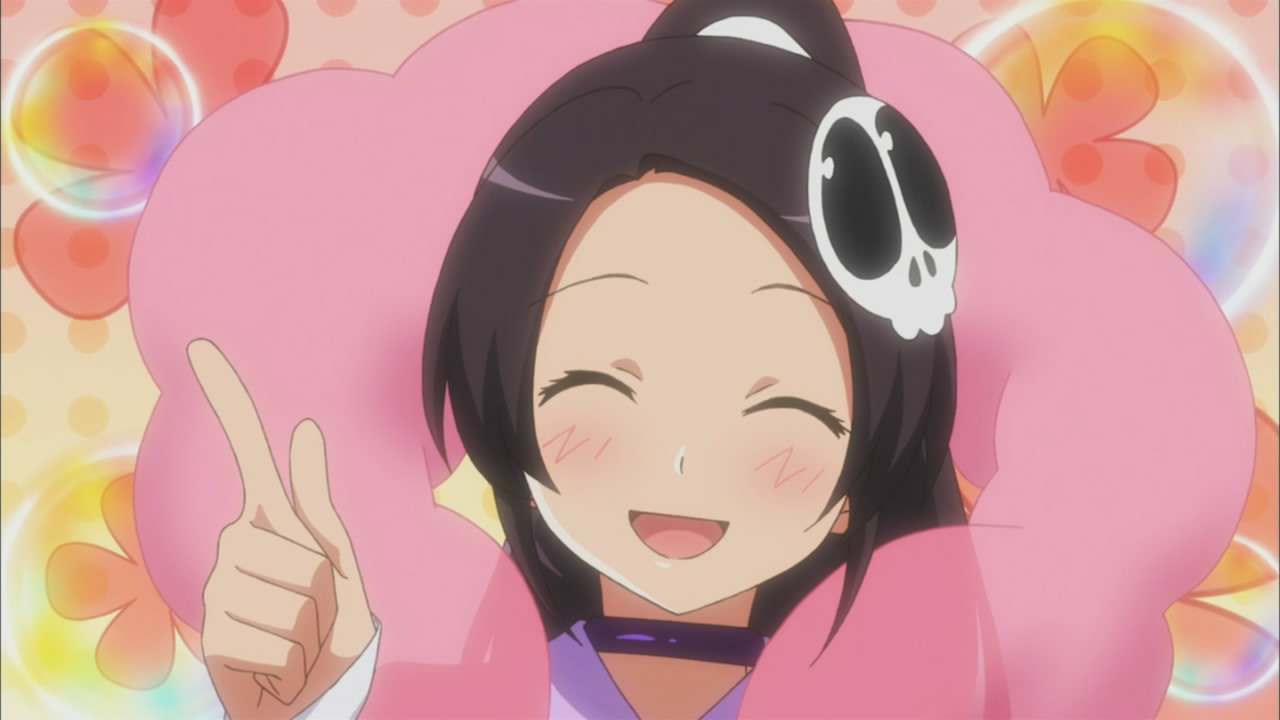
The premise, for the unfamiliar, is that dating sim addict Keima inadvertently enters into a contract with the unfeasibly cute and broom-wielding demon Elsie to help round up "Loose Souls", runaway spirits that hide themselves inside the hearts of girls. Keima is thus tasked with making said girls fall in love with him, thus releasing the Loose Soul for Elsie to catch. Keima, sadly, is more than a little socially awkward, having spent all his time dating 2D girls rather than interacting with real people. However, since reneging on the contract means that both he and Elsie will be decapitated by the magical collars placed upon them, he has no choice but to go along with the outlandish plan. Consequently, he attempts to use his knowledge of dating sim tropes to figure out girls in the real world and, of course, Hilarity Ensues.

I've watched two episodes so far and already I want my own Elsie to hug. Certain characters just nail the whole adorableness factor, and she has this particular characteristic in spades. The show as a whole is rather endearing, too, though, regularly lapsing into heavily-stylized and chibi sequences rather than trying to remain too grounded in reality. The concept is, after all, ridiculous, so rather than trying to take itself too seriously the show appears to very much embrace its silliness. I'm fine with that, and am looking forward to exploring the rest of the episodes.

Anyway, on that note I think it's probably time I hit the sack. Hopefully tomorrow will see a more coherent entry and less in the way of Internet outages.

#oneaday Day 987: Welcome to the NHK

Continuing my jaunt into the world of anime, I started watching Welcome to the NHK on the recommendation of my good friend Mark, who knows about these things. And if ever there were a show to ably demonstrate the massive possibilities of anime as a medium it's this one. Watch it and then tell me that animation is in any way childish or silly.

I've only watched about half of the complete run so far, but I am very much appreciating what it does so far. It's wonderfully put together, blending just the right amount of comedy, surrealism and pathos together to produce something extremely memorable and affecting.

For the uninitiated or curious, Welcome to the NHK revolves around the protagonist Tatsuhiro Sato, who is a hikikomori. (A hikikomori is a "shut-in" — someone who is not in employment, education or training (NEET) and who rarely leaves their home or interacts with other people except when absolutely necessary.) The story unfolds as Sato explores his condition and learns a great deal about himself through his developing relationships with several other characters — his neighbour and former schoolmate Yamazaki, his old school senpai (and crush) Hitomi and the mysterious young girl Misaki, who shows up offering to counsel him out of his hikikomori status for reasons that have not become completely clear at the point in the series I have reached thus far.

Perhaps the most interesting thing about Welcome to the NHK is that it doesn't pull any punches about how these characters are represented. Sato is wracked with all manner of neuroses and social phobias; Yamazaki is a hardcore otakueven Misaki, who initially appears to be sweet and innocent, clearly has some fairly serious issues of her own that she's dealing with. Every one of the characters is dealing with some sort of "damage" and it makes every one of them interesting and unique by themselves. When they get together, as you might expect, the sparks frequently fly. But at no point are their conditions and issues really played for laughs — they are what they are, and if you find their circumstances amusing, that's your decision, but they're not specifically portrayed as being worthy of ridicule (or not, as the case may be).

In particular, I've found a lot of the show very relatable for a number of reasons. I recognise many of the things Sato in particular goes through — specifically with regard to his social phobias and discomfort at the prospect of dealing with other people. There's also the fact that I was practically a hikikomori myself in the weeks/months following my split from my wife — I was a NEET, I was emotionally unstable, I had no idea what to do with myself and the prospect of going back home to live with my parents filled me with unspeakable dread, like an admission that I was a complete and total failure as a human being. Having survived all that intact — well, mostly — I know in retrospect that it wasn't as bad as I thought, but when you're there actually in that situation, it's all too easy to let the negative thoughts, fear and anger run away with themselves. And with no-one around to keep you in check, it can be very difficult to deal with.

Aside from the personal perspective on the show, the other thing that I've been very impressed with is the soundtrack. It features some excellent tunes in a variety of different styles, ranging from some mournful Silent Hill-style jangly guitar melodies to more upbeat and "dramatic" numbers. They fit the on-screen action well and are reused enough to be recognisable but not so much to be tiresome or predictable. They're also tweaked, changed and remixed every so often to either have different lyrics, or additional layers of lyrics, or different instrumentation. It gives the show a great feeling of consistency.

And speaking of consistency, there's Pururin.

Pururin is a fictional anime show that Sato's neighbour Yamazaki is obsessed with. It has such importance to the "world" in which Welcome to the NHK takes place that creators GONZO went to the effort to create a completely fake opening credits sequence for the show, seen above. The Purupurupururin theme that you probably already have stuck in your head if you were foolish enough to click "Play" on that video is a regular fixture in the background sound of the show — Sato meets Yamazaki as a result of hearing the song through his wall 24 hours a day (if you want 10 hours of it non-stop for a similar experience, go here), it's several characters' ringtones, it plays in the background of several shops and the Pururin character frequently appears on billboards and posters around the place. We never really find out a lot about who or what Pururin actually isbut from the opening sequence we can deduce that she's some sort of magical girl with cat ears who appears to ride around on a vacuum cleaner.

All this isn't even getting into the other awesome aspects of the show — the tenuous friendship between Sato and Yamazaki as they attempt to make an eroge together; the way in which Sato has a stronger impact on the people around him than he thinks; the unassuming, understated but utterly enrapturing cuteness of Misaki (plus the things she's clearly hiding) — but suffice to say that the DVD blurb's assertion that Welcome to the NHK is a "modern-day classic" is not without a certain degree of plausibility, and it's well worth your time if you're interested in character-driven, relationship-based stories featuring realistically-flawed characters with relatable issues.

#oneaday Day 981: Sword Art Online

So, I guess it's finally happened — much to the delight of my dear friend Lynette, I might add — I appear to have "got into" anime. So much so that this post is the first ever use of my all new "anime" topic category, although I will probably go back and add that post about Haiyore! Nyaruko-san if I remember.

I've already talked about Haiyore! Nyaruko-san in that post I just linked so I won't say too much more about that for now, save for the fact that discussing it with a hardcore fan of H.P. Lovecraft allows you to have an even greater appreciation of how clever that show is despite its utterly barmy, chaotic exterior. Check out this blog (spoilers to the fucking MAX) for even further indisputable evidence that the creators of that show both 1) know and 2) love H.P. Lovecraft and the authors who followed him.

Anyway. Enough of the Crawling Chaos; what I really wanted to talk about today is the show I started watching after I finished all of the currently-available episodes of Haiyore! Nyaruko-san — Sword Art Online.

I'd come across the name Sword Art Online in much the same way as I heard about Haiyore! Nyaruko-san: through Peter Payne of J-List. Sword Art Online is, it seems, rather popular right now, so there's a lot of merchandise surrounding it. I'm not normally one to go for things that are popular right now, but I figured I'd give it a try as 1) the premise sounded intriguing and 2) the female lead is an attractive redhead. (Well, technically she's ginger, I guess. Still counts. Do not underestimate the power of an attractive redhead when trying to get me to do something.)

For those unfamiliar and/or curious, Sword Art Online's basic concept is thus. It is The Near Future, and computer gaming has evolved enough to have full-sensory virtual reality experiences. The latest title to get everyone excited is the brand new massively-multiplayer online role-playing game Sword Art Online. Prospective players queued around the block to get their hands on a copy, but only 10,000 units were available in the first run. On the game's launch day, said 10,000 players all logged in and began to immerse themselves in the virtual reality world, only to discover that there was no means to log out. The creator of the game, mad with power, had decided to "lock" everyone in the game until someone cleared the whole thing. Not only that, but he'd rigged it so that if someone's character in the game died, the VR equipment would kill them in reality. Not only that, but if someone forcibly removed the VR equipment from the player, that would also kill them.

Thus begins an intriguing tale that is partly conventional fantasy, but with a layer of high-tech sci-fi atop it. The blend works extremely well. The challenges the characters face are "real" so far as they are concerned — their lives are on the line, after all — but at the same time, the fact that it is a game regularly shows itself with players popping up menus to change items, levelling up and using crafting skills simply by whacking things with the relevant tools. What's impressive is how straight the show plays all this, and how seamlessly it switches back and forth between these two disparate elements — one moment it's all a bit Highlander, the next there's a cast member cooking "S-class ingredients" by tapping them once with a knife, causing them to explode in a shower of data fragments. In this way, it'll attract two different — though admittedly somewhat overlapping — demographics and provide plenty to make them both smile and cheer.

I have to confess, I've always had something of a soft spot for the whole "fusion" thing between high-tech sci-fi and low-tech fantasy or historical stuff. It's for this reason I'm quite surprised the Assassin's Creed series hasn't really grabbed me over the years. I did really like the concept of the old .hack games on PS2, though, even though I never finished them — though hopefully I'll be rectifying that soon. There's something about the whole concept of "MMO gone mad" in particular that I really like, though — .hack had a wonderfully palpable sense of menace about it, for example, and Sword Art Online certainly lives up to that. Perhaps it's nothing more than the fact that you can literally see how close characters are to death when they're in a pinch. I don't know. I like it, whatever it is.

Getting back on topic, Sword Art Online has some great characters, too, and the structure of the series means that we get to explore them in detail. While the majority of the game's overarching plot surrounds protagonist Kirito and his relationship with aforementioned cute redhead Asuna, many episodes throw the spotlight on a seemingly incidental character and their own personal issues. I shan't spoil any specifics here, but through these episodes we gain a deep understanding of both the character in question and also learn some more about Kirito and Asuna — the way they respond to situations, the things they are capable of (and the things they are not) and the nature of their feelings for one another. The fact that there is often conflict between the persona they want to portray in the world and the real life they are struggling to get back to also helps make for some intriguing, complex characters whom I would like to see more of.

I'm about ten episodes in to the series so far and I believe it's still airing so I don't know how (or if) it ends as yet. I'm well and truly hooked, though. If you've been looking for something new to watch, then be sure to give Sword Art Online a shot.

#oneaday Day 975: The Chaos that Always Crawls Up to You with a Smile

With all the Japanese media (mostly games) that I've been voraciously consuming recently, I quite naturally figured that I may as well go full-on otaku and investigate some anime too.

I've tried to get into anime in the past. In theory it should push all my buttons — Japanese video games and visual novels are based very closely on the tropes and conventions of anime, after all — but somehow I've never managed more than a fleeting investigation into the medium.

The problem, you see, is knowing where to start. Anime is not some small, little thing you can just jump into at the "beginning" and follow a set "canon" of things you simply must see. If you're unfamiliar with the medium, saying that you want to "get into anime" is like saying that you want to "get into movies" or "get into books" — it's not a single, simple, easily-defined thing, as within itself it carries a huge collection of genres and formats, and is aimed at all ages from young to old and everything in between.

The first time I investigated anime was back when I was still living with my parents. My brother, who was working on PC Zone at the time (if I remember correctly — it might have been PC Player. One of those two, anyway. Not that it really matters.) had been given a metric fuckton of promotional anime videos, as the fledgling Manga Video label in the UK was just starting to come to prominence, and PC Zone had run a feature on anime-themed games too. The box of videos contained a diverse array of anime ranging from the bizarre (Ultimate Teacher, the story of a schoolgirl who could only fight well if she was wearing her modest Velvet Pussy Panties rather than skimpy cotton knickers, and her quest to defeat the genetically modified teacher Ganpachi) to the horrifying (Urotsukidoji, which gave me my first taste of tentacle porn and the subsequent confused feelings said first taste tends to evoke) via titles more grounded in "reality" (Crying Freeman, a drama about an assassin who sheds tears after every kill). I got quite into some of these but also became frustrated at videos that came in partway through a series, or ones which I didn't have any real means of finding subsequent episodes of. As such, I didn't really pursue my investigation of the medium any further.

When I got big into visual novels relatively recently, I started following J-List on Twitter and Facebook. Peter Payne, the guy behind the site, posts all manner of stuff on those accounts at seemingly all hours of the day and night, ranging from interesting descriptions of life as a Westerner living in Japan to pics of hot anime girls (and, occasionally, guys) — and, of course, discussions of what is worth checking out in the land of anime in general.

One show that Peter mentioned recently that caught my attention was Haiyore! Nyaruko-san, a show that takes the Cthulhu mythos of H.P. Lovecraft (specifically as depicted in the Call of Cthulhu pen-and-paper RPG), runs it through a mangle and inexplicably decides to make some of the most horrifying of the Old Ones into moe anime characters, beginning with Nyarlathotep (aka Nyarko) and following shortly afterwards with Cthugha and Hastur. A rather large degree of artistic license is taken with these characters — Nyarko is just one of a race of Nyarlathoteps, for example, and it turns out they're not as evil and horrible as popular opinion might have it — but there's just enough lip service paid to Lovecraft's work to please fans while remaining totally accessible to those who have only a passing familiarity with the Cthulhu mythos. (You'll miss quite a lot of the jokes if you have no familiarity with it whatsoever.)

The show is hugely entertaining, and manages to get the viewer hugely engaged with the weird and wonderful cast of characters very quickly while not taking itself seriously in the slightest. There's a lot of fourth wall-breaking, a lot of self-referential humour and some truly inspired episodes that lampoon aspects of popular culture such as the console wars and the "dating sim" visual novel subgenre. (There's also a lot of people stabbing each other in the head with a fork as a means to get them to be quiet, for some reason.) Much like how My Girlfriend is the President consistently raised the bar on how crazy it got as it progressed — and yet somehow remained coherent, engaging and touching at times — so, too does Haiyore! Nyaruko-san. It starts with an utterly absurd premise and only gets more ridiculous from there — but at the same time it draws the viewer in with endearing, well-defined characters (most of whom initially appear to be stock characters but who subsequently tend to reveal a strong degree of ironic self-awareness) and quite a touching — if painfully awkward and immensely frustrating — romance story.

It also has the most infuritatingly catchy intro and outro songs I think I have ever heard. This is either something you will be into or something you will never want to sully your ears with ever again, so I present both to you now in order that you may make up your mind.

[youtube http://www.youtube.com/watch?v=tYlAq-NhR1w] [youtube http://www.youtube.com/watch?v=j1qX5GsBfuI]

Basically, if you can deal with those two credits sequences, you're in the appropriate demographic to enjoy Haiyore! Nyaruko-san. If they make you want to vomit, then perhaps you should go and treat yourself to something a bit more gritty.