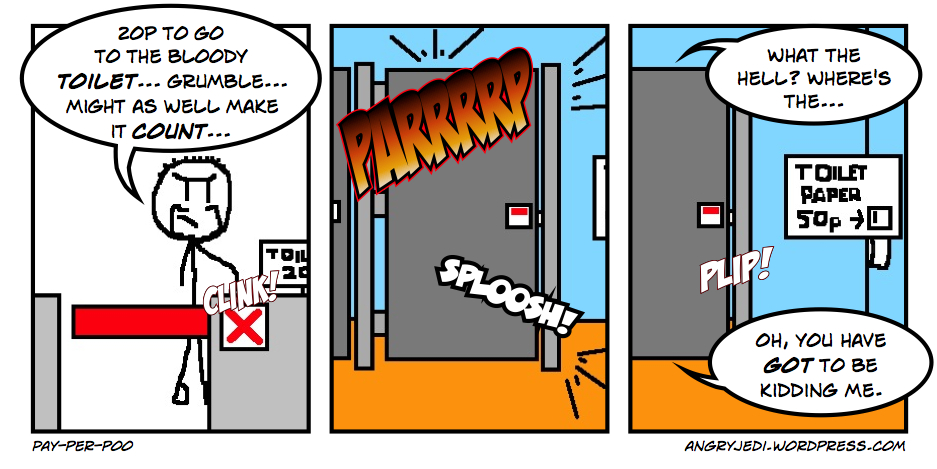
 I came to a realisation today. I have a thing about the word "monetize" (or, arguably, "monetise" if you want to be English about it, although the latter is not recognised by a British English spellchecker). This is not news to those of you who have been following this blog for some time. Some of you may even recall the Money Robot, star of Day 128 on this blog, and, of course, the thing that goes around monetizing everything in sight by applying green electricity to their genital areas, assuming they have genitals.
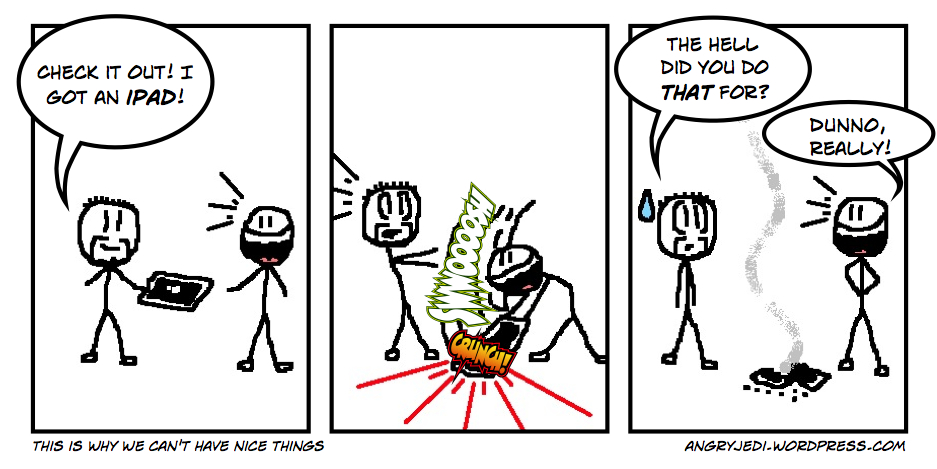
But, as I say, I came to a realisation today. And my problem is not with the word itself as it is with the fact that we even need a word for this concept at all. "Monetize", after all, pretty much means "convince people that it is acceptable to pay money for". And sure. There are some things out there that could stand to be charged for—certain content online, for example, could be charged for in order to make sure that writers could actually get paid for once. The iPad, Kindle and other devices like them are doing a lot to help people think about how they consume content—a move away from the whole "EVERYTHING SHOULD BE FREE!" philosophy that the Internet has embraced for so long and a move towards "most things should be free, but really good stuff should be an appropriate price".
At least that's the theory of how it should work. How monetization works in practice is that you get people charging you to go to the toilet at railway stations. You get a 30p "convenience charge" for paying your parking fees via phone instead of via small change in a machine—change which some poor sod will have to come and collect at some point rather than an automated robot who steals your credit card numbers over the phone, I might add. You get charged £30 to disconnect your broadband (at least you do if you go with Orange Home, fuckers). And Endsleigh Insurance (also fuckers) wanted to charge me £85 for the privilege of cancelling my home insurance, all because I had moved house just after the policy had renewed, ignoring the fact I'd been paying them for the last ten years. Let's not even get started on bank charges, where they take the money you haven't got in order to punish you for not having any money.
You get the picture. Not everything being monetized is good. And that's why I think the fact it's happening so much that we need a new word to describe the concept is very much a bad thing. We don't need to pay for everything. I pay a bloody fortune to travel by train in rubbish, smelly, drunk-infested conditions so the least I should be able to expect is the opportunity to have a piss for free at the other end. Conversely, I'd be more than happy to pay for some exclusive content, eBooks or virtual magazines delivered to the iPad I don't have. It's all a question of value.
You may argue that the ability to have a piss is inherently more essential and therefore valuable than an eBook. But technically I can have a piss anywhere. The charge on the toilet is not stopping me from, say, pissing myself. The nice policeman standing on the corner might, however.
The eBook or virtual magazine, however, has had love, care and attention ploughed into it and therefore, it's only fair that the writers and producers should receive some recompense for that. So more premium, high-quality content, please, and less in the way of "convenience charges".
THANKS.
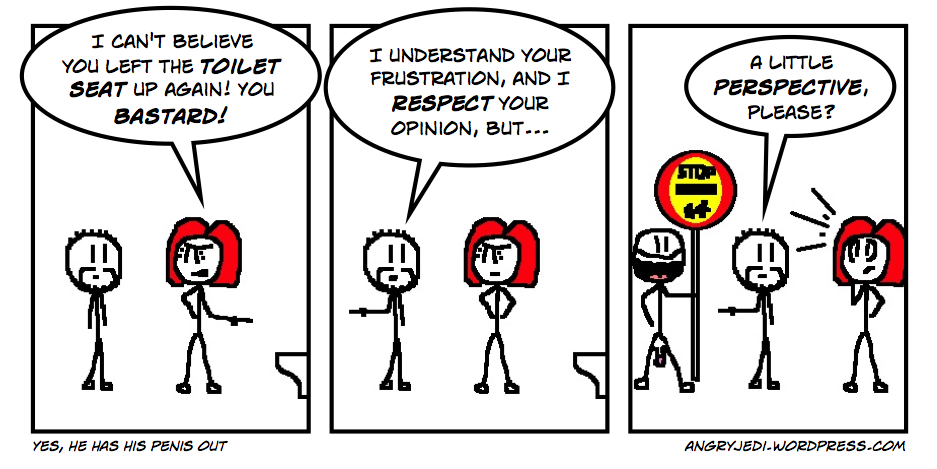 There are some things which have become so firmly entrenched in normal society that we just don't question them. We don't necessarily like them, but we certainly don't question them if someone happens to bring them up. They're so well-known that countless comedy routines have drawn attention to them over the years; so much so that many of them are now clichés. That doesn't stop people writing about them and perpetuating said clichés, though, as I'm about to do right now.
 I'm going to quote a LazyTown song at you and there is nothing you can damn well do about it.
 The most difficult word to pronounce in the English language is not the one with the most syllables. For starters, opinion differs on exactly which word is the longest and most complicated one. "Floccinaucinihilipilification" is right up there, for one, but then "guar hydroxypropyltrimonium chloride" is pretty long too, but it is a shampoo ingredient and technically three words. Then there's some weird science thing called "pneumonoultramicroscopicsilicovolcanoconiosis" which picky Scrabble players reject because it doesn't fit on the board and is also a word made up by SCIENCE! which therefore doesn't count.
 The death of a website is a curious thing. In practical terms, it's no different to deleting a file, switching something off, throwing out a piece of technology that is no longer used. But it's more than that. A dying website normally knows it is dying before the plug is finally pulled. And, these days in particular, it's not just a website that dies. It's the community that the site built. The readers who came back every day, whether they were vocal ones who commented on everything or people who just diligently read every article because they'd chosen that particular site to be their "home".
 It's been a curious few days for some people and things that are very dear to me. First up, you may have read my impassioned mourning of the apparent
 Twitter broke earlier today. This in itself is nothing unusual, as the existence of the term "failwhale" will attest. But this time it was partly a result of some new changes that the service made, particularly with regard to posting links.
 Irrational fears are weird. It's human nature to feel the "fight or flight" response, of course. But the things which trigger said response are very peculiar indeed.

 I have a peculiar and complex relationship with the first-person shooter genre of gaming. On the one hand, I have very fond memories of growing up playing Wolfenstein 3D and Doom. In fact, as I may have shared before, such was my obsession with Wolfenstein 3D and the early days of the mod scene, that 10 of my levels are part of the official Apogee "Super Upgrades" expansion pack, a feat which netted me $200 and means that I can technically call myself a professional game developer.