2201: Game Time is Precious

0201_001

As I get older and — when I'm working, at least — find myself with less time on my hands to devote to gaming, I've found myself having to make tough decisions about what I do and don't play. Having taken a step back from my beloved Final Fantasy XIV and found myself surprised at how little push I'm feeling to go back, even if a new content patch were to drop tomorrow, I find myself feeling disinclined to check out things that are very obviously timesinks and nothing else.

This doesn't mean I'm not interested in long games; on the contrary, the games I tend to gravitate towards tend to be Japanese role-playing games that are often in excess of 100 hours in length, and I don't begrudge them being that long, particularly as I've come to enjoy the pursuit of Platinum trophies in many cases.

No; I'm referring more to games that either artificially constrain your progress, or which don't feel like they have a real point to existing beyond being something to do with your hands if you have nothing better to do.

MMOs certainly fall into this category, but these at least have a skill-driven aspect that makes them satisfying: the best gear in the world won't let you clear Alexander Savage in Final Fantasy XIV if your skills aren't up to the job.

No, I'm largely referring to mobile games here: a phenomenon that I've been becoming increasingly aware of in recent years, and which was painfully obvious when I took a casual browse through the Google Play store earlier today and found nothing whatsoever that I wanted to download and play on my phone, for various reasons.

By far the most common type of mobile game we get these days is based on the "gacha" principle, whereby at regular intervals or by spending in-game currency, you have the opportunity to "draw" new "cards" (I put that in inverted commas because sometimes they're units, characters, weapons or whatever) and add them to your collection. You can then form a "hand" of these "cards" and use them in whatever the game's core mechanic is — usually some form of combat. Between fights, you can generally use additional, unneeded or weak cards to power up your main cards, allowing you to take on stronger and stronger challenges as you go.

A lot of these games are well-presented and initially appear to be reasonably fun. But there's so little depth to them that I find them ultimately unsatisfying — particularly when, as with something like previous favourite Brave Frontier, the mobile game that I've spent the most time with, they become extremely time-consuming to play for very little feeling of reward.

When I play a game, I like to feel like I'm achieving something, at least partly through my own knowledge and skills. I like the feeling of progressing against a difficult encounter, beating a difficult dungeon, clearing a complicated quest. And while many of these mobile games do pay lipservice to a feeling of progression through any combination of advancing through a linear world map, levelling up your character or levelling up your characters, I never, ever feel like they're rewarding anything other than persistence — and, in some cases, a willingness to pony up cash to guarantee the best possible draws.

These games pale in their unappealingness when compared to the new sensation that is "idle games", though, the appeal of which utterly eludes me. My wife Andie has been "playing" Clicker Heroes recently, and I don't understand why; I tried Sakura Clicker a while back, and despite me clearly being its target audience, found it utterly tedious and pointless.

For the uninitiated, an idle game is one that you start playing and then don't have to do anything with, outside of occasional upgrades and suchlike. In Clicker Heroes, for example, killing monsters earns gold, which allows you to hire heroes, who automatically deal damage to monsters, allowing you to just leave them to it while you go off and have a big poo or something; you can also upgrade your heroes in various ways, largely by throwing more money at them. The sole appeal element of these games appears to be making numbers as big as possible — which, as an RPG fan, I do totally understand the appeal of — but the trouble is, I personally don't feel any sense of accomplishment from making those numbers get bigger, because I know that I haven't really "earned" any of those rewards through anything other than remembering to check in on it every so often. I'm sure there is some sort of appeal factor that I'm missing somewhere along the line, since I know numerous people who spend a hell of a lot of time playing Clicker Heroes and its ilk, but… well, I just don't get it, and not through lack of trying. Sorry!

To return to my original point, the feeling that my gaming time is precious has only grown over the last few months in particular, and so every time I find myself tempted to download a new mobile game, or try out another clicker game to see if I can understand why so many people are seemingly addicted to them, I hit a new mental checkpoint in my head that reminds me how many unplayed games stretching back to the PS1 era I have on my shelves, and suggests that I should probably work my way through those rather than wasting my time on something that has no real sense of closure or completion.

With that in mind, I'm heading back into the world of Hyperdimension Neptunia Re;Birth2; gotta get through that before V-II arrives on the 12th!

2200: Happy Birthday, Tsunako

0200_001

Tsunako is the artist responsible for the character designs in the Hyperdimension Neptunia series, and consequently she is responsible for bringing more joy into my life than pretty much any other visual artist I can name. (Which isn't all that many, admittedly, but from the moment I got into Neptunia I liked the art enough to find out who was behind it.)

In celebration of it being Tsunako's birthday today, I thought I'd take the opportunity to share a selection of favourite images. Most of these are from the Neptunia series since I haven't yet got around to experiencing other series she has worked on such as Fairy Fencer F or Date A Live and thus don't know enough about them to be able to comment with any real authority.

Without further ado, then…

companep
The first image you see in the original Hyperdimension Neptunia and its Re;Birth1 remake. Pretty much sets the tone of what to expect.
cpus
This image, from the alternate universe in which Hyperdimension Neptunia Victory and Re;Birth3 take place, pretty much sums up the relationship between Neptune and the rest of the cast.
candidates
The "CPU Candidates" — little sisters of the main characters, representing the PSP/Vita (top left), Game Gear (top right) and DS (the twins)
makers
These characters, from Re;Birth1, are the "Makers", personifications of various software companies. Like most characters in Neptunia, their designs beautifully encapsulate their source material.
kiss
mk2 and Re;Birth2 made the implied yuri in the series a little more up-front.
nepschool
For me, one sign of a good character is being able to put them in a new situation/outfit and they still be recognisable; I think you'll agree that the goddesses in school uniforms still have very clear personalities.
noire
One of my favourite images of Lastation's leader Noire.
purpleheart
Neptune's transformed CPU form Purple Heart, demonstrating Tsunako's biggest strength, so far as I'm concerned: her ability to draw curves to die for.
vert
While much of Neptunia is self-consciously moe, there's little denying that Vert goes beyond "cute" into "beautiful".
neppurp
This image is not lewd at all, and if you think it is you are the one who is the pervert.
miku
And here's a Tsunako-drawn Hatsune Miku, just so this gallery isn't entirely Neptunia.

2199: Ever-Late to the Party: Fringe

0199_001

Couldn't get to sleep the other night and didn't quite feel like I had the mental capacity to watch something in Japanese (i.e. anime) so instead I trawled Netflix for a few moments and eventually settled on a show I've been meaning to watch for a long time: Fringe.

I knew very little about Fringe going into it, save that it seemed to be pretty well-received, and that my acquaintance Chris Tilton, who had appeared a couple of times on the Squadron of Shame SquadCast, had assisted creator J.J. Abrams' regular partner Michael Giacchino on the soundtrack. Other than that, I was going in pretty much blind, and had managed to remain unspoiled to date.

Turns out it's a fantastic show, and exactly the sort of thing I enjoy, so I'm well and truly hooked.

For those who, like me, have somehow let Fringe pass them by until now, here's the pitch: FBI agent Olivia Dunham becomes involved in investigations of weird happenings collectively known as "The Pattern" after she starts looking into the inexplicable melty-face issues that struck an inbound flight from Hamburg to Boston. In order to investigate these strange occurrences, she enlists the help of Dr Walter Bishop, a somewhat eccentric but clearly brilliant man who had been locked up in a mental institution for the preceding 17 years. In order to get Walter out of the institution, she also has to enlist the help of his son Peter, who has a past that can be charitably described as "checkered" and together, if you'll pardon the cliche, They Fight Crime.

If this setup sounds a little X-Files-ish, you'd be absolutely right, though rather than going in the "aliens!" direction, Fringe instead looks at seemingly paranormal phenomenon through the lens of "fringe science" — being able to explain them through scientific theories that may appear ridiculous to the layman, but which Walter proves time and time again to have some basis in reality. Or at least the reality that Fringe depicts, anyway.

Fringe's biggest strength is in its characters. Olivia is, in many ways, the most "normal" of the bunch — at least in the initial episodes — and the perfect foil to the somewhat tense relationship between Peter and Walter. Walter, meanwhile, is downright fantastic, punctuating his explanations and hypotheses with seeming non-sequiturs; sometimes they end up being relevant, and sometimes he really is just commenting on how much he enjoys a glass of milk fresh from the cow he keeps in his laboratory "because they're the closest thing to humans, genetically, which makes them ideal test subjects".

This isn't to downplay the ongoing narrative and its stranger aspects, meanwhile; J.J. Abrams has proven on numerous occasions — Alias springs immediately to mind — to be good at stringing out mysteries with apparently supernatural elements to them, and Fringe is no exception to this. Over the course of the first few episodes, we're introduced to a number of elements, some of which appear again in subsequent episodes, but which aren't explicitly pointed out to the viewer. Already I can see it's a show that would reward a repeat viewing knowing the full truth — which, only five episodes or so in, I have no idea of yet — because you'll doubtless spot things that you wouldn't have given a second thought otherwise.

I'm really intrigued to see where this series goes. And yes, I know I'm late. But I'm watching it now, okay? (Also, it's inspired me to go back and play Cognition again thanks to its thematic similarities. So that's good! I never finished the fourth episode, after all…)

2198: Petting Waifus and Gay Conversion

0198_001.png

It came to light today that Nintendo of America apparently hasn't stopped with the localisation edits to the upcoming Fire Emblem Fates that had already been revealed: it seems that the "petting" minigame, during which you can directly interact with the characters in your party — male and female — and improve your relationships with them has been excised completely. Kotaku described this as a "minor change in the name of localisation".

Perhaps it is "minor". Perhaps it is an unnecessary part of the game. Perhaps those who are unaware of the Japanese version won't even know it was there to be missed. But none of this changes the fact that a feature of the game — with this being the first Fire Emblem game where you could directly interact with party members in this way — has been removed entirely from the Western release, giving English speakers a version of the game which is comparitively gimped when placed alongside its original Japanese source material.

Before I go any further, I'd like to talk a little about my general views on localisation. In short: localisation can be helpful and sometimes necessary to ensure that the right audience can access a work. The Ace Attorney series, for example, benefited considerably from its rather drastic localisation, opening it up to a much broader audience than those who would have been comfortable with a protagonist called Naruhodo Ryuuichi rather than Phoenix Wright.

For me, the key thing when considering how drastic localisation changes should or could be is the question of cultural context. Sometimes the inherently Japanese context of a work is important — key examples include titles like the Persona series, which is set in and around Japanese high schools; the Shenmue series, whose entire first game was set in a few lovingly rendered regions of a Japanese town; the Yakuza series, which is about as accurate a simulation of Japanese nightlife as you're going to get, regular street brawls aside; the Senran Kagura series, which is steeped in both Japanese mythology and cultural peculiarities such as student rivalries and, you know, being a ninja; and any number of visual novels you'd care to mention, which often rely heavily on conventions of Japanese culture, particularly with regard to interpersonal relationships.

For other titles, though, it's less important to keep this authentically Japanese feel to it. Something like my perennial favourite the Hyperdimension Neptunia series, for example, works well with the breezy tone of its localisation, though more diehard fans remain dissatisfied with character traits introduced through NIS America's original translations of the PlayStation 3 games prior to Idea Factory International taking matters into their own hands. Likewise, the localisation of Final Fantasy XIV was excellently handled, featuring some well-done and deliberately flowery — almost Shakespearean at times — dialogue that many have noted added considerable depth to the original source's writing. Indeed, in Final Fantasy XIV's case, many of the things introduced through its localisation have found themselves "backported" to the Japanese version, so well-received were they — though I will admit if you know even a bit of Japanese, playing the game with Japanese voices and comparing to the English subtitles can be a little jarring.

Anyway: the point is, I'm not opposed to localisation where it's appropriate or necessary to broaden a work's appeal, and particularly if said work is aimed at mass market but is still riddled with Japanese cultural references no-one but 1) Japanese people and 2) weeaboos will recognise. Where a specifically Japanese tone and feel is necessary to an authentic translation of the work, though, I'd rather the translation be as literal (but readable) as possible where it can.

And so we come to Fire Emblem Fates. What we have here is a title that isn't particularly Japanese in feel or tone, since Fire Emblem has always erred on a stereotypically Western approach to fantasy at times. As such, I wouldn't be opposed to localisation changes that help a broad audience to access, understand and appreciate the work as a whole by toning down its "Japaneseness".

That's not what we're getting though. Fire Emblem Fates' most drastic localisation edits are nothing to do with helping people understand and access the work, but they are everything to do with minimising offense. Take the notorious "gay conversion" scene, for example: the original hoohah over this came about as a result of some Tumblrina spilling her spaghetti everywhere over what she perceived to be a male protagonist spiking the drink of a lesbian character and "converting" her to being straight enough to marry him. In actuality, the scene is about nothing of the sort: not only is the "magic powder" used to improve her battle effectiveness rather than get her into bed — fainting the moment you get close to a man isn't a good way to wage war — but the female character in question, Soleil, might not even be gay in the first place, if the Fire Emblem Wiki is to be believed: all Soleil's romantic interests are male, making the matter perhaps more one of something related to androphobia rather than homosexuality.

And as for the removal of the "petting" minigame, it just feels like a "mother knows best" moment; like we Westerners are somehow expected to be shocked and appalled enough at the prospect of physically interacting with a video game character and faint on the couch in protest.

I don't like this trend. It feels like a reversal of all the good work that was done in the late '90s and early '00s, where games were regularly praised for having the guts to include adult content other than the "usual" violence. I vividly recall Sierra's adventures Police Quest 4 and Gabriel Knight being highlighted as examples of the medium maturing because of their willingness to include the word "fuck" in their scripts, previously never heard in a game; and likewise I remember PC Zone magazine running a feature in one of its early issues about Megatech's hentai games, noting that their willingness to tackle adult themes — just like anime, which was starting to become popular and fashionable in the UK around the same time — was a sign that some game makers were finally starting to acknowledge that games weren't just for kids.

I'm no fan of Fire Emblem generally — largely due to a lack of experience with the series rather than an actual dislike of it — but these types of big changes made for the wrong reasons make me somewhat uncomfortable, because they're sanitising works of art in the name of appeasing small but loud groups of people, many of whom likely wouldn't have played the game in the first place. It's babying the Western audience, protecting them from things that might "offend" us, whereas one of the best things about art — any form of art, whatever the medium — is its ability to challenge us and get us to think about things in a different way. If you wipe out everything that might offend someone somewhere from art, you're left with a castrated culture that increasingly wants to retreat into its "safe spaces" rather than explore the strange, wonderful, terrible and fascinating things writers come up with.

Not to mention the inherent hypocrisy: Western games don't get butchered in this way in the name of "think of the children". Grand Theft Auto features strip club scenes where you can have a first-person view of a lap dance, which provides no gameplay benefits whatsoever. The recent Thief reboot featured a level where you could peek through a hole in a wall and witness an explicit BDSM sex scene — again, for no real reason other than for background decoration. One of the Far Cry games from a while back opened with a first-person sex scene. And there's the multitude of banging scenes in the Witcher series.

I don't object to any of the above — I'm of the opinion that it's nice for games to treat me like an adult who can handle seeing sexual material. But when Western games get away with stuff as explicit as this, whereas Fire Emblem Fates gets butchered for something far tamer than anything the aforementioned games included, I cry foul. It makes me particularly uncomfortable as a fan of Japanese games to feel that titles from certain publishers or localisation teams aren't providing me with an experience that's completely true to the source material. It may still be great, sure — and everything seems to indicate that Fire Emblem Fates is an ambitious, excellent game — but the experience is somewhat marred by the knowledge that I'm missing out on something that other regions are more than happy to include.

I hope this is a trend which fizzles out quickly; the sooner we get over this inane desire to "protect" people from content they might want to see, the better; in the meantime, I'm more than happy to continue supporting developers and publishers who bring titles over mostly if not completely unscathed: groups like Idea Factory International, Marvelous Europe, Koei Tecmo (with the exception of Dead or Alive Xtreme 3, of course), XSEED Games and latter-day NIS America.

"Gaming needs to grow up," the argument frequently runs. Well, for that to happen, you need to start acknowledging players like adults first.

2197: Putting the New WordPress App Through its Paces


0197_001.png

I was helpfully informed by my WordPress dashboard that there's a new WordPress app available for the desktop, so I figured I'd put it through its paces. I've used the mobile app for both iOS and Android a fair bit, so I was interested to see what benefit — if any — making use of a desktop app would have over just loading the site up in Chrome and making use of it.

Well… frankly, there's not a huge number of benefits, at least not for those who primarily make use of blogs hosted on WordPress.com. The main benefit is that the app contains the whole of the main "new-style" WordPress dashboard in local format, meaning that you can theoretically 1) use it offline and 2) write without the distractions of other browser tabs. It's also responsive to the window size, so you can scale the display according to what, exactly, you want to do with it: do you want to keep an eye on notifications, or do you want to write a full-on post?

You'll notice I pointed out that it makes use of the "new-style" WordPress dashboard, and that's an important distinction to make, because the new-style WordPress dashboard is emphatically not the same as the traditional wp-admin view. It's a lot simpler and cleaner, sure, and you can do most of the things you can do in wp-admin in the new dashboard, but there are, frankly, a number of issues that WordPress so far hasn't fixed with the main site that remain — and arguably are even more prominent — in the app.

Most notably, there are a significant number of flaws in what WordPress refers to as the "improved posting experience". Having been using this a fair amount since my initial reactions to it, I've noticed that there have been a fair few improvements and additional functions added so that now it is, roughly speaking, in line with the wp-admin-based editor. There are still some irritating factors, however, chief among them (for me) being the fact that even with the window at 1920×1080, the word counter is scrolled off the bottom of the screen so I have to manually scroll down to view it — sometimes even if my post is longer than a screen in height. This is just plain bad design, and seems to have been fixed in the Web-based editor through the use of a floating word count window in the lower right of the viewport. Apparently the locally stored version of the editor page used in the app hasn't taken this particular update on board, however; as I type this, my word count is once again disappearing out of the bottom of the viewport.

Another big flaw that requires less discussion is the fact that the Insert Hyperlink option does not include the option that the wp-admin-based editor does to search through your previous posts and link to them without having to look up the URL yourself. The absence of this from the "improved" posting experience is mildly irritating, and I have to wonder exactly why it was removed, since this is the exact opposite of an "improvement".

A few things do seem to work a little better in the standalone app, mind; when using the editor in Chrome, I've found that sometimes the cursor keys and modifiers behave in somewhat strange and unpredictable manners: sometimes attempting to move to the previous character or word with keyboard shortcuts inexplicably jumps to the end of the paragraph or somewhere completely unexpected, particularly if there a few different items of formatting (such as links or italics) used in a paragraph. So far, at the time of writing, as I type this, I've encountered no such issues — that doesn't necessarily mean that they're not there, but they shouldn't really be in there in the first place, so I've tended to assume they're a Chrome issue rather than a WordPress issue.

Since I originally looked at the "improved posting experience", too, I was pleased to discover that drag-and-drop images now work as they should: in other words, you can drag an image directly into the editor window and have it appear where the cursor was, rather than this simply being a shortcut to opening the "Add Media" window. So good job there!

Elsewhere in the app, you have access to the other features the WordPress dashboard offers, most notably site statistics and insights, allowing you to see at a glance how your most recent posts have been performing, which days you've been posting on and suchlike. The WordPress Reader system is also integrated into the app, allowing you to catch up on WordPress blogs you've subscribed to all in one place rather than having to remember to visit a bunch of sites. This is a helpful feature, but like everything else in the app, I'm not entirely convinced of the benefit of having it in a standalone app rather than just visiting the WordPress site in my browser.

All in all, then, the main benefit of the new desktop app appears to be little more than speed and a slightly more stable experience than the website under Chrome appears to offer. I suppose offline use is a benefit to those who are composing blog posts on the go using a laptop — or, indeed, catching up on downloaded Reader posts — but for me, this is some minor, not especially useful functionality, since I tend to compose my blog posts immediately before publishing them, which tends to mean that I have a stable Internet connection wherever I happen to be at the time.

I'll continue using the app for a while and see how I get on with it. If nothing else, its "distraction-free" nature due to its lack of browser tabs is quite pleasant, so it may prove to be a helpful way to concentrate, whether it's on my daily blogging "duties" or more substantial projects.

You can find out more about the app and download it for free here.

2196: Starward Rogue, a Game About a Severed Head in a Mech

0196_001

I took a look at Arcen Games' latest today. I've followed this interesting developer for a few games now, most notably A Valley Without Wind and its sequel: two games that fused, oddly enough, turn-based strategy with Metroidvania-esque platform shooting. Arcen's latest game Starward Rogue continues the dev's tradition of fusing disparate genres together, in this case arcade shooters and roguelikes.

I say "disparate"; Starward Rogue isn't the first game to combine roguelike elements with a shoot 'em up core, but it is the first I recall seeing designed around the principles of Japanese-style arcade shooters, particularly those of the "bullet hell" variety. That means intense, complex bullet patterns that you need to navigate through as well as enemies to defeat, and it makes for an exciting, very interesting take on a genre that all too often coasts along without any real innovation.

Starward Rogue casts you in the role of a severed head in a mech as you attempt to rescue someone called Rodney from the depths of a dungeon called the Megalith. I believe these two elements are a reference to one of Arcen's other games, but it's one I'm not familiar with at this time. Fortunately, no real knowledge of whatever the other game it's referring to is required; it's simply a bit of fanservice for those who have played the game's spiritual predecessor. Rodney is an entertaining character in his own right, though my only direct contact with him so far has been in the tutorial sequence.

Starward Rogue's gameplay is balanced nicely between exploration and action. Each level of the Megalith is split into discrete rooms, each of which has to be cleared of enemies before you can move on to the next one. Unlike similar games such as The Binding of Isaac, though, Starward Rogue's rooms are often more than a screen wide and tall, and there are a number of unique designs and layouts that you'll encounter over the course of the game, which are then combined with various enemy and trap waves — the latter tending to be non-destroyable obstacles or gun turrets that will spew out hot fiery death as you try and take down the enemies, then deactivate when you've cleared the room.

Levelling up is a simple process: no stat allocation here, simply pick one of three randomly selected perks. These vary from increased damage to having a full map available from the start of the floor — and even being able to skip the rest of the floor you're on. Alongside these passive bonuses you get from levelling, you can also equip and upgrade your infinite-ammo main gun, your recharging Energy-based weapon (which recharges when you enter a new room) and your limited-ammo Missile weapon. There are also various other passive upgrades you can collect, and one-shot consumable items that generally have some sort of "smart bomb" effect.

Much like the aforementioned The Binding of IsaacStarward Rogue is a game intended to be replayed and rechallenged. There are a number of different mechs with which to play the game, and there's a checklist of enemies and items you've found over the course of all your runs. There are also five difficulty levels to choose from, with Very Easy all but guaranteeing a full clear run unless you are the very worst kind of incompetent moron, and the highest difficulty claiming to offer difficulty on a par with the legendary Touhou series. And on top of that there are a bunch of achievements to earn, too, so it's very much a game that will keep you busy for a long time if you get it — though it's accessible enough to be able to pick up every so often for a quick blast even if you've left it alone for a while.

I completed a Very Easy run earlier — there's no shame in starting either a roguelike or a shoot 'em up on the lowest difficulty, and this game is both! — and am already looking forward to giving it another shot soon. If you're a fan of The Binding of Isaac and its ilk — "roguelites", to use the popular term — then you could do far worse than give Starward Rogue a look.

2194: Second Re;Birth

0194_001

Having beaten Hyperdimension Neptunia U Action Unleashed to my satisfaction by successfully attaining the Platinum trophy, I immediately started on Hyperdimension Neptunia Re;Birth2, the Vita-based remake of Hyperdimension Neptunia mk2, previously my favourite game in the series, if not mechanically then certainly in terms of story and characters.

Re;Birth2 is less of a drastic difference from its predecessor because mk2 was already using the initial, slightly unrefined version of the systems seen in Hyperdimension Neptunia Victory and beyond. Re;Birth2 is still worth playing if you're already familiar with the original, however — not only has the battle system been updated to be in line with the solid, enjoyable mechanics of the later installments of the series, the game has also been updated with new scenes and new characters, including the welcome reappearance of RED, one of the best characters from the very first Hyperdimension Neptunia game, and one who was sadly absent from Re;Birth1. Not only that, but the presentation has been brought in line with the rest of the series, too — rather than mk2's somewhat muddy character models used in dialogue sequences, Re;Birth2 makes use of the beautiful Live2D incarnations of Tsunako's art like the other games.

Also added to the base game is the Remake system previously seen in Re;Birth1. This is essentially a crafting component, but as well as crafting items — which you do to make them available in shops rather than adding them to your inventory — you can also craft new game mechanics and visual options. Re;Birth1 had a few interesting options in this regard, but Re;Birth2 takes the idea and really runs with it, going so far as to add everything from a whole real-time passive minigame called Stella's Dungeon that you set running in the background while you play the rest of the game to the ability to make the girls' eyebrows stand out more on their 3D models so they look more like the 2D artwork.

As is tradition for most of the Neptunia series, Re;Birth2 is a gradual evolution rather than a dramatic reinvention, but some of the new additions and changes are very welcome. One of the craftable Plans in the Remake system, for example, allows you to obtain items and experience points from enemies you "symbol attack" on the field screen. In the original mk2, if you attacked an enemy that was significantly lower level than you on the map, they'd simply die and you wouldn't get anything. It was for clearing your way through a dungeon rather than grinding, but it actually wasn't all that useful, since you often wanted to fight enemies in order to collect their drops for various purposes. Re;Birth1 added the option to turn this off via its Remake system, which was a start, but the ability to get rewards from this is new for Re;Birth2, and extremely welcome in the late game, where you're likely to completely destroy most enemies as you grind out Lily Ranks and rare drops.

Coming to this game straight off the extremely light-hearted and silly Hyperdimension Neptunia U Action Unleashed was quite surprising: the overall tone of the whole experience is very different. It's significantly darker, particularly in the opening sequence, and it features some of the best villains the series has seen, each of whom are complex and interesting characters. The use of the extremely girly Nepgear as protagonist was inspired in this instance, since the juxtaposition of her innate sweetness and naive nature with some of the nasty shit that goes on — particularly in the Conquest ending path — is very effective indeed.

I'm only in Chapter 2 of Re;Birth2 so far, but I'm already having a blast with it and reminding myself how and why I love this series — particularly its mainline games. It's going to be a Nep-Nep-filled few months, I'm afraid, since there's Hyperdimension Neptunia Re;Birth3 to go after this, by which point a lovely shiny copy of the actually-brand-new-and-not-a-remake Megadimension Neptunia V-II for PlayStation 4 will finally be in my grasp. Can't wait.

2193: First Suda Experiences

0193_001

On a whim earlier — and partly because I'd been pondering the wisdom of attempting to put an actual book together on interesting Japanese games — I fired up my Xbox 360 for the first time in ages and put in a disc that had never yet graced its DVD drive: Shadows of the Damned.

I picked this game up a long time ago back when Game and Gamestation were having their difficulties and were selling off huge amounts of their stock at ridiculously low prices. (Entertainingly, preowned Xbox 360 games now just normally sell for about the same price they did when the company was trying frantically to get everything out the door as quickly as possible.) It was one of many investments for the future — games that I thought looked interesting, but didn't necessarily want to play right now. I own several games by Goichi "Suda51" Suda, and haven't played any of them, for exactly this reason.

I didn't even know a whole lot about Shadows of the Damned. I remember a few people talking about it when it came out — largely about how in-your-face shocking it was — but never knew details. This meant I could go into it pretty much with beginner's mind, which is always the best way to approach the more interesting games out there, particularly "auteur"-style works such as that produced by Suda.

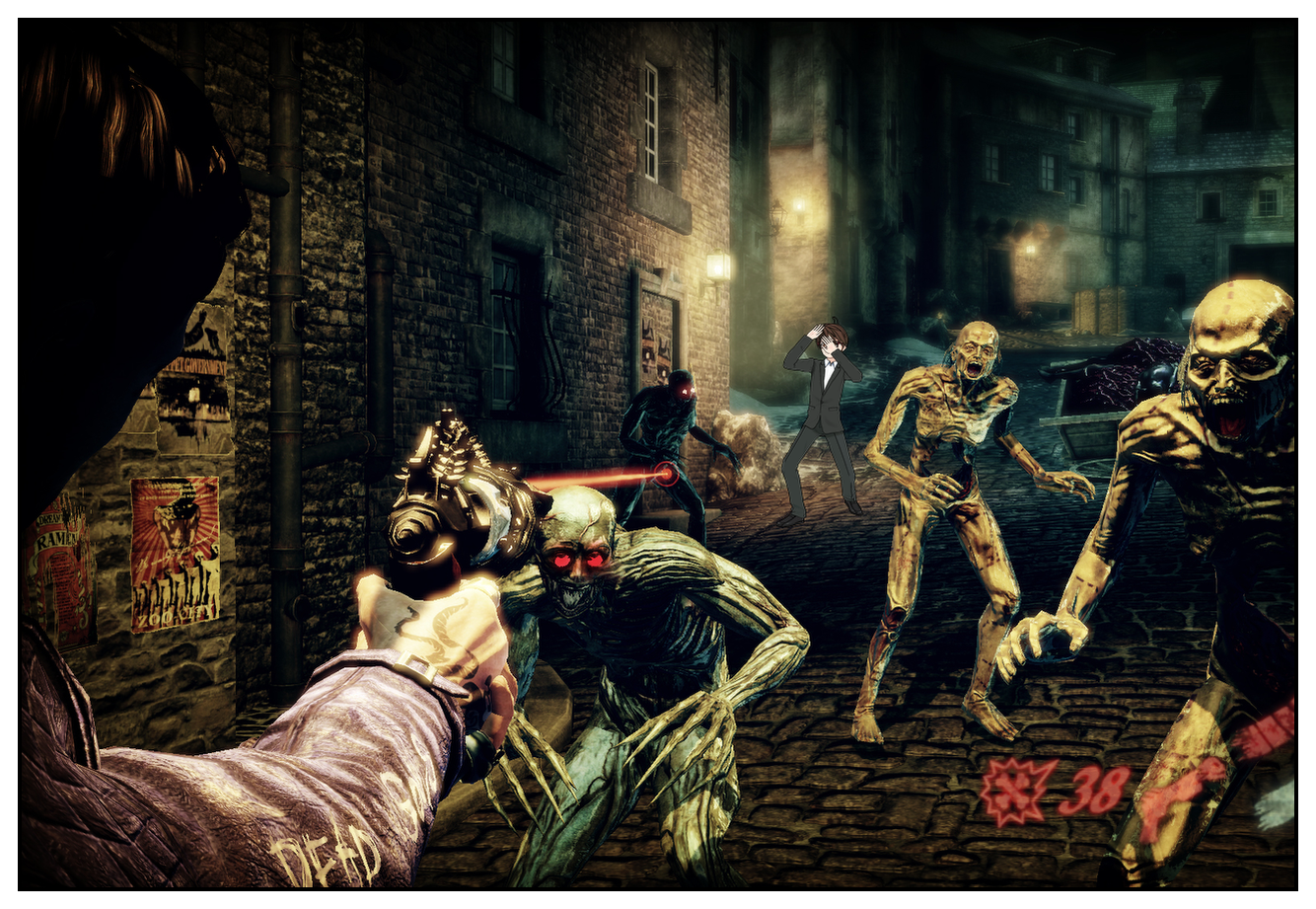
Anyway, after an introductory sequence in which the protagonist's girlfriend was hanged, raped by demons that crawled out of her corpse, brought back to life and attached to the Lord of Hell's dick, who then dragged her into the Underworld promising to continually rape, kill and resurrect her until the end of time, the protagonist leapt into the convenient hell portal and met up with his demonic friend Johnson, who can helpfully turn himself into a motorbike or a gun.

After that initiation, I knew I was in for a bit of a strange ride. What I was pleasantly surprised to discover is that said ride is also a lot of fun — not just for its entertainingly written and wonderfully delivered dialogue, but also for its gameplay. Essentially a third-person shooter somewhat akin to later Resident Evil games, Shadows of the Damned features a number of interesting mechanics which gradually start to overlap and intertwine as you progress. Initially you'll have to deal with just one kind of obstacle at a time, then two, then several with enemies trying to chew your face off. The opening is paced in such a way as to be challenging, but also to equip you with everything you need to progress further.

One striking thing about the game so far is that it reminded me how long it's been since I played an honest-to-goodness completely linear game. Shadows of the Damned is split into discrete levels, each with a clear path through them — albeit with a few diversions to find items and suchlike — and it made me realise how much more focused an experience this provides than the open worlds we tend to get confronted with these days. That's not to say there's anything particularly wrong with an open world, but sometimes clear corridors and pathways are nice — they certainly keep the pace rolling along at a fair old lick.

I'm only a couple of levels in so far, but I've greatly enjoyed what I've played; everything about this game seems to work perfectly well together to create an experience that very much makes you sit up and take notice of it. I'm looking forward to seeing the rest of it — and I'm suddenly inclined to check out the other Suda games I have on my shelf!

2192: Things That Stopped Me From Sleeping Last Night

0192_001

I didn't get to sleep until nearly 5am this morning due to a fairly bad anxiety attack. Here, in roughly chronological order, is a probably non-exhaustive list of things that this anxiety attack caused me to worry about.

  • Whether I'll get a new job in time to make the next mortgage payment
  • Whether I'll get a new job at all
  • Whether it's possible to support myself financially through non-conventional means such as Patreon or its ilk
  • Whether I'm a good person
  • Whether our pet rat Clover is all right
  • Whether or not I should be upset over the fact I was blocked without warning or discussion on Twitter by someone I had previously got on very well with on the grounds that I had said "ignorant nonsense"
  • Whether or not I had really said "ignorant nonsense", or whether this person was an idiot
  • Whether or not I had genuinely upset this person, regardless of whether or not they were an idiot
  • Whether it mattered if I had genuinely upset this person if they were going to just cut all ties with me without even attempting to talk about whatever the issue was
  • Whether I should have gone to sleep earlier
  • Whether it's worth getting up in the morning
  • Whether I should apply for jobs in the same field I've just been looking into, or whether I should be looking elsewhere
  • Whether I should train in a new field
  • How I could possibly afford to train in a new field
  • What it would be like to work in a new field
  • Whether I'd gained weight this week after having a Chinese takeaway and fish and chips rather than sticking to Slimming World (got weighed this evening — I hadn't, in fact I had lost a pound)
  • Whether I'll get a new job at all (again)
  • Wouldn't it be nice to win the lottery?
  • What am I going to do when I come to the end of the period I'm leasing my car? Is it in good enough condition for me to just give it back? Can I just give it back?
  • Whether I've made a lifetime's worth of irreversible mistakes
  • Whether I can get my life back on track
  • What it would be like to put a gun to your head
  • Whether I would have the courage to pull the trigger
  • Whether I want to pull the trigger
  • Whether I was ever going to get to sleep
  • Whether I was ever going to get to sleep ever again
  • Why I can fall asleep in seconds in the morning, but not at night
  • Whether I should feel bad for liking Jeremy Clarkson
  • How much Lily Rank grinding I had left to do in Hyperdimension Neptunia U
  • Whether the meandering course that my friendships and relationships have taken over the years is the "right" path
  • Whether there is a right path for interpersonal relationships
  • Why my friend who had once been attacked by a dogpile of politically-correct nutcases on Twitter now appeared to be one of those politically-correct nutcases
  • Whether or not I should go back to Final Fantasy XIV
  • Whether I'd know if someone broke into the house
  • Whether someone who broke into the house would steal my massive TV, or just something small
  • Whether someone who broke into the house would come into our room and kill us

Anxiety sucks, because everything seems like a massive deal. Some of the things I was worrying about are important, but some of them are not. Last night, everything felt terrifying and disturbing. Last night, everything stopped me from sleeping. I would rather that did not happen again tonight.

2191: On the Objectification of Waifus, and Why Anita Sarkeesian is Wrong (Again)

0191_001

The yawning portal of despair that is Anita Sarkeesian's mouth once again creaked open earlier today, and as usual a stream of ill-informed rhetoric belched forth, bringing pain and misery to all within earshot. This time around she was mad about arses. She was mad that female characters had nice arses that game developers liked to show off, but she was also mad that male characters had their arses hidden by cloaks if they are Batman.

The above is, of course, a rather sweeping simplification of what she was arguing, but I don't want to provide an in-depth critique of her latest video, largely because I can't stomach watching her smug face whining any more. Instead, I want to refute one of the core aspects of her overall argument: the fact that women are objectified in games, and that this is bad.

Actually, no; I'm not going to refute the fact that women are objectified, because they are. And so are men, but I'm not going to focus on that aspect, either; let's stick to the women. So to speak.

The key point that Sarkeesian perpetually misses when talking about the depiction of women in video games is that the most popular characters — male or female — are pretty much always popular for reasons other than their appearance. We'll go into some specific examples in a moment, but it's also important to acknowledge that appearance is important, and that objectification does occur — it's just not the sole, driving force that Sarkeesian seems to think it is, and it's frankly rather insulting to everyone for her to suggest that men are only interested in looking at nice arses and nothing else.

Men are, of course, interested in looking at nice arses, and here's a key point. Objectification and judging by appearance occurs immediately the moment a player is first confronted with a new character — and particularly when the player is offered a selection of characters to choose from. At this point, the character becomes the "face" of the product that is the game, and it's perfectly natural for someone to gravitate immediately towards someone they like the look of for whatever reason. Depending on the person, this reason may well be that they find the character physically attractive — but it can also be that they find them amusing or relatable, like the way they're dressed, remind them of someone else, remind them of themselves or any number of reasons.

Importantly, though, whether the player is inclined to stick with that character in the long term is not determined by objectification and their appearance. It's all to do with personality, character and capability. A character can be the most gorgeous, hottest piece of ass you've ever seen, but if they're boring, they're not going to hold a player's interest.

Let's consider a few examples. These are based on my personal experiences with these characters, and anecdotal evidence of what I have seen others saying about them.

lightning-final-fantasy-xiii-game-hd-wallpaper-1920x1080-2941

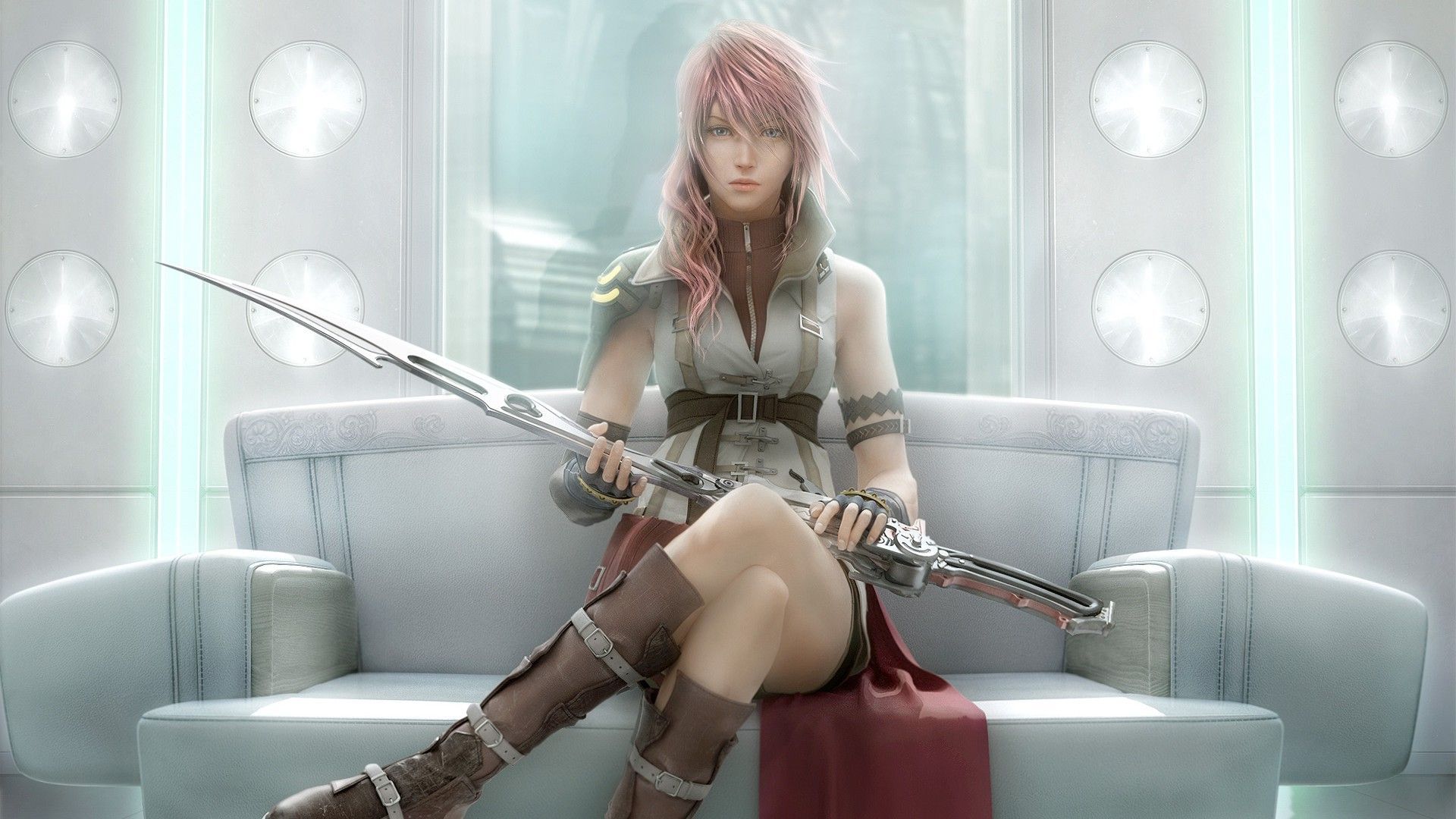
This is Lightning from Final Fantasy XIII. She's an extremely attractive, striking character, but in an understated rather than self-consciously sexy way. She's slim but toned, wears a short skirt, has pleasingly tousled hair, has perpetually pouted, parted and moist lips, and wears sexy boots.

She's also one of the most widely disliked characters in the entire Final Fantasy series thanks to being seen as "boring". This is partly due to her single-minded nature, partly due to the rather monotone delivery by voice actor Ali Hillis and partly due to the fact that, as the main player-protagonist character in the game, she was pretty obviously kept as a bit of a "blank slate" for the player to interpret and identify with as they saw fit.

I personally don't think she's all that bad, but there are far more interesting characters in Final Fantasy XIII. Lightning does, however, act as a suitable proxy for the player to interact with the world and its inhabitants, and in that respect she's a successful game protagonist. I just don't see many people declaring her as a "waifu".

Hyperdimension_neptunia_wallpaper_by_missy28352-d643m0u

This is Neptune and Nepgear from the Neptunia series. They are very popular "waifu" choices, but you'll note that they both err rather on the side of "cute" rather than "sexy", leaving aside their plugsuit-style HDD/goddess forms seen in the background of the image above. Actually, that raises an interesting point: those who proudly declare Neptune or Nepgear as a favourite character or "waifu" tend to do so with their human incarnations in mind, not the sexed-up HDD versions.

Why are Neptune and Nepgear popular then? Because they have strong personalities, and are interesting characters. Neptune is one of the most incompetent RPG protagonists the genre has ever seen, although her scatterbrained nature acts as an eminently suitable metaphor for the chaotic way most people play RPGs — putting the world on hold to go and grind out some sidequests — while Nepgear is the perfect foil to her sister, being nice, polite, quiet, intelligent and, frankly, a bit of a doormat to everyone around her.

While I won't deny that there are people out there who want to sexualise these two (there's plenty of Rule 34 artwork out there to confirm that) it's also true that the vast majority of Neptunia fans who pick a favourite — whether it's Neptune, Nepgear or any of the other main cast members — are doing so not on the basis of which one they want to fuck the most, as Sarkeesian suggests, but rather the one that they simply enjoy spending time with the most.

lara_croft_evolution_new

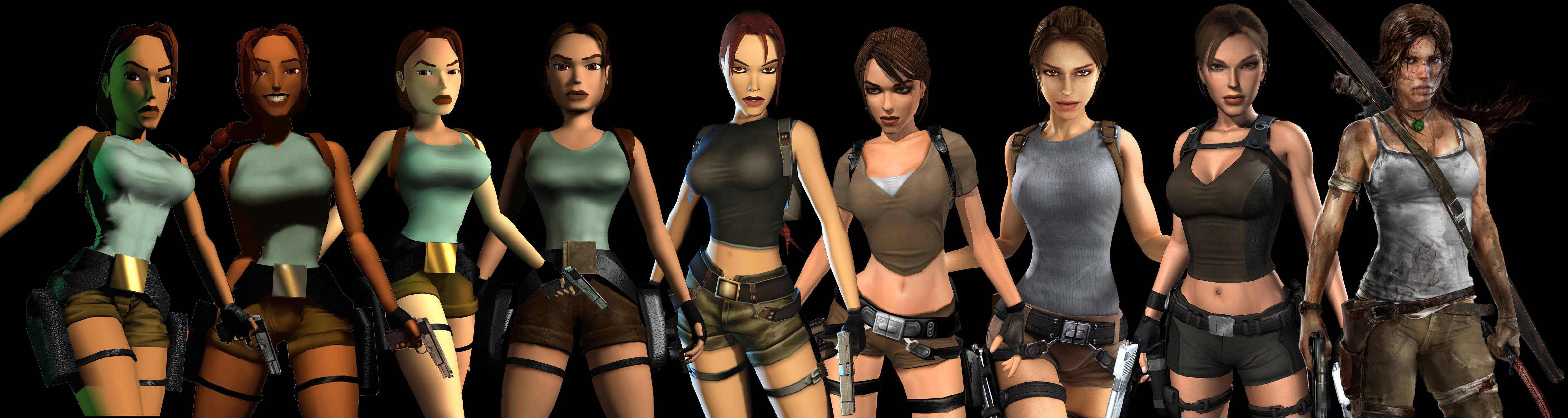
Here are the various incarnations of Lara Croft from the Tomb Raider series over the years. While Lara tends not to inspire the same sort of fanatical "my waifu!" declarations that female protagonists of Japanese games — and the reasons for that are a whole other matter worth discussing another time — she's still a popular character, and not because she's sexy.

Oh, sure, her tiny shorts and enormous rack made for some striking box art back when the original Tomb Raider came out, but if there was no substance to her, she wouldn't have been able to hold down a series for so long. A series that has been "rebooted" twice, yes, but a series in which she has remained a fairly consistent character, all told: a strong, confident, somewhat posh British woman with a plummy accent, a penchant for gunplay and acrobatics, and a desire to constantly challenge herself.

Moreover, she manages to be a female character that doesn't alienate anyone: she's not "girly" in an exaggerated manner, but nor is she overly masculine or aggressive. She manages to occupy a somewhat understated middle ground similar to what Lightning's creator Toriyama was presumably going for, only with arguably slightly better results. In other words, she has appeal elements designed for lots of different people and, despite her "sexiness quotient" being toned down a bit over the years, particularly in the most recent games, she's still a good-looking lady. But, importantly, that's not why people like her.

atelier meruru, atelier rorona, atelier totori, kishida mel, merurulince rede arls, rororina fryxell, totoori

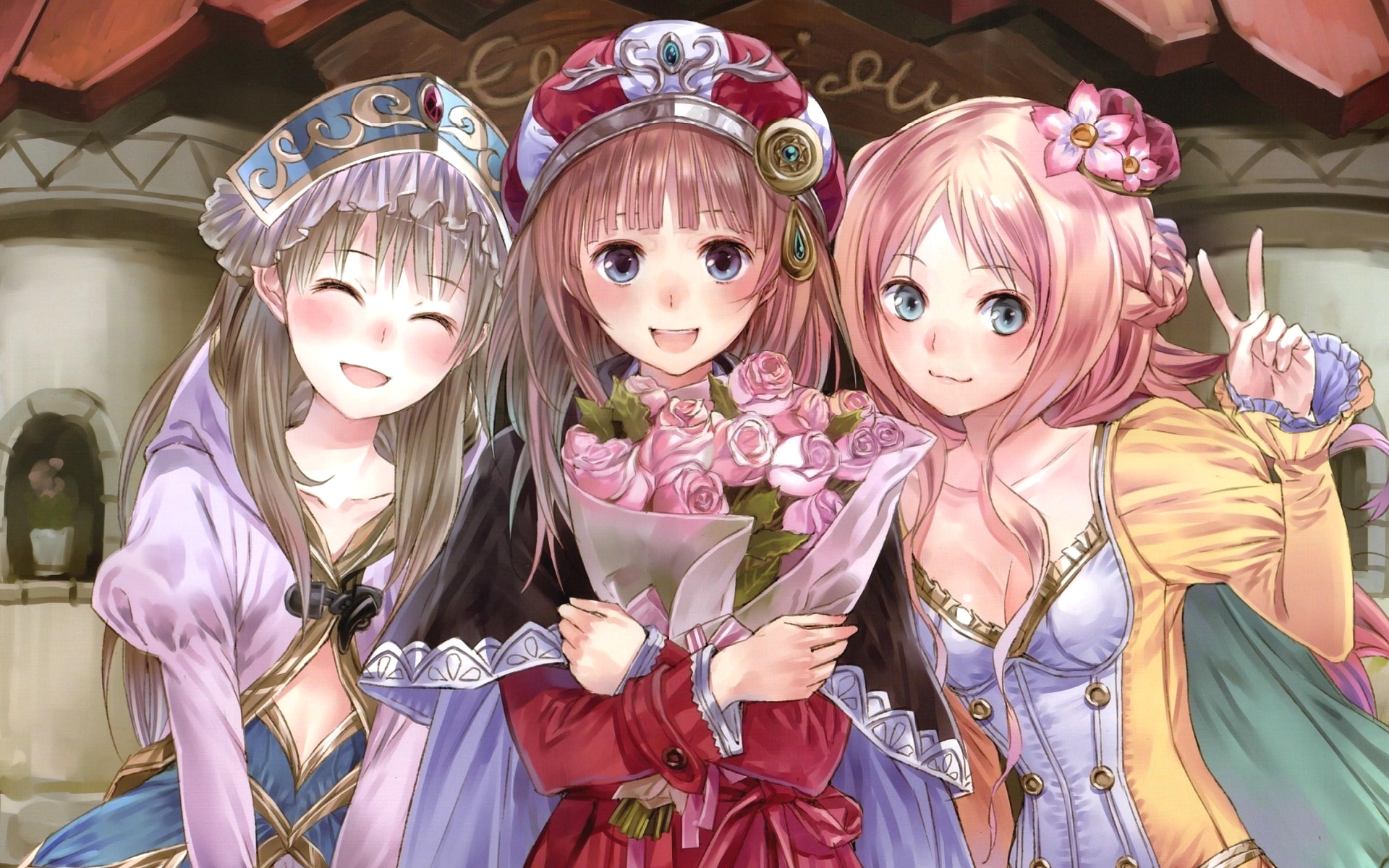
Finally for now — I could happily go on with this all day — here is Totori, Rorona and Meruru from the Atelier Arland series. All pretty young things, I'm sure you'll agree, and all clearly designed to initially draw the player in with their attractiveness — or, perhaps more accurately, cuteness, much like Neptune and Nepgear.

But, again, anyone who proudly declares any one of these girls as their "waifu", or just as a favourite character, is not doing so because they want to fuck them. No; they're doing so because they like Rorona's optimistic but clumsy nature; Totori's inherent sweetness; Meruru's lively, bubbly personality. Again, it's a case of wanting a "relationship" of sorts with these characters — of wanting to hang out with them as people, rather than objectifying them as something to jack off to.


Objectification and aesthetics play an important role in determining our initial attraction to something. But a relationship built purely on physical attraction and nothing deeper is a relationship that will not last long — and a relationship that will be forgotten shortly after it has ended. This is not what modern gamers are looking for — and it is not what the vast majority of modern games are providing.

Men are complicated creatures. No, people are complicated creatures. To boil down everyone's thinking to "everyone judges everything by appearance" is both reductive and unhelpful. And yet this is exactly what Sarkeesian is doing — just another reason she continues to lose credibility with pretty much everything she says.