#oneaday Day 820: Disagreement

20120418-000806.jpg

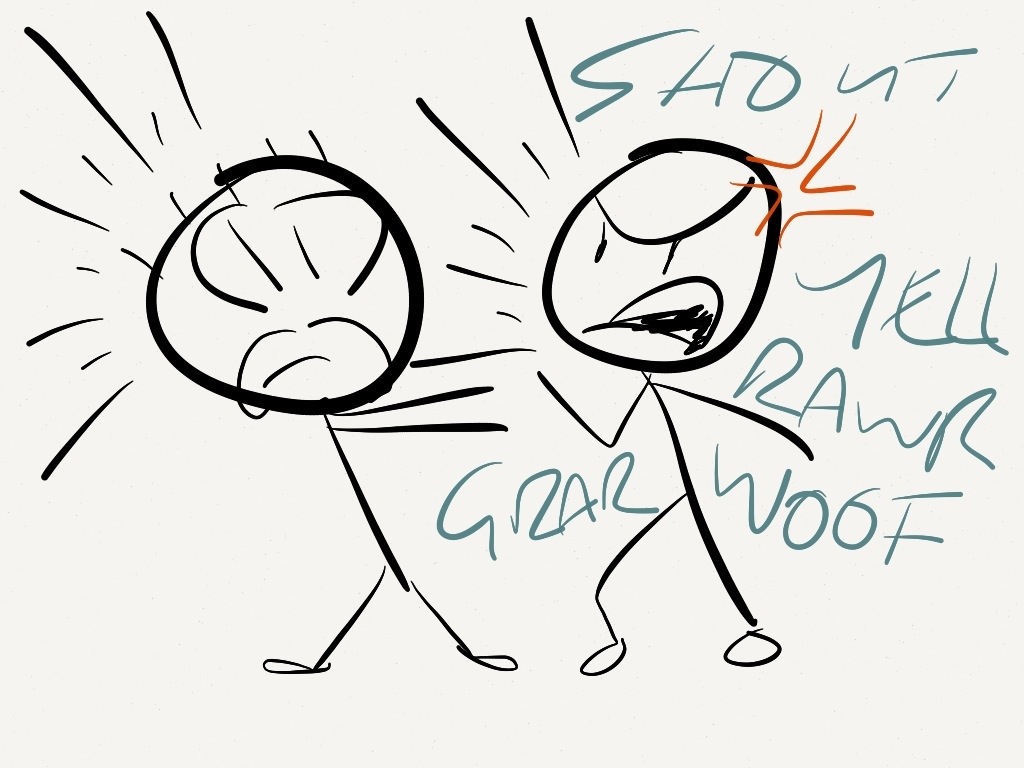
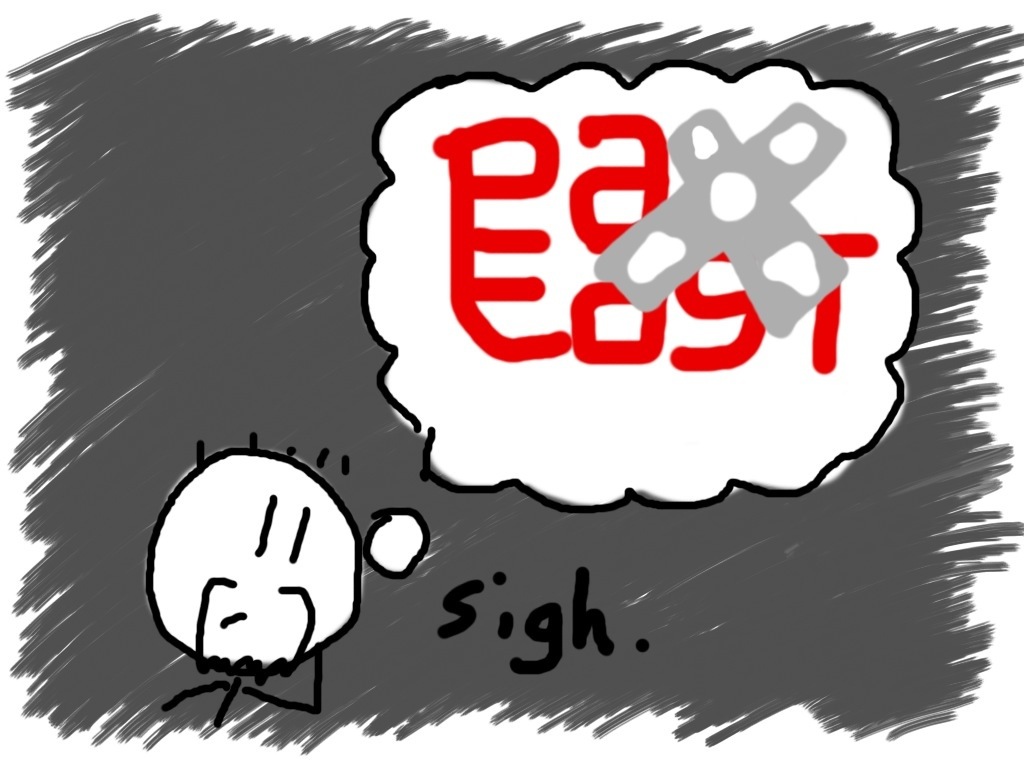
I hate arguing. In fact, I'd go further than that. I hate disagreeing. I have absolutely no doubt that this particular aspect of my personality is a side-effect of the social anxiety that I suffer from, but it sometimes makes discussions hard to participate in.

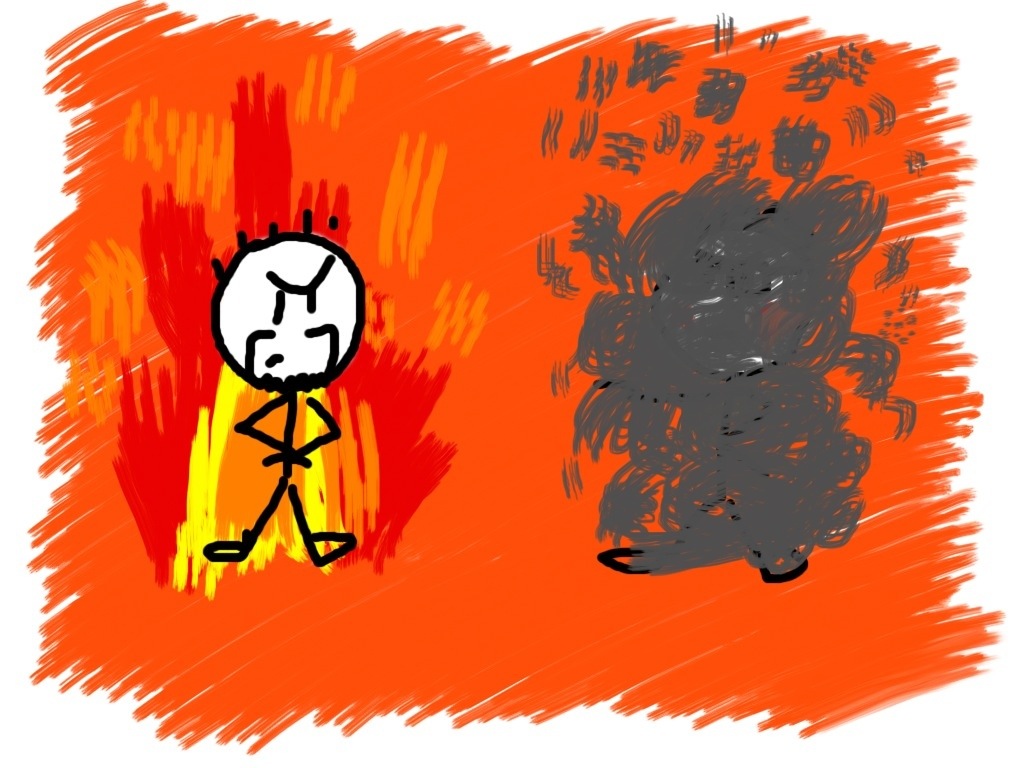
I'm fine with expressing my opinion and feel I can argue my viewpoint pretty convincingly in most instances — this blog is filled with numerous examples of that, as longtime readers will doubtless know. It's in the things that happen after my opinion has been stated that things get a little trickier — namely, if someone comes along with a diametrically-opposed viewpoint and the willingness (and/or ability) to argue until they're blue in the face about how much I'm wrong and how they're absolutely right.

Most of the time, these disagreements don't descend into "you're an idiot", but my discomfort with disagreeing makes me sometimes feel like it's implied. I like to think that I go through life as a fairly likeable sort of chap and take great pains to try not to offend anyone (swearing and masturbating stickmen aside, obviously — I'm referring specifically to personal attacks here) so having someone disagree with me and argue their case in an impassioned manner is a frustrating, disquieting experience that often makes me wish I had kept my mouth shut in the first place.

Part of this is due to the fact that I tend to cycle negative experiences around and around inside my head involuntarily. Even a seemingly innocuous, irrelevant discussion that might have gotten a little bit heated somewhere along the way is enough to keep me awake at night sometimes — and those rare situations where someone is actually genuinely upset by something which has occurred? I can pretty much forget about remaining calm, instead preferring to stare into space, replaying the incident in my mind and wondering what could have happened if things went a little differently.

It can happen before time, too. If I know there's some form of difficult conversation coming up, I'll find myself role-playing it in my head, imagining what might happen. Inevitably my mental conversation has the worst possible outcome, usually descending into someone getting yelled at or thumped. This does at least make having the actual conversation pleasantly surprising almost without exception, since no-one ever gets thumped and hardly anyone ever gets yelled at.

I guess part of the frustration over all this is to do with power, or more specifically, a feeling of powerlessness. If you know (or at least believe) that your opinion on something is inherently sensible and others seem to think that you're speaking gibberish, it's disheartening — particularly if said opponents of your viewpoint are aggressive and stubborn in their dismissal of what you have to say. It's particularly disappointing and upsetting when people whom you like and respect fall into this category, too.

Nine times out of ten, the argument just wasn't worth having in the first place, too. So what I have taken to doing most of the time these days is just stepping back before jumping in to a debate, thinking "will this get heated? Is it worth potentially getting upset over?" and then — only then — making a decision on whether or not to proceed. In some cases, said decision leads to launching a discussion and dealing with the consequences. In others, it leads to walking away — deleting the unsent tweet, closing the comments section, biting my tongue. And in extreme cases, it leads to me feeling like the correct course of action is simply to remove myself from the situation in question and ensure it doesn't arise again — online, that means unfriending, unfollowing and/or blocking people; offline… well, you just walk away and don't look back.

Some people are built for arguing. I don't think I'm one of them.

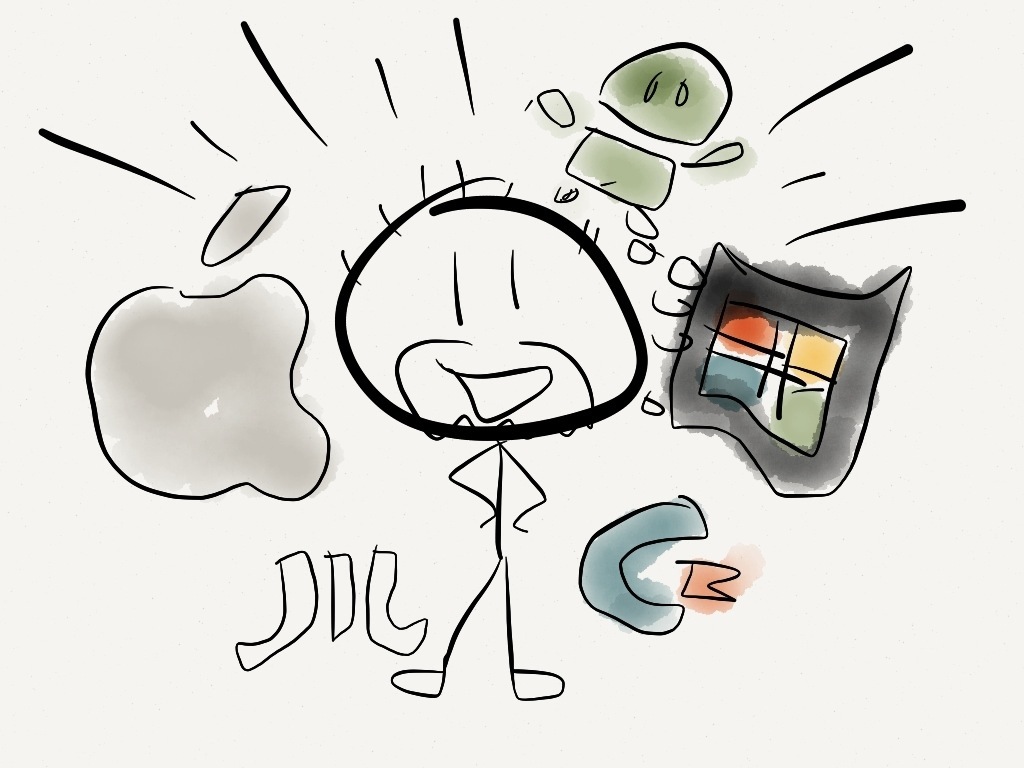
#oneaday Day 819: I'm a PC, and I'm a Mac...

20120416-232422.jpg

…and I'm also a PS3, a Wii, a 360, an iOS and an Android. I'm pretty frickin' multicultural when it comes to operating systems and platforms, in short. Always have been.

The whole "platform wars" thing always bothers me. It's usually started by the media and then perpetuated by fanboys who get angrier and angrier and spew more and more meaningless vitriol at one another until everyone leaves feeling rather embarrassed about the whole thing.

This isn't a phenomenon limited to children and teenagers, either. I've lost count of the number of times I've seen grown men and women posting ridiculous comments about how much they "hate" Apple/Microsoft/Google/Sony/Nintendo/that guy Barry from the chip shop (to be fair, he is a bit of a wanker) and getting increasingly riled up when people try to talk sense into them. Or when people deliberately bait them. Or when people take their comments a little too personally and start yelling back. Or… you get the idea.

It's been going on as long as there have been rival, roughly equivalent platforms doing similar things. We see it with every generation of computers, consoles, handhelds, smartphones, tablets, operating systems… it goes on and on. And, as I say, it's usually started by the media, though in most cases it's a bit of a "light the fuse and watch" sort of scenario, whereby they'll sow the seeds of conflict and then just let consumers batter each other into submission with increasingly-dumb arguments.

I've never subscribed to this particular attitude. I don't see the point. Every platform has its pros and cons. Some are likely to be more successful than others. Some will flop, hard. But they all have their place, and if you enjoy using them or find them useful, then that's a win. If you have no use for them or don't find them interesting, cool or exciting, then that's no loss to you. There's certainly no reason to judge people who do like them, though.

Let's take the Android/iOS distinction. These two groups are regularly at each others' throats, with Android users often hijacking iOS app Facebook pages with comments that just say "Android." repeatedly under the mistaken assumption that this will make the developer of said app want to support them, and iOS users honking on about incompatibility, how much better their devices are and how cool they look. The vocal proportion of both groups are insufferable arseholes, and I really wish they would shut up.

I entered the Android brigade today with the arrival of my new Motorola Xoom tablet. I got it for several reasons — work, curiosity and the emulation scene. What I found was that I gained an immediate appreciation of what Android did, but did not suddenly find myself hating iOS, Apple and everything they stood for. Instead, from a rational, relatively neutral (well, I have been exclusively iOS for mobile for a number of years now!) point of view, I could see that both of these operating systems had distinctive purposes, and could appreciate both of them.

iOS is simple, easy, consistent and clear. You know what you're getting with an iOS device. When you run an iOS app (games aside) you generally know what the interface is going to look like, and you can usually figure out how it's going to work. This is true to such a degree that when apps make minor changes to what is seen as the "standard" way that things work, it's very uncomfortable. A good example is the Spotify iPhone app, which has the "go back" and "now playing" buttons the opposite way around to how the iPhone's native music player has — it's a little confusing and irritating. Not enough to warrant INTERNET RAGE, obviously, but it highlights the fact that most iOS apps are a little more consistent with their interface design.

The "walled garden" aspect of iOS has its place, too. For those who are new to smartphones, tablets and technology in general, the fact that everything scary is walled off means that people can experiment and gain confidence with the device without breaking anything. Apple as a company has been increasingly moving towards the more "casual", "consumer" market over the last few years — various changes to OSX indicate this, too — and the easier and more consistent things are for users, the better so far as they're concerned. All this has the side-effect of irritating self-confessed "power users", however.

But then there's Android, which would be ideal for said "power users" if they weren't so stubborn. Annoyed at lack of customisation? You can do that on Android. Wish you could transfer files to the device simply by connecting it to a USB port, not by farting around with app-specific transfer programs? Sure, go ahead. Want to use non Apple-branded accessories, including USB gizmos? Knock yourself out!

The side-effect of all this, of course, is that it provides more things to go wrong. It's still pretty difficult to break an Android device from what I can tell — at least if you haven't "rooted" it, a process which I still don't really understand — but there are more variables in play. You can install apps from places other than one single "official" App Store. There's a greater risk of malware — something which is practically nonexistent for non-jailbroken iOS devices. The interface(s) for Android apps is (are) maddeningly inconsistent at times. And although the iOS App Store carries a lot of absolute garbage, there's even more on Android.

Both have their place, in short, and both have their own flaws — just as Windows and OSX have their place; PS3, 360 and Wii have their place; and if you really want to keep on using that Palm Tungsten you've had kicking around for years now, be my guest.

In short — and I'm aware I've said this before to little effect on the Internet at large, but it's nice to at least try — people should pretty much just shut the fuck up and enjoy what they've got while ignoring what they haven't got. We'd have a much nicer world without all this envy and jealousy floating around — since, after all, that's pretty much what most fanboy arguments tend to boil down to — so why do we still do it?

I guess it's fun to be contrary. Well, you can count me out. So far as tech goes, I'm multicultural and proud.

#oneaday Day 817: Countdown to a Non-Event

20120415-005750.jpg

It's my 31st birthday on the 29th of this month, something which I am neither massively looking forward to or dreading — it's just happening. (That said, there is the distinct possibility of nerdtastic board game action in the name of celebration, so I guess I am sort of looking forward to it.)

Birthdays are one of those things that seem massively important when you're a kid but decline in relevance as you get older, with only the big "decade change" birthdays being a particularly big deal in most cases. My 30th was pretty awesome, as it happened, since not only did my awesome girlfriend take me to London for happy funtimes (on royal wedding day, as it happened, but that didn't make things as inconvenient as I expected it might) but I then got to hang out with a goodly proportion of my UK-based friends (and one US-based friend who happened to be in the country at the time!) and eat lots of curry. Which was nice.

Thinking back on it, though, I'm not sure I can remember that many birthdays from my past. I was never particularly big on the whole "party" thing even when I was little — I remember going to plenty of other kids' parties at the local village hall, eating cake and playing Pass The Parcel, though I don't have any traumatic clown experiences to have revelations about in therapy (unless they're particularly well-hidden and repressed) and I was rarely — if ever, I forget — the actual "host" or "guest of honour" of such an event.

I'm fine with this, as it happens, though it may have begun to carve my personality into the shape it is today. A big "party" full of people I don't really know very well all putting pressure on me to have a good time is not a situation I particularly want to put myself in, particularly as it's considered impolite and/or drama queen-ish to tell everyone that you've had enough and you'd just like them all to, you know, fuck off right now please.

I think the best birthday celebrations I've had were loosely-organised affairs where I maybe had the opportunity to hang out with a few friends, but there was no real pressure on anyone to be wild, wacky or drunk. Oftentimes there was all of the above, but rarely was it forced.

One particularly memorable occasion came during my first year at university, so I guess it must have been my 19th birthday. The halls of residence flat in which I lived had become a pretty close-knit group (most of us, anyway — there was one girl who perpetually did her own thing) and so we decided that we would go to local student hotspot and well-known grot spot Clowns, a "wine bar" that had an attached basement nightclub known as Jesters.

To call Clowns a "wine bar" was to polish a turd, really, since it was simply a "bar". Okay, it served wine, but the phrase "wine bar" implies a certain degree of classiness that Clowns most certainly did not possess. Rather, it was the sort of place in which you stuck to the floor if you stood still for too long, and its companion nightclub Jesters (which seemed to be perpetually open, even during the day) was the kind of place whose toilets regularly overflowed and coated the dance floor with a sloppy mess of urine, cigarette butts and all manner of other unpleasantness. The theory was that by the time you got into Jesters, you were usually so wasted that you didn't mind what you might be stepping in/on, so it was something of a moot point.

I digress. This particular birthday celebration was one of those "unstructured" sort of occasions. Clowns was running some sort of summer special whereby they'd provide you with a four-pint jug of its signature "Juicy Lucy" cocktail for about four quid, and as such most people there were clutching said jugs like giant tankards, pouring the luminescent green concoction down their throats with gay abandon.

I remember relatively little about what we were actually doing at the pub — drinking, probably — but for some reason I have oddly lucid memories of what happened upon our return to the flat. My flatmate Chris, for one, decided that the thing to do would be to sit in the corner of my bedroom with a pair of my (clean) underpants on his head. (I believe he was later sick on his door and subsequently refused to come out of his room for the rest of the evening, though this may have been another occasion.) My friend Simon, who did not live in the same halls of residence as us, fell asleep on my bed. All I really wanted to do at this time was fall asleep, too, so I opened up my wardrobe, rested my head on the bin-bag full of laundry that was in there (surprisingly comfortable) and drifted off for a little while.

I awoke a couple of hours later to find Simon just rousing from his slumber, too.

"I'm just going to run my head under the tap and then leave," he said blearily. He stood up, and from my low vantage point I heard him go into the kitchen, run the tap as he suggested, and a few moments later, the front door banged to indicate that he had indeed left.

This occasion was clearly a silly situation in which almost nothing of any note whatsoever occurred, but for some reason it has stuck in my memory for many, many years. I can only wonder what strange memories future celebrations may burn onto my brain.

#oneaday Day 816: Half-Past One, AM

20120414-020505.jpg

It's 1:30 in the morning, because I've spent the last little while putting together my first article for ages on Bitmob/GamesBeat. It's about the three "Operation Rainfall" RPGs — Xenoblade Chronicles, The Last Story and Pandora's Tower. You can find it here. Please give it some love. I was tempted to recreate the whole thing here and call that today's post, but I thought I'd at least make an effort to do something different. For some reason. I don't know why. I'm kind of tapped out on creativity, but I have no doubt that just typing and typing in my usual stream of consciousness manner will cause at least something to flow out.

Whether or not it'll be interesting does, of course, at the time of writing this sentence, remain to be seen.

This week has been one of those ones that has simultaneously zipped by at a breakneck pace and also appeared to be exhaustingly busy. I don't think I've been doing anything particularly out of the ordinary — though we have been to the gym a few times after a few weeks of poor motivation — but things have felt more chaotic than usual. I've been working as usual (this week's iOS app recommendations: Skylanders Cloud Patrol and Saturday Morning RPG with an honourable mention for Burnout Crash even though I have a suspicion it might be a bit rubbish) and hanging out on Twitter. I also sat in our back garden for the first time ever. I read a bit of a book on my Kindle. It was nice, and I've apparently got over my fear of deckchairs.

I also ordered an Android tablet. Don't get me wrong, I'm still a total Apple fanboy (I'm typing this on one of two iMacs that adorn my desk, and my iPhone and iPad are within easy reach) but 1) I'm curious about what Android has to offer and 2) it will be useful for my work. Also, 3) Android tabs — particularly the Motorola Xoom, which is the one I've ordered — are great for emulation and retro gaming. A Twitter friend regularly evangelises about how great it is to have a portable device which merrily plays the entire back catalogue from systems such as the SNES, Mega Drive, NES, Master System and numerous other platforms, and I won't lie, that possibility is immensely appealing. Imagine how cool it would be to roll up to a friend's house with a single device and be able to play things like Street Fighter II and Mario Kart without having to faff around behind their TV? Awesome. (Hopefully. I'm yet to see it in action. But I'm confident.)

In a few moments I will be going to bed, and then it will be the weekend. Technically it is already the weekend, I suppose, but it's not really the weekend until you wake up on Saturday morning after sleeping and then eat bacon and sausages and eggs and smother them in brown sauce. (Yes, brown sauce is the correct sauce to put on a full English.)

Oh, I give up. My brain is dry and so I cut my losses and say goodbye. (Hey, that rhymes.) Good night!

#oneaday Day 814: Myself, Myself and Myself

20120411-235428.jpg

Watched The Apprentice tonight. Out of the interminable string of asinine reality shows that the idiot-box forces into our collective consciousness, Lord Sugar's ouevre is the one that offends me the least. It still offends me, of course, though not for the same reasons that, say, Britain's Got Talent does. No, Britain's Got Talent makes me feel stupid for watching it. (So I don't.) The Apprentice, meanwhile, finds me infuriated at the people depicted therein — the fact that the show itself typically shows them up to look like the bunch of chancers they are takes the edge off, however.

One of the worst things these people do is talk. No, seriously. Every time they open their mouths it's a veritable string of business cliches, one after another. One of the most prolific, egregious examples is the incorrect use of the word "myself". Everyone on that show seems to think that using the word "myself" instead of "me" or "I" makes them sound more "formal" or "polite".

"Who was responsible for this?" yells Lord Sugar.

"That was myself," pipes up someone with impossibly blue eyes.

"And who worked in the production side of things?"

"Myself was working in production, along with Randolph, Bellend and Fuckwhistle," comes the reply from the blonde one with the annoying attitude. (I can't remember their real names.)

You get the idea.

The same principle is also, it seems, applied to the word "yourself", which has apparently become an acceptable substitute for the word "you" somewhere along the line.

"I think the team working on this should be yourself, myself and Craptwat," says Fuckwhistle.

I can't work out where this faux-formality that makes people talk incorrectly (or, to be less prescriptive about it, "faux-formality that makes people complicate their speech unnecessarily") has come from. Perhaps it's a modern-day variant of the archaic "thou art/you are" distinction, which everyone uses incorrectly these days anyway. (And with good reason, obviously — it's archaic, duh.) Whatever it is, it needs to die, for the same reason that people who use words like "trendy" and "funky" just need to stop right now. Words like that are ones which lose all their meaning and become the opposite of what they're supposed to be as soon as they come out of someone's mouth. The same is also true for anyone who says Internet memes out loud or — God forbid — says "LOL" in earnestness.

But I digress.

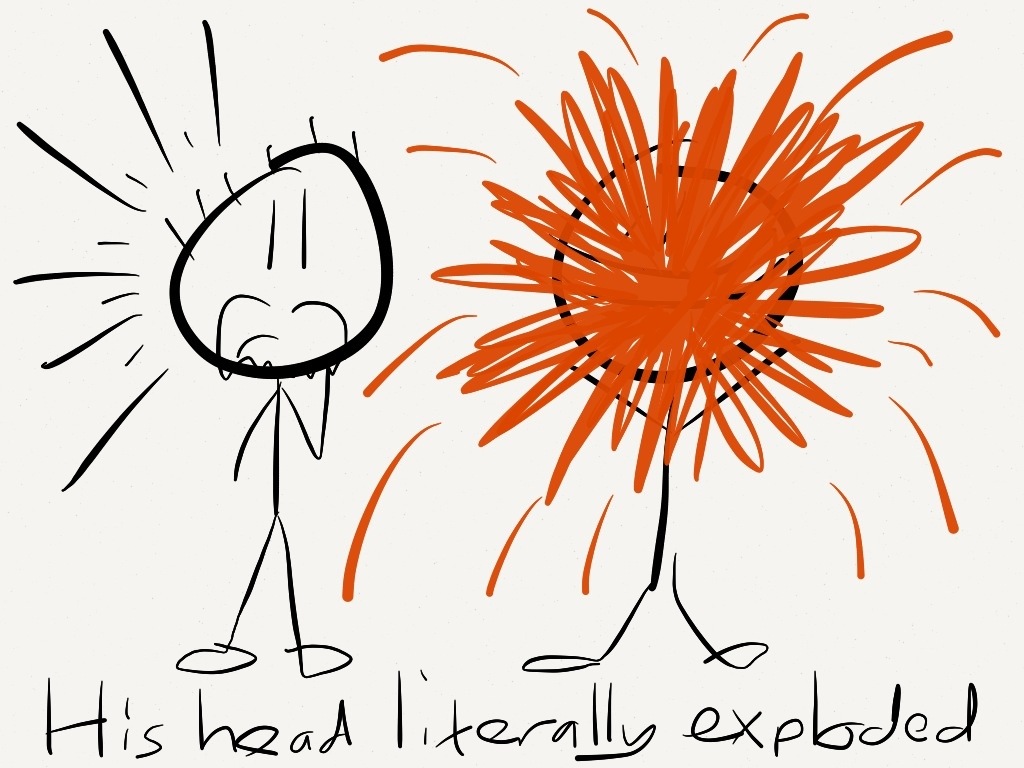
Language is constantly changing and evolving, usually for the better. We have a veritable shit-ton more words than we used to (and plenty more, like "shit-ton", that you won't find in the OED) and the English language has never been more complex, more expressive and more descriptive than it is now. It doesn't need to be overcomplicated with misplaced formality. There are already pretty good systems in place for indicating that you're speaking formally — lose the contractions, cut the slang, actually bother to pronounce the letter "t" — so stop making up rules. And while we're on, grab a dictionary and look up what "literally" means. It's not an intensifier. It means something actually happened. Stop using it wrong or I will literally jam this pencil into an orifice of yours that it's not usually supposed to find itself in.

And yes, I mean literally.

#oneaday Day 813: Fitocrat

20120411-000948.jpg

I last wrote about up-and-coming "fitness social game" Fitocracy back in… [checks] Ooh. October of last year. I thought it was more recently. I feel less guilty about writing about it tonight, in that case.

For the uninitiated, Fitocracy is a site which gamifies your exercise regime. Completing exercises rewards you with points. Points mean level ups. Level ups mean… well, nothing actually, but they provide you with bragging rights plus also give you a rough idea of how much cumulative exercise you've done since you started tracking it (and, in theory, "got serious" about it).

Tracking exercises can be done in two ways: manually logging them or linking to a Runkeeper account. The former is necessary for exercises which can't be automatically tracked such as resistance machines, free weights and bodyweight exercises. The latter is the easiest way to track cardiovascular workouts — particularly those where you've actually, you know, gone outside — but you can also track CV stuff directly within Fitocracy if you don't want to plaster your information over yet another site. (Runkeeper is a pretty cool app, though, so if you're serious about your fitness, enjoy attempting to draw GPS penises via your exercise route and have a smartphone, it's worth a download.)

If Fitocracy was just an exercise-tracking system with a levelling system, it'd be pretty decent. But the team behind it has gone the extra mile and included a bunch of other stuff, too. There are Achievements for a variety of things ranging from engaging with the site's social features to performing challenging exercises. There is a Quest system that provides specific, one-off missions for you to undertake — a good means of setting yourself long-term goals if you can't think of any of your own. You can save your favourite routines so you can easily recall and record them. There's a solid Groups system whereby you and your friends can work together and even set up mini-challenges to see who can earn the most points in a set time period. And the whole thing is wrapped in a straightforward, conventional but effective and highly-polished social interface that encourages interaction and encouragement between "players".

All in all, it's an excellent motivational tool. Everything combined together forms a powerful system that makes you feel like you're being "rewarded" for bettering yourself when, in fact, you're simply making a variable go a bit higher each time or occasionally unlocking intangible shiny things. The thing is, though, you are actually rewarding yourself. You're bettering yourself. You're getting fit. You're learning how to self-motivate. And, assuming you've managed to badger some friends into joining up too, you're also being rewarded by positive encouragement and reinforcement from other people who are going through the same thing. It's a social network for people who are serious about their fitness — or who want to get serious about their fitness. And it does its job extremely well.

Fitocracy was in closed beta for a pretty long time, and during that period it was only possible to use the service if you had an invite. Now, though, the whole thing is open to the public and is completely free to use — though power users have the option of shelling out $4.99 a month to become a "hero" and get early access to new features. The service has had a fresh new coat of purple paint, its site looks great and the new iPhone app is a pleasure to use with its simple, intuitive and attractive interface.

So why not give it a try? Here's my profile. I'll be your friend! NOW GET MOVING, MAGGOT!

#oneaday Day 812: Perspective (And Retro Filters), People, Please

20120410-004221.jpg

It was announced today that Facebook has acquired the popular mobile photo sharing and hipster filtering app Instagram, which has been available for some time on iOS and recently launched for Android phones. The deal was sealed for somewhere in the region of $1 billion in cash and Facebook stock, which is an excessively large amount of money by anyone's standards.

I shan't go into the ins and outs of the business side of things here (check my colleague's posts over on Inside Facebook for more details as well as a bit about what FB and Instagram have been up to together) but what I did want to talk about a little was the public reaction to the news.

In short, the reaction has not been overly positive, at least among the people I follow on FB and Twitter and their friends. I have seen numerous comments today that are simply along the lines of "oh, fuck" without any real explanation — basing their negative reaction simply on the widespread assumption that Facebook Is Evil.

As it happens, some of these people may be right to be a little concerned for the future of Instagram. Facebook has gobbled up several other social services over the course of the last few years, and the result has often been that said services disappeared without a trace. Location-sharing Foursquare rival Gowalla, for example, shut down its service a short while ago as its founders and key team members were reassigned to work on Facebook's own location service. Meanwhile, group messaging service Beluga was also swallowed up around this time last year, and eventually disappeared off the face of the Earth, only to be replaced by the Facebook Messenger mobile app.

Mark Zuckerberg has taken great pains to attempt to assuage the fears surrounding Instagram, however, noting that a key part of the service is its connectivity with non-Facebook networks such as Twitter, Tumblr, Foursquare, Flickr and Posterous. If Facebook is truly planning on keeping Instagram as its own independent entity to begin with, it wouldn't make sense to remove the facility to post to these other networks. What is probably more likely to happen is that Instagram's popular photo-filtering features will make their way into the official Facebook apps, making it even easier for people to take faux-retro pictures at every opportunity.

Perhaps Facebook will dissolve Instagram eventually, and that will be a bit of a pain for those who have Instagram but not Facebook accounts — but it won't be the end of the world as some people seem to be suggesting. There are plenty of other "hipster photo filter" apps available — Streamzoo and Lightbox appear to be two popular suggestions — and, in my purely anecdotal experience, the apparent majority of people who use Instagram use at least one other social service alongside it anyway, even if it's not Facebook, meaning they can simply direct followers to their Twitter/Tumblr/whatevr if and when they start using another service.

So Instagram being taken over by Facebook isn't cause for sadness, anger or irritation. It was a completely free service, after all, meaning in practice it had no real obligations to remain the way it was forever. Instead, we should be celebrating the fact that a small team succeeded in living the dream — to create something simple, fun and popular, and subsequently to make an absolute fucking butt-ton of money out of it. It's a success story of the modern age, made all the more notable when you compare it to the $35 million Yahoo! paid for Flickr back in 2007.

So if Facebook taking over Instagram bothers you, simply use something else — there's plenty of alternatives, as outlined above. In the meantime, the two companies can work on better integration of Instagram's popular features into what is, like it or not, the world's biggest social network. If you had paid money to use Instagram then you may well have a slightly stronger case for being pissed off; as it is, what we have here is a small company who offered its services to the public for free taking a once-in-a-lifetime business opportunity — and, more to the point, no real evidence that Facebook's involvement will in any way compromise what the service is now.

As with so many things on the Internet, perhaps it's best to wait and see what happens before getting irrationally angry or sad about this. Otherwise all that jerking's going to put your knee right out of joint. So to speak.

#oneaday Day 810: Fancy Dress

20120408-014254.jpg

I love dressing up. Perhaps it's just part of my own inherent immaturity which I continue to cling desperately to as my 31st birthday approaches, but I love putting on a stupid costume that will get some laughs and playing a role. Oddly enough, it often actually makes me feel more confident than I do usually, perhaps because I'm kind of stepping out of my own skin for a little while and pretending to be someone else. Or perhaps it's because I associate it with acting, something I enjoy a great deal but haven't had the opportunity to do since university. (God, that was a depressingly long time ago now. Fuck.)

[Editor's note: It took some persuading to get Pete out of his sulk after coming to that realisation.]

My apologies. I was just… OH GOD

[Editor's note: And again.]

I'm fine. I'm fine.

ANYWAY.

Fancy dress. It's fun. And, on past occasions where it's been part of the social engagement I was attending, it is usually associated with a thoroughly silly, funny night out. I don't remember doing it much as a kid, but I certainly remember doing it a hell of a lot at university. The local charity shops tended to do a roaring trade around "social season" at the student union and local bars.

The earliest one I remember was a 70s night at our university hall of residence bar. Our flat was pretty good at socialising with one another, but we'd been consistently frustrated with the fact that none of the rest of the building seemed interested in going out or getting to know each other. (We discovered this within the first couple of weeks living there, when we attempted to organise a pub crawl and ended up being the only attendees.) We figured that the fun and frolics of a dressing-up opportunity would encourage a few people to make it out and make an effort.

We were, sadly, a bit wrong. People came out, all right, but when we got to the bar, we were pretty much the only people there who were in costume. I don't regret a thing, because it was around this point I discovered that moustaches are fun despite the fact that I was, at the time, incapable of growing my own. (If you have seen my face recently, you will doubt there was ever a time when I was incapable of growing facial hair, but it is, in fact, true; the most I could summon up at the age of 18 was a small, lop-sided patch on my chin.) As such, I found myself wearing an awesome stick-on moustache combined with a velvet jacket, frilled shirt and, uh, a pair of jeans. (The charity shops didn't have any suitable flares or, to digress for a moment, "bell-end trousers" as they were memorably referred to on Just A Minute the other day.)

Said moustache found its way all the way around our social group after we'd had a few of the hall bar's notorious cocktails (Juicy Lucy: 1 shot vodka, 1 shot blue curaçao, 2 shots Taboo, top up the rest of a pint glass with equal parts orange juice and lemonade, looks like water with Fairy Liquid in it and turns your poo green if you have too many; Passion Wagon: 1 bottle Reef, 1 shot Passoa, possibly the laziest cocktail of all time) and eventually alighted delicately back on my face rotated a full 180 degrees from its intended position, making me look more like a shitfaced Hercule Poirot than a 70s porn star. I don't remember much of what happened after that.

Or there was the Halloween party where I dressed up in the Scream costume. It was about the time Scary Movie had hit the cinema, so there was a lot of "WAAAZAAAAAAPPP"-ing from behind the mask. Coincidentally, wearing a full black robe and covering my face entirely, I felt incredibly confident. Perhaps I should become a ninja. Or some sort of cultist. Or a Sith.

Or the "Gangster Night" where I decided that the thing to do would be to dress up like 70s Guy again, complete with afro wig, stick-on moustache and hideous shirt. The band we had at university to pass our "Ensemble 1" unit — The Coconut Scratch Orchestra — was also performing, so I also had to negotiate a saxophone around my furry top lip and excessive amount of head hair.

I think one of my favourite dress-up occasions, however, was the time a group of ex-university musicians were playing in the band for a local pantomime and we made an executive decision to do the second half of one performance in full costume. I dressed up as a fairy. I looked beautiful, I'll have you know. And in fact, my costume was so good that when I took it off, it was mistaken for an actual costume from the show and pinched while I was socialising. When I returned to retrieve it, it was long gone, never to be seen again. I was very disappointed. I spent quite a lot of money on it and had rather enjoyed having long blonde hair for a little while. My only physical memento of the occasion was a saxophone reed forever stained with slutty red lipstick, though there are also photographs of my magical magnificence located somewhere on the Internet. You'll have to track those down yourself, though.

I've never crossed the line from "fancy dress" into "cosplay", however. I guess technically the Scream outfit was sort of cosplay, but not really. No, I'm talking about being such a fan of a particular character that I really, really want to dress up as them.

Part of the reason for this is that many of my favourite characters are simply incompatible with any or all of the following: my body shape, my age or my genitals. The facial hair is also an issue. Much as I would love to put on a frilly cravat and do a Miles Edgeworth, shaving my beard off after it having such a long-term residence on my face would just be weird. Which also puts any sort of cross-dressing scenario out of the window, too, which most people will likely be delighted to hear. (That said, my fairy costume saw me sporting a beard, so…) With the type of guy I am, the best possible outcome would probably be from some sort of "big dude in armour" type of arrangement, though I'm not sure there are that many big dudes in armour that I'm particularly fond of. Reyn from Xenoblade, perhaps. Though then we're back to the beard problem again. What a bunch of jokers.

I'm also never quite sure if there's a stigma attached to cosplaying at all. It's certainly a sign that you're taking your fandom of a particular thing over a very well-marked line, but does it make you into a hardcore "nerd"? It certainly broadcasts loud and clear that you're interested in something, and could well be a good conversation starter at conventions and the like. (Obviously I'm not suggesting walking down the street dressed like Cloud Strife or anything) For women, there's the "perving men" angle to consider, too, but at the same time you might argue that by dressing up in a distinctive costume you want people to notice you (just not probably quite like "that").

Anyway. I'm rambling, largely because it's 1:25 and my concentration is lapsing somewhat. So I'll leave that there.

Do me a favour, though; next party you throw, make it a fancy dress one. (And invite me, obviously.) I haven't been to one for ages.

#oneaday Day 809: PAX Pact

20120407-023755.jpg

Disclaimer: I'm aware that I wrote almost exactly the same post as you're about to read at this time last year, and for that I make absolutely no apologies.

It's PAX East time! Yay! I'm not there! Boooo.

I've not been to many conventions or big shows like that over the years, so I have very fond memories of those I have been able to attend. My decision to attend PAX East in 2010 was very much a spur of the moment thing — I'd decided I wanted to leave my primary school teaching job because I'd given it a chance and determined it wasn't for me, I was trying as hard as I could to pursue a career in the Writing Words About Games industry, and I was feeling a bit miserable and lonely. So, with a little financial help, I flew across the pond to Boston and went to my first big show in America.

It was an exciting time for a number of reasons. I'd just started working for Kombo.com which, while it didn't pay particularly well, provided me with a position where I could legitimately say I was a professional member of the games press. I knew that a large number of my buddies from communities such as Bitmob and The Squadron of Shame would be in attendance, so I'd have the opportunity to meet some people face to face. And I always love the opportunity to visit the States. I'd never been to Boston before, and while I was under no illusions that I'd be seeing much of the city while I was there, I was looking forward to being Somewhere New.

It was also terrifying. As a sufferer of social anixety at the best of times, the prospect of meeting people I'd only ever talked to on the Internet in the past was a scary one. What if we didn't get on? What if it was a massive disaster and it destroyed the carefully-cultivated relationships we'd built up with one another? What if I had nothing to say? What if I got lost and it was actually because they wanted to lose me? All these thoughts whirled around my head as I was on the plane, but I was very happy to discover that PAX was, in fact, a happy, inclusive and wonderful place for geeks of all descriptions to call home — whether they were someone who just liked video games or was also into collectible card games, role-playing games, board games, cosplay, the history of technology… anything like that.

That word — "home" — is an important one. Because it felt good to be there. It felt like a world which I wanted to belong to, surrounded by people that I wanted to be with. It was a world that accepted and embraced each other's differences and brought people from many different walks of life together in the name of common interests. Perhaps most importantly, it made friendships real. It's all very well chatting to people online on a regular basis, but once you've spent time with those people in person — seen them, heard them, hugged them, tickled their beards in a homoerotic manner where applicable — your friendship is on a different level. I haven't seen some of those people I met at PAX East 2010 in person since that weekend two years ago, but in many ways I feel closer, more connected to them than many of my — for want of a better word — "real" friends. Perhaps it's because they're also "Internet friends" that I speak to most days via Twitter, Facebook and G+.

Whatever the reason, knowing that lots of people I know are at PAX East right now and undoubtedly having a great time (and/or queueing for hours) makes me a bit sad — not that they're there, obviously, but that I'm not there with them.

I propose a pact, then, faraway friends: PAX East 2013. Be there. You have a year to prepare. Get cracking.

#oneaday Day 807: Bully for You

20120405-010702.jpg

Courage is fire, and bullying is smoke.

— Benjamin Disraeli

Bullying is an odious practice, awful to witness and even worse to be the target of. Yesterday — and I am going to keep details deliberately vague here — I witnessed a good friend of mine get pretty ruthlessly picked on by people who should know better. Their words were continually twisted and very selectively shared with a wider audience in order to gain support for the bullies and tear down my friend piece by piece until the point they were trying to make — which I shan't go into here but I actually agreed with — was all but lost. My friend was left ridiculed and humiliated having been called a whole storm of names from people he had, in some cases, never had contact with before. Meanwhile, the bullies were left looking like white knights who had saved the day.

It made me very angry.

Bullying is about power, insecurity and, very often, a desire for approval. This incident — which took place on Twitter — was an apt example of all of the above. The bullies had a great reach thanks to their profession and their high follower counts, giving them a large amount of power by default. The fact that they were only selectively sharing the things my friend said with their followers was a sign of insecurity and a lack of faith in their own argument. And their desire for approval speaks for itself, really — otherwise why would they have engaged in such a toxic, public argument? It was deeply unpleasant to see and, as I say, the perpetrators in question should really know better than to behave like that.

I've been the victim of bullying on a number of occasions through my life, so I can relate to the feelings my friend has undoubtedly been suffering as a consequence of this incident. I suffered physical violence and ostracisation by my peers at primary school and, to a slightly lesser extent, at secondary school. I've been a victim of what I call "passive bullying" at one of the schools I worked at, where I was regularly left to sit by myself in the staffroom and was never invited into any friendship groups or cliques — a situation exacerbated by my own social anxiety, which was made worse by this going on.

And I've suffered outright workplace bullying, which is what I'd like to take a moment (edit: several thousand words, I apologise in advance) to talk about here, as it has relevance to the incident I described above — adults who should know better, in other words. Disclaimer: I shan't be naming specific names here, but those who know me well will likely already be familiar with the particular incidents that I'm about to describe. Those who aren't familiar with the specific instances I'm going to refer to, I hope they open your eyes a little to the fact that bullying among adults is most definitely alive and well, and it should really be unacceptable in a civilised society.

This is not an easy thing to write about, and will likely go on for some time, so I thank you in advance for indulging me and reading this.

It started with a review meeting. These were a regular occurrence at the place of employment in question, so there was nothing new there. Said employer had fairly strict policies in place to help control its public image — namely, employees were not permitted to engage in discussions relating to their job and the things they dealt with in the course of their daily work, and were not permitted to speak to the press. Not that that was ever an issue to my recollection. Given that all this was around the time that everybody and his dog was getting around to joining Twitter, it was a hot topic. I knew this, so I always took great care to never refer to my employer by name online and never to discuss the specifics of what I do.

So it was with some surprise that in my review meeting it was "suggested" to me that my target for the next review a month later should be to "stop talking about work on Twitter". At the time, I didn't think much on this until a little later, when I realised that such an "admission" — which had come from my reviewing manager, not from me — would look bad in the cold, hard light of the Policy and Procedure manual. As such, I took the opportunity to take the managers aside and politely request that my "target" be changed to something more appropriate.

My request was bluntly declined, and one of the managers even offered to go back through my tweets and highlight the ones he found particularly objectionable. I knew the ones they would be referring to — but as I said previously, I had always taken the greatest care to never share my place of employment in the public domain, and never to mention the specifics of my job. Their justification was that "people who knew me would know what I was referring to". I could see that fighting this would be an uphill struggle that I didn't need to have at this time, so I reluctantly acquiesced and the "target" stood firm on my file. I never mentioned anything even vaguely work-related from that point on.

I worked in a small department at the employer's place of business. We were understaffed and overworked, and this situation wasn't helped by the hasty dismissal of two members of our team who had been with us since "the beginning", as it were. One was dismissed for a Facebook prank gone awry, the other was dismissed following the complaint of a client. Both were disproportionately harsh penalties for the supposed misdemeanours in question — in the latter case, the client who raised the complaint was notorious among the non-management members of staff as someone who was difficult to deal with and rude as well as being someone who completely flouted the terms and conditions of her working relationship with us. The situation could also have been completely averted with managerial involvement — something which my colleague immediately sought when things got heated, but was unable to secure due to the fact that they were all locked in their office (busily dismissing another colleague, as it happened).

I sat in on the disciplinary proceedings and subsequent appeal for my colleague and friend. It was horrible to see. His arguments were fair and valid, but little heed was paid. As his nominated "second", I was able to ask questions which were to be recorded on the official notes of the proceedings, so I took great pains to think of some questions which would help clarify the situation in a way that would make my colleague look — as he was — innocent. Three questions into my list I was effectively told to shut up and stop slowing things down. It was abundantly clear at this point that no real consideration was being given to my friend's arguments and the issues I was hoping to raise — the decision had already been made before we walked into that room, and the same happened in the appeal process. It was utterly demoralising to witness.

So, two members of our team down, we struggled to keep up with the increasing demand for our services from clients. Our efforts were not helped by the introduction of a new initiative which had come down from Head Office which made life considerably more inconvenient for both us and our clients. As a team, we called an urgent meeting to discuss this initiative and how it wasn't working, and were ignored — despite the fact that written complaints from clients had come in echoing our own sentiments along with frustration at the fact that the two dismissed team members' particular, specific skill sets were no longer available.

One manager in particular had started watching us — and particularly me, for some reason — like a hawk. When we weren't dealing directly with clients, we were supposed to have time to train and improve our own skills so as to be able to provide a better service. It was a system that had worked well in the past and had allowed all of us to learn a lot both independently and from each other. By this point, though, any training session we held proceeded with the manager in question breathing down our necks, regularly asking what we were doing in an accusatory manner and frequently sending passive-aggressive emails about all the things we were supposedly doing wrong.

By this point, I had come to the conclusion that I did not trust the managers, particularly after witnessing the way they had treated my former colleagues. As such, to avoid hassle and confrontation, I made a point to stay out of their way, keep my head down and just get on with my job. My clients appreciated what I did for them (I'm aware this makes me sound like a prostitute but I'm being deliberately vague in all this!) and frequently sent in glowing letters of praise, and my colleagues appreciated it when I helped them using my own specialist knowledge. In short, I was doing just fine by myself.

One day, I was pulled aside by another of the managers and asked why I wasn't talking to them any more. I was accused of blanking them on the way into work — patent nonsense, I might add — and threatened with "behavioural conduct" proceedings if I didn't change my ways. I wasn't clear at all on what I had supposedly done wrong in their eyes, however — since I had had no need to speak to them except when seeking permission to perform specific tasks, I simply hadn't. A "keep out of my way, I'll keep out of yours" situation, if you will. It worked fine for me, but I wasn't specifically blanking them or anything, nor was I "resisting" any suggestions or feedback on the rare occasions when it was provided.

The latter incident, however, convinced me that it was probably time to move on. To prevent awkwardness, I spoke to one of the managers — not the one who had raised the "behavioural conduct" issues, but the one who had been watching over our shoulders while we trained, as it happens — and explained that I wasn't happy, I wasn't satisfied with my career progression (I couldn't see a clear onward path from my position at that point) and that I was considering moving on. I explained that I wanted to be open and honest about the whole thing, and that I did not want it to be the cause of any ill will or bad blood.

It was at around this point that the opportunity arose for me to do some "work experience" of sorts with a friend in the local area. Said work experience would provide me with the opportunity to move sideways into a different career that I was qualified for, and it would be a good opportunity to get some references for job hunting, since I already knew that my then-current employer's references were nothing more than stock letters that confirmed start and end dates. I explained to the manager that this was a possibility, but that I did not yet know the dates for when it would be happening as my friend had to clear it with her employer. I also explained that I would simply book holiday for the time in which I would be undergoing this (unpaid) work experience, as I still had the vast majority of my holiday allowance available.

As it happened, the week for this work experience eventually fell a week after a week-long holiday I had already booked months in advance to go and visit some friends abroad. I followed procedure to the letter, booking the extra week well ahead of time and going to the extra trouble to include a letter explaining the situation — that I understood it would be inconvenient for me to be away for two weeks instead of one, but that I had booked it as early as I could and that the unfortunate timing wasn't really up to me. I even offered to compromise by working some extra shifts in the couple of days I had between the two holiday periods. I got no response at the time, and when I checked in the system just before I left for faraway lands, my second request was marked as "approved".

While I was away, I received an email from the manager in question explaining that they were supposedly still considering my second week of holiday, and that I should go in to discuss it with them upon my return. It had already been approved, remember, so upon getting back home I printed out proof of this approval, took it to my meeting, expected to show it to the manager in question and that be the end of the matter.

It wasn't. Suddenly there was a whole ton of conditions attached to this week of unpaid work experience, the reasons for which I had been completely transparent about. Suddenly I needed a letter from the place I was going to confirming that they were going to offer me a job (I'd never said any such thing was a possibility). Suddenly there were all these hoops to jump through for a week of "holiday" that was, let's not forget, already approved.

I'm afraid to say that I lost it at this point. I was frustrated, tired, upset and angry, so I lost my cool and demanded to know why the manager was seemingly going out of their way to make my life difficult. It was a mistake to get upset — I knew that at the time, and I regret it — but while I was stood there talking about it there felt like no other way to express the frustration that had been building up inside me, the culmination of what had been by this point months of harsh treatment, mistrust, passive-aggressive messages and a complete refusal to listen to the team.

It had the desired effect, at least. The manager was stunned into silence, but unfortunately their next move was to phone up our overall manager who happened to be on holiday at the time. By all accounts, our overall manager was a rather weak, ineffective sort of leader, so I didn't expect him to achieve much. I lost my patience and simply left. Reasonable discourse was obviously out of the window on both our parts. Eventually, I simply left on my work experience week and heard nothing more about it until when I returned, at which point I was summoned into the office and invited to discuss the incident in a "recorded conversation" typed up by one of the other managers. I was totally misrepresented in the course of this meeting and made out to be the aggressor rather than someone simply frustrated by being continually stonewalled, and I was not allowed to leave until I had signed this document which contained numerous inaccuracies that would undoubtedly not look good on my file. Panicking and upset, I signed the document and left, not sure what to do next. I spent the remainder of the day regretting that I had signed the incriminating document, wishing I had torn it up instead.

To cut an already-long story slightly shorter, over the course of the next few weeks, the managers in question were even tougher on me. I found myself accused of various "misdemeanours" when in fact there were legitimate reasons for all of them — lest this sound like "she doth protest too much", let me give you a rather vague example: one client had a question about a particular service, I happened to be in a position to answer a question and demonstrate a solution about said service using my own personal account so I did so. The client left satisfied and happy, but this was ignored in favour of the fact that I supposedly shouldn't have been using said personal account during work.

This feeling of constant surveillance and being pulled up on even the tiniest things was getting to be too much. I was starting to feel the tell-tale signs of stress and depression tugging at my brainstrings, so I knew it was time to get out before I had another nervous breakdown. I tried to bring an official grievance against the management team regarding their treatment of me and the team — specifically regarding the holiday incident — but was unsuccessful. The justification? That I was bitter I had been passed over for a promotion and was thus simply causing a fuss. This was utter nonsense, as I knew the person who did get the promotion (one of my two colleagues who were dismissed, as it happens) was infinitely more qualified for the position than me, and had said so at the time. Thoughts of promotion had not even crossed my mind since I had tried for that position.

That was the last straw. I penned a very lengthy resignation letter and handed it in to our ineffectual wet-lettuce of an overall manager as I left one day. The following day, no staff members saw a single manager outside of the office. At the end of that day, I was summoned to the office and my notice was accepted, but rather than working it — something which I had said I was more than happy to do in my letter as I knew clients appreciated my services, knowledge and manner — I was told to leave and not come back. I was forced to say goodbye to my friends "under guard", as it were, and was specifically directed not to say goodbye to those who were around (not directly engaged with) clients and potential clients. I was escorted from the premises, and it was made very clear that I would not be welcome back. It was the final humiliation in a long line of belittlement, chipping away at self-esteem and insecure exertion of power.

I just hung around the city for a few hours. I remember sitting on a park bench and crying, then going home and crying some more. I was devastated. A job which I had once described as the most positive, supportive environment I had ever worked in had become a toxic, mean and deeply unpleasant place to spend time, and I had been hastily ushered out of the door before I had a chance to say a proper farewell, presumably out of fear that I would sow the seeds of discontent among the staff. They were already there, though; they didn't need any encouragement from me. In fact, a number of colleagues came to me after the fact noting how much they respected me for standing up to the bullying of management, and wishing they had the balls to do the same. It made me feel a bit better, but I was still crushed inside.

I don't normally hold grudges and am a very forgiving sort of person. But I have never forgiven those few people who took an amazing job that I adored and poisoned it beyond all recognition, leaving it a withered husk of its former self. I still remember that last day vividly, and it still upsets me to think about. I can't remember ever feeling so belittled and humiliated, or so frustrated at the fact that so little justice would be done to the people who had made me — and others — feel this way.

If what it takes to get ahead in business is to be a bully who tramples on the self-confidence of others to compensate for their own insecurities, then I'm quite happy toiling as I do in relative obscurity for an employer I like and respect a great deal. I am eternally grateful to the awesome people I have worked with and for ever since the awful times described above.

May you never have to suffer a similar fate.