#oneaday Day 841: Badass Teacher

20120509-000455.jpg

I know I've said many, many times on this blog that I'd never go back to teaching (and for the sake of my own mental health it's probably for the best that I don't) but I still, at times, find myself idly wondering how I'd manage The Perfect Classroom. By that I mean at a school that wasn't struggling to keep its head above water, that was adequately staffed, that was populated by children of a decent range of ability levels but whom weren't misbehaving little shitbags. A non-existent school, then, but a good starting point for a dream nonetheless.

Let's assume for the sake of argument this Perfect Classroom is at a primary school, because that generally means sticking with the same class the whole time and building up a good relationship with them. On balance, I think I slightly preferred that to the constant coming and going of secondary education in which it was very difficult to learn names even after several months of teaching the same children.

Organisation is the key to a successful classroom, so I'd have some sort of technological solution — ideally portable — in place to keep things organise. I'm thinking an iPad, tooled up with a specialised app such as TeacherPal or a more generalised database like Bento. Within said technological solution I'd keep detailed, ongoing records on my students and also include a photograph to help prevent forgotten names. Using said technological solution I'd be able to quickly call up information on a particular student's work and progress when required, be that for report-writing season or a parents' evening.

Said portable device would also, ideally, be hooked up to the interactive whiteboards that are present in most classrooms (essentially giant touchscreens with a projector) in order to allow presentation of material on the screen while remaining "mobile". (The inspectors love it when you don't stay at the front of the room all the time.)

Technology can also play a good role in home-school communication, and certainly none of the schools I worked at in the past took advantage of this. Statistically speaking, it's highly likely that a good proportion of the parents of the children in the class would have social media accounts, so why not take advantage of that? My class would have a Twitter and Facebook presence maintained (and carefully moderated) by me. The pages would provide regular updates on what the class has been up to and, crucially, publicly note any and all homework that had been set. Homework is a thorny issue, particularly in primary education, but having it spelled out in black and white on an "official" social media page would certainly allow me and the parents of my students to keep on top of things.

The social media page wouldn't just be a glorified homework diary, of course. It would also be a great place for celebrating achievements, which is something that pretty much every school is big on. This could range from sharing the names of who won things like attendance certificates to pictures of good work. (Obviously care would have to be taken with photos, names and other details that end up in the public domain lest the Thought Police swoop in and decry you as some sort of kiddie porn-peddling pervert.)

In the classroom's day-to-day life, I'd make an effort to use gamification theories to encourage students to progress. I'd allow them to earn rewards of some description — perhaps some form of "experience points" system, with tangible rewards given on every "level up", or perhaps some sort of "achievement" system, again with tangible rewards on offer for significant achievements. These wouldn't have to be big things — a congratulatory letter home, a sticker, some crappy pound shop toy — but they'd help motivate the kids to do their best. (I know, you shouldn't have to "bribe" children to do good work, but it certainly doesn't hurt to make them feel good about their achievements.)

It's a nice dream, isn't it? Pity it will probably never happen.

#oneaday Day 840: Adventures on Environ

20120508-011145.jpg

[Explanatory note: One of my favourite things about procedurally-generated games like roguelikes, Minecraft and indeed A Valley Without Wind is the sense of emergent narrative they generate. While light on explicit narrative, the story of the player's own journey through the game becomes compelling in its own right. It's a big part of what makes story-light titles such as Demon's Souls so entertaining, too, if you're willing to invest in them.

What follows is the story of my first forays into the world of Environ via A Valley Without Wind. Some artistic license has been taken for brevity's sake but this is more or less how my early play sessions have unfolded.

Additional note: All names in this piece are exactly as they appeared in the game thanks to its glorious random name generator.]

Yan Sadovski awoke with a start in a snowfield. Spitting out the wet slush as it melted on his face, he unsteadily pulled himself to his feet and surveyed his surroundings.

Snow and ice as far as the eye could see.

This was nothing unusual, of course, for the world had been enveloped in a new ice age certainly for as long as he could remember. But something didn't seem quite right. He couldn't quite put his finger on what it was, but something was very much amiss, and he had a strange feeling that something terrible had happened. If only he could remember what.

Flexing his fingers within his snowsuit which had been keeping him warm for however long he had been unconscious outdoors, he experimentally cast the "fire touch" spell that momentarily set his hand ablaze — one of the first spells his people learned, but a useful one.

Good, he thought. That's still fine.

It was then he felt the strange presence behind him — a floating, glowing object depicting strange symbols.

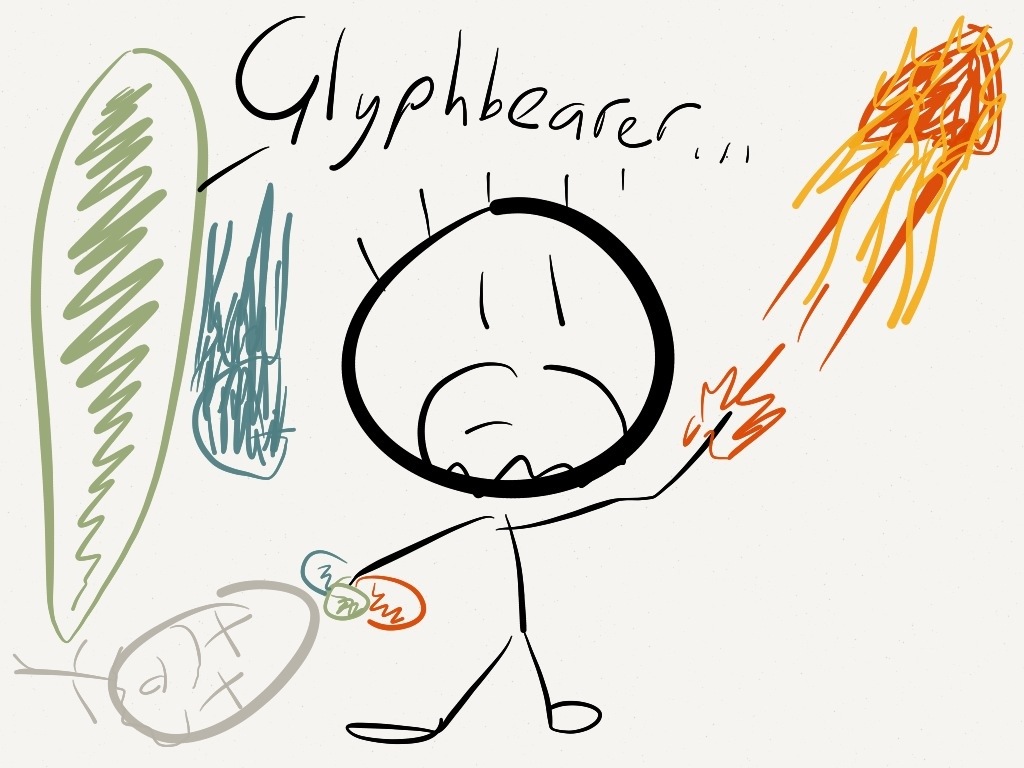
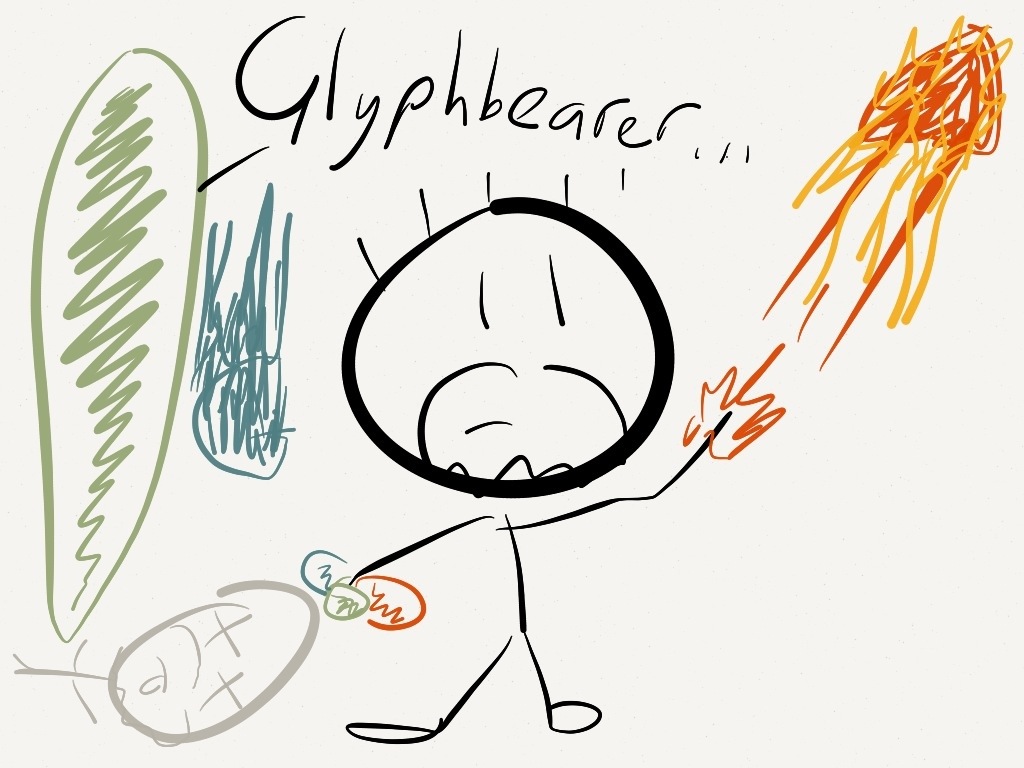
Glyphbearer, said a resonant voice inside his head.

"What?" said Yan aloud, feeling immediately foolish, for there was no-one to speak to.

Wherever he turned, the glyph seemed to float behind him, meaning he couldn't get a good look at it. He shrugged and started trudging onwards through the snow in what he hoped was the right direction to get back to civilisation.

Gravestones littered the path here and there, marking the spots where previous Glyphbearers had fallen. Inscribed upon them were warnings and advice — "don't forget your wooden platforms", "don't jump into big holes unaware of what lies ahead", "don't forget a light source". He didn't know who had left the gravestones, but he felt it wise to follow their instructions, particularly as they always seemed peculiarly relevant to the situations in which he found himself.

Before long, he came upon the mouth of a cave. Curiosity getting the better of him, he walked inside and began to investigate.

The cavern was filled with strange mushrooms, lumps of rock and solid veins of purest gemstone. Greedily running his hands over the veins and letting the energy of elemental fire flow through his fingers, he gathered up the gemstones only to discover the strange glyph sucking them inside itself. He had no idea where the tiny, strange, floating object was putting them, but he had little doubt that they were safe.

Making a note of where the entrance was in his mind, Yan proceeded deeper into the caverns. Before long, he came upon what looked like a long-abandoned spellgem workbench — and it still held a selection of gems. He picked them up, the glyph "pocketing" them once again, and felt a rush of mystical energy flowing through him. Concentrating intently, he summoned forth a boulder of solid rock, flinging it into the air. Then a fireball, scorching the chill air as it passed. Then a ball of lightning, electricity cracking and fizzling around him as he chuckled to himself.

Satisfied with his haul, he picked his way through the caverns, back in the direction of the entrance. But he was no longer alone; the robots had come. The endless mechanical hordes had been blighting humanity throughout this new ice age, and now they were here, too. Grimacing, Yan fired off a bolt of lightning at the approaching mech, watching satisfied as it exploded into pieces. But still they came, in greater numbers.

Before long, he was surrounded. White metal robots jabbed him with their spears, while their red brethren — superiors? he thought — assaulted him with flaming masses.

He could feel his life slipping away as the machines continued their relentless assault. He was in pain, and he knew at that instant that he was never going to find out what disaster had befallen the lands.

Blackness.

Nothingness.

Anger.

Taquesha Garrett opened her eyes and found herself standing in a snowfield. She had no idea how she had got here, and no idea what the strange floating object behind her was. She sensed great power emanating from it, however, and sensed it wanted to accompany her.

She started walking through the snowfield in what she hoped was the right direction. Passing a small cave entrance, she hesitated for a moment, feeling an inexplicable sense of dread and rage emanating from within, before picking up the pace and moving on a little faster.

Before long, she came to an open area. A loud "thumping" noise was disturbing the peace, and it wasn't hard to see the source — a giant robot roaming the landscape. Figuring it was too strong to challenge by herself, she carefully and stealthily found a route past it without attracting its attention, and shortly afterwards found herself in a sorry-looking village.

A long-haired man staggered up to her. "What have we done?" he cried. "We must put our trust in the Ilari!"

Taquesha frowned, and followed the man's frantic gesturing to what passed for the village square, where three enormous crystals stood, glowing softly in the moonlight. She walked up to them and immediately felt a sense of warmth, concern and trust emanating from them.

Glyphbearer, they said in her mind. You have come.

She said nothing — she had no idea what she might be able to converse with these mysterious entities about — but in a flash, she understood her mission, if not the circumstances which had led to it.

The Overlord would fall. And these shattered lands would know peace.

She didn't know what the words that had burned themselves into her brain knew until she left the village for the first time, only to discover a strange sight. In one direction, lush green unspoiled forest. Behind her, the glacial fields she had grown up with. To the north, barren desert. And to the south, what looked like a junkyard.

Her studies of magic had given her a good working knowledge of how to craft her own spellgems, so she resolved to equip herself with some stronger magics before taking on this mysterious "Overlord", wherever he might be.

For the next few days, she explored the local area, poking her head into long-abandoned buildings and looting them of any valuables within. There was no sign of any human life anywhere save for the sole survivor she had seen back at the village. What had happened here?

In the distance, violent wind and rainstorms buffeted the landscape. She knew that if only she were able to push the winds further away from the settlement, she'd be able to better judge her surroundings and her eventual goal.

The Ilari, she thought. Maybe they can help.

She returned to the village and rested, then asked the strange crystal ones if they could help her with the wind.

Seek the wisdom of an Aquaurgist, they replied. Taquesha frowned in response. The other survivor in the village didn't seem to be much for working with water — he was more of a wood specialist, judging by the number of logs he'd chopped since she'd been there. But where to find an honest-to-goodness Aquaurgist in this strange, shattered land?

It took time, but she eventually discovered a survivor holed up in an abandoned town. Promising to protect the frightened, bearded man from the monsters that terrified him so, she led him back to the village, where he began work with the Ilari immediately on summoning the materials needed for the construction of a wind shelter.

A short time later, Taquesha had braved the howling winds and acidic rain and successfully constructed the shelter. Its vast blades span majestically through the air, and the storm, as if frightened, backed away from it, far towards the horizon.

For a time, life was good. Taquesha spent her days gathering materials for the good of the village and to assist her with her spellgem research, but one day cruel Fate decided that her time was up.

She'd snuck into a run-down warehouse, feeling confident that she'd be able to find a stash of unspoiled supplies within. Inside, it was dark, and the air was thick with tension. She knew that she'd have to be very careful here, or the strange creatures lurking in the darkness would surely destroy her.

She tensely picked her way through the first few rooms of the building safely, but before long she'd attracted the attention of a strange, fiery beast. Its roaring, in turn, brought others like it running, and as her body was wracked with pain from the burning embers striking her skin, she found herself melancholy.

It wasn't supposed to end this way, she thought. I was supposed to defeat the Overlord and save these lands. I've done so much for them already, and this is how–

Darkness.

Silence.

Rage.

Phlegethon Gogola suddenly awoke in an unfamiliar village, his long, unkempt beard and hair blowing in the chill wind of the disconcerting icy surroundings. Behind him floated a strange, unfamiliar object that unnerved him somewhat. But at the same time, he suddenly found himself with a sense of purpose.

Glyphbearer, came a voice in his head. It is time for you to begin your adventure.

Phlegethon grunted to himself. Adventure was all very well and good, but he was damned cold. He wouldn't be going far unless he could find some way to protect himself from the elements…

#oneaday Day 836: Brandwatch

20120504-010317.jpgSo, at the time of writing, the No. 1 free iPad app and No. 2 free iPhone app is this game. A quiz. About logos.

This seems to be something of a craze at the moment, as it's far from the only title like this available in the App Store, and doubtless there are similar offerings on Android that I can't be arsed to look up right now.

This is what we're reduced to for entertainment now? Seeing how deep the brainwashing of advertising has burrowed into our skulls? I'd argue that scoring highly on one of these quizzes is not anything that we should particularly be proud of, as all it simply proves is that advertising has successfully drilled its way into your subconscious.

The same goes for anyone who uses the word "simples", describes anyone as being "so Money Supermarket" non-ironically or sings that bloody "Go Compare" advert. (If you do the latter, I will likely punch you in the face. If you do the "so Money Supermarket" one, whether or not you get punched in the face will depend entirely on how good your Patrick Stewart impression is.)

The counter-argument to this, of course, is that many of these brands, logos and slogans have transcended their original meanings and become pop culture phenomenons or memes in their own right. And to an extent that's true, but I can't shake off the feeling that these things have been forced into the public consciousness, while true phenomena and memes should grow organically, naturally and without marketing spend. In many cases, they do, of course — look at the Know Your Meme page for Katawa Shoujo or the astonishing popularity of My Little Pony among people that it wasn't originally intended for, for example. But I think we can all agree that anyone who takes an opportunity to sing the Go Compare song is a grade-A arsehole of the highest order.

Perhaps I'm just being grouchy. Or perhaps I'm just fed up with feeling like I can't escape advertising any more. It seems to encroach on my time more and more. It's all over the Internet. I get text messages from lawyers inviting me to seek compensation for the accident I supposedly had (funny, I don't remember it). I get phone calls from twats trying to sell me shit even though I'm registered with the TPS. (Note: this is the main reason I never answer my landline. Call my mobile if you need to speak with me.) I get people knocking on my door trying to sell me double glazing or get me to switch energy suppliers. It's plastered over certain games. It's smeared all over Facebook like festering shit. It encroaches on Twitter occasionally in the form of "Promoted Tweets" and "Promoted Users" — though these are, thankfully, easy to ignore. I even had to remove a Chrome extension yesterday because it was inserting an ad at the bottom of every page I viewed.

Ads allow things to be put out there for free, of course, and without them we'd be having to pay a lot more money for the things that we do, so I guess we should sort of be grateful for them. That said, it doesn't excuse the sleaziness of some ads, particularly on the Internet — take the large "Download" links on software sites, for example, or the "You Have 1 New Message/Virus/Picture" banners you get on mobile apps. Or indeed the "lose 3 tons of belly fat with one weird old tip" thing. (Spoilers: you probably won't, otherwise the world would be talking about it.)

You know what? Thinking about it, I'd actually be happy to pay for more things and have them advertising-free. I pay for Spotify premium and don't have ads. I'll happily pay to remove ads in iOS games I intend to play for more than five minutes. I pay for Netflix and get movies and TV shows without ad breaks. I'd even happily hand over some money to WordPress if it became a premium-only service, such is the excellent use I've got out of it for free over the years.

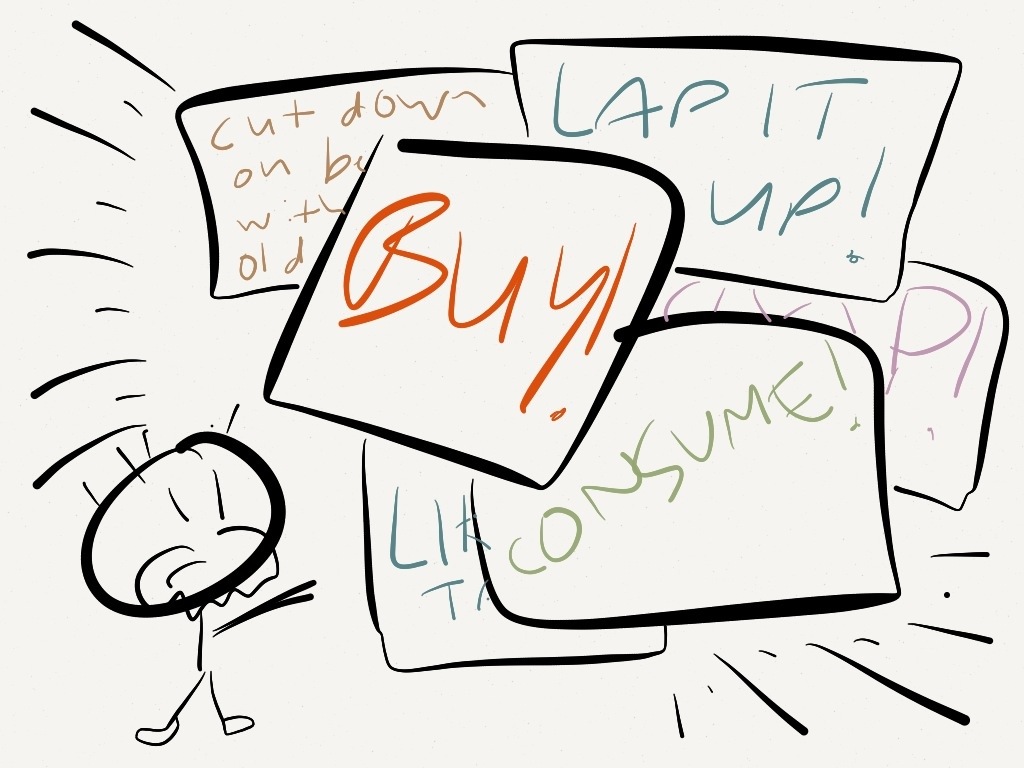
In short, provide me with a quality product and the means to not be battered around the face with people trying to sell me shit I don't want, and I'll happily hand over some money. Yell "Buy! Buy! Buy!" repeatedly at me with no means of respite and I will, yes, punch you in the face.

#oneaday Day 834: RUMOUR: Rumours 'Rumoured', Says Rumour-Monger

20120502-005626.jpg

If you've ever started a conversation with "I heard that…" and then gone on to explain exactly how you heard somewhere/from some guy in the pub/from "The Internet" that something awesome/awful is going to happen, then I urge you to think before you speak in future. Because if you continue with that sentence, you're simply feeding the rumour mill, and the rumour mill doesn't produce good things and help us make the Bread of Truth. It produces garbage and poo, and then squishes it all out into the world's most unpleasant pâté.

Tortured (and gross) metaphors aside, it's a fact that I wish more people — particularly in the press — would cotton on to.

Today, for example, saw news that Liberty X "might be" reforming for a new album and a tour. Firstly, I don't think anyone wants that, and secondly, the only evidence that such a reunion "might be" happening is the fact that they were photographed together outside the ITV studios and — get this — they were smiling. Stop the fucking presses.

There are a ton of journalism sectors that are particularly prone to this. Showbiz columns report who might be sleeping with whom. Sports columns report who might be moving to some other club for a disproportionately enormous amount of money. Music and arts columns report who might be working on what. And then, of course, there are the tech-related industries.

Anything related to Apple is accompanied by an inordinately huge amount of rumourmongering, for example. In the run-up to the company's announcement of the third-generation iPad, all sorts of nonsense was flying around. This ranged from suggestions that it might not have a Home button to the frankly astonishing assertion that the reason iOS apps had started having textures like leather and the like in the background was because the new iPad would have a haptic display — i.e. one where you could feel textures as well as see them.

The video games industry is far from immune, either. Rarely a week goes by without one outlet reporting on some rumour from a mysterious, anonymous source and the "story" then being picked up by every other news site on the Web as if it were fact. This particular rumour mill goes into overdrive as a hardware generation starts to wind down and people start wondering what the next generation of consoles might look like. Inevitably, the vast majority of stories turn out to be absolute bollocks, and on the rare occasions when an outlet or reporter writes something that turns out to be true, there's at least a day's worth of smug, self-satisfied cries of "Called it."

No you didn't. You were throwing darts blindfolded, and you happened to hit a lucky bulls-eye. Your other fifteen darts are embedded in the barman's testicles, the barmaid's left boob, the right ear of that hard-looking dude who drinks absinthe by the pint and the TV that was showing the Bolton v Wigan match. (Everyone is angry. I'd run, if I were you.)

So why do we persist on reporting on these festering sores on the very arse of journalism? Because they attract attention, particularly if they're controversial. If one site prints a story that Liberty X is reforming, or that the next Xbox will feature a system to prevent used games from working on it, or that the iPhone 5 really, totally, absolutely positively is coming out this time, then that will attract commenters like flies around shit. And that means page hits, advertising revenue and the little graphs that make the men in suits happy moving in an upward direction. Who cares if it's absolute nonsense dreamed up by someone who cleans the toilets at Microsoft? Print it!

I make a point of not reading any stories that start with the prefix "RUMOUR:" now. And should I ever find myself back on the news desk for a popular gaming website, I will most certainly do everything in my power to avoid reporting on such nonsense — unless some actual investigation turns up something interesting, of course. But blindly parroting another site's "anonymous source"? No. Just no.

So, then, I reiterate: think before you speak/write/publish. Because rumours are rarely helpful. Remember that time it spread around the whole school year that you'd shat your pants when in fact you'd just sat in some mud?

Yeah. That.

#oneaday Day 831: Another Year

20120429-015818.jpg

So, as of the time of writing, I've just turned thirty-one years old. As becomes increasingly common as the years pass by, it doesn't feel any different to being thirty.

I was mostly prepped for the supposed horror of turning thirty by my parents. My father in particular apparently didn't take to turning thirty all that well, so I was expecting a semi-to-fully traumatic experience. It actually turned out to be a rather pleasant experience, as I was whisked off on a weekend to London by my girlfriend Andie, and then had the chance to see a bunch of friends for curry and good times.

A lot has happened in the space of the last year. Having been forced to move back home with my parents due to my shattered personal life from the year prior, in August I moved back out again. At the time I was working for GamePro and was earning a decent wage from it, too, so Andie (who was also living with her mother at the time) and I decided that we were both in a situation where we could get a house and move in together. So we did. And that was good.

Since that time, GamePro collapsed — in December of last year, to be specific. I was very sad about this, as I felt I'd found my "calling" — I did a great job of posting the daily news there, and my hard work was appreciated by the people I was working for. I was grateful for the opportunity, grateful to be accepted and appreciated in what I was doing, and grateful to, for the first time in my life, have a job that I actually enjoyed.

I was half-expecting the collapse of GamePro to signal another disastrous collapse in my own personal circumstances. At the time, I didn't have enough money saved up to survive for very long and still be able to pay my tax bill at the beginning of next year. I started frantically applying for jobs and finding the same situation I had done prior to starting at GamePro — no-one was interested in me. I don't know whether it was my lack of "relevant" qualifications for certain sectors, my wide-ranging experience that covered both teaching and writing positions, or something else. Whatever it was, it carried a significant risk of making me feel like absolute crap again.

Fortunately, I found myself with a new job before long, and I'm enjoying it. I'm constantly learning new stuff, too, which is a big bonus. My writing may not be quite so much in the "mainstream" public eye any more, but I'm find with that; it means that I have to deal with far fewer hormonal teenagers who can't spell, punctuate or formulate an argument. I also haven't had any accusations of being a paedophile since starting my new job, either, which is always nice.

What else? I've bought a new computer, bought an Android tablet, discovered My Little Pony, played all three of the "Operation Rainfall" role-playing games on the Wii, finally started playing Nier, started a few creative projects, started, stopped, started, stopped and started again at the gym lots of times… the list goes on. When put that way, it probably doesn't sound all that interesting, really. But I can't say it's been a shitty year, unlike certain previous years I could mention. On the whole, it's been a reasonably good year and hopefully things will just continue to improve.

Now it's time to go to bed. I've had friends over playing TrackMania, Dungeon Defenders, 7 Wonders and Catan this evening, with more arriving tomorrow for further board game fun and frolics.

See you on my "proper" birthday.

#oneaday Day 826: No Kind of Atmosphere

20120423-235558.jpg

I've been watching Red Dwarf on Netflix recently. In the process I've discovered that there's actually a hell of a lot of that series that I'd never seen before, so I've been delighted to (re)discover it.

Red Dwarf was one of those series that That One Guy At University Who Endlessly Quoted Things endlessly quoted. Well, perhaps not endlessly — sometimes he was quoting Blackadder. I'm only just now, some ten years later, coming around to the idea that I can actually watch those shows again without hearing That One Guy At University Who Endlessly Quoted Things' voice in my head.

That's beside the point though. And the point is that Red Dwarf is still an excellent series, for more reasons than one.

First up, it's quite simply an excellent comedy series. The small cast of exaggerated characters makes for some excellent comic situations. The fact that all of the characters have at least one major flaw in their personalities is what makes them entertaining, too — Lister is arguably the closest we get to a "straight man" in the show, but even he's flawed; he's gross, he's selfish and his reliance on curry as his primary form of sustenance doubtless makes him rather unpleasant to live with. Rimmer, meanwhile, is by turns arrogant and crippled by self-doubt; The Cat is vain to a fault; and Kryten has difficulty with acting independently when it conflicts with his programming. Put these dysfunctional characters together and you have a recipe for plenty of comic conflict.

The less-considered side of the show is that it's actually a surprisingly decent sci-fi show, too. While it doesn't have anywhere near the budget of what we might be used to from more recent titles — or even shows like Star Trek: The Next Generation, which ran at a similar time — it manages to convey a convincing feeling of what Life Is Like In The Future. The show doesn't batter the audience over the head with lengthy descriptions of what things do or how they work; rather, it simply drops things into conversation that make it clear that we're absolutely not on 21st century Earth any more.

Part of this comes from the show's use of language. Its use of terms like "smeg", "gimboid", "goit" and numerous other faux-expletives was initially to get around the fact that it wasn't okay to say certain things on television, but over time these words became part of the show's identity. Numerous other shows have taken a similar approach since — Firefly features Chinese swearing, for example, while Battlestar Galactica features the multi-purpose invective "frak" at regular intervals. (It's not clear how much Red Dwarf's use of fake swear words influenced these titles, if at all.) Initially, the presence of these words is jarring as you wonder what they mean and why they're not simply using regular expletives. But over time, as you become invested in the worlds created by the writers, you begin to let these words wash over you and enter your vocabulary even though, in most cases, they're completely made up, portmanteau words or "loan words" from another language.

Ultimately, Red Dwarf succeeds due to the fact it never tries to get ideas above its station. It knows that it's a low-budget sci-fi comedy with a small cast, and rarely attempts to deviate too much from that formula. Some may argue that the later seasons do deviate from this formula and are consequently weaker as a result, but having not (re)watched them yet, I'm not going to comment on that right now. One thing the show doesn't do, however, is rest on its laurels; each season has its own distinctive identity, and it's quite fascinating to see the changes it goes through as the years pass by and the budget increases.

It's still great, then, in short, and if you've never had the pleasure of watching it, then you should check it out. It's all on Netflix (in the UK, anyway), so be sure to check it out if you're a member.

#oneaday Day 825: Bull, Horns, That Sort of Thing

20120422-235753.jpg

The Black Dog of depression has been rearing its ugly head a bit again recently for various reasons, and I'm sick of it. While there's not necessarily much I can do about it showing up and being a pain in the arse, I can at least try and work on some things to make me feel a bit better about myself.

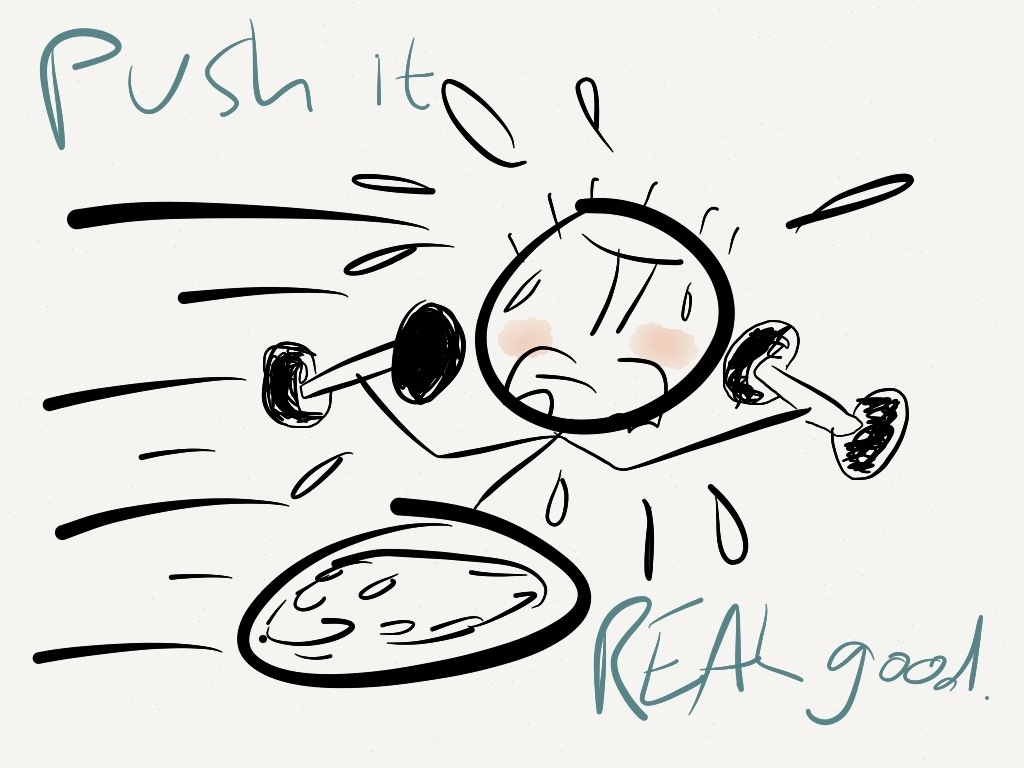
For starters, getting upset at one's own reflection isn't particularly great news, and it's something that I can at least attempt to do something about. I have been fitness-ing off and on for some time now, but I figure it's Time To Get Serious. That means I'm going to hit the gym every morning before I start my working day rather than leaving it until last thing in the evening when it's easy to go "nah, fuck it". (Of course, it's easy to stay in bed and say "nah, fuck it" also, but I'm going to attempt to get out of this habit before it starts.) I won't necessarily be doing everything every day, but I'm going to attempt to get at least an hour of cardio stuff in per day at the very least. This will likely mostly be done on the exercise bikes, where I can sit back and play Final Fantasy VI on my fancy-pants tablet while I'm sweating. At other times, I'll use the crosstrainers and whack on a podcast — the Exploding Barrel Podcast from my good buddies Mike and AJ Minotti is always a favourite — or some inspirational music of some description.

As motivation and progress tracking, I'm going to be using Fitocracy, which I've posted about before here. I also considered resurrecting my Jedi Health Kick Tumblr from a while back, but given that Fitocracy provides the ability to post lengthy, blog-like status updates and has its own built-in community features, I'm going to stick with that. As well as tracking my workouts, I'm going to write a short post each day detailing how it went, how I'm feeling and what I'm aiming for. I'm also going to use Fitocracy's excellent Quests feature to take on some challenges that I might not have otherwise thought of — this will help prevent complacency if I'm making a "game" out of it all.

I'd also like to eat better. I think I eat when I get depressed, and I get depressed a fair bit, which doesn't help matters. I'd rather kick that particular habit in the face if possible — or at the very least change it so I munch on, say, carrot sticks instead of ALL THE BISCUITS, but that's the sort of thing that will take plenty of teeth-clenching willpower to resolve. I have faith in my own ability to do this, however — if there's one thing I'm good at it's clenching my teeth and stubbornly resisting things. Sainsbury's cream cakes are my most formidable adversary to date, however, so it remains to be seen whether I'll be able to defeat them using the power of my clenched teeth (and/or buttocks) alone.

So that's the plan. We'll see how long I'm able to stick with it. I'm saying this publicly so I have a bit more pressure to follow through on it. If anyone would care to join me and work out alongside me or just offer some words of encouragement, come cheer me on over on Fitocracy — it's free to sign up and there's a nifty companion iPhone app too.

#oneaday Day 823: Information Diet

20120421-013424.jpg

Know what I hate? Chavs. Know what else? Teaching. Know what else? We could be here a while. I'll tell you. Press embargoes.

I get why they happen, obviously — publishers and their PR people want to ensure that coverage of something is coordinated nicely so that everyone gets suitably whipped up into a frenzy all at the same time. But there's an unfortunate side-effect if you happen to, say, follow a bunch of different video games outlets at the time a major announcement happens: everyone bellows the same fucking thing at the exact same fucking time.

It's happening more and more nowadays, too. The most notable examples that stick in my head in recent memory are Assassin's Creed III and Borderlands 2, both titles that I have a passing interest in but find myself becoming curiously resistant to the more and more I get battered in the face with the same information from slightly different angles.

I think, on the whole, this is the "problem" I have been having with mainstream gaming overall. There's too much information out there — too much coverage, too many "behind the scenes" videos, too many "exclusive" interviews, too many press releases announcing a single screenshot (yes, that is a real thing I received today and I have no shame in naming Square Enix as the perpetrator). After a while, you become completely saturated with information about a product and subsequently have absolutely no inclination to want to touch it, ever. This was a big part of why I didn't want to play Mass Effect 3, for example — EA's appalling behaviour was just the straw that broke the camel's back, really.

I feel for my friends who work in games PR for "B-tier" games, too. It's hard enough to get a title like, say, Risen 2 noticed at the best of times but when you're competing with everyone beating themselves into an orgasmic and/or angry frenzy over Mass Effect 3, there's little hope for your title outside of groups of people like me who have forsaken the mainstream in favour of enjoying less heavily marketed titles.

Conversely, the games I have been playing and enjoying are the ones where information has been trickling out slowly, usually straight from the developers mouths without dribbling through the PR sieve. Take the "Operation Rainfall" RPGs Xenoblade Chronicles, The Last Story and Pandora's Tower (which I'm currently playing), for example — these received very little in the way of press attention despite being fantastic games. The aforementioned Operation Rainfall, a grassroots campaign to get these three excellent games localised and released in Europe and the US, received plenty of press, but information on the games themselves was conspicuously absent. As a result, I was able to go into all three of them pretty much blind and have a fantastic experience in the process — a big part of what made all of them great is the sense of discovery inherent in all of them. That just doesn't happen if you've been smothered in information for the six months leading up to the game's release.

As a result of all this, I've come to a decision, and if you're feeling the same way as me, I recommend you follow it too.

Cut back. Cut out the crap. If you follow a buttload of games journalists and outlets on Twitter, unfollow them. If you want some gaming news, pick one outlet and keep it on your follow list, but chances are if you follow lots of gaming fans, someone will retweet the news as it happens anyway. Otherwise, go seek out the news when it's convenient for you. Check the sites when you feel like it. Subscribe to their RSS feeds. Use Google Currents or Flipboard to receive information in an easily-digestible format. Receive information on your terms, not that of a carefully-crafted PR campaign.

This doesn't have to apply just to games — it can apply to pretty much anything that suffers from the problems described above. Film, TV, celebrity news, business, tech… anything, really.

I'm going to give this a try. It will doubtless initially feel somewhat weird to not see some familiar faces and logos in my Twitter timeline, but I have a strange feeling that I'll be a lot happier, less frustrated and less cynical as a result. Check back with me in a week or two and we'll see.

(If you're one of the people I do happen to unfollow, it's nothing personal. You just might want to consider getting separate professional and personal accounts!)

#oneaday Day 822: Xoom, Xoom, Xoom, Xoom, I Want You In My Room

20120420-012830.jpg

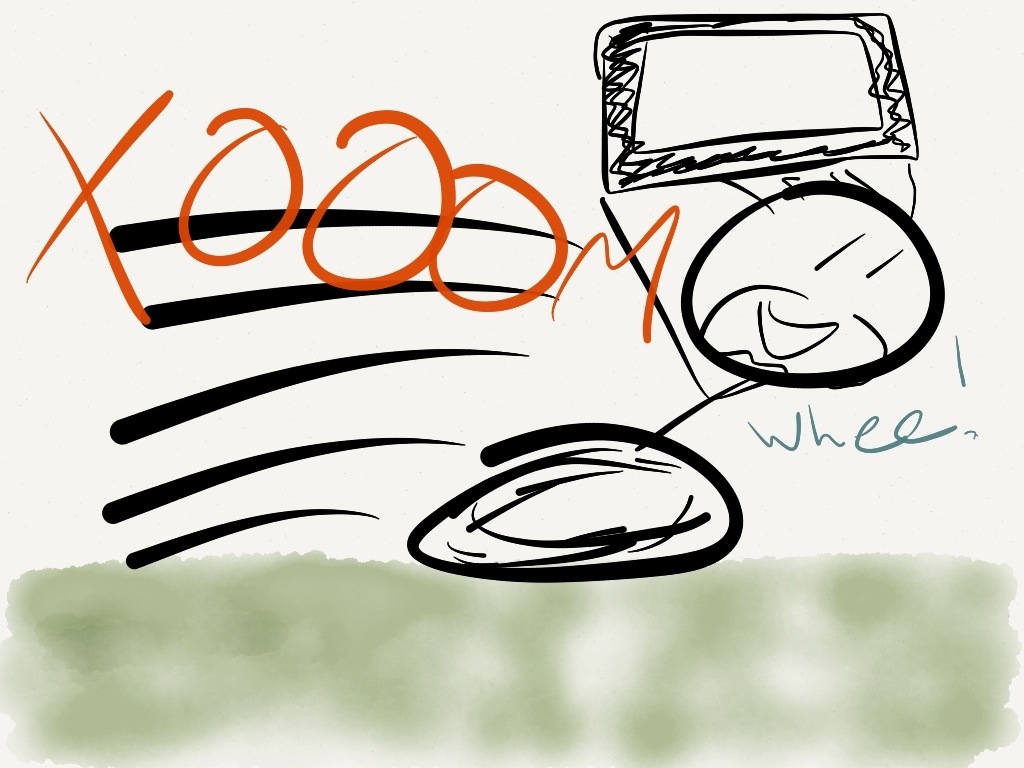
I've been spending quite a lot of time with my shiny (well, rather fingerprinty now) new Motorola Xoom since it arrived the other day, and I have to say I'm a big fan. While Android seems to be a little more clunky than iOS, particularly prone to slowing down for no apparent reason on occasion, I'm appreciating the things it does do. Having a fully-customisable homescreen is very pleasant, certainly, and the cool quasi-3D effect it does with the wallpaper is pretty neat.

What's becoming abundantly clear to me as I continue to use it, however, is that using it simply feels very different to the iPad. It might be the fact it's designed to be used in landscape as opposed to the iPad's default portrait orientation; it might be the unique array of apps on offer on both devices; it might be a combination of interface elements. I'm not sure exactly what it is, but I can say that both devices certainly have a place in my life at this moment for different reasons — and also that getting the Xoom has caused my desire for a 3rd-gen iPad to drop to zero.

If anything, the Xoom seems particularly suited for more "serious" tasks (and by "serious" I mean "not games") — I'm particularly fond of using it for Twitter, chat, email and that sort of thing. Google Currents has become my go-to app for reading the daily news. The built-in "share" functionality, which allows you to easily send stuff from one app to another easily, is pretty neat. The keyboard I have installed, which lets you type by drawing wiggly lines rather than tapping keys, makes me feel like a wizard, particularly with the sparkly particle pattern that comes from aforementioned wiggly pattern. And the inclusion of a USB port (albeit a micro-USB one that requires an adapter for pretty much every peripheral ever, making one wonder exactly why they didn't just put a regular USB port on it) means that it's possible to do things like hook up a keyboard and practically use the damn thing as a sort of laptop.

A big draw for me was the thriving emulation scene on Android, however. Within a few short moments of getting the device up and running I had downloaded NES, SNES, Mega Drive and arcade machine emulators and a few minutes later had successfully transferred my collection of ROM files of dubious origin. What I have now is a portable gaming device that plays pretty much any NES, SNES or Mega Drive game, and a whole heap of arcade games.

This… is awesome. I hadn't anticipated quite how awesome this was going to be, but the ability to play Final Fantasy VI while on an exercise bike at the gym, or Elevator Action while on the toilet, or Golden Axe while waiting for the kettle to boil… well… yes. It's awesome. The fact you can hook up a USB controller (or, for that matter, Wii Remote with Classic Controller via Bluetooth) and play these games as they were meant to be played — with actual buttons rather than floaty, crappy touchscreen controls — is a happy bonus. The fact you can use floaty, crappy touchscreen controls at times when having a controller is not convenient or socially acceptable is also most welcome.

I'm certainly not going to become one of those gits who bangs on about how much better Android is than iOS because there are things that both do far, far better than the other. But I've been very pleasantly surprised by my first experience with an Android device, and the fact it's turned out to be a portable retro-gaming powerhouse is just a happy bonus, really. Now I can finally get around to beating all the Final Fantasy games that are still on my "to-do" list. (V and VI, as it happens. Also Chrono Trigger, which may as well be a Final Fantasy game.) And, as previously mentioned, playing Elevator Action on the toilet.

Now, if you'll excuse me…

#oneaday Day 821: There are Bigger Problems in the World, Like Your Face

20120419-014338.jpg

Second only to the patented "Everyone Is So Entitled These Days And Should Just Shut Up" argument-defuser is the ever-faithful "Everyone Should Realise That There Are Bigger Problems In The World And Should Just Shut Up" conversation-closer.

I shan't get into the former here — everyone has talked it to death and should just shut up — but I feel I should address the latter, since I saw it come up on Twitter earlier today. (And, if you're reading this and you know that you used it, fear not — this isn't a personal attack on you by any means, just my own thoughts on that particular argument.)

The trouble with the "Everyone Should Realise That There Are Bigger Problems In The World And Should Just Shut Up" argument (hereafter referred to as ESRTTABPITWASJSU) is that it assumes that people who are commenting on or complaining about something are equating their personal reaction to something that is "close" or "important" to them with something that is unquestionably a Big Problem For The World.

This is not the case at all. Recent examples where the ESRTTABPITWASJSU argument has been applied include independent game developer Phil Fish's ill-advised admonishment of the entire Japanese game development community in a very public place (and subsequent beratement of those who criticised him on Twitter, culminating with him leaving the social network altogether); and public reaction to the Mass Effect 3 ending. I have no desire to beat those particular drums in any great detail for now, so let's put the specifics aside for a moment.

Yes. There are bigger problems in the world than both of those things. There are people losing their homes and livelihoods to the economic crisis. There are people in the world with not enough food or water. There are places in the world where diseases go unchecked. There are countries that are ruled by people with only their own interests at heart, not those of their people. There are wars being fought in the name of… what? And there are people who get so passionate about their religious beliefs that they blow themselves up in the name of their god, usually killing many other people in the process.

These are big problems. They are fucked up, massive, humongous problems that we, as individuals, can do very little about. Sure, we can throw our money at charities and, if we're feeling particularly activist-y, attempt to take some sort of action against. But realistically (or pessimistically, if you prefer) there is very little that Josephine McAveragepants can do about these things since she does not run a government and/or army and/or bank. The problems become so massive that they take on an unreal quality — they often feel like they take place in a parallel reality distant from our own.

This is why people prefer to turn their attentions to problems they feel they can solve, or that they feel they can at least have an impact on. They have every right to do that. They may often have selfish interests at heart, but recent examples of organised action aimed at these relatively minor issues have proven that it's far from being isolated individuals shouting and screaming about Games for Windows Live in Dark Souls or whether the Mass Effect 3 ending constituted false advertising (apparently, according to one Better Business Bureau blogger anyway, it does, believe it or not) — these are groups of people who are prepared to stand up and be counted in order to tackle problems they feel like they can face.

It's an idealistic, utopian vision to believe that people (read: the Internet) will rise up together and do something about the bigger problems in the world than the ones they have successfully tackled to date. Maybe it will happen one day. Maybe these small "victories" will give some people the confidence to try something bigger, a little piece at a time. Protesting, say, a war is a bigger deal than signing a petition against the ending for a video game. Some people may be scared to jump in at the deep end, particularly with the apparent risk to life and limb frequently presented by the media, so they take the "safe option". They feel like their voice is being heard, but relating to an issue which is smaller, closer, more relatable.

The key thing, though, is that none of these people who are sweating the small stuff are saying that the issues they feel strongly about are more important than the Bad Shit Happening Everywhere Else In The World.

No-one is equating those things except, ironically, in many cases, those people making use of the ESRTTABPITWASJSU argument.