 Some of you may not be aware that I've been writing regular pieces on up-and-coming social games for Inside Social Games. A number of things have become apparent during my ongoing whistle-stop tour of the social gaming space. Firstly, Facebook games are getting better, and secondly, there's still a lot of work to do.
Here's a few things that, to my mind, would improve the Facebook gaming experience immensely. I'm not a professional analyst, nor have I done extensive research into online usage habits, so I imagine a man with a beard bigger than mine will probably be able to counter each and every one of these arguments, but anyway. This is my opinion — and some games do one or more of these already, so fair play to them, I say.
Stop copying each other.
Imitation may be the sincerest form of flattery, but when you're making a game that is mechanically and aesthetically identical to a competitor's product, you're not giving a potential player a reason to play your game. Differentiate yourself — and not just by making the game in a different setting. Ripping off two distinct but similar titles does not count either, so if you make a city-building game where you can farm crops, think of something better. Little Cave Hero is a good example — while the city-building mechanics are similar to a million other titles out there, there are extra bits, such as your "factory" structures producing crap that either you or a friend have to clean up, user-generated content, and then the meat of the game — puzzle-based mine exploration.
Stop insisting I "share" everything.
The number one complaint people have about Facebook games is when a player spams their wall (and, in worst cases, other people's walls) with bollocks about what they've just "achieved". The reason for this is that in the vast majority of social games, completing any mundane task pops up a huge window inviting you to share your "achievement" with friends. In some more extreme cases, the "Share" button is much more obvious than the "No thanks, kindly piss off" button.
Sure, there's a viral marketing thing at work here — but at least make it optional for people who just want to play the game. Add a Share button, sure, but don't make it quite so in-your-face. Better yet, add the option for players to switch off notifications like this altogether.
Stop insisting I "give you a five star review".
By all means solicit user feedback. But to be perfectly honest, many average Facebook users either aren't that bright, aren't very computer literate or — in some hopeless cases — are neither. As a result, many of them are apparently incapable of doing anything other than what is written in front of them. Invite them to "write an honest review" rather than "give a five star review" and you might get some honest, if badly-spelled, feedback. Invite them to "give a five star review" and you'll get lots of five-star reviews, very often with no feedback whatsoever. This not only makes Facebook's app rating system utterly worthless, it also removes a potential way for players to get their voices heard.
If you want me to Like your page, post something worth following and commenting on.
Screenshots of your game are not interesting — I've played it. I know what it looks like. Attempts to engage with the community are interesting. Take a vote on what new quest you should add next, or what character you'd like to see more of. Let the community play a part in the development of the game.
Stop claiming you're the "first/best/most [something] on Facebook".
If everyone says it — and they do — no-one believes it. If your game's good, word will spread, both via the press and word of mouth. The elusive "core gamer" market isn't going to flock to your Facebook game just because you say it's built for core gamers.
Give my friends something to do.
Yes, being able to look at a friend's town is cool. But it's ultimately pretty meaningless if I can't interact with anything there. Let us do stuff together. Provide some multiplayer content, or rebalance the single player content for people to play together — perhaps even simultaneously! Diablo did this years ago.
My friends aren't going to want to play or add me as a neighbour if there's no real reason to do so.
Don't break the game with your premium items.
By all means monetize your game — you made it, so you deserve to earn something from it. But don't make paid-for items into "win buttons". Also, don't allow people to buy their way out of quest objectives. Allow players who pay to make quicker progress — perhaps increase their experience gain — or customize their character/city/world to a greater degree, but don't undermine the game mechanics.
Offer a subscription.
Someone who plays your game regularly will be quite happy to spend a fiver a month to get access to additional features or make quicker progress. Microtransactions can mount up easily without people noticing — good for business, not great for ethics.
Let me fail.
If I fuck something up, give me a consequence. Life isn't all about happy-happy-joy-joy. Sometimes you get things wrong, in which case I should have some sort of penalty more severe than "wait five minutes and try again". In city-building games, don't let me move my buildings. If I built something in the wrong place or planned my city ineffectively, punish me by making me demolish my hard-earned building and spending the time and money to construct it again.
Make the tutorial optional.
Some Facebook gamers need step-by-step help on how to get started. Others have played games — either Facebook or otherwise — before and already know how it works. Offer the opportunity to skip the tutorial — especially if it's a long and incredibly boring one.
Provide a reference manual.
Perhaps I've forgotten what one of your beautifully-designed but obtuse icons does. Perhaps I can't remember how to do something. Let me look it up.
Let me start again.
Maybe I called my character the wrong thing. Maybe I hate my city and want to build a new one. Let me wipe everything out and start afresh.
Try a different look.
The vector-graphics Farmville look is old hat. Try a different look. This is one of those few instances where it's actually desirable to have something that's a bit more dark and gritty than normal. If your Facebook game is based on an established franchise, do try and make it look like other entries in the same franchise. You don't have to "kiddy it up" for Facebook — grown-ups use Facebook, too.
Ditch game mechanics that don't belong in a particular genre.
A game about completing wordsearches and crosswords has no place for an experience system. Allow players to unlock new challenges via their progress, not via arbitrarily-issued experience points. Similarly, ditch the Energy system, as it often leads to players being stuck halfway through something and then forgetting what they were doing when they come back to it. If you must control how much people play (and monetize the ability to play more) then find a different way that allows players to complete something before they get locked out.
Provide a meaningful mobile experience.
Create, at the very least, an iPhone and Android-compatible web experience. Ideally, you'd create an app for both iPhone and Android that allows players to participate in your game when they're on the go. Don't make a mobile version of your game that has nothing to do with the Facebook version!
Polish your game.
Proofread your text before you release to the public. Spelling mistakes and grammatical errors look unprofessional. Make sure the game works and fix it promptly if it doesn't. Little details like this can make the difference between a popular game and a laughing-stock.
Have some character.
Games are fun! Stop being so po-faced and get a proper writer to inject a bit of wit into your dialogue. If people are made to smile or even laugh by your game — or even be scared or upset by it — then they're more likely to return for further emotional experiences. If the whole thing is very businesslike and dull, despite a cartoonish appearance, then it's not going to hold anyone's interest.
There we go. Some free advice for any of you developing or considering Facebook game development. As I say, I mention all these things with the caveat that I can't develop games as I don't have any programming experience. Many of these games are undoubtedly impressive technical, creative achievements. But for them to be taken more seriously by some parts of the community, changes need to be made — but making those changes will not only please those who feel turned off by Facebook games, it'll also present additional revenue streams for the developers and publishers in question. Everyone's a winner.
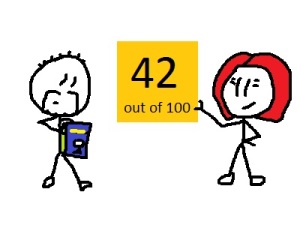 I'm pretty sure I already knew this some time ago, but I've come to the not-so-startling conclusion recently that I'm the one buying the crap games and listening to terrible music and enjoying awful films. It's not a conscious decision to be contrary, but I do find myself more willing than some to give creative works that have been somewhat maligned the benefit of the doubt — and more often than not actually end up enjoying them.
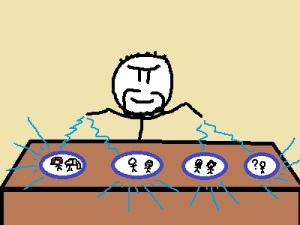 So I've been using the service for a few days now and the fact I've made it a Pinned Tab in Chrome should tell you how much I like it. I think it's got a huge amount of potential, and I sincerely hope that it takes off. I also sincerely hope it doesn't just morph into an identikit Facebook — but hopefully that won't happen, because although Google is gradually spreading itself over all aspects of the web, they haven't (yet) done anything that particularly offends me from a privacy or usability perspective. In fact, every change they've made to their services while I've been a user has been for the better.
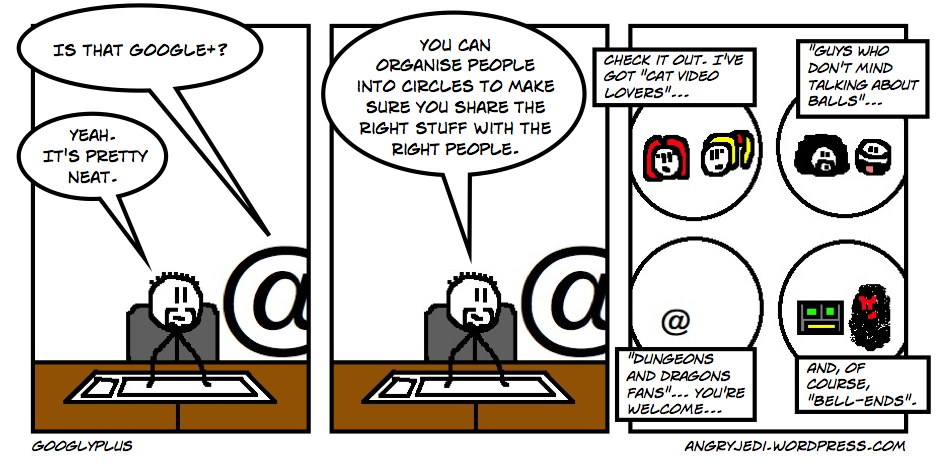 You can't say I don't provide you with variety here, dear readers. Just yesterday I was talking about underage boys simulating anal sex in a school library in order to avoid doing work, and today I'm telling you about what may or may not be the next big thing in social networking: Google+, Google Plus, Googlyplus, G+ or whatever the hell you want to call it.
 So in an attempt to better understand my audience, such as you are, I've been delving once again into the top search terms for my blog. I'm going to take the top ten search terms from the last year and address each and every one of them individually so that hopefully if you've been in attendance on this page at some point in the past and found it to be wanting for further information on the topic you searched for, you'll feel better and more satisfied in your choice of Google links that you clicked on.
 (Click to embiggen. Some NSFW. Some NSF anybody. Apparently this character is called "optimized GIF dude" and is something of a meme. I'd never heard of him, actually.)
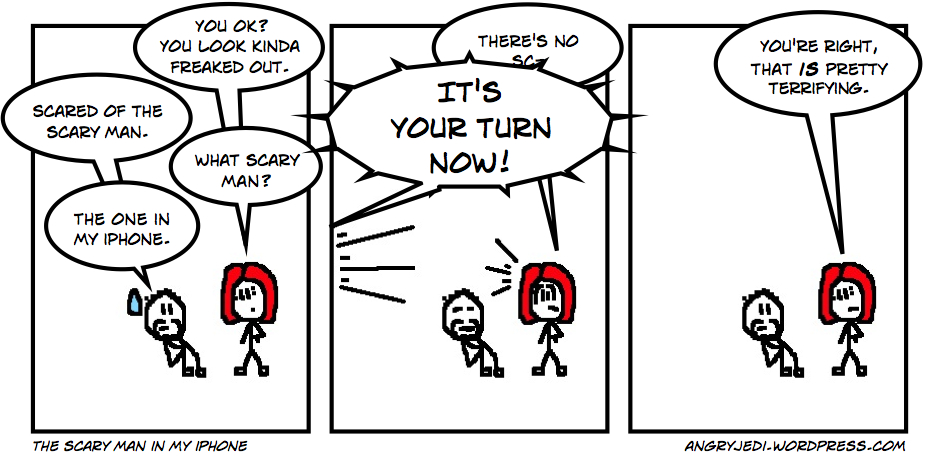 I've discovered the most terrifying thing in the universe: the man who very politely, but incredibly loudly, tells you "It's your turn now!" on the iPhone version of Carcassonne. It's terrifying because hearing someone's voice when you're not expecting to — such as, say, when you're trying to get to sleep — is a frightening thing. Quite why a murderer or rapist would say "It's your turn now!" is… no, hang on, that sort of works, doesn't it? Shit.
 As a social network, Facebook is arguably becoming less meaningful — that is, from the perspective of encouraging meaningful interactions with one another. This, I feel, is in part due to how cluttered it is these days — cluttered with people, cluttered with businesses, cluttered with applications. I long for the simplicity of the site as it was when I first joined it, when it didn't even have a chat system and friend requests required you to indicate how you knew the person — kind of what LinkedIn does nowadays, only with people actually talking to each other instead of using phrases like "blueskying" and "monetization".
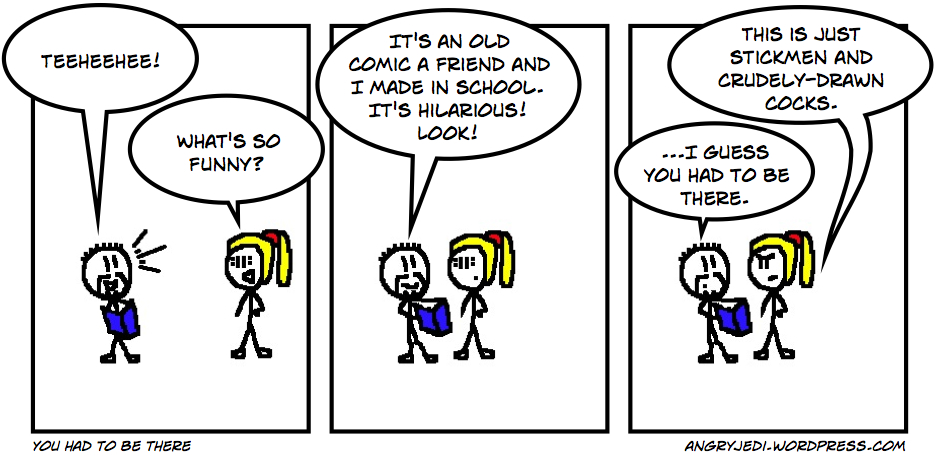 It's ironic, really, that one of the best things about living in The Future is the ability to recapture the past at will. While we may not have managed to nail the whole time travel thing just yet, despite our speculative fiction authors coming up with a number of potential solutions, technology provides the next best thing, which is to revive things from our past in our present.
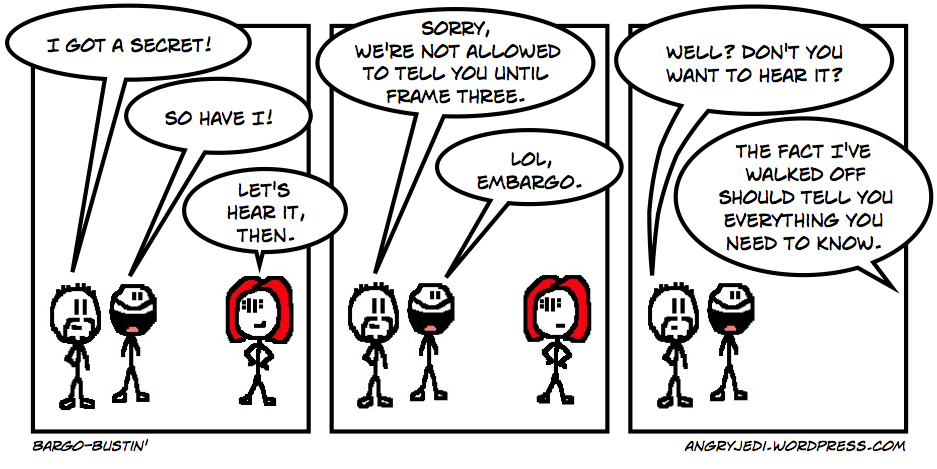 This won't be news to any of you, but sometimes in the games industry, you find out things and you're not allowed to talk about them. The technical terminology for this is an "NDA" or non-disclosure agreement, or an embargo preventing publication of something until a particular time.