2417: The Steam Shmup Sale

0417_001

There's a sale running on Steam right now, centred around shoot 'em ups in the classic mould. You can see the full list here, but here are a few selections that I can personally recommend:

ESCHATOS

ss_fd0689c7133c105e308cd609dcac133311de6457

The follow-up to Judgement Silversword (which is also worth a go, and available in a bundle with ESCHATOS) is a Raiden-style shoot 'em up (i.e. non-bullet hell) that unfolds over the course of several stages, taking you from an Earth-like planet, into space and finally into the bowels of an alien world. It's a spectacular, thrilling journey, presented in uncomplicated but nonetheless impressive 3D polygonal visuals but playing from a top-down perspective.

ESCHATOS has a couple of ways to play depending on how complex you like your shmups. For my money, the simpler mode is actually a more enjoyable way to play — this doesn't involve any powering up of your weapons and simply requires that you defeat complete waves of enemies without missing any to build up your score multiplier. The higher the difficulty you play on, the higher the multiplier can go (and the faster it rises), so for the highest scores you need to take on the toughest challenges the game offers.

ESCHATOS has a fantastic soundtrack, fluid graphics with some wonderful setpieces, and gameplay to die for. If you're a shmup fan, this should without question be a part of your collection.

Deathsmiles

ss_fd8137dfb622672834fb6bae3dda6b75c92afcc9

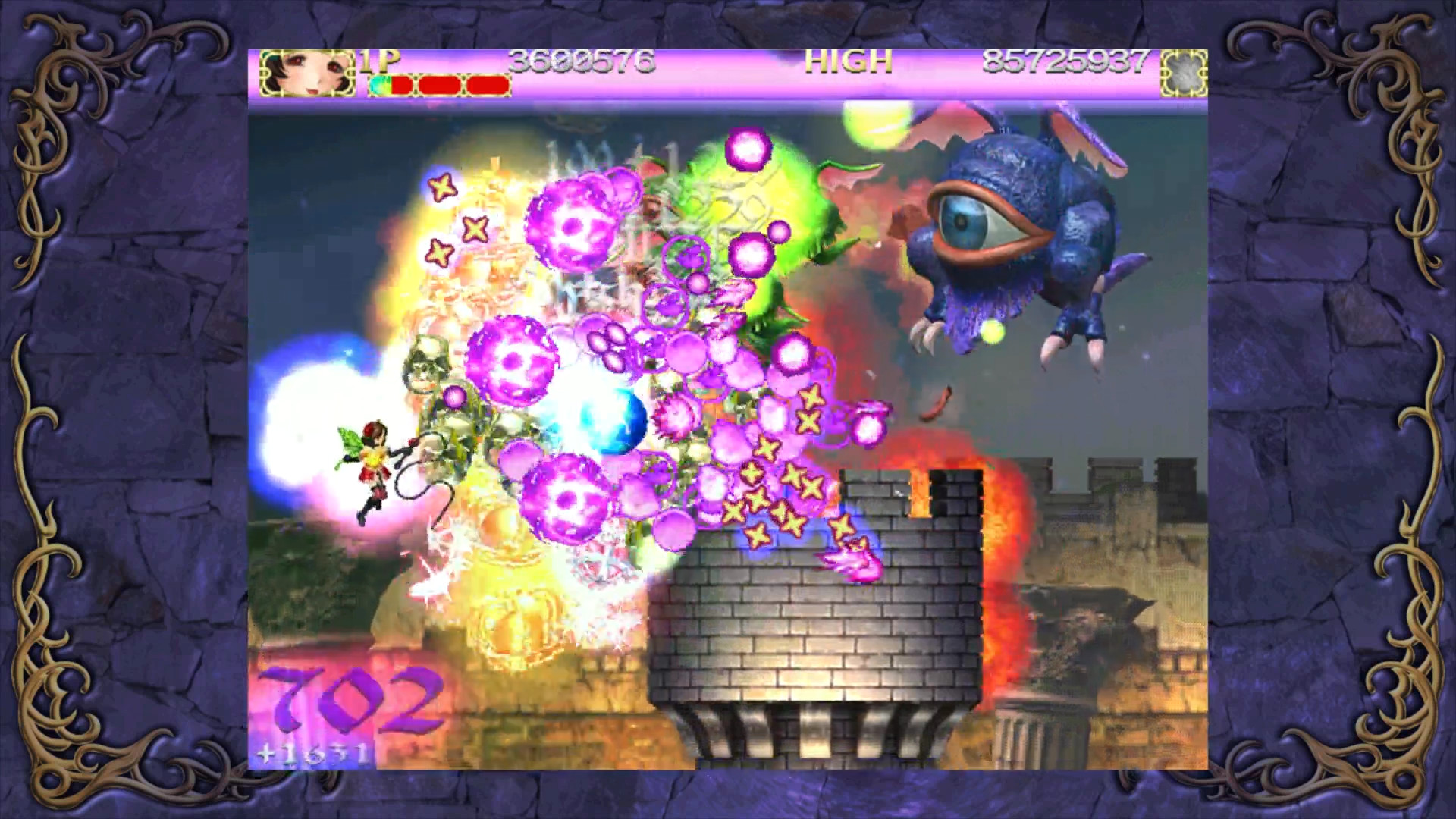
Regarded as one of Cave's more accessible bullet-hell shooters, Deathsmiles is a horizontally scrolling affair for one or two players where you take on the role of one (or two) of several different goth loli chicks, each of whom handle slightly differently. You can shoot in both directions using either a rapid-fire shot, a charged beam or a lock-on laser, and advanced players will need to learn which attack should be used for which enemy, since the scores and collectible items they yield vary according to how they were dispatched. If you're a shmup beginner, mind, you can ignore this aspect of the game completely and just try to get through the game, because that's challenging enough in itself.

Deathsmiles has a gorgeous Gothic rock soundtrack a la Castlevania, some varied levels and some brilliant boss fights, culminating in a battle against the spectacularly named "Tyrannosatan" accompanied by Bach's famous Toccata and Fugue. There's a lot of hidden depth to the scoring system once you get your head around the bullet patterns, and variable difficulty settings that you can change on the fly between levels help give it some longevity. It's one of Cave's finest games, and well worth a look.

Savant Ascent

ss_c8d6467aadfc43ef96125113f6b7b7ed4ae43ef2

Based around the music of electronica artist Savant, Savant Ascent casts you in the role of a masked alchemist who has to make his way up a tower to defeat the weird… thing that has manifested at the top. It's a twin-stick shooter with a twist — in each of the game's battlefields, the character can only stand in preset places, with pushing directions on the stick moving him from one to the other either by rolling or jumping between them.

The "Story" mode in the game lasts about five minutes and is easily beaten, but the meat of the game comes in the modes that unlock afterwards. Time Attack throws you into a horde of enemies and challenges you to 1) survive and 2) complete the game as quickly as possible. Endless, meanwhile, simply tasks you with surviving for as long as possible.

Longevity in the game comes through score attack and collectible CDs of Savant tracks, each of which unlocks a new gameplay element. What initially appears to be a very simple twin-stick shooter gradually unlocks new depths as you collect more of the CDs and progress further. It's a beautifully presented game, too, with lovely graphics and a thumping soundtrack courtesy of Savant, obviously.

Horizon Shift

ss_b52c05f23149943b9486ff8f606d165fe32c53e1

An interesting twist on the genre, Horizon Shift is presented in a minimalist Geometry Wars fashion, with simple controls and visuals, a thumping soundtrack and immensely challenging gameplay.

Your job in Horizon Shift is to protect your "horizon", a line dividing the screen into two halves. Your ship can face either up or down, and you can use this ability to dodge bullets, since only bullets on the same side as your ship can destroy you. Your ship can also jump and double-jump, providing another means for avoiding projectiles on the occasions when the "horizon" disappears and requires you to face in one direction only.

Enemies in Horizon Shift are a combination of kamikaze types that destroy part of your horizon when they hit it — meaning you'll have to jump the gaps or die — and enemies that spew bullets at you. Blasting any type of enemy builds up a chain bonus, and unleashing a smart bomb (which must also be charged by killing enemies) allows you to "bank" this chain bonus; conversely, dying loses the chain bonus altogether.

Horizon Shift has a cool aesthetic, with simplistic visuals in the foreground and a busy but low-brightness backgrounds that evolves as you play through the game. Particularly cool (and cheesy) is the giant laughing "skull" face that dominates the background any time you're fighting a boss.

Shmups Skill Test

ss_75fc9dffefda8eca3d142ecbdc6864d4bfb6258f

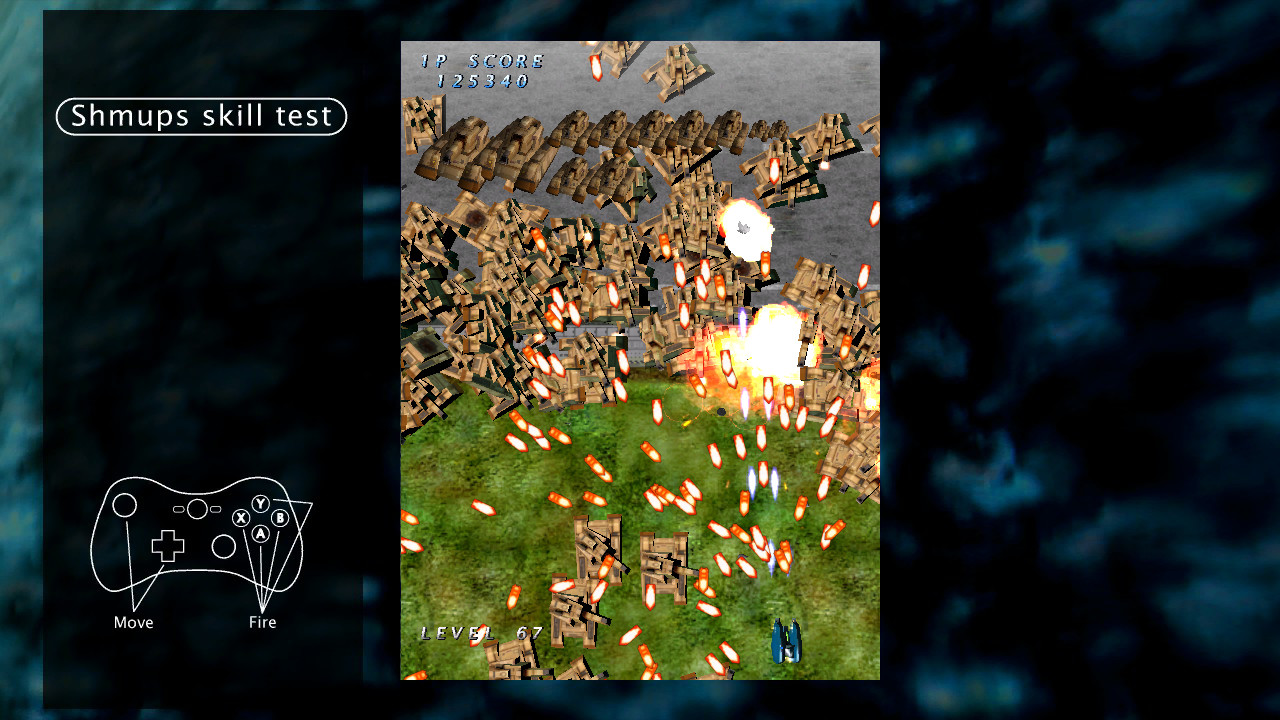
Blend WarioWare with a shoot 'em up and you have Shmups Skill Test, a short, quick-fire game that challenges you to complete several minigames in succession, then humiliates you about your lack of skill afterwards.

Minigames vary from the delightfully named "TANK TANK TANK TANK TANK" — in which there are lots of tanks to shoot — to one where you have to precisely shoot timebombs off the side of a rocket without blowing the rocket up, and all of them are very challenging indeed, with the possible exception of the one where you have to shoot tin cans (in space) into a giant waste-paper basket (in space) to "save the earth".

After you're finished, you're given a breakdown of your skills, a comparison to the online average rating and your "gamer age" is calculated a la Brain Age on the Nintendo DS — the lower the better.

This game is hard, but it has a lot of staying power thanks to a variety of minigames, online leaderboards and support for up to four-player competitive play. Plus, as its name suggests, it's actually good training for the various skills modern shmups demand of you.

2413: Dropping in on Vana'Diel

0413_001

The first MMO I really got into was Final Fantasy XI. This was after a few previous aborted attempts including EverQuest and Ultima Online (over dial-up — not recommended, particularly EverQuest, which crashed every time I zoned) as well as slightly lesser-known titles like Dark Age of Camelot.

I never stuck with the earlier games because they never quite resonated with me for one reason or another — perhaps it was their clunky interfaces or their painfully slow progression. All I know is that Final Fantasy XI, despite also having a clunky interface and painfully slow progression, managed to capture my attention for a decent period of time before I finally moved on to something else — Final Fantasy X-2, as I recall — and never went back.

Just recently, some Final Fantasy XIV friends and I have been getting nostalgic for XI, so I thought I'd go check it out, given that it's been a number of years and several expansion packs since I last tried it. And while the game is still recognisable as what it once was — a steadfastly traditional MMO more in the EverQuest mould than the now more fashionable WoW mould — it's been considerably streamlined to make the experience much more friendly to new players and solo players. On top of that, players now have a hefty amount of options to choose from when they log in and want to decide what to do next. This is not something Final Fantasy XI was ever lacking in, but the additions and refinements that have been added to the formula over the years benefit both new players and grizzled veterans.

Take the Fields of Valour and Records of Eminence systems, for example.

The former sees you examining "field manuals" in each zone and taking on a training regime of your choice. Completing said regime rewards you with experience, gil and a currency called tabs that can be traded in for various benefits ranging from teleporting back to your home city — a godsend if you've been grinding several zones away, since fast travel isn't anywhere near as accessible as it is in XIV — to having temporary buffs cast on yourself.

The latter, meanwhile, is accessed through your Quests menu and allows you to assign yourself up to 30 objectives at a time from an extremely comprehensive list of possible challenges that range from "defeat 100 enemies" to "deal 100,000 points of damage in total" via "loot 10 wind crystals from enemies". Most of these objectives are repeatable, and all reward you with experience points upon completion.

Just the addition of these two systems, which support the existing style of play FFXI veterans will be used to, makes levelling a considerably less painful, time-consuming process. What once took weeks of grinding can now be done in a few hours — to put it in context, I played for about 2 or 3 hours earlier and made it to level 16. First time I played this took me several weeks to achieve; in several months of play I never got any further than level 30.

It's a bit of an adjustment to go back to XI after the tightly structured gameplay of XIV. XI, by contrast, is much more freeform; there is a main storyline to follow, but it's of considerable benefit to players to go out and level up a bit first before even thinking about tackling these missions. The story can even be ignored completely if you'd rather just go out hacking and slashing monsters, unlike in XIV, where it was an integral part of overall progression by gradually unlocking game features and challenges as you went through.

One of the best additions to XI in recent years is the Trust system, which allows you to recruit "alter-ego" versions of various NPCs from around the game world after meeting the requirements to unlock them. Once unlocked, these "alter-egos" can be summoned at any time in the field for you to party up with, effectively allowing you the ability to take on considerably stronger monsters than you would otherwise be able to tackle solo, and all but eliminating the need for standing in Valkurm Dunes for hours at a time shouting "RDM LFG" in the hope that someone would pick you up to go and kill lots of crabs with.

One might say that the Trust system takes away from one of the key defining aspects of FFXI as a massively multiplayer online game, but in practice it's simply more convenient for many players. You still have the option to party up with other people, of course — and chances are they'll play their roles much better than the relatively limited AI of the Trust companions — but for those who prefer to play solo, Trust NPCs can form a formidable party with you once you've unlocked a few of them.

The other interesting contrast between FFXI and FFXIV is how it handles combat. XI's combat is relatively simple in the early levels, relying mostly on your auto-attack and occasional use of Weaponskills when your TP bar hits 1000 or greater. XIV, meanwhile, is much more active, demanding that you both dodge enemy attacks with telegraphed areas of effect and keep performing your class's combo or rotations as efficiently as possible, preferably without stopping. Both are considerably slower paced than true real-time combat, striking a good balance between a turn-based feel and actually allowing the player to feel like they are in full control of their character, but XI is even slower than XIV, providing you with plenty of time to pick abilities in advance from its traditional FF-style menu system rather than XIV's hotbars.

I've enjoyed returning to Vana'Diel so far; the experience contrasts well enough from XIV that the two games can sit quite comfortably beside one another in a gamer's collection, and the state they're both in in 2016 means that you can sit down for either a long or a short session with either and feel like you've achieved something.

Mostly I'm wanting to play through Final Fantasy XI to see its main story content, which is supposed to be good, but the sheer amount of stuff to do in the game — it's got over ten years on A Realm Reborn, after all — is more than likely to prove a bit distracting!

2412: Looking Back on Three Years, Off and (Mostly) On, in Eorzea

0412_001

With it being Final Fantasy XIV's third anniversary it's only fitting that I take a look back at the reason I've been playing it since its closed beta — and why, even though on several occasions I've felt like I might be "done" with the game, I keep on coming back, time after time.

These memories are presented in no particular order, but it makes the most sense to start with this one.

Knowing FFXIV was going to be something special

I jumped into Final Fantasy XIV's closed beta after a casual discussion with a Twitter friend about Final Fantasy XI and how much I liked it despite never really getting all that far with it. Eventually I found myself with an invite to the testing period of the game, and I was immediately smitten with it. Everything about it felt Final Fantasy. The look, the feel, the music, the controls, the battles, the monsters — and yet, it had enough of its own unique identity to make it feel like far more than just series fanservice.

Specifically, Final Fantasy XIV adopts a somewhat "dark fantasy" tone throughout, clearly heavily inspired by works such as Game of Thrones and The Witcher in places. Sure, there are still moogles and chocobos, but there are also complicated political machinations, betrayal, murder and, technically, just prior to the start of 2.0's story, apocalyptic catastrophes.

I was immediately drawn into the world in a way that World of Warcraft never quite managed to enrapture me. NPC dialogue, although localised with more than a few liberties taken from the original Japanese, much to the chagrin of people who play with Japanese voiceovers, was beautifully written with an almost Shakespearean tone in places, blending old- and middle-English words and phrases with modern spellings to make it actually comprehensible.

The fact that Final Fantasy XIV placed any emphasis on its main story at all — let alone to the degree that it has ended up doing so — was a unique feeling for me. Even its predecessor Final Fantasy XI's main story had felt like a side activity you did when you had done enough level grinding to be able to take on the next mission; here, the main story was tightly tied in with your character's progression: you advanced through the levels and became more powerful both in terms of mechanics and narrative, until you eventually reached level 50 and took on your most terrifying challenges yet.

During the closed beta, I only played up to about level 20 or so, but that was enough to know that I wanted to keep playing — and to know that I wouldn't mind when the servers were wiped post-beta to prepare for the start of live service.

Making some great friends

My friend who had urged me to try out FFXIV was all set to assemble a Free Company — FFXIV's take on guilds — as soon as the facility became available, and many members of that free company, centred around the Giant Bomb video games website, became great friends. I even took a trip to PAX East to hang out with a bunch of them and had an absolute blast. And while I recently left said Free Company in favour of a smaller group who are more local to where my wife and I are, FFXIV's various ways of keeping in touch — as well as extra-game means of communication like Discord — mean that I'll never be far away from this band of loveable rogues.

Castrum and Prae keeping me up until 5am

When I reached level 50, I was proud. The only other MMO I'd ever reached the level cap in prior to that day was World of Warcraft, and I'd stopped playing shortly afterwards, as my lack of friends playing had made that game a rather lonely experience at high level — this was the days before its current Dungeon Finder system, itself inspired by FFXIV's Duty Finder.

I'd heard the final two story dungeons, intended to be done pretty much as soon as you hit 50, were quite an experience, and so I asked the Free Company very nicely to accompany me on my first run through them. This was — and still is — the best way to run these dungeons, since they're both full of cutscenes, and running with a completely preformed party means no risk of other people running ahead and starting boss fights while you're still watching dramatic scenes.

The experience of running Castrum Meridianum and Praetorium left such an impact on me that I immediately wrote about it on USgamer. It remains one of my fondest gaming memories to date, and it makes me a bit sad that people coming to it now will more than likely be partied up with a group of people who outgear it to such a degree that every boss fight is a complete steamrollering. Pro-tip, then — if you're just hitting 50 for the first time and you have 7 friends handy, queue up for Castrium then Prae and check the "minimum item level" option in Duty Finder in order to experience these two dungeons at their original difficulty level from shortly after launch.

Entering the Coil

I happened to be up and about one night when some Free Company-mates were heading into the endgame raid dungeon The Binding Coil of Bahamut. At this point, the raid had been "unlocked" because better gear than it offered was already available, and so it was there for people to run just for the experience of the unique story it offered, as well as unlocking subsequent chapters.

Coil was a whole other level of the game for me. The encounters were much more complex, they demanded much more coordination and awareness of what was going on, and the unique story, music and enemies you fought in there made it feel like a truly "special" experience.

Forming LoCoBomb and tackling Coil proper

Loose Cannons, or LoCo, were Giant Bomb's neighbours in the Limsa Lominsa housing district of Mist, and they're now my new Free Company. LoCo is a tiny little group compared to the hundreds of members of Giant Bomb (many of whom are inactive players, but still) but we struck up a mutual friendship with one another, even going so far as to put together a rather casual, slapdash static for tackling The Binding Coil of Bahamut, a little later than much of the rest of the player base, but tackling it nonetheless.

Raiding together was a great way for us to get to know one another better, and we had a lot of fun times working out way through the first four Turns until we hit our first real barrier: Turn 5.

Toppling Twintania

Turn 5 of Coil was originally the hardest fight in the entire game, facing a party of 8 players off against the rather angry dragon Twintania. Accompanied by the fantastic piece of music Thundererthis was a genuinely terrifying confrontation in which you really felt like you were battling against insurmountable odds.

Twintania was our first real encounter with having to properly coordinate raid tactics thanks to now-notorious mechanics such as Divebombs and Twisters. Taking her down for the first time was an incredible feeling, only to be matched by the time we finally bested the final boss of the Second Coil of Bahamut.

Nailing Nael

Turn 9 of Coil — or Turn 4 of Second Coil, if you prefer — quickly took over from Turn 5 as being the hardest fight in the game, mostly due to how unforgiving it was. The fight featured a wide variety of tasty instant death mechanics and even a few sections where careless play could wipe the rest of the raid without too much difficulty.

After a long slog through Second Coil — Turn 6 gave us a lot of grief, though the subsequent two went a little smoother — LoCoBomb persevered and were eventually victorious, however, and we still weren't sick of the two incredible boss themes Tempest and Rise of the White Raven.

This encounter remains, to date, my favourite boss fight of all time in any game ever. Ten character levels, over a hundred item levels and one expansion later and it's still not particularly easy to clear.

Phoenix from the Flames

A lot of people will note that Turn 12 — Turn 3 of Final Coil — is as memorable an encounter as the grand finale Turn 13, and I'd certainly agree with that. Resolving a large number of questions surrounding what really happened at the end of Final Fantasy XIV 1.0, Turn 12 sees the party facing off against the iconic Phoenix, accompanied by this magnificent arrangement of the game's main theme Answers. I still get shivers every time I hear it. And the recent The Rising event in the game now brought it out at the perfect moment to genuinely give me goosebumps all over my body.

The Final Witness

The final battle in Final Coil is appropriately spectacular. It wasn't horrendously difficult by the time we got to it — each subsequent patch had increased the amount of bonus HP and damage you'd be blessed with when you went in, theoretically allowing more and more people of lesser skill and/or gear to enjoy all of Coil's story — but it was still an immensely worthy absolutely, positively, definitely final boss. And it made incredible use of Answers.

An in-game marriage and a real-life proposal

(if the embed doesn't work, go here to embarrass me)

January 3, 2015: Amarysse Jerhynsson married W'khebica Qimi (now Wuckle Bunny, because no-one can spell authentic Mi'qote names properly). During this process, the player behind Amarysse Jerhynsson — yours truly — made a rather lengthy virtual speech that culminated in him proposing to the player behind W'khebica Qimi, who was sitting in her study upstairs from him at the time.

We married in June 2015. And who says computer games are antisocial?

Heavensward and beyond

The first full expansion for Final Fantasy XIV was an exciting moment, as it would take us to brand new areas, see us tackling brand new dungeons and battling fierce new foes. It was everything most people hoped for, with an excellent story — to some, better even than A Realm Reborn's at times meandering narrative — and one hell of a final boss fight.

While the long lull between Heavensward's release and the first major content patch finally arrived with us was, I feel, largely responsible for the fact that my former Free Company are no longer quite as obviously "active" (at least in public channels) as they used to be, Heavensward has, on the whole, been a great evolution of A Realm Reborn's base, even introducing a number of brand new types of content to the mix, with my favourite being the new randomly generated Deep Dungeon.

Heavensward's raid scene hasn't appealed that much — I'm not really a fan of steampunk in general, and the narrative set up around Alexander was feeble and unmemorable compared to the majesty of Coil — but there's still been plenty of stuff to do, and as we saw with the Live Letter yesterday, there will continue to be more and more stuff to do as we start the buildup to the second full expansion, set to be revealed for the first time in October.


It's not many games you can play almost continually for three years and still look upon fondly, but I guess anything you spend that much time in the company of eventually becomes something you really, truly can't ever let go of.

It's hard to get this across to people who haven't been on the journey I've been on, and it probably won't be quite the same for someone who starts right now, but I stand by my nomination of Final Fantasy XIV as my Game of the Year for 2013 over on USgamer, and given the number of hours I've played, it's probably my GotY for 2014, 2015 and 2016 too.

2411: Happy 3rd Birthday, FFXIV

soulsurrender

It's 5am and I'm still up because I decided it would be a really smart thing to do to stay up and watch the beginning of the 14-hour livestream to celebrate Final Fantasy XIV's third anniversary. It's not as if I have to get up for anything in the morning, though, so it's fine.

The reason why I wanted to watch at least the start of the livestream is because of the Live Letter from the development team, featuring a preview of the upcoming patch 3.4. These are always interesting and exciting, because they often reveal new game features and content, some of which ends up being a surprise to everyone.

I'm interested to see where 3.4 goes because the story begun in Heavensward is now essentially over — patch 3.3 saw adventurers defeating the dread wyrm Nidhogg and saving Ishgard from another thousand years of war with the dragons.

Previous patches did, however, tease the existence of dark counterparts to the player's Warrior of Light, and it looks as if 3.4 and 3.5 will concern these individuals in the run-up to whatever the next full expansion will be. (We find that out in October.)

I'm watching a livestream with a concurrent live fan translation, so I'll just write some thoughts as I watch, then post the whole shebang in one go when it's done.

3.4 will be called Soul Surrender and concern the aforementioned Warriors of Darkness. It will also apparently feature a great deal of lore about the planet of Hydaelyn itself, where the game takes place. It will be out on Tuesday, September 27.

As usual, there will be new main scenario quests advancing the main storyline. It looks as if Alphinaud and Alisaie will finally be reunited after being apart for pretty much all of A Realm Reborn and Heavensward. Alisaie was the main NPC for the excellent Binding Coil of Bahamut raids in A Realm Reborn, and apparently this patch's story will make reference to Coil, even going so far as to change dialogue if you previously completed Coil. (Cue a rush on unsync'd Coil runs!)

There will also be new Scholasticate quests. These started a couple of patches ago and sort of tailed off without any resolution, but they had potential to be interesting.

And Hildibrand will be back. His content has been a little weak in Heavensward, lacking the custom boss fights of A Realm Reborn, but his quests have nonetheless remained amusing and well written.

There will be some tweaks to the battle system, including recast timers being reset when restarting battles — a godsend for raiders or people trying to clear new content for the first time. The changes will also include some changes to auto-attack — Yoshi-P mentioned he wanted to make some changes here in a recent interview with Famitsu, and it looks like we're going to get the first stage of that with 3.4 — you'll no longer have to worry about character facing, just be in range of your foe. In other words, this means you can keep moving around a target without worrying about losing auto-attack damage for those periods when you're not directly facing it. Good news for bards and machinists in particular, who are perhaps more reliant on auto-attack damage than most.

Some Extreme Primal fights will be added to the recently added Raid Finder. These Trials aren't quite full-on raids, but still have quite a lot of complexity, so it will be good to have a means to organise learning or clear parties other than Party Finder.

The UI will have a Countdown feature added. Exactly what this does remains to be seen, but it's apparently intended to be a replacement for macros that some players used, perhaps to announce when certain abilities come off cooldowns.

The final chapter of the Alexander raid cycle is coming this time around: Alexander, The Creator and a Savage counterpart. Last chance for them to get this right after a somewhat lukewarm reception from much of the player base.

There's a new trial that sounds as if it will be a second member of the Warring Triad, since it's called Containment Bay P1T6, much like the previous Sephirot fight. Apparently the foe this time will be Sophia, the Goddess.

New dungeons include Xelphatol, the Ixali homeland, and a Hard mode variant of The Great Gubal Library. Still just two rather than the three ARR got with each patch, though this isn't surprising any more.

PvP is getting a duel mode that can be done in the Wolves' Den in a new part of the map. You'll be able to queue for dungeons while dueling, which is nice, and there will be no time limit; matches only end when someone wins or leaves the duel area.

PvP will also get a Custom Match feature allowing two light parties to set up a clash against each other, and a Spectator mode. FFXIV's PvP is actually pretty good, so it's good to see it getting some love.

The roguelike-esque dungeon Palace of the Dead will get an update in patch 3.45, bringing it to 200 floors total. There will be a job-specific ranking system based on a score you build up as you play. Floors 51-100 will be about the same difficulty as the current floors and bring the dungeon's story to a close. Above floor 100, things get much harder but they'll be worth many more ranking points.

Grand Companies are getting an update after being dormant pretty much since 2.0. A new Grand Company rank will finally be available, Platoons will become available and have some sort of missions attached to them, and new gear will be available, presumably this time geared to level 60 characters.

The Platoon system looks to have something to do with raising NPCs, and you'll be able to go into content with these NPCs from the sound of things — you can make a team of one player and three NPCs.

A new game feature is Wondrous Tails, which involves helping a young Mi'qote girl create something by completing objectives in a book. No other details were given.

Gold Saucer is getting an instanced Triple Triad battle hall for each data centre, allowing you to find opponents from other servers and thus expanding the minigame's scope considerably.

RTS minigame Lord of Verminion will also be added to the Duty Finder, allowing you to queue up and find opponents that way.

Housing updates will include the introduction of the Apartment system, presumably functioning something along the lines of Final Fantasy XI's Mog House system. It looks as if there will be a public lobby in each building as well as instanced rooms for players, and there will be 1536 apartments per server, assuming 3 buildings (one for each of the Eorzean cities) with 512 rooms each. They will cost 500,000 Gil, so much cheaper than current housing. Hopefully they won't all get bought up to be resold!

A system called the Double Cross Hotbar will be introduced for controller players. It's intended for people who don't feel they have enough available buttons when playing with a controller and want to be quicker to get at certain abilities. You'll be able to double-tap a trigger to access the extra buttons, and it can be used in conjunction with the existing Expanded Cross-Hotbar for even more available buttons. Essentially it adds an extra 16 button slots, and you'll have the option to keep these visible on screen at all times, and adjust the transparency of the hotbar you're not using at the time to make it clear what actions you have available.

The Double Cross Hotbar stuff looks like a great quality of life improvement for the game. Is it wrong that this is one of the things I'm most excited about? It will certainly make more complex jobs more straightforward to play with controller. Apparently Yoshi-P and his team are pretty excited about it too, as I think they spent more time showing it off than anything else in the Live Letter!

The exploratory missions to The Diadem are getting some minor updates, including the ability to queue as a gatherer rather than having to change once you get there. It will also start dropping item level 235 gear, making it potentially worthwhile again. A brand new exploratory mission — hopefully with lessons learned from the Diadem — will come in patch 3.5.

The new Allagan Tomestone endgame currency will be Tomestones of Scripture, and the gear they purchase is rather Sharlayan in its look, particularly the Dragoon's rather fetching robe and hat combo.

An online status for role-players will be added. FFXIV doesn't seem to have that many RPers in my experience, but that doesn't mean they're not thete, so having a means for them to find each other will be good. You'll also be able to use hyphens in character names at last — no more errant apostrophes!

Finally, The Rising event starts today. Last year this was an awesomely meta event in the game where you could warp out of Eorzea and visit the writers' room to meet the development staff. It was an extremely cool moment, and gave the feeling that the FFXIV team love and are grateful for their players.

Exciting times ahead for the game, then, and I'm well and truly back on board after my short break from it. Events like this remind me why I can never quite quit it.

2410: Sounds of Vana'Diel

0410_001

Talking to some of my Final Fantasy XIV friends today, I realised quite what an impact XIV's predecessor Final Fantasy XI had on me, even though I never really got that far with it in the long term.

As with many other things throughout my life, the thing that has stayed with me for the longest ever since I played it for the first time is the music. (Incidentally, the music is, more than anything, the reason why I find I can't stay away from Final Fantasy XIV for long, even when, as I did recently, I think I'm "over it".)

Final Fantasy XI's music is not as well known as many of the other soundtracks in the series, primarily because XI itself is not as well known as the other Final Fantasy games that have been released over the years. It's not as technically accomplished as XIV's diverse soundtrack, and it's not the work of series veteran Nobuo Uematsu (who hasn't been quite as involved with the series in more recent years) but it is nonetheless made up of a selection of rather lovely pieces of music.

Here are a few that make me feel suitably nostalgic every time I hear them.

This music, simply called Ronfaure after the area in which it plays, is one of my favourite pieces from Final Fantasy XIV, because it pretty much sums up the overall atmosphere of the game: vaguely melancholic and rather traditional.

Final Fantasy XI is — at least, from what I remember — one of the more traditionally-set Final Fantasy games, with an emphasis on good old swords, shields, magic, orcs and goblins. Its soundtrack reflects this, and is a contrast to XIV's diverse track listing, which reflects the diversity of XIV's world itself.

The first character I played in Final Fantasy XI — and the only one that ever got anywhere to date — hailed from the Federation of Windurst, and thus his starting area was Sarutabaruta, which featured this wonderfully calming piece of music to accompany your exploration.

Sarutabaruta was a land of grassy meadows and sunshine; a thoroughly pleasant place to have a stroll, were it not for the monsters wandering here and there, of course.

One of the things I liked most about Final Fantasy XI, even after I played World of Warcraft for the first time, was the fact that it had a battle theme. Well, actually it had several according to your progress and whether or not you were in a party, but this one was likely to be the first one you heard as you stepped out of the gates of your starting city for the first time and prepared to have the shit kicked out of you by a small bumblebee. (FFXI was an MMO designed in the EverQuest mould, in comparison to FFXIV's rough adherence to the World of Warcraft formula, and consequently was brutally difficult, particularly at low levels.)

I always particularly liked that the battle theme for FFXI actually sounded like a Final Fantasy battle theme.

Final Fantasy XI's character creator was simple compared to those that came in later years, but one of the things I always liked about it was that each of the several races you could play as in the game had their own "theme tune" and even had their own signature animations to show you what they were all about while you were deciding. The Mithra, FFXI's take on the catgirl, were exactly how you would expect them to be from a game designed by Japanese people, and their music reflected that nicely.

Final Fantasy XI's group content was structured rather differently to XIV. It wouldn't be until about level 25 or so that you'd encounter your first real "boss", marked by a "Burning Circle" that you had to enter with a party of companions you'd previously gathered — no Duty Finder for you here.

Confronting said boss was A Big Deal, in other words, which is why I can remember it vividly: battling a dragon and his Ahriman companion, accompanied by this stirring soundtrack.

I never got far enough into the story to get properly into the expansion packs for FFXI, but I did visit some of the areas, because they were good for level-grinding.

I think, for once, YouTube comments sum up what I feel on hearing this piece of music better than anything I could say here:

"And here I am, 8 or 9 years later laying in bed listening to this music, wondering what ever happened to the people I considered my closest friends. Time is cruel, and one by one we each took a break from the game and never returned. If youre in a guild/ls/free company now, these will be the days that you someday look back on 😀 Dont let your friendships disappear, get on Facebook/Discord/Guildwork and keep in touch with them."

"Makes me tear up… I miss my old ls. r.i.p. Saints"

"comments like these make me wanna cry ;-; chemistry like this is so hard to find now. social life is so fast now"

Quite. For all their faults, for all the assholes who play them and all the whining that inevitably goes on around them, MMOs are, at heart, about people finding and connecting with one another, then sharing unforgettable experiences together.

2407: Looking Again at World of Warcraft After a Good Few Years

0407_001

I last played World of Warcraft in the Wrath of the Lich King era. I played it off and on ever since launch, to be honest, but it was Wrath of the Lich King that saw me finally get to the level cap, although looking back on my time with the game through the eyes of an experienced Final Fantasy XIV endgame player, I now realise that I barely scratched the surface of what WoW had to offer.

World of Warcraft is one of those games that I consider to be part of the ill-defined, amorphous "gaming canon" — it's a game that I thoroughly believe everyone should play for at least a short time to understand what an impact it's had on the games industry as a whole: its importance to popular game design, the influence it's had on other games, and the aspects that it's drawn from its successors back into itself to evolve and adapt.

Like most MMOs, it's fascinating to chart how WoW has changed over the years because it's virtually unrecognisable from when it first hit the market. This most recent time I've been taking a look at it represents probably the biggest change I've seen to the overall game structure and experience, and among other things it's put certain aspects of my Final Fantasy XIV experience into a broader context.

My time with Wrath of the Lich King was spent primarily playing PvE (Player vs Environment) in the game's open world. This is still an entirely viable way to play World of Warcraft right the way through until level cap, unlike something like Final Fantasy XIV, which gates significant portions of the main story behind group content, albeit only of the most casual, straightforward variety right up until you reach the original level cap of 50.

The pacing of WoW is also very different to Final Fantasy XIV. While Final Fantasy XIV is relatively slow-paced with an almost turn-based feel thanks to its long "global cooldown" — the period of time between which you can use most of your abilities — WoW is relatively fast-paced and frantic. This comes at a slight cost, though: whereas Final Fantasy XIV's encounters are, for my money, much more interesting thanks to their strong emphasis on dodging and being in the right place at the right time — a distinctly Japanese approach to encounter design — World of Warcraft appears to be, to my limited experience, much more about gearing up and overpowering your enemies as much as possible. There's still an element of "don't stand in the shit" at times, but not to anywhere near the same degree as Final Fantasy XIV.

The two approaches are both valid, although the fact that it's possible to WoW-style overpower some of what used to be Final Fantasy XIV's most formidable encounters leads to a certain feeling of dissonance at times; there's always that feeling of conflict between the beautifully paced and choreographed encounter that the designers of Final Fantasy XIV put together, and the players' desire to bulldoze their way through it as quickly as possible. It's sort of a shame to see what a mockery modern groups make of fights like Garuda Extreme, although when you take this in the context of Final Fantasy XIV being a JRPG at core, it could simply be likened to the experience of level-grinding to a ridiculous degree, then steamrollering everything that once gave you grief into oblivion.

WoW also feels a lot more "free" than Final Fantasy XIV thanks to its diminished focus on storytelling — something which I always used to regard as a bit of a drawback to Blizzard's game, but which with more seasoned eyes I can see allows it to feel much more explicitly "game-like" than Final Fantasy XIV. This may sound odd, but it's true: FFXIV very much likes to put everything in some sort of narrative context, necessitating unlocking everything manually by completing various quests, whereas modern WoW simply unlocks things automatically and organically as you level up; you can jump into a dungeon as soon as you hit level 15 without having made prerequisite progress through a questline, whereas Final Fantasy XIV brings you to your first dungeon as part of its main scenario.

Modern WoW also features something I like very much, but which further contributes to its "game-like" feel: the Adventure Guide. This screen can be popped up at any time after level 10 and gives you suggestions of what to do next, allowing you to automatically start questlines without having to manually go to the location first, jump into dungeon queues the moment you've unlocked them, and even review strategy guides for dungeon bosses to save the tedious cries of "go watch a youtube video, noob" when a more inexperienced player enters group content for the first time.

WoW also seems to have taken some inspiration from Final Fantasy XIV's FATE (Full Active Time Event) system in the form of its pre-expansion Invasions. These are events that occur in the open world and require the cooperation of multiple players (albeit not in an organised manner) to accomplish various challenges. WoW's Invasions are much larger in scale than FFXIV's FATEs, however; an Invasion typically encompasses an entire zone, with objectives scattered around the place, whereas FFXIV's FATEs are constrained to a smaller area.

WoW also makes use of an incredibly elegant scaling system for these Invasions, where the monsters that appear as part of the event appear at different levels according to each player's own level. For example, I was participating in one earlier tonight as a level 12 character, so the enemies were appearing as level 12 with appropriate amounts of health and damage. Meanwhile, my friend Cat came to join me on her level 100 character, and the enemies appeared to her as level 100, with appropriately inflated amounts of health and outgoing damage. The higher-level characters still have an advantage due to better gear and a wider selection of available abilities, but it's nice that it's so simple for people of different levels to be able to cooperate on something and get meaningful rewards from it — it's a bit more elegant than FFXIV's slightly clunky Level Sync system in that you're not artifically gimping yourself to participate; the encounter gimps itself to lower-level players.

One thing where I've felt WoW has always had the edge over Final Fantasy XIV is in terms of gear. FFXIV has a strictly vertical gear progression system, with very little in the way of variety within each tier of equipment. As you're levelling, you get a new set of gear roughly every 5 levels or so until you reach level 50, at which point a few dungeon runs will allow you to purchase gear that will take you to about level 58 before you need to replace it. Once you hit 60, there are generally two or three "tiers" of gear that are "relevant" at any one time — one that is available with the endgame currency that has no weekly cap on it, one that is available with the endgame currency that does have a weekly cap on it, and, depending on what stage in the patch cycle the game is at, one or more tiers of raid gear from either the 24-player "casual" raid or the 8-player super-difficult "Savage" raid. In other words, everyone at an equivalent gear level in FFXIV will be wearing the exact same stuff as other people playing that class, though the last set to be introduced did at least encourage the insertion of Materia for limited customisation of secondary stats.

WoW, meanwhile, has a huge variety of gear right from the get-go. Shitty grey gear, poor white gear, slightly more exciting green gear, very exciting blue gear, mega-exciting purple gear and OMG I GOT IT Legendary gear. (And possibly some more tiers besides.) WoW throws a lot more loot at the player than FFXIV, particularly during dungeon runs, with green gear in particular taking an almost Diablo-esque approach to itemisation with prefixes and suffixes denoting variations on a particular item level's gear.

FFXIV does have an item "rarity" system along these lines — there are white, pink, green, blue and purple items — but in practice, getting a blue item simply means that you've acquired some level-cap gear, and purple items are, so far as I know, exclusively for the grind-tastic Relic and Anima weapons at levels 50 and 60 respectively. The only items that have any real variety to them are the pink items you find in dungeons while levelling up; these have standardised basic stats for the item level, but randomised secondary stats. In practice, though, it never really feels like the secondary stats make that much difference; perhaps this will change at higher item levels, but at the moment, adding 5 points of Determination on to your armour doesn't feel like it has a big impact on how powerful you are, and this is, I feel, a real weakness of FFXIV that should be addressed in future expansions.

Do I like one better than the other? No, I actually like them both for different reasons, and can quite feasibly see myself playing both, since they're both enjoyable and distinct experiences from one another. Oddly enough, spending a few hours playing WoW and getting to level 20 has made me appreciate the things that FFXIV does better, and also given me a certain amount of understanding as to why some players are the way they are. That doesn't excuse their behaviour at times, of course, but if you look at how they play in the context of having had previous experience with how WoW does things, certain behaviours like the desire for speedruns or overpowering encounters start to make a little more sense.

All in all, it's been a positive experience — and if you're a lapsed WoW player who has been thinking about checking out what the game looks like in 2016, I'd encourage you to do so. The experience for new players has been made a whole lot smoother, and the whole package is significantly slicker than it once was. Plus, regardless of whether or not you bought any of the previous expansions, all WoW players now get all the expansions up to Warlords of Draenor completely free, with only the impending Legion requiring you to spend any additional money. The game as a whole seems much more friendly to short, casual sessions than it used to be, and that can only be a good thing — though naturally once you hit endgame, it doubtless won't be long before the desire to raid kicks in… and that's when things get a bit time-consuming!

2405: Revisiting One Way Heroics

0405_001

Upon realising that the Spike Chunsoft enhanced remake of One Way Heroics was, in fact, coming out in just three weeks' time, I decided to revisit the original game, which has long been one of my favourite takes on the roguelike genre thanks to it being quite unlike pretty much any other game I've ever played.

For the unfamiliar, One Way Heroics places you in a randomly generated world map that continuously scrolls, like those old Super Mario World levels that everyone hated. This being a turn-based roguelike, however, One Way Heroics only scrolls when you take an action, be this moving, attacking or fiddling around with something in your inventory.

The aim of the game is ostensibly to defeat the Demon Lord and save the remaining part of the world from being consumed by the mysterious darkness that is just out of shot on the left side of the screen. More often than not, you will fail in your task, either by yourself being caught in said mysterious darkness by miscalculating how many turns it would take you to cross the mountain range you found yourself stuck in the middle of, by dying embarrassingly to a nearby feral dog who gave you a nasty nip right in your most sensitive areas, or by forgetting you had a bag full of highly flammable (and explosive) items and then going toe-to-toe with a fire-breathing imp.

It's not an insurmountable challenge, though. In fact, defeating the Demon Lord is more a matter of persistence than anything else; she (yes, spoiler, she's a she) appears at regular intervals throughout your journey, sticks around for a few in-game hours during which you can either attempt to do some damage or run away from her, then she disappears again for a bit. Damage you deal persists from encounter to encounter, though she does have the chance to heal a few HP and erect a few magical barriers in between your various clashes. As such, so long as you can keep yourself alive, you can eventually wear her down bit by bit rather than having to defeat her all in one go.

Except, if you look a bit deeper into the game, defeating the Demon Lord isn't the only way to finish the game. In fact, it's arguably the easiest way to clear the game, since the other endings mostly require all manner of convoluted requirements and lucky rolls on the ol' random number generator. That said, the game's "Dimensional Vault" system does at least allow you to carry useful items over from playthrough to playthrough, so you can effectively prepare for the more complex conclusions a bit at a time, much like preparing to fight the Demon Lord, only over the course of several playthroughs instead of just one.

The other ways to beat the game vary from defeating the Darkness itself (which requires a Holy weapon, a very rare find indeed) to reaching the End of the World at the 2000km mark. The subsequently released One Way Heroics Plus expansion also added a number of other ways to clear the game, including finding your way into a whole other dimension to discover who or what is really behind this whole creeping darkness thing, and then either surviving until the end of that dimension or defeating said ne'er do well once and for all.

On top of all that, there are character-specific endings, too. During each playthrough, you have a chance of encountering a number of different non-player characters who, assuming you meet the prerequisite requirements to recruit them (usually some combination of cash and charisma levels) can join your party. As they fight alongside you and you meet various conditions (different for each character), they gain affection for you, and after having had three separate conversations with them, revealing their backstory and the truth about themselves — including, in many cases, why there appears to be a version of them in each and every dimension out there, more than aware of what you're up to — clearing the game gives you their unique ending on top of whichever particular finale you went for.

These little stories that are attached to the party members are one of the most interesting things about One Way Heroics, because they elevate it above being a simple mechanics-based roguelike and give it a touch of narrative. Not enough to be obtrusive — the emphasis is still very much on preparing your character to clear the game in whichever way you deem most appropriate — but enough to give you a real feel for who these people are and what their place in the entire mystery of One Way Heroics is.

One particularly interesting thing about them is that you can go a very long time without encountering any of them at all, and thus assume that One Way Heroics is entirely mechanics-based. Another is that their storylines are all pretty dark in tone right up until the end, which is all the more effective due to the fairly breezy tone the rest of the game has going on. I defy anyone not to shed a tear at Queen Frieda's ending in particular, though I shan't spoil it here.

Replaying One Way Heroics over the last few days has reminded me quite how much I like this quirky little game, and I'm extremely excited to see how the new version pans out in comparison. From the looks of things, it takes the basic mechanics of the original and gives it a fresh coat of paint along with a new setting and storyline, plus a number of guest characters from other games including Danganronpa and Shiren the Wanderer.

All being well, I'm probably going to devote next month on MoeGamer to this game, its expansion and its new version, which will be out partway through the month. It's an underappreciated gem, for sure, and one which everyone the slightest bit interested in the more unusual side of RPGs owes it to themselves to check out.

2404: No Man's Sky and the Case for "Games for Grown-Ups"

0404_001

Back in the '90s, MicroProse, a software company that already produced a number of the most complex computer games on the market thanks to their near-exclusive focus on military simulators, launched a spin-off label called "MicroStyle". MicroStyle's "thing" was that they produced "games for adults". This did not mean "adult" as in "porn"; rather, it meant games about things that — supposedly, anyway — older gamers would be interested in. No cutesy platformers with rainbow colours here; MicroStyle was all about motorbikes, fast cars and, err, Rick Dangerous, the latter of which perhaps erred a little more towards the side of cutesy platformers than its stablemates.

The reason this largely pointless piece of gaming history trivia is at the forefront of my mind right now is due to the recently released No Man's Sky, and the bafflingly negative reaction it has received from many online commentators. I had been asking myself why there was so very much whining going on about this game, when it occurred to me, partly after a bit of reflection on my own part and partly after a discussion with my friend Chris.

No Man's Sky is a game for grown-ups. And some people don't know how to deal with that.

The reason I say this is that there's a very obvious dichotomy when it comes to this game between those who have sat down and spent time with it — and then, crucially, reflected on the experience — and those who take it at face value, judge it against the frankly unreasonable expectations they set for it in their head and consequently respond rather negatively towards it.

There are two particularly good pieces on the subject of No Man's Sky that I invite you to read right now before we go any further.

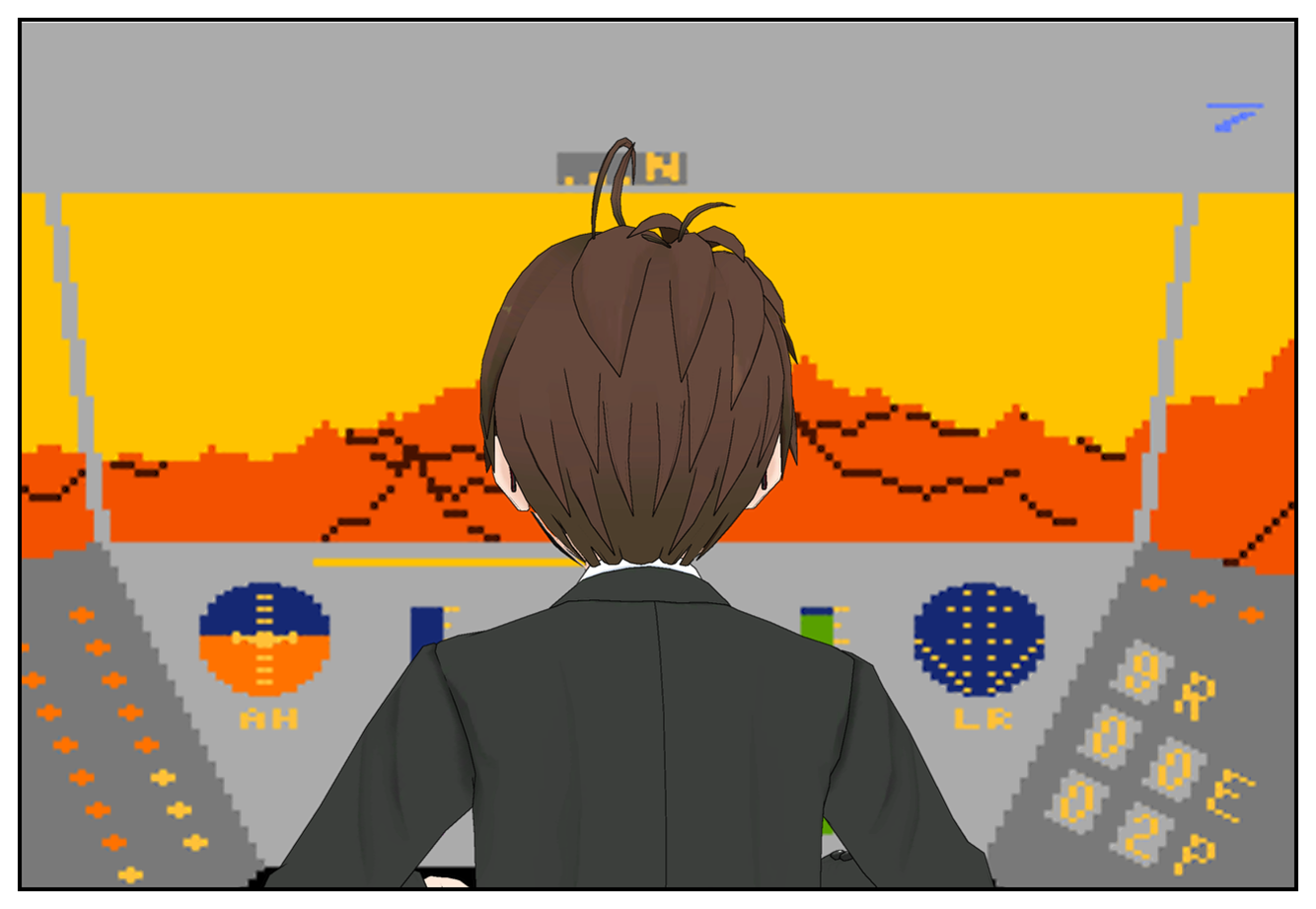
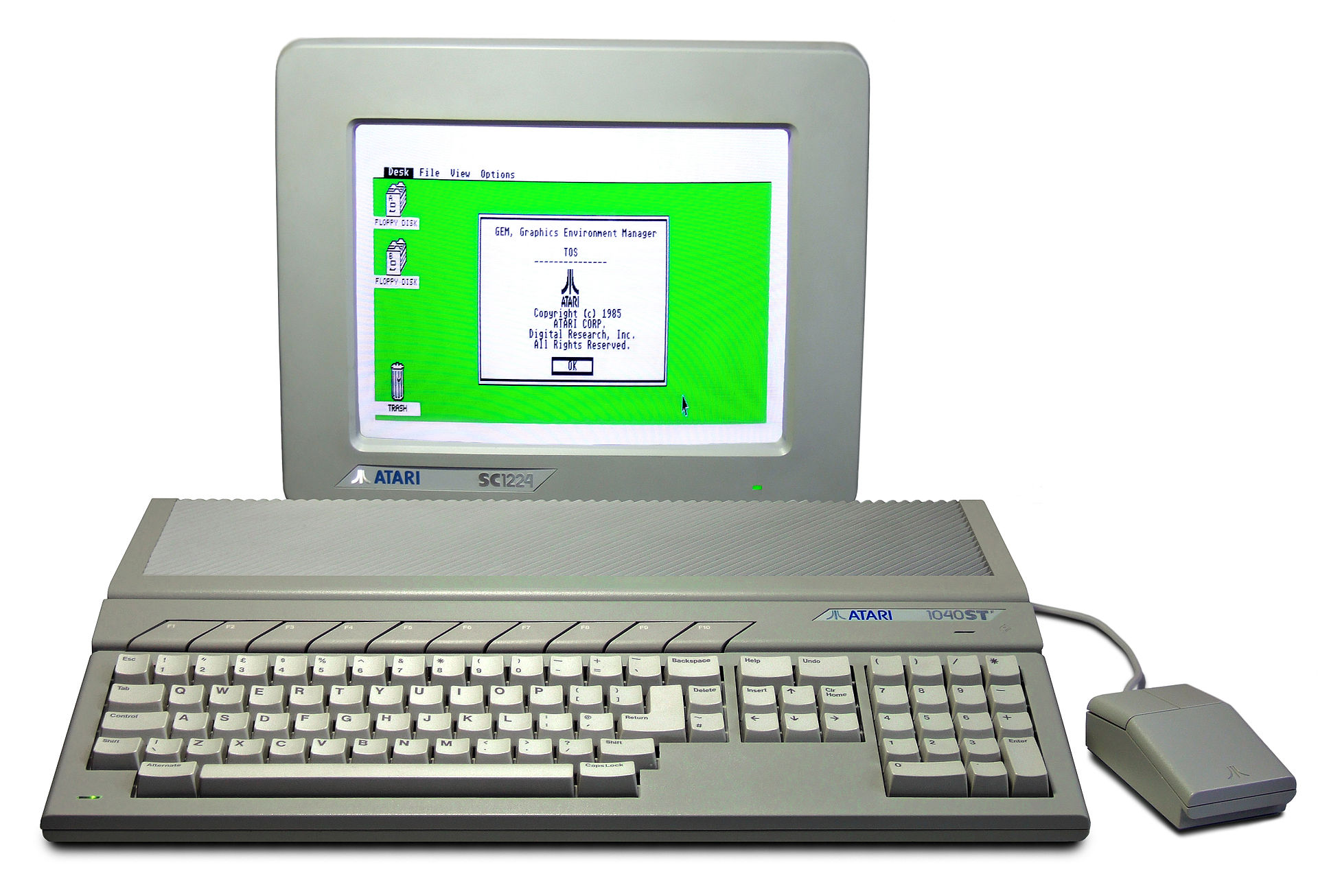
The first, from The Guardian's Keith Stuart, explores the game from the perspective of someone who grew up playing the original Elite on 8-bit computers. Stuart describes how invested he was in the virtual galaxy that Elite allowed him to explore; how he went so far as to buy a particular joystick to play it with because it looked suitably futuristic, and to make copious notes about profitable trading routes and sectors to avoid. His prose reminded me of my own youth with computer games, when I'd actually go so far as to dress up in a bomber jacket, home-made "oxygen mask" (made from a bit of cardboard and an old vacuum cleaner hose) and balaclava (the closest I could get to an actual crash helmet at the time) when playing games like F-15 Strike Eagle II and F-19 Stealth Fighter on the Atari ST. The use of imagination was key; these games were thrilling not because they presented the most impressive visual spectacles on screen, but because they truly allowed you to become someone else for a short time. The idea that you could sit down in front of your computer monitor and become a space traveller or fighter pilot was intoxicating, and even though at the time I was far too young to really understand those games properly, those experiences still stuck with me.

Stuart describes No Man's Sky as an Elite for the modern age. He also notes that we already have an Elite for the modern age in the form of Elite: Dangerous, but makes the crucial distinction that Elite: Dangerous has gone heavily down the path of complex simulation, while No Man's Sky eschews some of the more "unnecessary" aspects of realism in favour of providing an experience that stokes the fires of the imagination.

Stuart's piece is complemented nicely by this piece in Rolling Stone/Glixel from Star Wars novel author Chuck Wendig. Wendig describes No Man's Sky as "boring", but notes that this isn't actually a bad thing.

"We often play games for the destination," says Wendig, "but I don't think that's why we play No Man's Sky. We play it for the journey. There is an eerie calm to this game. A utopian serenity. A pleasant, alluring boredom that draws you along the journey – but not too fast. This is sci-fi that doesn't ask you to kill, kill, kill. It asks you only to wander. To discover. To catalog your findings and sell your wares and move onto the next moon, the next space station, the next world, the next star system. All in pursuit of whatever it is you wish to pursue."

He's absolutely right. While there is combat in No Man's Sky, it's a rare occurrence — rare enough to make every time you switch your multi-tool from mining laser to boltcaster mode feel significant. The emphasis instead is on exploration, discovery and, above all, imagination. You're given very little context or explanation for the things you are seeing in No Man's Sky, and I have a strange feeling that even if you "finish" it by reaching the end of one of the narrative paths and/or the centre of the galaxy, it still won't answer all the questions you might have.

My friend Chris also describes it as "a game for people who like books: you have to have a bit of imagination, and have your sense of wonder still intact, and understand that there are breeds of sci-fi that aren't about action." I can't help but feel that the fact the whole game looks like an Asimov cover is entirely intentional.

The trouble is that this style of play is the exact opposite of what a lot of younger gamers expect from their games these days. They don't expect their space sims to be quiet, contemplative, artistic affairs that minimise action in the name of cataloguing flora and fauna on diverse alien worlds. They expect their space sims to be more along the lines of the Call of Duty: Infinite Warfare trailer we saw at E3: all action, all explosions, all bodies floating off into space. And No Man's Sky isn't about that.

I can't help but feel that the loudest complaint of all — the fact that the game isn't the synchronous massively multiplayer title that a lot of people had come to assume it would be — also ties in with this. Fundamentally, No Man's Sky is a game about being alone in a vast galaxy, and occasionally coming across traces of evidence that other people have been there before you — whether it's long-forgotten ruins, from which you can learn snippets of the various alien languages in the game, or star systems, planets and species of flora and fauna named by other players. The fact that you can't see other players flying around is entirely intentional; the game hasn't been designed in that way at all, and "true" multiplayer would add absolutely nothing to the experience other than the opportunity to be griefed by players who fancied a career in virtual space piracy.

No Man's Sky is a game for grown-ups. Specifically, it's a game for grown-ups who grew up with games in the '80s and '90s; it realises the dream of being able to freely fly a spaceship around a vast universe, land on planets and explore them at our leisure; it gives us enough fuel to stoke the fires of our imagination, and withholds enough to allow us to let those flames flare up as much as we want; it's a game that is the exact opposite of something like Mass Effect's grand space opera, in which nothing is left to the imagination. (This isn't to put Mass Effect down, mind you; there's a place for both the quiet contemplation of No Man's Sky and the dramatic bombast of Mass Effect in this world.)

Perhaps most tellingly, all the most interesting, thoughtful and sensible commentary on No Man's Sky has been by people over the age of 30. And the negative comments very much come across as being written by much younger people. (I obviously can't say for certain how old many of the naysayers are, but their words certainly come across as being less… seasoned, shall we say.)

If all you can do is rant and rave about how Hello Games' Sean Murray "lied" to you about the game being multiplayer… well, then you're missing the point. Spectacularly. And you should probably go and play something else. Something with more guns in it.

2403: My First Dragon Quest

0403_001

I had my first Dragon Quest experience recently. As a big fan of RPGs, particularly those of the J-variety, Dragon Quest was a gaping hole in my knowledge that I'd never gotten around to filling. Until now!

I've been giving the DS remake of Dragon Quest IV: Chapters of the Chosen a go first of all. (Technically I've also played about half an hour of the Game Boy Colour version of the very first game.) So far my feelings are a little mixed, but overall leaning in a positive direction, though I will happily admit I am very early in the game so far and thus haven't had an opportunity to see all its systems at work.

From what I understand about Dragon Quest from speaking to others, its main distinction from its longstanding rival Final Fantasy is that there's less emphasis on characterisation and plot — at least as far as the main playable characters are concerned — and more in the way of mechanical and strategic depth. Thus far in my time with Chapters of the Chosen this would at least partially seem to be the case: the game features a number of different chapters focusing on an individual or small group of characters before the plot "proper" gets going in the final chapter, and these playable characters never speak a word. Nonetheless, you do get a decent sense of who they are through a combination of their character art and the way other people react to them.

The first real chapter of the game focuses on a soldier called Ragnar who is called in by the pseudo-Scottish king to find out what's been happening to a number of children that have gone missing recently. The actual solution to this issue isn't all that complicated, but Ragnar's roughly hour-long quest acts as a good introduction to what Dragon Quest appears to be all about. There's a bit of world map wandering, a bit of dungeoneering — and Dragon Quest dungeons aren't at all linear, featuring numerous branching paths and secret areas filled with treasure — and lots and lots of fighting.

So far so RPG, though I did find Ragnar's quest a little lacking in mechanical depth: as a straight fighter-type character, he didn't have access to any interesting abilities whatsoever and his main role in the party appeared to be exclusively confined to hitting ATTACK every turn and dealing damage. Things got mildly more interesting when he recruited a friendly Healslime called Healie into the party, but there still wasn't a lot to it.

I understand that the "chapters" of Dragon Quest IV are primarily intended to act as an introduction to the characters and their mechanics, but starting with the barebones simplicity of Ragnar isn't the strongest of openings. Combat wasn't interesting with just Ragnar and the entirely automated Healie in the party, and boy is it frequent in Dragon Quest; for many people I can see that being a turnoff. That said, it's worth remembering that we're essentially dealing with a remake of an NES game here, where the main overhaul the DS version received was with regard to its visuals rather than mechanics.

I'm also not one to write off a game after an hour of play, either, so I fully intend to continue my Dragon Quest adventure; I'm just hoping the characters that come after Ragnar are a bit more interesting to play, and I'm confident that once all the characters are together in one big party with the "real" protagonist, things will get a lot more interesting.

Mixed feelings aside, it's been an interesting experience so far. It has a markedly different feel to Final Fantasies of the same era, giving it its own distinctive identity. There's a pleasant air of whimsy about the whole thing, helped along by a humorous localisation featuring lots of regional accents and dialects. And the focus on the ongoing story — as compared to the focus on the main characters as in most Final Fantasies — is a noticeable shift in perspective.

I'm looking forward to getting to know the series a bit better. I feel it may have a slightly stronger barrier to entry than Final Fantasy, but I also know that people who love Dragon Quest really love Dragon Quest, so I'm intrigued to see what gets them so passionate about this long-running series.

2402: The JRPG Protagonist as a Sign of the Times

0402_001

Playing Fairy Fencer F: Advent Dark Force this evening, I was struck by a thought about JRPG protagonists over the years and how they often tend to reflect some of the prevalent attitudes from the time in which they were first written.

Perhaps more accurately, JRPG protagonists often tend to reflect some of the prevalent attitudes in the games industry rather than in society at large, but nonetheless, it is clear that things have changed somewhat over time.

Consider the early days of JRPGs: the first Final Fantasy, the first Dragon Quest. These games featured protagonists that were silent and had no story or characterisation behind them save for "you are legendary hero". They were intended primarily to be an avatar for the player: a means for the player to put themselves inside the game, to inhabit the game world, to become that legendary hero. This reflects how many computer and video games were marketed at the time: on the basis that they allowed you to live out fantasies that were impossible — or at the very least unlikely — in reality. Where games had narration, it was in second-person; marketing materials put the emphasis on "you" rather than the name of the protagonist, if they even had one.

Advance a few years as RPGs started getting a little more comfortable with storytelling. We have the early days of the Ys series, for example, where protagonist Adol Christin was still silent, but he had a certain amount of personality about him that could be understood through the way people reacted to and communicated with him. While the Ys games have their dark moments, the overall tone of them is rather light-hearted, being all about the joy of adventure and discovery; once again, the player was brought along for the ride, but this time, they were a companion to the protagonist rather than being the protagonist.

As we moved into the 16-bit era, games started to become more sophisticated and the increased amount of storage capacity available to developers allowed them to be a bit more ambitious with their storytelling. From Final Fantasy IV onwards, we started to get much more well-defined characters in the main cast, and the same, too, was true for longtime rival Dragon Quest. We still had our silent protagonists — our Adols and our Links — but where our protagonists had a voice, they often had noble intentions or goals: to help people, to save the world, or sometimes simply for the joy of adventure. This overall air of positivity about many of the games of this time was a reflection of this period being regarded as something of a "golden age" for games: everyone was excited about what the 16-bit consoles could do, and as rumours started to leak out about the upcoming 32- and 64-bit offerings from Sony and Nintendo respectively, it was an exciting time to be a gamer.

This air of positivity continued throughout the PlayStation/Saturn/N64 era, and can be seen throughout the numerous role-playing games that graced these platforms — although Nintendo's console, being cartridge-based, often got left behind due to developers having grand ambitions that often required the extensive storage capacity of CD-ROM to fully realise. At the same time, though, a hint of darkness started to creep in. With Final Fantasy VII, we had the beginning of the "moody protagonist" trope with Cloud Strife, which was subsequently continued with the sulky Squall in Final Fantasy VIII before reverting to form with Zidane and company in Final Fantasy IX. The arrival of moody, angsty heroes on the scene corresponded roughly with a sharp rise in teens expressing themselves through music and counterculture; Cloud and Squall hit the scene around the same time many of us were listening to Nirvana and contemplating slitting our wrists to Radiohead.

That seed of darkness took root, but didn't flourish just yet. The Dreamcast and PS2 era saw a continuation of the overall air of positivity and the joy of adventure in role-playing games, with a few notable exceptions. Ryudo from Grandia 2 on Dreamcast stands out in many players' memories as being a bit different from the norm. He wasn't all "let's adventure!" like more traditional RPG heroes, but he wasn't really angsty like Cloud and Squall. His attitude erred more towards the bleaker side of things, though; he was cynical and pessimistic on many occasions, but ultimately he did the right thing. I highlight Ryudo in particular here as the starting point for an increasingly common trope we're seeing these days.

In the PS3 era, we started to see JRPG protagonists diverge in two different directions, more often than not distinguished by gender as much as attitude. Female protagonists tended to be lively, energetic, positive and full of life, but often inexperienced or incompetent, at least at the start of their adventures — the Atelier and Neptunia girls are good examples of this — while male protagonists weren't necessarily tormented or angsty as such, but the air of cynicism which Ryudo had introduced in Grandia 2 started to become increasingly apparent with every male-fronted JRPG.

How this connects to Fairy Fencer F is simple: protagonist Fang is a cynical, lazy lout who is primarily out for his own gratification, at least at the start of the story. As the adventure progresses, he does naturally start to think about others as much as — or even more than — himself — but his intense cynicism, his unwillingness to be bothered with anything that sounds too troublesome, feels very much like a response to prevalent attitudes in a lot of gaming today. Many people can't be bothered with anything that's difficult or troublesome; if something's supposed to take a long time they need to find the most "efficient" way, even if that's also the most boring way; and if the opportunity comes up to bypass hard work for the same rewards — paying up to skip content or get overpowered equipment, watching YouTube videos of endings — then many people will take it.

Of course, there's a kind of delicious irony about Fang as commentary on the laziness and cynicism of many people in modern society in a game by Compile Heart, which will inevitably be hundreds of hours long and filled with lots of grinding and busywork. But given the company's history with using games as satirical works — primarily through the Neptunia series, but Fairy Fencer F has, so far, despite a darker, more serious tone, dipped its toes into satire too at times — this irony is doubtless entirely intentional, and Fang's growth as a character over the course of those hundreds of hours is symbolic of those people who aren't cynical, who are willing to put the "work" in to fully enjoy a game. His development, then, mirrors the player's own journey in many ways: breaking through the endless cynicism, laziness and grumpiness that pervades the modern online sphere to find that stepping out into the wider world is rewarding in its own way.

Or perhaps he's just a grumpy old sod. It's nearly 3am. Humour me.