2400: Final Fantasy XV Delayed for All the Right Reasons

0400_001

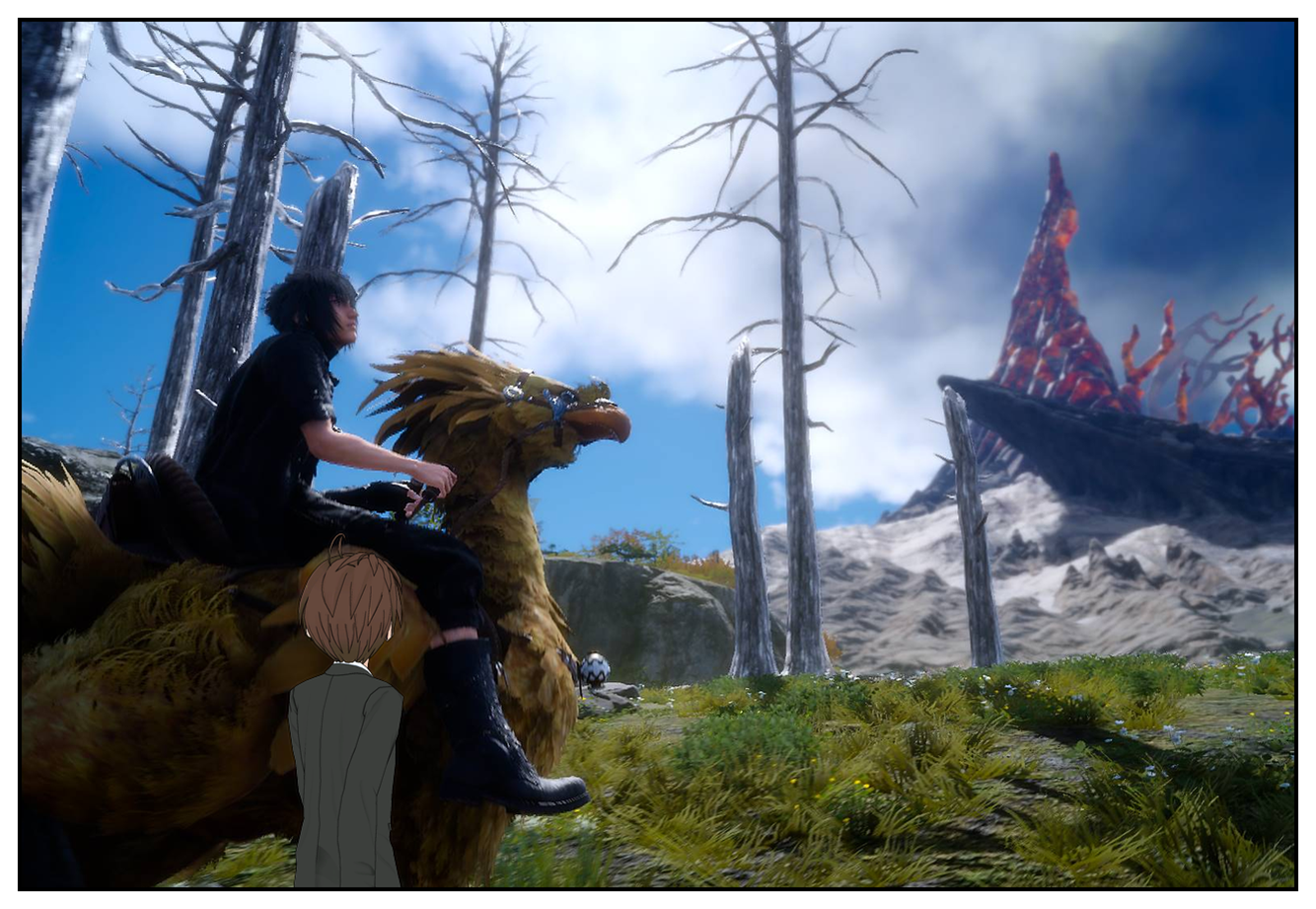
Final Fantasy XV was originally due to come out at the end of next month. Today, director Tabata officially confirmed the rumours that have been swirling around the Internet for the last couple of days: the game has been delayed until November 29.

Tabata announced the delay in a video on the game's official YouTube channel.

His reasoning behind the delay was that, although the team had finally completed the "master version" of the game, meaning a version that was feature-complete and that they would be happy releasing to consumers on disc, they had already started work on some additional content and adjustments that would normally be distributed as a "day one patch" to be applied automatically when a Final Fantasy XV player had their console connected to the Internet.

The trouble with day one patches, though, is that they're not part of that master game experience. They're not on the disc; they're reliant on an Internet connection. And while the "not everyone has an Internet connection" argument is rapidly losing steam as broadband becomes more and more affordable and ubiquitous, there's still a fundamental problem with them from an archiving perspective. In other words, if someone interested in the history of gaming were to become interested in checking out Final Fantasy XV some twenty or thirty years down the line, it's doubtful the PS4's PSN servers would still be up and running to allow them to download the patch, and as such they'd be left with an inferior — although, in this case, still complete — version to explore.

In some cases, day one patches contain essential bug fixes that actually get the game working, meaning the game is unplayable straight from the disc. And in others, they fundamentally shake up the structure of the game — the day one patch for No Man's Sky is a good example of this latter instance. There are very few cases where they are desirable, although sometimes developers are left with no choice — if a game is rushed out of the door to meet a deadline, for example, or if in last-minute testing after the game has been duplicated several million times, a major problem is found.

With Final Fantasy XV being such a big project, though, it seems that Tabata and his team have been given the flexibility to hold the game's release back until it meets with their high standards, however, and Tabata himself notes that he is uncomfortable with releasing a disc-based version of a game that isn't the very best version it can possibly be. He's not ruling out future patches and DLC — and the existence of a "Season Pass" for the game confirms that there are going to be a number of substantial add-ons for Final Fantasy XV — but he wants that initial day one experience to be as smooth as possible for all players around the world, regardless of whether or not they have an Internet connection or are able to download the day one patch.

This, ladies and gents, is how you make a video game. It's what we used to expect from previous, non Internet-connected consoles, and it's something that we have lost sight of in the modern age, where attention-deficient mobile game-playing audiences bray and whine if games don't receive "updates" every two weeks, even where none are necessary. While it's disappointing that this no longer means I'll be playing Final Fantasy XV next month, I respect Tabata and his team enormously for wanting to make their game the very best it can be before it gets into the players' grubby little hands.

I guess that means I have time to play through Fairy Fencer F: Advent Dark Force before Final Fantasy XV after all, then…

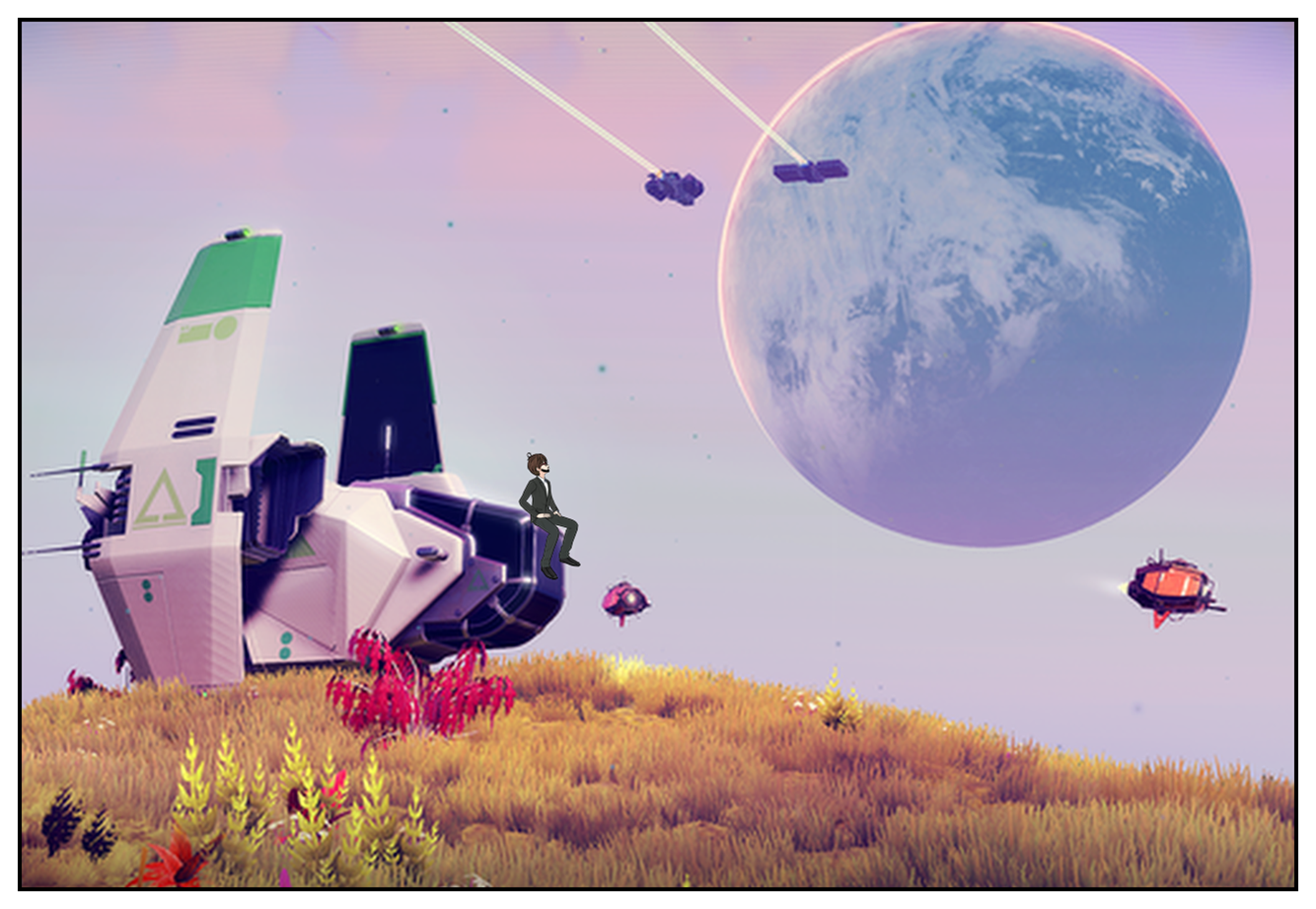
2399: No Man's Sky and The Game as a Pure Relaxation Aid

0399_001

I've been playing a bit more of No Man's Sky this evening and I still like it a lot. It's a wonderfully dreamy, ethereal experience to play — helped partly by the wonderful electronic soundtrack that accompanies everything you do — but also because it seems to have been designed to be an experience that is pure relaxation rather than the more typical goal-driven affair that most games tend to be.

There is no goal in No Man's Sky. Well, all right, there's one: get to the centre of the galaxy, but that's so vague as to be almost meaningless, and the important thing about playing No Man's Sky is not a desperate attempt to achieve that goal as quickly or efficiently as possible, but rather to enjoy the journey exactly as you see fit.

Any other goals in the game are entirely of your own making and will depend entirely on how you like to play. One person's goal might be to fully scan all the planets in a system to receive the hefty payouts you get for "completing" a planetary analysis. Another's might be to produce as many warp cells as possible as quickly as possible so they can make a large number of jumps rapidly. Another's still might be to upgrade their ship, or their suit, or their multitool… it really is up to you what you want to do, and No Man's Sky offers just enough in the way of structure and mechanics to allow you to make these goals for yourself without it ever feeling like you're following a linear, prescribed path.

It struck me while I was playing tonight that this is what the game is all about. You don't play No Man's Sky if you're a powergamer, seeking the "best" or "most efficient" way to "clear" something. You play No Man's Sky during a period of downtime, in which you want to just sit back, relax and take part in something that doesn't demand anything of you, but which has enough in the way of interactivity and structure to distinguish itself from more passive art forms.

In many ways, it can perhaps be regarded as the natural evolution of the "walking simulator", the subgenre of first-person adventure games that focus not on puzzle solving or other aspects of "gameplay", but on storytelling and experiencing a world as if you were there. No Man's Sky differs in some substantial ways, however, the lack of a linear main narrative being the main one, but the "immersive sim" aspect of the "walking simulator" is present and correct. If you are the sort of person who enjoyed Gone Home not for the '90s teenage lesbian angst but instead for the interesting experience that was just poking around that little world the developers had created, then you might get something out of No Man's Sky, because the whole game is poking around worlds of various descriptions.

That lack of concrete story might be an issue for some, admittedly, but for those who still have a working imagination, No Man's Sky puts it to good use by allowing you to interpret what you're seeing as you see fit. Is that abandoned outpost that's full of weird slimy gooey tentacly things a sign that something awful happened there, or is it simply a natural product of the passage of time? Are the Gek a race of entreprenurial merchants, or do they hide a darker secret, hoping to enslave the universe to their bidding? How did that planet get those curiously man-made looking pillars of rock everywhere?

One of the most interesting questions No Man's Sky asks the player is who are you? You never see yourself in the game, and the fact that the game doesn't have multiplayer (boy, you wouldn't believe the whining that's been going on by people who apparently expected this to be an MMO) means that you don't see others like you, either. Even if you could see other players, though, there's no guarantee that they'd be exactly the same as you. Are you human? Are you Gek? Are you a construct of the mysterious Atlas? Are you something else altogether? The game doesn't answer this — at least, it hasn't in the 10 hours I've spent with it so far — and so leaves this rather important question up to the player's interpretation.

In other words, No Man's Sky is what you make of it. If you go in expecting some sort of grand space opera with a clearly constructed story, villains to defeat and great evils to stand against, you may well be disappointed. If, however, you go in expecting a game that allows you to pretend to be a spaceman for a few hours at a time, and can extract a certain degree of joy from that simple experience, then you'll have a wonderful time.

It's a game to relax and unwind with, not a game to "git gud" at. And I appreciate it a great deal for that. That doesn't mean that I want to play it all day every day, but it does mean that I can open it up at any time, fly around and explore a bit, and feel like I've had my money's worth. And with the tantalising possibility of future updates adding more and more interesting mechanics to the game as a whole, I can see it being a game I'll dip in and out of for a very long time indeed.

2398: The Many Faces of the Roguelike

0398_001

The phrase "roguelike" has been overused to such a degree in recent memory that it's become all but meaningless as a descriptor of what a game is actually like to play, but if nothing else it acts as a suitable starting point for a discussion about how a game is constructed, what the player is expected to do in it and where its longevity comes from.

The reason why "roguelike" itself as a term isn't particularly meaningful any more is that it's diverged into a number of discrete but related bloodlines over the years, with each offering their own particular take on being inspired by the dungeon-crawling classic. And, just as with most things, not getting on with one particular roguelike absolutely doesn't preclude you from enjoying others. In fact, this is one of the main reasons "roguelike" as a descriptor isn't useful any more, because it doesn't reflect the sheer diversity that is part of this subgenre in 2016.

Let's take a look at the different branches.

The traditional roguelike

A traditional roguelike builds on the foundations of the original Rogue in a number of ways. It presents the player with a seemingly simple task to complete (usually "find the of y" or "kill the z") and a means through which to accomplish this task, usually a multi-level dungeon that is randomly generated with each playthrough, but which has the final objective down on the bottom floor.

Traditional roguelikes don't have to be presented as ASCII text characters, but many deliberately choose to, as a key part of these games is the fact they occupy a curious middle ground between tabletop roleplaying and standard computer-based hack and slash role-playing games, and as such a key part of enjoying them is having an active imagination with which to conjure up images of what your character is up to, the strange and terrifying dangers they're having to deal with and the horrible effects that potion you probably shouldn't have drunk is having on you.

A key aspect of traditional roguelikes is permadeath: in other words, your character dies, your save file is wiped and you have to start again. This mechanic can sometimes be circumnavigated by doing unspeakable things to your save game files, but doing so is generally — and quite rightly — regarded as cheating. In other words, if you're going to play a traditional roguelike properly, you can't just charge in with little regard for the consequences like modern hack-and-slash games, where the consequence for dying is usually little more than a portion of your gold and having to run back to where your corpse was.

Some traditional roguelikes try and tell an unfolding story by complementing the procedurally generated content with pre-composed quests, conversations, characters and lore items. More often than not, though, a more old-school, back-of-the-tape-box approach is taken, with narrative very much taking a back seat to exploration and character development in the mechanical sense.

One aspect where traditional roguelikes are heavily inspired by tabletop roleplaying is in the amount of freedom you're given right from character creation. You can generally pick from different races, genders and classes as well as tinker with your base stats to construct the perfect (or entertainingly flawed) character of your dreams. But that freedom often carries over into the game itself, too; many traditional roguelikes, for example, allow you to dig into the walls of the dungeon to change its layout or construct shortcuts, and the mechanics often afford the opportunity to be a little creative with your solutions to problems. A good example is the time I played Angband and ran out of torches several levels down in the dungeon, necessitating me "feeling" my way along the walls of the dungeon (by bumping into them, which reveals them on the map) until I could get back to the stairway up. This mechanic wasn't hard-coded into the game, but I was able to do it successfully thanks to the systems that are in place.

Good examples of traditional roguelikes in my experience include the original Rogue, which is rather simple by today's standards; Nethack, which is a good entry point if you can learn to decipher the ASCII interface; Angband, which initially seems extremely complicated but gradually becomes more and more understandable once you learn a few useful keyboard commands; Tales of Maj'Eyal (formerly Tales of Middle Earth), which is a highly polished, very flexible roguelike that strikes a good balance between storytelling and dungeon crawling; and Caves of Qud, which is unusual for the genre in that it has a sci-fi theme rather than Tolkien-inspired fantasy.

The modern Western roguelike

Modern Western roguelikes tend to take the basic structure of the traditional roguelike and present it in a manner that has more immediacy and accessibility. Perhaps the very best example of this is the wonderful Dungeons of Dredmor, which is as brutal as any traditional roguelike but has charming 16-bit era pixel art-style graphics, a quirky soundtrack and an entertaining sense of humour. Dungeons of Dredmor does the whole permadeath thing and allows you the freedom to build custom characters with a variety of skills — some of which are very bizarre indeed — but doesn't quite offer the full freedom of a completely traditional roguelike thanks to the constraints placed on it by being presented graphically rather than abstractly.

Sword of the Stars: The Pit is another title worth checking out. While its visuals are shockingly bad, it's an atmospheric game that, like Caves of Qud in the traditional corner, eschews the standard fantasy setting in favour of sci-fi. There's an interesting selection of character classes and skills to play with, and some enjoyable mechanics to explore and discover as you play.

The modern Eastern roguelike

Japan latched on to the roguelike structure at some point in the last few console generations, and Eastern developers have produced some great games that have a distinctly Japanese flavour to them while still retaining a number of the key aspects of traditional roguelikes.

One important difference with Japanese roguelikes, however, is that they usually contain some form of persistence rather than permadeath. Death is still an inconvenience, but it rarely, if ever, necessitates going all the way back to the beginning of the game to start all over again.

Exactly how death is handled varies from game to game. In Final Fantasy Fables: Chocobo's Dungeon for Wii, for example, dying causes you to lose all your non-banked gold and every item you were carrying except key items for the story and the equipment you had equipped at the time. You keep your experience levels and Job levels, so you can gradually "creep" forward in terms of progress, getting a bit more experience and power each time, until you can eventually just steamroller your way through by outlevelling the challenges — although a number of the bonus dungeons feature a "level sync" mechanic whereby if you're over a particular level, you're pushed back down to the maximum for that dungeon and sometimes given additional non-standard "rules" to folow.

In ZHP for PSP, meanwhile, your character resets to level 1 each time you enter a new dungeon, regardless of whether or not you cleared the last one successfully. The twist is, any time you exit a dungeon, be it through death or successfully clearing it, your character's base level and stats increase, meaning that a "level 1" late in the game will be considerably more powerful than a "level 1" at the start of the game, particularly when you throw equipment into the mix. You still lose all the stuff you were carrying if you die, though, and to add further insult to injury your character develops a phobia of whatever killed him, causing various penalties when encountering them again until they "get over it" by successfully overcoming said challenge several times.

One Way Heroics for PC takes another approach again. Here, there's a traditional permadeath system in effect, though you can retry the same game map by entering a specific seed on starting the game each time. There's an element of player persistence, though, depending on how well you performed, and this was subsequently expanded with the Plus version of the game. You can unlock new classes, carry items over to a subsequent playthrough and upgrade the castle where every game starts (and by extension unlock a number of different quests besides the standard one). There are also a number of named characters you'll encounter in your quests if you get far enough; once you've met them once, they'll be revealed and give you tips on the post-game score screen rather than appearing as shadowy figures. There's also a substantial meta-game in place where there's a "true" ending that can only be unlocked through some extremely convoluted processes. It's a Japanese game, for sure.

Roguelites

This term was, I believe, coined for Rogue Legacy, and is used to describe games that draw inspiration from traditional roguelikes but which tend to fall into markedly different genres and playstyles to the traditional turn-based top-down RPG that roguelikes usually are.

The aforementioned Rogue Legacy was an interesting affair, with Metroidvania-style platform action RPG action coupled with persistent progression between sessions by upgrading your castle and unlocking new abilities as a result. Each character was also regarded as a descendant of the previous one, too, meaning that there was the possibility certain genetic markers could be passed on. These could affect the gameplay — the hereditary ability to jump high or do more damage is very useful, for example — while others were largely there for humour and characterisation. A colour-blind character, for example, had to do their playthrough in black and white.

The Binding of Isaac is another well-known modern roguelite, this time combining the presentation of the original Legend of Zelda's dungeons with some dark, disgusting visual humour and Gauntlet-style shoot 'em up mechanics. While Isaac didn't have persistent progression in quite the same way as Rogue Legacy, you did unlock new items as you progressed through the game, which subsequently gave them a chance of appearing in future playthroughs rather than guaranteeing you'd have them. Collecting all these items provided a substantial metagame for Isaac, let alone the sheer challenge of actually getting to the end of the game.

Finally for now, one of the most recent roguelites can be found in the form of Enter the Gungeon. This is a straight-up action game with randomly generated levels, but its main appeal comes from the many varied and bizarre weapons you'll pick up on each playthrough. There's also an element of persistent progression as you unlock new features using currency you earn in each playthrough; like Isaac, there's a substantial metagame in unlocking everything, though in this case, your unlocks will likely make subsequent playthroughs a bit easier to make it through.


It's pretty fascinating how a simple title from the dawn of gaming has spawned such a diverse range of titles inspired by it to one degree or another. How many other games from those days can boast such a feat? Not that many.

2397: No Man's Sky

0397_001

I dutifully downloaded No Man's Sky at 6pm this evening when it became available on Steam and, aside from a break for dinner, I have been playing it all night.

It's very good indeed, with a few caveats.

The first is that it is not a game for the impatient. Before you can even get off whatever planet you get dumped on at the beginning, you have to repair a bunch of your ship's systems, which involves gathering a selection of resources, some of which are harder to find than others. (Pro-tip: zinc can be found in yellowy leafy plants, and heridium can be found in large blue-black rocky monolith-type structures. You'll thank me for those.) It took me a good half an hour of wandering around (including becoming lost in a rather labyrinthine network of caves that I mistakenly thought might be a shortcut to the heridium deposit my scanner had helpfully found for me 15 minutes' real-time walk away from the crater my spaceship had deposited itself in) before I assembled everything I needed to get going, but it was absolutely worth it; lifting off for the first time in No Man's Sky is one of those watershed moments in gaming, like coming out of the sewers for the first time in Oblivion.

The second is that it is not a game for those who like to have their hand held, particularly in the early hours. While the ship-repairing process acts as a tutorial of sorts, the game literally starts with you waking up next to your crashed ship with absolutely no context whatsoever, and from there you have to determine exactly what you're supposed to do.

There are supposedly three main "routes" through the game, one of which is simply "do your own thing and see what happens", so wandering around aimlessly trying to scan all the indigenous life on the planet you've found yourself on is absolutely an option, but so too is following the trail of breadcrumbs left by the mysterious "Atlas" system, which has distinctly sinister omniscient, omnipotent being undertones (and, appropriately enough, this route was apparently penned by one of the writers of Deus Ex).

It's a game that encourages experimentation. Arrive in a new system? Scan it and see if anything shows up, then go investigate. Wander around a bit outside to dig up some minerals and perhaps even find a few alien relics that help you learn the words of various languages. Found some weird technology? Disassemble it and incorporate its components into your suit, ship or multi-tool. Found some shiny glowy things? Sell them off for vast profit at your friendly neighbourhood space station. Met a malfunctioning cyborg bartender who wants nothing more than to shake hands with you? Make sure you have more than one health point before doing so, otherwise said bar will find itself adorned with a rather obtrusive tombstone for the rest of time.

There's a frightening degree of customisation in the game, too, though you have to balance this with your relatively limited inventory space, since upgrades for your various pieces of tech occupy valuable inventory slots or cargo space in your ship. Upgrading your multi-tool is probably the most interesting so far, because by doing this what starts as a simple short-range mining laser can become a machine gun, a plasma launcher, a grenade launcher, a shotgun, a long-range scanner, a lifeform analyser and all manner of other things besides. You even have to consider the layout of the components in your tool, because upgrades and modifications unsurprisingly work better if placed adjacent to the parts they are tweaking.

The thing that's struck me so far is how incredibly absorbing it is. The whole game has the look of Tim White's cover art for Isaac Asimov novels, with a touch of Roger Dean here and there. The worlds you'll visit are varied and interesting, despite their randomly generated nature; there are hills, valleys, caves, seas, deserts, mountains, canyons and all manner of other landscapes to explore, and, assuming you don't piss off the local Sentinels or the indigenous life, exploring it is an enormously relaxing pleasure. Indeed, at one point this evening as I stepped out of my ship onto a tiny island, then dove beneath the ocean waves to see what lay beneath, the Zen-like atmosphere of it all made me feel more at peace than I think anything else I've had the pleasure of experiencing in recent memory. Then I started to drown, so I had to cut my underwater exploits short, but for a short period it was bliss.

Thus far, No Man's Sky looks set to be a really interesting take on sci-fi that is a far cry from the usual "space military"-centric angle we tend to get in video games. Its dreamy, mysterious narration (all in text, no voiceovers) is written with a similar tone to Asimov novels and lends a suitable air of, appropriately enough, otherworldliness to the whole affair. I'm not sure if I've locked myself into one of the three "paths" as yet, or if that continues to be a series of choices you make as you progress through the game, but so far everything I've encountered with relation to the lore is fascinating and intriguing, and I'm looking forward to seeing where it goes. Well, I know that — the centre of the universe — but why? What happens there? Who are you, the player? Why is it so important you follow this path that has seemingly been set out for you?

I can't answer any of those questions yet, but I'm looking forward to seeking some answers. It's early days yet, but so far this feels like the space game I always wanted to play. Fly a cool ship, land on planets, wander around, shoot stuff like a badass, become embroiled in metaphysical crazytimes, possibly find out that you/your ship/the weird thing on the cover is God or something.

2396: The Many Final Fantasies You Haven't Played

0396_001

One thing that really, really bugs me about people who say they "don't like Final Fantasy" is that they're showing a spectacular lack of awareness of what the series actually is and how it has evolved over the years.

I've previously remarked on how the mainline numbered series has radically reinvented itself with each installment, and how it is thus dumb as hell to refuse to play any of them on the grounds that you didn't like one of them, but one aspect of the series that doesn't get brought up nearly as much is the fact that there are numerous entries outside of those main numbered entries that represent even more diversity in gameplay styles, aesthetics and overall "feel" while still remaining recognisably "Final Fantasy" at their core.

Just off the top of my head, here are some examples — this is not, by any means, an exhaustive list, either:

  • Final Fantasy Adventure (Game Boy) — actually part of the Seiken Densetsu/Mana series if we're being picky, but it has Final Fantasy on the box in Western territories, so it totally counts. This is an action RPG a bit like the older top-down Zelda games with the addition of more explicitly RPG-style mechanics and systems such as experience points and levelling up.
  • Final Fantasy Legend I, II, III (Game Boy) — like its stablemate, this is actually part of a different series, in this case SaGa, but once again, since it has Final Fantasy on the box in Western territories, it counts as a Final Fantasy spinoff. While initially appearing fairly similar to the early Final Fantasy games in terms of mechanics, the three Final Fantasy Legend games had some rather quirky, unconventional methods of powering up your characters, including feeding monster-type characters meat, praying to the random number gods in the sky that mutants would naturally grow the stats you wanted and simply finding stat-increasing items. Their narratives also blended fantasy and sci-fi in a way that will be very familiar to fans of later Final Fantasy games in particular.
  • Final Fantasy Mystic Quest (SNES) — a simplified take on the RPG that is regarded with a certain degree of scorn by many Final Fantasy fans, Mystic Quest is a reasonably solid game in its own right with a great soundtrack, but is very easy. It was intended to be a gentle introduction to RPGs, and in that regard it succeeds admirably. Just don't go in expecting deep, complex mechanics, because there aren't any.
  • Final Fantasy Tactics (PS1, PSP, mobile) — one of the greatest games ever made, and also one of the most complex, stat-crunching monstrosities of game mechanics you'll ever encounter this side of a Nippon Ichi game. Final Fantasy Tactics takes the familiar Jobs and abilities of Final Fantasy and transplants the action to an isometric, turn-based strategic battlefield. It also ties it together with a borderline-incomprehensible but enormously ambitious plot that introduces us to the land of Ivalice, a game world that would form the backdrop for several future Final Fantasy games. Final Fantasy Tactics was subsequently followed up by a number of sequels for Nintendo handhelds.
  • Final Fantasy Crystal Chronicles (Gamecube) — a bizarre multiplayer affair in which four players had to control their characters using Game Boy Advances hooked up to a Gamecube, giving them "second screen" functionality long before the Wii U, Smartglass and Sony's cross-platform functionality with Vita and mobile. Truly cooperative, it demanded that one player carry a special item to keep a deadly "miasma" away, while the other three players fended off hordes of monsters and slowly advanced. An enormously ambitious idea somewhat hobbled by the necessity of having 1) friends, 2) friends willing to commit time to play a computer game with you, 3) friends with Game Boy Advances; I never got to play very far in it for reasons that fall somewhat into all three columns.
  • Final Fantasy Crystal Chronicles: My Life as a King (Wii) — a download-only title for Wii, this game had very little to do with the original Crystal Chronicles and instead was an interesting take on the "god game" genre. As King, you oversaw the construction of a city and the recruitment of adventurers to delve into the dungeons of your land. You didn't actually go into the dungeons with the adventurers yourself, however; you simply sent them off to do their thing and read reports of what they got up to when they returned. If they returned. Surprisingly compelling.
  • Final Fantasy Crystal Chronicles: My Life as a Darklord (Wii) — while it would have been easy to just reskin My Life as a King with a more evil theme, My Life as a Darklord is instead a tower defense title in which you, as the titular Darklord, must defend your mobile tower base from incoming enemies.
  • Final Fantasy Crystal Chronicles: The Crystal Bearers (Wii) — an action-adventure for Wii in which the enemies don't so much power up in terms of stats as you progress, but start using more advanced tactics and AI.
  • Final Fantasy: The 4 Heroes of Light (Nintendo DS) — the predecessor to the 3DS' Bravely Default, 4 Heroes of Light is a relatively conventional RPG for the DS, but does incorporate some interesting cooperative multiplayer functionality.
  • Final Fantasy Dimensions (Mobile) — a full, original, old-school Final Fantasy released on mobile episodically. To date not available anywhere but mobile, much to the chagrin of people who don't like playing games on mobile.
  • Final Fantasy Brave Exvius (Mobile) — a traditional-feeling take on Final Fantasy fused with the popular "gacha" mechanics of modern free-to-play mobile games, this game, put together by the developers of the excellent Brave Frontier, is a fine way to waste time on the toilet.
  • Mobius Final Fantasy (Mobile) — one of the most technically impressive games on mobile, this game likewise incorporates free-to-play gacha mechanics but instead focuses on a single character with some highly interactive, board/card game-style turn-based combat.
  • Chocobo Racing (PS1) — Final Fantasy Kart. What more do you need to know?

The reason these numerous spinoffs come to mind is that I've spent a goodly portion of this evening playing one of them that I haven't mentioned above: Final Fantasy Fables: Chocobo's Dungeon for Wii. I picked this up for a couple of quid from CEX a few months back, and decided to give it a go this evening.

It's one of the most charming games I've ever had the pleasure of playing.

Taking on the role of a chocobo called Chocobo, you explore numerous randomly generated dungeons, fight turn-based battles against enemies, find phat lewt, get cursed by some of it, play the local moogle at card games and, when you feel like it, rescue the town of Lostime from whatever awful apocalyptic disaster caused it to disappear from the known world and everyone to forget everything that was ever important to them every time the Bell of Oblivion rings.

I'm very early in the game so far so I'm loathe to say too much about its mechanics and story, but it's already charmed me with a combination of series fanservice (particularly in the music department) and some solid roguelike-esque gameplay. I'm looking forward to playing more, and this will doubtless be my main distraction tomorrow while I endure the long wait for No Man's Sky to finally unlock on Steam!

The moral of this story, then, is that you (yes, you) don't hate Final Fantasy. You hate Final Fantasy VII. Or VIII. Or XII (how could you, you monster). Or XIII. Or XIV. Or "the NES ones". Or… you get the idea.

What I'm trying to say, then, is that if you've previously written the series off in this way… don't. The series as a whole, including its non-numbered spinoffs, represents one of the most interesting and diverse selections of games out there — not to mention a great cross-section of gaming's evolution from the NES era right up until today.

Now I'm off to go explore some more dungeons with brave little Chocobo. DONNNNNG.

2395: Adventures in Space

0395_001

After feeling somewhat lukewarm to the idea of it for a while — the relentless hype train hasn't helped — I've come around to the idea of No Man's Sky, so much so that I'm now actually looking forward to it releasing on PC on Friday so I can get started on some grand space adventures.

I'm very interested to see how it's turned out, though I am tempering my expectations accordingly as well as intending on paying attention to the evolution of the game over its lifespan; this is a game that, several months down the line, may be very different to what it is on launch day, and that prospect is both exciting and a bit of a reflection on the modern games biz.

The reason why I'm interested to see how No Man's Sky ends up is that the concept reminds me of some of my favourite underrated games of yesteryear, and a genre which we don't really "do" any more, and that is the Star Trek-style space sim. Star Wars-style (i.e. combat-heavy) space sims have been enjoying a bit of a resurgence in the indie space in recent years, but the more sedate pace of Star Trek-style (i.e. exploration-heavy) sims is something still largely consigned to the past, with the exception of a few 2D affairs like Starbound and Interstellaria, neither of which, I feel, particularly capture the real feeling of space travel and exploration.

The specific games I'm thinking of when I ponder Star Trek-style space sims are the two Starflight games by Electronic Arts back in the 16-bit era. These were games where you were given a starship and pretty much told to just get on with it at the outset; there was an overarching plot to follow, but the main attraction of Starflight was the ability to just pootle around known (and unknown) space exploring solar systems and planets, then bringing goodies of various types back to home base for analysis and filthy lucre.

No Man's Sky isn't quite the same thing as Starflight in that you appear to be piloting a single-seater ship rather than a big-ass starship, but the philosophy behind the game seems to be similar in that the emphasis is on discovery, and the main means through which you profit, progress and flourish is through exploring and finding exciting things rather than blasting anything that dares to pass through your crosshairs into a smooth pâté.

To continue the comparison, both Starflight and No Man's Sky had/have significant planetside components in which you explore, find useful things and perhaps uncover a few mysteries along the way. I can't speak for No Man's Sky yet, but I have some fond memories of landing on planets in Starflight, then sending my all-terrain vehicle out into the wasteland to track down valuable minerals, artifacts and, if I was lucky, some specimens of life, too. Starflight's primitive graphics were enriched by some enjoyable descriptive text whenever your ground crew ran into trouble, and naturally it would be up to the crewmember you'd assigned as your medical officer to patch people up when they got back onto your ship.

Starflight was interesting, exciting and compelling even when you weren't in mortal peril, though, and indeed a lot of the time you weren't. There was a simple joy in entering a new system for the first time only to discover that it had an abundance of planets and moons, each of which could be landed on, explored and stripped of as many valuable minerals as you could fit in your ship's cargo holds. It sounds as if this is the sort of experience No Man's Sky offers, too, and if that's the case then I'm pretty excited for it.

Like Starflight, No Man's Sky appears to have an overarching narrative pushing you towards a "conclusion" of some sort at the centre of the galaxy, but also like its distant predecessor, you're free to just do your own thing as you see fit for the most part.

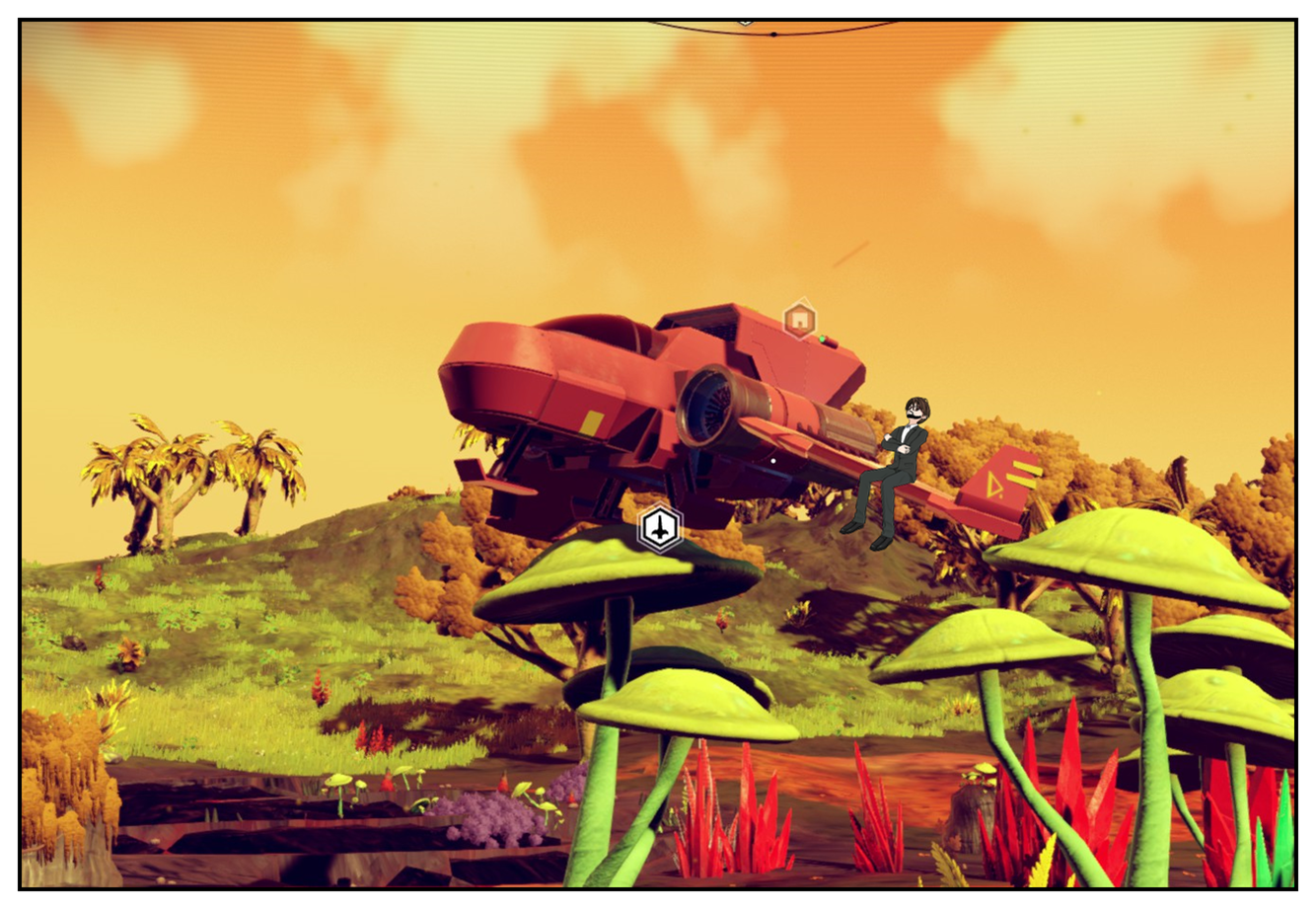
I'll be particularly interested to see how things like encounters with alien NPCs and suchlike go in No Man's Sky, as some of these interactions were a real highlight of Starflight. Judging by this screenshot, though, it looks like I don't have much to worry about.

Anyway. Just a couple of days to go until I can find out for sure whether No Man's Sky is actually the space sim I've been wanting to play since I didn't have a spare floppy disk to hand to save my game in Starflight on the Atari ST, so had to start again each and every time I played. No such woes await with No Man's Sky — hopefully, anyway, though doubtless day-one server issues will be A Thing — and so I'm looking forward to jumping into my Roger Dean/Asimov-inspired space odyssey and, frankly, seeing if Hello Games have managed to make an interesting game out of 18 quintillion planets or however many are supposed to be in the damn thing.

2392: Blood and Wine

0392_001

Finished The Witcher 3: Blood and Wine this evening. Spoilers follow!

While I think, on the whole, Hearts of Stone was my favourite part of the complete opus that is The Witcher 3Blood and Wine's main story comes a close second.

Blood and Wine's effectiveness comes from its exceptional use of juxtaposition. The bright and vibrant colours of the France-inspired region of Toussaint contrast strongly with the rather dark main storyline, and likewise does the duchy's self-professed love of "virtuousness", pomp and circumstance clash rather a lot with how things really are.

On a more macro scale, Blood and Wine is effective because it is so different to the rest of The Witcher 3. The lands that you're exploring aren't dirty, poverty-stricken regions in which everyone except the very richest is fighting for survival. The narrative you're following isn't something of earth-shattering importance. And the overall tone outside of the main narrative is filled with plenty of levity and even a few in-jokes here and there, though none so obtrusive as to spoil the overall atmosphere that CD Projekt Red has spent three games crafting so masterfully in the series.

I particularly liked Blood and Wine's narrative for being a vampire-centric plot, since I'm a sucker for that sort of storyline, particularly those that humanise vampires and make them complex characters. Villain Dettlaff in Blood and Wine is most certainly a complicated character and, to be sure, he commits some truly reprehensible acts, but at the end of it all there are some very difficult decisions to make as to who is really to blame for everything that transpired, and whether things could have been done any differently.

Blood and Wine's take on vampiric mythology reminded me quite a bit of White Wolf's classic series of role-playing games Vampire: The Masquerade (or, perhaps more accurately in The Witcher's case, Vampire: The Dark Age). We have "higher vampires" treated almost as the aristocracy of the monster world thanks to their intelligence and ability to make rational — albeit often rather emotional — decisions. Said vampires are split into clans that scattered around the world. Said vampires tend to show a more monstrous side when driven into a frenzy or provoked, and at this point display numerous supernatural abilities. And, of course, it's nowhere near as easy to get rid of a vampire as having some garlic hanging around your neck then sticking a stake through their heart.

So effective was Blood and Wine's take on vampire mythology that I'd love to see CD Projekt Red take on the Vampire: The Masquerade franchise at some point. I have no idea whether or not that will ever happen, given that the last Vampire game that was supposed to show up — based on the World of Darkness at large, not just Vampire — became vaporware at some point a few years back, and thus the status of the license is perhaps questionable. Even without the license, though, I'd love to see CD Projekt Red tackle at the very least a Vampire-esque title.

What might that look like? Well, I envisage something along the lines of the wonderful Vampire: The Masquerade – Bloodlines, only with a more well-realised setting thanks to the improved technology since that classic came out in 2004. I have great faith in their vision for a futuristic dystopia city in Cyberpunk 2077, but I'd love to see their take on the undead underbelly of a modern city, too. It doesn't necessarily need to be fully open-world a la Grand Theft Auto — in fact, the past few entries on this site have probably made clear I'd rather it wasn't — but there should be plenty of opportunities for The Witcher-style plot branches and decision-making, since the tabletop version of Vampire was always about shades of grey in morality and trying to balance your own dwindling Humanity against the influence the Beast had over you — as, indeed, was Bloodlines.

Seeing Regis and Dettlaff in action in one of the climactic scenes of Blood and Wine made me very much want to play a game with their superhuman abilities — and, let's face it, even though I wasn't a big fan of The Witcher 3's combat, anything is better than the wild flailing of the original Bloodlines.

More importantly, though, good games of Vampire are often about avoiding conflict rather than seeking out trouble; indeed, a number of the clans you are able to represent in the game have rather poor martial skills, their abilities instead lying in the ability to persuade, sweet-talk, seduce, bribe, intimidate, sneak, hack and all manner of other alternatives to baring fang and claw. And with the whole The Witcher series, CD Projekt Red has proven beyond all doubt that it is excellent at developing interesting, compelling, well-written stories in which often simply talking your way out of a perilous situation is an option on the table. That strength of the developer as a whole would lend itself well to a Vampire (or Vampire-inspired) game; perhaps one day, in my dreams, it will happen.

For now, I think my time with The Witcher 3 has come to a close; just shy of 100 hours for the main story and both expansions, I feel I've very much got my money's worth, plus there's a whole host of things I can go back and do if I ever feel like playing it again. I'm very much glad I played it through to completion, but right now, I think it's time for a palate cleanser. C'mon down, Gal*Gun…

2391: You Can Go to That Mountain

0391_001

My lukewarm feelings towards The Witcher 3's open-world nature got me thinking a bit today as I progress through the Blood and Wine expansion pack, which, unlike Hearts of Stone, suffers from some of the same issues I had with the main game: most notably the numerous distractions that the game world offered having a detrimental effect on the overall pacing of the main story.

I got thinking: is this a fundamental problem I have with open-world games in general, or is it something that seems particularly glaring with The Witcher 3? After a little reflection, I have to conclude that, for me anyway, it's the latter.

I thought back to my time with Xenoblade Chronicles X on Wii U and how much I enjoyed exploring the vast open world that game offered — and why I think much more fondly of that game's open world than I do of The Witcher 3's.

I think it's to do with the emphasis the game places on its different elements. In Xenoblade Chronicles X, while the main story was interesting enough, it was, oddly enough, mostly a minor distraction from the real meat of the game: exploring the planet Mira fully. The game got a fair amount of criticism for this on its original release, but I found that it worked really well. Xenoblade Chronicles X's emphasis was not on telling that single main storyline; its emphasis was firmly on making you believe that you were exploring an alien world, acting as part of a brave team of humans who were slowly finding out more about where they had ended up, and putting out the numerous fires that result when people of various backgrounds and cultures are all thrown into a rather desperate situation together with one another.

Xenoblade Chronicles X's story, in other words, was nothing to do with those cutscenes and boss fights and whatnot; its story was your story of how you came to Mira, worked your way up through the ranks, got yourself a Skell and proceeded to become one of the leading authorities on the flora and fauna this strange and diverse planet had to offer. Along the way, you'd help out with various things that happened, and all the things you did had an impact on the world. Help someone with the preparations for building a water treatment plant, for example, and the next time you pass a big lake, said plant will be there.

The Witcher 3, meanwhile, is the opposite type of RPG to Xenoblade Chronicles X, which I'd either describe as being mechanics-centric or featuring a quasi-emergent narrative. The Witcher 3, by contrast, has a specific story to tell. Sure, there are a number of branching points and different endings you can get based on the choices you make along the way, but the main story beats between the beginning and the end are largely similar for the most part.

When you place this much emphasis on an ongoing story, it absolutely kills the pacing if the narrative suddenly comes to a grinding halt while the protagonist goes off and does something completely unrelated to the main plot. This was made all the more apparent to me with Hearts of Stone, which chose to focus pretty much entirely on its central plot with minimal distractions along the way, and was all the better for it. I've also been enjoying Blood and Wine a lot more by following its main plotline and minimising the number of times I get distracted by side content. I can always come back and do that side content later, anyway; after you finish the main story of The Witcher 3 and its expansions, it basically turns into the Xenoblade Chronicles X style of RPG: no clear "main" narrative to follow, just the things you choose to engage in, whatever they might be.

I also found myself thinking why this bugged me so much with The Witcher 3 when I'll happily spend hundreds of hours grinding in a JRPG more conventional than Xenoblade Chronicles X, often putting the plot on hold in the process. And I think it's largely because, despite their reputations for strong, linear narratives, many modern JRPGs are very much mechanics-centric rather than narrative-centric. In many cases, the most time I've spent with a JRPG comes after the end credits roll, when progressing through the story no longer matters and it becomes purely about the mechanics — Compile Heart games are always particularly good for this.

I don't know. I don't want to sound like I don't like The Witcher 3, because I absolutely, definitely do. I think it's more that The Witcher 3 received such gushing, unequivocal praise from press and public alike around its launch that I, coming to it rather late and thus free of most of the hype, am seeing the warts where a lot of people didn't — or chose to look past them.

Or perhaps I'm just a grumpy old man who doesn't like open-world games. Who knows? Either way, I'm going to see Blood and Wine through to the end, because I absolutely want to know what happens. I do not, however, feel the same draw with The Witcher 3 to see everything and do everything that I do with something like a Compile Heart RPG — and consequently will probably put it down for good once those end credits roll — and I think I'm fine with that.

2390: Hearts of Stone

0390_001

I finished The Witcher 3's first expansion pack Hearts of Stone this evening, and I've come away thoroughly impressed. In fact, I'd be inclined to go so far as to say that I enjoyed the tightly focused (and somewhat shorter) experience that was Hearts of Stone's main story considerably more than the main story of Wild Hunt and all its various distractions.

Hearts of Stone benefits from not trying to be too grand in the story it tells. It concentrates largely on a single character — one Olgierd von Everic, who happens to be the initial contact to start the expansion's questline — and proceeds to weave an interesting, mysterious and thought-provoking tale with a few enjoyably Silent Hill-esque twists along the way.

Hearts of Stone, I feel, benefits considerably from playing it the way I played it: ignoring all other sidequests I had in my journal and simply ploughing through the entirety of the main story from start to finish. Perhaps I would have felt less lukewarm about Wild Hunt as a whole if I had tackled its main scenario in this way; certainly for a good 90% of the Wild Hunt main narrative, I was considerably outlevelled for the challenges it offered, making even supposedly climactic encounters rather trivial at times. (I tried using the "enemy upscaling" option, but this led to ridiculous situations where starving wild dogs could rip me to shreds at a moment's notice rather than Geralt slicing through them like butter, and consequently turned it right back off afterwards.)

Anyway, hard to say in retrospect; certainly I can say with confidence that the best way to play Hearts of Stone is to play through the entire main story without getting distracted along the way, since this gives it an excellent sense of pace and progression, leading to an absolutely brilliant final area that was far more interesting and enjoyable than pretty much anything in the main game.

Hearts of Stone also fixes a few other issues I had with the main game, most notably certain instances of combat. While I got through Wild Hunt using the same old combo right the way through, Hearts of Stone had some really cool boss fights that demanded careful dodging and timing of attacks as well as observing enemy attack patterns. Some of the encounters were even vaguely puzzly; a late-game encounter with a wraith that jumps in and out of paintings proved to be particularly memorable for this reason.

The best thing about Hearts of Stone is that it concentrates on what the whole The Witcher series has always done best: tell interesting, personal stories with bags of characterisation, filled with shades of grey morality and some agonising decisions to make. Olgierd makes an excellent central character as he's quite a piece of work, but not quite enough for him to be considered loathsome beyond redemption. On the contrary, Hearts of Stone's tale has such a driving force behind it because it's clear that there's a chance, however small, that Olgierd can find redemption and peace if only all the pieces fall into place.

The other highlight of Hearts of Stone is Gaunter "Master Mirror" O'Dimm, whose exact role I shall refrain from spoiling for the benefit of those yet to play the expansion. Suffice to say that from his initial mysterious introduction through his occasional enigmatic appearances at various points throughout the main story, he proves to be an extremely effective character whose intentions are never entirely clear — at least until you discover the truth about him, that is, but you'll have to find that out for yourself.

I got to the end of Wild Hunt feeling like the more I played The Witcher 3, the less I liked it; it was starting to feel a bit like a chore by the time I beat the main game, but Hearts of Stone has reinvigorated me, and now I'm very much looking forward to jumping straight in to Blood and Wine, the pastel-coloured fairy-tale adventure in the land of Toussaint that has had me so intrigued ever since I first saw how different its vivid screenshots seemed in comparison to the drab colours of the main game regions. It certainly has a lot to live up to after Hearts of Stone, mind you, so let's hope it delivers.

2389: Mobius Final Fantasy: Also Doing Mobile Free-to-Play Games Right

0389_001

Square Enix is on a roll with the mobile games at the moment; a few months after Final Fantasy Brave Exvius hit the market, we find ourselves faced with a brand new free-to-play Final Fantasy game for mobile devices in the form of Mobius Final Fantasy, a game that has been shrouded in a considerable amount of mystery for a while, but which is finally available to play for both iOS and Android devices.

Let's get one thing out of the way first: this is a distinct experience to both Final Fantasy Record Keeper and Final Fantasy Brave Exvius, and has a very strong identity in its own right. In fact, I'd go so far as to say that despite it being based around the usual "gacha" core of drawing and upgrading cards to progress, it is one of the most distinctive, original mobile games I've ever had the pleasure of playing. And if you know how much I hate 98% of mobile games, you'll know that's high praise indeed from me.

Mobius Final Fantasy casts you in the role of (insert your name here), who finds himself drawn through time and space to the ruined world of Palamecia, which appears to have been laid waste to by the malevolent force that is Chaos. Alongside the other "Blanks" who appeared in Palamecia alongside you, you must begin a journey to determine your worthiness to become the Warrior of Light and defeat Chaos once and for all.

If all this sounds rather familiar, you'd be absolutely right; Mobius Final Fantasy draws heavily from the very first Final Fantasy game in terms of thematic ideas, even going so far as to include a number of characters with the same names — most notably Garland and Princess Sarah of Cornelia. It remains to be seen whether these individuals are actually the same people as in the original Final Fantasy — Palamecia was the name of the empire in Final Fantasy II, not the original, so it's entirely possible their resemblance and nomenclature is pure fanservice — but it's a nice touch if nothing else.

Gameplay-wise, however, Mobius Final Fantasy is entirely original, although its overall aesthetic is somewhat similar to Final Fantasy XIII in terms of character and interface design.

Playing Mobius Final Fantasy involves traversing a node-based world map, with each node housing a number of different battles and perhaps a stronger boss to fight. Most of the nodes represent your journey across the ruined world of Palamecia, but some are dungeons that have several floors to clear and sometimes even an area you can explore freely at the end. Unlike many free-to-play mobile games, after just a few short hours of gameplay, Mobius Final Fantasy opens up and starts to give you a considerable amount of freedom in where to go and what to do. There's always an obvious place you should be going next to advance the story, but in some instances you'll be presented with a path that won't open until you clear a particular quest — and you'll have to find the target for that quest yourself by exploring.

You don't freely explore the areas (thankfully, since controlling free movement in mobile games using just a touchscreen is horrid) but rather advance from battle to battle, defeating enemies and earning rewards along the way. The emphasis, in other words, is very much on fighting.

So it's fortunate that Mobius Final Fantasy has such a fun, interesting and original battle system. Rather than reskinning Brave Frontier as Brave Exvius did, or taking the retro approach of Record KeeperMobius Final Fantasy has its own take on how you fight. You're alone, for starters; no party members to back you up here, but you are able to take a number of different "cards" into battle, each of which has an ability attached and an elemental affinity.

The flow of combat is relatively straightforward, though takes a little explaining. Normal attacks deal damage and also draw out elemental orbs of four out of five possible types: fire, water, earth, wind and life. Each Job can only draw three of the elemental types plus life orbs, which are drawn at a much lower chance than the others. These elemental orbs are primarily used to trigger the abilities on your cards, each of which have a requisite number of a particular element before you can unleash them.

The card abilities have two main functions: to exploit elemental weaknesses of enemies, and to make their "Break" gauge vulnerable. This latter feature is somewhat akin to Final Fantasy XIII's "Stagger" system, whereby if you empty an enemy's gauge, they will become significantly weaker against your attacks along with being unable to hit you for a short period. If you can Break an enemy, in most cases you'll be able to press the advantage right up to victory before they're able to get back on their feet.

But what if you don't draw the right elemental orbs to use your abilities? Well, here's the other use for them: you can absorb them, which removes them from your stock and gives you temporarily increased resistance against that element (or, in the case of life orbs, heals you). That's not the only effect, though; absorbing elemental orbs in this way shifts the balance of elements, making you less likely to draw that type from enemies for a short period and consequently more likely to draw the others. In this way, you can absorb an element an enemy is strong against, which in most cases will make you strong against the enemy's attacks, and increase the likelihood that you draw orbs suitable for unleashing abilities that will damage the enemy to a greater degree.

I don't feel like I've explained that all that well. Let's give a practical example.

Battle begins. You're faced with an enemy that has a wind affinity. You're playing a Ranger job, so your normal attacks will draw water, wind, earth or life orbs — no fire for Rangers.

You attack three times, the standard amount you are able to do in a single turn. In doing so, you draw a bunch of wind orbs and a couple of earth, though not enough to use an earth ability. A wind-element enemy would be weak against earth abilities, so it's in your interest to get one up and running as soon as possible.

The enemy attacks. You take a bit of damage, though nothing to worry about.

For your first action, you absorb the wind orbs you drew last turn. This gives you temporarily increased resistance against wind attacks — i.e. any attacks the enemy will throw at you. It also makes you less likely to draw wind orbs for a few turns.

For your second action, you attack. This draws enough earth orbs to attack an earth ability, which requires four orbs to use.

For your third action, you unleash your earth ability, which causes the enemy's Break bar to turn red and become vulnerable. Your turn is over.

The enemy attacks. You take a bit of damage again, though a bit less this time thanks to your increased wind resistance.

Next turn, you throw out three normal attacks, which are enough to empty the vulnerable Break bar of your opponent. It enters Break status, and you get another turn as it topples to the ground. You throw out three more normal attacks, which are now significantly more effective against your downed foe, and defeat it. You win! One step closer to Warrior of Light-hood.

What all this means for Mobius Final Fantasy is that it's by no means a glorified clicker game with boring, automated combat like so many other "card battle" games on mobile. There's depth and strategy here, but it's presented with such glorious visual panache that you can't help but be drawn in to this strange ruined world, particularly as the exciting battles are punctuated with fully voiced cutscenes (with dual audio, for those who prefer Japanese speech) and some beautiful sights.

I'm relatively early in the game so far, and the game as it stands only features two "chapters" of the main story so far (plus a special region for grinding XP and other resources against the clock) but it's already clear that Mobius Final Fantasy is something quite special. And that's the last thing I ever expected to say about a mobile game in 2016.

I'm very interested to see where the game goes next and how it expands on its already solid mechanics over time — and I'm invested in the story, too; I want to know whether or not this actually is Final Fantasy I's world — which is plausible, given that part of Final Fantasy I's plot dealt with Chaos creating a time loops, and "Mobius" can be used to describe the characteristic "infinite loop" symbol — and, if not, what on Earth happened to allow Chaos to ruin it as comprehensively as he did.

Find out more about Mobius Final Fantasy at the official site; there are links to download it for iOS and Android devices there, too.