1165: Endless Infinite Discussion

Around this time of year in 2011, one Mr Tom Ohle, a fine upstanding gentleman at the forefront of promoting games you might not have heard of quite so much as the games you have heard of a lot, wrote this post, named The Case of the Great Game Nobody Saw.

Lest you're too lazy to follow the link, allow me to summarise: Tom works in PR for video games. The titles his company Evolve PR has represented over the years include things like CD Projekt Red's The Witcher series, the deep strategy games of Paradox Interactive, TimeGate Studios' Section 8 series, the Anomaly series and numerous others. As all good PR people should, Tom believes in the games he's paid to promote — some more than others. Sometimes games come along that are genuinely excellent — games that, in Tom's words, are "magical, revolutionary, disruptive or otherwise worthy of consumers' awareness" — and, as you'd expect, Tom and co. would very much like to see these titles succeed, and they do their utmost to try and convince various outlets that these games are worthy of coverage and promotion. When these games don't get the coverage they deserve — either because of "bigger" games monopolising the front page or simply through being rejected outright — it's enormously disheartening, not only for Tom and co. but also for the makers of these games.

"At its core, this is an issue that pervades entertainment and consumerism as a whole," writes Tom. "People stick with brands they know. Everyone craps all over themselves (myself included) when a new Rockstar game is announced. That's fine; they make great games. But in an industry that so often complains about derivative sequels, soulless big-budget productions and a lack of risk-taking, isn't it about time we started focusing on quality? Shouldn't those companies looking to push the boundaries of the medium begin to reap the rewards? If things keep going the way they are, we'll never shed the $60 price point, we'll get sequels to major franchises every year, and we'll all keep complaining and wishing things were different."

Almost two whole years have passed since Tom wrote that post, and I don't think things have improved at all since then. If anything, I think they've got worse. For all Polygon's posturing about reinventing games journalism and for all Kotaku's posting of random bullshit only tangentially related to games, we're still in a situation where an alien visiting the games industry would believe there were only a few interesting games released every year, and that they're often entries in the same series. Call of Duty. Battlefield. Assassin's Creed. And so on.

Most recently, I've been becoming somewhat frustrated with Bioshock Infinite. I have no doubt whatsoever that it's a fantastic game, and everything I've heard seems to indicate that it is, in the words of a friend of mine, "intelligent Hollywood… a 'The Matrix of gaming'" and that is, on the whole, a good thing. We need creators like Ken Levine in the mainstream of the industry to push things forward and prove that there's a market for intelligent experiences as well as Mildly-Racist Brown Michael Bay Manshoot #327. I am glad that Bioshock Infinite exists, that it is apparently living up to the hype and that, I imagine, it is probably selling quite well as a result of all that hype.

What I'm less thrilled about is the fact that it's not really solving the problem Tom was talking about in his post. Bioshock Infinite may be "intelligent Hollywood", but it's still Hollywood. It's still a single game from a high-profile creator monopolising press coverage and social media, completely dwarfing smaller-scale experiences that — shhh — might actually be more interesting. Do we need videos explaining "why you should play Bioshock Infinite on Hard mode", articles about its ending, articles about why Ken Levine doesn't believe in Utopias, articles about how to edit the INI files, tips articles, articles about why having it spoiled didn't matter, articles about… have I made my point yet? This is a disproportionately large amount of coverage for one game — one very good game, admittedly, and one which has a lot of expectations to live up to, yes, but still just one game, and one game that people were already very much aware of in the run-up to its release. I'm already absolutely fucking sick of hearing about it, and the more I hear about it, the smaller the already-miniscule chance I will ever play it becomes — a phenomenon I discussed in this post.

The standard response to this is, of course, that this is what the greater audience is hungry for. Millions of people are going to buy, play and love Bioshock Infinite, and they should be catered to, as those millions of people are probably also going to want to read lots of things about Bioshock Infinite.

However, here's my (slightly selfish) question. What about me? What about people like me? What about all of the people out there — I'm sure I'm not the only one in the world — who didn't really like the first Bioshock all that much (I played System Shock 2 almost immediately beforehand, which just made the fact that Bioshock wasn't System Shock 3 all the more painful and frustrating) and consequently are not all that interested in this new one? What about the people who are more interested in other types of games? Don't we deserve some quality and wide-ranging coverage of the things that we're interested in? (Where's my "Tips for playing Hyperdimension Neptunia Victory" post, hmmm?) We have fan communities and enthusiast blogs, sure, but where's our high-profile professional outlet covering this stuff that's a bit off the well-worn path? (Besides Games Are Evil, of course, which I'm not going to pretend is anywhere near as big as I would love it to be!)

The gaming medium has grown up enormously in the last few years. With constantly improving software and hardware technology providing more and more flexibility for interactive artists to realise their digital dreams, and the rise of the indie space and Kickstarter allowing game makers to break free of the shackles of corporate culture, we're most definitely undergoing the "Cambrian explosion of possibilities" that SimCity, The Sims and Spore creator Will Wright talked about back in 2008. It's a great time to be someone who enjoys playing games.

But the games press has not evolved alongside the medium as a whole. The medium as a whole is now, as I've said numerous times in the past, far too broad for one outlet to be able to do justice to all of. And yet pretty much all of the big outlets choose to focus on the same part of this massively diverse medium. It's the part with the biggest audience, the biggest budgets and the biggest amount of money involved in it, yes, but it's still just one part of a whole. Read the news pages of one big site and you've read them all. Read the reviews section of one site and you've read them all. The sheer volume of things on display at events like PAX East and GDC help a little, but more often than not you still just hear about the same things from slightly different perspectives. Or you hear about Battlefield 4.

Why haven't we got to a stage where big outlets can feel confident enough to distinguish themselves from one another yet? Don't give me a reason to stick with one outlet, give me a reason to read all of them because of their completely different content. (Right now, I don't read any of them with any degree of loyalty, because very few of them provide coverage of the sort of thing I'm interested in any more!)

It's massively frustrating, and I don't even work in PR. I can bang my drum all I like about the types of game I'm interested in and want to experience more of… but is anyone really listening?
1162: Launch Lineup

I have a curious habit that I tend to fall into pretty much any time I purchase a new games system. Thinking about my recent purchasing habits and my ongoing desire to forgo the "triple-A" experience in favour of more interesting, distinctive titles from further down the "food chain" it's actually entirely understandable in retrospect, but I always used to wonder why I did it.

It's this: whenever I purchase a new games system, I will typically not buy the "system-seller" games, and instead buy something that looks interesting and quirky. I've been doing it for quite some time, as it happens, if my memory is to be believed, anyway.

When I bought a PS2, I picked up Shadow of Memories (aka Shadow of Destiny) instead of, uh, whatever was exciting in the PS2's early days. When I bought an Xbox, one of the first titles I grabbed was Sudeki. When I bought a Gamecube… actually, I can't remember what I bought with my Gamecube. Possibly that Sega volleyball game Beach Spikers. Anyway, you get the general idea.

When it came to the Nintendo DS, I forget exactly what the first games I bought were, but it was one or all of Phoenix Wright Ace Attorney, Trauma Center: Under the Knife and/or 42 All-Time Classics (aka Clubhouse Games in the States). All of them are still favourite games.

42 All-Time Classics is a particularly interesting one to me. I'm not entirely sure what inspired me to pick it up in the first place, as on paper it sounds like shovelware of the worst kind — 42 simple board, card and touchscreen games that you can play either against the computer, against other players in the same room with other DSes or via the Internet. It's the sort of thing that these days you'd download for free on your mobile phone and then be expected to shell out in-app purchases for "energy" or extra games or game-breaking powerups or something.

But no. 42 All-Time Classics was a full-price game for the DS (and was subsequently split into a number of smaller individually-downloadable chunks on DSiWare) that offered everything you need for a virtual "game night", so long as you had a few DSes to hand around. You only needed one copy of the game, though; thanks to DS Download Play, you could transmit a copy of the game you wanted to play with other people over Wi-Fi and play with a single cartridge. This is still one of my favourite things about the DS system.

42 All-Time Classics is such a great DS game because it doesn't do things half-heartedly. There's a hefty single-player mode that will keep you busy for a long time completing specific missions and unlocking new content through "stamp" mode. The multiplayer mode allows childish chatting through PictoChat during play, which is somewhat pointless when you're in the same room as your fellow players, but I must applaud any game that practically encourages you to draw knobs at your friends while you're playing multiplayer with them.

The presentation is pretty good, too. While there's only so much you can do to visually represent various classic board and card games, 42 All-Time Classics supports its relatively simple visual aesthetic with pleasant little animations, catchy music and distinctly "gamey" sound effects. It doesn't overdo any of these things, but they round the whole experience off nicely — and cute little touches like the music getting more "dramatic" when someone's about to win a game add a bit of drama to the experience.

42 All-Time Classics is a great little diversion and pretty much the perfect handheld game. While a lot of people prefer playing this sort of thing on their phone these days, the simple knowledge that I can just open up 42 All-Time Classics on my DS and play without having to connect to the Internet, share to Facebook, make in-app purchases or wait for energy to restore makes it worth the price of admission all by itself. So if you own a DS… well, I strongly recommend grabbing a copy.

1161: Hospital Affairs

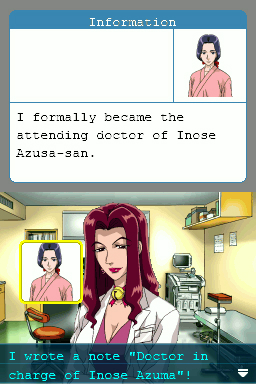
Continuing my trend of "playing games that reviews didn't like much and ending up liking them a lot," I picked up a copy of the Nintendo DS game Lifesigns: Hospital Affairs (also known as Lifesigns: Surgical Unit in the States) recently. And I've been loving it.

Lifesigns, or Resident Doctor Tendo 2: The Scales of Life as it was known in Japan, is actually a contemporary of the original Trauma Center: Under the Knife in Japan, but it didn't come out until two years later in the West — nearly three years later for Europe. The reason I mention this is that the game suffered somewhat from comparisons to Trauma Center in reviews, when in fact this is a completely unfair comparison that has diverted attention away from what is actually a very interesting game.

Don't get me wrong. I love Trauma Center. It does its own crazytown sci-fi medical horror thing and it's fantastic for it. It remains, to date, one of the most genuinely nerve-wracking series of games I've ever had the pleasure of playing, and it always manages to spin an interesting story to couple with its action-packed gameplay. The latest installment Trauma Team, which you'll recall I was babbling on about recently, refined that formula brilliantly by toning down somewhat on the sci-fi aspects and jacking up the feeling of "this is a team of doctors working together in the same place". Ultimately, though, as good as the story was, Trauma Team was still just as much about performing the various operations as it was about the unfolding story.

image0036Lifesigns, meanwhile, is actually a completely different beast. Sure, it's set in a hospital and features a number of surgery sequences, but it is not Trauma Center. Instead, I was delighted to discover, it is rather more akin to the Ace Attorney games — longstanding favourites of mine — than anything else, placing a much stronger focus on well-written character development and unfolding narrative than on the "action" sequences. It's for this reason that comparing it to Trauma Center and complaining about there being "too much talking" — a criticism also levelled at the Ace Attorney series by some — is utter nonsense. Without the talking… well, there would barely be anything left. The talking is sort of the point. Whether or not you like that is a matter of taste, of course, but given the continued existence of visual novels as a storytelling medium you better believe that there are plenty of people out there who are more than happy to play games that are about nothing more than people talking to each other.

As the Japanese title suggests, Lifesigns is actually the second game in the Resident Doctor Tendo series, though the first never made it to the West for reasons unknown. Ultimately this doesn't matter too much, as like the Ace Attorney games, the overarching plotlines are completely self-contained and only occasionally make reference to the events and characters of the previous game. When they do, they take their time to explain who these random characters that the protagonist knows (and the player doesn't) actually are, too, so it hasn't been an issue.

Lifesigns casts the player in the role of the eponymous Dr Dokuta (yes, really) Tendo, a second-year intern at the fictional Seimei Medical University Hospital. We learn quickly that he had quite an eventful first year, with one of the major events seemingly being a misdiagnosis that nearly ruined his career. We also learn that he was partially inspired to get into medicine after his mother died of cancer, and partially by the fact that his father is a heroic firefighter. We also learn that the resident evil-looking dude Dr Sawai is Tendo's biological father and that there's some bad blood (no pun intended) there.

The game's first episode introduces the major characters around the hospital — Tendo's mentor Suzu-sensei, an attractive older woman whose trademark appears to be a large cat bell around her neck; head nurse Florence, who has an alarming talent for gossip; adorable nurse Hoshi, who is clearly carrying a rather large torch for Tendo; and Aoshima, the new first-year intern whom Suzu assigns Tendo to keep an eye on. There are also a selection of other incidental characters who put in occasional appearances such as the frankly terrifying surgical assistant nurse Kurai, the deadpan anaesthetist Masui and Tendo's relatively normal-seeming friend in paediatrics Dr Ueto. All of them are fun, distinctive and, like the characters in Ace Attorney, just the right blend of believable and caricature to make them all memorable.

The majority of gameplay in Lifesigns requires the player to move from location to location in the hospital to advance the story. The location map shows which characters are hanging out where at any given moment, though there's no indication given as to whether the conversation you'll have in that location is an important one or not. (Important conversations advance the plot and tend to change around the arrangement of which other characters are hanging around where; non-important ones tend not to impart useful information for the most part but are usually entertaining or give a little further insight into the characters.)

When you reach a location, important conversations tend to unfold automatically and occasionally require some input from the player. This is accomplished in a similar manner to in Ace Attorney, whereby you open up your Court… sorry, Medical Record and present various objects, concepts and characters to the other person. Yes, much like in Ace Attorney, your inventory is not necessarily restricted to holding physical items; instead, as the plot unfolds, Tendo will take various notes, which he can then discuss with people. Usually if you're stuck at some point, you simply have to present something to someone else to advance the plot along. Occasionally, there are sequences where you have to convince another character to do something — these unfold in much the same way, albeit with more dramatic music and visual effects and an on-screen meter depicting how close you are to successfully convincing them. Presenting the wrong piece of information in these scenarios can lead to a bad ending, so you have to be careful — though bad endings don't necessarily mean the end of the game.

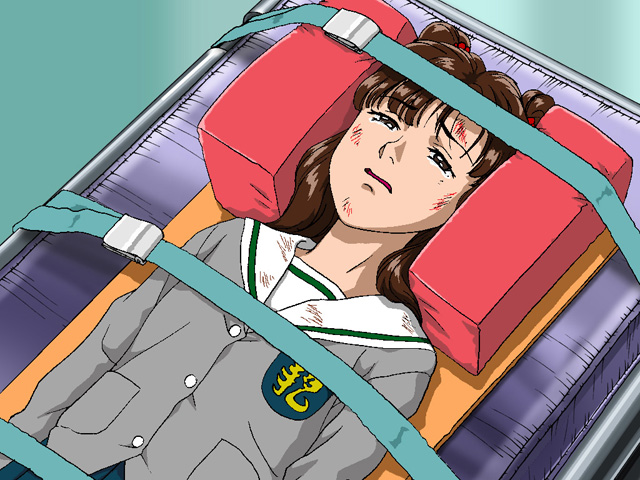
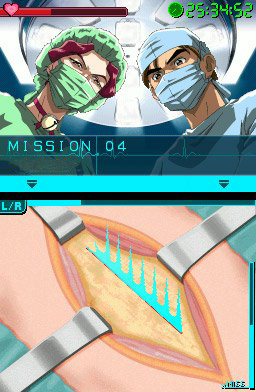
image0050What with Tendo being a doctor, you'll be unsurprised to note that you do actually get to do a bit of doctoring around the place, too — life in a hospital isn't just flirting with the nurses and hanging out with the pervy old cancer patient who can't resist pinching female doctors' bottoms. No, at least once in each of the game's five episodes, you'll find yourself having to deal with realistic medical cases, beginning with an examination in which you must successfully diagnose their symptoms, and usually concluding with a surgery sequence in which you must treat their ailment accordingly.

The diagnosis sequences are like a simplified version of Dr Cunningham's episodes in Trauma Team (or it's perhaps more accurate to say that Dr Cunningham's episodes are like expanded versions of Lifesigns' diagnostic sequences) — after having an initial discussion with the patient, you're presented with a view of them that you can look up and down and then interact with in several ways — inspecting areas visually, using a stethoscope to listen to the body's sounds and palpating areas by rubbing the touchscreen. The patient will generally give you a few clues here and there ("ooh, it hurts more on the other side…") but for the most part you're expected to perform a thorough examination to find all the symptoms. Unlike in Trauma Team, there's no chance of missing anything as you can't proceed until you've made a successful diagnosis; and also unlike Trauma Team you don't have to worry about eliminating possible candidates by matching symptoms to your database. Tendo knows his stuff — though often the visual examination is followed up by one or more "spot the difference" ultrasound/X-ray/CT/MRI scans in which you have to circle the abnormal areas on the touchscreen and pin down a final diagnosis.

The surgery sequences, meanwhile, are not very much like Trauma Center at all… aside from the fact that they're incredibly tense and quite challenging. Rather than tending to follow the same format, requiring the player to remember the appropriate means to deal with "common" ailments such as lacerations, tumours and inflamed areas, each surgery sequence in Lifesigns is a unique procedure that doesn't necessarily involve opening up the patient. For example, in the first episode, you'll find yourself performing an appendectomy as your first operation, then later you'll be navigating a catheter through someone's blood vessels in an attempt to stop some internal bleeding.

The diversity of tasks in the operations means that rather than trusting the player to switch between tools as they need to, each surgery is split into a number of smaller objectives which must be achieved in linear sequence to progress. Making mistakes injures the patient and causes damage to their vitals bar, and there's no convenient "cure all" stabiliser to inject here — though performing a task quickly and accurately has a chance of restoring the vital signs somewhat. There's also a "concentrate" button that displays the areas on which you're supposed to perform the current action along with the movements required, but all the time you're holding down this button the operation's time limit is zipping by five times faster than usual. Experienced surgeons will, of course, be able to complete the operations without having to rely on this at all, and in at least one situation the ending of an episode is determined by how quickly you complete an operation. (You can save beforehand… but as noted before, the "bad endings" to each episode aren't game-ending, so it's often worth continuing and perhaps replaying the game later to see the different possible conclusions.)

133I'm only partway into the second episode so far so I'll refrain from speaking further on the plot and whatnot, but so far it's been pretty great. It successfully combines the character- and dialogue-driven narrative of the Ace Attorney series with the tension of Trauma Center and comes out feeling like its own distinctive experience. While, yes, there is a lot of talking, as I said earlier that's sort of the whole damn point. This isn't a kinetic novel with arcade sequences like Trauma Center was (that's not a criticism, incidentally) — it's a visual novel/adventure game in which performing surgery plays an occasional role, but in which the relationships between the hospital staff, the patients and the other people in their respective lives is brought to the forefront. It's a really interesting game, and I strongly suggest you check it out if you're a fan of games that are a little bit off the beaten track.

1160: Spoilers Ahead

After writing yesterday's post and doing a little more work on it today, I've decided that I would actually quite like to talk about my RPG Maker project a little more rather than being unnecessarily vague and obtuse about it. Those of you reading who like the concept might be able to give me some motivation to continue with it in the long-term, then, which is probably going to be a valuable thing if (when, more likely) this initial burst of enthusiasm runs out.

However, I am also conscious that discussing some things about this project may constitute spoilers of various descriptions, so I am going to add a "read more" tag to this post so those who would like the finished product to remain a complete surprise can avoid it if they desire.

So, without further ado, click the link to continue reading if you want to… otherwise, I'll see you tomorrow!

Continue reading "1160: Spoilers Ahead"

1154: Operation Successful

I beat Trauma Team this evening, and I am very happy with the way it all played out. Despite having a touch of that recognisable Atlus craziness about it, the team did kind of keep to their promise of providing a more "realistic" experience that veered less into the realms of sci-fi and more into the realms of vaguely plausible… I don't know what you'd call it, really. Disease horror?

Of course, that realism doesn't extend to the operation sequences being in any way "authentic" — the Trauma Center series has always been about being quick and skilful rather than accurately simulating real-life surgical procedures — but it really doesn't matter too much. The six different styles of gameplay all complement each other very well, and the pace of the narrative is such that you never really get bogged down in a single discipline for too long — unless of course you choose to do so in the non-linear first half of the game.

As I predicted even before I played the game, I think the Dr Naomi forensics sequences were my favourite aspect. These combined some lightweight adventure game-style gameplay with a lot of lateral, logical thinking and some great character development. There was a wonderful sense of piecing together a narrative in these cases, even though you didn't directly see any of it unfold until you'd "solved" it all. Instead, Dr Naomi's habit of thinking out loud fulfils the same narrative function as things like Phoenix Wright's internal monologues in the Ace Attorney series, of the narration text in a more traditional visual novel. You have to use your imagination a fair bit, but somehow this doesn't diminish from the emotional impact of some of the tales told. The very nature of Dr Naomi's specialism means that there was always going to be a degree of darkness about her cases, but I was quite surprised how far they went in a few cases.

Trauma Team manages to be so emotionally engaging throughout thanks to its strong cast of characters. The focus is very much on them instead of the patients — indeed, in the surgery sequences, patients are always represented as abstract mannequin-like figures — and the game has a strong character-led story as a result. If we were getting bogged down in the individual tales of each and every patient these doctors came into contact with, the impact of the game's "true" story (which unlocks after you've completed all the individual episodes for each of the six doctors) would be somewhat diminished. Instead, each of the doctors' episodes is to do with their own sense of personal growth and coming to understand something about themselves, or about life, or about each other. By the end of the game, it's very clear that they're all better people in one way or another.

I think this point above is why I like the Trauma Center series so much. I was initially drawn to it by the fact that games about surgery are something you don't see very often, but it quickly became apparent that these aren't really games that are overly concerned with providing a realistic depiction of life in a busy hospital — though Trauma Team does a much better job of that than its predecessors. No, instead, they're games about the characters, and about the overarching plot, which is usually fairly ridiculous in nature but somehow seems perfectly reasonable in context.

Atlus' skill at storytelling — achieved through its excellent character artists, talented music team and skilled writers (and localisers, for that matter) — has pretty much earned them a "free pass" from me for anything they put out in the future. Between strong offerings like the Trauma Center and Persona series plus quirky one-offs like Catherine, they're easily one of my favourite developers, and I hope they continue to make great games for years to come.

Now, let's have a new Trauma Center game for Wii U, hmm?

1153: Reasons to Own a Wii

Poor old Wii. Despite being one of the biggest-selling consoles of all time and bringing new people who never would have considered gaming before to the hobby, it doesn't have the best reputation among self-professed "hardcore" gamers. In fact, it's not really taken seriously by the press or public alike in most cases, with Wii titles often being noticeably absent from "best of the generation" lists and people often forgetting that it is, in fact, home to some astonishingly good games.

What's also worth noting is that if you've picked up a Wii U recently, you have access to all of these previous-generation games and can discover them for the first time if you've never checked them out.

I'm going to share some of my favourite Wii games now, and none of them are going to be Mario or Zelda games. They are, however, all excellent games, and you should absolutely check them out. If the sole reason you haven't checked them out is because the Wii runs in 480p resolution, get over yourself and stop being so shallow. You're missing out on some fantastic experiences.

So without further ado and in no particular order, here we go:

Xenoblade Chronicles

First of the three "Operation Rainfall" games, Xenoblade Chronicles is a sprawling Japanese role-playing game that bucks almost every convention of the genre to create an experience that should get even the most hardened, grizzled Western RPG veteran to sit up and pay attention. The game features a sprawling open world populated with hundreds of unique NPCs, many of whom have quests to give you; an awesome real-time(ish) MMO-style combat system with some fantastic party AI; some brilliant British voice acting (and the option for Japanese if you prefer); a decent story in a highly imaginative setting; and a rockin' soundtrack, Xenoblade Chronicles is an absolute winner that will keep you busy for well over a hundred hours in total.

The only real criticisms you can level at it are that there's a bit of filler content (that you can easily ignore), the character faces are a bit blurry and facial animations are a bit inconsistent. The latter two are side-effects of the game being produced on a much smaller budget than a game of this magnitude would require on HD consoles, and as such are easily forgiven.

The Last Story

The second of the three "Operation Rainfall" role-playing games, The Last Story is a cinematic JRPG with a resolutely linear storyline that is over and done with within 25-30 hours, making it something you can play and enjoy without having to dedicate a month or two to it. It has interesting and unconventional characters, a well-realised "hub town", a cool story, an interesting combat system and the pedigree of Hironobu "Final Fantasy" Sakaguchi behind it.

Common criticisms include the prevalence of brown in the graphics (a deliberate stylistic choice to sepia-tint the whole thing that you'll either be into or not), the fact that some parts are pushing the Wii a little too hard, leading to drops in frame rate, and the fact the unusual real-time combat system takes a little while to get interesting. Still well worth a punt, though. There's also a multiplayer mode, bizarrely, though I'd be surprised if anyone's still playing.

Pandora's Tower

The third of the three "Operation Rainfall" games, and the most unconventional of the lot. Unfolding more like a cross between Zelda, Ico and Shadow of the Colossus than a typical Japanese role-playing game, Pandora's Tower is an emotional tale of a young man trying desperately to save the woman he loves from a horrific curse — and the pair of them doing anything it takes to survive the ordeal. By turns romantic and horrific, Pandora's Tower is simultaneously epic and intimate, with a wonderful sense of atmosphere and excellent use of the Wii's unique control scheme.

Trauma Center: Second Opinion

Despite the name, this was the first Trauma Center game to hit the Wii; the Second Opinion part of the title refers to the fact that it is a remake of the first Trauma Center game: Under the Knife for Nintendo DS. The plot tells the tale of rookie surgeon Dr Derek Stiles and his assistant Angie as they attempt to rid the world of a mysterious illness known as GUILT, and the Wii version adds some new story material to the mix courtesy of newcomer Dr Naomi Kimishima and her assistant Navel.

Gameplay is a peculiar fusion of visual novel sequences and frantic, terrifying, arcade-like surgery sequences in which your skill with the Wii Remote and its unique capabilities will be well and truly put to the test. Don't be fooled into thinking this is a realistic medical drama — this is entertaining Japanese sci-fi at its finest, and you'll find yourself doing everything from performing relatively conventional surgical procedures to battling mutant viruses and defusing bombs with your surgical implements. It's not perfect — lack of 16:9 aspect ratio support is a sticking point for some — but it's still worth playing. As is its sequel.

Trauma Center: New Blood

The first all-new Trauma Center game to hit the Wii brings a whole new cast, a new storyline and a new disease to battle against. It also adds 16:9 aspect ratio support, a rather unnecessary (and not particularly well-implemented) two-player cooperative mode, full speech for the story sequences and generally a nice refinement of the formula. The main theme tune also sounds like it was ripped off from House.

Trauma Team

The ultimate refinement of the Trauma Center formula, Trauma Team features not only the surgery gameplay of the previous two games, but also adds a variety of other gameplay styles — the frantic pace of First Response missions, the tense, skill-based gameplay of Orthopedics, the Descent-style first-person exploration of Endoscopy, and two distinct adventure game-style components in Diagnosis and Forensics. Each of the game's characters has their own distinct plotline to follow, and they all come together for a seriously epic final episode towards the end of the game. The traditional visual novel presentation of the earlier games has been replaced by a fantastic "motion comic" style, and the whole experience is absolutely gripping.

Fire Emblem: Radiant Dawn

I must confess to not having played this yet, but you can't go wrong with Fire Emblem. Radiant Dawn is the direct sequel to Gamecube title Path of Radiance, and continues the series' iconic strategy-RPG gameplay.

Zack & Wiki: Quest for Barbaros' Treasure

This unusual and all-but-unknown offering from Capcom is a curious fusion of traditional point and click adventure and puzzle game, and has a huge amount of visual charm. Deceptively simple gameplay — point at things with the Wii Remote and click on them — belies some absolutely fiendish puzzles that alternate between slow-paced headscratchers and tests of reflexes.

Silent Hill: Shattered Memories

Arguably one of the best Silent Hill games, and one of the most thought-provoking games out there. Silent Hill: Shattered Memories is a complete reimagining of the first Silent Hill game (and consequently requires no knowledge of the franchise) and features some immensely clever psychological tricks and treats over the course of its narrative. It's also noteworthy for featuring no combat whatsoever, instead replacing the fighting and gunplay of the other games in the series with "running frantically away in the dark" sequences that aren't entirely successful, but do evoke a pleasing feeling of panic.

Honourable Mentions (that I haven't played but have on my shelf)

No More Heroes/No More Heroes 2
Sin and Punishment
Resident Evil 4
Cursed Mountain

____

Got any more to share that don't have Mario or Zelda in the name? Feel free to comment!

1150: Further Enthusing Regarding Trauma Team

Page_1It's not an exaggeration to say that I have been eagerly anticipating the ability to play Trauma Team ever since it was first announced, and I have been inordinately frustrated until recently at Atlus' complete lack of a regular European distributor meaning that it never got an official release on this side of the pond. Now that I am happily playing my North American copy on my hacked Wii, you'll hopefully forgive me if I perhaps dedicate a few posts to the awesome things about this game I've been waiting to play for a very long time — because judging by the bit I played tonight (I know I said I wouldn't, but I am weak) there are going to be a lot of them.

I specifically wanted to talk about the Forensics missions today, because they're one of the reasons I was so interested to play this game. A friend of mine described the presence of these missions as "you got Ace Attorney in my Trauma Center" — and if you know me well, you'll know that that sounds like a match made in heaven for me. I'm pleased to note that these missions very much lived up to their promise.

In a Forensics mission, you take on the role of Dr Naomi Kimishima, a character who occasionally showed up in Trauma Center: Second Opinion. Naomi is a forensics specialist with a curious (and secret) talent — when she enters a crime scene, she can hear the victim's dying words on her phone. Exactly why this is the case hasn't been explained yet, but given that we're dealing with a game in which an orthopaedic surgeon is also a superhero and the hospital's resident endoscopy specialist comes from a long line of ninjas, I'm not entirely surprised by this turn of events.

Anyway. Gameplay in a Forensics mission involves nipping back and forth between Naomi's office, the evidence room that houses the corpse and their personal effects, and the crime scene itself. By examining various items and pointing out abnormalities, Naomi collects "cards" that represent items of evidence or thoughts about the situation. By combining these cards together or sending them off for analysis to her FBI partner "Little Guy" (rather charmingly represented as a Mii avatar on her computer — this is a Wii game after all) she can inch them closer to being "solid evidence". When all the cards she has in her possession are "solid evidence," the case is solved, and you have to point out the relevant cards as she does her police procedural-style "wrap up" of the end of the case.

It's not quite that simple, though. You effectively have to "show your working" as you deduce various things about the situation by answering multiple-choice questions. These generally ask what you, the player, have deduced from the items of evidence you've observed or combined. Most of the time, thinking logically through them will get you through, but there have already been a few headscratchers and pieces of misdirection along the way — plus you have to make sure you remember plenty of details about the case as you go along. You can't just try every answer until you get it right, either — make too many mistakes and you'll fail the mission.

The whole thing was brilliantly presented with some atmospheric music, excellent visuals and decent voice acting, and it's exactly the sort of thing I'd like to see more of in the console space. Essentially, it was nothing more than a kind of point and click adventure, but it was hugely fun and massively engaging. I'm looking forward to seeing more of Naomi — and of seeing how her story ties in with that of the other doctors, as so far she's been largely separate from the rest of them. Trauma Team has a very interesting narrative structure, but that's something I'll save talking about until a later time when I'm a bit further on.

This sort of experience is exactly why I love Atlus, and why I love the Trauma Center series in particular. I'm doing things in this game that I have never done in any other game before — not just in Naomi's forensics section, but also in the diagnostic and surgery components, too. The game is also a fantastic use of the Wii's distinctive control scheme, making brilliant use of all the Wii Remote and Nunchuk's features, ranging from their accelerometers to the pointer function and even the speaker in the handset. It's a game that really couldn't be done in the same way on any other platform — perhaps PlayStation Move, though making a Move-exclusive title is pretty much commercial suicide — and a fantastic experience that I would very much like to jam in the face of anyone who complains that the Wii doesn't have any good games.

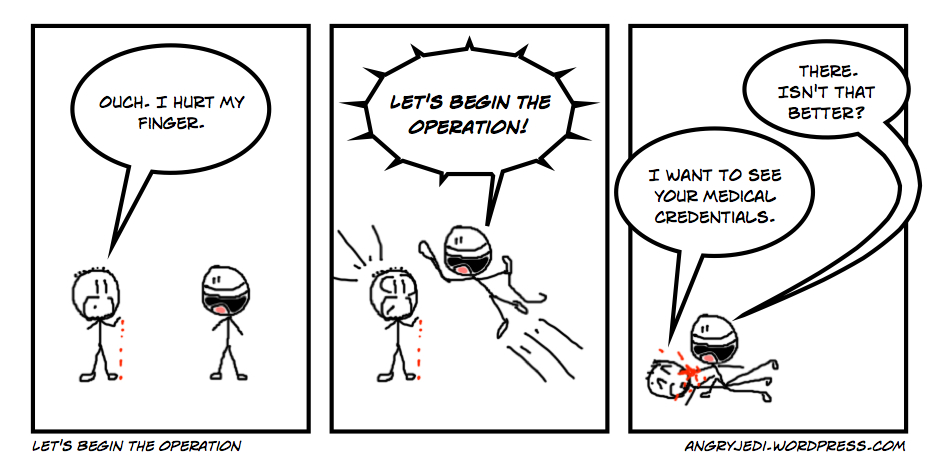
1149: Let's Begin the Operation

Page_1I really love the Trauma Center games, and have done ever since I first picked up Under the Knife on a whim early in the lifetime of my Nintendo DS. (As a matter of fact, it was a combination of Under the Knife and Phoenix Wright Ace Attorney that convinced me to pick up a DS in the first place, thereby proving that there most definitely is a market of at least one person for games based around relatively "mundane" things.) I loyally picked up all the subsequent entries that made it to the UK, these being the Wii remake of Under the Knife (known as Second Opinion) and the official sequel (on Wii again) New Blood. To my knowledge, Under the Knife 2 for DS never made it other here, and neither did Trauma Team. It's the latter I'd like to talk about today, as I've had a brief play with it for the first time this evening.

The early Trauma Center games, lest you're unfamiliar, were curious beasts, somewhere between medical procedural drama, simulation, visual novel, arcade game and batshit crazy sci-fi extravaganza. Essentially they unfolded with lots of talking head scenes between the main characters and others who were involved in the story, and were frequently punctuated with frankly terrifying surgery sequences in which you had to perform various lifesaving procedures with a considerable degree of gusto. Time limits were tight, vital signs were constantly dropping and the dramatic music didn't help matters. To date, I've never played any games that set me so delightfully on edge.

The format didn't change a huge amount between the three games that made it to the UK. Sure, it jumped from the touchscreen interface of the DS to the "pointer" control of the Wii (which I actually preferred, I think) but for the most part, you were doing fairly similar procedures. In a sense, this was a strength of the series' gameplay — by learning how to do these relatively straightforward procedures (and learning to recognise when you needed to perform each one) you could eventually end up as some sort of lightning-fast surgery god by the end of each game. It was immensely satisfying to, say, complete a heart operation within the space of about 30 seconds while any astonished onlookers gaze, bewildered, at your frantically-wiggling hands. And by golly, did you need those skills by the end of each game. Each Trauma Center's final boss (yes, they had final bosses — I told you they were batshit sci-fi crazy) was an immensely challenging piece of game design that forced you to use all the techniques you'd learned as quickly and efficiently as possible, and it felt good when you finally took them down.

A common criticism of the early games was their drift away from recognisable (if "arcadified") medical procedures and a reliance on made-up diseases that were best treated by playing Space Invaders inside someone's lungs. (I exaggerate. But you get my drift.) Trauma Team was set to be a rethink of the series, though. To quote Atlus themselves:

"Trauma Team is a subtle departure from the standard Trauma Center game experience. By moving the experience away from a sci-fi concept and making the situations more realistic, our new focus is on the characters and the sense of accomplishment that stems from having saved a life instead of simply beating a stage. It's our intention to provide you with a medical drama more immersive and fulfilling than any you've ever experienced."

Of course, two pages later in the manual we have this:

"This young surgeon was apparently involved in a biochemical attack on Cumberland University that killed several people, during which he lost his memory but not his impressive surgical skills. While serving a 250-year sentence for the atrocity he can't remember committing, he was approached by the government with an unusual offer…"

…but then it just wouldn't be Atlus if there wasn't a touch of crazy in there. (See also: the orthopaedic surgeon who is also a superhero.)

Trauma Team takes the focus off the surgery (although that's still present) and adds a bunch of different specialisms that you can flip back and forth between at will. In total, you'll find yourself indulging in "regular" surgery (hah), first response (improvised surgery with limited tools and multiple patients), endoscopy (first-person perspective bowel ulcer-blasting), orthopaedic surgery (banging nails into things?), diagnosis and forensics. This evening, I tried a touch of the endoscopy and diagnosis, and both were pleasingly distinctive experiences.

In endoscopy, you take control of an endoscope and must carefully thread it through the patient by fine-tuning its angle with the Nunchuk stick and pushing it forward by holding buttons and pushing the Wii Remote towards the TV. Along the way, you'll run into various symptoms that need to be treated — blood pools need to be drained, ulcers need medicine injecting into them, injuries need haemostatic forceps applying to them. While doing all this, you need to make sure you don't bang into any walls, and on occasion you'll find yourself having to thrust your endoscope through various pulsating sphincters without getting caught. The introductory mission wasn't too tough, but I can see this being good old Trauma Center edge-of-the-seat stuff later on.

Diagnosis was really interesting, though. Rather than being "actiony" like the various surgery sequences, diagnostic sequences are much more adventure gamey. In the episode I played this evening, a teenage girl came in complaining of shortness of breath and it was up to me to determine what was wrong with her. Coming to a diagnosis is achieved through a pleasingly authentic-feeling procedure in which you must question the patient, point out statements that include abnormalities, perform an examination with a stethoscope, review CT, MRI and another type of scan I've forgotten the name of results and finally determine what the hell is wrong with the person. There's even a fun House-style deduction minigame in which your computerised assistant presents you with a bunch of possible diseases, and you have to match the symptoms you've found with the various descriptions to whittle it down to a definitive diagnosis.

I'm yet to try the other specialisms, but I can already tell I'm going to like this game a lot. The past games had interesting characters and fun (if insane) stories, and I'm looking forward to seeing where they go with this one. Plus the Trauma Center team is one of the few series where I've found myself actively wanting to go back and improve my scores/ratings.

Before I play any further, though, I should probably complete something else. I'm coming up on the end of Kira Kira, so once that's done I'll be able to play Trauma Team without guilt alonside Ar Tonelico 2 and SimCity!

1145: Metafalica

Page_1I've been continuing to play Ar Tonelico II and it's really rather good. One thing I've found particularly endearing about it is the fact that just when you think you've got a handle on the way it does things, it goes and does something else interesting just to throw you off a bit. And yet even despite all these mechanics that get added over time, it still feels like a coherent experience as a whole.

Let's take the stage I've got up to now — "Phase 2" in game terms. In the first Ar Tonelico, the change from Phase 1 to Phase 2 marked the point where you were out of the "exposition" chapter and into the plot proper. Phase 2 was also the point where you had to choose between the two heroines, and then had two completely separate (but related) storylines to follow along with. The paths then reconverged towards the end of Phase 2 and remained together for the (completely optional) Phase 3, which offered the "true" ending of the game.

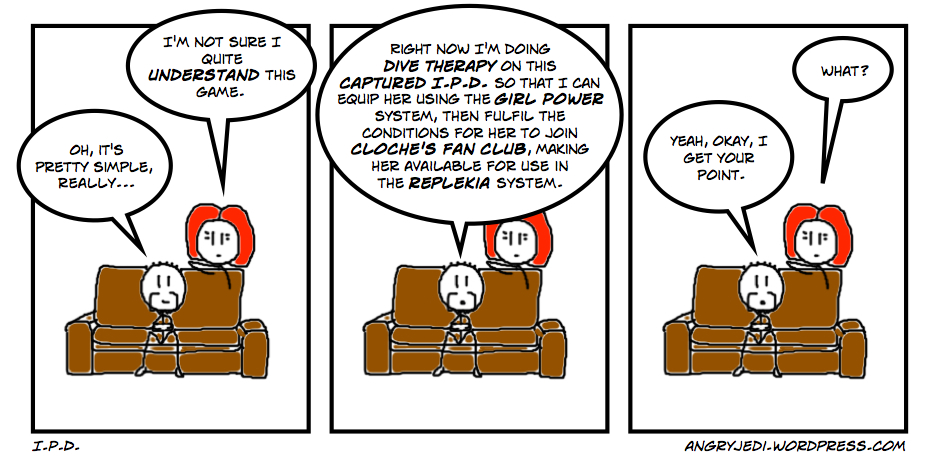
Phase 2 in Ar Tonelico II is a bit different. Rather than, like the first one, being set in the same locations and simply branching off in two different directions, Phase 2 of Ar Tonelico II takes place in a completely different area that works completely differently to the environment you've spent the previous 12 hours in. The early part of the game is, aside from its many and varied peculiar gameplay systems, relatively conventional — you visit towns and do stuff in them, then you go to dungeons. Then you go back to towns. And so on. The linear plotline is broken up by an optional "hunting" sidequest in which you can track down various "I.P.D."-infected Reyvateils to add to your "Girl Power" arsenal (I'm not even going to get started explaining that, I'll be here all day) but for the most part, you're doing the usual JRPG business.

Phase 2, meanwhile, takes place in an environment that changes according to your choices. Early in the Phase, you're introduced to a new mechanic known as the Infelsphere. This virtual world works in a similar way to the "cosmospheres" found inside the heroines' minds, but rather than reflecting their inner turmoil and anxieties, the Infelsphere represents the relationship between the two heroines and how they understand each other. Events unfold in the Infelsphere in which you have to make choices as to how to respond, and the choices you make in the Infelsphere subsequently affect what parts of the "real world" open and close to you. Your eventual goal is to get to a specific location by navigating your way through a maze of these pathways that open and close according to how the Infelsphere events unfold, with each point on the path containing some sort of "trial" to overcome. This might be as simple as defeating a monster, or it might be a challenge such as successfully smuggling biscuits past the penguin-like "Pippen" creatures.

Thematically, in each of these trials, you're "proving your love" to one of the heroines, which subsequently provides you with keys to unlock new events in the Infelsphere, and so it continues. It's a really peculiar, really interesting structure that not only offers some unconventional JRPG gameplay in the "real world" sections, but also provides some intriguing insights into the characters and the way they respond to various situations in the Infelsphere component.

You'll notice I haven't really mentioned the plot in this description, and that's deliberate, as discussing the plot surrounding all this would be a massive spoiler, so I'll spare you that — for now, anyway. What I am finding particularly pleasing about Ar Tonelico II as a whole, though, is that even if it didn't have a compelling plot and awesome characters — which it does — it would still have rock-solid gameplay with an absolute bucketload of things to do. It is just one of the many, many examples out there that prove JRPGs are far more than the "ATTACK, MAGIC, ITEM"-fests that ill-informed detractors of the genre assume these games still are.

They haven't been that way for a long time, people. So if you haven't played a JRPG since Final Fantasy VII I strongly recommend you check out what the genre has done since then — you might just be very pleasantly surprised by what you find.

1140: Another Valley Without Wind

I really liked A Valley Without Wind, even though I never came anywhere near to "finishing" it, for want of a better word. (I say that because once you beat the "Overlord" who was supposed to be your antagonist throughout the game, you simply moved on to another randomly-generated continent that was being threatened by another Overlord.) It was a really interesting, if somewhat flawed game that obviously had a lot of love thrown into it. It was a game clearly put together by people who had a vision of what they wanted to achieve and were willing to experiment in order to realise that vision.

For those who are unaware of A Valley Without WindI wrote about it a few times approximately three hundred days ago. Here's one post, here's another, and here's a bit of creative writing inspired by the game's emergent narrative.

I was intrigued and excited to hear that the developer was putting together a sequel to the game, and that said sequel would be provided free to everyone who owned a copy of the first game. (You don't see that sort of generosity in the triple-A sector, that's for sure!) Details were relatively scarce to begin with, but it sounded like the intention was to completely overhaul the game and make it a more focused experience. The reason it was being developed as a sequel and not as another one of the many updates that the first game saw is that it involved a fundamental rethinking of the game structure in particular — rather than being potentially endless and rather freeform like the first game, A Valley Without Wind 2 was to have much clearer victory and loss conditions, making for a game which felt much more like it had a "point".

I spent a little while playing A Valley Without Wind 2 today and I'm intrigued by what I see so far. Here's the gist: rather than playing the role of a series of adventurers given magical powers by a "glyph" like in the first one, in this game you play a single character who is immortal thanks to a crystal given to them by the big evil demon overlord dude whose dark forces you've infiltrated. This means that you can't technically die — well, you can, but it's more of an inconvenience than a tragedy, since you can just come back again afterwards.

You're thrown into command of a ragtag group of survivors on the planet of Environ as they attempt to scavenge resources, build up their defences and eventually take down the big evil demon overlord dude. The game unfolds in two distinctive components — a turn-based strategy game and a 2D side-scrolling platform game. This is a similar structure to the first game, though the overworld map in the first game didn't involve much strategy and was more a means of simply exploring rather than anything else.

Each turn, you can move any of the survivors in your group to any of the "purified" squares in your domain. If they're already in a suitable location, they can perform an action such as working a farm to produce food, working a factory to produce scrap metal or building a new structure. Occasionally, monsters emerge from the overlord's lair on the map and the survivors must deal with them. Eventually, after 15 turns, the overlord comes out to play and starts stomping around the map, and the survivors must avoid his unwanted attentions as much as possible while you build up your power to a strong enough level to take down His Demonicness.

To end a turn, you move yourself into a space next to your currently-controlled area and begin a 2D platform game mission in which the aim is to get from left to right and destroy a generator to "purify" that square and its surroundings. Beating the level ends the turn, causing time to advance. Each level has a different theme according to its terrain type, and many have special buildings and structures to explore. Within the levels, you'll find various types of enemy and pieces of equipment, many of which have peculiar randomly-generated special effects — how does a pair of boots that makes you run faster but sets you on fire in the process sound?

Your character is highly customizable, and you can tweak your "loadout" each turn if you want — though not once you're into a mission. Several different classes are available at the outset of the game, each of which has their own set of four spells. Additional classes become available as you explore, and defeating bosses in special "Level Up" towers unlocks new perks that improve your abilities in various ways. You have to find a good balance between expanding your territory so the survivors have space to run away from the overlord when he comes out to play; finding Level Up towers to improve your own abilities; and ensuring your forces have enough resources to survive. As soon as your last survivor dies, you lose the game, so it's in your interest to keep expanding and recruiting new members to your forces.

I really like what I've seen so far. It's much more "focused", though this has come at the expense of the wonderfully complex randomly-generated levels of the original game. One thing I really liked about the first A Valley Without Wind was the sheer amount of stuff there was to do. You could wander into pretty much every building and explore it to try and find cool stuff. You'd never get anywhere if you did that, of course, but the fact it was possible was really cool. By contrast, A Valley Without Wind 2's levels are much shorter and more linear, and traipses through buildings are linear shortcuts between two parts of the level rather than sprawling, mysterious structures to explore. On the whole, it's a change for the better — as I say, though, it does make me miss some of the first game's idiosyncrasies.

One thing I'm not sure how I feel about is the change to the soundtrack. The original game featured a rather wonderful score that had more than a touch of chiptune about it, giving the retro-style gameplay an even greater sense of retro flair. The new game features a number of recognisable themes from the first game, but a much more "realistic" sound to its score. It's good — but is it as charming as the bleepy chiptunes from the original? I'm not sure. One thing I will say, though; the title screen music is absolutely gobsmacking and well worth just sitting and listening to for a bit.

I'll be checking this game out a bit more in the coming days, and I'll be intrigued to see if it can hold my attention. I liked the first game a lot, but the fact I never really felt like I was getting anywhere put me off playing a long way into it. This new version appears to have fixed that particular problem with a much more focused experience, so I'm keen to see how it plays out. Knowing my general abilities in the strategic department, I am anticipating a complete loss at the hands of the overlord within 20 turns, but we'll just have to wait and see about that, won't we?