1199: Back... to the Mansion

I never played the first Luigi's Mansion, to my shame, but I understand it was a good time, if perhaps not quite up to the standard of some of Nintendo's other, more high-profile titles.

I have, however, been playing the second Luigi's Mansion game thanks to a copy generously provided to me by my brother for my birthday. Yes, it's the second 3DS-related post in as many days, but I actually want to talk a little more generally about Nintendo and how they do things rather than go into the specifics of the console and the game itself.

Luigi's Mansion 2 doesn't come with a manual. It comes with a pathetic little single sheet of paper that outlines the basic controls, plus all the other usual health and safety crap that Nintendo always bundle all their products with.

What struck me in the couple of levels of Luigi's Mansion 2 that I've played so far was this, though: it doesn't need a manual, because it is so immaculately and intuitively designed that even someone completely unfamiliar with the original game will be up and ghost hunting within seconds, and all without any real "tutorial". Okay, there are a few messages the first time you get items, but an awful lot of stuff isn't explicitly explained at all — it just makes perfect sense.

This is in direct opposition to the way that a lot of mobile and social games work — pretty much every mobile and social game out there begins with a long, tedious, badly-worded and unskippable tutorial that literally doesn't allow you to do anything but the thing it's telling you to do. No sense of exploration, no means of discovering things for yourself, no means of skipping the bullshit if you're already familiar with how to "Build Your Own Town!" and then spend the rest of your life tapping on things every time your phone lights up.

I found this interesting, because ostensibly a lot of Nintendo's games target a similar demographic to those who play mobile and social games. This isn't to say that they're dumbed down or "casual", I hasten to add — but their recognisable, consistent, family-friendly aesthetic and "pick up and play" nature makes them ideal for pretty much anyone to try for themselves and probably have a pretty good time with.

I think it's a difference in approach. Nintendo comes at it from a rather welcoming angle that is friendly to both experienced gamers who have been helping Mario out since the '80s, and newcomers who are coming to a Nintendo game for the first time on the 3DS. "Come on in," their games say. "We're going to have some fun. If you know what you're doing, go right ahead and enjoy yourself. If you're not sure what to do, though, don't worry — we'll help you out."

Compare and contrast with the way that, say, Zynga treats you when you start one of its games. "YOU!" the game seems to say. "You are STUPID. You are a WORTHLESS IDIOT who has NO IDEA how to play a fucking video game. Why else would you be playing one of OUR games? Let me walk you through everything EXTREMELY SLOWLY. No, I don't believe that you know how to play this game already. SHUT UP. You can start playing when I say so. Don't click there, click here. I said CLICK HERE. I'm going to wait here until you click here. No, I don't care if you want to make it full screen. I say click here, so you DAMN WELL BETTER CLICK HERE. Twat."

I'd never really noticed this strong distinction until recently, but by golly it is noticeable. And it makes the difference between me playing a Zynga game and feeling like I'm having my intelligence insulted at every turn, and playing a Nintendo game and wanting to show everyone how awesome it is.

1198: ThreeDeeEss

After some hesitation — and despite owning several games for it — I finally got my own 3DS today. We've actually had one in the household since Andie's last birthday — it belongs to her — but with the combination of Fire Emblem: Awakening and the copy of Luigi's Mansion 2 my brother got me for my birthday (thanks!) I figured it was probably about time I got my own rather than depriving Andie of the opportunity to play Harvest Moon whenever she pleased.

And, as predicted, just a short period of time with the 3DS has reminded me once again that people who claim traditional handhelds are on the way out and that mobile phone/tablet gaming is the future are talking out of their arse. Yes indeed.

The quality of the experiences on the 3DS and Vita is just in a completely different league to that you get on a smartphone. Completely. It also makes the rapidly-widening schism between free-to-play/"freemium" and traditionally-sold "pay once, play forever" games extremely apparent.

Today, for work (last day! Woo!) I reviewed the new Transformers game for iOS and Android. Said game is the latest in the interminable string of "card battle" games that are available for those two platforms, which means it's a monotonous, tedious, strategy-and-gameplay-free experience that has only the most tenuous link to its source material. It is, in short, designed as little more than a means of getting people addicted enough to the sight of little bars filling up to want to pay money to "collect" virtual cards that don't actually exist. "This is a super rare card!" they'll say, failing to point out that it is data rather than a physical object and is thus only as "rare" as they decide it should be at any given point in time. There's no joy in playing that game; it's mindless busywork — something to do for the sake of having something to fiddle with rather than something that actually engages your brain and makes you interested in what's going on.

The phrase "mindless busywork" describes probably 90% of the new mobile and social games that are released every day. Which is why I have no desire whatsoever to play them in my free time.

Compare and contrast the crap that is Transformers Legends to Fire Emblem: Awakening on 3DS, then. Ostensibly, the two games are of the same genre: RPG. And yet the difference in quality is apparent from the moment you fire up the game. And it only gets more painful to even contemplate this difference as you go on.

Fire Emblem is a game designed to entertain you and challenge you. It's not designed to massage your ego through giving you tasks to do that are completely free of any sort of challenge, and then extract money from you while you're feeling good. It has the means of extracting money from you through its paid (optional) downloadable content, but the experience in and of itself is complete, and it doesn't nag you at any point to do something that will cost you money. It doesn't tell you how long you can play before you have to either stop or pay, it doesn't tease you with "if you pay $5 you might get this awesome hero" nonsense — note, "might" — and it doesn't thrust gigantic screen-filling adverts in your fucking face every five minutes like most modern mobile games do. Nothing breaks immersion for me more quickly than happily playing a game then suddenly everything stopping and the device on which I'm playing said game asking me if I want to download another, completely unrelated free game. The answer is, without exception, "no, fuck off."

And if the adverts don't break immersion, the "user retention" strategies certainly do. "Play the Daily Spin now!" announces a game that is attempting to be a gritty depiction of medieval life, failing to see how completely inappropriate a slot machine is in this context. "Spin the wheel for prizes!" barks Gollum in the official mobile game of The Hobbit. "Get free coins every day!" bellows whatever shitty puzzle game has ripped off Bejeweled and monetized it out the arse this week.

No. So long as mobile phone gaming is the preserve of sleazy chancers who prey on the weak and stupid, traditional handhelds have absolutely nothing to worry about.

Were you an advocate of mobile and tablet gaming, you may well point to the disparity in price between mobile games and 3DS/Vita games and make some sort of non-specific sneering noise at this point. My response to that is very simply "you get what you pay for."

1196: What's Yours is Mine

My good friend Mark and I played a bunch of Monaco: What's Mine is Yours What's Yours is Mine (damn it all to hell, I KEEP getting that the wrong way round) via the wonder that is the Internet this evening. It's rather fun.

If you haven't come across this peculiar little game before, it's essentially a multiplayer stealth game in which you cooperate to complete various heists as efficiently as possible. This isn't a ludicrously violent first-person shooter-style heist as in Payday: The Heist, however; no, these are missions where you have to sneak, think carefully about what you're doing and occasionally frantically improvise while being chased by a pack of slathering dogs.

Monaco's main distinguishing feature over many of its peers is its heavy sense of style. Levels are depicted from a top-down perspective as a black-and-white "blueprint" of the building the team are currently plundering, with only the regions visible to the player's current position "lit up" and showing their full detail. The rest of the blueprint is marked with various icons showing objects that can be interacted with, treasures to find and the eventual mission goal.

Controlling Monaco is extremely simple. Most actions are performed simply by walking into the object you would like to interact with — walk into a locked door to pick its lock, walk into a computer to hack it, walk into a safe to crack it. Each of the game's character classes, each of whom are unlocked over the course of the complete campaign, have their own special abilities that can help the team as a whole. The Lookout, for example, displays the locations of all guards and civilians (who alert guards) on the map when she is either standing still or sneaking. The Locksmith, meanwhile, can pick locks and crack safes more quickly, while The Cleaner can knock out guards or civilians that are unaware of his presence. Each level also has certain items that can help out — sometimes there are guns which can be used to kill guards, sometimes smoke bombs to sneak past, sometimes EMP grenades to disrupt electrical systems.

The interesting thing about Monaco is that it doesn't spoon-feed the player everything. You're given basic tutorial text through prompts on the floor as information becomes relevant, but the specifics are up to you to determine through experimentation. For example, on the last level Mark and I played this evening, we came across doors marked with a "hand" symbol that appeared to set off alarms if we successfully opened them. We subsequently discovered that these doors and the alarms could be bypassed by either hacking a nearby computer or cutting the power to the area they were in. The game didn't tell us this — we had to find it out for ourselves. I'm all for this.

This lack of spoon-feeding extends to the visual information provided to the player, too. The top-down display of what's going on is presented in a rather abstract manner, so you have to use your imagination to picture what's actually going on. In many ways, it's quite like a board game — albeit one you play in real-time — as you spend a lot of time looking at abstract representations of things rather than what they actually are. Nice little touches are there to stoke the fires of the imagination, however — the "blueprints" for the buildings are all marked with the names of each room, for example, so you can picture the purpose of each place you visit and why you're there. Some truly excellent (and easy-to-miss) ambient sound gives a wonderful sense of atmosphere to the whole experience, too. This is a game worth wearing headphones for, as just by using speakers you'll miss out on a lot of interesting audio cues.

Perhaps most pleasing is the fact that it's a cooperative game that can be played either online or off. Up to four players can cooperate with one another either all on the same computer, over a LAN or via the Internet. The game can also be played solo — and is a completely different experience when doing so, as you can't rely on the other players and their characters' abilities to back you up.

On the whole, it seems to be a really interesting game that I'm looking forward to trying again with friends. It's noticeably different from the "norm" and a lot of fun to play. It's also just twelve quid, so grab a copy today.

1194: Courting the 'Core'

Social games, it's fair to say, have a bad reputation among those who are euphemistically referred to as "core gamers". This bad reputation isn't altogether unjustified, of course — social games are, in many cases, derivative, exploitative or just plain boring — but despite the prevalence of Men In Suits (or, probably more accurately, Men In Trendy T-Shirts And/Or Turtleneck Sweaters) who have never played a video game before in their life running the show for the most part, there's a lot of talent in that particular sector of the industry.

So why the hell doesn't this part of the industry do more to attract the "core"?

It's at this point that, if I was talking about this in person with someone directly involved with the industry, that they would point to one of the following facts: 1) Candy Crush Saga having approximately 15 million daily active users; 2) CSR Racing on iOS earning somewhere in the region of $12 million a month when it launched; 3) The Top Grossing chart on iOS being dominated by games that are free to download.

These are all facts, and cannot be ignored. However, that doesn't necessarily mean that they're good things. As I've said many times in the past, just because you can do something doesn't mean you shouldCandy Crush Saga has 15 million daily active users because it nags them via notifications to come back and play; CSR Racing earned $12 million a month by forcing people to pay up for "gas" for their cars if they didn't want to wait; and don't even get me started on what I think of the Top Grossing chart on iOS and the awful crap therein.

Aside from these matters, the fact that the social and mobile games sectors aren't courting the "core" more aggressively is just baffling to me. While those who identify as "core" gamers — i.e. those who will happily sit down in front of a computer or console for several hours at a time to use it as their primary means of entertainment rather than an idle timewaster — do not exist in as vast a number as those who have a Facebook account and who have tried Candy Crush Saga at least once, there are some important things to bear in mind.

Most crucially, of those 15 million daily active users that Candy Crush Saga has, only a tiny fraction of them actually pay anything. Some of them might pay a lot — these people are rather revoltingly referred to as "whales" by people in the industry — but an awful lot of them will either refuse to pay out of principle or just not enjoy the game enough to want to spend money on it.

Here's the thing: "core" gamers spend a lot of money. "Core" gamers will happily spent £40 on a brand new game without having read a review. "Core" gamers will pay a premium to get pointless cool stuff that they can show off. "Core" gamers are a lucrative source of income, in other words. Much as it pains me to break it down that way — I'd much rather games be seen as creative works than business products — it is, in fact, true.

So, then, I have to question why more of an effort isn't being made to make "core" gamers take social and mobile games seriously. Because it's not. "Core" gamers see the majority of social and mobile games as a massive joke — a festering boil on the arse of the industry; a source of interactive entertainment that doesn't create "proper games" and instead puts out the very worst sort of shovelware.

They're right, to an extent. So here's a few things the social and mobile sectors could do to be taken a bit more seriously by potentially one of the most lucrative markets out there.

Stop ripping the same things off all the time.

Seriously. Cut it out. We've all played Puzzle Bobble. We've all played Bejeweled. Stop trying to make out your puzzle game is new and innovative when, in fact, it is simply either Puzzle Bobble or Bejeweled (or, in a few cases, Jawbreaker).

If you must draw inspiration from past titles, that's fine; just stop drawing inspiration from such a small pool. Just in the puzzle game genre there are hundreds of great games begging for a social adaptation — Columns, Klax, Super Puzzle Fighter II Turbo, Puzzle League, Dr Mario, Baku Baku Animal… I could go on — so why are we constantly subjected to the same "match-3" bollocks over and over?

This isn't just an issue in the puzzle genre — social RPGs all rip off Mafia Wars; farming sims all rip off FarmVille; citybuilders all rip off CityVille, and none of them were actually that good in the first place.

Stop ripping yourself off.

If you already have a match-3 puzzle game in your portfolio, you don't need another one. King, currently the biggest social game company in the world thanks to the aforementioned Candy Crush Saga, is terrible for this. Now that Candy Crush Saga is the top performing game on Facebook, they've put out another game. What kind of game do you think that is? That's right; a game where you swap coloured things around to make groups of 3 in horizontal or vertical lines. Only this time they're fruit and vegetables!

Or how about Kabam, who have now released the exact same game with slightly different graphics and a different name four times (Kingdoms of Camelot, Kingdoms of Camelot: Battle for the North, Arcane Empires, The Hobbit: Kingdoms of Middle-Earth) and no-one (except me) has called them on it.

The fact that people buy into this is just depressing.

Hire some fucking writers.

Quite a few social games these days are very well presented, with quality graphics and decent sound and music. In many cases, they actually create quite an impressive atmosphere… until the player is asked to read anything and it becomes very apparent that the "plot" of the game, such as it is, was written by a dyslexic Russian 10-year old who had just played Magic: The Gathering for the first time.

Good writing is just as important as the more immediate parts of your game's presentation. Don't skimp on it. And even if you're not going for an epic plot in your game — incidentally, puzzle games do not need plots, so just stop trying to cram one in — at least get someone to proofread the in-game text, fix any typos and glaring grammatical errors… and make sure if you're releasing it in English-speaking territories that all of the game's text is actually in fucking English.

A shout-out to 5th Planet Games here, who actually make an effort with this sort of thing, even if the gameplay of the games sometimes isn't up to much; Legacy of a Thousand Suns may be a Mafia Wars ripoff in terms of gameplay, but at least it has some consistently well-written story text throughout, unlike Mafia Wars, which didn't even try in this regard.

Stop using outdated tech.

Adobe is winding down Flash support, so it's time for Web-based games to do the same. Relying on Flash means that you limit yourself to those using a computer that supports Flash, and excludes those on tablets and mobile phones. There are a ton of cross-platform solutions available now that allow you to deploy an app on the Web, mobile platforms and as a standalone PC, Mac or Linux executable, so there's really very little excuse for not using one.

Not only that, but your average computer these days is more than capable of dealing with some simple 3D graphics — in fact, most are more than capable of handling decent-quality 3D graphics. Unity is a solid option that makes porting between platforms a snap; use it.

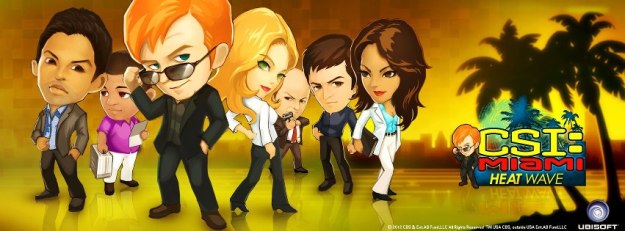
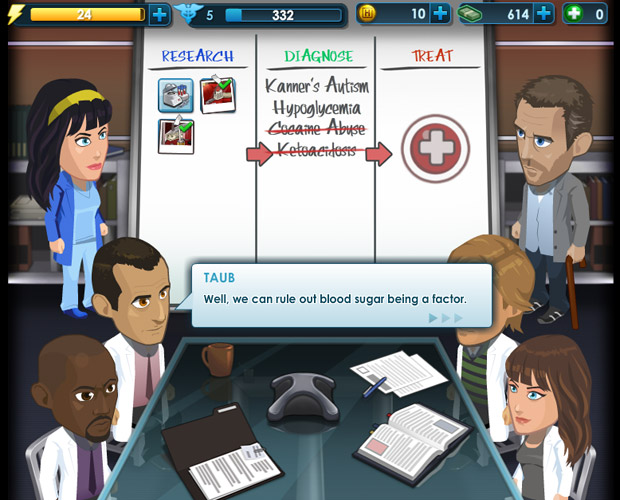
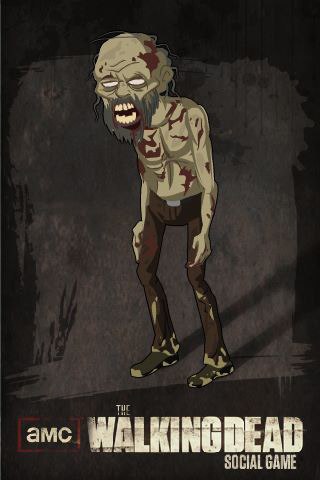
Stop using stupid, inappropriate aesthetics.

This is what the artwork for the CSI Miami Facebook game looks like:
622367_325365960890338_170300072_oThis is a screenshot from the official House M.D. Facebook game, developed by the same team:
house_1And this is what a zombie looks like in the Walking Dead social game:
Social_Game_Zombie


I don't think I really need to say anything else on that note.

If it doesn't belong in the game, don't put it in the game.

You want to keep your players coming back day after day? Don't shoehorn in a stupid roulette game that makes absolutely no thematic sense whatsoever; instead, simply make a good game that people will want to keep playing.

Stop assuming I'm an idiot.

"Core" gamers have played games before. They don't need your tutorial to unfold over the course of the first 20 levels of your puzzle game. Make it brief, and make it skippable.

Along the same lines, it's okay to tell someone to do something and then not put a gigantic flashing arrow over the top of it and simultaneously darken the rest of the screen, just in case they missed the gigantic flashing arrow. Allow the player to experiment and discover things for themselves rather than pointing every single thing out to them. At the same time, provide a detailed Help file and/or tooltip system so that they can look things up if they aren't clear.

On a slightly different but related note, it's okay for games to be complex. Again, "core" gamers have played games before and are okay with complex mechanics. Important note: "complex" is not the same as "boring". Kabam and anyone else making "midcore strategy games", please learn this.

Make it so fun I want to pay, not so inconvenient I have to pay.

This is the biggie. Monetisation is the biggest challenge in free-to-play gaming in general, and particularly in mobile and social games, which often attract huge audiences but relatively tiny proportions of paying customers.

"Core" gamers do not like feeling nickel and dimed. Look at the negative response to stuff like Dead Space 3, or Real Racing 3 — both of which, not coincidentally, are by EA.

"Core" gamers also do not like having their time wasted. This does not mean that they will pay to bypass wait timers in your game; it means they will simply stop playing.

Provide "core" gamers with stuff they can buy that improves their experience, but which doesn't break the game. Throw out that stupid energy system — a "core" gamer will stop playing when they're good and ready, not when you tell them to stop. Throw out that "it takes three hours of real time to harvest your crops" bullshit — if you explicitly send them away, they won't come back. Instead provide them with cool stuff that they want to show off — new outfits for their character, new paint jobs for their car, new background music or even whole new levels or areas to explore. If you want a good example of how to do it right, look at stuff like DC Universe Online and Perfect World's free-to-play MMOs — all are satisfying to play for free, but all offer a ton of non-game-breaking benefits to those willing to pony up and buy some premium currency.

Talking of which…

Quit the "pay to win" crap.

"Core" gamers complain. A lot. Particularly when they believe that a game isn't being fair. They'll whinge about mages being nerfed, shotguns being OP'd and generally anything else that breaks the game balance. "Core" gamers play a lot of games and are thus very good at spotting when a game is unbalanced to an unfair degree. Do not make your game so that a crap player can buy their way to dominance over a skilled player; make it so the crap player wants to get better at the game. Reward the skilled player with cool stuff and allow the crap player to see all the awesome stuff they could earn if they were just a bit better; but don't allow them to buy their way to success.

Along the same lines, quit the "Get More Coins" nonsense. Part of the satisfaction of experiences like role-playing games and business sims for "core" gamers is feeling like they've struggled against all odds to earn their rewards. The second you allow them to simply purchase all the money in the game world for $50, you devalue those rewards and make them meaningless. You also, again, break the game balance. Instead, pace your game in such a way that the rewards are earned at a good, satisfying rate, and save the paid stuff for purely cosmetic items. If you must use a virtual currency for premium items, make it a completely separate currency that it's clear can only be acquired through spending money. Keep the "Cash Shop" stuff separate from the normal shop. And for heaven's sake stop plastering the screen with special offers and other sparkling icons — nothing breaks the atmosphere of your otherwise well-rendered fantasy world quicker than a large flashing icon bellowing about "20% Off Gems!"

____

I accept that many of these things are more difficult to implement than what is being done by many mobile and social games now. But they, among other things that I've undoubtedly forgotten — feel free to chime in in the comments — are why "core" gamers do not take mobile and social games seriously.

Court the "core" and you'll make a lot of money. Continue to alienate them, however, and you'll always be a big joke to a significant proportion of people who are willing to spend a lot of money on their favourite hobby.


1192: Take That!

(Because it's just too obvious to start a post about Ace Attorney with the word "Objection!" these days.)

I've started replaying the Ace Attorney series, largely because I recently reacquired the two installments I used to have in my collection that went missing when I loaned them to someone unknown a while back. (The person I thought I loaned them to swears blind he doesn't have them, and I believe him, sooo…) After finishing Lifesigns in all its Ace Attorney-esque glory, I was keen to revisit Nick, Maya and the rest of the gang for some happy fun times.

And I'm reminded why this is still one of my favourite game series of all time. It pushes all my buttons. Visual novel? Check. Adventure game elements (i.e. puzzles?) Check. Interesting characters? Check. Anime silliness? Check. Overdramatic music? Check.

It's testament to the quality of this game series that, even remembering most (though not all!) of the solutions to the various puzzles throughout, it's still a compelling experience I'm happy to sit through again, primarily because of the characters throughout.

Phoenix himself is a good protagonist. He doesn't enforce his personality on the player too much, but he's very much his own person rather than a blank slate. His growth from constantly-sweating, nervous rookie lawyer in the first game to confident giantkiller over the course of the entire series is heartwarming to see, and as I recall, taking down the villain in the final case of the third game was an immensely satisfying experience on a par with, say, defeating Sephiroth for the first time in FFVII.

One thing I like about the series is that it manages to successfully involve the player in a sense of "conflict" without ever resorting to violence. Not once does Phoenix draw a gun or any other weapon over the course of the game, yet the courtroom showdowns are as thrilling and exciting as any lengthy RPG battle sequence. This is one thing that actually improves slightly as the game progresses — in the first game, you simply have five "lives" in the courtroom sequences, whereas in later games you have a "health bar" that depletes by various amounts when you make an incorrect answer or accusation. This is a much better solution, as it allows for a storytelling trick that is unique to games — drama through interface. When the judge says that you'd better get your facts straight before you answer and you see that an incorrect response will drain your entire health bar in one go, you think damn carefully about what you're going to say next.

Ace Attorney is also pretty much the poster child for why it's a good idea to have a "companion character" with the protagonist — particularly if you're not going to go full-on visual novel and have them narrate everything they do. The chemistry between Maya and Phoenix — which successfully manages to get a cross a real sense of love between the two of them without ever once getting the slightest bit sexualised — is a real highlight of the series, and again it's something that grows and changes over the course of the three Wright games. It's a tradition that's continued in the fourth game Apollo Justice, too, albeit with a different companion character, and again in Ace Attorney Investigations (again with an all-new companion), which brings the wonderful Miles Edgeworth to the fore and inverts the series' usual format.

The game looks great on the big screen of the DSi XL, too. I'm rediscovering a bunch of great DS titles on those lovely big screens, and I'm really looking forward to playing the other Ace Attorney games in succession. It's actually been quite a few years since I last played them, and I don't think I've ever played all five one after another. I'll be interested to see how "coherent" they end up being. We'll see!

1190: Dev Diary 5

I've been thinking about interface design today. I told myself that I wouldn't faff around with the default RPG Maker bits and bobs too much so as not to hold up actually writing the story, but in practice it's so simple to tweak this stuff that I couldn't help myself. In doing so, I've immediately made a difference to the game that makes it look a little less like a half-arsed default RPG Maker project and has a bit more individuality, despite still largely using stock assets.

As a reminder, here's a typical shot of how it looked before:

oneyearlater5And here's how a different moment in the game looks as of today:

oneyearlater14Not a huge difference, I know, but the astute among you will notice two things: firstly, the colour of the text box has changed to a deep navy blue rather than the default gradient fill, and the main game screen now has a Persona 3-style "clock" in the upper-right corner of the screen, indicating what time of day it is. Presently, this only shows the time of day, but I'm toying with it showing what day it is, too — my hesitation on this note is that which day it is is only relevant for part of the game rather than the whole thing.

Earlier today, the "clock" was much bigger and looked a bit like this:

cRuISM7 - Imgur


I actually kind of liked it at the larger size, but it was overlapping the portraits of characters who appeared on the right-hand side of the screen a bit too much for my liking, so I reduced it a bit.

The reason I changed the colour of the text box was because I was experimenting with some scripts that changed the behaviour of the menu. Specifically, they allowed a "wallpaper" image to be applied, so my menu screen now looks like this:

oneyearlater10I figured I'd run with the "flat blue" colour scheme, and add a nice silhouette of Ami in the background for a bit of visual interest, and tweak the message box colour to match for consistency's sake. The silhouette image shows up nicely in the various menu screens without being too obtrusive, as you can see from this shot of the save menu:

oneyearlater15

In fact, it shows up particularly nicely when choosing to quit or return to the title screen — a happy coincidence of the fact that selecting this option darkens the screen somewhat:

oneyearlater16

Those of you who know RPG Maker well will also notice I've replaced the default font with the nice, simple and clean lines of Verdana. This was primarily to match the default font used in a message box script I'm using, because it was bugging me a bit that the font in my message windows and in the rest of the interface didn't match.

Oh, God. What is happening to me?

I jest. Fact is, today I'd reached a good natural "stopping point" in terms of composing the story, and it was as good a time as any to fiddle around with the "look" of the game a bit. I'm pleased with the effect it's had — they're only subtle little changes, but they've had a noticeable effect.

Now it's time to stop farting about with all this and move the plot onwards. To give you an idea of how things are going, the game is structured in several parts: firstly, there's a prologue; then there are five in-game days, during which a whole host of different things can happen according to exclusive choices the player makes in each of the morning, afternoon and evening time slots; then there are four unique "second parts" to the game, and one "true ending". So far, I've completely and totally finished the prologue, and I've finished the morning of the first day. If you're actually reading all the text like a normal person and not fast-forwarding it like me when I'm testing (yes, there is a fast-forward function) then there's probably just under an hour of Stuff to Do and Read so far. After I've created various environments once, I can reuse them for other events, which means that development will continue to accelerate as I progress through the story.

oneyearlater11Environments like the one seen above are quite complex, and most stuff in the game is "examinable", so there's a lot of flavour text in there. Now it's done, though, if I want Ami to come back here with another character — which I probably do — I don't have to design that map all over again. Which is nice.
Anyway. I'll leave that there for now. Just wanted to share how things were going!


1189: Lifesigns Critical

I completed a playthrough of the DS game Lifesigns last night, wrapping up a pleasantly satisfying experience that I enjoyed very much as a whole.

For those who haven't read my past enthusing on the subject, Lifesigns is an Ace Attorney-style adventure game/visual novel for the DS that happens to be set in a hospital and occasionally involve surgery sequences using the DS' touchscreen. Unfortunately for the game, on its original release this caused it to be compared unfavourably (and unfairly) to Atlus' excellent Trauma Center: Under the Knife, and as such it was passed over by many due to some rather middling reviews that missed the point somewhat.

Lifesigns proved to be a great experience for me, though, and it made me think about all the potential genres of gaming we simply don't get all that often. And when I say "genre", I'm not referring to whether something is a shooter or a platform game or an adventure — I'm talking about subject matter. Lifesigns is a medical drama, pure and simple, and that's something we simply don't get much in the gaming space. Trauma Center approaches it, but then veers off into crazy sci-fi town partway through — though the more recent Trauma Team does a much better job at remaining at least semi-plausible rather than going quite as batshit as its two predecessors. Then there was 1988's Life and Death and its sequel Life and Death II: The Brain, but both of those were more simulations of the surgical aspects than narrative-centric medical dramas. And don't even get me started on Surgeon Simulator 2013 — hilarious it may be, but realistic medical drama? No no no.

As you have probably gathered from my past enthusing on the subject, the strange and wonderful land of visual novels is one of the most forward-thinking subdivisions of the games industry in this regard. In visual novels, we have "slice of life" games that are about interpersonal relationships (too many to name); games about suffering with chronic conditions (Private Nurse); games about supporting people with terminal illnesses (Kana Little Sister); games about being a member of a rock band (Kira Kira) and plenty more besides. The freedom to pursue these rather unconventional subjects — unconventional for gaming, anyway — is due to visual novels' strong focus on narrative over gameplay rather than the other way around.

But that doesn't mean that there can't be any of what we'd traditionally call "gameplay" in there — Lifesigns is a great example of how you can keep something narrative-focused and still provide the player with things to do. The player has the option to move between different locations at will rather than being railroaded around the place by a completely linear plot; the player can ask various characters about pieces of information they have gathered; the player occasionally has to convince various characters to do or think things by presenting them with appropriate pieces of information; and, of course, the player has to pick up the scalpel and perform everything from appendectomies to emergency open-heart surgery.

Basically I think what I'm trying to say is that I'd just like to see more games about relatively mundane subject matter — and they don't have to be visual novels to be that way. I want to see an interactive sitcom in which you play one of the characters and interact with the others, but in which nothing of earth-shattering importance happens. I want to see more interactive medical dramas. I want to see more games like Ace Attorney where the focus in criminal investigations is on the lawyers, not the police or private detectives. I want to see more "slice of life" games like Cherry Tree High Comedy Club. And, should I find myself never having to look down the iron sights of a realistically-rendered machine gun ever again, I most certainly won't be sorry.

Note that as ever, I'm not saying that massively popular subsections of gaming such as competitive first-person shooters should go away. But I am saying that those of us who prefer something a little more sedate and cerebral should be catered to a bit more, that's all. We're getting there, slowly — I've certainly found enough to keep me entertained without even looking at the triple-A sector for a very long time — but there's still some distance to go before the same people who tune in to House every week are picking up a controller to play a new Lifesigns game.

1188: What the Hell Does 'Qoga' Mean Anyway?

So, I still have one ending of Ar Tonelico II left to see, but given that seeing it involves playing through approximately 85% of the game again, I decided to start the third Ar Tonelico game — the curiously-named Ar Tonelico Qoga — in the meantime. Also, I was waiting for my new old PS2 and my new copy of Ar Tonelico II to arrive before I returned to the lands of Metafalss, so it just made sense to try out the sequel while I waited.

And… gosh. The Ar Tonelico series' jump to "next-gen" consoles (how dated that sentence will look in a few months) meant that the team at Gust et al clearly decided to let loose with their wildest fantasies and build something that is, frankly, off the chart in terms of JRPG weirdness. And that's just within the first four or five hours; I've barely got anywhere with the story yet.

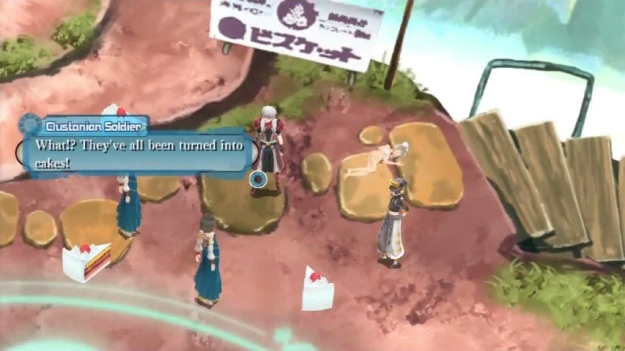
38-Qoga-00033Within the first five minutes, you're thrown into combat against what is either a big muscly man dressed in a cheerleader outfit or an incredibly masculine woman dressed in a cheerleader outfit (I haven't had that particular question conclusively answered yet), only to be followed by a tough-looking swordswoman inexplicably shapeshifting into the adorable young Reyvateil Saki, who regularly refers to herself in the third person and apparently has the ability to transmogrify assailants into cake, but at the expense of some of her memories. An hour or two later, you meet another Reyvateil named Finnel, who is a waitress at a local bistro, but who has somehow managed to get herself stuck halfway up a cliff a very long way away from where she is supposed to be. Also, there's some business with a master assassin who is dressed like a jester, one of the party members is clearly actually [SPOILER REDACTED] from [SPOILER REDACTED] rather than who they say they are, and somewhere along the line Reyvateils "discovered" the fact that if they take their clothes off, their magic gets more powerful due to their bare skin being able to absorb more magic from the tower, or something.
I would like to reiterate that I am approximately four hours into the game so far, and already this is the calibre of insanity we're dealing with. I shudder to think where this one is going to end up.

While none of the above descriptions are exaggerations, though, I have to say that the game appears to handle itself just as well as the previous entries in the series. It's got a self-consciously silly element, yes, and that's even more pronounced than the two PS2 games, but at the same time it also takes itself seriously when it needs to. Ar Tonelico Qoga's setting is a curious inversion of the first game's power structure in particular; whereas in the original game, Reyvateils were often treated as little more than servants to do their masters' bidding, in Qoga it's the Reyvateils (or, more accurately, the Clustanian Reyvateils) who wield all the power, regularly inflicting acts of genocide on humankind in the name of "Cleansing" an area. It's interesting to see the difference this makes to the dynamics of the game world — while I'm not far enough to be able to comment on this in detail yet, it's intriguing.

In all three games, Reyvateils are enormously powerful entities, but the way in which they're treated is very different. In the first game, they are, for the most part, downtrodden and treated like crap; in the second, they are mostly respected but also feared, particularly if they become infected with the "I.P.D." condition that causes them to become uncontrollable and dangerous; in the third, it seems, they are the "enemy" — or at least some of them are, anyway. As the jaunts through the mental worlds of their Cosmospheres make clear, however, Reyvateils are complex beings, just like "normal" humans, and no two are alike — so to say "Reyvateils are evil" is as ridiculous an assertion as saying "humans are evil".

I can't comment that much more on the plot as yet, but it's shaping up to be interesting — and if they go where they're implying they're going in Ar Tonelico II's ending, I'll be very happy indeed.

What has taken a bit of adjusting to so far is the new battle system. Just like Ar Tonelico II shook up the battle system from Ar Tonelico's interesting (if very easy) combat, Ar Tonelico Qoga completely reinvents in-game combat once again, replacing the turn-based fighting of the previous games with real-time arena-based combat that requires you to attack rhythmically in order to build up the Reyvateil's enthusiasm and, well, make her clothes fall off. Sorry, "Purge". I haven't quite got my head around it yet as it's fast-paced and confusing (and challenging!) but it's certainly an interesting change from the previous games, and I look forward to discovering its hidden depths over time.

I'm looking forward to "Diving" into the two heroines and finding out more about them. Even the first levels of their Cosmospheres in this one seem to indicate that they're both, as the vernacular would have it, "dealing with some shit", so I'm intrigued to find out what makes them tick — and also to figure out how on Earth this whole new "Hyuma" system for programming their song magic works. I get the feeling it's going to be a long, bewildering and enjoyable journey.

1174: The Second Tower

I beat Ar Tonelico II: Melody of Metafalica this evening. Or, more accurately, I saw one of its four endings. Two of the other endings won't be particularly difficult to obtain with the tactical saves I made on the way to the finale, but the last remaining one will require playing about 80% of the game again, albeit with a completely different second "phase". I'll probably take care of that last ending alongside a new game, which will either be Hyperdimension Neptunia Victory or the third Ar Tonelico game, both of which I anticipate I will be enthusing about considerably on these pages in the very near future if previous instalments in their respective franchises are anything to go by.

Anyway, Ar Tonelico II. It's… well, fantastic. I must confess to having not been as immediately smitten with it as I was the first game, as the conflicting art styles between the field and battle sprites (and between the field sprites of the first game and the second game) were initially a little jarring. (Seriously, everyone has really, really big hands and massive feet on the field maps and it's very disconcerting to begin with.) But after not very long at all, I found myself looking past this rather superficial consideration and immersing myself in what turned out to be a very pleasingly deep and meaningful story packed with good characterisation and questionable translation from the original Japanese. (On that note, though, the translation was at least understandable despite a few errors, and certainly no worse than some visual novels I've played.)

Spoilarz Ahead

2a91og8Ar Tonelico II stands on its own, but also fits into the current "trilogy" as the sort of "dark middle episode". Whereas the first Ar Tonelico was rather bright and breezy most of the way through, the land of Ar Tonelico II is a bit bleaker. The people are struggling, there isn't enough land for everyone and everyone is clinging to the seemingly hopeless desire that the land's Holy Maiden will be able to create "Metafalica" — a verdant green land summoned through the use of Reyvateil Song Magic. Plenty of political machinations and backstabbings threaten to fuck everything up completely (and pretty much do on several occasions over the course of the entire narrative) but, this being a JRPG, our plucky band of heroes are there to wander the lands, right wrongs and eventually figure out how in the world they are going to help everyone find hope for the future.

Ar Tonelico II's story is nice in that it isn't quite the clichéd "Big Bad wants to destroy the world" business. Sure, there's world-threatening stuff going on and the eventual aim of the game is to save the world from an unpleasant fate, but it's not quite what you might expect. For starters, you spend most of the game not being quite sure who the "good" and "bad" guys are. There's no sign of a single easily-identifiable antagonist who is fucking shit up and needs a good Omnislash to the face; no white-haired pretty boy accompanied by tubular bells and organ music every time he appears. In fact, over the course of the narrative, none of these characters are presented as one-dimensional — most of them go through some sort of change and/or growth as the story progresses.

Perhaps the most interesting thing about Ar Tonelico II in this regard is the fact that the final boss "Mir" from the first game is actually a party member in the second — though you don't know this when you first meet her, and in fact it's entirely possible to go through pretty much the whole game without noticing this or figuring it out, depending on the choices you make and the optional events you witness. Not having played the first game won't affect your enjoyment of the second, but if you have played the first game, the moment where you find yourself going "Wait… OH. Mir?!" is a "big reveal" on a par with Darth Revan in Star Wars: Knights of the Old Republic or SHODAN's first appearance in System Shock 2.

Herein lies one of the interesting things about the first two Ar Tonelico games in general: "good" and "evil" aren't absolute. In Ar Tonelicowe get some insight into why Mir is the way she is and why she is so angry about everything — and it's easy to find yourself sympathising with her rather than just wanting to kick her ass. In Ar Tonelico II, by spending some time with her as a (relatively) normal person, we get to find out a whole lot more about her — what happened to her in the distant past, what led her to her actions in the first game, and how she feels about what has happened to her then and since. If you follow her "route" through to its complete conclusion in Ar Tonelico II, it's a really wonderful story arc for one of the most interesting, troubled characters I've encountered in a very long time. I don't yet know if she shows up in Ar Tonelico Qoga, the third game, but I'll be very happy to see her again if she does.

The overriding theme of the Ar Tonelico series is that of bonds between people, and this is particularly apparent in the second game. The main theme of Ar Tonelico II's story is that the more intense a relationship between two or more people, the more painful it is. The more people you surround yourself with, the more "alive" you feel from being part of something bigger than yourself, but the more pain you suffer when you lose those precious people. The world-ending chaos at the end of Ar Tonelico II is not brought about by a desire for dominance or a display of power, but instead out of a simple desire to not feel that sharp pain of loss any longer. If everyone was able to abandon their physical bodies and live on purely as an individual spiritual entity, the primary antagonist's theory goes, no-one would have any need for other people, no-one would feel the pain of loss, and everyone would be happy in their complete and total individuality. But, responds the protagonist, no-one would be truly alive then. Life would not have meaning drawn from the people around you and the hardships you work together to overcome. You'd be little more than data.

It's an interesting and somewhat bittersweet message, but it works hugely well in the context of both the overarching plot and the smaller, individual character-led stories that unfold over the course of the whole game. I'm all for exploring deep and thought-provoking themes through interactive entertainment, and Ar Tonelico II successfully achieves that without sacrificing the "spectacular" side of its overall experience. It's still recognisably a JRPG with all the over-the-top pyrotechnics and anime-style special attacks that entails, but at the same time it's a complex and emotional tale far beyond the "Evil Guy Is Over There, Go Stab Him" trope that people (largely incorrectly) assume still characterises the genre.

In other words, just go play it, all right?

1170: Easy Listening, Part 1

I am, as you probably know, a big fan of video game soundtracks. They've come on a very long way since the bleep-bleep-bloop of yore, and in many cases these days are eminently worth listening to in their own right.

Over the next few posts I'd like to take a mildly self-indulgent tour around some of my favourite tracks from some of my favourite soundtrack albums. YouTube-heavy post ahead… you have been warned.

Trauma Team

Let's start with something that's fresh in my memory. The Trauma Center series as a whole has pretty consistently great soundtracks, largely composed by Atlus mainstays Shoji Meguro and Atsushi Kitajoh. Both of them have a very distinctive (and quite similar) sound to their compositions, and this is very much in evidence throughout the Trauma Team soundtrack.

What's most striking about the Trauma Team soundtrack, though, is how well the various pieces of music reflect the different characters. For example, for the cool "ice maiden" that is forensic investigator Dr Naomi Kimishima, we have this wonderfully chilled-out number called, appropriately enough, Cool Beauty:

Dr Naomi's segments, as it happens, have some of the best music in the game. For the uninitiated (or those of you who haven't read my enthusing at length about this wonderful game), Dr Naomi's levels are adventure game-style puzzles in which you must unravel the mystery of what happened to one or more corpses using various forensic investigation techniques. As you progress through them, the truth gradually gets closer and closer until finally everything clicks into place and you understand exactly what happened to the poor person lying on the slab in your examination room.

That gradual uncovering of the truth is something beautifully captured by this piece, imaginatively titled Uncover the Truth, which starts out simple and gradually builds up in complexity as it progresses through. Accompanying this piece on screen is Dr Naomi piecing together all the case's various pieces — with a little help from you, of course — and coming to a firm conclusion about what happened. It's pretty great — and surprisingly powerful in context:

Dr Naomi is just one of six different doctors who star in Trauma Team, however, and each of them has their own distinctive "sound" throughout. For example, nameless surgeon "CR-S01"'s pieces are all rather electronic-rock in nature and wouldn't sound out of place in a Shin Megami Tensei game — unsurprising, considering the composers:

Meanwhile, Dr Hank Freebird's pieces focus a lot more on gradually-building tension, such as this piece, which in-game builds itself up as your "combo" of moves made without mistakes (or taking a break) grows:

Dr Cunningham the diagnostician, meanwhile, is a much more laid-back sort of dude for the most part:

Except when things get serious, of course.

Trauma Team's story is split into two distinct segments. The first half sees the six doctors working largely independently from one another, following their own parallel storylines that do nonetheless make a coherent narrative if played in the correct order. However, the really interesting stuff starts happening in the second half, which is completely linear, and follows the entire team's attempts to battle against a disease known as the Rosalia virus.

This part of the game makes use of one of my favourite compositional techniques for soundtracks, which is to take one theme and gradually evolve and adapt it over the course of the story. Rosalia's theme goes through a number of changes throughout the second half of Trauma Team, culminating in something pretty spectacular.

Here we have Spread of Rosalia, a piece that plays during the endoscopy sequences of the game while battling against the Rosalia virus. The recognisable chord sequence and strings backing of the Rosalia theme is present and correct here, with a nervous, tense, slow-moving melody overlaid over the top of it. Treating Rosalia is something that requires care, precision and nerves of steel; this piece of music reflects that rather nicely.

Encounter Rosalia during Maria's First Response missions, meanwhile, and you get treated to this wonderfully intense number that really gets the pulse pounding. Just the thing you need while you're running back and forth between five different patients trying not to let any of them die, huh?

This piece of music, meanwhile, plays during Dr Hank Freebird's orthopaedic surgery missions where he comes across Rosalia. Hank's missions aren't as time-sensitive as many of the other operations throughout Trauma Team, but the high level of accuracy required in them makes them some of the most tense, most physically-exhausting levels you'll be challenged with:

This track, on the other hand, plays while discussing Rosalia and how best to treat it. It's less intense than the other Rosalia pieces, but has a certain air of desperation about it, while at the same time offering a sense of hope… before exploding in intensity towards the end.

Finally, spoilers I guess, our final showdown with Rosalia comes pre-packed with this rockin' piece of music — beautifully fitting for an intense surgical battle against a thoroughly unpleasant illness. Will our heroes make it through…? Well, that's up to you, really…

More tomorrow.