#oneaday Day 350: What I'm doing this weekend

I think I pinned down what I want to do for some videos. As I've noted a couple of times recently, I've been feeling a bit short on inspiration and motivation of late, and I've been wondering how I might shake things up a bit for myself.

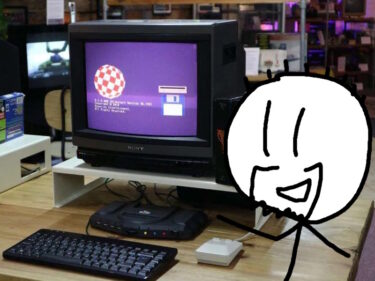
The answer is to do something a bit different to usual! So I'm going to do just that. Specifically, I've set myself the goal of doing two main things this weekend: one, a pre-scripted video on the subject of PS3 racer MotorStorm, which I've only just played for the first time and really like, and secondly, an "Exploring Together" Let's Play-type video on one of the Game Boy games that has just been added to Nintendo Switch Online: a Kemco title called The Sword of Hope.

I'm really interested in the latter. I've never heard of it before — although I must confess that's not hard with me and Game Boy games, since I only had a limited library when I was younger — but I saw someone describe it earlier as a cross between a conventional RPG and the Icom Simulations adventure games. You know, Deja Vu, Uninvited and Shadowgate.

I really like those games! And I really like the NES and Game Boy ports of them, even if they lack a fair old chunk of the text found in the computer originals. So the idea of playing something that appears to be inspired by them, but which adds some additional mechanics over the top rather than just killing you every five seconds, sounds very appealing to me indeed.

I'm going in as blind as possible because I want to include my immediate reactions to the game in the video. And I think, long-term, I'd like to cover some more Game Boy stuff — not just the stuff on Nintendo Switch Online, but in general, too. The Game Boy, Game Boy Color and Game Boy Advance each have vast libraries, and there are some thoroughly interesting titles among them. Presumably because development for these platforms was so cheap — and because they didn't have nearly as much critical scrutiny on them as the TV-connected consoles — developers were, seemingly, quite keen to be very creative with their work on the system. So there's some wonderfully experimental Game Boy (Color/Advance) games out there, and I think there's plenty of scope to explore those through both Nintendo Switch Online and the MiSTer Multisystem 2.

So that's my plan for this weekend. Some of it, anyway. It's a long weekend here in the UK, so I can take my time and enjoy it, then it's back to the ol' grindstone from Tuesday. We've been enduring a particularly busy and stressful period at work for quite some time now, so it's nice to have an extra day off to decompress a bit. It'll all be worth it in the end, though.

Before that, though, bed. Sleep! Sleep is good.


Want to read my thoughts on various video games, visual novels and other popular culture things? Stop by MoeGamer.net, my site for all things fun where I am generally a lot more cheerful. And if you fancy watching some vids on classic games, drop by my YouTube channel.

If you want this nonsense in your inbox every day, please feel free to subscribe via email. Your email address won't be used for anything else.

#oneaday Day 349: PlayStation Library

As I'm eagerly anticipating the MiSTer Multisystem 2 in a few months, I find myself pondering how to handle the "loading games onto it" situation. The temptation with devices like this is always to just load it up with absolutely everything and then you have a magic retro gaming box that can play anything you want at any time. And, to be fair, doing so is pretty easy these days, with how many systems have complete ROMsets archived online. The legality is, of course, questionable, but the reality is that these sets exist.

With disc-based systems, though, it pays to be a bit more selective. I mean, I've got a 1.5TB SD card to load stuff onto, so I could just load the full PS1, Saturn, Mega CD and PC Engine CD libraries on there. But is it a good idea to? I'm increasingly thinking not. After all, the disc-based consoles are where we really started to see a lot of shovelware starting to appear, since discs were a lot cheaper to produce than cartridges, and thus there are big old chunks of the PS1 library in particular that I think no-one would miss.

I also have the consideration that the CRT screen I intend on using with the MiSTer Multisystem prefers 50Hz PAL games. It'll run NTSC stuff, but sometimes not entirely right, meaning I will probably want to load the European versions of games onto the system by default. And, unsurprisingly, with the US-centric nature of much of the Internet, it's a lot harder to find a full PAL set of PlayStation games than it is to download the entire NTSC-U/NTSC-J library.

So I feel like I might be selective. I may well change my mind on this depending on if I manage to find a suitable archive of PAL games, but at the moment I'm thinking I might just load things on there that I know I want to play or that I had in the day, and then if anything else happens to come up, I can always find it later.

There are games I've played before and I'd like to revisit, like The Adventures of Alundra and the original release of Castlevania: Symphony of the Night. But there are also games that I never played back in the day but want to, like Azure Dreams, Tecmo's Deception and Legend of Kartia. I still have a modest PS1 collection here in the house, so I will recreate that digitally as a starting point, then fill out with the games I remember owning and playing back in the day. It's a shame I didn't have a blog back then, because before I got bitten by the "collector" bug I did a lot of trading and exchanging games to afford new ones, as I'm sure a lot of us did. (I also did a fair bit of buying games at least twice if I decided that I really liked them, which I'm sure at least a few of us did, too.)

When it comes to Saturn, Mega CD and PC Engine CD, though, I'm in the dark. But those libraries are also quite a bit smaller than the PS1 lineup, so I can probably just bung the whole lot on the card and explore a bit at a time.

Regardless of what the contents of that SD card end up looking like, I'm still really looking forward to the MiSTer Multisystem 2. Count on there being much more anticipation in the coming weeks and months, and hopefully gushing praise for the thing when it's finally in my filthy hands. Oh, I should probably add; if you have no idea what I'm talking about, check here.


Want to read my thoughts on various video games, visual novels and other popular culture things? Stop by MoeGamer.net, my site for all things fun where I am generally a lot more cheerful. And if you fancy watching some vids on classic games, drop by my YouTube channel.

If you want this nonsense in your inbox every day, please feel free to subscribe via email. Your email address won't be used for anything else.
#oneaday Day 343: MiSTerious

I have been, as you do, contemplating my impending ownership of a MiSTer Multisystem 2. And, as so often happens with such things, I have been pondering how I might make good use of it as something that spurs me on to be creative.

The obvious, simple answer is to use it to write about things and make videos in the places I already have: this site, my YouTube channel, MoeGamer. But part of me also wants to start something new, something a bit different.

Let me tell you the idea I've been kicking around in my head. I'm not particularly looking for "feedback" on this, but I think it will help me out to get this out of my head and onto the page.

You know how everyone likes to say they have a "newsletter" now, rather than a "blog"? Well, I was thinking about that, and thinking about how it might be fun to take that "newsletter" idea a little more literally. Specifically, I was thinking about how practical it might be to do some sort of newsletter/blog thing where, rather than individual articles being about one thing, each post was actually an "issue", like a magazine.

I was thinking it might be interesting to do such a thing with the MiSTer Multisystem 2. Each "issue" could have a brief summary of any news about the system itself — and perhaps about the broader MiSTer ecosystem, though as I type this I know absolutely bugger all about that — and then move on to some magazine-style features, perhaps with a theme for each issue. There could be a "preview" of an upcoming "modern retro" game by one of today's indie developers. There could be a "big review" of a noteworthy game that particularly fit the theme. There could be tips and tricks for classic games. There could be short, capsule reviews for smaller games. And, of course, there could be straightforward features on a particular subject, using the MiSTer Multisystem 2 as a means of exploring and researching that subject.

Realistically speaking, I'm not sure such a thing would really work, because you know what people's attention spans are like these days. Were I to put all that in a single blog post or email newsletter, how many people would read beyond the first paragraph? Perhaps it might be better to do individual posts on an existing site, and then provide some sort of separate newsletter that people could subscribe to via email. I used to do this with Rice Digital and it was fun. The newsletter had a good number of subscribers, too, but honestly I inherited most of those from the previous owners.

The reality of the situation is that it would almost certainly be piss in the wind, because you almost certainly know how hard it is to get noticed online these days. The recent rise of independent publications is great, but in a lot of cases these are already well-established names, and I think (no, I know) there's a lot of great individual independent creators out there who just don't get the credit they really deserve when putting their work out into the world.

So I dunno. I have a lot to think about, but I also have a lot of time to think about it, given that the MiSTer Multisystem 2 isn't arriving until August.

I could also just enjoy the damn thing without worrying about any of this nonsense, but where's the fun in not agonising over things that don't matter, hmm?


Want to read my thoughts on various video games, visual novels and other popular culture things? Stop by MoeGamer.net, my site for all things fun where I am generally a lot more cheerful. And if you fancy watching some vids on classic games, drop by my YouTube channel.

If you want this nonsense in your inbox every day, please feel free to subscribe via email. Your email address won't be used for anything else.
#oneaday Day 336: The new old

I am presently awaiting two new games consoles with "2s" in their names: the Nintendo Switch 2, and the MiSTer Multisystem 2. And I think I might be more excited about the latter.

I've never used anything FPGA, but I'm led to understand that it's a marvellous thing. And the sheer number of different things that the MiSTer supports is exciting me. With the setup I intend to slot it into, I'm looking forward to being able to use it as a retro computer as well as every games console ever up until the PlayStation, Saturn and N64.

Now, the one difference between the Nintendo Switch 2 and the MiSTer Multisystem 2 is that the latter is going to require a lot more setting up and fiddling around with than the Switch 2 will. But I am hoping that any tinkering will be a one-time process, and that once it is done, the MiSTer will be able to just sit there and do whatever I want it to. Within reason, obviously.

I'm going to hook up a keyboard and mouse to the system as well as a controller, so it can be used for actual computing as well as just playing games. I'll probably get another one of the 8bitdo retro-styled keyboards for this purpose — the C64 one would certainly be thematically appropriate, in the absence of an Atari ST or Atari 800XL one, though the one that looks a bit like an IBM Model M is also quite nice.

I'm also probably going to invest in some nice speakers rather than relying on the single mono speaker of my trusty Trinitron CRT. That built-in speaker is surprisingly decent considering its size and placement, but it would be nice to be able to give console games in particular a bit of oomph.

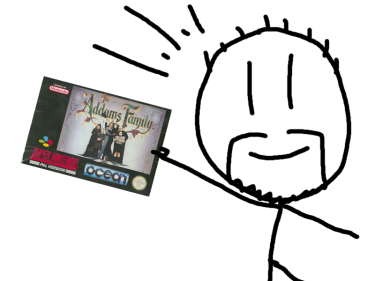
So all told, I think the setup will probably look something like this, but with less wobbly freehand mouse-drawn lines.

With that, I should be sorted for some retro gaming and computing fun for quite some time. At some point I might consider looking into the various solutions available for using real classic controllers on the Multisystem 2, but I don't think I'll make that a priority to begin with. Let's get it up and running and working — and doing what I want it to do — and then we can talk customisation. Because there's a lot of customising you can do with a MiSTer, I'm led to understand!

It's an exciting new world that I can't wait to get involved in. I have a bit of a wait before that happens — the Multisystem 2 is coming out in August — but I guess I can occupy myself with the Switch 2 and Mario Kart World in the meantime…


Want to read my thoughts on various video games, visual novels and other popular culture things? Stop by MoeGamer.net, my site for all things fun where I am generally a lot more cheerful. And if you fancy watching some vids on classic games, drop by my YouTube channel.

If you want this nonsense in your inbox every day, please feel free to subscribe via email. Your email address won't be used for anything else.

#oneaday Day 331: Visit The Cave

It occurs to me that a while back, I went to visit the Retro Collective museums over in Gloucestershire, and I don't think I actually wrote about the experience. Looking back at my Google Photos, it seems that it was 2023 (wow) when I went, and I hadn't yet kicked off this particular round of #oneaday shenanigans back then. In fact, the only thing I wrote about on this blog in the month that I went was a vitriolic diatribe on how much I detested the TikTokification of comedy, something which, rewatching Friends, the subject of much of that post, I still maintain my position on. But I digress.

So! Anyway, what am I talking about? Well, the Retro Collective is a group of people and organisations that make their home in an old mill in Chalford, Gloucestershire, just outside of Stroud. The main attractions for most visitors are the two hands-on interactive museums: "The Cave" upstairs for retro computers, consoles and general gaming tech, and the "Arcade Archive" downstairs for… well, I think you can probably guess.

The Cave is run by Neil Thomas, a thoroughly lovely gentleman who started a retro tech YouTube channel back in 2012, and gradually became considerably more ambitious with what he was getting up to. Notably, he actually followed through on those ambitions, and the result, in collaboration with the other members of the Retro Collective, is a fantastic day out for anyone with the slightest interest in the history of computing and video games.

Neil still makes YouTube videos along with running The Cave — an operation which has a number of regular staffers and volunteers helping out — and he often does restorations on classic computer hardware. If you're into that sort of thing, his YouTube channel, which is now the home of the whole Retro Collective on YouTube, is well worth a follow. You might even see a familiar face in the video below:

The Cave is designed to be nostalgic and comfortable to explore and experience. The main room is absolutely packed with classic computer and console hardware, and the vast majority of it is hands-on and interactive. If you had a favourite computer or console growing up, chances are it's there, and there are plenty of games available to play on it. But there are also lesser-known devices to fiddle around with too, some of which are on a bit of a rotation thanks to being on loan from other collectors, and others of which are part of the permanent collection.

A particular highlight when I went back in 2023 was the Sharp X68000, which, as any fans of Japanese gaming will know, is a bit of a "holy grail" of home computers. Immensely capable and home to some near-as-dammit arcade-perfect ports, as well as games that were as good as — if not better than — the 16-bit consoles of the era, it was a pleasure to finally have a play with this, even if I inadvertently found the inevitable hentai puzzle game that had snuck into the collection of games installed on the machine's hard drive! (I wasn't looking for it, honest. I was more enamoured with the system's excellent version of Namco's Star Luster, anyway.)

As well as all the classic machines that are set up and ready to play, there's a bunch of less common, more valuable stuff on display, with resources to learn about them. There's a huge library of magazines you can browse through at your leisure. And one of the most impressive parts is a little side room built to resemble the software section of a WHSmiths circa 1990. Not only is this an immensely nostalgic recreation of a long-gone shopping experience, but it's interactive, too; the room is equipped with a MiSTer Multisystem hooked up to a barcode scanner, which allows you to scan the barcode of any game in the "shop" and play it. Very nifty.

The Arcade Archive, meanwhile, for which tickets are sold separately — though you can buy tickets for both The Cave and the Arcade Archive at the same time, visiting one in the morning and the other in the afternoon — is situated downstairs in the mill, and is… well, it's just a recreation of a classic arcade. It's dark, lit with neon signs, filled with the noise of a variety of machines competing for your attention, and they've all been lovingly restored to full working order (and free play!) for you to explore and play as much as you like.

Like The Cave, the Arcade Archive has both a permanent collection and a rotating selection of guest cabinets on loan from other collectors. At the time I visited, a particularly noteworthy inclusion was a little-known Nintendo arcade machine known as Sky Skipper, which had quite an interesting story behind it.

Elsewhere in the mill is the engineering company Heber, who work on a wide variety of interesting things, many of which have a retro gaming focus. Notably, they're responsible for the design and manufacturing of the aforementioned MiSTer Multisystem and its upcoming follow-up model, but they also make accessories and all manner of other bits and bobs.

I can't recommend The Cave and the Arcade Archive enough if you want a great, highly interactive day out, whether you're a grown-up or a kid… or just a kid at heart. The museums are immaculately kept by people who absolutely love what they do, and you feel the passion for everything the moment you walk in the door. It's a truly special experience that everyone involved with the Retro Collective has created, and I'm looking forward to paying the place another visit sometime soon.


Want to read my thoughts on various video games, visual novels and other popular culture things? Stop by MoeGamer.net, my site for all things fun where I am generally a lot more cheerful. And if you fancy watching some vids on classic games, drop by my YouTube channel.

If you want this nonsense in your inbox every day, please feel free to subscribe via email. Your email address won't be used for anything else.

#oneaday Day 326: It's officially my birthday

It is, as promised, Actually My Birthday now, since I have been to bed since last night's post and woken up since then. I have had today (and the days surrounding it) off work for reasons I've already outlined, so today has been mostly about playing more Clair Obscur: Expedition 33 and then going out for a nice pub dinner with Andie this evening. I have simple tastes.

One thing many of you will have doubtless discovered as you get older is that people inevitably find it harder and harder to buy presents for you. Gone are the days when you could circle things in the Argos catalogue and hope that one of them would be your "main" or "big" present on the big day. Nope, much more common as a grown-up to get a few little bits and pieces from your Amazon wishlist — which I'm very grateful for, by the way, those who sent such things! — and "I'll just give you some money" from the parents.

I would like to reiterate: this is fine, and not in the "room is burning around me" sense. This is good, even! Much better that one is able to get something they actually want to celebrate their birthday rather than running the risk of getting gifts they already have, gifts they don't really want but are obliged to look like they like or any of the other situations in which people in 2025 are, in my experience, brazenly ungrateful.

I got some very generous monetary gifts from both my parents and my mother-in-law, both of whom are very clearly trying to spend some of their accumulated cash to minimise the impact of inheritance tax in the future. My parents' gift paid for my Nintendo Switch 2, which is nice, and my mother-in-law has bought (well, pre-ordered) me a MiSTer Multisystem 2 from Heber Electronics.

If you are unfamiliar with the latter, it's an all-in-one FPGA console designed for playing retro games from a wide variety of home computer, arcade and console systems. FPGA means something inordinately technical that I don't understand at all, but it basically means that it's the hardware pretending to be a classic system rather than a piece of software doing its best to imitate it. That means that the recreation of the experience is pretty much 1:1 of What It Was Actually Like without any sort of emulation quirks, but with modern benefits such as HDMI out, USB storage and suchlike. There are even addon thingies you can get to use original controllers and other peripherals.

To put it simply, the Multisystem 2 is a console that plays almost any retro game you can throw at it, making it a nice all-in-one, self-contained system for authentic-feeling retro game fun, on either a classic CRT or a modern HDMI display. (Or both at the same time, even!) With old gaming hardware and media becoming increasingly expensive and impractical to collect for a variety of reasons, this is a great option for just… enjoying retro games. Which, ultimately, is what I really want to do with all this stuff. And having the opportunity to easily hook it up to capture hardware via HDMI is even better, 'cause then I can share what I'm doing and what I'm interested in and the things I've discovered.

So yeah. My "big presents" this year are a Nintendo Switch 2 and a MiSTer Multisystem. Pretty great, I'd say. I know my child self would be thrilled, even if I have to wait until June for one and August for the other.


Want to read my thoughts on various video games, visual novels and other popular culture things? Stop by MoeGamer.net, my site for all things fun where I am generally a lot more cheerful. And if you fancy watching some vids on classic games, drop by my YouTube channel.

If you want this nonsense in your inbox every day, please feel free to subscribe via email. Your email address won't be used for anything else.
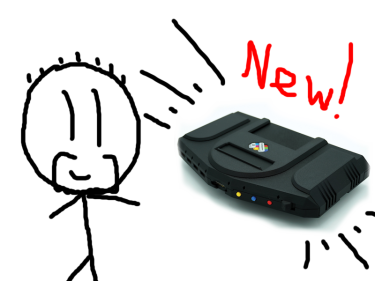
#oneaday Day 297: Transgender Day of Visibility - Video Game Edition

It is, apparently, Transgender Day of Visibility. My Bluesky feed has been festooned with cyan, pink and white banners all day, so the "visibility" part is definitely doing all right — but, of course, there is still a lot of work to do in terms of trans acceptance, particularly with the steps backwards in tolerance and inclusiveness that the United States administration appears determined to go through with right now.

So with that in mind, I hope no-one will find this patronising or anything, but I thought I'd highlight some trans game developers I've become familiar with over the years and point you in the direction of some of their works. I'm not going to go too deep into their respective histories, because 1) those histories are pretty well documented elsewhere online, where they have been considered to be anybody's business, and 2) if they aren't, it's not really anyone's business. So today we will mostly be focusing on their accomplishments.

Danielle Bunten Berry

Perhaps the most famous name on this admittedly fairly short and hastily assembled list, Dani Bunten Berry was responsible for some of the most ambitious, audacious games of the early 8-bit microcomputer era.

Her most famous work is probably M.U.L.E., an economic simulation that began life on Atari 8-bit and was subsequently ported to a variety of other home computer and console systems. There have also been several attempts to bring M.U.L.E. to the tabletop to varying degrees of success, but part of M.U.L.E.'s genius is that it can only really be done justice on a computer.

People are still playing M.U.L.E. in its original form today. People are playing hacked versions that allow online multiplayer. There have been several modern ports of the game. It's a widely beloved game with good reason — don't let that "economic simulation" descriptor put you off. It's easy to pick up and straightforward to play, and every game is a little bit different — particularly if you're fortunate enough to play it with other human players. A four-player game of M.U.L.E. is very different to a single-player game against three computer opponents.

That's not the only amazing game to her name, though. She also made Seven Cities of Gold, one of the first ever open-world sandbox games. Casting players in the role of Spanish explorers, the game tasks you with just… well, exploring. There was no set goal, no "right" or "wrong" way to play; just a set of mechanics for you to engage with, and the rest of your time with the game would be spent creating a unique emergent narrative all your own.

Dani Bunten Berry was sadly taken from us in 1998, but her legacy lives on, both through her classic games that are still being enjoyed to this day, and through the games that they inspired.

Cathryn Mataga

Perhaps not quite as well-known a name as Dani Bunten Berry, Cathryn Mataga has nonetheless given us some excellent games over the years, beginning with the 8-bit microcomputer titles Zeppelin and Shamus, and moving on to work on a variety of excellent role-playing games, including the original 1991 MMO version of Neverwinter Nights, and several Dungeons & Dragons games: Gateway to the Savage Frontier, Treasures of the Savage Frontier, Stronghold, and Dark Sun Online: Crimson Sands. She also worked on Rampage 2: Universal Tour, but we won't hold that against her.

One of her most notable achievements was the Game Boy Color version of questionable "classic" laser disc game Dragon's Lair. Unlike the original Game Boy version, which was actually a reskinned Spectrum game port, the Game Boy Color version was more akin to the Atari ST and Amiga versions, which recreated the video sequences of the laser disc original with enormous, screen-filling sprites overlaid atop static backdrops. The result is a game that is still… well, it's still Dragon's Lair, but the technical achievement on a cart-based 8-bit handheld format is absolutely something else.

Rebecca Heineman

Rebecca Heineman is arguably best known as one of the first ever video game tournament champions, but she is also a talented, experienced and prolific developer and writer. After winning the Space Invaders tournament that gave her an initial taste of fame, she was offered writing and consultancy jobs, and as part of all this, still aged just 16, she happened to mention that she had, in her free time, successfully reverse-engineered game code for Atari 2600 games, as you do, allowing her to develop software for the machine without having to go through Atari. This early hacking experience got her a job at strategy game specialists Avalon Hill, where she made a game engine and base code for a variety of projects as well as a ton of documentation and a full game all of her own.

In subsequent years, she worked on a variety of projects, including the notorious Chuck Norris Superkicks for multiple platforms, but really hit the ground running when she co-founded Interplay alongside Brian Fargo, Jay Patel and Troy Worrell. At Interplay, she worked on a variety of projects as programmer, with probably the most high-profile among them being Wasteland and The Bard's Tale. She also designed The Bard's Tale III: Thief of Fate, Borrowed Time, Mindshadow and numerous others, before moving on to other projects.

She's still active in and around the industry today, and can often be found chatting on Bluesky. It's clear that the passion and enthusiasm for video games and development has never truly left her, and it's inspiring to see, to be sure.

Jennell Jaquays

I must confess, I didn't know this name before I looked at Rebecca Heineman's website, but after reading her story, I feel compelled to include her.

Jennell Jaquays, who was Rebecca Heineman's wife, is sadly no longer with us, as she passed on in January of last year. But her influence can be keenly felt in both the tabletop and video game spaces. Her early career included contributing to a variety of tabletop role-playing game publishers, with her Dungeons & Dragons modules Dark Tower and The Caverns of Thracia often held up as her most influential work. She is regarded as a pioneer of non-linear, flexible, multi-path scenario writing, as opposed to the more typical straightforward and linear scenarios that tended to be published at the time. Supposedly, the term "Jaquaysing" refers to creating scenarios with this sort of thing in mind — though this comes from an uncited reference on Wikipedia, so maybe take that with a pinch of salt.

In the video game space, she worked at Coleco, creating several of the excellent arcade game ports for that system, including Pac-Man and Donkey Kong. She put together one of the first actual development studios for making video games — at the time, many games were solo efforts — and went on to contribute to Epyx, Interplay and Electronic Arts. She had a stint as a level designer at id Software in the late '90s, working on Quake II and Quake III Arena, and went on to develop a pioneering video game education programme, as well as some particularly effective advocacy for LGBTQ+ folks that lead to Barack Obama taking action on banning conversion therapy back in 2015.


There are a lot of wonderful people throughout video game history. These are just four that I consider well worth celebrating. Of course, every day should be about including and accepting people regardless of their age, race, gender identity, sexuality or any number of other characteristics — but it becomes more and more clear by the day that we still have a lot of work to do. That's why days like today are so important — now, perhaps, more than ever in recent memory.


Want to read my thoughts on various video games, visual novels and other popular culture things? Stop by MoeGamer.net, my site for all things fun where I am generally a lot more cheerful. And if you fancy watching some vids on classic games, drop by my YouTube channel.

If you want this nonsense in your inbox every day, please feel free to subscribe via email. Your email address won't be used for anything else.

#oneaday Day 291: If you like old games mags, here's a podcast you might like

The other day, I was contacted relatively out of the blue (no pun intended) on Bluesky by a chap called Ty Schalter, who wanted to let me know he and a fellow writer, journalist and author, Aidan Moher, were launching a new podcast, and would I mind giving it a bit of a nudge on socials.

Firstly, I was flattered that Ty thought I had anywhere near enough reach online to make a difference these days, but I indeed shared it anyway, and am, in fact, doing so again right now. Secondly, I was 100% on board with the concept for the podcast, which was to take a fond look back at classic games magazines. Here's the first episode for you to enjoy:

Now, as I stated in no uncertain terms just the other day, I am a big fan of old computer and video games magazines, and am always up for some discussion of them. These days, it's a bit tempting for everyone to look at the worst of their output, go "ugh, cringe" and leave it at that, but Schalter and Moher are doing the subject justice, judging by their first episode; they're acknowledging that while there are often faults we can pick from a 2025 perspective, these magazines were a vitally important part of gaming culture, particularly in the days before we had always-online Internet and, later, mobile phones.

What you've gotta remember is that in the '90s, if you had an Internet connection at all, it was a dial-up one that you had to ration your time with so as not to leave yourself with an astronomical phone and/or usage bill; earlier than that, the only online services out there were self-contained bulletin board systems. There was also a curious "in-betweeny" phase in the early '90s where services like AOL and CompuServe came to prominence; these offered global online services somewhat akin to the modern Internet, but in their own curated walled gardens. Later, both services provided access to the broader Web, but initially, they were their own little communities.

Why is this important? Because it meant that it was nowhere near as easy to talk about games with people as it is today. There was no magic black slab in your pocket that connected you to the rest of the world, and there was no guarantee that when you "logged on" with your computer that you'd find someone you wanted to talk to. There certainly wasn't the opportunity for carving out your own little space online as there is today, and absolutely no social media. (Maybe it wasn't all bad.)

This meant that magazines played a crucial role for video game enthusiasts: they were the main way that people who enjoyed games found out about new releases, the latest news and in-depth information about stuff that was already out. They were a point of common contact that, when we met up with our "real-life" friends (remember them?), we could use as the basis for a discussion. They were a connection to the outside world — and for many of us, a lifeline that made us feel much less alone in our passion for what is, most of the time, a fairly solitary pastime.

Schalter and Moher get this. They understand that for many of us, magazines were "the gaming community". We came to the mags not just for the games, but in many cases, for the personalities involved and the opinions we trusted. We'd obsess over a 250-word review of a 40-hour RPG, reading it repeatedly and drinking in the screenshots, wondering what it would be like to actually play the thing. We'd base our purchasing decisions on the arbitrary numbers the reviewers thought up, for better or worse. And we'd get to know the studios behind our favourite games through special features, interviews and preview reports.

Many of these things can be argued to still be present in today's games press, to be sure. But the daily churn of gaming news online makes it somehow less special than it was to get a monthly magazine. What game would be on the cover? What games would get in-depth features? What games were getting walkthroughs, tips and cheats? Would there be any cool cover-mounted gifts or bonus booklets included?

While it can be funny to look back and laugh (or cringe) at The People We Were 20-30+ Years Ago, it's important to take a look at the full picture for an understanding of why things were the way they were — and why so many people are still nostalgic for an era long past.

That's what the Fun Factor podcast seemingly aims to explore, and judging by the first episode — which features lengthy reminiscences about Final Fantasy VII that I'm sure will be familiar to anyone Of A Certain Age — it's going to be a good listen over the long term.

So go give that first episode a listen now, and if you're so inclined, support the podcast on its official website. You can also follow the pod, Ty and Aidan over on Bluesky.

I'm excited to see where the show goes from here, as it's a subject near and dear to my own heart. And if you have any fond nostalgia for that supposed "golden age" of magazines, I recommend checking it out, too. 'Cause heaven knows we could all do with some fun, happy stuff to enjoy right now, I'm sure.


Want to read my thoughts on various video games, visual novels and other popular culture things? Stop by MoeGamer.net, my site for all things fun where I am generally a lot more cheerful. And if you fancy watching some vids on classic games, drop by my YouTube channel.

If you want this nonsense in your inbox every day, please feel free to subscribe via email. Your email address won't be used for anything else.

#oneaday Day 289: Some games magazines I used to like

I love old games magazines, and will frequently re-read them years after they were relevant. In fact, I'm currently in the process of assembling a collection to bung on an SD card and pop in my otherwise unused Kindle Fire 7 to use as a portable retro magazine library. I've also got a vague plan to make some more videos on classic magazines, as I really enjoyed making the first two on Page 6 magazine — you can watch those here (issue 1) and here (issue 2).

In the absence of anything else to write about — I've been playing Xenoblade Chronicles X for most of the weekend, and I already wrote about that earlier — I thought I'd give a rundown of some magazines I used to like, and which I may well take some time to cover on YouTube at some point.

Note: I say "magazines I used to like"; most of them are magazines I knew someone who worked on, usually my brother. I make no apologies for this.

Page 6/New Atari User

This is the one I bring up most commonly on my channel, and for good reason: three members of my family (my Dad, my brother and me) were involved in it at various points, and it's the magazine that launched the career of my brother — a career that, with him being a big bossman at IGN now, he's still in.

Page 6, as it was initially known, started life as a user group newsletter. Within one issue, the editor Les Ellingham had decided that he wanted to fulfil a grander ambition: to publish the UK's first Atari-specific magazine. And he only went and did it. For an astronomical amount of time, considering the subject matter, too; Page 6 ran in one form or another from December of 1982 until the autumn of 1998, and it was still covering the Atari 8-bit in its very last issue.

Page 6 was an enthusiasts' magazine. It wasn't a games magazine; Les in particular was keen to stress from the outset that while computers were excellent games machines, there was also a ton more you could do with them. And part of the point of the magazine was to educate people on the possibilities their computers offered. It achieved that through articles about software releases (including both games and "serious" software), interviews, tutorials, type-in listings and plenty more.

It was always a pleasure to read. One gets the impression that it was a real labour of love for Les in particular, and there are plenty of occasions where his editorial page came across as very frustrated that other people didn't seem to care quite as much as he did — but I cared. I still do care. Page 6 was a formative part of my youth, and revisiting old issues today, I still feel a lot of the same magic I felt in the early days of computing.

Read them all at Atarimania.

Atari User

Showing up a little later, Atari User from Database Publications (later Europress) launched in 1985 and ran until November 1988, at which point Page 6 acquired the rights to the Atari User name and rebranded as New Atari User. Page 6 was still on the newsstands at that point, and it was thought that the Atari User name would attract more casual interest, since "Page 6" is a nerdy reference to an area of the Atari 8-bit's memory that only people already well-versed in the system's "culture" would understand.

At heart, Atari User was a similar sort of magazine to Page 6, covering both games and "serious" applications, perhaps with a slightly greater focus on things that, if not games, were at least entertainment of a sort. Like Page 6, there were a variety of features each issue, including type-in listings, and often some interesting-looking "Gadgets" sections for electronics projects you could do with your Atari. I never tried any of them — I was a bit young — but they always looked interesting.

I enjoyed reading both Page 6 and New Atari User because they each had a very different style to them. Page 6 always felt like it took itself very seriously, with a fairly no-nonsense, stern, professional-looking layout in each issue — not to say that individual articles lacked personality and humour, mind; I'm talking purely aesthetically — while Atari User made use of the bigger budget it had thanks to being part of a larger corporation by producing colourful issues with large, attractive pieces of artwork and photography throughout. I was sad when Atari User went under, as it was one of those magazines that it was just fun to look at thanks to its colourful cover art.

Read them all at Atarimania.

Antic and ANALOG

Antic, subtitled The Atari Resource, was one of two Atari-specific magazines from the States, with ANALOG (short for Atari Newsletter And Lots of Games) being the other. You could get them both relatively easily in this country via specialist importers. Antic and ANALOG were both, like Page 6 and Atari User, magazines that revelled in the joy of home computer ownership. Part of that was gaming, yes, but it was also about programming, productivity and creativity.

I actually haven't revisited Antic and ANALOG for many years and I think I'm long overdue to, as I remember enjoying them both. I do remember Antic having noticeably thicker issues, while ANALOG became renowned for its excellent machine language type-in listings. So they're both going on my portable magazine library, assuming it works as I hope it does.

Read Antic and ANALOG at Atarimania.

Games-X

Page 6 was where my brother got started writing about games, but it was Games-X that truly launched his career properly; he left home to work on it, and it ended up being the beginning of a whole life in the games press.

Games-X was unusual: it was a weekly games magazine (a decision which founder Hugh Gollner later described as "a big mistake" financially), and most other magazines at the time were monthly. Page 6 was bi-monthly (as in, every two months, not twice a month). This naturally allowed it to be a lot more "up to date" with gaming news than many other magazines, but it was also fun to be able to buy a new games magazine every week, initially for just 60p an issue.

Games-X covered that strange period late in the ST and Amiga's lifespan when consoles were just starting to really get a foothold in the UK. The majority of the focus in each issue was on home computer games, but there was a dedicated console section — and the next magazine my brother worked on after Games-X was Mega Drive Advanced Gaming.

Games-X had a fun, irreverent attitude to it and, in many ways, was very "'90s", with everything that entails. I still really like it, though, and think it stands out as a magazine that deserves to be remembered a bit more than it is.

Read them all at RetroCDN.

Advanced Computer Entertainment (ACE)

I don't think I actually had many issues of this, but I enjoyed every one of them a great deal. Advanced Computer Entertainment, or more commonly just ACE, was a multi-format magazine that one gets the impression liked to think it was a cut above the other games magazines around at the time. It was still about video games, sure, but it lacked some of the '90s abrasiveness of other publications, and took things a bit more "seriously", for want of a better word. One might call it the Edge of its day, only marginally less pretentious. (And yes, I checked; Edge launched in 1993, while ACE folded in 1992.)

That is, after they got over an initial rocky patch where there were more errors in the early issues of ACE than I think I've ever seen in any other magazine. Typos, mistakes, outright blank sections of pages — they had it all. But once it settled down, it was a very high quality magazine that I always enjoyed. The magazine was noteworthy for its "Pink Pages" section in the rear, a no-nonsense "reference" guide to new releases, charts and review summaries, plus a bizarre "Stock Market" section that never really made much sense, but I believe it was an early attempt to try and aggregate review scores for various developers and publishers, if I remember rightly.

I rather liked that ACE took things seriously. The silly humour of other magazines could be entertaining, to be sure, but it was nice to be able to read a magazine about games that was just… about games, rather than about its writers trying to launch a comedy career. As with Page 6, that's not to say that individual articles and writers lacked personality or a sense of humour; it's just that humour wasn't the main point, whereas with some other magazines around at the time, particularly once we moved into the 1990s, it felt like they were trying to be a funny magazine first, about video games second.

Read them all at Atarimania.

PC Zone

Now, this may make me sound a bit like a hypocrite after what I literally just said, but I always enjoyed PC Zone, even before my brother's time there as editor and publisher. PC Zone in its prime always felt like it struck a good balance between humour and information, and I loved it for that. It acknowledged that games were fun, silly and often stupid, but also recognised that people were passionate about them — sometimes to a fault.

PC Zone is also noteworthy in retrospect for being an early outlet for Charlie Brooker, and his articles were always a highlight, as were his eminently silly The Cybertwats cartoon strips, which got the magazine a bunch of complaints on multiple occasions, particularly after he depicted Lara Croft machine-gunning someone's cat to a particularly violent and bloody demise.

When people talk about old magazines being fun, I think of PC Zone. While in retrospect some of it may have been a bit "lads mag"-ish (see: front cover depicted above), it never really felt particularly exclusionary. Plus I spent two weeks doing work experience in their offices and, although I didn't really do much other than make a lot of cups of coffee and tea (and write a review of Virtua Fighter PC) that fortnight remains one of the happiest of my life.

Read them all at Pix's Origin Adventures.


And there's more I could be going on with, but I think that's probably plenty for now. If you're a retro computer and gaming enthusiast, you could do far worse than familiarise yourself with the above publications. And the links I've provided will let you do just that.

Note: I will not be held responsible for anyone complaining at you suddenly taking a lot longer in the toilet.


Want to read my thoughts on various video games, visual novels and other popular culture things? Stop by MoeGamer.net, my site for all things fun where I am generally a lot more cheerful. And if you fancy watching some vids on classic games, drop by my YouTube channel.

If you want this nonsense in your inbox every day, please feel free to subscribe via email. Your email address won't be used for anything else.

#oneaday Day 287: European video game history discourse is happening again

As the title says, European video game history discourse is happening again. I'm not going to link to the post in question, because I like the chap who inadvertently kicked this off and I don't want him to have to put up with any more angry Europeans than he already is contending with. But I will comment on the whole subject, because it's a topic worth discussing with some commonly held assumptions that need challenging.

So here we go.

"The Great Video Game Crash" didn't happen in Europe

This point is one that, I think, is finally getting through to a lot of people. The notorious "crash" of 1983 following the absolutely flooded market of third-party Atari 2600 games was a purely North American phenomenon, and it only affected the console market.

It was a bad thing, to be sure, putting a lot of developers and publishers out of business, and it can probably be pointed at as the main reason that platforms like the ColecoVision and Intellivision didn't survive. And it's definitely true that the arrival of the NES on the scene marked a renaissance for the console games market in North America.

But it just didn't happen in Europe. I didn't even know it was a thing until the Internet came about. The reason? Because most of us in Europe were happily making use of home computers at the time, and we continued to do so throughout most of the '80s and early '90s.

Europe's console game sales are a miniscule fraction of those seen in the States

The same reasoning can be applied to this. Yes, I entirely believe that considerably fewer console games were sold in Europe than in North America. This is because consoles weren't nearly as widespread as home computers were. Growing up, I didn't know anyone who had a console for many years. I didn't even know for sure if the ColecoVision came out in Europe until quite recently when I found an ad in an old home computer magazine.

But I did know people who had home computers. We had Atari 8-bits. My best friend in primary school and a girl I moderately fancied both had BBC Micros. Another friend had a Spectrum. Another still had a Commodore 64. One even had an Electron.

There are a few considerations here. One, home computer games were often much cheaper than console games — though this wasn't always the case, particularly for games distributed on ROM cartridge. Cassette-based games were very cheap, though, particularly on the Spectrum and C64, and disk-based games weren't crazy expensive for the most part — though disk drives were, since back then they essentially had a whole other computer inside them to control the damn things!

However, what you also have to consider is that many games had considerably wider reach than their commercial, officially recorded sales figures might suggest due to piracy. Piracy was absolutely rife in the early home computer sector, and while this probably wasn't good for the overall health of the industry, it somehow never caused a "crash". Piracy has also, long term, been amazing for preservation purposes, because pirated disks (pretty much always disks) often had pre-release or beta versions of games on them, and in many cases these particular versions of these games were not preserved by their original developers and publishers.

Thirdly, home computers were programmable. And, outside of dedicated games magazines, which were in a minority compared to "general computing" magazines for quite a few years, most publications encouraged computer users to get involved in programming their machines themselves. Magazines published type-in listings each month, allowing you to get "free" software in exchange for the cover price of the magazine, a bit of your time and some blank media to save it on. Public domain libraries appeared and thrived. And many folks simply wrote their own software to do something their computer couldn't already do. With BASIC built-in to pretty much every 8-bit machine, anyone could become a programmer just by turning the damn thing on.

Home computers continued to thrive even with the advent of consoles

The NES didn't "save" gaming in Europe in the same way that it did in the States. It was present, sure, but the only person I know who had one was my Uncle Peter (or perhaps more accurately, his daughter Gemma). We certainly didn't have one. I knew one guy who had a Master System, but I think he only had one game for it and he certainly didn't consider himself a gaming nerd.

Console gaming really started to pick up in Europe — or at least in the UK, from my experience — with the advent of the 16-bit era. That's when we really started to get a glut of specialist gaming magazines focusing on individual platforms, and that's when I knew more people who started to get Mega Drives and SNESeses.

But those consoles never replaced home computers. My best friend in high school, Edd, had a Mega Drive, but he spent much more time on his Amiga 500. I had a SNES, but I still spent much more time on the Atari ST and even the Atari 8-bit, which we still kept out and in use for many years. And the press reflected this, also: multiformat magazines tended to prioritise Amiga and Atari ST, with console games often relegated to their own little section, like they were a curiosity. And just as there were specialist gaming magazines for platforms like the SNES and Mega Drive, there were also individual mags for the ST and Amiga, too. And in many cases, those mags were more substantial than their console counterparts — often aimed at a slightly more mature audience, too.

Not only that, but the "free software" sector continued to thrive, too. While the ST and Amiga didn't ship with built-in BASIC like their 8-bit predecessors, there were still plenty of easily accessible packages for both that allowed anyone to get programming. Public domain software, likewise, continued to thrive, with public domain titles distributed through magazine coverdisks, through public domain libraries and through early online services such as bulletin boards.

Particularly notable from this era are STOS and AMOS, flavours of BASIC for Atari ST and Amiga respectively, which featured game-centric features such as sprites, sound generation, interrupt-based music and all manner of other good stuff. Both, as you might expect, were widely used to make both public domain and commercial titles by enthusiast developers. STOS and AMOS were made by Francois Lionet and Constantin Sotiropoulous, the former of whom founded Clickteam. Clickteam made Klik and Play, which saw several follow-ups, the latter of which, Multimedia Fusion (or just Clickteam Fusion now), is still in use to this day to make commercial games. Played Freedom Planet? You've played a game whose lineage can indirectly be traced back to STOS.

Things only really shifted firmly in favour of consoles when the PlayStation showed up, but even then, MS-DOS PC gaming had already hit its stride with the advent of 256-colour VGA graphics and sound card support.

Without the European home computer scene, there's a lot of today's developers that wouldn't exist

This is the most important thing to bear in mind, I think. So many of today's developers and publishers can be traced directly back to '80s home computer labels.

Codemasters? They used to specialise in budget-priced cassette games made by teenagers in their bedrooms. Rare? They started out making Spectrum games. Sumo Digital? They can be traced back to Gremlin Graphics, who were there from the very early days of 8-bit home computer games. And there are countless more; if you were to go through everyone Of A Certain Age in today's European games industry, you will almost certainly find a significant portion of them who cut their teeth working on home computer games.

Hell, this is even the case in the States, too. Folks who were making home computer games in North America, in many cases, continued on into careers in the later console sectors. I learned the other day that Cathryn Mataga, maker of the excellent Shamus and Zeppelin on Atari 8-bit, also made the frankly incredible port of Dragon's Lair to Game Boy Color, to name just one example.

Revenue isn't the whole story, not by a long shot

It keeps coming back to this. Sure, the money numbers might look smaller for the European games industry throughout the '80s. But in terms of the usage of these systems, the passion, the things that are harder to track through anything other than anecdotal evidence and the lived experiences of folks who were there? Absolutely nothing beat the home computer scene of the 8-bit and 16-bit era in Europe.

Hell, our favourite Atari computer magazine ran from 1982 until 1998. That's an astonishing achievement for a publication that covered the Atari 8-bit platform from its very first issue right up until its sad finale. And Atari 8-bits were a niche platform; the Spectrum, Commodore 64 and Amstrad all did way better in the market.

Look, I'm not saying American video game history isn't important. It is. It's where video games as we know them today were born, after all. But we've gotta get over this assumption that anything that happened outside of North America or Japan was somehow not important. '80s home computing was — is — much more than just a fad or a scene. For many folks, it was video games. For many folks, it was life. And acknowledging that doesn't make Pong, the Magnavox Odyssey, the Atari 2600 or the NES any less cool or revolutionary.


Want to read my thoughts on various video games, visual novels and other popular culture things? Stop by MoeGamer.net, my site for all things fun where I am generally a lot more cheerful. And if you fancy watching some vids on classic games, drop by my YouTube channel.

If you want this nonsense in your inbox every day, please feel free to subscribe via email. Your email address won't be used for anything else.