#oneaday Day 493: The breakneck pace of Final Fantasy IV

As one of several games I have on the go right now — for a bit of variety, like — I decided to start up Final Fantasy IV Pixel Remaster. I've played Final Fantasy IV I think twice before — and one of those was on PlayStation, so your sympathies are gratefully received, though that version at least isn't quite as bad as PS1 Final Fantasy VI — and remembered it being quite short, though I had forgotten quite how fast it moves.

I'm two hours in and already — apologies in advance if any of this is a spoiler, but the game came out in 1991 — the main character has committed a war crime, adopted an orphan child that he was directly responsible for orphaning, become separated from his best friend (who inevitably turns traitor), rescued his loved one from a deadly bout of Desert Fever by retrieving a valuable gem from a slobbering Antlion, rescued a prince from the ruins of his devastated castle and his broken heart, and attempted (mostly unsuccessfully) to fend off an assault on another kingdom.

It moves so fast. I had forgotten how fast. I have played so many modern (relatively speaking) games that feature epic-length story sequences between the core "gameplay" sections that it almost feels rushed. I mean, hell, after two hours in a Persona game from 3 onwards, you're barely through the initial character introductions and you almost certainly haven't set foot in a dungeon yet.

This is both a strength and a weakness of Final Fantasy IV, looking at it with a 2025 pair of eyes. It's a strength because it means that there's never particularly long to wait before you're doing stuff again — exploring the world, clearing dungeons, fighting monsters, levelling up, buying new equipment — and that is quite a refreshing change from today's narrative-centric games that, while undoubtedly considerably more ambitious in their storytelling, sometimes do feel like they're getting a little bogged down. Not only that, but Final Fantasy IV is done and dusted in less than 20 hours, which makes it a veritable light novel by RPG standards.

However, it's also a weakness, because there are some sequences that were clearly intended to be quite significant narrative moments, but the way the game just whizzes through them makes them feel almost laughable.

I'll give you an example. Rydia, the girl that the protagonist, Cecil, rescues from a war crime he inadvertently committed at the behest of his king, is a Summoner in Final Fantasy Job terms. This means that not only can she summon big things to deal heavy damage, but she can also cast both white and black magic spells. When you first get her, she's an inexperienced kid at level 1, so she barely knows any spells, but a bit of levelling in the field will net her a few initial, useful spells. Except you'll notice one black magic spell is prominently missing: Fire.

Think about it for a moment and it's obvious why: because she lost her entire village, including her mother, in a fiery explosion, she is, of course, going to be hesitant to call upon the power of fire. This little bit of characterisation is initially delivered without the game drawing any attention to it whatsoever, but you can notice it early from a simple browse of the menu. Very cool. Ambitious for the time, even!

What is less cool is when the party finds their path up a mountain blocked by a big chunk of ice, and the other members, eventually getting Rydia to admit that she "hates fire", pretty much tell her to stop snivelling and get over it because they jolly well have a quest to accomplish. It's almost certainly not intended to come across that way — the other members are all "yay, you did it, I always believed in you" after she does successfully cast her first Fire spell, presumably with tears streaming down her face and the knowledge that this is probably going to need years of therapy to truly deal with — but with at least a couple of decades' worth of games that handle sensitive topics rather more delicately behind us, it does feel rather… blunt.

But, again, you have to remember that this was 1991, just a year after the SNES had come on the market, and Final Fantasy IV was on a cartridge that contained less than a megabyte of data in total. In fact, during development, the script had to be cut considerably to fit on its cartridge; lengthy exposition was something that developers simply couldn't afford to do back in these days, because every byte mattered, and text can potentially take up a lot of space if there's enough of it. As such, it's not altogether surprising that some sequences feel like they move a tad fast by modern standards — short of shipping on a larger capacity cartridge, which was presumably a decision that needed to be made relatively early in development, there were very real constraints on what Final Fantasy IV would be able to do.

Of course, Final Fantasy IV has been expanded on quite a bit in later remakes such as the polygonal 3DS version, the Game Boy Advance version and the PSP version; each of these had their own additions to the basic Final Fantasy IV formula.

But the Pixel Remaster; that's based on Final Fantasy IV as it originally existed, graphics and music aside, and thus you have the plot that speeds off over the horizon as you just think you're getting caught up on proceedings.

All this is no shade on Final Fantasy IV, of course; it's a game I like very much (though it's far from my favourite Final Fantasy) — I just found it interesting to revisit this after so many years and be reminded that at one time, RPGs moved a lot more quickly than they do now!


Want to read my thoughts on various video games, visual novels and other popular culture things? Stop by MoeGamer.net, my site for all things fun where I am generally a lot more cheerful. And if you fancy watching some vids on classic games, drop by my YouTube channel.

If you want this nonsense in your inbox every day, please feel free to subscribe via email. Your email address won't be used for anything else.

#oneaday Day 489: You've got Fun Factor

I've written about this before, but I write a lot of shit on this blog, so you may not have seen it, particularly since I last wrote about it in March of this year, when you may not have even been reading this blog. (The viewing figures would seem to suggest that quite a few more people are reading this blog now than there were in March. Although the other day I had approximately 900 bot visits from China, so I may take those figures with a pinch of salt or ten.)

Anyway, what I would like to talk about is the Fun Factor podcast, hosted by the experienced writers and video game enthusiasts, Ty Schalter and Aidan Moher. "Oh great," you might say. "Another video games podcast. Like we need any more of those!"

To that, dear reader, I say fie and pfaugh and other such expectorations! Fun Factor is different. Fun Factor isn't just a bunch of dudes sitting around talking about what they'd played that week, maybe coupled with the gaming news headlines they'd picked off their favourite website. Fun Factor is, as you might have determined from the name, about something which is very close to my heart and soul: magazines.

Each episode of Fun Factor takes a close look at an individual video game magazine. The present "season" is focusing specifically on the "Generation Gap", which covers the years between 1995 and 1997. This was a time when gaming underwent a quantum shift as we moved from 16-bit pixel mastery into the brave new frontier of (texture-mapped, Gouraud-shaded) polygonal 3D thanks to platforms like the Nintendo 64, PlayStation and Sega Saturn.

It was an exciting time, and the press of the period reflected that — for many, this was a real golden age for games magazines, as the Internet was early enough in its mainstream adoption (i.e. a lot of us were still on dial-up, particularly outside the US) that it hadn't yet taken the place of traditional publishing.

Rather than attempting to summarise the entire magazine, an episode of Fun Factor instead primarily focuses on a single piece in that magazine: a "review of a review", as it were. Along the way, Aidan and Ty both take a bit of time to flip through the magazine as a whole and contextualise what they're about to do a deep-dive into, including commentary on what was going on in games at that time, what they were both up to in their own personal lives (and experience with gaming) — and even a look at some of the weird and wonderful adverts that cropped up in print.

What I particularly enjoy about Fun Factor is that it has a breezy, friendly tone that one iTunes reviewer quite correctly described as "being like reading old magazines with friends". It's unmistakably modern, as Ty and Aidan are not above pointing out how these magazines often demonstrate how social attitudes and conventions have changed over the years, but, crucially, this never becomes in any way overbearing or preachy. There is plenty to criticise and lessons to be learned in these old mags — but also plenty to celebrate, too, and the show always finds an excellent balance between reflecting on how we've grown (or not, in some cases!) and what a wonderful time it was to be interested in video games.

Both Aidan and Ty cite classic games magazines as being formative in their own decisions to get into professional writing, so it's all done out of love for the medium. I've seen all too many online discussions of '90s magazines and ads in particular descend into nothing but laughing at the terrible taste and attitudes we all had, but Fun Factor has never, to date, across 13 episodes at the time of writing, found anything completely irredeemable in the publications they've looked at.

Even in instances where both Ty and Aidan have disliked the review that was published — such as Edge's truly strange Final Fantasy VI review — there have been positives to pull out. And some of the best examples of reviews from that period have, so far, ended up coming from the most unexpected places — like, say, sports games.

I adore old magazines and have a small collection of them that I treasure — mostly from well before the era that Aidan and Ty are presently covering on Fun Factor — but I don't have many people that I feel I can talk and enthuse about them with, or who understand why they hold such meaning for me. One of the reasons I value Fun Factor so much is that it helps me feel like there are other people out there who get it, who understand why magazines, at one time, held such importance for us as video game enthusiasts — and why many of us miss those days greatly.

If you're after something new to listen to and the above sounds like fun, you can find more information about the Fun Factor podcast on their official website, funfactorpod.com. You can also subscribe to the podcast's channel on YouTube, and I'd encourage you to check out the video versions of the podcast, since each episode displays scans of the pages that Ty and Aidan are talking about, allowing you to "read along" with them to a certain extent.

Thanks for the entertainment, fellas, and I look forward to hearing more from you. Plus if you ever need to hear stories about old Atari magazines, Year 10 work experience on PC Zone or freelancing for the Official Nintendo Magazine here in the UK, you know where I am!


Want to read my thoughts on various video games, visual novels and other popular culture things? Stop by MoeGamer.net, my site for all things fun where I am generally a lot more cheerful. And if you fancy watching some vids on classic games, drop by my YouTube channel.

If you want this nonsense in your inbox every day, please feel free to subscribe via email. Your email address won't be used for anything else.

#oneaday Day 488: Home ports deserve remembering too

I feel like I've talked about this before, but whatever. I feel like talking about it today, so talk about it I will.

In this age of being able to easily emulate the original arcade versions of games, I feel like one thing gets easily lost from the "preservation" aspect of retro rereleases on today's systems: home ports that are notably different from simple attempts to recreate the original arcade games.

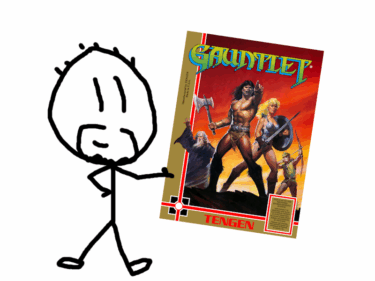
I was reminded of this when watching the YouTuber Classic Gaming Quarterly playing Gauntlet for NES earlier. I legitimately had no idea that Gauntlet for NES is not, in fact, a straight port of the arcade game and is, instead, a completely different game. I did know that Gauntlet IV for the Mega Drive also pulls this stunt, but I did not know that this extended back to the NES version. And for my money, pretty much all the home ports of Gauntlet are much more fun than the quarter-munching arcade version — particularly if you're playing on emulation and thus have infinite credits and therefore infinite health.

There are others, too. The Mega Drive port of Toaplan's Slap Fight features an entirely new game mode. The NES versions of the Double Dragon games are completely different to their arcade counterparts. And I'm sure there are countless others — to say nothing of the "home-exclusive sequels" we saw to numerous arcade games, often put together by western developers who didn't quite get what made the Japanese originals so good. (That said, I will happily go to bat for OutRun 2019.)

A few publishers are cottoning on to the fact that there is value in preserving multiple versions of classic games, including both the arcade originals and popular home ports, but it's by no means the norm. The reasons are likely due to licensing complications — in many cases, while the rights to the original arcade game remain with the original creators (or a company that has succeeded the original creators and/or bought the rights), home ports were developed by different teams, meaning that the rights would, I assume (IANAL), be split between the original creators of the arcade game and whoever made the port. This is not a problem when those are one and the same — like the Double Dragon games, for example — but there are plenty of situations where the home versions of a game were made by a completely different company, or even an individual at times.

The takeaway I have from all this is something that I've thought for a while: in many cases, I actually prefer playing the home conversions of games to the original arcade versions, even when the arcade version is obviously technologically superior. There are several reasons for this: firstly, those home conversions are often a good example of what their host platforms are (and are not) capable of. Secondly, since home ports are not obliged to keep people feeding coins into a machine, they are often balanced much better than their arcade counterparts. And this, in turn, makes them considerably more enjoyable to play.

Because there absolutely are arcade games out there that take "quarter-munching" way too far. I adore the beat 'em up genre, for example, but I'd much rather play Streets of Rage 2 than the arcade version of Final Fight, simply because Streets of Rage 2 is balanced much more fairly — and the beat 'em up genre appears particularly prone to this issue. The same is true for any sort of competitive game with a "1P vs COM" mode, be it a fighting game or a puzzle game. In their arcade incarnations, these tend to become absolutely impossible after just one or two levels, whereas in their home incarnations, they tend to save their biggest bullshit for their final challenges. Still annoying at times, yes — particularly in puzzle games, where final bosses tend to have superhuman capabilities as well as, more often than not, ways to "cheat" — but a little less galling than only being able to get through two or three stages before having to wipe your score and "Continue?"

Thankfully, while official licensors are seemingly hesitant to let those often flawed ports back out into the wild when one can just emulate the arcade version on a veritable toaster of a machine these days, one can make use of alternative means to enjoy them through software emulation or FPGA solutions. And I would encourage everyone to do so, because while everyone will inevitably have a preference as to which version of something is "best", it's worth exploring those versions rather than simply assuming the most technologically advanced version is automatically the most enjoyable.

Now, I think I might give Gauntlet on the NES a bit of a go for myself!


Want to read my thoughts on various video games, visual novels and other popular culture things? Stop by MoeGamer.net, my site for all things fun where I am generally a lot more cheerful. And if you fancy watching some vids on classic games, drop by my YouTube channel.

If you want this nonsense in your inbox every day, please feel free to subscribe via email. Your email address won't be used for anything else.

#oneaday Day 486: Investing in retro the right way

I've talked about this once or twice before, but it doesn't hurt to say it again. I firmly believe that we've reached a point in time where collecting retro games is impractical, undesirable and inconvenient.

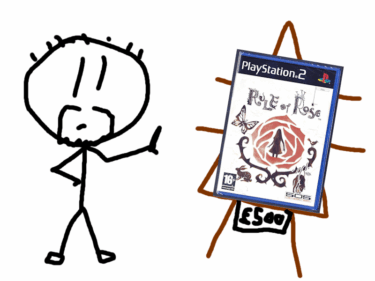
Don't get me wrong; there will always be an appeal to having original hardware and original media, and I don't begrudge anyone their choice to build up a substantial retro collection. I also think it's a bit sad that we've reached the stage we're at now. But with the absurd, exploitative prices that are being charged for both systems and media today — coupled with the fact that there's no real guarantee either of those things will actually work when you get them — I am very much a convert to the school of thought that says you're better off spending the money you would have spent on one copy of Rule of Rose for the PlayStation 2 on ways to get a "modern retro" setup up and running.

There are many ways you can do this. The absolute simplest way is to buy retro rereleases, either on modern platforms that you happen to own, or with specialist devices such as mini consoles or, of course, the Evercade. There are many benefits to these modern rereleases, such as bugfixes of games that shipped in a dodgy state back in the day, modern convenience features such as save states, rewind functions and in-game reference material, plus the fact they're generally a whole lot cheaper than buying the original releases and still fun to collect. If you were to buy all the games on the recently released NEOGEO Arcade 1 cartridge for Evercade in their original format, you'd be talking four figures. The cart is twenty quid. Do, as Atari once said, the math.

The only downside to officially licensed rereleases is that those licenses are sometimes hard to come by — or even completely impossible. Don't expect to see too many rereleases of racing games with licensed cars or licensed soundtracks, for example. Don't expect to see movie licenses making a return, either. But you might be surprised what licensors are still willing to play ball with, as the Evercade library to date shows.

Another relatively straightforward way is to devote a PC or similar device (like a Raspberry Pi, Steam Deck or Chinese gaming handheld) to it and install a suitable suite of emulators and organisation tools.

For Windows PCs that you also want to do other things, I would recommend Launchbox (even if they took to using odious AI images in their promotional emails of late), as this is not only a good means of organising all the games you might want to play, it also automatically retrieves additional information like box art, descriptions and even PDF copies of manuals where possible. The paid version also has a "Big Box" mode where the interface is designed to be used with a controller on a TV.

For other devices that are going to be dedicated to retro gaming, I highly recommend Batocera, which is a Linux distribution, but don't run away scared. It's all preconfigured to work in a similar fashion to something like Launchbox, and is pretty straightforward to get games up and running in. It's also highly customisable, so you can make the whole thing look and feel how you want it to.

The relative "luxury option", particularly if you still have a CRT knocking around that you want to use for the authentic look and feel, is MiSTer. As I've alluded to in a few posts recently, the absolute easiest way to get started with this is with a prebuilt device like the Multisystem 2 (my device of choice) or the upcoming SuperStation One. Alternatively, you can built your own — that's nowhere near as scary as it sounds, and it allows you a tad more customisability, though with the pricing of the Multisystem 2 and SuperStation One it's actually cheaper to buy one of those prebuilt options in a lot of cases — though note you will still need to provide accessories and storage.

If you're lucky enough to still have working classic hardware around, the first thing I recommend you do is investing in a modern power supply for them. My Mega Drive was prone to rolling noise on the screen with its original power supply, but replacing it gave a completely stable, flicker-free picture.

Once you've done that, invest in an EverDrive. Cheaper flashcart options exist, but EverDrives are premium products that support pretty much everything you might want to play on a piece of classic hardware. Not only that, in the case of systems that had add-ons, they can simulate the presence of the add-on, too — for example, the Mega EverDrive Pro can run Mega CD games.

For classic home computers, flashcarts are also available, or there are also plenty of media emulators you can use to "trick" the computer into believing it's using a real floppy drive or tape deck. For the Atari 8-bit, for example, I enjoyed using the SDrive-MAX device, which allows you to load executable files, disk images and tape images from an SD card. Similar devices are available for most classic computer platforms.

I won't lie; it's easy to spend a few hundred quid on this stuff — possibly even over a thousand. But once you're done, you have a great setup for what is, after all, the important bit of being interested in retro games: actually playing the games. And the kit you have will play pretty much anything without you having to pay some rando on eBay a three-figure sum just to play one game.


Want to read my thoughts on various video games, visual novels and other popular culture things? Stop by MoeGamer.net, my site for all things fun where I am generally a lot more cheerful. And if you fancy watching some vids on classic games, drop by my YouTube channel.

If you want this nonsense in your inbox every day, please feel free to subscribe via email. Your email address won't be used for anything else.
#oneaday Day 485: Forgetful

Missed yesterday. I have no excuse, I just forgot. You can blame Final Fantasy Tactics or God. I did make some videos and write about Master Detective Archives: Rain Code, though. You can read that here.

Speaking of Final Fantasy Tactics, I'm really impressed with the new The Ivalice Chronicles version. I wasn't initially sold on the new look of the "remastered" mode, but seeing it in action makes it make a lot more sense than still screenshots might suggest. There's a nice almost "fabric"-like texture to everything, which makes the game sort of look like it's unfolding on a tapestry, which is entirely appropriate for the nature of the narrative it's telling.

The biggest upgrade by far is the full voice acting. I remember back in the PlayStation 1 era thinking that it was a bit sad, if understandable, that big games like RPGs didn't have full voice acting. The reality is that the voice data for a game as big as Final Fantasy Tactics probably wouldn't fit on a CD! We have no such constraints today, however, so a fully voiced Final Fantasy Tactics is a thing of wonder, and there's an incredible voice cast doing their thing with the excellent War of the Lions script from the PSP version — definitely an upgrade from the borderline nonsensical PS1 original.

The game is still just as hard as it ever was, though. It will absolutely kick your ass if you don't take a bit of time to buff up your characters — and you still need to use a solid strategy during the missions themselves, even if you've levelled up a bit and got good equipment. The computer-controlled "Guest" characters are still as dimwitted as ever, unfortunately, which can lead to some annoying situations, but you can just look at it as these characters being true to their personalities. I can't say I was sorry any time Argath got knocked out.

One of the little things I like the most is the fact that all your "cannon fodder" party members — i.e. the ones who aren't directly relevant to the story — have their own voices, too. And rather than having just one male voice and one female voice, there are actually several, so your individual, "unimportant" characters each have their own personality, which helps you become attached to them. And, given that Final Fantasy Tactics has permadeath (albeit a somewhat forgiving take on it, where you have a few turns to resurrect them before they're gone forever) that's an important part of the experience.

I'm not far into the game as yet, but I'm enjoying it a lot, and I suspect I will get a lot more out of it now than when I played it back in the day. It's a truly great game, and I'm thrilled that it's got a new release — and a release in Europe, which it never had back in the day!


Want to read my thoughts on various video games, visual novels and other popular culture things? Stop by MoeGamer.net, my site for all things fun where I am generally a lot more cheerful. And if you fancy watching some vids on classic games, drop by my YouTube channel.

If you want this nonsense in your inbox every day, please feel free to subscribe via email. Your email address won't be used for anything else.
#oneaday Day 479: The PS1 retro revival

I saw a fun trailer last night for a game called, rather amusingly, Parasite Mutant. Those of you of a certain age are probably already thinking "I wonder if that's anything like Parasite Eve", to which the answer is yes, yes it is, very much so.

The great thing is that this isn't even the only Parasite Eve-like that is on the way — the folks who made the excellent visual novel VA-11 HALL-A have also been working on one for quite some time. And it looks awesome — though when it comes out is anyone's guess at this point.

Yes, indeed, we are well and truly in an age where the original PlayStation is retro enough to have modern homages to it. In fact, we've been there for a while, with the indie horror scene latching on to the system's distinctive 3D aesthetic a few years back, and more and more developers deliberately adopting low-res, low-poly, unfiltered 3D as their game's distinctive look and feel.

So with all of the above in mind, here's a few PS1 games from back in the day that I think would be simply smashing to see some modern imitators of. In fact, some of these already have modern imitators on the way — I will do my best to link to those where I am aware of them. (If you are aware of any I missed, please do let me know.)

Ridge Racer

C'mon. Obviously. The 16-bit-style arcade racer has been present and correct in the modern scene for a while thanks to titles like Horizon Chase Turbo and Slipstream, and we've even seen a couple of homages to Virtua Racing, but we haven't seen that many Ridge Racer-likes. I'm not sure we've seen any, in fact — though I am aware of one that is currently early in development.

Yes, we're getting a new Screamer, but it's trying to be all modern and do the twin-stick drifting thing that Inertial Drift did. That's not a bad thing in itself, but it's not "PS1". Just make a new Ridge Racer or equivalent. Namco even released the original Ridge Racer on modern consoles, so there's a market for it!

Parasite Eve

On the off-chance some of you don't know what Parasite Eve is, the elevator pitch is that it's a cross between Resident Evil-style survival horror (fixed camera angles, limited resources) and an RPG. Combat unfolds using a variation on Final Fantasy's Active Time Battle mechanics, with a time bar that gradually fills up and allows you to act when it's full, but the twist of being able to move freely while it's charging. This adds an interesting blend of real-time and turn-based mechanics, whereby you can avoid enemy attacks, but you still have to wait your turn.

Parasite Eve was noteworthy for what was beautiful presentation at the time: pre-rendered backdrops with detailed (for the late '90s) polygonal characters atop them, punctuated by completely pre-rendered FMV sequences depicting major plot moments. It had two sequels, neither of which I've played (yet) but is currently in rights hell, making an official rerelease exceedingly unlikely — leaving the stage wide open for imitators (complimentary).

Brave Fencer Musashi

From the same era and publisher as Parasite Eve came something completely different. Brave Fencer Musashi was also a blend of things we'd seen before — in this case, the early 3D platformer (a la Crash Bandicoot) with the action RPG. It was a fully polygonal action game with a fair amount of platforming in it, and a delightfully silly script. I don't know how true the English script was to the Japanese original and kind of don't care, because the introductory "Princess! Sir Little Turd!" sequence is the stuff of legends.

Brave Fencer Musashi has a little in common with Konami's Mystical Ninja series, particularly its first N64 incarnation Mystical Ninja Starring Goemon. And we've had a Mystical Ninja-like in recent years in the form of Bakeru, so surely a Brave Fencer Musashi-like isn't too much to ask for, no?

Any form of puzzle game

The PS1 was a golden age for puzzle games. And not just the competitive "versus" kind that still have a certain following today — the PS1 also played host to a wide variety of puzzlers, most of which could be enjoyed by a solo player for hours at a time.

The rise of the free-to-play mobile game all but killed the standalone puzzle game genre, but releases like Tetris Effect and Puyo Puyo Tetris have showed that there's still something of a market there for them. It'd be lovely to see some developers have a crack at mechanics similar to those seen in lesser-known puzzlers like Starsweep and Landmaker as well as the predictable bubble shooters, match-three and line-clearing games we occasionally get today.

Vagrant Story

If someone wants to get really ambitious, they can pay homage to Vagrant Story, a thoroughly interesting Square Enix title that forms part of the loose "Ivalice" series that includes Final Fantasy Tactics and Final Fantasy XII. (Although apparently its connections may just be fanservice.)

Vagrant Story was interesting for its ambitious storytelling and its unusual combat system, which, a bit like Parasite Eve, blended real-time and turn-based elements together, this time placing an emphasis on "risk". You could attack as often as you liked, but doing so would build up Risk, which reduces your hit rate but increases your critical chance. It's a tad more complex than that, with things like damage to individual limbs being tracked, but I think it's high time we revisited some of its ideas.


Want to read my thoughts on various video games, visual novels and other popular culture things? Stop by MoeGamer.net, my site for all things fun where I am generally a lot more cheerful. And if you fancy watching some vids on classic games, drop by my YouTube channel.

If you want this nonsense in your inbox every day, please feel free to subscribe via email. Your email address won't be used for anything else.
#oneaday Day 472: Goodbye and thank you to Billy Chaser

I've made a YouTube video about this (above), but I thought I may as well type something up also. I will likely repeat myself.

Today I learned that a few days ago, Billy Hudson, better known as Billy Chaser and one half of The Game Chasers on YouTube, lost his battle with a brain tumour and passed away. I was deeply saddened by this news, because Billy was a wonderful part of the retro gaming community, and someone who had entertained and inspired me ever since I first stumbled across his channel about ten years ago.

At that time, I was working a boring, dead-end office job. I wasn't having a terrible time or anything, but I was bored and creatively unfulfilled. I was fortunate enough to have a desk with its back to the wall and in a corner, so I could watch YouTube videos without anyone noticing.

As it happened, prior to that job I had never really taken the time to explore YouTube at all, so I didn't really know where to start. I forget exactly how I found my way to The Game Chasers, but it was via a deep and branching rabbit hole that included channels such as Classic Gaming Quarterly, Classic Game Room, LGR, ProJared, Game Grumps, Game Sack and all manner of other folks, many of whom are still making great videos to this day.

The Game Chasers was really striking, though. This was a YouTube channel that had the production values of a TV show. Each The Game Chasers video could have easily been a broadcast TV show. Billy, one half of the core pair of Billy and "Shady" Jay, was a trained filmmaker, and it showed in his fantastic editing for each and every episode of the show.

The Game Chasers' concept was simple. It was like those reality shows where people rummage through storage lockers in search of treasure, but with a focus on video games. Billy and Jay would visit flea markets, antique stores, storage lockers and all manner of other places in search of retro classics — and often find some real wonders. This was in the years before "graded" collecting pushed the price of retro games up into ridiculously unattainable territory for most of us, so their stories were inspiring; indeed, watching The Game Chasers was pretty much the direct cause for me expanding my own collection so massively.

Billy was a wonderful character. He was funny and silly, but smart and knowledgeable. Part of the beauty of The Game Chasers is it made the viewer feel included. It made the viewer feel like they were part of the excitement of taking these trips, and part of the joy of discovering hidden treasures in dusty old lofts. It made the viewer feel like a valued friend.

And that was important to me! I have tried, and I have tried, and I have tried to get across to the people I know "in real life" how important retro gaming and computing is to me, but with each passing year, I grew more and more lonely as it became very clear that people not only don't care, they are, at times, actively hostile.

This was heartbreaking, because a hobby is so much more fun if you can share it with people. And as time went on, it was starting to feel I just… didn't really have anyone like that. As unhealthy as parasocial relationships are, watching shows like The Game Chasers made me feel less alone. It made me feel like there were other people out there as passionate about this as me. It made me feel like I wasn't the only one who still enjoyed all this stuff that I grew up with — and for more than just nostalgia. I enjoy collecting, playing and exploring retro games in the here and now — including both revisiting titles from my past, and discovering brand new favourites. That's entirely what my YouTube channel is about.

And that's why it's so sad that the retro gaming community has lost as wonderful a friend as Billy was. Most of us didn't know him personally, but I suspect if we found ourselves at a convention, he would have made the time to shake each of us by the hand and make us feel as welcome as we do watching his videos. And those out there who were fortunate enough to know Billy in real life had nothing but wonderful things to say about him. He would play up the joker aspect for the camera, but in private he would be an incredibly supportive friend.

The world is a worse place without Billy in it. And I hope wherever he is now, he finds eternal happiness amid endless aisles of every video game one might ever want — and endless friends to enjoy them with.

Rest in peace, you magnificent chode. You will be missed, not just by your close friends, but by the entire retro gaming community.


Want to read my thoughts on various video games, visual novels and other popular culture things? Stop by MoeGamer.net, my site for all things fun where I am generally a lot more cheerful. And if you fancy watching some vids on classic games, drop by my YouTube channel.

If you want this nonsense in your inbox every day, please feel free to subscribe via email. Your email address won't be used for anything else.

#oneaday Day 471: A more in-depth look at the MiSTer Multisystem 2

I realise I've talked in passing a great deal about the MiSTer Multisystem 2 that I recently acquired from Heber and the Retro Collective, but not written anything substantial about the system itself. So I figured I'd use today's post to talk a bit about the system in general, and perhaps answer some questions anyone stumbling across this post might have.

What is it?

The Multisystem 2 is an all-in-one console built around the open-source MiSTer standard, designed for hardware emulation of classic home computer, console and arcade machines using a technology known as FPGA. With it, you can use software designed for these platforms either on a modern display or, with the "Analogue" model, on a CRT television or monitor.

What is FPGA?

I'll be 100% honest with you: I don't have a clue what FPGA is, other than it's something to do with a special chip emulating the original circuitry, chips and other internal shenanigans of this old hardware. It is often — though not always — more accurate than emulation done entirely in software, and thus, in theory, provides an experience much closer to using original hardware than software emulation can provide.

Is it plug-and-play?

Unfortunately not. Like most MiSTer setups prior to the Multisystem 2, there is a degree of sorting things out required before you are able to use it. You will need an SD card and a means of writing to it on your computer. You will need to download a piece of software called "Mr. Fusion" (which can be found here) and image it to your SD card using a suitable piece of software such as Balena Etcher (which is free, and can be found here). You will need to boot the Multisystem 2 with the imaged SD card inserted while connected to an HDMI display. Then you will, ideally, need to connect the Multisystem 2 to the Internet either via Ethernet or a USB Wi-Fi dongle (not included) and run the built-in update script or an alternative such as the more comprehensive update_all. Then you will need to fill your SD card (or USB external storage) with the games and software you would like to actually run on the system.

Then you're ready to go. It might sound complicated, but it's fairly straightforward. A few tips I found from my own setup process that you might find useful:

  • If connecting via Wi-Fi, connect to an access point with strong signal, otherwise the update scripts will take a very long time. (Like, more than 24 hours.) Ideally, connect via Ethernet.
  • Use update_all rather than the built-in update script. It has a lot more flexibility.
  • Once you've run update_all, run it again to make sure it got everything. If the initial run of update_all fails to finish downloading some things, it will retry a couple of times but eventually give up. Having half-finished downloads can cause problems, so running update_all again helps ensure everything is completely downloaded to the right place.
  • This is entirely optional, but since update_all can, with the appropriate options, download a bunch of arcade games, it's worth having an SD card big enough to fit them all on. Many MiSTer users recommend using external storage for computer and console game files, but keeping the arcade ROMs and cores on the SD card means that subsequent runs of update_all won't redownload everything unnecessarily.

One important difference with the Multisystem 2 compared to a traditional MiSTer setup is that you don't need to buy multiple pieces of hardware or boards to get up and running. Everything you need hardware-wise is built-in (except for storage) — though I would recommend adding a powered USB hub, particularly if you want to use external storage without its own power supply — so all the setup you need to do is software-based.

How does it work once it's set up?

Once you turn on the MiSTer, it will take a moment to start up, showing a simulated "snow" display similar to that seen on an old analogue TV that isn't tuned in to anything. After a moment, the main MiSTer menu will appear. If you have set things up as above, you'll see options for Arcade, Computer and Console, along with a few other things. Using a controller or a keyboard, navigate the menu and choose the system you would like to emulate.

Note: using a controller uses the "Nintendo" layout by default, though this can be redefined in the MiSTer menu to your liking. Controllers that use non-standard layouts (such as those which recreate the N64 or Mega Drive/Saturn layouts) are worth configuring before you get too into anything so you know for sure which button does what.

Once you've chosen a system, the "core" for that system will take a moment to boot. On systems with a built-in operating system (such as home computers, PlayStation and Saturn) you will, after a moment, see a familiar boot screen. On other systems, the screen will remain blank. Hitting the Menu button on a controller or F12 on a keyboard allows you to access various options, including the all-important options to mount or boot magnetic disk, optical disc and cassette tape images or cartridge ROM files. Simply pick something and play!

How does it work on HDMI displays?

There's a lot of customisation you can do. You can adjust the way the system scales its visuals, including doing "integer scaling", for a clean multiple of the original system's resolution. This helps reduce "pixel shimmering" during scrolling, among other things, but can lead to borders around the display depending on the resolution of your HDMI display.

There are also a lot of visual filters you can apply, most of which are in the name of recreating a semi-authentic CRT-style experience on a modern display. There's a lot more than just simple scanline filters, so be sure to explore the presets or tinker with creating your own — you can actually create some very pleasing effects. Sharp pixels are always an option if you prefer that, though.

How does it work on CRT displays?

The Multisystem 2 can connect to a CRT in one of two ways. The first option is through an RGB SCART cable with a mini-DIN plug on the end — the same found on Mega Drive 2 consoles, though take care, as certain cables, notably this one, will not work. I found some cheap ones from Amazon work perfectly fine and produce a beautiful quality picture — no need to break the bank on posh cables.

The other alternative is to use the VGA output, though note that this doesn't necessarily mean you need to connect to a VGA monitor. You can, and for some classic computer systems with peculiar resolutions or refresh rates it might be a good idea to, but VGA to SCART cables also exist and produce a very good quality image.

The advantage of the Mega Drive 2-style mini-DIN cable is that it carries audio and sound on one cable, so if your CRT TV has decent speakers, you won't need to connect sound separately.

Speaking of which…

How do I get stereo sound?

If, like me, your CRT only has a piffling mono speaker, the Multisystem 2 has both a 3.5mm headphone-style jack that can be connected to headphones or speakers, plus an optical output. Take your pick.

Is it easy to use?

Once it's all set up — and that might be a big "if" for some people — the MiSTer software is dead simple to use. The only thing that might be an adjustment for some is the necessity to manually "finalise" save files for console games before turning the system off — this just means popping into the menu and choosing the appropriate option, otherwise you'll lose anything saved to a virtual cartridge or memory card when you switch the system off. There are ways to set this up to happen automatically, but for maximum peace of mind, it's worth just taking a moment to do it manually.

Consoles are, as you might expect, completely straightforward. Home computers benefit from attaching at least a keyboard and, in some cases, a mouse. Since many home computers had their own non-standard keys (the Atari 8-bit had Help, Start, Select and Reset keys, for example, while the Commodore 64 had Run/Stop, Commodore and more) you will have to take a bit of time to learn what key on a modern keyboard maps to the "classic" keystroke, but this is just a matter of practice and muscle memory.

Is it good?

A hearty yes. While some of the cores aren't quite perfect to the original hardware specification, all of the popular ones are updated with new features and tweaks quite regularly, so any issues you encounter will probably be resolved with a bit of time and passion from the enthusiast community responsible for maintaining the MiSTer project as a whole.

For those with a suitable CRT television setup to take full advantage of the "Analogue" model of the Multisystem 2 (there's also a slightly cheaper "Digital" model which only has the HDMI output) I unreservedly recommend it. It's one of the most affordable ways to get an incredibly authentic-feeling retro setup, without any of the expense and hassle of purchasing and maintaining vintage hardware and media.

For those gaming purely on HDMI devices, be prepared that you may want to do a bit of tinkering with the visual filters to get things looking exactly as you want them, but the MiSTer project as a whole was originally designed with modern displays in mind. An HDMI display is also a lot more flexible than a CRT television when it comes to resolutions and refresh rates different from broadcast standards, so it opens up the possibilities of running things like MS-DOS PC and X68000 games without having to fiddle with settings to get them working. (That said, it is apparently possible to get both of these working on a TV with enough determination. I haven't had any success myself as yet.)

Pair the system with some good controllers, a keyboard and a mouse (I use several 8bitdo controllers depending on what system I'm emulating, plus the 8bitdo C64-style keyboard and the optical Amiga mouse from Retro Games Ltd's TheA500 Mini) and you have a fantastic "retro room" setup that you can just plug in and enjoy whenever you like — no fussing with power adapters and SCART cables, no wondering if ageing cartridge, magnetic or other physical media is still going to work — plus the whole thing is nicely portable if you want to take it over to a friend's house to enjoy some classic games.

Something something piracy

Yes, as with anything emulation-related, it's worth noting that the vast majority of software you might want to use with the Multisystem 2 will be unlicensed, unofficial copies sourced via questionable means. There are developers out there making new games for classic systems who will happily sell you a ROM of their new game, but for classic games that haven't had a modern reprint, you're on your own for sourcing software.

Granted, in the age of the Internet this isn't all that difficult, but some may have understandable qualms about this, particularly while some publishers and developers are making an effort to do official rereleases of their classic titles. Heck, I work for Blaze on the Evercade, and our entire business is official rereleases of classic games.

But also look at it this way: there are some games that are never, ever, ever going to get rereleased for all manner of reasons. And for those that do, you have options to buy them to assuage your guilt — or perhaps you still have your own copies from back in the day. Better to actually enjoy these games as they were intended than pay eBay scalpers' prices, anyway, I say!

How do I find out more?

Check out the official website!


Want to read my thoughts on various video games, visual novels and other popular culture things? Stop by MoeGamer.net, my site for all things fun where I am generally a lot more cheerful. And if you fancy watching some vids on classic games, drop by my YouTube channel.

If you want this nonsense in your inbox every day, please feel free to subscribe via email. Your email address won't be used for anything else.

#oneaday Day 469: Where have all the 5.25" drives gone?

Earlier today, I had an idle thought that has occurred to me numerous times over the last little while, but today I thought I'd look into actually doing something about it.

A while back, I bought a Greaseweazle, which is a USB device you can connect to a modern PC at one end and a floppy disk drive at the other, then "rip" floppies using a particularly accurate method of imaging known as flux imaging. These images can then be converted into various formats, such as those commonly used with emulators (or MiSTer), and can then be safely archived.

I've got two boxes of 5.25" Atari 8-bit disks in my cupboard upstairs that I'd quite like to get all the stuff off — assuming the discs themselves have survived. I know some of them have (and, equally, some appear to have not) and so I thought it would be a nice, interesting and fun thing to do to archive my unique collection of disks, which in some respects are a snapshot of family life in the mid 1980s.

Besides the obvious disks full of pirated games, my brother and I both had our own disks that we'd save BASIC programs to — both those that we'd typed in from magazines, and those which we'd written ourselves. Then there's a bunch of disks that my Mum and Dad did stuff with — my Dad did all manner of things, including writing, music and various productivity things (that and Flight Simulator II, which "isn't a game") while my Mum, on several occasions, spent some time writing. My brother made pictures with AtariArtist. And I'm sure there are plenty of other hidden treasures among them, too.

Now, here's the problem. I bought the Greaseweazle with a mind to making some floppy disks that could be used with the Atari ST, which uses 3.5" 360K or 720K disks. (Actually, Atari format can push the 800K+ mark, but they're broadly MS-DOS compatible, so 720K is a sensible limit for everyday use.) The device worked great for that, though I ultimately got an UltraSatan for the ST (which is an SD card-based storage solution that effectively emulates a hard drive) and have now moved on to the MiSTer for most of my retro computing needs and wants.

I'd been putting off getting a 5.25" drive to archive these big boxes of Atari stuff, though. I knew the process of getting a 5.25" drive hooked up was a little more involved, for one thing, since a 3.5" floppy drive can power itself from the Greaseweazle, while a 5.25" drive generally needs an external power source. But something in me today said "right, go on, get this sorted". So I headed for eBay in search of what I thought would be an easy thing to find: an old, discarded but working 5.25" floppy disk drive that someone had grabbed out of an obsolete PC and decided to sell online.

Reader, it turns out that 5.25" drives are not, in fact, easy to find. In fact, there seem to be very few floating around out there, and the ones that are are surprisingly expensive. While you can score yourself a 3.5" drive very easily — and it probably be in decent working order, too — 5.25" drives are, apparently, like gold dust.

I did find one promising looking unit earlier, which was actually a self-contained enclosure with a power supply and two 5.25" floppy drives, but after bidding on it a few times, the price went a little higher than I was comfortable paying, so I dropped out. (Also, I was having dinner at the time the auction ended, so I kind of sort of forgot to check in.) The final price was over £80, though, which would have probably given me a certain degree of buyer's remorse. Or maybe not. I guess now we'll never know.

I'll keep keeping an eye out for reasonably priced drives, though. I really would like to get those disks archived and share them with my family — it's something I probably should have done a long time ago (before 5.25" drives went completely extinct, apparently) but I guess it's going to be a bit of effort to get up and running!


Want to read my thoughts on various video games, visual novels and other popular culture things? Stop by MoeGamer.net, my site for all things fun where I am generally a lot more cheerful. And if you fancy watching some vids on classic games, drop by my YouTube channel.

If you want this nonsense in your inbox every day, please feel free to subscribe via email. Your email address won't be used for anything else.

#oneaday Day 467: The joy of CRT gaming

I am really enjoying the MiSTer Multisystem 2. Having one single device connected to my CRT that can play games and software from myriad different wonderful machines is an absolute delight — and I have been confirming for myself with every play session something that I have suspected for quite some time. While playing emulated versions of these games on modern televisions with big, spiky pixels is definitely an enjoyable and valid way to play classic games, there is still something absolutely magical about playing them on a CRT.

Most CRT snobs would, at this point, go on about smeary pixels and something about Dracula's eye in Symphony of the Night only having a single pixel of red actually being a deliberate effect that took CRTs into account to make it look like the eyes were glowing. (To that I say no, pixel artists designed stuff on graph paper or computer monitors and thus were very much not baking smeary pixels into their designs; effects like Dracula's eye just happened to be a nice side effect of the technology of the time. Look at that scene on a good CRT with a nice RGB cable and you can see that it is, indeed, one pixel.)

I'm also not into the thing where people press their camera right up against a CRT and show pixel art being mangled by scanlines. I vividly remember visiting my brother and playing some PS1 games on his big CRT TV, and actually finding that the games looked better when you sat back from a bit, the scanlines were so prominent and ugly when you sat up close. Part of this was probably down to me being used to PAL, which doesn't have as prominent scanlines as NTSC does (and a slightly higher resolution image as a result) but still, I don't get this obsession. We didn't play games with our noses pressed up against the TV glass in the '80s and '90s.

One thing I will absolutely go to bat for in terms of CRT snobbery, though, is smoothness of movement and animation. I am yet to see a modern-day display that can truly do justice to two very specific things: smooth, flawless scrolling, and that "fake transparency" effect a bunch of 16-bit console and arcade games did where they just flicker something opaque on and off roughly 60 times a second and it kind of sort of looks like you can "see through" it.

Of these two things, scrolling is probably the most obvious. Emulation running on modern displays, more often than not, introduces a slight judder to smooth scrolling, particularly horizontally. This is, in most cases, down to a mismatch between the refresh rates of today's TVs and the signals these older systems were pushing out. I don't know the technicalities of it, but CRTs seem better able to handle some "variance" without introducing judder, while modern TVs show it in a more or less pronounced manner depending on the degree of mismatch between the signal and the screen.

The fake transparency thing is less noticeable unless you're specifically looking for it, and I bet there are a bunch of people out there who have never been bothered by it. (If my telling you about it in this post has somehow introduced you to this and you are now bothered by it, I can only apologise.) But next time you're playing an emulated version of, say, a Capcom game (they loved doing this with window backgrounds) or any fighting game that uses this technique to display "transparent" shadows, take a closer look. You'll notice that the flickering isn't even; sometimes you'll see the opaque image more prominently, sometimes it will disappear altogether. This doesn't happen on a CRT; the effect appears as it was intended.

Now, it may well be that because I've just been slumming it with 60Hz modern displays rather than fancy-pants 120Hz or variable refresh rate screens, I've noticed this. I don't actually know if either of those techs improve what I'm describing here. But I will say this: there is a definite, clear difference when you play these games on a CRT. So if you have the opportunity to hook up classic systems to classic TVs — or, indeed, like I am doing, hook up a MiSTer to an analogue display — then I strongly suggest you do it. You won't want to go back!


Want to read my thoughts on various video games, visual novels and other popular culture things? Stop by MoeGamer.net, my site for all things fun where I am generally a lot more cheerful. And if you fancy watching some vids on classic games, drop by my YouTube channel.

If you want this nonsense in your inbox every day, please feel free to subscribe via email. Your email address won't be used for anything else.