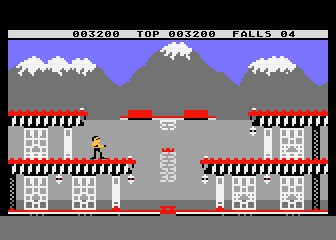
#oneaday Day 60: Not everything has to be "CONTENT"

I've gone on the record numerous times about how much I hate the word "content" to describe individuals' hard creative work online, but that's not what I want to talk about today. Instead, I want to talk about a somewhat related matter that has arisen as self-publishing your own writing, videos and all manner of other creative material online has become more and more straightforward.

And that is: not everything you enjoy has to become "content". Not everything you do has to turn into a video or an article or a blog post or even something on social media.

I am saying this primarily to myself, because I've definitely felt myself veering in that direction at times. Indeed, a significant portion of my game collection consists of stuff I picked up because I thought it would be fun and/or interesting to write about at some point — though this was back when I was working an incredibly boring job pre-COVID and had both the time and mental energy to be able to post something substantial about video games nearly every day.

The trouble with thinking that "everything has to be content" (and I'm using that phrase as a shorthand, not as approval of the term) is that it gradually makes it more and more difficult to just enjoy yourself — to such a degree that it can lead to a form of analysis paralysis where you end up discarding certain experiences on the grounds that they won't be "meaningful" enough. And by "you" in that sentence, I mean "I".

I am proud of what I have created online: there's this blog, which might be of interest to someone; there's MoeGamer, which features a wealth of in-depth articles about games that don't get much attention anywhere else; and there's my YouTube channel, which focuses primarily on retro platforms that don't get as much love as others.

But my brain is always going. It's always thinking "oh, yeah, wouldn't it be cool to make an in-depth video about Disco Elysium?" or "go for it! You absolutely can write one article for every single game on Evercade!" or "don't start playing something else until you've finished what you're playing, because you might not be able to write about it otherwise".

These of the words of someone who is at risk of turning his hobby into work, and I have become increasingly conscious of it over the last few years. The trouble is, I am increasingly aware of how I'm growing older, and thinking about what sort of "legacy" I want to leave behind. My wife and I aren't having children — by choice, I should probably add — but that doesn't mean I don't want to leave anything behind. I would love it if some of my writing and videos were useful to someone down the road, even if they only have something of a niche interest audience now.

But that doesn't mean I should spread myself too thin and try to cover everything. That's simply unrealistic. So I think I should probably try and impose some restrictions on myself to keep my "ambitions" under control, because otherwise I risk 1) overwhelming and burning myself out, and 2) never being able to "just enjoy" something ever again.

So for now I think what I'm going to do is I'm going to keep my YouTube channel focused near-exclusively on Atari stuff: primarily 8-bit and ST, perhaps with some 2600 stuff thrown in here and there if I can be bothered. MoeGamer I'd like to get back to doing some stuff a little more regularly with, so I think I will continue to use that as a means of posting in-depth thoughts on games I've actually finished in the case of narrative-heavy games, or spent enough time with to be able to comment on in the case of gameplay-centric titles. That may mean updates are sporadic, but there's nowt wrong with that. It's not a professional site, and I'm not in a position where I need or want to use it as a "portfolio" of sorts right now.

Evercade stuff is my day job, so any time I'm tempted to write something or make a video about Evercade stuff in my free time, I should instead channel that energy into doing something about it during working hours, particularly if I hit a period of "downtime" between major time-sensitive jobs. Of course, there are things I can't do or say when doing things from a "professional" perspective, but honestly it doesn't really matter too much; if I was doing Evercade stuff privately, I'd be wanting to explain why each and every game (yes, even the "bad" ones) is interesting and worth exploring rather than tearing it apart, and that's not much different from taking a slightly more "marketing" approach. (Incidentally, if you want to see some of the stuff I've done professionally for Evercade, check out the official Evercade blog, and particularly the Evercade Game Spotlight, Evercade Cartridge Preview and Top 5s sections.)

Everything else? I should just enjoy it. Sit back, enjoy without guilt. Write about it or make a video if I feel like it, but don't place undue pressure on myself to make everything into a video or an article. Sometimes a good time is just a good time and doesn't need writing about. Sometimes a good time is something best kept to yourself. Sometimes it's nice to try and forget that the Internet exists, and get yourself back into the '80s mindset of just enjoying things because.

Anyway, that's my ramble for today. I'm off to go put it into practice.


Want to read my thoughts on various video games, visual novels and other popular culture things? Stop by MoeGamer.net, my site for all things fun where I am generally a lot more cheerful. And if you fancy watching some vids on classic games, drop by my YouTube channel.

If you want this nonsense in your inbox every day, please feel free to subscribe via email. Your email address won't be used for anything else.

#oneaday Day 51: The Art of the Thumbnail

I'm in a Discord with some other (relatively) low-subscriber retro gaming and tech YouTubers, and we've had some interesting discussions over there. One subject that comes up frequently that I think I've derived the most value from is that of video thumbnails.

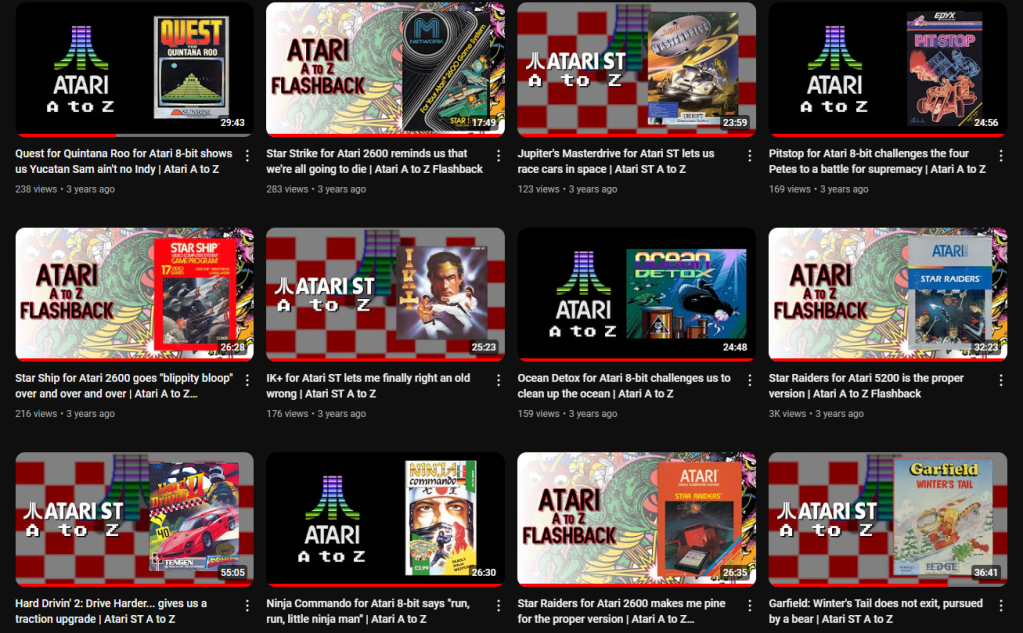
To put this in context, prior to joining this Discord, and for quite some time, my YouTube channel looked something like this:

I don't dislike this look. I was rather fond of how each "series" I was doing had its own distinct appearance, and I feel each thumbnail got nicely to the point: telling viewers that it was a video about a particular game on a particular platform.

But that's not really how YouTube works. However nice it looks to have a lineup of games with lovely consistent thumbnails Criterion Collection-style, it doesn't necessarily bring the views in. And so, with the advice and encouragement of the folks in the aforementioned Discord, I do things a little bit differently now.

This is how my channel looks today:

I'm pleased with this. Because I feel like these thumbnails do a much better job of intriguing and attracting the viewer's attention without assuming knowledge — i.e. "what is 'Atari A to Z'?" — while still allowing me a certain degree of consistency and coherence that makes my work immediately identifiable if you know what to look for.

Best of all, I haven't resorted to any of the more flagrantly transparent "clickbait" techniques, and "YouTube Face" is nowhere to be seen. The videos I make on YouTube are not for the same audience as Mr. Beast, so I make zero effort to court the sort of people who respond to those sorts of thumbnails.

And it works. At least I think so. Some of my videos perform about as well as what I considered a "solid performance" two or three years ago — that is to say, breaking three figures in the view count — but quite a lot more of them exceed that by two, three or even four times. And I've had a few breakout successes: my Super Woden GP 2 video sits at 86K views to date, my look at Ultima love letter Moonring has 21K views to date (and a very long tail), my video covering the announcement of The400 Mini attracted 14K views, and most recently a video on Project Gotham Racing 3 brought in a relatively modest but still impressive-for-my-channel 2.5K pairs of eyes.

I don't do this for the views, as I quite frequently state; I do it because I enjoy it. But I won't pretend it's not nice when a video does well — at least partly because it results in a bit of pocket money for me. That Super Woden GP 2 video made me over a hundred quid within a few days of it being posted. And now I get a small payout from YouTube earnings (i.e. the minimum payment threshold) every couple of months, whereas once it was a far-off goal I thought I'd never achieve. That's nice.

The secret behind those thumbnails? It's not really anything complicated. The most effective advice from the Discord I've followed is to keep text to just a few bold words, and present those words using at least two of the following: a bold outline around the letters; a bold drop shadow; and slightly rotating various parts of the complete text so that the eye is drawn to lines that aren't quite "straight". That's about it. I don't overuse colour; I don't overdo the "big red arrow" or "circling the obvious thing" tricks (although I put in a big red arrow occasionally as an in-joke to the group, which refers to itself as the "Big Red Arrow Club"); and, as noted, I don't do the "YouTube Face".

It works for me. The result is a channel full of videos I'm proud to call my own, and which a gradually (very gradually) growing number of people are coming to appreciate. That's pleasing to me.

YouTube and YouTube culture has myriad problems, but it's still the best place to create and share stuff like this. It's a valuable means of self-expression and sharing one's interests, and it's something I'm glad I decided to get stuck into exploring properly.

You are subscribed, right?


Want to read my thoughts on various video games, visual novels and other popular culture things? Stop by MoeGamer.net, my site for all things fun where I am generally a lot more cheerful. And if you fancy watching some vids on classic games, drop by my YouTube channel.

If you want this nonsense in your inbox every day, please feel free to subscribe via email. Your email address won't be used for anything else.
#oneaday Day 50: Another Project Complete

As of today, I now have videos recorded for all 25 of the games included on The400 Mini, the miniature games console based around the Atari 8-bit. Not all of them have been published yet — the final one, which covers both Centipede and Millipede, will be out later in the week — but it's nice to feel like another creative project is "done". If you're interested, I set up a playlist on YouTube here:

As you'll note from the thumbnail, this playlist includes both videos that I've previously recorded that happen to cover the games on The400 Mini and new vids that I've recorded specifically to look at everything included on the system. The Atari 5200 games included in the playlist, covered during my "Atari A to Z Flashback" project, where I made videos for all 150 games on Atari Flashback Classics for Switch, are fundamentally identical to their Atari 8-bit counterparts, and a few others I'd previously covered on the 8-bit-centric "Atari A to Z" series.

I'm pleased with this, at least partly because it means I can now get on with exploring the broader Atari 8-bit library once again. The games included on The400 Mini are a fun cross-section of what was out there on Atari 8-bit, but they are just a fraction of the whole picture — a picture that today includes some incredible efforts from modern developers who are still putting out amazing stuff for the platform.

One of the things that I hope comes to light for people who watch my videos is that a lot of games that ended up being very famous across multiple platforms actually got their start on Atari 8-bit. Off the top of my head that I've covered already, there's Boulder Dash, Alley Cat, Spelunker, Lode Runner, M.U.L.E. and plenty of others besides.

All of these are arguably more famous in other incarnations (except perhaps M.U.L.E.) but I feel it's important to acknowledge where they came from in the first place; a lot of self-styled gaming historians don't give the Atari 8-bit the credit it is due, assuming it to be a niche system on the level of stuff like the Oric Atmos, Dragon 32 and suchlike. But no; while the Atari 8-bit never had the same widespread acceptance of the ZX Spectrum and Commodore 64, it was still a lively, active and well-supported system (supported by everyone except Atari for significant portions of its lifespan, anyway) with some excellent capabilities that the platform's more talented programmers really got to grips with.

I realise this all might sound a bit fanboyish, but that's just because, well, I'm an Atari fan. Always have been. And I feel it's a bit silly for big chunks of computing and gaming history to be ignored just because they didn't happen on the most famous platforms.

And so I will continue to bang that drum on my YouTube channel. I have a platform there, and have amassed a following of quite a reasonable size. If the stuff I do convinces just one or two people to explore things a little beyond the usual scope of "retro" — or just to acknowledge that Atari home computers exist — then I'll feel like I've done a decent job.


Want to read my thoughts on various video games, visual novels and other popular culture things? Stop by MoeGamer.net, my site for all things fun where I am generally a lot more cheerful. And if you fancy watching some vids on classic games, drop by my YouTube channel.

If you want this nonsense in your inbox every day, please feel free to subscribe via email. Your email address won't be used for anything else.
#oneaday Day 25: Atari In Your Pocket

We announced some new products at work today: two new models of the HyperMegaTech! Super Pocket, a low-cost handheld that comes with a bunch of built-in games, plus full compatibility with the Evercade ecosystem, allowing you to expand the device's capabilities with 500+ games across more than 50 cartridges. And yes, that is the official PR line! I should state up front, though, that this is my personal blog, and thus nothing I say here should be considered official Blaze shenanigans; I just wanted to enthuse about this stuff.

One of the two new Super Pockets joining the existing Taito and Capcom devices is focused around Technos Japan, which is a brand for whom the license expired for their Evercade cartridge, meaning second-hand copies of it now go for absurd prices. The Technos Super Pocket brings most of those games (and a couple of newcomers) back at an affordable price point, which is nice.

The one I'm really excited about, though, is the Atari model, which comes with a whopping 50 games. And we worked with Atari to deliberately select a lineup of games that isn't the same as those seen on other Atari-branded devices. Sure, we've got some familiar favourites in there from the 2600 and arcade back catalogues, but we're backing those up with plenty of 5200, 7800 and Lynx titles, including a blend of both games that were on the existing Evercade Atari cartridges, and some brand new ones.

Perhaps best of all, we're doing a limited edition (2600 units, natch) which is designed in classic '70s-style woodgrain. You can preorder that one right now from Funstock; the standard non-limited versions of both Atari and Technos will be up for preorder at the end of the month for an October release.

With Atari having been such an important and defining part of my life growing up, I'm naturally delighted to play a part in bringing a bunch of these games back. So I thought I'd pick out some of my personal favourites, because why not.

Solaris

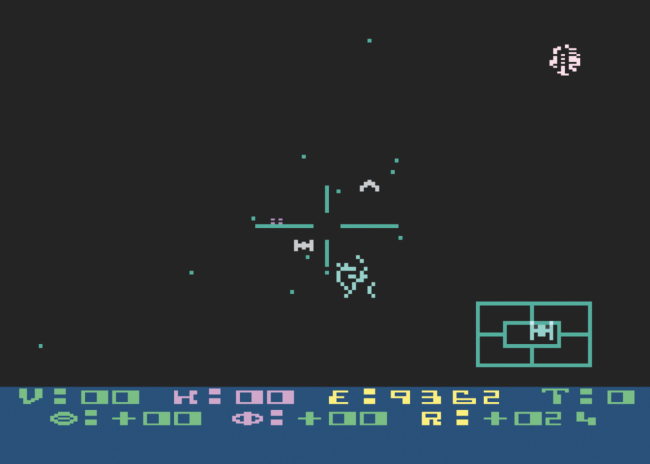
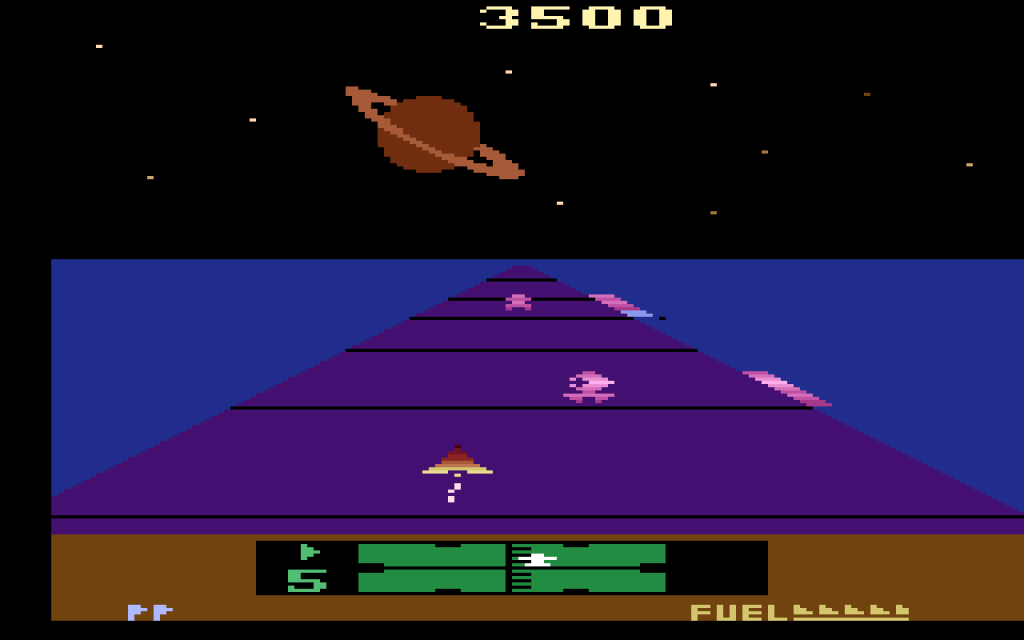
This is a great game for the Atari 2600. Despite not being called Star Raiders, it is an official sequel to the original Star Raiders (and different to the game actually called Star Raiders II on Atari 8-bit). It's made by the same programmer (Doug Neubauer) and features the same conflict between humanity and the legally distinct Zylon Empire. Like Star Raiders, it features a blend of action and strategy, tipping a little further in the direction of "action", and is probably one of the most technically impressive, ambitious 2600 games to come out of first-party Atari.

In Solaris, you fly a ship around the galaxy in search of the titular planet. You travel long distances on a grid-based sector map, and by warping to occupied sectors you can battle enemy fleets, destroy enemy bases and rescue allied forces from the Zylons. While it might initially seem complex, it's easy to pick up and very compelling, plus relatively short play sessions make it ideal for handheld play. Definitely a highlight if you've never played it, though it is available on the existing Evercade Atari cartridges.

Miner 2049'er/Bounty Bob Strikes Back!

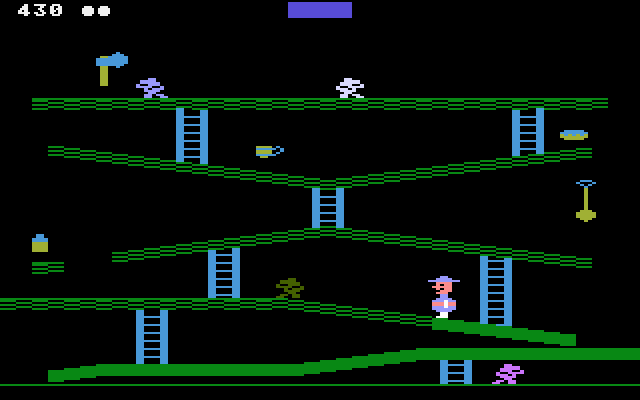
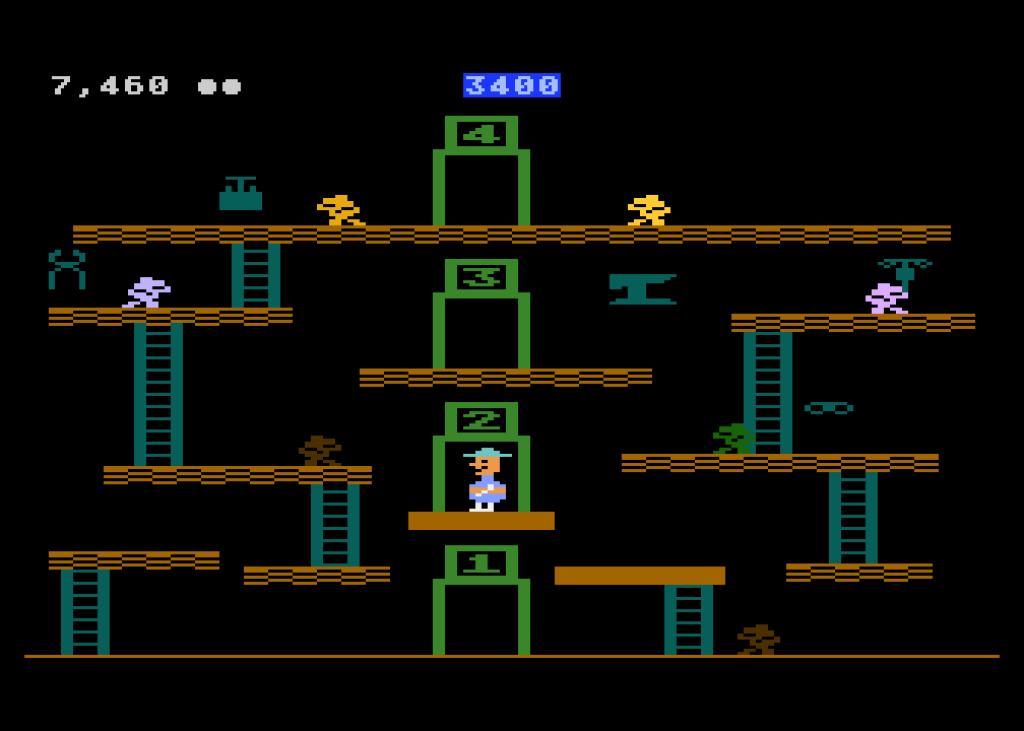
I'm grouping these together because they're both very similar — the latter is the sequel to the former. They're single-screen platform games in which you control Bounty Bob, a Canadian mountie, who is chasing down a dastardly trapper named Yukon Yohan. Yohan has, it seems, taken up residence in an abandoned radioactive mine filled with mutant nasties, so it's up to Bob to clear the way.

The narrative setup doesn't matter at all; this is a game from the early '80s. What does matter is the gameplay. Your main task in each stage of both Miner 2049'er and Bounty Bob Strikes Back! is to walk across every bit of platform in the level. This starts out simple (in Miner 2049'er, anyway; Bounty Bob Strikes Back! is much tougher, working on the assumption you're already familiar with the prior game) but quickly introduces you to a variety of gimmicks, giving each level a somewhat different feel from the last. Both games demand concentration, dexterity and for you to puzzle out the best route to victory, and their arcade-style structure makes them, again, great handheld titles.

Final Legacy

An all-time favourite of mine, this one. It's best known as an Atari 8-bit game but it was also ported to the 5200, which is near-identical internally.

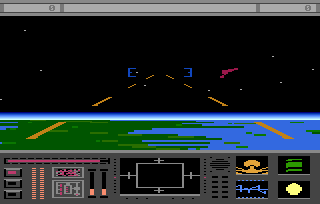
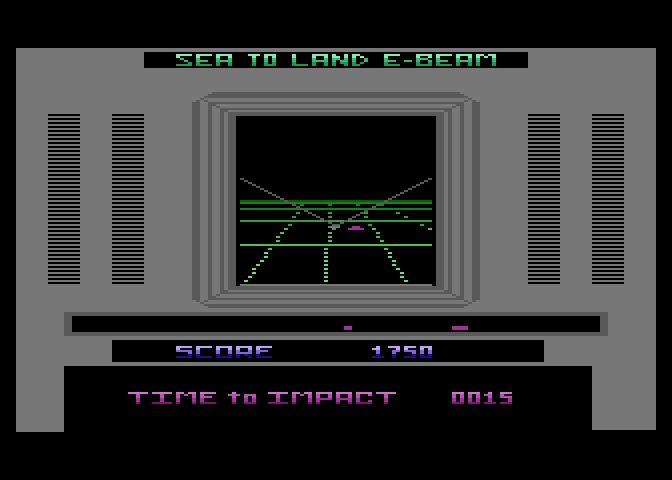
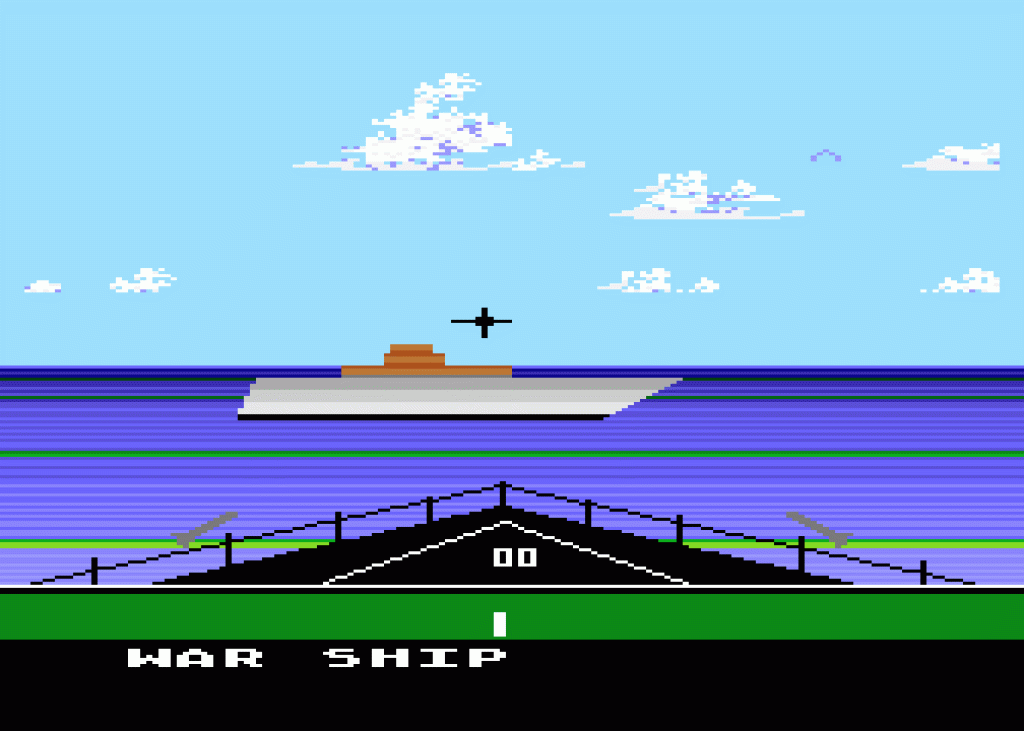
Final Legacy is an action-strategy game. Some call it "Battlezone with ships" but it's a bit more complex than that. There are four distinct components to the game: a navigation map, in which you move around the game world, pick your targets and attempt (usually unsuccessfully) to avoid detection by enemy ships; a "Sea-to-Land" section where you destroy ground targets with a laser; a "Sea-to-Air" section where you shoot down incoming missiles (inevitably launched while you were pratting about in Sea-to-Land mode); and a Torpedo mode in which you destroy enemy ships.

Final Legacy isn't one of Atari's most well-known games, but as far as I'm concerned it's Star Raiders-tier good. I hope the Atari Super Pocket encourages people to give it a proper go.

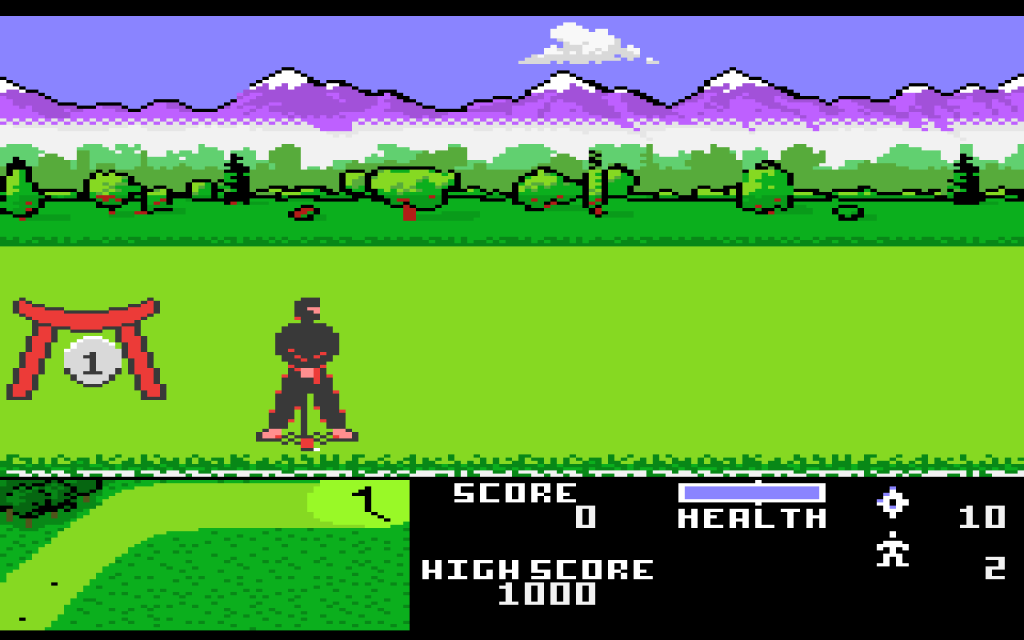
Ninja Golf

It's Ninja Golf. The title surely tells you everything you need to know if you weren't already familiar with arguably the Atari 7800's best game.

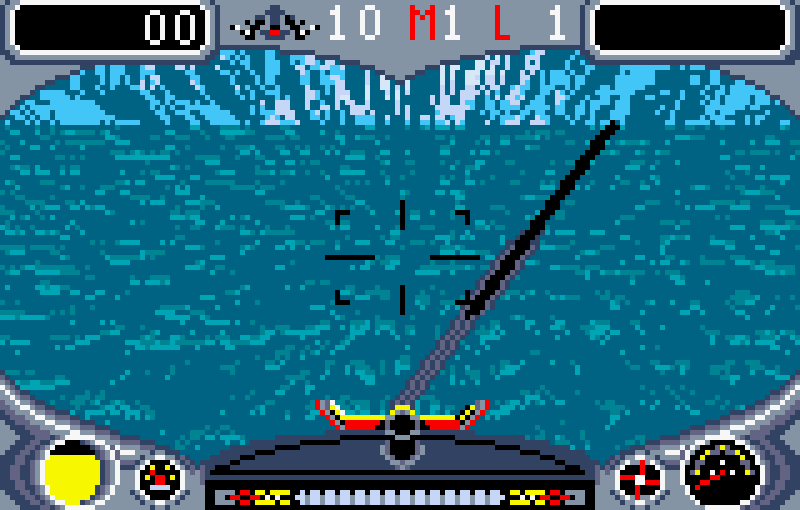
Turbo Sub

A fantastic Atari Lynx game, Turbo Sub is a real showcase of the platform's spectacular sprite scaling ability. It's a first-person shoot 'em up in which you pilot the titular sub both above and below the waves, blasting enemies to kingdom come and, when beneath the surface, collecting crystals which can be spent to upgrade your weapons for the next stage.

Turbo Sub is pure arcade-style fun. It looks great and it plays super-smoothly. It was one of my favourite Lynx games back when I had one, and having it just ready to go on a pocket-sized device is going to be a delight.

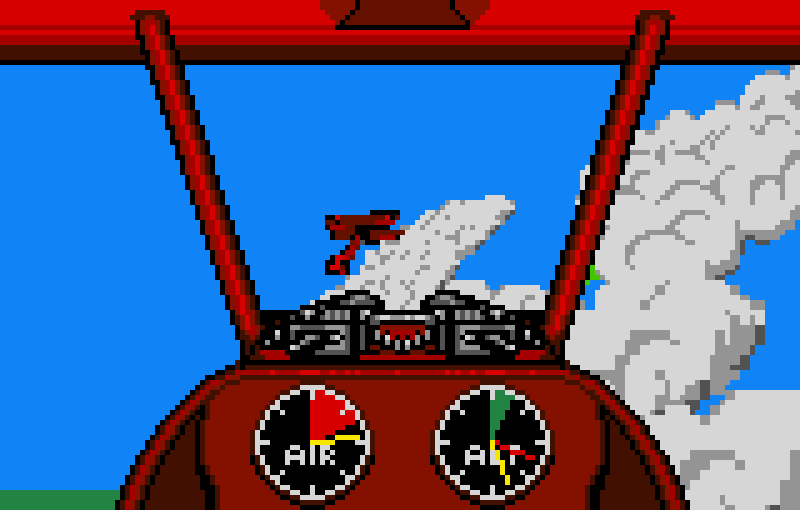
Warbirds

Another great Lynx game, Warbirds is a World War I-themed combat flight sim. While its scenarios are limited to dogfighting against one, two or three other planes, the wealth of difficulty options mean that you can customise the experience a great deal, and it's a lot of fun seeing how many missions in a row you can survive with everything turned up to the hardest level.

Like Turbo Sub, Warbirds is a showcase title for the Lynx's sprite scaling capabilities, with both cloud cover and enemy planes depicted as smoothly animated sprites. These are combined with simple polygonal elements for ground detail — a few hills and the hangar that marks your airstrip. It's relatively simple at its core, but it'll keep you coming back for more.

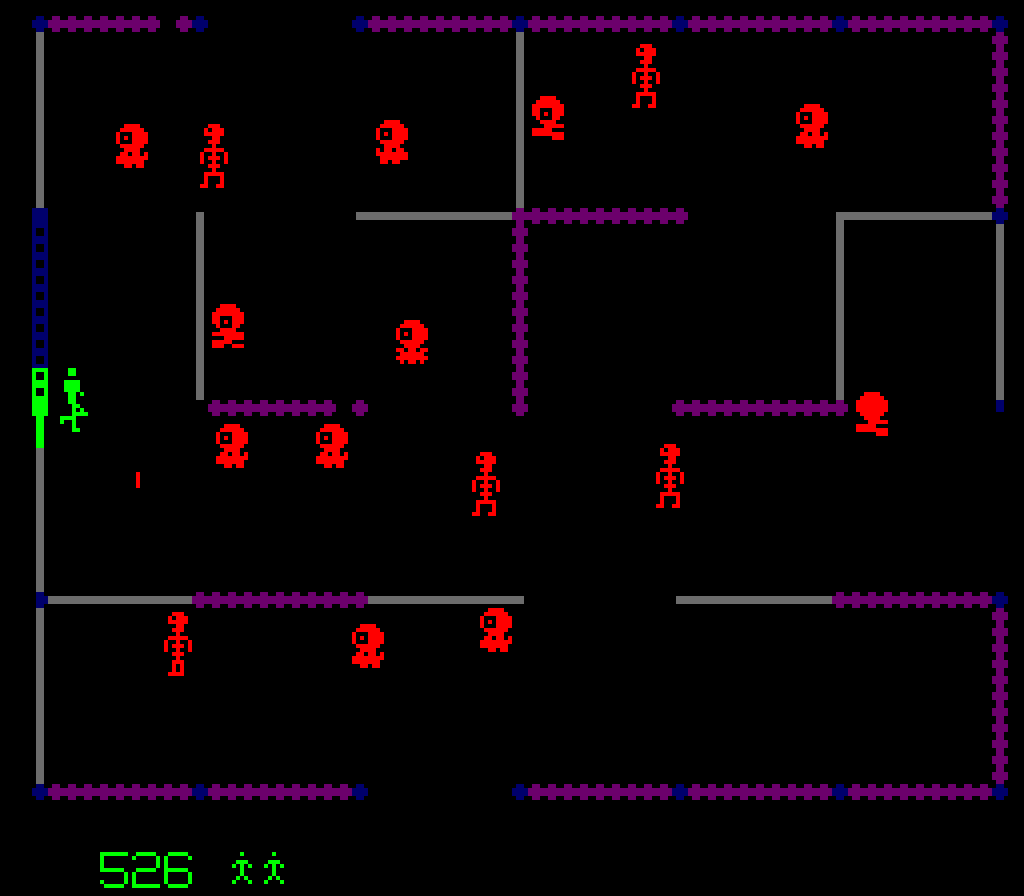
Berzerk/Frenzy

I'm grouping these two together because, again, the latter is the sequel to the former. These are two early '80s arcade games from Stern, casting you in the role of a little green man (literally) and tasking you with fighting your way through increasingly ferocious waves of killer robots. Take too long clearing a screen and the demonic Evil Otto (the world's most terrifying smiley face) will come after you.

Berzerk is the original game, and became famous for a couple of reasons: firstly, its speech synthesis, which would often yell "QUARTER DETECTED IN POCKET" to unsuspecting passers-by; and secondly, the fact that, according to urban legend, it "killed" two people. (The truth of that one is that two people just happened to suffer a heart attack after playing a game of Berzerk; there's no real evidence that the game itself or the stress of playing it caused the problems, but you know how these things go.)

Frenzy, meanwhile, adds a few elements to Berzerk's basic mechanics such as reflecting shots and destroyable walls. The only home port it got back in the day was to Colecovision, and no-one had a Colecovision (which is a shame, because the Colecovision is very good!) so this Super Pocket release is noteworthy for being one of the few official home releases it has had since its heyday.

I think that'll probably do for now. I suspect I'll be spending a lot of time with the Atari Super Pocket when I get one (because of course I'm getting one; I'd be getting one even if I didn't work for Blaze) and I'm super-happy to be involved in making it a thing that exists.

You can find out more about the Super Pockets on the official website, and Evercade likewise. This was not a paid ad. I just like what I do.


Want to read my thoughts on various video games, visual novels and other popular culture things? Stop by MoeGamer.net, my site for all things fun where I am generally a lot more cheerful. And if you fancy watching some vids on classic games, drop by my YouTube channel.

If you want this nonsense in your inbox every day, please feel free to subscribe via email. Your email address won't be used for anything else.
I bought a Sega Master System.

Now that I've stepped aside from the games press, I've resolved to myself to spend more time enjoying games just for the sake of enjoying them, not because I want to write about them or whatever. This doesn't mean that I won't write about them, of course — it just means that my priorities are not "get through as much shit as possible so I can write about something every week/day/hour".

To that end, this week I've been spending some time with my retro systems, which have been going a bit unloved in their dedicated room upstairs for a little while. Yes, I have multiple emulation devices and complete ROM sets for everything up to Dreamcast on my PC downstairs, but there's still something thoroughly pleasant about playing on original hardware.

In fact, in the case of systems like Nintendo 64, original hardware still provides a superior experience, since today's N64 emulation still has a certain degree of jank about it — not to mention the fact that no modern controller quite feels like the N64's weird three-pronged monstrosity.

One system I've been meaning to explore for a while is the Sega Master System. I've never owned one of these and don't really know a whole lot about it — and as such, any time I've considered exploring the library of games for it that I have on my PC and emulation devices, I never really know where to start. Herein lies another benefit of playing with original hardware: rather than attempting to get everything, you can curate your own collection and discover new favourites one at a time rather than being overwhelmed by choice.

Anyway, my background with the Sega Master System is brief. Growing up, I only know one person who had one: someone I went to school with named Dale. Dale was a curious character in that he flip-flopped between being a cool guy to hang out with and someone I'd consider a friend, to full-on "school bully" status. And he'd do it without warning from day to day; I never quite knew what to make of him. He could burp like no-one else, though, and his mum was nice.

To my recollection, I only ever went over to Dale's house once during my childhood, but while I was there we spent some time playing on his Sega Master System. I don't think he had many games — the only one I remember playing was Alex Kidd in Miracle World — but I remember being quite taken with both the system and its games. And it's sort of stuck in my head that I'd quite like to fiddle around with one ever since… only I've never gotten around to it for one reason or another.

Well, I've been chatting with some retro gaming YouTubers of late, and I finally got around to watching the work of one of them that I'd been meaning to check out for a while: Dudley of Yesterzine. Dudley's "thing" on YouTube is taking an individual issue of an old games magazine, going through what it covered and diving deep into one or two of the games and features that were in that issue. It's enjoyable viewing — plus attempting to anticipate the single "your mum" joke in each episode is always entertaining — but I digress.

The reason I bring up Dudley is that he's a big fan of the Master System. He refers to it, only partly jokingly, as "history's greatest console", and knows a great deal about the system, its library of games and all manner of other things. And it was through seeing Dudley's enthusiasm for the platform that I decided that now might as well be the time I jump on board the Sega Master System train. Particularly since he was kind enough to send me a couple of loose carts to get me started, even before I had anything to play them on.

I trawled eBay for a bit, looking specifically for a mk1 Master System, since that has an AV out port that allows it to be used with a nice SCART cable, and eventually came across a listing that had a Master System in good condition, one controller, the Phaser light gun and fifteen games, most of which were boxed and with manuals intact. It wasn't cheap, but it also didn't seem unreasonably priced, either. So I took the plunge, and it finally arrived today.

I'm thoroughly charmed with it so far. The selection of games I've acquired with the system cover a wide selection of bases — including three excellent Sonic titles — and I was delighted to discover that the specific model of Master System I have is the one with the built-in game "Snail Maze" rather than Sonic the Hedgehog or Hang-On. Nothing against either of those games, of course, but you can get them on cartridge; Snail Maze is a proper "exclusive" to that particular hardware revision.

Snail Maze, as a game built in to the ROM-based OS of an '80s games console, is not a complicated affair — it's literally just a maze game in which you have to beat the clock — but its simple existence gives the Master System a ton of character and personality. Hell, even the fact that the Master System has an OS that is visible to the end user, unlike any other non-computer console around at the time, makes it stand out — particularly with its friendly, helpful on-screen instructions that encourage you to "ENJOY!" if you switch on with no cartridge in the slot.

The games themselves, too, have a very distinctive feel to them. The Master System's ability to colour the entire "border" of the screen (much like how the Atari 8-bit and ST could) rather than simply confining the action to a smaller window in the middle surrounded by inky blackness is immediately recognisable, and there's definitely a recognisable Master System "look and feel" — and certainly no-one would mistake the SMS' PSG sound chip for the NES' custom APU. (This isn't a slight against either of them, just an observation that they are noticeably distinct.)

The control pad is surprisingly tiny, being even smaller than an NES pad but similar in shape, and features possibly one of the worst directional pads ever to exist. It's not unusable by any means, but its squishy nature means that it's much, much too easy to accidentally push diagonals, particularly the downwards ones, and in certain games this can be absolutely disastrous if done at just the wrong moment.

The buttons are nice, though, and, squishiness aside, the controller is, on the whole, responsive. It's a little odd there not being a dedicated "Start" button — the first action button is also regarded as "Start", and pausing is achieved by pressing a button on the console itself, rather than the controller — but given most games are designed around the two-button limitation it's not a huge issue.

The Ninja

I haven't got deep into any of the games just yet, but some early favourites are "Commando, but feudal Japan", aka The Ninja, and "legally distinct from Pole Position", World Grand Prix. I also already know that the Master System Sonic games are excellent from when I've previously covered them, but it will be great to finally play them through on real hardware.

In terms of collecting, while it's tempting to try and go for a "complete set", particularly since the Master System's total library is relatively small compared to other platforms, I don't really have the room to store that. Some would argue I didn't really have the room to start collecting for another console in the first place, but I can make it work.

Anyway, what I'm intending on doing is simply curating a moderately sized but well-formed collection of games that I will genuinely enjoy. I'm not going to lose sleep over the fact Phantasy Star is over a hundred quid — I have multiple other ways to play that — and nor am I going to lust after things that are expensive just for the sake of it; I can live without 8-bit Streets of Rage II if it's going to be that absurdly priced.

Instead, I'm going to take the opportunity to nab the games that are affordable, and which I feel like I will genuinely enjoy, and then be content with that. And I'm going to take the time to enjoy them just for the sake of enjoying them. I might write or make a video about them at some point, I might not. Point is, it's completely my decision as to whether or not to do that now — and I'm not going to put any pressure on myself in that regard.

Now, question is, what to add to the collection next…?

Gaming Comfort Food

Just recently I have been suffering from what mental health professionals tend to refer to somewhat euphemistically as "low mood" — which is to say I've been feeling really fucking depressed. Video games have long been a part of my own personal coping mechanism for times like this, but I've been somewhat surprised of late as to the specific experiences I've found myself gravitating towards.

In the past, I'd historically try and immerse myself in a thoroughly involving game with a good story to try and get away from feeling bad about everyday life. And don't get me wrong, that's still very much appealing, and something I will absolutely continue with until the end of time. But specifically during my most recent depressive episode, I've found no greater joy than that which I have discovered in the depths of really old video games. Specifically, Atari 2600 and Intellivision titles.

I didn't grow up with the Atari 2600 — it was always the poor cousin to the Atari 8-bit home computers that were in our household during my childhood — but in more recent years I've come to regard the classic system with considerable fondness. This is a result of a combination of factors: the number of times I've watched Mark Bussler's "Classic Game Room" videos on YouTube, where he seems to hold even the very worst Atari 2600 games with a considerable degree of affection, and the Atari A to Z Flashback project I did myself on YouTube, which involved playing through 150 Atari games, many of which were 2600 titles.

The Intellivision, meanwhile, is not a system I had any contact with whatsoever growing up, but having explored it through a combination of Intellivision Lives! on PS2 and the two Evercade Intellivision compilations — both of which I was heavily involved with the production of on the documentation and testing side of things — I have also come to regard it with some fondness. And there are a few games I find myself continually coming back to.

So just for a bit of fun today, I thought I'd pick out a few games that I've been drawing distinct comfort from recently. And if you're open to the idea of really old games — I realise they're an acquired taste for many — then I encourage you to give these a go when you're feeling low. They might just give you the lift you need.

Motocross (Intellivision)

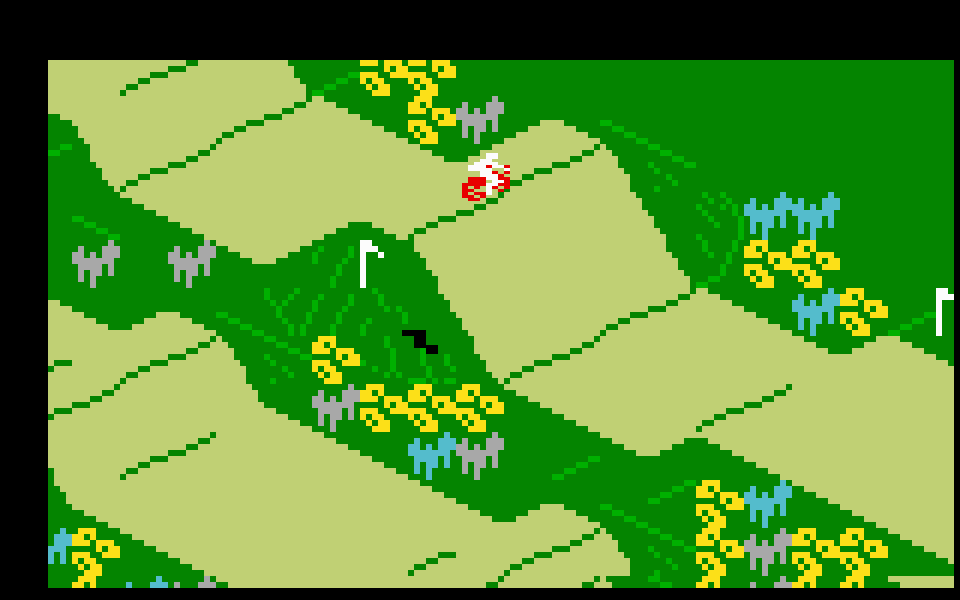
When I first saw Motocross, I thought it looked like a load of old shit. When I first played Motocross, I thought it was a load of old shit. And yet this is probably the Intellivision title I've found myself returning to most frequently of late — there's an undeniably addictive quality to simply chasing your own best times around the three included courses, and on top of that there's a course editor included for you to make your own challenges.

Motocross is an isometric perspective racing game that was noteworthy at the time of its original release for its relatively realistic physics — indeed, the programmer used to troll people in the office by turning the gravity down really low then giggling as people launched themselves into the stratosphere from the various jump ramps.

It's slow and sluggish to play and the scrolling is terrible — the Intellivision wasn't great at that — but once you look past the surface-level ugliness there's a game that strikes a good balance between accessibility and being technically demanding underneath. I've been finding it a great comfort of late.

Enduro (Atari 2600)

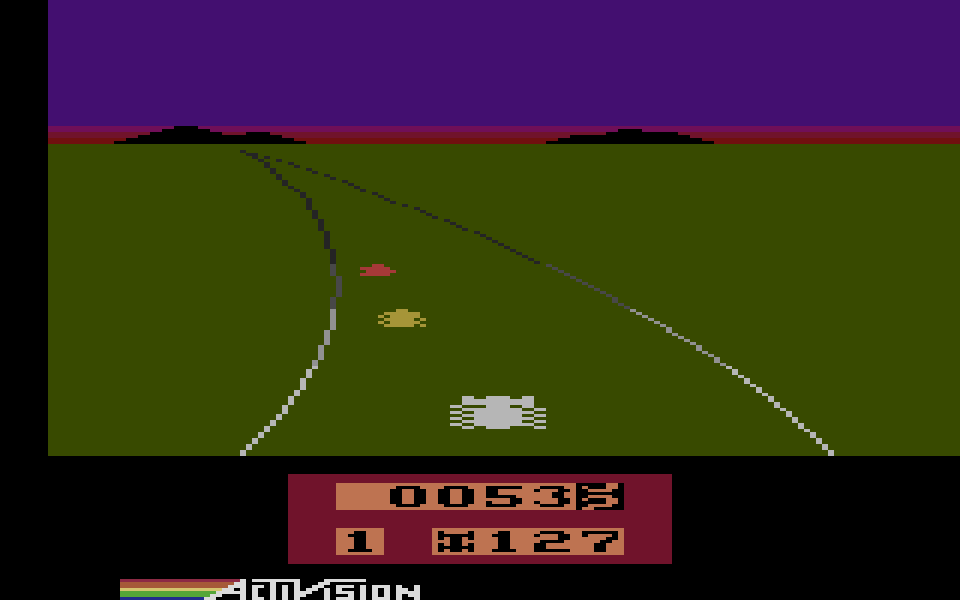
The spiritual precursor to The Great American Cross-Country Road Race, Enduro from Activision is an all-time classic for Atari 2600. The concept is simple: you simply have to overtake a set number of cars over the course of a virtual in-game day. If you succeed, you get to keep racing for another day; fail and your race is over. Your aim is simply to record as high a distance as possible on the satisfyingly "rolly numbers" odometer at the bottom of the screen.

Enduro is cool because it's a simple, early vanishing point racer that plays to the Atari 2600's strengths and doesn't try to do anything too ambitious in terms of gameplay. Presentation is another matter, however; this was a noteworthy game back in the day for incorporating a full day-night cycle, variable weather conditions and even a rudimentary form of lighting simulation.

Enduro is simple enough to pick up and play, but massively addictive because of that. You always feel like you might be able to push yourself just that little bit further — and that's just what you need when you're feeling a bit low.

Berzerk (Atari 2600)

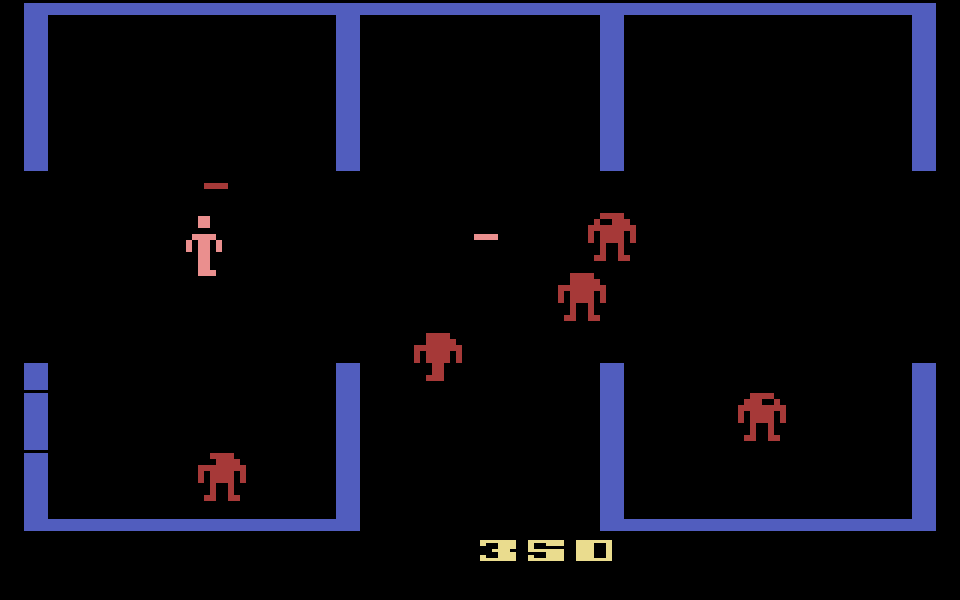
It may not be the prettiest or best version of Berzerk — the Atari 8-bit version is rather more authentic to the arcade machine, complete with digitised speech — but the 2600 version has a distinct character all of its own, and it's a ton of fun to play.

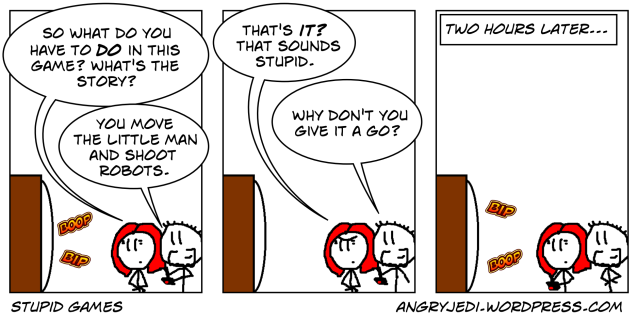
For the unfamiliar, Berzerk involves nothing more than moving your little man around and shooting the robots. Clear a room full of robots and you get some bonus points, but stick around too long and Evil Otto comes chasing you down. Like most 2600 games, it's simple but effective, and it really keeps you on your toes as the pace gradually increases.

Cloudy Mountain (Intellivision)

The Intellivision Collection 2 cartridge for Evercade contains two of the platform's best and most ambitious games: Cloudy Mountain (formerly Advanced Dungeons & Dragons Cartridge) and Tower of Doom. Both of these are games that I find myself coming back to regularly, but Cloudy Mountain is probably the one I turn to more often if my brain isn't quite functioning quite correctly and I just want something to fiddle around with for a few minutes.

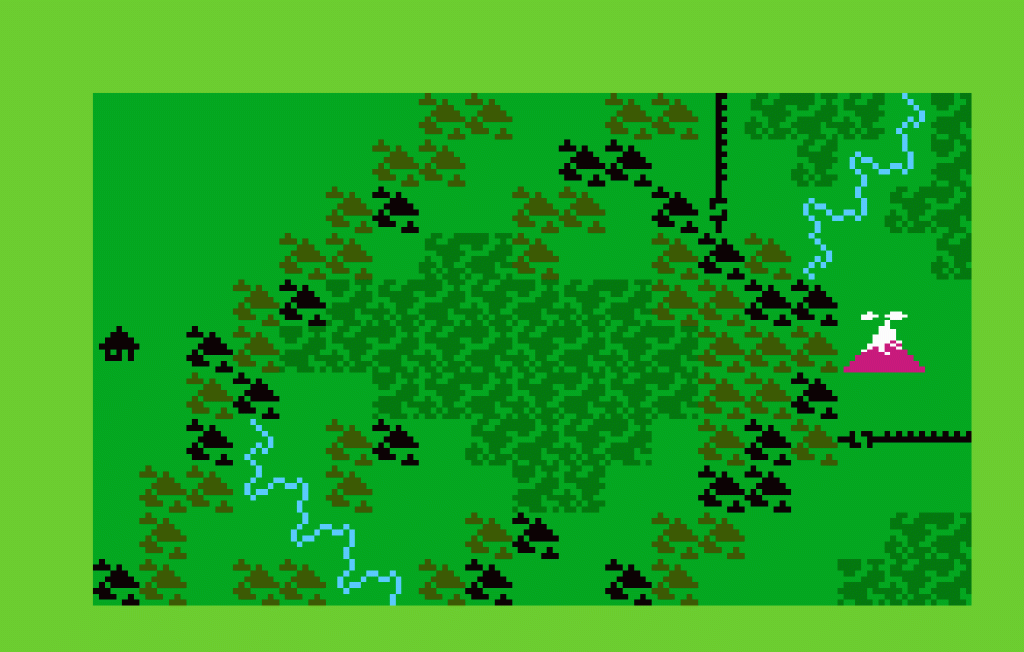
In Cloudy Mountain, your aim is simple: get your party of three bow-wielding warriors from the little house on the left of the map to the eponymous mountain on the right side of the map. Once there, defeat the two winged dragons guarding the two halves of the Crown of Kings, then grab said Crown and enjoy your well-earned sense of victory. Along the way, you'll have to explore randomly generated dungeons and find helpful items to traverse the various obstacles on the map, with your only defence being your dwindling stock of arrows.

Cloudy Mountain is one of those games that looks and sounds like it might be quite complex when you first try it, but it's actually quite simple — and as such it's a great game to jump into if you just want to play something that doesn't make too many demands of the player.

Missile Command (Atari 2600)

Missile Command is an inherently stressful game, particularly in its arcade incarnation, but I've found the Atari 2600 version on its default difficulty level to strike a good balance between challenge and accessibility. Despite lacking a few features from the arcade game, it plays really well and is an enjoyable game to pick up when I'm not in a great mood.

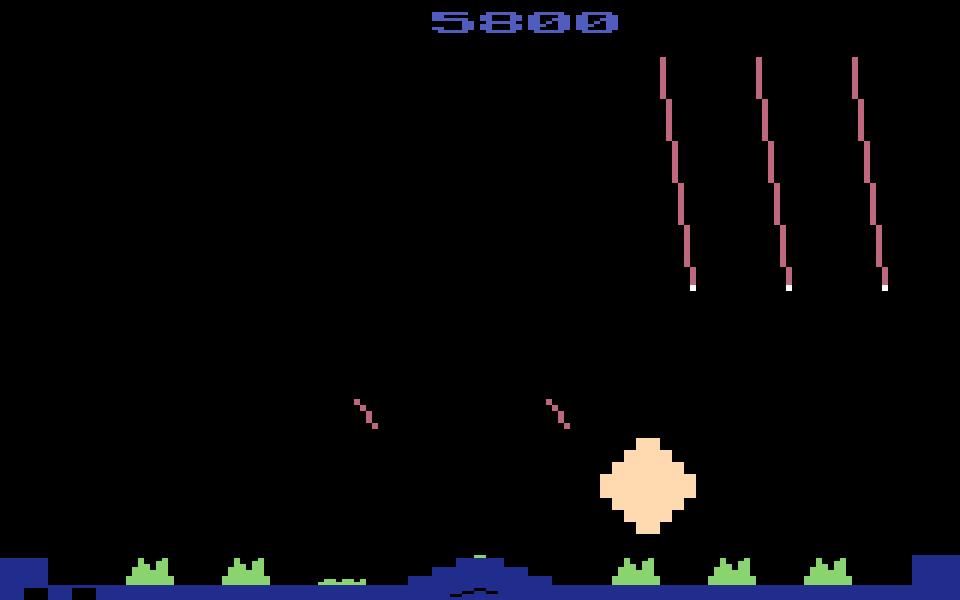
Most of you reading this probably know Missile Command already, but in case you don't: missiles fly in from the top of the screen, and you have to blast them by setting off explosions in the sky and catching the "heads" of the missile trails in them. Clear out a wave and you get bonus points and the action accelerates. You lose when the six cities you're supposed to be defending get nuked — an inevitability in a game like this, as Missile Command is at least in part a depiction of the futility of nuclear war.

I didn't enjoy Missile Command a ton when I was younger — and I would have probably written the 2600 version off purely for being on the 2600 — but in more recent years I've come to really love this version, and it's a great stress reliever, as well as something of a stress-causer at its higher levels!


So there you go. I'm not going to pretend these games will appeal to everyone these days — for some, they're just too old to be enjoyable, either mechanically or in terms of presentation — but I've been drawing specific comfort from all of these just lately. So if you've found yourself in a similar position, consider returning to your roots and seeing what some of the very earliest games have to offer — you might just find yourself surprised.

2453: A Meeting of Generations

0453_001

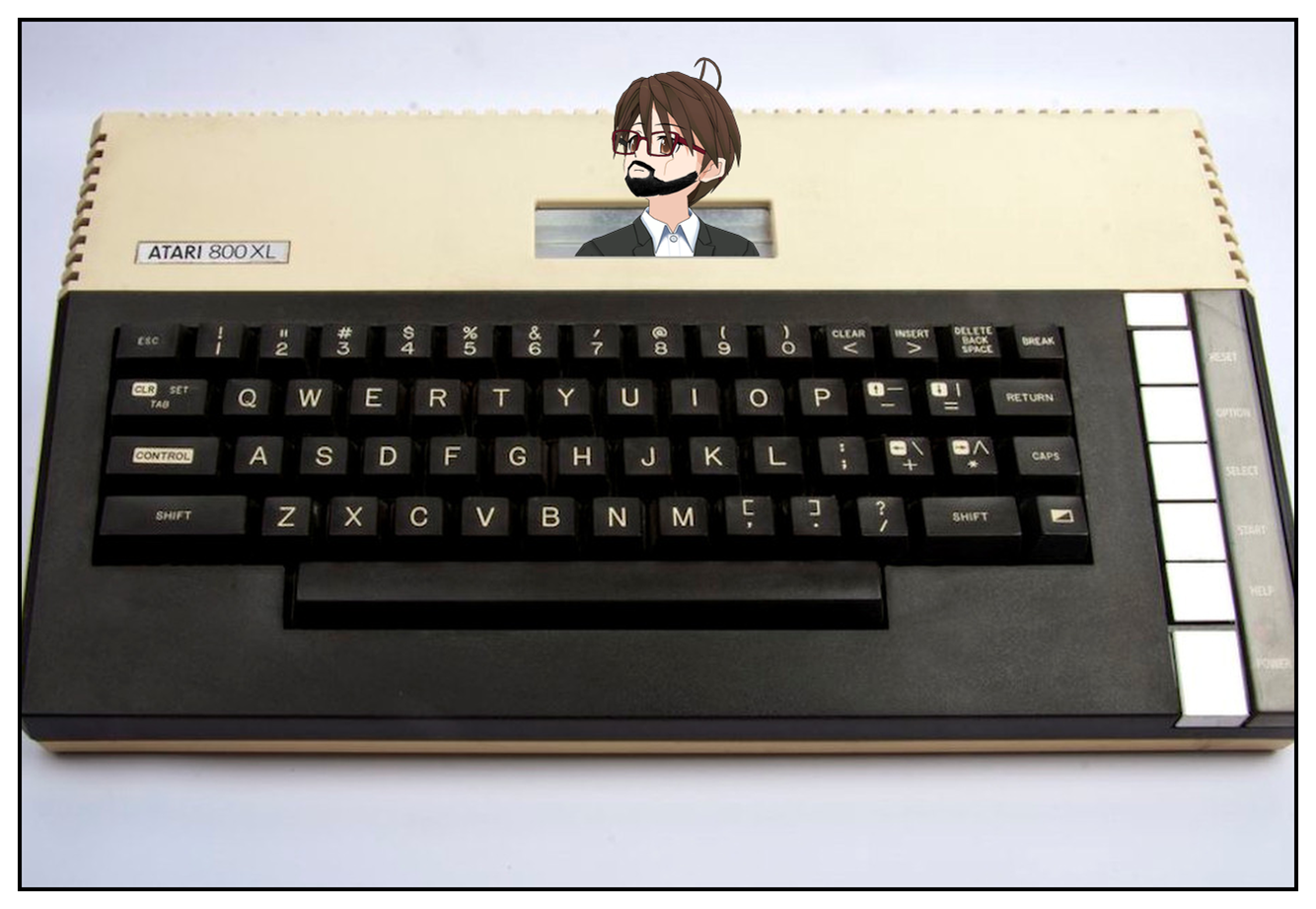
After a bit of fiddling around and faffing (and eventually giving up on the OSX side of things) I managed to get a 35-year old Atari 800XL talking to a modern-day Windows computer. Not only talking, but even reading and writing files back and forth.

The secret to this black magic is twofold. Firstly, you need a bit of kit called an SIO2PC module, which converts the signal from the Atari computer's SIO hardware — used for communicating with peripherals such as disk drives and cassette decks — into something which can be interpreted by modern systems, since SIO was a proprietary format and cable type. The SIO2PC module I had was serial-based, so I then had to run it into a modern computer using an RS232 to USB converter cable, since many computers these days don't come with serial COM ports as standard. The cable effectively sets up a "virtual" COM port via USB, tricking the serial device into thinking it's plugged into an actual serial port on the PC.

Once you've got that bit sorted, you need some software. There are three pieces of software I've experimented with today. Firstly, SIO2OSX just didn't work at all. I don't know if I didn't set it up correctly or if the Mac simply didn't have the appropriate drivers to set up the virtual serial port — though said virtual port certainly appeared for selection — but eventually I gave up and switched to my laptop PC, which has been gathering dust for a little while now.

Second up was Atari Peripheral Emulatoror APE for short. This Windows-based tool emulates a stack of Atari disk drives, printers and modems, allowing you to mount disk images and (theoretically, anyway) boot from them. I had trouble getting this part of the program to function correctly, but what did work was a separate application distributed as part of the APE package called ProSystem. This is a much simpler tool that allows you to either "rip" Atari disks to .ATR disk image files, or take an .ATR disk image and write it to a physical 5.25" disk to use in the Atari disk drive. While APE failed to do what it was supposed to, ProSystem had no problems whatsoever, reading from and writing to my ageing Atari 1050 disk drive with no problems whatsoever.

The final tool I tried was AspeQt, which is still in active development. AspeQt is pretty much an open-source tool that does most of the things APE does — APE is shareware — but I found it to work much more reliably than APE for simply mounting disk images and using the PC as a "virtual disk drive" for the Atari. AspeQt also has an excellent feature that I was specifically looking for: the ability to extract individual files from .ATR disk images and save them as standalone files on the PC filesystem. It even automatically converts from ATASCII — Atari's proprietary take on the now-standard ASCII character set — to standard ASCII, meaning that files such as AtariWriter documents can be easily transferred to PC for dumping into other applications with all the requisite line breaks and suchlike intact rather than being replaced with special characters.

My current Atari setup, then, is a bit of a kludgey mess, using ProSystem to rip and write complete disk images and AspeQt to mount and use individual files on a disk or image — ideally APE would act as an integrated solution for all of this — but it works, by God. And, boy, was it exciting to hear the 1050 snark into life when I clicked a button on my Windows PC. Just to prove it really worked, I downloaded a disk image for the AtariAge forums' current High Score Club games and wrote it to a blank disk. A few minutes later, I had a bootable floppy disk that you'd never know I'd downloaded from the Internet running on original Atari hardware. Black magic, I tell ye.

Getting all this working opens up all manner of exciting possibilities, and I'm sure I'll be exploring them more in the coming weeks.

2450: Original Hardware

0449_001

Emulators are great and all, but there's something indescribably wonderful about playing old games — or using old applications — on their original hardware.

I hooked up my Atari 800XL to an old-fashioned CRT TV/monitor today, attached the 1050 disk drive and booted up a few old favourites from my childhood. And it's been marvellous.

One thing that's struck me with the retro scene of today is that you often hear the same game names coming up time after time, and they're more often than not console titles. For my money, while the consoles of the '80s were technologically superior — most notably with regard to scrolling and sprite work, which were done in hardware as opposed to the home computers, which required extensive poking around in RAM to accomplish the same goal — the games were far, far more creative.

I guess this is kind of a reflection of the situation we have today, where all the blockbusters come out on consoles, but the truly creative, weird indie games tend to hit PC first and perhaps consoles a bit later if we're lucky and/or the developers feel like jumping through Microsoft, Sony or Nintendo's respective hoops to publish their titles. The only difference is that home computers of today are regarded as the pinnacle of gaming technology, while the consoles represent the "affordable" option.

One thing I find especially interesting about the Atari 8-Bit scene in particular — and I'm sure it's the same for the Spectrum and Commodore 64; I just don't know those systems nearly as well — is that some of the most creative, interesting games were put out for free(ish) as type-in listings for magazines. All Atari systems could run the programming language Atari BASIC: early models had it on a ROM cartridge, while later models had it built in so that you'd just turn the machine on and it was ready to obey your every command.

The fact that absolutely everyone had access to this easy to learn (albeit not very efficient or speedy) programming language meant that magazines were able to publish complete programs sent in by readers or composed by staff members. Type the program listings into your computer using BASIC, save them to disk or cassette and voila: a free game or application for you!

Because these games weren't beholden to the fickle whims of publishers — not that even commercial games were particularly restricted in this regard at the time — the authors were free to be as batshit crazy as they wanted with them. And oh, they were: some of the greatest games on the Atari are some of the most abstract, in which the answer to the question "why does that happen?" is simply "because it's more fun and interesting that way".

Take a game called Duck Dash, published by renowned Database publication Atari User in July of 1987. This is a game in which you play a farmer (inexplicably represented by a green diamond) as he runs around his farmyard trying to gather up his ducks in preparation for Hurricane Harriet. A simple enough concept, you might think. But there are two farmer-eating spiders wandering around the farmyard. And the ground is so muddy that you dig out bottomless pits behind you with every step you take, meaning you can't retrace your steps.

Or how about Doctor Boris, from the same publication a few months later? So confident was Atari User in the quality of this game — written entirely in BASIC — that they declared it "Game of the Year" on their front cover, promising "the ultimate challenge". In Doctor Boris you play the eponymous doctor, a recent graduate from medical school who has come to his new hospital in the North of England only to find that it's still a building site, so it's up to the good doctor to finish the building work himself. Also there are unexploded bombs scattered around the area. And your supervisor has skin so bad it is fatal to the touch. And there are radioactive skulls buried everywhere.

Ridiculous and insane-sounding, right? Obviously. But the thing is, these games play really well. They're simple, they have clear goals, they're well designed and their rules are self-explanatory. Above all, they've been designed with fun and challenge in mind, not realism, and for this reason they've aged better than a lot of other games I could mention, even with their primitive graphics and sound, not to mention their slow initialisation routines thanks to them being written in BASIC.

We have games that are this silly these days, of course, but when it happens today it always feels very much like they're being designed as wacky YouTube-bait — that they're trying a bit too hard to be funny. Neither Duck Dash nor Doctor Boris are trying to be funny or ridiculous; their premises and setup are pretty much irrelevant once you start playing, and the focus is entirely on providing a satisfying, enjoyable and challenging experience for the player. To put it another way, they "play it straight" rather than the whole thing being infused with the feeling that the game is going "HEY! HEY! LOOK AT ME! I'M HILARIOUS!" that you get with modern "creative" titles like, say, Shower With Your Dad Simulator and suchlike.

Anyway. So far it's been an absolute pleasure to boot up these games — many of which are often neglected and forgotten by the broader retro scene thanks to them not being commercial releases — and I anticipate there are plenty more treasures hiding in the disk boxes full of not-at-all-pirated-games-honest that I happen to have standing by. You can probably count on hearing about a few more in the near future!

2439: Rescue on Fractalus

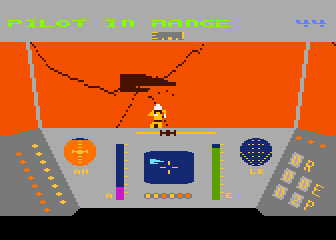
I'm bored, tired and ill, so aside from wheezing and feeling sorry for myself today, I distracted myself from negative thoughts by making a video about one of my favourite games of all time: Lucasfilm's Rescue on Fractalus.

A lot of people tend to assume that Lucasfilm's games output began with their fabulous SCUMM-driven adventure games from Maniac Mansion onwards and ended with some limp-wristed Star Wars spinoffs, but they were actually pretty active in the early days of computing. Not only that, their games became known for being some of the most technologically advanced titles out there, with Rescue on Fractalus being an early example of spectacular first-person perspective flight, shooting and rescue action.

Rather than using polygons, which were only just starting to be explored on home computers by Braben and Bell's Elite in 1984, Rescue on Fractalus, which came out earlier in the same year, made use of fractals to generate its three-dimensional landscapes. The effect was a much more "organic"-looking landscape than what we'd come to expect from polygon-based titles in their early years, and remains an impressive technological achievement considering the power of the host systems even today. Sure, it may not be perfect by modern standards — the frame rate is janky, there's a lot of pop-in, the game doesn't quite seem to know how to respond when you collide with a solid object — but when you consider this was first released to the world in 1984, I think we can forgive all these things, particularly when the game itself is so solid.

In Rescue on Fractalus, you fly a craft called the Valkyrie down to the titular planet, whose atmosphere is so toxic it makes a Gawker publication look like a bereavement support group. A number of pilots have crash-landed, and it's your job to save them by finding them, landing nearby, waiting for them to come up and bang on your airlock door, letting them in and then speeding off on your way. This is a simple process in the early levels, but as you progress, you start having to contend with mountaintop laser cannons, kamikaze flying saucers, aliens impersonating pilots on the ground and even flying by night, necessitating even more reliance on your ship's instruments than normal.

I loved Rescue on Fractalus back when I first played it because it provided one of the most convincing, dramatic representations of flying an advanced spacecraft that I'd ever seen. The realistic cockpit view with instrumentation, the wonderful two-channel "whistling" sound of the ship's engines — entirely unique to Rescue on Fractalus, making it instantly recognisable to hear as much as see — and the fact that the game involved more than just "point and shoot" captured my attention as a child, and it's a game I still delight in playing even today.

But those aliens hammering on the windshield still scare the shit out of me.

2427: 10 Atari 8-Bit Classics*

0427_001

Still curious about the Atari 8-Bit? Here are 10 classic games.

River Raid

river-raid-1

The 2600 version of River Raid has been whored around the place numerous times over the last few years, but the infinitely superior Atari 800 version never gets any love.

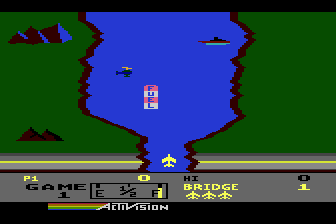
While the formula remains the same — fly up the river, don't crash into the sides, don't run out of fuel, blast any helicopters, ships and bridges in your way — the execution is better thanks to the addition of numerous features that use the additional power the 8-Bit computers had over the 2600.

Atari 8-Bit River Raid also had tanks, hot air baloons, jet planes that flew across the screen ignoring the river boundaries and more complex level designs. It's still a top-notch shoot 'em up today.

Miner 2049'er

s_miner2049er_4

Any self-respecting Atari enthusiast will almost certainly put this game near the top of their "favourite games" list, though interestingly I didn't warm to it much first time around. Replaying it again now, however, I see its appeal — it's a well-crafted platform game with interesting environmental puzzles that never gets too complicated for its own good.

Playing the role of renowned (and rather chubby) mountie Bounty Bob, it's your job to make your way through a uranium-infested mine in search of the nefarious Yukon Yohan. In order to do this, you need to "paint" every platform in each screen by walking over it, while simultaneously avoiding the mutant uranium beasties that prowl the platforms. But in true Pac-Man tradition, grabbing a bonus item allows you the temporary ability to turn the tables on the meanies, eliminating them from the screen and helping to clear a path for you.

Star Raiders

star-raiders-perfectten

Again, the 2600 version of this has been re-released time after time, but the Atari 8-Bit version is much better. It's the original 3D space sim, essentially being a more action-oriented take on the traditional grid-and-vector-based "Star Trek" game that can be played on anything from a mainframe to a graphic calculator.

Aliens are invading the galaxy. You need to stop them. You do this by reviewing the galactic map, determining which of your starbases are in most immediate need of attention, then warping to the aliens' location, blasting them to smithereens and then repeating the process until the galaxy is safe once again.

Notable for being more complex than simply "point and fire", you had to manage your energy levels by determining when was (and wasn't) an appropriate time to switch on systems such as your shields and targeting computer.

Star Raiders II

star_raiders_ii

Not perhaps as fondly regarded as the legendary original, I still loved Star Raiders II (originally intended to be a licensed game of the movie The Last Starfighter), because to me it kept what made the original great while improving almost every aspect of it.

Instead of a grid-based galactic map, you now had a convincing looking solar system map and could even orbit planets. The enemies you confronted were more than just fighters that went down with a single shot, too; in one of the earliest examples of boss fights, Star Raiders II often put you up against enemy destroyers and battlecruisers, requiring you to change tactics somewhat.

Star Raiders II also saw you going on the offensive rather than playing strictly defensively, too; when you thought you saw an opportunity, you could warp into the aliens' star system and bomb their planets in an attempt to stop their invasions once and for all.

Oh, and you could fly your ship into the sun and the on-screen cockpit would melt.

Ballblazer

ballblaster

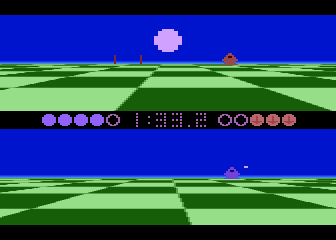
An early Lucasfilm game, Ballblazer was a split-screen arcade sports game for one or two players. The basic premise was similar to soccer in that you had to gain possession of a ball and shoot it between the opponent's goal posts, but there was only one person on each team and the goalposts moved.

Ballblazer made use of a convincing first-person 3D perspective using a patchwork grid effect on the ground and automatic 90-degree turns whenever you needed to face the ball. Despite its simplicity, the game was fiercely competitive, and had some fantastic music, too.

Rescue on Fractalus

rescue_on_fractalus_atari_us_8

I mentioned this the other day, but I can't talk about 8-Bit classics without discussing Rescue on Fractalus, another early Lucasfilm game.

Unfolding from a first-person in-cockpit view, you were sent down to the planet Fractalus (so named because its 3D landscape was generated using fractals) to rescue crashed pilots and fend off the evil Jaggi forces. The game was remarkably complex for its time, featuring numerous keyboard commands that made it feel like a proper simulation of flying an advanced spacecraft, and the 3D graphics were extremely impressive.

Rescue on Fractalus was most noteworthy for its little touches: the sound of a pilot banging on your airlock door would get more and more faint if you failed to open it for him in a timely manner; if you switched your engines back on before the pilot was on board, you'd fry the poor bastard to a crisp; and occasionally on later levels, the downed pilots would turn out to be aliens that would leap up and hammer on your windshield. Absolutely terrifying… until you switched the engines back on for their benefit and watched them fry.

M.U.L.E.

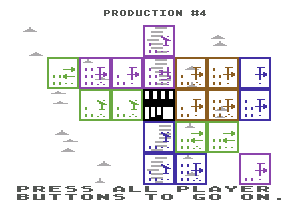
mule_colony

One of the finest multiplayer games of all time, and one of the finest strategy games of all time. Accessible and understandable yet filled with complexity, M.U.L.E. was — is — an absolute masterpiece.

Marooned on the planet Proc Irata (seriously) for six or twelve months depending on the difficulty you were playing on, it was up to you to make the most of the situation by making use of the land that was granted to you and which you bought at auction. You could assign land to harvest food, energy, smithore or, on the higher levels, a "cash crop" called crystite. The type of terrain determined what type of facility a plot was most suitable for, with the river running down the middle of the map being the most abundant for food, while mountains were best for smithore.

M.U.L.E. challenged you to combine cooperative play with competitiveness — while you were competing against three other players, all of whom could be human-controlled if you had an Atari that supported four joysticks, if you didn't all work together to ensure the colony as a whole had enough food, energy and smithore to survive the next month, you'd all be in trouble.

The game made use of an interesting graphical depiction of negotiating prices by allowing buyers and sellers to "walk" up and down the screen to determine the prices they were willing to buy or sell at. By meeting another player — or the colony store — you could buy and sell goods as you saw fit — stockpile for later or sell for a high price right now?

Final Legacy

final_legacy

A lesser-known game, this one, Final Legacy was a strategic shoot 'em up with elements of Missile Command to it, and, like many other games of the period, was the embodiment of Cold War paranoia.

In Final Legacy, you were in charge of the good ship Legacy and were tasked with destroying the nasty horrible enemy missile bases that were pointing their nasty horrible missiles at your cities. You had to torpedo enemy ships, blast the enemy bases with your laser cannon and shoot down the missiles that inevitably got fired the moment you started attacking a base.

Later difficulty levels added some interesting mechanics such as having to destroy "Intelligence" ships in order to find out the locations of the enemy missile bases, but mostly the game was about frantically zipping back and forth between four different screens and hoping you didn't accidentally let anyone get nuked.

Batty Builders

battybuilders

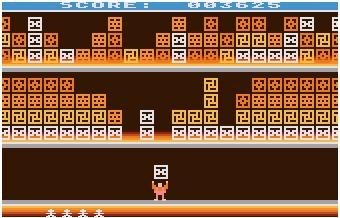
Another lesser-known game, this time from the once-prolific English Software. Batty Builders saw you in the role of a builder attempting to build a wall. In order to do so, you'd have to catch bricks falling from the conveyor belt at the top of the screen, then toss them into place in the wall, all without killing yourself in the process.

That's pretty much all there was to it, but it was enormously addictive, and is noteworthy for being one of the earliest examples of a frantic puzzle game I can remember.

Bruce Lee

bruce_lee_4

An interesting and peculiar game, Bruce Lee combined elements from a number of different game types, most notably beat 'em up and platform adventure.

As Lee, you'd have to make your way through each screen collecting lanterns. Attempting to stop you from doing so were an anonymous ninja and The Green Yamo, both of whom would pursue you around each screen with a surprising amount of simulated intelligence (or, in the case of Yamo, who could be controlled by a second player, actual intelligence), making your life miserable. Fortunately, you could deal with them by giving them a smack in the chops or a flying kick to the face, though they'd always be back.

Bruce Lee remains one of the finest licensed games out there, thanks in part to the fact that it's not trying too hard to follow any particular movie. It's still a fun platformer today.


* your definition of "classic" may vary, but I enjoyed all these.